

Guests
Featured Shows
About
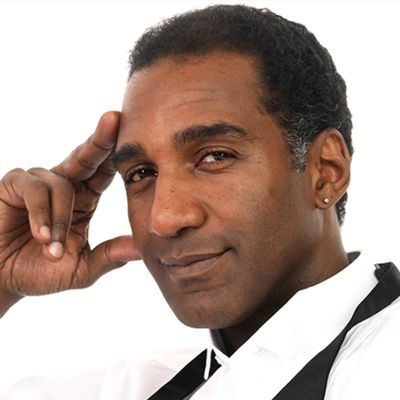
The voice of a generation on seizing the opportunity to star in Love Never Dies, how his connection to the show roots back to 2007 and why his version of The Phantom continues to evolve. Plus, we talk about the deep personal joy of Porgy and Bess with Audra McDonald, mounting The Little Mermaid for Broadway and why he’s forever moved by his impact on a younger generation of stage artists.
Host: William J Connolly
Produced by: William J Connolly/Darren Bell
lwtheatres.co.uk
Welcome to eleven. The official theatre podcast that brings the biggest stars and creatives together in one place to discuss life in the arts. Follow eleven on social media via @elevenpodcast and via elevenpodcast.com.
Transcript
This transcript was automatically generated and might contain errors.
[0:01] Norm Lewis: Hi, my name is Norm Lewis, and you're listening to Eleven, the official theatre podcast.
[0:16] William J Connolly: Hello and welcome to Eleven, the official theatre podcast that brings the biggest stars and creatives together in one place to discuss life in the arts. He's the Tony and Olivier nominee that's become the King of Broadway, earning himself generations of fans from across the globe. A legend of stage and screen, he's about to tackle one of the most beloved characters in the world of theatre once again, but this time with a twist that he's taking on playing The Phantom in Love Never Dies at the Theatre Royal Drury Lane, having previously played The Phantom in the Broadway production of The Phantom of the Opera. With other major theatrical credits to his name, including Les Misérables, Sweeney Todd, Jesus Christ Superstar and Concert on NBC, The Little Mermaid, The Wild Party, Miss Saigon, The Tempest, Paul Gambaccini, Ragtime, Dreamgirls with Jennifer Holliday, and The Fantasticks, to name but a few.
So here, in an exclusive conversation just days before he begins his travels over to UK shores to begin rehearsals, we discuss returning to the Man in the Darkness for this very special series of concerts in London to celebrate Andrew Lloyd Webber's masterpiece, Love Never Dies. Plus, we dive into the vocal masterclass of JCS Live, mounting The Little Mermaid with Sierra Boggess, and working opposite a certain artist called Audra McDonald. It is the legend himself, Mr. Norm Lewis, here now on this, the next episode of Eleven, the official theatre podcast.
[1:38] William J Connolly: To ensure the safety of all involved in this episode of Eleven, Norm and I connected for this conversation digitally, so please forgive any brief moments while we wait for the internet to catch up. Enjoy.
[1:53] William J Connolly: Please help me welcome to this, the next episode of Eleven. Well, there's really no other way to introduce him other than being the king of the West End and Broadway with a voice to rival the greats. He's already laughing, which is a good start. So this entire episode is going to be such an honor. So please help me welcome Mr. Norm Lewis. Hi Norm, how are you?
[2:11] Norm Lewis: Hey, what's happening? I'm here outside, uh, here at Riverside Park in New York City. So, uh, I'm happy to be talking to you.
[2:19] William J Connolly: Thank you so much for agreeing to do this. And I'm glad you mentioned you being outside because not that you can tell from this quality, because this is unbelievable. I feel like you've sort of woven your magic over it to make it work, but you are sat in a rather idyllic, lovely situation, which people obviously podcast won't be able to hear, but it feels like this is a good place to talk about something very exciting.
[2:36] Norm Lewis: Yeah, no, I'm excited, and this is a great little area. I live on the Upper West Side of New York, and, uh, it's very neighborhoody, and, uh, I just decided why don't we come to the park?
[2:45] William J Connolly: Well, I'm very grateful for it because I can see you. So let's dive straight in. And I mentioned something rather great, and that is Love Never Dies, returning to London. I mean, I can't even believe really having had to wait so long for the possibility of hearing these songs again in London that it's actually happening. I mean, before we talk about specifics and how wonderful this show is, for you, I guess, were you like me and so many other people just obsessed with this score?
[3:09] Norm Lewis: Yeah, it's funny because, um, I didn't hear about it for a long time. I was doing The Little Mermaid, and, uh, Sierra Boggess ended up leaving us early, and she was very secretive about it because she couldn't really talk too much about it. So, uh, finally, after leaving that show and then, uh, getting the chance to do Les Misérables in London, I got a chance to catch up with her and then meeting Ramin. Um, what was so, uh, interesting before that was seeing what they did as far as the marketing. They, uh, put that beautiful video out of both of them, and to hear Ramin's voice, I was like, "Who the hell is this guy?" He was the talk of the town. I was like, "Uh, we cannot wait to see this show."
So, um, yeah, for me, uh, the first chance I could go see the show, I jumped on it and just fell in love and just also saw a new perspective of who Sierra was. I had no idea she had all of that, you know. Uh, being in The Little Mermaid, she had to kind of hone it in a little bit. You know, she did her belting and all that stuff, but to see this beautiful soprano come out of that voice, you know, it was amazing.
[4:09] William J Connolly: We should say, for like the two people in the world that don't know, Sierra Boggess was of course in the original company of The Little Mermaid playing the wonderful Ariel, which you were in alongside her so brilliantly. And of course, she then played Christine Daaé originally in Love Never Dies alongside Ramin Karimloo. And it was this most exquisite production, and I feel like they set the bar so high, but what a bar to try and meet and to be able to smash, and also to know that you're joining, I guess, a sorority, a sisterhood, like a group of people that you can say that they are peers. For you, I guess the opportunity to play the Phantom in Love Never Dies is an opportunity that very few people in the world have had the privilege of being able to do.
Were you like immediately, yes? Of course, I want to do this, or did you enter it because it's such special material? I guess slightly nervously. Did you sort of say maybe? I guess what was your first response?
[4:54] Norm Lewis: Oh, my first response was yes, absolutely. Yes, yes, yes. The music is just so grand. And you know, I know, or from my understanding, there was they decided to change, uh, some of the book, uh, from the original, and, uh, and they did it, uh, in Australia, which is the version that we're doing. And, but in either one, they, they both, the music was just so lush and so amazing. And so I couldn't wait to like dive into this.
[5:20] William J Connolly: Are you the sort of person that likes to, I guess, push out the noise and think, I want to see what I can do, or do you get influenced by your friends? I guess how will you start to mount your version of this?
[5:31] Norm Lewis: Well, it's interesting. I mean, I've Ramin's, uh, voice is in my ear for all of this. But I will say, you know, we have two different voices, and, uh, I will definitely put my little stamp on it. And I hope that, um, that people will see the same story, but yet with the flavor that I can bring to it. Um, there's so many times that you do a show, like I did, I've done Sweeney Todd like three times, and each one of them have been very, very different, even for me as an actor. So I would like to find, uh, do some subtextual work and find some, uh, amazing things. I'm so sorry that that noise came by. Yeah, it's fun as an actor to find out what you can do and what you can bring to it.
[6:13] William J Connolly: Do you think your performance will be influenced by the fact that you have played the Phantom before? This isn't your first time playing him, or do you think that this is almost like a bit of a clean slate for you?
[6:22] Norm Lewis: I think it's a little of both, you know, because obviously they're two different stories, but, uh, the fact that I have played the Phantom, I understand who Eric is. You know, that's this character's name. And, uh, I know at least his backstory, and I know his feeling for Christine, uh, his feeling for other humans that get in his way, things like that. And I think also the fact that he will find out some surprises, uh, within the show. I, uh, it's gonna be fun to, uh, explore what this character thinks and, uh, navigate my way through this story.
[6:56] William J Connolly: Did you think there would be a point in your career when you were ever playing the Phantom that there would be like a next part? Because so many people that have ever played the Phantom ever think, "Oh, there would never be a part two," but I guess that's kind of the genius of Andrew's mind and Andrew's work, right?
[7:09] Norm Lewis: Absolutely, yeah. No, I never in my wildest dreams thought that that would be, you know, just to get the Phantom. Hey, how are you? I'm seeing a neighbor of mine, hey. Uh, to play the Phantom was one of my life's goals. So I've already, you know, hit that mark. Now this opportunity has come up where I get to play him again and a different story, and sing Andrew's words, you know, his music and his words, and it's just, it's, oh, I'm overwhelmed by this. And the fact that they chose me, I'm very honored by that.
[7:36] William J Connolly: I don't know how much you listen or sort of read social media and what people say about announcements and things like that. I mean, I would recommend you should, because there's a hell of a lot of people that are saying some pretty extraordinary things, but everyone just kept talking about your voice. They just kept saying, "I cannot wait to hear Norm Lewis sing this score and these songs." Do you like the fact that people are like, "Right, I've paid my ticket, I've paid my money. Please just sing at me." Are you like, "Oh yeah, cool?" Or are you like, "Oh shit, I gotta do some work?"
[8:01] Norm Lewis: Well, you know, again, it's a mix of both because you definitely want to be on your game when, uh, when you're doing a performance. And for me, uh, this music is written in a, uh, a way that, you know, there's no such thing as a baritone anymore. There's no such thing as a tenor anymore. People ask me all the time, like, "What is your voice?" And I said, "I don't know. I have no idea." What I will say, uh, say to them is that what note do you want me to hit? And I will try to hit it. If I can't, then that's not what I am. He's written this music in such a way that it actually helps you propel up to some higher notes or some more expressive notes. But then there's also the tenderness as well that, uh, that I think that my voice can bring some nuance to.
You know, uh, Ramin, when I saw him do it, and then when I listened to him, it's just so effortless. And I want to try to bring that as well. I don't want you to like cringe and go, "Oh my god, is he gonna make it? Is he gonna make it?" I want to be prepared enough to, uh, to give the score what it needs.
[8:58] Norm Lewis: But also you hopefully feel very comforted by the fact that everybody that's choosing to come and see this production is there to see your interpretation and they're on your side and they're excited to celebrate you. And I can imagine as a performer, that that is quite comforting, right?
[9:11] Norm Lewis: Yes, absolutely, absolutely. It's fun to know that people are interested in seeing me, hearing me, and, uh, wanting to see what I can bring to this role.
[9:18] William J Connolly: Do people come up to you, I guess, if they meet you randomly or if they're arranged to meet you, if it's out in the industry, do they talk to you about how your performances and how your voice in particular has influenced their lives? Do people talk to you about the fact that they have been inspired by your performances?
[9:32] Norm Lewis: Yeah, I'm honored by that. It's one of those things, especially a lot of young men who are in my vocal category. Uh, they say, you know, "You are one of my favorite, uh, baritones that I that's been able to, you know, uh, extend his voice in a certain way," and, uh, and they say that they, uh, emulate me and try to do what I do, and that's fantastic. I want them to continue to have their own voice, but yeah, I feel good about that, that I can inspire, uh, a group of, uh, young people in the landscape of this, this, uh, future in musical theater.
[10:03] William J Connolly: I guess it's sort of the other side of the industry, isn't it, where you actually sort of, I guess, forget but also remember that performing does influence people and hopefully better their life. And I guess it's like that extra little bit, right, of the job.
[10:14] Norm Lewis: Absolutely. You know, we always joke about, you know, our job is we're not brain surgeons, we're not rocket scientists or anything like that, we're not saving people's lives or whatever. But then you think about it, we are. We actually are. There are people who've been so moved and so changed by something that they've seen on stage, and it's changed their lives and maybe have saved their lives in a way emotionally, spiritually, artistically. And you know, uh, for me, when I first saw a live performance, you know, this watching television and film is a great thing. It's a great genre, but there's nothing like live theater. And, um, you get so inspired, like, "Oh, maybe I can do that," or "Maybe I can be a part of this." It's so beautiful. It's so beautiful.
[10:55] William J Connolly: So yeah. Who was that personal, I guess that singer or vocalist or performer to you when you were growing up wanting to be in the industry?
[11:01] Norm Lewis: Funny enough, it's Johnny Mathis. Johnny Mathis has been my, my vocal hero for so many years. But then over the years, I will say, you know, people like Jennifer Holliday and, uh, you know, Nat King Cole, Tom Jones, Tom Jones was a huge influence on me. I love his work. Uh, I mostly stayed with the crooners. You know, I love Dean Martin and Sammy Davis Jr. and those people. But, um, yeah, I mean, there's Sidney Poitier has been a big influence in my life. And I, I have a number of people that I will say that have influenced me or been my mentors, if you will.
[11:37] William J Connolly: Is it always interesting as well when you get the opportunity to meet people that have followed parts of your career or all of your career when they tell you about perhaps some of the more surprising projects that you've done that they've really connected to influence, or even is there like a specific show that people mention a lot? I guess is that experience always interesting?
[11:53] Norm Lewis: Yeah, it is. Uh, I just recently did a concert here in New York, and I've had people that came to see it and afterwards we talked, and they told me that they loved, uh, what I did in Porgy and Bess. I happened to be with someone by the name of Audra McDonald, so I had to kind of bring my game up, if you will. But, uh, we know we had a fantastic ensemble. Uh, and in fact, that was that meant more to me than being a standout. Uh, someone just said that they felt like they were watching a community, a real community of people on that stage. So that felt beautiful for me. But yeah, uh, it's I get people all the time who have been very complimentary about, uh, my interpretations of different projects and, you know, Phantom being one of them and, uh, knowing how excited I was to be a part of that and being in the fraternity of Phantoms. Audra McDonald, is she up and coming in the industry or you know, not a lot of people know who she is, and I try to boost her name and her career.
[12:44] Norm Lewis: She owes me so much right now.
[12:48] William J Connolly: Audra was an episode on eleven not too long ago, and we spent such a huge proportion of the episode talking about you, so I feel like we have to talk about her.
[12:54] Norm Lewis: It's only fair.
[12:55] William J Connolly: Absolutely, absolutely who is obviously the queen, the empress of this musical theater world in Broadway, and has won every category besides, you know, lighting and composing herself.
[13:10] Norm Lewis: Working with her, I just remember how committed she is to each project and watching her process was fantastic and encouraged and inspired me as well. And knowing that she did that much, I was like, oh god, I gotta like I said before, I gotta step my game up because I'm gonna get left behind. It's gonna be just best, not Borgie. So I love her, and she's on the other side, she's a sweet, sweet person, you know, with all the accolades that she gets and all the other things, she's so humble and so family oriented. She loves all of her kids and her beautiful husband, and so yeah, she's a wonderful woman.
[13:46] William J Connolly: When people like Audra are playing opposite you, when you are you've got these iconic creatives around you, when you're performing in productions or concerts like when you're in Les Mis or when you're doing Jesus Christ Superstar or bringing The Little Mermaid to the stage, when you know that there's gonna be work to be done, when you know that you've got to dig deep and find that, is that a challenge that you welcome, or are you almost like apprehensive about something new? I guess creatively, how does it sort of tend to start and play out in your mind?
[14:11] Norm Lewis: Oh no, I'm so excited. The best part about being in a production is the process of rehearsal and finding out this new material. Like I love to go and when I was doing Porgy, for instance, I did a deep dive into people who are unhoused and people who are beggars on the street, and people who actually who are disabled. That's the word I want to use. I don't want to use anything that's wrong there, but who are disabled and can who are limited in their abilities? And I started talking to people who I would see on the street who were begging. I started talking to people who were in wheelchairs, who were getting around and didn't need any assistance, and that's exactly who that character was. And that gave me subtext to bring to the stage. And I do that basically for every character. I will try to find something that is personal that I can use as subtext that hopefully will bring truth and authenticity to the role.
[15:05] William J Connolly: Does the same apply when you're working on something new? For example, I remember thinking the genius of Jesus Christ Superstar was that it was just epic in scale, size, cast, vocals, like it was literally it felt like a challenge, but a challenge that really paid off as an audience member. Did it feel, I guess, almost revolutionary when you were at the center of it or at least mounting it?
[15:25] Norm Lewis: Yeah, what was so genius about it? David the Roe, David Thoreau, what's David's last name? Is it Thoreau? He is a stage director and he was also a film director. So the combination of the two was amazing, and we just trusted him. We had a lot of rehearsal, but you know, he was rehearsing camera angles, but yet he was also rehearsing stage angles for us. And what was brilliant about that role or about that show was the fact that it was an amalgam of so many things. It was a concert. We invited the crowd to be part of our show, and that I think that's why it resonated with so many different people and also really sort of made use of that really sexy lower part of your voice. I mean that was some cool stuff. Yeah, I couldn't warm up. If I warmed up during the day, I would lose it, so I wouldn't warm up at all.
[16:10] William J Connolly: That was not warm at all. Oh my days.
[16:13] Norm Lewis: Well, some days I would because I had sung through the show and I had gone to my upper register. It was like, oh man, I can't, you know, I couldn't get down there. I was like, oh man, so yeah, I didn't warm up.
[16:21] William J Connolly: So much of your career there's been these incredible firsts. There's been so many amazing moments that I've read the most wonderful interviews with you before where you always reference a younger kid that wants to be in the industry that looks like you, that wants an opportunity and needs to be seen. Is that still at the forefront of your mind when you're making decisions on roles that you want to play? And I guess what have been some of the wonderful conversations that you've had that really stand out of the fact that yeah, that's the reason why I do this. That's the reason why I put myself out there.
[16:51] Norm Lewis: Absolutely. I mean, you know, I want to encourage anyone who is a fan of mine or you know that I can encourage who is inspired by me, but specifically African American kids or even minorities in general, people who are marginalized who may not have had the opportunity to be in something like this and they want to be like for me, you know, it took 20 years before I saw the show and then was coveting it for so long. I kept saying in interviews, my dream role is to be the Phantom, Phantom, Phantom, but I had never seen anyone except for Robert Guillaume who was a star, you know, at the time, television, film, stage, and had the chops to do it. It wasn't just stunt casting. So I thought maybe I had to be a star in order to get those kinds of roles.
Not that I wasn't a star. Like I didn't think of myself as that, but I had the opportunity to play the role. And for me, after the show, I would meet people who were from China, from India, from all over, who said, "Now I feel like I can do it." So if I can be that sort of symbol for them, I love that. I love to be that sort of representation.
[17:51] William J Connolly: So what did it feel like when you saw the likes of Lucy St. Louis in London playing Christine or Emily in New York? I mean, to see those women leading, it must have been extraordinary.
[18:00] Norm Lewis: Yeah, it was brilliant. And again, I want to say it wasn't stunt casting, it wasn't trying to fulfill a quota or anything like that. They were qualified to do it. And the fact that they sounded so brilliant and acted it so brilliantly, I was just overwhelmed and honored and pleased and all the great positive emotions I could feel. It was fantastic.
[18:20] William J Connolly: Your moment in that show was that as much for the person at the stage door, the person in the audience as it was for the younger version of you that really dreamed about that becoming a reality.
[18:30] Norm Lewis: Yeah, I think so. I mean, I feel like by hiring me, God, this sounds so self-indulgent, I don't want to sound like that, but by hiring me to play the role, I think it did open up their minds, you know, the creatives, to look at other people and see where they could go. Now, I will say that there was an African American Puerto Rican woman who had played the part, she was Carlotta for a long time, you know, before, years before. I think she did it in Toronto and then she came to New York. But, you know, there was that crossover thing because she is Italian. Like her mom is Italian and her dad happened to be African American, and so she had that sort of like fiery Italian response that Carlotta uses.
But before that, I mean, or after that, they didn't have anybody for a long time. And then after me, they had a person of color who played Jordan. Oh my god, I'm so bad with names, but there was a guy that played Raoul, who is now in Camelot, and he's done My Fair Lady, and you know, so that opened it for her, for him, and then Emily, then they also had Ali Ewalt, who was the first Asian woman to play Christine. So it's not that I want us to be singled out, but at least have a fair chance to be seen and prove ourselves.
[19:46] William J Connolly: And it does feel like that change is happening, as you say, more regularly. I do feel hopeful with that, right?
[19:50] Norm Lewis: Yeah, no, you're absolutely right. It's happening. And you know, I think with the onslaught of what Hamilton has done, I think that really has helped people look at this industry in a different way. And I hope it continues. What I'm part of a group called Black Theater United, and we are hopefully transforming this industry in a way to have equity, inclusion, and diversity, not only on stage. That is kind of simple now, you know, because things have progressed, but now we're looking at more of the creatives. Now we're looking at more of the people backstage, more of the people who are in charge, producers, to have a voice at the table, and for anyone who is a minority to kind of step up in that way and to let people know that some things might not be right, some things might not be accepted in a certain way that they normally would have been. So yeah, we're trying to keep that going. And also in the audience as well. Who are you encouraging to come and see your shows?
[20:50] Norm Lewis: Absolutely. Yes, we want more diversity within the audience, yeah. Because you know, we know that people once they see themselves or can relate to a story, they're very interested in coming to see it. And I like the fact that there is more opportunity, but also greater storytelling and wider storytelling. I feel like the West End is so rich at the minute of, you know, such specific stories, and I like the fact that more people will hopefully have the opportunity to go to the theater and be invited to the theater and see themselves in theater, and that can only be a good thing.
[21:17] William J Connolly: Absolutely, absolutely. And then if they see someone that they really like, and hopefully maybe in some other realm, like if they've like, oh my god, I know that guy from television, or I know that guy from the film, and now he's doing something on stage. It's so exciting. There's, I know I'm repeating myself, but there's nothing like live theater, there's nothing like live performances for me.
[21:40] Norm Lewis: You've been very calm with your time. I've just got a couple more questions for you, if that's okay. In terms of the wonderful catalogue of songs that you're gonna get the opportunity to sing. I mean, with Love Never Dies, I guess it's sort of a monopoly of what mood you're in as to where you want to go. But is there anything in particular you're like that's gonna be the one when the chord goes, I'm going.
[21:58] Norm Lewis: I mean, I guess I think it's obvious. I think until I hear her sing once more. I mean, that's the anthem of the whole show. Till I hear her sing once more. And again, I've been doing my own thing with it, but I will say that Ramin is in my head, and I just love his voice so much, and I love what he did. I will not try to imitate him, I promise you, I will not do that. I just love that song and the melodies, and you know, when you hear her have her struggle near the end of the show when she's like, "Love never dies." Oh my god. I was blown away when I saw Sierra do that because I was like, how do you do that eight times a week? But you know, it's in her voice. And then I get to work with this amazing, amazing woman. I'm so excited. This cast is fantastic.
[22:42] William J Connolly: I was just brushing up on my knowledge of you, which I must confess is very strong. So I feel like I had good knowledge, but I thought, let's just have a quick deep dive to see what can I learn potentially before this conversation. I literally was like, is there anything he hasn't done? You have literally done everything, it's so impressive. I was like, you've played so many freaking cool roles that I'm very well aware that people listen to this and read this and go, oh, you didn't ask about this. So I apologize if I didn't ask about your very specific most favorite thing. I did try and self-indulge a little bit. But do you think variety across roles, across characterization really underline that has been one of the great key successes to why you've been able to last so long and feel so great about this industry?
[23:20] Norm Lewis: Yeah, no, I've been really blessed. I tell people all the time, you know, I'm just this guy from Florida, Central Florida, growing up, and actually didn't even get into the business until later on. I worked in advertising, I was a business guy. I started singing at night in bars, and someone saw me and offered me a job on a cruise ship, and it just kind of, you know, snowballed from there. So I'm so lucky that I guess I'm influenced by different people that I try to do what they do. And I'm just gonna continue until someone tells me to stop.
[23:51] William J Connolly: Please don't stop, please. I really do genuinely lead my fix. So, do you think that the guy from, is it like the early 90s and 1989 production of Joseph would have thought you would have had any of this success?
[24:01] Norm Lewis: The fact that you even know that, that's very funny. I love that. Thank you. Because I don't even know if that's on my resume anymore. But you know, I don't because I came in balls to the wall, I literally tell people all the time when I came to New York, I really didn't have a lot of knowledge about theater, and I was learning as I was on the job, basically. And unless they specifically asked for blonde hair and blue eyes, I showed up. I just came and I just said if I mess up, I'll mess up. But I'm gonna try to get into everything that I can. And that's I think that's been the key to my success. I just showing up.
[24:33] William J Connolly: I think I've spent more time in other episodes of this podcast telling people how much I adore you, and I'm a massive, massive fan of you. So for this conversation, thank you so much. It's been such a pleasure, and most importantly, good luck when you arrive here. I'm so freaking excited. I think I've played it cool, but I've got to tell you, this is a big deal.
[24:50] Norm Lewis: Well, thank you very much. That's very kind of you. And listen, I can't wait to see you and meet you in person. Take some pictures. Thank you so much for your time. Most importantly, enjoy this wonderful surrounding that you're in, and I will see you and the voice very, very soon.
[25:01] Norm Lewis: All right, my brother. Thank you so much.
[25:06] William J Connolly: You've been listening to Eleven, the official theatre podcast. Find out more about Eleven at elevenpodcast.com or via the Broadway Podcast Network.
© Broadway Podcast Network, All Rights Reserved