

The Broadway Tony-winning powerhouse on making British shores her home as she stars in the Barbican Centre production of Kiss Me, Kate. Plus, we dive into rewriting our own limitations, leaning into a new style of her infamous singing voice and why her London co-star Adrian Dunbar reminds her about the magic of laugher... Read More
From the show: eleven
Guests
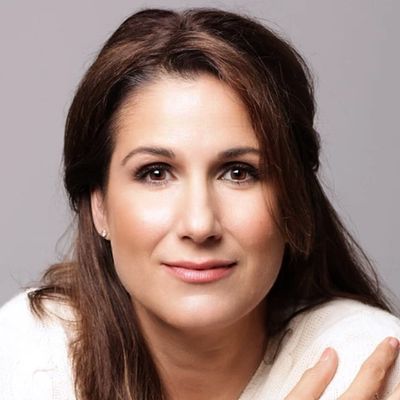
About
The Broadway Tony-winning powerhouse on making British shores her home as she stars in the Barbican Centre production of Kiss Me, Kate. Plus, we dive into rewriting our own limitations, leaning into a new style of her infamous singing voice and why her London co-star Adrian Dunbar reminds her about the magic of laugher. And SJB in LDN? We find out what it would take to bring her to the West End for a lengthy run here.
Host: William J Connolly
Produced by: William J Connolly/Darren Bell
kissmekatemusical.com
Welcome to eleven. The official theatre podcast that brings the biggest stars and creatives together in one place to discuss life in the arts. Follow eleven on social media via @elevenpodcast and via elevenpodcast.com.
Transcript
This transcript was automatically generated and might contain errors.
[0:01] Stephanie J. Block: Hi, my name is Stephanie J. Block, and you're listening to William J. Connolly, 11, the official theatre podcast.
[0:18] William J Connolly: Hello and welcome to 11, the official theatre podcast that brings the biggest stars and creatives together in one place to discuss life in the arts. She's the Tony winner and legendary stage star of Broadway that's made her way across the pond to star in the show of the summer this year in Kiss Me, Kate at the Barbican Centre. No stranger to standing center stage, she's earned herself an army of fans from around the world thanks to her leading roles in Wicked, 9 to 5, Falsettos, The Pirate Queen, The Cher Show, Anything Goes, The Mystery of Edwin Drood, and many, many more. So leading a company and belting out front is where she belongs. So why change course and step into a new vocal sound and take on an instantly recognizable theatrical staple like Catherine Ann Lilly in Kiss Me, Kate?
And why do it over here in London? Well, here in an exclusive conversation, we put all of those questions to the lady herself as we talk starring in Kiss Me, Kate, having a legendary co-star like Adrian Dunbar by your side, why she wanted to be brave enough to take on a new challenge, and why that's seemingly a welcomed risk, and why there's nothing, just nothing, like the magic of live theatre. She is the moment, and returning to Eleven, it's our friend, the glorious Stephanie J. Block, here now on this, the next episode of Eleven, the official theatre podcast.
[1:43] William J Connolly: To ensure the safety of all involved in this episode of 11, Stephanie and I connected for this conversation digitally, so please forgive any brief moments while we wait for the internet to catch up. Enjoy.
[1:58] William J Connolly: Please let me welcome to this, the next episode of 11. She is the Tony-winning Broadway superstar that's now serving it up a little slice of Shakespeare in the glorious Barbican production of Kiss Me, Kate. I'm so happy to say welcome back. But British shores, hello, Stephanie J. Block.
[2:14] Stephanie J. Block: Oh, hello. Look at us on the same side of the pond.
[2:18] William J Connolly: Oh, this was like such a privilege to have you here in our arms in our theatres, absolutely smashing it in Kiss Me, Kate. The smile on your face, even from that introduction, just shows me I think you might be having a good time.
[2:28] Stephanie J. Block: I'm having a great time. I have now been in London for golly, over three months. I've seen a couple seasons. Your weather teases me daily. I just never know what to expect. And as a singer, if there's any singers listening out there, I know you can commiserate with the hay fever and the pollen. Holy blooming flowers, London. What is going on?
[2:54] William J Connolly: You can say fuck, it's allowed, don't worry.
[2:55] Stephanie J. Block: I know you're too polite for that, but we can't. Bugger at all.
[2:58] William J Connolly: Bugger, bugger.
[3:00] Stephanie J. Block: Same bugger means you've definitely been on our shores for long enough to sort of climatize to the way in which we've got to be.
[3:04] William J Connolly: I've assimilated enough. This is thankfully a podcast that people can't see for the five. I've shut all my windows and doors to make sure that the audio is hopefully very good, but I am sweating. What is this weather?
[3:12] Stephanie J. Block: I know it's summer, but whoo. I love it. See, this for me is just beautiful weather. In California, you know, you guys, it hits 80 degrees, which I think for you is what, 30 Celsius? Is that right? And that to me is glorious. And everybody comes into work going, it's miserable, it's stifling, and I'm living my best life.
[3:31] William J Connolly: Do you have aircon in the Barbican? Are you at that sort of level of luxury?
[3:34] Stephanie J. Block: I do.
[3:34] William J Connolly: Oh, wow. So anybody who loves theatre and coming to theatre during the summer months, the Barbican's the place for you.
[3:40] Stephanie J. Block: It's air conditioned on stage, backstage, in the house.
[3:43] William J Connolly: Of all the podcasts, this is not the way I expected this to go. It's talk about the climate and if you can be cool.
[3:48] Stephanie J. Block: But to be fair, it's like a weather, weather people, weather reporters. It's literally like a public service announcement.
[3:54] William J Connolly: And to be fair, it matters. So I feel like we've done the important bit. But just to say, most importantly, congratulations. This is like such a mega production and you are exquisite. And I had the pleasure of coming a couple of weeks ago. And I've seen you on stage before, I've had the pleasure of talking to you before, but I felt like I saw a new side to you. You are unbelievably funny as a person, but this feels like it sits perfectly where you're just gonna soar. And it felt like such an honor, and especially with the reaction of the people around me, they were eating it up. Are you able to feel the love? Are you able to feel comfortable and safe in this world, or is this still kind of crazy?
[4:26] Stephanie J. Block: I do feel comfortable and safe. And let me tell you why. I didn't at first when the offer came to me. I didn't at first when I started doing research, and you know, just began singing Cole Porter's score, because it is kind of outside of the realm of what I've been cast in before. But that is the expertise and the beauty of working with someone like Bartlett Sher, who doesn't necessarily cast cookie cutter and what's to be expected. So when he came to me, we had a little meeting, and I said, Look, I'm even surprised by your choice of me for Lily and Kate. The score shows up a range, a more sort of legit singing, right? Is part of this beautiful score. And although it's part of my tool belt, it's not usually what I am hired or expected to do.
And that unexpected, I think it what is allowing joy for me is that at my age, doing this beautiful craft of musical theatre for 40 years, and then being approached to do something very different and feeling safe in the rehearsal room, feeling safe within this role because he allowed me to bring what I needed to bring in order to create a Kate that perhaps maybe hasn't been seen before, because I am leaning into the bodiness of it, to the humor of it. And I think Adrian being cast, of course, the great Adrian Dunbar, being cast as Fred and Petruchio, it's more of a, I don't know, a meeting of equals, right? He plays his Petruchio a little more, what's the right adjective? Give me an adjective as a podcaster and a reporter.
I wanted to say ethereal, it's very grand, isn't it? Do you know what I mean? It's grand and yet silly, and but there isn't a whole lot of, you know, he's as masculine as could be, but it's not forward, it's not broad, it's not threatening. There is a silliness and a winning and a charm to him that allows my Kate to be a fortified Kate to his Petruchio, and you think, oh wow, she could possibly take him in this story. I could possibly wrestle this man down and come out being the winner, you know. And I think that allows for more play as well. So I'm very grateful, and I'm glad audiences are receiving it in that way and recognizing the fun that we're having up there.
[6:58] William J Connolly: You mentioned at the start of the answer, like how you know that's what you've been cast as before, and this felt new, and therefore it was a surprise to you. But I imagine you did know that you could do it, but you just perhaps weren't presented with opportunities to do it as regularly. So was it almost a backwards education for yourself and a way to say, no, I actually can do this and I should be allowed to do it?
[7:17] Stephanie J. Block: Absolutely. I think many artists go, I can do this. I have practiced this, I've gone, you know, I go to school for this, my voice lessons are weekly for the last 30 years. But then it's different when you infuse it into a character. It's different when you have to step on stage in front of 1,200 people and feel the confidence of exploring that voice and presenting that voice, right? So knowing that that confidence was there, not only in my own self, but somebody like Bartlett Sher, and then in this rehearsal space, our beautiful musical director, Stephen Ridley, to embrace this voice that I haven't been able to share on stage in a professional way, was really gratifying and verifying, to be honest.
[8:05] William J Connolly: And is there an element when you have a director of that caliber, of that status who is, you know, unmatched, he is one of the best that this industry has? When he's telling you you can do it, do you almost have to succumb to his expertise and believe him?
[8:17] Stephanie J. Block: I do, and I do believe him because of what you just said. There is a pedigree there, and he has proof, you know, the proof is in the pudding, and his pudding has been shown multiple times and awarded and acclaimed multiple times. It's kind of undeniable, the director that Bart is. And you know, I've always believed this as well. It doesn't matter how pristine your notes are, or what your riff sounds like, or how loud, if you don't have something to say within the song, nobody's gonna listen, regardless, regardless of the quality of your voice. And so to come at any song in any range with that sort of understanding, it really does just come down to the craft of acting and relating a story and telling it as truthfully as you can.
[9:00] William J Connolly: One of the things that I sort of find frustrating about being an adult sometimes is that you don't, in the way that you did as a child, sort of learn the same regularity or push yourself to try and retain new things or push yourself to do something that maybe you've not done before. University is obviously a great example of a huge leap, and then you go out into the adult world and you sort of do the thing. But one thing I love is like trying new challenges and actually being willing to do something that probably absolutely shit scared of is the prospect of doing not this is not a small production, let's be honest. This is a huge production that you know is gonna have great weight, great creative team, a great leading man.
And obviously, here in the UK, which is a long way away from you from home, do you have to factor in all of these things and then do they become quite a daunting prospect to you? But you're excited by being learning again and being scared, or do you go, yeah, let's just try it, see what happens?
[9:47] Stephanie J. Block: Yeah, when your voice goes up the octave and you go, let's just see. This is a great question. And this truly was a crossroads for me when this amazing opportunity landed in my lap. I was questioning all these things, going, I'm going to a new place, working with a company that I've never worked with before, living without my family for several months on the front end, knowing Bart as I do, but never being in a rehearsal space with him. So there were a lot of unknowns, and you're right, unknowns can be scary, very scary. And I'd like to go back to your comment on being younger and being sort of fearless, you know. Saying yes to things is very easy when you're young. And then we are taught where our place is, what we are meant to do, kind of put into a box of sorts, and then it becomes a self-box where we go, this is where I belong, this is where I feel comfortable, this is where I thrive.
But then we stop growing, and this opportunity allowed me to grow in so many different ways that I had to, even though the maybe the logical part of my brain was saying, Oh, I don't know, how are you gonna do this? There's so many working parts to your life. Who's gonna take care of the family? How all the logistics were so noisy, but the artistic part of me and my heart kept screaming yes, and so I had to listen to that. And thank God I have a community that is supportive and lifts me up in that way.
[11:17] Stephanie J. Block: My husband being one of them, my agents in my team back in, you know, New York are a whole other group. And we were able to say yes, and I'm so glad I did, because being 50-something and saying yes and being scared has allowed me to stretch that box and that sort of comfortable playing field that I thought was where I needed to be, and now this has shown me a completely different space, and I'm happy to be here for sure.
[11:50] William J Connolly: What was the moment during this process? Perhaps it's even the smallest part in rehearsals or even at the theater where you went, I'm so glad I did this. I'm so glad I said yes.
[11:59] Stephanie J. Block: Oh, that's such a beautiful question. There have been bookmarks along the way, and as silly as it sounds, the very first day of rehearsal, walking into the rehearsal space, seeing everybody's faces, feeling the excitement, and going, oh, artists are the same regardless of where you are. Geography has nothing to do with the soul and the spirit of musical theater artists. We all came to this place to create, and whether that's in New York, Pittsburgh, Wales, London, it doesn't matter. Our souls are exactly the same. The space where we rehearsed was so beautiful and light-filled and airy, and I just felt gratitude to be making art in such an aesthetically pleasing building. Zitzprobe, being in the room with all those musicians who are unbelievable.
This score being played by I think it's, I don't know, 18 or 20 musicians, is just magical. So I've had moments where literally I go, oh, this is the time. This is the moment. And it's so easy to look ahead to opening night or press night or whatever. But I think we need to drench ourselves in the now. And we're talking in a place where we're literally half done. It's literally the half mark. So seven and a half weeks are done behind us, and seven and a half weeks remain. And I'm really taking time to say, wow, we're at the top of the hill now, but I don't want to look at it as going downhill. I want to continue keeping it fresh and being excited. You know, when productions start rehearsals and they release the big circle, everyone goes around and says their name and you know what, you know, and you get to meet kind of everybody, tech creative, obviously as well.
I always feel like that would be the moment that I would want to call out because you're then accountable to other people, right? And you're in a big space and it's really happening. I feel like that's super vulnerable, those spaces, especially because you're not complete with lights set, and also you probably don't know much of the material in the way that it will be performed. What is it actually like? We're vulnerable, but we're vulnerable together. And the beauty of that of everybody going, what is this big swimming pool we're in? And there's nothing really to ground us, right? Like you just mentioned. We don't have the sets, the costumes, the props. So it's just this open space where we get to play, fail big, succeed big, and really know what's working and what's not working, because you're not preoccupied by any other sense of the production. It's just actors and musicians being together and exposing our guts and all of our vulnerabilities, but we're doing it together. And that feels like a holy space to me, really holy.
[14:41] Stephanie J. Block: I do want to mention the costumes in the show because I think they are unmatched. They are so stunning. And I imagine that in itself, especially because it's a sort of a corseted era where everything is of a certain ilk. Like, did that help you find your version of Lily in a way that I guess normally a costume does do that, but probably a little bit more here.
[14:58] Stephanie J. Block: Yeah, the beauty of working with Catherine Zuber, and she called me months before we started rehearsals. She asked me what my color palette, the color palette I prefer, what sort of lines work best on my body? And so there was a real collaboration between she and I that I was very grateful for, because again, I'm going to mention my name. I'm an old workhorse, Papa. And when you get to be my age, you do understand what works for your body, what's going to make you comfortable? Because sometimes if you are floating above yourself in a performance, going, uh oh, do I need to hold my shoulders back? Do I need to pull in my belly? What do I look like? That does not allow you to be a free artist.
And so having these discussions with Catherine, even though you're right, they are period costumes. The first, of course, is from the 1940s, and then we have the Renaissance costumes. But knowing what worked for my body, her being able to work around that and use her expertise, ooh, is she precise and glorious down to the very last thread and you know, certain glimmer of fabric. It was really, really wonderful. And I gotta tell you, I don't say this often, but I feel beautiful. And for a costume designer to be able to do that for an actress, it's such a gift, you know, to feel glamorous on days when you don't feel glamorous. That's a real lovely gift. And yes, finding my Lily and finding my Kate came along with putting on these clothes, but so blessed to be able to have a dialogue which allowed us to create these clothes that worked for a character that I had already been building on my own.
[16:39] William J Connolly: And those curtain call photographs of you in the red number just like at the end with Adrian. I mean, just like they are what dreams are made of that number. I mean, that's stunning.
[16:48] Stephanie J. Block: Are made of, I know. So lucky, so lucky.
[16:56] William J Connolly: You have had a front row seat to seeing one of our greatest actors at work, and you get to go to work every day with him. Can I ask what it's like for those of us that have admired Adrian for quite a long time now, obviously, particularly on television, but also originally on stage, to get to see an artist like him at work that we feel as an audience very protective of, and you're his sort of his equal. What's it been like? And I guess more importantly, have you been able to take from him and learn from him, probably steal a few things from him as well along the way?
[17:22] Stephanie J. Block: Oh, I steal. The man is the absolute fool. So everybody needs to know that. His goal coming into work every day, you know, the script is important, but not as important as either making us laugh or going off script and making the audience laugh in a way. I never know every night what's gonna come out of his mouth. We have a script, it's very loosey-goosey to Adrian. Whatever works in that moment and he feels is right in that moment is what's gonna happen. So I, as his partner and his, you know, his, like you said, his cohort, I am constantly at the tip of my toes going, okay, all right, here I come. That's my cue. Because the cue's different every night. Because this is his first experience in musical theater, there is a freedom that he has found that perhaps those of us that have worked in this art form over and over, we expect a certain framework.
Adrian doesn't expect that. Adrian doesn't want that. And if you're wanting to be fresh in the moment, which is always our goal as an actor, he tests me every single night. So my skills are honed. I am ready, I can understand his body language, I know what his next breath means as far as what my character needs from him, because all of my senses are being used at any given moment. It's not just the cue that's gonna tell me when, it's all these other aspects. And so I've never been so exhausted, but so invigorated at the same time because he likes switching it up.
[19:03] William J Connolly: I'm really not sure if this is selling him or making me absolutely terrified of it.
[19:07] Stephanie J. Block: Well, this is what I love is I think that the public understands him to be one way because you've seen him on the screen in a certain way. And here, if you come to the Barbican, you're gonna see a completely different Adrian Dunbar. And from an actor's point of view, I think that's the greatest compliment ever. When I walk out the stage door, and people that are waiting to get my autograph and I'm doing air quotes, I walk out, they don't even recognize me sometimes. They go, Oh, oh, you're Stephanie. Again, I take that as a great compliment because what I've presented on stage is not the human who's walking through Earth. This is a beautiful character that I have shaped and curated with love, and that's who you get to see on the stage. Then I'm somebody different when I walk out the stage door. So those sort of dualities, that's the beauty to me. When I say these things about Adrian, it's the highest compliment I can give.
[20:02] Stephanie J. Block: I also love the fact, having spoken to both of you about this production towards the beginning of the run, that he's very respectful and aware of the audience's not expectation of him, but the way in which they're coming in, and that will obviously change at the end of the performance. But he likes the fact that audiences are coming to see him, but he's very respectful of that, if that makes sense. I think he sees it as a beautiful challenge, knowing that they're coming in with an expectation, they're coming in with an understanding and perhaps even a relationship with him after years and years of watching him on television and movies. And then he gets to beautifully change their mind or introduce himself in a very different way.
And you're right, there's a growth, there's an expansion that happens from the very beginning of the show, going, and even perhaps with the show, because we approach it in a different way. It's kind of a slow burn, and you go, What is this? What are they creating? And then the numbers build and grow. Our characters build and grow, and the audience starts to build and grow. So by the end of Act Two, it is a rock, well, I'd say even by the top of Act Two, we have a raucous party on our hands. And I think when you step in the theater, you're not expecting to go on that journey with us. But there we are every night.
[21:20] William J Connolly: You're obviously very used to being in a concrete jungle, being obviously playing on Broadway before you moved to California. But this is a new concrete jungle for you because the Barbican is epic in size and scale, but this space It's fantastic. And for it to house a musical like this, and then I can go back with Anything Goes and King and I, these big revivals in this space feels perfect to me. The Barbican's impressive for many reasons because it's much more of a center than it is just, you know, a brick and mortar theater. But the wing space is massive, the fly space is massive. And so when you step on that stage, there is a sort of understanding and maybe even a responsibility to fill that, to use your entire body and your entire voice to fill the wings, to fill the fly space, to fill the audience, the house.
And I love that challenge. I really do. You don't feel like you are being compressed in any way. It allows for freedom, it allows for flight, and then there's a thriving that goes on in that space because it's so, well, it's brutalistic, right?
[22:32] Stephanie J. Block: But I call it brutal. It is a brutal building. And something of that scale and size means that the set and the space that you're performing in will be of equal measure. Are you in the revolve friends at the moment? Or have you fallen out of the room? Oh, I love the revolve. Yeah. She and I get along beautifully, and I think it's a really ingenious way to change sets. I mean, you know, this musical needs to keep going. I'm not saying that it would come to a screeching halt if we did it in a proscenium way and you know, we had automation or our tech crew come in and out moving sets, but the idea of it ever revolving so that the audience it's fluid and they get to come with us from on stage, backstage, out in the alleyway, upstairs. It's really a great way of doing it and to keep the energy, the pace, and the humor going without a hiccup.
[23:21] William J Connolly: You referenced a second ago about conversations at stage door, but I think for us it feels so special to have you here. And I know that so many fans of varying different generations feel like they've waited so long to have you here for such a huge, lengthy amount of time, which it is in particular for this particular show. What's it been like getting to have conversations with particularly British audiences and people that are based here about their connection to you? And I imagine it probably brings up some very obvious connections to probably Nine to Five and obviously Wicked, but also maybe some specific projects that from your work and your catalog that they've connected to. What's it been like getting to hear how you've affected and probably hopefully better people's lives?
[23:57] Stephanie J. Block: It's really extraordinary because as you mentioned, the demographic is all different age ranges. And because we're here in London, which seems to be a center point for the entire world, I've met people that said I couldn't get to the States because I flew in from Hong Kong or Australia or all these other different countries. But they made it a point to come to London, and that to them was accessible. And I just am blown away at the miles, at the time, at the expense, and I honor all of that. I recognize all of that. I will say overwhelmingly, what's been mentioned is Falsettos. And I think the connection there has been the PBS filming of it. So perhaps a lot of these wonderful, I will call them fans because that's how they also relate to themselves.
But it's a different connection when they start saying, you know, I have followed your career, but it's all been on screen. It's all been either YouTube videos or the professional shooting of Falsettos. And so to have them in the audience, or I get to look on Instagram and see, oh, people are coming for the first time to see me live, I don't take it for granted, not one bit. And then the relationship expands when I meet them at the stage door, because from that point on, it really had been just sort of a screen relationship, an online relationship.
[25:25] Stephanie J. Block: And so to me, nothing is like live theater. You can appreciate an artist, you can appreciate a project if you see it on YouTube or like I said, on a computer on your television screen. But if you don't sit in the audience and really have that collective understanding and be in that space for two and a half hours, there is nothing like it. So thank you for watching me on YouTube. Now get your buns to the Barbican Theater because it will not compare. I promise you. Anytime you meet an artist from here on out, you will always refer to that time that you saw them live. Nothing compares.
[26:02] William J Connolly: Leading lady also works in the marketing team. What a joy you are to have. I think it's so fascinating. I feel like people are gonna be like, oh, he's talking about this again. But just the digital world in theater. I mean, I know there's so many pros and cons against it, but I think now we are collectively coming to some form of agreement that there has to be, it can't just be one or the other. There has to be a little bit of a blur. And I totally agree with the last poll you said there is nothing like live theater, but I think it's nice that it's not just exclusive to those people when stuff is captured. And I like the fact that there's like relationships built, like the fact that people are spending their time and money coming to see you and they proactively want to do that because they know it will bring them joy. And I think if that's, you know, if that's the aim and the joy is the aim, like should we really sort of stop that in some capacity? Do you know what I mean?
[26:52] Stephanie J. Block: I am on the fence like you because I do believe accessibility gives people the opportunity to appreciate an art form that they may not have been able to have been introduced to. I get that a hundred percent. But I do believe that this form of art is a storytelling and it exists in a living, breathing space. And I will go down in history saying AI will never compare. A pro footage, although it is a beautiful tool and a way to reach out to those again who couldn't make it to the Barbican in these 15 weeks. Absolutely. But if you can, if you can do it, period. And if it's, it doesn't matter if you get that last minute ticket for 25 pounds, do it because it really is this communication of I'm big on souls and spirits.
And I when you're sitting next to someone who is having that same moment, but in a different space, same space, but different understanding, maybe that will never be the same. Those two and a half hours of us telling that story on a Friday night or Tuesday matinee, it only exists in that one space for two and a half hours. And I love the idea of that, that it's fleeting, that live theater will never be exactly the same the next night. And you got to experience it in that brief moment. There's something so romantic and beautiful about that particular storytelling to me.
[28:28] Stephanie J. Block: Sure, something that's professionally shot and captures all the best angles, and we try to make sure there are no flub-ups. Yeah, okay. If you're looking for perfection, that's the way to go. I AI will always get it right. But if you want humanity, if you want messiness, if you want unexpected laughter that only happened in that one show, it only happens live. That's it. And that's what I thrive on. One hundred percent. I always feel like go see it live, then watch the recording later on, right? Then with best of both worlds.
[29:01] William J Connolly: There you go. That's the best of both worlds. There you go. What a selfish thing for me to say, but I'm okay. I'm okay with that. Do you think because you've done the leap, because you've said, you know what, I'm gonna face almost the demons in a way and do this huge thing of this huge production and on the other side of the pond, does it make you curious about being here more often? Would you be open to maybe coming back after this production ends and spending a little bit more time here?
[29:21] Stephanie J. Block: The artist says absolutely. The wife and the mama, we've got to make our pros and cons list. I wish it didn't always come down to that, but you know, when I'm a hundred percent all the time, so whatever I say yes to, there is this agreement and contract that I have to stick to. And I'm a hundred percent wife, hundred percent mama, hundred percent artist. And so everybody in that world needs to agree upon that. But if we could make that magic happen again, holy cow, yes, the artist in me again is saying, do it, you have to do it. I think there's also about 20,000 million homosexuals also saying do it, Stephanie.
[29:59] William J Connolly: So all in perfect harmony and dressed to perfection. And very funny because you've been incredibly kind with your time. For people that are very curious about Kiss Me, Kate that perhaps have had different iterations and sort of relationships with it through their life, and people are very protective of this material, which I think is a great plus. I think if people don't care, we don't want to do that. So I think this what's great about in particular shows and productions like this, for people that are either have been in curious to come again, but more importantly, those people that are seeing it and wanting to come. How would you best describe this 2024 version of Kiss Me, Kate to them?
[30:33] Stephanie J. Block: Okay, we have been so truthful and respectful of the source material. You're not gonna change Shakespeare, right, to manipulate it to be part of the Me Too movement or a feminist movement. However, and Cole Porter's lyrics are Cole Porter's lyrics and they're genius and they're witty and they're melodic. It's just it's a great score. But I coming into it would be hmm, what's the correct word? I coming into it would be, in my estimation, a bit irresponsible if I didn't say some tweaks have to be made. As a woman as a mom, I have to do a little bit of tinkering here. And I think we mentioned it at the beginning of our interview. I was cast because I think my superpowers are that I can hold in one hand strength and I can hold in the other hand vulnerability.
And that to me is Kate and Lily. And that to me is this piece. It brings up a lot of sort of brutal and the male and the feminine coming head to head and a language that perhaps can be a little prickly to people. But depending on who the vessel is who's translating this material, it's very different.
[32:01] Stephanie J. Block: So in 2024, to cast a Stephanie J. Block, who is as strong as strong could be in my estimate. And I know that sounds maybe perhaps a little egotistical, but I think I could back that up with my resume and just who I am as a living breathing human. That informs what this material is in this day and age. So they are gonna see a fresher take. They are gonna see a more modern take, and perhaps a stronger Lily and a more forceful Kate, if that's even possible. And again, the war of the wills between a Fred and a Lily and a Petruchio and a Catherine is very clear in this production. And then it's got all the bells and whistles of the most beautiful epic production of Kiss Me, Kate you have probably ever seen.
So that's how I'd see it. If you love it, this is a huge Valentine with a lot of bells and whistles that I'm telling you, you'll leave the theater going, I'm glad I came. I was very glad I came, and we do love it, and audiences do love it. So many congratulations on that.
[33:14] William J Connolly: Thank you so much for your time. It is extraordinary. Barbican Center Kiss Me, Kate. It's such such a dream. So congratulations on taking a big leap of faith in yourself and doing something that I feel is very special to get to winner. So, congratulations.
[33:27] Stephanie J. Block: Thank you very much.
[33:30] William J Connolly: You've been listening to Eleven, the official theatre podcast. Find out more about Eleven at elevenpodcast.com or via the Broadway Podcast Network.
© Broadway Podcast Network, All Rights Reserved