

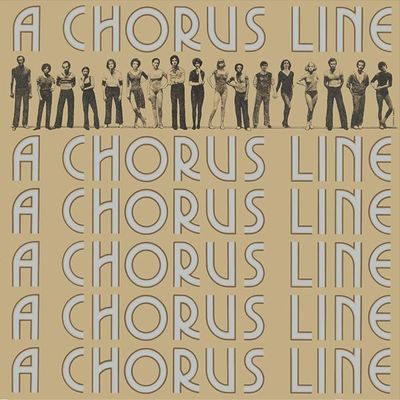
A CHORUS LINE. COMPOSER: Marvin Hamlisch. LYRICIST: Ed Kleban. BOOK: Nichola Dante and James Kirkwood. DIRECTOR: Michael Bennett. CHOREOGRAPHER: Michael Bennett. PRINCIPLE CAST: Donna McKechnie (Cassie), Priscilla Lopez (Diana), Robert LuPone (Zach) OPENING DATE: July 25th, 1975... Read More
From the show: Fifty Key Stage Musicals: The Podcast
Guests

Featured Shows
About
A CHORUS LINE
COMPOSER: Marvin Hamlisch
LYRICIST: Ed Kleban
BOOK: Nichola Dante and James Kirkwood
DIRECTOR: Michael Bennett
CHOREOGRAPHER: Michael Bennett
PRINCIPLE CAST: Donna McKechnie (Cassie), Priscilla Lopez (Diana), Robert LuPone (Zach)
OPENING DATE: July 25th, 1975
CLOSING DATE: April 28th, 1990
PERFORMANCES: 6,137
SYNOPSIS: On an empty Broadway stage, a group of dancers have gathered for an audition for a new musical, directed and choreographed by Zach. Breaking the traditional rules of auditioning, Zach delves into the personal lives of each of the dancers, which includes his ex-lover Cassie, who has given up a promising career to return to the chorus.
Chronicling the lives of seventeen Broadway dancers as they audition for an ensemble, A Chorus Line shattered expectations as a new kind of musical. Its reliance on interviews with actual dancers qualified the show among the ranks of documentary drama, becoming the first major Broadway musical to approach subject matter in that way. Ron Fassler traces the Rashomon-like origins of the show, the advent of the workshop which became the standard method for musical production, and how Michael Bennett, Marvin Hamlisch, Ed Kleban, Nicholas Dante, and James Kirkwood created a docu-musical that transcended its show biz plot and found universality for multi generational audiences.
Ron Fassler is an author, playwright, director, actor and theatre critic. His acclaimed first book, Up in the Cheap Seats: A Historical Memoir of Broadway, tells the stories of how from the age of eleven he saw 200 Broadway shows over a four-year span—at an average ticket price of $3. Nathan Lane called it “Well worth the price of admission,” and it was selected as one of Playbill's “must-read theatre books of 2017.” His one-act plays Half Glasses and Having Words were chosen for the 2019 and 2020 William Inge Theatre Festival in Independence, Kansas. Please visit his website www.ronfassler.org.
SOURCES
A Chorus Line by Nicholas Dante, James Kirkwood, Edward Kleban, and Marvin Hamlisch, published by Applause Libretto Library (2000)
A Chorus Line, Original Broadway Cast Recording. MasterWorks Broadway (2009)
A Chorus Line, starring Michael Douglas and Alyson Reed, directed by Richard Attenborough. MGM (1985)
Every Little Step, starring Bob Avian and Baayork Lee, directed by James Stern and Adam Del Deo. Sony Picture Classics (2009)
A Chorus Line and The Musicals of Michael Bennett by Ken Mandelbaum. Published by St. Martin’s Press (1989)
On The Line by Robert Viagas, Baayork Lee, Thommie Walsh. Published by Limelight- 2nd Edition (2009)
The Longest Line by Gary Stevens. Published by Applause Theatre & Cinema Books. 1st Edition (2000)
A Chorus Line FAQ by Tom Rowan. Published by Applause (2015)
What They Did For Love: The Untold Story Behind the Making of A Chorus Line by Denny Martin Flynn. Published by Bantam Books (1989)
One Singular Sensation: The Michael Bennett Story by Kevin Kelly. Published by Doubleday (1989)
Dancing Man by Bob Avian with Tom Santopietro. Published by University Press of Mississippi (2020)
Transcript
This transcript was automatically generated and might contain errors.
[0:06] Robert W. Schneider: Hi, I'm Robert W. Schneider and welcome to Fifty Key Stage Musicals: The Podcast, a companion piece to the Routledge Press publication Fifty Key Stage Musicals, which is available for purchase by going to Routledge.com or clicking the link below in today's show description.
[0:22] Robert W. Schneider: Today's episode focuses on chapter 26, the 1975 production of A CHORUS LINE.
[0:29] Robert W. Schneider: And with us today is the author of that chapter, Ron Fassler.
[0:34] Ron Fassler: Thank you.
[0:34] Robert W. Schneider: Ron is an author, playwright, director, actor, and theater critic.
[0:38] Ron Fassler: Thank you.
[0:38] Robert W. Schneider: His acclaimed first book, Up in the Cheap Seats, a historical memoir of Broadway, tells the story of how from the age of 11, he saw 200 Broadway shows over a four-year span.
[0:50] Robert W. Schneider: This book was selected as one of Playbill's must-read theater books of 2017.
[0:55] Robert W. Schneider: His one-act plays, Half Glasses and Having Words, were chosen for the 2019 and 2020 William Inge Theater Festival in Independence, Kansas.
[1:04] Robert W. Schneider: Ron, I'm so happy that you are joining us today.
[1:08] Ron Fassler: Thank you. It's my pleasure to be here wherever we are.
[1:15] Robert W. Schneider: That's right. Ron, my first question for you is what makes A CHORUS LINE a key musical?
[1:22] Ron Fassler: For the simple reason that there was no other show like it before it opened. It broke new ground in such dramatic fashion, and it did it with a sense of showmanship that very few things that come out of nothing can still claim. So for example, when something is considered groundbreaking, it's usually something that just makes everybody feel like they've never seen it before. Yes, A CHORUS LINE had that. It was something they'd never seen before, and yet it was seeped in showbiz. Michael Bennett, who created it, the dances and the direction, was just a person who lived, ate, and breathed show business. And it's in every one of the musicals he ever directed and worked on. So A CHORUS LINE has this great throwback to shows of old, and yet it's completely new. I mean, I'm sure you agree, but that's the first thing that comes to mind for me.
[2:31] Robert W. Schneider: Absolutely. And the second question that we've been asking all of our authors is why did you want to codify this show? Why did you want to tell the story of A CHORUS LINE?
[2:43] Ron Fassler: Well, for one thing, I was there. You know, I saw the original Broadway production with the cast when it was as hot a ticket as Hamilton. And it was an especially moving evening in the theater for me because I saw it with my parents, but not in the way that most people see a show with their parents, which is that the parents take the kid. No, I was the kid who took my parents. And that's the way it was ever since I was a little boy, because as you mentioned in my introduction, I did start going to the theater at age 11 by myself, and my parents never took me to the theater. That was actually my great aunt and my grandmother and my neighbor. My parents were too busy parenting all six kids in my family.
And so they didn't have time to take one of us to a Broadway show. I did take them to a Broadway show when I was about 14. And that was a fun night as well. But by the time I saw A CHORUS LINE, I was already 18 years old. I was actually in my freshman year of college. But since I was going to Purchase, which is 45 minutes from Broadway in Westchester, my parents actually called me and said something like, "This A CHORUS LINE, you think you can get us some tickets?" And I was like, "Yeah, absolutely. I have a contact, I can do it, we'll go." And we got three tickets and we saw A CHORUS LINE. And of course that show is a lot about kids and their parents. So, and I was a guy who wanted to be in show business, so it resonated, believe me. And my parents, you know, forever and a day thought it was the greatest thing they ever saw in their lives.
[4:28] Robert W. Schneider: What do you think is the universality about a show like A CHORUS LINE? Like you said, it's all about dancers. I'm assuming your parents were not in the performing arts.
[4:35] Ron Fassler: Oh my god, no. My mom was just a homemaker and my dad was an accountant. And that's the thing about A CHORUS LINE. Everybody who saw it understood it's about people's dreams and passions and how hard it is to achieve those dreams and passions. You know, dancers on Broadway were never in the spotlight, which was the main reason why Michael Bennett wanted to create a show to honor them. They were always in the background, they were the ensemble, they're the chorus, they're nameless. And he gave them identities, he gave them names, he put them front and center. And that I guess anybody can relate to that. If you're an office worker, you feel like a bit of a drone, you know. If you work in a restaurant, you feel like you're just somebody who doesn't maybe have a name, you know, if you wear a name tag. So to suddenly have a spotlight thrust on you, I don't know. I think it goes towards a lot of people's hopes and dreams. I think that's one of the reasons why the show speaks to so many people.
[5:38] Robert W. Schneider: Do you feel that choruses, or ensembles, I should say, in Broadway musicals after A CHORUS LINE tried to change that anonymity, or did you feel like they still tried to stick with what A CHORUS LINE was saying originally, which is they're supposed to be anonymous?
[5:54] Ron Fassler: No, I think that when A CHORUS LINE opened, which was 1975, the musical was in a bad way. Big splashy musicals were too expensive and people weren't going, and then A CHORUS LINE revitalized Broadway in an absolutely galvanizing fashion. And the chapter that I wrote for the book does go into that in some fashion. But the thing is that choruses then became acting, singing, dancing choruses. Because after A CHORUS LINE, I don't think people looked at the chorus as just a bunch of bodies. I think they started to find that the chorus could act. Like I think there's a great story that Robert Morse told me, the brilliant actor, when he was doing How to Succeed. And he said something to Abe Burroughs, the writer-director, about, you know, I really shouldn't say that line.
Why don't you give it to... and he said, you know, Jimmy. And Burroughs went, "I'm gonna give a line in the play to somebody in the chorus." So, you know, it was not done. So once Michael Bennett put everybody front and center like that, and also the fact that big musicals were also dying out so that you couldn't have a singing chorus and a dancing chorus. You know, that used to be a thing. I don't know if any of your listeners or readers might know. But in the old days of Broadway, they were bisected.
[7:18] Robert W. Schneider: I was gonna ask you actually if you could expand on that and tell us a little bit of the history of a chorus leading up to A CHORUS LINE.
[7:26] Ron Fassler: Sure. I mean, Sondheim calls them the nameless villagers, you know, the happy villagers. Happy villagers, yes. Because he never liked that in shows where the chorus suddenly joins in. And yes, that's what it was like. If you go back to something like Showboat, a massive chorus, but there was a singing chorus and a dancing chorus, because when the dance numbers started, that's when the dancers went to work. And when they needed some big great choral support, the singers went to work. But by the 50s, I think they started really integrating them. By the sixties, it really was kind of a thing of the past. When I started going to Broadway in the late 60s, the choruses were integrated. They were not singing and dancing choruses. If you look at the old playbooks, you will literally see singers, dancers. They were split up into two separate groups.
[8:19] Robert W. Schneider: Do you miss that when you see Broadway shows today?
[8:24] Ron Fassler: Well, I mean, there's nothing like when, like on a whim, it's more than a whim. You know, you have to have so much money to back it. You know, a show will have a large cast, you know. The one I remember most of all is Ragtime. I mean, you know, Garth Drabinski was throwing so much money, and he had a core, I think it was 45 people were in Ragtime, which, you know, there's no shows with 45 people in them anymore. I mean, think about it. It's half that. And when they sang that opening number and those harmonies hit, I mean, I was crying. I mean, really, because it brought me back to the old days. And also, you know, there's nothing more thrilling than hearing that kind of a sound. I mean, after all, it's why people still go to the opera, right? I mean, that's what they want to hear. But Broadway's priced itself almost out of existence in that kind of endeavor.
[9:17] Robert W. Schneider: And speaking of the old days, can you tell us a little bit, and I'm sure you've got some great anecdotes to go along with it, about how musicals tried out before A CHORUS LINE came in and revolutionized this game?
[9:17] Ron Fassler: Right, because A CHORUS LINE invented the workshop and you could just stay in town in a tiny little space and no one would bother you. Don't forget that's before there was internet and spies and all that kind of stuff. No, what you did in the old days was you took a show to Boston or New Haven, Philadelphia, Detroit. There were all these cities that welcomed the companies, had the proper hotels nearby the theaters, and sometimes subscription audiences, but mostly just people in Boston who loved to go see a show before it hit Broadway and could claim to all their friends if they saw, you know, Company when it played here. But that became very expensive over time. And A CHORUS LINE by sort of rehearsing in New York made people realize, well, I guess maybe we could do it.
And it's, I mean, in a perfect world, you don't want to rehearse your play in New York and preview your play in New York. I know that Harold Prince felt terribly about even Sweeney Todd, because it was such a massive set, they couldn't go out of town. And you know, the Broadway gossipers were saying it was a bomb and a disaster, and of course, we know it was a critical smash, if not a commercial one. And then Merrily, two years later, was a nightmare scenario where they didn't take the show out of town, they previewed it in New York. It had a lot of troubles, troubles that in the old days could be ironed out in New Haven and Boston and Detroit. But no, no, they did it right in the city with everybody paying to see it and comment on it.
And again, Merrily was 1981, you know, it's 41 years ago. And yet, still the gossip, I mean, I was here, I had friends in the show. I was at the very first preview of Merrily all along. And oh my god, I never heard that kind of talk at an intermission in my life. And that would usually have been reserved for out-of-town, where people are not as harsh as New York, you know, members of the community. We call it the Brody community, we all love each other.
[11:30] Ron Fassler: Yeah, well, it's a family.
[11:33] Robert W. Schneider: Yeah, and but it's shark-infested waters, right?
[11:36] Ron Fassler: Yes.
[11:36] Robert W. Schneider: We've got to be careful for the sharks. What are some of the advantages of doing a workshop? And then what are some of the advantages of doing a musical out of town?
[11:48] Ron Fassler: Well, I mean, there are certain shows that do out-of-town runs now, but they're mostly done at a regional theater as part of their subscription base. Wicked, for example, was done in San Francisco as part of the subscription base for the theater there. But that was its out-of-town run. And they're glad they did it. I saw it in San Francisco, and it had a lot of problems, and they really went to work. And certain shows close out of town, as I'm sure you know. There's just, it's overwhelming. They can't do the work. They say they're gonna close and they're gonna come back, they most often don't. One of the great examples of a show that got killed out of town was Twilight Thorpe's Moving Out. I mean, people hated it.
And she and her creative team read every review, listened to the audience, and they came back and gave New York a big hit. It's rare that that happens, but sometimes people are willing to do the work. You know, the worst thing is when you're out of town with a musical and it gets terrible reviews, and you say, well, they don't know what they're talking about. New York will be different.
[13:06] Ron Fassler: Yeah.
[13:06] Robert W. Schneider: It's usually not.
[13:07] Ron Fassler: It's usually not.
[13:08] Robert W. Schneider: For listeners that might be unaware, how would you define exactly what occurs in a workshop for a new musical?
[13:17] Ron Fassler: Well, you know, it's trial and error. You know, the writers have a full script when the show starts, usually, and the full score, but it becomes immediately apparent that a certain number isn't working. And maybe they'll throw it away, or maybe they'll give it to another character with some rewriting. You know, maybe they take it out and they end up putting it back in later because the three... I'll give you another example. Wicked. The Fierro's opening number, that number was written four different times, I think. Four separate songs, just to introduce his character because they just couldn't find the right way in. But the workshops in New York, even though they're smaller scale, I mean, you're not dealing with really big, heavy sets and costumes.
Though all those moving parts are so difficult when you're out of town with a musical. You know the great line, I think it's attributed to Larry Gelbart when he was out of town with a musical that was going really badly, and he said, you know, if Hitler really is still alive, I just hope he's out of town with a musical.
[14:30] Robert W. Schneider: And we just saw this recently with Hamilton, and I want to get your take on it. And you might have to wear many different hats in answering this particular question. The one of the issues that actors from Actors Equity had a couple of years ago was that actors who participate in workshops of new musicals, who suggest lines, who suggest bits of business, then when that show goes from a workshop to a full production, they will see their contributions on that stage, but they are not getting a royalty or a fee for that. There was a debate before COVID hit that actors that are participating in a workshop of a musical should be entitled to some sort of royalty when that show then moves to a full production. What are your thoughts on this? Because it's going to circle back to A CHORUS LINE.
[15:17] Ron Fassler: Many years ago, probably 40, there was an off-Broadway play called Medigliani about the painter. It was workshopped, and then it was brought, uh, workshopped with Al Pacino, I think. And when they brought it off-Broadway, Pacino was no longer involved, and it was Jeffrey DeMunn. But some actors from that original workshop were very upset when they saw it, and they were like, that's my contribution. It's exactly what you were describing, Rob. And it became a big, big case. And as I recall, it started a new rule about actors being compensated for workshops. And I think that's been over the years amended, adjusted, uh, adjusted for inflation, uh, right up until Hamilton, when those actors were all told that they were going to get a piece.
And that show obviously, you know, was going to be a billion-dollar enterprise. Very quickly, early on, everybody knew it. And the actors started going, well, we need to talk about this. And it, uh, the talks got heated, but as I understand it, everybody did finally get something. Uh, you know, they keep it under wraps, but they're being compensated as they should be.
[16:31] Ron Fassler: If you're in a workshop situation, and for example, the writer cannot figure out what line should be set here, and you know it in your head, and you have a really great idea. Do you volunteer it and say, hey, I think I have an idea on how to solve your problem for which I will receive no compensation, or do you keep it to yourself saying they have to figure it out, they're the ones getting paid for it? I, uh, that's not the way my mind would work. Um, I feel sorry for a person actually who thinks, I don't think I'm gonna give that an idea because I mean I got paid for it. Can you discuss for us, Ron, the origin story of A CHORUS LINE and how, because it feels like a Rashomon quality of how this musical came to even be an idea?
[17:23] Ron Fassler: About dancers, for dancers, and he didn't quite know how that could become a musical. Uh, at the same time, he was trying to work that out in his head. Uh, two Broadway dancers with huge credits and, uh, absolutely more than just acquaintances with Bennett were Michon Peacock and Tony Stevens, and they were thinking about doing something for dancers, but much more in a, uh, a way to bring them together so they could talk about the issues that they faced in terms of employment and unemployment and all those things. And it was Bennett's idea to then perhaps bring a whole group of dancers together for an evening and have like a marathon rap session. And when they all arrived at midnight, okay, because a lot of these dancers were in Broadway shows, uh, they showed up, and Bennett had this big reel-to-reel tape recorder.
Those are the days when you, you know, you had these big clunky machines, you couldn't just take out your phone and start recording. And they taped this entire 12-hour session. It ended at noon the next day. And it was group therapy. It was a chance for dancers to talk about their lives and their history, why they became dancers in the first place. Everything that A CHORUS LINE is from that first evening of tapes. And even though it ended on a promising note, Bennett still didn't know how it could be a show. He can't put dancers on stage talking about their lives. How could he do it? Uh, we all know how he eventually did it, but it took time and effort and energy. And, uh, it actually got to an interesting place, and here we're back to this conversation about compensation.
Uh, Bennett realized these tapes because there was another session shortly thereafter to try and repeat this whole thing. And some of those dancers were involved, and new dancers were brought in. Bennett approached Peacock and Stevens and said, I think I need the tapes. I mean to say if I'm going to do something with these tapes, create a show. So here's a dollar in legal ease. I'm paying you a dollar each. They're my tapes. I know, I know. That's one of the greatest purchases ever made.
[19:52] Ron Fassler: Yeah, like it matches the, uh, buying Manhattan Island, right? Yeah. For 24 bucks. Um, and then, uh, one of the dancers who took part, uh, was Nicholas Dante. He's the one who told his incredible autobiographical story about, uh, being a dancer and, uh, in drag and his parents coming to see him, and that's the great Paul monologue that is a centerpiece of A CHORUS LINE. And Michael knew that, uh, Nicholas really wanted to, uh, write, so he gave him the assignment. See if there's a show here, start writing a book. Although he did say with a proviso, I will bring in a seasoned librettist at some point, and that ended up being James Kirkwood, who was an actor, novelist, playwright, uh, and writer, and, uh, they shared the Tony Award when it won Best Book.
But look, it was everybody's stories. I mean, you know, some of the lines are verbatim from people's mouths when they spoke during that night, lifted off the tapes. Even some actors were not cast as the character that they really truly are. Their stories were given to somebody else. That's how bastardized the whole thing became, but that's art, right? Um, some people auditioned for the show to play themselves and didn't get the part. I know people listening to this must be who aren't in show business, must be like, how is that possible? Well, it's possible. It's possible, and it, like you said, it did happen. An unsung hero of A CHORUS LINE is Joseph Papp. Would you tell us a little bit about who Mr. Papp was and what he was trying to accomplish with working in the producing world for A CHORUS LINE?
[21:35] Ron Fassler: Joe Papp was, uh, one of the most significant producers the theater's ever known. Um, he was, uh, a guy with a passion for Shakespeare. Uh, he was a stage manager doing, uh, shows, uh, at CBS in the, uh, mid-50s. And the late 50s, he wanted to bring Shakespeare to the masses for free. That was his idea. And, uh, he got some permission, he got some seed money, he paid actors nothing. Some of these actors went on to become some of the greatest Tony Award-winning actors you've ever known, uh, like Colleen Dewhurst and James Earl Jones. And, um, he just set them out into the boroughs in, in roving, uh, you know, buses, and they would stop in a park and do Shakespeare. And these stories are all extraordinary.
Uh, but Papp ended up getting, uh, the money and the backing to create what is now known as the Public Theater. Uh, and while he was at the Public Theater, uh, he had a notion to do musicals. And in fact, the very first show he ever produced at the Public Theater was a musical. It wasn't Shakespeare, it was a musical called Hair. Yes, the great first rock musical was created at the Public Theater. When the creators thought, gee, maybe we have something here, we're gonna move to Broadway. Are you interested, Joe? Joe Papp said, I don't think so. He regretted that because of course Hair ran on Broadway for four or five years and was an international, you know, monetary and critical success. So he was always looking for another musical idea.
And, um, when Michael Bennett came to him and said, Hey, you know, I've got this idea for a musical, he was like, Sol, here's a space, it's a safe space, it's yours. We'll call it the Michael Bennett Dancer Project. Do whatever you want. And that is where Michael Bennett created A CHORUS LINE. And when it, you know, started looking like something that was gonna be good, believe me, Joe Papp wasn't gonna let that one go by. Yeah, and he did produce it on Broadway. And the money that A CHORUS LINE was, uh, you know, the piece of the pie that the Public Theater got for nurturing it, uh, kept the coffers of the Public Theater solvent for, uh, at least 20 years. And Hamilton, of course, was workshopped there as well.
They have a piece of the pie, and Hamilton will keep the Public Theater running for generations. And thank God for that. Uh, and that's the power of workshop. I mean, that's another thing we should talk about if we're talking about workshops.
[24:01] Robert W. Schneider: Yes, please. Look, the thing about show business, it's my favorite line of all time. You can't make a living, but you can make a killing. Uh, my dear friend Winnie Holtzman wrote the book for Wicked. She worked on it for five years for no money. I mean, nobody was paying her. She was just working on it out of the love and the hope and the dream it might one day get produced. And look what happened. Look what happened. A millionaire. Well, every time I think about the money Winnie earns from Wicked, I just keep thinking that every dollar she makes, Stephen Schwartz gets two. Oh. Because you know, the pie is split up between book, music, and lyrics. So Stephen gets two thirds of that pie. And if you think about a pie like, uh, Lynn Manuel Miranda, he gets all three pieces of the pie.
A few years ago, the New York Times ran an article, um, saying how much the creatives on Wicked had made just from the Broadway run alone. Right. Each of them in the millions and millions range. So it couldn't happen to a nicer person.
[25:03] Ron Fassler: Right. And your parents tell you you can't make money in this? Come on.
[25:09] Robert W. Schneider: Yeah. No. But that's, you know, there's once in a, uh, generation. There's what, what's, what has there been on Broadway in the last, uh, 40 years? There's been Wicked, Lion King, The Revival of Chicago, Hamilton. Those are the ones, you know, uh, that, uh, are, you know, oh, a little one called Phantom of the Opera. And then the Cats. There's a few. But A CHORUS LINE was the first, you know, one that, uh, that ran longer than any other. You know, uh, when A CHORUS LINE closed, it was the longest running musical on Broadway, and it was many years until, uh, Cats caught up with it. I'm so curious. Were you present when they broke the record for A CHORUS LINE?
[25:48] Ron Fassler: I couldn't get a ticket. I wished I could have. Um, I do have a friend who went that night and she had never seen A CHORUS LINE. She said, I had to have been the only one in the theater who had never seen it. Um, I wish we had room in our chapter to include this. Can you tell our listeners about how Michael Bennett celebrated A CHORUS LINE becoming the longest running musical?
[26:12] Ron Fassler: Yeah, the night it became the longest running musical in history, uh, breaking the record of Grease. I know. Um, he wanted to do something special. And Joe Papp was like, whatever you want, Michael. They found the money. I mean, obviously they'd all made so much money off the show and produced an extravaganza, a one-night-only, specially directed version of A CHORUS LINE that Michael Bennett put together, specifically just for this one night. And what he did was he invited everybody who'd ever been in A CHORUS LINE on Broadway on a tour internationally and figured out a way to showcase everybody all night long. He split the songs up so that the person who sang, uh, nothing, the great song that Priscilla Lopez, uh, introduced was sung by about six different people, one of them in Japanese.
Uh, and the finale is what everybody, uh, remembers because there is a little bit of footage that you can see if you go to YouTube and just type in A CHORUS LINE, longest running performance. And he brought in, I think it's 350 dancers. Um, and they're all dressed in that great costume you all know, the top hats and tails, and 350 people sang one. And, uh, I, I, it thrills me every time I watch it. I mean, and the showmanship involved. Uh, and Bennett just, uh, put his stamp yet again on A CHORUS LINE. He created another bigger, better A CHORUS LINE. The tragedy for me is that he wasn't given the opportunity to make it into a movie. He tried, uh, I don't know if he really truly tried. He was going through a lot of, uh, troubles personally at that time in his life.
He was, uh, really doing too many drugs, and he came out to Hollywood to talk about it. And, uh, but I, I don't think he ever really worked on it. Um, and I know he could have done it. He, he had a filmic sense. If you ever saw the original Dreamgirls, the way he staged it, it was a movie. It was as fluid, it had swipes and dissolves and all those things you see in movies. The fluidity of it, he could easily have directed the movie.
[28:22] Robert W. Schneider: I was gonna say, when you look at somebody like Bob Fosse, you can identify their choreographic style just by however the dancer is moving their body. Does Michael Bennett have a style?
[28:33] Ron Fassler: Not like Fosse did. And Fosse owed a lot to Jack Cole, you know, who also had a style. I mean, Jerome Robbins didn't have a style, you know. I mean, he fit whatever the needs were. You know, if it was Gypsy, it was gonna be, uh, 1920s dancing, you know? And if it was Fiddler on the Roof, he was gonna go and look at every folk dance he possibly could.
[28:55] Ron Fassler: Michael Bennett wasn't like that. I think he really loved the expression of movement in the style of what Broadway meant to him. You know, he was a little kid; he never went to college. I think before he even left high school, he was cast in a tour of West Side Story, an international tour. I don't think he was 18. I think he lied to say he was 18 for the permission to go and do it. And then for our listeners who might not be aware, why was it that he didn't really do anything after A CHORUS LINE or Dreamgirls?
[29:32] Ron Fassler: Well, Ballroom was the show after A CHORUS LINE, which he purposely did something very different from A CHORUS LINE. I actually attended the opening night of Ballroom.
[29:42] Ron Fassler: Oh wow, I did. I had like the best orchestra seat that you could imagine. I had Lauren Bacall sitting next to me. I mean, it was a crazy night. I thought I was watching one of the next great musicals. I mean, it was so entertaining. And then the next day I read the reviews, and I couldn't believe the critics saw the same show. I think they would just, if that had been directed by Michael Burns, you know, or Michael Johnson, they would have been all over themselves. What an innovative, wonderful show. But it was Michael Bennett, and they really, you know, were out to how dare he, you know, have two successes in a row. I mean, look, when Lin-Manuel Miranda comes back and does something after Hamilton, get ready. They'll all have their daggers out, you know? Those people who don't want him to succeed.
[30:31] Ron Fassler: And then Bennett, of course, did Dreamgirls, which was spectacular. And then he did another musical that was all set to go to Broadway, had an opening night; it had a theater called Scandal, which was supposed to be outrageous and contained some of his most brilliant work. I know people who were in it, and they've told me a ton about how ingenious this show was going to be. But he got sick, and that's when he couldn't do anymore. His death at 44 is something we've never gotten over. I mean, he could have still been directing into his 70s, you know? And not just him, but Nicholas Dante and James Kirkwood also.
[31:14] Ron Fassler: Yeah, and Ed Kleban died of cancer at a much too young an age, and Marvin Hamlisch didn't really have a very long life. It's a terrible tragedy that they're all gone.
[31:25] Robert W. Schneider: Ron, my last question for you about A CHORUS LINE is do you think in the 21st century there is a place for this musical? Can we still tell the story of A CHORUS LINE and still have the same impact on audiences as it did in 1975?
[31:40] Ron Fassler: No question. No question. A CHORUS LINE's timeless. I can't wait for another Broadway revival of A CHORUS LINE. I took my mother to the first A CHORUS LINE revival, which was really beautifully portrayed in a documentary I want to recommend to anybody listening, called Every Little Step, right?
[31:58] Robert W. Schneider: Yes, Every Little Step. Is that what it's called?
[32:00] Ron Fassler: Yeah. Fantastic documentary about A CHORUS LINE's revival. What was it, 12 years ago or so, Tom?
[32:05] Robert W. Schneider: Oh, 2006, I think.
[32:08] Ron Fassler: Okay, so longer, 15 years ago. And you know, it recreates A CHORUS LINE in the sense that you're watching all the actors audition, and you don't know who's gonna be in it. So it has that same, it's kind of a brilliant concept, and it has amazing emotional highlights in it. I recently rewatched it, and I was a wreck. I just cried and cried and cried. I mean, A CHORUS LINE has that effect on people, especially people who are in show business because you know it does speak about what I did for love and all those things that are still true.
[32:41] Ron Fassler: A CHORUS LINE's a perennial. The only thing is we're gonna look forward to the day when somebody will reinvent it and not do Michael Bennett's choreography. Because that revival we're talking about from 15 years ago was directed by Bob Avian, who was the co-choreographer and Michael Bennett's closest associate for his entire career, who knew that show inside out and basically recreated the staging. So there was nothing innovative about the production. I know there have been other productions that have been innovative. I've seen some clips, and it's really interesting to see different choreography. But you know, it's all in the heirs to the estate. They'll one day find somebody who will have a concept, and they'll bring it back, and it'll be great fodder for conversation and hopefully big box office because I think everybody, you know, in a perfect universe, A CHORUS LINE is always playing on Broadway.
[33:31] Robert W. Schneider: In addition to our interview with Ron Fassler today, we are also posting an interview with actress Donna McKechnie, who originated the role of Cassie in A CHORUS LINE. This interview was conducted on October 7th, 2019, and is part of the Behind the Curtain Broadway Living Legend podcast series. Please enjoy Donna's recollections of working with Michael Bennett on both Company and A CHORUS LINE.
[33:57] Donna McKechnie: And so then Promises, Promises comes to an end. And then Company, how did you get involved with Company?
[34:04] Donna McKechnie: Well, Company was the first show that I got without an audition, and I loved it. I went, "This is how it's gonna go." But Hal Prince had me in his office, and I thought I was reading for Hal Prince. I went, and he sat there, such a great person and big producer, and I was excited to meet him and nervous about reading. It wasn't my forte to do cold readings. But there I sat, and he was so nice and told me, and he showed me a set. He said, "This is the set, Boris Aronson's magnificent set, and these are the little people," and he showed me, and I went, "This is making me more nervous. Can we read already?"
[34:54] Donna McKechnie: And I said, "Well, where are my sides?" And he goes, "Sides? Well, do you want the job?" And I said, "Well, yeah, but I..." He goes, "Well, you got the job. I just wanted you to come in and see the set." And I went, "Wow, I know." Did someone recommend it too? No, this is what, well, no, I, he saw me in The Education of Hyman Kaplan years before and just remembered me. And then I guess he, you know, knew that I had worked with Michael Bennett. Michael Bennett was choreographing it and co-directing it, and I was kind of maybe the enticement so that Michael could have a dance number.
[35:42] Donna McKechnie: Sure, sure. And I think Michael was a little hesitant, and he didn't know if he wanted to see his choreography on people that didn't dance. Yeah, that's my guess. We never talked about it, but I kind of figured it was that. And so then when I said, "Yeah, I'd love to do it. I love Michael Bennett's choreography," and that was it.
[36:04] Robert W. Schneider: Now, okay, so you start rehearsals for Company. Did you know from the beginning that, well, this is something special?
[36:10] Donna McKechnie: Yeah, yeah. Stephen Sondheim had it all done, the whole show. I mean, Barbara Barry, the first day we were sitting there around the table, the first read, we got the opening number, and she opened it, and it was like 20 pages; it just like fell across the floor, you know, the whole floor. And she said, "Oh boy, good luck with this; they're gonna be doing this in 20 years from now."
[36:39] Donna McKechnie: And regionally, you know, summer stock.
[36:42] Robert W. Schneider: Yes.
[36:42] Donna McKechnie: And of course, they did. Of course. Many times, and it's coming back.
[36:46] Robert W. Schneider: Yes, how exciting is it?
[36:48] Donna McKechnie: How exciting. Now, did the show change a lot from what was in rehearsal to what eventually ended up on stage?
[36:53] Donna McKechnie: Not that much, but yes, certain things, like some of the set was changed a little bit, you know, those pieces. There was a scene that Kathy, my character, had that was much longer with Dean Jones and was cut down. I mean, a few of the characters that were more, not the main characters, but you know, like Dean.
[37:20] Donna McKechnie: Sure, sure. But those girlfriends, you know, they were kind of cut down. And then my dance number at one point in time when we were out of town, was it Boston? Might have been. Hal took me aside, yeah, and Pam Myers and said, "The two songs we have to cut from the show until we figure out what to do with them is 'Another Hundred People' and 'Tick Tock.'"
[37:46] Donna McKechnie: Yeah, you know, she was her first show, and she was kind of like, but the way he did it, I have to tell you, it made it okay. Not, you know, it was like scary, but okay because I thought, "Oh God, I'm out of this show; I'm not gonna be able to do it." But he was so respectful, such a gentleman, and he took us each back in the lobby, arm around, you know, just walking along and saying, "Look, it's not working where it is, so we're gonna just take it out and rearrange it," and you know, and he did.
[38:20] Robert W. Schneider: And how did the dance come to fruition? How was that collaboration between you and Michael Bennett in terms of creating the "Tick Tock" number?
[38:28] Donna McKechnie: Yeah, it was, you know, Michael spoiled me because with Bob Avian also being in the room, it was more of a collaborative. Michael loved to work with people that way, and he always had, you know, he'd do something just come kind of come from a, his psychology of, you know, he would just have an element of something that he wanted to illustrate, or that had nothing to do with any writing, but it's like he said, the first day he came in with Company was a little, he still was trying to break new ground, and he said, "Well, maybe we'll do this nude."
[38:36] Donna McKechnie: And my, you know, I went from the Midwest, you know, my family, I'm not gonna be dancing nude. And he said, "Well, have a sheer, something sheer; it'll be beautiful, but you'll have, you know." And I remembered sweating and flop sweat, and I went, "Michael, I don't know, maybe it's not, maybe it's, you know, not gonna work that way because you want to keep the mystery of this romanticism, you know, this sensual feeling. And if it's too much, you know, I was talking myself, trying to talk him out of this, and I think he went, "Okay, never mind."
[39:45] Donna McKechnie: Yes. But he was always trying to find, you know, something, and he said, "You know the tick tock of a clock, when you're with someone in an intimate way, and you're not really with them, and all you hear is the tick tock of the clock." And I went, he said, "You know how that feeling when you, after you've made love?" And I go, "No, I didn't say I didn't," but I had no idea what he was talking about. I went, "Oh yes, that tick tock on the clock. Of course, yes."
[40:17] Donna McKechnie: But of course, I, you know, it's like I do things, and then you grow into it, and you figure it out. Did you do Company in London? Did you go to London with it?
[40:24] Donna McKechnie: Yes.
[40:27] Donna McKechnie: That was Hal Prince.
[40:28] Donna McKechnie: Yeah, yeah. Hal Prince, that was historic in a way because no American complete company, apart from April, the character April, Julia McKenzie did that; Susan Browning stayed. But the whole company went to London at Her Majesty's Theater. That was a first. And I remember we got off the plane, and there were pictures, and you know, I was getting off, and it was just like, it was just a great thing. We had to leave after three months, and that's when Elaine Stritch stayed on, lived at the Savoy, and did all those wonderful TV shows.
[41:07] Robert W. Schneider: Yeah, yeah, she was so marvelous.
[41:10] Donna McKechnie: How does A CHORUS LINE come to fruition in your involvement with it?
[41:14] Donna McKechnie: Well, you know, there was a time period where Michael wanted to create a musical that he really wanted to put his stamp on it, that it's something that the accumulation of all the other great shows that he'd done, he just wanted to, and he was thinking a lot about his life as a dancer. And I think he was at that uncomfortable place where, you know, when you're a director, everybody's asking you questions, and you have to, and you're not in your, you know, the happiest moment in his life, I think, as he expressed it, was when he was dancing in the chorus, and he was doing those eight shows a week, and all of his dreams, his future was ahead of him. He remembers that as being a really exciting happy, and he wanted to revisit it in a way.
[42:02] Donna McKechnie: So before that, though, you know, it was like three years where we were having conversations on and off. New York was going through a very difficult time, and he commissioned at one point a writer to do a backstage musical.
[42:22] Donna McKechnie: Yeah. Because he had me in mind, you know, he said, "There's a part in it for you," and I went, "Oh good. Well, hurry up because I'm 30, and I want to, you know, I want to be able to do it." We would joke that way about it, and then he had, he would show me from time to time ideas about using the bare stage for dancers to come in and all these little things would, and then of course the night when he met Miss Sean and Tony just to talk about what they had in mind. They went to Michael really, and then he kind of combined all of this stuff that spent that he was going through with what they were going through, and everybody was kind of in need to be creative and to work, and so that's when we did the first, Wayne taught, Wayne Salento taught the class late at night, and then we went in and sat down, you know, with the real-to-real thing and the big jug of bad red wine, and we just went around, and Michael used himself as an example.
[43:24] Ron Fassler: The first three questions are pretty much the questions that Zach starts with, you know, in the show. That's kind of what Michael said, you know, go around, say your name, where you're born, and why you're dancing.
[43:36] Ron Fassler: What made him such a great director? Why did you like going into a room with him?
[43:42] Ron Fassler: Um, well, he was different as a choreographer in a way, but as a director, uh, you know, because when he directed um Twigs with Seda Thompson, you know, and that was important to him to be, you know, like Jerome Robbins, because Jerome Robbins did that.
[43:59] Ron Fassler: And um, and I said, how did you know it to uh your auditions? He goes, it's so simple. I just go with who's the best. I went, well, that's clever. It's a good one, yeah. It's novel. So what that says though is that everybody has their job to do.
[44:18] Ron Fassler: Yeah. And that's a, you know, Michael's family or his, you know, the people he worked with, he had a lot of respect and he loved the collaboration because he knew that's how things get done. That's how visions are made and dreams are met, you know, with that.
[44:36] Ron Fassler: And I just thought it's not that simple, but it takes someone who has that kind of, you know, faith or in talent in just seeing talent.
[44:47] Andrew Child: What do you look for out of a director? For you, what is the ideal director-actor collaboration?
[44:54] Ron Fassler: Oh gosh, I uh, well, I love John Doyle. I mean, there's so many good directors, and most directors, uh, I've been lucky because they, um, I've had a couple, well, I shouldn't say that, but yeah, I have. But most good directors, they create a safe place, and as an actor, your job is to bring your interpretation, but a director must um create an atmosphere where everyone's on the same page as well.
[45:21] Ron Fassler: So we're all doing the same story. Um, and then you bring in, and a good director will take your ideas and be inspired by the work that everyone brings in.
[45:31] Ron Fassler: Um, and it's a, it's uh, I love John Doyle's the being in the room, as they say. Yeah, um, because it's most recent, you know, for a Broadway show when I uh did The Visit.
[45:46] Ron Fassler: Yes, well I didn't do it, but I was there every day. Um, to get back, even though it's a, it's art, it's commercial, it's Broadway, and you have to, you know, you have to produce and deliver.
[46:00] Ron Fassler: And to have that uh creation going on and changing and to see the uh Roger Rees get more into the character and bring certain things and Chita, you know, changing certain elements. I mean it was just so uh great.
[46:16] Ron Fassler: And a great director like John can do that. I mean Hal was wonderful because they did, they want you to come, I mean they want you to bring it, you know. They hired you for a reason.
[46:28] Andrew Child: That's right.
[46:31] Ron Fassler: So I guess I like directors who leave you alone.
[46:33] Ron Fassler: Yeah, well, you know, the truth is when I talked to Marsha Milgram Dodge, you know, we, she just did our uh, she uh directed our concert with Andre McCartell. And um, she said when you, when a director, because we talked about this and I said, you know, when the director, I used to say to Michael, I used to drive him crazy saying, what am, what give me some notes?
[46:55] Ron Fassler: I always wanted to, as a dancer, it's never good enough. So give me some notes, he goes, I have no notes. And finally he got mad. I think he said, okay, I have a note. I go, what is it? What is it? You're working too hard.
[47:08] Ron Fassler: And that was a good note.
[47:09] Andrew Child: Yeah, it's a good note.
[47:10] Ron Fassler: Yeah, it's a good note.
[47:11] Ron Fassler: But she said, uh, most directors leave the actors alone when they're doing, they're just doing their work, and that's fine. You pay attention, you get on people who aren't really maybe rising to the occasion or something.
[47:24] Ron Fassler: Yeah, but if they leave you alone, it's because you're okay.
[47:27] Andrew Child: When you started doing A CHORUS LINE at the Public, were you aware in the rehearsal process that, oh, this might turn into something quite fabulous?
[47:36] Ron Fassler: Oh yeah, I felt that a, I felt that not always at the beginning, but the first workshop was kind of a, I thought it was, it was great to be that creative. But I thought it's not, we can't, that we're, we're certainly not ready. This is like a, we called it the Towering Inferno, actually.
[47:54] Ron Fassler: You know, people were just like, this is before Michael realized that he had to make it um growing up in the line. In other words, each, that's when he discovered that because we were all talking about our childhood dilemma, and we were all competing with who had the worst childhood, it seemed, because we knew that they were writing, you know, our stories, so we wanted to make them interesting.
[48:20] Andrew Child: Sure.
[48:22] Ron Fassler: Uh, but after the, when Marvin Hamlisch and Ed Kleban came in, um, and James Kirkwood especially, that's when it all kind of, when "At the Ballet" was the first song that we heard as a company, and that's when I knew if not a commercial success, it would certainly be an artistic success because that number was like the heartbeat of what it is to be a dancer.
[48:46] Ron Fassler: And I went, that really spoke true.
[48:49] Andrew Child: And you said, and you said, uh, a majority of that was your life story, correct? Or a portion of that life story?
[48:56] Ron Fassler: Yeah. See, this a c, the characters became a composite of, uh, because a lot of people um had the same experiences, believe it or not, or the same, certainly the same feelings.
[49:06] Andrew Child: So for all of those that'll get to play the role of Cassie at some point, what advice do you have to pass on about who she is?
[49:14] Ron Fassler: Oh, I just, I first of all I say my apologies. That number is really long. Don't take care of yourself, get a lot of massages.
[49:36] Ron Fassler: I think one technical thing, uh, I've seen it where the end of the scene is played in the beginning too often. And if you get that defensive in the beginning of that scene when you're finally able to talk to your ex, he's gonna, he can kick you out at any second.
[49:56] Ron Fassler: And if you, if you start being defensive and it becomes tedious, the scene. And I think it's um, I think that moment to moment to moment play that um, the discovery, the discovery is in the scene as different levels of what he's really saying.
[50:16] Ron Fassler: Yeah, it kind of, I remember feeling that it's hard for me to grasp what he's really doing, and then as I get more and more that he's saying no, it evolves, and then the dance happens, the song.
[50:29] Ron Fassler: So everything is that seamlessness, it's justified by the growth of your emotion.
[50:35] Ron Fassler: Yes, and then when you go into the dance, which is, you know, even more heightened, um, it's like, uh, I to any Cassie that I've worked with, I say it's like being this person who was fragmented, and she's, and you sh, and all that's why the choreography is very stark and angular at first, because she's over, you know, she's overdoing it to try to, you know, willfully do it, and then she becomes more of a whole, she finds the joy in the circle step, and then she finds more a more complete solid confident person at the end.
[50:35] Ron Fassler: She's willing to face him, face off with him and say, I'll take Horace if you'll take me and challenge him to be a bigger person maybe or grow from this or give me a second chance when Cassie didn't get that second chance a couple times.
[50:35] Ron Fassler: It was really depressing, and that's, I'm talking a lot, you gotta stop. And that's when Marsha Mason, who was married to Neil Simon at that time, was able to come and be another voice with Michael to say, I followed that character's through line and if she doesn't get the job, nobody wins.
[51:49] Ron Fassler: That's right. Because nobody learns anything and Zach, you know, because he just, you know, she's really upending his whole, you know, rehearsal, I mean his audition.
[52:00] Andrew Child: Yeah.
[52:01] Ron Fassler: So that was a really good thing. So it's very exciting to be part of something where you see these little but big changes happened that make all the difference between success and failure.
[52:12] Andrew Child: Yeah, that dance, the music of the mirror dance, how did you guys, I mean, did you collaborate on the, I mean, did he see like, because he knew, and the music, I mean, we were in his living room, Marvin was at the piano, Bobby Thomas, who was, you know, on drums always at Michael's rehearsals.
[52:32] Ron Fassler: I was going in my mind, I would, I wanted to take it to different places emotionally. So we would just like, what about a four or four? What about slowing it, doing a slow section here?
[52:43] Ron Fassler: And then, and I don't know whether it just was all, and then Marvin would, who was brilliant, would be sitting at the piano, kind of, you know, musically doing what we were just throwing out there, and that was a beginning.
[52:57] Ron Fassler: You know, that was just a beginning to get a shape.
[53:01] Ron Fassler: Right, and then as we worked on it, it wasn't dancing being so abstract, you know. You work in different vocabulary, and there would be a more a yearning section, the slow section where she discovers her body that the feelings come back into her after the first part being very stark, and then everything softens.
[53:08] Ron Fassler: And the three elements that I started thinking of was the line, the mirror, the reflection. Am I still here? Am I invisible? All those metaphor things that you have in a dance number and him.
[53:40] Ron Fassler: So there were three points, and that's something I always just tell um, that the Cassies to just keep that in mind as an actress.
[53:49] Ron Fassler: And it's like keep discovering as you go and let it build. And so we have a beginning, a middle, and an end, which is just sounds very simple, but it's, it's everything's fundamental.
[54:00] Ron Fassler: It's everything, yeah. Dancing, singing, and acting. All of it has to do that.
[54:04] Ron Fassler: It transfers, it transfers to Broadway, and it's this massive phenomenon.
[54:08] Andrew Child: What's it like to, that's a transfer that was good from an off-Broadway show?
[54:12] Ron Fassler: Yes, where the musicians were in the wings, you know, there was no pit. So can you imagine those first audiences who didn't know, they didn't know what they were seeing?
[54:21] Ron Fassler: It was never advertised. And they, you hear the piano and then they turn around and hear this orchestra coming from somewhere.
[54:29] Ron Fassler: So it had a bigger scope than what it looked. But the Broadway uh transfer, everyone loves to go, was it gonna transfer? And uh, yeah, it did very well.
[54:39] Ron Fassler: It was a great um time to have, it was the first and only opening I've had where I had no nerves because it would, it's like they, we were all just celebrating it.
[54:51] Ron Fassler: Yeah, if we, we knew we were, you know, that we had a good show for the audience, and the audience had seen it already, you know, yeah, several times.
[54:59] Andrew Child: Exactly.
[55:00] Ron Fassler: So every, it was a great celebration, I think.
[55:03] Andrew Child: You know, and then what was it like to?
[55:05] Ron Fassler: I mean, you're walking down the street, and there's your face on a national magazine, and there you are on television. How do you, how do you?
[55:10] Ron Fassler: It was hard. It was hard because my father just died, and all those things that you go through in life. Um, but no, I was, I knew I had enough experience by this time to know that it doesn't happen all that often.
[55:24] Ron Fassler: So you have to just go with it and be there as much as you can to receive a Tony Award. I remember that's one of the things I kept thinking, just try to be here in the moment so you can appreciate it because it might never happen again, and just be there so you can take something in, you know.
[55:43] Ron Fassler: And I knew it was just in, and Michael was because he wasn't doing the show. I remember we were at Sardi's um celebrating a group of us, and he said, I think he was already worrying about his next project.
[56:00] Ron Fassler: What do I do now?
[56:01] Ron Fassler: Yeah, this was the show that he wanted to deliver, a show for dancers, his Valentine, you know.
[56:09] Ron Fassler: And um, and he said, don't ever compete with this show, it has a life all its own. It's up there. Don't ever compete.
[56:15] Ron Fassler: And I went, well, all right. That's, you know, I won't.
[56:20] Ron Fassler: But I didn't know what he was talking about. I'm a little slow with these things.
[56:25] Ron Fassler: Um, but I do now because uh it does. He was starting to feel how hard it was for him to, what do I do now?
[56:36] Andrew Child: Yeah, yeah.
[56:36] Ron Fassler: How do you, where do I go from here?
[56:40] Ron Fassler: Well, it's also the show does have a life of its own. You know, he did something quite more than he even realized. Nobody knew in the, in those workshops, and especially when we started performing it even, we knew it would be an artistic success, I think, generally, but no one knew if it would, how far reaching it could be.
[56:59] Andrew Child: Yeah.
[57:00] Ron Fassler: So he had a sense of it anyway.
[57:03] Andrew Child: What a surprise.
[57:04] Ron Fassler: Yeah.
[57:05] Andrew Child: Uh listeners, please make sure to purchase a copy of Fifty Key Stage Musicals by visiting Routledge.com or by clicking in today's show description.
[57:13] Robert W. Schneider: If you want to learn more about A CHORUS LINE, please also review the links in the below description.
[57:18] Robert W. Schneider: I'm Robert W. Schneider, and thank you for listening to Fifty Key Stage Musicals, the podcast.
[57:23] ♪ Musical number: "One" — performed by Donna McKechnie ♪
© Broadway Podcast Network, All Rights Reserved