

NEXT TO NORMAL. COMPOSER: Tom Kitt. LYRICIST: Brian Yorkey. BOOK: Brian Yorkey. DIRECTOR: Michael Greif. CHOREOGRAPHER: Sergio Trujillo. PRINCIPLE CAST: Alice Ripley (Diana), J. Robert Spencer (Dan), Aaron Tveit (Gabe) OPENING DATE: Apr 15, 2009... Read More
From the show: Fifty Key Stage Musicals: The Podcast
Featured Shows
About
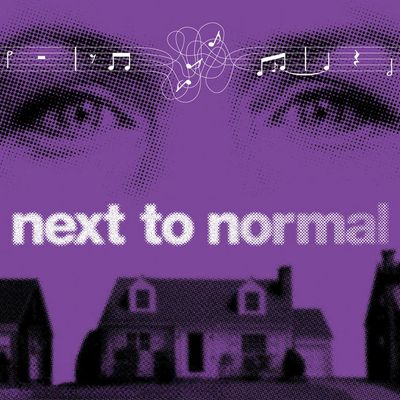
NEXT TO NORMAL
COMPOSER: Tom Kitt
LYRICIST: Brian Yorkey
BOOK: Brian Yorkey
DIRECTOR: Michael Greif
CHOREOGRAPHER: Sergio Trujillo
PRINCIPLE CAST: Alice Ripley (Diana), J. Robert Spencer (Dan), Aaron Tveit (Gabe)
OPENING DATE: Apr 15, 2009
CLOSING DATE: Jan 16, 2011
PERFORMANCES: 733
SYNOPSIS: Diana, a suburban wife and mother, is so devoted to her teenage son Gabe that she has neglected her other family members. What makes matters even more complicated is that Gabe died when he was two years old. As Diana slips further and further away from reality her family must try to save her.
Lyricist and book writer Brian Yorkey discusses his collaboration with composer Tom Kitt and director Michael Greif and the challenges in musicalizing a mental health crises in Next to Normal. Yorkey reflects on the delicate balancing act between presenting heavy subject matter and introducing levity to a narrative through humor without belittling mental illness. The development process of the musical helped the creative team realize the themes they were most invested in exploring. Controversial subject matter studied through a rock musical earned the surprise attention from the Pulitzer Prize committee and expanded the potential thematic focus of future Broadway musicals.
Brian Yorkey received the 2010 Pulitzer Prize for Drama, as well as the 2009 Tony Award for Best Score, for Next to Normal. He was also nominated for the Tony Award for Best Musical and Best Book of a Musical for Next to Normal, and his work on the show earned him the Outer Critics Circle Award for Best Score. He's a graduate of Columbia University, an alum of the BMI/Lehman Engel Musical Theatre Workshop and a proud member of the Dramatists Guild and the WGA.
SOURCE
Next to Normal, Original Cast Recording, Ghostlight Records (2009)
Next to Normal by Tom Kitt and Brian Yorkey, published by Theatre Communications Group (2010)
Transcript
This transcript was automatically generated and might contain errors.
[0:01] Brian Yorkey: I am the one who's helped you. And if you think that I just don't, you just don't know who I am.
[0:15] Robert W. Schneider: Hi, I'm Robert W. Schneider, and welcome to Fifty Key Stage Musicals: The Podcast, a companion piece to the Routledge Press publication, Fifty Key Stage Musicals, which is available for purchase by going to Routledge.com or clicking the link below in today's show description. Today's episode focuses on chapter 47, Next to Normal. And with us today is the co-creator of Next to Normal, Brian Yorkey. Brian received the 2010 Pulitzer Prize for Drama as well as the 2009 Tony Award for Best Score for Next to Normal. He was also nominated for the Tony Award for Best Musical and Best Book of a Musical for Next to Normal, and his work on the show earned him the Outer Critics Circle Award for Best Score. He's a graduate of Columbia University, an alum of the BMI/Lehman Engel Musical Theatre Workshop, and a proud member of the Dramatists Guild and the WGA. Brian, I am so happy that you're joining us today. How are you doing?
[1:07] Brian Yorkey: I'm doing very well, Robert. Thank you for having me. It's an honor.
[1:11] Robert W. Schneider: I am so happy that you're here. It's an honor for me. So let me ask you a question you asked me before we went on the air, which is where did you get the theater bug from?
[1:22] Brian Yorkey: Well, I had parents who, you mentioned you had parents who took you to Broadway. I didn't live anywhere near Broadway, but from a young age, our parents would take us to touring shows. I remember being, I think I was seven or eight and saw a touring production of Oliver, which may have been sort of a small bus and truck touring production, but I'm like seven or eight years old, and there's this kid up there playing Oliver, who's like, you know, he's probably older than that, but playing seven or eight. And I just remember looking at him and going, wait, how does he get to be up there? And I'm here in the audience. And so that set me on sort of a journey of being super interested in theater. In high school, I was mostly an actor.
And then at a certain point, I realized that I really did not have any talent as an actor, but I wanted to keep doing theater, so I tried writing. And I was lucky to have a theater in my hometown outside Seattle, Washington called Village Theater, which was a regional producer of often of mostly musicals, but in the summer had a program where they sort of turned the theater over to young people. And so we would make our own shows, and we eventually got the bug to start writing our own shows.
[2:40] Robert W. Schneider: Do you remember the first show that you wrote, Brian?
[2:44] Brian Yorkey: You know, the first musical that I wrote was an adaptation of Charlie and the Chocolate Factory. And this was, we were trying to get the rights. This was many, many years ago. I'm not gonna date myself by saying how many, although people can always Google. It was many years ago, and we wanted to do the musical and the songs from the original Willy Wonka and the Chocolate Factory movie. But could not figure out just at that time it wasn't licensed, and we tried to get the rights, and it just seemed impossible to get the rights. So I, being kind of precocious and kind of naive, which is a very dangerous combination, wrote to Roald Dahl, who at the time was still alive. I wrote to his agency, and his agent wrote back.
This was before the days of email. This was all accomplished by snail mail. And his agent said, you know, Roald is willing to grant you the rights to do a limited production as we understand it, you know, by and for young people. But he wanted to get on the phone with me to make sure that I was not some scamming American.
[4:01] Robert W. Schneider: Of course.
[4:01] Brian Yorkey: So arrangements were made, and I got on the phone with Roald Dahl and his agent to prove that I actually was a 17-year-old kid who wanted to adapt his book. So that was the first musical that I wrote.
[4:14] Robert W. Schneider: That's incredible. You're tenacious.
[4:16] Brian Yorkey: Tenacious, yeah, for sure.
[4:23] Robert W. Schneider: So then after high school, was that Columbia University? Is that where undergrad was?
[4:27] Brian Yorkey: Yeah, Columbia University.
[4:29] Robert W. Schneider: And what did you choose? Why Columbia and what did you choose to study?
[4:35] Brian Yorkey: I chose Columbia because I wanted to go to New York because that's where Broadway was. Yes. And I had never been to New York before the plane touched down on my first year of college. I'd never been to New York City, but I knew that that's where I wanted to go.
[4:53] Robert W. Schneider: So you, wait, you were going into the city totally.
[4:56] Brian Yorkey: I had never been, I'd never been, I'd never been east of Ohio.
[5:02] Robert W. Schneider: What did your parents think of this?
[5:05] Brian Yorkey: Well, my parents, my dad was born in Buffalo. My parents met in college upstate at St. Lawrence University, and my mom lived in New York City for a time as a young woman before being married. So they, I think, were very supportive, always very supportive. I think maybe a little bit nervous, but also quite used to me being both sort of, as we said, precocious and naive, and heading off to do things. So they really kind of celebrated it and, God bless them, you know, worked very hard to make it possible. And I think when we got to New York, my freshman year started a week after the Central Park jogger.
[5:55] Brian Yorkey: Oh my gosh.
[5:57] Robert W. Schneider: And if you remember, that was in the sort of northeast corner of the park, which is right near where Columbia is. My dorm was about four blocks away from the park. So that was a little bit unsettling for all concerned. But I have to say, as soon as the, it's a cliché, but as the cab was coming across the Triborough Bridge from the airport, and I saw the buildings, I was like, oh, I'm home. Oh, this is where I belong.
[6:30] Robert W. Schneider: Now, what did you study at Columbia?
[6:32] Brian Yorkey: Well, that's the other half of the story. The other reason I went to Columbia is because at the time Columbia did not have an undergraduate theater major. And I think it does now, but at the time it didn't have an undergraduate theater major. And I chose Columbia in part for its great reputation. At the time it was not as highly ranked as it is now. It was sort of a lesser Ivy League school with a little bit of a shaggy reputation, which I loved that, thought that was really cool. And I also, but I'm surprised I was this sort of smart as an 18-year-old, but I was like, I don't want to go to a school with a theater major. Because for me, and I love the theater major for a lot of people, but I like, if I am a theater major, I will spend four years in the dark theater and I will never learn anything else.
And I will have and I will come out able to do theater and nothing else. And something in me felt like I would love to learn everything else at school and learn theater going to Broadway, going to off-Broadway, going to off-off Broadway, working on shows.
[7:40] Robert W. Schneider: Wow. So what did you major in?
[7:44] Brian Yorkey: So I majored in religion.
[7:46] Robert W. Schneider: That's amazing. I did political science in undergrad. I sort of had the same mentality you did. So you did religion and what was the other one?
[7:55] Brian Yorkey: Well, I did religion and English.
[7:57] Robert W. Schneider: Religion and English. Oh my gosh.
[8:00] Brian Yorkey: Yeah. And then I was just gonna major in religion, but my mom was a devout atheist and was very suspicious of why are you majoring in religion? And she said you should really double major in something more practical, thinking of the job market. So I said, okay, mom, how about English? And she was like, that's a great idea. And I'm like, you're literally the only woman in the world who thinks English is a practical major. But I did, I double majored in English, and I'm glad I did. And you know, it's funny because I'm this liberal arts major, but actually, religion and English are like two ideal subjects to prepare you for making theater.
[8:42] Brian Yorkey: I was gonna say there, I don't think you can find a better combination than that.
[8:46] Robert W. Schneider: Yeah, no, I was really, I was really, you know, it's so funny. Like, are these choices kind of, you know, you kind of things happen, and then you sort of look back and you're like, wow, that actually was really fortuitous.
[8:58] Brian Yorkey: Yes, yes. Do you remember what shows you saw when you were living in New York for the first time that had such an impact on you that made you go, oh my gosh, that's what I want to write shows like that, or want to be in shows like that, depending?
[9:12] Brian Yorkey: Vividly, there were quite a few, but one that bears mentioning because I think I saw it on Broadway 20 times is the original Broadway production of Falsettos.
[9:25] Robert W. Schneider: Ooh, what was it about Falsettos that kept making you go back for more and more?
[9:29] Brian Yorkey: It was everything. It was the songs, it was the fact that it was about the gay men and lesbians, and very much sort of openly so, and in many ways, you know, celebratory of that, while also, you know, obviously looking very clearly at some of the pains and especially of the AIDS era. And I was just sort of coming into my own sexuality, so it was an incredibly personal story, even though I had very little in common with these characters, I loved them so much. The staging, Lapine's staging and the inventiveness of it and the joy of it and the energy of it, and it was at once sort of a very sort of spare staging, but so alive in every moment. I mean, it's really not too hard to see the influence of Falsettos on Next to Normal in the way that sort of it's a small group of characters, and they're sort of ping-ponging around the stage, and it's very fluid, and it's, you know, we're a little bit less through composed than Falsettos was, but very much that was very much an influence. And you know, in fact, we worked with James Lapine for a while on Next to Normal, and it was a thrill and also a little bit terrifying because he's brilliant and terrifying.
[10:43] Robert W. Schneider: What's something that you learned from him while you were working on Next to Normal that you still take with you today as a writer?
[10:51] Brian Yorkey: Well, I've learned a tremendous amount, but you know, James is incredibly brilliantly creative, but also just a very rigorous thinker. And going through Next to Normal with James, and this was before Michael Greif joined us, but going through Next to Normal with James, he had a rigor at looking at every moment and saying, what's happening in this moment? What is this line doing? What is this word doing? He would point at a lyric and be like, what is this? What's happening with this lyric? And I'd be like, well, it just sort of was like, you know, it's sort of to set up the rhyme. He's like, that's not good enough. It needs to be doing something or it needs to go. And he was terrifying, but I'm, and less so now that I know him better. He's a very, very kind, lovely man. But his brilliance was in the moment a little bit terrifying and also really transformative.
[11:50] Robert W. Schneider: So let's go back a little bit if we can, because I don't want to jump too far ahead without talking about the genesis of Next to Normal. When did you join the BMI workshop?
[12:04] Brian Yorkey: Oh, I think in the late 90s. And why did you want to join this workshop? And can you tell us a little bit about what that workshop is and what it does?
[12:14] Brian Yorkey: Well, the BMI Lehman Engel Musical Theater Workshop is really a long-standing workshop for aspiring professional musical theater writers. It was started by Lehman Engel, who was one of the legendary music directors and conductors of the last century.
[12:59] Brian Yorkey: It was actually the only place where Rogers, Hammerstein, and Hart all collaborated together on a show. They're all Columbia alums, and they came together to collaborate on a varsity show. Tom and I wrote two varsity shows together. At some point after Tom graduated, he's a few years younger than I am. We were, you know, working on some projects and working on our day jobs and kind of, you know, I remember this dinner vividly where we kind of looked across the table at each other, like, you know what, we need to be writing musicals. So we applied to the Lehman Engel program and were rejected the first year we applied, but accepted the second year. Um, and that's where, you know, in that workshop Next to Normal was born.
[13:43] Robert W. Schneider: Why do you like writing with Tom? What does he bring to your collaboration?
[13:49] Brian Yorkey: Wow. Well, I think it's a long list. I couldn't. We love a long list. It's a long list. He's a brilliant, I think he's a brilliant songwriter. Um, he's a storyteller. He is um a brilliant, you know, creator of theater. He is um perhaps the kindest, most generous, most heartfelt person um I know. And that quality, his openness, his willingness to show you who he is and what he's feeling and what he believes in and what he yearns for, that comes through in his music in a way that I just find moving again and again. He and I also discovered very early on in college that there was something about writing songs together that we did better work together than we did with anyone else. And there was some, it's difficult to put into words, but there was some chemical way that we clicked together and wrote songs that was unique and special and um and fun.
And to this day, and I've been really blessed to have an interesting and quite varied career. Um, and I've gotten to do a bunch of different things that are interesting and challenging. But to this day, all these years later, my favorite thing to do is to write songs with Tom. Oh, and to put our collective talents and our collective personalities and our collective inspiration together and come out with music and with shows.
[15:28] Robert W. Schneider: That is so wonderful to hear because it brings us so much joy to hear that. Um, what is one of the things that you've learned in that workshop that once again you still take with you today as a writer?
[15:52] Brian Yorkey: Well, it is really too many things to mention. It was an incredible education. People often ask me if I went to grad school, and I said I didn't go to grad school, but I went to the Lehman Engel workshop, and that was my grad school. That's really where I learned, and Tom and I learned how to write musicals. Um, the thing that distinguishes a professional musical and a good or a strong professional musical from the very, very many well-intentioned but ultimately sort of not successful amateur musicals is the way the songs fit into and drive the story. Um, and how the songs function in a story, what the different kinds of songs there are, the way they move a story forward, how to sequence songs, um, how to weave songs in um with narrative and with dialogue.
Those were all things that were taught very clearly and very rigorously in the workshop and then explored through the exercises. Um, that was invaluable because I think that it's musicals are hard, even if you have an education in writing them, and um, you know, knowing what you know what what the rules of the road are doesn't mean you can't break them, doesn't mean you can't invent beyond them. Of course you can, but you start with those rules of the road that are taught by people who know and who are passing down a real tradition.
[17:19] Robert W. Schneider: What are um some of the musicals that you would recommend to aspiring writers to either go and read or listen to because you think they do a very wonderful job at structuring an evening of musical theater?
[17:35] Brian Yorkey: Well, I would say you can't go wrong with Hamilton to start because Hamilton is incredibly modern. It's incredibly vibrant, but it's brilliantly structured with a surprisingly traditional structure. And I say that in the best way. Oh, yeah. It's solid musical theater structure. Then working backwards, I would also um I would point to um uh uh I'm trying to pick one of the uh Aaron's Aaron and Flaherty musicals. I'm gonna say Once on This Island, which is a little bit older. Um, but it's also you know, on this on the face of it, you're like, well, this is incredibly uh fresh, and it is, but it also is um very well and traditionally structured in its storytelling and efficient. I think it's like an hour and a half long.
Um, and then I would go further back. I really would um I know that you know I first started to understand how musicals were structured and the way songs work through all of Sondheim's musicals, and I think really ideally knowing all of them is something I'd recommend. Um, to start, um, I think Into the Woods is super accessible, but also incredibly beautifully structured. I think um the other, you know, Sunday in the Park with George, which he also wrote with James Lapine, is um perhaps a little bit more unorthodox in its structure, but still the way Sondheim uses songs. And I'm having a hard time picking an earlier Sondheim, but I really think that um Sweeney Todd is a masterwork and a masterwork in structure.
And the thing about Sweeney Todd, and I don't want to get too wonky, but if those of your listeners who are musicians and you listen to the musician, the musical structure and the hints that Sondheim puts in the score as the story goes along that are foreshadowing that are tipping you off to what's happening, that are connecting you to something that happened before that you saw before, it's brilliant. And I still every time I see a production of Sweeney Todd, I discover something new about it. And then lastly, I would say it really, even though they haven't all aged well, go back to Rogers and Hammerstein. Sure. Who are, you know, really and and I actually there was obviously a brilliant sort of you know reimagining of it recently that that I think only helped sort of underscore how beautifully structured the original was, which is Oklahoma.
Which is just and it's you know, it those old musicals can feel corny, but they're so beautifully structured that if you can appreciate it's like being in an old building and it's still beautiful, and you're like, wow, this is not necessarily, you know, um the way they build buildings nowadays, but you look at the structure and the way they're built, they teach you everything you need to know about how to build the building you want to build.
[20:43] Robert W. Schneider: I love that. Those are some fantastic suggestions. Thank you. Uh, let's talk about where does the idea for Next to Normal come from? Had you always wanted to bring this story to life, or was it an assignment given to you? How did this all come about?
[20:58] Brian Yorkey: It was an assignment, the sort of culminating assignment of the second or third year of the workshop. I can't remember which, is a 10-minute musical. Then the assignment essentially is you have to write a 10-minute musical that tells a complete story with songs and book in 10 minutes. And Tom and I quite frankly, I wanted to not do a musical about star-crossed lovers or soldiers going off to war or soldiers coming home from war, or you know, I just I didn't want to do that. I wanted to find something else, you know. Um, and I'm not really, you know, luckily this is a this is an audio interview because you know, if you were to look at me, you'd be like, you look absolutely nothing like a rebel.
And so I don't know what you think you're doing. But there was always some part of me that that in any class I'm in that is slouching in the back row, grumbling, um, and uh uh being a bit cynical. And part of what makes me a great sort of match to Tom, who is like the least cynical person on the planet. Um, but I wanted we want I wanted to do something that was gonna be ass-kicking in some way, you know, and then Tom and I could like hop on our motorcycles and drive off into the sunset. So we were looking around for like, what is the idea? And I and this is a story I've told before, but it's true. I saw a Dateline NBC um a story on shock therapy, on electroconvulsive therapy, which I didn't know at the time was still practiced, which it was and it still is.
Um, I really kind of knew it from One Flew Over the Cuckoo's Nest. And um what I learned, I uh watching that um watching that broadcast and then doing some subsequent research in a very, very primitive version of the world wide web. Um, but doing some research, I was like, Oh, it is still practiced, and it actually is a very important treatment, but that it is not without controversy, and there are some very vivid individual stories that are told with it. So I called up Tom and I said, 'What about a story about a woman who has been battling depression her whole life and um goes through shock therapy?' Uh, and Tom literally thought about it for like two seconds and was like, okay. Um, which is like the and it's one of the great things about our relationship is one of us would be like, 'What about what about this?'
And the other person will be like, 'All right, let's try it.' And so we wrote this 10-minute musical for for the BMI workshop, and we were fully prepared to be told you can't write about those sorts of things, you can't do that. Um, we thought we'd be run out on the rails. We were kind of, I was kind of hoping we'd be run out on the rails. Um, and there were some people who were like, you can't write a musical about shock therapy or about depression, we just can't do that. But there were other people who felt the exact opposite, and there were a few people who said who stopped us after the presentation, like, you know, my grandmother had shock therapy.
[24:24] Brian Yorkey: She had suffered from, you know, bipolar, like a couple people had stories to tell us. And so afterwards, you know, for many months afterwards, Tom and I tried to write a couple other musicals. We had a commission for a children's musical that we didn't do so well on because we kept saying, "What about this idea? What about going back to that?" We kept coming back to it, so we realized there was something there. Now, walk me through that 10-minute musical if you can. Was it supposed to be the whole story in 10 minutes, or did it just focus on a scene of what was going to be in the world? The assignment was to tell a story with a beginning, a middle, and an end. What was yours? As Diana there?
I mean, how did this work? They didn't have names yet. They were woman, man, daughter, son, and doctor. So you knew it was a family, though? We knew it was a family. And it starts off with the woman alone, and then her son comes in, and then the family comes in, and then you find out the son's imaginary, and then she gets taken to the doctor, and the doctor gives her shock therapy, and she comes home and doesn't remember her family. But at least, you know, this imaginary son is gone, and then at the very end of the musical, the imaginary son comes back. So the shape of it was very much the shape of what ended up on Broadway in 10 minutes, and with only one song from that 10-minute musical surviving to the final score, which is "I Dreamed a Dance."
[26:01] Robert W. Schneider: Oh wow, okay. So, you know, you mentioned "One Flew Over the Cuckoo's Nest" a little bit earlier. I know Tom has mentioned "Ordinary People" in a separate interview that we did for the book. Let me ask you, why did you just not choose to adapt "One Flew Over the Cuckoo's Nest" or adapt "Ordinary People"?
[26:21] Brian Yorkey: I think one of the honest answers is we didn't have the slightest idea as like 27-year-olds how we would go about getting those rights.
[26:29] Robert W. Schneider: Love that.
[26:30] Brian Yorkey: I think I'm happy you didn't.
[26:32] Robert W. Schneider: I'm happy you didn't.
[26:33] Brian Yorkey: But also, you know, it's funny and it's a good question. It took us famously many, many years to write the thing and rewrite it and rewrite it, partially because we never really had an outline until maybe five years into writing it. We just kept writing songs and putting them in place and figuring out what other songs were needed and writing those songs. And this is, by the way, not a process that I recommend to anyone who wants to write musicals. We really did not sort of think it through. It was a very longed to be, and we have maybe I think at one time we counted almost a hundred songs that were cut from the show along the way. And then eventually we were working with a dramaturg who was like, "Would you just write an outline? Can we start with that?" And we said, "Okay, yeah, cool, we'll do that."
[27:24] I love that. So, okay, so you kept wanting to come back to tell this story. What was it about this story that kept gravitating both of you back to it?
[27:30] Brian Yorkey: We loved writing songs for it. And it kept pulling us back because we realized, and I—we didn't know this when we started out—but we realized as we were writing it that not only can you write a musical about mental illness and about family dysfunction and about depression, and not only can you, but it's actually a really great form for writing about those things because music can depict emotions in a way that words can't. Music, song music, and also instrumental music can resonate at emotional levels that are much harder to reach with just text. So we realized that the songs were truly getting us deeply inside the emotions of these characters and helping us to relate to them and root for them. And we discovered that more and more as we went on, and I think that's what kept drawing us back to it.
[28:49] Robert W. Schneider: When you were in class and people were saying to you, "No, you can't do this," were they saying you can't do this because it's quote unquote not commercial? It's a taboo subject. What exactly was the hesitance? And did you ever once think to yourself they might be right?
[29:06] Brian Yorkey: Yeah, I still think they might be right, but even evidence to the contrary. You know, I think the main objection was not so much that it wasn't commercial, but that it wasn't appropriate, that it was somewhat something that it was taboo, that it was disrespectful. And, you know, I've run into this on other projects in other realms in my life where I find myself writing quite a bit about mental health and about trauma and about recovery. And it is a reflex response in many people to say you can't fictionalize these things, you can't write about these things because it's disrespectful, because these things should be private, because these things are dangerous to write about. And this was our whole—going back to "Next to Normal"—this was our whole point.
We realized over time in writing it that this is how these diseases and these challenges gain their dark power, is because people won't speak of them. And people believe they should be kept hidden and they're shameful and not appropriate to be talked about or written about or, God forbid, sung about. And I think that's where the response was coming from. But I should say that I would say probably the more voices in even in the BMI workshop were encouraging. I would mention Skip Cannon and Mori Eston were two of our teachers who were super encouraging, and a man who's passed away a number of years ago, Richard Enquist, who's a lyricist and a brilliant and beautiful man, was encouraging from the first song we brought in, which is, you know, one of the first songs we brought in is no longer in the show, but it was "Where Light in the Dark" is now.
And in this version, she was alone in a waiting room waiting to be put on a stretcher to be taken for her first treatment, and she sings a song about it. And that was a very controversial song in the workshop because you're like, "You can't—what? This is not subject matter for a musical." And Richard was the moderator, and he said, you know, he had some really sort of helpful criticisms. And then, as he—you know, the last thing that happens when you are done presenting is the moderator hands you back your lyric sheet, which they may have marked up along the way, and he handed it back to me and he looked me in the eye and he said, "Keep going." And I've always remembered that moment because that meant everything. Like Richard looked at me and said, "Keep going." And we kept going.
[31:34] Robert W. Schneider: That's—and what a great individual he was, my God.
[31:38] Brian Yorkey: Yeah, he was. At what point did this start to look for you that it was gonna get a full production somewhere? Was it first at Nymph? Was it at Second Stage? What exactly is the order there?
[31:52] Brian Yorkey: David Stone, the producer of "Wicked" and "Vagina Monologues" and "25th Annual Putnam County Spelling Bee," and a bunch of other amazing shows, came to see it at Nymph. His brother is a talent agent and had a client in the show, and David came to see it and called Tom and I into his office and said, "I'd like to take this on and produce it." And we were like, "Okay. Thank you, Mr. Stone." Which is actually still how we sound when we talk to Mr. Stone. But that was the moment when we—and Tom and I, I remember, walked out of that meeting going, "Uh oh my gosh, you know, like David Stone believes in the show." And look, he believes it has a lot of work that needs to be done, right? He's not opening it tomorrow, but he believes in it. And that changed everything.
[32:47] Robert W. Schneider: Was there ever a note that was given to you throughout the process that made you go, "No? This is—I think that's the opposite note of what I want to do with this story." And how do you handle situations like that?
[33:02] Brian Yorkey: You know, we spent many years casting around, like in the early writing of it before David Stone saw it, with a lot of people giving very well-intentioned advice that sort of led us down a wrong path.
[33:16] Robert W. Schneider: Where was it heading on before David got involved, do you think?
[33:21] Brian Yorkey: Well, you know, when David got involved, and the Nymph version of it, which I think can probably still be found on the internet if anyone's interested, was much longer, and it had a sort of tongue-in-cheek attitude towards, especially towards ECT and towards, to some extent, towards psychiatry in general, and towards Diana's experience. And David, you know, I'm actually answering the opposite of your question, but David said to us early on, he said, "There's two musicals here. One of them is very snarky and sarcastic and a little bit jejun, and the other is a really significant and deep story of a woman and a family in pain." And he said, "It's not that you can't pull off both of those things, but it's hard.
And it may be that you have to choose one of them." And really, subsequent to his saying that, we worked with James Lapine, and then after James Lapine, we worked with Michael Greif, who was just so brilliant at asking us the kinds of questions that made us think about what we wanted the show to be and how to best tell the story we wanted to tell. And over the course of those years working with Michael and working with David, we really sort of honed in on what the musical was, what the heart of it was, and what it wasn't.
[35:06] Robert W. Schneider: And what is the heart of it?
[35:08] Brian Yorkey: I think the heart of "Next to Normal" is the idea that pain is a reality of life, and the struggles of loss and of grief and of the complications of grief when it intertwines with mental illness and the impact that has not only on the person struggling, but on the people who love that person. Those are real and they're painful, but that they can be survived. And that in some way, survival is the happy ending. We very specifically, you know, did not put a simple happy ending on "Next to Normal," but we believed that survival and fighting the fight and getting out of bed one more day to fight, keep fighting that good fight, that is the happy ending. That is the—that's the light.
[36:15] Robert W. Schneider: Which I—please correct me if I'm wrong—this was the first time a general public paying audience was seeing it fully formed. Is that correct?
[36:22] Brian Yorkey: It was, yeah, for sure. Except for a few hundred people at Nymph. That was the first, you know, the Second Stage was off-Broadway, was the first unveiling in public. And you know, the audience response was remarkable.
[36:37] Brian Yorkey: It was varied, you know. Um it was uh intensely um revealing because there were moments in the musical where you could feel that whole room of people leaning in and incredibly involved, and then there were moments where you could feel them all lean back and go, What is going on?
[37:02] Robert W. Schneider: Is there an example of either one of those from that second stage?
[37:07] Brian Yorkey: For sure. There's a there's the second stage production, the first act ended with a song called Feeling Electric, which was the original title of the musical was Feeling Electric. And um the song called Feeling Electric, which was also in the in the 10 minute musical, but did not ultimately survive to Broadway. Basically, the the the doctor, Dr. Madden came out as a as a rock star and sang a song called Feeling Electric while Diana got her electroconvulsive therapy, and it was meant to be satirical, I think. But it did not come across. So after a really intense first act, much of which had the audience really involved, you could feel them all sort of lean back at the end and be like, wait, what is going on?
But in second stage, as on Broadway, there is a moment near the end of the second act where Gabe the son finally um approaches and speaks to and then embraces his father, who was played off Broadway by Brian Darcy James. Was every night the audience was just riveted and many of them in tears and just completely in sync with the actors on stage, and that was um that was an incredible moment. So to have the sort of incredibly like resonant, powerful moments that were working, and these moments that were clearly not working, um, was was really interesting.
[38:49] Robert W. Schneider: Now, after second stage, did it go directly to Broadway or did you go someplace else?
[38:54] Brian Yorkey: No, our reviews at second stage were decidedly mixed. Um, and uh and and I sort of at that time I was like, well, that's it, I'll never have a career. Um, and I actually like registered for the GRE. I was gonna go back to school um and and uh um and study something else. Um, but David Stone said, no, we're gonna we're gonna keep working on this. So he did something that at the time I think was kind of unprecedented. He's he said, we're not gonna go to Broadway, but we're gonna go to um the arena stage in Washington, DC and work on it again there. And um we that's what we did. Michael Greif led the whole company. We we the next uh uh next winter, I think we all went to the arena stage in Washington, DC, which at the time was run by by Molly Smith and David Dower, who were two like brilliant human beings who were also like to, we just had on the journey of the show, we had these um, we had these guardians, or I'm not sure what the word for them is.
We had these sages, these kind people along the way who got what we were trying to do and asked us questions and had ideas and had thoughts that made us go, oh, thank you for that. Like we just got these gifts along the way, you know. Um, Peter Askin, who was the first director who also directed the the off-Broadway production of Hedwig and the Angry Inch was another one of those. We just had these people along the way, and it really did take all of these, you know, incredible sort of sages to guide us to what the show ultimately ultimately became. So we reworked it, we rewrote, you know, the show kind of top to bottom. I think we replaced a dozen songs and um opened at Arena Stage and got um a really beautiful review from Peter Marks, who is, you know, for that reason and others, a hero of mine to this day. Um, even though he didn't like If/Then all that much, that's okay. I still love him. Good. Um and that that propelled us back to Broadway.
[40:55] Robert W. Schneider: And you know, let's talk a little bit about the interaction that you had on Broadway with the audiences, because I believe you were the first show to use Twitter as a means of marketing. Is that correct?
[41:09] Brian Yorkey: We were. We did a pilot um with the the this this company Situation Interactive, um, which is still around and awesome, um, and uh worked with Twitter and and together they had this idea. What if we tweeted the show? Um they came to me and said, What about a Twitter performance of the show? I'm like, how would that work? And at that point, Twitter was 140 characters. It's more now, but at the time it was 140 characters. And I was like, how was it? How would that work? And they said, Well, what you know, what if what if we just do the whole show with all the characters tweeting as themselves? Oh. Um, so for instance, at one point Natalie sends a tweet, does anybody else's mother make peanut butter sandwiches on the floor, or is that just our family?
You know, and so we basically threw that and using some lyrics and using, you know, we tweeted the whole show over a period of days. It was kind of an amazing thing. And some people didn't realize it was uh a fiction and a theater thing, and like responded to these characters, and it was really kind of just incredibly heartbreaking and and heartening because like men, like Dan would write about sort of his struggles of trying to take care of his family and trying to get rid of his wife, and men would tweet back at him and say, Hang in there, you're doing great. And it was clear that some of them didn't know he was a fictional character. And part of me was like, I feel bad about this. Part of me's like, This is beautiful. Yeah, this is like really amazing how people are responding.
[42:32] Robert W. Schneider: Did you have any face-to-face interaction with audience members after one of these performances?
[42:40] Brian Yorkey: Yeah, I mean, always. And it was one of the things to an earlier question of yours, one of the things that kept us going for all of those years was every time we would do a reading or a workshop, or we we did some workshop productions at Village Theater out in the Seattle area. And every time we did a workshop, people would line up afterwards to talk to us to tell us their stories, to tell us their stories of their own struggles with mental illness of a family member, um, of a family member who had gone through ECT of a family member and their sort of struggles to find the right medication. Every performance, and there was that was more than anything else, as we moved along in the process, Tom and I would look at each other and we're like, you know, this is there's something here.
Um, and it happened all the time. And there's one particular moment I remember that that Tom and I will never forget. We were in previews on Broadway, and uh, we we were really we felt the show was working, but we had no, it was New York, it's Broadway. We had no idea how it was going to be received. Um, so we didn't know, but we were we were working and we were um you know doing good work, but it's Broadway, there's uncertainty. And one night uh Tom and I are standing in the back of the house as the audience is leaving, and this this young this kid, 15, 16 years old, I remember him so vividly, this really sort of sweet looking red-headed kid, came up and said, Are you Mr. Yorkey? Um and I said, Well, no, actually, that's my dad, but I'm Brian, and this is Tom.
And and we shook hands and he said, Thank you for writing this, and he started to cry. Um, and uh, and I I still started to cry when I tell the story. And he said, Thank you for writing this. I was just diagnosed with bipolar, and I had no way to explain to my friends what that was or what it felt like, and now I can point to the show and say this is what it's like. So thank you for writing it. And he's in tears, and Tom and I are in tears, and we thanked him and and he went up went on his way. And I looked at Tom, I said, At this point, I don't care what the critics say. Like if we can do that for that kid, we've we've done it.
[44:54] Robert W. Schneider: You gave a voice to the voiceless, um, and you moved the needle on the discussion, an open discussion about mental health in this country. Why do you think up until your show, um, mental health was not something that was supposed to be quote unquote discussed in public?
[45:14] Brian Yorkey: Well, I think I think it's still a struggle. I think you still see, especially lately, um athletes uh who are being incredibly courageous and coming forward and talking about their own struggles with mental health. Um, they're not universally celebrated for doing so. Um it's still there is this stigma attached to mental illness, which is so hard to understand exactly why, because there's no stigma attached to, you know, um breaking your leg. There's no stigma attached to, you know, um Lyme disease. Do you know what I mean? Like those things are physical things that happen to you, they but they also affect your mental health. But there is something about um, and I, you know, I could go off and I have my own pet theories.
I think that we are still paying this price for the Puritans who founded our country and believed that the best motivator was shame and that you know mental illness doesn't really exist. You just need to pull yourself up by your bootstraps and get yourself better. Um, and it sounds coming out of my mouth, it sounds like how can anyone still believe this? But people still do.
[46:28] Robert W. Schneider: Well, I think people still...
[46:31] Brian Yorkey: No, I was gonna say, I mean, you know, recently I was thinking of Simone Biles in the Olympics as an example of that. Simone Biles and Naomi Osaka, I mean, like so many like amazing athletes who um like the the struggles are real, and especially for people in the public eye, they're intensified by the criticism and and especially by the just sort of unthinking, unfeeling criticism. And here's the fact for everyone who is critical of anyone who struggles with or seeks help for their mental health. There are very few of us, whether we admit it or not, very few of us are free of mental health challenges. And even if you are blessed to be in excellent mental health all the time, even through two plus years of a pandemic, and God love you if you are blessed, there is someone you love who is struggling.
And the fact that it's hard to talk about makes the struggle exponentially harder. So our show, athletes, you know, movie stars, rock stars who come out and say, I struggle with politicians who come out and say I struggle with depression, I struggle with bipolar, I struggle with anxiety. Um I think they're they're all my heroes because the more we talk about it, the more that stigma loses its power.
[47:59] Robert W. Schneider: Well, Brian, thank you for that. And I thank both you and Tom for uh giving the world such an amazing show. One a grippingly dramatic show, but two that opened up a conversation that really needed to be had. Um, so thank you for that. And listeners, thank you so much for joining us today. Please make sure to purchase a copy of 50 Key Stage Musicals by visiting Routledge.com or by clicking in today's show description. If you want to learn more about Next to Normal, please also review the links in the below description. I'm Robert W. Schneider, and thank you for listening to 50 Key Stage Musicals, the podcast. Bye-bye.
© Broadway Podcast Network, All Rights Reserved