

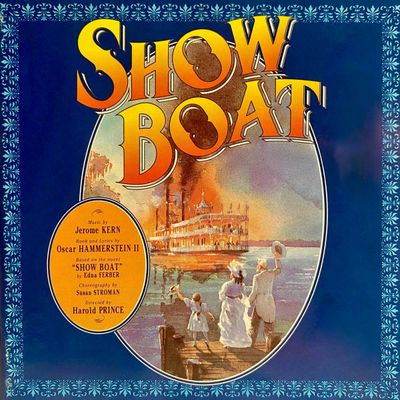
SHOW BOAT. COMPOSER: Jerome Kern. LYRICIST: Oscar Hammerstein II. BOOK: Oscar Hammerstein II. SOURCE: Edna Ferber’s novel Show Boat (1926) DIRECTOR: Zeke Colvan, Oscar Hammerstein II. CHOREOGRAPHER: Sammy Lee... Read More
From the show: Fifty Key Stage Musicals: The Podcast
Guests
Featured Shows
About
SHOW BOAT
COMPOSER: Jerome Kern
LYRICIST: Oscar Hammerstein II
BOOK: Oscar Hammerstein II
SOURCE: Edna Ferber’s novel Show Boat (1926)
DIRECTOR: Zeke Colvan, Oscar Hammerstein II
CHOREOGRAPHER: Sammy Lee
PRINCIPLE CAST: Jules Bledsoe (Joe), Howard Marsh (Gaylord), Helen Morgan (Julie)
OPENING DATE: Dec 27, 1927
CLOSING DATE: May 04, 1929
PERFORMANCES: 572
SYNOPSIS: Spanning fifty years, a show boat, The Cotton Blossom, goes up and down the Mississippi River, chronicling the lives of the boat’s performers, owners, and stagehands. As American society changes, so do the ideologies of those on the Cotton Blossom.
Show Boat departed from the standard fare of musical comedies, comic operetta, and vaudeville revues, definitively envisioning a style of musical theatre in which dances, song, and dialogue served a unified dramatic arch. The serious subject matter, dealing with racism and unrequited love, was also a departure from the frivolous subject matter on musical theatre stages, establishing a new genre of musical storytelling. Susan Stroman, the choreographer for the 1994 revival, delves into the impetus behind musicalizing Edna Ferber’s novel, the collaboration between Jerome Kern and Oscar Hammerstein II, Florenz Ziegfeld’s concern about the show’s success, and the reaction to the story in the 21st Century.
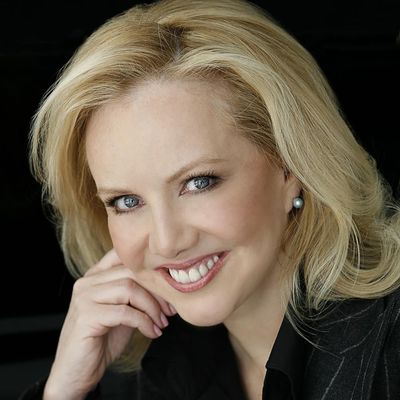
Susan Stroman is a five-time Tony Award-winning director and choreographer most known for Crazy For You, Contact, The Scottsboro Boys, and The Producers. Her work has been honored with Olivier, Drama Desk, Outer Critics Circle, Lucille Lortel and a record six Astaire Awards. She directed and choreographed The Producers, winner of a record-making 12 Tony Awards including Best Direction and Best Choreography.
SOURCES
Block, Geoffrey Holden. “Show Boat: In the Beginning.” Enchanted Evenings: The Broadway Musical from Show Boat to Sondheim, Oxford University Press, 2004.
Stempel, Larry. Showtime: A History of the Broadway Musical Theater, W.W. Norton, 2010.
Culwell-Block, Logan. “5 Musicals That Got Major Revisions When They Returned to Broadway.” Playbill, 20 Apr. 2017.
Davis, F. James. “Mixed Race America - Who Is Black? One Nation's Definition.” PBS, Public Broadcasting Service.
Decker, Todd. Show Boat: Performing Race in an American Musical, Oxford University Press, 2015.
Decker, Todd. Who Should Sing ‘Ol Man River’? The Lives of an American Song by Todd Decker, Oxford University Press, 2014.
Kantor, Michael, director. Broadway: The American Musical. PBS, Public Broadcasting Service, 12 Oct. 2004.
Kruger, Miles. Show Boat: The Story of a Classic American Musical. New York: Oxford University Press, 1977. (Updated soft cover edition - New York: Da Capo, 1990)
Lunden, Jeff. “'Showboat'.” NPR, NPR, 17 Apr. 2000.
Maslon, Laurence. American Musicals: The Complete Book and Lyrics of Eight Broadway Classics 1927-1949. Library of America, 2014.
Rich, Frank. “A Musical Theater Breakthrough.” The New York Times, 21 Oct. 1984.
Swardson, Anne. “Showdown Over 'Show Boat'.” The Washington Post, 17 May 1993.
“Ziegfeld Follies | History Detectives.” PBS, Public Broadcasting Service.
Show Boat, Studio Cast Recording, EMI (1988)
Show Boat starring Irene Dunn and Paul Robeson, directed by James Whale, Universal Pictures (1936)
Show Boat starring Kathryn Grayson and Howard Keel, directed by George Sidney, MGM Studios (1951)
Transcript
This transcript was automatically generated and might contain errors.
[0:20] ♪ Musical number: "Ol' Man River" — performed by Jules Bledsoe ♪
[0:27] Andrew Child: Hi, I'm Andrew Child, and welcome to Fifty Key Stage Musicals, the podcast, a companion piece to the Routledge Press publication Fifty Key Stage Musicals, which is available for purchase by going to Routledge.com or clicking the link below in today's show description.
[0:45] Today's episode focuses on chapter four, Showboat.
[0:49] And with us today is the choreographer of the 1994 revival of Showboat, Susan Stroman.
[0:55] Susan Stroman is a director and choreographer whose notable theater productions include The Producers, Crazy for You, Contact, Oklahoma, The Merry Widow, and The Scottsboro Boys.
[1:06] She's a five-time Tony Award winner, and in addition, she is a recipient of two Lawrence Olivier Awards, five Drama Desk Awards, eight Outer Critics Circle Awards, two Lucille Lortell Awards, and the George Abbott Award for Lifetime Achievement in the American Theater.
[1:22] Susan, thank you so much for chatting with us today.
[1:26] Susan Stroman: I'm very, very happy to be here. Thank you for having me.
[1:29] Andrew Child: So I'd love to jump right in with the question of the hour. All of these chapters in this book are what we're considering key musicals. Could you sort of give us your elevator pitch, your take on why Showboat is a key musical in terms of musical theater history?
[1:50] Susan Stroman: Well, I mean, Showboat was absolutely groundbreaking, you know, and it has the themes of family and theater and even racial discrimination. It and for something that happened in 1927, it was still very radical in 1994 when I did it. Um, and I feel like it for people who like to do shows that have more not darker themes, but themes that are more profound, or I think Showboat really we kind of stand on the shoulders of Showboat for all of us, um, because it had so many different themes. And for me, um, choreographically, I know when Hal Prince asked me to choreograph this big production, it really spans from you know the 1880s to the 1920s. So I was able to really talk about the history of dance and how society affected dance at that time.
And also, you know, Showboat didn't have like tap dancing or showgirls or all the staging is realistic. So that also made it different from other musicals. So when I did my choreography, it was all based on authentic times. So you know, whenever I do a show, I do research on the geographical area and the decade, but um for Showboat, you know, it was a very, very important time, very big turning point in America in society. So we were able to tap into a major amount of history when we were doing this big production of Showboat. So I would say when you come in as the choreographer, you're really putting your stamp on it. We know this is a Susan Stroman show.
[3:42] Andrew Child: So I would love to know what does research look like when you're asked by Hal Prince to choreograph Showboat? Where what's step one? Where does that even begin?
[3:54] Susan Stroman: Well, of course, I'm very lucky to live in New York City by the New York City library. So I mean it went right over there right away. And uh but you know it's tapping into um you even the characters of Frank and Ellie, you know, right away they are a dance team of the time. But to tap into what that choreography would be, you know, they would do one step, two step, they would do um the castle walk, you know, and then they would do tap steps, but they were more like clog steps that would be one would think would be Irish immigration coming to the states of that kind of Irish clogging. Okay, so putting that in, you know, and then of course when we get to the 1920s, there's a big um Charleston that's in Showboat.
And the dance goes from rather staid and stately to you know everyone dancing with abandonment in the Charleston, even well, you know, Florence Klotz's wonderful costumes too, go from being everybody's covered up to everybody's, you know, dancing with beads and you know, fringe and you know, so it really shows how society was changing during that time and getting dance, dancing with abandon, and we were able to show that for sure.
[5:23] Andrew Child: So, what does that when you're coming in with these different ideas and the ways that you want to trace through history with dance, how does that fit in and mesh in with what Hal Prince was doing working on the show?
[5:38] Susan Stroman: Well, Hal had a wonderful idea. He wanted me to show time passing in montages, and I was able to do that with Florence Klotz's wonderful costumes and show the passage of time and do that through with dance. Eugene Lee, the wonderful set designer, gave us the Palmer House in Chicago. So I was able to have characters come through those doors at the Palmer House, those revolving doors, and they would come through the years and they all had characters where they were a family or a soldier, you know, or lovers. They all had characters, but and the fashion would change, but then I would do dance that was appropriate as they came through the doors, and they were ready to hit the nightlife in Chicago. So it's a great collaboration between set designer, costume designer, director, and making Hal feel like he's showing the audience that we are moving forward in time, so we were able to move forward in time through choreography.
[6:49] Andrew Child: So this chapter in the book talks about how Showboat is one of those foundational works that takes music, takes dance, takes comedy, and tells one straight through story, like you already mentioned that hits on some dark and or heavier or more serious themes. So I'd love to know from you who has directed and choreographed The Merry Widow for the Metropolitan Opera. How does this show sort of take that operetta and progress it? And how does this sort of fit in a progression toward what we now know as American musical theater?
[7:34] Susan Stroman: Well, it's definitely um for example in Showboat, you also these characters grow and these characters change. So you see Magnolia as sort of an innocent young girl who um befriends everyone on the showboat and has no trouble befriending them. And then you see her grow up, you see her have heartache, you see her marry a man who becomes a gambler, who leaves her, and so she really grows up and goes through the emotions of someone who has come from a very happy life on a showboat, and then goes out into the real world and is um goes through great heartache as the years go on. And we see that in Ravenall also that he has addiction to gambling, and so it's amazing that this particular musical touches on that also, you know.
And we see Captain Andy and Parthy, you know, the kind of showbiz family who really don't want things to change on the showboat, and all of a sudden, you know, vaudeville steps are now changing into a wild Charleston, and they don't know what they're looking at. So it really shows how society pushes forward, but it does tap into darker elements.
[9:06] Andrew Child: Um, something like The Merry Widow. What was wonderful about being able to direct and choreograph that at the Metropolitan Opera? I was able to use dance to transition those sets. A lot of times at the opera, um the curtain comes down and they change the set, and then the curtain comes up and there's a different set. But you know, but in musical theater in the, you know, on Broadway or whatever, we push it forward with the choreography. So the curtains stayed up, and I was able to have a can move us from a garden set to Shea Paris and to Maxime's um and do that with choreography. But what's wonderful about that particular piece, too, it's an operetta, but it is about an adult relationship. They were lovers when they were very young and now have gone through many things, and she was married and now she's a widow and she meets this man again.
And so it's lovely because it's about people who have actually lived a life and now have a second chance to get together. So it's um more of an adult relationship, and I think that's why people love that story so much.
[10:19] Andrew Child: So I'd love to know and pick your brain about when you are working on a more contemporary work with serious themes, like when you worked on The Scottsboro Boys. Do you feel like there is a presence in that room? Is there an awareness that you're building on something that Showboat has allowed that Showboat sort of opened doors for?
[10:45] Susan Stroman: Absolutely. And I think Hal Prince would agree that it was Showboat that he stood on the shoulders of to be able to do Kiss of the Spider Woman, Cabaret, shows that dealt with Nazis that dealt with Latin prisons, and for me and my collaborators too. I know that because we are aware of Showboat, we know it well, we're able to take chances, we're able to take more chances with something like The Scottsboro Boys that is more profound and makes people think, you know, because I think even when you show this to an audience, the best kind of show you can do is that when the audience leaves, they go home and think about what they saw. There are a lot of musicals that are you know just you don't think about them after you see them, right? But if you can create a show that really makes an audience examine certain attitudes, then I think you feel like you've really succeeded.
[12:00] Andrew Child: So you worked on Showboat and that was 1994, which in a certain sense, not that long ago, but in another sense, feels like multiple lifetimes ago. So I'd love to know if you were approached with choreographing or directing and choreographing Showboat tomorrow, where would your mind be going? How do you keep it like you just said? Can you keep refreshing Showboat so that it stays one of these musicals that stays with us after we see it?
[12:35] Susan Stroman: Um yes, I think um the well, for one thing, Showboat has 73 people in it. Uh so in a way, one would think it would be unproducible today. Really?
[12:48] Andrew Child: Yeah, just with 73 people, sure.
[12:52] Susan Stroman: Unless a big opera did it, you know.
[12:54] Andrew Child: Okay.
[12:55] Susan Stroman: Big opera company could do it.
[12:56] Andrew Child: You think even like the difference from Broadway 94 to Broadway now, that would be a deal breaker?
[13:03] Susan Stroman: Sure.
[13:04] Andrew Child: I mean, now Broadway wants to have six people on stage.
[13:07] Susan Stroman: Okay.
[13:13] Andrew Child: Wow.
[13:13] Susan Stroman: So finances have really um affected the creative process for Broadway.
[13:24] Andrew Child: Just for reference, 74 people Showboat. Do you know off the top of your head like how many people were in The Producers?
[13:32] Susan Stroman: Yes, and Producers, I think there were, I think I had 19 on stage.
[13:38] Andrew Child: Really?
[13:39] Susan Stroman: Yeah. But they had a lot of magic costume changes.
[13:43] Andrew Child: Okay.
[13:44] Susan Stroman: So that they was a big cast there.
[13:46] Andrew Child: Yeah.
[13:47] Susan Stroman: Okay. But they all changed their costumes all night pretty well.
[13:51] Andrew Child: Wow.
[13:52] Susan Stroman: Yeah.
[13:52] Andrew Child: So budget aside, let's say the Met tapped you to do Showboat. Um what where would your mind go? How is Showboat different now from 1994?
[14:08] Susan Stroman: Well, I think it would be a whole new creative team. I don't think it would be me, you know. You know, I think they it would be time for a whole new diverse creative team, diverse set design team, costumes, lights, the whole thing. You know, it would have to be put into the hands of a diverse team and done in another way, you know. So I don't think that me being a part of it any longer is a possibility.
[14:41] Andrew Child: Okay.
[14:43] Susan Stroman: Wow.
[14:44] Susan Stroman: Um, so you've mentioned multiple times now costumes.
[14:50] Susan Stroman: Um, I'd love to know how work on costumes affects your work as a choreographer and as a director, because it sounds like you are heavily influenced by the costume design of the actors you're working with.
[15:05] Susan Stroman: Well, you know, as a director and choreographer, the design is a big part of what you do. I could make the most beautiful dance step in the world, but if it's not in the right costume, it won't matter. Or I can make the most beautiful dance step in the world. If it's not lit right, it won't matter. So the collaboration with your costume designer and your lighting designer, your set designer is very important for your own work. And for young directors and choreographers, I think the more they know about the other departments, the better off their own work is going to be. So it's not just about blocking actors, it's not just about giving people dance steps. It is a huge collaboration of a big vision, and the more that you're on the same page, the more that you think alike for a visual goal, you know, the better off that product's going to be. So for me, yes, I'm very close to all my designers and will always be that way as I go on to continue directing and choreographing.
[16:18] Andrew Child: When you were first starting out, do you feel like you had a good foundational understanding of different design elements? Or is that something that has sort of come with experience as a director, as a choreographer?
[16:32] Susan Stroman: It definitely comes with experience, absolutely. You know, I had an eye for it, of course, at a very young age, but the more that you work with, you know, masterful set designers and masterful costume designers, the more you understand, yes. So the more work you do, the better off you're gonna be.
[16:55] Andrew Child: So would you say, and I know we're kind of jumping around here a little bit, would you say that of your work, would Scottsboro Boys be the most sort of in line with the work of Show Boat?
[17:15] Susan Stroman: In the sense that it has themes that are about dark themes that are about society at the time and exposing certain elements of society that aren't necessarily found in musicals, yes. So that would be the same.
[17:35] Andrew Child: Would you, so when you were working on Scottsboro Boys, was that process? I'm sure there was a knowledge of the tension around the themes that you were dealing with. But how do you approach that as a director coming into a room and knowing that you are dealing with heavy intense subject matter that hopefully is going to leave the audience thinking about this show later, but can also be so exhausting, so even traumatic for everyone working in the room?
[18:13] Susan Stroman: Well, there was great conversation, nonstop conversation about the history and the research and what we were trying to do, what we were trying to say. But I have to say it was the contribution of the actors, you know. Their ability to tap into not only their research and their homework and doing the piece, but they were able to tap into their own essence, their own beings and what's happening to them in contemporary times. So they really contributed and created those characters. You know, I could tell them how to tap dance over here and be on number seven, and I'm gonna give you a good light, and the set's gonna be great, but they made those characters come to life. They absolutely made them come to life.
And it was that kind of room, it was very collaborative and lots of conversations, and each character, because there wasn't historically a lot of information about each Scottsboro boy, they had to create it. They had to create it. We had little bits that we could find, but they really had to create each Scottsboro boy, and they did, and that's why the show was so powerful. That is why the show got across the footlights so vividly. It's because of what they brought to it.
[19:42] Andrew Child: And you, of course, were working on that show with an iconic songwriting team. What was that like to have them in the room for that creative process?
[19:55] Susan Stroman: Well, Kandor and Ebb loved the idea, you know, when we got together, we had created And the World Goes Round together, Steel Pier together, and I had done an off-Broadway production of Florida Red Menace with them, and we wanted to get together just to see what we could collaborate on and create, and we decided to do something that was truthful, something that was real, something that was based in history, because many times in musical theater you're in a more fantastical, you know, time fantasy. So we wanted to do something real, and of course they have done shows that dealt with Nazis and Latin prisons, as I mentioned before, and we thought we'd research the great American trials, and of course the Scottsboro Boys is one of the greatest.
And as we delved more into the research on it, finding out about the different characters, and that in fact it changed the judicial system, it changed the way juries are set up, and it had a huge effect on American history. And so Kandor and Ebb, they were you couldn't stop them because they love to write for the underdog too, you know, they love to write "Maybe this time I'll get lucky, maybe this time I'll win." They want to write for the underdog, so they couldn't get enough of writing the story of the Scottsboro Boys. John Kandor talked about remembering reading about them in the paper when he was a little boy and then it just disappeared and the story was gone. And in fact, oddly, the story's not told in the history classes, so Kandor and Ebb really wanted people to remember this story and know the story and in essence bring the Scottsboro Boys back to life.
[20:53] Andrew Child: Do you think that your experience on that show would be similarly mirrored with the original production of Show Boat?
[20:53] Susan Stroman: I'm not sure. I think when it was done originally, it was so brave. Who knew what was happening in 1927 when they decided to do this? You know, I guess Ziegfeld thought he could tell this giant story, and because he was able to have a million people on stage. But for him, a man who was usually used to doing Follies girls and comics and jugglers, that he would do a show that had a miscegenation scene and people growing older and people having heartache and disappointments, it was a pretty bold move and pretty incredible. And also, of course, he had Jerome Kern. You know, that music is sensational. Just sensational. And that song, "Can't Help Loving That Man of Mine," is one of the most perfect melodies ever written. You know, we haven't talked about the music, but in fact that music resonates today. And it's so beautiful and so rich. And you know, you wonder where the Jerome Kern are today, you know.
[23:27] Andrew Child: Do you think that the staying power of that music has sort of kept Show Boat in our consciousness?
[23:36] Susan Stroman: Oh, of course, yeah, of course, because I think we over the years have heard those interpretations of those songs sung in the, you know, in the 50s and 60s and 70s, and you know, I mean it just, and people sing them all the time. And so they'll always live. They will always be alive, even if there's not a production of Show Boat happening. That music is happening somewhere.
[24:00] Andrew Child: And is it for you sort of the backbone of the score, "Can't Help Loving That Man"?
[24:07] Susan Stroman: I think so. I think of all the melodies in the show, that one I think resonates the most. In our production, we used a song called "Misery's Coming Round" that was always cut a lot of times when people do Show Boat, but we wanted to use it, and it sort of talks about how there's trouble coming, that the people can feel that something's gonna go wrong. And of course, that it's before that scene where Julie is kicked off of the showboat. But that song too is very important. I know Hal really wanted to have that sung. And if you have a beautiful chorus of singers, it's an amazing piece.
[24:53] Andrew Child: Would you constitute Show Boat as an underdog story because of Julie?
[25:06] Susan Stroman: Well, I think we root for her, you know, and it doesn't end well for her, but you root for her because you are upset when this happens when she's kicked off of the showboat. And so in essence, yes, you root, you really do root for her. There are many characters in the piece that you root for, and you want to have a happy ending, and not many have a happy ending.
[25:44] Andrew Child: So when you approach work sort of almost contemporary with Show Boat, Oklahoma, of course you have the Agnes de Mille choreography sort of hanging there as this iconic thing that you have to approach. Did you feel, I guess, first of all, was that something that was intimidating? And second of all, was there anything comparable to that with Show Boat? Was there any sort of expectation that you felt was already in place that you had to sort of contend with or meet or subvert?
[26:21] Susan Stroman: No, I think when Trevor Nunn asked me to do Oklahoma, he said he wanted it to be a different approach, and that we had the blessing by the estate to change the music. I have a wonderful dance arranger named David Crane, who changed all the dance music to match my choreography. Wow. And he was with me. He was also on Show Boat with me. So definitely when I choreograph, I arrange the music with my dance arranger. So if my dancer leaps in the air, so does the orchestra. And so it really, the orchestra always supports my choreography. And that happens in a rehearsal room with a dance arranger. So for Oklahoma, we took the classic melodies, but then changed it for my choreography and my staging. And but it was definitely doing the research on that, it was a turn of the century in America, and it was about fighting for territory.
And so all the choreography is fight-oriented, or there are moments in the choreography where they play "Can You Top This" or "King of the Hill," or you know, they compete with each other. So doing that research about fighting for territory informed the kind of choreography I would do. And so for Trevor, that helped show a darker side of Oklahoma.
[27:55] Andrew Child: Did you happen to catch the recent revival of Oklahoma?
[27:59] Susan Stroman: No, I didn't see that.
[28:01] Andrew Child: That's okay.
[28:03] Susan Stroman: Because we're talking about, you know, your production certainly does show a darker side, particularly the dream sequence, the dream ballet is very dark and scary. But in such a fabulous and exciting way. So I'd love to know you've worked on these foundational pieces from musical theater history. How did those inform or how were they present in the room, even tucked in the back of your mind when you were working on Contact?
[28:39] Susan Stroman: Well, you know, I was very lucky when I came to the city to have the opportunity to work on three classic American musicals. That was Show Boat, Oklahoma, and then I directed and choreographed a big production of The Music Man. And those three American classics, you know, I learned a great deal from them about their structure and how they were put together. Now, something like Contact though is very different, and it really came out of a vision of seeing a girl in a yellow dress at a bar at one in the morning and seeing her step forward when she would want to dance and retreat back when she was done. And I thought, well, this girl, she was gonna change some man's life tonight. And well, about two weeks later, Andre Bishop said to me, if you have an idea, I'll help you develop it.
And I said, you know what? I think I have an idea. And I got with my wonderful friend John Wyman, who wrote Assassins and Pacific Overtures, and we created a story about a girl in a yellow dress in a club. But when Andre said that to me about creating something, he didn't say, I want you to create a musical, I don't want you to create a ballet, an opera, nothing.
[29:58] Susan Stroman: He just said create. So we were able to do a form that was unique in its time to create this piece. And they gave me 18 dancers in about four weeks and came out of the basement with Contact, and you know it ran for like over three years at Lincoln Center. But that was different from where you have to create an entire score or something because in this particular show, the leading player Boyd Gaines, it starts out with him trying to commit suicide. When someone's about to commit suicide or about to die, their whole life flashes before them. So songs that they know flash before them rather than a new Broadway score flashing before them. So I used songs that might have been in that particular character's life, and that's why we have familiar songs in that piece that that character would think of before he died.
[31:04] Andrew Child: So was that a challenge for you to be working with, you know, pardon if it has derogatory connotations like canned music, as opposed to, oh by the way, they're gonna jump here, make it work, make it work?
[31:18] Susan Stroman: Well, still with that in mind, I was still able to, with the Pro Tools, make happen in a different way. So it wasn't totally purely what one would hear on the radio. So we did create some stuff there, but yeah, it was different for sure.
[31:37] Andrew Child: Okay. And then, you know, the elephant in the room that maybe we've been tiptoeing around, how are these early musicals that you were working on present with you when you're working on The Producers?
[31:52] Susan Stroman: Well, The Producers again was another unique one because I do a lot of research on the decade and geographical area of every musical, but on this musical you had to be in the world of Mel Brooks, and so that was the most important thing. There had to be comedy in the choreography, in the set, in the costumes, and the lighting, everything. So when Mel approached me, I actually knew all about Mel and knew every movie he ever made, the 2000 Year Old Man, and so I had already been aware of him and his comedy. So it was an easy thing to fall in love with and make happen. But when we started, he just had the screenplay, so we had to make that into a musical script, and it's a different animal. The wonderful Tom Meehan, who wrote Annie, is very good on structure and he was wonderful to guide how to make this great Academy Award-winning screenplay into a Broadway musical.
What's great about Mel is he's an amazing collaborator. You see him with his big personality and great energy, and he enters a room like nobody else. But in fact, he is very collaborative and very respectful when we get around the table, and he is very respectful of people who know what they're doing. So I think he really loved creating a musical.
[33:37] Andrew Child: And when you think of all his movies, he does take a nod to musicals in all his movies. There's some dance number in there.
[33:45] Susan Stroman: So he was meant to write a musical.
[33:48] Andrew Child: Oh, absolutely. And you got to work with him more than once as well.
[33:55] Susan Stroman: Yes, absolutely. We had a great time. And actually, we just did it recently in London. Well, now I guess it would be four years ago or three, three or four years ago. We did a smaller version of it at the Garrett Theater. We did like a vaudeville version of it.
[34:10] Andrew Child: Oh, okay.
[34:11] Susan Stroman: And Mel wanted to go back at it and make it smaller, make it more compact. And in fact, it was wonderful because his songs have a vaudeville feel to them anyway, for Young Frankenstein. So it worked a treat. It really did. It was a huge hit in London.
[34:30] Andrew Child: Well, and you two must get along very well because you get a sense from his work that there is such a respect for the foundational pieces, there is such a reliance on the history of the work that he is coming into. Do you feel like there is a synergy there around that?
[34:51] Susan Stroman: Oh, absolutely. Yeah, no, and you know, to now have him be one of my very good friends. I mean, what an amazing turn that was to have Mel Brooks in your life. Yeah, he's, you know, he loves life, he really embraces it, and he loves to laugh and he loves to make people laugh, and he is funny all the time, you know.
[35:17] Andrew Child: Wow.
[35:18] Susan Stroman: So it's wonderful to be around him, and I'm so pleased that he came into the musical theater world and so pleased that he created The Producers and Young Frankenstein.
[35:28] Andrew Child: Oh, absolutely. Would you say that for young directors, young choreographers who are just starting out, do you think that working on these foundational works, whether it's Show Boat, Oklahoma, The Music Man, The Merry Widow, is that something that you think everyone should be looking into or aspiring to do? Or do you think that that taught you a lot but is not for everyone?
[35:56] Susan Stroman: No, I believe everybody coming up the ladder needs to learn the history of musical theater, sure, and be a part of doing those classics. You know, at one point, I stopped doing revivals because I only wanted to work on my own pieces. I only wanted to create for the theater. But I totally respect what I learned and what was taught to me by doing these old musicals, you know, these real classics. So I think any young director or choreographer coming up should really study them, understand them, and realize why certain songs were done, certain scenes were put in, and the journey that a musical goes on. Because, you know, we do want to all create, we all want to create something new. But those people who do stand on the shoulders of the history of theater that has come before them are the ones that create the greatest pieces.
A good example of that, of course, is Lin-Manuel. He has great respect for Rodgers and Hammerstein and Jerome Kern and Cole Porter, and I've seen him interact with older composers and lyricists, and he has unbelievable respect for them. I think that does inform his work, and he's able to take that knowledge and then create something very brand new and amazing, you know, so he's a very good example of someone who understands where it all started.
[37:40] Andrew Child: Would you say that there are musicals that could break your sort of revival dry spell that you would want to work on, that you would want to approach? It's bad to call it a dry spell because it hasn't been for you, but you've been doing all new stuff.
[38:02] Susan Stroman: Yeah, well I would probably do revivals of my own things now.
[38:06] Andrew Child: Okay. That makes sense, and your own things have chapters in this book as well.
[38:13] Susan Stroman: So, it would be lovely to do a revival of Crazy For You.
[38:18] Andrew Child: I hope that happens.
[38:19] Susan Stroman: Oh really? Why that one springs to mind as something that you'd want to revive?
[38:25] Susan Stroman: Well, I think too that it has great joy, you know, a complete joy, and it's Gershwin music. And it just has so much dance from beginning to end and about a young man who's got to grow up and make the decision whether to work in the bank for his mother or do what he loves and create in the theater, you know. And also about how a town without art or without a theater will dry up and die, and that this young man goes to Dead Rock, Nevada, and revises this town and brings it back to life. We've all seen that in towns over America when you lose a theater or you lose a museum of art that the town will dry up. So I think it's a good statement to bring back now to remind people how important art in a town is and how it will make a town come to life.
[39:30] Andrew Child: And do you think were you to revive Crazy For You, would you lean purist with something that you had created or would you be saying, no, we're going back and you know what, we're putting a leap in here, follow my lead?
[39:44] Susan Stroman: Oh, I think, well, you know what I do, I am inspired by the actors and the dancers. So I always have a plan when I go in the room, but if an actor says I could do that better if I turn to the left or I could do that better if I jumped here, I certainly want to do that and make it feel comfortable for them. So I do change choreography even for national tours for the actor because in the end you want it to look like they've made the whole thing up, that there's no other way they could have danced, there's no other way they could have jumped. So it has to be completely comfortable for them. So yeah, I would, whoever our cast would be, I would adapt it for them and make it theirs.
[40:29] Andrew Child: That's awesome. I've got just one last question for you that's a little bit similar, but Mel Brooks sort of has a famous interview where he says if he could go back, he'd be a fly on the wall in the writer's room for Guys and Dolls. Even if it's not to revive something, is there a show that you would love to just go back and be present for its creation, just to see how that was being made?
[40:59] Susan Stroman: Yes, well, I think probably the show that we started with, a fly on the wall to see Florenz Ziegfeld say, "Let's do Show Boat." I mean, I think that they came up with that idea at a time when people only saw the line of tap dancing girls and Folly's feathers and comics, that they would do Show Boats. So yeah, a fly on the wall for that meeting would be great.
[41:31] Andrew Child: And yeah, so Florenz Ziegfeld, who else do you think was there for that meeting?
[41:37] Susan Stroman: Well, I guess Jerome Kern, you know, for that, yeah. I mean, I don't know who the stars were at that time of 1927, I don't have that on the tip of my tongue, but it would be wonderful just to see how dance was now going to be realistic, that dance was like to be authentic of the time, authentic of the period, as opposed to just breaking the fourth wall and dancing out front, and that's all the audience was. So now this was going to be new, very, very new, so it would be great to be in that collaborative team and hear what they had to say.
[41:48] Andrew Child: Absolutely. Well, thank you. I'm sure someone said you're crazy, we can't do that, bring on the dance girls.
[41:48] Susan Stroman: Absolutely, absolutely.
[41:48] Andrew Child: Do you think is there any moment in Show Boat that is sort of residual of that you're crazy mentality? Do you think there were any concessions like we have to put this in here, people will expect it?
[41:48] Susan Stroman: Well, no, I think the very wonderful song of "Ol' Man River," which we actually would thread that through our production, Hal Prince's production with me, and we would thread that through. I think that particular song too resonates as something where those lyrics about it, you know, we just keep rolling along and keep trying and we're sweating and straining, but the river keeps rolling along, that whole idea I think is very strong in Show Boat. It'd be great to try to apply that to another musical someday where it has those kind of lyrics that really resonate. I'll tell you, it really resonates to what's happening today, you know, so that whole song. Talk about an underdog song. Yeah, I think talk about, you know, an anthem that represents so much.
[43:56] Andrew Child: Absolutely. Well, thank you so much for joining us today. Please make sure to purchase a copy of Fifty Key Stage Musicals by visiting Routledge.com or by clicking in today's show description. And if you want to learn more about Show Boat, please also review the links in the below description. I'm Andrew Child, and thank you for listening to Fifty Key Stage Musicals: The Podcast.
© Broadway Podcast Network, All Rights Reserved