

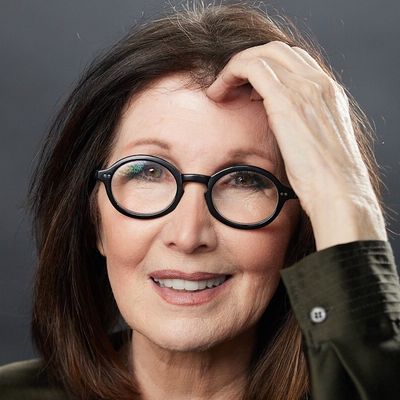
Joanna Gleason opens up about her star-making role, discussing her legendary audition when she didn't have an uptempo ("I said no, I don't, but I can sing this one really, really fast.") and the good luck omen that blew into her car window during the pre-Broadway run in San Diego... Read More
From the show: Giants in the Sky
Guests
Featured Shows
About
Joanna Gleason opens up about her star-making role, discussing her legendary audition when she didn't have an uptempo ("I said no, I don't, but I can sing this one really, really fast.") and the good luck omen that blew into her car window during the pre-Broadway run in San Diego. Join host Ben Rimalower for this candid conversation exploring how Sondheim and Lapine went Into the Woods.
Transcript
This transcript was automatically generated and might contain errors.
[0:00] Ben Rimalower: Once upon a time...
[0:04] Ben Rimalower: Broadway Podcast Network presents Giants in the Sky. How Sondheim and Lapine went into the woods with me, Ben Rimalower. Today's guest, Joanna Gleason. Joanna Gleason originated the role of the Baker's Wife in Into the Woods from its Playwrights Horizons workshop through the Old Globe to its landmark Broadway production for which she won the Tony Drama Desk and Outer Critics Circle Awards. She was also nominated for Tonys for Dirty Rotten Scoundrels and Joe Egg, and her other Broadway credits include Nick and Nora, Social Security, The Real Thing, and I Love My Wife. In addition to her numerous film and television roles as an actor, Joanna has directed the films The Grotto and Morning into Night, as well as several network episodics.
Well, I'm so grateful to you for talking to me. Obviously, no Into the Woods deep dive would be complete without you. Yeah, thank you very much. And I guess I'm just, I'd love to know your whole kind of journey. I know people hate that word now, but with the show, I mean, when did the, or even before this came into your life, before this, what was your experience of Sondheim and Lapine? Had you met them? Had you been a fan of their shows? Had you auditioned for them?
[1:26] Joanna Gleason: Well, yeah, certainly a fan of their shows. I mean, I think that when I saw Follies when I was still younger, before I moved to New York, and I was living in LA, and I saw Follies, I think it was at the, it might've been at the Music Center or at, there was a theater in Century City, and I don't, I can't remember. Oh, the Schubert, yeah. No, but I think you're right. I think it was at the Dorothy Chandler. Might've been at the Chandler. And I had a friend who was in it that I'd gone to school with, Marty Reim, Marty Rolfe, her name was. Oh, yeah. Beautiful, soprano, gorgeous, gorgeous voice. And I saw it, and I had this feeling that I couldn't name, I actually wrote about this once, about feeling like I was at the World's Fair with my nose pressed up against the glass of the House of the Future.
Do you know what I mean? It's like, there's a whole world of theater that is this oriented. Do you know what I mean? Instead of just, wah. And I don't know how to be part of it, and I would like very much to be part of it. And then I saw a production of Sweeney Todd. I mean, honestly, one Sondheim show after another just rang every bell for me. And I hadn't met them. I think I possibly met Steve because my then husband, when I came to New York back in 1981, having been here in the 70s to do my first Broadway show, then divorced, married again. And I was in New York, and he was friends with Judy Prince. He was Hal Prince's wife, and she had been close with my second husband. I was at one of those Christmas parties. And I think going down the stairs of the townhouse and coming up the stairs of the townhouse, there was Steve Sondheim. That was my first, yeah.
[3:15] Ben Rimalower: And then you were in the early pre-San Diego Playwrights Horizons workshop of Into the Woods.
[3:22] Joanna Gleason: Yes. This is very pre-history almost, the amount of records that exist of these incarnations. So I'm glad to talk to you about that. Did you get a call to audition, or were you just asked to read?
[3:40] Joanna Gleason: Yeah, no, no. They were auditioning. It was actually on my birthday in '86, it would have been, yes, to come audition for Steve Sondheim and James Lapine. And I had done a musical. I had done musicals in LA and in all the big venues, but now I was in New York. And when I would go to auditions, there were these girls who could sing. I mean, really, this is the land of big, amazing voices. And I thought, oh, God, I don't even have a book with all sheet music. I was hideously underprepared, out of a massive lack of confidence. So I just thought, well, no, I don't, I don't, I don't. But I went in and I had done on a clear day at the Music Center, and we had toured with it with Bob Goulet, directed by Sir Alfred Drake.
[4:35] Ben Rimalower: Wow.
[4:36] Joanna Gleason: Yeah. So I said, I can sing, what did I have that I don't have? But I sang it so slowly, I thought, I'm losing them. There's like some kind of soporific thing. And they said to me, when I finished, do you have, did you bring an uptempo song? Clearly in their minds, knowing that the baker's wife would have a faster metabolism.
[5:00] Ben Rimalower: Yeah.
[5:01] Joanna Gleason: Than this absolutely somnambulistic version of the song that I had just sung. And I said, and this was, I talked about this, I've talked about this, this was a turning point in my life, a fork in the road. I said, no, I don't, but I can sing this one really, really fast. And so it might have been Paul Ford playing, I think it was. I just said, just play it as fast as you can. And I sang it, and they left. And then they said, will you do the workshop? I'd not been in there, but I got the call, will you do the workshop? And that was it.
[5:35] Ben Rimalower: And that was like a couple of weeks, or what was that process?
[5:40] Joanna Gleason: Yeah, it was down at Playwrights Horizon, and I don't think it was much more than a week or two. And we did it for a small audience, the people who come and the things that James Lapine and Steve needed to know. The second act was kind of amorphous, there wasn't really a fully formed thing. But apparently, it went well enough. And we then, the next thing I heard is that we're, I went off and did a play, I did Social Security.
[6:10] Ben Rimalower: Had you sung in that reading, or had that just been like fragments of the script?
[6:14] Joanna Gleason: Yeah, I don't think, I don't recall. Now, this is also how many years? It was like 30.
[6:24] Ben Rimalower: 35 years, 36.
[6:26] Joanna Gleason: Yeah. So half my lifetime ago, Ben. Okay.
[6:32] Ben Rimalower: Wow.
[6:34] Joanna Gleason: Yeah, half my lifetime ago. I do not recall whether I said, I don't think I did. If anything, it would have been just the first song. But I don't really think the score was finished. Did you die in that incarnation? Do you remember?
[6:51] Joanna Gleason: You know, there was a death in San Diego where I went off stage after The Prince, and an apple rolled onto the stage, or an apple rolled onto the stage. I picked it up after my song, took a chomp and left. And then the next thing you heard was that I had eaten, never eat poisoned apples in the woods. That's how I died in San Diego. And we had a lot of talkbacks with the audience at the Old Globe. And one night, and it happened more than once, somebody in the audience said, you know, we follow the baker and his wife. They're more closely aligned to us as protagonists. We're following them. They're humans. They're characters. They're not, you know, they're not fairytale characters. They're just fictional characters.
[7:34] Ben Rimalower: Yeah.
[7:35] Joanna Gleason: But then we feel cheated that she goes off stage. And, you know, she's dismissed with an apple. And I thought I was sitting on stage. And I thought, yeah, exactly. I don't know how to say that. But I think I did end up having this conversation with that. That's a long way to go to kind of disappear. Yeah, you know, and be the butt of a joke about eating a poison apple. And they, when we retooled it for New York, the giant, it was a much more dramatic moment. Yeah, giant killed it. And so then it had the emotional heft of a real loss for the baker, you know, and the fear and the terror and the situation. So it was better all the way around. And the icing on the cake was that Steve and Jim had me come back in that little, come back as a spirit, you know, come back as the baker's wife and sing to him. To me, that's when I could see people totally wrapping their arms around their children in the audience, you know, and tears, grown men.
[8:40] Ben Rimalower: Yeah. Now, even in that first workshop at Playwrights, did you have the sense of this could be the role that could win me the Tony? This could put me on? I mean, did you have a sense of the impact this could have?
[9:02] Joanna Gleason: No. And I'll tell you why, because I had been doing plays in New York. And I had stood by in The Real Thing, and I got to go on in both parts. And I thought, okay, this is great. I did play off Broadway and at West Side Arts and, you know, I just was kind of chugging along that this was a musical, that this was a Sondheim musical, and that this role kept flowering in front of my eyes. I never went to the, oh, this is it, this is the, I just thought I'm part of the best show I've ever been in. I am working with the best people I have ever worked with. And everywhere I look on stage is somebody more wonderful than I could have imagined. And it starts with Chip Zien, of course, but everybody. To a person in that show.
And what I also felt, and this is to Jim's credit, James Lapine's credit, apart from the book, none of us ever, everybody played the stakes of the story. Everybody in Act One was enchanted. You know, oh, there's princes and there's witches, and everybody in Act Two was disenchanted. And the depth of that fear and the cynicism and the, you know, people turning on each other, we played those stakes and the audience went along, you know, following those characters closely and following that story closely. And I could feel it. I was part of a terrific play as well as a musical.
[10:32] Ben Rimalower: I mean, that's so clear to us now as fans of the, you know, finished show. But was that something that you could lock into right from the beginning of the development process? That Act One, I love the way you put it, Act One, you were enchanted. Act Two, you were disenchanted.
[10:50] Joanna Gleason: Yeah, I mean, we could feel it, you know, in the rehearsal room. And honest to God, you're working with, you know, two guys who are Pulitzer Prize winning, you know, and they're, you know, and you just think they would not be sloppy in this endeavor. They're not just throwing together. You can't do that. Yeah. At these prices and the time that it takes, you know, for them to create these things. So I just felt blessed, fortunate and blessed.
[11:21] Ben Rimalower: That's so rewarding to hear also, because I read that amazing book James Lapine wrote, Putting It Together, about Sunday in the Park with George. And it's part of what made me want to do this podcast, because I wanted that kind of granular sense of how Into the Woods came to be, and I wondered if, you know, there's so much of actors feeling distraught in that Sunday in the Park with George process. And I thought, well, surely anybody on Into the Woods would think, well, they got it together that time. I trust them now. I mean, you know.
[11:57] Joanna Gleason: Look at the context. I mean, you have a play about an artist, always difficult to do, plays about artists, you know, and movies about artists, just it's like inside baseball. It's just, is it going to land with the audience? You have George Seurat, not a cuddly character, right? You have, it's very visual. That's James's great.
[12:17] Joanna Gleason: One of his great gifts. You have the second act being, you know, come with us, we're going to take a real leap with this. We're not going to just give you pretty, pretty. I mean, every challenge, they threw every challenge they could, you know, at each other and at the audience. And for me, I think it's a masterpiece. And I just, I just love it. So when you when you then say, okay, we have another show, let's pitch this to you. It's about fairy tales. Well, okay, I'm in. It's not heavy lifting. Do you know what I'm saying? Yeah, of course it is. It is to make it as good as it is. But even just even just the pitch is, you know, it's not about George Seurat. And everybody goes, and we couldn't Google them.
Yes, what about it? That's a musical. It's got Cinderella. It's got, you know, princes and Snow White and Jack and the Beanstalk and Little Red Riding Hood. And yes. Oh, and by the way, everybody gets decimated, you know? Yeah. But but besides all those familiar fairy tales, there's there's the baker's wife and the baker. And I was it clear from the I mean, I think especially in that original production, at least in terms of the film preservation of it, it's so clear that you are the audience's way in and that we we relate to you being, you know, not we they have that great line, which I've heard you inspired. This is ridiculous. What am I doing here? I'm in the wrong story. But throughout, there's a sense that your people we can we would see on the street in New York City.
Even I said, I said to Chip and I were talking about we're like two, you know, Upper West Side Jewish people. Yeah. Decided to take their bakery. You know, let's go here. It's cheap upstate. You know, there's a weirdo next door. All right. You know, and we just we were contemporary in that way. And fictional, but but quite contemporary in our relationship, because all the other fairy tales, you know, the outcome, you don't know. Yeah. And so that contemporary quality, was that something that was there in the early drafts or did that come to to be developed? You know what? I think it's a little bit of both. But I know that Chip and I brought our friendship to that. And the way we were together, you know, I mean, you know, I mean, he's remained one of my greatest, greatest friends and all these years, because we hit it off, you know, immediately, there was a kind of shared ness about the world.
We both had the same kind of, you know, same kind of perspective on the world. And known him long enough now to we've all watched each other's kids get married and have babies and, you know, go through everything. And I said, Yeah, you can't. It's very, it's very tricky with casting. You can't play, you can't forge, as in a forgery. You can't forge chemistry. You can't. Yeah, it's there or it's not there. And we had it. And I guess the first time that was you was in San Diego, right? Because he had not done that playwright's incarnation of the show. And then so was that there right away from getting in the room? Yeah, I mean, we started rehearsals in New York. So we would start rehearsals in New York.
And so I thought, okay, he seems uncomfortable. Somebody else had done it in the workshop. You know, let's go to lunch on the lunch break. So we it was at we were down at West Beth. We were that's where we were in the West Village. Yeah. So we walked to some restaurant, we sat down and, you know, we were talking about and I asked him how old he was. And he said something. And yet his wallet was there. So I grabbed his wallet. I looked at his drivers. I said, No, exactly how old you are. And that's been a thing ever since. But we were able to break the ice really quickly. And, you know, I mean, he, you know, how spectacular he was in that show. I tell you, to this day, he should have been nominated for a Tony.
So crazy. Yeah, no, he absolutely should have been because we were like a salt and pepper shaker. I mean, that's, as you say, that's the audience hooks up with it. And then when after the baker's wife is gone, he carries this thing through. And then through, you know, no one is alone in that and throughout to the end. So anyway, he was robbed. And so and when I understand that there was a lot of rewriting happening in the process in San Diego, were there things that like I saw on there's a list of the songs on a website that you had a song in place of moments in the woods called ready for the woods. I don't remember that. And I don't remember if that was I really don't recall that that's whether that was just a lyric change or whether it was a different song.
I can't. I don't think so. I know the witch had a couple of there were different which song like the boom crunch was in place. Yeah, that's right. And Cinderella's was slightly different. Yeah, that's of the palace was was something slightly different. There was another midnight, you know, second midnight, second midnight was in previews. So there was a lot of Taylor that song second midnight. People have talked about that a lot. There's these demo recordings that exist of that. It's actually that's the other thing. Nobody can explain where these come from there. Some of them were released on one of the reissues of the Broadway cast recording and others were on a Sondheim box set and it's second midnight and early version of giants in the sky and early version of on the steps of the palace called back to the palace back to the past but sung by home it's well it's they're they're sort of split up the parts like Maureen Moore sings the witch and the baker's wife and George Lee Andrews is like the baker and the mysterious man and Betsy Joslyn is Cinderella and okay so this must have done you know just maybe as a sales to I don't know I have no yeah maybe nobody knows when they're from or why they were done or who they were done for but it's interesting to hear the second midnight because I recognize some of the music from what you sing in the finale that maybe I just wasn't meant to have children don't say that you know and then there's also like an extended version of children will listen that I think Sondheim wrote for Barbra Streisand that incorporates a verse from this that I guess yes I've heard that other version yes I have heard that yeah how do you say to a child in the night yeah um and it was the for the baker and the baker's wife to sing that I guess presumably you sang in San Diego or yes it does come bring a distant belt yeah so much came and went and you know there are nights when we just are told at half hour that's out you know this is it I mean I have stories about other shows where that was just a nightmare but um yeah there were a lot of changes because these guys were gifted yeah what he said this is what it is this is all I can do you know and uh and just live with it and uh and would you say like for example in San Diego whereas were they more free to make those while you were performing because the stakes were lower or did they have to be more careful I think thanks were actually higher out of town because there's well sure because you're you're you're thinking thumbs up or thumbs down you know is this gonna work and this is that's why they had the talkbacks what do we have here you know exactly what what is it we have here um yeah I do remember there were lots of changes but of course the best memory of all is the night uh you know Chip and I shared a car a rental car cute yeah to drive I think we were all staying across the Coronado Bridge or something we're all staying in Coronado and uh and so we had to share this car and Steve said to um Kim and to everybody Little Red and Jack and Cinderella and the Baker I've written the song in Act Two which is No One Is Alone and I'm gonna play it for you so come into this small rehearsal room small sort of darkish small rehearsal room with a piano and since I had the car you know I need so I was in the room too because otherwise I wouldn't have a ride home yeah and you know Steve sat down at the piano and played and sang you know uh No One Is Alone and we could not breathe and that's when I knew I'm part of something so powerfully simple and powerful and beautiful and I'm listening to Sondheim sing something that he just finished writing no it was unbelievable and then the next day we came to rehearsal and Chip I don't know you've spoken to Chip yeah you've talked yeah yeah because we shared a car we'd go over the this this bridge every day to get to rehearsals and one day we were talking about the show and is it going to work and I wonder if it's going to be a success and I rolled down the window and a dollar bill flew in into the car as we are driving across the Coronado Bay Bridge yes and I had that I kept that dollar for years and years and years through everything through the Tonys through everything the money just flew in the window that that is the charm yeah yeah I mean uh and and you didn't even know that you were going to get to sing No One Is Alone at that point right it was I knew that I was I knew that that was for Chip and that I was already Baker's wife had already died so when did that piece come in for for you to sing that that beautiful reprise you mean that that little oh that I think that came in in New York that came in in New York so it got through the rest of the run in San Diego I really I really think so because San Diego was where I ate the poison apple and I don't think that that changed and and that and that was a very different looking production in general the design was very different um what was was your were your costumes similar to what became the the look you know and Hold Ward did the did the costumes for New York and they were gorgeous and yeah he had a budget a real big budget you know or whatever compared to say but but I remember San Diego's being really great I mean I remember the scenery making us feel that way you know you you adapt to your surroundings a commitment is no less total if it's bare bones or if it's you know multi-million dollar saying yeah you can't play the scenery but even just outside of the budget question and I I guess because I've seen the Baker's I'm sorry the witch costumes were so with such a different take uh in San Diego but I but I'm asking I guess the you guys were kind of along the same same lines consistently to New York from there as I recall yeah and and then there was uh did did you do you remember if did you get an offer to go into that next workshop or did you have to come in again or oh no no we were fairly secure that those roles were ours and did that and that felt confident based on how well it had gone there in San Diego I mean that must be an incredible feeling um but you did do another workshop then prior to Broadway that at 890 Broadway then is that right this is something in your research you would remember better than I I just think we went into rehearsal at 890 I don't remember having to sell it again that's funny that's that's how Chip remembered it too but I other people have talked about it as like a actual workshop where there was a month off before Broadway rehearsal started yeah well there was a month off before Broadway rehearsals but I don't recall there being another and that um you had three different endings of basically about the way the baker's wife would die or one where you didn't die and then two other alternates that were rehearsed and you performed all three of them that ring a bell well and and that Betty it was basically the Broadway cast except Betty Buckley was the witch correct Betty
[24:35] Joanna Gleason: That's right. Betty started, there were creative differences and then they called upon their Bernadette, you know.
[24:41] Ben Rimalower: Yeah.
[24:41] Joanna Gleason: And she came right in. And so, you know, there was not a time when they were like, Betty's out, we're casting the witch. It was just...
[24:49] Ben Rimalower: I do not know the inner workings of that.
[24:51] Joanna Gleason: Yeah. It just seemed that Bernadette would be the obvious and the easy.
[24:59] Ben Rimalower: Yeah. She's so professional and willing and, you know, adorable that I think, I don't think there was a... I don't remember. I could be wrong, but I do not know. Only James would know.
[25:10] Joanna Gleason: Yeah. Well, he didn't remember or he was being diplomatic. But it did seem strange to me that they talked about having so much trouble casting that part all along. And yet then it seems like the person, they went with someone that, wouldn't that have been the top of any list coming out of Sunday in the Park with George, but...
[25:26] Joanna Gleason: Yeah. Yeah. I know. I know. But since that time, we've seen how many different witches, how many different versions, how many different, you know, it is, in my opinion, one of the hardest roles to sing that he ever wrote.
[25:38] Ben Rimalower: The witch.
[25:40] Joanna Gleason: Yeah.
[25:42] Ben Rimalower: Yeah.
[25:43] Joanna Gleason: Yeah. Well, certainly there have been all kinds of takes on it since then. But, I mean, one thing that also I've learned in this that I hadn't really been aware of is that there's such a rock star energy to that video.
[25:58] Ben Rimalower: I mean, I think of all the great, including the one where you and Chip did It Takes Two on Sondheim's 80th birthday. There's these great Sondheim tributes, especially as the years went on and he was even more and more revered.
[26:12] Joanna Gleason: And there's some kind of energy like that in the Into the Woods video, which I don't think I understood until doing these interviews now and realizing that you all or many of you had left and came back just for this.
[26:26] Joanna Gleason: That's right. I've been down in South Carolina in Charleston at the Spoleto Festival. And I heard, oh, my God, you know, PBS is going to film this. We get to rehearse. I think, I can't remember, a very short time of rehearsal.
[26:39] Joanna Gleason: And then it's all about cameras and things like that. But I hadn't done the show in a year.
[26:43] Ben Rimalower: A year?
[26:44] Joanna Gleason: A year. And my body remembered every move. I mean, every gesture, every move. It just came back. You know, I'm so glad that my kids and my grandchildren have had a chance to just watch that.
[26:59] Joanna Gleason: And everybody else's kids and grandchildren. I mean, it's such a strange thing with Into the Woods. I mean, other shows are on film, but I think because James directed it for the camera too, it's so perfectly captured.
[27:13] Ben Rimalower: And where other shows might have an iconic cast recording that hangs over future productions, we really, everyone knows this, all these performances backwards and forwards in the book scenes.
[27:28] Joanna Gleason: I mean, I think about this every time. I mean, your performance most of all, it's, when I see any production of Into the Woods, I remember how you said these lines that was so funny and so specific and so real all at the same time.
[27:45] Joanna Gleason: And it's like, it's like we're always comparing everything else to that because we've, we've made this impression.
[27:52] Ben Rimalower: The advantage and the disadvantage. The advantage is you live, you know, your thing, that ephemera of theater, you've now been preserved for generations. So, so it lives, it's a reference point. And then the disadvantage is the people who come next.
[28:05] Joanna Gleason: The obligation to try to make it your own, which after a while you just have to give up and make, you know, and you do, you do. I've seen fantastic performers and you just think, it has nothing to do with me. It's fresh because it's fresh to them.
[28:20] Ben Rimalower: Yeah. But it's, I mean, I think for so many of us, that show is so seminal and people, it was the gateway drug to Sondheim or the gateway drug to musical theater.
[28:31] Joanna Gleason: They did productions in college and high school and wherever. And then, and this original production captured beginning, middle and end like that with all of you just in such a peak form.
[28:43] Joanna Gleason: Well, I will say this. I mean, in, in seeing it 35 years later, and I've seen it many times, including this last one, this wonderful one.
[28:49] Ben Rimalower: Yeah.
[28:50] Joanna Gleason: The audiences are made up of a lot of people who have done these roles. Yeah. So there is, but, but there is the fourth wall comes down a bit and I, it made me uncomfortable.
[29:05] Ben Rimalower: Yeah. It becomes all about, I know that, you know, I played that part.
[29:09] Joanna Gleason: And so the, the, the noise and the audiences have been groomed. Yeah. In Star Search and America to, to just overreact all the time, even if there's a key change or a high note.
[29:35] Joanna Gleason: And I just think then you don't care about the characters. It doesn't, it could be any character. Yeah. You're just there for the pyrotechnics. And I think it's unfair to the terrific people on stage.
[29:35] Ben Rimalower: Yeah.
[29:35] Joanna Gleason: Trying to tell a story with a fourth wall.
[29:35] Ben Rimalower: It's a very good point. I mean, there's, there's moments watching these shows where you, as an audience member, I can feel myself kind of drop into experiencing the story in that real, in the moment way.
[30:06] Joanna Gleason: And there's moments when it's sort of like cataloging, oh, how did they do this? How did they do that? You know, what's she going to do? When did you become aware that the, the show, particularly in that video had had that kind of impact?
[30:06] Joanna Gleason: Oh, that's a really good question. I, I think the, the first time I was aware of it was when several years later, when I was in LA, when I, we'd moved back to LA when I would go into read for stuff or audition for movies or TV.
[30:22] Joanna Gleason: There are these great writers and directors and they're all referencing it all seen, not necessarily the show on Broadway, but they'd all seen, and they're playing it, you know, for their kids. And I thought, really? And one studio head said to me, just, just sing me just, just like five notes, just, just sing five notes. And I went, no, no, what do you mean? I just thought it's, it was a thing.
[30:46] Ben Rimalower: Yeah.
[30:47] Joanna Gleason: Yeah.
[30:48] Joanna Gleason: And remains a thing.
[30:49] Ben Rimalower: What about aside from the production itself, but just how have, has your take on the material evolved, you know, over time, either passing of time in your own life or changes in, you know, what we're living through in our culture nowadays in the world, how has your experience of the piece shifted?
[31:11] Joanna Gleason: Well, it's clouded by the shift in the, in the audience.
[31:19] Ben Rimalower: Yeah.
[31:20] Joanna Gleason: In, in live circumstances.
[31:21] Ben Rimalower: Yeah.
[31:22] Joanna Gleason: Just taken on its own, listening to it on its own and watching it on its own. If I can just block all that out.
[31:28] Ben Rimalower: Yeah.
[31:29] Joanna Gleason: It is a fantastic show.
[31:31] Ben Rimalower: Yeah.
[31:32] Joanna Gleason: Because it's, it's like a tapestry where every single thread, you know, is woven and just becomes this gorgeous thing by act two, you know, people had their, oh, act two, we don't need act two, it should have ended with act one. And I think, yeah, you're just, that's just lazy.
[31:47] Ben Rimalower: Yeah, no.
[31:49] Joanna Gleason: Yeah, come on. We're giving you act two, which you should be uncomfortable and you should be moved and listen. We've stopped listening. We're only watching.
[32:02] Ben Rimalower: Yeah.
[32:03] Joanna Gleason: And it makes me sad.
[32:04] Ben Rimalower: Yeah.
[32:05] Joanna Gleason: Yeah.
[32:07] Ben Rimalower: That's funny. I actually, when I saw this new production, I felt like act two seemed more accessible to me than ever before, just because it felt so relatable. Like the apocalypse that they're experiencing didn't, it didn't even feel dark. It felt just like life, you know?
[32:28] Joanna Gleason: That's true. That's absolutely true. All the more reason to take solace, you know, in the fact that there's something on stage reflecting what you're going through.
[32:37] Ben Rimalower: Yes, absolutely.
[32:38] Joanna Gleason: It's metaphorical, people. It doesn't have to be literal, but it should be of some comfort that there has existed in the world, people who hold, that's what art does. It holds up the mirror, you know, to the times you live in. And you should, you should take heart that you are, as the song says, you are not alone, if you'll be quiet and listen.
[32:58] Ben Rimalower: Yeah. Well, that is the challenge for a lot of us today. Now, I keep missing your solo show that you've done at 54 Below, which I can only hope that it's going to happen again, because I can't keep missing it.
[33:14] Joanna Gleason: Oh, it went, thank you. It went really, really well. And it's, we did it, we did it years ago, and then they twice or four times, and then they brought it back. And then, then again, they asked us, we did it again.
[33:28] Joanna Gleason: Just after the pandemic.
[33:29] Ben Rimalower: Yeah.
[33:31] Joanna Gleason: Like March and July or something like that. And every time I do it with, with the same musicians, and these three fabulous, talented singers who came together to become the Moontones and Jeff Kleitz, my music director.
[33:45] Joanna Gleason: Every time we do it, it means something more to me, because I wrote it right after my parents, they were, they were right after they died, and they died very close together.
[33:53] Joanna Gleason: And then since with that time, when I do it, every time I do it, it's just, it's rich, it's a richer experience for me. You know, people respond to it. It's very funny, but it's also not a, it's not a nightclub piece.
[34:09] Ben Rimalower: And that 54 Below keeps having us come, you know, to, I got a beautiful letter from Richard Franco, about what it is to put this show up in a, essentially a bar, you know, a restaurant, nightclub, but that it holds, it's 70 minutes, and, and it's, it's a play. It does well in a theater, I've done it in a theater, twice in LA, and then up here in Connecticut, a gorgeous, like, you know, 500 seat house.
[34:33] Joanna Gleason: And it really is, it's a show with nine people in it. But yeah, I might do it again. I'd love to do it again.
[34:39] Ben Rimalower: I hope you do. Is there any of the music from Into the Woods in it?
[34:42] Joanna Gleason: None.
[34:43] Ben Rimalower: No, look at that, really not a nightclub act.
[34:45] Joanna Gleason: No, the very first show I did back in 2013, I felt obliged, because I'm not a cabaret artist, I felt obliged to put in all the kind of, you know, the things people know.
[34:54] Ben Rimalower: Yeah.
[34:55] Joanna Gleason: The Chip came up once, and Jimmy Naughton came up once, and, you know, there were things from every show, and it was woven together with an autobiographical narrative, and it worked, and, and that all worked.
[35:05] Joanna Gleason: And it was, I'm told, really good and effective. But I wasn't, I wasn't happy with it. I felt I was, I felt I was an alien in a land that was not mine.
[35:19] Ben Rimalower: You know, the cabaret world is a very specific bunch of incredibly talented people. But there is this, it opened up that 54 Below said, what have you got now? I said, I have this new show, which was already a few years ago, and they said, we want it.
[35:34] Ben Rimalower: Yeah.
[35:34] Joanna Gleason: We didn't have to sort of send it to them or anything. And it's, it's done very well. It's done very well there.
[35:41] Ben Rimalower: Well, I definitely need to see that.
[35:44] Joanna Gleason: You know, I think I may have like a kind of, they did it, they filmed it, they taped it. So there was a simulcast that you could buy at the time, but I think I have that tape. So maybe.
[35:55] Joanna Gleason: Oh, wonderful. Oh, thank you. Well, I mean, that should be available as a companion piece to all the, now, I was gonna say all the Joanna Gleason collection. You've also, now you've recently directed a film.
[36:07] Joanna Gleason: Yes. Oh, let me tell you that last night was the premiere in Cambridge, England, the international premiere of a short film that I did, called Morning and Tonight, which also was selected for the Los Angeles International Short Film Festival.
[36:20] Joanna Gleason: But I then wrote and directed a feature film called The Grotto, which just won at the Heartland International Festival, just three weeks ago, or two weeks ago, it won the Best Narrative Feature premiere.
[36:33] Ben Rimalower: Oh, congratulations.
[36:34] Joanna Gleason: We're so excited. We're really, really excited about it. And yeah, there's lots of interest in it and, you know, more festivals and things like that.
[36:42] Ben Rimalower: Okay, so that is going to be details to be announced soon, where it will be available for people to see for themselves. And is Morning and Tonight streaming anywhere?
[36:53] Joanna Gleason: No, unless it's streaming on the Cambridge Film Festival, because what Heartland did was you could for $14 to support the festival, you could download the movie and watch it, which a lot of people did. Yeah, so it's possible right now that Morning and Tonight is available, you know, for this week, however long.
[37:13] Ben Rimalower: Oh, wonderful. Okay, so we'll look at Cambridge… well, this podcast will be out after that, so… No, so then you can't see it. But I selfishly can. That's wonderful. Oh, that's so cool. I mean, so was Morning and Tonight the first one that you directed?
[37:28] Joanna Gleason: Yeah, I had directed in television for CBS and for Lifetime over the years, but this was my saying to myself, do a short first. And we shot it in two and a half days, all friends up here in Connecticut, same production team that did The Grotto. And we got it done, and I thought, okay, this is the calling card to get people to be interested in reading the script for the feature film. And I was incredibly lucky that eventually, over time, with some near misses, or, you know, I guess near misses of Oxymoron, but a woman read it, and I didn't even have to pitch it. She read the script and said, I'm in. So, yeah.
[38:07] Ben Rimalower: That's fantastic. I imagine actually starting with right as you were in Into the Woods, certainly by the time you'd won the Tony for it, there must have been a lot of doors that opened up due to that performance.
[38:20] Joanna Gleason: Yes, they did. And it's nice. It's nice because it's a reference point. Tony winner, Joanna Gleason, you know what I'm saying? Yeah. And so it's a little bit of a point of identification, you know, just like, yeah, no, she rose to this level here. So, you know, it's been helpful. I mean, I would hope that restores my faith in show business. I mean, it is such a wonderful performance. I mean, like, do you, did you ever have any desire to direct Into the Woods?
[38:54] Joanna Gleason: No, no. Directing theater, which I've only done on a tiny level, is a whole different kettle of fish. And for that show, I would have to bring something to it that made it worth, you know, doing again. And I've seen versions that are so inventive. And so that those really, you know, firmly held visions of the directors who have mounted it. And so, and I didn't have one. So better left to those people.
[39:21] Ben Rimalower: Did you see the Fiasco Theater production?
[39:25] Joanna Gleason: It was wonderful.
[39:26] Ben Rimalower: Yeah. Yeah. I mean, I think that's part of what's so wonderful about having the preservation of your original production is that I think, as a fan, at least, I don't feel like I need to be precious with Into the Woods. People could do any version they want to do. And I feel game as an audience member, because they can't touch what we have, you know?
[39:51] Joanna Gleason: Yeah. Yeah. It's beloved going in. There's nothing left to prove. And so it is just to enjoy. But as I say, most of the audience is reflecting on their own experience with it. You know, being in it, seeing their kids do it, you know? So it's familiar.
[40:10] Ben Rimalower: I mean, do you prefer working on original material for that reason?
[40:17] Joanna Gleason: And I've been really lucky, Ben. I mean, I really have. I did Stephen Carem's play, you know, Sons of the Prophet. I've done Dirty Rotten Scoundrels was, you know, when you get to go in, even I Love My Wife, the first thing I did, I've been lucky enough to be the first person to play characters going forward. And for me, that's really where it's at.
[40:38] Ben Rimalower: Yeah. Well, but now everybody else just has to revive the parts that you create.
[40:43] Joanna Gleason: And make their own.
[40:46] Ben Rimalower: Yes. Are there any revivals that you would want to do? Any shows that you've just loved?
[40:52] Joanna Gleason: Hmm. I said to somebody not so long ago in an interview, I think all that's left for me now is, you know, is Raisins Liaisons.
[41:02] Ben Rimalower: Well, first of all, I would pay to see that. But I feel there are other roles. Wheel me on, give me the song, close my eyes, wheel me off, get in the car, come home. I don't know. In musicals? I don't think so. I really don't think there are any. I don't think it'll be a musical. If and when I do come back, it'll be a play.
[41:22] Ben Rimalower: Yeah.
[41:23] Joanna Gleason: You know, I would like it to be something that's, you know, I just read something that Patti said recently in some interview about her being built for eight shows a week. You know, she is, which is astonishing. And she's, it's breathtaking that that's her engine.
[41:39] Ben Rimalower: Patti LuPone.
[41:40] Joanna Gleason: Is there another?
[41:44] Ben Rimalower: Look who I'm talking to.
[41:48] Joanna Gleason: I don't know that I'm built for eight shows a week. You know what I'm saying? Directing means you get up at dawn and you're going, your days are 16, 17, 18 hour days, and it's 100 questions a day. And it's logistics and sandstorms and rain and heat and freezing.
[42:01] Ben Rimalower: Yeah.
[42:02] Joanna Gleason: And I never was tired for five minutes.
[42:04] Ben Rimalower: No.
[42:05] Joanna Gleason: But I was also there. You know, I live, we live in Connecticut now. So New York is a couple hours away. And am I built for eight shows a week? And if the part came along, it was just like, I have to do this. I would do it.
[42:18] Ben Rimalower: Yeah. Well, I will certainly hope that something comes along that tempts you.
[42:24] Joanna Gleason: You never know.
[42:24] Ben Rimalower: Yeah, you never know.
[42:27] Joanna Gleason: I guess that's really all my questions about Into the Woods. I'm just sort of so blown away talking to you because it feels, and this might just be the genius of the performance, but that it feels like I know you from that performance. You know, you give so much of a person and a humanity in that performance as the baker's wife.
[42:56] Joanna Gleason: Thank you. I think what James and Steve both saw was to keep, and wisely, was to keep that character metabolically close to me because they liked my, you know, the sort of energy that I bring anyway, mostly. They let her mind work that way. Do you know what I'm saying? They let the humor be at that speed. So it was a good, it was a good fit, which they made, you know, into couture. I mean, it was already going to be okay. And then they just tailored it right to me.
[43:30] Ben Rimalower: Yeah. I mean, it's such a great mix of like, just such an intellectual center. And then this kind of like, just like this, like comedy, like just like sort of just having fun with it, you know.
[43:50] Joanna Gleason: It's fun, but it's also that the way of looking at the world is a very urban way of looking at the world. And she and the baker, as I said, were more, you know, urban, transplanted to the forest, you know, they're in the woods there with, apparently there's a kingdom over there, and there's a crazy woman next door. So that, it was fun to play her that way.
[44:14] Ben Rimalower: Will you say more about what, in what way it's an urban way of looking at the world?
[44:20] Joanna Gleason: Understanding irony, understanding her, her whole song is about a self-reflection that she would not have had just going, you know, day to day. Yeah. Homeless in the Woods is truly an internal process. It's a process of, wow, I have just experienced something, but I do have the vocabulary and the way to work it out. And she works it out in the song, you know, a simpler character would have said, you know, like, wow, I can't believe that happened. And maybe I should go home. And I don't know. And, you know, oh, wow, that was fun. And that's not the baker's wife. The baker's wife is, hang on, you know, I don't want to lose this other thing has its value. This was just a moment. And it's not real. So it's very, it's a, you know, she gets, she gets wisdom and then she dies, you know.
[45:20] Ben Rimalower: But it is such wisdom. I mean, it's even among Sondheim songs, which would probably all be closer to that than anyone else's songs. But even among Sondheim songs, it feels like the thought process inside that song is so rich and so clear and so deep. And just exactly like you say, I mean, the reflection as she's working it out, you can really follow her thoughts, one little bolt after another.
[45:47] Joanna Gleason: Right. But look what he did, you know, with finishing the hat. Look what he did, you know, for the character of George in the park and actually most of his characters. This was also a female character who gets to work things out like that. Yeah, which which I appreciate. But then so does Cinderella. Yeah. And it's articulate. Yeah. You know, I'm saying it's articulate, it's self-reflective. And, you know, it's I mean, he he did not stint with the women. And that's one of the great that's one of the reasons why I was so taken with his work when I first saw it. This is the women were smart. Yeah, they were smart and they didn't have to play. They didn't have to play coy and they didn't have to play stereotypically bewildered and only responsive. They were initiative in their thought. And that's that was Steve and James.
[46:43] Ben Rimalower: Well, it took a smart woman to play a smart woman and where I'm just I'm just such a fan and I'm so grateful to you for for talking to me about it. This is a pleasure. Just a pleasure.
[46:57] Joanna Gleason: Oh, you're a pleasure, Joanna. I'm going to I'm going to seek out your your films that you directed.
[47:01] Joanna Gleason: Yes. If you can find see if you can find Morning and Tonight. It's yeah, it's it's it comes from my life. It comes from it's about my parents, as was my show. But this is a slightly different take. And then maybe I'll see if I can sneak you. Don't listen, everybody. I'll see if I can sneak you my my 54.
[47:18] Ben Rimalower: Please.
[47:19] Joanna Gleason: I didn't know it was about your parents and I'm fascinated by your parents. So it's also about me and Chris and my show. It's it's very fun. There's a there's a set piece in there about Nick and Nora and Arthur Lawrence. I will not give it away.
[47:32] Ben Rimalower: I'm sure that is a scream in itself.
[47:40] Joanna Gleason: Yeah, but you're wonderful. Thank you so much.
[47:47] Ben Rimalower: My great pleasure. Thank you for listening to Giants in the Sky. Sondheim and Lapine went into the woods on the Broadway podcast network. Check out Episode six with Howard McGillin, who played Cinderella's Prince and the Wolf in the Playwrights Horizons Workshop.
© Broadway Podcast Network, All Rights Reserved