

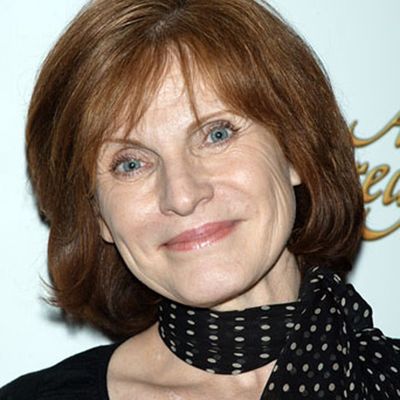
Ann Hould-Ward offers a fascinating peak into her process designing the iconic costumes for Into the Woods, from the Witch's transformation to her many attempts to get the Wolf's genitals just right... Read More
From the show: Giants in the Sky
Guests
Featured Shows
About
Ann Hould-Ward offers a fascinating peak into her process designing the iconic costumes for Into the Woods, from the Witch's transformation to her many attempts to get the Wolf's genitals just right. Join host Ben Rimalower for this candid conversation exploring how Sondheim and Lapine went Into the Woods.
Transcript
This transcript was automatically generated and might contain errors.
[0:00] Ben Rimalower: Once upon a time.
[0:06] Ben Rimalower: Broadway Podcast Network presents Giants in the Sky, how Sondheim and Lapine went into the Woods with me, Ben Rimalower. Today's guest, Ann Hould-Ward, the original costume designer.
[0:19] Ben Rimalower: Ann Hould-Ward designed the costumes for the original productions of Stephen Sondheim and James Lapine's Into the Woods and Sunday in the Park with George, receiving Tony nominations for both, and winning the Tony for her costume design on the original production of Disney's Beauty and the Beast. She also designed the 2006 revival of Sondheim's Company and James Lapine's productions of Falsettos and Dream. Her many other Broadway credits include John Doyle's acclaimed The Color Purple and the original productions of The Visit, The People in the Picture, A Catered Affair, A Free Man of Color, and Dance of the Vampires.
[0:59] Ben Rimalower: Well, you know, I think Into the Woods is a particularly relevant show to the conversation about the intergenerational. I mean, obviously that's true in terms of the actual themes of the show, but even just in terms of the way that it exists, as you know, one of the first of these sort of shows that was captured on video. And you know, particularly in that the filming of it was directed by James Lapine. So it wasn't just, you know, like a live performance capture. I mean, it's almost like a film, you know, that really represents the material in such an effective way, and I think that explains partly why the reach of that original production has been so far, and you know, even though the show closed after two years, I mean, it's like we think about it's in the third Broadway production now, while Phantom of the Opera is only closing, you know.
[1:59] Ben Rimalower: I met my daughter went, well, my daughter was three months old when we did the original workshop of it out in San Diego. So I and I and then I think Phantom has run that long as she is. You know, it's amazing to me.
[2:15] Ann Hould-Ward: It is amazing, but the other difference is that because of that, you know, a generation of people, several generations now grew up watching this home video of Into the Woods, and they did the show then in their high schools, in their colleges, in their community theaters. They started in the revival on Broadway or in the park or in London or the theater of the fiasco theater with the, you know, horizontal blinds as the stepsisters or, you know, brilliant innovation. Everyone made it their own, which of course, in a way it was primed for because it's these familiar fairy tale characters. So it's such an accessible sort of gateway musical for people to get into theater to get into Stephen Sondheim.
[2:55] Ben Rimalower: And I think that kind of explains a little bit of the rock star appeal of when you—I don't sure probably you've seen this revival—um, that's on Broadway.
[3:04] Ann Hould-Ward: I have not seen the revival. I uh, it's actually it's interesting, it's one of the shows that it's very hard for me to—I remember seeing the initial revival. Uh, and it actually is just one of those shows that is hard for me to see a revival of. I don't really have a deep desire to see the revival. It's, you know, very—it has a very big place that—and you know, maybe a lot of it is exactly what you're saying, that that video so so many people and I I remember I have seen it and I remember when young designers started coming to my studio to show me their portfolios and they had—I they had it in that Into the Woods in it.
[3:50] Ann Hould-Ward: Yeah, that's the point at which I started to feel really old because I thought, my gosh, you know, they're like—because they were all of them were, you know, that one of the things they'd say was I saw the video when I was a kid and then I got to design it in college or grad school. So yeah.
[4:10] Ann Hould-Ward: So it does, you know, even in my reference to it, I see so many people that, yeah. So you know, it's such a significant show just in terms of its cultural impact, and because it's from the time before the internet, there are not, you know, a lot of things on the record of the development of this major piece. And James Lapine wrote that incredible book about Sunday in the Park with George that was just such a granular chronology of how that incredible show came to be, and it made me really hunger for that to exist about Into the Woods as well. And of course it was wonderful to talk to James Lapine and but it's been like almost like a, you know, Rashomon kind of thing because everyone has just sort of, you know, their own narrow experiences, you know, informs what they remember.
And even more than things necessarily being in conflict, it's that there's just gaps in what everyone so personally remembers. So I'm hoping to put together the actual, you know, story of how it happened.
[5:20] Ben Rimalower: Well, you know, but that's pretty true actually of Sunday too. I think when James started interviewing all of us was everything that's kind of the fun thing I think about that book. Is everyone brings that? I mean, I certainly read the book and went, oh well, I didn't know that happened. I mean, you know.
[5:38] Ann Hould-Ward: That was kind of fascinating to me. It like the different pieces from different people's.
[5:47] Ann Hould-Ward: Um and it is interesting too. Some—I mean, once in a while, it's a real theater person who says they're familiar with the American theater taping of Sunday.
[6:04] Ben Rimalower: Yeah.
[6:06] Ann Hould-Ward: So many people know it from Into the Woods, you know. And then and I guess it's interesting. I didn't realize so. James didn't direct the Sunday one, I guess, huh?
[6:17] Ben Rimalower: Yeah.
[6:17] Ann Hould-Ward: And I think that you can really tell the in terms of how it's preserved, the difference in, you know, that this one feels like a James Lapine film.
[6:28] Ben Rimalower: Yeah, well, I think too. I mean, I'm sure James talked—I mean, as I remember in the theater, we really had much more—it was more static cameras for the Sunday.
[6:40] Ann Hould-Ward: Yeah.
[6:40] Ben Rimalower: Whereas with—but of course you were in so much bigger space where, yeah, no, it—you can't separate limiting in that respect.
[6:52] Ann Hould-Ward: Um, but so okay, prior to getting into the Martin Beck, I'd love to know. I mean, you were a designer on Sunday in the Park with George, so it seems like not surprising after the success of that collaboration that you would come back and work with James Lapine and Stephen Sondheim again and design Into the Woods. Can you tell me when your awareness of this other musical Into the Woods began? Did you attend the very first readings before San Diego at Playwrights Horizons when Sondheim was singing the songs? What did—how did you first hear about it?
[7:31] Ann Hould-Ward: Um, well, so the first that I remember hearing about it was when we did Merrily out in La Jolla. So that's the summer after Sunday opens, I believe. Probably know better than I do.
[7:46] Ann Hould-Ward: Now I do. I remember being in—I mean, I don't know, it must have been a Bower producer's office. Maybe it was one of the Schubert office, but it doesn't seem like the shape of it is correct to be a Schubert office. The—you know, the offices that are up above the Schubert and the Martin Beck there. We were in some—oh, it might have really—no, I don't know, it might have been like the Dodgers offices, probably, but they were just starting then, right?
[8:18] Ann Hould-Ward: But yeah, they had an office, huge big room, and we were having conversations about Merrily. And at that point in time, they come in and tell Steve's there and James is there, and it's, you know, must it Duck Stein must have been there because he did this up for Merrily? Um, after Merrily has closed or has opened it.
[8:42] Ben Rimalower: Yeah, well no, that Merrily, so Merrily's what, 81 or so?
[8:47] Ann Hould-Ward: Oh, this is prior to La Jolla Merrily. This is prior to La Jolla Merrily. So this is—this is—this is between the opening and April, April 17th, didn't we open or something like that in up for Sunday? And then it's gotta be very—it's—
[9:08] Ann Hould-Ward: Well how you're gonna—the next part of the story is gonna—you’re gonna be able to get an exact sitting there. We're sitting there, James is standing, Steve is sitting, we've got research laid out, whatever. And I think it's scenic, I don't think it's just my stuff, I think it's a bunch of things that are there. We're talking about doing it at—and somebody comes in to tell them that they've won the Pulitzer. Um, so that's how you're gonna know the day of is it's gonna be the announcement day of the Pulitzer. That's actually Googleable, unlike most.
[9:43] Ben Rimalower: Yeah, I mean that's what I was trying to tell the story. Wait, you can find out.
[9:47] Ann Hould-Ward: So it's that day, and we're there, and at that point in time, then I don't know who mentions it, and it's a great story because James is just so knocked out, you know. James is like the Pulitzer, you know, so it was a wonderful thing to watch somebody get that knowledge, you know.
[10:09] Ann Hould-Ward: Um, and Steve, of course, was Steve. I mean, he was very just kind of laid back about it. Yeah, um, although I'm sure he was throughout. I mean, welcome to Steve, right? Um, and so it's either at that meeting or very shortly after that, people are talking about the idea that Steve wants to do Merrily before he wants to go ahead and work on this new show. That's the first I know of a new show coming up.
[10:46] Ann Hould-Ward: So we go out and do Merrily then that summer. And of course, then there's some months of then the Schubert's come out and see it and blah blah blah. And then there's so much talk about what are they gonna do with it? Can they bring it? And they wanted to bring it. As I remember, you know, probably everybody knows this story better than I do. I'm just the designer, you know. But they wanted to bring it to off-Broadway, but it was such a big production, they couldn't figure out how to do it. And particularly at that time, I think off-Broadway, we just—it was not fathomable financially. And so then pretty shortly after that, then into the next spring is the beginning of working on Into the Woods for out in La Jolla.
[11:34] Ben Rimalower: Yeah.
[11:34] Ann Hould-Ward: So the first of my knowledge of it. And do you do you remember any of the readings?
[11:43] Ann Hould-Ward: You know, I didn't go to those readings. I uh, uh, um, I do have—well, and it's weird that I didn't, maybe I was someplace else because—and maybe I went and I don't remember it. I mean honestly, that you think that re—and usually, you know, usually like how I say I can remember the room, usually I kind of have visual images of something that I can—I don't recall any, so it makes me think I wasn't at them. Um, but then and is then we're—you know, the start of fairy tale research, blah blah blah to do that production is the beginning of what I can remember, you know, and then the workshop then because then you know there's another workshop of it.
[12:49] Ann Hould-Ward: Yes, exactly.
[12:51] Ben Rimalower: Yeah.
[12:51] Ann Hould-Ward: And then there was a, uh, a well actually, uh, during—no, during Merrily, is that right? There was a workshop at Playwrights Horizons in June of '86.
[13:04] Ben Rimalower: Um, and, uh, no, sorry, that was a year after.
[13:07] Ann Hould-Ward: Yeah, yeah, yeah. Exactly what you said. What you said was totally right.
[13:18] Ben Rimalower: I don't know. Unless it was like totally—are you sure anybody was there or was it just really a reading?
[13:25] Ann Hould-Ward: It could have just been just like Ira Weitzman at the first one in December of '85. But I think in June of '86 there were more people there, and that was, um, uh, they mostly had the first act, uh, but like, uh, already Betty Buckley was the Witch.
[13:44] Ben Rimalower: No, no, that—no, that's not—now there's something wrong here about dates because that workshop is actually really right before we go.
[13:54] Ann Hould-Ward: No, no, she—Betty did two workshops. She did one before San Diego.
[13:57] Ben Rimalower: This is like the great mystery.
[14:01] Ann Hould-Ward: Because I didn't even know that.
[14:04] Ben Rimalower: Yeah.
[14:05] Ann Hould-Ward: Because she wasn't available for San Diego because she replaced Bernadette Peters in Song and Dance.
[14:10] Ben Rimalower: Right.
[14:10] Ann Hould-Ward: Right.
[14:11] Ben Rimalower: Right.
[14:12] Ann Hould-Ward: So she was still, uh, potentially involved in Into the Woods at that point. She just couldn't go to San Diego. Then whatever happened later happened later. But, um, uh, so are they workshops or were they readings?
[14:27] Ben Rimalower: Well, they're distinguishing that the reading—the first reading was like Sondheim singing the songs, I think. The sec—the one what I wanted to tell you about that is I actually have a recording of Steve singing "Hello, Little Girl."
[14:44] Ann Hould-Ward: Oh, I'd love to hear that.
[14:45] Ben Rimalower: That people talk about—I mean, oh yeah, I still have the little cassette. I have the cassette of Steve Sondheim singing at his piano in that room in the back of, you know, his Dan place where he worked with the grand piano, the baby grand, um, him singing "Hello, Little Girl."
[15:07] Ann Hould-Ward: Yeah.
[15:07] Ben Rimalower: Well, so I—let's talk about the Wolf because it seems to me that had to be one of the most, um, uh, one of the bigger challenges, uh, in designing Into the Woods. Like, I'm curious how—because I, you know, I—it's such a, um, I—I love the way that you designed it on Broadway, and I've seen productions where I didn't like that, it didn't work for me, especially in the film version. Obviously, film is a different medium anyway, but you know, it seems like it's definitely something that is not an obvious thing how to be handled, and it, uh, I'm curious if there was a lot of, uh, thought or dialogue, you know, what was this the first sort of, um, uh, idea for how to, uh, create the Wolf costume?
[16:00] Ann Hould-Ward: Yeah, I mean, um, well, so when we do the—when we do it out in La Jolla, there's a difference of who plays the Wolf, right?
[16:13] Ben Rimalower: Yeah, it was the narrator playing John Cunningham was a Wolf.
[16:18] Ann Hould-Ward: Right. Cunningham, yeah, yeah.
[16:20] Ben Rimalower: Oh my gosh.
[16:21] Ann Hould-Ward: Um, and then Bob became the Wolf for Broadway. Uh, but so, and so I mean, honestly, I think that the design was the same design. It was pure and simply the—well, no, the design wasn't the same design. It—the—we had a design and we worked on it for out there with the, uh, uh, ability we had, you know, I think it's—it—it's a fascinating production to look at historically because it is at the very beginning of us doing these shows out in regional theaters.
[17:00] Ben Rimalower: Yeah, and of course that had to do with the Dodgers' relationship. I mean, really, Heidi and Rocco and Michael and Sherman Werner, they're the ones who kind of figured that out for—that all has followed since that time for producers as a way to look at the work. We hadn't done that before that.
[17:20] Ann Hould-Ward: Right, I don't think. I mean, I'd—I think there might have been one or—like I think it was the Dodgers, like with, um, Big River came before, uh, from the La Jolla Playhouse, right?
[17:31] Ben Rimalower: That's—I think that was '85.
[17:34] Ann Hould-Ward: About the same time.
[17:36] Ben Rimalower: Right.
[17:36] Ann Hould-Ward: You are absolutely right.
[17:37] Ben Rimalower: Yeah.
[17:38] Ann Hould-Ward: But it's just—but it's exactly like you're saying, because I think, you know, before then there were, uh, they would do these, you know, out-of-town tryouts at commercial roadhouses, but they didn't—it was not a non-profit co-production with enhancement money, like is so common now.
[17:53] Ben Rimalower: You're right, right.
[17:54] Ann Hould-Ward: And so—and I'm, you know, I—I got—maybe that—maybe Big River is the first of that figure out, you know, uh, because so we did the La Jolla production, but with, you know, I think we only had one or two teams of people in the costume shop to make the clothing. Yeah, much of it was, uh, was just pulled from stock, what could be reworked, and, uh, and it—and so that it was a just a—a very minimalistic version of things.
[18:32] Ben Rimalower: So I—I mean, so then the design—the design for Broadway was really, uh, I mean, Steve had a lot of—Steve wanted the Wolf to actually have genitals. Steve was the one who wanted to, you know, he's like, "I re—it should be real," blah, blah, blah. And I—I got it in relationship to the song, you know, that was what he really felt about was what—what was the song, and and so, um, I mean, it—it was a product of its time, shall we say? I mean, there was a lot of work on, uh, on doing, you know, the snout and then making sure Bob could sing properly. Um, and so the snout was really only a top snout, there was just a very small bottom, so that because what we found was that the resonance wasn't correct if it, you know, uh, and so, um, uh, Steve—you know, we—we did some prototypes of all of that, and Steve came and listened to him sing, so, uh, until we got what was the right—the sound wasn't changed on Bob.
[19:40] Ben Rimalower: That was that during, uh, rehearsals or in the—in the pre-Broadway workshop or use—?
[19:40] Ann Hould-Ward: Well, you know, it's a—it's just kind of a strange thing because what happens there is we start into the actual build for Broadway. I mean, and this probably wouldn't happen—I don't know if this ever happened again. We are actually on the build for Broadway because at that point in time we oftentimes had 12 to 15 week builds in a shop. Nowadays we're lucky if we get a four-week build, and like we figure we consider ourselves blessed if we get a six-week build, you know.
[20:22] Ben Rimalower: So, but it was in a different time, you know.
[20:27] Ann Hould-Ward: A lot of Broadway shows they had, uh, 12 to 15 weeks in a costume shop to get it wrapped and ready. And so the actual build of the costumes started while they're doing that workshop. I think it's like in July, if I remember. And then so they are actually coming for fittings from that workshop to, uh, to do fittings because we're at 890 and Barbara Matera's shop was at 892. So they were—we were on the fifth floor, and I think they were on the sixth floor, maybe, and so they pop down for fittings. So we were actually fitting the costumes while they were doing that workshop before they went into the Broadway.
[21:16] Ben Rimalower: So that sounds really valuable, just in the exact example that you were discussing, because had it been—had there not been that workshop, they wouldn't have been able to test out the fact that the snout affected his resonance and all that.
[21:30] Ann Hould-Ward: Yeah, right, right, exactly. And then I think the other thing about that particular costume is just it was a—it was a, uh, a product of his time because it's the first, uh—there's a place in Boston that had actually started to use it because we're—we're inventing more and more stretch fabrics, then, right, she says as she's sitting here in her whole stretch ready to go.
[21:57] Ben Rimalower: Same, same, same.
[22:01] Ann Hould-Ward: So, um, uh, and—and so, uh, this place called Hair Technologies up in Boston had taken machines that were weaving and knitting for pantyhose, so you see it's got this, it's got it, it's a mechanism to get stretch, right? And they figured out how to put synthetic hair fiber into it, so they could make what they called hair cloth. So it was actually a cloth that—that stretched before that, every kind of fur cloth just had this like backing on it that was like almost like carpet, you know.
[22:40] Ben Rimalower: It's the first iteration of a fabric that could look like fur that actually had big stretch in it, and so that was utilized. And of course, then by the time we get to doing Beauty—and now, now years later, these people have like, you know, they've mastered so many more better versions than that. That was—it was very thick. And it, you know, it had some stretch, let's say, but not, uh, like today is, you know.
[23:12] Ann Hould-Ward: Um, so that was kind of—and then, and then the whole prosthetic chest that Bob had was—it was, uh, it was done by, um, uh, actually, we hired a bodybuilder and took a mold of his chest, and then it was done out of a malleable plastic that then that was sewn into the hair cloth, and that's kind of the—the versions of—and then, of course, during previews there was so much about how much should the genitals show or should they not show and back and forth and back and forth about about how much hair should cover them and what color they should be, and I mean, you know, just—I mean, uh, it's funny because I mean that, um, it—but it's the—the chest plate in a way even more than the genitals, he just—there's such like a, um, like a sexy quality to, you know, and it just seems like it splits the difference between him being somebody like in a wolf costume and him, you know, having this kind of human, uh, attractive, you know, uh, energy that—and it's so effective in the what it creates in his presence with this girl.
[24:30] Ben Rimalower: Yeah, yeah, yeah, exactly.
[24:31] Ann Hould-Ward: And I think Steve really had the vision of that.
[24:35] Ben Rimalower: Well, Stephen, James both probably, you know, uh, of that sexuality, and really helped me edit in that direction.
[24:44] Ann Hould-Ward: Yeah, probably I would have been scared to do that, except that they—they really have a vision for it, you know, just work and—and were supportive. And, and of course, Bob then just took it to such an amazing voice and just the, you know, the inviting nature of him to that girl, you know, and Danielle together.
[25:08] Ben Rimalower: Yes, oh she's absolutely—so then in terms of like in the Old Globe, where I guess there was three wolves, there's two wolves and three pigs, like no, no, no, there weren't any pigs.
[25:22] Ann Hould-Ward: Uh, the pigs come about—there's no pigs at the Old Globe. The—the pigs come about for this revival.
[25:30] Ben Rimalower: Oh, in 2002, that's right.
[25:32] Ann Hould-Ward: Yeah, yeah.
[25:36] Ann Hould-Ward: Okay, so but it was um but there but there were because I know Joy Franz talked to me about how she she was a wolf in at the old globe and then Merle Louise played her wolf cub.
[25:50] Ben Rimalower: I don't remember that at all.
[25:53] Ann Hould-Ward: I don't remember a fitting of Joy Franz in a wolf costume. Maybe that was only in rehearsals because I did get hold of a video of the old globe, and it there's only there's only the one wolf and joy maybe it was cut by then, but maybe it was not even something that was it didn't I there were no I I I mean I I would remember John in fittings, yeah. That and I would remember pig fittings and I would remember Joy Franz in a wolf costume.
[26:24] Ann Hould-Ward: I probably and then what about like I another thing that I had seen in a photo from the old globe was these sort of um caged looking things on the stepsisters' ball gowns, and I thought, oh, is this some like deconstructed, like you know, surreal? And then I thought, oh, or is that just them getting ready?
[26:47] Ben Rimalower: Yeah, that's gonna be them getting that's gonna be the underwear, yeah.
[26:52] Ann Hould-Ward: When that first scene was Cinderella when they're when they're in their underwear and that the twisting of the hair, you know.
[26:58] Ben Rimalower: Yeah, gotcha.
[26:59] Ann Hould-Ward: So that that would be an actual that's a realistic cage that would be under a ball gown.
[27:04] Ben Rimalower: Yeah, yeah, yeah, yeah.
[27:05] Ann Hould-Ward: I and I thought it was like some panier. It's like a little panier, I think, as I remember.
[27:10] Ben Rimalower: Gotcha.
[27:11] Ann Hould-Ward: Yeah, yeah. Other than in terms of budget and resources and time and all that, uh, were there any sort of um conceptual changes to the design from the old globe to the Broadway?
[27:25] Ann Hould-Ward: Well, yes, I mean, I I I did uh uh uh a a complete set of sketches and it's my work that's on stage for Broadway.
[27:36] Ben Rimalower: But would would you say that you were just getting the chance to fully realize from scratch what you had been trying to find when you were pulling at the old globe?
[27:45] Ann Hould-Ward: Uh no, uh no, because I I think I mean I think that these workshop versions are more complicated than that because and in a great way for designers, yeah. Complicated in that um i the vision is being seen by lots of people, and everybody gets to have their opinion.
[28:06] Ann Hould-Ward: Uh whereas what you as a designer are doing is you're actually supposed to be expressing and learning the show. I mean, and it's so I think it's a double-edged short sword for designers because we have uh uh you're you're gonna do these out-of-town productions, which take a tremendous time to invent.
[28:32] Ann Hould-Ward: You have way less money, probably you have way less facilities and people to work on it, and yet um you're going to be judged about how how great or not great it would be for you to go on and design the Broadway. That's that's and I think it is a double-edged sword that we've learned to negotiate as we've done all these productions out of town.
[29:00] Ann Hould-Ward: And uh you know, and sometimes it's uh a really wonderful thing. I think it depends on the group of people and the kind of contract, contract they've made with each other emotional and aesthetically.
[29:16] Ann Hould-Ward: Yeah, how how well that those situations all turn out. But it was most certainly one of the first of like let's take it out there, we're still you know, we're still conceiving the show, we're still trying to figure out what it is, yeah, and do it out there, you know, and then and then like then I think after that there was just a lot of because most of it just had to be pulled and revamped and reworked.
[29:52] Ann Hould-Ward: And there was just no staff. There was no staff and there was very little money. And so then I then I did a the set of sketches for Broadway and that's what the video.
[30:07] Ben Rimalower: And do you feel like um having you know not been replaced and going from the old globe to the Broadway production that the fact that you worked on that albeit with limited resources in your ability to conceive for something when you've worked with it on its feet already and now you get to dream up that the what am I trying to say the way you know the piece is so intimate at that point.
[30:35] Ann Hould-Ward: Right. And I think that's the thing that I'm saying is a double edged sword. Yes that's the good part. Exactly why I'm saying that because what we get to do as visual artists is make those um I guess I I would say that's it's aesthetic thought bonds with the writers the the the composer the the director uh in in the sense that we we as visual artists are are uh we're we're not it's not our own visualization it's a visualization that we marry with the aesthetic ideas and attitudes the ambiances and feelings of those people and and and so having a longer opportunity to have those conversations and experiment it can be a fantastic thing right absolutely fantastic or it can be a really hard and trying thing.
[31:33] Ann Hould-Ward: I mean, I guess it's the chemistry of the people, you know, and how it works out. Because I think sometimes those situations um are are extremely difficult because you as you you as a designer want so much to be able to deliver the product that you've promised, right?
[31:55] Ann Hould-Ward: And yet the situation is so compromised that you can't where the writer, the actor, the the composer, these are things that can be changed very rapidly.
[32:09] Ben Rimalower: Yeah they can change on a dime right um whereas the physical production cannot.
[32:18] Ann Hould-Ward: Right. So and I think it certainly is I mean I I'm fascinated by these conversations because that's a complete turnabout that came with things like Big River and Into the Woods that has now become the way our business works.
[32:36] Ann Hould-Ward: Compared to if we go back to before that time they were building the whole Broadway production and taking it out to Detroit.
[32:45] Ben Rimalower: Right.
[32:46] Ann Hould-Ward: And doing it you know taking it to Philly um taking it to Boston. So it it it really changed like the this uh it was I think a cosmic change in our in our in our physical way of doing theater.
[33:02] Ben Rimalower: Yeah yeah that I okay so uh I this is so fascinating.
[33:08] Ann Hould-Ward: I'm I I um I definitely want to get to the witch because that's certainly another major challenge like the wolf but I mean, I I don't want to downplay how much I'm so uh taken with all your costumes for this show.
[33:21] Ann Hould-Ward: I mean, I think that like any single character from your into the woods design could is an iconic Broadway, you know, like Mary Martin in South Pacific or you know, uh, you know, Peter Pan or Patty LuPone in Evita.
[33:36] Ann Hould-Ward: I mean, I think of every single character in Into the Woods is that just memorable and you know and distinctive and and effective. So I, you know, but I but I am very fascinated by the the you know the weird ones that aren't people.
[33:48] Ben Rimalower: But I do want to ask about the baker and the baker's wife, because I've heard a lot of talk from Chip and Joanna and from James about how they saw them as sort, you know, these what this is ridiculous, I'm in the wrong story, that they were these sort of upper west side New York Jews kind of thrown in amongst fairy tale characters.
[34:07] Ann Hould-Ward: Was there ever any thought that maybe they would look physically of a different world, or was that not on the table at all?
[34:14] Ann Hould-Ward: No, no, and I think those are probably really things that James shared with the actors and didn't share with me.
[34:25] Ben Rimalower: I so see it.
[34:27] Ann Hould-Ward: Yeah. In the visualization of all of it, um, one of the things James really wanted was very graphic images and uh and and I think because he's uh was a trained as a graphic artist and a photographer, he the so the dynamic of the color and the very um the uh uh shapes that I think are really do kind of embed themselves in your mind, I would say have to come out of his really encouragement in that direction.
[34:58] Ben Rimalower: Wow.
[34:59] Ann Hould-Ward: Trying to find that. And I think you can, if you go back and look at that set of sketches, even I think you can really see it.
[35:06] Ben Rimalower: Wow, yeah.
[35:07] Ann Hould-Ward: Like wanting that, you know, and so that that, you know, then that as a as a designer, I think you go to the drawing table with those things from your director in mind, how do I carry them out?
[35:19] Ann Hould-Ward: And I think maybe that's part of why they do have that feeling of uh of quintessential, well, what is the maker? What is the baker's life? Quintessential.
[35:34] Ann Hould-Ward: And and I also think a lot of that has to do with Tony Straiges's incredibly beautiful set.
[35:45] Ann Hould-Ward: And the fact that the clothes had that kind of graphic block like nature to them and that set the woods was so ethereal.
[35:56] Ann Hould-Ward: Was so I mean I I oftentimes like if I'm in the country uh and it's late fall the tree leaves are off out of the trees and it becomes sunset time and you know you've just got the silhouettes of the trees I think of that set constantly. I cannot be in those places without remembering Tony's set because I think that he so captured that and that feeling you almost have always at that time of night in the out in when you're near woods you're like oh what's gonna come next right what's gonna happen next I mean that and I think he captured it so well and then the kind of the block graphicness of the cloth in front of it was was a uh uh uh uh a happenstance that probably the only person who really realized that how tremendous that would be was is LaPine, I think because because of his uh uh artistic aesthetic as a photographer uh and uh graphic artist, you know, it's just pretty amazing.
[37:07] Ben Rimalower: Yes, yes.
[37:08] Ann Hould-Ward: Well it's uh it's it's such a wonderful illustration uh to hear you describe that and to understand the relationship between your work and Tony's and James's and and it it's such as a such a fan of that uh you know trifecta to hear you describe it is very satisfying.
[37:28] Ben Rimalower: Um so thank you for that.
[37:29] Ann Hould-Ward: Um so okay getting on to the witch then um I know that that uh there there had been a lot of talk um I know they're talking Ira Weitzman and Paul Ford and James Lapine in terms of the early casting for the witch about that she would be not from the fairy tale world and have more of a rock and roll feel and uh it seemed when I'm looking at grainy photos of the old globe production that maybe that was something that was carried into the design or maybe I'm just projecting it from having heard that in conversation.
[38:05] Ann Hould-Ward: Well no I think it was I think it was projected into the design and and then there was this part about entrails somehow like she her stomach entrails being on the front of the costume I remember it I don't know why I mean I don't know I just remembered that part of it you know and I think it was more of like a uh it wasn't like really looking like entrails, but it was kind of this kind of uh dis fragmented design that there was some beating in that kind of approximated that feeling.
[38:45] Ann Hould-Ward: Um and then when Betty and James probably has a better idea of how when and how this all happened because then I remember having meetings with Betty where we talked about the design and then a meeting where we presented the sketches, and those sketches were much more um kind of they she had a more ephemeral idea of the witch, I'd say, and it had kind of a Victorian quality to it.
[39:20] Ann Hould-Ward: Uh and and then uh and then when Bernadette became the witch, then I met with Bernadette, and of course I knew Bernadette well. And uh and then developed the design. I mean I knew Bernadette's body, I knew her well, and I knew how she would work in the show and and develop that set of designs pretty rapidly actually, because that happens between the workshop and the real production, and that's like a month we've got in there or something, you know?
[39:54] Ann Hould-Ward: Yeah. So and then was there always the idea that there would be sort of three looks for the witch, the hag witch, the beautiful transformation, and then the sort of act two glamorous?
[40:07] Ann Hould-Ward: Yeah, well, it's pretty much written that way in the script, but uh but uh you know, it's funny because with Betty it didn't s didn't seem like we were doing that so much. And there's I know there was no scat there was a there was a a sketch of the of the old, but it still wasn't like really haggy witchy it was more ethereal that in nature and then um and then a and then kind of a beautiful version of it. That's what I remember of those sketches.
[40:43] Ann Hould-Ward: Yeah. Um and uh and with Bernadette by that point in time I think the script is really gelled yeah operate um and of course the the her turning into a beautiful witch the beautiful witch that the at the at the transformation which was was completely just based on the idea of that it's Bernadette doing the role and kind of quintessential Bernadette clothes yes that silhouette that she looks so fantastic in and it's the kind of frothy pink uh you know as the young Bernadette Peters beautiful that was I and I think it was really successful because it did do that kind of tongue in cheek for us as audience members.
[41:32] Ann Hould-Ward: Totally when she says this is who I truly am yeah yeah um that's so interesting but it is interesting with you when you say that about the number of clothes there were a tremendous number of clothes for her and that had to do with the tricks that are involved because I I always say you can only if if you want a costume to do a trick then it's all it can be is for that trick right you can't I mean you can't think it's gonna do two tricks or three tricks because you're gonna end up just making the three cosmics together.
[42:09] Ann Hould-Ward: There were different versions of the capes as you went along there were uh the going from the ugly witch to the to the beautiful witch she only had 40 seconds to go down do the full change and come back up and so in actuality she changed into most of the beautiful witch and took off makeup things uh partially like halfway through the first act and she had a version that looked like she was in the old witch but actually all it was was a front cover so that when and so and the the remarkable thing about that I remember was you know then we'd get ready and tech to try the time and she goes down in my wardrobe crew did the did the complete change and she popped up and we we never did it again you know it worked the first time and thank god to this a miraculous crew you know they were but we but I had really tried to track it all the way through of how to make that operate you know yeah yeah and then and then the second act of course was just based on the idea of oh well like the the first act you know the cape that she has in the woods that's all covered in the veiny kind of things that are light so that she could be hidden in the trees yeah and and so then that whole design becomes the inside of the cape the red cape that she wore second act had all of that inside it so it still had that design there, you know.
[43:48] Ann Hould-Ward: Um yeah, so that's kind of where where it was. And of course, the silhouette, then that second silhouette is still, I'd say even to this day, it's still quintessential Bernadette Peters of the Wells.
[44:04] Ann Hould-Ward: Absolutely. Um, that is so interesting. I do Joe, all are these um sketches like in a library anywhere, or can they be seen?
[44:14] Ann Hould-Ward: Uh the Into the Woods sketches went to there and now at Lincoln Center.
[44:22] Ann Hould-Ward: Oh wonderful. Uh uh I uh they're at Lincoln Center, but I believe they're in the process of they they have my uh uh all of my sketches now, except for the the Sunday in the park sketches are at the McNay a museum art museum in the in the Tobin collection in San Antonio, but um uh Into the Woods is there, but I don't know that they they're in the process of curating all of that stuff, you know.
[44:50] Ann Hould-Ward: Yeah, well that's good that they're in the process.
[44:52] Ann Hould-Ward: Yeah, no, it's good. I mean, I have call I have uh cop copies of them, you know, digital copies. Um and but like things like the the uh Betty sketch I gave to somebody long ago, you know.
[45:10] Ann Hould-Ward: Oh no.
[45:12] Ann Hould-Ward: Yeah, so I mean uh James has the uh James has the um uh uh uh the Jack and the Beanstalk, the first costume.
[45:24] Ann Hould-Ward: Oh, cool. Uh I'm going to Yale on Friday to look through all of James's papers. So I think yeah.
[45:33] Ann Hould-Ward: And and Paul Gemignani has uh uh how the wolf sketch because he loved the wolf, and of course he looked at it every night from the pit. He's like, I think that was a great costume and the first time I worked with his son as an actor I remember Penny I grew up with that sketch in your in my father's den I saw it every day so I love that um well so then I'm just curious like um in the run of the show on Broadway with replacement casting and then the national tour uh does was there anything that was reconceived for any of the stars or you know oh yeah I think uh for uh uh the the major reconception was when a new witch went in and and it was completely reconceived for Felicia Rashad and then when Cleo Lane did the tour yeah I did a number of different things for her than right I mean I think especially that the the transformation costume that pink costume that was Bernadette it's not gonna work for I mean the that the joke of it the tongue in cheek of it only works because it's Bernadette so um so it was redone uh and then it's kind of funny you know we reused those clothes uh at the Hollywood bowl and I redid that they are the witch and then and then they used them down at uh at Tots in Houston I think they used them for production and it was redone.
[47:16] Ann Hould-Ward: I did every time I've redone it for in the w it's the witch. And I just guess it just like part of it is making that work with the persona that we know as as that character.
[47:33] Ann Hould-Ward: Then of the character and who is the star, the persona who's doing it.
[47:39] Ann Hould-Ward: Well, so when it after Bernadette left, was there still a uh additional look for the end of the first act, or did they go straight into what they would basically wear in act two then?
[47:51] Ann Hould-Ward: Well, Felicia had she went into what she wore for act two, but um she had like a a surcoat that went over the top that was all beaded. So in the transformation she had that on to hook that off.
[48:08] Ann Hould-Ward: And I think she then I think she actually, you know, the cape that I'm talking about with the vines inside of it, yeah. I think they all wore that.
[48:17] Ann Hould-Ward: Uh act on.
[48:19] Ann Hould-Ward: Yeah. And and that it just was actually it's I mean, it's kind of interesting because we did all this. It's only now in talking to you that I reflect on what's really at the base of it. I'm sure there was a lot of conversation yeah about what he did blah blah blah, but i it's maybe only in reflecting that I can look and see.
[48:44] Ann Hould-Ward: Oh, it the reason was because quintessentially whoever was in that role, and then what is partly so delightful about the transformation is that somehow partially you see a little bit of them.
[49:03] Ann Hould-Ward: Star that they are.
[49:04] Ann Hould-Ward: Yeah. You know.
[49:06] Ann Hould-Ward: I did, I did cat there were I there was something on YouTube of Cleo Lane, and I did. I c I it was grainy, but I could make that out that it felt exactly what you're saying. I'd I would love to see those Betty Buckley designs. That's too bad that somebody somebody has them.
[49:21] Ann Hould-Ward: Um I'm so curious about a Victorian switch.
[49:25] Ann Hould-Ward: Well, and then maybe I'm not describing it right. You know, it was that big sleeves as I remember. It kind of had more of a ball gun feeling to it. And I can't tell you why. I don't remember the conversations, I'm sorry that got us there.
[49:41] Ann Hould-Ward: Yeah, you know. But but but like um it sounds almost like maybe like uh Margaret Hamilton or something, kind of kind of more, you know.
[49:50] Ann Hould-Ward: I don't think we ever talked about that, but now that you say that, yeah.
[49:54] Ann Hould-Ward: Um just that sounds amazing. Um wow, uh well, uh this has been amazing. I mean, I I I feel like this I'm so glad that I talked to you. There's just absolutely uh nowhere else that I've gotten any of this input that's been it's like with the book on Sunday, everybody brings a little different part, right?
[50:17] Ann Hould-Ward: You were saying about the upper west side couple. I'm like, oh my gosh, you know.
[50:23] Ann Hould-Ward: Wow, yeah.
[50:25] Ann Hould-Ward: Yeah, yeah.
[50:27] Ann Hould-Ward: Well, well, I I really grateful because I'll I'll try I've treasured this, and it'll be so great to have it as part of the podcast.
[50:33] Ann Hould-Ward: And oh great, great. I'm glad it's so much very nice to talk to you. I might have to send you another fan letter after I look through the Le Pine papers.
[50:46] Ann Hould-Ward: Thank you for listening to Giants in the Sky: How Sondheim and Le Pine went into the woods on the Broadway Podcast Network. Check out episode 10 with Paul Ford, the original pianist.
© Broadway Podcast Network, All Rights Reserved