

Consent is Sexy! Intimacy director Claire Warden on her extensive experience in TV, film, and theater, highlighting her groundbreaking work on Broadway and various TV productions... Read More
From the show: GOOD SHOW! with Sarah Goodman
Guests
Featured Shows

About
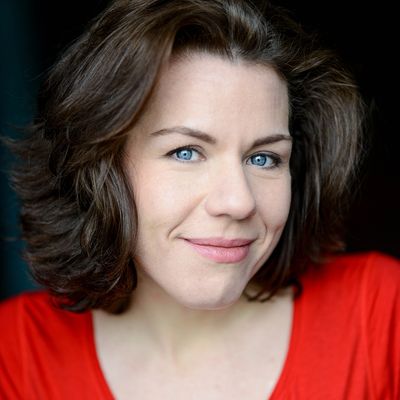
Consent is Sexy! Intimacy director Claire Warden on her extensive experience in TV, film, and theater, highlighting her groundbreaking work on Broadway and various TV productions. Claire explains the role of an intimacy director, the importance of actor consent, and how her methods elevate performances by ensuring actors feel safe and empowered. Sarah and Claire also delve into the collaborative nature of her work and its profound impact on storytelling.
Claire (she/her) is an intimacy coordinator/intimacy director with over twenty years experience in TV, film and theatre across America and the UK. Claire works as an intimacy coordinator on numerous television productions under various studios including HBO, Hulu, Amazon, Showtime and Apple TV as well major motion picture studios such as Sony and 20th Century Fox. She was the intimacy coordinator for Mrs Fletcher, And Just Like That (S2), Gossip Girl(2021), Dickinson, Billions, Harlan Cobens’s Shelter, Your Honor, Looking for Alaska, Hunters and the feature films West Side Story (dir. Steven Spielberg) and A Journal for Jordan (dir. Denzel Washington). She worked as intimacy coordinator and part of the creative team on the TV series of Three Women and has recently finished working as intimacy coordinator on the upcoming TV series Dying For Sex. Claire is the Director of Advanced Training at Intimacy Director and Coordinators, which is a global leader in training and certifying intimacy coordinators for film and intimacy directors for theatre. She is also part of the collaboration team advising SAG-AFTRA on their effort to standardize, codify and implement guidelines for on-set intimacy coordinators. Claire also works in theatre and made history as the first intimacy director on Broadway with Frankie and Johnny in the Clair de Lune. She also worked as intimacy director on the Broadway productions of Slave Play, Romeo and Juliet (directed by Sam Gold), The Inheritance, Jagged Little Pill, The Notebook, Company, Death of a Salesman, Waitress and West Side Story. In Jan 2025 she will begin work as the intimacy director for Othello, starring Denzel Washington and Jake Gylennhaal and directed by Kenny Leon. She recently opened the West End production of Slave Play, serving once again as intimacy and fight director. She has also worked on the National Tours of Les Miserables, Company and Waitress. She was awarded Variety Magazine’s 2019 ’10 Broadway Players to Watch’. Claire was also recently awarded a special Drama Desk Award for “pioneering work as an intimacy choreographer… and her leadership in the rapidly emerging movement of intimacy direction”. Claire is a Drama Desk award winner for ‘Outstanding Fight Choreography’ for Slave Play at NYTW and was also nominated in the same category for the play Daddy. Claire trains faculty & students in acting training institutions across the country, including Yale, Brown/Trinity, Brandeis, Tufts, JMU, SITI,University of Hawaii, Stella Adler, the O’Neill Theatre Center and numerous others. She has presented workshops, conferences and training across the globe.
www.IDCprofessionals.com www.clairewarden.com
Connect with GOOD SHOW!
Instagram: @goodshowpodcast
Tik Tok: @goodshowpodcast
Transcript
This transcript was automatically generated and might contain errors.
[0:12] Sarah Goodman: Hi, I'm Sarah. I'm a sound designer and professional lesbian theater geek. On my podcast, I'm looking at theater through a queer lens and discussing the intersection between the craft and the LGBTQ community. AKA me, my friends and family. Today's episode, my guest is Claire Warden, the intimacy director from Romeo and Juliet on Broadway. Before we get into our discussion with Claire, I wanted to let you all know that we have an exciting new development here at Good Show. If you're listening on Spotify, there is now a video component. So hello, you may be looking at my face right now. I'm just now adding this as a brand new feature, so my videos aren't super slick yet. And sometimes you may see a little blurry black blob crawling around, and that's my dog Kiki, and she's just here for moral support. So I hope you enjoy my episode with Claire and enjoy us dipping into video on Good Show. More to come.
[1:45] Sarah Goodman: Claire also works in theater and has made history as the first intimacy director on Broadway with Frankie and Johnny in The Clair de Loon. She also worked as the intimacy director on the Broadway productions of Slave Play, Romeo and Juliet, The Inheritance, Jagged Little Pill, The Notebook, Company, Death of a Salesman, Waitress, and West Side Story. Wow. Claire Warden, thank you for joining me today. You are working all the time.
[2:05] Claire Warden: I am. I am blessed to be busy and to be able to keep bringing this work to the industry.
[2:13] Sarah Goodman: I would love for you to tell me all about how you got into theater. How did you become an intimacy director? Were you a theater kid growing up?
[2:20] Claire Warden: Oh, I did my first play when I was three years old at school and kind of got hooked then. By the time I was 12, I had absolutely decided that I was going to be an actress, and there was no dissuading me in any way. So my whole school career and everything was focused in that direction. And I did, and I worked as an actress both in TV, film, theater in England. And then when I moved over to America. And when I came to America, that was about 16 years ago. I also then started to train in and then add to my repertoire of what that I did, Fight Direction. I'd always been interested in that work. That's what I did for a long time while I was here. And then in 2016, uh, 17 was when I joined the team to start creating the discipline of intimacy direction. And that's kind of how I've been spending most of the last seven years.
[3:21] Claire Warden: And so intimacy direction is kind of a new thing for theater in the last decade or two, I'd say. It's relatively new for the industry. Can you explain for the listeners a little bit what it means to be an intimacy director?
[3:35] Claire Warden: Yes, an intimacy director really is the person that it's a department all of their own. And it is the person who is facilitating and ensuring that when actors are working on scenes of nudity or hyperexposure or simulated sexual content or intense intimate physical contact, that they remain in their agency and that they're able to fully consent to all of either what they share of themselves or what happens to them or what they do to other actors. And that those scenes are crafted with the same level of creative storytelling, understanding and expertise as everything else in the show. Up until we created this discipline, there was no one person that was making sure that the actors were able to remain with agency over their own body and with consent.
[4:32] Claire Warden: And as you kind of look at the industry and as the industry and as the world has developed here, we have our fire safety officers, we have our water safety people, we have lots of people in their own department whose job and training it is to ensure that whatever job they're doing is safely undertaken. There was a misunderstanding about the need of care for actors and the amount that the industry had been created to persuade actors out of conscious consent. And so what we do is facilitate the shift in protocol, the shift in the way that productions need to operate in order to uplift and uphold space for actors' consent. And we help to we help the actors to find their way to what their consent might be. And we also create these scenes, we choreograph these scenes. So it looks like blah, blah, blah, is happening when the actors don't actually have to do that.
[5:32] Sarah Goodman: That's really fabulous and so important work because so often actors, like you said, are kind of asked to do things that maybe they don't feel comfortable with, but they don't feel like there's someone there to advocate for them, or that you know, if that role isn't on a production, it's up to sort of just the director and the actors to figure out how they're going to place scenes out. And I think oftentimes people are kind of pushed beyond their boundaries and their limits.
[5:59] Claire Warden: Yeah, and I think there's just a general gap in people's understanding of how power dynamics can affect somebody's ability to fully consider and to feel safe enough to name their consent or their boundaries. And of what aspects that have become so habitual to us in the industry, what of those actually undermine and prevent consent? And because I've spent the last seven years like cheaply with like in microscopic detail looking at these, I can understand how something that is not in any way meant in a malicious or manipulative way still subconsciously erodes away the actor's ability to feel free to name their boundaries and their consent. And so it's just about bringing that awareness back and bringing that care back and helping like the creatives and helping the crew to learn and understand, and also know that they themselves have the right to know what kind of scene is coming up, to be prepared, to understand that they are complicit in a system that is upholding the care of actors as opposed to eroding it.
[7:22] Claire Warden: Because I've heard many stories from numerous crew members who have felt really like pained and at a loss when they have been in a situation where they have seen something happening that they know is not okay with the actors, but they themselves have no ability or no rights or no power to be able to stop it or know how to. So it's a little bit of just like bringing that education and changing the actual system in which we work so that it focuses the other way on how to bring the most respect and care and structure for the actors as opposed to taking it away.
[8:03] Sarah Goodman: Mm-hmm. That's wonderful. And I feel like it probably results in even better performances because the actors feel so comfortable. So it's enhancing the art also.
[8:15] Claire Warden: Yes. From so many actors I've worked with, like as we get into the process, or even when the show is closed, they've come up to me and they've been like, hey, I never knew that I could be so brave, or I wasn't sure what that was going to be like, but actually that was really fun. I've had actors that actresses that have done, you know, spent a lot of their career having to do sex scenes that in the first big scene we did with them, she threw her arms around me and burst into tears and was like, I never knew a sex scene could be like that. That was one of my favorite scenes ever, let alone sex scenes, because it's really powerful storytelling. Intimacy can be the most powerful, beautiful storytelling we do.
[8:57] Claire Warden: Absolutely. But if we're in protection mode, we can't, the actors can't fully be free to inhabit that story. And the same with directors. I've had directors who were like, oh, I didn't think we were gonna go that far, but the actors seem really to want to. So like they're blushing in the corner over here, being like, oh no, do it, but wow. So we can get so much out of it when we just when we allow the actors to spend the energy that they've spent previously protecting in their artistic work.
[9:30] Sarah Goodman: That's amazing. Tell me how you approach the work. Do you work with the director first on what they're trying to get out of a particular scene and then the actors, or what's your sort of approach?
[9:41] Claire Warden: Um, I'd say specifically in a theater context, let's say yeah, in a theater show, generally, my first artistic conversation. I'll always chat with the producers and our stage manager to talk about like what's the protocols and how it's all gonna logistically work so we can start setting up those systems. My first creative conversation is with the director, and really just to hear what their ideas, their wants, their visions, their fears, their confusions, like just all that they are hoping for in this show, and what the moments of intimacy mean to them and how they want those moments to impact the whole story we're gonna tell.
[10:22] Claire Warden: And then once we have those thoughts and requests, and if there are specific thoughts, some directors have really specific like this is the picture I see, or this is why I'd really want this thing to happen, or to be able to see this of the actor. And some are like, I want to create it in the room with the actors. So if they have specific thoughts or requests, then I have one-on-one conversation with every actor involved, and we go through not only those specific thoughts, but also generally how the actor likes to work, how I can be of best service and advocacy for them, because it's really important to deeply listen, full body listen to the actors that I work with. Because every single person is different, and every single person needs a different level of engagement and support on a different project.
[11:14] Claire Warden: Um, so some actors are going to want a lot of conversation to know a lot beforehand, are gonna want a lot of support from me, and some actors are like, I feel great, I feel free, sure there'll be some questions I might have, or it'd be helpful just to have your eye there if something comes up. But so um, so it's really learning about what they need for this moment in time. Um, and then once we've kind of got our list of yes, this is available to play with, that's off the table. Then we can go into rehearsal and we can all as a team start to build these stories, these physical stories together.
[12:00] Claire Warden: Some you're coming up together, like with it together, or you are you like a choreographer for dance, would be like, okay, and now you do this, and now you do that. It's a bit of a mixture of both of those things, actually. The story is very much a kind of group clarification exercise in a way, and we always start with the story. We have five pillars that underpin the work we do, and one of those is context. Because if we don't know what story we're trying to tell, then we're just kind of flailing around, grabbing each other and trying to be like, does this look good? Which is what's happened before. So we first begin by being really clear what's this moment, or what are the questions we have about this moment that we might want to discover in this rehearsal?
What's the framework of this story moment? And then sometimes, you know, sometimes if your actors are really in their body and really adept with physical choreography, they may have a bunch of input. Sometimes if your director is a particularly choreographic-based person, they may have some ideas. A lot of the time I'll start by creating a bit of a framework for us. And part of that is the actual technical choreography. That's where in some ways it's similar to a scene of violence. Like, I'm gonna go and be like, right, your hand goes here, it crosses here. This is what stops the audience seeing that it's not actually making contact, and then you'll move like this, right? Just to create the structure of it.
And I'll weave into that some of our story points. And when we have that framework, we can build from there. So sometimes the actors in it, and they'll be like, you know what? I just I feel like at this moment my character is actually leading a little bit more, and I wonder if we can do that. Or the director might look at it and go, like, you know what? I'm suddenly seeing like from this angle, it's all about the impact on so and so. And I love that. Can we lift that up? So then we'll kind of play and tweak and expand it from there.
[14:10] Sarah Goodman: That sounds like a really exciting process.
[14:12] Claire Warden: It's really fun. I do think I love that you said that because I think that is something that we as an industry and a community are ready to embrace now is that telling physical stories and intimacy is and can be really fun and really enjoyable. I think everyone's got a little bit scared and from a good place, very afraid to do it wrong or to accidentally cross someone's consent. So everyone gets very cautious, very serious. And yes, it is a thing that we must take seriously, but we can have such joy and levity, and even if it's like dark, painful scenes, we can still get artistic fulfillment and a kind of joy by building really powerful stories.
[15:08] Sarah Goodman: Yeah, tell me some more about some of the challenges that you experience with this, like bringing up something. Let's say you're working on a scene that is more dark, it's maybe not in the scene, it's maybe not a consensual situation or something is happening that's maybe not the most positive that's necessary for the storytelling. What are your challenges with that kind of thing?
[15:31] Claire Warden: I mean, I think I think I'm I would probably call it more of considerations than challenges, but I think the consideration is really building a very strong container for the work so that the actors are really able to step into this liminal space that we build to, you know, as an old mentor of mine, Kevin Coleman used to say, for a compelling reason, in a specific place for a certain period of time, we are going to go here and tell the story. And we know that we, the human, the actors, the human parts of the actors can step out of that. We don't have to live in there, which is, I think helps us that give give us that knowledge of emotional resilience to go there. So it's about building a really strong container and really clear structures for the actors to be able to step in and step out to and to build their trust together so that they can both commit.
I will say, especially in scenes of non-consensual interactions, it's very often, not always, but it's quite often the person who's playing the perpetrator has a harder time really like committing in because it's a very it's a big step for someone to in that moment to be seen doing that and to kind of commit to the storytelling of that. So we need to build trust. But I will also say that some there are some actors, and I consider myself one of these. To like really put your heart out there and live in that as the wrestly scary stuff. So I think it's really about you know what comes up for each person involved in the process, and how do we hold the space to be to create authentic, create that acceptable risk to deep, to dig deeper and risk broader to create something that our audience can really feel in their bodies.
[18:02] Sarah Goodman: Yeah. How does your work vary between intimacy direction and fight direction? Because there's got to be some kind of Venn diagram there, right? Where there's some crossover, but how are they similar and how are they different?
[18:16] Claire Warden: Yeah, I think my flight work has been infinitely influenced, or the approach to my fight direction work has been influenced infinitely influenced by all of the work and learning I've done in the discipline of intimacy direction and consent. I think consent was not really a big consideration when we, you know, previously in the fight world, even though we are interacting very closely with each other's bodies. I see violence and sex, violence and intimacy, they actually live in a very similar place in our bodies and in our psyches and our experience. They're the kind of deep raw, ancient primal feelings. And they're often when when words just aren't enough, we move to expression with our bodies, and that's both in violence and in intimacy and sex.
What we have to consider when we are asking actors to create physical stories is that when actors tell stories with their bodies, which is their instrument, they are in some way reenacting a thing or creating a story. And we know now that we are living in an epidemic of sexual assault, and our society is overwrought with instances of sexual assault and lack of agency and lack of consent. We also live in an incredibly violent society as well. But we have very different societal attitudes towards those two things, right? And we give guns to boys of five, and we encourage boys, you know, boys and male identified or named people, we encourage violence and anger in them, and we discourage the expression of anger and rage and violence in people that we we name as women or we name themselves as women.
Similar kind of difference in attitude in sex and sexuality. The kind of statute of understanding around the fact that when we tell a story with our body, if there is some memory in our body of a similar story, that may be present. Now, someone who may have had a lot of violence in their life previously, when, and I've seen this many times, when we're creating a story of violence on the stage, there may be a memory of that. Someone that hasn't had a lot of violence in their life has a different frame of reference to that. Someone that may have a period of experience of sexual assault or sexual coercion, again, when we're doing a story, whether it be a consensual story or a non-consensual story, certain physical memories may come up.
So it's a kind of understanding, and that doesn't mean that they can't tell that story. It just means, oh, let's just make sure that they're aware of it. They have all the tools they need to manage it, and that we're, you know, we're trauma informed.
[21:24] Claire Warden: So I think while I think people may see it as very different, I think the deep fundamental considerations around creating story events and a story of sex are actually very similar.
[21:37] Claire Warden: The fact is when you're asking an actor to tell a story using their body, interacting with someone else's body, everyone in that needs to remain with full agency and an active part of that conversation.
[21:52] Claire Warden: And physically and emotionally and psychologically in staying in the uncomfortable part of the experience, not the pain or the trauma card experience.
[21:37] Sarah Goodman: Yeah. And staying on the topic of gender, I'd love to talk about Romeo and Juliet on Broadway and how they have cast a really gender diverse group of actors. And a lot of the characters are gender swapped. So I'd love to hear how gender identity and expression play into your work and how they played into what you were doing with Romeo and Juliet.
[22:28] Claire Warden: Yeah, well, when I kind of knew our full casting, it was very exciting to hear like what Sam and our casting folk had decided to do and the group of people we brought together. And in fact, right from the very first time we met in the room, we were really having continuous conversations about people's expectations of this play, because many, many people know it in a very gender binary way, and in a very well, Tibbard is a man who does this, and you know, the Lord Capula and Lady Capula, and they're very different. And so, like the expectation and the bodies and the people that we had telling the story in the room, and how we as a community were really, or as an ensemble, were really committing to the deep inclusion acknowledgement and respect of each individual's gender and how they wanted to be seen and treated in refer to. And that that is the world of the play that we are building. And it's funny, it reminds me a little bit because I know whenever you play a little bit with people's expectations in a classical way.
[24:01] Claire Warden: Well, that just never would be, they'd never be allowed. And it's funny, it kind of reminded me, and stay with me because this will seem off topic of Schitt's Creek, right? In hearing interviews, right, with Dan Levy talking about the world that they create in Schitt's Creek, they wanted to create a world where there wasn't prejudice against all levels of sexual orientation. And that it was even in this strange little town, there was it was just that was absent. And I've never thought about that before, but that's so true about that show that it's just sort of like, oh, everyone's cool with it. It was not a problem. It wasn't just part of life. Yeah, it wasn't until he said it in an interview, I was like, oh yeah.
Because the kind of stereotype is that especially in a small town in the middle of America somewhere, that there is a lot of prejudice. And Dan was like, it's important. What if we just created it where it just wasn't a problem? And that actually is an incredibly brave and hopeful statement to make. And I felt that, you know, what we're creating in the world of Romeo in Iowa, Romeo and Juliet, both in our kind of when they're doing the Shakespeare text, and in the kind of there's like a subsidiary world where the actors like they're still on stage, but they're not in the scene at the moment. They both have, yeah, there's a lot of people around all the time. They both in the show. Those worlds that were just like, yeah, this is the world, and this is the acceptance, and you are welcome here.
Like they are welcome here, and then you audience, every single time you come in, you are seen, you belong, you are welcome, and you are protected here in our home for the next two hours and 12 minutes. So that was that I think really underpinned a lot of the feeling of the show and the experience of seeing it. I think it's lovely, you know. We when we first started talking about how these characters were going to interact and the fact that they're young and it's they're young, they live in a world of violence. They're scared, they're horny, it's hot, they want to be loved, but they're in pain. And how might these young people express that in the in-between moments, as well as when it says in the script they fight?
They, yeah, well, it never says they kiss in the play, actually, but when it kind of indicates in a line that they should both myself and Drew Leary, our violence director, you know, we're able to have conversations around the closeness of fighting and intimacy. And when you've got like scantily clad, beautiful young people that are like grabbing each other and they're getting sweaty, and you're like, wait, is it violent or is it sexy? And they're like, I wanna do I want to kiss you or do I want to hit you, or do I kind of want to do both? And playing with that blending of experience. I thought that was a really fun twist that I've never kind of seen presented in a Romeo and Juliet before. We've all seen many, many interpretations of that story.
It's such a classic Shakespeare play. But yeah, what you're describing happens in one of the fight scenes, two like very male presenting characters get kind of caught up and they end up kissing. It's like, oh wow, they're all very wrapped up in this passion and confusion.
[27:45] Claire Warden: Yeah, and I think we also wanted to create many different representations of intimacy. Because you have, you know, you have some kind of raw, like sexy, abandoned, like no, like not necessarily emotionally engaged, but physically engaged, um sex and intimacy. And you have familial intimacy, right? And you have the nurse and Juliet and their way that they interact with each other, and then you have the friends, Romeo and Benvolio and Mercutio, and how they are intimate with each other in a different way. I love that scene where they're all laying in the flowers together. Yeah, and really beautiful. How do we do that? And then in the background of that, then what develops for Romeo and Juliet themselves, because sometimes it's either very, very sweet or all the way through, or it's kind of sweet, and then they're like, oh, but they had sex, and then it gets really sexual and then they die.
And I was really interested in, well, if we have a backdrop of many different expressions of intimacy, and then what for them, how does their growing intimacy, love, sensuality, sexuality, care, how do we see it grow and shift all the way through to the intimacy of grief and losing each other and wanting, even when I'm not conscious, I still want my body to be next to yours. Like that is such an extreme commitment to togetherness from, you know, these what people think are very young, inexperienced people. We really, I really, I was like, we need to see them get there because if we stay at the balcony or if we stay at the park, the holy palm was kiss, like the first kiss, the audience are never gonna really believe that it would go from that straight to, well, then I, you know, the taking of their own lives. So it was about what's the landscape of intimacy upon which we can see their particular love and intimacy grow.
[30:03] Claire Warden: Mm-hmm. And how the escalation of it all, yeah. And how it's affected by this pressure cooker that they're in.
[30:10] Sarah Goodman: What was your collaboration like with Drew Leary, the fight director? How did you work together on what you were doing in the show?
[30:16] Claire Warden: It was great. I mean, I'm lucky enough to have been to have worked with Drew before on another show. And so we knew each other already, which was great. And we'd worked as fight director and intimacy director before on a scene of non-conceptual sex. So we knew each other already, which was great. And we were really able to understand what each other would be doing and like the individual missions that we both had, and to then to be able to be like, I've just seen an opportunity and something you've created to play with this. Could we look at expanding? And that was actually very similar with Sonia Tayer as well, who is our movement director as well, because there's a lot of movement in there.
And so there were the moments where, you know, can we can we shift this into something a little more sensual sexual, or when general movement turns into an actual contact kiss or something like that? Like we could tag team and kind of dance together, play, play in that metaphorically like play together to create stories, very much involving our actors as well. So and our actors would be like, hey, I've got an idea. Like, great, what is it? I just felt no, I had an instinct or an impulse. Great, let's let's build it. Let's try it out.
[31:36] Sarah Goodman: That's really cool. I love that. It sounds like it was a fun project to work on.
[31:41] Claire Warden: Definitely a different take than what we're used to seeing for this type of play.
[31:45] Sarah Goodman: Yes, it was. It was very fun. It was very, it's very different to a number of productions that I worked on before, mostly because of this incredible energy that the company brought. Like, you know, they're young, they're passionate, they're fun, they're very cool. They're all far cooler than I could ever be. Um, so I did sometimes feel like the old lady who was like, I don't know that reference you just said, but we're gonna keep going. So that was lovely and enjoyable, and they're just such genuinely sweet, nice, gorgeous people. It was a joy to work with them.
[32:20] Sarah Goodman: That's really nice. What's your favorite thing about intimacy directing about what you do?
[32:27] Claire Warden: Ooh, that's a question. My favorite thing. I think it has to be when I describe it as when the actors fly. When I like I've been able to do a lot of work and care and concern and attention, and we've worked together, and that's allowed them to be artistically braver than they ever thought they could be, and they surprise themselves with the authenticity, the power, the commitment, and I see it shining in their eyes, and they do something, they come off and they're like I'm swept away and I'm crying or I'm laughing or I'm swooning. And that is like I see intimacy direction very much as a service role, and that's where I feel like I've served them to be a more shimmering human than they actually believed that they were.
[33:33] Sarah Goodman: Hmm. That's really beautiful. I love that. What do you think makes a good show?
[33:41] Claire Warden: That it moves the audience to thinking about it long after they've left the theater. And I think what makes a great show is that it changes something about how each audience member does or thinks or says in the future. Then it actually changes something.
[34:06] Sarah Goodman: Wow, I love that. That's really cool. Because I think that's what theater is. Theater is a social art. It was created for the community to have the conversations that were too big to have one on one. And that's I think what we need more than any. And it was also, I think it's a tool to build and foster empathy. And we are in a desperate lack of empathy in our world right now. So I think that's also what it can do.
[34:40] Claire Warden: I agree a hundred percent. You know, I've actually been in the audience of a few shows where I could feel people becoming more empathetic. I could feel people opening their hearts up. You know, you can almost kind of get the sense from the audience, especially in a live theater, what they're taking from it. You know, you can really grasp that energy.
[35:00] Sarah Goodman: Yeah.
[35:01] Claire Warden: Yeah. That's really beautiful. I love that. Well, thank you so much, Claire, for your time today. This was such a great conversation. I enjoyed talking to you so much.
[35:09] Claire Warden: You're very welcome. It was nice to speak with you.
[35:12] Sarah Goodman: Awesome. Thanks.
[35:13] Claire Warden: Welcome.
[35:14] Sarah Goodman: Take care. Thank you for listening to Good Show. Make sure to follow me on TikTok and Instagram at Good Show Podcast. Good Show is part of the Broadway Podcast Network. Check us out at bpn.fm slash goodshow. Thanks for listening. I'm Sarah Goodman. Goodbye.
© Broadway Podcast Network, All Rights Reserved