

In this episode, we take center stage with Sanaz Toossi's captivating play "English," currently gracing the Todd Haimes Theatre. We explore the intricate world of language learning, cultural identity, and the power of communication through the lens of this Pulitzer Prize winning play... Read More
From the show: Half Hour with Jeff & Richie (Post-Show Broadway Discussions and Interviews)
Featured Shows
About
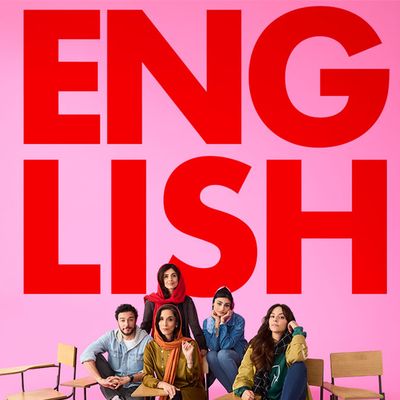
In this episode, we take center stage with Sanaz Toossi's captivating play "English," currently gracing the Todd Haimes Theatre. We explore the intricate world of language learning, cultural identity, and the power of communication through the lens of this Pulitzer Prize winning play. From the innovative revolving set to the excellent cast, we dissect the elements that make "English" a standout in this Broadway season. We'll debate its Tony Award potential, discuss the play's relevance in today's globalized society, and share our thoughts on how it resonates with both language learners and theater enthusiasts alike. Is "English" fluent in the language of great theater, or does it get lost in translation? Tune in for our deep dive into this linguistic journey and what it reveals about the human experience on and off the stage.
Follow and connect with all things @HalfHourPodcast on Instagram, and YouTube. Share your thoughts with us on "English" on our podcast cover post on Instagram.
Transcript
This transcript was automatically generated and might contain errors.
[0:00] Jeff Malone: Welcome to Half Hour with Jeff and Richie, the podcast where we explore the latest shows we see, sharing our insights and opinions on the performances, storylines, and everything in between.
[0:08] Richie Grasso: In today's episode, we're discussing the new Broadway play, English, playing at the Roundabout Theater Company's Todd Haimes Theatre on Broadway.
[0:15] Jeff Malone: Whether you cannot catch the show in person or you want to expand your thoughts after seeing it, this episode is for you.
[0:20] Richie Grasso: And as always, we want to inform you that this episode will contain spoilers.
[0:24] Jeff Malone: So if you're ready to dive into this production, stick around with us.
[0:27] Jeff Malone: I'm Jeff.
[0:27] Richie Grasso: And I'm Richie, and we're thrilled to be your hosts for this episode.
[0:30] Jeff Malone: But before we start the conversation about English, here are a few words from our advertisers.
[0:35] Richie Grasso: Welcome everyone to a new episode of Half Hour with Jeff and Richie.
[0:40] Jeff Malone: Today we're discussing English.
[0:42] Richie Grasso: Roundabout brings English by Sanaz Toossi's home to Broadway after its world premiere co-production with Atlantic Theater Company.
[0:49] Jeff Malone: Nud Adams once again directs this Pulitzer Prize-winning play about the universal fobbles of language and miscommunication.
[0:56] Richie Grasso: The comedy unfolds in an Iranian classroom where adult English learners practice for their proficiency exam.
[1:01] Jeff Malone: As they leapfrog through a linguistic playground, their wildly different dreams, frustrations, and secrets come to light.
[1:09] Richie Grasso: Can they overcome the limits of language to discover what they really want to say?
[1:13] Jeff Malone: Alrighty. So let's start with our hot take on English.
[1:16] Richie Grasso: For me, I felt that this was an eye-opening experience for any human trying to learn a language on their own. And I thought that this also is a must-see for anyone that's trying to understand empathy.
[1:28] Jeff Malone: Yeah, that's great. I totally agree with that. I think this is so polished and so well written and directed and executed, acted, the whole piece was captivating to me.
[1:40] Richie Grasso: I think it's exactly what Broadway needs. It came at this dark dead of winter time where we needed some light in humanistic qualities of people communicating and what communication means to them in language, right? And what that means to the others in the play. It was wonderful. I can't wait to dive into this.
[1:57] Jeff Malone: Let's do it. Alright. So let's get into the overall thoughts on the plot and concept of this piece.
[2:05] Richie Grasso: Yeah. When I read Pulitzer Prize-winning play, I immediately say, okay, we're in for something good. I mean, to win the Pulitzer Prize for Drama is incredibly difficult and an honor unlike any other, right?
[2:20] Jeff Malone: Even for musical theater, I don't know if you know there's not many musicals that have won the Pulitzer Prize. It's many times it's a play, but some musicals have.
[2:28] Richie Grasso: Um, and so when you see a new play coming in that Roundabout's gonna produce it, it's gonna go to Broadway, it won the Pulitzer Prize. I'm like, okay, I'm already buckled in, knowing that we're gonna get something good.
[2:37] Jeff Malone: So I know it's about people learning about English, and I see this revolving set. And to me, like it's so interesting how can you ever think of shows and you know, job maybe being one where there was the aha moment, and it's the I call it the grab the knee moment because I think I actually did grab your knee in job.
[2:41] Richie Grasso: The grab the knee moment or the oh my gosh moment. It doesn't happen in many shows for me. It's I can maybe count on one hand the amount of shows that I'm like, oh wow, right? Like a show can be generally oh wow, but I'm talking about moments.
[3:09] Jeff Malone: This concept of they're going to speak in English the whole time, but they're going to be speaking Farsi in clear what I perceive as clear, clearly spoken English. And then when they're speaking English English, they're going to communicate that in a difficult way. It took me a few minutes to get it.
[3:33] Richie Grasso: Yeah. When I got it, I was like, that was my knee-grab moment. I said, oh my gosh, we're watching them speak the English language throughout 98% of this piece until the end, right? But you get to that moment where you're like, oh my gosh, they're speaking in their native tongue in different moments, which is why the teacher is reminding us to speak English, please. You're here in the English classroom. Speak English.
[4:00] Jeff Malone: And then do you not see them completely change? Some of them are like, okay, okay, okay. And some of them are like, oh, they all have a different relationship with that language. It is fascinating, Pulitzer Prize.
[4:13] Richie Grasso: That was the moment, Jeff, where I said, this is of course a Pulitzer Prize play.
[4:17] Jeff Malone: I totally agree. Of course. I totally agree with the actual concept of this, and taking that and having it be English both ways. You know, it really kind of brings in anyone trying to learn a language.
[4:33] Richie Grasso: Cause, like, for example, trying to learn Spanish. As English-speaking people, when you try to learn Spanish, you're like saying words very slow. And then when you hear Spanish spoken, it's very fast. Like you can't understand anything that someone is saying, but you can if you speak Spanish.
[4:52] Jeff Malone: So when I'm watching a piece like this, and we look at this concept, and I think I probably picked it up slightly earlier than you too. It was like 15 or 20 minutes in for me. I don't know why it took me so long. I was like as soon as the professor was like, um, okay, speak English, and I'm like, they're already speaking English.
[5:11] Richie Grasso: Yeah. And when they spoke it faster and they spoke it without an accent, you heard, like, oh, okay, that's when they're speaking Farsi. Which is why you know you have a smart playwright and producing team and director when you did not have to beat the audience over the head with that.
[5:29] Jeff Malone: What would we have? What is 80% of shows right now? Hi, I'm a narrator, and I'm here to tell you about an Iranian town of people learning English. And they're gonna speak English the whole time, but and there could have been an insert in the program about it, and no, we didn't need any of that. They trusted us to dive in and experience this.
[5:48] Richie Grasso: It was incredible. But that's yes, kudos to the playwright for doing something like this. It's brave because I think as a theatergoer, I would say that's what I do want. I want something that makes me become a critical thinker and um actually aware of what I'm watching rather than just watching something. So bravo to that.
[6:11] Jeff Malone: And not to mention, we'll get into some of the um design choices and acting in a little bit in our next segment of this. But I think what was really impressive to me was the direction of this took us through a scenery that was revolving, and we saw the classroom from different walls.
[6:27] Richie Grasso: The literal exterior balcony, the right wall with the windows, looking through the windows, then the main wall, and it was angled. And it led us to believe that like we're gonna see these people from different lenses just like they were seeing each other through them. Who was liking who? Who didn't like who? Yeah, who wanted to stay in Iran, who wanted to go to America, who left America or England, right? But I do think came from these places.
[6:51] Jeff Malone: It was fascinating. Yeah, it was great to watch them in that way, but I also think it was interesting to watch what each person's story was and why they needed to learn the language. You know, starting with the professor being number one. And why does this professor teach a language, a second language? That way it is already, and it's also not a traditional English-speaking professor, so sometimes I would think back to when I've had language teachers in my past.
[7:19] Richie Grasso: And a lot of the times it's an actual native um person from that country that is teaching the language. When I was in college, my professor was from Spain. Right. When I was in high school, my professor was from Colombia when I was taking Spanish. So uh when I was in elementary school, it wasn't. It was my nun. Right. Okay, right. But it was different.
[7:40] Jeff Malone: So I actually liked that this was a native professor to Iran who went to England and picked up the language and now wanted to teach that to her students, which I think there's many meanings behind that. Number one, but then also learning about each character in the show and why they wanted to learn English. You know, one had to learn for her career, another had to learn for a family that is now speaking English in the country that they've moved to, and or someone being from America, which spoiler there, we've learned later on, and wanting to keep English in his life.
[8:22] Richie Grasso: And that's why I think what was also fascinating about it was also the time period we were set in. The difficulty of communication with the language, but also making us realize how important communication is today in the internet age. We were talking about there were cell phone issues when the grandmother character was calling her son in Canada.
[8:40] Jeff Malone: We were watching VHS or DVD tapes of old late 90s, early 2000 rom-coms. There wasn't like just pull a clip up online, go to Rosetta Stone or Duolingo and just pull it up on your phone and learn it. It was like we were learning proper, and there was an interesting element of punishment that the teacher was writing the names on the board, almost like you were in an elementary school classroom, even though we these were adult learners.
[9:03] Richie Grasso: And I think that was fascinating to me too, to see this juxtaposition of like, no, you're gonna get a point on the board. You're gonna be removed from my classroom if you and that's very elementary school, right? In adult language classes now, it's like, okay, you want to sit on your computer the whole time? Okay, but go take the test and good luck.
[9:20] Jeff Malone: Yeah. This was a teacher that actually honestly cared enough, but then some of the classmates thought she didn't because they thought she was favoring some people. So it was real, and then who walks out, who stays, who is not listening, who is listening. It was just fascinating.
[9:34] Richie Grasso: And then when we go to the very end of this and we talk about there's something going on in a hidden uh not a secret per se, but something that the teacher was struggling with. And we get to the end and we see dialogue for two or three minutes in the proper Farsi language with no English. And if you don't speak that language, which I'm gonna assume the majority of the audience does not, we're sitting there watching a difficult what I mean.
[9:59] Jeff Malone: This is what's brilliant about theater is you can watch something happening on stage and maybe not understand what's being said, but kind of know what's going on.
[10:06] Richie Grasso: Totally. And I sat there and I said, oh, something really serious and sad is being discussed right now. And I felt, I felt without understanding one word of what they were saying for what was that, three minutes, four minutes at the end of the piece.
[10:19] Jeff Malone: Yeah. And there was a hug. I said, oof, this is two women sharing a difficult story. And I get it. And I don't need to know every detail to close this show down and say, yep, I totally get it, what this playwright is doing. And I'm feeling things, and it was brilliant. It was so brilliant in that way. They ended it in the non-English scene at the end.
[10:43] Richie Grasso: Well, it is interesting to talk about that slightly a bit more, which is the professor is Marjan, and the student that is having this conversation is Elham, and they are talking about it. But I want to kind of like dive a little bit into that character of Elham because she is the one that is pushing back the most on like why do we need to learn another language? Our language is beautiful as it is. And I think there's a bigger message in there that I feel like we can kind of tie into the production as a whole as well.
[11:13] Jeff Malone: So before we do that, we're gonna hear a few messages from our sponsors.
[11:19] Richie Grasso: Okay, and we're back. So let's get into this production as a whole. And I kind of want to pick up where from where we left off here, because we were talking about how Elham and Marjan are having this moment at the end, which I think was directed really well. And they're having a conversation, they're doing this in Farsi.
[11:38] Jeff Malone: And when you kind of think back into part of the piece, she's the one, Elham is the one that is pushing back on saying, like, I love my name, why do we need to change our name? Which is something that I always thought about, like when I took Spanish, and they were like, oh, you need to do a Spanish name, even though like I can have my name in Spanish. Like, why do we need to change our names?
[12:01] Richie Grasso: But also for her to go to another country or for her to work in a hospital or you know, wherever she wanted to go work, why did she need to learn English? Why could she not? Or just speak Farsi? And while we, you know, if for those of you who are listening who haven't seen this, we're probably making it sound like this is a really serious dramatic piece, but there was such comedy throughout too.
[12:26] Jeff Malone: Yeah, there was a lot of things. Which was so refreshing. They're like, hold your horses moment. Like, like what horses am I holding? That's such an English phrase that we use, right? There were moments where they were listening to the tape, and they were saying, like, the boy went to school. The boy went to his coach and asked for another game. But and they're like, what's happen? And then she's like, what's happening in this? And like, I don't, I think the boy went to what and I remember listening to those tapes as a kid learning.
[12:48] Richie Grasso: I was a tie learning Italian in school, I in middle school and high school, and even college, and learning like I was like, I think the boy went to the basketball game. I and it's so interesting to hear it on the other end.
[12:59] Jeff Malone: Yeah. Well, how many times do we not realize how the other end hears that from an English perspective? They do say English is a very, very difficult language to learn. Um, it was our native language for you and I. So maybe we find European languages to be more difficult. Every language has its own difficulties, but they do say English is tough.
[13:17] Richie Grasso: And you can tell that exam that they're studying for is a difficult exam. It's not easy to pass that proficiency exam. Um, but I think when you talk about some of these actors, I think all five of them are incredible. Most of them making their Broadway debuts too, which is great.
[13:32] Jeff Malone: Um Tala just really stood out for me. Puya is the grandmother, really stood out for me as well as Marjan is the teacher. I mean, all of them do Ava and Hadi, they all just were strong, strong performances.
[13:43] Richie Grasso: I don't know if you agree or not, but uh with all five of them are.
[13:46] Jeff Malone: I do. I thought that they had a great connection, all five of them together. I think that, you know, this was really directed well by Nud, is it Nud Adams? And like I do want to bring that up here because uh we are looking through the names in the playbill earlier, and I was like, wow, this is where I look at this and I say, I'm probably going to struggle and butcher all of these names the same way that anyone that might not know the English language might say, oh, how do you say that?
[14:15] Jeff Malone: So, you know, we're pronouncing things maybe wrong or incorrect, but besides the point.
[14:20] Richie Grasso: Right.
[14:21] Jeff Malone: Um, they all did a great job. And I think with the direction of this, this is a tough piece, I think, sometimes because it's very easy just to put a classroom up on the stage and just have people come in and out and sit down. This we have a revolving cube here with scenic design by Marsha Ginsburg, lighting design by Reza Behat, and costumes by Envir Shakartarsh. And I think it all worked really well. I felt like I was sitting in a theater and watching a piece in Iran. And you have this classroom that's revolving now. You dive deeper into the characters up on that stage, and you see different things with, you know, the way the lighting is coming in, it's going from night to day most of the time or day to night.
I feel like this was a night class that they were taking, like this was happening after. And with this stage moving and the chairs moving around that square room, you felt it. And not only that, I think it was nice to see a room of adult learners that were all different ages. I'm finishing my master's right now, I'm an adult learner as we speak, and I am in a classroom with people who are younger than me, my age, and older than me, all spread throughout. I think adult learning, no matter what you're learning, is really important because we all come from different walks of life. Isn't it fascinating that we all go through elementary, middle, and high school education, all the same age? And then after that, it's like, go to college.
Most people do their undergrad right after, not all. When it comes to master's and doctorate programs, people are a little older, but some are 25 and some are 45 and some are 65. And that's okay. But we all come from different experiences when they sat and talked about it, and that was what was actually quite haunting to me was Puya's character when she was having difficulty reaching her son and her grandchildren, and she was wondering why they were there, it was just a lot of in conflict there. She did you notice her character lightly disappeared and wasn't in the last 30 minutes of the piece?
[16:25] Richie Grasso: Yeah, and we never talked about it.
[16:27] Jeff Malone: No one asked in the classroom where she went.
[16:29] Richie Grasso: They asked one time.
[16:30] Jeff Malone: One well, I'm saying like it was never like highlighted, I should say.
[16:33] Richie Grasso: Yeah.
[16:33] Jeff Malone: And so it was almost like she just faded out. And I left that piece thinking, like, what happened to her? Do you think she went to Canada?
[16:42] Richie Grasso: But I feel like that's a moment that's left up for interpretation, because I think it's very easy to say she either quit the class because her son wants nothing to do with her, or she is in Canada and she's staying, she's getting what she wanted.
[16:55] Jeff Malone: Yeah, and I love that she's taken the time to learn English and she's made the effort. And I love that the audience can decide that it doesn't need to be spelled out, even when that dialogue is between the teacher and the student at the end in the other language. It doesn't need to be spelled out. Now, some people could argue, but then you're left in the dust on things. The playwright didn't make everything clear to you. I don't believe that for this, because I've definitely seen shows where I'm like, why did half of that just happen? Like, why is that character doing? But I didn't feel that with this. It was like the playwright gave us 80 to 90 percent and left us with 10 to 15 to 20 percent to think. That's a healthy percentage to me.
[17:30] Richie Grasso: Well, I think it's funny in school because I think you can look at that and you can say, Oh, um the playwright gave us homework. So at the end, if you really want to know what they say at the end, the playwright's telling you, go get the play, read the last lines, have it translated into the language that you need to have it translated in and figure out what they're saying. It probably is something we should have done for this podcast to know what they had to actually say. Because I do think whatever is said there makes a big difference for what the outcome is of this piece. Is there a part of me that doesn't want to know what was said? Is part of me that, yes, I there is a part of me that could go and never know it because I think it was personal.
Because it was so personal that it was never spoken in front of that class, just between those two, and that maybe there was an intention for the playwright to say, I know the majority of these New York audiences won't speak this language. And I'm saying majority, because of course people in the audience are speaking that language, but I would say majority maybe are not. And so maybe that's the point of the playwright saying you don't need to know what they said. Just like in job, we didn't really need to 100% know what character did what to just break our own interpretation of and say he was right, he was wrong, or she was right, and she was wrong. Do you know what I'm saying? That's the beauty of theater to me.
[18:48] Jeff Malone: But I will say at the end, I feel like there is a message there because we have a professor that was in England who was loving her life, loved being there, and then came back. And there is some sort of a connection that she has with Elham that she's basically telling her why she had to come back. When you have Elham that is wanting to leave, maybe possibly going to Australia and doing whatever is next in her career move, which she might just be warning her in a way that you know it's not perfect.
[19:19] Richie Grasso: Yeah, yeah. It's fascinating stuff, and it does kind of lead me into wanting to talk a little bit about some Tony Award buzz for this, because I do think we should go into our experience a little bit and what we thought of what we can think of Tony Award predictions. So why don't we get ready to dive over there, uh talk about that now? But first, here are a few messages from our sponsors.
[19:38] Jeff Malone: Okay. So plays that don't come from like April to June, I worry about always with Tony Awards, because a lot of plays do become forgotten. I'm not saying Manhattan Theater Company or Roundabout Theater Company or these theater companies do plays for the sake of the Tony Awards, but I do feel like their biggest Tony Award successes are their April, May, June run shows. There is another show coming to Roundabout, it's Pirates of Penzance in that theater in April. It's clear that that's what Lincoln Center is putting Floyd Collins in. Uh, Manhattan Theater Club is putting in Old Friends. So actually, I just named three musicals. Isn't that interesting? That a play is not sitting in either of those, and that it's a musical.
[20:18] Richie Grasso: And all three are revivals.
[20:19] Jeff Malone: And all three are revivals, yeah.
[20:22] Richie Grasso: Yeah.
[20:22] Jeff Malone: In their way. So that's why, or I guess Old Friends is new, but in terms of like older works that they're based on, right? So it's interesting to me that like for plays, are we gonna be talking about the Othello's and the George Clooney, uh Good Night and Good Luck and like the big buzzy plays that are coming? Because I look at this and I say, please don't forget about English and the Tony Awards. It has to get a Tony nomination for best play if it's won a Pulitzer Prize and it got these great reviews, even though it's closing soon. Like, please don't forget about this piece, right?
[20:53] Richie Grasso: Yeah, well, I mean, it's once again, when we talk about Tony's here, this is a very tough season because you know, Othello will be out of the picture there because that's revival. So we we won't have that in the new play category. But you are gonna have Good Night and Good Luck. You are gonna have Pictures of Dorian Gray. And the Sadie Sink play. I forgot the name of that. Um John Proctor is the villain. You know, so there are new things that are still popping up here. English might just be in a great space, but you also have Purpose that's gonna be up for new players. I think it's new play, and not only that, but like Prayer for the French Republic was this dead of winter slot last year. It did get some Tony buzz last year, so that was good at least.
I would love to see this get a Tony nomination because I do think that the actual, you know, concept and plot here is moving, and also bringing the amount of new um actors onto this stage is great. Um, and I think that you actually learned something here, and I haven't seen anything else that's coming the spring yet, obviously. But you know, I do think that this is still a great contender, as well as there was a ton of plays that opened up this past fall. You know, I still hold on to Hills of California, we still hold on to Job. It's tough, it is really tough. And oh Mary, oh Mary, I mean a completely different play, but so successful. So, what is it? Four or five plays get best new play? It seems to me like English would be in there, it seems to me like Hills of California would be in there, and it seems to me like O'Mary would be in there.
I would think those three would be in there. Uh, you know, it'll uh but will um Cult of Love get some Tony buzz? I mean, there's some great plays. Purpose, like you said, the Good Night and Good Luck. Is it just because George Clooney is on it that we're gonna give the Winter Garden Theater's Good Night and Good Luck to all the Tony buzz? You know, if it's a good play, sure. But I do think it comes down to when you open up in a season, and I think that if producers want that, then that's when they need to do it. You know, right now, Roundabout is saying we need a music Pirates is going to be their big push this year, you know. And Home already was here and now it's gone. And now we have English closing in a few weeks, and next it's Pirates.
[23:05] Richie Grasso: Right. And Roundabout does that. They put their musicals in. Manhattan Theater Club will put a musical in every once in a while. It's just so ironic to me that Lincoln Center, Manhattan Theater Club, not Second Stage, but Lincoln Center, Manhattan Theater Club, and Roundabout are all putting musicals in in the spring, which is very interesting. And if it doesn't get a best play nomination, I can see it getting some design nominations as well actually.
[23:29] Jeff Malone: Yeah. And if there were two that were gonna stand out for me, I do think that Tala Ash, who plays Elham and Marjan Neshat, also Marjan, could potentially slide their way into Tony nominations.
[23:41] Richie Grasso: Yes, I think I agree. I think that they were the standouts for me in a great way. I did want to kind of jump on to though my own experience at this show because I felt interesting, it felt interesting to me in the beginning here that this did feel like a comedy at first. And then as the play went on, I started thinking about this a little bit more, and I was like, oh, okay, we're laughing at this, but then I'm like, oh, why are we laughing at this? It really actually goes to show you how hard learning a language is, though, when it is not your native speaking language. And then I started not laughing anymore because I said, Oh, I actually feel bad and sad that they're struggling so hard to learn a language that we really didn't have an issue learning. The same way though, that they probably had no issue learning Farsi. So, you know, if they were watching us try to learn their language, would they be laughing as well?
[24:41] Jeff Malone: Right, exactly. What comedy is doing right now is it's pushing those barriers. We're seeing that in O'Mary. We're seeing that in Sunset. Are we supposed to be laughing at this woman the whole time? Are we supposed, you know, we're seeing comedy push and we're, you could even argue that with the Book of Mormon. Should we be laughing at this for two and a half straight hours? Of course, people say yeah, it's a comedy, but you know, it just makes you not saying you must or you can't, but it makes you think about what you're laughing at, why you're laughing at it in the world we're in today, what is funny and what is not. Comedy is very as a playwright, but I think this playwright really balanced that healthily.
But I think that they did that purposefully. I think that they kept it lighthearted in the beginning to kind of show what the process is for actually learning a language and also where other people in the world are currently with Western culture too, because when you bring like, yeah, I forget what year that this was, it was like the early 2000s, I think, right?
[25:41] Richie Grasso: It was earlier than current present.
[25:42] Jeff Malone: It is. I believe we looked it up. Sorry, don't get us on that.
[25:47] Richie Grasso: But um, you know, they're bringing in, oh, 2008.
[25:50] Jeff Malone: 2008.
[25:52] Richie Grasso: So even then though, in 2008, the culture bringing Ricky Martin.
[25:58] Jeff Malone: Yeah.
[25:59] Richie Grasso: Um, the play, the Julia Roberts film rather that they were referencing.
[26:04] Jeff Malone: Which one was it?
[26:04] Richie Grasso: Um, I don't remember, but it was, I know it was a Julia.
[26:08] Jeff Malone: If you look at some of these films and the music here, you're like, oh, that's kind of uh five years behind, or maybe even more. I think the Ricky Martin album was the late 90s.
[26:17] Richie Grasso: Yeah.
[26:17] Jeff Malone: And that Julia Roberts film was probably late 90s, early 2000s.
[26:20] Richie Grasso: Yeah, and when you bring that in, that actually I thought did bring the humor in there.
[26:25] Jeff Malone: Yeah, yeah. And it's funny and lighthearted in now.
[26:28] Richie Grasso: Oh, it's good.
[26:28] Jeff Malone: So my gosh, just about out of time here. What are your final thoughts on English on Broadway, Jeff?
[26:34] Richie Grasso: Again, I feel like I developed more empathy throughout this piece. And I think that this is a great thing for anyone to kind of go see and kind of sit around that word. I don't think we do that enough where we have empathy for other people, especially now in this country where it's me, me all the time. And this is about, you know, assimilating into culture and being one with everyone. We have to remember that like we are all people living in this world together. We're not just one.
[27:05] Jeff Malone: Right. Yeah. It's great. English was a good grounding piece for me. Heartwarming, made me think. I'm still thinking about it. It was one of my favorite things of the season. And if you can, if you're listening to this and it's still running for a couple weeks, I think it runs till the end of February, maybe early March. Go to see this aroundabout if you can. I think there's plenty of tickets that you could get, even cheap rush or lottery or something. Just try to sit in that room and watch what they're doing. It's pretty fascinating. Highly recommend.
[27:31] Richie Grasso: Yes. Amazing. Well, that does wrap up our discussion for this episode. We hope you enjoyed our deep dive into English on Broadway. And remember, we would love to hear from you. Continue the conversation with us on Instagram at Half Hour Podcasts. And also leave us a comment on Spotify and let us know your thoughts on English. And if you enjoyed our show, please leave us a review. Your feedback helps us bring more theater to you. And remember, you can listen to past episodes and stay tuned for the many upcoming ones as well. Until next time, I'm Jeff.
[27:57] Richie Grasso: And I'm Richie saying ta-ta for now.
[27:59] Jeff Malone: Bye.
© Broadway Podcast Network, All Rights Reserved