

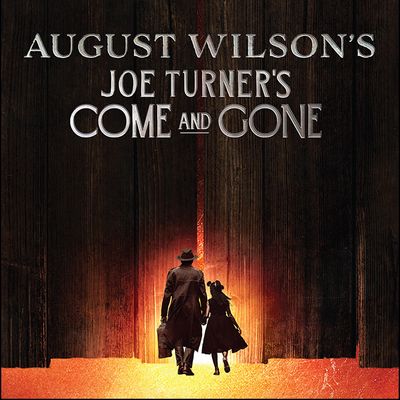
In this episode, we dig into the 2026 Broadway revival of August Wilson’s Joe Turner’s Come and Gone, now playing at the Barrymore Theatre. We unpack how the play’s boardinghouse setting, character-driven structure, and themes of home, history, and spiritual connection come through in this production... Read More
From the show: Half Hour with Jeff & Richie (Post-Show Broadway Discussions and Interviews)
Guests



Featured Shows
About
In this episode, we dig into the 2026 Broadway revival of August Wilson’s Joe Turner’s Come and Gone, now playing at the Barrymore Theatre. We unpack how the play’s boardinghouse setting, character-driven structure, and themes of home, history, and spiritual connection come through in this production. We also look at how the staging uses levels, windows, and movement to frame the characters’ journeys. We highlight performances from Taraji P. Henson as Bertha Holly, Cedric “The Entertainer” as Seth Holly, Joshua Boone as Herald Loomis, and Ruben Santiago-Hudson as Bynum Walker, noting moments that stand out and where the production leaves room for more.
Follow and connect with all things @HalfHourPodcast on Instagram, TikTok, and YouTube. Share your thoughts on this production in the comments on Spotify, and let us know what you would like us to cover next. If you enjoy these post-show discussions, follow Half Hour and leave a rating and review so more theater lovers can find the podcast.
Transcript
This transcript was automatically generated and might contain errors.
[0:00] Jeff Malone: Welcome to Half Hour with Jeff and Richie, the podcast where we explore the latest shows we see, sharing our insights and opinions on the performance of storylines and everything in between. In today's episode, we're discussing the 2026 Broadway revival of August Wilson's Joe Turner's Come and Gone, playing at the Barrymore Theatre. Whether you cannot catch the show in person or you want to expand your thoughts after seeing it, this episode is for you. And as always, we want to inform you that this episode will contain spoilers, so if you're ready to dive into this production, stick around with us. I'm Jeff.
[0:29] Richie Grasso: And I'm Richie, and we're thrilled to be your hosts for today's episode. But before we start the conversation about Joe Turner's Come and Gone, here are a few words from our advertisers.
[0:38] Jeff Malone: Welcome, everyone, to a new episode of Half Hour with Jeff and Richie. Today, we're discussing Joe Turner's Come and Gone.
[0:45] Richie Grasso: Golden Globe winner Taraji P. Henson makes her Broadway debut alongside Cedric the Entertainer, Tony Award nominee Joshua Boone, and Tony Award winner Ruben Santiago Hudson, who return to the stage in an illuminous revival of August Wilson's Joe Turner's Come and Gone, directed by Emmy and Golden Globe winner Debbie Allen. Set in Pittsburgh in 1911 during a pivotal era of migration and transformation, Joe Turner's Come and Gone centers on Seth and Bertha Holly, played by Cedric and Henson, who run a warm, orderly boarding house for those navigating uncertain paths. But when a mysterious man named Harold Loomis, played by Boone, arrives with his young daughter, the stillness of the house begins to shift. This timeless American classic is a profoundly moving story of personal awakening, collective memory, and the quiet power of human connection.
[1:35] Jeff Malone: Okay, so let's get into the overall plot and concept here for Joe Turner's Come and Gone. Where do you want to begin?
[1:42] Richie Grasso: Well, I think it's kind of cool to start talking maybe a little bit about August Wilson himself and what he did, right? He wrote these many plays that really highlighted Black culture through the decades of American history, mostly in the 20th century, but like every play is set in a very different time. And I think it's every 10 years, there's a different play setting, right? And he wrote these later into the 20th century, reflecting back on just culture and relationships and lifestyle in America. And I think that in and of itself is pretty awesome that a playwright wrote that way and had this intention and this mission. Now, some playwrights write just what they see and hear and feel and want, and of course, that's what August Wilson does too.
But I like that it was kind of, well, let's put it this way. I like that we see so many revivals of August Wilson's plays, and I also like that we see them not in the order. Like the next August Wilson play, the one set in the—
[2:43] Jeff Malone: It's not like it goes through the cycle.
[2:45] Richie Grasso: Yeah. I mean, one day in my life, I think it could be cool to see them all in the cycle order of time that they're set. It's kind of like, not comparing it at all to this, but it's kind of like Star Wars when you know you have like the three movies and they did three movies before, and it's like, do you watch them in the order they were made or do you watch them in the order they're set, right? So many films are like that, right? But I think with August Wilson, I think it's just so great that they're all so different, but not. Does that make sense? Like they're so different in terms of characters and plot and what's going on, but they all seem to have, like when I go into an August Wilson play, I always feel like, okay, I'm going to get really good objective.
I'm going to get really good relationships. I'm going to get like, not beat me over the head with a message, but let me kind of leave with what I think I take out of this. And I think that's what just makes August Wilson so brilliant. I think he was a brilliant playwright and I think we definitely see that in Joe Turner's Come and Gone.
[3:41] Jeff Malone: Oh yeah, definitely. I think like, you know, I think if you're going in for like a major plot for Joe Turner's Come and Gone, like you're not fully getting that because there's so much more realism happening in this play. You're actually watching something that feels very like day to day in a way, and that you have to kind of create your own narrative through some of these roles and characters that are on this stage here. So I think like that's where, you know, you have to separate that right away in the very beginning with this play. And what we've been seeing, you know, I believe it's Denzel Washington who's been really taking on the August Wilson estate and kind of film adapting these for Netflix, and we've been seeing more and more of those with The Piano Lesson, and we've been seeing some of that.
[4:29] Richie Grasso: With Ma Rainey's Black Bottom, Fences.
[4:31] Jeff Malone: Right, and they're all just wonderful plays, right? And so when you talk specifically about Joe Turner's Come and Gone, yeah, I don't know if there's much of a plot here. There is for sure, but I was kind of watching this being like, is something big going to happen, or is it just about these people coming and going, but also about the people that do not come and go, and that kind of run this house, right? So I think from like a concept, I was like, okay, we're in this one set, we're seeing a lot of comedy, we're seeing a lot of serious moments. I think that's also what August Wilson does, is he allows us to kind of enjoy some characters, and the comedy, and the silliness of it, and then we get to these other characters that come in, and what was going on at the turn of the century at the time in a place like Pittsburgh.
[5:13] Richie Grasso: Yeah, this is a boarding house for people to go and feel safe, to feel like they can rest their head for a couple of nights, and get a warm meal, and move on. Migration is a very big part of this. Joe Turner's Come and Gone, in the title alone, talks about that, and there is no direct character in this play named Joe Turner, but we're referencing things that have happened prior, and how people are coming and going through a town like Pittsburgh. A lot of the northern cities were going through a lot of migration at the late 1800s, early 1900s, right? And so I just think that that was kind of cool, that he kind of took that, and then you have Taraji and Cedric's characters who are kind of running this day-to-day operations, and they're complaining, but they're having a good time, and they're still kind of enjoying their life, and yet we see, like you said earlier, the day-to-day.
We have child characters in this, and we kind of see what this looks like from their perspective. It's also a little confusing, like who's related to who, and who knows who. There's this ghostly appeal to it, there's almost this like spooky sort of, oh, like spirit to it, and not in like a Halloween-like way, but just in like, oh, there's things going on here. I mean, at the end of Act One, we have the thunder and lightning, and that spiritual moment, I think you're like, wow, that's where August Wilson brings the theatricality, and I think that's what's so cool, is we get theater from August Wilson.
[6:32] Jeff Malone: Well, when you have Act One, and we're building up this whole play here, where we're watching this day-to-day kind of thing happening in this boarding house, where people's lives are coming in, they're kind of staying, they're intersecting with each other, they're learning about each other, and then they just go, you know? They just, they come, and they go. And it's like, there's a play on that, I think, as well in the overall concept here. Like, we're coming in, you're watching, you're learning about them, what happens here, and there is like a bit of spirituality that is happening in here. There's like spiritual moments that are happening here. What someone remembers from their past versus what, you know, is happening in the day. They're also bringing some voodoo into the play here, which is, I think, all important things that are like, you know, what August Wilson's trying to portray in Act One alone.
[7:25] Richie Grasso: Totally, totally. And I also think that with a lot of his other plays, there is this sort of, yes, there's kind of a plot, but we're also just, like the Ma Rainey's, we're kind of, you know, there's a little bit of a plot, but it's basically just about these, this moment. There is a plot, but it's about this family, right? So I think that that's what August Wilson seems to just really get strong. Now, out of all the August Wilson plays, do I think Joe Turner's Come and Gone is my favorite? No, I wouldn't say it's like my favorite play he's written. I didn't know much about it going in. I wasn't lost or confused. I just think I enjoyed some of the monologues and some of the other moments in some of his other plays a little bit more. But I think it's very great that we see this. And I almost kind of left thinking like, what's the next August Wilson we're going to see? Because there's so many, and I like that we get them quite frequently.
[8:06] Jeff Malone: Right. And in this play, too, like when you're talking about this a bit more from his perspective as well, he doesn't really give us a lot of exposition here. He wants us to kind of like look at what's happening with, you know, the characters that are on the stage. And from the audience perspective, do you think we need a little bit more of the historical context when watching this, though? I wonder if that is something we're talking about here, where we kind of have to piece those moments together.
[8:35] Richie Grasso: Well, yes and no, right? Could the director have put up some sort of a projection that says the time and the place and what's going on in American history before we settle in? Maybe. I think maybe we need to constantly be educating our audiences in that way. However, does the audience not need to know that and just need to know, you know what, just know the city and the time and kind of take that for what you will and just watch what happens in this house? Well, it's going to be an interesting thing to kind of discuss, though, because as we move farther and farther away from these years, there is going to be kind of like a history lesson that, you know, new audiences are going to need to kind of experience and understand as we, you know, is everyone learning about that time period still?
And, you know, you would hope and say like, yes, in school we are still teaching these things, but who knows? It's just, you know, a topic to bring up, I think, about this when we are getting into plays here that are not fully fleshed out in that way that you do kind of have to have a little bit of a historical context there.
[9:41] Jeff Malone: Sure. Right? Yeah. I mean, you know, historical context is important. Look at the way Ragtime starts, right? They make it very clear what time we're in, the three groups of people, and how they were at the turn of the century, and now we're going to go into the play. I don't think there's anything wrong with that per se, not that we needed a narrator or anything like that, but I always think like when we have period pieces, I always do like when we get clips of radio or photos or actual footage of things from a time, it kind of lets me settle into a piece a little bit more in the beginning and just kind of be like, okay, we're going to, oh, now I see the kind of tone that we're in for this piece.
[10:17] Richie Grasso: Totally. But yeah, I think this is a great opportunity to kind of start segwaying over into some of the design choices of this Broadway revival that we've seen. So why don't we take a quick break and we'll be right back.
[10:27] Jeff Malone: And we're back. So we're talking about Joe Turner's Come and Gone. We just talked a little bit about the context of the piece. Now we're talking about this specific production. What I will say is taking the play that I enjoyed and then looking at this production, I did find some moments of this production to not work a hundred percent for me. And then some things did. And I think it was kind of all over the place in that way. So let's kind of talk about the direction. We have Debbie Allen who's directing this. She's worked in a lot of TV and film world. I found the direction to be kind of stiff and basic. Everything kind of lived in the kitchen or the center or the kitchen. Like the down garden in the front was kind of cool.
I just thought that the spacing seemed very simple, two-dimensional, very filmic. You know, you have this huge, beautiful grand staircase that clearly your set designer put in as like that leads up. And for me, you know, how do I see Hills of California and the use of staircases there? And I'll even throw in Catch the Jellicle Ball and the use of a staircase there. And how do we incorporate like stairs into just like, to me, I think a big thing, we can talk about this when we talk about the design, but there's something about stairs and set design to me that's like, where does that go? It seems mysterious. And when people run down a flight of stairs or, and they were used a little bit, but it was like, it took up like a third of the stage and was barely used.
And I just thought across the set, we didn't really utilize like the full impact of what the set could have done. There were these windows up top and they just stayed there the whole time. And I get it. Like we're trying to give this grand boarding house. We had that projection kind of backdrop. But that's what I think is like something to kind of like say about the direction here and even tie in the scenic design as well. Because I think like what I thought she did well was she kind of built the slow simmer, which was happening in the first act here. Like we got that moment of like, I actually think she directed act one much better than she did act two, because I thought when we finally got to the moment at the end of act one, like I, I now had the buildup.
I knew that something was getting ready to happen because I knew we were not just going to sit here for over an hour and just watch this one moment where nothing was going to happen. So like I knew, and it's August Wilson. So I know that something always big happens within the play. But I will say when you think about a boarding house, you think about like multiple people coming in and kind of still going on about their day to day. And I didn't fully get that from the actors on the stage. I felt like I needed a little bit more of them continuing to do what they were doing. And not kind of like, not to say they were worrying about what the other actors who like had lines in the scene were doing, but it almost felt like they kind of stopped.
And I didn't get enough. Like when, you know, we talked about this when we saw City Center's Wild Party, the party was going on the stage and all of the actors were continuously moving throughout that piece, even if they were not part of the scene. And I did not feel like I was fully getting that in Joe Turner's Come and Gone. I thought we were getting a little bit too much of like, okay, it's my line now. So we're just gonna focus on me. And there are still
[13:43] Jeff Malone: Welcome back to Half Hour with Jeff & Richie. Today, we're diving into the 2026 Broadway revival of August Wilson’s "Joe Turner’s Come and Gone," which is currently playing at the Barrymore Theatre.
[14:13] Richie Grasso: This production really brings to life the boardinghouse setting and the character-driven structure that Wilson is known for. The themes of home, history, and spiritual connection are so prominent in this revival.
[14:28] Jeff Malone: Absolutely. The way the staging utilizes levels, windows, and movement really frames the characters’ journeys beautifully. It adds depth to their stories.
[14:48] Richie Grasso: Speaking of performances, Taraji P. Henson as Bertha Holly is phenomenal. She brings such warmth and strength to the role.
[15:08] Jeff Malone: And Cedric “The Entertainer” as Seth Holly complements her perfectly. Their chemistry is palpable, and you can really feel the history between their characters.
[15:28] Richie Grasso: Joshua Boone as Herald Loomis also delivers a powerful performance. His emotional range really captures the struggles of his character.
[15:48] Jeff Malone: And let’s not forget Ruben Santiago-Hudson as Bynum Walker. He has such a commanding presence on stage, and his moments of reflection are truly moving.
[16:08] Richie Grasso: There are standout moments throughout the production, but I feel like there’s also room for more exploration in some scenes. It’s a delicate balance.
[16:28] Jeff Malone: Right, and that’s part of what makes Wilson’s work so rich. There’s always more to uncover in the characters’ interactions and their backstories.
[16:48] Richie Grasso: The way the play addresses themes of identity and community is so relevant, especially today. It resonates deeply with audiences.
[17:08] Jeff Malone: Exactly. The boardinghouse setting serves as a microcosm for the larger African American experience, and it’s fascinating to see how that’s portrayed in this revival.
[17:28] Richie Grasso: I also appreciate how the production design enhances the storytelling. The use of space and light really adds to the atmosphere.
[17:48] Jeff Malone: Yes, the visual elements are just as important as the performances. They work together to create a cohesive experience for the audience.
[18:08] Richie Grasso: And the pacing of the show allows for moments of reflection, which is crucial for a play like this. It gives the audience time to absorb the weight of the dialogue.
[18:28] Jeff Malone: That’s a great point. Wilson’s writing is so rich, and allowing those pauses makes the emotional impact even stronger.
[18:48] Richie Grasso: I think this revival does a fantastic job of honoring Wilson’s legacy while also making it accessible to new audiences.
[19:08] Jeff Malone: Definitely. It’s a celebration of his work and the stories he wanted to tell. I hope more people get the chance to see it.
[19:28] Richie Grasso: For those who have seen it, what were your thoughts? We’d love to hear from you in the comments on Spotify.
[19:48] Jeff Malone: And if you enjoyed this discussion, don’t forget to follow Half Hour and leave a rating and review. It helps other theater lovers find us.
[20:08] Richie Grasso: We’ll be back next week with more insights and discussions about the latest in Broadway. Until then, keep celebrating the magic of theater!
[20:28] Jeff Malone: Thanks for joining us today!
© Broadway Podcast Network, All Rights Reserved