

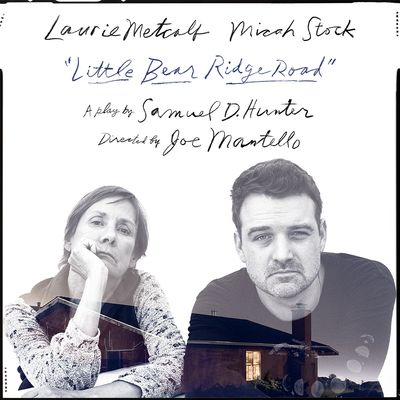
In this episode of Half Hour with Jeff & Richie, we explore Little Bear Ridge Road, the new Broadway play by Samuel D. Hunter at the Booth Theatre. Featuring Laurie Metcalf and Micah Stock, directed by Joe Mantello, the story follows an aunt and nephew as they navigate family ties, the influence of media, and what it means to be stuck in life... Read More
From the show: Half Hour with Jeff & Richie (Post-Show Broadway Discussions and Interviews)
Guests

Featured Shows
About
In this episode of Half Hour with Jeff & Richie, we explore Little Bear Ridge Road, the new Broadway play by Samuel D. Hunter at the Booth Theatre. Featuring Laurie Metcalf and Micah Stock, directed by Joe Mantello, the story follows an aunt and nephew as they navigate family ties, the influence of media, and what it means to be stuck in life. We examine key design choices, notable performances, audience reception, and discuss the production's Tony Award potential.
Follow and connect with all things @HalfHourPodcast on Instagram, TikTok, and YouTube. Share your thoughts with us on our podcast cover post on Instagram.
Transcript
This transcript was automatically generated and might contain errors.
[0:00] Jeff Malone: Welcome to Half Hour with Jeff and Richie, the podcast where we explore the latest shows we see, sharing our insights and opinions on the performance of storylines and everything in between.
[0:09] Richie Grasso: In today's episode, we're discussing the Broadway production of Little Bear Ridge Road, playing at the Booth Theatre in New York City.
[0:15] Jeff Malone: Whether you cannot catch the show in person or you want to expand your thoughts after seeing it, this episode is for you.
[0:20] Richie Grasso: And as always, we want to inform you that this episode will contain spoilers.
[0:24] Jeff Malone: So if you're ready to dive into this production, stick around with us.
[0:26] Jeff Malone: I'm Jeff.
[0:27] Richie Grasso: And I'm Richie, and we're thrilled to be your hosts for this episode.
[0:30] Jeff Malone: But before we start the conversation about Little Bear Ridge Road, here are a few words from our advertisers.
[0:35] Richie Grasso: Welcome everyone to a new episode of Half Hour with Jeff and Richie.
[0:38] Jeff Malone: Today we're discussing Little Bear Ridge Road.
[0:41] Richie Grasso: Set on the remote edge of a small Idaho town, Little Bear Ridge Road centers on a razored-tongued aunt and her long estranged nephew, who find themselves suddenly back in each other's lives.
[0:52] Jeff Malone: Two lonely souls with a crumbling house to sell and a tangled history to unravel.
[0:56] Richie Grasso: Bitingly funny and quietly explosive, Little Bear Ridge Road lays bare our messy human need to reach across voids for one another, even when it shakes us to the bone.
[1:07] Jeff Malone: Four-time Emmy and two-time Tony Award winner Laurie Metcalf returns to Broadway opposite Tony Award nominee Micah Stock in Little Bear Ridge Road.
[1:14] Richie Grasso: The Ryan Piercing New Play by Samuel D. Hunter, who wrote The Whale, and directed by two-time Tony Award-winning director Joe Mantello.
[1:21] Jeff Malone: This production marks Hunter's Broadway debut, and Metcalf and Mantello's seventh collaboration.
[1:27] Richie Grasso: Wow.
[1:28] Jeff Malone: All right. Theater hot take for Little Bear Ridge Road.
[1:32] Richie Grasso: My hot take here is that new plays belong on Broadway, and Laurie Metcalf should be in all of them because, let's be for real, she owns the stage.
[1:32] Jeff Malone: She owns the stage. I found this play to be poignant, thought-provoking, simple in a good way, and something that wasn't trying to break barriers and change the art form, but just put a new play on.
[1:58] Richie Grasso: That is maybe not trying to teach or show us anything other than just a family story.
[2:06] Jeff Malone: And I thought that as simple and poignant as that was, it worked.
[2:10] Richie Grasso: And it worked very well. All right. So let's get into our overall thoughts on the story, plot, and concept.
[2:17] Jeff Malone: So I think what's interesting about this is here's a playwright who's, you know, Samuel D. Hunter has talked a lot about how this is something that was written on and about an actual road called Little Bear Ridge Road in Idaho.
[2:31] Richie Grasso: Yes. About some family things that he was kind of going through at the time.
[2:34] Jeff Malone: And I think that's so beautifully simple. I think when someone could just, I think it was in Tick Tick Boom when they tell the Jonathan Larson character all the time, like write what you know.
[2:45] Richie Grasso: Right what you know. Just write what you know.
[2:46] Jeff Malone: Like, don't try to write what you don't know, write what you know. And clearly Samuel D. Hunter is writing what he knows here, or what he we think or believed to think that he knows, right?
[2:53] Richie Grasso: Yeah.
[2:54] Jeff Malone: And I think that it took someone like Joe Mantello to take this and say, could we have had a huge house on stage for this?
[3:01] Richie Grasso: Totally. We could have had a big living room and then a bedroom, and then there would be a porch outside, kind of like some other shows we've seen with big houses.
[3:09] Jeff Malone: I think that it was amazing to see this like couch in the void, this ring on stage with a couch. And we're gonna talk about the design elements in a bit, but that vast openness where here's just souls coming together in this big open space where it's kind of undefined, and we have this.
[3:29] Richie Grasso: If you see way in the back, you see, like kind of a patterned wall of sorts, but it's unclear where we are. But we're just, it's not about specifically the specific location, the specific time, it's about this feeling that people bring, the drama, a family drama where people make us feel a certain way, the tension, the comedy, and a new play set in this vast open space.
[3:55] Jeff Malone: I thought it would really work well for our concept.
[3:57] Richie Grasso: Yeah, I mean, even with the text and the story here and the plot, and you know, I've seen a few interviews now with Samuel D. Hunter and with the cast of this show, and they talk a little bit more about this piece.
[4:13] Jeff Malone: And he says, you know, he wrote this during the beginning of the pandemic, and the name of the street is the actual street that his father owned property on.
[4:24] Richie Grasso: So I think like that's such a great kind of leg to build this play on. And then he said he wanted to write, you know, something different here, and he wanted to write a relationship between an aunt and a nephew.
[4:38] Jeff Malone: And I said, Oh, okay, because he doesn't really see stories like that, it's always like mother-son or father-son or mother-daughter, or father-daughter. It's like now it's like son or nephew and aunt.
[4:50] Richie Grasso: Yeah. And while and why TV is such a focus in this play. He wanted to include that in here because when we all started at the beginning of the pandemic, what did we do? We watched TV.
[5:05] Jeff Malone: Yeah. You know, you and I, we really look at it, we watched so much TV. We binged all of RuPaul's Drag Race. We watched films on, you know, on DVDs that people lent us, and we watched things on Netflix, and we were like, wow, we were watching a lot of TV.
[5:25] Richie Grasso: Yeah, in that one or two years that we were, yeah.
[5:28] Jeff Malone: And it's interesting too, because I think that this piece also kind of highlights the element of being on a couch watching TV. It gives the feeling of being stuck, or this element of like, well, it's magnetic, it pulls us in for relaxation, it pulls us in for escapism, it pulls us in for relationship building.
[5:49] Richie Grasso: How many times are they like, oh, in that scene, yeah, and oh, what did you think of that? And they're conversing, but they're actually not even looking at each other or conversing about the problems in their lives. The TV is a distraction, distraction, so there is this distraction.
[6:03] Jeff Malone: Yeah, so there's this constant feeling of like, you know, there's also this like we're in the middle of nowhere, Idaho. So this is, you know, it's almost making commentary like, well, this is what you're gonna do if you live in the middle of Idaho and you're just gonna kind of try to figure out your life, but it is a distraction from maybe other problems.
[6:19] Richie Grasso: The aunt was going through problems, the nephew was going through problems, and not being able to talk about it. I think we should really lean much more into that. There's something being said here.
[6:27] Jeff Malone: You know, the longing for human connection is so absent.
[6:34] Richie Grasso: Yeah, especially in this play. And you see it in the relationships that you know he is trying to build with his aunt and then boyfriend that we learn in the piece, and wanting that, but what does he retract to throughout the piece? He goes to his screens, he goes to the television, right?
[6:51] Jeff Malone: He goes to his phone. Anytime that conflict comes into this play, he gets rid of it. He doesn't want to deal with it.
[7:05] Richie Grasso: Right. And that's why I kind of boil this down to it's a play about two people stuck.
[7:10] Jeff Malone: Yeah.
[7:11] Richie Grasso: They're stuck in their own way, they're stuck in each other's way. And there becomes that moment like, hey, you're not gonna move on with your life, and I'm not gonna move on with my life until we both like kind of like cut the cord.
[7:23] Jeff Malone: And kind of maybe this is just you were, you know, Laurie Metcalf has this moment where she's like, You've been here for a while, we had to sell your father's house. You did that. What are you still here for? And he's like, But you're sick, and she's like, I'm handling it on my own.
[7:37] Richie Grasso: Right. And she's like, You need to go find your own life. And there's just wonderful dialogue back and forth between them.
[7:42] Jeff Malone: And as he's finding this person that he's starting to fall in love with, and he's needing the boyfriend, the boyfriend says, Hey, I'm gonna go get this doctor and come with me. And he's like, But that's your life.
[7:51] Richie Grasso: Right. So where's my life? So I'm gonna take, but I'm gonna take care of my aunt who's sick, but that's her life. She's telling me to leave. He leaves, and then she we believe at the end passes on.
[8:03] Jeff Malone: And so it's just about, it's almost about like missed connections with connections. Is the connection too late?
[8:11] Richie Grasso: Yeah, what what's the timing of all this? And yet, I totally understand this concept of like put a couch in the middle of the stage, spin the couch, recline the couch, do whatever you want with the couch.
[8:23] Jeff Malone: They're eating on the couch, they're relaxing on the couch, but the couch becomes so much more than just what is the average.
[8:31] Richie Grasso: Maybe this is a bold statement of source, but the average person maybe sits on their couch, watches a movie, reads a book, talks to their spouse, their child, their neighbor, and then they go to bed. But it seemed like this was a place where they were like retreating to so much to find comfort, to find solace, or just to simply pass the time.
[8:50] Jeff Malone: Pass the time. And that was what was going on here. During COVID, post-COVID. People were, yeah, it is a commentary on like were people like sitting on their couch because they had nothing else to do.
[9:01] Richie Grasso: And then when the world like opened up again, I almost feel like when you were talking about like being on screens and being in front of the couch, when the world was safely opened again, we were nowhere near the couch then.
[9:11] Jeff Malone: It was like we didn't see the couch for months again. It was like we were always on the couch, you're right.
[9:15] Richie Grasso: So it's like it's interesting. You know, we're still barely on the couch now. It's like I can't make the time to sit on the couch because we're doing so much.
[9:24] Jeff Malone: We're led to believe that the aunt passes away on the couch.
[9:27] Richie Grasso: We're led to believe a lot.
[9:29] Jeff Malone: Yeah. And it's interesting commentary on this piece. I've never really seen a Broadway show. It's just a big reclining couch on the stage like that.
[9:35] Richie Grasso: So it was a bold choice.
[9:36] Jeff Malone: Yes, it was. All right, let's take a quick break. And when we get back, we're gonna get into the direction, the actor performances, and the design of this piece.
[9:44] Richie Grasso: All right, so let's get into it. So we have Joe Mantello directing this piece right off the bat. Where do you think you know he is?
[9:52] Jeff Malone: I will immediately say I can tell that this is a Joe Mantello production. He's very good at what he does. He's very, he's a strong actor. You know, we've seen him act before. He is the Broadway director of Wicked, so we know that he had a lot of success there, but he's also directed a lot of plays that we've seen.
[10:10] Richie Grasso: And I think he doesn't when he did The Glass Menagerie, they did Greyhouse. Now we're seeing him in Little Bear Ridge Road. He is smart, he takes a play, he makes it his own, but and this is no disservice to someone like a Jamie Lloyd.
[10:23] Jeff Malone: But what Jamie Lloyd does is Jamie Lloyd takes a piece and totally reinvents it and flips it on its head, and actually a lot of times that works.
[10:31] Richie Grasso: Joe Mantello doesn't have to flip things on its head. Joe Mantello also doesn't just sit there and say, move there or move there. Joe Mantello is putting this nice spin on it and this nice touch where he's using the craft of the art form of direction and just pulling highlights of the piece.
[10:47] Jeff Malone: And it's very, very smart that he allows actors to safely perform in their space with guidance, but it lets the playwright's text live through his guidance.
[10:57] Richie Grasso: That's the best way to say it. He lets the playwright's text live.
[11:01] Jeff Malone: And I always find that with Joe's work here that it's like it's not the bells and whistles in an overly produced set and whatnot. It is pull it in with a focal point on that stage, and then you're gonna watch this play happen.
[11:19] Richie Grasso: And I think, you know, as you bring it up with the design in this play now, you know, we have one recliner couch, really that's it, as the scenic design here.
[11:30] Jeff Malone: And I, and as you said it best, you know, that couch represents so much in the relationship of the aunt, which is Sarah and her nephew Ethan.
[11:44] Richie Grasso: Which interestingly enough, I when you say Sarah, it reminds me of how many times Micah's character would say, Sarah, Sarah, he would call his aunt Sarah by her first name. Interest their relationship is so interesting, too.
[11:56] Jeff Malone: Yeah, because you know, I think they really did not have the best relationship. He resents her.
[12:10] Richie Grasso: She's in, but she doesn't know how to handle him. And when you get into like the actors now, you know, I think Laurie Metcalf does an amazing job for portraying this aunt. You know, it's a little Laurie Metcalf, we've seen, and you know she plays like when you're good at something and you kind of get a little typecast in a way, it's fine in my book if it's good.
[12:33] Jeff Malone: Well, she's very good at what she does. And so she's like captivating. She's reminding me of so many things, and I'm just like watching her comfortably up there.
[12:42] Richie Grasso: And Micah, I've never seen before on a piece. He's actually a Tony Award nominee as well. And he plays this character where he does a lot with his physicality and his vocal inflection, that it's, it's this um I always feel like he's exploring the way he moves and the way he fixes his clothes and the way his vocals inflection goes up and down, and it's almost like this morphing sense of it's so easy to have been like this character.
[13:09] Richie Grasso: I'm not saying the playwright wrote the character in a boring way, but it could have been potentially been this like I'm the nephew, I'm here. But he just played it in this like lost soul way. You felt for him because he felt you he you he was lost and you felt for him. It's lost soul, it's semi maybe a little Peter Pan syndrome. It's like he he never really has had that chance to grow up because I think of like the trauma that he had experienced through his life in general, you know, watching his father, we learn that his father was a drug and alcohol abuser, and he watched that in his life, which is a big reason why he resents his aunt. And I think what you know, Micah does here really captivates that in a different way.
[14:00] Jeff Malone: Yeah, you know, it shows that like he's not comfortable with himself because of his past.
[14:06] Richie Grasso: Yeah. There's a lot of blaming that happens in here, and I think as an actor, you really have to kind of get that because as we learn when he starts to develop the relationship with James, who is played by John Drea. And who was wonderful.
[14:20] Jeff Malone: Yes.
[14:20] Richie Grasso: And I thought he was so good. He's actually making his Broadway debut, which is really exciting. And I think like he's so comfortable up there too. He is this awesome, great character that kind of comes and goes throughout the piece. And I really enjoyed that. And it was so interesting to watch a relationship written this way in the play, because it's so modern, it's so hookup culture that you're learning with these two guys that you know, one thinks that they're going on a hookup, the other thinks that they're going on a date. It's clearly discussed that they don't discuss that ahead of time. And we're hiding behind these screens of meeting connection in person now that like things and details are left out, you know, in a way.
So to watch them and to watch this relationship build, you as the audience member gets to say, like, oh wow, like this is really great for Ethan. And then as you kind of like learn as we go on, Ethan really sabotages the whole thing because he can't move on with James as soon as James offers something better.
[15:26] Jeff Malone: Right.
[15:27] Richie Grasso: You know, calling him privileged and not understanding like where he came from. It's like such a really big thing to kind of analyze.
[15:36] Jeff Malone: Yeah. And that's why I also think when you look at some of the design choices of this too, and how these designers are working together, there was actually like really specific design choices here. The scenic design is specifically done in that way. It's lit in this. I love this like ring that they're in, this round, like stepping up onto the rings, stepping off. There was a lot of on and off stage in the wings. Um, it was lit well. It does the sound design. I just love like the spinning fan with the light and the fan on the floor. Like there was a lot of these uh it was almost like watching something abstract. Like we were taking something almost Samuel Beckett, like waiting for Godot or something, because we've just seen that recently too, and this abstract world of like where are we? What's going on? Someone's dying of cancer, someone's lost in the world. It's like two souls just like kind of in this ambiguous place. It was very cool to stage it like that.
[16:35] Richie Grasso: And what do you think?
[16:36] Jeff Malone: I said to you after seeing this piece. I said, do you ever felt like they were in the TV or the TV was watching them?
[16:48] Richie Grasso: I think there's so many ways that you can connect that TV. Because with the sound design as well, you have these moments of like hearing the TV, the TV stopping. And I would say it's like, oh, when you do these screens are constantly watching us.
[17:07] Jeff Malone: Yeah.
[17:07] Richie Grasso: In a weird way. And the sound design was good in that way. There were so many audio clips coming through in the way that the sound design was designed as well. Um, it is very interesting to see that, and it makes you wonder like, what would people do in the vast ambiguous world of Idaho if there was no TV? You know, TV and phones are the connection to the outside world. News, the way people are being filmed and told, telling stories, and news in particular. You know, it is an outlet. It's so funny when we say that though. Like, what would people do without TV and phones and whatnot? Because there was a time.
[17:46] Jeff Malone: Well, for thousands of years, there was a time.
[17:48] Richie Grasso: There's screams.
[17:49] Jeff Malone: Yeah, exactly. And what did you do?
[17:50] Richie Grasso: Yeah, I guess I don't know, you went and you farmed, or you listened to the radio. Or uh or read a book, you know, or you had dinner together.
[17:58] Jeff Malone: Yeah.
[17:59] Richie Grasso: Not on the couch in front of a TV. I there was very few times. It was actually interesting that the only times they ever really faced each other, literally face each other, was when they were fighting. And they're not all times, but most times. And then there were some really nice times, and they were like sitting side by side, eating, not even looking at each other, talking. It was very, very I wonder as actors how they did with that.
[18:25] Jeff Malone: Yeah. It was a great, probably a great challenge for them.
[18:27] Richie Grasso: Yeah, definitely. But really, really cool stuff overall. All right. Well, I think it's time for another break. And when we get back, we're gonna get into our own experience at the show and what we think is up next, or where this show might go with this year's Tonies.
[18:41] Jeff Malone: Okay, and we're back. So let's kind of get into our own experiences at the show and what we think is gonna happen at this year's Tony. I think the audience really enjoyed this. It was a nice audience that left, that got quiet, that just kind of rode the roller coaster of the piece and just went along with it. Um I think that this is a play that could totally be Tony nominated.
[19:08] Richie Grasso: Yeah, it does again, it's not doing the like hoppa inities and the groundbreaking things, the extreme comedy of O'Mary, or this extreme depth deepness of some other pieces, right? It's just kind of sitting in this like middle. So unfortunately, sometimes people interpret that as like, oh, it's forgettable. It's this middle of the road play. It's there. Great. It's the Little Bear Ridge Road. It's a little bit, yeah. Right. But I also look at it like, okay, it's there. So, but I look at it as like, well, we need to have plays like that sometimes. Plays that don't need to be these like epics. That's why, you know, a place for epics, but this doesn't need to be this like groundbreaking thing.
[19:52] Jeff Malone: Right.
[19:52] Richie Grasso: And that's what I said in my hot take earlier. I said, new plays do belong on Broadway, especially like modern plays. You know, we had Call Me An Izzy, we've had Punch Now, and we have also had now Little Bear Ridge Road. Three new plays, kind of written in the modern day. And I look at them and I say, wow, they're all talking about hot button topics that like no, we actually think about now because it relates to us, and you know, it's not a period piece play. There's nothing wrong with period piece plays, but like we've had them for so many times now. Like this is now bringing us kind of more to the present day. And right, some might say, yes, it might be forgettable, or it might really not do well at the Tony's, or you know, like I don't know, Laurie Metcalf might do well at the end.
She could be nominated, Micah could be nominated, the playwright for best play, Joe's direction. I mean, I think it's open for all that. There's a lot of plays coming, and it is known in this industry that you open a play in March or April, that's the one that you want for the Tony nominations, right? Not all the time, but the new plays in the fall tend to be a little harder to kind of get those Tony Award potential nominations, right?
[21:01] Jeff Malone: Right.
[21:01] Richie Grasso: Um, this the I almost kind of got the vibe that like this was put on Broadway regardless of Tony nomination potential. Like they wanted to put this play on. And so, and so okay. You know, regardless of when it was. And I think that's just the case with plays in general. It's like, hey, I need my Broadway status here, you know, maybe they'll go on tour with this play after it did come from Steppenwolf. We've seen plenty of things that come from Steppenwolf. Um, but you know, I think like in general, though, I think that this play is meant to be on Broadway to ask yourself a bigger question or to ask each other a bigger question. You know, do you feel this would be like an interesting topic starter here?
Do you feel like maybe you have someone in your life that if you were the last person in your family, a nephew, and you had one aunt or uncle left, you could pick someone in your life that you might have conversations like this with? Well, then they feel like they're the lasts together. It that makes it feel almost like we're in a Twilight Zone episode of some kind, or we're in this like mysterious, like, yeah, that's all they have is each other, with all the problems of their life still going on, some in their past, some present, they're still able to hold a relationship in a way. It made you believe at the end when the nurse was reading the piece that he did go write again.
[22:25] Jeff Malone: Right.
[22:26] Richie Grasso: And what he wrote, was it a book, was it an article, whatever it was? It was being read to her before she passed. It was poignant. But it's so interesting too, because when you look at a play like this, and I bring it up is because like family tree. Everyone always talks about the family tree, and then how does that family tree continue on? You know, they don't have anyone else left in their family tree. And did they both kind of end there? Their family tree kind of end with both of them. Maybe we don't know with the nephew, but with the aunt passing, yeah. But someone like him holds the trauma of that in it all because he says to himself, I'm a gay male now. I might not have kids, and it ends with me. That's a lot to hold on your shoulders, I think, as the bottom of the family.
[23:14] Jeff Malone: Well, especially the aunt too. The aunt was I believe trying to have children, did not.
[23:18] Richie Grasso: Right. And was just alone, and so yeah. It was so they relate more to each other than they think. She's the final of her generation, and he's the final. Which is maybe why they stayed together in that house as long as they did, because they weren't unbearable to each other. Which is right, which is why I think that starts the conversation on such a bigger level. And I don't know if many people would take that away from the play like this right away, unless you discuss it deeper.
[23:49] Jeff Malone: Right.
[23:50] Richie Grasso: You know. So it'll be interesting to see. I I hope a lot of people go check this out. It's a nice piece. Definitely.
[23:57] Jeff Malone: Oh my gosh. Just ready to wrap up here. Final thoughts on Little Bear Ridge Road on Broadway.
[24:03] Richie Grasso: I like it. I was happy to see Laurie Metcalf on stage. I was happy to get to see Micah on stage. I think like all the they're all great, you know. And there's one actor we did not talk about, um, which I'll talk about real quickly, but Megan Garakis. Yeah, you know, she plays the nurse at the end, so she's not really in the show for a really long time, but she has an important part in the important part. She comes and she reads to Laurie when she's in bed, uh with Sarah. She reads to Sarah in bed, and it is an excerpt from I don't know if it's a short story or a full story from Ethan's um writing. And what did he end up doing? He wrote about his life. He wrote about his relationship with his aunt, which I think it is so much more about going back to what you say, write what you know.
But that this was able to spark his creativity again to write. You know, so I thought they were all great. And I think like, you know, new work should be appreciated and enjoyed, and I would highly recommend people going and checking it out.
[25:06] Jeff Malone: Yeah. It was a nice piece. I do think people should go check it out. I really enjoyed it. And it's always great to see good teams of people coming together and doing some good work.
[25:14] Richie Grasso: Right. So it was very nice. Well, that does wrap up our discussion of this episode, and we hope you enjoyed our deep dive into Little Bear Ridge Road. And remember, we want to hear from you. Continue the conversation with us on Instagram and TikTok at Half Hour Podcast. And drop us a comment on Spotify and let us know your thoughts on Little Bear Ridge Road. Please also leave us a review. Your reviews mean so much to us. And remember to subscribe to our channel for all past and future episodes. Until next time, I'm Jeff.
[25:39] Richie Grasso: And I'm Richie saying ta-ta for now.
[25:41] Jeff Malone: Bye.
© Broadway Podcast Network, All Rights Reserved