

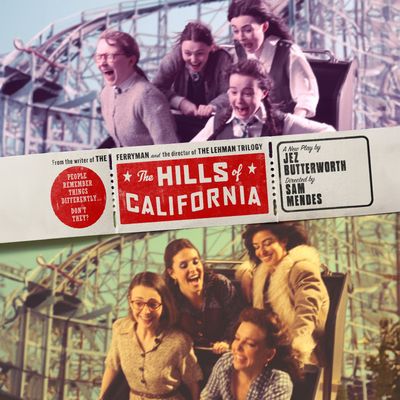
In this episode, we take you on a journey through "The Hills of California," the captivating new Broadway play at the Broadhurst Theatre. We unpack the gripping narrative that weaves through different time periods, exploring the ambitions of a stage mom and the complex dynamics of family... Read More
From the show: Half Hour with Jeff & Richie (Post-Show Broadway Discussions and Interviews)
Featured Shows
About
In this episode, we take you on a journey through "The Hills of California," the captivating new Broadway play at the Broadhurst Theatre. We unpack the gripping narrative that weaves through different time periods, exploring the ambitions of a stage mom and the complex dynamics of family. Our discussion highlights the standout performances by Laura Donnelly and Leanne Best, and how the production's direction and design effectively bring the rundown guesthouse setting to life. We also dive into the crucial role of music in the story and debate the play's Tony Award potential. Is this family drama as timeless as the California hills themselves? Tune in for our thoughts on this theatrical gem and what it reveals about the power of ambition and familial bonds.
Follow and connect with all things @HalfHourPodcast on Instagram, and YouTube. Share your thoughts with us on THE HILLS OF CALIFORNIA on our podcast cover post on Instagram.
Transcript
This transcript was automatically generated and might contain errors.
[0:00] Jeff Malone: Welcome to Half Hour with Jeff and Richie, the podcast where we explore the latest shows we see, sharing our insights and opinions on the performances, storylines, and everything in between.
[0:09] Richie Grasso: In today's episode, we're discussing the new Broadway play, The Hills of California, currently playing at the Broadhurst Theater in New York City.
[0:16] Jeff Malone: Whether you cannot catch the show in person or you want to expand your thoughts after seeing it, this episode is for you.
[0:21] Richie Grasso: And as always, we want to inform you that this episode will contain spoilers.
[0:24] Jeff Malone: So if you're ready to dive into this production, stick around with us.
[0:27] Jeff Malone: I'm Jeff.
[0:28] Richie Grasso: And I'm Richie.
[0:29] Jeff Malone: We're thrilled to be your hosts for this episode.
[0:31] Richie Grasso: But before we start the conversation about The Hills of California, here are a few words from our advertisers.
[0:40] Jeff Malone: Half hour.
[0:52] Richie Grasso: In the sweltering heat of a 1970s summer, the Webb sisters returned to their childhood home in Blackpool, an English seaside town, where their mother Veronica lies dying upstairs. Gloria and Ruby now have families of their own, and Jill never left. And Joan, no one's heard from her in 20 years. But Jill insists that their mother's favorite won't let them down this time. The rundown Sea View guest house is haunted by bittersweet memories of amusement park rides and overdue bills. Back in the 1950s, each night the girls rehearse their singing act managed by their fiercely loving single mom. But when a record producer offers a shot at fame and a chance to escape, it will cost them all dearly. Following their triumphant production of The Ferryman, Tony-winning playwright Jez Butterworth, and Oscar and Tony-winning director Sam Mendes reunite for The Hills of California.
[1:40] Jeff Malone: So today we're talking about The Hills of California, and let's start this conversation with our hot take.
[1:49] Richie Grasso: Um, I'll go first this time. I think that this show was gripping. It was kind of on my edge of my seat, kind of wondering what's happening the whole time. And I think this show really captures what it is to be kind of like a stage mom calling it, um, with kids that she just wants to see succeed. So I was completely invested in this piece.
[2:19] Jeff Malone: Listen, I agree with a lot of what you're saying. This has got amazing acting, a great story, something that's over almost three hours long, felt like one hour long, very well directed and written. I was very impressed, and definitely one of the standout highlight plays of the season so far for me.
[2:37] Richie Grasso: 100% agree. And Laura Donnelly, Laura Donnelly, Laura Donnelly. We're gonna talk a lot about that. Let's get into it.
[2:44] Jeff Malone: So moving into just some overall plot and concept here. You know, when you're getting Sam Mendes and Jez Butterworth, you're getting crafted theater, you're getting good story. I don't really necessarily like that so many people are comparing this to The Ferryman. Yes, The Ferryman is great. Yes, this is the same, you know, team with a playwright here, but it's such a different show. So I don't know why we're like comparing this to that, but it's just another show by the playwright who was successful with The Ferryman. This plot is moving, it's taking us on no pun intended, a roller coaster. I know this reference to amusement parks here. But we're on a good journey. You don't need to know anything going in.
I didn't know much going in. And then I just rode it and I stayed with the actors the whole time. I stayed with the playwright and the director the whole time. Nothing was confusing when something got a little blurry. I caught right on. Everything made sense, and then the beautiful icing on this wonderful cake is this incredible acting.
[3:47] Richie Grasso: Yeah. Which we're gonna talk about and the design and the acting. But in terms of just overall plot and concept, it makes complete sense what's happening on this show.
[3:57] Jeff Malone: Well, and I think to give everyone a little background here too, like the play structure here. It's a three-part play, um, one full intermission. And how do you feel that the playwriting really worked in weaving in between the flashbacks from 1976, uh the flashbacks from 1955 to present day 1976?
[4:19] Richie Grasso: The set and the unit spinning and the direction of that made it crystal clear. We didn't need a projector saying the year that we're in, we didn't need a narrator, a narrator, no, we didn't need a narrator telling us what time we ran. And thank God we didn't have a narrator in this. There was such trust in the audience with this to take us on the journey of understanding when we were. And I actually liked that we were in the kitchen in the 1950s, and then also in the kitchen in the 1970s. So it didn't lead us to believe that oh, every time we're in the kitchen, we're in the 1950s. We were not that dumb as an audience. Please trust your audience, and the costumes help understand the ages of the actors and the different costumes help too.
But it was more about the production because I think it was written. I think what he did with writing this and putting this in and weaving the story in and out from the flashbacks, it was already written that way. Which I think really helped.
[5:20] Jeff Malone: You know, I look at music in this play and how it plays an important part to the plot here because you know, there are four sisters, the mom is really kind of crafting and guiding them into being this kind of girl group in a way, but around harmony. And what does that even play a part in in this overall plot, which I want to get to? But you know, during that time, you see things like the Andrew Sisters who play a very big part in this plot, and just siblings, you know, you can look through different times in history where siblings are in groups together, and she wanted that for her girls. You know, were they all great? No. And she kind of knew that, but she thought, like, by them being together, they were all gonna be able to shine together.
And the harmony here, I think plays an important part in this plot because it's you're really looking at something at how it kind of unifies them as a family. You know, there's no father in the picture, it's just her as a single mother and the girls, and this is what keeps them together.
[6:35] Richie Grasso: Totally. And I also will say the harmony brought them back together at the very end. And it takes a lot of skill and precision to get harmony tight and correct and working, and they were able to pick that right up all those years later. There was also Jeff's about not only about a music fascination, but there was a fascination with American culture and American music. One of my favorite lines in the show is Do you have you heard of Elvis Presley? And she says, What is that? And I think that's fascinating because how fast do we hear about music today and pop culture and news in general in the world we live in? And that time in the 50s, you didn't necessarily hear about things that fast, especially music.
A new artist, a new album, a new sound. The end there's a big difference between the Andrew Sisters and Elvis Presley. And music was changing really fast then, you know. But I think that also shows what the time period is. So things got to other countries way later than they were already blowing up. And vice versa. Like if someone else was blowing up in another country, it didn't get to America right away. And that's how music used to be. So, you know, this longing and wanting of being an American almost. I mean, their hotel or the guest house you want to call it the Sea View, every room in there was named after an American state. So there, I think that's where The Hills of California also comes in here.
It's that American dream, wanting that American dream, wanting her girls to have the American dream. And coming back to the music point here, it also showed how fast that America was changing, and she didn't know it was changing.
[8:19] Jeff Malone: Not to mention you have so many running themes of the Sea View guest house, but no one can see the sea anymore or view the sea anymore. But you have this infatuation with the hills of California, the song that they sing. But what it is, where it is, there's a dreamland to escape to. One of the sisters does escape to that state. So while the rooms are escapism, because the rooms of the hotel are escapism in a way, we know that there's mysterious guests when the children are young. It looks like it's some sort of a motel for hooking up couples or having one night stands or whatever they are happening there, and the mother's trying to keep the bills paid. But also, you escape to the Mississippi room.
You escape to the Texas room, you and look at the tragic thing that happens with one of the daughters, then goes with the record producer up to one of those rooms, and she says, I never left that room. But then she physically leaves and goes to an actual state, the state of California, and the others do not leave. And so it's very very well written in terms of well.
[9:38] Richie Grasso: You know, I think everything is set up for us in the writing itself to say, okay, the mom is running a guest house, she's also a stage mom, very a la Gypsy, you know.
[9:50] Jeff Malone: Yeah, and I mean, add her to the list now of stage mother, you know, musicals, plays, and movies. But you watch and you pick up on little things that are happening in the hotel.
[10:06] Jeff Malone: That seems odd, you know. There's like a tiki bar in there. What was this hotel used for? And you start realizing from the plot that she is running almost like a sex hotel for people to go and hook up and have affairs. She is having her own affairs with her own guests that are staying in the house, and she's also now subjecting her children to that. So it makes sense where she the children will listen and view, and when her daughter knows what she needs to do to go and get this deal, that's why she takes her and that's why that's why she takes the record producer up to Mississippi. And you never ever hear about the girls going to any of the rooms until that one time.
[10:53] Richie Grasso: Yeah, exactly. Especially when you also have a playwright here who's dealing with making sure the audience doesn't quite know what happened in that room. Because Joan claims she's the only one who knows what happens in the room, but the sisters claim they heard what was going on in the room. But then at the end, you but then that's I I don't know if it was the exact same room, but then you flash forward 20 years and we don't know what's going on with the mother dying in the room upstairs, and we don't necessarily know what's going on. Does she actually die? What's happening up there? The mystery of those rooms is fascinating to me at least. Um and we'll get into some some some of the parts of the performances here a little bit because I do want to move on to some direction and some actor performances and design. So maybe we'll segue over to that now if that's cool.
[11:38] Jeff Malone: Um before we do, let's take a few messages from those that make the show possible. So talking about some direction, some actor performances and some design. I I was saying earlier we were wondering do we see the mother? Does the mother die? I love actually that the playwright says like they're referencing this wig that she's wearing, and as an audience member, you're like, what does she look like? What what is the wig look like? Because they keep saying, why is that wig on her? But that's what a good playwright does. It does just doesn't leave you in suspense. Like, yeah, there's someone in a room up there. No, they're giving you some detail so you're understanding a little bit without being spilled the beans on what is going on up there.
[12:16] Richie Grasso: Um, Sam Mendes, I think, directed this, and I think we were just using the word effortful and effortless in a in a conjunctive way. That it was so effortfully directed that it looked effortless because what they were doing up there seemed so easy and comfortable and simple. And yet we know that it was definitely not to put on that caliber of performance and direction. It was very clearly directed and it was very smooth.
[12:45] Jeff Malone: Yeah, I I agree with that. You know, I think this the acting alone from this cast is amazing, and we'll talk about them. But I do find that the scenic design and the direction are both playing major points into why this play really hit for us. I loved the scenic design. You knew you felt like you were in an old rundown guest house from items that were just ending up there from a broken jukebox to a tiki bar in the middle of you know the living room to old items from their past that they bring up. You know, Jill, as an older character, she's constantly looking through the past. She can't leave that house. It's so interesting, you know, when we kind of do a breakdown of these characters now. Why did she stay?
You know, why was she the only one that stays? And you know, when you're looking at this, the direction there's major points in here because you're the house is constantly spinning, and we're going to the two separate rooms until that one moment, which I thought was beautifully directed, where old Joan is going up the stairs and she sees young Joan and she just pauses. And we were like, okay, it's solidifies for us that this really happened.
[14:08] Richie Grasso: Not to mention the spinning stairs, and yes, the set design was great, but what was nice was the mysterious lighting. You never knew where people went when they went up there. Even as an audience member, you're looking and you're like, what room goes there? And what what door did that lead to? And the mystery of it is so incredible. Incredible. And they're stuck, Jeff. The mother was stuck there. Jill was stuck there. And it it's a spinning, you know, not to bring amusement park things, but a carousel doesn't go anywhere. It spins in the same place. We're giving these amusement park-esque what was a seaside motel of the music park of the 50s was probably glamorous and glorious and this and fun and silly and a tiki bar and and everything has just in just 20 years. We're not talking about a hundred years here. In just 20 years, the dramatic shift of emotion of these sisters, the dying of the mother, and the fact that everything changed for them.
[15:04] Jeff Malone: I'm trying to remember one thing on the set. Was the tiki bar there when they were kids? I don't know if we ever saw that room when they when they were kids. I think they only saw No, no, no, we did because we would sometimes see young Joan in there. And I can't remember. I'm like trying to think back now because were they removed? I think they were removing they've removed the tiki. They removed the tiki bar and they removed the jukebox when the jukebox, I know. When it was the kids scenes, yeah. Like their young selves. Because I was trying to remember, I'm like, when did that stuff get brought in? Right. You know?
[15:43] Richie Grasso: Right. Uh not that it's probably, I mean, maybe it plays a pair a major part, but each girl as they were older walked in and said, Why is this here? So I think that it did make sense. Anyway, off topic. But let's get to this cast. So let's start with Laura Donnelly. Not only is this clearly a Tony nomination for her, it could very well be a win.
[16:05] Jeff Malone: Oh, yeah. She's an Olivier Award-winning actress. She's a Tony nominee. She's from The Ferryman. She was nominated for this in London. I believe she lost, but she is absolutely incredible. And it makes complete sense to have her play Joan. Sorry, spoiler. To have her play Joan later Veronica and then Joan. And I almost wish I didn't know that going in because I would have loved to have seen Joan appear and be like, oh my gosh. Because there's such this connection between the mother and Joan, Veronica and Joan, it makes them and we're never gonna see Veronica and then present in the 1970s. So it makes complete sense to have her play that. But she is acting. I'm with her. The accent, the veracity of her, the fire she has, it is a seasoned, seasoned performer, and is truly one of the best things I'm seeing on the stage this season in terms of acting.
[16:54] Richie Grasso: Totally. I mean, listen, her her playing Veronica is like next level. Oh, it's in the giving it's giving stage mom to a capital T there. Like it is the some of the anger, the yelling, the facial expressions that she has with that controlling those girls, it's just perfect. And you know, when you you meet her as adult Joan, she switches that role, and you're kind of like, hmm, do I love this or do I not? And I sat there and I said, Oh my god, I love this. I love this because this is everything that Veronica wanted but didn't want for her daughter. So moving to America, having this life in America, thinking she was gonna have this amazing booming career, only getting one album, and then coming, yeah, and then becoming a pizza delivery um driver.
It's you look at it and you're like, oh, is that the American dream that Veronica wanted for her? But when you look at Adult Joan, she's completely like assimilated into being an American from the vocal fry to the like no care in the world to the like 70s kind of get up, which is like she almost looked like she was more groupy than star. And I just feel like they really captured that. And Laura really knew how to flip that switch.
[18:25] Jeff Malone: Not to mention, we have these children performers, they were incredible, incredible. They were so wonderful at what they were doing with the dance choreo, but also just their acting. The one line led right into the next. There was not a missed beat. As the older women, I will say Helena Wilson and Ophelia Loveabond, who were the sisters were wonderful, but and were truly wonderful. But Leanne Best as Gloria as the adult daughter really, really stands out to me as a potential Tony nomination, too, um, in a supporting role. She is using her voice I've never really quite heard in such a long time an actor using their voice where it's not just screaming, it's like gut screaming. Yeah, and when she has that line where she yells at Joan and she says, You killed our mother.
Yeah oh my god, I just got chills when I heard that. And my jaw, I think was starting to open at some of these fighting scenes with Joan at the end of the play, because I'm like, this is acting, and it's when you put really good writing and really good acting together. So Laura Donnelly and Leanne Best stood out the most for me as just incredible, incredible performers on that stage.
[19:33] Richie Grasso: Well, I think what you really have to praise here as well is you have these child actors who are playing the girls younger, and then you have the older women. And you thought that they were the younger selves. You really felt that each one of them actually worked together in creating a personality for each character. And when you look at it, you say, Oh, yeah, that makes sense. She would be like that when she was older. That's how she was when she was younger. And I think they did a really good job at doing that. Totally.
[20:07] Jeff Malone: And then just in general, once again, I'll say this as I say on the podcast a lot. When you see actors, designers, directors, and playwrights working together on one piece, it makes it just is a well-oiled machine that is running successfully. Sometimes things work better in London than they do in New York or vice versa. This clearly did well there, and it's clearly doing well here. And I'm suggesting everybody go see it because it's three acts that are each less than an hour. So it feels like it's moving nice. Um, not to mention this title threw me off actually, because I was like, Oh, I guess it's set in California, and it's totally not.
[20:44] Richie Grasso: Yeah.
[20:44] Jeff Malone: Um, and then there's a song, and we you and I even researched the song a little bit and learned a little bit about the song and the meaning, and then one more thing I'll say the town is Blackpool.
[20:54] Richie Grasso: Yeah, which when you hear that sounds oh, if I was to envision what a pool that was black looked like, I'd be like, oh, but the hills of California, there's this escapism, dream life, reality, uh, you know, fantasy that they all want to live. Um, this fascinating, not to mention what the male characters do to these female characters in the show. I could keep going on and on.
[21:15] Jeff Malone: It's so well. I also think it's when you bring up the male characters, uh, they're so looked at as only just being secondary characters, which is kind of like what they are just in general to them as uh people. You have one who's just comedic relief, right? You have the record producer who ruins their whole family, and then you have a father who's absent and is talked about. And if you caught this, they all have the specifics of the death of that father wrong.
[21:43] Richie Grasso: Yeah, did you notice how one of them thought he died this way? One of them, so it's almost shown like if your father most people would know when their father died and how their father died, and the fact that they all had it incorrect was like, Oh, maybe the male presence wasn't even important to them enough to remember a certain thing, and there's a whole conversation to be had there about that. What the male presence did or did not do because you barely see the men in this show, even the spouse of Gloria, I think her right, her who was fixing the jukebox, he's barely there.
[22:12] Jeff Malone: Yeah, and um Helena Wilson's character doesn't even have a male spouse or any spouse.
[22:17] Richie Grasso: Yeah, so there's a lot going on there with that.
[22:20] Jeff Malone: Oh, it's so fascinating to me. So fascinating. So we have to move on to talking a little about our experiences of the show and some Tony talk and some Broadway news, but before that, let's hear a few messages from our sponsors.
[22:31] Richie Grasso: So we're back talking Tony talk on this. First of all, our experience on the show was lovely. I feel like everyone was really enjoying it. It's nice that it's in the Broadhurst Theatre, it's a pretty big space. It's nice to see this. I think this is a grand play that deserves to be in a big prescribing of a house like this, and it works, it works like that. I think a big thing that I like for my own experience of like what I took away from this piece, though, is like, you know, it's how we all treat things that we want to remember versus what we don't, or what we want to remember to forget.
[23:01] Jeff Malone: And I think there's so much of that really happening in here of like okay, I don't want to remember that that happened. I want to forget that that happened. And when you look at each one of them, so many of them have their own issues with coming to terms to that. And that's like really what I've taken away. Because when you live in the real world here, and you're like, oh, okay, like I don't want to remember that time in my life, or oh, I don't need to remember that. And like, where do we put certain traumatic experiences in our lives?
[23:32] Richie Grasso: And I feel like so many of them are doing that in this piece. Where do you think this goes in terms of Tony Awards? Because this will be closing in December.
[23:42] Jeff Malone: Um, I do it it's like I feel like the Tonys are a little tricky lately because you'll have some years where it's like something that's recent that really kind of taken like Stereophonics a great example, kind of just sweeping in many areas. Um, I don't know, this could have had a Stereophonic moment. It's a very once again, this Tony season is probably gonna be more saturated than it was last year.
[24:07] Richie Grasso: So we're gonna see a lot of upsets. I definitely think this will get a Best Play nomination. I definitely think Laura Donnelly will get a nomination. It should definitely get direction, it should definitely get sound design. Uh, if we're talking about some of these creative scenic design, I mean, sound plays such an important part in this piece. When is the music playing? When is the stuff from their past playing? When you hear the kids playing, when you hear the ocean waves, when you hear the rides, you know, that's where you have to say that is designed beautifully.
[24:40] Jeff Malone: And I will just throw in there on top of all those, and Laura Donnelly for sure should be nominated. But I do, I really do think Leanne Best should be nominated for Gloria in a supporting role. It was incredible what that woman was doing in that role. I was very, very impressed. So yeah, we'll see because I really really hope this doesn't get forgotten because it's closing so early um in the season. I really, really hope it doesn't.
[25:01] Richie Grasso: So moving on, the last few minutes here, we're gonna talk about some brand. And we know this can't extend either because Boops going into this theater after this.
[25:07] Jeff Malone: There we go. So there we go. So it's good you gotta go check it out this fall. So first we got some news that Operation Mince Me is a musical from London's West End. It will be opening at the Golden Theater this spring. Don't know much about it. I've heard pretty good things for the most part. What are your thoughts?
[25:21] Richie Grasso: You want to know what is bizarre to me? I didn't even know that this was a musical. I thought it was a play. So it's another musical added to this mix. This is wild. Um, I was when I was writing it down in our notes, I said, Oh my, another musical. Um, a lot of people have their thoughts on this coming here. They don't think it's gonna work, they think it's um it's a very British humor specific, I think. Someone said, Yeah, so there a lot of people uh I feel like we know people that have seen it over there, they didn't love it.
[25:48] Jeff Malone: So it'll be very interesting to see how the American Broadway kind of world takes this piece in because we know that the West End does not always work here.
[25:58] Richie Grasso: And we have a lot of West End this season. It's all good. We have Tammy Faye, we have Operation Mince Me, we have the Sunset production, Girls of California. I feel like there's something else, but there are yeah, there are other things.
[26:12] Jeff Malone: I think it's yeah, it'll be very interesting. Another new musical, right?
[26:15] Richie Grasso: So I just feel like unless you're on a musical opening this fall and you can make it through the dead of winter all the way to next spring, we'll see, you know.
[26:22] Jeff Malone: Yeah, um, Midnight in the Garden of Good and Evil announcing a 2025 run. Unclear when in 2025. Part of me, my opinion is that they should go take a step in the direction that the Queen of Versailles is going and just go in fall of 2025, like get out of this Tony season that's already so saturated.
[26:39] Richie Grasso: It's a Jason Robert Brown score. It did very, very well in Chicago. I'm hearing great things.
[26:44] Jeff Malone: Yeah, I mean, I don't know. I feel like we still have more announcements of things too that we've heard the rumors on.
[26:50] Richie Grasso: So yeah, I mean, this show could come or not come during this season. I mean, we shall see. Unless something closes and there's a theater that opens up and they want to throw it in. Maybe that's why they're being unclear.
[26:59] Jeff Malone: Well, to add to that, Water for Elephants had set their closing date. So now that is another theater that is getting added to this mix, maybe.
[27:09] Richie Grasso: And what are your thoughts on Water for Elephants closing?
[27:11] Jeff Malone: I mean, that was very predictable. The grosses were not doing well. I think you know, when we talk about this stuff, and we uh have friends that we talk about this with, it's like people really need to understand the grosses and look at something like this when you know how much it takes for Water for Elephants to run. It was only like a matter of time before it was gonna happen. You know, the show can't run with you know burning cash like it was right.
[27:37] Richie Grasso: And then one last little bit of news here. Um, Sean Astin will be joining the Elf musical cast of Santa Claus.
[27:44] Jeff Malone: Yeah, um I mean I think that would be considered stunt casting. I mean, a lot of people know who he is. You know, I keep forgetting that Elf is coming back, it's a nice musical. I saw the original cast on Broadway, and I think uh it's fun. If you like the movie, I actually think the score is fun and good and nice, and I think it's nice to see a holiday show other than the Rockettes, and then we also have Annie coming to MSG with Whoopi Goldberg as Miss Hannigan.
[28:06] Richie Grasso: So plenty of family-friendly holiday stuff this season, which is really heartwarming and really nice to see. Listen, nothing wrong with the Rockettes, it's such a staple New York show, but for it's about what, an hour?
[28:16] Jeff Malone: And it's a good idea.
[28:17] Richie Grasso: Yeah, but I think recently, I think recently what you were saying is like we've had like the Nutcracker and we've had the Rockettes that have been staples every year, but there's been a few years where there's not a lot of Christmas, you know, or just holiday in general for people to go see during that time.
[28:31] Jeff Malone: And I think that Elf could be a great example of like if this works this season, well, we see it more and more happening. Like, you know, A Christmas Carol worked really well when it came that uh during that Christmas season.
[28:44] Richie Grasso: So why not?
[28:45] Jeff Malone: Right, right. So it's good stuff.
[28:48] Richie Grasso: Well, that does wrap up our discussion of this episode today.
[28:51] Jeff Malone: Oh final thoughts on Hills of California.
[28:56] Richie Grasso: I really enjoyed this play. I think, you know, family dramas do really well sometimes on Broadway. I love a family drama that makes you think. And this one kind of has a lot of the topic that I'm interested in seeing. So I think this was a big hit for me. So I'll highly recommend it.
[29:15] Jeff Malone: Same, highly recommend. Don't let the runtime throw you off because we have seen 90-minute plays that have felt like three hours, and this is an almost three-hour play that felt like a 90-minute play. So trust the trust it go in open-minded and really enjoy some great acting and writing. I really highly recommend this. Try everyone try to go see this. Um it does uh close, I believe, December 22nd.
[29:36] Richie Grasso: Yeah. Bravo to the Hills casting crew.
[29:39] Jeff Malone: Yes. That does wrap up our discussion of the episode today. We hope you enjoyed our deep dive into Hills of California. We're gonna share the link with ticket information in our description here. And remember, we do want to hear from you. So continue the conversation with us on Instagram at Half Hour Podcast and let us know your thoughts on the Hills of California. And if you enjoyed our show, please leave us a review. Your feedback helps us bring more theater to you. And remember, you can listen to past episodes and stay tuned for upcoming ones as well. Until next time, I'm Jeff.
[30:05] Richie Grasso: And I'm Richie saying ta-ta for now.
[30:07] Jeff Malone: Bye.
© Broadway Podcast Network, All Rights Reserved