

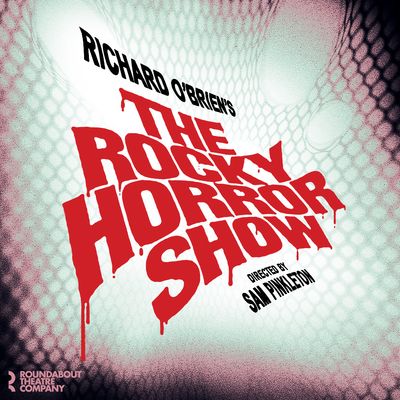
In this episode of Half Hour, we discuss the 2026 Broadway revival of The Rocky Horror Show, now playing at Studio 54. Directed and choreographed by Sam Pinkleton and starring Luke Evans as Dr... Read More
From the show: Half Hour with Jeff & Richie (Post-Show Broadway Discussions and Interviews)
Featured Shows
About
In this episode of Half Hour, we discuss the 2026 Broadway revival of The Rocky Horror Show, now playing at Studio 54. Directed and choreographed by Sam Pinkleton and starring Luke Evans as Dr. Frank-N-Furter, the production revisits the cult classic with a renewed focus on theatricality, audience interaction, and design. We take a deeper dive into how this revival balances its original counterculture roots with a contemporary Broadway framework. From the staging choices that make full use of Studio 54 to the evolving role of audience call-backs, we break down what’s working, what feels different, and how the experience compares to both the original stage production and the film adaptation. We also discuss standout performances, including Evans’ interpretation of Frank-N-Furter, and how the ensemble supports the show’s tone. Along the way, we look at the show’s cultural legacy, its continued relevance, and how this revival positions itself within today’s Broadway landscape. If you’ve seen The Rocky Horror Show before or are considering this production, this episode offers a closer look at what to expect and why this revival is generating conversation.
Follow and connect with all things @HalfHourPodcast on Instagram, TikTok, and YouTube. Share your thoughts on this production in the comments on Spotify, and let us know what you would like us to cover next. If you enjoy these post-show discussions, follow Half Hour and leave a rating and review so more theater lovers can find the podcast.
Transcript
This transcript was automatically generated and might contain errors.
[0:00] Jeff Malone: Welcome to Half Hour with Jeff & Richie, the podcast where we explore the latest shows we see, sharing our insights and opinions on the performances, storylines, and everything in between.
[0:08] Richie Grasso: In today's episode, we're discussing the 2026 Broadway revival of The Rocky Horror Show playing at Studio 54. Whether you cannot catch the show in person or you want to expand your thoughts after seeing it, this episode is for you.
[0:20] Jeff Malone: And as always, we want to inform you that this episode will contain spoilers, so if you're ready to dive into this production, stick around with us. I'm Jeff.
[0:28] Richie Grasso: And I'm Richie, and we're thrilled to be your hosts for this episode today, but before we start the conversation about The Rocky Horror Show, here are a few words from our advertisers.
[0:36] Jeff Malone: Welcome everyone to a new episode of Half Hour with Jeff & Richie. Today we're discussing The Rocky Horror Show.
[0:40] Richie Grasso: The legendary rock and roll musical takes on new life as a guaranteed party at the legendary Studio 54, staged by Tony Award-winning director Sam Pinkleton. With 51 years of continuous production seen by over 35 million people around the world, Richard O'Brien's The Rocky Horror Show features some of the most iconic musical show-stopping classics of all time, including "Dammit, Janet," "Touch-a-Touch-a-Touch-a-Touch-Me," "Hot Patootie," and of course, "Time Warp," the party floor filler.
[1:10] Jeff Malone: The Rocky Horror Show is the story of two squeaky-clean college kids, Brad and his fiancée Janet, on their way to visit their former college professor, when a twist of fate, their car breaks down outside a mansion. They meet the charismatic Dr. Frank-N-Furter, played by Luke Evans, Riff Raff, Columbia, Magenta, Eddie, and Rocky. It's an adventure they would remember for a very long time.
[1:31] Richie Grasso: All right, so let's get into our overall thoughts on the plot and concept of The Rocky Horror Show. I feel like most people don't really need a recap on the plot and concept of it.
[1:41] Jeff Malone: What are you talking about? Yes, they do.
[1:42] Richie Grasso: Because I feel like most people understand what this is. But if you don't, it's a very famous musical, movie, and musical for this stage, the movie being really famous, that has this cult following of sorts, where every year people will gather across the world in movie theaters to watch it and to have these fun zinger one-liners, and we'll talk a little bit about that, but shouting things out, and it became this community of people that got behind this movie in the 70s and continued on and on and on.
[2:15] Jeff Malone: People are telling Little Shop of Horrors is based on a 50s sci-fi movie. I feel like this has roots of 50s sci-fi. It's clear that as America was getting television sets in the 50s and 60s, there was also this fascination with movies and TV adaptations of sci-fi thrillers, and I talk about it in this one, "Science Fiction Double Feature," right? A lot of times, you would go to the movies to see a double feature, and they were often sci-fi films.
[2:43] Richie Grasso: And then when TV came around, you'd watch them on TV and you'd watch them in movie theaters. It's nothing surprising that The Rocky Horror Picture Show got so popular because of that, and then this is The Rocky Horror Show, which has been on Broadway before, which has been in London, which has stage rights, and people do, and people dress up for Halloween all the time. There's just a following with this, and when you see that this is coming to Broadway, it just makes sense that it's going to sell tickets really well.
[3:07] Jeff Malone: Oh yeah, totally. I mean, it's like, really, when you look at the plot of this, it's like, I mean, be who you are. That's what I look at when I look at Rocky Horror. It's like, just be you. Don't, as they say, don't dream it, be it, right? And I think more from the concept of this that when this was created, it made sense. It's like one of those shows that it's like, oh, what's the hot, buzzy kind of thing happening right now? And it's sci-fi films, and like, let's just make sci-fi type musicals, right? So when you have things like Little Shop, and when you have shows like The Rocky Horror Show, it's like, I don't think it's meant to be taken so seriously in a way. I think it's just like great entertainment.
[3:52] Richie Grasso: It's interesting because I feel like it's a show that has, in some ways, I leave the show and I say, well, this is not really about anything. There's no plot. And then there's a part of it that's like, wait, no, it's actually about everything. It's about liberation. It's about relationships. It's about growing and changing, being who you are, self-expression. There's so many of those themes throughout this. Yet the plot, there's not really too much going on with the plot, right? And so there is a little bit, and I feel like going there, you know what you're going to get. I wasn't going into this Broadway revival thinking we were going to have anything crazy reimagined. Although I will say putting this in Studio 54 makes complete sense.
The concept of walking into this historic place that has so much history from the 70s and 80s at a time in this movie, and the show is really growing in success. That building that you're sitting in is among a very popular venue, right? And so you're there, you're watching this popular show in this popular venue, right in Midtown Manhattan. And it kind of felt cool in that way. The lobby was decorated, the whole auditorium area, seating area was decorated. And you felt like, and then even the, there was like popcorn, like in the lobby. And there was this vibe that like, you kind of came to a show that so many people are comfortable at, and you can get relaxed and come to say, I know what we're going to get, and we're going to have a great time.
And we're not going to try to reinvent the wheel. I don't think this production really changes much, reinvents much, a little bit here and there with some of the ways some of the roles are presented, but nothing that, I don't think this show calls for anything to be completely reinvented.
[5:27] Richie Grasso: No, not at all. And I think like, we'll get into the production in a little bit here, but like one thing I did kind of want to bring up from like the whole concept side of things here is like, I wonder where like the whole kind of talk back, like audience participation really started and like when it started, because like we've known about like, you know, when you go and see the film, I mean, I don't think when the musical was on Broadway, originally people were calling out during the show. And now we're dealing with this fine line of like, when we call out during this musical, or is like, are we treating this like the film or are we supposed to be have like this hybrid here? And like in here, I'll look at the concept a little bit and say like, okay, I think we had a nice hybrid with having the narration in there where people can kind of engage with that because that's where a lot of the calling out happens, but kind of like let the performers, you know, do their thing when they're on stage.
[6:26] Jeff Malone: Right. So like, you know, I always kind of look at something and I would say to you too, it's like, what is your feeling on call outs during a show?
[6:34] Richie Grasso: Well, this definitely had audience shouting out things at times. I feel like Rachel Dratch, the narrator, kind of really handled that really well. They know it's coming. The actors know for the most part where the shout outs are. I didn't find that anything was extremely out of place. I don't like that for 99% of anything else I'm seeing, but because this has such a following with that, if there were 30 shows that that happened to that, I'd be like, okay, we really got to stop at that. This is one of the very few I know that has that with the movie. And of course that was just going to happen with putting this on Broadway. You have people who are so obsessed with that, that they love to do that. I don't think it was extremely distracting, but I wouldn't want it any more than what we saw, which was a couple of times here and there throughout the piece.
[7:16] Jeff Malone: Yeah. It's a pretty short piece in general. And I feel like at times people would just, you know, and people would laugh. It didn't seem like, okay, enough, stop or kick them out or anything. It was once in a while because of the aura of the show. I don't really condone that in Broadway spaces, use of phones, shouting out like, like rowdy and like behavior like that. I don't really always like, it didn't mind it for this. Although who knows, maybe when we're at a matinee audience on a weekend, we weren't at a weekend performance. No, we were at like a lively Tuesday night, you know, and it was fun. It was still fun. And I had a good time. Maybe it's a different audience on the weekends, I don't know, or holidays and things like that.
[8:00] Richie Grasso: Yeah. You know, I found it interesting too, because I think we have like three shows on Broadway this season that has a lot of like audience engagement with it between Cats, the Jellicle Ball, Titanic, and now Rocky Horror. There's a lot of like breaking that fourth wall and like getting the audience involved in like what's happening in the show. And it's just interesting to see. It's like, I actually kind of find it a little refreshing at times, as long as like people are handling it in a smart way and not just like, you know, yelling out the whole time.
[8:23] Jeff Malone: Yeah. Like if people are singing along the whole time, people are standing up and shouting that wasn't happening in our production. So if people were doing that, I would have been like annoyed, but the once in a while, like when they, I won't say what they say when they say Brad's name and they did that three or four times. And I was like, okay, we'll keep our G rating, a family friendly rating on the actors are pausing for that and looking at the audience. I mean, who's that actually one part Luke Evans says, oh, that's the piping of the building, the plumbing of the building talking back or whatever, you know, they play into it. And I feel like they're ready for that, but they're having a good time up there.
[8:53] Richie Grasso: Right. And I think in general, this is translating really well. And I think that's why it was like welcomed like during the narration part, like they're letting, they're kind of like saying like, hey, call out now do, do these lines now don't do it during the songs, like where it would normally happen because that's where normally people would be getting up on stage and performing in front of the screen while the movie is playing. So it's a little different, you know, I actually wonder if they could have leaned into it slightly more. Um, and, and like people that are not so familiar with the, the film and going to experiences like that, if you know, we could have had more moments, like maybe they're flashing, like what the call out is eventually by the end people start realizing and they're saying, oh, okay.
That's when I'm supposed to say that, you know, I just wonder if like maybe they could have leaned into that slightly. So, but I think that's kind of like a, the perfect time to, you know, move and take a quick break here and we'll get into this overall production when we return.
[9:46] Jeff Malone: Yeah. Okay. And we're back. So let's get into the overall production here and start with the there. It's funny. They're, they're saying in here staging by Sam Pinkleton, not so much direction. I know he's billed as a director, but they are saying staging. So I mean, we're going back and forth now between those two words, because I felt a lot of this was kind of more of a staging of like what I was already expecting.
[10:06] Richie Grasso: Yeah. And I, we know Sam Pinkleton won the Tony award for best director for Oh, Mary last year. So I was thinking now for the next work, there was going to be maybe at least a nomination. There is not a nomination for him for this. Part of me feels like with certain shows, a lot of times in golden age stuff, especially a lot of Jerome Robbins stuff, uh, Fiddler on the Roof example, things like the, it's a staged with the original choreography by or staged with the same direction by some of the old shows, the estates and the people who own those don't want you changing much. Right. So I think this was staged in a way that's like, yep, we're going to just put this on its feet. He definitely directed it.
He had a vision with it. I think he worked actually really well with his designers and the designers were really the glowing thing. I think tons of Tony nominations with the designers make sense. Nothing against Sam and his work. I just think that this was, I didn't see anything out of the box that would have been like, oh yeah, wow. He didn't get a director nomination because I think in general, what he did was fine and worked for what the piece called for. Right. It just didn't feel like there was anything that was really singling him out as like, oh, this is Sam Pinkleton, like signature direction here. And I don't know if we really necessarily have that from him yet. You know, we've had Oh, Mary, and now we're, we have him here with Rocky Horror.
So it's like, I think there will be a career moment with him after this, but like, yeah, I totally understand why there's no Tony nomination here for this direction. There just wasn't anything that I really found that stood out.
[11:33] Jeff Malone: Yeah. I will say the choreography is nominated again. I don't think the choreography, you know, when you do the time warp, you literally have to do the choreography that they're saying in the lyrics. So there's not too much wiggle room with that. There was, there was also not a huge ensemble with this. And I actually think we could have used more. I think there was like four phantoms and then just the, the supporting roles. I would have loved like eight or 10 people in the ensemble. And I know that doesn't always call for it, but I think in some of these big mansion production numbers, we could have had a little bit more people in it. I know Little Shop of Horrors is like that too. It's just a few people to keep that camp element of it. The choreography was fine. I think with, you know, we'll get into Tony talk in the next segment, but there's some other big choreo shows this season. So that'll be tough.
[12:13] Richie Grasso: But I really was like immersed by the scenic design here and scenic design by Dots, which we love Dots scenic design. Dots did Oh, Mary. And now Dots is here again, working with Sam on this. I think when, every time the curtain would close and open and close and open, it kind of made it feel like we were going filmic through scene through scene. And when the curtain opening, we were in a completely new setting. I love that. Oh, Mary's a little like that too. Curtain closed, curtain open. It gives us those like moments rather than feeling like we had to have one unit set or projections or an open stage. And we didn't have any of that. So I loved the set. I love the use of in and out of the audience, the aisles, the talking mummies on the side, all that stuff.
I thought that was all really smart. The lighting, tons of great lighting cues throughout this little spooky of some cool stuff. Costumes were fine. Costumes were wild and avant-garde, but also stayed true to the piece and didn't feel like it drifted too far. I always love the juxtaposition of Brad and Janet's looks to the rest of them. And that juxtaposition of that is just so great. A Frank-N-Furter's costumes like, hello, incredible. He looks amazing in them. And it looked very 2026. Yeah. It didn't feel dated. Sometimes we look at the movie and it feels a little older and dated, but that movie was also ahead of its time too. Across the board, I was very impressed with the orchestra, the sound design, all the design. Very, very cool.
[13:33] Jeff Malone: Right. And, you know, walking into the space, it is Studio 54. So we're like, hey, this venue feels very right for this show. And to bring in more of this immersion scenic design in here, you know, the lighting felt cool and nice. And like you were inside the Frankenstein mansion here. So to have that, I was like, okay, great. I'm immersed. They're playing music. The music works. I thought the sound design worked really well in this space as well. I didn't think it was too loud. I actually kind of preferred that it was loud because I did hear people singing during the song. So it kind of like masked that whole, like having to hear the, you know, audience singing versus like, wanting to hear the performers. So, you know.
[14:18] Richie Grasso: And speaking of performers, we go into some of these, you know, we have a lot of performers on the show. A lot. There are three Tony nominees. Rachel Dratch is Tony nominated. Luke Evans is Tony nominated. And Stephanie Hsu, Tony nominated amongst everyone else. Who were standouts for you as really great performances in this?
[14:33] Jeff Malone: I thought all three of them stood out, you know, even, and I can understand why all three of them did get Tony nominated for it. I also thought that Andrew Durand, who's playing Brad was a big standout for me. And I...
[14:43] Richie Grasso: Josh Rivera as Rocky was great. I think he's serving the body that we need from a Rocky character and he's also singing the role really well. So I thought they were big standouts. We did not get to see Juliette Lewis in this. We had Ananya. Juliette Lewis was out. And I thought Ananya did the role well. I will say I agree with a lot of that. I thought Stephanie was also very strong, especially in Act 2 and the transformation of that character. I will say the standout for me out of everyone here is just Luke Evans. I'm really blown away by that. We've seen him in the Gaston role in the live action Beauty and the Beast. We know he can sing and do musical theater. He comes out and when I heard him announce this, I was like, okay, cool.
And he comes out and he commands the space and he owns it and he's up there doing his thing and he's singing strong and he feels comfortable. And I just feel like it was, it's someone like Tim Curry would be proud to see that role played like that still. It was a strong presence. It's a great role. There's some amazing one-liners. You own the space that he gets the final bow. It is just the moment of moments. He's very good. I think everyone's really good.
[15:50] Jeff Malone: Yeah, I agree with that. I will say, you know, in terms of Tony nomination, Stephanie being nominated makes sense. Luke makes sense. I don't know if there's enough for Rachel Dratch to be a Tony nominee. I love her. I think she does some amazing, funny stuff. She doesn't sing too much and she's just kind of in and out as the narrator. And I just didn't think there was anything there that was like, oh, Tony nomination. Maybe, I don't know. I mean, yeah, I mean, I would say they're probably doing this based on the comedic timing that she's bringing to the role. I also don't know how much of it's improv that she's actually volleying with the audience and, you know, calling things back to them. I don't know the show well enough to say like, oh, okay, that was improv versus like, oh, no, that's what she's supposed to respond.
So if she's doing things that are on more of like an improv level, I would say it warrants the Tony nomination. But I do think that there are some other potential nominees that could have came into this category, which we'll get into that during Tony talk.
[16:49] Richie Grasso: So, yeah, and I feel like going back to Stephanie Hu as well, I did want to make a note on that because I felt that, yes, in the beginning, we did have this more like timid, you know, Janet side of things. And at first I was like a little bit like, oh, no, we need more from her. Come on, give us more, girl. Like, let's go. And then as we do get into act two and we get to touch a touch a touch me, and then she goes through her like whole sexual like renaissance here and moment I found like she really found the character and it totally made sense for like how she took on this role. Totally agree with that. And I thought that she really grew a lot more in act two. And Andrew Durand was great. I really like his act two ballad.
He sings really well. He really owns the role. I really liked him in this. It's a strong ensemble. It's a strong group of people. They all love what they're doing. They're working up there. You know, I also thought there were some great moments with MJ Rodriguez had some funny moments in there. And yeah, Josh Rivera, as you said, there was definitely Amber Gray as some cool moments. You would almost not even believe that was Amber Gray. I was like, wow, Amber Gray has been in a lot lately. And I really love seeing her doing this role, too. It was very cool.
[17:53] Jeff Malone: Yeah. I mean, I feel like if I was critiquing them in any way, I would say like there were some moments in the vocal inflections that they were doing that they were also bringing into their vocal parts that I would say like it took away from it vocally for me. And I would have liked a little bit more clarity. I think at times it was a little cartoonish. Yeah. Like we're trying to sound like evil people in this and maybe wasn't needed as much. Right. And I get that. I mean, they're always kind of played that way, but it just is like, does it need to be? Yeah. You know, that's the question. I know they're like the aliens. And by the end, big spoiler. But, you know. Yeah. So. All right. Well, let's take another quick break. And when we get back, we're going to get into Tony talk and our own questions about the show. And we're going to be wrapping things up soon because this is our last episode of this season. So we'll be right back.
[18:44] Richie Grasso: OK, and we're back. So let's kick things off with Tony talk here. Yeah, I think we've mentioned a lot of what the Tony nominations are for this. I don't think any of the actors Tony nominated will win this year. We're going to do our Tony predictions episode soon. So you'll hear all our thoughts on the Tony season. But I would say Luke Evans. I mean, they all could win it. I just think those categories are really tough this year with Luke Evans. I mean, I still really think it's Joshua Henry's Tony for ragtime, although Luke Evans could totally win it in another year, maybe if it's less competitive. Um, yeah, but the actors, I don't know if I, I will say, and this is also up for best revival.
However, you have ragtime and cats that are really gunning for that right now. And I think they're going to probably take it over this. I could I see this winning some design? Sure. I think this could get set design. I think this could get lighting design. I could see it taking it that way. I thought the design was very good.
[19:40] Jeff Malone: Yeah. I mean, I don't really know. I think right now, Rocky Horror is probably just really happy that they got nominations for this show. And I think like that's a win in itself, especially, especially when you have a revival like chest that just announced their closing. So I think like with Rocky Horror and cats and ragtime, we have three very strong revivals this season, and a lot of strong performances throughout the whole award season here as well. So I don't know if they're going to actually take anything. But yeah, I mean, probably more on the technical side, if I would say anything, but like, on the technical side, you're going up against Lost Boys now. So I mean, we'll see what happens.
It'll be tough. And it's really tough. And we'll see how the Tony voters go with this. I'm glad it got some Tony nominations. It's selling really well. It got extended. I actually really happy this got extended into the Halloween season, because I was sitting there and I thought at the beginning, like, I feel like it should be October right now. And I'm watching this. And it's like, we're entering late spring, early summer mode right now. And I think this is the perfect time to be like, I was like, Oh, I'm not really in spooky Halloween mode yet. When I first heard this, I'm like, why are they not putting some Broadway in the fall? But now that it's going to be running into the fall, it makes complete sense, especially if people are waiting to get tickets a little cheaper or better seats and want to wait till the fall.
That was what I would recommend to people. If you're feeling like this is really selling and it's hard to get a ticket and it's so busy right now, wait till maybe like September, October when the summer buzz dies down. And yet that's going to be because I'm thinking like, that's the show I'm going to want to see Halloween time is the Rocky Horror Show.
[21:04] Richie Grasso: Right. Totally. We've always said this. Like when they first announced this, I said, why is this not coming during the fall? I'm like, no, it needs to. And now that it's staying, I would actually kind of go out on a limb here and say, Hey, like Roundabout, be very smart about this show because this has a huge fan base. And I know that they have this whole idea that they're going to renovate Studio 54 and whatnot, but why not keep Rocky Horror as a sit down at Studio 54 right now for the time being until they're ready to renovate that theater? Because I think that this will sell for a quite a few years. And I would say, you know, be careful who you're putting into the roles because a lot of times there's a high chance that this could, it's already kind of star studded, but the stars that are in it now are working. But I think you always get a star in there and you, they have to be able to dance and sing and act and put all these costumes on. Like there's a lot to do in this show.
[21:59] Jeff Malone: I would say to you, do you think that people are going because of the stars that are in this show or that they're going because it's Rocky Horror?
[22:09] Richie Grasso: I don't think that. I think they're just going because it's Rocky Horror. But I think it doesn't hurt when they also see a few famous people and they're like, Oh, I know that person. Oh, I know that person. But there's people that do staging of this all the time without famous people. There's people that just want to see the movie, you know, it has the following no matter what. And that kind of leads to a question I wanted to ask you in this segment. You know, when you look at movies and musicals and movie musicals, there are a few movie musicals that are iconically known for the movie. Wizard of Oz was this big movie. And then there are stage productions out there. Grease is like a really popular movie.
It was on Broadway. There's a stage production, but the movie is very famous. The Sound of Music is a really great example of a very famous movie, but there's a stage adaptation. When people go and they expect the Tim Curry and they expect the Julie Andrews and they expect the John Travolta and the Judy Garland and they expect those people and they go to the stage adaptation or version of it. My question to you is, do you think it's fair to look at the shows and compare them to the movies? And does everyone come to people compare them to the movies? Are we only supposed, are we supposed to keep more of an open mind to different concepts when they're on stage? When the movies of these pieces are so iconic in their way?
[23:25] Jeff Malone: Hmm. I don't think it's necessarily fair to compare the stage production and the film like side by side. That's like saying, like, let's compare the Wicked musical to the Wicked film right now as it's the most like recent thing to like happen. And I think as well, as much as like they tried to stay true to the stage musical, they added their own, you know, things to actually, which in my opinion, made the musical better. And there's been plenty of times where like I've seen things like if I saw Chicago for the first time on Broadway and then saw the film, I would say, wow, the film really made that show a lot better. But I know that there are probably some people that see the stage production first and are like diehard fans of that.
I know people that see The Sound of Music and they say, oh, it's just not Julie Andrews and Christopher Plummer, though. And I'm like, OK, but this is an adaptation of it. It's the music live on stage. I wonder if people are seeing Rocky Horror and saying, oh, it's not Tim Curry.
[24:36] Richie Grasso: I would say more with Rocky Horror. It's not about who's cast in the roles. I would say that this is more about are we able to do what we do at the movie theater in the Broadway theater? And I think that's what we're learning right now, because we're now in a time where Rocky Horror has even a bigger following. As more years go on, the bigger the following gets and people like are constantly performing with the film. And that's not necessarily what the musical is. So I think finding that balance of like what people are able to do at the at the show is like definitely what it was a little bit hard with this production. And they had to figure that out early on because they were allowing for the call outs early in the run.
And then eventually people were complaining too much and they had to kind of decide, like, how do we get through the shows with what people want to do, but what other members that are in the audience are going to be happy with. And I think this Broadway revival is great to see this piece performed live like this. I think they're doing a great job with homage to the film, but also kind of making it their own.
[25:37] Jeff Malone: Yeah. So it's interesting when you see these movie musicals so famous that we go to Broadway and you see them and people compare. But I am a victim of doing this. I did this with Moulin Rouge. I'm a huge fan of the Moulin Rouge film. And I did not think that the stage production of Moulin Rouge really lived up to what the film did. And there's many reasons for that. And I have a whole episode on that. But I did fall victim to doing that. So maybe I should have looked at the Moulin Rouge stage production and just enjoyed it for what it was. And we all like what we like. And some people may be going to see this Rocky Horror Show and say, oh, it's not the movie. I don't like this as much. But they're like, no, it's yeah, it's not the movie.
Well, it's really not the movie either because there's even more songs in the stage production that are not in the film. So, you know, and it's actually very funny because the people that know the film are very quiet during those songs that they don't really know.
[26:29] Richie Grasso: Yeah, exactly. So yeah. Oh my gosh, we're almost out of time. We've got to get ready for our half minute. This is where we'll spend 30 seconds asking each other, if you could say anything to the cast and creative team of the Rocky Horror Show on Broadway, what would you say? All right. I'm going to have you go first.
[26:40] Jeff Malone: Oh, really? All right. So for 30 seconds, if you could say anything to the cast and creative team of the Rocky Horror Show on Broadway, what would you say and why? Go. I would say thank you for closing out my season with such a fun night in the theater. I, you know, I was going in with no expectations with this show and leaving just kind of joyfully filled by like just having great entertainment happening during the season and bravo to Luke Evans. I think everyone's looking up at you on that stage and saying bravo. And there we go. 30 seconds is up.
[27:18] Richie Grasso: Yes. All right. Cool. Okay, Richie. So for 30 seconds, if you could say anything to the creative team of the Rocky Horror Show, what would you say? Go. I know this is not a golden age musical, but I love getting the older musicals with all that camp and all that fun energy. There's a message in this show about be yourself and live and have fun and, and try new things. And I just think that gives that to a new generation of people that they can watch the movie. If they're watching the movie, like, oh, this is old feeling. No, look at this fresh revival of this. Right. And it does feel like we're just putting the same songs up there at times, but it's not like we needed to reinvent the wheel with this. I have a good time. It's going to run for a while. It's great to see this on Broadway in my lifetime.
[28:56] Jeff Malone: And there we go. And there you go. So what are your final thoughts on the Rocky Horror Show at Studio 54? Again, I think that this is a great revival this season. And I feel like if you are a big fan of the Rocky Horror Show, you're just going to enjoy this. So don't wait, get your tickets because this is selling out like constantly. And that's why they had to extend. And I think, yeah, if you can get a chance to see the summer, great. However, if you're seeing more better seats available at a cheaper price in like September, October at spooky season, Halloween season, that's when I would go. I think this would be so fun to see a Halloween time.
[29:30] Richie Grasso: Right. Totally. We've always said this. Like when they first announced this, I said, why is this not coming during the fall? I'm like, no, it needs to. And now that it's staying, I would actually kind of go out on a limb here and say, Hey, like Roundabout, be very smart about this show because this has a huge fan base. And I know that they have this whole idea that they're going to renovate Studio 54 and whatnot, but why not keep Rocky Horror as a sit down at Studio 54 right now for the time being until they're ready to renovate that theater? Because I think that this will sell for a quite a few years. And I would say, you know, be careful who you're putting into the roles because a lot of times there's a high chance that this could, it's already kind of star studded, but the stars that are in it now are working. But I think you always get a star in there and you, they have to be able to dance and sing and act and put all these costumes on. Like there's a lot to do in this show.
[29:56] Jeff Malone: Amazing. Well, that's a wrap up our discussion of the episode. We hope you enjoyed our deep dive into the Rocky Horror Show. And remember, we want to hear from you. Continue the conversation with us on Instagram and TikTok at half hour podcast and drop us a comment on Spotify and let us know your thoughts on the Rocky Horror Show. And also let us know what was your favorite episode this season. Yes. And please also leave us a review. Your reviews mean so much to us. And remember to subscribe to our channel for all past and future episodes. Until next time, I'm Jeff and I'm Richie saying tata for now. Bye.
© Broadway Podcast Network, All Rights Reserved