

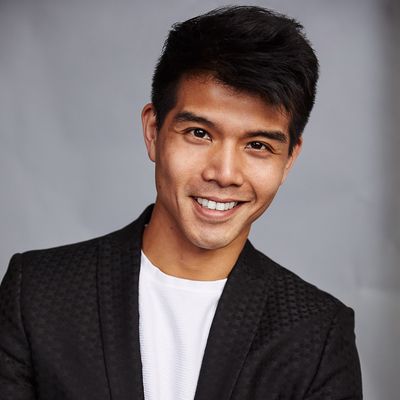
In This Episode: In our first Artist Exploration Episode, Telly Leung (Aladdin, Allegiance, Godspell, Rent, & Glee) and Charlie Murphy discuss Telly’s road to Carnegie Mellon, how the college application process has changed, the fear that many parents have for their young aspiring artists, being bold in the technology age, and how the theater industry might reboot itself in the near future... Read More
From the show: Mapping The College Audition: An MTCA Podcast
Guests
Featured Shows
About
In This Episode:
In our first Artist Exploration Episode, Telly Leung (Aladdin, Allegiance, Godspell, Rent, & Glee) and Charlie Murphy discuss Telly’s road to Carnegie Mellon, how the college application process has changed, the fear that many parents have for their young aspiring artists, being bold in the technology age, and how the theater industry might reboot itself in the near future.
If you want to hear more from Telly, you can follow him @tellyleung on Instagram and Twitter. Don't forget to check out University of Michigan’s Godspell, where Telly makes his directorial debut. https://www.showtix4u.com/event-details/52383
If you have any questions about the college audition process, feel free to reach out at mailbag@mappingthecollegeaudition.com. If you’re interested in working with MTCA for help with your individualized preparation for your College Audition journey, please check us out at mtcollegeauditions.com, or on Instagram or Facebook.
About MTCA:
Musical Theater College Auditions (MTCA) is the leader in coaching acting and musical theater students through the college audition process and beyond with superlative results. MTCA has assembled a roster of expert artist-educators who can guide students artistically, organizationally, strategically, and psychologically through the competitive college audition process. MTCA provides the tools, resources, and expertise along with a vast and strong support system. They train the unique individual, empowering the artist to bring their true, authentic self to their work. MTCA believes that by helping students reveal their potential it allows each school to connect with those who are truly right for their programs, which in turn guides each student toward their best college fit.
About Charlie Murphy:
Charlie is a proud graduate of Carnegie Mellon University’s BFA program. As an Actor he has performed with theaters such as: NY Public Theatre’s “Shakespeare in the Park”, The Pearl Theatre Company, Hudson Valley Shakespeare Festival, Chautauqua Theatre Company, Kinetic Theatre Company, and the Shakespeare Theatre of DC.
With MTCA [Musical Theater College Auditions -- mtca.nyc], he has been helping prospective theatre students through the college process for over 15 years. As a Teacher and Director, he is able to do a few of his favorite things in life: help students to find their authentic selves as artists, and then help them find their best fit for their collegiate journey. Through this podcast, he hopes to continue that work as well as help demystify this intricate process.
This episode was produced by Meghan Cordier and Charlie Murphy. Episode theme music is created by Will Reynolds.
Transcript
This transcript was automatically generated and might contain errors.
[0:00] Charlie Murphy: Hello, hello, and welcome to Mapping the College Audition, a podcast where we explore the landscape of the college theater world and try to demystify this daunting audition process. I am your host, Charlie Murphy, Director of MTCA, Musical Theater College Auditions, and today we have such an exciting show lined up for you. This is the first in our Artist Exploration Series. The Artist Exploration Series is one where we'll look at the college process and what carried forward into the career of some successful artists today. We'll also, in these conversations, have a looser discussion about the theater world today. And my first guest, I am so honored to bring on, is Telly Leung. He's a longtime friend and OG MTCA coach.
He's also the best friend of my partner, my business partner, Leo Ashe Evans, and a phenomenally successful actor, which you'll hear about, and multi-hyphenate artist himself. In this episode, we got into a bunch of different stuff. We talked about how the application process has been different from how long ago it was with Telly. He gave you a specific time, which I was shocked by, just aging himself. We talked about fear of parents that they have for their young artists that may want to go into this. We talked a little bit about generationally, the idea of being bold and messy versus being perfect and how that's a little more difficult in the technology age. We gave you tips on how to get a free apartment in New York City when you finish college. And then we wrapped up talking a little bit about how the theater industry might reboot itself a little differently in the near future. I think you're really going to enjoy this episode.
[1:44] Charlie Murphy: All right. Today, I'm joined by Telly Leung, an OG MTCA coach. He's one of our very first coaches. He's a graduate of Carnegie Mellon University, where he majored in musical theater. Telly has starred in numerous Broadway shows, including Flower Drum Song, Rent, Godspell, Allegiance, and Aladdin, to name a few. Aladdin, there were a couple of years you could not miss his face slapped on a bus in New York City. He was everywhere. He's also done a lot of TV shows. Some of you may know him from Glee, if you are an avid musical theater fan. He was a Dalton Academy warbler, where some might have questioned his age appropriateness to be playing a teenager. I'm going to be honest. Telly is now a multi-hyphenate producer.
He's a singer. He has his own album. He's an actor, of course, and now a director. He's recently just directed a production of Godspell at the University of Michigan. He also teaches adjunct at NYU. So Telly, I think, is a really perfect guest for us to launch this off because he's both an artist and an educator. So we'll talk about both of those worlds a little bit. Telly, how'd we do? How you doing?
[2:50] Telly Leung: Awesome. First of all, as far as being an age-inappropriate warbler, yes, my nickname was Grandpa Warbler because I was 30. And the rest of those boys were sort of too old to be high school too. I mean, we had a couple of those boys were actually like teenagers, but a lot of them were in their young 20s. And here I was, 30-year-old, still playing a high schooler, but good genes, I guess. And as far as being the beginning of MTCA, yes, I was definitely one of the first coaches, but MTCA also started because of the amazing Ellen Lettrick. And really, it was my class who went to Ellen's high school in Canfield, Ohio, when she was teaching theater. And she said, hey, would you ever consider coming to coach my high school students for their college auditions?
And we will help you fundraise for your LA showcase, which at the time at Carnegie Mellon, they didn't pay for showcase. So we said, sure. So I drove out 15 MTs to Canfield, Ohio, and we coached students. And that was sort of really the origin story of MTCA. For sure. That's the true OG.
[3:58] Charlie Murphy: Yes. Okay. Well, let us dive in a bit to your own audition story. I know, as we said, with your old age and your Grandpa Warbler, there's a long time ago, though Telly still looks like he could be 18. There's no doubt about it. But I'd love to jump back a little bit into when you were starting all of this, if you're 16, 17 years old, what were you looking at, you know, as you were looking at colleges, if you were to have like a mission statement of this is kind of what I'm looking for in a school, what you thought you knew about schools, what would it have been back then if you were like, I'm looking for X?
[4:30] Telly Leung: Well, I'm going to really put you in the DeLorean and take you back in time here, because I applied to colleges in 1997. And I graduated the class of 1998. So you have to keep in mind that this is before the internet. This was when you when you applied to college, the only way you found out about colleges was that you wrote to them, and they would send you a pamphlet or a brochure. You know, you had to buy the giant Princeton, I think they were Princeton Review book, college book of the top, you know, 500 colleges in the country or something. And each college had a page. And you would read stats about that particular college, what sort of SAT scores you would need to get in what that school is known for how many people in the student body, how many faculty per student, you know, so it was a very different process.
And the only other way you really found out about colleges was you asked your teachers or your college advisors about where you should go to school. Now, I also went to a math and science high school in New York City called Stuyvesant, you actually have to take a test to get in, it's free. But you have to take a standardized test, and I got in. And so coming from a math and science school, I certainly did a lot of theater in high school. So my faculty advisors were like, well, surely, are you going to do something in the arts? And I said, well, no, because I also grew up in a super traditional Chinese home where my parents just wanted me to go to Harvard or Yale and become a doctor or an engineer or something, right.
And certainly, I was good at math and science. And I was good at getting good grades and taking tests. But that's certainly not what I wanted to do with the rest of my life. So I sort of had a big, you know, come to Jesus moment, my senior year when it came time to apply to schools. So for sure, half of my schools were schools that would make my parents happy. So I applied to Yale, didn't get in as much as my parents wanted me to go to Yale. I got waitlisted at Northwestern. And the other half of the schools, my parents were like, and I got into Vassar, which probably would have been the school where I would have gone to quote unquote, normal college and not pursue the arts. But then because I got into Vassar and stuff, I also applied to the other half of the schools that were performing arts schools.
I actually applied to NYU and got in early at Tisch. But I also got in for their general studies, just their regular NYU admission. The same thing at Carnegie Mellon. I actually got into Carnegie Mellon as both as a musical theater major, but I also got into their humanities school as a Spanish, as a proposed Spanish major, because I studied in Spain for a summer semester with college kids. So I thought if I wasn't going to pursue the arts, I was actually going to pursue something in languages because I had a knack for picking up languages and sounds. And I studied in Spain. So I thought, oh, well, if the acting thing doesn't work out, I'll pick up Spanish, which is really close to French, which is close to Portuguese, which is close to Italian.
I'll pick up all of those. I speak Chinese at home. I'll go work at the UN. That was going to be my other career, my other life. So when it came time to apply to colleges, I have to admit, I did not have an MTCA in my life. And I, you know, we sort of did it blindly. Looking back on it retrospectively, there was so much I didn't know. For example, I applied to Carnegie Mellon sight unseen only because my acting teacher told me it was a good school with a great musical theater program. I didn't actually go visit the school until I got in and it was the weekend before the deposit was due. So it's, it was just a very different process. Different time. And I think that's not uncommon even today that a lot of people end up filling their lists with my acting teacher said, this is a good school. And that's sort of what ends up being on their list.
[8:01] Charlie Murphy: I have to make a joke about how did you do prescreens if everything was on paper applications?
[8:09] Telly Leung: There was no, I mean, they didn't, they didn't make us do prescreens. They put those teachers on the road. There was a huge audition tour, you know, so I mean, which, which is also fascinating because that's, you know, with COVID and everything that certainly has stopped, you know, auditions have become completely virtual now. A whole different life.
[8:27] Charlie Murphy: Yeah. So totally. Do you happen to remember way back in the day what you performed for your college?
[8:34] Telly Leung: I, I remember I did a Harvey Firestein monologue. Okay. I think it was on tidy endings. Does that sound right? Sure. I think that was my monologue. And I remember actually I remember, and I remember doing puck from midsummer, my mistress with a monster is in love. I remember that, but I do remember that with on tidy endings, I Gary Klein and I I'm going to, I'm going to actually like, you know probably get him in a little bit of trouble, but our senior year, he actually showed the empties my class when we, before we graduated our audition sheets, our handwritten audition sheets from our Carnegie Mellon auditions, he had them in a file and we, you know, we were all in his office one day and he, he actually showed it to us.
And I remembered Barbara's notes on my on tidy endings audition was sensitive, which, which I think for her was good. Like that, that sensitive young actor. And like, right. And like, I didn't really have a ton of acting training. I'm a math and science kid. So I think for her, she was like, Oh, that's it. Like, that's what I needed to see. That was the little bit of potential I can train somebody who's, I can't teach somebody to be sensitive. So this person coming in, being sensitive, and that was like in big lines, like sensitive. And like, she underlined it three times. I don't know if she even remembers that, but I snatched my sheet and I went, Oh, I was like, got it. Okay, great. Like, it was very interesting that that's what she, that's what she saw that got me in, you know, I remember Don and one of our other professors used to talk about, that's what he viewed as talent was sensitivity was the ability to be sensitive to text, but then also are you emotionally sensitive?
Can you, sensitive also can mean a really good listener. I think we hear sensitive as like, Oh, he's too sensitive. He takes things too hard, but I actually think from an acting perspective, it's a huge compliment. I think there's a, you know, for sure there is definitely sensitivity can be to an extreme and you can certainly have too much of it. Right. But at the same time, I think the sensitivity shows empathy. And at the end of the day, isn't that what acting is really all about, right? It's about somebody's ability to step in somebody else's shoes for a couple of hours or see the world through somebody else's eyes. And that's really it. So like, you know, people spend their whole lives, you know, the, the, the Dustin Hoffman's and the Meryl Streep spend their whole lives just perfecting that craft.
All of us are just doing that really being expert empathizers. It's one of my best friends will say that about, that's what acting school is, is like empathy training. It's like going to the gym every day and just working out your empathy. It's just like, can I get better at empathy? Let's do, that's what I was learning for years. But I'd love it. That's one of my questions was something you think you did really well as a young artist, which I think is great as a sensitive young person. Is there something that if you could go back and now coach your 17-year-old self, you would say, Oh God, you need to get better at this. This is something you could use a little.
[11:19] Telly Leung: Okay. Well, here's, here's a ballsy move. This showed how much I didn't know in that I already got in early at NYU. So by the time I went to my audition for Carnegie Mellon, I wore like a ratty sweater and jeans. I didn't really care. I had a lot of fun. And I probably, that's probably what got me into, but I was sort of like, I got into college and here's an NYU. I knew cause I grew up in New York. So I was like, I know this school. It's a great school in my brain. I was like, I'm probably going to go there. Right. And then, um, and then, so by the time I got to my Carnegie Mellon audition, I remember Don was asking me, so where else are you going? And I remember being very like ballsy and saying, well, I already got into NYU and this is how much money they gave me.
Like I, like at my audition, I just didn't care. So like, and I just was having fun. Um, and, uh, and I, and I just like, I just, I don't know the, the like nonchalantness of it, of like, and maybe it came off as a little bit arrogant though that I'm sure they still saw sensitive, but I definitely came off a little bit like, well, I already got into college and I just didn't, I didn't have any fear, I guess, because of that. I didn't know any better, I think. So I think sometimes that ignorance is bliss too. It obviously cockiness is not something you want to walk in the room with, but confidence and ease is like a gift that you can do. Um, I wonder if Don, she just has arrogant when under, under, under 30.
[12:36] Charlie Murphy: Arrogant. I think I was also just honest. You know, I had taken, I think sometimes when things are high stakes, it prevents us from doing really good work. And I think I got very lucky in that. I already had a place that I knew I was, I could go to college if I wanted to. And I think it just allowed me to like, have fun and relax.
[12:53] Charlie Murphy: Yeah. I was going to say, I also love that, like, all you did actually was answer his question. Like sometimes our students get so like, what do I say when they ask this? Like basically saying, how do I manipulate the situation? But if he said, Hey, what else are you considering? And you're like, actually, I already have this acceptance. You're answering his question. You're actually honestly engaging with what the faculty member is asking you as opposed to being like, well, you're my number one, but here's my, you know, he asked, you asked.
[13:20] Charlie Murphy: Okay, great. Oh, I'd love to talk a little, because you mentioned your parents being more math and science people, more interested in you going to Harvard and Yale in that world. What was that like? Especially, you know, a lot of our students maybe who have decided recently, I want to go to drama school, maybe not other parents are completely thrilled. Mine certainly weren't when I told them that. What was that like for you?
[13:40] Telly Leung: It was, it was, it was a journey. It still is a journey, by the way. You know, Aladdin was my seventh Broadway show and it is, and I was 39 when I ended that run of that show. And it's the first time my parents didn't ask me, okay, are you like done with the Broadway thing? And do you want to go to grad school and do something for real now? Like the first time it took seven Broadway shows and my face all over New York City for them to stop asking. And for me to be 39, for them to stop asking if I was going to go to grad school or get my MBA or something, right. So like I, you know, my parents, the thing is they weren't math and science people. They were like lower middle-class immigrant family.
Right. So like my mom was a seamstress in Chinatown. My dad worked Chinese restaurants. So like we didn't come from a ton of money when they came to New York in the seventies, they had 200 bucks and they crashed on friend's couches on like Mott Street and Bloom Street, right. In Chinatown. So like for them, this American dream was a monetary dream for them. Success in America meant I could make enough money and saved enough money to like buy a house one day, put my kid through college, you know, put three meals on the table, pay our rent. And that's all stuff they couldn't do back in Hong Kong and back in, certainly they couldn't do it in China. So like that was success. So for them, they were like, well, money is success. Having the money to not worry is success.
[16:28] Telly Leung: You know, I think the biggest thing that I learned from my time at Carnegie Mellon was the importance of being bold. And I think that that is something that we need to instill in our students today, especially in the age of technology where everything is so accessible. You know, when I was in school, we didn't have the same resources that students have now. We didn't have social media to showcase our talents or to connect with industry professionals. So, I think it's really important for students to take advantage of these tools and be bold in putting themselves out there.
[17:28] Telly Leung: I also think that the college application process has changed significantly. When I was applying, it was a much more straightforward process. Now, there are so many more factors to consider, and I think that can be overwhelming for students and their parents. There's a lot of fear around the idea of rejection and what that means for a young artist. But I think it's important to remember that rejection is a part of the process, and it doesn't define your worth as an artist.
[18:28] Telly Leung: I often tell my students that they need to be bold in their choices, whether it's in their audition material or in the way they present themselves. It's about finding your unique voice and not being afraid to share it. In this age of technology, we have the ability to create our own content and share it with the world. So, I encourage students to take risks and be unapologetic about who they are.
[19:28] Telly Leung: The theater industry is also evolving, and I think we need to embrace that change. With the rise of streaming services and digital content, there are new opportunities for artists to showcase their work. I believe that this could lead to a reboot of the theater industry, where we find new ways to connect with audiences and tell our stories. It's an exciting time to be an artist, and I think we need to be bold in exploring these new avenues.
[20:28] Telly Leung: I also want to address the fear that many parents have for their young aspiring artists. It's natural to want to protect your child, but I think it's important for parents to understand that pursuing a career in the arts is a valid choice. It can be a challenging path, but it can also be incredibly rewarding. Encouraging your child to follow their passion and supporting them in their journey is crucial.
[21:28] Telly Leung: As artists, we need to be adaptable and open to change. The world is constantly evolving, and so should we. Embracing technology and using it to our advantage can help us reach new heights in our careers. I think it's important for students to stay informed about industry trends and to be proactive in their approach to their careers.
[22:28] Telly Leung: In conclusion, I believe that being bold is essential for success in the arts. Whether it's in your audition choices, your networking efforts, or your willingness to embrace new technology, taking risks can lead to incredible opportunities. I encourage all aspiring artists to find their voice, be confident in their choices, and never be afraid to put themselves out there.
[23:28] Telly Leung: Thank you for having me on the podcast, Charlie. It's been a pleasure to share my thoughts on this important topic. I hope that our conversation inspires students and parents alike to embrace the journey of pursuing a career in the arts.
[24:28] Telly Leung: If anyone wants to connect with me, they can find me on social media @tellyleung. I'm always happy to share insights and support young artists in their journeys.
[25:28] Telly Leung: And don't forget to check out University of Michigan’s production of Godspell, where I’ll be making my directorial debut. It's going to be an exciting show, and I can't wait for everyone to see it!
[26:28] Telly Leung: Thanks again, Charlie, for this opportunity to discuss the importance of boldness in the age of technology. I look forward to seeing how the next generation of artists will shape the future of theater.
[27:28] Telly Leung: Remember, be bold, be brave, and always stay true to yourself. That's the key to success in this industry.
[28:28] Telly Leung: I appreciate the chance to share my experiences and thoughts with your audience. Let's continue to support and uplift one another in this journey.
[28:40] Telly Leung: Thank you, everyone, for listening. I hope you found our conversation valuable and inspiring.
[28:58] Telly Leung: Until next time, take care and keep being bold!
[31:57] Telly Leung: I think the biggest thing that I learned from my time at Carnegie Mellon was the importance of being bold. You know, I think that in this age of technology, we have so many tools at our disposal to create and to share our art. And I think that the fear of failure can sometimes hold us back from really putting ourselves out there.
[32:27] Telly Leung: I remember when I was applying to colleges, the process was so different. We didn't have the same kind of online resources that students have today. Now, you can find everything from audition tips to video examples of what to expect. But I think that the core of it all remains the same: you have to be true to yourself and your artistry.
[32:57] Telly Leung: I often talk to parents of aspiring artists, and I can see the fear in their eyes. They worry about their kids pursuing a career in the arts, especially with the uncertainty that comes with it. But I always encourage them to support their children's passions. The world needs artists, and we need to foster that creativity.
[33:17] Telly Leung: Being bold in this technology age means using those tools to your advantage. Whether it's social media or online platforms, artists have the ability to showcase their work like never before. I think it's important to embrace that and not be afraid to share your voice.
[33:37] Telly Leung: The theater industry is evolving, and I believe that we are on the brink of a major reboot. With everything that's happened in the past few years, there's a renewed focus on inclusivity and diversity. It's an exciting time to be in the arts, and I think we have a responsibility to push for change.
[33:57] Telly Leung: I also think about how technology can enhance our storytelling. We can reach audiences in ways we never could before. Virtual performances, online workshops, and digital collaborations are all part of this new landscape. It's about finding the balance between tradition and innovation.
[34:17] Telly Leung: I remember when I was in "Aladdin," we had to adapt to new ways of connecting with our audience. The show had to pivot during the pandemic, and we learned to engage with fans through virtual events. It was a challenge, but it also opened up new opportunities.
[34:27] Telly Leung: The fear of the unknown can be daunting, but I think it's essential to lean into that fear and use it as fuel for your creativity. Every artist faces rejection and setbacks, but those experiences can lead to growth and resilience.
[34:37] Telly Leung: I encourage young artists to take risks. Whether it's trying a new style, collaborating with someone outside their comfort zone, or even just auditioning for a role they think is out of reach. Boldness can lead to unexpected and beautiful outcomes.
[34:57] Telly Leung: And as we move forward, I hope that we continue to embrace the changes in our industry. The conversations around mental health, representation, and accessibility are more important than ever. We have the chance to create a more inclusive environment for future generations of artists.
[35:17] Telly Leung: I think about my own journey and how every step has shaped who I am as an artist. From my time at Carnegie Mellon to my experiences on Broadway and beyond, each moment has taught me something valuable.
[35:37] Telly Leung: It's all about finding your voice and being unafraid to share it. In this age of technology, we have the power to connect with others and inspire change. I believe that art can be a catalyst for conversation and transformation.
[35:47] Telly Leung: So, to all the aspiring artists out there, I say: be bold, be brave, and don't let fear hold you back. The world needs your unique perspective, and your voice matters.
[35:57] Telly Leung: And as we look to the future, let's continue to support one another in this journey. The arts can be a challenging field, but together, we can uplift and empower each other to reach new heights.
[36:17] Telly Leung: I’m excited to see where this journey takes us all. The possibilities are endless, and I truly believe that the best is yet to come.
[36:27] Telly Leung: Thank you for having me on this podcast. It's been a pleasure to share my thoughts and experiences with you all.
[36:37] Telly Leung: I look forward to seeing how the next generation of artists will shape the future of theater and beyond. Let's keep the conversation going and continue to inspire one another.
[36:57] Telly Leung: Remember, your journey is unique, and it's important to embrace every part of it. Keep creating, keep dreaming, and keep being bold.
[37:17] Telly Leung: Thank you!
© Broadway Podcast Network, All Rights Reserved