

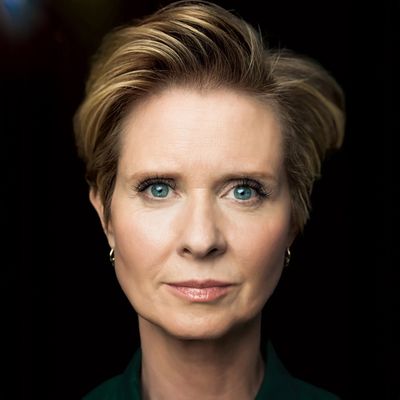
Stage actor, screen actor, activist, Tony winner, gubernatorial candidate... Just a few things that Cynthia Nixon has achieved thus far in her illustrious career. Eva talks to Cynthia about her thoughts on Governor Cuomo, lessons learned from Blythe Danner and the role that came down to her and Sarah Jessica Parker... Read More
From the show: My First Show
Guests
Featured Shows
About
Stage actor, screen actor, activist, Tony winner, gubernatorial candidate... Just a few things that Cynthia Nixon has achieved thus far in her illustrious career. Eva talks to Cynthia about her thoughts on Governor Cuomo, lessons learned from Blythe Danner and the role that came down to her and Sarah Jessica Parker.
Part of the Broadway Podcast Network.
Transcript
This transcript was automatically generated and might contain errors.
[0:15] Eva: Hello and welcome to My First Show.
[0:18] Eva: My guest today is the incomparable Cynthia Nixon, an activist, an artist, a politician, a friend of the theater and of the screen, and someone I've admired for an incredibly long time, and I'm a big fan of. So thank you for being here, Cynthia.
[0:38] Cynthia Nixon: It's a pleasure to meet you.
[0:39] Eva: Thank you.
[0:40] Cynthia Nixon: It's a pleasure.
[0:42] Eva: How are you?
[0:43] Cynthia Nixon: I have to start with the question that we're asking everyone. How are you? How are you staying sane and positive right now?
[0:50] Cynthia Nixon: And how are you? How are you doing?
[0:53] Cynthia Nixon: I think I'm doing fine. Um, we, uh, my, my, I have three kids.
[1:01] Cynthia Nixon: One of them is in Chicago on his own, very, uh, with a job, which is amazing, that causes him not too much exposure.
[1:11] Cynthia Nixon: Um, he's been very active in the protests, um, which I was scared about at first, but he, um, he seems fine.
[1:19] Cynthia Nixon: Um, my middle kid, uh, graduated, uh, from high school via Zoom, which was, they did a wonderful job, but it was, um, you know, you think about all the things that should be happening in your senior year of high school that he didn't get, which, you know, uh, which is hard.
[1:38] Cynthia Nixon: And then my, my nine-year-old is really thrilled to be, um, uh, out of school, out of homeschooling in particular, and we are looking with horror at the fall and um, the resumption of the homeschooling, because it doesn't seem like, um, anybody will be going back to school, uh, at least not full-time in the fall.
[2:03] Eva: Yeah, yeah.
[2:04] Eva: I think about all the heartbreak that everyone is feeling right now and everyone is going through, and then I think specifically at kids and that experience that they're having, the bewilderment, the upset, the isolation, the confusion, the missing out, and how interesting that your three kids are at such different places in their lives.
[2:26] Cynthia Nixon: Yes, and I think it's hard, it's hardest, right? My, my 17-year-old just had a friend come out last night who's going to be with us for a few days, which is great.
[2:35] Cynthia Nixon: I'm really relieved that my oldest one has a roommate, so has that kind of contact.
[2:40] Cynthia Nixon: But I think on my nine-year-old, um, he really hasn't, he's seen a few friends his roughly his age who are children of our friends, but um, he's not seen any of his classmates since this began, and I think that's been really, really hard on him.
[2:56] Eva: Yeah, yeah, yeah.
[2:58] Eva: Well, this show is a love letter to theater, as we know, and you have, I think, played in the arena of the most dramatic theater of them all, and that's politics.
[3:12] Eva: And so, you know, if we can, I would just love to ask a couple of questions.
[3:17] Eva: I mean, you have such an authentic and inspiring way about you.
[3:21] Eva: I actually had the pleasure of seeing you speak in a pretty intimate setting at the RAP Women's Breakfast a few years ago.
[3:29] Eva: And I've seen you in a room of 800 on Broadway, and I've seen you up close and personal on my television screen.
[3:35] Eva: And I'm just so curious, you know, you're such a warm and real politician, and what were you pulling from when taking on that persona?
[3:46] Eva: Was it anything from your performative past or the passion you were feeling in that new moment for you?
[3:53] Cynthia Nixon: You know, you took the stage several times during that race, and I'm just wondering what was the driver for what you had to embody in front of a new type of audience.
[4:03] Cynthia Nixon: Well, so a few years ago before I ran, I played Nancy Reagan in a, uh, a television show, uh, you know, like a, uh, a movie on television.
[4:16] Cynthia Nixon: And so I read a lot about her, and I read a lot about their family, and I read a lot about Ronald Reagan.
[4:23] Cynthia Nixon: And when Ronald Reagan ran for governor of California, people were very skeptical.
[4:28] Cynthia Nixon: Uh, I think it goes without saying I'm not a fan of the Reagans, but I think that's clear.
[4:33] Cynthia Nixon: But anyway, um, but he was asked over and over what kind of training is being an actor for being a politician or being an elected leader.
[4:44] Cynthia Nixon: And he said, now that I've started to do this, um, started to campaign at least, he said, I can't imagine anyone who doesn't have an acting background, uh, being good at this at all.
[4:55] Cynthia Nixon: He said, there are so many, there is so much crossover in terms of, well, certainly people knowing who you are.
[5:04] Cynthia Nixon: That's the first thing. You being comfortable being in front of crowds of people, you being comfortable meeting the public, um, and being comfortable, uh, sometimes making a speech that you get handed minutes before pages to and making it sound like those are your own words.
[5:26] Cynthia Nixon: Um, I think that, I think that for me, the most challenging thing, look, in my whatever I do in my life, I do try and be sincere, like sincerity is my right calling card in life.
[5:49] Cynthia Nixon: And so I think that that as an actor serves me well, and as a, as a, as a politician, that served me well.
[5:58] Cynthia Nixon: I think the hard thing though about running for office, particularly such an exalted office as governor, is you just have to project confidence all the time.
[6:08] Eva: Yeah.
[6:09] Cynthia Nixon: And you have to project that we're gonna win, right?
[6:12] Cynthia Nixon: Both of those things, even if you have a day when you're not feeling confident, or even if you don't necessarily think it's a hundred percent that you're gonna win, you just have to keep, um, projecting that.
[6:23] Cynthia Nixon: I think that's, as an actor, like we all know, as an actor, uh, emotions come in a very varied way.
[6:32] Cynthia Nixon: Like there's this famous story, this is a very long-winded, uh, answer to your question, but you know, there's this famous story about Deborah Winger in An Officer and a Gentleman, and apparently she and Richard Gere hated each other, and yet those sex scenes are some of the most erotic, I think that have ever we've ever seen in a mainstream film.
[6:51] Cynthia Nixon: And she was asked, how did you, you know, she was very, uh, upfront about the fact that she really hated him.
[6:57] Cynthia Nixon: And she said, I just allowed all the emotions that I was feeling to show to be unmasked.
[7:05] Cynthia Nixon: And when you're feeling something real, the viewer will just turn that into whatever it is in the situation, but the thing that our viewer, you know, responds to is the fact that what you're, you really are feeling something.
[7:22] Cynthia Nixon: And so the better, I think the better, the best actors don't ever censor themselves.
[7:28] Cynthia Nixon: And even if the emotion that is coming out of them seems inappropriate to the moment, they let it happen.
[7:44] Cynthia Nixon: If you feel kind of snarly one day, that you get just have to censor yourself.
[7:50] Cynthia Nixon: So for me as an actor, that was the big challenge.
[7:53] Cynthia Nixon: But I think, I think that when I lined up the best and when I was the most successful in my campaign, it was because I really believed in the things that I was saying and that I was advocating for.
[8:45] Cynthia Nixon: Or green energy or healthcare for all for decades.
[8:49] Cynthia Nixon: And so they, it was taking the activist vision of what we can have and should have here and bringing it to the political forum, which I think is a trend that we're seeing more and more, that there is less of a barrier between who's an activist and who's an elected leader.
[9:13] Cynthia Nixon: I think about obviously people like Bernie Sanders.
[9:16] Cynthia Nixon: I think about people like Alexandria Ocasio-Cortez and the whole squad.
[9:21] Cynthia Nixon: I, but I also think about people like in, you know, more locally, like Jamani Williams, our public advocate in New York City.
[9:29] Cynthia Nixon: And I think increasingly if when we're fighting corporations and big money interests, um, we need elected leaders who are really in touch with social movements on the ground and are part of implementing them.
[9:47] Cynthia Nixon: That there is an inside game and an outside game, and you've got to be, you've got to be playing both if you want to be an elected leader that gets progressive things done.
[9:57] Eva: I totally agree.
[9:58] Eva: I think the, um, the everyday voter has actually turned up his or her activism taste buds as well in response to the other sides, um, the opposing views of other parties and the Trumpian world that has existed since 2016.
[10:20] Eva: And I think that's done a great thing for both the voter and for the politician to have to amp up their level of activism and progressiveness.
[10:30] Eva: And I think obviously there's a lot wrong with our new social media chapter that we're in, but, uh, there is a lot right, and it does have to do with so many more voices really coming into the public forum and, and certainly if you just take the Black Lives Matter movement, uh, it couldn't exist, it couldn't exist without social media and without, I mean, honestly when you're talking about police brutality, people, everybody having a camera on their phone, that is what has, uh, uh, people's commitment and people's long-term fight in this arena, uh, is what has brought this cracking open.
[11:15] Cynthia Nixon: But the other thing is that, uh, greater awareness throughout the public and everybody having the tools to document this police brutality as it's happening and bring it to a widespread audience.
[11:28] Cynthia Nixon: That's right. We're the transparent generation. The transparency that exists now between opposing parties is no longer a secret that someone has to do. And also, and also the ability to fact check in real time.
[11:43] Eva: Your gubernatorial race, I'm sure has been on your mind these last months. Your particular knowledge and feelings about Governor Cuomo are fully formed in a way probably most New Yorkers' feelings are not. Granted, most New Yorkers do not run a political race against him. So I'm curious as a lifelong progressive who is aware of both his history and shortcomings, what do you think of him now and the job he's doing?
[12:09] Cynthia Nixon: I mean, I was literally served a New York Tough t-shirt ad yesterday on Instagram, so he's certainly making a wave. I think exactly the same thing that I thought of him before. I think that I appreciate so much his broadcasts. I think in the face of any coherent truthful information coming out of the president, I think what he did was enormously valuable by being a daily presence and reassuring people and giving them information. But I think his unwillingness to raise taxes in order to fund the things that we really need, like education, like healthcare, like green energy, still leaves New York where it was, but even worse so because we have such a budget shortfall and he is willing to borrow rather than tax corporations and individuals that can afford it and that wouldn't even feel it.
[12:24] Eva: Fair, fair. I hear you. I just know that a 70-year-old grandma asked me how her boyfriend Cuomo is doing.
[12:24] Cynthia Nixon: Yes, when he has infiltrated grandmas into making them feel good, it's kind of just remarkable that we're at a place in history. Remarkable that he made this mountain, this coronavirus mountain, you know, of the deaths. I mean, are you aware of this that he's done there?
[14:01] Eva: I am. I mean, and that so his point is how we've curtailed them, which I grant is impressive, but it's a mountain.
[14:07] Cynthia Nixon: Yeah, and the reason that that mountain happened is that we didn't shut down earlier the way places like California and Washington did.
[14:18] Eva: Yeah.
[14:18] Cynthia Nixon: No, Washington State is a beacon of how things could have been done. Um, thank you for all that. Um, we're gonna head into our four questions that sort of help illuminate where your beginnings started, your formative experiences that can I ask you before, before I'm sorry, I don't mean to interrupt, but no problem. Um, what was your first Broadway show that you saw?
[14:45] Cynthia Nixon: The first Broadway show I saw was actually Crazy for You.
[14:51] Eva: Oh really? In ninth grade.
[14:55] Cynthia Nixon: Um, I grew up in Boston, so I was really late to the Broadway game because I saw touring Broadway, and my parents rightfully so thought that was sufficient, and I hadn't made it down to New York until high school. Um, so yeah, that was my first Broadway show. But the first touring Broadway show I ever saw was Les Mis.
[15:13] Eva: Got it.
[15:19] Cynthia Nixon: Yeah, got it. Yeah, thanks for asking, Cynthia. No one ever asks the house.
[15:24] Eva: Really?
[15:24] Cynthia Nixon: No one cares.
[15:26] Eva: Really?
[15:26] Cynthia Nixon: My mother grew up in Chicago, and so she would, and that was a time, you know. My mother's born in 1930. And so that was a time when the Broadway companies would go on tour with all the original cast. And so, yeah, being in Chicago, she saw all these Broadway performances. She just saw them in her hometown. And I mean, she always talks about Judith Anderson going to see Judith Anderson in Medea on Christmas, and how there were like two rows of people there because who goes to see Medea on Christmas? And that they had all the ushers come and sit in the seats to try and fill out the house a little bit. And she says Judith Anderson was so amazing, and she didn't let down even a whit, you know. She gave the full performance for the, you know, 60 people that were there or whatever.
[16:19] Eva: I love that.
[16:19] Cynthia Nixon: I think Jews go to Medea on Christmas.
[16:24] Eva: That's probably it.
[16:25] Cynthia Nixon: Yeah, no, there was a time where like you could see Robert Goulet in every city in America.
[16:31] Eva: Right, right.
[16:32] Cynthia Nixon: Right. It was amazing. So your first show, do you recall what it was?
[16:38] Cynthia Nixon: Well, so this is a hard question for me to know how to answer. Um, because when you say my first show, do you mean my first Broadway show?
[16:47] Eva: I mean the first show that you remember seeing that had an experience that meant something to you. And it could be Broadway or it could be the, you know, Corn Huskers of Westchester, you know, whatever had that, you know, formative moment.
[17:06] Cynthia Nixon: Well, I know that my family took me to see the Paper Bag Players a bunch. And I loved them and I had the record, but I can't remember a moment, and I know they took me to see a performance of Winnie the Pooh because I had the poster in my room, but again, I don't remember the play. I have to say, my mother, starting when I was six, she knew people at the Public Theater, so she could get us seats without having to wait online. And so we would go to see the Shakespeare in the Park. And so I saw my first Shakespeare when I was six. It was Hamlet. It was with Stacy Keach as Hamlet, James Earl Jones as Claudius, and Colleen Dewhurst as Gertrude. And the thing that I remember is, well, I remember it being long and boring.
[18:18] Eva: Yeah.
[18:18] Cynthia Nixon: And pretending to be full of love and warmth. And I turned to my mother and I said, he doesn't mean it. And my mother was like, that's right. He doesn't mean it. And so that was a wonderful moment because in this mass of like, oh, complicated language and they're far away and all this stuff, I could, I the moment that that was really made an impact was he's saying one thing, but he actually means something. He means the opposite.
[18:58] Eva: How perceptive, Cynthia, that you understood the dramatic and emotional arc of Shakespeare at six years old.
[19:08] Cynthia Nixon: Well, I think James Earl Jones was probably really, you know, amping that up.
[19:08] Eva: Yeah.
[19:08] Cynthia Nixon: You know.
[19:16] Eva: I at first I was thinking a six-year-old and Hamlet, that feels crazy. And then I thought actually, no, Hamlet's the Lion King. So of course that worked for a six-year-old because that is the perfect storytelling structure.
[19:33] Cynthia Nixon: Right.
[19:34] Eva: Um, it was James Earl Jones, who then was in the Lion King movie.
[19:39] Cynthia Nixon: Oh, right. That's true.
[19:40] Eva: That's true.
[19:41] Cynthia Nixon: He was, yeah, as the other, as the good father though.
[19:45] Eva: Um, but the first, I mean, the first Broadway show that I saw was Pacific Overtures. And I was just, I mean, I couldn't wait. I couldn't wait. I mean, I saw it's so hard because like I had seen A Chorus Line before that, but at the Public, you know, I had seen Pfeiffer's People, I think. Um, oh no, I get maybe that was like a year later. But so I saw a lot of off-Broadway stuff. Um, but I, you know, I saw Pacific Overtures at the Winter Garden and we were up in heaven, you know, and the Winter Garden is so enormous. Yeah, it was like wow, there's tiny, tiny little people down there. But I must have seen it well enough because, you know, if you know Pacific Overtures, it is supposed to be done with an all-male cast and men playing the women's parts as it would be traditional Japanese theater.
Um, but at the very end, in the last number, which is contemporary, there are men and women on stage singing and dancing. That song next. Um, again, again, I guess I guess so many of my theater stories were like moments of perception that I had that my mother complimented me for and made me feel great. Like, oh, I've really got an eye for this. But my mother said, Well, where did all those women come from? And I said, Oh, but didn't you notice? They were the people scurrying around in black all during the rest of the show who were like doing the puppets and, you know, basically kind of facilitating the performance, which I had noticed, which she hadn't. So even though I was in heaven, I guess I could see, you know, far enough to see gender. So that's something.
[21:37] Eva: Yeah.
[21:37] Cynthia Nixon: Yeah, yeah.
[21:38] Eva: And you know, Sondheim lyrics.
[21:40] Cynthia Nixon: So D.
[21:40] Eva: Right.
[21:41] Cynthia Nixon: And right. And so for me, by the time I went to see Pacific Overtures, I was I was such a huge Sondheim fanatic. Yeah, that again, when you see it when you saw any Sondheim show, it was so then intertwined with your endless listening to the cast album afterwards. It's hard hard to separate.
[22:02] Eva: Right, right. Totally, totally. Now I know I know the feeling. Um, first show you were in.
[22:09] Cynthia Nixon: When I was really little, I was in a show at the YMCA. Um, which the premise of which was that God was unhappy with the world and was going to send another flood, like the flood that we survived with Noah. Um, but this time instead of getting a good person to save two of each species, he was only gonna save one species. And so this was a show that involved dividing the kids into groups, and each of us were a species, um, and we were all vying to win the chance to survive.
[22:54] Cynthia Nixon: And I was in the bird group, and our song was to the tune of "Tit Willow" from what is that from, the Mikado, I guess?
[23:03] Eva: Yes.
[23:04] Cynthia Nixon: Yeah. And right. And so I still remember, of course, um, on a tree by the ocean, us little birds sit singing. Oh Noah, oh Noah, please save us. We will tell you right off why Noah should save us sweet little birds from a watery grave. We're beautiful, we sing well, and here comes a wave. Oh Noah, oh Noah, please save us. Um, were you guys not traumatized by this rendition?
[23:40] Eva: No, I remember I wore this sort of um turquoisey dress that I that I in my own mind I was a peacock because I was kind of in a peacock color. Sixth grade at my elementary school, I was in an environmental musical that uh a music teacher of mine wrote. I got to do the sweet tender young thing in "Freedom and Me," all in elementary school. But then when I started acting professionally when I was 12, and so when I was 14, I did my first professional show, which was a Broadway show, which was um "The Philadelphia Story" with Blythe Danner and Edward Herman and Mary Louise Wilson, um, directed by the great Ellis Rabb. Um, and it was very daunting because I had been doing film and television for a couple of years at that point, and I was very internalized in a way that worked well on film.
But um, and so I would come home because my mother was absent, my mother had been an actress and had majored in it in college and gone to Yale Drama School and studied with Uta Hagen for years and had never had any success and stopped before I was born, but was still a terrific acting teacher. And I think she would have been a wonderful director, actually. Um, and so I would I would come home after rehearsal and say, Oh, you can't believe what they want me to do. And I would show her as if it was like appalling and gauche. And she would be like, that's good, do that. Because it seemed so broad and obvious to me after having done all this really small naturalistic film stuff. Um, I had to be the gig.
[25:20] Eva: How did I get the gig?
[25:21] Cynthia Nixon: How did you get the gig?
[25:22] Eva: Yeah.
[25:23] Cynthia Nixon: Did you did did someone come after you? Did you have an agent?
[25:25] Eva: No, no.
[25:26] Cynthia Nixon: I had uh I had yeah, I had an I had a manager, uh, I had a manager um from the time I was like 12. Um, yeah, and they would send me up on and it was actually it was Sarah Jessica, it was down to Sarah Jessica and I actually funnily enough.
[25:44] Eva: Yeah.
[25:44] Cynthia Nixon: Did you and Sarah Jessica know each other as kid actors then?
[25:48] Eva: We did, we totally did, because when we were when I was a year before, we had done a uh TV film together in which we played sisters with Vanessa Redgrave, and it was Jack Albertson's last uh performance before he died. Yeah, so we yeah, we definitely knew each other. And we were on we had been on a talk show together on Joe Franklin together, and it you know, look the the the pool of of of little girl actresses, at least at that time, I i you know, in terms of people who were good and actually worked, was pretty small.
[26:21] Eva: Right.
[26:22] Cynthia Nixon: So right, right. So when you reconnected for "Sex in the City," you had been you had been in touch that whole time or lost touch?
[26:30] Eva: Yeah, yeah, yeah, yeah, yeah.
[26:32] Cynthia Nixon: Definitely. I mean, I would go see her and things, and she would come see me and th yeah, totally. We would do readings. Yeah, definitely. Um, do you think about um your formative theater experiences teaching you something different than those formative television experiences as both an actor and a and a human?
[26:53] Cynthia Nixon: Um, yeah, I mean, I guess for me as a as a teenage actor, those film and television experiences were so much about uh you know, being on location and catering and having my own dressing, like like the the trappings of that world were so much a part of filming things, particularly because I did I did a film when I was 12 and I was away from home for 10 weeks and I was on my own for like a bunch of that. Um yeah, theater was very different. I mean, Blythe Danner was the leading lady, and I was so in love with her from even before I worked with her, and then anyone who works with her then falls much more in love with her. Like I have been such a fan of hers from from "1776" and loving Molly and like all these great performances she had given. And Edward Herman, of course, I had seen him as FDR, and um uh I guess I was very aware of the the caliber of the pot I had fallen into.
[28:06] Eva: Right.
[28:07] Cynthia Nixon: I mean, I Ellis Rabb directed it. Ellis Rabb was a great director who ran the the Phoenix Theater, which is as close as we ever had to a national theater in this country. And I had seen, you know, I had seen his a few years earlier, I'd seen his production of "The Royal Family," which was extraordinary. So I guess, and Mary Louise Wilson, I think had had been in that also. So I was just aware of the, I don't know, the level of people, and I would just sit in awe of them. And I learned so many lessons from them. Um like particular well, like Blythe and Blythe Danner and Edward Herman. So they acted together a lot. They were an acting, they were not a romantically, uh, they were not a couple, but they they were an acting couple.
And so in Williamstown, they were they did tons of plays together. Um, and so they had a kind of uh a shorthand with they were like a great match. Um but also I was so stunned by the lack of nerves that anyone had, right? And how how Blythe was just not nervous or seemed not to be nervous. Uh even on the opening night. Um, and also there were certain things that that were not quite working. I mean, she's not really great casting for that part. And so I watched her kind of in performance completely rejigger her because she's so endlessly warm, and that point of that character is that she's cold and is accused of being all these dated horrible words like frigid. Um so I watched uh Blythe completely re-jigger her performance her performance in performance, not in rehearsal.
Because it's um and I and and things happened like Edward Herman uh wears glasses in real life, but he didn't ever wear glasses on stage, but they had him wear glasses, and you know, he was so endlessly all of a sudden he could see the audience and like he would talk about that. What a what a thing that was for him. I remember uh just there was such good fun to be had. Um, like I remember one time they called places and we were all there and it was eight o'clock, and they were ready to go up. And Blythe Danner said, No show in New York ever goes up at eight o'clock. I'm going back to my dressing room. Call me at 8:05. Like that. It was so uh um, and there was one and and one time the the sound system like where the Beaumont's a huge theater.
Yeah, and the sound system went off, and like it was making horrible beeping noises, and they tried to solve it for a while, and Blythe just said, We were trained in the theater, just turn the damn thing off. You know how she handled so many, like at the at the Beaumont people sit sort of in the front row below the stage, and so people were always putting their programs on the stage, which is so unbelievable. And Blythe would just sort of, as she was walking around and doing things, she would just sort of reach down and take a program and hand it back to the person, you know. Like there was so she was so calm and at home and at ease. And there was one time I remember there was a particular performance, you know, you get these in the theater where you just have a crazy, crazy laughy house.
Yeah. It's sort of like inexplicable, right? And as, you know, when we're a comedy. And as as a kid, I was like, this is fantastic. This is like Christmas, you know. And I was like going for all the laughs. And I had noticed that Blythe was not. And then Edward came on stage and he was underplaying. So much so that his like his volume was low. And I I think they ex finally explained it to me because I was so baffled that basically rather than rise to the occasion like trained seals being thrown extra fish on a particular day. And they Edward got a little quiet and a little more contained, so that the audience kind of couldn't laugh so much, and they actually had to listen. And so in this way, these two very artful, calm people reined the audience in and made it so they weren't running away with us that we were actually in control of the performance.
[32:58] Eva: That's masterful.
[32:59] Cynthia Nixon: Yeah.
[33:00] Eva: But then there were other things like um, you know, it was my first show. And so the the woman whose job it was to sort of be, you know, take care of our watch the dialogue and give notes in the director's absence and stuff. She said, Do you notice you're putting a butt in front of basically every line? And it was, it was like how I was sort of emotionally connecting. Like that every line I was was saying was coming out of a place of like, yeah, but I don't agree. Like, but, but, but, and, and, and I, you know, I hadn't noticed this, but I was so I stopped. But also it was interesting to me. It was a way that I was keeping all of my lines alive for me as if every line I have was sort of like arguing with a thing that had just been said.
And there was one and and I was following my impulses. I was trying to be so in the moment and I was pretty pretty good in the moment. But there was one night where I uh I I usually said a line I was as I was I think looking at a picture and knelt down.
[34:11] Cynthia Nixon: And that night I just didn't feel like kneeling down. It didn't seem right. So I didn't and I got off stage and our amazing stage manager Helene Head came tearing back with Mary Louise Wilson who I guess had the line after mine which was a laugh line and she didn't get the laugh because I was standing in front of her.
[34:40] Right.
[34:42] Cynthia Nixon: And you know it was it was one of those things I mean they were there were but but people were like oh my God like what is this kid you know doing but it was once and then I I understood but you know it was it was a kind of a thing where I was thinking so hard about the truth of my performance and what felt real that I forgot there was a whole you know stage of people that were um you know that that there was a stage picture to be considered rather than whether I felt like kneeling at a particular moment.
[35:12] Life's lessons, don't step on Mary Louise Wilson's laughs.
[35:17] Don't don't block her on a laugh like that.
[35:19] Don't block her on a laugh.
[35:20] Got it, got it.
[35:22] Cynthia Nixon: Um it's it's dream roll time. If there was any show anywhere at any time, what would your dream role in that show be?
[35:35] Well, so I mean, there are lots of dream roles, but if I take your question to mean that I could be in any production in any part at any point in history, is that right?
[35:51] That's right.
[35:52] Cynthia Nixon: So then I think I wouldn't focus so much on like me getting to play, you know, fill in the blank. Um of course, if there was a world in which I could actually sing and I got to, you know, play some great singing part, uh, of which I can think of 5,000. But I think my real dream would be to go back um to like I would go back to the globe, right? And to be, I mean, to be in a rehearsal room, or I guess they didn't have rehearsal rooms, to be in on a in a rehearsal on stage with Shakespeare and his company.
[36:36] Yeah.
[36:37] Cynthia Nixon: And so it wouldn't be so much the part that I would be playing, right? I could be a page or something. But I I would I would say, you know, and I I I think the thing that I would like to go back to would be not like one of the big tragedies, but like um, like a fun comedy like as you like it, which would be, I mean, sure, I'll be Rosalind, sure, except I'm a girl, so they only had boys doing roster. But um, but I think to to go into a rehearsal like that that would in a play that has so many clowns in it, yeah, and to just get to feel of course they didn't have rehearsal like we have have rehearsal, but to get to see what that was like and what those actors must have been like and how much goofing around there was.
I mean, you always get the sense with Shakespeare's clowns that they're they're trying to rein them in because they'll write, they'll just just talk and talk and talk, and that was part of part of the charm of them. But what were they what were they like in in rehearsal? Is it like was it like being at a rehearsal of Saturday Night Live with everybody, you know, or the Marx Brothers or something? Um that's what I would want. I would want to, you know, you could go back to Chekhov's theater, but I think oh well, why not go for Shakespeare?
[37:56] Yeah, why not?
[37:57] Cynthia Nixon: And particularly because we know so little about so many of those actors, and just to see what they were like, they must have been, particularly the clowns, must have been just amazing eccentric people.
[38:11] Cynthia Nixon: So um we have a surprise element of the show that we don't tell our guests about to get to. It's a lightning round.
[38:20] Oh no, okay.
[38:22] Cynthia Nixon: It's okay. It's free association. Um we put 30 seconds on the clock. I list off classic American or British uh plays and musicals. You um give me the instinctual response of what you think the emotional theme of that show is and we just see where it goes.
[38:47] Um it's and and my and my answers are like one-word answers?
[38:52] One word or up to three words. The the the idea of one word, but like if you said death of a salesman, I could say like horrors of capitalism or something.
[39:03] Okay, three seconds are on the clock.
[39:06] Pippin.
[39:08] Never saw it.
[39:10] What do you think?
[39:11] Cynthia Nixon: If you had to guess. Um uh journey.
[39:16] It's actually perfect.
[39:17] Funny girl.
[39:19] Uh Fanny Bryce.
[39:21] Sweetie Todd.
[39:23] Revenge.
[39:25] Assassins.
[39:27] Uh horrors of America.
[39:30] How timely.
[39:34] Uh class.
[39:36] Lave it.
[39:38] Revolution.
[39:39] Fiddler on the roof.
[39:41] Tradition.
[39:42] Pacific overtures.
[39:45] Uh colonialism.
[39:47] Excellent.
[39:48] You did good.
[39:49] Cynthia Nixon: We're pretty matched.
[39:52] We are pretty matched.
[39:55] Cynthia Nixon: We're pretty matched.
[39:56] Yeah.
[39:57] Cynthia Nixon: I mean, it, you know, the the what I find remarkable often is sort of the through line that often exists with a lot of these classic musicals too. That that they all that they all are kind of related to each other and sort of what they're saying and feeling about America or ourselves or our loved ones.
[40:18] Um I mean, that's the thing about a really successful musical.
[40:24] That's right.
[40:26] Cynthia Nixon: Right? I mean, an enduring musical is that it it's it's grappling with the the big issues.
[40:34] Yeah.
[40:35] Yeah.
[40:35] Cynthia Nixon: Right.
[40:36] Yeah.
[40:37] You and I, you and I first um I think emailed over Oklahoma.
[40:42] Yeah.
[40:42] Cynthia Nixon: Which, you know, you were you were such a uh generous fan of and and um and and that I think is one of the successes of that show is it it allowed such reimagination and rediscovery through a lens that uh a director could have.
[41:02] Well but that's so incre but it's you know sometimes you see reimaginings of classic works and you think well they just took a you know they took a piece of chicken and they dumped like a lot of uh you know hot fudge and butterscotch sauce and tomatoes and like you know things that are fine in and of themselves but have nothing to do with a piece of chicken.
[41:24] Right.
[41:25] Cynthia Nixon: Whereas the thing about Oklahoma was to excavate all the darkness and the horror that is there.
[41:34] Yeah that is just there in that story that we've grown up you know laughing at laughing Judd you know yeah and and giving Curly a pass and and oh and and never thinking about how insidious Anne Eller really is you know I mean I mean yeah all the darkness of America is what that show is saying.
[42:00] And that's why it's so relevant.
[42:02] Yeah yeah.
[42:03] Cynthia Nixon: Yeah.
[42:04] Eva: Cynthia, this was incredible. Thank you for sharing this time with us and sharing your heart and your soul and your creativity and your history with the theater and the arts. Um, I think it's gonna keep many listeners, it's gonna keep me impassioned and and feeling hopeful for another week, which is what I need.
[42:25] Yeah.
[42:25] Cynthia Nixon: So thank you.
[42:27] Well, thank you. It's it's it's been a pleasure.
[42:31] Good, good, good, good.
[42:32] Eva: And we hope to see you back on stage in any form.
[42:35] Well, uh, you know, uh back on stage would be great. What I'm really looking forward to is being back in a theater seat.
[42:42] Yeah.
[42:43] Cynthia Nixon: I I love being a performer, but I I love more going, you know, and and um I always, you know, I always have a docket of shows I'm wanting to go see, of course. And uh I usually prioritize them in terms of what is going to close the soonest, so I won't miss it. And my wife and I often go to the theater on Wednesday evening, and we were it was like Tuesday. Um, and we were looking at all these shows we had been thinking about seeing. And I just something little in my head said to myself, you know what? I'm not gonna go see the prudent show. I'm gonna see the show if the world ends tomorrow. I'm gonna see the show that I want to have seen. And so we went to company that Wednesday night and Thursday, they announced like Broadway Shut.
[43:36] Yeah.
[43:37] Cynthia Nixon: And I have to say that that production was so incredible. And uh, you know, I it it it sustained me for a really long time, being able to sort of savor it and digest it and call up my kid in Chicago and detail it moment by moment to him, all of the the creative and and excavating things that um that were done with that production. Again, of stuff that was there, but it's just like let's let's shine a light on the on the on the corners and and see what see what we've been lurking there all along.
[44:19] Eva: I love that. I love that your March 11th show, that's what I'm calling everyone's last show. I I remember my March 11th show quite well. My March 11th show was Sanctuary City downtown, New York City Workshop, New Play.
[44:33] Yeah.
[44:34] Cynthia Nixon: Um but I love that your March 11th show is literally about being alive.
[44:40] Yeah.
[44:41] Cynthia Nixon: It's special.
[44:42] And being alone.
[44:44] Yeah.
[44:45] Eva: And being alone.
[44:46] Yeah.
[44:47] Cynthia Nixon: Thank you, Cynthia.
[44:48] Thank you for watching.
[44:49] All right, thanks so much.
[44:50] Take care.
[44:51] Thank you.
[44:51] Cynthia Nixon: Thank you.
[45:02] Eva: My first show is produced by Josh Altman, MEP, Dory Berenstein, and Alan Seals, and is part of the Broadway Podcast Network. Special thanks to Leslie Papa and Whitney Holden Gore at Vivacity Media Group. For more info about the podcast, visit VPN.fm backslash my first show. Follow me on Instagram at Eva R. Price.
© Broadway Podcast Network, All Rights Reserved