

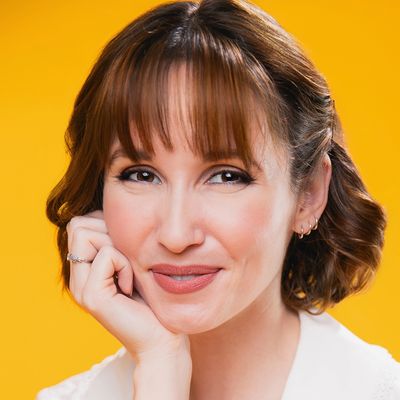
U Guys, current Nessarose in Wicked on Broadway, Jenna Bainbridge is here! First, I bring you all the latest Bway tea in the BroadwayWorld Recap. Then I’m joined by Jenna as she shares her journey as an actor and advocate for disability rights, highlighting her role as Nessarose in Wicked... Read More
From the show: Oh My Pod U Guys
Guests
Featured Shows
About
U Guys, current Nessarose in Wicked on Broadway, Jenna Bainbridge is here! First, I bring you all the latest Bway tea in the BroadwayWorld Recap. Then I’m joined by Jenna as she shares her journey as an actor and advocate for disability rights, highlighting her role as Nessarose in Wicked. She discusses the importance of authentic representation of disabled individuals in the arts, her personal experiences with disability, and how these experiences shape her performances. Jenna also reflects on her transition from sports to the performing arts, the challenges of navigating accessibility in New York, and her involvement in new Broadway shows like Suffs. We talk about the intricacies of representation in musical theater, particularly focusing on the importance of casting disabled actors in roles that reflect their identities. Jenna also touches on the creative process behind building new shows, and the challenges faced by marginalized individuals in the audition room. Jenna is so insightful and lovely, U don’t wanna miss this episode!
Follow Jenna on Instagram: @bainbridgejenna
Follow the pod on Instagram: @ohmypoduguys
Transcript
This transcript was automatically generated and might contain errors.
[0:27] Jayke Workman: What's up everybody, my name is Jayke Workman and this is Oh My Pod U Guys, a musical theater and pop culture podcast. You guys, you guys, last night I got to see Death Becomes Her on Broadway. I spontaneously bought a ticket, I saw one on sale, and I was like, okay, it's now or never, we're going. Darlings, run to the Lunt-Fontanne to see Death Becomes Her. It was, like, quintessential musical theater genius. It was so joyous. Megan Hilty and Jen Samard are out of this world. Ridiculous! I mean, the performances of their careers. These women are singing, dancing, and their comedy is outrageous. It is so, so brilliant. The scenic design, the costume design, the lighting. I mean, Michelle Williams casually just wailing.
It is everything. You have to see Death Becomes Her. The stage magic. I mean, the theater magic of it all. And without giving anything away, if you've seen Death Becomes Her the movie, you know things are happening. Magic is abound, okay? And they matched the level of the movie. These effects and these moments of magic are just brilliantly done. So run, run, run to see Death Becomes Her on Broadway.
[2:03] Jayke Workman: And of course, we must dive into this week's Broadway World Recap, brought to you by my amazing pals at BroadwayWorld.com. You guys, Broadway World just released first look photos for not one, but two new productions on Broadway. First, we got to see gorgeous, gorgeous photos done by the, you know, incomparable Matthew Murphy, friend of the pod. You can listen to his gorgeous episode. You guys, these photos of Just In Time, the Bobby Darin musical starring Jonathan Groff, which I am so excited to share, that I get to go to the opening night of next week. I am so beyond excited. You guys, these photos are incredible. The show looks absolutely stunning. I mean, Circle in the Square kind of is unrecognizable in these photos.
The lighting, the costumes, Michelle Pak, another friend of the pod. My God, she looks incredible. Christine Cornish, yet another friend of the pod. Hello. You guys, everyone looks stuntina in this show. I cannot wait to see it. So you've got to check out those photos on BroadwayWorld.com.
[3:17] Jayke Workman: And while you are there, you have to be sure and check out the photos of the new Broadway production of Pirates of Penzance, starring Jinxy Poo Monsoon, my angel darling diva. Also, Ramin Karimloo and David Hyde Pierce. These photos look absolutely beautiful. I believe they were done by Joan Marcus. And it, I mean, I cannot wait to see the show. I'm going to have to catch it before I sneak away for the summer on a fun, fabulous new adventure, which I am so excited to share details about very soon. But I cannot wait to see Miss Jinx as Ruth in Pirates. I did the show in high school. I've loved the show for a long, long time. And so to get to see her do that role in her second Broadway show, off the heels of her Carnegie Hall debut, I'm just obsessed with Jinx. I'm so proud of her. And not that I have any right to be proud of her, but I am and I love her. And you guys, you've got to check out these photos because the show looks absolutely gorgeous.
[4:16] Jayke Workman: Next, you guys, Broadway World also shared the news that a couple of Broadway divas are going to embark on some regional contracts this summer, which I'm just so excited to see because it's, there's like a strange stigma about like working on Broadway or being a leading lady on Broadway and then your next job not being a Broadway show. And I hate it. I think it's so bizarre. And so I'm so thrilled that Mary Kate Morrissey, Queen of the Wicked, Miss Elphaba, is going to lead Come From Away at Ogunquit Playhouse in Ogunquit, Maine, a fabulous place to work. So I've been told I would love to work there. And Julie Banko, another Broadway diva, is set to star in My Fair Lady in concert at Theatre Aspen, which is one of my favorite places in the whole wide world.
And actually, later in the interview with Miss Jenna Bainbridge, we talk about Theatre Aspen because I love it so, so much. And she happens to be from Colorado. So huge congrats and huge shout out to Julie Banko and Mary Kate Morrissey for being excited to work in any capacity, in any region, and doing shows because that's what we love to do and bringing art to people who need it. I'm so excited for you. And what I would give to hear Julie Banko sing the My Fair Lady score. Good God.
[5:41] Jayke Workman: And lastly, you guys, Broadway World shared the very exciting news that Elizabeth Gillies and Milo Manheim have extended their runs in Little Shop of Horrors Off-Broadway. I still haven't caught them yet and I need to see it because I am a die hard Liz Gillies fan. I have loved her for so long and I think this is a perfect role for her. I've heard nothing but wonderful things about working with her from the people in that building and I'm so excited that, you know, they're loving it just as much as the audiences are loving them and they want to stay for longer. So congrats to Milo and Liz and I hope to see them in the show before I skedaddle and you can catch them there until June. And you guys, this has been the Broadway World Recap.
Oh my pod, you guys. I am so excited to welcome my next guest to the show. She is an actor, a voice teacher, an advocate for disability rights, and she is currently starring on Broadway as Nessa Rose in Wicked. Please welcome Miss Jenna Bainbridge.
[6:49] Jenna Bainbridge: Hi. Thank you so much for having me.
[6:54] Jayke Workman: Oh my gosh. Thank you so much for being here. I am so excited to chat with you. I was talking, we, getting right into it, we got connected sort of through our lovely mutual angel human, Mr. Danny Quadrino.
[7:00] Jenna Bainbridge: Danny Quadrino, gift to this earth.
[7:08] Jayke Workman: A gift and he is your boccalina on Broadway.
[7:10] Jenna Bainbridge: He's my sweet bop.
[7:12] Jayke Workman: So in talking to Danny, I was like, oh my gosh, I would of course love to have Jenna on the pod. And then he was like, well, I'm with her right now. And so we FaceTimed from, you guys were in the dressing room. I was like, Hey, nice to meet you. And Jennifer Newberry was, I guess, on that day for Glinda too. So you guys were all sitting there hanging out.
[7:32] Jenna Bainbridge: Absolutely. But thank you so, so much for being here. I, I really do have so many questions to ask you. But I always ask, where are you calling in from on this fine day?
[7:45] Jenna Bainbridge: I am calling in from my home because this is the one day I have not at the theater this week. We have a nine show week this week, which is exhausting and super fun. But also, you know, any moment I'm not called at the theater this week, I am firmly at home.
[8:07] Jayke Workman: And you still took the time to do the pod, you sweet angel lady.
[8:13] Jenna Bainbridge: I did because I was so, I was so excited to get to chat with you.
[8:20] Jayke Workman: Yes. Okay. So obviously we have to dive right in and talk about Wicked. Yes. Because like you mentioned, you are in the thick of it. You are in the throes of the craziness of a nine show week. But so you are described as the first authentically disabled person to play Nessa Rose on stage.
[8:31] Jenna Bainbridge: Yes.
[8:32] Jayke Workman: Which is amazing. And we will talk all about it. But in thinking of that, I would love to ask you, were there talks about the way that you were going to be presented by Wicked as a brand when you took the job? Like is authentically disabled, is that the way that you identify not just as an actor, but in the world? Like being an ambulatory wheelchair user, you know, that's, there's just a lot of discourse about like, do we use the phrase like differently mobile? Do we use differently abled versus being disabled? Like how, how did that affect you taking on the role of Nessa?
[9:15] Jenna Bainbridge: Yeah. I think that language is so important. And I think when it comes to disability, people just don't feel comfortable having those conversation and asking those questions about, you know, what, what language should we be using? And also how do we talk about disability? How do we talk about access needs? So for me, I've always been very vocal on, you know, social media. When I enter audition rooms, when I meet people for the first time, I like to start that conversation immediately. I prefer the term disabled within the disability community, generally disabled is the preferred term. Everybody has their own preferred language though. Just, you know, like any identity group, we all have words that we prefer language that we prefer.
But generally, if you say someone has a disability or someone is disabled, you're not going to offend anybody. So that's like nice, safe language. The same goes for if you're talking about like parking spots or bathroom stalls, if you say the accessible stall or the disabled stall, it's not going to offend anybody. That is good language. And I really encourage people to think about like disability is not a bad word. I think that we as a culture are a little bit scared of it. And we shouldn't be. It's not a bad word. It's a descriptor. It describes someone's ability. And then there's more specific language within there. So I, as you said, I'm an ambulatory wheelchair user, meaning that I do use a wheelchair in my day-to-day life.
But I also am able to walk and stand. When I walk, I have a very pronounced limp. And so my wheelchair just gives me the freedom to move quickly through the world, which in New York City streets is important for safety. Yeah, I am a slow walker and boy, people do not love that in New York. So my wheelchair lets me move at a New York speed. It also lets me move just safely through the world. I am prone to tripping because of the way I walk. My feet just don't lift off the ground very high. So my wheelchair makes it just a lot safer for me to get paces quickly and efficiently and using as little energy as possible, which is super important. It just takes a lot of energy, a lot of spoons for me to walk.
So using my wheelchair just makes everything easier in my life. And I think that people also just don't realize that ambulatory wheelchair use is actually incredibly common. People view wheelchair use as being a binary, as being either you use a wheelchair 100% of the time or you walk 100% of the time. And that's just not the reality of most wheelchair users. Most wheelchair users are able to walk or stand in some capacity. And it's just not talked about or represented very much in our media. So when I joined Wicked, my first audition, I rolled in and my audition scene was from Act 2, which I'm not going to give any spoilers. Yes, Governor's Mansion, I've talked about it on the pod. Brilliant scene.
It's brilliant. It's my favorite part of the show. Yeah. And it's such a heavy scene. I love doing that scene every night. But that was the audition piece. And so I tried to do the blocking as best as I could remember it for the audition. And I showed during my audition, yes, I use a wheelchair. And yes, I am able to walk and stand.
[12:51] Jenna Bainbridge: And then at the end of the audition, I said, you know, if you have any questions about my disability or my abilities, I'm an open book. I love to talk about this. And I really want to make an experience that is accessible and inclusive. So the only way to do that is to have the conversation. And Wicked was totally super open to that. We had lots of chats. And I don't know where the headline came from. I don't know if that was like from Wicked or if that was something that like Broadway World or Playbill decided. But I was really honored that they chose the language authentically disabled person. Because that's, you know, Nessa Rose is a disabled character. And I am authentically disabled. I have a very similar lived experience to Nessa Rose.
[13:38] Jayke Workman: Yes. And it's so amazing. And you are so, I mean, just like beautifully well spoken about it, obviously, but I'd love to know how your own, you know, personal experience day to day lends itself to playing Nessa. Because like you said, I mean, there are heavy themes going on. She is a disabled character. But even outside of her being disabled, she's got a lot going on. Yeah. She has quite the arc and act who is a really a heavy hitter for her. And I'd love to know like how you navigate that just on an emotional level, you know, nine times a week doing this. But also how maybe your lived experience makes the physical nature of playing Nessa easier for you than maybe someone else because you know it so well.
[14:30] Jenna Bainbridge: Absolutely. I think there's kind of like two parts to this question. One is like the disability side of it, where, you know, I know what it's like to have people make assumptions about me and my abilities simply based off of the sheer presence of my wheelchair. And that happens to Nessa repeatedly throughout the show. People just like make assumptions about her and handle her in a way that is interesting. It's really fascinating to see how people like see her wheelchair and immediately start like moving her wheelchair for her. Right. Which is something that I experience daily. I have a patch that I put on the back of my wheelchair that says, please don't touch me because like people on the street will just randomly be like, oh, let me help you.
And I'm like, you are not helping. No, no, no, no, no. And so Nessa experiences that a lot. And I think that there are plenty of times where she's like she wants that. She expects that she is the daughter of the governor and daughter. Yeah, exactly. Expects a certain level of like, well, of course, you're going to do this for me. So I like to play with that of when does she want this versus when does she not? And I let that kind of motivate me as we get into act two. And then from like an acting perspective, it was so important to me that I have a good relationship with Elphaba and with Bach. And so Lencia and Danny, I just I became fast friends with them like day one of rehearsal. Yeah. And that was so important because I have to be kind of mean to them.
[16:14] Jayke Workman: Yes, you do.
[16:14] Jenna Bainbridge: It's a lot easier to dive into that and to dig deep into those scenes when you have a good rapport with the people you're working with. Totally. And it's been a lot of fun to just, you know, love someone so hard backstage and then walk on stage and scream at them. And then you walk off stage and you're like, oh, that was a fun scene. You're like, yeah, we did it. We did it. We were so mean.
[16:35] Jayke Workman: Yeah. Well, OK, so I've spoken to a couple of different women who have played Nessa and something that I think is, I mean, obviously inherently different for you playing this role is in act two, again, without giving away anything, there is a level of like expression of the internalized shame of it all. And, you know, you can speak as in depth or not as you would like to about it. But when you sing the words, you know, all of my life I've depended on you. How do you think that feels like? Is there do you ever have a sense of like, whoa, I feel a little too that's a little too raw or a little too connected today? You know, are you able to separate yourself from that lived experience?
[17:22] Jenna Bainbridge: Yeah, it's interesting because internalized ableism is such a thing and you have to really work to unlearn it. You know, society really tries to tell us that people with disabilities are lesser in some way and that disability should be hidden away and that we should, you know, I can't count the amount of doctors and teachers and mentors in my life that were like, well, you can walk. So you should just don't don't use your wheelchair, hide it away. Don't show anybody. And, you know, gosh, I remember having a physical therapist at one point in my life who was like, wouldn't it be great if we can, you know, work hard enough so that by the time you're in high school and you want to start dating, you don't have a limp anymore.
Yikes. Like that was the motivation was like, well, if you want to start dating, if you want to be desirable. Exactly. So it's it's really it's taught. It's ingrained. We see this in our pop culture. There's there's so few examples of disabled characters in the art we consume falling in love or being sexual or being, you know, desirable in any way. And so, you know, it's something that I definitely internalized from a very young age and had to unlearn, had to really teach myself. No, your disability is a beautiful part of who you are. I think my wheelchair is sexy as hell. I think it is gorgeous. My wheelchair is sleek. It gives me speed. It's also made of titanium. So I feel like kind of indestructible when I'm rolling down the streets in New York.
And like I love I love my wheelchair. I love my disability. Every good thing I've gotten out of my life is connected to my disability in some way. Wow. And I think that it's something that we all need to really dive into is. Maybe there's opportunities that we didn't have because of our disabilities, but there were plenty of opportunities we did have because of our disabilities. So when I do these scenes where Nessa is really dealing with that, I think about those bad days. I think about those days where I wish things were different. And I had so many of those days. I think, you know, everybody has those days. Totally. Regardless of disability, we have days where we just we wish our lives were different.
We wish things had gone a different path. And so in those moments, I like to think about that. But also at the end of that sequence, once again, no spoilers, everyone gets wicked. Soon the movie is going to come out. It's going to be like we all know what happens. Yeah. But I think it's also important that for me, Nessa really realizes that it never had anything to do with her disability. Totally. It had everything to do with her personality, the way she treated people and the expectations she had of people around her that were unfair. And so I think that it's it's really easy to just be like, oh, it's all about her disability. But it's really not. Her disability is just like surface level to start the scene.
[20:42] Jayke Workman: Yeah, 100 percent.
[20:43] Jenna Bainbridge: So switching gears a little bit, because, of course, I cannot wait to ask you about Suffs. You have your little Suffs hat on today. Yes. And all of your other, you know, sort of theatrical and TV film endeavors. I would love to ask about your path to the arts in the first place. And, you know, your childhood, like what was what was your sort of formative experience that led to you being the artist that you are?
[21:14] Jenna Bainbridge: Oh, so many paths. I'm just I was a super athletic kid. So I sustained a spinal cord injury. Well, that's the working theory is that I have a spinal cord injury. I became suddenly paralyzed when I was 16 months old. So I just barely started walking when I became paralyzed. And doctors have never really been able to figure out exactly what happened. But the working theory is I have a spinal cord injury. And because of that, I am partially paralyzed from the waist down. But I loved sports. I loved sports. And I, I was a pretty athletic kid. I did. I did karate. I did skiing. I did horseback riding. I played baseball and volleyball. And I loved sports. I loved being on a team. I loved being athletic.
But at a certain point, sports became a really unsafe environment for me because especially coaches, it was never my teammates, but it was always like coaches and parents who were like, you know, you probably you're not talented enough to be on the team. You're not athletic enough. You're not strong enough to be on the team. And there was one volleyball match in particular that I learned about years later, my parents really protected me from this. But I was in a volleyball match. And a parent or a coach on the other team started shouting to the kids. And we were all like, 10 started yelling, hit it to the crippled girl. Wow. And that was the moment my mom was like, I don't, I don't think this is a safe environment anymore.
If that's how the coaches for the other team are going to respond. Right. This is not a safe space to be. And I loved singing at the time. I'd been taking lots of voice lessons and my mom very smartly was like, Hey, you know, you're so many, so many busy things you want to do. And so many constrictions on your time instead of doing volleyball next year. What if you auditioned for choir? And I just got super excited about it, auditioned for a children's choir and really got the bug from there. And then my mom found family theater company in Denver, Colorado, which is a professional theater company that hires entirely actors with disabilities and the full spectrum of disability, any disability.
So she encouraged me to audition for them. I auditioned for the first time when I was 13 years old and then did family shows until I left Denver a couple of years ago. And it was just such a wonderful place to grow up. And I just completely got the bug and kept performing all throughout, you know, middle school, high school, college. You know, when I graduated from college, I was lucky enough to have my equity card and then just kind of working regionally. You said I might as well, I'll be ready. I love Colorado. I spent two summers in Aspen and I, oh, I mean, to be there on someone else's dime is the only way to do it. Right. Yeah. I mean, Aspen, she's bougie. But boy is she pretty. Oh my God.
Stunning. And if you ever get the opportunity to work at theater Aspen, shout out theater Aspen. I absolutely love them and they are wonderful. I loved working there. So what was then your, was that like always your planned trajectory of like, I'm going to go to school for this. We're going to go to New York and be a professional actor. Or like, did you have to take into consideration other things? Like where, what was your direct like line to the Broadway? The Broadway.
[25:03] Jenna Bainbridge: Um, it's funny. I never thought I would be in New York. It's such a weird, like I, I always thought New York was super inaccessible. That was just sure. You know what I had been taught and it's true. I, I kind of joke that like New York is openly hostile to people with disabilities. Um, brazenly. So yes, but to their credit, they're honest. Yeah. Right. I think that other cities try to hide. They're like, oh no, we're totally accessible. And then it like jump scares you and you're like, oh my God, I wasn't expecting that. Whereas New York is just like, no, here it is. It sucks. Yeah. Figure it out. Um, which in some ways is better that you're like, okay.
[25:42] Jenna Bainbridge: I know how to plan for this. I'm not going to be surprised when suddenly the elevator isn't working on the subway station. That's just a given. So I really thought it wasn't a place that I could live safely. So when I was first thinking about this as a career, I didn't see a place for me. I didn't think that New York was accessible. I didn't think there was a lot of other cities you could work in as an actor. I loved musical theater. I mean, I really want to do a lot of TV and film as well, but musical theater was my first passion, my first love. And I really thought, well, if I want to do that, New York is the place to be and I can't live in New York. So it was never really my plan to continue doing shows, but I kept getting cast.
It was just like every time where I was like, well, maybe I'll have a different major in college. And then I got into a music program and had a good scholarship and was like, well, okay, great. I'll be a voice major and that'll pay for my education. And then after that, who knows, maybe I'll be a music teacher. And then I started working at Colorado Shakespeare Festival and it just kind of like one thing came after another. And I felt so lucky. And also like the thing about opportunity is that you have to act when the opportunities present themselves. So I wasn't necessarily always like driving for that next thing. I wasn't doing the hustle in the same way that I think a lot of actors need to, but I was always open.
I was always like, yeah, I might as well set an audition. Why not? And then that audition would lead to a casting and it was like, well, oh sure. Oregon Shakespeare Festival. Why not? I'll audition. And then I moved to Oregon for a few years. It was just kind of one thing after another that the opportunities kept presenting themselves and I took the leap every time. So moving to New York, I was sitting on my couch in Oregon during the pandemic and I had to continue applying for unemployment benefits. And the way that you did that in Oregon was by like actually auditioning multiple times per week. You had to, you know, submit for employment. And so everyone, not everyone, but a lot of theaters were doing just like open call virtual EPAs.
And so I sent in a YouTube video for the public season and they watched it. I didn't, I really, when I was auditioning, I was like, no one's going to watch this. Like I might as well audition. I'll audition for every pipe dream job. Of course. I was sending videos in for like Phantom of the Opera on Broadway and the Oklahoma tour and the public's general season. I was like, no one's going to watch it. It's not going to go anywhere. And then I booked it, which was like, it just goes to show like always shoot your shot because you never know. Absolutely. So I booked a reading of Suffs at the public and they flew me out to New York. And then when I got back my husband and I were talking about it and he was like, I think, I think this is the moment I think we need to move.
And so we moved to New York and my sister put us up for a while and let me use her car. Like my sister absolutely gets so much credit for me. Shout out Katie Bainbridge. Love you so much. She fully was like, I want you here in New York, like come live in my spare bedroom. And she let me borrow her car. She lives up North of the city in Westchester. And she was like, have my car, have my spare room. And that really showed me that it was possible for me to live in New York. I thought it was like, I have to take the train. I have to walk everywhere, but I don't, I drive everywhere. That is what's most accessible for me. So I have, you know, it's part of my contract that I have theaters help me figure out parking because the subway just isn't accessible for me. There aren't enough elevators. It's not a safe place for me to be as like a regular commute. Right. So I drive everywhere and suddenly the whole world of New York became possible.
[30:08] Jayke Workman: Wow. That's fantastic. Okay. So you touched on it, but we of course have to dive in and talk about Suffs. So I was going to ask you about, you know, how long your journey with that show was, because I've spoken to many people on the pod about the difference between being plugged into a long running show versus being part of something kind of from the ground up. I mean, like I made my Broadway debut in Chicago and that was like, you know, you're already chasing a moving train when the show has been running for 20 some years. So the difference between that and the working on something new for me is really stark. And I would love to hear your experience, getting to do like, you know, from the reading at the public to Suffs on Broadway with my darling angel, Kim Blanc, who I'm absolutely obsessed with. I love everybody should be obsessed with Kim.
[31:01] Jenna Bainbridge: Absolutely. Kim, Kim is one of the most committed specific physical actors I've ever worked with. Absolutely. And then she just also has that voice and that face like, Oh my God. Stunning. Kim, Kim. Yeah. I, I auditioned, as I said, for Suffs just for a workshop at the public. Um, and that was in the fall of 21. And I ended up doing two workshops at the public before we did the full production there. Um, and then two more workshops before we went to Broadway. And it is such a wonderful, exhausting, exhilarating experience to build something new. Um, and what I learned is that my brain really likes change. Like getting new pages is exciting for my brain swing brain swing brain. I like it, it was, there was one workshop where I, where I was the swing cover for all of the NWP girls.
Um, so all of the, the young stops and I loved it. I love just being like, Oh, I'm Risha. Oh, I'm Doris. Oh, I mean like just like trying to put all those different hats for that one workshop was like such a blast. Um, but the thing about building a new show is that you get to create something that works for you, for your body, for your voice. And that is such a gift. Every show really is, you know, you don't really realize it when you're just watching a musical, but the thing I learned in Suffs, and I don't know if this is for like every show, but at least for Suffs, the roles really were fit around the actors. So it was, Oh, this actor has the skillset. Let's highlight that this actor has this vocal range.
Let's highlight that. Um, and then when you switch to being on a show that's pre-running, you have to do the opposite. You, the actor have to mold yourself to what was already built. Yeah. So it's, it's this like chicken versus egg approach to acting that is so fascinating. And Suffs was just like, just a dream, like dream cast dream subject matter for me. Um, and it was like, I feel so lucky that I got to be a part of that show and I'm really excited to see how it goes on to impact more communities as it starts its tour and, you know, starts doing regional work and, you know, Suffs was just such a gift truly. I mean, to make your Broadway debut in the show that wins the Tony, like how did you, did you clock going in or like, did you clock from the first few workshops? Like how, like what the legs for the show would be like, did you anticipate being like, we're going to win the Tony?
[34:10] Jenna Bainbridge: I, it's so funny. I was in the first workshop and the very first song that we sat down to learn was the convention. Um, and there's a sequence in the convention where Carrie Cat and Alice Paul, so Jen Colella and Shayna Taub start just yelling at each other and they're doing this. Why are you fighting me? I am not the enemy. And it's so in your face. Incredible. They're both just belting their faces off. And I remember just stopping and looking around and being like, Oh, this is, this is incredible work. This, this is going somewhere. And that was like five minutes into the very first workshop. So I knew then that there was magic there. Um, I think that Shayna is an absolute genius. I think that she will change the face of musical theater.
Yeah. I mean, she has, she already has. And I think that like, it's going to be one of those things people look back on and they're like, wow, that was her first Broadway show and look at her catalog now. Like I know it's coming. Um, so everybody go hire Shayna Taub. Yeah. This is our desperate plea. This is our desperate plea. We need Shayna's voice in our world. And like working with her, she's one of my dearest friends. And I just, I, every time I like talk to her, I'm just like, how am I in the same room as you? You are so cool. Crazy. But it also is an obvious testament to your talent and work ethic and who you are as a person because people want to work with you. You know, I, I hope that's true because there are just moments where you're like, am I here on luck?
Am I here on skill? Like you always question it. And even, even the, like the, uh, how I bamboozled my way into this room question. Also, I wonder, um, because I've had this thought, I identify as a non-binary person. And, uh, so going in for shows and wondering why me? And like, I wonder, like, do you ever have that moment of like, am I the, am I ticking a box? Am I the diversity hire? Oh, like fully. Yeah. Yeah. I mean, it's obviously not the same, but being, being perceived as male and versus, you know, going in for things like I made it to finals for six and that was like my, like blew my mind open of like what I could be considered for. Um, but yeah, does that come into play for you? Like in audition rooms and stuff?
[37:49] Jenna Bainbridge: Absolutely. I mean, I think that like every marginalized person is on kind of parallel paths. We can't necessarily exactly know each other's lived experience, of course, but we can empathize of like, oh, I too have felt othered or ostracized. Um, and I do every, every time I'm in a new room, there's that little thing in the back of my head that says like, oh, are you, are you the token? Are you the diversity hire? Are you just here to check a box? Right. And you know what? If I am, I still earned that spot. I mean, period. Right. Like, and I think we all have to kind of unlearn that. Like, yeah, maybe you are there because they were looking for a non-binary person or a disabled person or, you know, insert whatever your identity is.
Sure. Maybe you are there because of your identity, but you were still the person they hired. You are not the only person with that identity. I love that mentality. I love that. And you being in the room helps make other people who identify with you feel represented and feel present when I know I never had that representation as a kid. I never saw a disabled person.
[38:00] Jenna Bainbridge: I was going to ask you, because that is something that I think is a really exciting thing that's being like blown open is, you know, by you specifically, you know, joining a show where this has never been done before. And little disabled girls or boys or thems will be able to see themselves in you realistically, which is just amazing. And I wondered, do you have people in your life who you revered as like a child or looked up to? Like, were there?
[39:03] Jenna Bainbridge: So gross. It's so gross. Oh, yeah. Um, and so, you know, I remember the first time that I felt represented in a movie was Audrey Tautou in A Very Long Engagement. And she has a disability; she'd had, I think it's polio is what the movie talks about. But she walked a lot like how I walk. And I was like, Oh my gosh, I'm in a movie. Yeah. And then was heartbroken to learn that she was non-disabled. But I had that moment of still being like, Oh my gosh, there I am. Yeah, I'm on the screen. And now, even that felt revolutionary at the time. And it wasn't until I started seeing shows at Family when I was a teenager that I felt seen at all. I remember seeing Regan Linton in shows at Family. And she has since gone on to be one of the understudies for Cost of Living a couple of years ago on Broadway.
And she's worked at Oregon Shakespeare Festival; she went on to become the artistic director of Family Theatre Company for a while. And she was definitely one of those people that I was like, Oh my gosh, I can use a wheelchair and sing and dance and be on this stage. Yes. Wow.
[40:22] Jenna Bainbridge: Okay, so thinking in sort of a parallel vein to that, and what it means to have visibility. Are there also roles that you hope to play, not just, you know, new things that you could originate, but roles that already exist that you would like to take on that haven't previously been played by a disabled person? What do you think that that would mean for visibility of playing someone whose arc is not about being disabled?
[40:51] Jenna Bainbridge: Yes. It's such a funny thing. Because like, obviously, I want to play disabled roles. Like, obviously, this goes without saying disabled roles should always be played by disabled people. This is just like, I feel like Disability Justice 101 is. So if you are out there producing Glass Menagerie, please, dear God, please hire a disabled person. If you are producing Richard III, hire a disabled person. I would also go as far to say that there are roles that I think are canonically disabled. And it's funny, I'm actually currently working on a series of videos about this that I hope to post soon. But there are roles that I call canonically disabled, where like the text tells us they have a disability.
But we are not casting disabled actors in those roles. Yeah, yet. And like Phantom of the Opera is one of those. Phantom is a disabled person. They talk about him having a facial difference. He is disabled. I want to see a disabled man play Phantom. Wow. So there's those that I think the reason to have a bit more creativity of like, oh, no, this is a disabled role. We just haven't had disabled people play it. Sure. Yet. Yeah. Nessa definitely falls into that category. But I also like I want to play those parts. I want to play like authentic disabled people like Judy Heumann; I think needs a show. She needs a movie. She needs a show. She like I want to play roles like that where they are disabled leaders.
But that being said, I think it is almost more important that we have disabled people just in every walk of life. Disabled people represent about 16 percent of the global population. And we're seeing them represented on stage by like one percent of actors. Wild. So I think that there's a place for third girl on the left to have a disability. I think that like, why not? There's no reason not to. Because that's real life. That's real life. Yes. And I don't think there's a single role out there that there couldn't be an argument for why it should be or why it couldn't be a disabled person. Totally. And even more so, I think there are roles that are actually better when you put a disabled person into them.
Sure. I like I said, I'm working on this like right now, but like I've been thinking about Cinderella a lot and I think Cinderella is a disabled girl. I really do. She sings a whole song about in my own little corner, in my own little chair. Wow. That chair is her wheelchair. Wow. What if that's what gives her freedom? Also, I can't keep shoes on my feet for the life of me. They fly off all the time. Oh my gosh, that's brilliant. It's absolutely. And I think that every disability, if you just think about casting creatively, every single role could be disabled. And many of them are more impactful and more powerful if you include disabled stories in that narrative.
[44:05] Jenna Bainbridge: Totally. I mean, it's like you said, too, when we think of marginalized people, the Venn diagram is a circle. It's wild that like completely intersectional. Yes. Like how have we come this far and there still isn't more representation of people who are disabled on stage? Like why couldn't anyone in Dear Evan Hansen need to use like a crutch or a walker or wheelchair or whatever? Absolutely. Well, and Evan, I feel like also has an invisible disability. OK, like I think Evan Hansen is neurodivergent. One hundred percent. And I was so excited to ask you about this, too, because the difference between the visible disability versus the invisible and the sort of intersectionality of the vanity of what we do in this career, being an actor often also lends itself to a level of vanity and a level of, well, she's disabled, but she's gorgeous. And I'd love to know.
[45:26] Jenna Bainbridge: Exactly. Exactly. And so I would love to know, too, like, does that come into play for you ever? Like in thinking of could I take on that role versus this one, you know?
[45:33] Jenna Bainbridge: Well, I think that my disability informs every part of my life. Like no matter what, no matter what role I'm playing, once I play them, they are disabled. Right. Whether we talk about it or not, they are disabled. And I think the bigger question is, does ableism exist in that society? Because the only thing that truly disables me, prevents me from doing things in my life, is society. Absolutely. It's not just that like, yeah, I'm not able to like walk very far. But why do I have to? Right. Why has society made it that my wheelchair isn't able to get into your building? Yes. One hundred percent. So like if ableism doesn't exist in this world, then why does it matter at all if this character has a disability?
A hundred percent. I mean, if ableism does exist in this world, then it's going to inform the storytelling that we need to talk about. Exactly. Yes. Trixie Mattel, my favorite, my favorite drag queen ever in the world always says being gay is not hard. Bigoted straight people make being gay hard. And it's like, yes, very that where it's like this. It's quite simple when you boil it down. Absolutely. And I think that, you know, visible versus invisible disabilities like we are all facing ableism. Right. It's a matter of if people are able to us immediately on site or after they get to know us. Mm hmm. One hundred percent.
[47:05] Jayke Workman: Ah, Jenna, you are just a dream before I let you go. I have a series of musical theater rapid fire questions. OK, I ask every guest. This is not trivia. They are opinion-based questions.
[47:20] Jenna Bainbridge: Oh, fun. Are you ready?
[47:22] Jayke Workman: Oh, God, I hope so. Sondheim or Andrew Lloyd Webber?
[47:28] Jenna Bainbridge: Oh, OK. She pleads the fifth. I plead the fifth. I OK. Here's what I will say. I personally I love Sondheim. I think Sondheim is the creative genius in this question. However, I think that Andrew Lloyd Webber has made musical theater really approachable for people who wouldn't normally come to see shows. Absolutely. And Sondheim is the furthest thing from approachable. I would say Sondheim is for the nerds. Yes. Andrew Lloyd Webber is for the masses. And I think those are needed to be on Broadway, like at the same time. Wonderfully put.
[48:01] Jayke Workman: Sweatpants or jeans?
[48:08] Jenna Bainbridge: I'm going to say jeans. I like to get dressed up daily. Um, but the moment I get home, though, I put on sweats. Yes.
[48:12] Jayke Workman: Do you have a favorite musical?
[48:21] Jenna Bainbridge: I love Little Shop of Horrors. Oh, yeah. Love me some Little Shop. Oh my God. When you as Audrey, when? Oh, please call me. It's literally.
[48:27] Jayke Workman: Do you have a least favorite musical?
[48:36] Jenna Bainbridge: I plead the fifth.
[48:37] Jayke Workman: Would you ever like to do a Broadway play?
[48:46] Jenna Bainbridge: Hell, yes. I love Shakespeare in particular. I split my time a lot between musicals and Shakespeare. And so I just I want to do I want to do Shakespeare on Broadway.
[48:51] Jayke Workman: Who's your Shakespeare girly?
[48:57] Jenna Bainbridge: Oh, who's my? What do you want to do? Um, I really love the histories. Those are some of my favorite Shakespeare. I want to play Joan of Arc on Broadway. Work! I want to play Catherine in Henry V. You heard it here first. You heard it here. And you know, I want to play Richard III. I want a gender-bent Richard. Work.
[49:21] Jayke Workman: Are you a morning person or a night owl?
[49:26] Jenna Bainbridge: Oh God, I'm a night owl.
[49:30] Jayke Workman: Me too. Do not make me wake up. No, please. I chose this industry for a reason.
[49:34] Jayke Workman: Golden Age or contemporary?
[49:37] Jenna Bainbridge: My voice says Golden Age.
[49:45] Jayke Workman: Oh, I can hear it. I can hear that sweet ping. Favorite role you've ever played?
[49:49] Jenna Bainbridge: Belle in Beauty and the Beast. Oh my god, what I would give to hear you say that. Childhood dream.
[49:52] Jayke Workman: Coffee or tea?
[49:58] Jenna Bainbridge: Coffee.
[49:59] Jayke Workman: What is the hardest show you've ever done?
[50:03] Jenna Bainbridge: Into the Woods.
[50:04] Jayke Workman: Oh my god, who did you play?
[50:06] Jenna Bainbridge: Cinderella. I've played Cinderella in a bunch of different types of, but yeah, Cinderella in Into the Woods was, that was a beast. Wow.
[50:09] Jayke Workman: Do you have a favorite costume you've ever worn?
[50:14] Jenna Bainbridge: Probably also Cinderella in Into the Woods.
[50:15] Jayke Workman: Yes. Well, my last question for you is a question I ask every guest, which is what is one thing that you would tell baby Jenna?
[50:20] Jenna Bainbridge: Oh, baby Jenna, baby Jenna, just keep following your passions. Don't let no be the final answer. Anytime you hear no, just find a different pathway.
[50:36] Jayke Workman: Yes. I love it. Well, Jenna, thank you so, so much for coming on the pod. Would you tell the listeners where they can find you on socials and keep up with all of your shenanigans?
[50:43] Jenna Bainbridge: Absolutely. You can find me at Bainbridge Jenna, last name, first name, on Instagram and TikTok and come see me at the Gershwin, eight shows a week. Yes. Nine this week, honey. Nine. I need to take a nap.
[51:04] Jayke Workman: You guys, that's it for another episode of Oh My Pod, You Guys. Don't forget to rate, review and subscribe anywhere you listen to the pod and you can follow the show on Instagram at Oh My Pod, You Guys. Thank you so, so, so much for listening. Talk soon. Bye.
[51:24] Jenna Bainbridge: Bye.
© Broadway Podcast Network, All Rights Reserved