

Award-winning composer and lyricist Ryan Scott Oliver is on the pod! U Guys, I give you all the latest Bway news in this week's BroadwayWorld Recap, brought to you by BroadwayWorld.com. Then I am joined by Ryan Scott Oliver to talk all about his incredible catalogue of original musicals... Read More
From the show: Oh My Pod U Guys
Guests
About
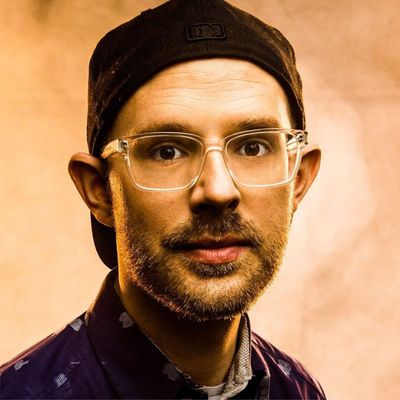
Award-winning composer and lyricist Ryan Scott Oliver is on the pod!
U Guys, I give you all the latest Bway news in this week's BroadwayWorld Recap, brought to you by BroadwayWorld.com. Then I am joined by Ryan Scott Oliver to talk all about his incredible catalogue of original musicals. From 35mm to We Foxes, Ryan's works range from Gothic thrillers, to queer poperettas, to high octane rock musicals. Ryan shares about his artistic process as a composer, and how his work has been impacted by collaborations with other artists, including his husband, photographer Matthew Murphy. We talk about the shifting landscape of musical theater, and what it means to be queer in the world of the arts today. He also touches on his incredible musical theater training program, Actor Therapy, co-created with Lindsay Mendez, and he shares about his latest project titled Party of the Century, which centers around Truman Capote's infamous 1966 Black and White Ball. Ryan is amazing, U don't wanna miss this episode!
Follow Ryan on Instagram: @ryanscottoliver
Follow the pod on Instagram: @ohmypoduguys
Transcript
This transcript was automatically generated and might contain errors.
[0:00] Jayke Workman: Did I have a crush on the Grinch? Well, of course not. I didn't ask you that. Oh my god, did you hear? Did you hear? Did you hear? Oh my god, guys. Take that. Hi, Jake is a podcast. Oh my god. Oh my god! Oh my god, you guys! What's up, everybody? My name is Jayke Workman, and this is Oh My Pod, You Guys, a musical theater and pop culture podcast. You guys, I have an amazing interview with the incredible Ryan Scott Oliver for all of you. But before we get into that, we have to dive into this week's Broadway World recap brought to you by my amazing friends at Broadwayworld.com.
[0:48] Jayke Workman: Y'all, there is much to discuss this week. First, I am sad to report that the Broadway revival of Spamalot is going to close on Broadway this April. At the time of its closing, Spamalot will have completed a 24-week run on Broadway, which is amazing. And a national tour is set to launch in the fall of 2025, which is so exciting, and I cannot wait to see who will be in the cast of that to bring it across the country. And I also have some very exciting upcoming guests on the podcast who may or may not be in the show. So I cannot wait to share those interviews with you guys. And you can catch Spamalot playing at the St. James Theater until April 7th.
[1:27] Jayke Workman: Next, you guys, the Broadway production of Days of Wine and Roses, starring Kelly O'Hara and Brian Darcy James is coming to a close. It was a limited engagement to begin with, so we knew going in that this was only going to be for a short time at Studio 54. But you guys, the show is stunning. Some of both of their best acting, these performances are unbelievable. And at the time of their closing, they will have played 25 previews and 73 regular performances on Broadway, plus the original 84 performances at the Atlantic Theater Company. So congratulations to Kelly and Brian and everyone in this incredibly beautiful show on an amazing Broadway run.
[2:08] Jayke Workman: Next, you guys, we got the insane announcement that Denzel Washington and Jake Gyllenhaal are going to star in Othello on Broadway in the spring of 2025. The show is being directed by Kenny Leon, and this is the 22nd production of Othello on Broadway. But the last time Othello was on Broadway was 1982, and it starred James Earl Jones and Christopher Plummer. So it's been a long while since we've seen this incredible play come to Broadway. And who better than Denzel Washington and Jake Gyllenhaal to take on obviously the title role of Othello and Iago, respectively. The show is set to play an unspecified Schubert Theater, and I will be sure to keep you updated on all things Othello as soon as I know anything.
[2:56] Jayke Workman: Next, you guys, we got the crazy announcement that Christopher Sieber and Michelle Williams are joining the pre-Broadway Death Becomes Her musical. You guys, I am so so excited for this show. It is, of course, starring the previously announced Jen Samard and Meghan Hilty. I mean, come on. But Christopher Sieber, incredible, and Michelle Williams, that Michelle Williams. As in Michelle, can you handle this? Destiny's Child Michelle Williams. Girl! Girl! I am so excited! Okay, so the pre-Broadway run is playing at Chicago's Cadillac Palace Theater from April 30th to June 2nd of 2024, and then we get to see it on Broadway. I'm just I'm over the moon for this show to come to New York. And it's being directed by Broadway icon Chris Catelli. Like, come on.
[3:56] Jayke Workman: Next, you guys, Broadway World shared an absolutely stunning first look at Grant Gustin and the cast of Water for Elephants on Broadway. These photos by friend of the pod, Matthew Murphy, are out of this world, you guys. I'm so excited to see the show. And I mean, if these photos are any indication, it's giving Pippin, it's giving cabaret kind of dark circusy world with spinning on silks and craziness, and god, everyone looks so stunning. The lighting design looks incredible. These photos, stunning, obviously, because Matthew Murphy, duh. But you guys check out these amazing first look photos of Water for Elephants on Broadwayworld.com. And catch Water for Elephants on Broadway playing at the Imperial Theater, now in previews with an official opening night on March 21st.
[4:50] Jayke Workman: And lastly, you guys, this could be the most excited I've ever been to share an announcement on this podcast. Robin Herter is going to return to Broadway's Chicago as Velma Kelly this month. I am so excited to shout it from the rooftop. The Queen is coming to Grove High School. The Queen. Robin Herter has previously been in this show, obviously nominated for a Tony later, and you know has gone on to do amazing things, but she returns to the Ambassador Theater now in the role of Velma. Robin was previously seen in Chicago in the role of Mona in the ensemble, and she covered Roxy and went on many times. But you guys, Robin coming up on the elevator. Come on. Come on. I'm so excited. I can't wait. She will be taking over the role starting on March 26th and running through Sunday, June 16th. And you guys, this has been the Broadway World recap.
[6:09] Jayke Workman: Oh my pod, you guys. I'm so excited to welcome my next guest to the show. He is an award-winning composer and lyricist. Please welcome Mr. Ryan Scott Oliver.
[6:23] Ryan Scott Oliver: Woo! I'm so happy to be here, Jay. The crowd goes wild. How are you?
[6:28] Jayke Workman: I'm good. I'm actually doing really good. 2024 is off to a great start. I'm feeling happy busy. I know that like we want to stop saying, oh, I'm so busy. But I do think happy busy is the next thing we need to evolve to because—
[6:46] Ryan Scott Oliver: Absolutely.
[6:47] Jayke Workman: I mean, who wants to be bored? Who wants to do nothing? Like, I don't know. I've had enough time to relax. I'm happy to be busy.
[6:53] Ryan Scott Oliver: Certainly.
[6:54] Jayke Workman: And with enough things going on that you can focus for one second on one thing, take a break, focus on something else.
[7:00] Ryan Scott Oliver: I love that.
[7:01] Jayke Workman: Hundred percent. Better to have multiple things going and holding your focus than either one giant thing or one giant void.
[7:09] Ryan Scott Oliver: I would say.
[7:11] Jayke Workman: Yes, yes, yes. Well, thank you so much for being here. I'm so excited to chat with you. Would you tell me where you are calling in from?
[7:18] Ryan Scott Oliver: Yes. Oh my God. Well, you can probably hear one of our dogs losing his mind, and he likes to do that sometimes. I'm at my home. Your previous guest, my beloved husband, Matthew Murphy, and I moved upstate during the pandemic, which I'm sure he told your listeners about. So we live in Beacon, New York, which has really kind of become a bit of a hot spot among New York City theater artists.
[7:39] Jayke Workman: Yes.
[7:48] Ryan Scott Oliver: I feel like I shouldn't name all of our all of the wonderful people who've come up here, but they're lots of delightful people. So getting a coffee in town at our little coffee shops has been very, very easy. So we're in Beacon, New York. It's 90 minutes north, right off Metro North. I'm sure a lot of your listeners have been up here maybe to the Roundhouse, which is a lovely restaurant we have over here. And we have beautiful hikes. We just we really wanted to live between a river and a mountain, and we got it. We got the Hudson and we got Mount Beacon. So we're happy.
[8:20] Jayke Workman: Fantastic. That's amazing. Yes, you mentioned it, but oh my god, I had such a lovely time chatting with Matthew. And so, of course, when he was like, Oh yeah, I mean, you could talk to my husband, I was like, Well, what a brilliant idea that is.
[8:34] Ryan Scott Oliver: I know.
[8:35] Jayke Workman: So tell me, I of course did like the deep dive as one must do, but I first just have to ask about you being the recipient of the 2023 Claybin Prize for Musical Theater.
[8:49] Ryan Scott Oliver: Oh my god. Oh tell me what I mean. You we of course will dive into all of your incredible works, but I feel like what an amazing sort of like stamp or like milestone to achieve as a composer. What was it like for you?
[9:03] Ryan Scott Oliver: Well, I'll frame it this way. I think everybody who pursues what we pursue gets into a period of time, especially like you have some initial success, you have enough information that is like, don't quit this. You're in the right business, right? And I was very fortunate to have a lot of those signs early in my career. But you know, then for a variety of reasons, there was a bit of a slow period. Not really a slow period in terms of productivity. I'm really—I try to be active and I haven't during my 15, 20 year career, I haven't had a period of time where I like I didn't write for six months as an example, right?
[9:48] Jayke Workman: Right.
[9:48] Ryan Scott Oliver: So it wasn't a slow period in terms of what I was doing, but it was a slow period in terms of the industry sort of choosing me. And you know, you can develop a musical for years and then it falls apart, and that's very sad. So it was a lot of stuff like that. And you'll actually really be creeped out by this story, but also inspired. This is 100% true.
[10:10] Jayke Workman: Okay.
[10:13] Ryan Scott Oliver: So in I found out a little more than a year ago, and I really I needed it. And it was the 13th time I applied. You know, there were a few awards that I got on the first shot or the second shot. But this is one, you know, if you're a musical theater writer, it's so much money, it's a hundred thousand dollars that you know you're gonna keep applying because even at the risk of being like, What's the point? I've already submitted and not won so many times, you're sort of like I gotta keep doing it.
[10:42] Jayke Workman: Well, what do you have to lose?
[10:43] Ryan Scott Oliver: That's right, 100%. It takes you know, 30 minutes, whatever.
[10:46] Jayke Workman: Yeah.
[10:46] Ryan Scott Oliver: So at the beginning of December 2022, I was writing in my journal, and it was one of those things. I had this premonition, and this is all written down, this is all public fact, right? I have this premonition, not like, oh, the spirit has come to me, I'm an atheist. Like, it wasn't like, oh, I'm receiving a signal. It was literally that thing where you're like, where you're sort of like making a deal with the insert devil, God, Jesus, whatever here. You're you're with the world with the ether. And I was like, in my journal, I said, My parents are coming to town from Los Angeles, and something major and life-changing is gonna happen for me that is gonna totally shift my career before they get here.
[11:38] Ryan Scott Oliver: And so that was the beginning of December, and they were set to arrive on December 21st, and on December 20th, I was on a train and I got the call that I had won. And I was like, I just I took a screenshot of my journal that and I sent it to everybody I knew. I was like, I was like, how nuts is this that like three weeks out, you pick a random date, and you say before this date, this magical thing will happen, and indeed it did, and it's nuts, and like maybe I'm a seer, I'm a psychic. We don't know. So it was it was freaky, it was amazing, it was a dream come true. It was the best.
[12:17] Jayke Workman: Wow, it's incredible. And it's you said it so perfectly how we wait for the industry to choose us.
[12:25] Ryan Scott Oliver: Yeah.
[12:25] Jayke Workman: And there are moments, and sometimes they are few and far between, but when they do happen, they happen in the perfect way. And I'm just so excited for you. I mean, it's incredible and truly an honor. But it's also not the only accolade that you have acquired throughout your illustrious career. You were nominated for a Lucia Lortel, you were awarded the Jonathan Larson grant, and the esteemed Richard Rogers award for musical theater. Like tell me, what when you like receive recognition in this way for something that you've created, is there a sense of um uh finished? Do you do you have a sense of completion on a project when you have sort of gotten the stamp of like, okay, I was awarded something for this, or are these works that you create still always sort of like milling around in your brain of like, could there be more? Could I do more?
[13:23] Ryan Scott Oliver: You mean could I do more for each individual project, or like could I be writing?
[13:28] Jayke Workman: Oh, yeah.
[13:29] Ryan Scott Oliver: I mean, yeah, I mean, the end, the end goal, the you know, the life cycle of a musical is, you know, and it really, you know, you talk about collaborations like marriages and you talk about shows like children, right? And I do think that there's a lot of truth to that. The life cycle of a show, you know, you you want to get it to a production and you want it to get it to its terminal production. Some of your children become doctors, and some of your children become elementary school teachers or band teachers, and they're very happy. Everyone's very happy, right? They're doing what they love, and and everyone has a different path. And shows are just like that. So you you always want the show to like leave the house and go get married and have you know a dog, and and and you you you so that I mean the goal, the goal is the production and so I I've been very fortunate and this is gonna be followed by a lot of failures, so everyone you know buckle in.
[14:22] Ryan Scott Oliver: I've been very fortunate to have won so many of the awards that you can win in musical theater, and I have been so fortunate to have been invited to the vast majority of all the writers' retreats and institutions that develop new musical theater. I've been very lucky and very persistent over the last 15 years in pursuing those and gaining those opportunities. But you know, and I'm sort of stating the obvious for anyone who's followed my career or read my bio, it's been a lot of close calls, so many close calls to getting those productions. And I have some projects that I'm currently working on that I feel very hopeful are gonna reach that. But the awards are great. The awards are great. It's like being an actor and being in a reading with like a famous person, and you're like, this is so cool.
But until you're in the production on Broadway or on the tour or whatever, you always sort of feel like you're falling short a little bit. So the journey continues, you know. I just have to rest my head on my pillow every night and say, I did what I was put on this planet to do, I was a good husband, I was a good friend, and I was a good writer today, and that's what it is. Period. And then when the universe does say it's your turn, then you get to extra lay in it and revel in it.
[16:01] Jayke Workman: So before I ask about your works and sort of like your incredible canon that you have created, I'd love to know what was your specific path to the world of musical theater. Were you always a writer? Were you always a composer, or was there somebody who specifically inspired you to pursue this as a viable career?
[16:26] Ryan Scott Oliver: Well, so I wasn't always a writer. You know, like so many of us that get into musical theater or anything, I started performing. I grew up in Los Angeles, and when I was in fifth grade, a close friend's family who were obsessed with musicals started this basically summer camp for theater in Pasadena where there really wasn't a lot of opportunities like that. So I joined, my very first role was a Rogers and Hammerstein review, and I was cast as Billy Bigelow, and I sang "If I Loved You." And that was fifth grade, and then I went to a performer arts high school, the LA County High School for the Arts. Notably, I went to school with Josh Groban. We were in a production of Fiddler on the Roof together, it's all on YouTube, so I encourage all of you to watch it.
Josh is Tevye and I'm Perchick. I am horrifying. I am a nightmare. I'm a nightmare in that show. In any case, so I went to Loxa, and I was a music major, vocal performance person. And you know, you're very lucky at that school in particular because there's a jazz program and an opera program and a musical theater program, and you can do a lot of them. So I really got into the opera program, and I really got into the musical theater program in terms of just love and passion and energy and time. But it was when I was in 11th grade, I had dabbled a little bit with songwriting, you know, music had really interested me. I don't come from an artistic family whatsoever. I'm the only artist in my family.
I was very lucky again to have friends and family friends that were very interested and could see that as a pre-gay, I really needed the theater. Absolutely. Absolutely. And when I was in 11th grade, we were reading Edgar Allan Poe poems, and being in an art school, we had an assignment that was basically like given your discipline, dance, singing, instrumental music, theater, whatever, use your discipline and interpret one of his poems. So I took "The Tell-Tale Heart" and I basically made a Sondheim lyric. I was very obsessed with Stephen Sondheim at this point. And I had so much fun doing it, and I was just so proud of my little work. And that really set me on a course, you know. I again had been dabbling in writing a little bit, but it made me get very serious.
I was also super into Sweeney Todd, I was super into Les Mis. And the next thing we did in my English class was read The Crucible. And I was like, this shit is bananas. And I was like, I want to make this a musical. So I wrote about 50 minutes of The Crucible: The Musical. Gotta admit it slaps if I'm being totally honest. There's some bops, some Salem bops. Yes. And I did that. And I was very fortunate that I was able to continue being a performer, and also because no one else was doing it, they didn't mind giving me opportunities to have actors do my work. So the choir did some of my arrangements and the opera program did a little bit of The Crucible: The Musical, and it's weird to think back on this because I don't have big memories of being a famous actor.
I could not dance for beans, and I really knew that that was going to be a problem. I wasn't a particularly good actor, I had a pretty good voice for being a teenager. I didn't have big dreams of being an actor, but when it came time to apply for colleges, I applied for only three because I skipped a grade because I was following my lesbian girlfriend. That's a whole other conversation for another podcast. She wasn't a lesbian at the time, but I also wasn't a homosexual at the time. Sure, sure. But I skipped a grade to follow her. So I was young, applying to colleges. I was 16. And so I applied to a few schools. For one of them, I applied as a performer. For a couple of the other ones, I applied as a composer, and I kind of just rolled the dice.
I got into UCLA, which of course was convenient because I was in LA. And I'm gonna say two things, get ready. One, I was lucky enough to get a full ride to UCLA, but guess what? Guess how much UCLA tuition was in 2001 in state? Five thousand dollars. That's all the tuition was. Five thousand dollars in state. So I got a big old $5,000 full ride to UCLA. So not that impressive, but nonetheless, that decided it for me. So from that point on, I went to UCLA as a composer, did four years there, had a good time, came straight to New York to the NYU graduate musical theater writing program with so many terrific people like Michael R. Jackson and Joey Conis and so many others. And it's been writing musicals all the way since then.
[21:42] Jayke Workman: Wow, and thank heavens, because the things that you have created are so special. I mean, we could talk at length about all of the different projects that you have had your hands in, but I'd love to hear about the creation of something like 35mm, which is sort of a devised work inspired by many different elements of your life. Obviously, your husband, who I was lucky enough to have on the podcast, had a big sort of impression on what that show has become, and now that show has been produced all over the globe. I mean, it's just fantastic. So tell me about the initial stages of even conceptualizing a work like that versus getting all the way to licensing it and having people produce it all over the world, where you may not even be able to get to go there because it's in Australia or something and they're doing your work. What is that like?
[22:39] Ryan Scott Oliver: Yeah, yeah. When we were at NYU, I wrote a show called Mrs. Sharp, and we were developing that, and then I wrote another show called Darling, and we were developing that. So it was 2009. I had really been working formally and dare I say professionally for like three years or so. And apparently that was too long because I was very impatient. And I was like, I really, I just want to write a show that can be done right now, and doesn't have to go through 40 readings and dealing with producers and stars and theaters, and I just wanted to get going on it. I had started dating Matt at the time, and was obviously so inspired by his work and his story, which if your listeners haven't heard his episode of your podcast, I mean it's an incredible story of he had coming from ballet and then becoming a photographer.
And so all of that combined, I was like, what if there's something here? What if there's a story here to tell? And sidebarring that, we can't forget that you name a contemporary musical theater composer, and you can immediately draw a line to their first song cycle. We all did Pasek and Paul with Edges, Adam Guettel with Ordinary Days, Drew Gasparini, I Could Use a Drink, Joe Iconis, Things to Ruin, and Jason Robert Brown, right? With Songs for a New World. The list goes on, everybody does it. And we do it for I think all the same reason. We're writing musicals, full-length musicals that we want someone to do, but we don't want to wait. And so we just jumped in. I said, let's write a song about your photographs, and he sent me a folder of a bunch of his photographs.
I picked a bunch. Most of them were songs that did come from the ideas in the photos, but there were a few songs that I had the idea for the song, and then he took the photograph later. And it was just a seamless collaboration. We were falling in love. So many of the original songs written for that show were "The Seraph" was the very first, and then "Make Me Happy," I think was second. "Cut You a Piece" was shortly thereafter. "On Monday," pretty soon after. So these love songs that were about us falling in love and then the magic of feeling these intense feelings of devotion and interest that have only continued to blossom. It was beautiful. And we were very lucky, you know. The quote-unquote original production, which had Lindsay Mendez, Alex Brightman, Jay Johnson, Betsy Wolfe, Ben Crawford, which is crazy just to think back to that.
The quote-unquote original production was three performances at a cabaret space, which was very cool. It was like a space full of water, the ground was water, and you were sitting on like steel lily pads. It was crazy. We did a Kickstarter back when Kickstarter was still okay to do, and we raised a bunch of money. We did an album, it went into licensing, and then the rest is sort of history. It was exactly the experience I needed it to be. And looking back on it, you know, it's like sort of a frog in boiling water. You don't even realize how much the heat is going. And it wasn't until several years later where I was like, oh wow, at any given moment, this show is being licensed somewhere in the world.
And the wildest other thing that, you know, for as many catastrophes and failures I've had in my life, which I'm sure we'll get to, one of the things that I am most proud of, you know, no matter what happens for me in my life is that I feel like that show, if you're coming up in musical theater and you're between, you know, 16 and 26 or maybe even a little older, 35mm is sort of a part of the canon that at some point someone is going to show that show to you. And if you don't know it, your friend is going to be like, how can you not know that? Go listen to it. And I hear that a lot. And whether or not people like it is one thing. But it feels crazy, it feels like a huge blessing to be a part of the major canon of song cycles.
[27:20] Jayke Workman: Absolutely. I mean truly what an honor, but also just like from our perspective, it's such a—I mean it's an honor to get to talk to you and to get to ask you about it because like you said, I mean everybody knows that song cycle and you know if not the whole thing at least one song or you know and so yeah it's just amazing. I mean, you know, people at my school raved about it when I first got there and I was the one who was the little Midwestern gay who didn't know anything. So they were like, here, listen to this. Yes, you'll like it. It's sweet. But yeah, so then on the other side of that coin, when there are projects that you feel like you've poured yourself into that don't come to fruition or don't see even the light of day sometimes, do those remain parts of your other works?
Do you like tinker with them still, or do you just sort of decide to say, I'm gonna put this on the shelf, I'm gonna put it in a box, and that's where it's gonna stay now because I have other things to devote my energy to?
[28:26] Ryan Scott Oliver: Yeah. So for me and not just for me, for every musical theater writer, basically shows come in two flavors. Janine DiVita calls it one for me and one for you, or one for us, the writer, and then one for them, the studio, the producers, whatever.
[28:47] Ryan Scott Oliver: So for your listeners who aren't aware, you know, when you have an idea to write a musical, you know, you can just do it. But then when you want to write a musical based on a book or a movie, or a producer has a really exciting biography or something that they want to transform into a musical, they are basically optioning the underlying rights, and they control the show. They then hire you. Um, you're not quite an employee, but you might as well be. And so you are writing for them. And if they don't like what you do, you can be replaced. Um, or they can just decide they don't want to continue to option the property anymore, and you can't afford to get the rights yourself, so it falls apart. So any show that I've written that was my idea or my baby, so to speak, um, I'll never put those too far back on the shelf.
They're always gonna be floating around for just the right time. You know, I think about people like Dave Malloy and Michael R. Jackson, who are um friends of mine, and we sort of came up together in all of this. Michael R. Jackson was just two years um older than me at NYU, and Dave and I won the Jonathan Larson grant together the same year. And what was so amazing about each of their successes, Dave with Great Comet and Michael with, of course, Strange Loop, is that the moment those shows happened, you have all of these theaters and producers being like, what else do you have? And so immediately the shows that Michael or Dave wrote in the past that they thought would never see the light of day again, immediately someone wants to do them.
Sure. And so I have a number of shows that I think will fit into that category when fingers crossed, maybe I'll have another premonition. Um, my big thing happens, right? Um, but then the other shows that you know you get hired for. What's also crazy is that you know, sometimes people don't even know that writers are writing a big title, like something based on a movie, because the studio isn't ready for it to sort of be out. When those things have gone south, um, it's hard. You know, if I'm being honest, I've never cried about them falling apart. Um, but it is, it's something, it's like all the pain of a breakup in a relationship that was two or three or four years old, right? It's all that pain.
But because it's just work and because it's professional, and there's no crying in baseball, um, you sort of you get the call and you kind of nod your head, and you're like, I'll be fine. But you're bottling up all that pain that poisons you with self-doubt. And I had a period of time after, you know, the first time, you know, I'd again I'd had so much success. I was I really felt like a Wunderkind, and I really early on I felt like I had and objectively I think I did, I was sort of at the uh pretty close to the top of my peer group of writers. Yeah. And I had my very first experience with loss. I was let go from a job. Um, and it was supposed to be a dream come true. It was the most money I'd ever been given in my life.
Yeah. And I thought I'd be okay. And I was okay, but I had a period in time in my life where, especially in the early 2010s, where I just it really poisoned me. And it, on one hand, the good thing was it made me go, I have to stop writing for them for a second. I need to really focus on me. And I had to create my own opportunity and I have to invest in myself, and I have no regrets about that. On the other hand, it made me who truly was so naive that I never I didn't feel a lot of insecurity as a writer growing up. I know that sounds maybe strange. I just sort of had this like on switch that was like, you're meant to do this, you're great at this, keep going, go do it. And when this happened, it's sort of like from the inside out, like kind of was eating me alive in terms of making me go, maybe you're not as good as you think you are.
Yeah. And it's happened, you know, a couple other times, you know, if you've been writing for 15 years, it's gonna happen. And so suffice to say, it is, it's like your ex-spouse taking your kids away from you. You know you never see the show again. You know that that work is just gone overnight. Overnight. It's, you can't do anything with it. Um, sure you could take the melody and no one would care or notice but you also don't want to. Right. Because it's like going back to a place where you have a special memory with an ex who hurt you. Absolutely you just don't want to do it. Well and there's like a fine line and a really sort of intricate argument when talking about intellectual property because you could hum something that I could then take and win Tonys for and vice versa and there's no way to you know sort of protect yourself from that as an artist outside of contracts and obligations, you know like legal obligations and stuff but yeah that's so interesting to hear that you know you the difference in writing for them or for you and like what it means to adapt versus to completely have it spawn from your own brain.
That's just wild. And I mean I feel like I connect on some level as a performer because I often say and now especially I say that nothing is yours until it's yours and even then it's not yours because I just went through this crazy time where I booked something that I thought was going to change my life and the show got pulled, and that's it. And you know, you wait for the next thing. But um, but to know too that um the work that you have done for it, even though it may not be seen, even though it may not get to be heard, you still did the work, it's still good. Like I feel like I feel proud that I was still given this opportunity, and that they said you're gonna do this job. Yeah, and then you know, of course, extraneous circumstances come in and everything falls apart, but like I still get to hold that and honor that for myself and know that like I did do the work and it did, it was worth it.
It paid off. And it's uh I mean I uh I relate to you so much on that, and it's it's crazy making because yes, it is. It's I mean, god, this is it's this is such a morbid metaphor, uh, but but those who know my work know that that's what you should expect from me. Exactly. But it's it's like it's truly like meeting the love of your life, and then they die like unexpectedly in a freak accident. You're sort of like, I am deserving of that much love. And you're sort of like, will it ever be that beautiful again? And you and then of course you're shot you're in shock, and then there's the trauma, and then there's the reverberations of it. It's it's nuts. It and it makes you just feel crazy. And it's also that level of like, well, I didn't really know them that well, so I don't know if I really get to like claim this sadness or like this mourning over someone who like you know, I kind of I definitely was like falling in love with, but I don't really know them.
I didn't date them for five years or something. It's very that so yeah, it's so strange. Well, so I could just chat with you forever, but um switching gears a little bit, I would love to hear. I mean, you you have obviously forged this incredible career for yourself, and you have um created this beautiful network of collaborators and friends in the industry who um either get to work on your music or you just you know get to show up at their performances and root for them. Um but I'd love to know, I mean, even just in the creation of Mrs. Sharp, how did you um get connected with people like Jane Krakowski to do your work? Like, where is that just a networking ability that you have had, or you know, were there people also sort of like pitching you and and grabbing, you know, the next big person or whatever to get connected with your material?
Yeah. Well, this goes back to, you know, before the dark times, before the catastrophes, when when everything was going perfectly, when I was a baby, you know, I again I'm I'm like 23, 24, 25, right? So relatively young for a musical theater writer. Um and this is really just a scary lesson for any of your listeners about how some of these things happen. I was my collaborator on Mrs. Sharp um is uh the writer Kirsten Gunther, who's a tremendous, tremendous um talent. And we went to grad school together and we wrote the show. We were very lucky to have won a couple of awards for it straight out of grad school, and one of the awards was the Richard Rogers Award, and you get um a large sum of money that you can give to a theater to do it.
So you're basically uh if the theater is even like remotely interested in the show, they're gonna do it because they're being handed development money, which a theater will want. So Playwrights Horizons was pretty quick to be like, Yes, we will, we will work on this, which is like, oh my god, dream come true. Yeah, amazing. And this is what's nuts is that like um uh Jane Krakowski was someone that you know, we had always written the lead role um of Kimberly Sharp. Uh we wrote it for her. She's a very funny, very beautiful, um, sort of uh hyper ambitious, sort of flirtatious, also deeply inappropriate um woman who and that was Jane for us. Jenna Maloney from 30 Rock. Literally, literally. Um and so we just taught, we were at Gersh, the agency Gersh at the time, and we just said Jane's our number one, and they were like, oh, that's interesting because she's represented here at Gersh.
So it literally was them printing our script out, putting it on her agent's desk, and then a week later being like Jane's interested, go meet her for coffee in the West Village. Same thing with Michael Grief. It was, I'm not sure if Michael Grief was represented at Gersh, but it was pretty quick. It was insane. It was just like they put us in touch, and again, I you know, imagine being 24. It's a little bit like going to your first Broadway audition and like booking the job. It really spoils you, and it really does make you think, I guess it's gonna be that easy. Yeah. Uh and everyone can tell you it's not normally this easy, and it won't be this easy again, but you don't see that until it happens.
But we were very, very fortunate. And what was also crazy is we had done Mrs. Sharp at NYU after we graduated, it was part of a development uh arm with I think Cap 21, I think. Um and that cast, um, Alex Brightman played the the lead young man. Um Ali Stroker um played the supporting female lead. Um Scott Evans, who is Chris Evans' um adorable gay brother, as as he is often known, was in the ensemble. It was pretty crazy. It was a pretty crazy um cast of people, and uh we were very lucky. And then when we did it at Playwrights Horizons, the ensemble was um, you know, Kyle Harris and Jay Johnson and Marla Mandel, um Jeff Hiller. Insane. I mean, and at that point, oh, Alex Wise, Preston Sadler, Kurt Hansen, it was good.
Oh my god, and then the husband was Steve Kazee, right? So it's like it was at the time everybody was kind of like finding their footing, but you look back on it, and I just gotta say, Jake, I got I've got really good taste, you know.
[41:18] Jayke Workman: You certainly do.
[41:19] Ryan Scott Oliver: Yeah, yeah. So then when it comes to uh writing now, now that you do have such a just like a web of people that you can be connected to, do you find yourself um writing with those specific people's voices in mind? Or are there are there shows or pieces of music that you think, hey, this is like my wildest dream person to have, but I why not write for them and see if they're interested in it?
[41:51] Ryan Scott Oliver: Absolutely, absolutely. I'm I'm uh one of the shows we're working on right now, um, also with Kirsten Gunther, who I wrote Mrs. Sharp with, um, is called uh Party of the Century. And yes, Truman Capote's!
[42:04] Jayke Workman: Tells me everything.
[42:05] Ryan Scott Oliver: That's right. Um well, but for for your listeners, the easiest way to to connect you to the story is that Ryan Murphy um feud season two, which you may be seeing all around uh New York if you're not already watching it, um, called Capote versus the Swans. It's it's roughly the same story. Um it's fascinating because in the last five or ten years, this story, which is in very brief Truman Capote's was best friends with the so-called original real housewives of New York in the 60s. They were all very wealthy women, very uh married to very powerful men and powerful in their own regard. He was their best friends and he knew all of their secrets and they confided in him. And ultimately, he told all of their secrets in a short story, and it ruined his life and humiliated all of them.
And what's holding the story together for us is uh the black and white party at the Plaza Hotel, which was uh November 23rd, 1966. Um totally iconic moment. Um, so we're working on this show, and so yes, we have of course Truman Capote's, and then you have at least four or five um more or less equally weighted um women of a certain age.
[43:18] Ryan Scott Oliver: And so it's like it's a dream, you know. Allow your own imagination to wander when you think about an actress of repute uh who is between 40 and 55, let's say, um, there's a lot of these divas, right? So, you know, we're we're we're younger than Patty and Bernadette, right? Um we're maybe not quite, you know, Audra's maybe outside of our sphere here in terms of her just sheer Audra power. Um but but there are so many fan favorite ladies um that I am absolutely dreaming of. Uh and and and we do we do have some ideas. We do have some ideas. Okay, stop. Stop begging. Yes, I will play Truman. It's fine it's fine. I mean, honestly, it's a great role for you. I mean, a hundred percent, literally. My my shiny bald head gleaming under the spotlight.
Well, and and only you could sing it, really. I mean, you know, because Truman Truman ran. Yes, yes. Oh my gosh, his sweet little voice. Well, I used to, oh my god, I'm so excited about this. So can you tell me like where are you in the creation process?
[44:27] Ryan Scott Oliver: Yeah. We were in a draft um uh full score, uh, and we got some incredible notes from our absolutely amazing producers, um, shouting them out, uh, Jana Bezdak and and uh Jen O'Gay, um, who are also producing uh Zoe Sarnax musical, The Lonely Few that's gonna be on the CC. Yes, yeah. And um, and they're you know working on a bunch of other uh shows on on Broadway right now, and so and they have they have just been dreams to work with. So we got some wonderful notes from them, and we are now um about halfway through our second draft. Um, and so I'm I'm really hopeful that that we'll start getting to see some things from it. Um maybe by the end of the year, if we if we're we get our our stuff together. That's what Matt's the hope.
[45:11] Jayke Workman: Fantastic. I mean, I just think it's such an exciting reminder too for for people who are not necessarily um sort of entrenched in the world of musical theater, just how long it takes to get this plane off the ground. Like it can take iterations and iterations just to get to a workshop. So I just I'm I'm so excited for you guys, and I think it's such amazing source material. I it I've never heard of a musical quite like this, so I'm very intrigued and very excited. And uh I I do have a series of musical theater rapid fire questions that I ask all my guests. But before we do that, I must ask you about your amazing partnership with one Lindsay Mendez on a project called Actor Therapy. I myself had the absolute honor and pleasure of getting to perform in a cabaret show that was produced by Actor Therapy, or you know, helped be produced by Actor Therapy. But tell me about this project.
[46:10] Ryan Scott Oliver: It's it's a five-week intensive, right? So um we started the company in 2012, so 12 years ago, right? Um and Lindsay, uh you know, any time we have you know had engagements that have taken us out of the city, we you know, we haven't been able to be involved. Lindsay, obviously much more than I have with Wicked and Carousel and now Merrilly. Sure. Um, but other than that, we have been teaching this for 12 years and we have a wonderful core staff. We we run five-week sessions, we call them, where you meet once a week and you work on anything from building your book to audition techniques, looking thinking about your branding, how you fit into the the market, how you want to fit into the market.
Um and and then we have winter and summer intensives, which are two week intensives, and you are with us 9 a.m. to 6 30 p.m. every day for two weeks. Um and we just announced our summer intensive, so I'm not sure when this episode is airing, but check our website, Actrotherapy NYC.com um and check out our our summer intensive because we have a terrific group of people with that.
[47:15] Ryan Scott Oliver: Um what you know what I'll tell you, Jake, and it's interesting because um we're excited. Lindsay and I are are working on a an offshoot of actor therapy, maybe a book, let's say. Um and it's been really interesting talking about it's kind of like 35mm, where I don't think I fully have realized the impact of something until the impact is so clear to everybody, but I kind of still think I'm doing the little thing. Do you know what I mean?
[47:42] Jayke Workman: Right, right, of course.
[47:43] Ryan Scott Oliver: What's super interesting about what we've cultivated at actor therapy is, and my agent put it uh really beautifully, which is that we all experienced, and Jake, I'm not quite sure how old you are, but I'm pretty sure I'm I'm I'm a bit a bit older than you, Lindsay and I were the tail end of the previous generation of musical musical theater educators. Like we we were students of those educators. Right. I am talking, of course, about the educators and the industry that was you gotta be white, you gotta be skinny, you gotta be fit, you um leading men and women are uh are a specific look, specific voice. Yep. Um the the chubby actors are gonna be the supporting characters and and you know uh black people can only play black roles, and gay people can't play straight, and trans can' people can't even be in the show.
[48:45] Jayke Workman: Exactly.
[48:46] Ryan Scott Oliver: So so when we we were we were the tail end of that. So we we experienced that, right? And I think, and if I'm being honest, at the very beginning of actor therapy, you know, we're throwing ourselves into to suddenly becoming educators. And so, you know, of course, we have reverberations of that. But what then happens over 12 years as Lindsay forges her way as a curvy Latin woman in musical theater who really had felt like she will only play in her own words, the fat Mexican girls, right? That's like that's that's that's all they'll ever see me as. But watching her break down barriers and break down walls, seeing how she did that. Then you have all of the tremendous activism and and wake up calls for our industry about what it means to be an artist and the reality, the truth that if you can hold a tune and you can tell a story, you can be on Broadway.
And that's just the facts of it. And you look at BFA musical theater, a lot of them, you look at some of the books written about musical theater, and there's such a thing of like, do you meet the standard? But what is the standard? And it really makes musical theater performers feel like that thought of like maybe I don't, maybe I'm not good enough, and oh, I've gone to 10 auditions, I've gotten one call back, and now 30 auditions, two callbacks, but no shows. Maybe I'm getting the message that I'm not supposed to be in this. So all of this is to say we've realized, my agent put it this way we've realized that what we've arrived at is a we have gathered the knowledge of the last 12 years of the industry changing, of you know, the reckoning of the pandemic, and really, you know, the the activism of the BIPOC community, of the of the trans community, of saying this is how stories should be told.
It is far too long, and it's empowered us to um work with our students and focus not on this dreaded thing of type, right? But rather like, who are you? Your your so-called type is simply stating who you are, right?
[51:01] Jayke Workman: Right.
[51:01] Ryan Scott Oliver: How you how you sing, your personal style, um, your energy in the room, and then, and this is super important now, and and should be forever, your authenticity, right? Are you neurodivergent? Are you disabled? Are you queer? Are you polyamorous? You know, are are you Nicaraguan? Are you, you know, Filipino? These things that that empower us specifically because of who we are to tell stories. That's what we're that's what we're teaching at Actherapy. That's the community that we're fostering. And and I I'm proud to say there's not there are not many programs, if funny, if I'm being honest, in New York City, that are like that. And so that's what Lindsay and I have made together, and we're so proud of it.
[51:44] Jayke Workman: It's fantastic. I mean, it it's just incredible work, and I truly commend you both because it it I think is so easy to um maybe allow yourself to fall back or you know, just sit back into the successes that you have had and not necessarily care or or want to um foster that kind of community and and want to help and want to say this is the experiences that I've had, and I want to help like teach. I just I love it. I I am so I'm in awe of you both, and I can't wait to hopefully get um to to work with you guys at some point in an actor therapy in some capacity, or just or just come and and do some Truman stuff for me.
[52:27] Ryan Scott Oliver: Yes, of course. I would be happy to do that with his sweet little gay lisp.
[52:32] Jayke Workman: Well, Ryan Scott Oliver, the time has come to answer my rapid fire questions. Are you ready?
[52:39] Ryan Scott Oliver: I'm ready.
[52:42] Jayke Workman: Sondheim or Andrew Lloyd Webber?
[52:44] Ryan Scott Oliver: Sondheim.
[52:45] Jayke Workman: Sweatpants or jeans?
[52:47] Ryan Scott Oliver: Uh black jeans.
[52:50] Jayke Workman: Do you have a favorite musical?
[52:52] Ryan Scott Oliver: Uh Sweeney Todd.
[52:54] Jayke Workman: Do you have a least favorite musical?
[52:56] Ryan Scott Oliver: Ooh! Um Exposed on Oh my Pod, you guys. Uh I I can I can say it, and I don't think anyone will be mad at me. Um I really did struggle with if then, if I'm being totally honest. But I know I know everyone worked very hard on it, and I'm very proud of everyone in my.
[53:15] Jayke Workman: She was a contentious one.
[53:16] Ryan Scott Oliver: Yes. Uh, would you ever like to work on a Broadway play?
[53:20] Ryan Scott Oliver: I would love it. I don't think I'd be very good at the the incidental music thing, but if it was a if it was a play with songs, I'd be great.
[53:28] Jayke Workman: Are you a morning person or a night owl?
[53:31] Ryan Scott Oliver: Morning person.
[53:33] Jayke Workman: What is the craziest thing a director has ever asked you to do?
[53:38] Ryan Scott Oliver: Uh, write a song on the lunch break, and then they didn't ask me to do this, but I did do this. Uh, I taught it to the actress at the end of the lunch break, and by the time the hour was over, um, we presented the song to the director.
[53:52] Jayke Workman: Oh my god.
[53:54] Ryan Scott Oliver: Yeah, how dare!
[53:55] Jayke Workman: That's insane.
[53:56] Ryan Scott Oliver: Um, Golden Age or Contemporary?
[53:59] Ryan Scott Oliver: Golden Age.
[54:01] Jayke Workman: Favorite show that you have ever composed?
[54:04] Ryan Scott Oliver: Uh, it's a show called We Foxes. Check it out.
[54:07] Jayke Workman: Oh, yes.
[54:09] Ryan Scott Oliver: Uh, coffee or tea?
[54:11] Ryan Scott Oliver: Coffee.
[54:12] Jayke Workman: What about the hardest show that you have ever worked on?
[54:16] Ryan Scott Oliver: Ooh. Um, Darling um was a show that I wrote really qu was my second show that I I wrote, and it was uh I was working with a book writer named Brett Ryback, and and we just couldn't crack the code on it. We uh we wrote a lot of great songs for the show.
[54:33] Ryan Scott Oliver: Um but we we changed the plot 19 times, and I learned from that I have to start learning how to write a story. And so I haven't had quite that much trouble since then.
[54:43] Jayke Workman: Um could you think of the silliest cast member that you have ever had in one of your shows?
[54:49] Ryan Scott Oliver: Yes. Um the silliest cast member would definitely be um Jeff Hiller, when he was uh some people will know Jeff Hiller as uh an ensemble member of 30 Rock. Um he's on somebody somewhere with Bridget Everett. Um check him out.
[55:05] Ryan Scott Oliver: Uh Jeff is nuts. Jeff is nuts and so silly and so sweet and so funny. And I remember his audition for Mrs. Sharp at Playwrights Rises was he sang You Ought to Know, but Jeff is like six foot four and impossibly gay. And so it was like a meltdown, and Michael Grife turned to us and he's like, Well, he's gotta be in the show, right? So there wasn't even a callback, it was just done.
[55:28] Jayke Workman: That's amazing.
[55:30] Ryan Scott Oliver: Um, do you have a dream piece of source material to adapt into a musical?
[55:36] Ryan Scott Oliver: Ooh, yes. Um, basically any novel by Stephen King. Um, you know, we all love to hate to love to hate Carrie, um, which does have a few nice things in it. He's got some novels that I would kill. I would totally kill. So maybe one day.
[55:52] Jayke Workman: Fierce. I love that.
[55:54] Ryan Scott Oliver: Well, my last question for you is a question I ask all of my guests, which is what is one thing that you would tell baby R S Open your mind, you don't know everything. Um, listen to other people, uh, and play play play nice with others.
[56:14] Jayke Workman: I love that. Short and sweet.
[56:16] Ryan Scott Oliver: Yeah, but uh amazing. Well, Ryan, thank you so so much for coming on the podcast. Would you tell the listeners where they can find you on socials and keep up with all of your shenanigans?
[56:27] Ryan Scott Oliver: Yes, ever since I added my middle name to my name. I am I seem to be the only at Ryan Scott Oliver on all the platforms Instagram, uh, Twitter, Facebook, uh, my website, Ryan Scott Oliver.com. Uh find me there.
[56:40] Ryan Scott Oliver: And and uh if you're an actor um and you you're you're interested in some of the things uh I was talking about um and you'd like to join us at actor therapy, you'll find us online www.actortherapy nyc.com. That's actors single, actor therapy, not actors therapy, actor therapy nyc.com.
[57:00] Jayke Workman: Yes.
[57:02] Ryan Scott Oliver: Well, thank you so much. You are such a delight.
[57:05] Jayke Workman: Thank you, Jake. This was a blast.
[57:08] Jayke Workman: You guys, that's it for another episode of O MyPod, you guys. Don't forget to rate review and subscribe anywhere you listen to the pod, and you can follow the show on Instagram at oh mypod, you guys. Thank you so so much for listening. Talk soon. Bye!
© Broadway Podcast Network, All Rights Reserved