

In 1988 the Royal Shakespeare Company teamed up with the creators of Fame to turn Stephen King's horror novel ‘Carrie’ into a musical. The result was one of Broadway's most infamous disasters. For fans Holly and Chris, an obsession was born... Read More
From the show: Out for Blood: The Story of Carrie the Musical
Guests
Featured Shows
About
In 1988 the Royal Shakespeare Company teamed up with the creators of Fame to turn Stephen King's horror novel ‘Carrie’ into a musical. The result was one of Broadway's most infamous disasters. For fans Holly and Chris, an obsession was born.
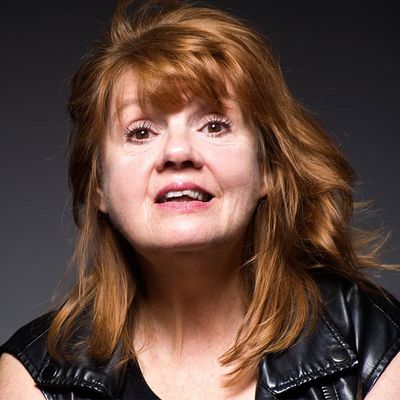
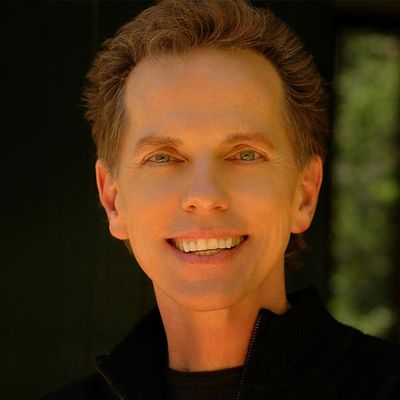
In episode 1, having rediscovered a dusty VHS bootleg of the show in the midst of a global pandemic, they dive into the roots of the ‘Carrie’ story with Stephen King expert and collaborator Bev Vincent, hear from the show’s lyricist Dean Pitchford about the musical’s origins, and chat to original workshop 'Carrie White' Annie Golden (Orange is the New Black, Hair, Desperately Seeking Susan) and her cast-mates Laura Dean and Julie Cohen about those heady early days.
Join us on our social channels and share your feedback!
Out for Blood is hosted by Holly Morgan and Chris Adams, edited by Tom Moores, with original music by Odinn Orn Hilmarson and artwork by Rebecca Pitt.
Out for Blood is a proud member of the Broadway Podcast Network.
Thanks this week to Dean Pitchford, Annie Golden, Laura Dean, Julie Cohen, Bev Vincent and Rich Hawkins.
NEW! Chris's book Out for Blood: a Cultural History of Carrie the Musical is out now - order from the publisher or all good book stores. You can now also order OFB t-shirts, hoodies, totes, stickers, pins and more here!
THIS WEEK’S LINKS:
- A bootleg recording of the workshop production of Carrie can be found on YouTube.
- Here’s Dean Pitchford and Michael Gore winning the 1981 ‘Best Original Song’ Oscar for Fame.
- A video guide to Alban Berg’s opera Lulu, which inspired the creation of Carrie the Musical.
- Watch the trailer for Brian de Palma’s acclaimed 1977 Carrie movie. Look out for an appearance from Betty Buckley, who goes on to star in the musical.
- Bev Vincent edits the Stephen King newsletter News From The Dead Zone and co-editor (with Stephen King) of the anthology Flight or Fright.
- The iconic Annie Golden performs with The Shirts at a CBGB’s reunion.
- Check out Julie Cohen’s (also known as Jewels Nation) band The Nations and Laura Dean’s YouTube channel Micro Mangia.
- And here’s Laura singing a mashup of Fame/I Sing the Body Electric.
- She dropped out of high school this morning, tonight, she’s a Times Square Hooker! Don’t miss the trailer for Streetwalkin’, the B-movie Annie and Julie were shooting each night during the Carrie workshop! [content warning: boobs]
- Please note that we don’t own any of the content above and we’re not responsible for the content of third-party links – enjoy!
Transcript
This transcript was automatically generated and might contain errors.
[0:01] Chris Adams: All right. Here it goes. Oh God. Oh my God, your whole life is in here. Do you know where it is?
[0:09] Holly Morgan: There's the Playbill. Oh my God. DVD, it's not on DVD is it? No it certainly is not.
[0:15] Chris Adams: There's Dreamgirls. Oh here we go, videotaped. Oh my God. It exists. We didn't even bother to rewind it.
[0:27] Holly Morgan: We must have just stopped halfway. Got what we came for. You ready for this?
[0:32] Chris Adams: I think so.
[0:41] Holly Morgan: Oh my God, what if it doesn't work?
[0:42] Chris Adams: It better still work. I get stuck. Better not, this is like gold dust.
[0:58] Holly Morgan: Lindsay! Oh my God. Oh my God. Even though I could literally watch this any day I want on YouTube now, there's something about watching it on the video, isn't there?
[1:03] Chris Adams: I think it's just looking at it too, copies and copies and copies. It's blurry. I assume it's the first time we've ever watched it.
[1:12] Holly Morgan: I hear that word, something so cheap. Thousands of voices forever repeating. Harry, Harry, Harry.
[1:24] Chris Adams: I am the sound of this music.
[1:41] Holly Morgan: Welcome to Out For Blood, a new unofficial podcast taking a deep dive into Carrie, the musical. I'm Chris.
[1:52] Holly Morgan: And I'm Holly. It's been called Broadway's greatest flop. It closed early, losing $8 million in just two weeks.
[1:59] Chris Adams: And sure, on the strength of the source material, many might be tempted to say I told you so.
[2:04] Holly Morgan: It is, after all, the unlikely tale of a killer telekinetic teen.
[2:08] Chris Adams: This murderous musical based on a Stephen King novel was originally produced by the Royal Shakespeare Company and written by the team behind the movie Fame.
[2:16] Holly Morgan: You know, just a classic combo. You've got Peaches and Cream, Sugar and Spice, the Royal Shakespeare Company and the creators of Fame.
[2:23] Chris Adams: A high school horror in which all but one of the characters is dead by the final curtain, with reviews as shocking as the material.
[2:31] Holly Morgan: Stephen King's scary novel and movie Carrie. Pat Collins is here now with a review to tell us if this show is going to scare us right out of our $50 seats. What about it, Pat?
[2:39] Pat Collins: Well, Jen and Van, Stephen King's horror movie has been turned into a horror of a Broadway musical.
[2:46] Holly Morgan: The only thing terrifying about Carrie is that there's a second act.
[2:50] Chris Adams: But let's not get ahead of ourselves. We've got plenty of time to talk about those killer reviews.
[2:55] Holly Morgan: We will be taking you through the epic journey that is the story of Carrie, from the birth of an idea and Carrie's earliest workshop outing to the first tentative steps in the beating heart of literary England, plus a full autopsy of the infamous Broadway run.
[3:08] Chris Adams: However, as you'll discover with this remarkable show, there is always life after death and we'll be covering all the reasons why this show returned in triumph from the musical theatre grave.
[3:19] Holly Morgan: So what do people need to know before we set sail on the good ship Carrie?
[3:23] Chris Adams: Right. So the show first opened and promptly closed in 1988.
[3:27] Holly Morgan: But the stunned reaction of critics and audience members made Carrie instantly legendary.
[3:32] Chris Adams: There was even a book about short-lived musicals called Not Since Carrie, which cemented its position in theatre history as the queen of flops.
[3:40] Holly Morgan: There was never an official recording made of the show, but we can still get a sense of the madness through bootleg videotapes.
[3:45] Chris Adams: And those videos gave people a peek at how wonderfully weird the show looked and sounded and created a whole host of urban legends around the show, which kept the myth of Carrie alive over decades.
[3:56] Holly Morgan: Not least because, until recently, it was the most expensive Broadway flop ever, a record unbroken until the infamous Spider-Man musical over 20 years later.
[4:05] Chris Adams: That's a whole other story.
[4:06] Holly Morgan: Yes, let's not get bogged down with Turn Off the Dark.
[4:09] Chris Adams: But now, after being buried for all those years, Carrie is having a real comeback.
[4:14] Holly Morgan: Suddenly it's one of the most performed shows in American high schools and there's even been an episode of Riverdale based on it.
[4:20] Chris Adams: Yes, Netflix algorithm, two early millennials are now watching Riverdale, what of it?
[4:25] Holly Morgan: So how did this horror show of a musical come to be?
[4:28] Chris Adams: How was it born? Why did it die? And how was it resurrected so triumphantly?
[4:33] Holly Morgan: And can all those myths and legends, bizarre rumours and stories, really be true?
[4:38] Chris Adams: Was it really so bad that the audience booed when the cast took a bow?
[4:42] Holly Morgan: Did one of the lead actors nearly get decapitated on opening night?
[4:46] Chris Adams: Did the director really misunderstand the brief to make the show more like Grease, as in, you know, Danny and Sandy, and instead make it more like Grease, as in, you know, tragedy and temples?
[4:50] Holly Morgan: And so he dressed the cast in togas.
[5:03] Chris Adams: So over the next few weeks we're going to dig deep.
[5:06] Holly Morgan: Too deep maybe?
[5:07] Chris Adams: Never too deep.
[5:08] Holly Morgan: We're going to open the archives, dust off our playbills and speak to the people who were really there to find out the truth.
[5:14] Chris Adams: We will meet original cast and crew members, some famous fans and we've even tracked down audience members who still remember their fateful trip to the theatre back in summer 1988, as well as the people involved in bringing Carrie back to life.
[5:25] Holly Morgan: It's been an adventure and along the way we'll delve into the show's score, remember some key scenes and look at some of the frankly mystifying design choices and ask why Carrie's story has lived on all these years.
[5:38] Chris Adams: So, if you want to discover how the world's most prestigious Shakespearean theatre company ended up dressing someone in a red unitard while they sang a song about murdering a pig to the guy who played Leroy in Fame, then this is the podcast for you.
[5:50] Holly Morgan: Yep, watch out Serial.
[5:51] Chris Adams: Stand back, this American life.
[5:53] Holly Morgan: And as for Holly and I, we discovered Carrie the Musical when we acquired a dusty VHS tape back in the Dark Ages, sometime in the early 2000s.
[6:01] Chris Adams: Now a VHS to all the Riverdale fans who've joined us was...
[6:05] Holly Morgan: Never mind.
[6:06] Chris Adams: See, I was a big Stephen King fan as a teenager.
[6:09] Holly Morgan: I read loads of his novels and in particular I loved Carrie.
[6:12] Chris Adams: And I remember I had a poster for the film on my wall.
[6:14] Holly Morgan: It said, if you have a taste for terror, take Carrie to the party.
[6:18] Chris Adams: Now they'd obviously changed the word prom for party because I guess in the 70s British people didn't know what a prom was.
[6:24] Holly Morgan: Now a party to all of those who've been quarantining was...
[6:27] Chris Adams: I genuinely can't remember.
[6:29] Holly Morgan: Anyway, as we'll find out, this is not the last time we'll hear about a British-American lost in translation scenario in this series.
[6:36] Chris Adams: Oh, absolutely not.
[6:37] Holly Morgan: Once I got to university, I found my tribe in the theatre societies and we ended up doing shows together, didn't we?
[6:41] Chris Adams: Yes, we did Bat Boy at the Edinburgh Festival.
[6:46] Holly Morgan: I directed it.
[6:47] Chris Adams: I was in it.
[6:48] Holly Morgan: I was one of the leads, actually.
[6:50] Chris Adams: That's a pattern that was not to be repeated in my professional performing career.
[6:53] Holly Morgan: Now, if a musical about a girl whose first period triggers extrasensory powers sounds a bit out there, I present you with the classic tale of a misunderstood half-bat, half-boy who falls in love with his half-sister.
[7:04] Chris Adams: I mean, unsubscribe now if you're not here for this weird musicals chat.
[7:07] Holly Morgan: Yeah, off you go.
[7:08] Chris Adams: So Chris and I bonded over our love of stupid musical theatre and you told me about Carrie, sort of like a jazz-hands Mr. Miyagi.
[7:15] Holly Morgan: I mean, I can't help but notice that you're positioning me as much older than you here.
[7:19] Chris Adams: Yeah, that's quite intentional.
[7:20] Holly Morgan: Okay, right. This was before YouTube, if you can believe that we, I mean especially I, am that old.
[7:26] Chris Adams: You see, there was never an official cast recording of the musical.
[7:29] Holly Morgan: But I discovered this underground world of Carrie bootleg video trading.
[7:33] Chris Adams: I naively sent off some money in the mail, maybe a cheque from my chequebook.
[7:38] Holly Morgan: A chequebook. Do you remember those?
[7:40] Chris Adams: And then remarkably, the VHS actually turned up.
[7:43] Holly Morgan: And the rest is history. An obsession was born.
[7:46] Chris Adams: I've never forgotten the thrill of seeing that weird, weird show for the first time.
[7:50] Holly Morgan: And rediscovering that dusty videocassette years later, with nothing else to do in the midst of a global pandemic, Chris and I thought, why not delve deep into the history of this mad musical?
[8:01] Chris Adams: Exactly, and here we are. Holly, shall we tell the story of Carrie?
[8:05] Holly Morgan: I don't see why not.
[8:06] Chris Adams: Let's do it.
[8:10] Holly Morgan: Our story begins in the early 1970s with a young high school teacher by the name of Stephen King, now one of literature's most well-known names.
[8:23] Chris Adams: At the time, he was living with his wife Tabitha in a trailer, barely making ends meet and desperately submitting novels and short stories to publishers.
[8:33] Bev Vincent: I've been writing about Stephen King off and on probably for at least 20 years.
[8:39] Bev Vincent: He has published several books about Stephen and his work, and in 2018, co-edited the horror anthology Flight or Fright with the great man himself.
[8:48] Chris Adams: He told us about the early days of Stephen's writing career.
[8:52] Bev Vincent: His wife was working in a donut shop, and one of the things he did to supplement their income was he wrote short stories.
[8:59] Bev Vincent: And he had a pretty successful run of selling these stories to the men's magazines for about $200 each, which in modern dollars, that's almost $2,000.
[9:11] Bev Vincent: And so, you know, if a kid got sick and needed medicine, he'd end up selling a short story and that would help, you know, tide them over.
[9:20] Bev Vincent: Originally, he saw Carrie as a quick story he could write and sell, earn some extra cash and pay a few bills.
[9:26] Bev Vincent: But as he started working on it, he realised this thing needs a longer build-up.
[9:31] Bev Vincent: It needs a bigger burn into the story.
[9:35] Bev Vincent: And he didn't think, A, that he had the knowledge of what teenage girls experienced at that point to really do it justice, and B, he didn't think he had the time to devote to a novel, given that he'd already had two previously rejected ones.
[9:51] Bev Vincent: So he said, you know, I spent several months on this only for it not to raise any income.
[9:55] Bev Vincent: So he didn't think it was going to work.
[9:57] Bev Vincent: So after he had four or five pages of the story written, he decided, nah, I just can't do this.
[10:03] Bev Vincent: And he threw the pages away.
[10:06] Bev Vincent: Famously, his wife, Tabitha King, found the pages, read them, and encouraged him to continue on with the story.
[10:15] Bev Vincent: And when he complained that he didn't think he knew enough about the teenage girl's mentality to do the story justice, she said that she would help him with that.
[10:24] Bev Vincent: The novel focuses on Carrie White, a teenage misfit bullied by her peers and abused by her ultra-religious mother, Margaret.
[10:31] Bev Vincent: The inspiration for the character and her plight came about after he witnessed one of his students being subjected to constant ridicule for wearing the same clothes to school every day.
[10:40] Bev Vincent: She saved up money, bought a fashionable new outfit, only to be mocked even more by the same students for that one.
[10:46] Bev Vincent: And she is an outcast from the rest of her class just because she's strange.
[10:51] Bev Vincent: She, you know, wears strange clothes. She's very quiet, timid.
[10:56] Bev Vincent: And so she's bullied a fair amount.
[10:59] Bev Vincent: And in the opening section of the story, she's extensively bullied by her classmates in the school shower.
[11:08] Bev Vincent: But there's something unusual about Carrie.
[11:11] Bev Vincent: So the interesting thing about Carrie is that she has some latent telekinetic abilities that really emerge when she becomes into her adolescence.
[11:21] Bev Vincent: And her immersion into adolescence...
[11:23] Chris Adams: Carrie, to her surprise, has been invited to go by the popular and handsome captain of the football team, Tommy Ross. He's a very nice boy. He is, but he's only dimming it because he's been persuaded by his girlfriend, Sue Snell, who feels guilty about bullying Carrie in the showers. Meanwhile, the school's chief mean girl, Chris Hargensen, sees an opportunity for one final triumphant shaming of Carrie and plots with her boyfriend, Billy, to dump a bucket of pig's blood over her at the prom. It doesn't end well. She goes full-blown telekinetic and wreaks havoc on the prom. Carrie destroys the school, the town, and kills all her jeering classmates in interesting and creative ways, using only her mind. Carrie would go on, like most of Stephen King's works, to be frequently adapted. The count currently stands at two feature films, a TV movie, a terrible sequel, which is worthy of its own podcast, to be honest, and, of course, an ill-fated stage musical.
[12:56] Chris Adams: Skipping back to 1973, a few months before the novel is published, early in his career, the screenwriter Lawrence D. Cohen, also known as Larry, was working as a reader for the legendary producer David Suskind. He was sent a skinny 200-page manuscript of the novel, and he was immediately blown away. The novel had been a huge success, but Larry saw a life for the story beyond the page. He struggled to generate interest from the big studios in a movie adaptation, but eventually met a producer who was equally keen on the story. Larry was given the job of adapting Carrie for the big screen. It was a game-changer for Stephen King. And the movie was such a huge success. Financially, critically, it had two Academy Award nominations, and that really put his name on the map.
[13:40] Bev Vincent: I think it's Stephen's vibrant characters that make his story so memorable and so ripe for adaptation. Everybody's been to high school. Everybody's had a car that broke down. Every teenager has wanted, you know, some new car so he can drive around. So all of those are relatable. The stories are relatable. The settings are relatable. But for me, it's always been about the characters. He has this insight into humanity, which he manages to capture and then recreate on the page. And these characters are, you know, they're likable, they're credible, they're understandable. Even when they're not likable, you sort of understand where they're coming from. They're not forgettable. They sort of get imprinted on your mind, even after just a single reading or two.
[14:29] Dean Pitchford: In 1981, five years after the release of the movie, Larry and his partner, the composer Michael Gore, went to see a performance of Alban Berg's opera, Lulu. It's a violent and destructive story ending with the leading lady being murdered by none other than Jack the Ripper.
[14:40] Chris Adams: Do they tell you who it is? Because I've always wanted to know.
[14:43] Dean Pitchford: I don't think they do, I'm afraid. Keep on looking. Michael Gore remarked that if Berg was alive and composing operas today, he would probably make one about Carrie. By this point, Michael had already worked with the lyricist Dean Pitchford on the movie Fame, released in 1980. Together, they won an Oscar and a Grammy for the title song. Here's Dean to pick up the story.
[15:01] Dean Pitchford: I had been a Broadway baby. You know, I had been, I had grown up, born and raised in Honolulu, but I was raised on all of these cast albums that my mother collected. And then I left and I went to Yale because I wanted to be the next Anthony Newley. And I did Godspell before I even got out of college. I was doing Godspell in New York. I went into Pippin in New York. I did The Umbrellas of Cherbourg at the Public Theatre. I was singing and dancing in commercials. I knew Broadway backwards and forwards. All of my friends were working all over Broadway. It was in my blood.
[15:43] Dean Pitchford: Dean knew the mechanics of musical theatre inside and out. So Larry and Michael pitched the idea of Carrie the Musical to him. And so they had me over one day, they sat me down, they said, what do you think? And as I've said, since then, I thought the idea was, first of all, a fantastic idea. I've always loved the book. I love the movie. But I also loved the premise of these two worlds, Carrie and her mother in her world, Carrie trying her best to fit into the school in that world. And then at the center of it are these two wacko women belting at the top of their ranges, you know, matters of life and death. And sign me up.
[16:24] Dean Pitchford: Like everything in the Carrieverse, logistics of a three-way writing team pre-internet were complicated. And I was living in Los Angeles by that point. And I carved out times, maybe six, eight times a year. I would go back for weeks at a time. And we worked on, and we did the first act, it took us about three years to do act one, because Michael was coming off Fame and Terms of Endearment. Larry was coming off of Ghost Story, as well as other projects. I was in the process of writing Footloose. And so Carrie was our part-time job. That was what we, it wasn't like we were sitting on our hands. We were all torn in many different directions.
[17:10] Dean Pitchford: By 1984, the writers had put together a rough version of act one on paper, but they needed to see if it worked in front of an audience. They decided to take the leap and stage their rough draft in the form of a workshop reading, a kind of informal staging with a small group of actors performing the songs, script in hand, to potential investors and theater owners.
[17:28] Dean Pitchford: We did have a couple, we did have a couple of weeks. And the weird thing was, oh, this is a very strange memory to have. We rehearsed for one week, and at the end of that week, I had written the opening ceremony for the 1984 Olympics with Marvin Hamlisch. And that, the workshop bracketed the opening ceremonies of the Olympics. And so I was directing the workshop. And so we worked until Friday, and then at the end, middle of the afternoon on Friday, I had to run from the studio, get a cab to an east side heliport. I took a helicopter to Kennedy Airport, and I flew to Los Angeles, woke up the next morning, and went to the opening of the 1984 Olympics, where a choir of 1,066 voices sang what Marvin and I had written called Welcome.
And I sat there for the opening ceremony in the Coliseum. And then the next morning, Sunday, was back on a plane and back in rehearsal on Monday for the second week of rehearsals. And it was an amazing experience, because we had a room filled with some of the most extraordinary talent.
[18:46] Dean Pitchford: The previous year, the writers had recorded six simple demo tracks around a piano, singing the songs themselves. But the workshop format allowed them to expand the story with a larger cast and some simple descriptions of the action that would take place between each number. And they managed to gather quite a starry cast for the workshop, included were several big Broadway stars and seasoned performers. Maureen McGovern playing Carrie's mother, Margaret White, Laurie Beachman as the gym teacher, Miss Gardner, Liz Calloway as Carrie's nemesis, Chris, and Laura Dean as Sue. Not to mention an ensemble which included Donna Murphy, later a two-time Tony winner, and Carrie herself.
[19:27] Annie Golden: Hi everybody, this is Annie Golden, the first Carrie ever. Yes, the Carrie Musical Workshop.
[19:33] Chris Adams: Annie Golden is a legend.
[19:35] Chris Adams: I am obsessed with her.
[19:37] Annie Golden: So Annie was the lead singer of punk band The Shirts in the late 70s, and she starred in a stack of classic films like Hair and Desperately Seeking Susan. But most people probably know her best as mute prisoner Norma in Netflix's hit series Orange is the New Black.
[19:52] Annie Golden: I think they said, you know, we're doing a musical of Carrie. And right away, you know, I was my bubbly, enthusiastic self. And I was like, oh, that movie. I love that movie. I never thought the lead or the title role. I just thought, yeah, I'll be sure. I'd like to be one of the teenagers, you know. And then they said, we'd like you to be Carrie.
[20:15] Annie Golden: I was actually only two years younger than Maureen McGovern, who is playing her mother. You know, I was not the age. I've been passing for younger, you know, for a long time in my career. So I have to say, Michael Gore, a composer, Leslie Gore's sister, girl group 60s. I had done at the bottom line, which was a rock venue here in a premium venue here in New York. I had done Leader of the Pack, the Ellie Greenwich story, which was a musical for Broadway. We were ahead of our time, because now it was a jukebox musical. It was thought to be an abomination at that time. And it was very popular, and it was sold out for its entire run. And I think Ellie Greenwich, her contacts, Jimmy Iovine, the producer who did 16 Candles soundtrack, I was in that clique then suddenly.
I came from CBGBs, which was not, you know, which was my scene. But Ellie, Ellie kind of discovered me. So I was on the radar then of that creative, you know, clique, enclave. I think that's how they found me. I think Michael Gore and Dean Pitchford came to see Ellie's musical Leader of the Pack at the bottom line.
[21:40] Chris Adams: Laura Dean, one of the ensemble, had starred in Fame as Lisa, the ballet dancer who sings the opening lines of the song I Sing the Body Electric. She later appeared in early seasons of Friends as Sophie, Rachel's put-upon colleague at Bloomingdale's.
[21:52] Laura Dean: I get a lot jumbled up in my head, because I did have to audition for Carrie when it was getting ready to go into actual production. So in my mind, yes, I auditioned a lot for Carrie. But I don't think I auditioned for the workshop. Or if I did, it was just like a meeting, because it was Dean Pitchford and Michael Gore who wrote the score for Fame. So they knew me, and they knew my voice, and they knew me as an actor. And so I think they felt confident with me in the material.
[22:27] Laura Dean: I remember thinking that I was going to do the part, the nasty girl part. But then they hired Liz Calloway to do that part. And then I was the nice girl, the Sue Snell character, the character that Amy Irving played in the movie. And I thought, oh, that's interesting, because much of my young adult.
[22:47] Annie Golden: Late teen and young adult years, I did a whole lot of after-school specials. They were these TV specials that were like life lessons. And I always played the conniving bitch. And I just kind of got hired a lot to play the bad girl. It's like casting against type, I guess. Anyway, so I was kind of like pleasantly surprised. Well, they're hiring me to play the nice girl. Great, you know. And Louise Calloway, who was always playing these innocent, you know, young women, she got chosen to be the nasty girl. And it was kind of fun for us to get to dig into characters that we don't usually get to play. Julie Cohen, another Broadway performer, had also been a featured vocalist in Fame. When I got the call, it was from Michael or Dean or someone from their office saying, we're doing a workshop of a musical version of Carrie. Want to do it? And I was like, I am so in.
[23:44] Annie Golden: As well as doing the Carrie workshop during the day, she was also working through the night on a movie shoot with Annie Golden. So the pair of them had a busy schedule. We're already working together on a trashy B-movie hooker, feminist hooker epic called Streetwalking. Streetwalking, by the way, it's exactly what you imagined it is. She dropped out of high school this morning. Tonight, she's a Times Square hooker. Streetwalking, baby, you do look good. I think it's ready for a Broadway adaptation. Oh, my God, absolutely. Should we get Lin-Manuel on the phone? We played hookers together. She played one called Phoebe and mine was Tricia. And we were trashy hookers together at night while we were doing the Carrie workshop during the day.
So Annie Golden and I were working very long days during that. But we wanted to do both projects and we managed to stay up all night and do both projects. You know, I was so tired. I just went away going, whoo. All right. Yeah. Okay, great. All right, next. I got, oh, there's a car waiting. I got to go, you know, or no, no, I got to get on the subway. Those were the days. I got to get on the subway and go down to the Lower East Side, go to Alphabet City. Actually sharing cabs, sharing a cab from the set of Streetwalking at like eight in the morning, maybe, and getting in a cab and going over to 890 Studios and having coffee before workshop rehearsal for Carrie. Like we would literally, there were probably only a few nights where we did that. But those nights are really vivid to me and bonding with Annie Golden.
[25:14] Annie Golden: Rehearsals for the workshop performance of Carrie took two weeks from start to finish. Yeah, it was short. And I mean, you know, I've been, I've done, I did a lot of workshops in the 80s. Um, and lots of times, uh, they would come in with no material and basically the actors write the material and that's what the workshop was for. Not with Carrie. They came in prepared. They had their, they had music written and they had lyrics written. And I never felt like, um, I was writing for the writers on that one. It was in that way, more like working on a movie. You know, you come together briefly. Because the first day is music. The first day is a marathon of music. So the chairs are set up, the music stands are set up around the piano.
Um, and people, and people who are trained read. So we all sat around and we learned our music. And that's when you get excited because you hear everything and you hear everybody's voices together. And, um, it was, uh, you know, 10 to six every day in the room. And if you weren't in the last day's scenes and stuff, uh, you were released early, which was I probably went then to set.
[26:32] Annie Golden: Although she'd performed in musicals, Annie was a punk at heart and readily admits that she couldn't read sheet music. So she was still learning musical theatre techniques from the creative team. You know, my, my voice would go and go and go and go until it couldn't go anymore. And then Dean Pitchford was the one who, uh, gave me this device where he said, when you're in the closet and you're singing, when you have to, you know, she's talking about a moment in the show when Carrie's ultra-religious mother learns that she's accepted an invitation to the prom and promptly locks her in the wardrobe. He said, when you have to cover, cover your ears. And he helped me find a head voice. And I remember that. I distinctively remember him giving me that acting choice. And suddenly, suddenly I wasn't screeching for notes. Suddenly something transitioned. Then I had head voice, which was thank you, Dean Pitchford.
[27:42] Annie Golden: At the end of the process, a semi-stage script in hand performance of Act One of Carrie for a specially invited audience took place at 890 Studios, a famous complex of rehearsal rooms where many classic shows rehearsed run by Michael Bennett, the director and choreographer of A Chorus Line. Yeah, 890 Studios. That was a place on Broadway and 19th Street. And it was a whole floor of just rehearsal studios and all the Broadway shows rehearsed there. The show that I did my Broadway debut in, which was Doonesbury in 1983. So it was like the year before. I remember Cats, the new show musical Cats was rehearsing down the hall and The Rink with Chita Rivera was rehearsing on down the other hall. And yeah, I mean, if you're right, 890 Studios was like the rehearsal place.
But I remember thinking if a bomb had fallen on 890 Studios that day, musical theater, as we know, would cease because everyone was there. When Tommy Tune walked in, I thought I'd have a heart attack. And you can't miss him because he's seven and a half feet tall. Ten time Tony Award winner Tommy Tune is actually six foot six and a half inches tall, but we'll let it slide. Ten time Tony Award winner Tommy Tune. There we go. That's my new vocal warm up. People were really excited about it. I do remember that.
[29:01] Annie Golden: At the time, I didn't know most of the powerful people in the room or even the reputation of the creative team or what was at stake for them. I'm not sure I even knew who Michael and Dean were, you know, the power of them, the importance of them. I was just kind of going along and being like, you know, OK, sure, whatever, you know. And, you know, now I can tell the youngins. That's Daryl Roth. She's the go-to gal, you know, or that's Anita Landers. At that time, I didn't know who was in the room. But I think there were probably people attached to the movie were in the room. And, you know, in from Hollywood, but it was a packed room and people were excited to see it. And in a sense, I was I was carrying it, which you don't really want to give much, much weight to. You just want to do your best and do your job.
[30:00] Annie Golden: Now, these workshops are generally private affairs. They're rarely recorded, but as will become a great tradition for Carrie the Musical, someone in the room did indeed sneak in a tape recorder. So in recent years, that recording has emerged online on the grainy audio file. We can hear Larry Cohen reading the stage directions between each song. He says what you're going to see in here today will require your imagination. There are a lot of special effects in our show. Thanks to Carrie's very strange gift. Lights explode. Objects levitate in the air. Windows slam. Lasers come out of Carrie's fingers. You get the idea. Sorry, finger lasers. Yes. Amazing. I mean, already the writer's vision of the show is cemented. It's big and it's bonkers. But the colossal scaling up of Carrie was still some years away.
[30:45] Annie Golden: I always felt like it was a presentation of the songs. And listening to the recording, I was reminded again, oh, it didn't really have a book yet. In their introduction, the writers described the choreography as having a dynamic role in the musical, to quote, very 80s and very MTV. OK, so that side of the brief was certainly carried through right through to the Broadway show. It's interesting, actually, that it's stated right from the start that they want the show to be in the same vein as those kind of high energy teenage shows like Fame and Grease.
[31:14] Annie Golden: So the songs. There are some songs in this version that didn't make it through to the finished product. One is called Ainted a Bitch. It's an early prototype for the opening in where the gym teacher barks orders at the teenage girls while they do this high intensity exercise routine and complain about the difficulty of their lives.
[31:47] Annie Golden: I mean, it's quite catchy. Very energetic. Absolute lyrical gems in there. Yes. So my favourite line, which I've pulled out is, gee, I wish when I was born that I was born 19. Get to all the good stuff and skip all the crap between. SATs and braces and those tests you'd never pass. Pain in the ass. Incredible. I'm a fan of girls. Men will never ask you out unless your body's tight. What if she's right? Wow. Eternal question. Great role models. That's the 80s there, wasn't it? It's a different time.
[32:29] Annie Golden: So at the end of the song, we're told by the narrator, the group forms a human pyramid. Poor Carrie climbs to the top, causing the whole thing to crumble. Something like that does get attempted in the final production. Yes, it does. Why not?
[32:52] Annie Golden: Maureen McGovern's voice is stunning. It's beautiful. It's soaring. The epic end of Act One number, I Remember How Those Boys Could Dance, is suitably crazed, if a slightly slower tempo than the version the fans will know and love. What will the boys do? They'll make promises. Then they'll break your heart. Then they'll laugh at you watching you fall apart. Don't you think that I know what you think has happened before? It's the smell of the blood that will drive a man chasing you like a whore. Yes! Don't you know that, David? Can you ask your boyfriend, David?
[33:24] Annie Golden: Even at this early stage, it's clear the show is going for very different musical styles to represent Carrie's two worlds. The youthful, dangerous world of the high school, and the intense, ultra-religious home life that she shares with her mother. But when it's just the songs, it's not so incongruous. You layer on the choreography, the set design, the costume, and everything else, you'll see what happens. It's certainly a fateful decision that will soon veer out of control.
[33:48] Annie Golden: But back to the workshop, and there are some other interesting differences in the early song listing. Doesn't anybody ever get it right? Carrie! The title track, Carrie, is familiar. Carrie! But then it segues into a different song called I Can Hear My Heart. I can hear my heart.
[34:10] Holly Morgan: And he sounds so young here. Absolutely adorable. Miss Gardner sings a song called "It Only Has to Happen Once," which eventually becomes "Unsuspecting Hearts." And there are some early versions of, again, tracks that will be familiar to Carrie fans. I remember the song "Do Me a Favor." You know, Tommy, lately I've just not been feeling right. I'm so ashamed of how we've all been treated, Gary, why? You know. Am I crazy? Am I sounding like a joke? I'd never dream of asking this, but you're the one I'm looking for. Do me a favor.
[35:10] Holly Morgan: Tommy Ross, played in the workshop by Todd Graff, has a solo called "Tommy's Poem." Interestingly, this song has the same lyrics and the melody as a song in the 2012 revival of the show called "Dreamer in Disguise," so it doesn't actually make it to the stage for 26 years. At the end of the reading, there is rapturous applause. The names of the cast are shouted out as they take a bow, and there are whoops and cheers from a small gap of audience. As it fades, one of the writers explains that although Act Two is written, they'll be stopping here at the end of Act One just to give them a tease.
[35:57] Holly Morgan: We're stopping here at the end of the first act of Carrie. Act Two has been completed, but we just wanted to give you this sneak preview of our show. There is a low murmur of laughter as he reminds them that Carrie does indeed get to go to the prom. Carrie becomes Cinderella all right, he says, Cinderella with a vengeance. But it was real, I thought it was so intriguing that they, so they kind of showed everything in the first act. They had like, they checked off all the boxes, like the group number, the high school, the mean girls, the wounded child, the mother-daughter dynamic, the good girl, the good girl and the good boy, and the bad girl and the bad boy who are going to be trouble. And of course the gym teacher, the champion, the mentor to Carrie. So all of that was in the first act.
[36:51] Holly Morgan: A final round of applause, then the promise of wine available at the back, and no doubt all the performers ran screaming at the buffet. I hope Annie managed to grab a glass on the way. The three writers were proud of the beginnings of the show that they created. Probably the last time they would feel that for quite a long time. And just like that, the cast of the original workshop of Carrie went their separate ways. You know, it sometimes is very anticlimactic because you do all this work and you build up and then some, you know, you do a presentation maybe once, maybe twice, and then it's done, and then everybody goes their separate ways. So honestly, in a way, no, I don't remember there being like, you know, it's all like, you just know, okay, well, see you on the next gig, you know.
[37:39] Annie Golden: Like all companies, you come together for however long it is. You all work together, you make something magic, you bond, and then you split. But we'll always have like that, that moment of magic that we shared. And now it's captured, like, I just can't believe.
[37:53] Laura Dean: Annie was wonderful. She really, her voice, and she was so, she like, she was so perfect for the role too. She was vulnerable.
[38:04] Julie Cohen: Oh, oh yeah. Yeah, and her voice, she just had that really, just very guttural and vulnerable voice, you know. I was a fan of hers from her punk band, The Shirts. I probably saw The Shirts at CBGB's three or four times, and I'm like, that chick is badass. She was Cyndi Lauper, like, before Cyndi Lauper. And I was like, that voice, and like her earnestness, and her open heart. And so getting to work with her on two projects simultaneously, any time I have crossed paths with her, which is only a couple times, we have like bonded on like, right, Carrie and Street Walkin', we did them at the same time.
[38:50] Julie Cohen: For Carrie, the future would be rocky, but the workshop cast are still proud to be part of the show's history. Somewhere in a box, I probably have my script too. I do remember working on the workshop and thinking, wow, this is really special. Because even though it seems odd to put music to a horror film, they were really trying to hone in on the characters, and why, what would make the characters sing. And it's a kind of a shame that it kind of went so off the rails when they did finally put it up to full production. I do feel proud to have been part of the creative process of such, you know, of that show, of Carrie. You know, it's funny, like I was saying, it's fun now, after having left acting, for the most part, to now go back and look at, like, some of the projects I've been involved with, and some of the people that I got a chance to work with.
Or, you know, pretty much any time now someone mentions Carrie, you know, I can drop like, hey, you know, I was in the first ever musical workshop of that. And most people go like, there was a musical of Carrie? And I go, yeah, there was a musical of Carrie.
[40:06] Julie Cohen: Silver lace with a blue-gray bodice. That's a line from "Dream On." Amazing that it's stuck in her head all this time, isn't it? There is something about these songs that does that. We've been singing them each other for years now. Yes, often when least expected, or requested. So what happened next? We should explain that it's quite normal for the actors who do workshop performances not to end up in the final version of a show. That's what my agent's been telling me anyway. I mean, often there are several years in between the two, so actors move on to other projects, or they just simply age out of roles. In the case of Carrie, Annie had a sense that she wouldn't be playing the role on Broadway.
[41:19] Holly Morgan: This bare bones version of Carrie is probably the show in its purest form. It's what existed before all of the future layers of deep artistic visions and complex staging and convoluted plotting were plastered on top of it, when it was just a pure musical adaptation of the movie. There is much more dialogue and development between characters. And though it's a little bit stilted, it does help the plot make sense. The narration from the writers gives a sense that Carrie's world is going to be properly filled out. We'll see an interesting but realistic contrast between her lives at home and school. By the end of the reading, things were looking hopeful for a full scale production. It was wonderful to hear our work come back to us. And it was very, very thrilling, to be honest, and to be in that room.
[41:41] Annie Golden: I probably aged out. That's what it was. I knew that I either wasn't right for it, or I had aged out of it. And then they went to Royal Shakespeare Company. So when they went there, I said, well, that money is, it's secure. The money is there. They don't have to, you know, they don't have to grapple for money. It's there. It's supported. It's going to move onwards and upwards. There's an engine behind it. So also as a businesswoman, I knew that too. And don't worry, we will be delving into exactly how the Royal Shakespeare Company ends up involved in all of this next week.
[42:03] Holly Morgan: And then on that Friday, that following Friday, we were packed. We had done the workshop down at Michael Bennett's studios at 890 Broadway. And they set up all the chairs, and every chair was filled. People were all around the edges. They all wanted to see the first act of this. And on the basis of that, we got our first producers. And so, by 1986, our stage is set. Carrie the musical had its writer, the guy who wrote the hit movie. It had a composer and lyricist, the award-winning team behind the Fame franchise. Now it needed a visionary director and a choreographer to work together and bring Carrie's world to the stage. But crucially, it needed a talented cast to bring Stephen King's iconic characters to life. Already, Carrie was the talk of Broadway. What could possibly go wrong? Coming up on Out for Blood.
[42:55] Lindsay Haightley: Exactly half the cast would be British, and exactly half the cast would be American. My name's Lindsay Haightley.
[43:02] Sally Ann Triplett: Charlotte Amboise. She muttered to her assistant something about not wanting anyone who was out of breath. So I didn't breathe for a whole audition.
[43:12] Charlotte Amboise: She came in the room with her glasses, and she just, like, tipped her glasses down, and didn't say anything, and just stared. Because Terry Hands was re-choreographing the opening number. There's this dodgy disco below the hotel, and we just go in and throw shapes. I mean, it was Gene Anthony, right? It was Leroy from Fame. I mean, hello, people. They were just sat there with their warm pints, looking at us, and we're throwing these shapes.
[43:40] Charlotte Amboise: From very early on, the writing was on the wall that it wasn't, the fit wasn't right. We stood in the back of the audience going, no, no, no, no, no, no, no, no, please, please, oh, no, no, no, you're sending all the wrong signals.
[43:54] Holly Morgan: I am the Ironmonger, and I got this huge sledgehammer.
[44:04] Chris Adams: Out For Blood is a proud member of the Broadway Podcast Network. For more information about us and the podcast, please visit us online at bpn.fm slash outforblood. And if you enjoyed Out For Blood, please leave us a review on Spotify, Apple Podcasts, or wherever you downloaded us from.
[44:20] Holly Morgan: If you're a fan of Carrie, we've been posting a ton of behind-the-scenes photos, videos, and more on our socials. Find us at Out For Blood Podcast on Instagram and Facebook, and Out For Blood Pod on Twitter.
[44:30] Chris Adams: Out For Blood was hosted and produced by me, Chris Adams.
[44:33] Holly Morgan: And me, Holly Morgan.
[44:34] Chris Adams: Sound engineering and editing by Tom Moores. Paddy Jervis is our audio consultant. Original music by Odin Orne-Hilmarsen, and artwork by Rebecca Pitt. Thanks this week to Dean Pitchford, Annie Golden, Laura Dean, Julie Cohen, Bev Vincent, and Rich Hawkins.
[44:49] Holly Morgan: We had a blast talking to those ladies from the workshop. Julie Cohen, also known as Jewels Nation, has a band with her husband. They're very good. We had a listen to them.
[44:55] Chris Adams: Yes, they're brilliant.
[44:57] Holly Morgan: They're called The Nations. And Laura Dean has a YouTube cooking channel called Micromanger, with tips for making delicious food in a cramped kitchen.
[45:05] Chris Adams: Perfect for when you get home after a late night destroying your school prom. Delicious. And Bev Vincent's work with and about Stephen King can be found at BevVincent.com. He also edits the long-running newsletter, NewsFromTheDeadZone.com. You can find links to all of that, plus other great stuff, in our show notes on your podcast app.
[45:24] Holly Morgan: Tom?
[45:24] Tom Moores: Yeah?
[45:26] Holly Morgan: We would go bowling if you really cared.
[45:28] Tom Moores: I do.
[45:29] Holly Morgan: You don't.
[45:30] Tom Moores: I do.
[45:31] Holly Morgan: See you next time.
[45:32] Chris Adams: Bye!
© Broadway Podcast Network, All Rights Reserved