

Enjoy this episode of The Drama Book Show! Out for Blood's Chris Adams is interviewed by David Rigano and joined by very special guests Jak Malone (Operation Mincemeat) and Joe Iconis (Be More Chill) as well as some VERY special audience members and a big surprise finale!.. Read More
From the show: Out for Blood: The Story of Carrie the Musical
Guests


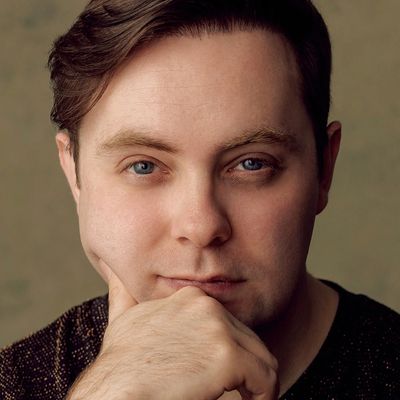
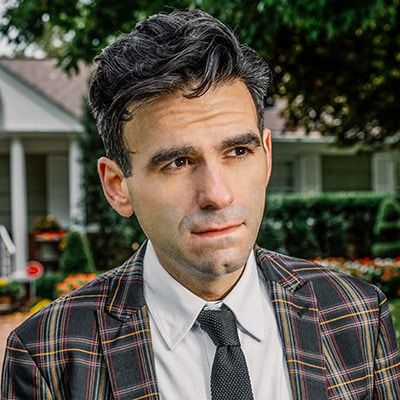
About
Enjoy this episode of The Drama Book Show!
Out for Blood's Chris Adams is interviewed by David Rigano and joined by very special guests Jak Malone (Operation Mincemeat) and Joe Iconis (Be More Chill) as well as some VERY special audience members and a big surprise finale!
Transcript
This transcript was automatically generated and might contain errors.
[0:00] David Rigano: Hello, hello, and welcome.
[0:26] David Rigano: Oh, start. Welcome to the Drama Book Show at the Drama Book Shop. It is so nice to see so many returning faces, both audience returning and former Drama Book Show guests returning. Thank you so much all for being here. I'm David Rigano. I host the events here at the Drama Book Shop. We do these events pretty much once a week. So, we love to see returning faces. If you don't know, you are at a live recording of the official Drama Book Shop podcast, The Drama Book Show. We are distributed through Broadway Podcast Network. We are also so thankful to have a representative from Broadway Podcast Network here with us tonight. So, you can find it there or wherever you get your podcasts, if that's on Spotify, or Apple Music, or YouTube, whatever it is.
We have a 35 episode first season and up to 20 episodes of season two. 55 episodes out already that you can go listen to and some of our guests who are here tonight are on some of those episodes. If you want to know when this one is going to go live, please follow at Drama Book Show podcast on Instagram. And you all have to sign up on Eventbrite to be here tonight. So, if you subscribe to the Drama Book Shop through Eventbrite, you will be notified every time we add an event to our calendar because, as I said, we do these pretty much once a week, sometimes twice a week. We would love to see your smiling faces at more of these in the future. Tonight, oh, I've been looking forward to tonight. There are some Broadway nerds in here who know me very well and know how much I love Carrie the Musical.
We are here for Out for Blood with Chris Adams and guests. The book adaptation of the podcast that is also on Broadway Podcast Network about the history of Carrie the Musical. So, I'm going to tell you a little bit that you probably already know about some of our guests. Chris Adams is the author of Out for Blood, a Cultural History of Carrie the Musical, which won the 2024 Theatre Book Prize awarded by the Society of Theatre Research in London. He was also the co-creator and co-host of Out for Blood, a podcast exploring the turbulent creation and history of the show, which is a breakout hit on the Broadway Podcast Network because we love some cross-promoting. His day job is in marketing for a producer of West End musicals.
He has brought some guests with him. Later, we are going to be joined by Jack Malone, a self-confessed fan of Carrie the Musical and all things musical and macabre. He's currently starring as Hester and others in Operation Mincemeat, for which, as we know, he won an Olivier and a Tony Award. Another special guest, good friend of the shop and the podcast, Joe Iconis, who is featured in the book as a Carrie mega-fan from an early age to share his up-close experience with the Carrie bootleg community and some close encounters with some of its stars. Please help me in welcoming Chris Adams.
[3:57] Chris Adams: Thank you. Hi. Real people. Yeah. I'm very nervous. This is pure vodka. As any event surrounding Carrie should be. So let's start at the very beginning, which Julianne just told me was a very good place to start. How did your obsession with Carrie come about?
[4:29] Chris Adams: Wow. So I think it came about a long time ago when I was a teenager. I used to love reading Stephen King's novels, as many teens do. Um, and it was kind of my mission to read as many of them as possible. But my particular favorite was Carrie and I'd never really read anything like it. It was, it's such a unique book if I'm sure you've all read it, but it's, it's made up of prose and letters and news reports and all sorts of different types of, of writing. And it was like nothing I'd ever read before. So that kind of hooked me in, but I was also a huge theater kid at school as well. I'm sure many people in the room will, um, will, uh, recognize that. So imagine my surprise when I found this kind of crossover world, someone had taken that novel and turned it into a musical.
The very concept was just kind of mind blowing to me. Um, and so I kind of held it with me and I did that thing where the internet was kind of coming to life in the mid nineties. That shows my age. Um, and I kind of started finding out more and more about the show, watching clips of it. And, um, yeah, I just, it kind of just grabbed me and there was something about it that was just this, this kind of crazy, ambitious kind of insane world that someone had created. And as I got to university, um, I met my good friend, Holly Morgan, who is the other voice on the podcast. Um, she'll love that. She will love that. And, um, we did a show together in Edinburgh, um, what feels like centuries ago, Bat Boy, which is another kind of bloody, yeah.
Um, and it's one of those kinds of shows of a similar vein, which kind of is a bit crazy and dark and macabre. But, um, we spent that month in Edinburgh just basically talking about Carrie the Musical, quoting it at each other and singing it, um, all the time. So we then through our friendship, um, to this day, we kind of still talk about it and eventually skip forward many years later to, um, the pandemic, we were kind of like, we found ourselves with nothing to do. And, um, I, I work in theater and I was kind of at home Holly and her husband, Tom, who was, uh, our editor had their own podcast and had all the equipment. And we kind of started talking, we were like, what can we make a pot with funny people too?
We can make a podcast. Um, and we thought, wouldn't it be cool to kind of do something about Carrie? Because we knew the story that everyone kind of had read about that kind of top line, uh, Wikipedia version of the story, I guess. Um, but we thought there's more to this and wouldn't it be cool to use this time to track people down and get them to kind of share their memories. And they, they did. And it was, yeah, the rest is history. Pretty amazing guests. We did. We were really lucky. Um, I think, you know, the timing of that really helped us because all of those people too, you know, had nothing to do. Um, they work in theater or they work, you know, adjacent to theater and they love it. And they were not only at home, they were desperate to talk to other people about this kind of industry that they loved and this job that they loved doing.
Um, so we were just so lucky. And the more people that we spoke to, the more introductions we had, it was kind of a domino effect. And we just ended up, we had to kind of hone the craft a little bit because the first few interviews we did, we would spend like an hour and a half, two hours on zoom to these people, um, who God knows what they thought of us. Um, and then we had to kind of figure out how to do that better because there were just so many interviews to do. Um, but yeah, we were so lucky that so many people just hold this heart, this show in their heart. And we're just kind of so, um, passionately speaking about it, that we were able to kind of harvest all of those stories.
[8:05] David Rigano: I think I was probably like five to 10 years behind you. And it was the early two thousands that I was in college. And I had seen the movie like in middle school at like a sleepover, we're going to watch Carrie and it's completely inappropriate. Um, so like I was a, like, oh, they made that. And I knew that it was a massive flop. So I'm like, well, then I must know.
[8:27] Chris Adams: Yes, exactly. I must know everything that there is. Um, uh, and I know that we'll like, we'll delve into this, but like, you had to go digging at that time to find anything. And you had to know someone who knew someone who knew someone who had a bootleg.
[8:42] Chris Adams: Yeah, exactly. It was like a dark web before the dark.
[8:45] David Rigano: Yeah. As I mentioned to you, the title song was my first custom ringtone.
[8:49] Chris Adams: Yeah. Well, someone would call.
[8:55] David Rigano: Yeah. Someone would call me and my phone would go, would be Lindsay Haitley going, Carrie, I am the sound. And I go, Carrie singing to me, excuse me. And I think, but for anyone who somehow found their way here and does not know the, the history or, or perhaps only knows the current updated version, can you talk to us a little bit about the turbulent history?
[9:17] Chris Adams: I can. Yeah. This is something I know. No, it's kind of, I think, yeah. Carrie is kind of the headline flop, um, from Broadway history. And, but there's something more to the story. It's not just a flop that came and went and everybody forgot about. So I think if it's okay with you, I'll read the opening chapter of this, which kind of summarizes it in a nutshell. And I'm sorry if my voice goes, I've got this kind of croaky voice at the moment, but here we go. Horror show. It had so much going for it. It was a balmy Friday afternoon in August, 1984 as producers and Broadway big wigs buzzed around the folding table at the back of rehearsal studio to claim a cool glass of white wine. There was excitement in the air.
These potential investors, producers, and theater owners had come out to enjoy a semi-stage presentation of the first half of a much anticipated new musical. And now they chatted with the young, excited writers and performers about what might lie ahead. And I'm going to interrupt because one of those performers is in the room. The legendary Annie Golden is here. Hi, Annie. Annie was the original musical Carrie, as well as having kind of a legendary career on stage and screen. So thank you so much, Annie, for being here. It's an honor. I'll get back to it. She's going to be like, none of this happened. This is all lies. Where did I get to? Excuse me. Little did the assembled crowd know that they had witnessed the earliest incarnation of what would become known as one of Broadway's most notorious disasters, and that decades later it would still be generating regular magazine headlines like Is Carrie the Worst Musical of All Time?
Carrie had a stellar creative team comprising Oscar-winning composer and lyricist duo Michael Gore and Dean Pitchford, fresh off the back of Fame, and lauded screenwriter Lawrence D. Cohen, who had written the script for Brian De Palma's critically acclaimed 1976 movie adaptation of Stephen King's best-selling debut novel. I write really long sentences. I just realized that. And perhaps somewhat incongruously, it would soon have the backing of the Royal Shakespeare Company, one of the world's most recognizable and respected stage companies, and its Olivier-winning, Tony-nominated artistic director Terry Hands. It was certainly not traditional Broadway fare, the unlikely tale of a teenager with telekinetic powers triggered by her first period, a high school horror in which almost everyone is dead by the final curtain.
Not unlike the bloodbath which ends the show, Carrie would itself be met with some of the most savage reviews in critical history. That response would lend Carrie an almost mythical status in popular culture, and make it a byword for theatrical disasters. Even as recently as November 2021, after a critical panning following the arrival of Diana the Musical on Netflix, the Broadway News blog asked if the show was the Carrie de Najer, and that show closed a few weeks after its COVID-delayed Broadway opening. For many years, it had the dubious honor of not only being Broadway's most infamous flop, but its most expensive, losing an unheard-of investment somewhere in the region of $8 million, which is equivalent to about $20 million as of writing.
But for scale, a modern Broadway flop like 2010's Spider-Man Turn Off the Dark doesn't get out of bed for less than $60 million. Carrie, in one of many head-scratching twists in the tale, opened in Stratford-upon-Avon, the sleepy birthplace of William Shakespeare and home of the RSC. It was a location that felt geographically and culturally about as far from the show's typical American high school setting as one could get. As unlikely as the pairing of material and producer may have been, the company was not unfamiliar with creating new mega-musicals, having co-produced Les Misérables a couple of years earlier. That show, although somewhat of a departure from the company's core work, was at least closer to its traditional output, an epic period adaptation of classic literature.
It also premiered in London rather than Stratford, arguably a safer testing ground for major new musicals. Reaction to the news that the country's premier theatrical troupe would be taking on what many regarded as a pulpy horror novel with menstruation at the center of its plot would cause quite the stir. The British critics would soon trash almost every aspect of the show, declaring that the company had sold its soul to commercial Broadway producers and lost its way. After a long, strained rehearsal process and a tumultuous three weeks on stage in the British heartlands, Carrie would, doggedly and largely unchanged other than the high-profile replacement of a leading lady, make the leap to Broadway. All eyes would be on this strange new show after whispers about its...
[14:07] Chris Adams: Unusual components have made their way across the pre-internet Atlantic. A new vulturous batch of critics hovered. Rumours swirled that it may not make it past opening night. It did, barely. After 16 previews and five regular performances, Carrie closed suddenly. Its dream of Broadway success snatched away like Carrie White's own glimpse of acceptance at the prom. That might have been where this tale ends, but something unusual happened. Carrie quickly became legendary in theatrical circles, and in the years that followed, the curious tale of this peculiar episode in Broadway history spread far and wide. In the face of steely silence from those involved in its creation, and without an official cast album for fans to consult, urban legends soon grew around the show, its songs, its questionable design aesthetic, and its turbulent creation.
These tales were propagated by the steady appearance of illicitly recorded audio and videotapes, which not only painted a picture of a troubled show in perpetual flux, but also fed fans tasters of songs both soaring and silly. With an outright block on new productions of the show, they provided the only samples of a show that would remain perpetually just out of reach. They also presented primary evidence of the infamous audience response, which seemed to oscillate wildly between show-stopping standing ovations one moment, and guffaws of disbelief the next. Stoking the mystique, Ken Mandelbaum's seminal 1991 book on musical flops, Not Since Carrie, cemented the show as the byword for theatrical turkeys, and the show has regularly topped the charts in articles about famous follies in the years since.
With the emergence of online message boards and eventually video sharing sites, new generations of theatre kids discovered the show and delved into its lore, perhaps attracted by its surprisingly powerful tale of an underdog rising up to defeat her tormentors. Some friends of Carrie went a step further, producing their own show merchandise or even staging unauthorized productions. Eventually came Carrie's redemption as two decades after the doomed original, the authors agreed to a rewrite and revival. Now, Carrie is one of the most produced shows in colleges and community groups, and its 2012 cast recording has racked up millions of streams and downloads. The show has won awards and been translated into several different languages.
This much-maligned musical was even the inspiration for an episode of teen drama series Riverdale, exposing it to a league of new mainstream viewers. All the attention on the new Carrie has revitalized interest in the original production, and in some arenas prompted serious critical reappraisal of it. Carrie did as all good horror heroines should, she came back from the dead. So that's the history of Carrie the Musical.
[16:58] Chris Adams: I went to see the off-Broadway production about a week before it closed, and I was like, I must be there. And I had friends who happened to be there as well, who were only there because they knew that it was an infamous flop, and they were kind of there to see how bad it was. And I had been following the history, so I was like, well, they've rewritten it, they've made changes, like hopefully. But I had these friends who knew nothing, I think some of whom even knew nothing about Carrie, the novel or the movie, just were there to see how bad it was. And then by the ending, they were like, they were not emotionally prepared for what they saw, because it had been turned into such a good show. I mean, the cast of that show told us that there was so much pressure because they were expected to do the show well, because so many people were coming to see the car crash, and that wasn't what they were there to show them.
[17:52] Chris Adams: So speaking of the cast of that show and your multiple other guests, this, as you mentioned, had such notoriety, Not Since Carrie is one of my staff recommendations here. So when you were reaching out to people after something like 40 years to talk to them, was there anyone who was maybe a little bit hesitant to be so culturally ingrained with this infamous flop? And or were there people who kind of wore it as a badge of honor?
[18:28] Chris Adams: I think if we'd done the podcast kind of 20 years ago, it would have been much harder to get people to talk about it. But I think now most of the cast almost have it as a badge of honor. They're proud of it, and they want to talk about it because I think they had such a rough experience that they kind of want to correct the record a little bit. And the urban legends did grow so crazy that I think they all kind of wanted to sit down and say, actually, this is what happened. We were a real bunch of young people thrown into this mad experience, experiment. And this is how it went down. So I think most people, we were surprised. People were saying, yeah, we'd love to talk about it. And we weren't sure whether we'd get Lindsay Haitley, who played Carrie in the original Stratford on Broadway production, because she hadn't done that many interviews about it and I think had been quite restricted about what she said about it.
But we were like, it would be amazing to get her because she's such a backbone of this story. And she said, I will talk to you about it, but I'd love to do it as part of a group, actually. And we were like, yeah, of course. So we managed to get together this kind of group of about four or five of the British cast in person in between lockdown. So we were outside in somebody's garden. So we couldn't kind of spread the disease amongst us all, spread out nicely. And we had a few other.
[19:49] Chris Adams: That's all you needed for Carrie to kill a bunch of people.
[19:51] Chris Adams: Yeah, exactly. That would have been a bad ending. And we had some more people on Zoom, and it was great. It was like this four-hour session where they just kind of spilled these stories. And we have hours and hours of tapes of them just telling these incredible stories of being in the show, which is sort of why the book happened in the end, because there was just so much material that we couldn't squeeze into the podcast, even though the podcast is very long. There was just so much more that we had at our disposal. And when you speak of urban legends, there's one that I had heard for years, joked about.
[20:27] Chris Adams: Yes.
[20:28] Chris Adams: Which I learned from your podcast was not an urban legend.
[20:30] Chris Adams: Oh, I'm sorry. It was the truth.
[20:31] Chris Adams: OK.
[20:33] Chris Adams: Make it like Greece.
[20:35] Chris Adams: Yeah, I mean, it depends who you ask. So does everyone know this? I think you all know this story, right? So Terry Hands, who was used to directing Shakespeare and classical plays, basically, at the RSC, one of the early producers had told him, it would be great if you could make this show a bit more like Greece, if possible. Like Greece, like Danny and Sandy, all that kind of stuff. And he apparently misunderstood and thought they were talking about classical Greece. So like, which is Greek tragedy. So which is where all the kind of very toga-esque costumes and things come from. I don't think it's true because Terry Hands was a very smart guy. I don't think he'd be like, oh, OK, let's just put everyone in a toga and have a Greek chorus and stuff. I think that's what he saw the story as, this kind of almost this sort of metaphor, this classical metaphor. The characters kind of translate very neatly into Greek tragedy. So that's kind of the approach he was taking.
[21:25] Chris Adams: And you had mentioned in the podcast that that was kind of one of his ways of claiming that they weren't doing pulp pop trash. They were doing something that was in line with their mission.
[21:37] Chris Adams: Yeah, exactly. I think it brought a sort of slightly more serious edge and persuaded that, you know, the British press reaction to the RSC doing this was just off the charts. They were just appalled by the idea of it. And I think this was a much safer world for him to live in and to talk about. And, you know, if it had worked, it would have been a really neat thing to do. But I think it might have been the mix of togas with like leather and chains that didn't quite work.
[22:07] Chris Adams: Was there anyone who you really wanted to talk to for the podcast who you didn't get?
[22:11] Chris Adams: Yes.
[22:11] Chris Adams: Debbie Allen.
[22:13] Chris Adams: Where is she? Is she here?
[22:16] Chris Adams: She I totally understand because Debbie Allen is like a superstar.
[22:21] Chris Adams: Yes. You know, very busy lady. And why would she want to talk about this? This thing that happened to her 40 years ago. But there came a couple of moments where I got so close. And at one point I was talking to her PA and he was like, yeah, what? Sure. What time do you want to speak to Debbie? And then he ghosted me completely. But I think she would have I don't know where I don't think she has anything against the show. I think she just probably doesn't want to talk about it. But if Debbie is out there and has a couple of hours free, we'd love to do a special episode.
[22:54] Chris Adams: Yeah.
[22:55] Chris Adams: Yes.
[22:55] Chris Adams: Yeah, exactly. And, you know, there are a few people who are no longer with us who are involved in the show. It would have been incredible to speak to Terry Handsman. He sadly passed away a few years ago, but apparently was very honest and open about his experience when he did speak to people about it. So that would have been amazing. And yeah, yeah, those are the main ones. We didn't have two of the writers when we were doing the podcast because they had other projects, but I was really lucky to be able to speak to them for the book.
[23:23] Chris Adams: Great. I think once the podcast had sort of done its job and people could see that we weren't just, you know, there to make fun of this.
[23:30] Chris Adams: Yeah.
[23:31] Chris Adams: A lot more people were willing to kind of do the interview for the book, which is great.
[23:35] Chris Adams: So what did you know going into it that you expected to hear about and talk about it? And what were some surprises that you may have learned along the way in your interviews?
[23:50] Chris Adams: I think, you know, as I said earlier, we were sort of very familiar with that top line kind of apocryphal version of events that everyone had sort of spun into this frenzy of urban legends on the internet over the years. I think what really hit us hard when we were doing the podcast was that these people were very young. Most of the cast was very young. A lot of them, this was their, well, most of them, this was their first Broadway job, especially. And it was very traumatic. It was a very kind of traumatic event for them. They were kind of promised a lot and it was very quickly snatched away from them. And I think a lot of them were like, do they blame us? I don't want to speak for Lindsay, but she was very much like, you know, are people going to blame me?
I'm 17 and I'm the center of this thing and it's closed. Is it going to say it's my fault? So I think that was a surprise was that it had almost been treated like a joke for a long time. And there are very silly aspects of this story and that is what makes it so appealing to people. But at the end of the day, it was people's lives for a long time. And I think that's what really hit home.
[24:53] Chris Adams: So I think that was the surprise in terms of stuff that we found out. It was all very kind of day-to-day rehearsals that was just like we found very geekily interesting. I don't know if the whole world did, but we were like, you did what in rehearsal and what all of these crazy stories that just kept coming that I think is what makes this story so appealing to people is that it's just this kind of mega mix of chaos. You know, if one or two of these things had happened to a show, it would kind of be funny, but forgotten about, whereas this show just had everything hit it with full force. And I think that's what makes it so interesting to people.
[25:31] Chris Adams: And I think that, like you say, part of the intrigue about it is that you go from people making out in their cars at the drive-in, and it's so silly and ridiculous and with Don't Waste the Moon to Evening Prayers. And it's a little schizophrenic. You're a little bit like, what? It's not even that this is bad, or it's not even that it's so bad, it's good. It's that I don't know if it's bad or if it's good, because from one scene to the next, it kind of keeps changing.
[26:09] Chris Adams: Yeah, and that's what the cast always said. They were like, we were rehearsing two shows with two different visions, and they were kind of like smushed together at the end, and everyone had to hope for the best. And I think that's what the writers wanted to try and fix a bit when they rewrote the show in 2012. But yeah, it was two very different concepts, I think, trying to mesh together.
[26:33] Chris Adams: What did you learn about the rewriting process and what they wanted to focus on when they were rewriting it?
[26:40] Chris Adams: Yeah, I mean, the great thing about writing the book for me was being able to speak to the cast of The Revival, which we spoke to a couple of them in the podcast, but I was able to speak to many more in the book. And again, it was interesting to speak to young actors who this was, for many of them, their first job in a story about young people and trying to figure out how to maneuver and navigate around that reputation of the show being a disaster. And it sounded like a very open process. I mean, the writers had kind of battled with this idea of rewriting the show for a long time, and I think what they wanted was a version that would be timeless or as timeless as possible. So, you know, the 80s version of the show just already, you know, within months probably sounded extremely dated.
It now sounds like it was written hundreds of years ago, whereas this one, I think, was designed to last for a lot longer. And they wanted a version that people could perform. They wanted a version that directors could put their own spin on, that young people in high schools and kind of community groups could, you know, make a kind of a version for themselves, I suppose, rather than this ultimate, not that I have helped this, but this ultimate version being the kind of the one that everybody remembers forever. So I think they were tackling this interesting challenge of doing a show that would be appealing to people then, but would last for a long time as well. So, yeah, it was really great to have that space to talk to them a bit more and delve into that new version.
[28:16] Chris Adams: Carrie Wishes She Could Get a Boyfriend. See, it's kind of a through line of the original to, this is a show about bullying. And "Don't Waste the Moon," which was like, kind of sounds like, what do the kids sound like? Turns into "The World According to Chris," which is a great villain song, and is a song about bullying. The title song, "Carrie," started as, and someday I'll meet a boy and he'll like me. And now the new one is, someday, everyone will accept me and like me, which also makes the destruction from, the boy betrayed me, to everyone betrayed me. Yeah, that's interesting. And I think, you know, the revival had kind of mixed reviews and reception. Some people really liked it, some people didn't. And a lot of people who didn't like it, didn't like it because it didn't have all of those classic elements in it.
But I mean, some people did accuse it slightly of being a bit too earnest and a bit too serious. And I think there's something in there maybe that the writers were just nervous that they were going to get laughed at again. You know, so they were used to being burnt and being the butt of the joke with some of those songs and scenes that had been mocked so much in the reviews of the original. So a lot of that kind of dark humor was stripped away. And Stephen King's books have a lot of dark humor in them. And that is part of the kind of world that he's created. So I think-
[29:39] Jak Malone: The De Palma movie is not free of camp.
[29:41] Chris Adams: No, it's very camp. Yeah, it's very silly. So yeah, it was an interesting experiment. But I think what came out of the revival, whether you like that production of it or not, is that it can now be reinterpreted in many different ways. I don't think you'd get away these days with, you know, the jumpsuits and the cardboard cars and things. But you could try, I guess.
[30:05] David Rigano: So talk to me about what the process of adapting the podcast for a book, what the decision behind that was, what you decided to keep from the podcast, what stayed on the podcast, and what new information is in the book.
[30:21] Chris Adams: I think because we were kind of panic releasing the podcast as we went along, we were kind of recording it and releasing it, recording and releasing it. And we were telling the story chronologically. We were being introduced to so many new people as we went along that we were sort of trying to shoehorn them in. And we did some bonus episodes. But there were just so many of them that we were just collecting up. And I thought, you know, we can't just ignore all of these amazing stories. And of course, things like lockdown had eased off. I was able to visit archives at the RSC archive in Stratford, which has these amazing technical drawings of the show and all the original scores and notated and stuff.
So there was loads of stuff that I could go and look at. And obviously, as I say, being able to speak to more people in the revival and who've been involved in the show since. So there was just so much stuff. I approached Dom O'Hanlon, who's a commissioner at Methuen. If you know theater books, you know, Methuen drama, there's loads of them.
[31:17] Jak Malone: Yeah, look at half the spine.
[31:20] Chris Adams: And luckily, he had listened to the podcast and kind of also saw the value in this book as a kind of not just as a we didn't want to kind of create this gossipy kind of fun, you know, picture book of the show. We wanted to kind of tell a bit of the wider cultural story of the show. You know, what was going on in the British theater industry at the time that made people think this was a good idea to create and what was happening here on Broadway that made it collapse so spectacularly. We wanted to kind of look at that wider scene a bit. And yeah, so we set about doing it. And here it is. So, you know, some of the stuff in the podcast is only in the podcast. Some of it is in the book, but there's a lot more in the book, I think, that kind of expands the world of the podcast and tells a story a bit more broadly.
[32:09] David Rigano: And then you won an award.
[32:14] Chris Adams: I did. Thanks for saying thank you.
[32:16] David Rigano: A pretty big British theater award.
[32:22] Chris Adams: Kind of crazy because it was the Society of Theatre Research, which sounds very fancy. I was like, this book, really? That's almost as crazy as Carrie going to the Royal Shakespeare Company.
[32:26] Jak Malone: Yeah, exactly.
[32:30] Chris Adams: And there was a long list of about 20 books. I thought, wow, that's really cool. And then it got down to a short list of five. I think like Judi Dench and stuff on this list.
[32:36] Jak Malone: And Judi who?
[32:38] Chris Adams: And my husband and I went on holiday to Canada because I was like, I'm going to win this. And I woke up and people started messaging me that the book had won. So it was yeah, it was crazy. But I'm kind of I'm very proud of it because I'm not an academic writer. I'm not a famous person really seeing books. I think it's the story that people loved. You know, people really kind of really enjoyed reading the story. And they see a lot of it in, you know, people have found interest not only in the kind of fun gossipy side of it, but in the way a show that the kind of real grit of how a show is made. And that process and the kind of trials and tribulations. So I think, yeah, I'm pleased. Because of that, I think it's sort of the story is now in a book, and it's there forever. So I'm kind of pleased that that's happened.
[33:29] Jak Malone: And I think, obviously, there are so many of us who know the lore.
[33:33] Chris Adams: Yeah.
[33:34] Jak Malone: But never had the firsthand, we know, we know the bootlegs, and we know the differences from Stratford to Broadway, from the original workshop to Stratford. But, but we want, we want to hear the information that you amassed and not just us, not just us little theater nerds, like in our college dorm rooms, like I was back in 2000. Or sitting in the York Theatre basement. But, but like some big, some famous people. Yeah, closet Carrie fans or not so closet Carrie fans.
[34:11] Chris Adams: They are. I mean, we were amazed. First of all, we thought like 10 people would listen to this podcast. So and we thought that would be us five times. So but loads of people were like, I love Carrie. And we were just talking earlier in the green room, you know, we all have similar stories about how we came to find the show through various weird means of getting hold of tapes and stuff. And one thing that really kind of we loved was that as shows reopened, casts were listening to the podcast in their dressing rooms in the West End and on Broadway and talking about the show and messaging us and stuff. And we were like, really? That's so cool.
[34:47] Jak Malone: So yeah, that's how our first guest came to my attention. So maybe we should bring him on.
[34:53] Chris Adams: Yeah, let's bring him in.
[34:57] Jak Malone: Yeah. So I want to introduce the wonderful Jack Malone, who is in Operation Mincemeat.
[35:10] Jack Malone: Hello. Hi. Yeah, I basically just harassed Jack until he came.
[35:14] Jak Malone: I was delighted, absolutely delighted to be here to talk about the sort of mashup of some of my favourite things, which is horror and musical theatre, which is what Carrie very much represented for me. So yeah.
[35:22] David Rigano: So Jack, first, congrats on all of the acclaim on Operation Mincemeat.
[35:30] Jack Malone: The certainly the awards for you personally, but your whole crew over there is just putting on an amazing show. How are things over at the Golden?
[35:41] Jack Malone: Show's going really well. I've been off all week with strep, but I feel better now. But yeah, things are going really well. It's been so it's been so great to be involved with the show since its inception in 2019 and then make it to the West End and listen to Out for Blood and hear exactly how things could have gone if the pendulum swung the other way.
[36:07] Chris Adams: You're kind of doing that kind of show that you're like, yeah, people could take this the way we intended or it could go. And people obviously took it very, very well.
[36:12] Jack Malone: Yeah, thankfully. I'm thrilled that you're better so that you can be with us. And I'm so appreciative to your understudy. Can you talk to us about your history with the show and maybe any favourite fairy legends?
[36:36] Jack Malone: Sure. So I discovered that the musical I remember I was only thinking about this this morning. I watched the the movie, the 70s, Brian De Palma movie on DVD, and I watched the DVD extras. I missed DVD extras, guys. That was good stuff. And there was a whole little documentary about the musical on the DVD. And it was great. It was so informative and so interesting that they had Betty Buckley talk about it because obviously she was in the film and in the musical. So I was like, oh, I absolutely have to seek this out. I need to know everything that I can about this. And yeah, back then it was it was scrounging around for little tidbits of information. I was thinking to myself, did I look on Reddit?
And I was like, no, I don't even think Reddit had found the show then. I don't I don't remember where I found a lot of the stuff I found. But I do recall finding the bootleg of the soundboard recording from the Broadway production on Pirate Bay. I don't know if I remember Merriman's Pirate Bay, which was for torrent downloading. That website is now illegal. But that's where I found the soundboard recording and I was able to listen to all the music and Betty Buckley completely stole my heart. And yeah, as a big Stephen King fan, as a big fan of the film, just as a horror fan in general, I was like, oh, wow, they're doing it. They're marrying my favorite things to my ears successfully. And it wasn't until later when I saw pictures of the show, I was like, oh, what are they doing? It's baffling.
[38:15] Jack Malone: And one of my sort of one of my favorite Carrie legends is just the fact of the visceral reaction from the audience, the transition from booing to rapturous applause in such quick succession. There's this story that Betty Buckley tells on the DVD documentary that I saw where she stood with Lindsay Haitley on opening night. She's just carries, just killed Margaret, and it's the show's finished. The curtain comes down on the audience. Oh, really loud, like really enthusiastic booing. When Lindsay Haitley's turns to Betty Buckley says, what do we do? And she says, we just we got to go out there. The curtain comes up for them to their bow. And I'm like, as an actor, I don't know if I would ever recall that. I don't know if I would ever trust this audience again, this level of gaslighting. But you just have to think that that audience was like, we know it's not you. You did good. You did your best.
[39:17] Chris Adams: Yeah, I don't know. But I love that. I think that's I've never been in a show like that ever.
[39:22] Jak Malone: And but you do have a fascination with the macabre. Do you know where that came from? Your personal fascination with? Sure. All things macabre. And that kind of cross section of horror and theater.
[39:38] Jack Malone: Yeah, I was as a child, I was just sort of allowed to enjoy that stuff. That stuff was never really off limits to me. I didn't. I just didn't go for the typical things. And I was always very sad as a child because there was I used to say there was nothing for me. I'd go to an event and somebody would be there dressed as the Teletubbies and I'd be like, sure, but where's I'm trying to think of where's Beetlejuice? Like, that's who I want to see. So yeah, I've always had this lifelong fascination. And the same as you read in Stephen King books. As a teenager, the first Stephen King book I read was Carrie. And it's often when I meet people that I tell them that I love Stephen King and they might say, I've never read a Stephen King.
I say, start with Carrie. It's short. It's so palatable. The way in which it's written, it's really engrossing. So yeah, I've just carried that through life and carried. And I, yeah, I still have that today. I'm obsessed. I don't engage with anything, really, unless it has its roots in horror, much to the disappointment of my girlfriend, who sometimes wants to watch a romcom. And I'm like, sure, but is there, is there a zombie in it? I don't know.
[40:49] Chris Adams: I'd call Carrie a romcom.
[40:52] Jack Malone: Yeah, me too.
[40:54] Chris Adams: Apparently, Piper Laurie maintained for her entire career that the movie of Carrie was a comedy and she played it as such.
[41:01] Jack Malone: Yeah, I believe it.
[41:07] Chris Adams: Do you bring that to your, or I guess, do you seek out work that allows you the opportunity to bring that sensibility?
[41:13] Jack Malone: I'm trying more to make that a thing. I do a lot of writing. It's crazy because I've written, all my life I've written and written and written and nothing ever gets done. But now I'm kind of in a position where people are interested in that and I feel like I'm going to leave Operation Mincemeat and all of a sudden everyone's going to go, oh my, oh, this guy is just this horror guy. I don't know. A lot of people don't know about me because, yeah, I'm just constantly writing, figuring out ways to marry the two. I think horror theatre is hard. I think horror requires a suspension of disbelief and theatre requires a suspension of disbelief and you just, and then if you get it to a musical, even further, and I think you're asking a lot of the audience, but I'm determined that there's someone who can crack it.
I don't know if it's me and I don't know what the answer is, but somebody has got to make the great magnum opus horror musical. I'm very excited for the Lost Boys when the Lost Boys eventually happens. I'm excited to see what they do. I'm just, yeah.
[42:23] Jak Malone: My most recent play that I wrote is my first attempt at a thriller. Even when I was doing little readings with people and people would suggest, is it supernatural? I would say, I can't. I can't go there. For my first attempt at this, I can't try to do some kind of supernatural horror and ask the audience to go along. I also think sometimes if it's possible, it's scarier. Whether I succeeded in this play, time will tell. I don't know. We'll see. But yeah, I agree with you. It's a really difficult thing to get right and not have the audience boo you until they start cheering you. Unless it's a wink wink. I've seen Evil Dead the Musical, Reanimated the Musical. Those are both musicals with a splatter zone.
The first three rows, they give you a poncho. Great, because that's a good time. There is horror and there is gore and it's good fun. I'm determined. I've said this to you on Instagram, haven't I? I'm determined to direct a production of Carrie that is full 70s camp De Palma, big hair, Technicolor. I really would love to see that happen. I'll be there opening night. I think it deserves that. I agree. I was listening to what you guys said about the revival and I think they did tilt too far into, what if we made it gritty? I'm like, no, I don't think that's not what I want from Carrie. Mike Flanagan is currently adapting Carrie for a TV series. And I trust Mike Flanagan with my life story. He's terrific. He's brilliant. So I'm excited to see what he does with that. But I hope it's, I hope it's a bit camp, please. Yes.
[44:14] David Rigano: Well, speaking of people who make camp horror sci-fi theater, why don't we bring out the wonderful Joe Iconis is here with us as well.
[44:32] Joe Iconis: Hey, welcome. Welcome back to the show. Thank you so much. So what I'm going through these questions in my now. Yeah, you you are known for some songs that sometimes go to some dark places, some maybe can't be places. And I think that I've seen some sci-fi in your oeuvre. Um, do you think that there was like, what's your history with Carrie? And does that like work its way to something like Be More Chill?
[45:12] Joe Iconis: Um, yeah, I mean, yes. As far as, as far as how the sort of like, Carrie vibes, you know, inform me and found their way into my work. To me, it always felt very natural to write musical theater that intersected with genre stuff. You know, to me, it because musical theater is inherently a heightened, non-realistic art form. It makes sense to have elements of sci-fi and horror. And it feels those things feel very at home in, in, in musicals to me. And certainly because I was exposed to Carrie at such a young age and other musicals in that world, like Little Shop of Horrors and Sweeney Todd and like shows like that, it always just felt like the most natural thing in the world. And still, I just have a thing in me where it's even as like, as Chris was, you know, talking about all of these things that made Carrie initially this wild musical, this musical where it's like, oh, can you believe how crazy and insane this is?
I'm listening back there and I'm just like, that doesn't even sound crazy to me. It just doesn't. It's sort of like, that's no crazier than like fucking Hadestown or anything else. You know, it's like all of these musicals that we just say, oh yes, of course. It's like, there's insane elements in that, you know? And so, um, to me, it's just a lot of times that like some of the worst ideas make the best musicals and some of the best ideas. If it seems too obvious to be a musical, it's going to be a cheesy cliché musical. If you're like, so this guy murders people and his neighbor makes them into pies and they're going to sing about it, it can be the masterpiece of musical theater.
[46:53] Joe Iconis: Yeah. Um, so, so that's, uh, that's that part of it. As far as how I was introduced to Carrie, I, um, I, I came to it through Ken Mandelbaum's Not Since Carrie book. I was a kid. I was in Barnes and Noble. I saw the cover of it. The cover of that book had a, uh, a photo of Lindsay, uh, Haitley covered in blood looking at the camera and just smiling. And it was, it was, it was like an outtake from a promo shoot, I think. And I was so intrigued as like an 11 year old seeing that, just like, what, what is that? You know? And I was like, is that, is she covered in blood, that woman, you know? And so, um, I started reading that book and I just became obsessed with this, this musical, this idea of this musical and, you know, the way, um, it sort of encountered, uh, the internet was like, I feel like I discovered it right before the internet.
And so I feel like my earliest interactions with Carrie was like literally going to the library and like finding reviews on like microfiche. You know, I feel like I was literally like, like an 11 year old researching Carrie musical in my local library. And then when the internet, you know, happened, I really feel like my first impulse was like, Oh, I bet you could find some Carrie stuff on here. Like you could really, like, you can get some good shit going. And I, uh, I was huge in the bootleg world, uh, in early internet, huge in the bootleg world. I was trading bootlegs and buying bootlegs and doing all that shit. And then the Holy Grail was like a Carrie audio cassette or anything from Carrie.
And I finally found one when I was in middle school and I paid for it. I put cash in the mail and I sent it to some, uh, presumably adult man here in the city. And I got, I got your mother. No, my mother did not know. I always, I was like, I was such a good kid. I'm from Ohio. I was like a very sheltered kid. Uh, I was just like, I never did anything wrong. And I always love the, like, you know, other kids were like, you know, stealing money for drugs. And they were, you know, they were sneaking away to go to like, you know, bars at night. And I was like, you know, like sneaking away to mail cash to some guy in the city so I can get a Carrie bootleg. But I did. And, um, and just getting that bootleg, I always say this, it's, it's the first time I just held it in my hand and I knew, Oh, I'm about to hear Carrie.
I'm about to hear this musical that I've been obsessed with for years. For the first time, it was like a pure joy that, uh, it's, it's probably the single most joyful moment I've ever felt in my entire life. And I can't imagine anything ever topping it ever. I recently had a child. The thing that makes the Carrie moment different is just that it was, it was just pure joy. You know, it wasn't like, Oh, I'm nervous. And Oh, this is, you know, my wife's there. And this, this was just pure, absolute, like nothing but, you know, sparkles and fireworks joy that I felt. I don't think we have time to go into why you named your daughter after a different musical theater murderer. So my name is Roxy. She gets away with it at the end.
[50:12] Jak Malone: Yep. Yeah. Um, so, um, it's I, I, I had, I kind of had the reverse. I think that I like found someone who had the, the audio and they burned it onto a CD for me. And then when I found Not Since Carrie, it was the first time I could look at like really good quality photos of what it looked like. And so that's when I was like, Oh, I can put two things together from my understanding. Now, as you mentioned, this is considered up until Spider-Man, which if you want the song of Spider-Man, you have that here. If you like books on major flops, you got to grab this one too. But up until that point, it was considered the biggest flop in Broadway history. What, what do All Assembled feel about that kind of, uh, that kind of moniker? And do, do you think its legacy is that of a flop?
[51:21] Joe Iconis: It's a controversial word. Because if you judge it by money alone, then obviously it's a flop. But if you judge it artistically, if we're still here in this bookshop talking about it all these years later, can you really call it a flop?
[51:38] Jak Malone: Right.
[51:41] Joe Iconis: Yeah. I hate, I hate the F word. It's my least favorite. I find it very offensive. Um, but I, you know, I think that that's exactly it. You know, we're, we're talking about it and we're talking about it not to make fun of it. Like, I, I think it's great. You know, obviously there are things about Carrie the musical that are, you know, really out there and it's inconsistent in tone in a lot of ways, but like, so what, why does something have to be consistent in tone? And there, there's such moments of exciting greatness in that musical. And it's like, what are the other, think of all of the musicals that have opened and closed and lost millions of dollars or made millions of dollars since 1988.
And how many of those are people, you know, talking about in midtown Manhattan on a, on a Thursday night, you know? And I, and I do think that had they not fixed the show, I say fixed because there are various opinions about the, the rewrite, but I think that had they not fixed the show and had it not become a popular licensable show that everyone could do, we would still be talking about it anyway. For my money, they, Carrie was a book I knew well, and a film I knew well, and they set out to make a musical of that story. And I, as someone who had a lot of love for that story, watched it and went, yeah, great. You did, you did, you did it. And that's, that's, you, you hit all the beats. I love that the songs are quite beautiful and very catchy and everything you need them to be.
So sure. I, I, it's, it's, it's all relative, isn't it? To, to, to the viewer, to, to be like, for me, I'm like, yeah, you made a musical of Carrie. That, that's what I wanted you to do. I didn't want you to make fame. I, I, I had no, no stake in that. I wanted you to make Carrie and you did. So thank you. What were your bootleg journeys with it? Because obviously there, there is the infamous Broadway soundboard, which is very good quality audio of, uh, is it closing night on Broadway? I think so. And, but then there is the bit, thank you. Thank you. But then there is the video of Stratford with Barbara Cook. There is the audio of the original workshop with Annie Golden, um, and Liz Calloway, who will be here in a couple of weeks, just in case you want to come back. Um, and so what, like once, once you were in that bootleg world, what was your journey with the Carrie bootlegs?
[54:11] Joe Iconis: My, so my journey was, I got the audio cassette first, and then, uh, I didn't know there was any filmed footage of it, you know? And so I then found out that there was, uh, there was like a video that had been compiled over the years of B-roll of, uh, home video footage from the Stratford rehearsals. It was all like super grainy, you know, copied a million times. So I got my hands on that. And then eventually I found the Broadway Act One videos, which was, that was another, like greatest moments of my life situation. And again, I put cash in the mail and I, uh, I got this video back and it's only of Act One, uh, of the Broadway closing again, I believe. Right. And, um, and yeah, it was amazing.
And that, um, should I tell the story about that? Yeah. I mean, this sent shivers down our spine. Um, I, uh, so, so I had this video that, uh, was at the time, like it was a, it was a pretty hot video on the bootleg circuit. And so I was like, oh, I can get great, great stuff with, with the Carrie Act One, you know? And so I was trading it like crazy. I was getting like, like chess, OBC, Kiss of the Spider Woman, OBC, like all of the, like, you know, the good, good stuff I was getting about that, that last one. Yeah. Yeah. Yeah. Yeah. And so I was getting good stuff, you know, trading the Carrie bootleg. And at the time I was really like, oh, I'm just going to like, let it all hang out. I'm going to, I'm not hiding that I have a Carrie bootleg.
I was going on message boards. Cause there was like a covert sort of thing happening, but I was like, I'm just letting everybody know I got this Carrie bootleg and I want what you got and you want what I got and let's figure it out. And so, and I, like, I, I literally, it was like, like 14 or something, right? Like 13 or 14. And I was at home one day on Long Island and the phone rang and I picked it up and the person said, hi, is, is, is Joseph Iconis there? And I was like, yeah, this is he. And the guy said, hi, my name is whatever. I'm the attorney of Betty Buckley. And we've been made aware that you have an illegal video recording of Carrie and you've been selling it online. And so I'm going to need you to send me all of the copies of that video, or we will be pressing.
[56:30] Joe Iconis: And so I was like, OK, I will do that. And so I made a copy of the video and I sent him a copy and I kept my phone. Yeah, I continued to trade it. And I was just I was smarter about it. But I really do think that if like if my mother would have picked up the phone instead of me, that couldn't change the course of my life. You know, it was like that's the moment. That's my life changing moment was there. I got that phone call.
[57:01] David Rigano: Was there a point in there when you were like, if I write her a song, that's in the future?
[57:07] Joe Iconis: Yeah, I know. I was nothing but terrified. Yeah. Terrified of it. And then and so subsequently, I've worked with Betty Buckley and I know her like, you know, as well as as anyone can know. Anyway, I know Betty Buckley and like and she's hang out with my family and like and and I still have never told her that story. I never have, but I've talked about it now. I'm getting like, you know, I wonder if she listens to Broadway Podcast Network. Please tell her. Yeah, please. I just can't do it because I so feel like and she's a really cool, you know, she's a cool person. But there's a part of me that really feels like I'll tell her that and her face will drop and she'll just be like, you'll be hearing from me. Yeah, I remember. Yeah. And I don't want her to think of me as some filthy little bootlegger. She's moved on. I think she's for you, too.
[58:04] David Rigano: What were the other interactions with bootlegs that you had over the so for me, it was the it was the soundboard recording and I had that on an MP3 player that only could hold like 30 songs. So if ever I wanted fancy to listen to Carrie, I'd have to delete everything. And then, yeah, I remember trying to watch the I don't know which one it was. There was one I watched. It was so far away.
[58:30] Joe Iconis: That's the Stratford one. But I thought, oh, I'm not that. But I thought, no, I can't watch that. And it wasn't until I sort of sort of got mature enough to go. No, I'm committed. I'm committed. I want to watch it. But I have a bootleg of the of the London so that playhouse production that starred my friend Evelyn Hoskins, which I couldn't resist. I was like, oh, I saw it on Reddit. I'm taking that. I'm actually taking that. And she's terrific. She's so stunning. It was great. Yeah. You see what you were there with? Yeah, it's a great show.
[59:04] David Rigano: Yeah. And for all assembled, what did you think the first time you saw the giant staircase descent?
[59:10] Joe Iconis: What now? What now? What's this? Where's that been? Yes, truly. I can only imagine that there are a bunch of lighting instruments on the underside of it that were lighting the entire show while that was up in the rafters. One of the great things about writing this book was that someone had a load of photos from the tech with that staircase. It's just got Barbara Koch just reclined in a break in rehearsal. If you haven't watched Barbara Koch die in that production, you must. If you've I and we all again, we're not making fun of anything. We adore the show and we adore these people. If you have never seen someone so over being in a production, the way that Barbara Koch dies in this production, it is chef's kiss.
[1:00:01] David Rigano: So I guess one of the last questions is what's next for out for if unless you're going to move on to other things. But is there is there more in store for the podcast?
[1:00:09] Joe Iconis: We've kind of we did about nine bonus episodes, but I think we'll keep, you know, if something big happens in the universe, we'll be back to cover. So we need someone to do a big production of it so we can do more. And we've talked and talked about what we can do next. And there is just no show that is, you know, as amazing to talk about as this one, because that the history of it is just so perfect. It's just this amazing web of chaos. And, you know, as we've talked about, Spider-Man has a book, which is great. You know, there are other podcasts all about flops that cover the others. So we just can't figure out what if anyone's got any ideas, please tell us.
[1:01:01] Chris Adams: Um, when it comes to the F word, I love the F word, not because but only because I, I'm similarly obsessed as our friend Jen Tepper was with not since Carrie, and, and I wanted to look into why shows didn't work and why good ideas didn't work, or couldn't find an audience, or why a good idea turned into maybe not great execution. Like, I'm so fascinated by all of that, which was my entree into Carrie in the first place. I usually do these kind of audience polls at the beginning of an evening, I'm saving it for the end of this time. Who here has listened to or seen any of the bootlegs of the original Carrie?
[1:01:37] Audience: [various responses]
[1:01:45] Chris Adams: Who here has seen the Off-Broadway revival or any production of the rewritten version? At all.
[1:01:53] Audience: [various responses]
[1:01:59] Chris Adams: Because I think, again, something fascinates us about what was good about the rewrite, and maybe what we miss about something even that was derided in the original. And I believe, Joe, you're going to send us off sharing a little bit of what that original was like.
[1:02:15] Joe Iconis: Um, yeah, yeah, I sure I sure am. Yeah. So I, I thought it might be cool to share a song from Carrie tonight. And so what you're going to hear is, this is my, it's a moment that I love from the show. It's the opening of Act Two, which is the moment where the villains of the show, the teenage villains of the show go and they collect pig's blood from a pig. They do this by murdering a pig. And it's like a notorious number. We all know that, right? So like, so the initial London version may or may not be the title of the book. It is very much out for blood. Yeah. So the initial version in London is called Cracker Jack. Right. And it's for those who don't know, it's the same idea. It's like, you know, Chris and Billy are murdering the pigs.
But the song itself used the metaphor of a box of Cracker Jacks, where it's like, you never know what you're going to find when you open up a box of Cracker Jacks. You never know what's going to happen when you, you know, kill a pig. Just to note, Cracker Jacks do not exist in the UK.
[1:03:29] Audience: [laughter]
[1:03:35] Joe Iconis: No, we don't. So the audience is like, what the hell? Yeah. I mean, there's so much that we didn't have time to go into. But there was a big, that was another thing that affected. It was such a cultural difference between American high school and British high school for that initial production. Yeah. And it's like, so wild that the song, the song was Cracker Jack in London, but then they changed it for New York, where we know Cracker Jack. Yeah. Amazing. Incredible. So then in New York, same sort of setup, same kind of music and vibe. They just rewrote the lyrics. And now it was called Out for Blood. And so I'm going to do a mashup of the two versions of those songs, because I think it's just badass.
You know, I hope that you listen to it. And obviously, it's a ridiculous situation. But I think if the goal is to write like a kick ass rock number about a whole bunch of sexy teens killing pigs, you could not possibly do a better one. And so because it's a proper duet, I actually asked a couple of friends to join me. And so here to sing the roles of Chris and Billy are Amira Joy Lomax and Jared Weiss.
[1:04:51] Audience: [applause]
[1:04:56] Joe Iconis: You ready?
[1:05:21] ♪ Musical number: "Out for Blood / Cracker Jack" — performed by Amira Joy Lomax and Jared Weiss ♪
[1:09:25] Joe Iconis: Cha!
[1:09:29] Audience: [applause]
[1:09:31] Joe Iconis: Rejoice!
[1:09:33] Audience: [cheers]
[1:09:35] Joe Iconis: Rejoice!
[1:09:37] Audience: [cheers]
[1:09:45] Joe Iconis: So thank you all so much for coming. You have to learn that Joe Iconis does not do anything basic or simple. Thank you all once again so much for coming tonight. Once again, please follow the Drama Book Show wherever you get your podcasts. Please follow at Drama Book Show Podcast on Instagram. Please subscribe to the Drama Book Shop on Eventbrite so that we can see all of your smiling faces again. If you want to talk about more infamous F-words, we got Liz Callaway coming in a couple weeks to talk about Merrily We Roll Along and other things. And once again, thank you so much to Chris Adams. Thank you all. And Joe Iconis for being here with us tonight.
© Broadway Podcast Network, All Rights Reserved