

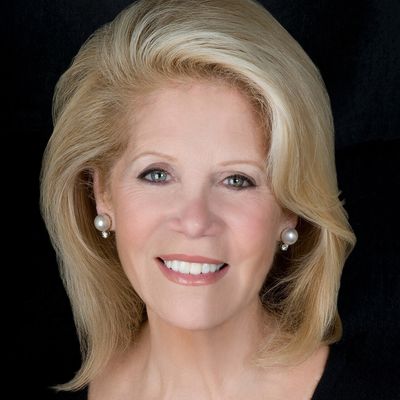
Ollie Southgate sits down with twelve time Tony Award-winning producer Daryl Roth to talk about the highs and lows of thirty years producing work both on and off Broadway and the unique opportunity she had to be among the first to bring audiences back into a New York theatre... Read More
From the show: Putting It Together
Guests
Featured Shows

About
Ollie Southgate sits down with twelve time Tony Award-winning producer Daryl Roth to talk about the highs and lows of thirty years producing work both on and off Broadway and the unique opportunity she had to be among the first to bring audiences back into a New York theatre. We discuss what she looks for when it comes to choosing which show to bring to the stage next and what a year without live entertainment has meant for one of the titans of the business.
Tickets for BLINDNESS are available on Telecharge; see www.blindnessevent.com for details.
Transcript
This transcript was automatically generated and might contain errors.
[0:02] Ollie Southgate: Hello there, I'm Ollie Southgate, and from the Broadway Podcast Network, this is Putting It Together.
[0:07] Ollie Southgate: We're on the first Friday of each month. I sit down with Broadway's best business minds to talk about the state of the art and their role in keeping the world's biggest theater town at the top of the list.
[0:17] Ollie Southgate: On this month's show. And I said, Would you let me produce this? I don't know whose voice was coming out of my body. They looked at me, they looked at each other, and they said, sure, let's give it a try. I'm talking to 12-time Tony Award winner, producer Daryl Roth, about the highs and lows of 30 years producing work both on and off Broadway, and the unique opportunity she had to be among the first to bring audiences back into a New York theater.
[0:39] Ollie Southgate: You feel people walking by you. I mean, I moved my feet under my chair because I was sure someone would trip. I know very well there's no one in there. There's no actors. We discuss what she looks for when it comes to choosing which show to bring to the stage next and what a year without live entertainment has meant for one of the titans of the business. Do I think it's always risky? Yes. Every time you do a new production, it's risky. Do I try to do the best? Yes. Do I think about what's commercial? It's not the first thing on my checklist. So let's find out how Daryl Roth puts it all together.
[1:33] Daryl Roth: And also I we went to Paper Mill Playhouse in New Jersey when I was very young. And that was a treat too. But I grew up loving theater. My parents always had Broadway albums playing. And so my earliest memories are just loving everything about theater. When I was old enough to travel from my home on my own, I would come in on a Saturday matinee on the bus and I would take myself to see whatever it was that I was excited about. And I always loved reading plays too, which my mother reminded me at one point she found very interesting that I would much prefer to read a play than a book. And she said, Why is that? And I said, you know, I don't know, but I just love being in the conversation. I sort of put myself in the middle of it all, and you know, like I'm one of the characters.
So at a young age, I was reading plays. I was lucky enough to come to theater, and I believe those are the seeds that got planted early on. And of course, I in turn did that for my own children and now my grandchildren.
[2:32] Daryl Roth: I didn't really know that I would find my way into theater as a career. I knew I would always be, you know, the most enthusiastic audience member. But my career, uh, when I went to college, I was an art history major. That was my uh interest. And I worked in the interior design firm for many years. I had my own firm. I designed office interiors, primarily doctor's offices was my little specialty. Um I loved pediatric offices because I think I was one of the first people to uh design waiting rooms that looked like playrooms that were very welcoming to young children, you know, little play tables and bookshelves and activities. So I loved that for a while. And um, as I was raising my family, I realized that I wanted to find something that was truly fulfilling for me, and what did I love the most and what I loved the most is theater.
[3:29] Daryl Roth: And while I didn't know any way in, so to speak, I offered my services as a volunteer. And at some point I was asked to be on the board of City Center, which was developing a new program at the time. And I'm going back to 1988. The program was finding older musicals that wanted to be revived and have wonderful staged readings. Well, what we know of as encores today. And that was the beginning. I was lucky enough to be on that committee, and I met Richard Maltby Jr., who uh, you know, is a wonderful uh lyricist. And one evening he invited me to come hear some songs that he and his writing partner, David Shire had been presenting downtown at a club called 88s. I was very happy to be invited. I was honored, you know, and I thought, oh my god, this is so exciting.
And I went and I listened to the songs, and something happened to me that evening. I realized that the songs were all beautiful stories about doors closing and new doors opening, you know, role reversal with your parents, taking care of your parents when you're the children, starting new things in life, not being afraid, and being able to find your way. Each song I thought was speaking to me directly. It was so weird.
[4:46] Daryl Roth: And at the end of the show, I said to Richard and David, you know, this is so amazing. I feel very personally connected to these songs, and I think this would be a great show. As it was, it was a group of four wonderful singers just singing a group of songs. And I said, Would you let me produce this? And I've said this before, I don't know whose voice was coming out of my body or where I had the confidence to even suggest that, but I did. And you know, they looked at me, they looked at each other, and they said, sure, let's give it a try. We went to Williamstown. My son Jordan came with me. He was a young boy, and um, it was sort of like his summer camp experience, and it became closer than ever.
What's going on inside those schools? Next door I can sleep on mask. And closer than ever, then moved to the Cherry Lane Theater where I produced it. It ran for nine months, and I like to say that was my first baby that was born in the theater. So that was my start. That's sort of a little overview.
[5:50] Daryl Roth: From there, I started producing plays that were just of interest to me. You know, I didn't know people really in the theater industry. I had no real connections. I knew I couldn't be an actress. I wasn't a director, I wasn't talented in any field, but I was pretty good at putting things together. So I started looking for interesting scripts. I was very excited to find new young playwrights. I liked plays that had to do with gender issues and family dynamics, strong women stories, and I found my way on Off Broadway. I really loved producing off-Broadway, and it sort of was a good home for me to match the kind of theater I was very interested in presenting. And so my career began that way. I felt that I could actually offer something in the field.
And I found that there were a number of plays and new playwrights that were very happy to have a new producer take interest in them. And even though I was a new producer, I was a little older. I didn't start my career till I was in my 40s. And somebody said, Boy, you've done so much in these years. And I said, the reason is I had a late start, so I had to do some catching up. And uh, and of course, I love juggling things and doing as much as I can. So that's how I began.
[7:09] Ollie Southgate: And as we mentioned at the top of the show, 30 odd years later, you have a huge list of awards and accolades to your name. You're one of the best known names in the world of producing both in New York and around the world now as well. Presuming for a moment that we aren't talking on a podcast about the theater business, how would you describe the job of a producer to someone who knew nothing about how our industry comes together and works?
[7:34] Daryl Roth: Well, the producer does a number of things. The producer is the person who finds the story that they want to tell. So the material is really very important. And that material can be found in many places. It can be an adaptation from a book, it can be from a movie, as Kinky Boots was, and we can talk about that later. It can just be a wonderful original play from the writer's imagination. And so I think the first thing a producer must do is find that story that they feel passionate about producing and be tenacious about making it happen. Someone said, and I think very aptly that a producer is the first person to believe and the last person to give up. And I think that kind of sums it up because the muscles you need to be a producer of theater are muscles that need to be flexible and strong, and you need to build them up because it's a very risky business, and you have to be able to, you know, stand the test, so to speak.
[8:45] Daryl Roth: Producer or artistic producer. There are those people that have better skills in the executive management part of producing budgets and being much more capable at contracts and things. I find that my strengths need to be matched with the skill set of other people so that we can complement each other. And by being a creative producer, for me, that means identifying the material, as I said, and putting the creative team together, working with the creative team, you know, giving feedback where it's essential and at the right time, not being too invasive in anyone's creative process, but being very available when people are anxious to talk about, you know, where they are in the process. I'm kind of good with costumes and sets, you know, that's basically closer to my own background in visual arts, and I love that part.
So I think the producer does a little bit of everything, and I have not been above sweeping the floor of the theater, handing out playbills. I certainly pass out flyers wherever I go. People used to laugh because when I walk my dogs outside, I slip a flyer under anybody's door that happens to be on the street, or if there's a newspaper rolled up ready to get taken in, I stick a flyer in. You know, I mean, you have to do it all, and you have to be very humble about doing it all because you can't ask anyone to do what you're not willing to do.
[10:10] Ollie Southgate: No, of course. Is Kinky Boots the biggest show you would say that you've ever produced?
[10:15] Daryl Roth: Without question. Without question. First of all, it's a huge musical, and I was mostly known in my career for doing plays. And so stepping out to do something like Kinky Boots was a big step for me, and one that I will hold always as one of my most rewarding and exciting journeys in theater that I've ever taken. It started with my seeing a film at the Sundance Institute. It was a small British film that no one had really heard of. And when I saw it, I knew instinctively it would be a wonderful musical. It had such heart. And it dealt with things that were really important to me.
[11:07] Daryl Roth: It was the father-son relationship. It was about people accepting themselves and accepting others. It was about friendship. And ultimately, it had the biggest heart. And I envisioned it as a small story with lots of glitter and glam. And that's exactly what we were able to create. Harvey Fierstein was my first call, and he wrote the book. I thought for sure he would understand these characters. And he certainly had the sensibility to write this adaptation. And Jerry Mitchell, who, you know, has such energy and is so vibrant, you know, as a choreographer director. And then, of course, the last piece of the puzzle, which really was groundbreaking, is bringing Cyndi Lauper on to write the score.
And she was amazing. She had never written a Broadway score before, but she understood these characters. She understood what it feels like to be an outsider. And she wrote songs for these characters that were just so heartfelt and amazing and truthful that it became something very, very special. Here we are. And it's done all over the world. And the beauty of it is it has a message that resonates with so many people. We received letters from young people saying how seeing Kinky Boots helped them have an honest conversation with their parents about their true selves. We had letters from people who had been able to come out to their families in ways that they felt were encouraged by seeing the show.
I think we changed a lot of minds. And the great line in Kinky Boots is, you know, you change the world when you change your mind. And so I think that we were able to accomplish that in a way that is just so fulfilling. It just is. And we had the most wonderful cast. Many of our original cast members stayed with us throughout the entire six years on Broadway. And I'm in touch with most of them to this day. It really was something special.
[13:18] Ollie Southgate: So that's certainly the largest show in your catalog. I was looking at your website before we spoke today. To go back to the first one, uh, your website lists your first Broadway show as being in 1991 with Nick and Nora at the Marquee. Is that correct in terms of your first Broadway producing credit?
[13:35] Daryl Roth: It is.
[14:00] Daryl Roth: Production, you're taking a big risk and making an adventure happen that could go one way or another. I was an associate producer, I was brought on, and I learned a great deal, and I was basically, you know, the junior person on the team. I loved the story of Nick and Nora. It was a brilliant cast. Everybody wants to do more musicals. Even me. That's the way I'll be a movie star. And what I observed and what I have taken with me to this day is that the important thing is that the creative team shares one vision. And that was not the case on Nick and Nora. There were a lot of different very strong minds and ideas, and they never were able to share the one vision. It didn't take away from the wonder of the songs or the wonder of the talented cast or anything else, but it just didn't come together in the way that one would have hoped.
And it was an opportunity for me to see the differences between producing big musicals on Broadway and plays, whether off-Broadway or on Broadway. At that point, I found my comfort zone really in producing off-Broadway and producing plays.
[15:35] Ollie Southgate: Producing a show with everything that's happened since then, 30 years on from that. Do you feel, do you feel that any less? Do you feel like you do know a little more now? Or does it still feel just as risky and just as, uh, sort of important to make, you know, exactly the right choices, uh, in terms of what you produce?
[15:56] Daryl Roth: Well, I would answer that question in a couple of ways. I think I've learned a great deal over the years, without question, but I still rely on my instincts and my gut when it comes to choosing the things that I'm excited about producing. Uh, that has not changed. What I've learned over the years is that it's very important to work with people that you have a mutual respect for, uh, that you know you can trust, and know that you, uh, complement each other's skills. And so I think it's very important and a main lesson for me over the years is choosing the people that I'd like to work with, different co-producers, different people that I feel are, you know, worker bees and are happy to, you know, to roll up their sleeves and help a production happen.
Do I think it's always risky? Yes. Every time you do a new production, it's risky. Do I try to do the best? Yes. Do I think about what's commercial? It's not the first thing on my checklist, to be honest with you. Um, I've had wonderful experiences with plays that have been A1 quality, that have had the best reviews, that have had audiences, you know, just engaged and enamored, and they haven't been financially successful. Sometimes that happens. I've been quoted many times, and I believe this wholeheartedly, that theater deals in a different currency, and it's not always about the money. I mean, I'm a responsible producer. I don't mean to infer that I'm not, but sometimes when you take a chance on a play, it's about putting the work out there and hoping that it does become successful. And sometimes it takes time for things to recoup. Sometimes they have to travel to recoup. It doesn't necessarily happen during the time of the run in New York.
[17:45] Daryl Roth: And we're talking today, actually, because of a show that I'm sure on the surface of it didn't seem commercial at all. Um, we're talking about, uh, a show you have on at the Daryl Roth Theater off-Broadway in Union Square. Uh, that show is called Blindness. It began April 2nd, it's currently booking to September 5th. I saw it last week, and like a lot of people, kind of had no idea what to expect, and was pretty blown away by how powerful an experience it was for a theatergoer and how live it felt, even though there are no live performances, uh, as such happening. So I just want to first of all congratulate you on that. I imagine that must have felt like quite a daunting thing to try to, um, pull off. And it started life in London at the Donmar Warehouse with all the travel restrictions that exist right now. Were you able to even see it for yourself before you started the process of bringing it here?
[18:32] Daryl Roth: Actually, I was not able to travel to see it. Um, but let me say thank you for going to see it, and I'm glad that you found it extraordinary, which it certainly is. I read about it when it opened at the Donmar Warehouse. I read the review in the New York Times, and I thought to myself, this is amazing. How are they opening up a theater in the middle of a pandemic? And then I started thinking, you know, I have a wonderful theater, it's a big landmark bank building, it's high ceilings, it's open spaces. I can do something like this. So I got in touch with the Donmar, and because I couldn't go and see it, uh, they sent an audio file and photographs of the production, and I just thought this is a way for us to kick our doors open and do something safely and under all the COVID restrictions within those parameters, and maybe be able to actually, you know, open our doors and get people back to work and offer something that people would be comfortable enough gathering at.
And that is what happened. It didn't happen then when the Donmar opened, it was a while ago, but I proceeded to get the rights and we lined up the sets and earphones. I mean, I think we should tell your audience that you hear the story through this amazing sound system. You hear the voice of Juliet Stevenson telling you the story of blindness, which is based on a book of a Nobel laureate writer José Saramago's book Blindness, and she tells us the story through earphones, and the way she recorded it is 360-degree around sound. So you feel as though she's talking to you in your ear. You feel the sounds of the city where it's taking place. You feel people walking by you. I mean, I moved my feet under my chair because I was sure someone would trip.
I know very well there's no one in there. There's no actors. That was the reason it was able to be done during this period of time. There was no concern about, uh, you know, actors' health and safety. Uh, what we did to ready ourselves for the production was put an air filtration system in, uh, follow all the COVID requirements. Uh, people come in and they are socially distanced. They sit in a pod of two. So you come with someone that is in your bubble or someone that you know. And when we started on April 2nd, we were part of the flexible space opening, which is why we were allowed to begin performances. So people come in, their temperatures taken, they're wearing a mask, they sit in a socially distanced seat, and they enter on 15th Street and they leave on Union Square, which takes away any concern about gathering or people being in a group too close to one another.
So we've really followed all of the precautions, and people have said how happy they are to gather again and be in a theater, even though there are no actors. And of course, we yearn for the day when our actors will be singing and dancing and, you know, performing on stage, and that will happen. We now know in September. But in April, we did not know what the future would be. And this felt like something that could bring people together and hear an amazing story. And it's a very disturbing story. It's a story about an epidemic, as you know, that takes over a city. And the only person who is not blinded is the wife of the doctor, and that is the role Juliet Stevenson plays, and she narrates the story.
At the end of it, it's very cathartic and very hopeful, and it parallels what we've all been through this past year. And so it's very meaningful. It's been called brilliantly terrifying, which is an interesting combination of words.
[22:14] Daryl Roth: I would agree with that assessment for sure.
[22:16] Ollie Southgate: Yeah.
[22:17] Daryl Roth: But we've been very happy to welcome people back to our space, and we put a number of people to work, which made me feel very good.
[22:24] Daryl Roth: And uh, it's a step, it's a baby step towards coming back to theater.
[22:28] Ollie Southgate: Looking at the website at um blindness event.com, it's described in a few different ways. A sound and light experience is one, a socially distanced sound narrative is another. It feels like you've been quite careful not to describe it as a performance necessarily. And yet, as an audience member seeing it, it feels very much like you are seeing something being performed. Is that the same experience that you have watching it?
[22:51] Daryl Roth: Yes. There are no actors in it, but you feel uh very much involved in the story. I think immersive theater describes it best, and I love immersive theater. My theater space has been the home uh of many interesting things, starting with Delagarda and Therza Bruta, most recently, in and of itself, which I must say, if someone didn't get to see it when it was at the theater, it's on Hulu right now, and it is an amazing, an amazing piece of theater. But the point is, my space welcomes this kind of uh interactive and unusual, unique theater pieces. And so while it isn't a traditional play, it is an opportunity for the audience to become engaged in the storytelling. You feel very much like you're in the action, and after this year of isolation, it's a time to experience something with other people, those other people being your audience mates, not the people on the stage. So the interaction is more of an immersive experience with the audience. It's sort of like I don't know if you remember your books. There's a book series called Choose Your Own Adventure.
[23:58] Ollie Southgate: Sure.
[23:58] Daryl Roth: And you become part of the narrative in a way. And I think that's what really is happening with blindness.
[24:04] Ollie Southgate: Yeah, I think for me, just the sheer fact of seeing an audience around you all experiencing something happening in real time is what made it feel the most like this is just a regular trip to the theater, and then I had to keep reminding myself of no one's performing this. But it does give you that touchstone of feeling that you're in a theater space and you're hearing a story being told, and you're sharing that experience with other people. So those elements are there.
[24:34] Daryl Roth: Yeah.
[24:35] Ollie Southgate: And what have the other surprises been in the process of getting this very unique type of work on? What's been the thing that was, I guess, most different about producing this versus producing a quote unquote sort of normal show in that space?
[24:50] Daryl Roth: Well, I think the operative word is normal. A normal show, but in a normal time. I think the thing that was uh not only surprising but a responsibility was realizing how many of the safety protocols had to be my priority. Washing, you know, sanitizing the seats, sanitizing the headphones in between each show, uh, having the air be cleansed, having the audience members be checked, having to ask them the questions, you know, the poor health questions. Everything about the patron safety was my most important concern. Once we got past that, and now between April and May, where we are, many more people were vaccinated. So I am not as worried about that because I know it's all in place, and now I'm just anxious that people enjoy the art and enjoy the experience. So it's getting to be more like what I would always worry about with any of my shows. You know, hoping that people are engaged and hoping that they're enjoying the experience.
[25:54] Ollie Southgate: Do you see this format as being something that might be viable after theaters open again, perhaps during the daytime when a live performance isn't happening, or as a filler between you know, a show leaving and another one coming in? Do you see a future basically for theatrical production that is in some ways at least pre recorded after seeing the success of blindness?
[26:15] Daryl Roth: Well, I think we're going to be seeing a lot of new kinds of theater emerge after this year we've been through. We'll see a lot more streaming and we'll see things that bring audiences to a theater virtually. I think that's a good thing because it's very hard to realize, but true. Many people can't get to the theater either because, you know, of geography, they live too far, or because of finances they can't afford it, or because they're, you know, they have a disability they can't, or older people can't get out. And so I think bringing theater into people's lives is going to continue more and more. As far as something like blindness, the immersive experience, it's really always been around, but I think it might be used now more if it adds something to the entire slate of work that any given theater will put on.
I think it will be done in the regional theaters a lot because it's not as expensive, first of all, to put on a show that doesn't have a cast. And it's something that can be mounted and done maybe in between shows, for example, when they don't have to worry about as many of the things that you have to worry about when you have a full cast. But I I don't think that it's instead of anything. I think it's in addition to. I don't think it's replacing theater at all. I think it's another kind of a unique theatrical experience that we just add to the canon when it helps the theater uh stay open.
[27:46] Daryl Roth: And over the course of the Broadway shutdown, I've tried very hard to focus on as many positives as I can, knowing of course that it will go down in history as a very negative thing broadly from all kinds of different perspectives. But I wanted to ask you uh what have you taken away from the last 15 months, I guess, at this point, in terms of your life and your work. What have the good changes been for you since March of last year?
[28:11] Daryl Roth: Well, that's such a thoughtful question, really. I think that my priorities have been solidified. I've always cared the most about my family, and I care even more about my family and friends now than you know. I don't take anything for granted. I don't take our health for granted, our safety. I love my animals, you know, spending time with family and animals and you know, being very close and confined, really, has made me, and I'm sure many people realize that it's very important to be able to be honest and truthful with your family and your friends. And your animals that you just heard. There they are. I don't know. I think my priority is about family. And when it comes to my profession, I think about the things that I really want to focus on when theater comes back.
I mean, I have a number of things in development, and I'm still excited to carry on with those projects. But when I think about what other things I want to do, I want to be very mindful of the stories that are important to tell that have lasting qualities in life and that that really have a message that will resonate with people. I I've always tried to do that really, so I guess I'm on the same course. It's in the front of my mind now how important it is to do things that inspire people and give people strength and hope and ways to engage in the world. We all have to think about being more inclusive in our productions. We certainly have to think about diversity, which is on you know the top of everybody's minds. But for me, it's always about the story, and I want to tell stories that uh help people get through life, both the good times and the challenging times.
[30:02] Ollie Southgate: And kind of on a related note, just to finish, when we talk about the theater industry's recovery, the phrase that keeps coming up is better than ever. That's on all kinds of fronts in terms of everything from being grateful for our shows and audiences, having seen what it is to live without them for so long in terms of some of the issues of social justice that you just brought up as well. So I wanted to end by asking you, as one of the best known names in theater producing circles, what does theater being better than ever mean to you?
[30:32] Daryl Roth: Well, thank you for the compliment, firstly. I think better than ever means recognizing what is important for us to be presenting as producers. I think the work we have to do and the way we need to behave and conduct ourselves needs to be more compassionate. I think we have to direct our efforts at issues facing society. We have to represent a diverse group of voices that more than ever before. We have to come from a place of retrospection, and we have to go to a place of understanding. You know, theater is always, in my view, theater always holds a mirror up to society. And what will come out of this post pandemic era, I think will be stories of courage, stories of hope, stories of loss, stories of sadness.
So many things that affected us emotionally over this period of time will be reflected in the work that we will all come to see, not only in theatre, in the visual arts, in music, because artists tell their stories based on what's happened in their lives, what's happened in the world. So I expect that we'll be flooded with beautiful work, meaningful work, inspirational work, that will reflect what we've all been through and help us move on. That to me would make a better Broadway.
[32:23] Daryl Roth: You can find out more about Daryl on her website at Daryl Roth Productions.com and more on her production of Blindness at BlindnessEvent.com.
[32:31] Ollie Southgate: Putting it together is produced by Dory Berenstein and Alan Seals for the Broadway Podcast Network. Our theme music is by Eulas Pacan, with additional music in this episode from the original cast recordings of Closer Than Ever, Kinky Boots and Nick and Nora. Artwork and editing is by me, Ollie Southgate. You can find me on Twitter. I'm at Ollie Southie, or take a look at my website at Ollysoutgate.com. In both cases, my name is spelled with an I.e. not a why. Additional thanks for this episode go to Michelle Farabah and Amani Punch, and this is the last episode of our second season. I want to say a huge thank you to all 17 of my guests over the past year, and to all of you for listening and continuing to show an interest in the business of Broadway during such a tumultuous year. I'll be back on Friday, September 4th. Until then, please do have a wonderful summer and goodbye.
© Broadway Podcast Network, All Rights Reserved