

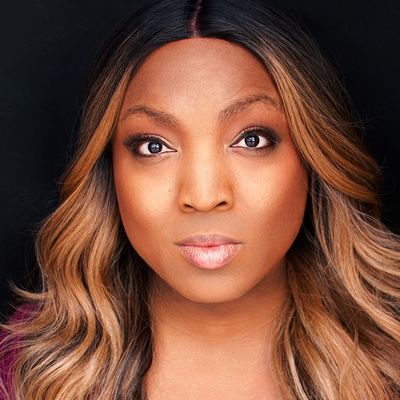
Hold for applause because we are in the presence of a legend! Today the boys are joined by Tony Award nominee L Morgan Lee to talk about nurturing all sides of her creativity, the many iterations of her track in A Strange Loop and the expectation vs... Read More
From the show: Sentimental Men
Guests
Featured Shows
About
Hold for applause because we are in the presence of a legend! Today the boys are joined by Tony Award nominee L Morgan Lee to talk about nurturing all sides of her creativity, the many iterations of her track in A Strange Loop and the expectation vs. reality of attending the Tony Awards. Plus, Quincy and Kevin get Sentimental about Into The Woods cast recordings.
Transcript
This transcript was automatically generated and might contain errors.
[0:00] Quincy Brown: So, like this child vomits on the stairs, and this woman is trying to get down the stairs.
[0:07] Kevin Bianchi: She trips and falls into the vomit.
[0:10] Quincy Brown: And so that whole moment was actually, I would have been laying in vomit on the stage, just casually having this conversation with Usher, then having a heart attack and dying.
[0:26] Quincy Brown: My name's Quincy.
[0:27] Kevin Bianchi: And my name's Kevin.
[0:28] Quincy Brown: And this is Sentimental Men from Theater Lee.
[0:31] Kevin Bianchi: We are here to talk and maybe scream about our favorite women in musical theater.
[0:39] Quincy Brown: And away we go.
[0:41] Kevin Bianchi: Why you do what you do, that's the point.
[0:42] Quincy Brown: All the rest of it is chatter.
[0:44] Kevin Bianchi: Look at her, she's crying.
[0:45] Quincy Brown: Would you be the baker's wife and I would be the baker if of the two of us?
[0:50] Kevin Bianchi: Hmm.
[0:52] Quincy Brown: Could I sing the baker's wife?
[0:53] Kevin Bianchi: Yes.
[0:54] Quincy Brown: Well, sure.
[0:55] Kevin Bianchi: Um, I am going to.
[0:58] Quincy Brown: Huh?
[1:00] Kevin Bianchi: I kind of think.
[1:01] Quincy Brown: Well, you go ahead.
[1:02] Kevin Bianchi: You go first.
[1:04] Quincy Brown: I was gonna say, I think we both bring very interesting colors to both roles. However, if I was gonna watch a Sentimental Men production of Into the Woods, I actually think you should be the baker's wife.
[1:15] Kevin Bianchi: I'll give you that.
[1:16] Quincy Brown: I that's what I was gonna say too, not selfishly, but because I think that the baker like thinks about everything, and the baker's wife is the one that's like, let's just do it. And I feel like that's a fun dynamic for the two of us.
[1:28] Kevin Bianchi: Yeah, I also think that the baker's wife takes a smarter actress than I would be. And the baker, you can kind of like take some time to figure it out, you know, and get the beats. Baker's wife needs to be a little more fluid.
[1:41] Quincy Brown: Anyway, hello and welcome back to Sentimental Men. I know that we're like so in Into the Woods zone. The cast recording has come out since you and I have last spoken on microphone.
[1:51] Kevin Bianchi: Uh-huh. Thoughts? What have you been listening? What tracks have you been listening to on repeat?
[1:55] Quincy Brown: Okay. What tracks have I been listening to? I love to listen to No One is Alone because I love the way Philippa and Brian Darcy James sound together singing that song.
[2:09] Kevin Bianchi: Is it to my ears? Also, obviously listen to Moments in the Woods a hundred times over because I'm acting it. You know, I'm like in my room, lip syncing, I'm acting it.
[2:22] Quincy Brown: And finally, Justice for Any Moment and Moments in the Woods, two separate tracks. Never before on a cast album. Thank God, because as a Cinderella's prince, you can relate. We understand the importance of any moment. But it's not what I'm trying to listen to when I go to that track on the album.
[2:41] Kevin Bianchi: Although I will say I have been listening to that track pretty regularly from this recording. I don't know why, because it's not even one of my favorite songs from the show. I mean, I know why, and it's Gavin Creel. Like he sings it.
[2:54] Quincy Brown: He sings it different than anybody. I have been listening to, I mean, this cast recording is all about cerebrellas for me. No Tino Shea to anyone else. I just think that like what I am taking away from this cast recording are all of the Sarah Barellish tracks because it's so different than any other Baker's wife that I've heard or that we have on recording.
[3:12] Kevin Bianchi: Uh-huh. So Moments in the Woods, Maybe The Really Magic, which is also separate, which I don't think is separated on the OBC R. Is that correct?
[3:19] Quincy Brown: It's not. And I had never um it is correct, and it had never bothered me, but then having this the option now, I'm like, okay, I could see how it's two different vibes, but I've always liked it as a package, you know.
[3:32] Kevin Bianchi: Oh, see, I like it separate because I can just listen to that. I don't listen to, which maybe I should revisit the revival, the first revival cast recording. Like with Vanessa Williams.
[3:44] Quincy Brown: Mm-hmm. Yes, I do. I actually really like that recording because I love Laura Bonante. I love her voice a lot.
[3:51] Kevin Bianchi: Oh, so true. Controversially, I do not love the ending of On the Steps of the Palace that is in the first revival cast recording when she's like, the wolf, and the steps of the palace. And it just doesn't do it for me.
[4:12] Quincy Brown: You'd probably love it, right? Like, I'm guessing it would appeal to your sense of showmanship, I think.
[4:18] Kevin Bianchi: I'm imagining that. I don't know if you're gonna get those. That song in Little Mermaid where you have Triton, Sebastian, Ariel, and the Prince all singing their quartet.
[4:28] Quincy Brown: If only.
[4:29] Kevin Bianchi: Am I gonna get it? Quincy, how many voice recitals did I sing that song at? I love the quartet.
[4:35] Quincy Brown: Well, yes, it's very that. It's like um she goes like uh uh, and you learn something too, and then Jack is like, and I've learned something too, and then she's like, something you never knew, and then little red goes, and uh something you never knew, and then they sing something that I never never never knew before. And it does this like pretty pretty chord. It's very pretty, it just takes me out of the world.
[4:57] Kevin Bianchi: Okay, today we are talking to the one, the only Tony nominee, L. Morgan Lee.
[5:04] Quincy Brown: Otherwise known as My Date to the Tony Awards.
[5:09] Kevin Bianchi: Hey, yeah, wait, tell that story before we get into anything else.
[5:13] Quincy Brown: The story is If you want to have the great fortune of working on the great musical that is A Strange Loop now playing on Broadway. And L. Morgan and I have developed a friendship, and she was so kind and really made my life. I like to think that she knew how much of a big deal this was gonna be for me. And she was like, you know what? Let me just throw this kid a bone. And asked me to be her date to this past Tony Awards.
[5:40] Quincy Brown: And it was a night that I will never forget. I will be ever grateful for that experience. And honestly, just to like be by her side and witness the night from like that point of view was such a cool, cool experience that I really can't believe happened.
[5:55] Kevin Bianchi: Yeah. Even now.
[5:57] Quincy Brown: It was exciting for me too to because every time they cut to her, you were right there. So it was exciting because I've never like known somebody at the top. You know what I mean? Like I've never like seen a friend. So it was fun.
[6:11] Kevin Bianchi: And I will say that that night, every time you were shown on TV, I would get like 12 text messages or like DMs that are like, oh my god, wait, did I just see Quincy on the Yeah, no, it was super fun. And like we did talk about that, because that was a big thing for her too was that moment where like all the nominees, they like read the names and all the squares are up on the screen and everything. And it was like very nerve-wracking. I was like, Am I gonna be smiling? Am I gonna be grinning next to her? What do I want? Do I I don't want to pull focus? Like, what do I do? It was I didn't talk about that. That was my internal monologue.
[6:42] Quincy Brown: It's pressure. And it is funny because like you always wonder why everyone's looking up in the thing when their box is on the screen, and it's because like you're sitting in an audience and the stage is far away and there's cameras all over the stage. So like you're kind of watching the whole award ceremony, even though you're there in person, you're watching it on the television. So then, like, there is a giant camera in front of you, but they place there for a while. So you're kind of just watching, and then you don't realize that it's about to happen, and you're like, oh shit.
[7:06] Kevin Bianchi: Oh. Well, that's good to know for planning purposes the next time I'm next time you're there.
[7:11] Quincy Brown: Yeah. So yeah, that was really fun. And now she is gracing us on Sentimental Men with her presence, and we are so excited. Quincy, I know that you have a choice as options and bootlegs for me from Ms. L. Morgan Lee. But before we get to that, can I do a little L. Morgan Lee bio section?
[7:30] Kevin Bianchi: Please.
[7:31] Quincy Brown: Great. Thank you so much. So, as we know, as we just spoke about, L. Morgan Lee made her Broadway debut in 2022 in A Strange Loop as Thought One. That was a performance that earned her her first Tony nomination, which also marked the first time that an openly transgendered actor has been nominated for a Tony. Hold for the applause, we are in the presence of a legend.
[7:55] Quincy Brown: L. Morgan originated the role of Thought One in the show's Off Broadway run at Playwrights Horizons. Um, and after the run of that show, she won an Obi Award. She was the recipient of the Mark O'Donnell Prize for Emerging Theater Artists, and she became the first openly trans actor to originate a role in a Pulitzer Prize winning show. Once again, we hold for applause because we are in the presence of a legend today.
[8:22] Kevin Bianchi: L. Morgan can also be heard on the Rainbow Lullaby album alongside literally everybody from Broadway that we're obsessed with. And she can also be heard on Joe Iconis' album and on a bunch of audiobooks. The lady is busy, as we like to say.
[8:38] Quincy Brown: She truly is. I'm so excited to see what comes next for her career. I feel like she's such a unique talent.
[8:45] Kevin Bianchi: That is gonna do some really cool stuff.
[8:46] Quincy Brown: I agree. And like A Strange Loop in general, I'm sure we'll get into this. But for me, probably for obvious reasons, A Strange Loop resonates so much, and it's been so cool to see the journey that the show has had on Broadway. I remember when it was at Playwrights before the pandemic, a friend of mine asked me if I saw it, and I was like, no. And he was like, Well, you absolutely must, like, you should. I never did get around to seeing it.
[9:08] Kevin Bianchi: Yeah.
[9:08] Quincy Brown: But that inspired me to listen to the cast recording, and I like bought the script and read it and became obsessed. So it was just a cool full circle moment to get to work on it later after developing such a connection to the show.
[9:20] Kevin Bianchi: Can I give you a choices, options, and bootlegs?
[9:24] Quincy Brown: I would love it if you did.
[9:25] Kevin Bianchi: So I had two videos in my mind when I was thinking about this, but the one I chose is because Funny Girl seems very topical right now.
[9:33] Quincy Brown: It does.
[9:34] Kevin Bianchi: And this video is Miss L. Morgan Lee singing My Man from the Funny Girl movie. But it's also so I just went on a TikTok deep dive. Julie Banco posted this TikTok being like, I know you all want My Man back in the show, but let's take a second to think about the song and its history. And she kind of explained, so don't quote me on this because I watched a TikTok and now I'm telling all of you about this. She kind of explained that the song originated as this French jazz standard, and then it was translated and became kind of this like cabaret standard, and then was put into the Funny Girl movie to replace Music That Makes Me Dance.
[10:12] Quincy Brown: If I ever sound like I'm misspeaking, please tell me.
[10:14] Kevin Bianchi: No, this is ringing true to me so far.
[10:17] Quincy Brown: But the current production on Broadway does not have that song, it has Music That Makes Me Dance because it's the stage production of Funny Girl. And Julie Banco, I think when Leah Michelle was going in, there was a lot of talk and rumors about maybe they were adding the song to the production for Leah because she did such a stellar performance of it on Glee.
[10:31] Kevin Bianchi: Uh-huh.
[10:31] Quincy Brown: Which like to this day I still remember. Like, that was a real awakening for me as like a musical theater girly. Watching that on TV, it's crazy. I can still in my head, like picture the face that she makes when she hits that.
[10:43] Kevin Bianchi: Alright.
[10:44] Quincy Brown: Like, truly crazy. However, Julie was like, the song is problematic. The song is literally about like a man can do whatever he wants to you. It doesn't matter. I'm still gonna like come crawling back to him. The original song talked about the man beating her, but it doesn't matter, all that kind of stuff. And she was like, I think it's best that we leave this in the past and that Leah Michelle and Barbara Streisand have their very well documented performances live on, but like we don't need to keep performing the song in the show every night.
[11:14] Kevin Bianchi: Which I thought was a salient point.
[11:15] Quincy Brown: Song still slaps though.
[11:17] Kevin Bianchi: Yeah. To the point where I was like, couldn't we have like rewritten the little? I have ears.
[11:22] Quincy Brown: Um but L. Morgan does a has a great cover of this on YouTube, and she's locked in. She is performing, you get a real tear from her. And like her voice is just so specific and unique to me and hits in a way that other female voices don't.
[11:39] Kevin Bianchi: Um, and it really shines through in this cover, and the way that she sings it and hits the notes is so addicting. I would highly recommend everyone go, we'll post it, but go take a watch of this performance. My Man, L. Morgan Lee. YouTube it, you'll find it.
[11:58] Quincy Brown: L. Morgan Lee is here with us today.
[12:01] L Morgan Lee: Thank you so much for joining.
[12:03] Quincy Brown: I feel so special being asked to come.
[12:06] L Morgan Lee: Oh my god. This has been a long time coming. I've been waiting for this moment.
[12:10] Quincy Brown: I know. Me too. Okay, so we start every interview with what is a Wicked touch point in your life that you have. It can be anything you want it to be, but we've found that every actress in this city has some sort of a touch point with Wicked.
[12:24] L Morgan Lee: I have two touch points in that I won the lottery. Um the way that I saw Wicked, I've only seen it twice. Both times were because I won the lottery. Um, and they were both on times where it was just by chance. Groups of people wanted to go see the show. And it was like OG cast.
[12:45] Quincy Brown: Um you won that lottery twice.
[12:47] L Morgan Lee: Twice. The first time I went, Kristen was not in. And so I saw just Idina and then Kristen's understudy. Um, and then I was like, well, I have to go back to see what the show is with Kristen S. Glinda. And then I went back and was like, let's just try this lottery again. We'll see if it works. Sure enough, was right back in the lottery, won, and got to see full OG cast.
[13:08] Quincy Brown: And I didn't even realize your line in the Tony Winning Best musical, A Strange Loop. One of the lines that you have is I like this and I like Wicked. And that came to me just now. That wasn't even something I thought of before.
[13:19] L Morgan Lee: Wow. On this Wicked one. And here I am on Wicked's broadcast.
[13:24] Quincy Brown: A little, a little younger, a little younger than that patron.
[13:28] L Morgan Lee: A little more blonde.
[13:31] Quincy Brown: A little more blonde.
[13:32] L Morgan Lee: A little closer to Glinda and I would like to see it, honestly.
[13:38] Quincy Brown: Yeah, what part would you want to do in a perfect world if you had to do Wicked and be in one of those tracks? What do you think would be L. Morgan would fit El Morgan?
[13:47] L Morgan Lee: Oh, I mean, Glinda all the way. I I I kill for a crack at Glinda. The thing is, I just unfortunately I cannot sing Glinda the way I would like to be able to sing Glinda. Um, I have I'm I'm a bit of a snot about the sounds. So I would want to have if I'm gonna do it, I wanted to be able to have that soprano cup all the way through that upper. I want to be able to do all the high options to make it like it ain't fun for me unless I'm going like unless unless I'm really gonna get to go there.
[14:17] L Morgan Lee: Um yeah, I mean, and then a chance just to sort of go from that right into like the the couldn't be happier sequence is like oh sure. It's such a like delicious acting section. Um I mean the whole thing is, but I just think in particular that couldn't be happier sequence is fantastic.
[14:37] Quincy Brown: Yeah, I would love to see that just be happier. That I could do maybe YouTube. We talked about your My Man YouTube video in the intro. Maybe that's the next video.
[14:46] L Morgan Lee: Yeah. I have actually it has been on the list for quite some time, but it's one of those ones that I'm like, I don't want to do it unless it's done right. Um I'd want it to be that and like popular are two where I'm like, if I were going to play with them, I want to be able to play with them in a full out, like great camera work, great everything sort of situation. So yeah, because those are those two big powerhouse songs. It's like you can't half step them. Yeah, they're just and it's just they're also just so much fun. I don't want to look back and be like, uh, the camera wasn't the greatest quality, or the look wasn't. I want it to be like full out. Because I feel like people don't realize how much a creative you are outside of being this brilliant actress.
You have so many other facets to your creativity that I'm excited to talk about. But before we get into that, let's do a brief preamble of A Strange Loop, best musical at this year's Tony Awards, which we went to together. Talk a little bit about A Strange Loop and how it came into your life because you've been with it for a long time.
[15:46] L Morgan Lee: I've been with it since 2015. Um, and I received a message in my DMs from Michael R. Jackson saying, I got your name from a friend, and this piece that I'm working on, I'd love if you could come and do the reading. He actually saw a video of me singing "Part of Your World," and that's what made him reach out. It was a version of "Part of Your World" that I arranged for a cabaret, like a solo show that I did. Yeah, so I took a look at the clips that he sent me, and I remember thinking like this music is far more raw than anything I've ever heard in terms of the language being used in musical theater. Um, and his POV is very like, uh, unapologetically his own, and I'm all about artists who can truly be themselves and just like kind of lean into that.
So I was like, well, why not? Let's give it a try and see what this thing is. And in that reading, I was introduced to the sympathetic ear, in which I was like, hmm, interesting. In this piece that's so full of all of these other vibes, there's this sensible Caroline Carmelo moment that I will probably never get to do in another show. So you know what? I'm gonna hold on to this thing and kind of see what it shapes up to be. Little did I know.
[17:04] L Morgan Lee: So that moment sympathetic ear was there from the beginning. Absolutely. Yeah, yeah. I mean, it was a part of a much larger number at that point. I mean, there was also in the mind of Michael R. Jackson, um, you know, there's always a little bit more complexity, and that particular moment came in the middle of a much larger piece where the entire cast sort of opened a song saying, "Please watch her step on the way down." Someone just vomited. So, like this child vomits on the stairs, and this woman is trying to get down the stairs. She trips and falls into the vomit. And so that whole moment was actually, I would have been laying in vomit on the stage, um, just casually having this conversation with Usher, then having a heart attack and dying.
So, you know, we are we are grateful that that synthetic ear gets to live on. Um, but there were also she gets to actually leave the stage, there is no vomit, she has a sensible capelet. However, there were versions of the scene that I think were like so much fun that sort of showed other sides of her. One that discusses, you know, some adult pictures that came out about a certain young man on a TV show called Cookie and Lucius, and how those pictures in that young man make her moist. And how even at this age, the moistness never goes away. Um, you know, there was this sort of sexualizing her element that like I was kind of a fan of. And so for me, like all of those things have been kept in my sympathetic ear today.
Only I know what all those scenes were, the things that sort of got cut out, but they've all been sort of a part of the reason why she was there, sort of what was going on with her life, that you know, this was you know, she never knows when this is going to be the last trip because you know, in previous incarnations, there was she was battling with something that sort of could take her any day. Um, so there's just lots of reasons for like extra stuff under the fabric of who she is that I've sort of held on to just because I got to do all those incarnations.
[19:23] L Morgan Lee: So you kind of touched on it, but I think it's interesting. Jan mentioned to me once that there used to be the opening number has not always been the opening number. The opening number of A Strange Loop. And it used to mention like people doing cocaine in the bathroom and all this stuff. I was a ch I was I was in the opening number before I was the mother of a child um named Abby who I sort of screamed at actually that was funny. Actually I kept thinking about Caroline Carmelo during that too. Because there was there was a moment where she's like, "Abby what'd you put?" It's like this sort of Abby which put your American girl place doll is she's screaming. And then I turned into the child who is screaming I can't find my brand new American girl place.
I can't find my brand new American girl so that big black and queer ass American used to be I can't find my brand new American girl place doll was this child screaming in which in a workshop in a movement workshop I was being thrown across the stage by people like this child just getting thrown all over the place. Yeah and then we started you know incorporating this word queer into the show and then we came back after we had finally all learned the words to the opening it took us quite some time and then we showed up and it was a whole new opening which is the one that we have today.
[20:38] L Morgan Lee: Is there anything besides the like other iterations of Sympathetic Ear that you that you miss or that you wish you could have brought pieces of all the way up to the current iteration? Oh well certainly that's never like I think like there were elements just elements of um it's interesting because in many ways I feel like I am bringing them to the current iteration because I know that they're there. Yeah just the audience doesn't see them. So they don't get to hear the text in the same way. And I actually get the why that's the case because it would have started to feel like the scene was being dragged out longer than it needed to be for this particular telling of the show. But yeah, I feel like they're all with me.
So yeah. And how lucky for the people who see you that they get to see all of those other versions. Because no one else will know those. And no one else does know those. None of them. That doesn't go in the stage notes, you know, like and I won't talk about them. I won't I won't tell because that's my memoir. That's my piece.
[21:34] L Morgan Lee: Yeah. It's true that you almost didn't do the playwrights run of A Strange Loop, right? Like you were gonna leave the production prior to the playwrights run. Can you talk a little bit about that? I mean, because I started transition through the process of development of A Strange Loop. Um, and so the human that the creative team saw and sort of thought that they knew in the first presentation of the show was very different than the human that I was becoming as we sort of developed the piece. Um and so I more and more felt like it wasn't my story to tell, and that you know, I care about the story and think that sort of how the story is being told is important, the lens through which the story is being told is very important.
Um, and so I did not think it was my place to be, and I didn't I'm not someone who's going chasing behind places that I don't belong. And so I was like, I think that like it'd be better if I step away and make room for the human who should be telling this story, and I will be there in the front row, I will cheer you all along, but I will do that from the audience.
[22:38] L Morgan Lee: And was that gonna be an easy decision, or were you emotionally invested at this point? I was emotionally invested. I did not want to leave, but I also thought that that was just the right thing to do artistically and just as a human. Because I I'm loopy-doopy, and then I believe that the universe puts in front of you what you're supposed to have, and so I try not to act out of a space of scarcity, this idea of like, well, there's not enough work. So what am I that's not energy that I find to be helpful? Um, so I feel like if you, you know, make room, the things that are supposed to fill that space will come. So to me, it was like this is an opportunity to make room both for the space, but also for me as I'm transitioning and starting to really get more comfortable in my skin and figuring out what that skin is at that time, really.
And yeah, so I thought it was the right thing to do, and they met me quickly. They were like, let's have dinner, let's have a chit chat about it. Um, and they were like, We've been talking about you behind your back, so we should probably do it with you here so that you kind of know where our heads are and what we're thinking. And we do believe that the piece um will have the potential to reach more people with you staying, and us, and it's then on us to try to make sure that we are doing the work to address the things that you've that make you feel like you don't actually belong here. We want to be able to do the work on those areas so that you do feel like you do, like that you belong and that you do feel like this is a space that feels safe and right for you.
And I think that that was certainly not something that an actor is used to hearing in that process because for the most part, people just go, Oh, great, well, you know, thanks for the work and sigh now. Right.
[24:17] L Morgan Lee: Yeah. And that was not the case here. So I was more than happy to stay and sort of see how things would ride out. Yeah, and then things have certainly gotten, I mean, look, I mean, I think there's conversations that could be had about the looking back at that conversation and sort of piecing out like, was that work fully done? How was that process? sort of what does that look like? That's certainly something that could be discussed. But I again, I think that the universe puts in front of you what you're supposed to have in front of you. And so here we are today, and with things having happened that I never imagined happening. And me feeling that much more comfortable just in my own skin and now knowing better than ever, sort of ways to ask for the things that I need, or ways to ask for the things that that I think will make rooms more safe or more accessible or more productive for people who are somehow gender expansive or just people who are different than the others in the room.
[25:15] L Morgan Lee: Yeah. Cause to me, I mean, almost in every way, you are like the queer piece of the puzzle for this big black, queer ass musical, quote unquote. And like your presence does elevate it in that way. Your track has it evolved from the beginning to now as you transitioned, or was it the same day one as it is now?
[25:39] L Morgan Lee: I had, I mean, I pretty much had the same things. I mean I was Nala for a little bit through the process. Um interesting. Um Rafiki was not always there. Um, so I was I was I was Nala for a while. Um is my favorite thing you do in the show now. Perhaps because you know me a bit closer, so you know that I could not be more different. I could not be farther away from a human than that. Um that is the moment in the show for me that I to this day am a little uncomfortable with because I'm like, I have no idea how is this reading to people because I've made a choice and I am just going with the choice. Um it's, it's, I've had some other lines here and there that have been dispersed to other people, but I think it being dispersed to other people also just made more sense with those, with those particular tracks.
There was a, there are a couple of the mom lines that are that uh I used to have that have not have sort of been put get divvyed up to someone else, um, two different people. Yeah, like there's been like little switcharounds here and there.
[26:44] L Morgan Lee: Um, but for the most part, my track has been pretty much the same. I do, you know what, there was this character, there was this character that used to be in the show that I kind of wish was still in the show, that was in like the parent scene with Usher, there's like a conver they mention this friend of Usher's that like haven't you started dating her or gotten her pregnant or that kind of a thing. So that character actually used to have a little scenelet with Usher in the show. Um which I think like in particular as a black woman, it is it would be really lovely to see in the show. It would have been lovely to see in the show Usher having a black friend that's a woman that that he like loves and cares about and like is really great friends with and that sort of understands him and helps him talk about or talk through things that he can't really talk to other people about.
It would have been kind of cool to see. And it was a genuine moment, it wasn't like a gospel player. It wasn't like a gospel play moment at all. It was very much just like two friends kind of having a conversation. I think that there are some elements looking at that, looking back at that now, I think there might have been some elements to that that would take away from the sort of constant torturing that Usher is experiencing, that my character actually is the one that sort of doesn't do. So maybe that was a part of the factoring. I have no idea. But I do think that if in this piece that has so much to say, it would be cool to see the areas where like Usher is being sort of heard and supported.
[28:10] L Morgan Lee: Yeah. You did mention in another interview that your thought, your character is kind of the only thought that Usher has that isn't constantly berating him with negative self-talk. And that was eye-opening to me. I had never connected those dots. I think it's interesting because it's always it's also always presented in a way where she could be another one who was about to go in on him. But then there's always that slight turn where you're like, oh, oh, oh, oh, interesting. She she's nice. Or or she or she cares somehow in this moment. Because like my guardian starts off with a little bit of a of a dig, but then is like actually asking questions that make sense and that would make the writing more specific and make the writing better.
And like, why do you want to do this? Like, why do we need intentional questions? Yeah, it's like the right kinds of questions that writers need to hear that like helps you to really be able to put your feet in the sand and like stand firmly on what you're saying.
[29:07] L Morgan Lee: So moving away from A Strange Loop as like an art a show. Sure. Take us back to when you found out that A Strange Loop was coming to Broadway. When did those rumblings start happening? Ooh. We started getting an idea that there was a conversation about Broadway before there was any kind of confirmation that it was even possibly going to happen.
[29:30] L Morgan Lee: So like there was when we found out we were going to Wooly Mammoth, there was sort of a you know, and if we go to Broadway, we'll want to start to discuss what that looks like. So playwrights, there was no Broadway talk. There was no, no, there was no idea that we were going to Broadway after playwrights. We were like, we're done. The show's gonna close. And like, wonderful, you know, if it transfers, maybe at some point, but who knows? But show's closed, and here we go. Um, and then that awards season hit, and all of a sudden people started being like, oh my gosh. Like, I remember, I remember being at my computer um working on something and getting a text, like a Twitter notification, and I was like, Twitter, and I was like, and it was like like the featured actress category at the Lord Tells, and I was like, Oh, I was like, wait, what?
You weren't even keeping an eye out for that kind of stuff? No, because I I mean, like the show closed, and I was like, great, no, we're done. So yeah, great. And so I didn't even know like when any of those nominations or things came. Like, I'm not someone who paid a lot of attention to that stuff. Um, and so I got that twit, I remember getting that tweet, and like immediately just like bursting into tears because this is how I just respond to everything. Um but like literally, like, was like, oh gosh. And for me at that moment, it was like, oh, someone like acknowledged like my work, and like it was it was particularly touching because that run at playwrights of a strange loop for me was really scary and new, and it was the first show that I done in front of New York City fully as myself, and like I was nervous about how I was gonna be seen.
I was terrified of like the ways that people would talk about the show, how I might be talked about if people would somehow misgender me or like not see me clearly. Um, and like actually the whole opposite happened a lot, where like people were like, Well, what why is this why is this random black lady in the show? Um, and like then like they like and and and like Which was that affirming to you? In some in some mo I mean I kind of laughed because it was like not what I was expecting people to say, and so it was like, how would the team respond to this? Was my question then? Because if someone were to say, why is this lady on stage in the show and this piece that's supposed to be this, you know, big queer show, why is there a lady there?
Number one, women can be queer. Um queer does not equal gay, despite what everyone seems to believe. Queer is far more expansive and inclusive than that. But then what what I did not want them to say in response is, you know, why is there a woman on stage? I didn't want them to be like, oh, she's trans, because that also is not the right way to look at any of that. Um and and it actually asks the team to actually answer the question as if it were cast today. Why is there a woman on stage in this in this show? Why is a woman necessary? To me, it's the is the easiest response in the world that in the mind of this, in particular of this particular gay black man, if we're having people like you know, people living out sort of the the embodiments of what might be in his mind, of course there's at least one woman.
Like that's not, I mean, that in particular this gay black man, there's probably a few. Every gay has that middle-aged woman that they are that they idolize and they take their advice from and they learn from, you know what I mean? Oh, that's interesting. Does every gay have a middle-aged confidante slash mentor in their life? Not actually, but in the same way, I think gay men idolize middle-aged women. Capital G. Capital G. Yeah, I can see that. Because there's like the obsession with like the legends, yeah. Right, right. The Divas. And the stature that comes with like a rich lady seeing the Lion King. I love her, you know? Like she, if she's buying things at the gift, the gift counter has a window.
He's got money. And I I you know, like that stature is just something I think we all like recognize and are obsessed with. And I think like, so of course that of course she's an Usher's brain. It's funny because I miss, I used to have a little cup at Playwrights. At Playwrights, I had I I had the I had the the poster under my arm and a Lion King cup on my other hand. I was holding it. I've gone through there's been moments where I had like the purse where I was eating like candy as I was going through it. Right. If she's buying stuff from concessions, I mean this, she has everything. I mean, she's probably got a glass, a couple glasses of wine, she's got candy, she's got the the soundtrack, the script.
Like, I think she gets everything every year just to say that this is from the 2022 trip. This is from the 2020 trip. Each year, one day these things will be so so worth so much money. Yeah, like yeah, yeah, yeah. Okay, so back to finding out when Strange Loop went to Broadway, Wooly Mammoth. I think externally the perception is when everyone found out that a strange loop was doing a production in DC, that was like, okay, this is the pre-broadway, it's gonna come to Broadway. Was that your perception being in it? Actually, what we believed is that this was their way of sort of making sure that people remembered that the show is around and that and that the I we thought that this was part of a plan to sort of make sure that the people that could get us to Broadway would be thinking about Broadway.
And like, I mean, clearly it all worked because there we were. But uh, yeah, and so when we found out, I mean, there had been a little bit of we were in the middle of like conversations about contracts and stuff, so there was all of that part of it going. And then when we found out that it was that we were actually going, I remember being in my apartment in DC. I remember just hearing that we had our like zoom together to find out about it. And then we were told we can't say anything, of course, because you can't say anything because it hasn't been announced. Um so we were like, okay, well, you know, the show is going to Broadway. Excited that the show is going to Broadway. Now let's see if we are.
Because now we start having to really pay attention to these negotiations and things happening to see if we are gonna go. And like, and honestly, at that point, I was very much like, I don't know. I would love to have this. I want it to work out, but I also gotta feel appreciated. Like I also have to feel like I'm I'm being compensated for the work and for, you know, the fact that you've been with this project for this many years, and many of us had taken a lot of. So you weren't in a place of I'm just gonna get to Broadway no matter what. Oh god. Regardless of what the situation is. No. Gotcha. I'm too, I I I just feel a little too old for that, to be honest with you. Like if I were 22, maybe that would be the mission, but I'm like, I haven't been, I hadn't been to Broadway yet, and has count I've seen countless friends go do Broadway shows and have a variety of experiences in those shows.
So for me, it was very much like I want it to be, I wanna be able to really be excited about the process and what it is and feel valued and all those great things before you go in. I gotta feel like there's a real reason to be there other than just to get that debut. Um, because that that thing, it's always going to be a little different than you expect it to be anyway. So, like, you want it to, you want to know that you're being taken care of. Mm-hmm. So let's talk about that process of getting the show up on Broadway. Because I remember early on when you all were still in rehearsals, I voiced to some of you that I think that I was about to witness a very cool trajectory for all of your careers, and I likened it at the time to watching like the red cast kind of explode onto the scene in this like big press flurry.
What was it like being in the eye of that storm? Because Strange Zoop did have a very big moment around opening and around the Tony Awards. Expectations versus reality. Oh, good question. I didn't have a lot of expectations because it was my first time. There was so much going on that I couldn't really sort of process things in the moment. I was just trying to get through. And at the same time, because we are living in, you know, COVID times, I was trying to get through, and like at that point, praying with every COVID test that I'd be okay. Sure. Especially after nominations happened, I was like, I have to be at the Tony's. Right. Um, I think it was like, I just have to be at the Tony's. If I can make it to not get COVID until, you know, if I can get COVID on the 13th, that'd be great.
Because then at least I've gotten through it. And then I can take a break. Yeah, yeah. And then I can get my days off that everyone else got through the process that I did not, and I still have not. Yeah, I mean, expectations were I had none. And reality was it was quite a storm. Um, and you just sort of are watching, watching my social media go crazy, watching like, you know, people come to the theater sort of looking for you, watching sort of walking down the street and having people know who you are all of a sudden, which is so interesting because, like, there are moments where, like, if my hair was different coming out of the stage door than it was in the show, sometimes people don't recognize me, which I still think is a little crazy, but I get it.
Um, but then I could get a block away from the theater and they'd be like, Is your name Elle Morgan Lee? I was like, Oh, yes, and then they're like, I saw you, and they were like, Oh my god, thank you, thank you. Um, so like that situation was sort of cool to see starting to happen where people and then like getting messages from people, in particular from you know, people who are gender expansive in some way, or trans or non-binary, or getting messages from folks, or hearing people say, like, the community knows who you are and we're watching you and we're supporting you. Like that kind of stuff was really helpful. Um it made me feel like the responsibility was a lot bigger than I knew, right?
For me as a human, it just made me go all of a sudden, people care what you have to say, and people are listening to you, even if it's not the people that you necessarily, it's not always the people that you want, quote unquote, to be like the people that you're talking to with like intent that you're like, I need you to hear what I'm saying. They might not be hearing you, but the people who are hearing you are the ones who who you who you really care about and who you who you do want to listen to you, and they might not be the movers and shakers in the mix, they might be the people who just need to hear your voice to know that there's someone trying to speak up for us all in that way. So there was a an element of like, I do not consider myself an activist because I think that word has a lot of responsibility around it that I am not necessarily willing to take on.
But I but I do believe that all of a sudden I felt like the things that I say that there was there is a sort of responsibility behind them that I that I really think is important, and I I pressure myself sometimes a little bit too much to adhere to and to think about. Well, and that's interesting because even with your Tony nomination, the headline for it all was the first transgender Tony nominee. Which, as like a marketing guy, I can understand why that is the headline. But as a human, what did that feel like for you? Because I'm imagining with my anxiety and insecurities, I would get in my head where I'm like, okay, well, did this only happen because I'm transgender? Do I actually deserve this?
Now I have to do all this press where I'm talking about this, blah, blah, blah. It would drive me crazy. I mean, there was certainly there were certainly the moments of I I certainly hope that the reason I'm not not I that I'm nominated is not simply because I'm trans, but also I've been in this business 20 years and I've busted my behind to do the best work that I know how to do, and I know I'm fucking talented. So like I know that like even if for some reason the reason that I popped up on that screen is because I'm trans, it's that I know I do have the chops to be in that category. I do have the chops to back up the thing that I'm being talked about for because I've worked really hard to to like to get them.
I've worked really hard and beaten myself up over the years to be in a certain kind of shape that I feel okay about. And I'm always I'm always gonna be my worst critic of all. And so, you know, when I'm when people ask my opinion of things, I'm I am very opinionated and very much kind of a snot about certain things. But if but what I put out when I when I when someone asks my opinion of something else, that on myself is like tenfold. So the nomination to me was something that I dreamed could happen one day and hoped would happen one day. So the whatever reason I ended up being there, it was like I've worked really hard, and so I I belong there. I do think that like that being diminished to just being an identity was certainly a factor in my head and and is always a factor in my head because we are in a period where so many people are interested in trans people and trans stories and let's be, I don't want to say woke, but it's you know let's be conscious of the people around us whose voices are not being heard.
And I think I think in some ways it's let's be conscious of those people as long as it's not inconvenient. It's let's be conscious of the voices who are not heard as long as they are convenient. As long as being conscious works within the the boxes that we needed to work in. Right. But if there is any sort of pushback or question or or going around that well maybe we need to sort of silence that off for a moment. Because that's a whole nother storm to go through when all of a sudden people are recognizing your work and there's cameras in your face asking you to talk about not only your experience but the show you're in and what it's about and what you what your part is and and in my case how does it feel to I mean it just even feels weird to be like making history.
It's like what? Yeah like it's like I don't know how it feels. And your show and I'm like I don't know how it feels to make history. I'm just trying to like put one foot in front of the other and like be okay. Like I I can't just get through the show too I can't talk about that. Right I have to sing I have to do this show again that like people don't actually understand what I'm doing in the show because we're so together for so much of it, they don't understand like the demand individually of what we're doing. Yeah. And like there, I think that's the thing that's very tricky about a strange loop is that you see these these people all together moving like a unit in so much of it, but you don't know what these individual demands are on each of those pieces inside the unit.
For me, vocally, my track is a beast to get through. Like it's a lot. And like I don't, I think that there's this, there's this world of people that will be like, oh, well, you know, if if El Morgan goes out, you could just throw in this insert, you know, insert famous trans person.
[44:21] L Morgan Lee: And I'm like, if you knew what I was having to sing in this show, you would not be so quick to just throw random names into the pot. Because you'd have to actually know that they could sing the track. It's a lot, and like it's written in a way that like when you're in development and you're doing it for two weeks or a week at a time, you're like, yes, I can just lean in. It's crazy. But then when you're like approaching show 200 and you're like, oh god, I can barely speak. My throat is raw. Like it's like you, you, you, you, I see. I think it was uh Andrew Rannells who was like in the Book of Mormon workshops, he kept raising the keys because he didn't want to get replaced. And then having to do it every night, he was like, fuck me.
Uh-huh. Well, it's funny because I was like, I definitely develop work very differently now. Like working on another project, like working on another project. I remember them being like, here's this, we're gonna work with this key, and I was like, let's take it down. And they were like, oh, I was like, no, no, she's a little older in this section, we're gonna take it down again. Let's just make it really warm and rich in the bottom. And I was like, because eight shows a week, I would kill myself having to be like holding up this thing. Like, like, I'd rather you get to know me and know that like keep a lookout. Like there's there's there's more in store. There's because I don't get to even like it's a show where it's like it's so, it's so interesting because it's like it's you I never would, I never would have expected like a that my Broadway debut and that like my like Tony nomination would come from a piece that I emotionally certainly um tied to, but that I I you actually only get like a like a drop of what I do in the show.
Like you it's not, it's not, it's not something I feel like I'm really like, oh, this is a showcase for L. Morgan, this is a great like show. It's like it's actually not like in a lot of ways, it's I I I'm doing a lot of work, but not in a way that you're getting to actually see the like what makes you you as an actress.
[46:20] L Morgan Lee: Yeah. Like it's a lot, it's a lot of work. It's a lot of work, it's wearing us down, it's like we're really doing a whole lot, but it's all really in service of Usher. And so even in and even in the standard, like sort of featured actress or even or featured actor situations, like, you know, there's we're not given names where where you get to live with us through the whole story and really see us get to flesh things out. We're sort of, we're sort of changing on a dime through things. Um so you're it's it's a lot of work, but you don't get a lot of time to focus on us individually in that way. And when you do, when you find the things that pop out and the things that are interesting, sure. But the only one that really gets that kind of focus is Jam in the show, who has like, I always say Jam has like a one act in the show, basically.
Um that's the track that sort of gets the most fleshed out. But like it's it's tricky because I'm like, for me, like the other projects that are in development or that I've been working on. Like almost every other reading or every other thing I've done, I'm like, all of these are the things that like I could see someone being like, oh, wait a minute, oh, this is what L. Morgan should be. These are like or or just something that really gives me uh a piece of stake on my plate.
[47:31] L Morgan Lee: Um because I think I've I've in so many ways I've I've because we've gotten to live with the material so long, sympathetic ear has become my stake on a plate. But it's it's me making a steak on a plate out of sort of two pages. It's like me taking what it's me taking what I've got, and I'm gonna make the best meal out of it that I can. Um which is our job, actually, is I mean, that's what actors do. That's what we're there for. But it's just it's one of those things where like you never imagine that the piece that you'd be introduced with or the piece that people um will start to know you from is one that you're like, oh wow, like it's it's it's an introduction. It's a really great introduction.
[48:10] L Morgan Lee: It's a T. Sure. I think well, and in that thinking about it in that way, your Tony nomination is even more impressive because it's like people were eating that steak that you made. You know what I mean? That's what the Understudies said, actually. That's actually something the Understudies actually said that. I think they were like, they were like, you do realize you've gotten a Tony nomination for a for a track that's like really like not like on the page is like really simple. And like you've found lots of things inside of it that have made people recognize it and see it. And I was like, that's really cool of you to say, thank you. I don't think I don't think the public element of it ever became overwhelming for me. Because in some ways, I think I'm built to handle stress well. Just as a human, my natural sort of energy is sort of built to manage stress.
[48:57] L Morgan Lee: Um, I think that it had through this process, it certainly has been like pushed to its limits where I've now understood, oh, so that's the too much. But like Gotcha. But but I think for the most part, this in terms of like media and that kind of a thing, I don't think it ever got like fully overwhelming for me. Um because I also wasn't being, you know, I got to a point where they I knew what they were going to ask me too. Right. And so I it's more about me, you know, if if and when this gets to happen again, this sort of media craze situation, and I certainly hope that it will happen again in some other project, that like we will now be sort of past the trans questions and we can get to know L. Morgan.
Cause that's the one thing that I feel like people go out just sort of constantly, oh, and trans, L. Morgan and trans. Like, well, but y'all like like that's literally one color. And like if you actually took a little bit of time to get to know me, there are so you're a lot more colors to that what to what that means.
[49:57] L Morgan Lee: And if you get to know me, I'm not sort of I'm not a lot of what society sort of deems that you should know about trans people. I'm I I have a lot of different colors. Um and like sometimes that makes me feel a little bit like odd and weird in the mix. But like the things that we see so often are certainly truth for so many people and should be paid attention to. But like any group, no one wants to be diminished down to just a single adjective or two or a single experience. And the sad ones at that. And it's always. Which is why I think both experiences are important to see. And you know, yeah, we have to see both of those sides.
[50:44] L Morgan Lee: I think that the younger the interviewers are oftentimes also, the less that that focus is. Like the less that being trans is the focus. Because I think young people are a lot more like, so what? Okay, yes, and yeah, they're like, all right, the evil. Exactly. Exactly.
[51:03] L Morgan Lee: El Morgan, you are an actress, a brilliant actress, but you have so many other creative interests and things going on about you. First of all, you're a photographer. Did your photography predate your acting career?
[51:16] L Morgan Lee: No.
[51:17] L Morgan Lee: Okay. I was acting and and building a project, a show, a musical, and figured I needed something that could just be mine. Something that people's opinions did not matter with, and that I could just put ever what I could say whatever I wanted to and just put it into space, and it is what it is. And so I bought a camera and put the camera on manual and left it.
[51:41] L Morgan Lee: Yeah. Something that's really interesting is through the process of transition for me, I sort of lost a lot of the things that I used to do. Because I was so focused on just soul searching and getting to know me and figuring out things, and like I wasn't focusing on the things that I had been so much before. Um I mean, I I used to put together and direct readings of things all when I first moved to New York City. Once I was actually in New York City and not touring, um, I was able to like I was always putting together projects. I was writing constantly, and like I'd get together people and we'd rehearse it, and then we'd do it in a practice room in front of sort of an invited group. Like I was doing a lot of directing and producing in some ways on my own.
[52:25] L Morgan Lee: And like over the past like two years or so, I've started to tap back into who she was. And I'm like, girl, like you, you, you know, they're one of the reasons why you're drawn to people like the Shonda Rhimes and the Lena Waithe, and the, you know, oh my god, insecure, insecure, insecure. I can't think of her name. Issa Rae. And like so when you're you've been drawn to these people also because girl, that's who you are. You just have not, you have not been flexing those muscles. You have not been like really nurturing those elements of yourself. There are things that you want to say that like you used to be so much more adamantly like putting stuff on paper, getting people together, getting a room, figuring it out, producing it, paying for it, casting it.
[53:10] L Morgan Lee: Like you would do all the pieces and do the thing you wanted to do, even if nobody that you knew was there to really, even if nobody that were movers and shakers were there to see it, you were creating things and putting it out. And so I've been trying to like more fully step back into that woman where I'm actively making actively saying the things I want to say be it as a director be it as a writer.
[53:35] Kevin Bianchi: And how do you see that balancing with your acting career? Is there a world where you move strictly into directing and producing or do you always see it kind of being hand in hand?
[53:46] L Morgan Lee: I always see it hand in hand.
[53:49] L Morgan Lee: Because they are they are things that I have to be they both feed me in different ways. And and and the projects that I direct I I can't want to be in them.
[54:04] L Morgan Lee: Gotcha. So for me it's like there are things if I can be separated enough from it to know that like I can help guide someone through this or a group of people through this thing, that's gonna help me. I do think in terms of like television, the the big dream one day is certainly to be able to do some direction on television and be able to be in the thing because it's it's more accessible, it's a little bit more accessible that way because you can just look at the takes and see that it's been working the way you want it to.
[54:30] L Morgan Lee: Um, and with theater, there is a project, for instance, that I'm going to be directing a reading of that I will be in, but I'll have a really strong AD there whose eye can be on the thing as well. That's really important. Ideally, I can't um I can't see myself just doing one or the other.
[54:47] L Morgan Lee: Yeah, gotcha. I have to always do both.
[54:49] Kevin Bianchi: Yeah, I think that's great too, though, because I feel like, especially like in the in theater, even more so than in like TV and film. I feel like there is that pressure that like you have to be like an actor or a singer or a director. Whereas like in TV film, I feel like you're saying there's that room where you see like written by Barbara Streisand, directed by Barbara Streisand, produced by Barbara Streisand, starring Barbara Streisand.
[55:12] L Morgan Lee: But it's like you don't get that opportunity in theater.
[55:16] Kevin Bianchi: And so I just love I love anytime somebody says, like, no, like I these things all exist in me at the same time, and I don't have to do one of them at a time. I can be all of them.
[55:25] L Morgan Lee: Yeah, and they help. The thing is they help you in the different areas. They help you dissect, they help you dig into things. How I think about things, I feel my way through projects. I'm I'm good on my feet in projects. There are people who who will come to the table with this really, you know, a notepad full of notes and and breakdowns on what this person's, you know, id is and this person's way of thinking, and they like I'm not that human.
[55:52] L Morgan Lee: I'm like, I'm gonna look, I'm gonna look at the script and then feel my way through it. But I'm I'm not gonna have you know a notebook full of notes and of reflection of who this person is. Because to me, it's like, is that on the page? If this is if this if this is a play, why am I writing a novel about who this person is? Like they're on the page, right? It's all in the in the in the text.
[56:16] Kevin Bianchi: Oh my God.
[56:18] L Morgan Lee: Oh my god. Sometimes we sometimes, sometimes we can be a little full of ourselves. I'm like, I I'm here to tell, I'm here to give this. I'm here to breathe life into your words. Into your words. I'm not being credited as a writer here. So why am I writing a novel about who this person is? I'm gonna give you what is on the page. Let's talk about that. When I have questions, I'm gonna keep rereading the play so that I can have them answer. And like, look, that's how some people work. I totally get that, but just it's just it's just never been the case for me.
[56:48] L Morgan Lee: And maybe I'm a little bit obnoxious that like when people show up to the table with like, oh yes, I've been doing my homework on this person. Shh. And I'm like, oh wow, well, maybe I'm just a really bad student because I have nothing here, and I have no notes in my script. I'm like, I have my I just highlighted these things today during rehearsals for three weeks. So maybe I'm just not a good student.
[57:14] L Morgan Lee: Um but but what I will find is the truth.
[57:18] Kevin Bianchi: Oh my god. That is very insightful.
[57:22] Kevin Bianchi: Um okay, so to wrap things up, we like to ask every non wicked guest, what is a career road not taken?
[57:29] L Morgan Lee: I mean, look, I'm always wanting to do that dot moment and send it up with George. Right. Um, but for me, like that is something that I become more ready for, quite frankly, by the day. Like I think I think I sort of understand things a little bit more.
[57:45] L Morgan Lee: Same, same with Audrey and Little Shop. Like, but the it's one of those types of things where I feel like I, you know, I I understand elements of that thing a little bit more, sort of the older I get in some ways.
[57:57] Kevin Bianchi: Um, okay, so son uh dot and signing the park with George Dream roll?
[57:57] L Morgan Lee: Dot and signing the park with George.
[58:04] L Morgan Lee: That is certainly a dream role because I I just think it's interesting because I so I've talked about this before with folks and that like I would love to do it, and like quite frankly, even more I'd love to do a film version of it because I just think it would be really lovely on film to see like the the really intimate elements of that story in like a space that is not a theater.
[58:22] L Morgan Lee: Um to see we don't belong together, like with a beautiful cinematographer and a beautiful like orchid, like everything under it, like oh, and I think like in my dream world of doing that kind of project, what would be most important is that the director of the piece and the team who are putting it together are invested in simply doing Sunny the Park with George and not turning it into some now it's the you know queer rainbow version of it's like no like just having me do dot does not change what this story is. It adds it might add a color if someone knows that I am trans and knows that I might bring a slightly different experience to who Dot is, but the reality is is Dot has a baby, y'all.
[59:08] L Morgan Lee: So I I I am I would be playing a cis woman, and so it does not change the story. I would just get to do it. And I think I would I'd love to do it on film so I could really really do it and like really go into a studio and record the hell out of that score and then get into the space and do it. Yeah, yeah. I mean that would just be a dream for me in a lot of ways. That's that's that's a dream. It's one of them. Um, yeah, I mean, the dream dream project is something that I am sort of kind of constantly working on. That's a project that I've developed. Um, it's a piece called Madam. Okay. And it takes place, takes place in the early 1900s, late 1800s in in uh Louisiana in New Orleans, and is sort of this story about a man who meets a woman who works in a brothel, and sort of how their relationship and their love stands the test of time.
It's an epic, epic, epic musical that I started working on in 2003. Wow. And what's crazy about it is like it's one of those pieces that I think is like it's funny how art imitates life, and that I said I wanted to build some kind of vehicle where I because I was like, there's nothing in musical theater that I just get to simply like be and just like have that moment where I'm just exposing it all. And I said the only way that I could do that without having people ask questions about why I'm doing the kind of material I'm doing and why I'm singing the way I'm singing and why I'm living this life in this way, is if this character is a trans woman. I said that, I mean, like 2003. 2003. So so many, so many years before I even like started talking about gender personally.
And I kept saying, like, I don't know where this story is coming from. It's like poured out of me. I just feel like I feel like I'm a vessel. I don't know where this is coming from. I just feel like there's something in the universe that's like really sending this story through me, and like I'm just so excited about it. Like, wow, like you were literally writing yourself into a show. Like, there is a point over the pandemic where I recorded a song for this play bowl, this sort of play bowl like uh event concert situation, and it was I think it was like a like a women's empowerment kind of a concert or something, and I was like, I'm gonna do a tape of this song from Madam, and Dana then reposted it, and like both of us were like, This is the first time you've done this song where you've been fully yourself, and like it's the first time that like this song that was built like for you to get to just be and thrive, and and the call the song is called Some Kind of Happy, and she's like, I like I deserve to be some kind of happy, I deserve all these things that I've told myself that I would never get, I would never be able to be those things, and I have to have them, and I never believed before that it was possible, but now I know like that I can get those things, and I I can be some kind of happy.
This is what you dreamed that that would be, but like you never realized all the pieces that needed to come together for it to actually breathe. It's wild because like I said, 2003 is when I started it, and like who she was in 2003 as opposed to who she became as we developed, of course, has shifted a lot. Um, but I'm I'm really excited about what that could be because to me that would be the dream role of a lifetime. It's an epic love story. The steak, like it's an epic, epic love story.
[1:03:04] Quincy Brown: Oh, Morgan, this has been so great. I adore you. Thank you for doing this.
[1:03:08] L Morgan Lee: Yes, thank you. It's been so fun.
[1:03:11] Quincy Brown: Where can people find you online?
[1:03:12] L Morgan Lee: You can find me on Instagram at L Morgan Lee, on Twitter, at I believe LMorgan underscore Lee. That feels right. I feel like I should know that, but I don't.
[1:03:20] Quincy Brown: Yeah.
[1:03:24] L Morgan Lee: I'm like, somebody has it. I I want to reach out to the person that has my name and be like, can you please change yours?
[1:03:30] Quincy Brown: Are they active?
[1:03:30] L Morgan Lee: I'll give you, I'll pay you. Can you please change it? But you don't even post it.
[1:03:33] Quincy Brown: People do that.
[1:03:34] L Morgan Lee: You should.
[1:03:34] Quincy Brown: Yeah, so they're now I I have a TikTok account, but I I really just I really just go on TikTok to watch other people's pictures.
[1:03:41] Quincy Brown: Well, thank you so much for joining us. This has been so fun. Talk to you later.
[1:03:43] L Morgan Lee: Yeah, we'll talk to you soon.
[1:03:49] Kevin Bianchi: Um great convo with Miss L. Morgan Lee. Not only am I so happy that we had her on the podcast, but I'm so happy that we were able to talk with her about like the whole Strange Loop experience. Like it wasn't just talking about like the Broadway run of a Strange Loop and the awards blitz and everything. Like getting to talk to her about the evolution of the show and her track within the show was such a treat. Because I didn't know any of that backstory. I'm dying to hear that original opening number that she was talking about.
[1:04:22] Quincy Brown: And the original pathetic ear while she's lying in vomit.
[1:04:27] Kevin Bianchi: Honestly, yeah. I just need like I would love to have like a library of Congress, but it's like it's just like a bootleg or like an official recording, I guess, of like every iteration of every show. Because like, you know what I mean? So that you could go back and see, like, oh, okay, like this is where a strange loop started, and then like a year in, this is where they were, and then this is where they got. I'd love to do that.
[1:04:53] Quincy Brown: That can be the nonprofit that you start, Kevin. The Library of Congress, the Kevin's Library of Congress.
[1:04:59] Kevin Bianchi: The sentimental Men library of musical record.
[1:05:02] Quincy Brown: That's kind of cute.
[1:05:04] Kevin Bianchi: Okay. Let's say we're gonna have when we're 60.
[1:05:08] Quincy Brown: Okay, great. We'll get Kobe and Jordana will get them to help us with it.
[1:05:14] Kevin Bianchi: Okay, theaterally, that's our next project that we want to do. I just think El Morgan is such an interesting human being. And yeah. When you talk to her, and this is no Tino Shade to actors, but it's like there's just so much more color there, I feel like, than the standard actor. Like there's a lot going on, and I could see her career kind of moving in a plethora of different directions, and I'm very curious to see what is next for her.
[1:05:43] Quincy Brown: Yeah, I agree. And I think she kind of touched on it a lot when she was talking about like all the press that she did during awards season, is it's just like I think that we get to experience Al Morgan as this like very color, like all of these different colors because like I feel like we usually get more of an actor in a standard interview, but like how she's been saying is like she's kind of reduced back into like a singular identity in a lot of the interviews, and so to then like sit and talk with her, it's like, oh my gosh, like I'm realizing all these new colors to you because they've not been shown to me elsewhere. Whereas, like when you sit down with like Stephanie J. Block, it's like we know Stephanie, we love Stephanie. Stephanie's got a hundred gazillion interviews that we can watch, and she feels like you know, we feel like still make her sit down and talk about freaking wicked the musical with us.
[1:06:34] Kevin Bianchi: You sure do.
[1:06:37] Quincy Brown: No, and I think that's interesting. And when we were talking about the Angelica Ross conversation about how now when Angelica does press, she can kind of not have to talk about that identity as that like that doesn't have to be the main focus, is her being trans. And hopefully, Al Morgan kind of did that circuit with this big press explosion around the Tony Awards and a strange loop and all this stuff. And the next big project can be centered around her.
[1:06:58] Kevin Bianchi: Yeah, and I was thinking too, it's like um, even like like the even just the the Tony nomination is it's like it was always this is the first Tony nomination for an openly transgendered actor. It was never this is L. Morgan's first Tony nomination. It was always about it was the first for the group, not just the first for her. Um, and so I I also hope that we get to move into a place now, or that she gets to move into a place now in her career where like she herself is the the main attraction.
[1:07:28] Quincy Brown: Totally. And like, I don't know, I just love listening to her talk.
[1:07:31] Kevin Bianchi: Me too, me too. I love she said something. Um, I don't remember in what context. I think it was towards the end, but she said, I literally wrote it down in our notes because I want to remember the phrase. She said, if my heart can't be in the room, I probably shouldn't be there either. And I thought that was one of the wisest things I have ever heard somebody say.
[1:07:52] Quincy Brown: Put it on a post-it.
[1:07:54] Kevin Bianchi: I'm gonna cross stitch it onto a pillow.
[1:07:57] Quincy Brown: That's a good thing. At work, we have this page where whenever anyone says something like insightful or funny, we like put it on a post-it, and now we just have this like wall of post-its. We talked about it in the interview where I was like, were you kind of just going to take whatever could get you to Broadway, or were you being intentional? And I thought it was interesting that she was like, No, I wasn't gonna go to Broadway with something that I didn't believe in. And I think that's very admirable. And I don't know if I would do that as an actor. I think if I was an actor, which is maybe why I'm not an actor, I would be like, whatever, whatever gets me to Broadway, let's do it.
[1:08:27] Kevin Bianchi: Yeah.
[1:08:28] Quincy Brown: Right, right, right. But I definitely think it's more honorable to only move with projects that you believe in.
[1:08:34] Kevin Bianchi: Yeah. Well, and something that struck me through our whole conversation with her was like she kept saying, like, oh well, like I'm very specific or I'm very particular or I'm very intentional. And it was like, yeah, like that really reads is it's like every hat she tries on, almost like she knows it's gonna fit already. Like she's not gonna try it on if it doesn't look like it's gonna fit. And I think that that's work right, like, and it feels like she, even when she's talking about like her dream projects and the stuff that she has in development, it's like, oh, but it's because she knows that she has something to bring to each of these. It's not just like, let's see if I can pull this off.
[1:09:13] Quincy Brown: Oh, wait, Quincy, I have a question for you. Because I know you asked Elle Morgan, like her experience during like the press blitz of the Tony era. Um as somebody who was also around and very active in that press blitz. Like, do you feel the same way as her? Like, like that the show was kind of spiraling around her in the middle, or do you feel like I don't know, like what was your experience during the the Tony press blitz with with her?
[1:09:42] Quincy Brown: Oh, I think early on when all that press split started happening, I think it was when they were recording the cast recording we were talking, and she had mentioned that she doesn't mind press and like enjoys it. And I do think I saw that throughout this whole thing, where like there was never that situation where she was pulling an attitude and was like, I'm not doing this anymore, I don't need to, blah, blah, blah, blah. Which I think it is very admirable because it is like a lot of work. I think when people look at all of this press stuff, it can seem like obviously you're gonna say yes to every ask you get because why wouldn't you want the press? Why wouldn't you want to be out there? But one, I think it gets to be a lot, just time-wise, and two, you're having essentially the same conversation over and over again.
Because I think for the most part, standard press outlets and Broadway press outlets are asking the same questions and they're getting it together. Yeah, but you're just like regurgitating the same thing. So I do think it can be a lot. Um I think is a take that I do. Bleaching my teeth. How many times do we hear the bleaching my teeth story? It's just like news outlet wants us wants an answer, and eventually you learn what the cute answer is, and then what gets the reaction, and that's it.
[1:10:43] Kevin Bianchi: Yeah.
[1:10:44] Quincy Brown: Yeah. And I think that was like a take that I was able to develop while kind of having like a closer view of what it is like to have to do all of this press all the time and how exhausting it can be to then do all that and then have to go do your show. Like it is really crazy. I can't imagine. Especially at that show for the six of them, is like non-stop. It's because Usher truly doesn't leave the stage the whole time, except for periodically. I think they worked in if he needs to leave for the bathroom, he can do that. But the thoughts are also on stage all the time, and if they're not, then they're off stage like changing to get back on stage.
[1:11:14] Kevin Bianchi: Right, right, right. It's a busy, busy show for all of them. Go see a strange loop if you haven't. It's a good show. Um, yeah, it's a great show. El Morgan's doing really great work in it. Uh we mentioned it in the interview, but every time she sings in the show is like a breath of fresh air isn't the right terminology, but it it's like the voice cuts through the rest of the cast. I feel like it even when she's in a group, like she's just got one of those voices that you can it just hits you different. I am excited for the next role that's a full stake, though. I will say that. I can't wait to hear what it is.
[1:11:47] Quincy Brown: For our dedicated listeners, Dear Kevsi and Quincicle is a segment that we do where we answer listener questions. In this theaterly era. We are moving those to the bonus episodes. TBD on the real details of that, because the current Quincy doesn't know the real details of that, but just know that we are moving those to the bonus episodes. So if you would like for us to answer one of your questions, please feel free to send us a voice memo and/or email to Scent Menpod at theaterly.com. New address. We want your questions and your topic suggestions, etc.
[1:12:21] Kevin Bianchi: Mm-hmm via voicemail. See you when we see you. Hi, Auntie.
[1:12:24] Quincy Brown: Hi, Auntie.
[1:12:30] Kevin Bianchi: You've been listening to Sentimental Men from Theaterly. This episode was produced by Quincy Brown, Kevin Bianchi, and the team at Theaterly. Thanks to Anthony Abitangelo, the most swankified podcast editor in town. And another thanks to Michaela Reynolds for making us look downright osmopolitan in our new key art. And to Julia DiMarzo for our logo design. If you want to get in touch, send us an email. We love to hear from you all. You can reach us at ScentmenPod at theaterly.com. That's T H E A T R E L Y. You can also connect with us across social media on Instagram, Twitter, and TikTok at Scent Men Pod. Thanks for tuning in. Till next time, I'm Quincy.
[1:13:12] Kevin Bianchi: And I'm Kevin.
[1:13:19] Quincy Brown: Wait, that's fun. We should talk to theaterly more as we record these episodes now.
[1:13:23] Kevin Bianchi: I know. Can we call them Daddy Theaterly?
[1:13:25] Quincy Brown: Daddy Theaterly.
[1:13:26] Kevin Bianchi: Like Daddy Warbucks.
[1:13:27] Quincy Brown: Here's the thing that does. It doesn't work as much.
[1:13:31] Kevin Bianchi: Daddy to me.
[1:13:32] Quincy Brown: They're kind of like a They're like the rich aunt that gives you some money before she leaves at Christmas.
[1:13:37] Kevin Bianchi: Let's just refer to them as Auntie moving forward.
[1:13:40] Quincy Brown: We'll ask Auntie if she maybe she'll pay for it. That's kind of funny.
© Broadway Podcast Network, All Rights Reserved