

In 1996, Rent creator Jonathan Larson tragically passed away just hours before the show’s very first preview at New York Theatre Workshop... Read More
From the show: Singular Sensation: The Podcast
Guests

Featured Shows
About
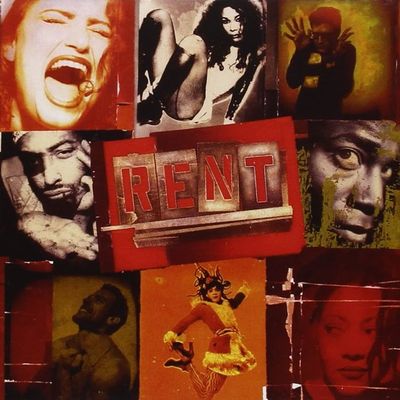
In 1996, Rent creator Jonathan Larson tragically passed away just hours before the show’s very first preview at New York Theatre Workshop. Rent star Daphne Rubin-Vega, along with Tony Award-winning Director Michael Greif, join Rent Producers Jeffrey Seller and Kevin McCollum, Press Agents Don Summa and Richard Kornberg and Jonathan’s father and sister - Al and Julie Larson - to share their vivid and very emotional memories about Jonathan’s final days. From that day forward, musical theatre would be transformed forever.
This episode features never-before-heard excerpts from the interviews Michael Riedel recorded while writing his 2020 best-selling book Singular Sensation: The Triumph of Broadway.
Transcript
This transcript was automatically generated and might contain errors.
[0:18] Michael Riedel: Here, and welcome to my podcast, Singular Sensation, The Triumph of Broadway, based on my book that pulls the curtain up on all the great and juicy gossip from Broadway in the 1990s.
[0:50] Michael Riedel: Just before the first preview of Rent, Jonathan Larson was not feeling well. He felt sick. He told his friends that he was just not feeling well. And I remember one of his friends told me that he just looked green. He was bundled up. He wore a coat because it was cold outside, and he thought he may have had the flu. I spoke to Al Larson, Jonathan's father, and his sister Julie, and they remember that he went to the hospital, but the hospital sent him home because they really could not figure out what was ailing him. And when he'd been to the hospital, I mean, were you aware that he was sick sick? Or was he just barreling through like I've got a cold and I'm first hospital he went to pumped his stomach and filled him full of something I don't know what.
So he couldn't really identify what he was really feeling because they had him on drugs. He went home and he continued to have these chest pains. And just feeling I said go back. And he did go back. He went to a different hospital. Emergency room. And they told him, well, there's a lot of flu going around. This is just a touch of the flu. I mean, the first time he went to the emergency room, he had collapsed in the back of New York Theater Workshop. I was gonna ask you whether wasn't there must have been a sense that could be nerves because I mean partly that too. Yeah. I mean, you know, partly to him. There was no set, there was no sense that something I know he made an appointment to see, you know, a regular doctor that next month that a couple of days later, you know, after the after the opening.
So, you know, there was clearly wasn't feeling right, but I think also the meds that he was on, he didn't know, you know, he couldn't identify exactly what he was feeling or how big, you know. But we talked a lot during those four days. Um about the health things or about the show and about episodes. But yeah, that he was, yeah. Jonathan was sick, but nobody took it seriously. And Daphne Rubin-Vega, who played Mimi, remembers joking with Jonathan that you'll be fine, you'll be okay, you'll be back in rehearsals tomorrow. We had invited him, he went out to dinner with these other people, and then that night the ambulance came, and the following time that I saw him a couple of days later, I was like, How are you feeling?
Are you okay? He said, Yeah, I'm okay. It's probably something that I ate. I was like, see, you should come out with us. Michael Grief, the director of Rent, told Jonathan, if you're sick, stay away for a few days. We're in tech. You don't want to be here for that. I didn't see Jonathan for a few days. I should know if there were two or three days, but it was a chunk. With you know, with you know, talking on the telephone, reports. Yeah, there were there were there was communication. But it was you're sick, feel better, we got time, we have previews, we're moving, this is boring. I'm going really slow. Don't worry. We have to slow down now. This is a good time for you to miss. You know, normal natural things about a late tech process.
Right. With the expectation that it was coming into the dress. Yeah. Only it'd be better. Then go through a very that to be very, very much a part of. Yeah. And that night he came in, and I can't quite remember maybe we can rode his bike crazy, if possible. But he also might have just made a point of not riding his bike because he usually rode his bike. Right. You know, and it was clear that he was sick, but again, certainly could be flu. Yeah, yeah. You know, we had this interview, and he was certainly cogent in the interview. Yeah, Don Shimotomi took place in the box office. Um it was Were you there in the interview? Yeah, it was the two of us. I don't know if I stepped away for part of it, but I'm certainly part of some of it.
Um Did you have an indication? Thomasini, had he seen any of uh uh Rent at this point? John, I think he saw that dress that night. Oh, so did you have an indication from him that he liked it, that there was enthusiasm? No, I feel like maybe what happened is I had like a photo thing early before the preview, and then the preview happened, and then Jonathan went and talked to him on his own. I something like that happened. Yeah, but then I don't remember if I got reports. Yeah, I mean, I knew early on that he was supportive of it. I don't know if I heard much from him, like on the way out, it's you know, like this is interesting, or someone saw that. I can't remember. Right. But I certainly feel I was not feeling in any way that we wouldn't have compared to the normal boob here.
I I had I I will fix it. Very certain that Jonathan would recover, and we'd sit and watch previews together, and he, you know, had this to say and not to say this to say like and I'd have this to say, you know. Like not I there was not a glimmer, you know, at all. Now, old friends of mine, Don Suma and Richard Kornberg, they were the press agents for Rent, and they set up an interview for Jonathan Larson to be interviewed by the major powerful opera critic at the time, Anthony Tomasini in the New York Times, because it was the hundredth anniversary of Puccini's La Bohème, and Richard and Don thought, what a hook. We got this kid that no one's ever heard of writing this show based on La Bohème.
We can hook it right into the 100th anniversary of Puccini's La Bohème. Here's Don Suma. We had a Times reporter and a Times photographer at that point of dress. Who was the reporter? Was Anthony Tomasini? He had been assigned by Andrea Stevens, who was the theater editor of the time. I forget exactly what her title was. You know, I had pitched the story of them because there it was very near or right around, or almost exactly the anniversary of La Bohème. And I want to say La Bohème is 1896. So yeah, the Times bit on that, and it was gonna be this feature story. And you know, there's always sort of some anxiety surrounding um having reporters or photographers at that kind of event, because you never know what it's gonna be, especially the Times, or especially someone like you.
You know, it took a little sort of arm twisting to convince people that this should happen. Really? So the Times was not getting no, not the Times, but on production anyway, right? Yeah, but Richard is very good at that, he's one of the best arm twisters there is, so luckily for the production, really, because and even for Jonathan, because the last it was his only shot to be interviewed, really. Well, of course, we didn't know that, right? But it turned out to be his only shot to be interviewed about this this you know, groundbreaking work, which would be his had he done any interviews before? I don't think so. I mean, well, on this work with for us, right? No, I don't think so. I mean this would have if if something had happened during the lab, but that would have been something that I wouldn't have done.
It would have just he might have talked to somebody, and and this is the first yeah, significant and important and you know, publicist endorsed interview he had done. And um, and it was for the Times Arts and Leisure section, you know. Jonathan was sort of sitting in the window, and I guess Tony was sort of on the other side, and and I remember as I said, I set them up and as I was leaving the theater that night, I just saw like Jonathan's eyes because he was sitting in the bottom side of his eyes like above above the box office right level, and you know, he seemed very sort of alive and awake and distracted and nervous, but still, you know, he was doing his thing. And here's Richard Kornberg.
Don would be the one who was pitching Rent stories to different journalists, lucky guy. And so the main thing you wanted to get, of course, was the New York Times. And we would come up with different ideas and this and that. You remember any of them? Well, I remember the idea that Don finally sold to Andrea Stevens, which was 100th anniversary of La Bohème. Right. Did you have trouble convincing the Times to do a story on Rent until you hit on the 100th anniversary idea? You did. Their reaction was double no. That's right. It was this unknown player, this unknown composer, this unknown cast, a theater that is not known as a musical theater. Yeah. Um, so uh I mean, so in essence, Don and I were just throwing out different ideas, and that, and then when I remember he finally got, it was Don who got the idea.
He was talking to Andrea, and it was, and Don said, What about you know, hundredth anniversary of La Bohème? Jim Nicola, the artistic director of the New York Theater Workshop, remembers the last time he spoke to Jonathan Larson. I'm sure you've heard this that Tomasini from the Times saw that dress rehearsal. Yeah. And then sat in the box office because it was the only place where they could shut a door and be quiet in this exploding theater after the dress rehearsal. Told him that he thought he was in the next, like the next song coming. And your last memory of him that night? Was him. We were we were all in s inside the theater doing notes after the dress rehearsal. Mostly collection, you know, physical things.
But we were waiting for him. So that when we were through all the technical stuff, we would talk about the storytelling performance, all that stuff. So we're waiting for him, and I kept going out to look at him in the box office. And they were going on and on and on and on and on. And then the meeting was winding down, and he sort of sheepishly walked in with this like grin on his face. And I was like, said Tim, I guess that went well. And he said, Yeah. Uh and then he told me what Tomasini had said, and then we talked, and then he really wasn't feeling well. So he cut down the conversation, said we'll meet again in the morning. He was very, I think, happy. Yeah. We'll be right back with Singular Sensation after this break.
[11:41] Michael Riedel: So let's hear from Julie Larson and her dad Al.
[11:44] Julie Larson: I believe that Anthony Tomasini was there that night because he was writing a piece about the hundredth anniversary of La Bohème and had heard about this, you know, ragtag thing downtown, so he thought, well, that could be a sidebar piece.
[11:57] Al Larson: That's right. And um, but then he went and was so blown away by it and impressed by it that he interviewed John in the little box office. He's the one who said it's gonna be a huge hit. And then went home and decided that he was going to shift the focus of his piece to be about this new thing Rent and the sidebar being the hundredth anniversary of so he called the next morning to ask more because he wanted to ask more questions and found out that John had died.
[12:24] Julie Larson: And he died um he died that night in his apartment.
[12:28] Al Larson: So he was he was alone when he died.
[12:31] Julie Larson: And then it was his roommate went back and found him.
[12:34] Al Larson: Yeah, Brian.
[12:35] Julie Larson: Brian, yeah.
[12:36] Al Larson: And then called other friends and called 911 and called.
[12:39] Julie Larson: He called you. I happened to be in New Mexico with my parents because this dear family friend had died the day before.
[12:45] Al Larson: Right.
[12:46] Julie Larson: Right. So we had just spent the evening sort of memorializing her and sort of like a second mother. Then in the middle of the night, Brian called my then husband, hoping to get me.
[12:59] Al Larson: Right.
[13:01] Julie Larson: And Chuck had to then call New Mexico and got my dad.
[13:06] Al Larson: Um in the middle of the night.
[13:07] Julie Larson: So it was dead when his one came.
[13:11] Al Larson: Yeah.
[13:11] Julie Larson: And I don't think there had been that long a time between when they said goodbye to each other, and you know, I think, yeah.
[13:17] Al Larson: That day was supposed to be the opening of previews.
[13:21] Julie Larson: First preview.
[13:22] Al Larson: First preview.
[13:24] Julie Larson: We get all this information. I get my parents on a plane to New York.
[13:29] Al Larson: And some people, some friends of his and people from the production are saying, you have to get down to the theater. Get your parents down to the theater, because the decision had been made to not perform it for the public, but no one knew what to do when they decided to perform it.
[13:43] Julie Larson: So my parents got there, but I remember you say they, I mean, they were we were all in shock.
[13:48] Al Larson: And were you there too?
[13:50] Julie Larson: I was with my parents in New Mexico. I hopped on a plane back to Los Angeles because I felt like I needed to be the one to tell my kids, especially my older son, was intensely close to my brother.
[14:01] Jeffrey Seller: So I went back to LA for that day and then got on a plane and went to New York the next day. And then the rest of my family came for the opening three weeks later. The morning after Jonathan died, everybody involved in Rent got a phone call. This is how it hit Jeffrey Seller. Oh, it was awful. Well, well, I went to bed feeling excited. I woke up the next morning. I remember choosing my clothes based on looking forward to going to the first performance that night. I don't remember what I chose, but I just remember I was really excited about it. And then, um, I did my ritual, which was to walk through Central Park because I had my analysis appointment. I was in psychoanalysis at the time five days a week.
The only way to do it. We could be sitting in a different place. Maybe it worked. In any event, um, I because I was so vividly remember like how I would daydream as I walk, and I so remember walking through Central Park that winter. It was very a snowy winter, and how much I was looking forward to going to the show that night because it was gonna be the first performance of Rent. I had my analysis appointment. I got on the 4-5 train, went back to the office. Uh Kevin was in Minneapolis that night. So if I walked in the office probably at about 10:20, and when I walked in, nobody looked at me. Like everybody's face was down, and John Corker, my, uh, colleague and general manager, said, Um, Jeffrey, I have to tell you something.
Jonathan Larson died last night. And he told me that as I was standing in the doorway of his office. Uh, we had just got they had just gotten a call from Jay Harris. Yeah. Good lawyer. Yeah, at 10 a.m. I just kind of was I just remember like falling against the door, stunned.
[15:59] Angela Wendt: Costume designer Angela Wendt got the call early in the morning. Early in the morning. Early early. Sue White, the production manager called me. I know Jim Nicola made a bunch of calls in Sue, so they both made phone calls. I think it was like seven in the morning. And then what did you do? Where was what else? Where would I be now? And here's Michael Grief's take on what had happened. It was a lot about winner's parents standing here. Yep. And what were we gonna do? You know, were we gonna have um a preview tonight? Were we gonna what were we gonna do tonight? Were we gonna have a memorial tonight? I mean, what are we gonna do? But I remember a lot about his parents. You know, that's it was like they're on their way.
So it was this, you know, it's a lot of that is just like real, yeah, nuts and bolts, human. You know, knowing Jonathan, the only dignified, decent, honorable thing to do for him, yeah, would be to present it in whatever state it were in. Yeah. You know, and we all you know, and we all believed in it enough to never believe, oh, we're doing him in the justice. Right. It was always there's a beautiful story here and beautiful music here and a great music talent here. We should let the world see it. Um, and that was an easy decision to come to.
[17:49] Michael Grief: And then you went up that night for the and then that night was the very, you know, spoken about the reading. Yes, I mean I think it was definitely the first act, people were just gonna sort of do it as a reading. Yes. But then by the second act they felt they needed to see move. Yes, you know, so much of the so much of what we did was always rehearsed around that table. That the evolution from the table to staging was sort of an organic part of what we've been doing for weeks. Right. You know what I mean? So essentially what happened is they sat at the Bohem tables and when they did Bohem, they got up and started dancing. Which is a lot of what happened in rehearsal. So, you know, and it was not like, oh, and you do this, this, this, and this, and you do this, this it was like, okay, everybody get up to dance.
And they did, and then and then it got focused and then it got, you know, refined. But um, you know, I have um I have complicated feelings about that night. Only because, uh, it it's, uh, it was my decision to make it a reading. Yeah, and I under and the reason I made it a reading is because I wanted to let the actors truly live in Jonathan's words and music and not worry about, you know, staging they hadn't done and costume changes they hadn't made you know before. Yeah I wanted it to be pure. Right. You wanted to be about Jonathan. I wanted it to be pure, and I wanted it to be about them and Jonathan. You know, we had reversed Act Two a lot more recently. They knew what Act Two was. You know, Act One was four days ago.
Right. You know what I mean? So it was easier to move into Act Two. Right. So I was, you know, after intermission, I went back and I said, I guess we'll do Act Two, and everyone was like, yes, let's do Act Two. And we did, and that was beautiful. But it was sort of the mythology about it was in some way that they were kept from doing the production that night. And I feel bad that the mythology is they were kept from doing the production. Because I like the mythology to be they got to just live in a more pure world of Jonathan for an act. Right. And then when La Vie Bohème explodes, so did they. You know, you know, those people had a lot to do with those performances. They were exuberant throughout.
Yeah. They were young and they were falling. They were excited to be there, and there was deep, deep affection. You know, there was no doubt that Jonathan's death grounded, centered, you know, made the push reverberate exponentially for them because the specter of death was as close to them. Death and loss was as close to them as it was to Jonathan when he was beginning to write it. Yeah, you know, what happened to Adam singing Glory, you know, that night and from that point on. His performance was immeasurably. It was it was yes, it was changed for him to be contemplating, you know, on song before I wasn't not being there to feel in any way celebrate participate in the songs he wrote.
[22:00] Michael Riedel: We'll be right back.
[22:03] Michael Riedel: And we're back with a story of Rent. And here is Daphne Rubin-Vega. Let's let's do an invited dress for friends and family and keep it very intimate and read his words, because that's what I think he would want it. He would have wanted. Right. No mic, I mean, no costumes, no makeup, just mic and book. No, no blocking, no. No, just um at the La Vie Bohème the tables. Right. So at the tables, open reading with your pictures of water, uh and your mics, just no acting. Just give give them what they he gave us. And by the end of the first act, sort of needless to say, we were all so like um that by the end of La Vie Bohème, we were all getting on those tables. You know what I mean? Like, viva la bohème.
Yeah, to this and that and this and that, and we were just trying to block and put like all of a sudden the first the invited dress was the first time I remember literally ever putting on the mic and the costume and the full bit and doing the show from beginning to end without stopping. Like it actually, like we did it. So we wanted to lock it in, but he was dead. So we it just started to do us, you know. I mean, I literally thought, you know, shit. If I was dead, I would want you to get on that table. You know, get on that table and show them what this is. Tell, you know, don't tell them, show them, show them. And so, yeah, we got the spirit. I mean, if there's any kind of conjuring that happens in the theater, it was happening that night. It was happening that night.
[24:08] Michael Grief: Let me among us be the first to condemn.
[24:22] Daphne Rubin-Vega: Okay, so we did the we ended La Vie Bohème. You know, um, there weren't any lights, but intermission at that point, I think, was like, okay, we're gonna take a break, and we all went backstage, and it was just like, you know, a movie. It was like Michael going, okay, kids, let's get in our nights, let's get in our costumes, we're gonna do the second act. We're gonna go full on. We're gonna do the second act full on. So we did the second act for love. Here's Kevin McCollum. Jonathan died, it's almost like the characters grafted themselves onto these actors in a way. Yeah, I'd never seen happen before. Everyone became fearless. And that really helped push the show forward. Julie Larson, Jonathan's sister, saw the show a few days after he died, and I will let her tell you how she felt about it.
We sat, I I think I had a chair at the beginning, but then I ended up sitting in the back on the floor next to Jeffrey, just with my just sitting back, just trying to take it all in, and just you know, being overwhelmed by by everything. But then everything happened so fast. Of you know, cameras were in our face, and and I mean the thing exploded. There was just there's no way to sort of when we look back at it now, I'm like, how did we do any of that? I, you know, we were just sort of like, you know, told here here, we here talk to this person, be this and we're just we it was there was no room for like our own emotions because that we were taking in everyone else's sorrow, excitement, you know, put in the adjective, you know. No, everything exploded.
[26:16] Julie Larson: We all the opposite of war isn't peace. It's creation.
[26:20] Kevin McCollum: Viva La Bohème. There were people who said at the time that uh Jonathan's tragic death was the reason that Rent got attention. And I would have to disagree. I think Jonathan was onto something. He understood that the musical theater was unmoored from people his own age, and his driving ambition in life was to make the musical theater relevant again. And he did that with Rent off Broadway at the New York Theater Workshop. And then it moved to Broadway. And there was a lot of challenges and a lot of speculation of whether or not Rent could make it on Broadway. And that is the story we tell in the next episode.
[27:21] Michael Riedel: Thank you for listening to Singular Sensation. I'm your host, Michael Riedel. To find out more about Singular Sensation, the book, and the podcast, visit bpn.fm/singularsensation. This episode was edited by Sarah Goodman and produced by Dory Berenstein, Kimberly Garris, Alan Seals, and Sarah Goodman for the Broadway Podcast Network. Special thanks to Liz Armstrong and the entire BPN team.
© Broadway Podcast Network, All Rights Reserved