

In part two of our conversation with director Brittanie Shipway and choreographer Leah Howard, we dive deep into the heart of Once On This Island. From the show’s powerful themes of love and sacrifice, to honouring its rich legacy while creating something uniquely their own—Brittanie and Leah share the creative choices shaping this production... Read More
From the show: Stage Door Podcast
Featured Shows
About
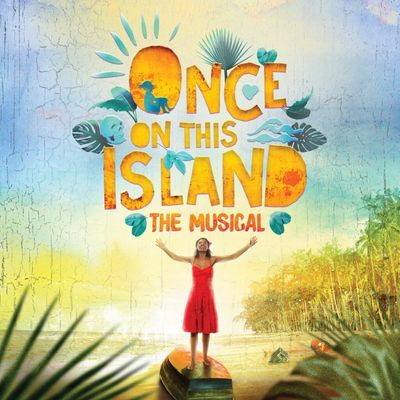
In part two of our conversation with director Brittanie Shipway and choreographer Leah Howard, we dive deep into the heart of Once On This Island.
From the show’s powerful themes of love and sacrifice, to honouring its rich legacy while creating something uniquely their own—Brittanie and Leah share the creative choices shaping this production. Plus, we explore the challenges (and joys!) of staging a dynamic, movement-filled show in the intimate Hayes Theatre.
Listen now to go behind the scenes of a bold new vision that celebrates the soul of storytelling.
Once On This Island is selling fast—don’t wait to grab your tickets!
You can follow Leah Howard @rosechocolatebeauty and Brittanie Shipway @brittanie_shipway on instagram!
🎧 Follow the podcast on Instagram @stagedoorpod, and don’t forget to leave a rating and review! Share your episode ideas via Instagram, our website or email at ps.stagedoor.podcast@gmail.com.
🎨 Created and Produced by Tori Bullard & Eliza Vine
🖌️ Logo Created by Sally Henderson
✂️ Edited by Eliza Vine
🎵 Intro/Outro Music: Tropic - Anno Domini Beats
Transcript
This transcript was automatically generated and might contain errors.
[0:00] Tori Bullard: We would like to acknowledge the Thorowall people of the Eora Nation and the Warundari people of the Coolin Nation.
[0:06] Eliza Gunther: We pay respect to the traditional custodians of this land on which we work, live and record, and strive to continue in the tradition of Australia's first storytellers.
[0:15] Tori Bullard: We acknowledge that sovereignty was never ceded.
[0:17] Eliza Gunther: Always was, always will be aboriginal land.
[0:25] Tori Bullard: We don't need the costume change.
[0:26] Eliza Gunther: It's not another day, is it?
[0:28] Tori Bullard: No, no, no.
[0:30] Eliza Gunther: Quick, just strip.
[0:32] Tori Bullard: Um, this is so exciting.
[0:35] Eliza Gunther: Oh my goodness.
[0:36] Tori Bullard: And I'm always talking about it out here, the more I just want it to start.
[0:40] Eliza Gunther: Like welcome back to part two of our chat with Brittanie Shipway and Leah Howard.
[0:46] Tori Bullard: If you haven't listened to part one yet, what are you doing?
[0:50] Eliza Gunther: Go back and catch up on it.
[0:52] Tori Bullard: But all right, let's dive right back in.
[0:55] Eliza Gunther: So, Once on This Island is such a powerful story with deep themes of love, sacrifice, and storytelling. What is the most important to you in shaping this production's vision?
[1:07] Tori Bullard: What is most important?
[1:08] Eliza Gunther: A small question to kick us off.
[1:10] Tori Bullard: Just a just a small one.
[1:12] Eliza Gunther: Just a little itty-bitty.
[1:15] Tori Bullard: Should be so easy.
[1:16] Leah Howard: Yeah. I think for me, and I'm sure this will shift and change, but my real hope is that it feels like community when we kick off. Beyond thinking of the show itself, just the way rehearsals feel and how the cast feel together. We're in an itty-bitty space at the back of the Hayes. Um, and you know, this is a proper chair model. Um, and we're so lucky that we get to explore works like this that, you know, commercially aren't being picked up for whatever reason. So I think that we're spoiled to be able to work on this project, but it has to be joyous and it has to be fun, and it has to be creatively fulfilling. Uh, so that's what that's my greatest wish for the show above all else I really want it to be a good time and I want us to take the work seriously as well but um it's hard to collaborate and play without that.
[1:57] Brittanie Shipway: Yeah, and I think um, you know, for me it's like Brittanie's vision is so extraordinarily authentic and real and I just my wish is that everybody that, you know, touches this play that comes to see it can really see that and see the importance of what Brittanie's, you know, vision is and how it is collaborative how it is joyous how it is truth telling for and it can be authentic to everybody, you know. So I think that that's what's most important for me that everybody really understands the importance and this is like it will be a pillar moment I think in theatre in this country because we're so used to commercial theatre bringing stories, black stories, diverse stories but yet not being authentic to them, you know, so and especially for Australian performers and you know and what that looks like for all of these people that their cultural heritage is so vast and so wide and they have such lived experience for a story like Once on This Island and the way that Brittanie has, you know, is going to craft this and for all of us like yeah I just want people I really hope that everybody stands up and takes notice.
[3:28] Eliza Gunther: That's a lot to live up to Leah.
[3:31] Brittanie Shipway: I mean I'm right behind you.
[3:35] Leah Howard: I am your pillar behind you, and I will support you all that way, baby.
[3:39] Brittanie Shipway: And you're so brave to do this, you know.
[3:41] Leah Howard: And it's it's not bold, it's in you.
[3:43] Brittanie Shipway: Yeah, it's your it's your it's a part of you, and this is how you want to go out on your first, you know, debut, and that's just brave AF.
[3:53] Leah Howard: Like, I don't know if I can swear, but like that is like it's incredible.
[3:58] Brittanie Shipway: Right. You know, more people need to be taking those steps.
[4:01] Leah Howard: Well, it just doesn't feel like another musical to me, this show, and that's why when the producers at Curball asked me to be involved and to direct it. I thought, yeah, what like of course, like that makes so much sense. Um, you know, just having a First Nations background, and the more I learn about it, and the more I ask questions, and even from when I was a kid, my understanding of ancestor heroes and dreaming stories that my grandma taught me. I'm so surprised each day that I get older about the tapestry of indigenous storytelling, and no matter where you are, how important storytelling is uh it's not just theatre, uh, and it's not just entertainment, you know, woven into those stories. We have morals and ethics, there's uh an oral map to tell you where to go.
[4:52] Leah Howard: Um environmentalism, you know, where not to fish too often because you were there last season. You know, there's just the idea of song lines that that is universal when we look at indigenous cultures around the world, um, in a way, uh although they're unique and different in every country, but I'm really interested by what um allies us, uh aligns us, sorry, um, despite our differences, and that's what's so beautiful about this cast, and that's what I think is so interesting about this show and what we're taking to it.
[5:28] Brittanie Shipway: So I'm really excited by that, and by everybody coming together to weave that.
[5:34] Leah Howard: There's a lyric at the sh in the show called uh what does it say?
[5:38] Brittanie Shipway: Our lives become the stories that we weave, and I it just it really strikes a chord with me because without spoiling anything in the show, it's not always a happy ending, and I think that in a dark corner like we are in today, sometimes it can feel really overwhelming, especially if you're on social media and you have access to what's happening all across the world. Um it can be hard to find that hope, and I think it's really important for us to know that even if we initiate change or the seed we plant of hope today may not actually affect anyone in our lifetime, but in generations to come it will, and that's the moral of Once on This Island, and it's the one thing I'm really passionate about.
[6:26] Leah Howard: It's that cultural legacy, and it's about celebrating culture as opposed to focusing on atrocities and tragedies as well.
[6:35] Brittanie Shipway: Anyway, there's a lot of big ideas, but no, I absolutely love that.
[6:39] Leah Howard: That especially in this day and age, like legacy and and yeah, like things that you do today might not be effective today, but it's effective for the next person after you and and all the people after that.
[6:52] Brittanie Shipway: So it's a beautiful way to look at that story.
[6:55] Leah Howard: Yeah, I mean, because obviously the show has such rich history already.
[7:01] Brittanie Shipway: How do you find, and we're kind of already talking on it, that that legacy influences your direction and the choreography that makes this version of the show unique?
[7:13] Leah Howard: Well, the show already reads like a dreaming story to me, you know. Um, it I've noticed in a lot of Gumbangy or dreaming stories, um, there's a lot of elements of transformation as well to explain how things are the way they are today, or how Dungir the koala became the koala.
[7:32] Brittanie Shipway: Um, and it it's the same in this, you know. I again I can't say too much without revealing things, but um how like it's it's one dreaming story, and we've got four um gods, and I look at them and I go, Oh, they're ancestor heroes. Uh they pave the way um and they're connected to us and connected to country.
[7:53] Leah Howard: Um, and it's so intrinsic, it just makes so much sense.
[7:56] Brittanie Shipway: I actually don't even need to overthink it and go, Oh, how do I change this or how do I adapt this? Every time I go to do that, I'm like, oh, oh, that just makes so much sense, it's just easy.
[8:06] Leah Howard: It just it's sort of happening.
[8:08] Brittanie Shipway: Uh, I'm sure there will be some problems for us to solve the further down the track we get. We're still a couple of months out from rehearsals, but um yeah, at this point in time, it's just really exciting, all the discoveries that I'm finding.
[8:21] Eliza Gunther: Oh, do we lose Brittanie?
[8:28] Leah Howard: You'll be mortified.
[8:32] Brittanie Shipway: But also to Brittanie's point as well, you know, the uniqueness of the show is the uniqueness of her connection and her leadership of us as a creative team and also um leading actors into their own depth of storytelling.
[8:49] Leah Howard: And I think you know that's that's what I just it just feels different, you know.
[8:54] Brittanie Shipway: You know, I'm I'm a beast of musical theatre and I work on such great stories, but nothing has really hit me like the anticipation and the excitement and the the adventure of what this will do, you know, and what what this this journey creatively will feel like for me, you know.
[9:14] Leah Howard: I don't put my hand up for a lot of stuff because I'm at an age now where I need to feel deeply about things in order to create great work and you know, and considered work, you know, and I feel like that this was just something that was a no-brainer, you know, especially to be working alongside Brittanie.
[9:32] Brittanie Shipway: I think is incredible.
[9:34] Leah Howard: And yeah, I just I think that's the thing without giving everything away, it's our cast already have given you a sense of how this is gonna go, you know, and how this is going to be different and how this is going to be special, and and yeah, and that and that's just exciting alone without even having any content yet, you know.
[9:57] Brittanie Shipway: That's really really, you know, exciting. And you will, you'll see a face page of a cast that is very unique to the Hayes and very unique to theatre, and that's the first step, you know. I think.
[10:10] Eliza Gunther: Welcome back. You definitely answered our question, by the way.
[10:17] Brittanie Shipway: Okay, yeah. Obviously, the Hayes is an incredibly intimate space. How are you guys approaching the staging and kind of making the most of it, especially with such a grand story?
[10:31] Leah Howard: Yeah, and we've just engaged our set designer, um, Nick Rai, who's wonderful and brilliant and has worked at the Hayes before, and Nick's currently working on The Producers, so as soon as I can steal him away from that, it's an epic, epically big show to put on at the Hayes. It's gonna be amazing. It's already sold out, but I can't wait to work with Nick a little bit more about it. But we've in our initial discussions, I, you know, I find the Hayes quite boxy, which is great, you know, that's what it is. It's a black box theatre, but I really want to soften that, and I want when people to come or audience members to come into the space to feel like they're outside. And so good luck to Nick. But I think it'll, I just want it to feel like it's a transformed space and that we're not, again, because the story doesn't feel like a theatre piece, I don't want it to feel like a theatre piece.
I want it to feel like a corroboree. I want it to feel like we're walking into the Pen River lookout, and it's a meeting place, which is where stories are meant to be told, and that's what I'm dreaming into.
[11:43] Brittanie Shipway: I have lots of images in my mind, you know, there's this beautiful metaphor in the show about a tree growing, and I was thinking, oh, this tree, and this tree becomes a meeting place for generations to come. And I was thinking of, you know, the tree circles that represent every generation as well. I'm like, oh, is that something that we look into for the set design, or is it that circular pattern in shells? Just if we zoom into nature, what patterns exist there that we can borrow from and lean on and honour in the set, and we're still finding what that looks like. So who knows? It might all be thrown out the window by the time you walk into the show, but yeah, I'm after those circular patterns that sort of represent eternity and like legacy in nature.
[12:37] Eliza Gunther: Yeah, that's cool. My gosh, because I saw the revival on Broadway in 2018, and that was my first ever experience with the show. There was a lot of hype around it at the time. I think it had just been at the Tonys, and I just kind of went into it knowing absolutely nothing about the show at all. I just went and I got a rush ticket because everyone was raving about it, and I really felt walking into that theatre, which was obviously a much, much larger space than the Hayes, truly transported into the story that it was telling, but the way that the set, and I think the way that this story is, like you've been saying, it's not set in any one place or any one world or culture, it is very transformative and it really transcends that.
So I'm so excited to see how that is then transported to the Hayes, and it is such a specific space. I'm always, every time, you know, I feel so honored to be able to work at the Hayes because every time a new show is on at the Hayes, I get to see the space completely transformed again. Pirates has just finished at the Hayes, and I never imagined that that space could look like that. I've seen it to its bare bones, I've seen it with immaculate, extravagant sets. So I'm so excited to see how this space can be transformed, and obviously, like the choreography for this show is almost its own language of the show. It is as important to the storytelling as the words and the songs, but again, it is such a small little diverse space. How are you?
[14:24] Leah Howard: I guess obviously not currently because the show is not in rehearsals yet, but how are you kind of thinking of tackling that challenge of the storytelling?
[14:33] Brittanie Shipway: I really, I really like, as I, you know, explained, it's about tapping into everybody's authentic culture, having a little like the flavors of that, and also I really want to lean heavily on physical storytelling for it. You know, I don't want these pieces essentially to stand out like choreography, you know, because there is movement in everything we do, and especially on the islands, you know, we always, no matter whether we're walking to pick up a child or we're heading down to the water, there is always movement and storytelling and purpose in that movement. So I really want to make sure I lean on the storytelling as heavily and make sure everything is just connected and seamless, and you know, and just it all has purpose, you know.
So it is, it's not like I said, it's not about doing triple turns and jetés across the island, though as lovely as that might be, but it's yeah, it's really about just drawing out everybody's physical, you know, attributes and their celebration of what movement is and dance, you know, for everybody, yeah.
[15:42] Leah Howard: It's hard to, isn't it, Leah, because and also exciting, like a great challenge because there are stories within stories in this show, um so much, yeah.
[15:52] Brittanie Shipway: Yeah, so we have to find. I mean, Leah and I all have lots of fun with this, but it's about finding different visual languages every time we go into another layer. Just to let people know we're zooming out for a bit and we're looking at the history of the island. Um, or you know, now we're getting into the show after this opening sequence, and you know, how do we zoom out and become storytellers again? We have to make that really clear to our audience. So I think that'll be a really fun challenge. And it's such, I think, a perfect space to be doing it in because it is, you get such an intimate space at the Hayes that I think that that lends itself really well to storytelling and it being feeling like you are truly in amongst it.
You are witnessing this story firsthand, and I want to recommend that I don't know, I'm of two minds that you should listen to this show before going into it, but also go into it blind because I feel like you take so much more from it, every production I'm sure that has ever been done of it. It has the same through line and the same story, but has different meaning to every single person. I feel like going into it blind, having no idea what the music is going to sound like or feel like you truly get so immersed in it. It is a part of I think your soul and for forever after that moment of hearing it, and the music is beautiful, but that is where our episode for today comes to an end.
[17:31] Eliza Gunther: Thank you so much, both for taking the time to come on and to chat to us about what I know is going to be such a beautiful amazing show that is coming to the Hayes August of this year, which feels like so far away, but like we're already in April, so like it's not that far away. But I guess one more time before we wrap it up, give the show a plug. Where can we find tickets? Social media, where can we find you to follow your journey throughout the show as well?
[18:03] Leah Howard: I'm bloody awful on social media, so I don't know if it's any use following me. But you can buy your tickets at PaceTheatre.com.au and if you want to know more about behind the scenes and how we're going with the show, then head to Instagram and type in Ker4 Creatives.
[18:20] Brittanie Shipway: I'm bloody great on social media, so I'll post lots of photos of Brittany in the process and through the adventure. You can find me at Rose Chocolate Beauty on Instagram.
[18:31] Eliza Gunther: I love that. Thank you so much again for taking the time to come on and chat to us. Do you have any final things you want to say before we wrap up for today?
[18:42] Brittanie Shipway: I just don't think that anybody is more excited than I am. But then I listen to Leah and I'm like, I don't know. Leah might get me. I am so excited, and I want you all to go buy your tickets now because it is something, it will be something to behold. And I'm putting that expectation on both of us because we are going to rise to it.
[19:03] Eliza Gunther: Amazing. Well, thank you so much, both of you, for being here with us today. Like they've said already, go buy your tickets, see the show. You don't want to be one of those unfortunate people, like with The Producers, where the season's already sold out, and there's just you're not gonna get to see it. You don't want to be in the same boat. So get your tickets now, they're available for purchase. You can head to the website, you can call the box office. Maybe I'll speak to you on the phone. That'll be a nice little treat for you and I. Yes, good story. Until next time, stay happy, healthy, and safe, and we will see you then. Bye.
© Broadway Podcast Network, All Rights Reserved