

Why Mandvi's 20-year-old play "Sakina's Restaurant" is suddenly a political statement... Read More
From the show: Stagecraft with Gordon Cox
Guests
About
Why Mandvi's 20-year-old play "Sakina's Restaurant" is suddenly a political statement.
Transcript
This transcript was automatically generated and might contain errors.
[0:06] Gordon Cox: Welcome to Stagecraft, Variety's Theatre Podcast, taking you behind the scenes with the stars and creators of the hottest shows on Broadway, off Broadway, and beyond.
[0:15] Gordon Cox: I'm your host, Gordon Cox.
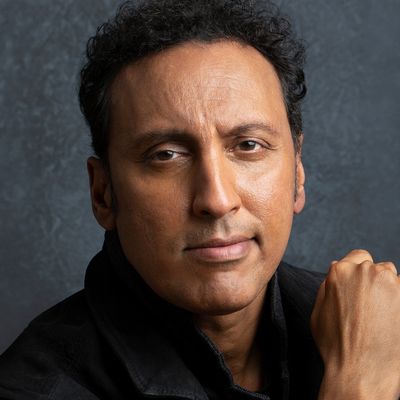
[0:17] Gordon Cox: On this episode of Stagecraft, I'm talking to the writer and performer Aasif Mandvi. You're most likely to recognize him from his years as a correspondent on The Daily Show, or from the films and TV shows in which he's appeared, like HBO's The Brink and Netflix's A Series of Unfortunate Events. But he got his start on stage. His breakout came in the one-man show he wrote and starred in, Sakina's Restaurant, winning an Obie Award for the 1998 play that looks at a cross-section of the immigrant experience as lived by a handful of characters, all played by Mandvi himself. Two decades later, he and the theater production arm of Audible are reviving the show for an off-Broadway run that arrives on a political and cultural landscape that's very different than it was twenty years ago. Hey Aasif, thanks for joining me. How are you?
[1:00] Aasif Mandvi: I'm good. How are you?
[1:02] Gordon Cox: I'm good. How's your show going?
[1:04] Aasif Mandvi: Good. It's, uh, we just, um, I don't know, this is show five, seven, something like that. You know, I think I'm finally now having fun with it.
[1:16] Aasif Mandvi: It takes about a, you know, it takes a little while. But I feel like now I'm finally in that last night I felt like was the first show that I did where I, uh, you know, there's always that moment when you're doing a play where you realize that like you're running the play and the play's not running you.
[1:34] Aasif Mandvi: Right. You know, and so I feel like I'm getting to that point now with this run where I felt like last night was the first night that I was sort of in control of the show rather than the show. So that was good. That was a nice feeling.
[1:47] Gordon Cox: Let's start at the beginning for Sakina's Restaurant. So where were you in your life when you first wrote it and what prompted you to do it?
[1:54] Aasif Mandvi: I was in Queens. And, uh, and you had, so you'd studied in Florida because you eventually ended up in Florida and studied theater there, yeah.
[2:03] Aasif Mandvi: My parents moved our family to Florida in the early eighties. Uh, and that was after London. In England, I grew up in a city called Bradford in the north of England.
[2:15] Aasif Mandvi: Right. And, um, so I used to have this northern accent. And I went from that to like Florida, you know. So, um, and then people just thought I was from New York because the melding of the American and the northern Yorkshire accent. People were just like, "Are you from New York?" So, um, I always felt like a New Yorker in my heart anyway, but I lived in Florida for, uh, many years. Um, and went to school there and, uh, started working there at Disney and Orlando and all that, doing like comedy improv.
[2:40] Gordon Cox: Okay, I was gonna ask what you did there.
[2:52] Aasif Mandvi: Yeah, yeah, I did like, I was part of a sketch comedy group called Streetmosphere, which is still there, I think. Um, and, uh, it was, uh, it was sort of the beginning of, like, it was great comedy training, especially right out of school, you know. And, um, anyway, then I moved to New York and started auditioning for theater and stuff, and at that time in the mid-90s, there were no parts for a young, uh, incredibly handsome brown man.
[3:19] Aasif Mandvi: So, um, it was frustrating, you know. I would occasionally get a part on like, you know, uh, New York Undercover or one of those shows that was airing at the time, you know, and was shooting here of like a deli owner or three lines as a cab driver, and it was frustrating because I went out to LA for pilot season in nineteen ninety-six and literally could not, did not have a single audition. And all of my, like, Caucasian friends were booking pilots and, you know, uh, auditioning, and I just sat in my apartment in LA for three months and the phone rang maybe once, you know.
[4:00] Aasif Mandvi: And it was your mom.
[4:01] Gordon Cox: And it was exactly like, "Do you, uh, do you know how to snake charm?"
[4:07] Aasif Mandvi: I was like, "I don't know how to snake charm."
[4:11] Gordon Cox: So you were here and you decided to...
[4:13] Aasif Mandvi: Yeah, so when I came back to New York I thought, well, you know what I'm gonna do? Um, I'd already been working on this show idea because I, uh, I was a big fan of, uh, Bogosian and, uh, Leguizamo and those guys and I thought...
[4:16] Aasif Mandvi: Yeah, I could see all of those sort of influencing that when I saw that. And I sort of thought, you know, I can write a one-man show and I wanted to write characters that were, that felt true, that felt authentic and, you know, felt like they came out of my, uh, American experience, my immigrant experience. They came out of sort of my DNA, you know.
[4:46] Aasif Mandvi: Um, and there were no characters like that. There were no characters in theater that I could see, you know. I could, I could in theater I would get work, you know, doing plays, but it was always like it was either in Shakespeare, where, you know, you always have multiracial casting, and then, um, or I would be aping, you know, sort of white American plays and characters or doing Death of a Salesman or, you know, Eugene O'Neill or whatever, and, uh, and so it, Tennessee Williams, you know, stuff like that. So even in class, I was always like, and so there were no roles that felt like, oh, they came out of my experience or that I felt connected to.
[5:23] Aasif Mandvi: So I started writing these characters inspired by my family.
[5:26] Gordon Cox: Yeah, I was gonna ask, are any of them based on real people or just a lot of people?
[5:29] Aasif Mandvi: Yeah, I mean the parents are definitely based on my real parents and, uh, and the rest of the, they're all part of me, they're all, as you know, as, uh, as I've evolved and had more therapy, I realized that like, you know, they're all aspects of my own, uh, multiplicity and my own self.
[5:46] Aasif Mandvi: So it felt like this is, you know, and then I just started writing and I started studying with Wynne Handman at the Americ, uh, well he was the artistic director of the American Place Theater where we ended up doing the show. But I studied with him in his acting class, and Wynne sort of helped me, uh, with the tools of how to shape these characters and how to, you know, he had worked with Leguizamo and Bogosian and, uh, people like that, and so, uh, he helped me construct the characters into, uh, a theatrical form.
[6:19] Aasif Mandvi: Because I would come in and I just have these ranting monologues, and then he would be like, "All right, now we need a little theater, you know, we need to structure, you know." So he would like, even with the father character, I remember Wynne was the one who sort of said, you know, maybe the phone keeps ringing all the time. And so he gets distracted, he has to keep on dealing with customers while he is, you know, and that was a very fundamental way of writing a monologue that I, I hadn't, I didn't know at that time, you know.
[6:50] Aasif Mandvi: And so he was the one who sort of like got me, um, and shaped them. So it took a few years, and then eventually he produced it at the American Place Theater.
[7:00] Gordon Cox: And it ran for about six months, uh, you said earlier.
[7:03] Aasif Mandvi: It ran for six months.
[7:04] Aasif Mandvi: Uh, it, uh, did quite well. It won a couple of Obie Awards.
[7:07] Aasif Mandvi: Uh, we took it to Toronto, we took it to LA, we took it to London at the Bush Theater.
[7:14] Gordon Cox: Um, was that your breakout? Do you think of it as your...
[7:16] Aasif Mandvi: It was the beginning. It was the beginning for me. Like it was the, you know, um, it was Ismail Merchant of Merchant Ivory came and saw the play after the New York Times review came out, and then he cast me as the lead in his, uh, his film The Mystic Masseur.
[7:32] Gordon Cox: Right.
[7:32] Aasif Mandvi: And so that was my first real big movie role and, and I like to think that that was when like sort of people sort of started to know, oh this Aasif Mandvi, you know, like who he is. I mean, of course The Daily Show then became like another level altogether, but, um, but, uh, that was when it sort of first, I feel like that was my first step in my career, yeah.
[7:56] Gordon Cox: Is Sakina's Restaurant based on an actual restaurant on East Sixth Street?
[8:00] Aasif Mandvi: No.
[8:01] Gordon Cox: If so, which one? And what should I order there?
[8:03] Aasif Mandvi: That's what I was gonna ask.
[8:06] Aasif Mandvi: Uh, yeah, go ahead. You gotta try.
[8:09] Aasif Mandvi: Um, the one with all the lights on.
[8:11] Gordon Cox: Yeah, exactly.
[8:12] Aasif Mandvi: Yeah, it's got lights, it's got like, you know, cheesy pictures of the Taj Mahal.
[8:16] Aasif Mandvi: There's only one. You'll know the one I'm talking about. Um, it's, they're all, uh, sort of aspects of Sakina's Restaurant, you know. And so this was back in nineteen ninety-eight, this was three years before nine eleven, and many years before, you know, Trump sort of started, you know, made immigration kind of, uh, put it at the forefront of the national conversation.
[8:38] Gordon Cox: Right. How did it land then politically? Or did it land as a political kind of...
[8:40] Aasif Mandvi: It wasn't a political play. It was, you know, this was bef, like you said, it was before 9/11. And at that time I even have a joke in the show about, uh, you know, Americans not knowing what Muslims are, you know.
[8:53] Aasif Mandvi: And, um, I think that at that point it was, uh, it was very, it was a kind of cotton or something.
[9:04] Gordon Cox: Yeah.
[9:05] Aasif Mandvi: Um, so it was, you know, it felt like at that time, uh, it was a story about immigrants, it was a story about a family coming. It was about the, you know, the disillusionment of the American dream, the sacrifice, the joys, whatever. But it didn't feel political. It felt like a very, and then, you know, that after 9/11, Muslims became politicized.
[9:29] Aasif Mandvi: Uh, the word Muslim, the, you know, the idea of Islam, suddenly everyone was like, "What is this religion? Why did this happen to us?" It was a whole question of like the, you know, the Quran was, people were buying the Quran like, you know, out of Barnes & Noble, it was just flying off the shelves, which it can do by itself, by the way. It's the Quran.
[9:46] Aasif Mandvi: So it knows how to fly. And so, um, you know, and suddenly there was a whole different, uh, but when we did, so now it feels like, you know, uh, and again it was pre-internet as well. So that's another, you know, uh, and so now it feels like the world, um, has evolved and devolved in different ways, you know.
[10:10] Aasif Mandvi: But, um, do you think of it as a political, uh, does it, do you feel like you as an artist have sort of engaged in politics in the way that you did sort of most overtly on The Daily Show?
[10:21] Aasif Mandvi: Like is that a thing that you've always kind of done or no, actually I was never a political artist. I was, you know, I've always been a storyteller, and that's been my milieu. And you know, when I got on the Daily Show, suddenly I realized I had this platform and I could talk about things that I realized I wanted to talk about, but I didn't know how to, or have a platform, and so suddenly sitting on that fence between cultures being an immigrant and being American at the same time and having this kind of multiple identity kind of thing allowed me to talk about things on the Daily Show that some of the other correspondents couldn't often talk about and I was the first non-white correspondent on the Daily Show.
So they benefited from that because suddenly they had this like 2006. And so once I had that platform and then that in a strange way sort of activated my activist bone and allowed me to find my political voice or my activist voice. And so now it almost feels like Sakina's Restaurant does feel in a strange way political because the conversation around immigrants, the conversation around Muslims is so different and so much, you know, when we were discussing Sakina's Restaurant, the revival, this is with Audible. We should have a lot of people with Audible that we'll also record an audio version and release it, yeah, as an Audible subsequently. And so when Audible approached me initially, it was, you know, the Muslim ban was happening and soon after that you had little kids being put into cages and separated from their parents at the border and suddenly this conversation about immigration, this conversation about who's an American and who's allowed into this country and what does it mean to be an American? Suddenly this conversation became so much at the forefront of our national consciousness again that it felt like weirdly Sakina's Restaurant was relevant again, you know, and in a humanizing way.
[12:35] Gordon Cox: Right.
[12:36] Aasif Mandvi: And what do you find now?
[12:38] Gordon Cox: Well it doesn't sound like it's much changed from the version that—
[12:39] Aasif Mandvi: No, we've made some edits, we've made some cuts, but we haven't changed the story, and we've actually set it in the time period that it was written. So it was set in the late 90s.
[12:52] Aasif Mandvi: That was worth some money. I don't know where they got that from. And of course, on the second day of rehearsal, I broke it. So, you know, they spent like I think about fifteen thousand dollars to get that Game Boy, like a vintage game, and then I like the second day of rehearsal, I drop it, and then the thing falls out, and then they're like, oh my god, I was like, I'm so sorry. But it's actually very similar to the one that we used originally.
[13:15] Gordon Cox: Yeah, yeah.
[13:15] Aasif Mandvi: And so what do you find lands differently or hits home in a different way now as opposed to then?
[13:23] Aasif Mandvi: Well, you know, I think that people, there's a nostalgia for a kind of American identity that we feel like we have lost as a nation, I think. And there's a kind of, on one hand, there's a kind of nostalgia around who we see ourselves as and the America that we, you know, and I think that's one aspect of it. The another aspect of this is immigrants, I think still see themselves very much in the play. Whether you're an Indian immigrant or Turkish or, you know, whatever, if you've come to this country, I mean I had a young woman the other night who was a Chinese American and she was like she saw the show and she was like, "That's my father, you know, that's my story." So I think the immigrant story hasn't really changed in terms of the American story of immigrants. There are things of course in the text that, it's funny I have this one line where one of the characters says, "Any ordinary idiot in America can become rich." And it never used to get a laugh.
[14:28] Gordon Cox: Right.
[14:29] Aasif Mandvi: It was not written as a laugh line. And now there's inevitably a chuckle in the audience. Like at least ten people will chuckle at that line. Or I feel a resonance in the audience that was never there before. So it feels very pointed now, yeah.
[14:43] Gordon Cox: Yeah.
[14:43] Aasif Mandvi: So little things like that obviously have changed. But the story itself is a story about a family and a story about their struggles and joys. So that hasn't changed and I don't think it really does.
[14:55] Gordon Cox: Have you recorded the audio version yet?
[14:58] Aasif Mandvi: No, yes, we're gonna do it soon though, yeah.
[15:00] Gordon Cox: Well that requires some changes just in terms of because you accomplished some of the sort of transitions with, you know, costume elements.
[15:05] Aasif Mandvi: Yeah, I don't know how we're gonna exactly do that. I think we'll probably use music and maybe there'll be some narration in terms of like this is what's happening.
[15:13] Gordon Cox: Right.
[15:14] Aasif Mandvi: Yeah.
[15:14] Gordon Cox: So this is the first time you've been on stage in New York since you were in the off-Broadway version of Disgraced, right?
[15:20] Aasif Mandvi: Yeah.
[15:20] Gordon Cox: Yeah. How is it being back?
[15:23] Aasif Mandvi: It's great. You know, I mean do you enjoy doing plays?
[15:26] Aasif Mandvi: I do. And theater is my first love. So I, you know, a lot of people think of me because of the Daily Show as a comedian, as a stand-up, and I do stand-up, and I've been doing ironically my career went in like I got on the Daily Show and then I started doing stand-up as opposed to the other way around which for a lot of people. But the theater is where my origin story is from. So I love going back to the theater. And you know, and Sakina's Restaurant, like I said, is, you know, it's not only a play that I wrote and I feel very close to, but it's also a way for me to tell a story about, you know, brown people that nobody else was telling. And then when I did Disgraced a couple of a few years ago, Ayad Akhtar's play, that was the first time since Sakina's Restaurant that I saw a play with a South Asian man that felt like it resonated with me, that felt like it was a true nuanced, complicated portrayal, you know?
[16:30] Gordon Cox: Right, yeah.
[16:31] Aasif Mandvi: And you ended up not joining that production on Broadway because you were working on The Brink, because I read that.
[16:37] Aasif Mandvi: Yeah, it was really one of the big heartbreaks of my career that I couldn't do it on Broadway because I was doing this HBO series called The Brink with Jack Black and Tim Robbins and we couldn't make it. Which I also got hired as a writer on, and so it was an amazing experience. But yeah, I was sad that I couldn't do Disgraced on Broadway. And you know, although you had, we should say you had been on Broadway in the Trevor Nunn Oklahoma that ran whatever in 2002.
[17:14] Aasif Mandvi: 2002 I was in, yeah, which again I feel like was a direct result of my sort of Sakina's Restaurant thing. And then people, so Trevor came and auditioned me for, and that was a weird thing because I had again never done a musical. I've done things where I feel like I shouldn't, I shouldn't, this I did not predict doing this in my career. Like a musical on Broadway was not on my checklist.
[17:39] Gordon Cox: What'd you do another?
[17:39] Aasif Mandvi: That's one of my questions. Would you do another? Like is that a thing that you did?
[17:44] Aasif Mandvi: I did Brigadoon at the City Center.
[17:46] Aasif Mandvi: That's right.
[17:46] Aasif Mandvi: Like the last year, and with Patrick Wilson again and Kelly O'Hara and all those guys. And of course I didn't, I always so I get cast as the guy who doesn't sing, but like the funny guy in the musical, you know.
[17:58] Gordon Cox: Do you sing?
[18:00] Aasif Mandvi: I do, but not, you know, when I heard Patrick Wilson singing for the first time in rehearsals at Oklahoma, we did our first rehearsals at the National Theater in London and we started there. And I remember like the first week of rehearsals for Oklahoma, Trevor said, "No singing. You know, everyone's just going to when you get to the songs, you just talk them." And so we did that. And you know, I'd never been in a musical before. I didn't know what to expect. I'd only done straight plays, and then one day he says, "Okay, we're gonna sing now." And then Patrick Wilson opened his mouth and started singing, and I was like, "Oh, I really should not be here." Like, what is happening? You know, and suddenly I felt like I was in a completely different universe. So I was so, but I had a patter song, which was great, and it was a lot of fun. Oklahoma was so much fun. It was, it was, and I did it for a year and it was just the best time.
[18:56] Gordon Cox: Right.
[18:57] Aasif Mandvi: Yeah.
[18:58] Gordon Cox: Do you have any more plays in you and as a writer, do you think?
[19:02] Aasif Mandvi: Well, you know, I actually have a commission at Lincoln Center for a play that I'm supposed to be writing.
[19:08] Gordon Cox: Lincoln Center, which is where Disgraced started out in New York, yeah.
[19:11] Aasif Mandvi: Exactly. And so I currently have a commission from them to write a play.
[19:16] Gordon Cox: How's that going?
[19:17] Aasif Mandvi: It's going, it's coming along. There's a play on my computer which is about seven hundred and forty-two pages and that I've been writing for about eight years. And I have no idea.
[19:31] Gordon Cox: Did that originate around the time of Disgraced or before that?
[19:35] Aasif Mandvi: No, it was actually right after 9/11 I started writing a play. And I don't know if it's ultimately going to end up being a one-person show again or something like that. I'd like to do another one-person show and figure that out.
[19:46] Gordon Cox: Why? Why is it about the other thing?
[19:48] Aasif Mandvi: I like the medium. I actually, I hate other actors and I don't like sharing the spotlight. No, I like the medium and I like the ability to, you know, one of the great aspects of Sakina's Restaurant is that there's a story of a character who becomes other people and then therefore moves through his own journey and stuff. And I like that shape-shifting kind of quality of like seeing one story told through multiple perspectives, you know, in that way. And maybe it will be with other actors as well. I mean, I'm not entirely opposed to other actors. They have their good points.
[20:29] Aasif Mandvi: And you alluded to this a little bit earlier, but in the 20 years since you first did Sakina's Restaurant, how have you seen opportunities for, you know, actors of Indian descent or Southeast Asian actors or Muslim American actors or even non-white actors in general?
[20:47] Aasif Mandvi: They have. I mean, you see a lot more, you know, but they keep calling it diversity, which always is a dirty word to me, but you know, um it is much more about representation and about like people, uh stories being told that are multiple and have, uh multiple perspectives. And so I feel like we are seeing more stories now. We are seeing, you know, with Master of None and with Mindy and you know, um different, you know, there are South Asian actors, Crazy Rich Asians, you know.
[21:16] Right.
[21:16] Aasif Mandvi: We are seeing, uh a multiplicity of stories, and that helps us, I think, as a culture and as a society, that not all the stories are about white people. Um still, having said that, there is a sense that what's considered quote unquote normal is still stories about white people, you know. And so, um we don't, we don't, you know, I make the joke that like we have the story Crazy Rich Asians, but we need a story if it's just like normal Asians. They're not crazy or rich, you know. I and that's the thing still that like there is this sense that like when you tell a story about people of color, it has to be like the worst thing that ever happened or the greatest thing that ever, you know, it's gotta be like, you know, uh that like, you know, uh that movie, uh, uh the what was the one about the three black women that save NASA, you know.
[22:12] Oh yeah, um, Hidden Figures.
[22:14] Aasif Mandvi: Yes, yeah, yeah. Invisible figures. Um but you know, like that, a story like that where it's like they save NASA. That's how high the bar is set for them to make a movie about three black women. It's gotta be like, you know, uh meanwhile you've got like, you know, Jennifer Lawrence making that movie Joy, which is about a, uh white woman that invented a mop. Like that's the story, you know what I mean? And you're like, you're like, okay, so this is the, this is where it is, you know.
[22:39] Right.
[22:40] Aasif Mandvi: So like when we can tell stories like that, you know, I have a whole, it's like if that was a Muslim woman and I was like, oh, her name is Fatima and she invents a mop. No, we're not making that story. You know.
[22:54] And so how do we get there? Do we just keep telling more stories?
[22:57] Aasif Mandvi: I think we just keep telling more stories. I think, I think we tell, uh and look, it's happening, you know. Uh there are more writers, there are more storytellers. I think that, and that's where it is. I think it's like in the, in the kind of where I will use the word diversity, the diversity of stories, you know, uh, uh and the sort of sense of, uh there's a larger palette of the American experience, uh that we can, we can talk about, you know. And that's happening. And it's interesting that right now as we are seeing a progressiveness towards that in our culture, we are also seeing a, uh a reaction to that, you know, and Trump I think is the reaction to that movement towards progressivism and that movement towards inclusiveness and representation that is happening.
[23:44] Um and we're seeing a pull, uh a reaction of nativism and populism and sort of, you know, uh shutting our borders and building walls and all that stuff as well.
[23:55] You mentioned that your career had taken you in places that you never thought you'd go. Um where would you like it to go that it hasn't been yet? Where what would you like to explore that you have?
[24:04] Aasif Mandvi: Um, you know, I've never, uh, uh, uh started my own TV show, uh, and that would be something I would love to do. I was watching Sakina's Restaurant and I thought, well, this could be a lot of things. This could be a TV show, right?
[24:14] Yeah, yeah.
[24:15] Aasif Mandvi: So, um, you know, I, I, I haven't done that yet. I would like to, you know, uh be at the helm of like something that, that I am cre, you know, I did Today's Special, which was the, which was the film that was inspired by Sakina's Restaurant.
[24:29] Right.
[24:29] Aasif Mandvi: And, um, and you know, and I want to produce more, I'd like to, you know, it's the classic I want to direct, you know. But, but I do. I have, I have things and I have stor, I have more stories that I want to tell, and that's, and that's the thing I want to either whether I am acting in them or producing them or whatever. There are many more stories that I want to tell, you know. But, um, but it has been, I've had a, I've been lucky and fortunate in a way because I, I don't like to do the same thing for too long. You know, when I'm doing comedy all the time, I, I itch to do dramatic work and it was so great on The Daily Show because John was very, um, cognizant of that and he would let me go off and do other things, so I got to go do Disgraced or, you know, The Last Airbender or whatever it was, you know, where is comedy a surprise to you in terms of what you, you as an actor, were you always sort of?
[24:56] Aasif Mandvi: I was always doing comedy inclined. Yeah, when you go to theater school, you know, you kind of do both. You never think about it really, you know, you're like, but I, uh, I always, uh, was a comedic actor as well as a dramatic actor, and so I enjoy both, but I like being able to, uh go back and forth and, and, and, and like I said, I've had like the weirdest, uh, you know, career so far. Like it's like I got to do Oklahoma on Broadway, which is a musical, I got to do a Merchant Ivory film, which, you know, and then I got to be on The Daily Show. It's a very sort of like, like I, you know, the resume is sort of like who is this guy? You know what, but I, but I think that I've, as I've gotten older, I've, I've sort of learned to embrace that sense of like multiplicity that like I really am a person who enjoys doing different things and Sakina's Restaurant is an embodiment of that, you know.
[26:08] Yeah, and what's on your plate immediately coming up after this?
[26:12] Aasif Mandvi: You're in the show for the next, uh, few weeks.
[26:14] Yeah, so, um, I have a, uh, a show, uh, that I'm developing, uh, with Apple, uh, that, uh, me and my wife actually, um, created.
[26:25] Right.
[26:26] Aasif Mandvi: And it's more of a, uh, throwback to my, my Daily Show sort of non-scripted world.
[26:31] Oh, okay.
[26:31] Aasif Mandvi: So it's, it's, it's a non-scripted show.
[26:33] So I'm developing that with Apple and I have a couple of other news-based in order to reach out to the next one. It's sort of like in that, in that realm, yeah.
[26:41] It's, it's kind of what, uh, sort of in the realm of what we did in terms of the field pieces we did on The Daily Show.
[26:46] So it's sort of that sort of, uh, thing. And then, um, and then I have some other writing projects that I'm developing and stuff, and then I'm doing a recurring on Blue Bloods this season, which is kind of fun.
[26:57] Yeah, you live here in New York, right?
[26:58] Aasif Mandvi: I live here in New York, yeah, yeah. Um so yeah, so there's some projects that I'm producing and creating, you know, in the next few months.
[27:05] And when will we see this play?
[27:07] Your new play.
[27:08] Aasif Mandvi: This my new play?
[27:09] Oh, the, the one that, yeah.
[27:11] Aasif Mandvi: That, well, that's a very good question. Yeah, you know, I think, I think, I think Lincoln Center is asking the same thing. Like she's when they gave me the commission, they said, now don't take ten years to write this play, and I was like, I absolutely won't. And you know, now I'm worried that it, but yeah, no, I want, I want to, uh, this has actually gotten me inspired again because I, I sort of was, you know, what, what's so interesting about this business is that one of the gifts of this business is, is when you can get to do what you want to do the way you want to do it and, and sort of see your thing of, and that's a very rare thing in this business because this cause often in television in Hollywood you get so sort of like inundated with everybody else's kind of like, you know, your, your what the network mandate is or whatever.
You know what I mean? And you're, you're at the, you're at the sort of mercy of like executives and people who are in charge of your creative voice and whether you get to tell your story to the world.
[28:07] And so, um, this has sort of inspired me again because I've been in that world for a while now where it's like sometimes really frustrating, you know. You feel like, oh, you can't get your story out there because we have another show with a brown person on it, or whatever it is, you know, we still can't have two Muslim stories at the same time. What? You know, so it's sort of like the theater, you know, sometimes feels like, oh, okay, it feels like a refuge for me, like, uh, you know, where I can go back and tell the story the way I want to tell it.
[28:39] So actually doing Sakina's has inspired me to like get back into that, uh, other play that I was working on.
[28:46] Can you tell us anything about it?
[28:47] Aasif Mandvi: It was, it was originally written, uh, it was written after 9/11 that I started writing it, and it's about a, um, a relationship between an older Pakistani Muslim man and the woman that he was in love with when he was young, and he goes back to see her after his wife died. And it's kind of a, uh, a sort of a nostalgic sort of piece, but I don't know if it's that anymore. There's a whole other elements to it. Like I said, it's like it's literally like hundreds of pages long right now, and I have monologues and scenes, and you know, I'm sort of writing in a very Stephen Adly Guirgis kind of way, where I'm just sort of like writing scenes that just come out of nowhere and then figuring out like how they all connect at some point, which is how I wrote Sakina's, you know.
It was never written. I'm not a linear writer, I don't write like, like, like Sakina's was sort of written hodgepodge, kind of like a character here, a character there, and then I figured out, and then Uzgi was the last character, Uzgi's the narrator of his show. He was the last character to be created, and then because I needed a vehicle, and then I realized, oh, he's the main character.
[29:47] Yeah, you know, and so, um, that's kind of what's happening with this play, which is that I'm sort of writing scenes and monologues and characters, and then I'm gonna have to figure out how to do it all, and then, uh, figure out if I want to play all those people or want to just cast them, you know, as, as so yeah, it's, it's, it's there. It's on my computer. I swear to God. If Lincoln Center is listening right now, I have a play on my computer. I just need to get it to you.
[30:12] Excellent.
[30:13] Gordon Cox: Well, we can't wait to see you whenever it arrives.
[30:15] Aasif Mandvi: Well, thank you.
[30:15] Gordon Cox: Yeah, thanks, Aasif.
[30:16] Aasif Mandvi: Nice to talk to you.
[30:17] You too.
[30:24] Gordon Cox: That was Aasif Mandvi, now starring off Broadway in Sakina's Restaurant, with an audio version of the play soon to be available from Audible. If you like what you've heard on this and other episodes of Stagecraft, don't forget to rate and review us on iTunes and subscribe wherever finer podcasts are dispensed. On the next episode of Stagecraft, I'll be talking to the veteran actor Christopher Lloyd about his role in Pound, a new off-Broadway play about the poet Ezra Pound. Until then, see you at the theater.
© Broadway Podcast Network, All Rights Reserved