

The Broadway alum, now on “Zoey’s Extraordinary Playlist," talks genderfluidity, Barbara Streisand and their “Dreamgirls” goals... Read More
From the show: Stagecraft with Gordon Cox
Guests
Featured Shows


About
The Broadway alum, now on “Zoey’s Extraordinary Playlist," talks genderfluidity, Barbara Streisand and their “Dreamgirls” goals.
Transcript
This transcript was automatically generated and might contain errors.
[0:06] Gordon Cox: Welcome to Stagecraft, Variety's Theater Podcast, bringing you backstage and behind the scenes of the hottest shows on Broadway, off Broadway, around the country, and on screens.
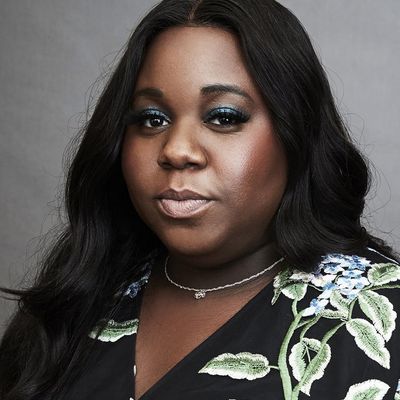
[0:18] Gordon Cox: On this episode of Stagecraft, I'm talking to Alex Newell.
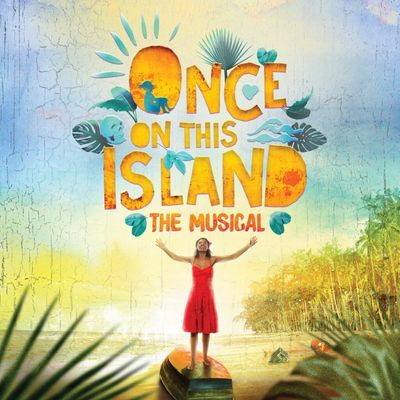
[0:21] Gordon Cox: Theatergoers will know the actor from his role as Asaka, the goddess of the earth, in the Tony Winning 2017 revival of Once on This Island. His breakout, though, came on TV, first with the Glee Project, and then with a significant role on Glee, playing the transgender teen Unique Atoms. Now, in addition to working as a recording artist, the actor singer is appearing in the NBC series Zoey’s Extraordinary Playlist.
[0:46] Gordon Cox: And of course, it's a musical. In it, protagonist Zoe discovers that she has the ability to hear people express their inner emotional lives through songs and dance numbers that only she can see. Alex plays Mo, Zoe's gender fluid neighbor, who helps Zoe figure out how her powers work while going on a journey of his own. Alex is in the virtual studio with me to tell us about his influence on how the role developed, his time on Broadway, why he's destined to play Effie in Dreamgirls, and more.
[1:18] Alex Newell: Thanks for having me.
[1:20] Gordon Cox: So Mo seems like a role that's a perfect fit for you, and I know you had some influence on how the character was developed. Can you tell us a little bit about that?
[1:29] Alex Newell: Um, when I first got the script for Zoey's, Mo started off as a 31-year-old bisexual black woman, and I was just like, I am clearly nothing like this woman whatsoever.
[1:42] Gordon Cox: And so how did it get to you then?
[1:44] Alex Newell: Um, Robert Ulrich, who was the casting director for the Glee Project, and Glee was also the casting director for the pilot and the show in general, and they had seen maybe 300 women, and it just seemed so generic. This is what, um, Austin, our creator, excuse me, told us. But um, it just seemed like it was that normal trope of the best friend across the hall, girl next door kind of thing, and there was nothing new or nuanced to it. And Robert suggested me, and I came in, and apparently it was like something clicked. But yeah, um, I don't know. I think I am, uh, it's hard because as a recording artist who loves music, um, I do fit the stereotype of someone that knows life in a way, because music is life, music is the food of love, it's everything. So I think that energy that I had in my mindset and my soul and spirit kind of really resonated and transcended through the role and character.
[2:47] Gordon Cox: And what appealed to you about it?
[2:49] Alex Newell: About the—what did you respond to in the character, even though it was so unlike you on the page at first? Um, honestly, I think since it was so new and different, and I hadn't seen a character like this, and it did sound kind of like me, this free-loving person who just likes life and fashion and is an artist and expresses their emotions in so many different ways. I think that I kind of was drawn to that because as out and expressive as I am, I'm very reserved and held back a lot of the times. But um, just this vice of playing this very colorful role was very different and nice for me.
[3:34] Gordon Cox: Right. And then as you started to talk to the creators of the show about how the character would shape up, what was important to you to include?
[3:46] Alex Newell: I think what was important to me to include was kind of my own story and um what gender expression is and identity is.
[3:56] Gordon Cox: Yeah, can you talk a little bit about that?
[3:57] Alex Newell: There was an episode specifically devoted to that fairly early on in the room. I mean, it was really derived off of what my expression and my identity and who I am as a person and faith and kind of that struggle of being um obscure inside the church, like the elephant in the room, and kind of used for your quote-unquote God-given talents, which I did have a lot, I do have lots of God-given talents, and how the church can sometimes exploit that and then tell you to hide your personal life in the shadows and deject you and kind of preach love but don't preach and teach love but don't um actually use those values sometimes. And I think I really want to show my relationship with the church that I still attend, and how I was kind of um put down by the former pastor of the church and frowned upon and some of the members of the clergy, and but they would still ask me to get up there and sing just because I um liked boys at 17, 18 years of age.
And I kind of want to show that on this show because it is something that little gay and gender queer and people that are quote unquote normally different. I like to say normally different because just because we're different doesn't mean we're not normal. Um go through, and they don't get to see that often, and they're in these small towns and they don't have anyone like them anywhere. And I really wanted to show that aspect of what religion was to me because it's something that I fought for a very long time.
[5:35] Gordon Cox: Yeah. And are there elements of Mo that are not like you?
[5:40] Alex Newell: Um, the lines are so blurred, especially now that I lived that character not even like four months ago and I lived it for so long, I kind of forgot who Mo—who Alex was and where Mo ended and Alex began.
[5:55] Gordon Cox: Right.
[5:56] Alex Newell: Um, I know like the generic things. I am not a DJ by any means. Like I would sit in front of the vinyl discs and I'd be like, honestly, I have no idea what I'm doing here.
[6:09] Gordon Cox: Um, are you handy?
[6:10] Alex Newell: Because that's another thing that Mo is.
[6:12] Alex Newell: I'm not handy at all, but Mo's not handy.
[6:14] Gordon Cox: Right.
[6:15] Alex Newell: Okay. I think that was like the running rope. But um, I uh, I—there's so like, uh, like I give advice to my friends, whether they take it or not is up to them. Um, I am that person that loves to just don a cute outfit just to go downstairs. Like I don't know. It's hard because I put so much of Mo—sorry, so much of Alex into Mo that yeah.
[6:45] Gordon Cox: Right. And of course you get to—everyone gets to sing pretty regularly on the show. Do you have a favorite number that you have?
[6:52] Alex Newell: I don't.
[6:54] Alex Newell: Um, I really don't. I think I've sung so much in my life, especially starting back on Glee.
[7:02] Gordon Cox: Right.
[7:02] Alex Newell: I was like, what's your favorite number? I was just like, honestly, to be honest with you, I don't remember any of the numbers.
[7:09] Gordon Cox: Were there any that have been particularly fun for you to watch?
[7:13] Alex Newell: Um, yes.
[7:15] Alex Newell: Um, Bernadette Peters' number.
[7:18] Gordon Cox: Yes.
[7:19] Alex Newell: That is coming this—
[7:21] Gordon Cox: Yeah, Bernadette is—it's Bernadette Peters. She's my best friend. She doesn't know she's my best friend.
[7:27] Alex Newell: But um, funny story about Bernadette Peters. We're filming a scene, and Bernadette Peters quite literally walks in the door because a PA sent her in the door while we're filming this hallway scene, and he just says, "Oh, sorry," and looks at me and says, "Oh my goodness, you're so talented." I will hold that in my mind forever.
[7:52] Gordon Cox: That's delightful.
[7:53] Alex Newell: Yeah, you didn't—did you—you didn't have any scenes in that episode with her, did you?
[7:57] Alex Newell: I don't.
[7:58] Alex Newell: Um, I barely ever have scenes with anyone that's not Zoe.
[8:02] Gordon Cox: Right.
[8:03] Alex Newell: Yeah. Uh, how do you—when you do have a musical number, how do you record these songs? Do you record them in a studio and then lip sync on set?
[8:11] Alex Newell: We have a studio on our lot, so which is very convenient because vice versa. On Glee, we had to schedule a studio that was down the street or around the corner, somewhere else that wasn't on the lot. So it's nice to have a recording studio right there. And then you on set, you do lip sync.
[8:35] Alex Newell: Yeah. Um, for me, sometimes they get very greedy and they would love, especially Jane.
[8:41] Gordon Cox: Jane always wants me to sing live.
[8:43] Alex Newell: Yes, she always wants me to sing live, and I'm just like, girl, I can't do this all day. I oblige. Um, I—the last song that I did live was um, they cut a number from an episode. I did "You're No Good," and I sang that one live, and then um, I sang "The Trouble with Love Is" by Kelly Clarkson. I sang that live.
[9:10] Gordon Cox: Yeah.
[9:11] Alex Newell: But I have a rule, I only do three takes.
[9:14] Gordon Cox: Oh yeah, that makes sense. Is there a trick to good lip syncing when you're not singing live?
[9:22] Alex Newell: It's strange that you say that because Mandy Moore, our choreographer, and Jillian, our associate choreographer, they always—and Jeffrey, our assistant choreographer—they always walk up to me when I'm lip syncing and they're just like, "Are you actually singing?" And I'm just like, "No, I'm not." They're like, "It looks like you're actually full voice singing." I said, "There is not even noise coming out of my mouth." Like I'm—I think it truly—it just goes right back to Glee. I mean, we were doing numbers over and over again, and not just like I'm singing lead, "Oh hey guys, you're singing backups to this song." We forgot to tell you all, but yeah, there are background vocals in this song, so if you could learn them now and sing them. So, uh, a majority of my early twenties was a RuPaul's Drag Race lifting from your life every day. I mean, I was lip syncing maybe two to three times a week.
[10:15] Gordon Cox: Right.
[10:21] Alex Newell: What's—go ahead?
[10:23] Gordon Cox: Yeah. And when this episode of the podcast comes out, the episode that you mentioned with Bernadette Peters will have just aired, and then there's one more left. What can you tell us about what's coming up for Mo and for the show?
[10:38] Alex Newell: Um, do you have a big number that we should look forward to?
[10:41] Alex Newell: I always—I didn't sing that much the first half of the season, and then it was just like you're singing in this episode, you're singing this episode, you're singing this episode. I was just like, "Ah, hell." Um, so in this past episode, issues came out is when I break up with my boyfriend on the show essentially because he is going away on an extended period cruise, and apparently Mo does not do long distance very well. And so that's kind of—it's different. You never see someone who's so gender fluid have a relationship and go through relationship traumas and trials. Um, you—and just like making it a normal and not kind of harping on the fluidity of their expression, which I really wanted to make a point of on the show. I didn't want it to be like, "Oh my god, the issue why I can't find love is because I like to wear dresses."
[11:40] Gordon Cox: Right.
[11:41] Alex Newell: I didn't want that. I didn't think that that was any narrative that needed to be shared just yet, especially while you're getting to know a character. Because yes, it's still an issue, yes, it's still something that's a conversation with a romantic relationship, but I think more so of just like the insecurities of life in general of how do we make a long-distance relationship even work?
[12:04] Gordon Cox: Right.
[12:05] Alex Newell: Yeah. What places would you like to go with Mo in season two, assuming the show gets picked up?
[12:12] Alex Newell: Um, assuming that the show—knock on all of the wood—does get picked up, um, I want to see, I kind of do want to dive more into relationships with Mo. I think that we have to make things very normal to make things better. And the more people see it being a normal thing, the more they accept it. Between that and kind of more personal lives, like home lives of upbringings with Mo, like Mo's mother and father and sisters and brothers and all of that good stuff.
[12:48] Alex Newell: Because we touch on it in episode four of the only person that made me feel special was my mom. And that's very close to me because my mother raised me on her own from the age of six until 18. And she did it by herself because my father died. And so my mother was kind of the only person that ever really made me feel special. And I want to see Mo's mom. I want to see Mo's father. I want to know these relationships. Right after the break.
[13:44] Gordon Cox: What tell us about that experience and what that was like for you, and what sort of you still carry with you now that you that you first maybe learned or experienced on that run.
[13:57] Alex Newell: You know, that was a full circle show for me. Like in all of the circles, like in every circle. I remember the first like musical performance that I'd ever seen on YouTube was the revival of Once on This Island. Wow. I saw Lilius White running around. I saw LaShawn screaming for her life. I saw these amazing black performers on stage. And I'd never seen anything like that. I mean I grew up in Massachusetts where I probably didn't know that I was physically black until someone had to tell me that I was black because I went to a school called North Shore Christian School where I was one of two black kids in the entire building so it's it was something cathartic for me. And growing up I always loved Asaka.
I always loved Keisha Lewis singing Asaka I loved every nuance of Asaka and to be honest Asaka is such a small role. Yes. Although a hugely memorable one it is the biggest role that you remember but it's such a small role you really don't think about it until you're like doing it or not really because our production did everything. And what is was particularly memorable for you about that run when you think back on that run what's sort of the main memory for you.
[15:17] Alex Newell: It taught me so much I mean like as a little child running around doing musical theater your entire life you think that you're gonna get to Broadway and it's going to be the most magical experience ever. And it is but then the harsh reality of it hits you really hard that it is a job it's a job that you have to physically do eight shows a week you have to do it 12 months out of a year. Um, you have to, it's it's a marathon, and you have to learn all the sorry, realize all of the tools that you have in your body to make this marathon. Also, with this experience, a soccer mother of the earth. I am not a mother, I don't know how to be a mother. I don't know any what it's like to bring life into the world.
I don't know the joy and pain to look at some living being and love it so unconditionally, like I'm watching my own heart beat in front of me. So I have to go off of what my mother gave me and what her mother gave her, and what her mother's mother gave her, what my grandmother gave my father. I have to take my interpretation of what motherhood is, and what I left from that show is motherhood is love, motherhood is nurturing, motherhood is giving a little piece of yourself to someone else and letting it thrive and teaching them how to let it thrive, and that motherhood is not just womanhood, motherhood is just the word of love, really.
[17:00] Alex Newell: And when I left that show, um, I did a writer's camp for my album in LA, and there we wrote a song called Mama Told Me of all the things that my mother instilled in me and gave me. I mean, I wouldn't be here today if it had not been for my mother. Um, and just like what it means to be like a house mother in the LGBT community, or to be a a gay dad and that mother, or to be an adoptive mother, or to literally be a surrogate mother. Like there are so many facets of what motherhood is, and it's not just a stigma of womanhood.
[17:38] Gordon Cox: Yeah. You have mentioned your work as a recording artist, you just talked about your album. Tell us about that. Do you think of yourself as a singer first or an actor or some combination of the two?
[17:51] Alex Newell: Um, I don't know anymore. I see myself as Barbara Streisand. Great. I mean, she's really that's a good role model. She's the epitome of like, I did it all. Right. And she did all of it perfectly.
[18:07] Gordon Cox: Yeah. And what's next for you on that front?
[18:11] Alex Newell: Um, uh, just new music coming out and praying for season two, and kind of just existing. I mean, I I think that's sitting still is like the best tool that any artist can do.
[18:30] Gordon Cox: The entertainment industry, and particularly in many cases, acting, can be a place where performers are expected to fill certain roles in certain ways. Like conformity can be a part of the game, and that many people expect certain people to look or behave a certain way to be considered for certain roles. Whereas non-conforming is something that sort of defines you in your life, and it's continued to define you, and you've continued to hold on to it in your career. How difficult has that been? Holding on to those things that are important to you while finding your place in the industry.
[19:04] Alex Newell: I it's kind of just being steadfast in who you are. I mean, people aren't gonna like you, and I learned that a long time ago. Not everybody is supposed to like you, not everybody's going to like you. Not everybody has to like every like you, and vice versa. You don't have to like everybody, you're not gonna like everybody, and you don't have to like everybody. And I think that I've been so blessed and fortunate to have so many amazing people around me. I mean, I started when I was uh I started doing musical theater when I was 11. I started TV when I was 18. I'm almost 28 now. Um yeah, I I uh they say when when I my father died, I had to grow up really, really fast because it was just me and my mother, and I kind of had to take on the role of independence.
I had to take on, I have to take care of myself because my mother is also taking care of us. So where my mother lags, not lags, but where my mother is focused on taking care of everything, a whole picture, I have to keep the maintenance on the little picture of everything, and so I did everything that I could to do that, and growing up that way, you kind of look at life in a different way. Like I look at some of my friends now and be like, I don't know how to cook. And I was just like, baby, I have been cooking since I was 10 years old. I don't understand how you don't know how to cook. Um, but that also goes back to being on set and not being quote unquote an asshole to everybody when you're just like you don't know when you're gonna see this person next.
Also, you know what this person's job is, you know what this person is going through. So lead with kindness. Um I think I also lead with like a kind of naivety where I love to learn new things. I don't know everything. Right. But uh what I do know, I know. And if I'm wrong, I can admit that I'm wrong, but I'm never really ever wrong. So I think the big picture is I maintain a very good sense of self throughout this entire journey. And knowing, I mean, I've been called fat in a room, I have been called too gay, I've been called too black, too effeminate, I've been called everything to my face, and none of that has have I ever let affect me.
[21:38] Gordon Cox: Right. We're all stuck spending a whole lot of time at home these days. What are you doing to keep yourself in shape vocally as a performer?
[21:49] Alex Newell: Not singing. Oh my goodness, I'm just not singing. Um I had I went into once in this island with a little bit of voice damage, and so I had to go back and relearn how to sing, not learn how to sing, but how to sing with it, and because I didn't want to have the elective surgery because I just didn't want to. Um I could go and have it at any juncture, but I've learned how to sing on it. Well, sorry, not on it with it, and now I'm just like, I don't have to sing, great. I shouldn't have to sing. Vocal rest, yeah. It's like that's the best kind of ease to make things go away. I mean, any vocal damage, the body can heal itself. So if I don't have to sing each and every day, eight shows a week or record for four hours to five hours in a studio a day, I'm I'm not going to.
[22:50] Gordon Cox: And how else are you filling your time during this uh this pause in in day-to-day life?
[22:55] Alex Newell: I have been cooking nonstop. I mean, it is it's actually it's become a problem. I've never like I keep breaking the I call it quarantini, as in Martini. Yeah, of course. Quarantini, I am breaking all the rules because I go to the grocery store damn near every day. One, because I live alone in this big ass apartment, and I feel like the walls are closing in on me. So I just need to like have a human interaction. But um, yeah, I I just I cook every day. Yeah, and like I'm not like cooking small meals, I'm like cooking big things. Do not ask me why, but I just do it.
[23:44] Gordon Cox: Yeah. What looking ahead, what would you like to do on screen or on stage that you haven't had a chance to do yet?
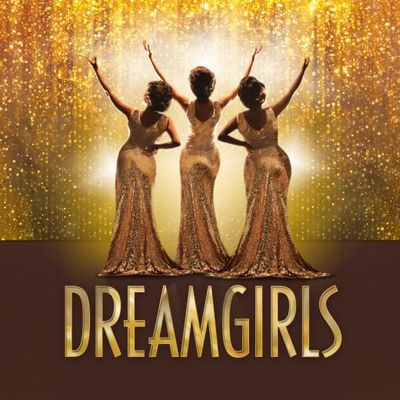
[23:54] Alex Newell: Um, I think everyone wants me to do um effie. And I do, I want to do it. Speaking of dream girls, right? Yes, I would love speaking of dream girls, everybody. Yeah, I would love to do dream girls. I think that's my that's my next. It was always Osaka and it was always Effie.
[24:16] Gordon Cox: Great. Well, we look forward to seeing it happen. Have you been putting it out there for uh for people to think about?
[24:23] Alex Newell: Absolutely. I mean, every I I always tell people, oh my goodness, I have retired singing, and I am telling you, I've retired it. I'm only gonna play it when it's needed. I'm retired. I'm like, I actually am retired if I only sing it when it needs to be sung.
[24:39] Gordon Cox: Right, right. Well, we uh can't wait to see you as Effie and in as Mo uh hopefully in season two. Thanks so much for joining us and talking to me, Alex. Really nice to talk to you.
[24:51] Alex Newell: Thanks for having me.
[25:00] Gordon Cox: That was Alex Newell from Zoey's Extraordinary Playlist, now finishing up its first season on NBC. If you like what you're hearing on this and other episodes of Stagecraft, you can rate and review us on Apple Podcasts, and you can subscribe and find past episodes there and on all the other pod places, including Spotify and on the Broadway Podcast Network, which is a great place to find more theater for your ears. I'll be back next week with another new episode. Thanks for listening and see you soon.
© Broadway Podcast Network, All Rights Reserved