

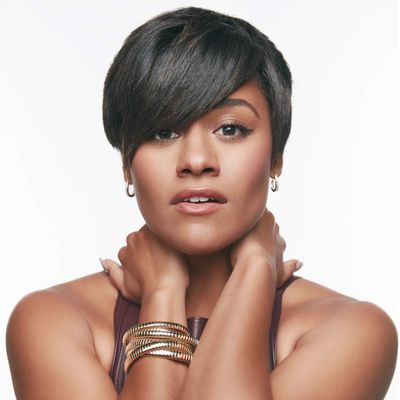
The Tony-nominated actor ("Hamilton," "West Side Story") is having a screen moment with stage musicals... Read More
From the show: Stagecraft with Gordon Cox
Guests
Featured Shows

About
The Tony-nominated actor ("Hamilton," "West Side Story") is having a screen moment with stage musicals.
Transcript
This transcript was automatically generated and might contain errors.
[0:06] Gordon Cox: Welcome to Stagecraft, Variety's theater podcast, bringing you backstage and behind the scenes with the stars, creators, and industry leaders keeping theater alive and bringing musical theater to screens near you during the pandemic.
[0:18] Gordon Cox: I'm your host, Gordon Cox. On this episode of Stagecraft, I'm talking to Ariana DeBose. The Tony-nominated actor got her start on So You Think You Can Dance before shifting to musical theater roles in Bring It On, Motown, Pippin, and of course Hamilton, in which she played the pivotal ensemble role of the bullet. Since then, she starred in A Bronx Tale and in Summer, the Donna Summer musical. And now, during the pandemic, DeBose has been having something of a moment on screen instead of on stage. First, we got a chance to revisit her work or see it for the first time in the filmed performance of Hamilton that hit Disney Plus in the summer. And now she's appearing in The Prom, Ryan Murphy's starry Netflix adaptation of the fan-favorite Broadway musical.
Up next for her, a new musical series on Apple TV Plus, Schmigadoon, due to be released next year. And then at the end of 2021, Steven Spielberg's much-anticipated new film adaptation of West Side Story, in which she plays Anita. DeBose is in the virtual studio with me to tell us all about that and more. Hey Ariana, thanks for joining me.
[1:18] Ariana DeBose: Hi, Gordon, how are ya?
[1:20] Gordon Cox: I'm great. How are you?
[1:23] Ariana DeBose: It's a little chilly where I am, but that's okay.
[1:26] Gordon Cox: Yeah. So The Prom was a great big fan favorite for a lot of theater folks when it was running. You know, the theater community really sort of fell in love with that show. Did you get a chance to see it while it was running?
[1:38] Ariana DeBose: Oh, darling, I saw it three times. I was a bit of a fanatic. I loved it. I saw it first with my sister Adrienne Warren. Um, and I boohooed. Like she had to console me. I was just so overwhelmed and moved and so many people on that stage that, you know, I've, I've, uh, some of whom I've worked with, some I've taken dance class with, just contemporaries, colleagues, having a blast, doing what they do best, um, and storytelling in a way that was so accessible to so many different types of people because that audience, all three times that I saw it, the audience was filled with so many different types of people, and that was, it's always thrilling to me to see a piece on stage, whether it be in a Broadway house or a non-Broadway house, um, that has that kind of power, right? I think that was amazing.
[2:39] Gordon Cox: Did you respond? You play in the Netflix version adaptation, you play Alyssa Green, who is the sort of not yet out girlfriend of the main character who just wants to take a girl to the prom but finds herself barred from doing so. Um, did you what did you think of that character as you were sitting there? Did you respond in particular to it then and how has that changed now that you played the role?
[3:04] Ariana DeBose: Oh, I absolutely responded to character Alyssa in the Broadway production, um, portrayed by Isabel McCalla, who identifies as a woman of color, and I was so taken with her. I thought what she was doing up there represented us so beautifully. Um, and it was the first time that I had really seen a coming out journey with a face like mine, like ours portrayed on stage, and that's what really got me, you know. I thought that was so, so special, and I remember sitting in the theater that night thinking, I'd love to be a part of this story one day, um, or this type, this family, this legacy. Um, and then, you know, lo and behold, here comes Ryan Murphy. And I'm so grateful for the opportunity. Um, because I learned a lot through Alyssa, right?
I myself identify as Afro-Latina, my mother is white, so I'm a trail mix of a lot of things. Um, but through my lived experience, you know, coming out, whilst I didn't feel like I necessarily came out, I sort of just always was. It's hard to explain. I was really lucky that I had a mom who just let me be, you know. Um, that's not the norm for everyone. And even moving to New York, I had more experience with prejudice or, um, systemic racism or oppression in that way. Um, when I moved to New York as an out and proud woman than I didn't necessarily when I was growing up. Uh, so that it was really interesting to me to have these different revelations about what it is to be young and go through the struggle of trying to find your voice and trying to seek the acceptance of the people that you love, because like I said, that wasn't necessarily the experience I had.
Um, and it can be challenging in black and brown communities, and I don't think there's anything wrong in acknowledging that, right? That there's still a lot of work to be done, even amongst ourselves, right? Um, they were having so many fruitful conversations around, you know, racial injustice and prejudice and, you know, any number of things. We live in the time of Me Too. You know what I'm saying? There's a lot of work to be done. Um, and I love that in the manifestation of Alyssa Green and through this body, um, and the manifestation of Carrie Mrs. Green through Kerry Washington, um, you get to see a black family, uh, you know, essentially a single parent black family, because you do not see her father figure in this story.
You get to see the layers of how these two women have to find each other and make space for each other. And that's the gift of The Prom, I, or at least my hope that is the gift of The Prom that young people, whether you identify as a person of color or not, that you see a blueprint that coming out is complicated, it's bumpy, that there's bumps in the road, but the happy ending is still possible. That's what I love so much about our version of the story.
[6:49] Gordon Cox: Yeah, you mentioned Kerry Washington, who plays Alyssa's mother, your character's mother, but she is one of just a number of, you know, great big well-known actors, really talented well-known actors who you are in that film with, including, you know, Meryl Streep and Nicole Kidman and Keegan-Michael Key and Tracey Ullman and James Corden in it. The list just sort of goes on and on. What was that like for you to sort of work on that with a cast like that?
[7:10] Ariana DeBose: Oh, you know, it was fine. It wasn't that special at all, said nobody ever. I mean, I will say I'm very grateful that I had my Hamilton experience prior to making this movie because with a show like Hamilton, you know, Hollywood came out in droves to see our show and it did allow me to meet many of these people, whether they knew they were meeting me, I knew I was meeting them, so it didn't make any difference to me, but it allowed me to get out some of those jitters ahead of time. I'm very grateful for that so that when I did show up in Los Angeles to make this movie and arrive, I arrived even in a rehearsal hall, not even on set, a rehearsal hall where Meryl Streep is sitting on a little bench putting on her little LaDucas.
I didn't necessarily feel like I was gonna fall apart in front of her. I could at least make a coherent sentence, but it was a joy. I mean, I think my greatest takeaway from working with all of them, they're all so specifically excellent at what it is they do. They're craftsmen. They are not only surviving, they're thriving in Hollywood, but they are nice people. And to me, that was like a big revelation because I've always tried to lead with kindness and grace because this show business is hard. It ain't easy. It can bring out some colorful tones in a lot of folks. Um, but to experience them in that way and to see that you can work hard, you can make an amazing product, you can be a legend, you can be Miss Meryl Streep or M Streezy as Kerry called her, and still be nice and laugh with people. That was great.
[9:25] Gordon Cox: Yeah, yeah. Speaking of Hamilton, we all got a chance to revisit the Hamilton or for many of us, I'm sure see it for the first time, when it landed on Disney Plus over the summer. What was it like for you? You know, we all had our own experience for those of us who saw the show, you know, back when it opened and has since. It was, you know, one thing for someone like me to revisit that show. What was it like for you to, you know, take a look at it and relive it that time?
[9:53] Ariana DeBose: You know, it was, um, it's hard to find words to describe the Hamilton experience anyways. Um, but seeing the film, I think it allowed me to see the show from a different angle, you know. I went through several different challenges whilst I was doing the show. I had been injured a couple different times. So that had given me the opportunity to see the show. Um, so I remember what it was like to experience it from an audience perspective. And that was moved, it was beautiful, it's everything that people say it is. But then to see it on film and to be able to zero in on the emotional life of these people, um, historical figures, many. All. Um, and also it gave me the opportunity to go in and really, really get into the nitty-gritty of my ensemble colleagues, right?
And I was like, wait, you were doing that? Or that silly little stupid thing we were doing in the corner, that made it on the screen. Oh, oh no, or yay, you know. Right. Um, so it was, as odd as it is, because I still think it's very strange to see yourself on screen. I don't know if I'm comfortable with it. But it was a wonderful experience to see all of these people that I'd, that we worked with, that I worked with, we, uh, yikes to see the work that we put our heart and souls into in that way, it really was priceless. It reminded me of the blood, sweat, and tears, you know. Um, for the people, and finally the people get to see it in this way, and it was nice to have, you know, so many of our Disney Plus audience, um, so many members of that audience did reach out and were like, Oh my gosh, I get what you mean by the bullet, you know.
[12:06] Ariana DeBose: Um, because not, I mean, she's, I don't think the bullet is like an official character by any stretch of the mind. I don't think if you talk to our creative team, they would be like, "Yep, bullet, totally bullet." Right. But she does exist, and I at the time when we were doing the show, I thought it was so special that Andy will let the bullet be embodied by a human form. Because when you can imagine a person as a bullet, it changes the way you think about it, right? So for me as an artist, I took the opportunity to let that embody, you know, an omen of death. And what could that be like? It kept it interesting. So my shows, my shows were always intriguing. I had, as hard as that show was, I really enjoyed doing it. Um, and part of that enjoyment came from the track.
[13:02] Ariana DeBose: Yeah, yeah. And what you found yourself in a position that, uh, you know, uh, every actor in a show that manages to become the massive success that Hamilton did. You find yourself in the position of like having this really good thing going, but knowing that at some point you're gonna want to and have to and, uh, have the desire to move on and, you know, do something else and try something different and show other sides of yourself. How do you, what's your memory of sort of negotiating that in terms of when did you time that? How did you time it? How did you know you were ready? How did you know the company was ready? Like, what was your thinking behind that?
[13:44] Ariana DeBose: Um, you know, I, um, on a personal note, I had actually, I was in Pippin when I had sort of made an agreement with myself, it was like, okay, from after this show, you need to take steps to try for different things to find a different challenge. Um, and then Hamilton came along and I was like, okay, that's an ensemble track, but it is so worthwhile. You know what I mean? This type of show. When you say, so when you say you were looking for something for a different challenges, you mean not necessarily an ensemble role. You were looking for something beyond an ensemble role.
[14:27] Ariana DeBose: Right. I had decided for myself that I wanted to challenge my skill set to see if I could book, you know, more featured roles or a leading lady role. Um, and I wasn't sure that I could do it. So thank God Hamilton came along, gave me a little more time to like get up the courage to really set forth on that path. But what Hamilton did force me to do for myself was decide whether or not I wanted to cover or understudy um with that job, and I actively chose not to. That's something I had been doing on most of my jobs.
[15:08] Ariana DeBose: I had chosen understudy.
[15:08] Ariana DeBose: Yeah, you did it for, didn't you do it for Pippin? If I remember, I yeah, I understudied for Pippin and I took over very briefly.
[15:16] Ariana DeBose: Yeah. Um, but I understudied Diana Ross in Motown Musical.
[15:20] Ariana DeBose: Right. I understood Danielle in Bring It On. Like I was getting really good at doing that thing, but I don't like I'm a person who doesn't like being pigeonholed. So I didn't want to keep just saying yes and then not feeling like I was truly being considered for something different. Um, so that was the choice I ended up having to make with Hamilton. Everybody looked at me like I was crazy, like, why wouldn't you want to do this? Why don't you want to cover Mariah Reynolds? And I was like, it's not about the part, it's about my personal growth.
[15:54] Ariana DeBose: Um, so then, you know, I wanted to see it all the way through. Um, yeah, I think when you have an original Broadway cast, you want to be there for the Tonys, you want to be there for the cast album. You, you know, you want all those experiences. So I hung on as long as I could, and then um, I realized right around Tony time that this here body was not gonna allow me to carry on much longer doing eight times a week of Hamilton.
[16:27] Gordon Cox: Right, that specifically, that was a challenging physical role for you.
[16:33] Ariana DeBose: Oh, yeah. For and for anyone, I mean, yeah for any for anyone in that show. It is very hard to maintain that show for a year in on your body. It's a full-time job.
[16:44] Ariana DeBose: Um, but I would wager to say, you know, Broadway performers, we're all athletes, we all have different skill sets. Like, you're a leading lady on Broadway, you're gonna have to do a different thing to maintain than an ensemble member in Hamilton, but you're still maintaining, and it's not easy, and it certainly isn't glamorous. I'm gonna tell you that.
[17:05] Gordon Cox: Right.
[17:06] Gordon Cox: Right, yeah. Did you, um, have any one of the things that I thought was so interesting about uh the uh release on Disney Plus is it inspired this whole other conversation from people who'd either seen it before or not about historical accuracy and what is included and what is left out and how much you have time to include and what's important to include? What was your take on sort of the, it was a thing that, you know, Lynn Manuel Miranda sort of welcomed, it seemed like. But I wonder what was your experience of sort of looking again at this show uh in a world that had been sort of really changed in the last, you know, several months before it came out.
[17:43] Ariana DeBose: Yeah, I mean I really applauded Lynn for how he took on that conversation, you know. I mean the reality is you have someone like Chris Jackson playing George Washington and, you know, George Washington was a white man who owned slaves, right? There are just certain facts there. Um, but I think in regards to how we include what we include, I do think having that conversation and opening up the door is number one the first step, right? I mean you do have to suspend disbelief. This is a musical and quite frankly if you ask any audience member, I don't really think they want to sit there for more than three hours, right? So it's, you gotta figure out how to keep your audience engaged and sometimes you do have to take liberties.
Oh, you take liberties within appropriate reason and again, our subjective. Um, and that that's what that's like this whole conversation. It's a great conversation, but it's hard to, it's hard to zero in on what should and shouldn't be included in specifically a non-fiction story.
[18:59] Ariana DeBose: I mean, you could ask the same question about "Motown: The Musical," right? You know what I mean? I mean, any story based on real people, real stories, right? It depends on whose perspective you're hearing or receiving this story from. The same thing about history books.
[19:15] Ariana DeBose: My history books were written by white men.
[19:18] Ariana DeBose: So they're not talking about anything that happened in regards to people who look like me historically.
[19:26] Ariana DeBose: And I remember this is so left field, but I remember in my history book, high school, 8B history, uh there was like two sentences about the duel between Alexander Hamilton and Aaron Burr. That was it.
[19:41] Gordon Cox: Huh.
[19:42] Ariana DeBose: And I was like, oh, then coming to do Hamilton, I was like, oh, this should have been a book in and of itself. Hashtag Ron Chernow.
[19:52] Ariana DeBose: Right, yeah. But it's an ongoing conversation. I don't, I don't know if I have a perfect answer to your question. But I do think the fact that we're able to do that. Does anyone right now, right? Probably not. But I do think the fact that we're able to have the conversation about even acknowledging that maybe we've left some things out, and we need to take better care at being more inclusive in the stories we tell and how we tell them. That is a step in the right direction.
[20:22] Gordon Cox: Right.
[20:22] Gordon Cox: Yeah. I'll have more with Ariana right after the break.
[20:34] Gordon Cox: And now here's more with Ariana DeBose.
[20:37] Ariana DeBose: Back in the before times, when, uh, you know, maybe like last year, maybe around this time, or maybe a little after, we were thinking, I was when we were looking ahead, when I was thinking ahead to Christmas of 2020. I was, uh, I am someone who goes to see a, uh, usually a musical, a movie musical if it exists on Christmas with my mother, and like we had that movie, but we had West Side Story picked out, so like we were lots of theater folks were, you know, ready to see that movie this Christmas, but then you know everything happened.
[21:12] Ariana DeBose: So we're gonna have to wait a year. But have you gotten a chance to see it yet?
[21:13] Ariana DeBose: No, I haven't. Gosh, I'm waiting on bated breath really. Um, but what I can say is, you know, in talking with Steven in the months following the wrap of the film, he has such a passion for this film. He's so excited about it. He's excited about what we've made, and I say we very, um, specifically because that's how he talks about it, what we've made. Yeah, um, it there was a real spirit of collaboration and just to tell you from what we experienced on set, that energy and some of the dance sequences, oh, the capture on it, it's exciting you guys. I can't wait. I'm very excited for you all to see it.
[21:13] Ariana DeBose: I'm well, I'm very curious in particular about the dancing because that the, you know, the Jerome Robbins moves are so sort of iconic and Justin Peck did the choreography for the, for the this new Steven Spielberg version. What can you, what is, what is this, what are these new moves like? What's the, how do you characterize what this dance, uh, brings to the story and how it tells the story versus the choreography we all know?
[21:13] Ariana DeBose: You know, I think number one, well, lots of things in there. Justin Peck is doing some of his best work with "West Side Story," and he specializes in making ballet accessible because it becomes pedestrian in a way. I think that that quality that he has has lent itself so beautifully to the storytelling of "West Side Story," and in particular to Steven's vision because the way that this is shot, it has such energy, such movement, such propelled forward motion.
[23:03] Ariana DeBose: And Justin did a great job in capturing that. In addition, he does a beautiful job of paying homage to the original Robbins work and doing, um, because you cannot duplicate or recycle Jerry Robbins. You just can't, right? This does not attempt to do that. It just is respectful of it, right? Um, and then allows the work that we are doing to take on um a life of its own. Um, which was really exciting for me because I come in and as I think you can see, Gordon, I have very specific opinions about many, many things.
[23:42] Ariana DeBose: Um, but Justin became a great partner, Justin and his team, his wife, uh Patricia Delgado, um so great and wonderfully collaborative to allow Anita to manifest within my body.
[23:58] Ariana DeBose: And I would also go even further to say they really did their homework, you know. Justin was doing the research around these Latin dances to infuse Puerto Rican rhythms and authentic movement and dance styles like Le Bomba, as opposed to, you know, just what we stereotypically believe to be Hispanic dance steps or rhythms. Like he went for authenticity, and I was really proud of him. And that's the theme of the whole production, in my opinion. You know, we had Gustavo Dura Mel conduct the LA Phil and the New York Phil for this movie, and the music is stunning, but it's authentic because we got the best. We got Gustavo, you know what I'm saying? We went as far as we could kind of in every direction to find the heartbeat of our culture, and again, the same within the jet storyline as well.
I think you're gonna be really, our audiences are going to be pleasantly surprised by how this reimagination of a classic story really gives you even more access to the characters and to the time they were living in.
[25:30] Gordon Cox: Yeah. And what did you know? West Side Story is a film and a musical we all, many of us grew up with. Did you too grow up with West Side Story, and what did it mean to you, and what did particularly Anita mean to you?
[25:48] Ariana DeBose: I did grow up with West Side Story. I'll be honest, when I was a kid, I didn't fully understand what I was watching. And I'm talking childhood, childhood. Yeah. Um, but I fully understood that there was a woman who had brown skin dancing in a purple dress who I wanted to be. I knew that. And then later on, I discovered she had a name, and her name was Rita Moreno. Yeah. And she was Puerto Rican, and my mother was like, she's like you. You're Puerto Rican, she is Puerto Rican. And I was like, oh my gosh. So it was one of the first examples that I had of seeing myself reflected on a television set. You know, I think those light bulb moments in a child's life are really, really important. Uh huh.
Which is, you know, sort of now that I'm in this position, as a woman who identifies as Afro-Latina and as queer, to hopefully represent that for young people who haven't traditionally had people who look like them or identify as they identify. Like, I hope I can, you know, at least provide a sliver of hope, you know, that it's possible to achieve this level of success, right? If you work hard, if you seek out opportunity. There's nothing wrong with your ambition. That is something I do want to talk about. There is nothing wrong with ambition. There's a difference between being cold-blooded and leading with love. That's the conversation we need to be having. But ambition, as our vice president-elect, Kamala Harris said in her first speech, ambition is a good thing.
And if there's something you want and you're willing to work for it, go for it. Nothing should stand in your way. We have a BIPOC woman about to take office. That's exciting, y'all. I'm an Afro-Latina about to reimagine Anita in West Side Story in a time where Afro-Latinas are underrepresented in the entertainment industry. Um, and I'm a queer black presenting woman telling a coming out story in a Ryan Murphy Netflix musical. That is thrilling to me. And it's something that I don't take lightly. I do feel tremendous responsibility for these roles and the position that I'm in, but I want to have these conversations. I want to create more seats at the table. It's a good time. At least I think it is.
[28:40] Gordon Cox: Yeah. And you just finished production on a future or another project that you have been working on that is also a musical. Um, tell us a little bit about that for people who don't know much about it.
[28:59] Ariana DeBose: Yes, I just wrapped a musical comedy called Shmigadoon for Apple TV. I know Shmigadoon, yeah, right. I mean, I love it. It is, it's a series starring Cecily Strong, Keegan-Michael Key. Um, there's some other starry names like our queen Kristen Chenoweth and Alan Cumming, Fred Armisen, Dove Cameron, Aaron Tveit, myself, very and Anne Horada, my darling Anne Horada. And essentially a couple goes on a hike to reignite the flame in their relationship, and they find a magical town on the side of a mountain where people think they're in a musical, and it's great. It pays homage to everything that we are to beautiful golden age musicals. You know, that was particularly thrilling for me to have the opportunity to sing from the musical theater canon.
Well, it's original music by Cinco Paul, who is our writer and showrunner, but written in the style of, you know, the time of the great Barbara Cook. I never in a million years thought I would get the opportunity to even live my best Barbara Cook dream. And yet I did. I loved it. I had a fabulous time.
[30:29] Gordon Cox: Excellent. Excellent. And this, the podcast Stagecraft, my podcast, is part of the Broadway Podcast Network. And I should mention that you are also in an audio fiction podcast that is fairly new, also part of the Broadway Podcast Network that is produced by one of your producers of The Prom stage show and also the film, called As the Curtain Rises. Are you having fun with that? That seems like you get to play a director choreographer who's very ambitious, speaking of ambition.
[31:03] Ariana DeBose: Yes, she's fabulous. Her name's Zoe Taylor, director choreographer, and she is ambitious, and she's big picture. She fills in the details after the fact. Right. Um, but I'm having a blast doing it. Dory and her team have been so great about making this all happen. Started out as like a passion pandemic project, right? Um, and it's turned into this wonderful, wonderful expression of joy and just hilarity 'cause some of it's utterly ridiculous, and I'm living for it.
[31:39] Gordon Cox: Yeah. And so what else is on your plate now that you've finished wrapping production with that and you're working on the podcast? What else is ahead for you?
[31:48] Ariana DeBose: You know, right now I'm just enjoying the holidays with my family. Some, well in my opinion, well-earned downtime. I'm the queen of the hustle. So it's very hard for me to sit still. There are some things in the works that I'm very much looking forward to talking about in the near future. Um, which will be really cool. It'll be a departure from what you've seen me do thus far, and I can't wait to share it with you. And so if you do have a bit of a break ahead of you, what are some of the things that are not work that have kept you going through the pandemic? What's been your new passion?
[32:28] Ariana DeBose: Tequila. Um, sort of. I do have a favorite tequila though. Class Azul. It's kind of expensive. It's less of a splurge, but it's definitely worth it. So delicious. Um, Netflix. I've been watching a lot of Netflix. Queen's Gambit. Sure. The Crown. I'm really into period pieces right about now. I'm like, I wanna see big scale production. I wanna see use of color. I love it. Like give me storytelling through color and set design, and I'm a happy camper. Um, and also those two projects I just specifically referenced, they don't really have an abundance of people of color in them, but they inspire me to find the stories of those time periods that do. Um, so I look to them for source of inspiration, and then I go and I do a fair amount of research.
Uh, so I'm building my arsenal. I'm not someone who sits still, like I said before. So I've always got something spinning up here. But I'm also finding ways to give back. I've joined the board of two nonprofit organizations. I'm on the international board of Covenant House, championing homeless youth and trafficked youth. I also sit on the board of AS4, which is a reproductive and abortion rights organization. Um, so that has been fun to, it actually really has been fun and rewarding for me to kind of dig deep and fight for things I believe in. Um, and Jo Ellen and I are working on a new program that will also champion LGBTQ rights for young people and provide resources for them.
[34:31] Gordon Cox: So that's your co-star in The Prom, we should say in case...
[34:31] Ariana DeBose: Yes, my co-star in The Prom, Jo Ellen Pellman, ladies and gentlemen. You get ready. She's taking over the world.
[34:41] Gordon Cox: Uh, well, we look forward to watching The Prom again. I saw a screener of it a couple weeks ago, had a great time. Um, and seeing West Side Story next year and Shmigadoon, and we really look forward to seeing you on stage again as soon as we are all able to be in the same room at the same time. Um, it was great talking to you, Ariana.
[35:01] Ariana DeBose: You too, Gordon. Thank you.
[35:05] Gordon Cox: Yeah. That was Ariana DeBose, now starring in The Prom, landing on Netflix December 11th. And of course, you can also catch her in Hamilton on Disney Plus. If you like what you're hearing on this and other episodes of Stagecraft, I'd really appreciate it if you took the time to rate and review us on Apple Podcasts. It really helps us grow our audience of folks who love theater as much as you and I do. Or tell a friend about Stagecraft. You can find past episodes or subscribe on Apple Podcasts and on all the other pod places, including Spotify and on the Broadway Podcast Network, which is another great place to find more theater for your ears. I'll be back in two weeks with another new episode. Thanks for listening, and see you soon.
© Broadway Podcast Network, All Rights Reserved