

The Tony-winning composer, whose latest musical "Bob & Carol & Ted & Alice" is now playing Off Broadway, talks the Buddhist mafia, his controversial thoughts about songs forwarding plot, and the trend he helped launch with "Spring Awakening.".. Read More
From the show: Stagecraft with Gordon Cox
Guests

Featured Shows
About
The Tony-winning composer, whose latest musical "Bob & Carol & Ted & Alice" is now playing Off Broadway, talks the Buddhist mafia, his controversial thoughts about songs forwarding plot, and the trend he helped launch with "Spring Awakening."
Transcript
This transcript was automatically generated and might contain errors.
[0:07] Gordon Cox: Welcome to Stagecraft, Variety's Theater Podcast, bringing you backstage and behind the scenes with the stars and creators of the hottest shows on Broadway, off Broadway, and beyond.
[0:17] Gordon Cox: I'm your host, Gordon Cox.
[0:19] Gordon Cox: On this episode of Stagecraft, I'm talking to the composer and singer-songwriter Duncan Sheik.
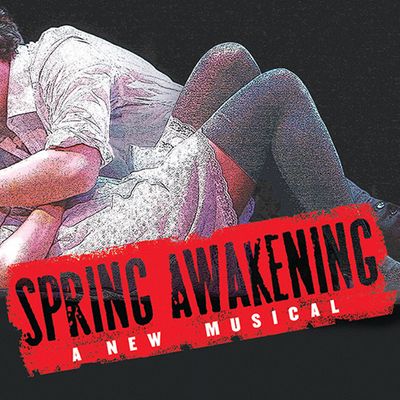
[0:24] Gordon Cox: Ever since the 2007 Tony winner, Spring Awakening, the musical he co-wrote with the bookwriter and lyricist Steven Seder, Sheik has worked on a steady stream of new musical projects, including The Nightingale, American Psycho, Because of Win Dixie, and many more.
[0:38] Gordon Cox: We've seen a number of them in New York just in the last year or so, including Alice by Heart, his World War II Alice in Wonderland tale that reunited him with Seder, The Secret Life of Bees, based on the novel and an adaptation he co-wrote with Lynn Nottage, and his latest, Bob and Carol and Ted and Alice, adapted with Jonathan Mark Sherman and Amanda Green, and now having its world premiere production with a new group off Broadway.
[1:01] Gordon Cox: A bit later this spring, he's got another new musical, Whisper House on tap.
[1:05] Gordon Cox: Sheik's in the studio with me to talk music genres, writing in his own voice, and the Buddhist Mafia.
[1:11] Gordon Cox: Hi Duncan, thanks for joining me.
[1:14] Gordon Cox: Before we talk specifically about Bob and Carol and Ted and Alice, I wanted to just ask about kind of what guides you as you choose the projects that you work on.
[1:25] Gordon Cox: Because I feel like your um the the the sort of breadth of your work includes like, you know, really wacky artsy Spring Awakening type stuff, and then it's got like dark, edgy American Psycho, and then it's got a heart warmer starring a dog, right? With uh Win Dixie, and then uh Bob and Carol and Ted and Alice is not necessarily a um uh a natural thought to be musicalized.
[1:47] Duncan Sheik: Sure. Um what what is it that gets you excited about working on a project and how do you choose that?
[1:52] Duncan Sheik: Well, it's interesting. I've been thinking about that because you know, as a composer, of course, you you want to have your own kind of singular voice and and you want that to kind of come through with any project that you're working on. But one of the ways to keep things fresh and interesting is to for me anyway, is to kind of explore um different genres and different musical worlds.
[2:16] Duncan Sheik: And and so, in a in a funny way, a lot of these things that I've been doing lately are exercises in genre. Um you know, certainly in the case of um, you know, Because of Win Dixie, it's this sort of you know, kind of down home folksy mix of Americana styles. And and you know, with with Secret Life of Bees, in a similar but different way, it was just sort of a mix of of of kind of white Americana styles and then sort of black music, um, this sort of sort of syncretic black music of um of the Gullah and Geechee people, you know.
[2:56] Duncan Sheik: Um in the case of Bob and Carol and Ted and Alice, obviously I'm trafficking in the sort of late 60s Bacharach. Um, you know, people mentioned Michel Legrand. I don't know, I guess it's not like an influence that I would put at the top of my list, but it's interesting.
[3:10] Duncan Sheik: Yeah, it's there. Um so and you know, recently I've been working on shows, I'm doing a show called Noir that sort of has a film noir um aspect to it. So yeah, so in a way, like working in these different genres, um it keeps things fresh and exciting. And so, you know, you know, a chord progression is the chord progression. It's like it's gonna be it's gonna be two or four or six or eight chords or whatever it is, and and then the way to kind of make that interesting is to maybe dress it up in different clothing.
[3:42] Duncan Sheik: Um, and uh, and that's sort of the fun of it for me. Certainly with American Psycho, like I was just going through a big electronic music kick, and that's and and that's in large part the music I grew up with. So being able to just play with Ableton and analog synthesizers all day was really fun.
[3:58] Gordon Cox: Right. Was there is there a genre that you have explored through the course of your work on these musicals that you've suddenly thought, oh, I might like to write for myself in this genre, or yeah.
[4:08] Duncan Sheik: Well, certainly as a the electronic music side of things um became you know what I was doing really for the last six or seven years, and and my last record, Ledger Domain was a lot it was sort of half more overtly electronic music and then half music that was more maybe uh acoustic and thoughtful, but it had a lot of electronic stuff interweaved within it.
[4:30] Duncan Sheik: So um so yeah, uh you know, it definitely filters into all aspects of my work, I guess.
[4:37] Gordon Cox: Yeah.
[4:37] Duncan Sheik: Yeah. And so what was it about was it specifically the um the era of Bob and Carol and Ted and Alice that got you interested?
[4:44] Duncan Sheik: Or in part, yeah. I mean, again, I wasn't I wasn't familiar with the movie beyond knowing the iconic movie poster when this when this idea was floated towards me.
[4:55] Gordon Cox: And then by who actually?
[4:56] Duncan Sheik: Um well it was really there was a conversation going on with a lot of people, but Scott Elliott and I were part of this conversation is the director of the club.
[4:56] Gordon Cox: The director of the show, yes.
[5:07] Duncan Sheik: Um and and it was like a kind of like a a two-year conversation, and then we finally got to work on it in earnest, I would say, 2016, 2017, and that's when most of the songs were written.
[5:19] Gordon Cox: It's pretty quick, actually.
[5:20] Duncan Sheik: Yes. Very quick for very quick for a musical.
[5:24] Gordon Cox: Yeah.
[5:24] Duncan Sheik: Um but uh, yeah, so you know, I I watched the movie and spent a lot of time with the movie. I watched the movie many times.
[5:33] Duncan Sheik: And I and I did at first, as with many projects, I'm like, I really don't see how this is going to be a musical, but you know, let's let's keep talking about it.
[5:45] Duncan Sheik: And um then Jonathan Mark Sherman got involved, and he's the bookwriter and also a playwright. He's the bookwriter and playwright, and a lovely guy.
[5:51] Duncan Sheik: Um he has a really intense mustache these days.
[5:57] Duncan Sheik: Um and you know, we kind of we found some places where songs might happen, and uh and then I just I was that hard, was it unusually difficult for that particular thing?
[6:10] Duncan Sheik: Let me back up for a minute. I one of the things I liked about the movie is that um it it wasn't what I thought it was gonna be at all. It's this almost sort of documentary uh sort of neo-realist film about you know bourgeois people in late 60s LA, and they're kind of they're they're trying to contend with you know the summer of love, and they're trying to sort of get with it, and they're just maybe a little bit past it on some on some level.
[6:42] Gordon Cox: Right.
[6:42] Duncan Sheik: And their you know, core values are are such that they're they can't really stretch as far as they might want to.
[6:49] Duncan Sheik: Um and and you know, I I'm a big fan of like Antonioni and these sort of neo-realist kind of Italian filmmakers, and there was something about the Mazursky movie that reminded me of some of those films, um, and just the sort of the you know, again, the just the authenticity and the realism of it.
[7:06] Duncan Sheik: You know, I mean, and yeah, there's a little bit of sort of um late 60s kind of broad humor and I guess campiness for lack of but there's way less of it than you think right there's gonna be given the the iconic movie poster.
[7:21] Duncan Sheik: Um and so that was intriguing and you know defin I Scott and I talked a lot about what's what's interesting about the movie and hopefully will be about the musical is that it's really about human connection and authentic human connection and and you know discovering what that is and um I think it's something that we you know we're in short supply of these days you know when everyone's dating off of their phone you know or I mean I I I guess lucky enough to have sort of missed that missed that phenomenon but I sort of you know it's nice to see people just having really intense face to face conversations without them being mediated by technology.
[8:01] Duncan Sheik: I mean they might be mediated by a joint or something and there is there's something in the concept of the show that uh kind of include the includes the audience in the face to face sort of mediated about that and how that works.
[8:15] Gordon Cox: Yeah well I mean again I I don't want to give it away but there are three or four moments in the show where some folks are politely invited on stage um to be you know part of an encounter group or you know there's some dancing that happens there's some flirting that happens and it's I you know it's I think it's I again I'm one of those people who normally really cringes at that stuff but it's handled in a delicate way that and I and I think it it's it's a lot of fun and people appreciate it and um it's it's well done I think.
[8:49] Duncan Sheik: And it sort of fits in with the theme of the piece as you were saying, right?
[8:54] Duncan Sheik: Connecting with people and all.
[8:56] Gordon Cox: Exactly.
[8:56] Duncan Sheik: And there's I mean I you know I do think like the movie the the the show ends on this kind of this lovely moment of of the actors and some of the audience members sort of like dancing together sort of one you know group of of humanity kind of coming together, you know, and and loving each other, you know, in a maybe platonic way.
[9:19] Duncan Sheik: So um and which is interesting because to bring up the Suzanne Vega of it, I worked with her for a long time on this Carson McCullers show.
[9:27] Duncan Sheik: And that was sort of the theme of that show as well.
[9:30] Duncan Sheik: I just have to tell you right here that it was such a pleasure to be able to see Suzanne Vega live on stage.
[9:35] Duncan Sheik: She's been uh very important to me over the years.
[9:37] Duncan Sheik: So yeah seeing her on stage and singing some really catchy music was uh really great.
[9:42] Gordon Cox: Yeah I mean she's been really important to me too.
[9:45] Duncan Sheik: I mean I was a fan of hers when I was in high school but then we became we became friendly because we're both practicing Buddhists and and um and when I was on tour for my first record we you know she was touring as well and we kind of became well acquainted at that time and then since that time we've we've shared many musicians and we've toured together extensively.
[10:09] Duncan Sheik: So you know she's a she's a great person and a distinctive voice and I'm really glad she's in the show.
[10:16] Gordon Cox: And well actually let's talk a little bit about that role in particular. That's kind of the uh kind of a narrator band leader like what was the were you gonna play that role actually did I read that?
[10:19] Duncan Sheik: Yeah I was initially I was gonna do it and then you know I just I just had a baby.
[10:31] Duncan Sheik: Well, I have a 13-month-old Inez at home, and and it really became too tricky for me to juggle like being the composer and being the co-lyricist and being at an eight hours of rehearsal every day just wasn't it wasn't gonna be realistic.
[10:47] Duncan Sheik: So um we you know we asked Suze if she would consider it, and thankfully she did.
[10:54] Gordon Cox: And was it important because you could have you could have asked you know a musical theater performer, a more sort of traditional musical theater performer to do that role. Was it important to you that the role is played by someone who is uh kind of a musician or a singer-songwriter?
[11:08] Duncan Sheik: Yeah, I I think that that does give it um uh its own distinctive quality, and there's not a ton of acting in that role.
[11:16] Duncan Sheik: I mean, the person's obviously on stage the whole time, but but it's um it's more about having somebody who's yeah, uh an omniscient observer of things who kind of in occasionally is is there in a scene in a in a kind of sort of mystical way.
[11:32] Duncan Sheik: Yeah, um and you've started to talk about this a little bit, but what uh what else specifically can you tell us about how you think this story, um looking at this story now, Bob and Carol and Ted and Alice, uh how that plays and what it sort of resonates with here in 2020 when so many things have sort of changed since then and also some things you know haven't.
[11:54] Duncan Sheik: And what is it that you feel like we as people living in 2020 get from the story?
[11:58] Yeah.
[11:59] Well, again, I mean, it's funny, people always talk about like, well, why, you know, why is this relevant now?
[12:06] And I sometimes like scratch my head and go, well, does it need to be relevant now?
[12:10] Like it can be like a time capsule, which I'm not saying it necessarily is, but I mean, you know, art can be many different things.
[12:17] So, but I do think, you know, there was a conversation that was that you saw a lot in newspapers and magazines over the course of the past, I don't know, decade, about polyamory, you know, and so this was, I think, in some way, you know, 1969 was the first culturally approved kind of foray into people behaving in that way.
[12:41] That was like the, you know, before in the, you know, even in the early 60s, that kind of behavior was really kept under wraps.
[12:49] I mean, it happened, but it wasn't like something that you talked about, you know.
[12:53] So I think that's where there is some connection to the now of everything.
[13:00] And it's really, you know, the connection to me is that these people, because of the times, they behave very differently towards each other than people do today.
[13:10] You know, the interactions are way more earnest and heartfelt, and that's moving to me.
[13:17] Was it easy, is this a style that was easy for you to write in?
[13:20] Sort of.
[13:21] I mean, I again, I had to like I spent a lot of time like listening to various pop music of the late 60s, you know, but more random things like the Fifth Dimension and, you know, the Association and of course there's a backdrop thing going on in it, because he was, you know, so great and ubiquitous.
[13:44] But yeah, you know, I mean, it is something that I love.
[13:50] And I was born in 1969.
[13:51] So I think that that's the music of my very, very, very early childhood.
[13:56] And so there's something that imprinted on me, those kind of big, very white vocal harmonies like in a pop song.
[14:04] You know, to put it bluntly, it was like they're trying to be funky, but they're not so funky.
[14:10] And you know, and there's this thing about these really lush harmonic palettes that I'm into and there's a kind of a connection to kind of sophisticated European music in some way, not classical music, but like European pop music, you know, so that stuff sort of interests me and just playing with those colors, those sound colors of, you know, Farfisa organs and those kind of, you know, they're like fake string sounds, but they have a very particular kind of, you know, Melatrons and Chamberlains and things like that.
[14:46] Yeah.
[14:46] And what was the hardest element of the story to make work in a musical, did you find?
[14:53] Well, you know, Sherm's book actually hues pretty closely to the screenplay and in some places, you know, very much on purpose he sort of takes chunks of the screenplay and the actors do them.
[15:09] So that in a funny way, that all fell into place pretty naturally.
[15:14] There wasn't a lot of jiggery pokery once we decided where the songs were happening and what the songs were, they landed there and there wasn't much movement after that.
[15:24] I mean, we did an early workshop of it maybe a year and a half, two years ago with a different cast and we actually had more, we had the four leads and we had four background singers and so it was even more of like a big lush vocal arrangement thing, but it hasn't really changed too much since then.
[15:48] We've seen a couple of other musicals you worked on here in New York, particularly in the last year.
[15:52] It seems like there's always a new junk-in-cheek show happening in New York these days.
[15:57] One of them was, I'm not quite sure how to respond to that.
[16:03] One of them was Alice by Heart, which is being turned into a YA novel that Stephen Sater, your collaborator.
[16:11] In fact, the book came out yesterday along with the same time as the opening of Bob & Carol & Ted & Alice, coincidentally.
[16:18] Yeah.
[16:19] And you've worked with Stephen on a number of shows, obviously, including Spring Awakening and The Nightingale and Alice by Heart and all those things.
[16:27] What makes him a good collaborator for you?
[16:30] What is it about working with him?
[16:31] Well, at the risk of sounding like I'm part of some Buddhist mafia, Stephen is also a Buddhist.
[16:38] And that's how we met.
[16:40] And, you know, I just think he's a brilliant writer and a brilliant lyricist and a very unique writer and lyricist.
[17:13] And, you know, I think writing with him does bring out something very deep and powerful and poetic and mystical, and there's just something really great about it.
[17:13] He's just a completely different lyricist to anybody that I've ever worked with in a good way.
[17:13] So I, you know, I think we just have this connection in terms of what we're interested in artistically, and we, you know, we're working on an adaptation of this little Belgian movie, Ma Vie en Rose, which is about a young trans, you know, a boy who wants to become a girl in sort of nineties Belgium.
[17:41] It was made in the 90s.
[17:42] I saw it years ago, years and years ago.
[17:45] So, yeah.
[17:45] So we're always working on something.
[17:48] Musicals tend to take way more development than Bob & Carol & Ted & Alice.
[18:20] So, you know, we have a bunch of things that are always kind of in some process.
[18:20] How do you, is it a conversation between the kind of stories that the two of you tell?
[18:20] Well, in the case of Stephen and I, generally those are projects that we've self-generated in some way.
[18:20] And usually it's Stephen coming up with an idea and saying, does this sound interesting to you?
[18:20] And then we have lots of conversations about it, and then we jump in and start writing it.
[18:20] So, you know, we did, we've written a show about Nero that's really only ever been workshopped in its current form.
[18:29] But hopefully one day it'll have a life and The Nightingale hopefully will have another life.
[18:34] I kind of want to make a record of the sort of the best of The Nightingale songs, just because I'm sad that that show didn't get as much attention as it deserved.
[18:46] So I might work on that.
[18:47] And yeah, and then, you know, Spring Awakening is, you know, I mean, it's just we're gonna be doing it at the Almeida in London this summer, and you know, hopefully it will become a movie soon after that.
[19:01] So, you know, we're always working on something.
[19:04] What is it like to revisit Spring Awakening?
[19:06] You know, like we saw it here on Broadway with the Deaf West production, and now you're going to do it at the Almeida.
[19:11] Yeah.
[19:12] Well, it's great.
[19:12] I mean, you know, Rupert Gould is, you know, I think he's an amazing director and he's a really great guy, and I love working with him and I love the Almeida, and so it's really exciting that's a very good thing.
[19:24] That was where American Psycho originated, is where it was born.
[19:28] But yeah, I mean, I'm just, I'm at this point, I'm just sort of intrigued by what he's gonna do with it because it's lived enough of a life that it can now sort of take on different forms and you don't have to be as kind of slavish to the original.
[19:42] Not that the Deaf West production was, I mean, it was its own thing and now hopefully Rupert will do something yet again different.
[19:50] And that's, you know, I'm sure it'll be really cool and intellectual and just out there.
[19:55] So I can't wait to see what he does with it.
[20:00] I'll have more with Duncan right after the break.
[20:09] And now here's more with composer Duncan Sheik.
[20:13] When do you, because you co-wrote the lyrics on Bob & Carol & Ted & Alice with Amanda Green, when do you decide to work on lyrics and not?
[20:20] Is it just basically, I mean, I don't want to tell any tales, but initially I just signed up to be just the composer.
[20:28] And then there were some people that were gonna work on lyrics and it didn't work out and then Scott was like, why don't you just write the lyrics?
[20:28] And I was like, oh, okay, and then I, you know, and then I was all of a sudden I was the composer-lyricist and then all of a sudden I was like, no, this is too much.
[20:46] So in fact, you know, I wrote those lyrics, I would say in some way they were sort of a first draft and then Amanda came on and kind of honed some stuff and, you know, changed some stuff and actually rewrote entirely one of the songs, which was a good thing.
[21:03] You know, so what's next for Alice by Heart that becomes a book and will it, what other future life?
[21:03] I mean, that in a funny way, I really, really, really, that show means a lot to me and I loved, I just loved what Jesse Nelson did in that piece and I love what the Cooperman brothers did with their choreography and I loved the whole, I mean, that was a show that, you know, even after it opened, I would just go and see it, you know, like over and over again because I just loved it so much in that amazing cast and I just feel like, oh, it didn't quite get its due.
[21:03] And so there's, you know, there's some discussions about maybe also bringing that to London and maybe doing it as a site-specific piece like in the underground, something like that.
[21:03] So, yeah, yeah, so I'm fingers crossed, you know, and I'm really proud of that cast album, so that, you know, at least lives on in posterity and, you know, we'll see what happens with it.
[21:03] And does Secret Life of Bees, another show of yours, that's definitely, you know, on deck and coincidentally, I probably shouldn't even say this, but also maybe doing it at the Almeida next year, next summer.
[21:03] And I think, you know, with that show, we want to not reinvent it at all, but we want to do some work on it, do another kind of, you know, off-Broadway, off-West End production and then see if, you know, if it's ready for prime time, so to speak.
[21:03] But I have high hopes for that.
[22:43] Yeah, and in addition to all of that, you've got a show playing, another show playing this spring in New York.
[22:48] Yeah, I know.
[22:49] Whisper House, you're really spoiled for choice for the Duncan Sheik musicals.
[22:54] But yeah, Whisper House is being done by the Civilians.
[22:57] Steve Coston directing.
[22:59] That's with my friend Kyle Jarrow.
[23:01] And Kyle Jarrow, who is a writer who wrote the SpongeBob musical.
[23:05] Exactly, yeah.
[23:06] And so that I'm really excited because Steve is a very cool director.
[23:09] And how did Whisper House come about?
[23:12] Duncan Sheik: Yeah, I mean I think you know, Steve just wanted to do a like a small musical, a chamber musical. Um this is a ghost story. And this is a ghost story, right? So another genre. Um another feather in my genre cap. Um but yeah, I mean, it's just something that we we did it initially at the old globe in San Diego, and then there was a production at the other palace in London a couple years ago. Um, you know, both of which were I think they had great qualities about them, but maybe let's just say I'm really excited to see what Steve does with this one. And um it's even more of a chamber musical this time because it's not it's not like big rock guitars and drums and bass, it's sort of more focused on the acoustic instruments and the horn and wind arrangements.
Um so I mean I again like Bob Carroll Ted Nallis is also very intimate sounding, so I might get in trouble for doing these sort of more quiet musicals, but it's it's you know, I have to say I'm sort of like I feel like maybe I I helped create a monster with Spring Awakening where like every musical is like so loud now and there's and so I I'm sort of interested in things being a little more um, you know, where you can hear the specifics of sonically what's going on.
[24:38] Gordon Cox: It seemed just based on your output it and all the show, you know, you're always mentioning another show that you were working on. It seems like you spend the majority of your time working on musical theater composition. Is that right?
[24:49] Duncan Sheik: I it well, maybe, yeah. I mean, lately, certainly, and I'm feeling um uh not weird about that, but just like feeling really feeling like I need to spend some time just writing songs for you know, Dunkin' Chic songs for lack of for for record. And I did actually start doing that in earnest, you know, this this year, and I and I sort of wrote the first song of what will hopefully be a batch of ten or twelve songs. And then I and and you know, because I had Inez, um my wife and I have a this beautiful daughter. I actually wrote um uh a kid's album, and so and and so that that I need to actually finish recording that and hopefully that will see the light of day this year as well.
[25:34] Gordon Cox: What how do you think of those two parts of your sort of compositional work fitting together?
[25:41] Duncan Sheik: Well, they're they're different in a good way. I mean, what's great about working in the theater is that there is this narrative and this story that you're hopefully helping to tell. Although I don't really like to to forward plot in any of my songs, so I get in trouble for that, but so be it. Um but it but you know, you're part of you're you're part of the fabric of of of the storytelling.
[26:04] Gordon Cox: Um and why don't you like wait? I I want I I want to ask. What do you why do you object to the side?
[26:10] Duncan Sheik: I just I think of music much more the way people think of songs in in film or TV, where you know, like if you if you're watching Peaky Blinders, you know, and then you hear a PJ Harvey song or Radiohead song, and it just fits the vibe and the mood of the moment. And obviously PJ Harvey and Tom York didn't write that song for Peaky Blinders. It just happens to be really cool and it fits. So I like there to be sort of remove um in some way where the song is not necessarily just commenting, but you're understanding something about the inner life of the character maybe and you're just um and it's just sort of amplifying what's happen what's happening in the story at that moment.
[26:50] Gordon Cox: Right. I'm sorry I interrupted you. You were talking about the balance between working on working on the musical theater stuff.
[26:57] Duncan Sheik: Yeah and then you know stuff you know the my normal music business business career so to speak with the which is like a total triple oxymoron. I yeah I mean I obviously I still love making records and I and I love touring and it's been too long since I've been touring so I'm sort of itching to do that again but I want to have a a set of new material in in order to do that. So yeah I mean and the what what's great about just writing a song is that it exists sort of on its own. It doesn't have you're you know it doesn't need to help tell a story. It doesn't need to do anything other than just be a great song and it can be completely sort of personal. Like if I'm writing something for American Psycho I'm writing from the perspective of Patrick Bateman or or his cohorts or you know um or his secretary you know and that's a very different process.
[27:55] Duncan Sheik: So you know I I have things to say myself people and I'm gonna th write them and say them, doggone it. When when did you first start to become interested in musical theater? Because for I mean those of us who are my age, we've I first encountered your work as a singer-songwriter than as a musical theater writer. When did that it was I I don't know I don't want to say by accident because it's become such a huge part of my life and and um and a great part of my life and something that I really something that I treasure. But it was it was not something I was trying to do. It was not something I was looking to do. And it's you know it's really Steven Seder's fault um that that this even began at all.
[28:43] Duncan Sheik: Um and you know I did musical theater as a kid. I mean I w I was in shows the way you are and in um you know I was the artful dodger in Oliver and all that kind of stuff. But but very quickly after I was like when I was thirteen, fourteen, fifteen I just wanted to be in bands or I just wanted to record, you know um rock songs or pop music or whatever you want to you know the whatever genre you want to call what I do. Um and uh and it took me sort of twenty years um to sort of come back to the idea of of of w of doing musical theater. Um but yeah I mean Steven gave me the the the Ted Hughes translation of um of Spring Awakening and said, you know, let's adapt this as a musical and I was like ooh that sounds like a terrible idea. You know I mean I gotta tell you before I saw Spring Awakening I thought that's the worst idea anyone's ever had you guys you're yeah I mean you're not alone. We're none of us are alone.
[29:44] Duncan Sheik: He looked at me like I was completely out of my mind. Like we had a really funny conversation about it. And then like seven years later, he apologized. He's like, Well, I guess I was wrong about that. Yeah, yeah. Um But anyway, yeah. So I mean that that sort of began this um, you know, this sort of begrudging love affair that I that I have with with musical theater. And it is a j you know, I will admit that it's it's um it's the most difficult genre in which to create art because you it you have to it incorporates like literally every single medium, and then you have to get it right in some mystical way that you can't the it's just if it works, it's an accident. You know, it's the you just there's no rhyme or reason to when something kind of comes together and it's magic.
[30:31] Duncan Sheik: And that's sort of the fun of it, and that's the in a way the tragedy of it, because no matter how hard you work on something, you never know if it's gonna really come together. Um and and then sometimes you work on something and you don't think that much of it, and it's like it just clicks. So there's there's like a surprise element to making musicals, but it's a long, it's like a long gestating surprise.
[30:57] Gordon Cox: And so what have you got coming up?
[31:04] Duncan Sheik: Well, so so as I said, um we've got Whisper House coming with the civilians, and then um I'm doing a workshop of uh Mavian Rose. Um so you know, we're doing that with Lee Silverman. Hopefully that will find a home soon. And then I'm doing uh also with Kyle Jarrow, I wrote a show called Noir, which I mentioned to you before. And uh we're gonna do that at the Alley Theater in Houston.
[31:29] Gordon Cox: Um uh Darko Treasure.
[31:32] Duncan Sheik: Oh yeah, cool. Because Rachel Chafkin directed a version of the show.
[31:35] Gordon Cox: She did maybe just a workshop show.
[31:36] Duncan Sheik: She did, and beautifully, but she got very busy.
[31:39] Gordon Cox: She sure, yes.
[31:40] Duncan Sheik: Um and and she made some wise decisions to work on some very wonderful shows. So she just kind of got too busy and we amicably parted ways. And luckily Darko is really into film noir. So it became a good fit. Um and the and I've worked at the alley before with Suzanne Vegas, so that's exciting.
[31:57] Gordon Cox: That was on the Crustomer Color show.
[31:58] Duncan Sheik: Exactly. Right. And what did that will we see that?
[32:03] Gordon Cox: Yeah, I mean we we made that record, or I should say Suze did. And um and uh and you know, we'll see. I'm not I haven't really talked to her about it. What I I know that there was some talk about maybe filming it in some capacity, or I'm not quite sure what's going on with that, but it's it will continue to have a life.
[32:20] Duncan Sheik: Um and then what's next in the hit parade?
[32:22] Gordon Cox: I mean, I do you know, I am really intent on getting Secret Life of Bees happening again. So that's and that's you know, there's some work we have to do on that. So hopefully that will that will um happen next year.
[32:35] Gordon Cox: Is there a musical style that you haven't gotten the chance to work in yet that you haven't or composed for musical theater?
[32:42] Duncan Sheik: Um that's a really great question. I mean, I I'm trying to think I'm trying to think if there is such a thing. I mean, I'm not, you know, d uh the furthest I'm gonna go towards country music is probably because of Win Dixie, so don't don't worry about that. And and um I'm trying to think of another show. I mean, you know, I really do I'm I'm sort of a also a closet like twentieth century classical music fan, you know, the usual suspects of Arvo Perrot and and Philip Glass and Steve Reich and and John Adams.
[33:16] Duncan Sheik: And so I mean, one day when I become an adult, like maybe I'll do something that's much more um sort of in in that in that zone.
[33:26] Gordon Cox: Yeah.
[33:26] Duncan Sheik: Um hard to make a musical of music like that.
[33:29] Gordon Cox: But maybe, yeah, because maybe.
[33:32] Duncan Sheik: I mean, because it's uh I mean what uh one one thing I ha one thing I thought to do would be to do it would it wouldn't be a musical, but to do a theater piece of l'étranger of the camus and and with music like that that was I see that connection that was sort of just music and maybe movement because there's not a lot of text in that book.
[33:52] Gordon Cox: If you if you're short, yeah.
[33:54] Duncan Sheik: Yeah. So um that was an idea in the back of my mind, but you know, it's it's nascent.
[33:59] Gordon Cox: Well well, we look forward to seeing it whatever it is.
[34:02] Duncan Sheik: Yeah, great.
[34:02] Gordon Cox: Um yeah.
[34:03] Duncan Sheik: Thanks for chatting.
[34:04] Gordon Cox: Yeah, great to talk to you.
[34:05] Duncan Sheik: Yeah, I appreciate it.
[34:10] Gordon Cox: That was Duncan Sheik, whose new musical adaptation of Bob and Carol and Ted and Alice is now playing it off Broadway's new group. If you like what you're hearing on this and other episodes of Stagecraft, please rate and review us on Apple Podcasts or tell a friend about us. Find past episodes and subscribe on Apple Podcasts, Spotify, the Broadway Podcast Network, and anywhere else, finer podcasts are dispensed. And if you've got feedback, find me on Twitter at G Cox Variety. I'll be back next week with another new episode. Until then, see you at the theater.
© Broadway Podcast Network, All Rights Reserved