

The director and playwright behind the Broadway revival of "M. Butterfly," starring Clive Owen, talk casting, stage pictures, gender in 2017, and why you can't have Borscht belt humor show up in Shanghai... Read More
From the show: Stagecraft with Gordon Cox
Guests
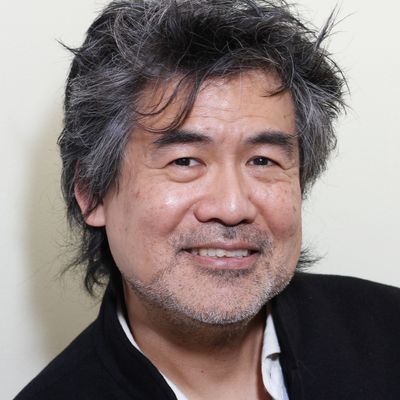
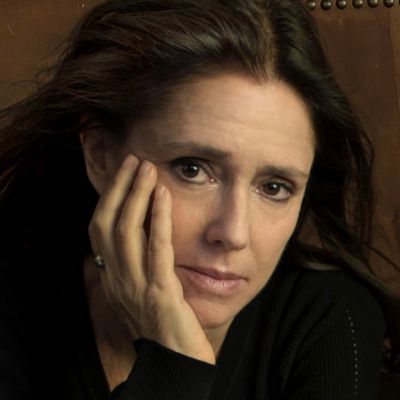
About
The director and playwright behind the Broadway revival of "M. Butterfly," starring Clive Owen, talk casting, stage pictures, gender in 2017, and why you can't have Borscht belt humor show up in Shanghai.
Transcript
This transcript was automatically generated and might contain errors.
[0:00] Douglas Goldstein: In 1988, the play M. Butterfly became a Broadway sensation, starring John Lithgow and a then-unknown B.D. Wong, and winning three Tony Awards, including one for Best Play. The story of a French diplomat who falls in love with a Chinese opera singer who, spoiler alert, turns out to be a spy and a man, the play was groundbreaking in the late 80s. Now, 30 years later, Wong and Julie Taymor, the director behind the Broadway smash The Lion King, have returned to M. Butterfly. Their new production, with a freshly revised script and a cast led by Clive Owen and newcomer Jin Ha, opened in October. Both the writer and the director are here in the studio with me to tell us all about it.
[14:25] Julie Taymor: It's a series of great big panels and it's entirely free of automation, which I know is important to you. Why is that?
[14:33] Well, I've done all kinds of stuff, but even when I did Lion King, knowing I was moving from an animated film to theater, I made a contract with myself that you would do what theater does best, and what theater does best is the poetry of seeing the strings and the rods and seeing the mechanics. When you start getting too automated, you start to become less human, and I do think the poetry of theater is its humanity, is that you see people make mistakes. It's like circus. You see them. I'm not happy when the screens don't meet exactly, but on the other, or I see the little hands moving. On the other hand, I've gotten such extraordinary response from people of how moving that is for them, because it's not a machine doing it, and it means that you can reset in 10 seconds, because since you do computerized, and I've been through it, believe me, you cannot reset, get back, and re-rehearse.
On the other hand, it's always going to be a little different, and I thought I'm sick of the use of projections, and I've used them a lot myself, but I don't use them to say, okay, let's do the Peking streets, the streets of Beijing. I'm not going to show that, or here is now real sunrise or snow falling, or the way that people seem to use it instead of using a stylized version of the landscape or the place, so what you have here is wallpaper. I know this sounds funny, but there's a point. The minimalist aspect of Paul's design is wallpaper, literally, on those giant 6 by 12 foot screens, because if all you have in Agnes, the wife's apartment, is maybe a chair and wallpaper, everything about that wallpaper tells you about their relationship.
That's the idiocraft. What's the color? Oh, it's that kind of pinky, peachy, beige, Parisian, and then the floral. You have it. The only scene that is fully fleshed out is Song's apartment. Why? Because that's where his world has been recreated, so you have detail. You have chess lounges with lacquer furniture that's all carved and intricate. It's the only one that, and we go back there enough times to warrant it, but to me, whenever you make a choice about scenery, meaning where is the scene taking place, it has to be about what is the essence of that experience for the character. Why are we there? These giant Russian constructivist Chinese posters when we found those in research, that's unbelievable. That says it all. You don't need to be any more than having those posters to be in the interrogation scene for Song.
[17:17] David Henry Hwang: As this vision was shaping up and you started to become clear how the play would make it onto the stage, how did that influence your work as a writer, or was there anything in the vision that maybe perhaps surprised you? I famously say that I'm not particularly visual. Julia agrees with me. I have bad eyes but good ears. I never know what my shows are going to look like. The original unit set that John Dexter did with Eiko Ishioka, I had no idea that that was going to, and I can't take credit for any of that, and I can't take credit for any of this. It was hard to simulate how the panels are going to work in the rehearsal room, so I feel like I didn't get to understand it and really what it was going to all look like until we got into tech and first preview.
[18:20] Well, it's so magical, and it's theatrical, and it's simple in a way and yet so intricate, and that felt really right for the show. I don't think I wrote to that. I think Julie tried to find a way to bring to the stage what it is that I had written.
[18:45] And the original production, of course, featured two memorable lead performances from John Lithgow and B.D. Wong, and for this production, you've got Clive Owen and relative newcomer, Jin Ha. How did you find Clive to get on board the project?
[18:59] Well, I think we all go through the list. We go through the list, and I think that David and I and Nell got very excited about the idea of Clive. I've never seen him on stage, but apparently he was very good two years ago in a Pinscher play.
[19:13] Yeah, in a Pinscher play at the Roundabout.
[19:16] Old times, yeah.
[19:17] But I've loved him as a film actor, and I think at first you think, and maybe some people will still think that he's so dashing that how could he, but that is such a silly thing. And when I think about that, and I think about what's his name who killed all those women, that good-looking guy, you know, Dahmer, Jeffrey Dahmer or whatever. Oh, gosh.
[19:36] No, no, the reason I say that is because it's so dumb for people. I think it's so dumb for people to think just because they think he's handsome or has played those roles that he wouldn't be ineffectual with women. Anyway, that's not what the play is about, is it? It's not that he's ineffectual with women. He's looking for the perfect woman. The perfect woman is not women. It's not that thing. So I think that Clive, you did take out, David did take out a few things that talked about him being unattractive. Being unattractive, because that just really wasn't going to happen. But I think that Clive, being such a great physical actor, is slubby looking. He makes himself with his little pot belly pushing it out and his back turning, you know, curving his body.
He's got a very nervous habit with his hands. He really, and he does florid things at times. Sometimes I thought too much and we talked about it. But he has, he loves this character. And what he loves, remember, he kept talking about the real guy and wanting to wear these fur coats and things. He loves the romance of this character. He loves the imagination and romance of Galimar. And we met him a year ago. We were supposed to open last spring. And we were ready to do it. But Clive said, I need more time. So if you're willing to postpone it, I won't have to go right from a movie. And I can really get deep into the character. And then we were very lucky to have him available to do a full out workshop in the spring.
[21:09] So we had all the actors who were in the Broadway show.
[21:11] Yeah, I was just going to ask, was it the whole cast?
[21:13] The whole cast, Jin Ha, everybody, which allowed David, and I really wanted him to have that time unfettered, not with sets and not with anything where we could spend four or five days just reading it. He'd go home, write, come in, try things out, get a feeling of what the actors are feeling. And that was spectacular. And Clive met with us a couple of times during the year and was always supportive and just investigating this part.
[21:43] Yeah, he's so devoted and such a hard worker. So not only did he, he wanted to do the 29 hour, four day workshop. Every time he came into town, we would like be in Julie's kitchen, sitting around the table, talking about the text.
[21:58] And Jin won't be familiar to Broadway audiences, but it's my understanding that when he got the role, he was playing King George in Hamilton.
[22:06] He was playing-
[22:07] In Chicago.
[22:08] Yeah, he was in the ensemble covering-
[22:10] Oh, he was covering, yeah.
[22:12] King George, Hamilton, and Burr, and he played all three.
[22:15] Wow.
[22:16] He closed his last night, apparently, they let him play Hamilton and we heard good reports.
[22:23] How did you find him? Was that just through auditions or?
[22:25] Yeah. We auditioned people from all over, from Asia, Korea. I was in Korea and auditioned, and people would send him videotapes from Philippines, China, and then I went to LA.
[22:36] So we had a lot of people. This is the harder role, really. I mean, it's the hardest role to be able to be a quadruple threat.
[22:45] Did you think about casting a gender nonconforming actor at all? Was that ever a thought?
[22:50] We did audition some gender nonconforming actors, so that was definitely a possibility for us.
[22:56] We also auditioned a woman.
[22:57] Yes.
[22:58] Oh, interesting. Yeah. And what was it about Jin that grabbed you?
[23:04] It's just hard to find somebody who, the role is so demanding in terms of being able to act. You have to sing, you have to sing Western opera, you have to sing Chinese opera, you have to be able to dance. You have to look good. Naked and in a dress.
[23:20] So the requirements are pretty intense. And I think there's a combination of Jin being able to kind of fulfill all that beautifully. And also, I think Clive saw his audition too, right?
[23:37] He saw a tape.
[23:39] And felt very comfortable working with him. And I think for me, it just goes to prove that you create these roles for actors of color, and they're impossible to cast, and you find somebody. Because if you create the opportunity, you will find the person.
[23:57] Right. I feel I cannot have you both in the studio without Julie mentioning that you were about to celebrate a landmark for The Lion King, 20 years. How has that changed your life?
[24:08] Oh, first of all, it's the most joyous experience to go around the world and put this play on, in languages. And the last one I did was in Mandarin. So I was in Shanghai.
[24:18] It's true. We should point out to listeners that just because it opened on Broadway 20 years ago, doesn't mean that you haven't had any involvement in other productions and all of the, you know, just the life of the entire property.
[24:29] I just cast a full South African company to tour all Asia recently. And I'm going to go to the Philippines where we're opening. I usually show up at auditions on these worldwide productions. And then I'll come in for the last week of rehearsal, which is once they've learned all the blocking and the songs and, you know, have that I can do the most work and the actors are really open. In China, though, I was very involved in the translation and worked with, you know, Stan Lai's company came in a wonderful writer.
[25:04] Yeah, probably the most beloved playwright director in China right now.
[25:08] Yeah. And so he came in and helped us because I really wanted to make sure the translation, I mean, I don't speak Mandarin. So we had the company come and read it. We did huge all afternoon talking about humor and what dialect and where they should come from. And because humor is the tricky thing. It just doesn't, you can't just have Borscht Belt humor show up in Shanghai and or inner city black dialects work. So you have to find what's the equivalent everywhere you go, whether you think that's politically correct or not. I particularly love dialects.
[25:37] David, we talked a little bit about this before we turn the mics on, but you're working on a new musical. Tell us a little bit about it.
[25:43] Oh, yeah. I'm working on a show with Janine Tesori, which called Soft Power, which is an idea that I had, which is essentially a play that becomes a musical. So for the first 25 minutes of the play, then it jumps 50 years in the future and becomes a musical.
[25:58] And we will be opening. And what's it about?
[26:01] It's basically a, we see something in the present, and then we see how it becomes a musical in China, 50 years down the road, which is about 2016 in America.
[26:14] Wow. And Julie, what's on your plate coming up next?
[26:19] Well, it was announced today that I'm going to be doing a film of Gloria Steinem's book, My Life on the Road. Sarah Rule, the playwright, is going to write the screenplay and Julianne Moore is sort of the major Gloria. There will be others, including Gloria herself.
[26:35] Oh, great.
[26:36] But it's not a biopic. It's a road picture. And that's really different.
[26:39] And did you enlist Sarah? How did Sarah get involved?
[26:41] Yes, I enlisted Sarah. I like her combination of being able to do real characters, but also surreality. And when you're doing something that is basically grounded, that it feels like, oh, you're going to be in real places at real times. Not all the time, not so totally. So you have to be able to write these characters. But also with me, there's going to be a structure that's a little bit out there. Great. Can't wait to see it.
[27:09] All right. Thank you both. Thanks for being here. Nice to talk to you both.
[27:12] Thank you.
[27:20] That was Julie Taymor and David Henry Hwang talking about their new production of M. Butterfly. On the next episode of Stagecraft, I'll talk to John Leguizamo, whose latest autobiographical solo show, Latin History for Morons, is now on Broadway. Until then, see you at the theater.
© Broadway Podcast Network, All Rights Reserved