

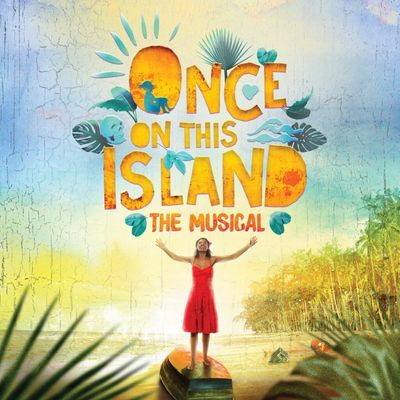
Lea Salonga, the fan favorite who was the original star of "Miss Saigon" and is currently in "Once On This Island," talks Broadway diversity, her new album and finding musicals that "rock me to my core.".. Read More
From the show: Stagecraft with Gordon Cox
Guests

Featured Shows
About
Lea Salonga, the fan favorite who was the original star of "Miss Saigon" and is currently in "Once On This Island," talks Broadway diversity, her new album and finding musicals that "rock me to my core."
Transcript
This transcript was automatically generated and might contain errors.
[0:46] Gordon Cox: I'm your host, Variety's Theater Editor, Gordon Cox. On this episode of Stagecraft, I'll be talking to Lea Salonga, the Broadway favorite, who was a young actor and singer on stage, TV, and film in her home country of the Philippines before she shot to international fame as the original Kim in Miss Saigon. Since then, she's had a wide-ranging career as a recording artist, a concert and cabaret performer, a TV personality, the voice of a Disney princess or two, and a regular presence on stage in New York and around the world. She's currently starring on Broadway in the critically acclaimed new revival of Once on This Island. Lea's in the studio to tell us all about her Broadway return, her new album, Bahagari, the video game she's currently playing, and more. Hi Lea, thanks for being here.
[1:29] Lea Salonga: Oh, thanks for having me.
[1:30] Gordon Cox: So Once on This Island is up and running, and it got pretty spectacular reviews.
[1:35] Lea Salonga: I can't complain.
[1:36] Gordon Cox: Yeah. How's it going on your end?
[1:38] Lea Salonga: Oh, it's going fantastic. Everybody is having a really wonderful time, and I think that we've settled into a really nice groove.
[1:47] Lea Salonga: Um, we are definitely out of the preview period, which can sometimes feel unsettled, and because things are changing.
[1:56] Gordon Cox: Exactly, because things are constantly changing, and you don't know if what went in the previous night is gonna stay, or you're gonna get the news that it's going to change.
[2:09] Lea Salonga: So we always it's there's just this part of my brain that's always like at the ready for whatever. Um but then there's also a part of me that just wants things to have the opportunity to settle.
[2:24] Lea Salonga: And the good thing about our preview period was that once things kind of were done, as far as Michael Arden was concerned, and of course.
[2:35] Gordon Cox: Yes, and of course, and his entire design team, once everybody had declared that they were done, um then we were finally able to settle.
[2:44] Lea Salonga: And I think the first night that we were told that our show was frozen, meaning nothing else was gonna come in.
[2:52] Gordon Cox: Yep, that was our first press night.
[2:53] Lea Salonga: Right. Oh, that that came with an additional amount of stress.
[3:00] Lea Salonga: But I didn't know it was our first press night until it was over. And then they said, Oh yeah, all these people came in.
[3:06] Gordon Cox: And then I saw Is it better that way?
[3:08] Lea Salonga: Um, I don't know. I think I I think for me it's fine either way if I know great. If I don't, great. Um, and because I have some friends who work in some of the more popular Broadway websites, and I got to see the face of one of them, and he was.
[3:24] Lea Salonga: You can definitely see everybody's faces in this little theater that you're in, right?
[3:27] Lea Salonga: Not as well as you might think despite the size. Um, and I usually, if I'm in like game mode on, um, there are people that I will be able to spot. Like Lynn Manuel Miranda came, but I knew where he was gonna be sitting. So I actively sought him out.
[3:47] Lea Salonga: Um, and was able to play with him a little bit during our pre-show.
[3:50] Gordon Cox: And yes, we have a pre-show.
[3:52] Lea Salonga: Yeah. And there are people with whom I will definitely toy with and some of us stress and some of us on stage or in the sand, we will find somebody that is a friend who's another actor.
[4:08] Lea Salonga: And this happened with Jennifer Paz, who played Kim on the first national tour of Miss Saigon.
[4:15] Gordon Cox: Oh, wow.
[4:16] Lea Salonga: And she had done it regionally after her stint on the tour was over. So a few of the people in our company had done the show with her, either regionally or on the national tour, or in whatever production.
[4:30] Lea Salonga: So once I pointed out she was there and I knew exactly which ones which of the actors were her friends, they would just, you know, play with her.
[4:40] Gordon Cox: And what does that mean? What does that entail? Tell me about what playing with her.
[4:43] Lea Salonga: Sometimes it requires zero physical contact, but it means all the eye contact in the world, and we're in character and we're in dialect, but we're allowed to engage the audience, and she starts hiding behind her plates.
[4:58] Gordon Cox: Do you enjoy that? That pre-show part of it?
[5:00] Lea Salonga: I actually do. It's it's a great way because with the exception of the.
[5:17] Gordon Cox: Oh, yeah. And occasionally you know, if you wanted to, you could go into the aisles and which sometimes you do.
[5:21] Lea Salonga: And we do, and sometimes and we are. And I mean you actually sing in the aisle as I recall.
[5:25] Lea Salonga: I do, I do. I sing in the aisle. Um, I'm usually in front of somebody.
[5:30] Gordon Cox: Right. I am most definitely obscuring somebody's view for 90 minutes.
[5:37] Lea Salonga: Meaning there is a part of the stage that for as long as I'm on in the aisle or sitting on my perch or anywhere around there, they're gonna get obstructed view as an obstructed by actor wearing a mess of Ethernet cables in her head.
[5:52] Gordon Cox: Yep. So yeah, you've got a headpiece.
[5:54] Lea Salonga: It's true. We should also say.
[5:55] Gordon Cox: Yes, we should. It's it's worth it's worth talking about.
[5:58] Lea Salonga: Clint Ramos, our costume designer, really was able to take the let us incorporate all of these items that could be found after a storm into these costumes. And John Bertles of Bash the Trash created musical instruments for everybody in the company out of trash. Old cardboard rolls and tin cans at either end and aquarium pebbles to make and and and screws to make rain sticks, for example, or rattles, or you know, old bottles of glue to make shakers and it makes for a really fun and immersive and interactive experience, not just for the audience, but also and also for the actors and everybody is just everyone feels like they're a part of the show rather than watching it.
[6:55] Gordon Cox: Right. I can't imagine that Once on This Island was a show you ever thought you'd be in.
[7:00] Lea Salonga: I know, neither did I. And never thought of it.
[7:03] Gordon Cox: So how did it come to you? And how surprised were you when it did?
[7:07] Lea Salonga: Um, extremely. And I'm I'm I'm still shocked at why why am I still here? Why am I in this show? Um, but that is, I guess it's Michael Arden, and I guess he had a vision for what he wanted the show to be. And for the gods, he wanted to be able to break stereotype, break gender boundaries, break racial boundaries.
[7:31] Lea Salonga: However, there is still this rule. Everybody on that sand is a person of color. Everybody.
[7:37] Gordon Cox: Right.
[7:37] Lea Salonga: Um, even in the pit, even our musical director, our associate conductor, our assistant conductor, our guitar player, our bass player, and our drummer. Everybody on the sand in that show in a costume is a person of color. And I'm very proud to be a part of it.
[7:58] Lea Salonga: As for how this little Asian girl got to the island, and and I I would keep asking, how how did I get here? What was the means for for me finding myself here? And then I saw my costume design.
[8:18] Gordon Cox: Right.
[8:19] Lea Salonga: I am a nurse with a Doctors Without Borders badge on my shirt. And then the minute I saw it, like, no explanation needed. I totally understand. And just how this global community has become such a global community with immigration and travel, and not just within the United States, but outside and other countries, it's you know, certain countries have become less homogenous than they ever were. Which is kind of sweet.
[8:53] Lea Salonga: So my face in this show is is not something that would be seen as weird. I'm happy about that. Yeah. I get to sing this wonderful song. I get to be part of this show. It's like this is I I could not have asked for a better gig.
[9:15] Gordon Cox: When do you decide what brings you back to Broadway? What what is the thing when you what is a show that that what is it about shows that get you back?
[9:25] Lea Salonga: I think I just have to get hit in the gut. And if there's something important that the show is trying to say, then I feel like I'm compelled to be a part of it. It's not like, oh, the music is pretty. Oh, I love the score. There has to be something deeper. There has to be something beyond the beauty of the material.
[9:51] Gordon Cox: And so what for you is this production of Once on This Island saying?
[9:56] Lea Salonga: It's about people's resilience, it's about rebuilding, it's it's it's kind of it's like I mean, I come from an island nation. I come from the Philippines and w the stuff that happens on the island is a fact of day-to-day life at home. So for me to kind of be able to be a part of a story that is lived on the daily, um without necessarily saying, Oh yeah, this happens in my country. Um, it felt important for me to be a part of.
[10:35] Gordon Cox: And your last Broadway show was Allegiance a couple seasons ago.
[10:38] Lea Salonga: Yeah.
[10:39] Gordon Cox: And it's gonna make its LA premiere very soon.
[10:41] Lea Salonga: Oh, is that um yeah. 'Cause that show actually, uh I do know um a recorded version of that show has found quite a bit of popularity around the country in cinemas, right? Like the last time they showed it in the cinemas was on Pearl Harbor Day, was on December 7th.
[10:56] Gordon Cox: Yeah.
[10:56] Lea Salonga: Yeah. Yeah. That date will never be erased from my mind now.
[11:00] Gordon Cox: Yeah. And so tell me, tell me about that experience and what what it did that was important, that what story it was telling that was important for you to participate in.
[11:10] Lea Salonga: Um here's the thing. I married into a Japanese American family. My husband, well, he's his father is Chinese, his mother is Japanese American, and so it felt very personal to be a part of it because he had members of his family that served on the 442.
[11:28] Gordon Cox: Um we should say that Allegiance was a musical about the uh Japanese American experience in World War II, yeah.
[11:36] Lea Salonga: And I got to be a part of a fictional family that got interned to uh Heart Mountain Camp in Wyoming. And the story about the character that I got to play was that she played, she was a very traditional Japanese American woman who after the death of her mother had to then become the mother figure, the cooker, the the cook, the cleaner, the one who was very responsible and instrumental in raising her younger brother. Um and all he wanted to be was a soldier and be able to fight for his country in the war, but when his country turned on him because of what happened in Pearl Harbor, which we could then also compare to what happened on 9-11 all those years ago. All of a sudden, an entire group of people was marginalized and vilified for that one deed when they had nothing to do with it.
[12:37] Lea Salonga: And it sounds all too familiar.
[12:40] Gordon Cox: Where does Broadway stand on diversity these days? How are we doing? What's in your experience? Particularly you've seen a change over the years. So what's the point?
[12:47] Lea Salonga: Yeah, I mean there is change. And I mean there are going to be these fits and spurts where they're going there's going to be a season where it's like like Hamilton, which is gonna be like crazy, where you have so many shows where you because Hamilton and Allegiance were in the same season, so that was a big blip. I think the Color Purple was in that season too. It was a very, very diverse season.
[13:04] Lea Salonga: So yeah, that that's gonna be a major blip and in the positive direction. But seasons like that are not always gonna happen. It's gonna come in, you know. But I think the overall trend is that Broadway has become more diverse, that Broadway is looking to people of color, not just because, oh, it's it would be politically correct, and it would be stunt casting to put this person into the show, but more of yeah, this is the right person. This per this has the right personality for this role.
[13:40] Gordon Cox: We'll be back with more from Lea Salonga right after this.
[13:47] Gordon Cox: Stagecraft is brought to you by the Geffen Playhouse. At once humorous and heartrending, Ironbound spans 22 years to tell the story of Darcia, a Polish immigrant getting by on a cleaning job, aggressive pragmatism, and sheer will. A New York Times critic's pick, Ironbound features Tony Award nominee Marin Ireland. We're praising her off-Broadway role alongside Josiah Banya, Christian Camargo, and Marcel Spears. Now on stage through March 4th. Tickets and more at Geffenplayhouse.org.
[14:18] Gordon Cox: And we're back talking to Lea Salonga, now starring in the critically acclaimed Broadway revival of Once on This Island.
[14:24] Gordon Cox: Let's talk a little bit about your new album.
[14:24] Lea Salonga: Oh, it came out in the fall. Um, and tell us about it.
[14:31] Gordon Cox: Tell us about, uh, it's called Bahagari, yeah.
[14:33] Lea Salonga: Yeah, Bhagari. Um, which is Tagalog for Rainbow. And it is a song that features quite a few Filipino languages and dialects.
[14:46] Gordon Cox: The song?
[14:47] Lea Salonga: Just different songs.
[14:49] Gordon Cox: Oh, that I knew. Yeah, I wonder, do any of the songs include, like, are there two different languages in a single song?
[14:49] Lea Salonga: No.
[14:58] Gordon Cox: Okay, just curious.
[14:58] Lea Salonga: No, no, no. So how many languages do you sing in on that album?
[15:02] Lea Salonga: I don't even know. Let me see. A bulk of the songs are in Tagalog, which is the language I speak. And then there's Bisaya or Cebuano. Um, and there's Ilongo, Ilocano, Bicolano, Kapampangan. So I think there's like five, maybe. I'd have to look at the list, but I think it's five. And most of these are languages that, like Ilocano and Bicolano, I do not speak at all. And I wasn't raised around hearing it. Um, Kapampangan was my father's. And Cebuano, I kind of can, I've heard from people just talking and whatever. So those ones I was able to negotiate pretty easily. But the other two, like, and these are traditional songs, so tell us about the origin of these songs.
[16:03] Lea Salonga: Well, I think the origin of these, it's like I don't always know who wrote a lot of them. Um, does anyone? I mean, I think so. I think if you're a music librarian and we got a producer named Ryan Kayabya who is extremely knowledgeable in who wrote what and where what came from and which friends to phone while we're in the recording studio and trying to figure lyrics out. So that's that, that was us. And, um, it was like so many of these songs were taught to me via oral tradition, whether it's my mom singing Bahai Kubo with me on her lap as a toddler or her singing me to sleep with Ili Ili, which is her, you know, and or learning some of this stuff in music class as a kid or being a young performer and being, you know, placed in a number where you're singing all kinds of traditional Filipino music.
So it's, it's these are things that I would learn from hearing and then just repeating and repeating and singing over and over and over and then of course then it kind of just gets etched in your mind and then it's like, yeah, of course I know how to, I know this music and sure I will sing it and it's absolutely fine and it'll be fantastic and we're all gonna have a great time and it's for the most part the music is, it is very, has a lilt and it has to be sung with a smile.
[16:32] Gordon Cox: Yeah.
[17:34] Lea Salonga: And a lot of it's in, I mean, Bahai Kubo, it's literally a shopping list of vegetables that are growing around this hut.
[17:40] Gordon Cox: That's whatever I was gonna ask you what some of these songs were about. That's interesting.
[17:44] Lea Salonga: And some of them is, some of them are like, there's love in one of them, which is, and I'm like, what does that mean? And somebody's, and we got the translation, oh it means, oh, you poor, poor dragonfly trying to find a place to rest. Aw, uh oh yeah, and just, you know, just kind of blowing in the wind, and you just wants to like, you know, and then this poor little insect is just trying to stop and trying to get a little bit of oxygen back into his little body, and it just makes me feel so bad to say you know, and then there's, there's another one where, uh, it's called Paruparum Buquid. Paruparo literally means butterfly, and buquid is from the province. But it's really more like a metaphor for a young girl who was not from the city and who was dressed to the nines in the street, who probably thinks that this is a good idea to dress herself all the way to the nines and, and you know, it's, it's very, some of it's very cute. A lot of it's really cute.
[18:53] Gordon Cox: And was the impulse behind the album largely one of preservation, or what was the...
[18:53] Lea Salonga: Well, two things. Yeah. Um, first we were approached by the Global Language Project to create an album of traditional Filipino music as part of a series. Uh, the first one was in Spanish called Coloreando, the second one is Aquarela, which is in Portuguese, and so Bahagari is the third, and each of the titles of these albums have something to do with color, whether it's, I think it's aquarela, I think is watercolor and coloreando, I'm not so sure. But Bahagari is a rainbow. So there's color in each of these titles for all of these albums. Um, then once we were approached, then it was like we have to totally do this because a lot of these songs are probably not being passed on anymore or aren't performed as often or heard. So we're like, we're going to do fresh arrangements of all of this music.
[19:04] Gordon Cox: I wondered if...
[20:04] Lea Salonga: Yeah, you know, and so there's gonna, so the arrangements, but all of these arrangers are familiar with the music. And so have you done any of that music live? Have you, will there be a live concert version of you doing that music or anything or...
[20:13] Lea Salonga: I don't know. Um, I don't think so. The only thing that I'm really hoping is that school teachers get their hands on it so that they're able to then play it for their kids in class, make it maybe part of, you know, Philippine music curriculum, and for school kids in countries outside of the Philippines, just to give it a listen and see what music means to someone else in another part of the world. Um, for me, who kind of does Western musical theater as well as traditional Filipino music and modern Filipino music, it's, you know, for me, it means a lot to be able to sing songs in my native tongue or in a language that's from my country, yeah, and be able to kind of play the role of some sort of ambassador to kind of link the West to, you know, the kind of music that I grew up hearing.
[21:21] Gordon Cox: And so where's home to you? Where do you consider home? Is Manila home? Is New York?
[21:25] Lea Salonga: Home is kind of where I hang my hat.
[21:26] Gordon Cox: Yeah, well, so that's New York right now, right?
[21:28] Lea Salonga: Right now that's New York. And so when I say I'm going home, it's my apartment in New York City. Uh, but when I'm in Manila, that becomes, that's home. Where my family is, really, that's her home. My husband.
[21:40] Gordon Cox: And are they here with you in New York?
[21:41] Lea Salonga: No, they're in Manila. They are, my daughter's in school and my husband has work. So that's far away.
[21:48] Gordon Cox: That's not, that's literally halfway around the world.
[21:52] Lea Salonga: Yeah, you have to go. That's a week's trip at least. If I drill down through the center of the earth, I'll probably end up somewhere regionally in Asia. Um, you know, probably be at my house. But it's, it's, it there is a sacrifice. And my daughter, after having done her first musical, she was in a production. How old is she now?
[22:16] Lea Salonga: Matilda, she's eleven. She was in a production of Matilda back home.
[22:19] Gordon Cox: Oh, wow.
[22:20] Lea Salonga: Now she understands what it is that mommy does.
[22:22] Gordon Cox: What role did she play?
[22:23] Lea Salonga: Oh, she played Alice. She was one of Matilda's classmates.
[22:23] Gordon Cox: Wow.
[22:28] Lea Salonga: She loved it. She cried so hard on her very last day. Total meltdown, poor little one. Um, but yeah, I totally, she was like, is it always like this?
[22:43] Gordon Cox: With her with a big cry and with the tear, the big tears and the big feelings coming out of her.
[22:48] Lea Salonga: And is it? Did what did you say to her? Did you said yep?
[22:50] Gordon Cox: Yeah, I was gonna say the answer is yes, isn't it?
[22:50] Lea Salonga: The answer is yes. Every time you close a show, um, it's always like this. There is withdrawal, there is, you know, separation anxiety, there is, you know, having to part from all of these people that you just got used to seeing almost every day. So it's, it's a huge deal. I'm sure I'm gonna have that when I leave.
[23:13] Gordon Cox: Do you know how long you're in Once on this Island for?
[23:15] Lea Salonga: Oh, I'm in it for a while.
[23:15] Gordon Cox: Yeah.
[23:17] Lea Salonga: I'm in it for a pretty long while. Long for me. Great.
[23:17] Gordon Cox: Yeah.
[23:21] Lea Salonga: Yeah. So I'm not leaving anytime soon. I think audiences can, like, fans of mine can rest easy.
[23:21] Gordon Cox: Right.
[23:27] Lea Salonga: Yeah, I'll be in it at least two seasons changes, and then I'll go.
[23:32] Gordon Cox: Yeah, yeah. And then do you know what's next after that? What's on your plate after that?
[23:36] Lea Salonga: Oh, sleep.
[23:36] Gordon Cox: Yeah.
[23:38] Lea Salonga: Um, rest. I think I'm, I think I have a bit of a break. Uh, go home, eat all the things, see all my friends.
[23:46] Gordon Cox: Right, right.
[23:47] Lea Salonga: See shows.
[23:47] Gordon Cox: This is Manila Home.
[23:48] Lea Salonga: This is Manila Home.
[23:50] Lea Salonga: And then I'll start concertizing again in 2019.
[23:54] Gordon Cox: Yeah, it's true. We haven't talked about you. You tour a lot.
[23:57] Lea Salonga: I do. I actually do.
[23:58] Gordon Cox: Do you enjoy it?
[23:59] Lea Salonga: I actually do. Um, and I know, and I tour a lot with my younger brother who serves as my musical director.
[24:06] Gordon Cox: And you, he orchestrated that song that you were just talking about, right?
[24:09] Lea Salonga: Uh, what I went on your album, yeah.
[24:09] Gordon Cox: Yes.
[24:10] Lea Salonga: And he's also done, we've worked together for so long. So he can, he so he pushes me musically. He just continues to make things difficult. Um, because why take the easy path? Um, and if it's gonna be musically interesting and he just continues to grow. Well, currently he's also assistant conductor for the Hong Kong Philharmonic.
[24:10] Gordon Cox: Oh, wow.
[24:36] Lea Salonga: So his boss is Jap van Zweden, who was like incoming music director for the New York Philharmonic.
[24:43] Gordon Cox: Right, right.
[24:43] Lea Salonga: So when I tell people that that's what he does, especially those who are in the classical music world, they're all just like, wow.
[24:43] Gordon Cox: Right.
[24:54] Lea Salonga: Yes. I have very impressive family members.
[24:54] Gordon Cox: Right.
[24:59] Lea Salonga: And he's fantastic and easy to teach and loves to learn. And he's loving getting to work with Maestro van Zweden. So I'm thankful and happy that his life and his career has been going exactly the way he's wanted it to.
[25:18] Gordon Cox: And so what's the thing that will get you back on Broadway after this? Do you know?
[25:22] Lea Salonga: I guess it's another show that will, I guess, rock me to my core, not just because of the music, but of what it's trying to say. And well, I don't know when the next one is. For all we know, this could be the last one, but I'm hoping that it's not. But let's see. I mean, I'm forty-six now. I'm turning 47 next month. So if there are roles for ladies that are of a certain age, then hey, you know, I will gladly. You know who to call.
[25:22] Gordon Cox: Yeah.
[25:22] Lea Salonga: Yeah.
[25:57] Gordon Cox: Well, excellent. Thank you, Lea. It was great talking to you.
[26:00] Lea Salonga: Thank you.
[26:07] Gordon Cox: That was Lea Salonga, the theater fan favorite, who's currently starring on Broadway in Once on This Island. On the next episode of Stagecraft, I'll be talking to Jake Shears of the Scissor Sisters and Kirsten Maldonado of Pentatonix, the two pop musicians who are stepping into big roles on Broadway in Kinky Boots. Until then, see you at the theater.
[26:44] Gordon Cox: Stagecraft is brought to you by the Geffen Playhouse.
[26:48] Gordon Cox: At once humorous and heart-rending, Ironbound spans 22 years to tell the story of Darcia, a Polish immigrant getting by on a cleaning job, aggressive pragmatism, and sheer will.
[26:59] Gordon Cox: A New York Times critic's pick, Ironbound features Tony Award nominee Marin Ireland, reprising her off-Broadway role alongside Josiah Banya, Christian Camargo, and Marcel Spears.
[27:10] Gordon Cox: Now on stage through March 4th.
[27:12] Gordon Cox: Tickets and more at GeffenPlayhouse.org.
© Broadway Podcast Network, All Rights Reserved