

Director-choreographer Justin Peck and Pulitzer winning playwright Jackie Sibblies Drury talk about making a nontraditional dance musical based on Sufjan Stevens’ “genre-defying” album “Illinoise.” The show is now having its world premiere at Chicago Shakespeare Theater and will run at the Park Avenue Armory in Manhattan in March... Read More
From the show: Stagecraft with Gordon Cox
Featured Shows
About
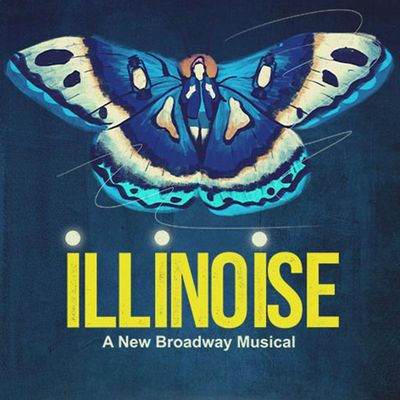
Director-choreographer Justin Peck and Pulitzer winning playwright Jackie Sibblies Drury talk about making a nontraditional dance musical based on Sufjan Stevens’ “genre-defying” album “Illinoise.” The show is now having its world premiere at Chicago Shakespeare Theater and will run at the Park Avenue Armory in Manhattan in March.
Transcript
This transcript was automatically generated and might contain errors.
[0:06] Gordon Cox: Welcome to Stagecraft, Variety's Theater Podcast, your backstage pass to revealing conversations with stars, creators, and industry leaders.
[0:14] Gordon Cox: On Broadway, off Broadway, and beyond.
[0:17] Gordon Cox: I'm Gordon Cox. On this episode of Stagecraft, I'm talking to the director-choreographer Justin Peck and the playwright Jackie Sibblies Drury about the new project that brings them together.
[0:27] Gordon Cox: That's Illinois, a dance musical inspired by and using the music of the 2005 Sufjan Stevens album Illinois.
[0:36] Gordon Cox: Peck is the resident choreographer at New York City Ballet, and theater fans will know his work from the 2018 Broadway revival of Carousel, from films like Steven Spielberg's 2021 version of West Side Story and Bradley Cooper's Maestro, and the recent Off-Broadway musical adaptation of Buena Vista Social Club.
[0:53] Gordon Cox: Jackie Sibblies Drury, meanwhile, is the Pulitzer Prize-winning playwright of Fairview, among other plays. Their genre-defying new collaboration, Illinois, is currently playing at Chicago Shakespeare Theater and will have a run at Park Avenue Armory in March.
[1:09] Gordon Cox: Now, Peck and Drury are in the virtual studio with me to tell me about creating stories from songs, telling them through movement, and in what ways this very non-traditional musical is kind of like A Chorus Line.
[1:23] Gordon Cox: Hello, Justin and Jackie. Thanks for joining me.
[1:26] Justin Peck: Thanks for having us.
[1:27] Jackie Sibblies Drury: Yeah.
[1:28] Gordon Cox: So in Illinois, you're telling an original story through songs and dance, but it's not quite musical theater in a traditional sense. It sort of sprawls across performance genres, it seems to me, of music and theater and dance and kind of concert performance kind of in a way. Was that always the vision for this piece, or is that a form that kind of evolved as you got into the storytelling of it?
[1:52] Justin Peck: Um, I think we had some initial conversations about like, is there going to be text in this? Uh what is what's the structure of this show going to be like? And we definitely went through a few different options of what it could be. And I think very early on, through some experimenting in the studio, we realized that this show really lives in a space of the music of the experience of this album, and also in how it's sort of brought to life through gesture and movement and staging and acting, but in a way that feels a little more akin to like watching a silent film, really. So that's the feel of the show. I mean, I think like the show itself has all the elements of a musical in it, right? It has music, it has lyrics, it has stagecraft design, definitely storytelling.
That's a big part of this. But it's not presented in the most conventional, like this is a musical way. And I think it pulls from the inspiration that I have and that we have for the kind of outlier musicals that have influenced, for me at least, like throughout my childhood that I got to see and then growing up and moving to New York as like a young person and getting to just like continue my education and like what a musical can be. And I think it can be a lot of different things. I think the form holds a lot, and part of the ambition here is to continue to stretch what that is.
[3:43] Gordon Cox: And Jackie, was this a surprise to you the way it sort of evolved to include fewer words than you might have expected going into it? What interested you about exploring storytelling in this way?
[3:55] Jackie Sibblies Drury: I guess, um, yeah, as we were talking about whether or not to add a lot of dialogue or text to the piece, I started to feel really strongly that I didn't need it. I think that there's something that's so exciting about the choreography that Justin has created that allows us to really connect empathetically in a really deep way, a deep emotional way with the characters. And so I feel like they're describing what they're experiencing so clearly that words would actually be confusing. And so, um, I think that I'm a playwright, but my performance background, like I'm an experimental playwright, so I think about performance a lot in my work. And so it was exciting to get to, I don't know, play with a different kind of form than one that I'm used to being able to play around with. So it's been really exciting.
[4:46] Gordon Cox: Yeah. And tell me about the origins of the piece. Where did the idea come from? And how did you both get involved?
[4:53] Justin Peck: Um, well, this is sort of a full circle project for me at least. I mean, it's something that I felt so—I first fell in love with the album when I was like 17 years old. And I remember this was before I began making dances even, and I just I heard this and I was so moved by its range and the storytelling that runs through it, and also just like how it's sort of genre-bending or genre-defying in a lot of ways. So, and I just continued to listen to it sort of on repeat for the last like 18 years. And eventually I started to work with Sufjan Stevens, whom I consider to be one of my most important and closest collaborators. So we've done like six or seven mostly dance-focused projects where he's composed music for those.
And we've built a friendship over the years. And so for me, I think it dates back to like 2014 when I started to plant the seed with Sufjan, like, is there something in this? Could this be turned into a show or some kind of stage musical? And I feel like he sort of deflected for a while, and then I just I was pretty relentless with it. And I think I finally like sort of wore him down to a point where he was like, "All right, if you want to do something with it, take it, you have my blessing." Um, it's for Sufjan. He talks about this music being sort of a lifetime ago. Um, so his interest doesn't lie in going back and revisiting this music. He's a very forward-moving, forward-thinking artist, so he's always searching for what's next.
Um, but he did offer his support and he was very involved with like the music arrangement and putting together the music team for this to extend it forward. So yeah, I guess like a few years ago, I started to get more serious about what this could be. And I did a couple very early on workshop sessions just in the studio with a small group of dance artists, and we started to just kind of find like what the language of the show is. And I think the whole show started from a place of wanting to like honor this music, to honor this album and the experience of this album. But there was a second question that came into play, which is, is there a theatrical kind of narrative through line to find within all this?
Is there a kind of like satisfying dramatic arc that we can create that an audience can get sucked into and connect with and feel things through? So once we opened up this project to that question, that's really when Jackie came into the mix. And so we started to work together on shaping all that and exploring how we could create that, I guess like this sense of order for the show, and without losing any of the music. I think part one of our parameters was like we wanted to use all of the music that runs through this album and we're even giving in this most recent version some like extended interludes and things like that that help us connect the storyline. So it's been a kind of a cool puzzle of a process for us.
[8:41] Gordon Cox: And Jackie, what appealed to you about the idea? Was there a story there to be found? Like what was your impression of the idea and what was the work of sort of excavating what stories there were to be told?
[8:57] Jackie Sibblies Drury: Yeah, it's like I had this album on CD. I like bought it at the time, and so I was really intrigued by the idea of trying to work with it, but also like by myself couldn't imagine turning it into like a jukebox musical. I like didn't understand what that would be. And so, as Justin said, he sort of did this primary first workshop, which like from my understanding, it's like almost you need bodies to do a first draft of a dance piece. And so it was like putting that first pass-through is where he discovered the idea of a group of hikers telling stories around a campfire. And to me, that just that sort of I'm imagining that kind of hushed sense of space worked with Sufjan's voice so well, and like was the starting for me to understand exactly how that we could even think about turning that into a narrative piece.
And right now it's just been, I mean, the play, or I don't know what to call it, the performance, the piece, the musical. I like calling it a play too. I keep on calling it a play. But it's amazing, and it feels like this process has been really beautiful both for myself personally and also just for all of the people that collaborated to make it, and it feels like this it's been a lot of conversations and a lot of back and forth and a lot of watching and describing work to each other, both between us and also the dancers, the musicians, the designers, and so it almost feels like a group intuitive organic process, which has been really great.
[10:49] Gordon Cox: And so Justin, when how did you discover the central focus of the or the central the sort of organizing structure of the show is these hikers sitting around a campfire telling stories? Say more about how you discovered that in the process of being in the room with dancers.
[11:07] Justin Peck: Yeah, I mean, I think that's just an idea that came from like studying up a little bit or researching like what goes into campfire storytelling, right? And I think of the show as honoring like the earliest forms of theater, which is really like, you know, humanity gathering around this like central light and heat source and seeking out nourishment, and then all of a sudden they're there together and they start to entertain one another and share stories. So that and it's this kind of like especially because there's no spoken words in the show. I find it to be this ubiquitous experience that almost everyone has had, where whether it's like out in the woods or on a hike or in someone's backyard or on the beach with a bonfire, like we've all gathered around a fire pit or a campfire, and there's something about the magic of the heat and the light as it hits our faces and as we look across at one another, that just sets the tone for sharing stories.
And that all blended so seamlessly with Sufjan's music and like the aesthetic of this album and the various stories that get shared. And I think like for me, you know, since this is like a stagecraft podcast, I think for me, a big reference point that helps me find more confidence in this idea is A Chorus Line, right? So A Chorus Line is a show that always returns to the line, right? So it's about this group of humans, in this case dancers auditioning for this show. And we're one by one, we're kind of getting their stories, and they come forward and they share. Some of them are short, you know, single songs, some of them are a little bit more extensive, and some of them build and build and build and the relationships form.
And somewhere in the background of all that is like a more substantial extensive storyline that eventually unfolds. And I think there's a parallel to that structure, I'll say, with the show we're doing here, where a big part of the show is like establishing the ceremony of this campfire, establishing who these characters are, and then starting to slowly and in shorter ways, one by one, hear the stories from these characters until we delve into this fuller narrative arc that's guided by our central protagonist of the show.
[13:58] Gordon Cox: I'll have more with Justin and Jackie right after the break. Welcome back to my conversation with Justin Peck and Jackie Sibblies Drury, two of the creators of the new dance musical Illinois. These characters, they have names, they have very specific sets of like what can you tell me more about kind of figuring out first of all, even how many people there were in the show and who they were and where they come from? And like what was that process? Jackie, how did you help navigate that?
[14:37] Jackie Sibblies Drury: I mean, I honestly I don't feel like I did. But well, actually, I guess we, Justin had always sort of put together this longer narrative arc around this protagonist. We've named him Henry. It's in a way, like we just had to you have to like name the characters to give them grounding in soul. And if we went through a bunch of different kinds of names and eventually just settled on it's like a little bit cute, but like different county names in Illinois, because it um so just to like you because you have to like limit your choices somehow. Otherwise, like it's like, what about the name Beowulf? And you're like, that's terrible. But um, and so Henry was our protagonist, and there's sort of a bunch of the songs on the album that are particularly emotional, sort of end up creating his arc.
And outside of that, you have these other songs where the lyrics are really complex and they're like asking questions about America and American history and national identity and like Midwestern nostalgia. And so it was sort of like trying to allow those lyrics to inspire a narrative, but not trying not to illustrate those lyrics as a way of telling the story of the song. And so it was sort of this delicate back and forth of figuring out how to construct a character that would be grappling with something that is also talked about in the song.
[16:21] Gordon Cox: Were there songs that were particularly challenging or songs that actually came very easily in terms of suggesting the characters that end up delivering them?
[16:31] Jackie Sibblies Drury: I think that the most difficult song is in some ways also like one of the most successful numbers in the show. It's this song about a town called Jacksonville, and it's a really complicated song, like in sort of academic questions that the song is asking and trying to figure out how to turn that into a narrative that an audience would understand was I think that was the thing that took the most drafts. Whereas a song like John Wayne Gacy is a really dark song, but the story of it is very clear. And so it's hard to hear, but it's clear what has to be done in a way.
[17:20] Gordon Cox: You just said the word drafts. What does a draft look like for a piece like this? I mean, there's how much is it words on paper and how much of it is like you both with performers in a room trying something out? Is that considered a draft? Can you tell me a little more about how that pro the evolution of the piece as it went along?
[17:38] Justin Peck: I think there's a lot more time actually spent on the drafting outside of the studio than which is the same. Drafting choreography, sorry, drafting choreography or story or what? Just drafting story, really just spending the last like we did our first iteration of the show up at the Bard Fisher Center. And since then we've been kind of continuously working to revise and tweak and evolve the story. And I think the biggest breakthroughs would always come. Jackie and I would kind of like meet once a week and we would just like not plan anything and we would just talk about whatever part of the story or whatever kind of popped into our brains. And I always felt like we learned something or gained or like took a step forward from each one of those meetings.
It was really helpful for the process. And so that is a longer process, and a part of that has to just do with like the economics of it all, because like just to like have you know 16 cast members in the room, it's like that's always gonna be limited, right? It's like you're gonna we're gonna get three weeks or whatever to rehearse with that many people. And so we try and do as much preparation work, you know, work ahead of that so that when we have that time we can maximize the productivity in the studio with them.
[19:20] Gordon Cox: Once you got the performers in the studio and you started to work with them, were there ways that moments evolved that surprised you in particular ways as you started to see these stories on the bodies?
[19:20] Justin Peck: Yeah, I think I would say that it's very unique in how we've put the cast together for this because it's not like a typical like oh let's just go out and do an audition and in a couple days we'll just have a cast. Everyone involved in this project is very purposefully hand selected. Either I've worked with them in depth in the past, some of them for like over a decade, or I've been watching them perform for years and there's a chance to bring them into this world. And I think it's about like assembling not only a room full of extraordinary talent but also just a room of humans that can really connect. So there was a lot of thought put into like who should be a part of this and I think what we're finding is that the cast really takes ownership in the roles that are being shaped and there's a lot of they bring a lot of themselves to what these roles are and they also come to the room with good ideas about like how they can influence the narrative and how they can influence the movement and any you know little theatrical gesture that they can kind of like plant in there.
So it's been a very unique and beautiful process that has just come from many, many, many hours of working at our craft and getting to collaborate on other projects together and be fans of one another. And so that's kind of like the energy in the room, and I feel like it's interesting because we obviously we're making changes now the last couple weeks, and also we had our first preview out here in Chicago at Chicago Shakespeare Theater on Sunday, so two days ago, and we're putting in changes today.
[21:41] Justin Peck: Um, soon as we get off this interview, we'll run down. And I guess I share that because like any little change has to be a conversation in depth with the cast and the particular roles that those changes affect because it's again, it's like a bit of a puzzle of a show to figure out. So if you move one thing, it alters maybe like a character dynamic or a character arc somewhere else. And so it's like kind of like the butterfly effect in that way. So we have to be very conscientious of all that too.
[22:18] Gordon Cox: We haven't talked yet about the movement vocabulary of the piece. How would you describe it? Is it, uh, Justin? I know you do a lot of ballet work, but, uh, is there, are there balletic elements? Are there, is it modern? Like tell us more about coming to the city.
[22:33] Justin Peck: I mean, I guess most people know me as like the resident choreographer of New York City Ballet, and I get to do a lot of work there, um, which I'm really lucky to do. Um, but my history as a dancer and as a student of dance and a student of theater, it all really starts with, for me, it really started with theater. Um, so that was those were the earliest influences for me. So, you know, shows like Bring in the Noise, Bring in the Funk, like that was really the show that I was like, oh my God, like the movement expression in this is just so incredible and profound. And I saw it when I was like nine years old, and that's what turned me to dance in the first place. And then seeing shows, you know, like Movin' Out, or even like some of the more well-known ones, like A Chorus Line and West Side Story, let's say, like even the film of West Side Story as a kid.
Those were like really the big influences for me. And I always loved theater, and the last stop on the kind of dance education train for me was ballet, because I resisted it for so long. Um, but I grew to love it once I found my way towards it. And so that's sort of like how I've passed through and into like the New York City Ballet institution. But I guess what I share all that just to say that I feel like this show is this unique amalgamation of so many influences on me over my entire lifetime. Um, has everything from, you know, theater dancing to modern dance to break dancing to tap dance to, um, to even like a little bit of like that balletic backbone that runs through it. And my goal was is really to try and present a movement language that is unique to my own signature as a choreographer, as like a dance maker, um, and also something that's unique for this show in particular, um, in the same way that if you know you look at like a Fosse show and you're like, oh, I know that that's Bob Fosse because he's sort of like honed what his signature is with his movement, the musicals that he created.
So, um, that's part of the ambition here, and also like it comes into play because the storytelling and the aesthetic of the show really demands for it. So, um, so it's been a really great opportunity to get to explore that and to take a big swing at what that could be.
[25:19] Gordon Cox: Yeah. And Jackie, did you have any background in dance before you came into this? Have you ever danced?
[25:25] Jackie Sibblies Drury: I, uh, have danced at parties, but, um, I never took dance classes or anything like that as a kid, but I've consumed a lot of dance and I've, um, weirdly worked on even, um, or I haven't, uh, ever worked on a musical before this one, but I've worked with choreographers in my plays multiple times. And, um, there's something about, um, I hadn't, uh, I've been hearing the term bunhead being thrown around the rehearsal room. So I didn't realize that that was like a term outside of that TV show, but, um, yeah.
[26:03] Justin Peck: I keep telling Jackie she's a bunhead because she's like, she'll just come in and be like, oh, I saw Batheva last night. And I'm like, what?
[26:12] Jackie Sibblies Drury: Yeah, there's a real love of dancing, right?
[26:14] Justin Peck: Yeah, yeah. Have you discovered anything about dance as an art form working on this? And how it might continue to, uh, develop in your own work or be a part of your own work?
[26:24] Jackie Sibblies Drury: I mean, I don't have the ability to be physically articulate or to describe, um, movement and gesture in that specific a way, but it's something that it like makes the case for live performance in a way that I don't know that, um, playwriting can. And so it's something it like that's, um, so it's something that I'm continuously inspired by. And like the show, um, it really sort of for me pushes the boundaries of like what is possible storytelling wise. Um, and so I get excited about thinking about other ways to like collaborate on different kinds of stories. But, um, it's been a really cool process.
[27:12] Gordon Cox: Yeah, I was just gonna ask if that, if your experience had will resonate, do you think, in your future work as you're figuring stuff out? It sounds like it will.
[27:19] Jackie Sibblies Drury: Yeah, I hope so. Um, it's been really, um, an inspiring process to be a part of. I think I probably already said that, but it's true. And, um, both in seeing how Justin is working with all of the people that are in the room, and also like, as you said, like how in control of their characters each individual performer is like it, um, it feels to me, um, that like everyone is able to both have, um, an eye towards incredibly small and specific moments and also towards the overall production in a way that like I think that, um, coming from like a straight theater background, it's really hard to ask actors to both be inside of a scene and also thinking about the larger arc. And I don't know how or why, um, these performers are able to go back and forth in that way.
It feels sort of almost more akin to movie acting where like you're a producer and a performer at the same time, like you're able to be inside and outside of the process. And it's been really, um, yeah, inspiring.
[28:27] Gordon Cox: The show is in Chicago right now. It will come to the Park Avenue Armory in Manhattan in March. And how do you think about a piece like this living on after this initial sort of premiere group of runs? It's different from like Jackie writes a play script and then it gets done, you know, in into the future it is a thing, a thing that exists solidly and, uh, can get done into the future. How does something like this live on for you do you think?
[28:56] Justin Peck: That's a good question. I think we haven't quite figured that out yet. I think the piece as it's forming and as it continues to be performed, it'll tell us what, um, where it wants to go and what it wants to be. And of course, like we have the hope that as many people as possible can see this and experience it. And we have a great team of producers who are working on this to, um, to help extend it as far as, um, it feels appropriate for this. But as far as like, like I don't know, like like other productions of it in the future, I think it is something that's sort of wed to, um, to the staging of this, you know, it's like, um, it's, it is kind of a stage play but it's just told through the language of dance.
So there's something about it that feels like, um, like the movement language is imperative to, um, to how the show exists. So, um, so I guess like I, again going back to like the A Chorus Line comparison, for the most part that show is done with the original choreography. I think there's maybe like exceptions here or there. Um, and I think like it's a similar importance for the show and how it like continues to live on from, uh, from this production.
[30:20] Gordon Cox: Yeah. And what's next for you both? What does each of you have on your plate that, uh, we should know about?
[30:27] Justin Peck: Buena Vista Social Club.
[30:29] Jackie Sibblies Drury: Thank you for the club, Jack.
[30:33] Justin Peck: Um, yeah, we had a really nice run of Buena Vista Social Club at the Atlantic Theater that just closed on, I missed it the closing on Sunday because it was our first preview here. Um, but it was just a very special project to get to work on. I collaborated, um, with my wife, Patricia Delgado on the choreography for that. Um, yeah, I think we're hopeful that we'll see some kind of future soon for that.
[30:58] Gordon Cox: Right.
[30:59] Jackie Sibblies Drury: Yeah, I am just trying to get this show up, and then I'll figure it out after.
[31:07] Gordon Cox: Right. Well, uh, we look forward to everything you both have got coming up, and, uh, as Chicago audiences can see Illinois right now, and New York audiences can see it in March. Um, thank you both. It was great talking to you.
[31:20] Justin Peck: Thanks so much.
[31:23] Jackie Sibblies Drury: Thanks a lot.
[31:23] Gordon Cox: Yeah. That was Justin Peck and Jackie Sibblies Drury, the creators of Illinois, now playing at Chicago Shakespeare Theater, and coming to the Park Avenue Armory in Manhattan in March. If you enjoyed this conversation here on Stagecraft, I'd really appreciate it if you took the time to rate and review us wherever you listen to podcasts. It really helps. Or tell a friend about Stagecraft. Find past episodes and subscribe at all the places you get your pods, including Apple Podcasts, Spotify, and on the Broadway Podcast Network, a great place to find more theater for your ears. Until next episode, find me on Instagram and Twitter at Gordon B. Cox. You can also check out my newsletter about international theater. It's called Jakewees, and it's at Gordoncox.com. Thanks for listening and see you at the theater.
© Broadway Podcast Network, All Rights Reserved