

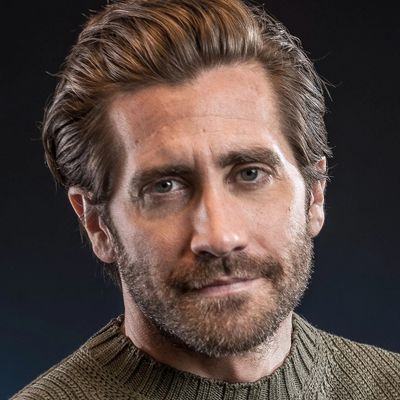
Behind the scenes at Broadway's "Sea Wall/A Life,' with Gyllenhaal and director Carrie Cracknell... Read More
From the show: Stagecraft with Gordon Cox
Guests
Featured Shows
About
Behind the scenes at Broadway's "Sea Wall/A Life,' with Gyllenhaal and director Carrie Cracknell.
Transcript
This transcript was automatically generated and might contain errors.
[0:06] Gordon Cox: Welcome to Stagecraft, Variety's Theater Podcast, bringing you backstage and behind the scenes with the stars and creators of the hottest shows on Broadway, off Broadway, and beyond.
[0:16] Gordon Cox: I'm your host, Gordon Cox.
[0:19] Gordon Cox: On this episode of Stagecraft, I'm talking to Jake Gyllenhaal and Carrie Cracknell.
[0:23] Gordon Cox: Gyllenhaal, of course, is well known to moviegoers for work that's included Donnie Darko, Brokeback Mountain, Nightcrawler, and this summer's Spider-Man: Far From Home.
[0:33] Gordon Cox: In recent years, he's also returned again and again to the theater with runs in plays including If There Is I Haven't Found It Yet and Constellations, and musicals Little Shop of Horrors and Sunday in the Park with George.
[0:45] Gordon Cox: For his latest stage outing, he's working with Cracknell, the London-based director, and co-star Tom Sturridge on Sea Wall/A Life, which is made up of two separate but thematically linked monologues by two different writers, Simon Stephens and Nick Payne.
[1:00] Gordon Cox: The show was a sold-out hit at Off Broadway's Public Theater earlier this year.
[1:04] Gordon Cox: And now it's back for a Broadway run that opened August 8th at the Hudson Theater.
[1:09] Gordon Cox: Gyllenhaal and Cracknell are both in the studio with me to talk about having an audience as a scene partner, why the collaborators were so eager to return to the production, and who Gyllenhaal would most like to work with in the theater.
[1:21] Gordon Cox: Hi, Jake. Thanks for being here.
[1:23] Jake Gyllenhaal: Hi.
[1:25] Gordon Cox: Um, happy opening tonight. I should mention that you guys are opening this very evening, so we are glad to talk to you today.
[1:32] Gordon Cox: Um, Jake, this show isn't like anything we've ever seen you do on stage in New York before because it's just you the whole time. It's a two-person show, but you're on stage separately; you don't even really look at each other.
[1:44] Gordon Cox: Um, you're only on stage together in one moment. Um, what's that experience been like for you?
[1:51] Jake Gyllenhaal: Well, it's been a long journey. I mean, we started at the Public Theater this winter, and it's been an evolution to then now coming to Broadway from a 200-seat house to a thousand-seat house and the energy of it. And the irony being that the thousand-seat house feels actually more intimate than the 200-seat house.
[2:09] Gordon Cox: Yeah, why do you think that is?
[2:11] Jake Gyllenhaal: I think just the structure of a theater and how it is designed actually has a significant effect on performance and choosing the right theater, which I feel like we totally have in this case.
[2:23] Gordon Cox: Yeah. Um, it's at the Hudson Theater for listeners who don't know. Um, it just does feel like an intimate theater, like an intimate space, right?
[2:29] Jake Gyllenhaal: It is, it is meant for that. I mean, and then I think also we both, Tom Sturridge and I have real familiarity with that space. We both performed there before.
[2:38] Gordon Cox: Oh, yeah, he did too. That's true. Because you were there for Sunday in the Park, right?
[2:42] Jake Gyllenhaal: And he was there for 1984.
[2:43] Gordon Cox: Yeah, right after he was. And so, um, I think it's just a piece that demands a sort of presence and a connection. Your scene partner is the audience, and obviously the audience changes every night, which is different from, I mean, obviously scene partners change their situation and what's happening in their lives every night, and they come on stage with different things, but this is a whole other thing.
[3:08] Jake Gyllenhaal: I don't see the audience at all, whereas Tom can see the audience in his piece.
[3:13] Gordon Cox: Right.
[3:13] Jake Gyllenhaal: So I can feel them. I know that also sounds a little woo-woo, but it is really true. I actually, they change their personalities, and so my piece changes every single night, depending on circumstance and the audience.
[3:25] Gordon Cox: Well, that also presents challenges for you, Carrie, as a director, but it's just one person up there for each of these pieces. What tell us a little bit about sort of how you worked on the piece with each of these individual actors?
[3:38] Carrie Cracknell: I think the challenges are really interesting because it's about how you build something that's really, really detailed and kind of real and accurate, but also that has this allowance for flexibility and for play and for the actors to be each night in the room with that group of people. And so sometimes a phone will go off, or sometimes a coughing fit will happen. And what's been really beautiful, I think, is the confidence now that both of the actors have to allow that into the space. It's like that's real, and it's happening in this room with me in this moment, and I can kind of speak to that. And so a lot of the process was about us trying to, in a way, think less about character than we would normally, and much more about the sort of humanity and like what the central themes of the pieces were and how those actually connected to the actors themselves rather than necessarily a kind of deep constructed sense of character, which is quite different to how I normally work.
But it felt really important that, you know, the costumes that they were wearing spoke to who they were and that the intonation or the way that they might kind of address moment to moment felt from themselves. And that I think was possible because it was two, you know, individual pieces and there was the kind of space for that conversation.
[4:47] Gordon Cox: Right. Uh, if I'm not mistaken, Jake's costume is different this time around, is that right?
[4:51] Jake Gyllenhaal: We've had quite a long journey with my costume.
[4:53] Jake Gyllenhaal: Yeah, more so than anymore. And so, um, empathetic to the journey of discovery, you know, and particularly because there are only two of us, and then there are really only one of us each time, and how to like merge the two of us together so that we're a show, but also be with us personally in the only two, the only person that I know knows and is inside. Well, the only two people I know who know and are inside this piece with me are Carrie and Nick Payne, the author. And I think the same thing with Simon and Tom and Carrie. And so just the journey through the costume choices, I found myself being uncomfortable can be inconsistent with the costume nightly because the audience changed. And I felt like it in my mind, it felt false. It felt odd to not have a closet, to not have an opportunity to change depending on different things. My, I'm very odd about my feet on stage and my footwear.
[5:53] Jake Gyllenhaal: In general, this is true?
[5:53] Jake Gyllenhaal: No, not in general. In general, I really don't have to. No, no, no, no, no. I won't say my character. I would say on stage, I am definitely a different person than I am in real life. Like I sure, I mean, I do love footwear. I have a bit, you're wearing noticeable tennis shoes.
[6:05] Jake Gyllenhaal: Oh, tennis shoes, right? They're very cool. A plethora of choices of shoes I can wear. Um, but I don't, it's really on stage I have this superstition. I don't think it's a superstition because I don't believe in that either, but like I have this thing where my shoes need to be very tight, unless for some reason they shouldn't be for story reasons. But I, um, so it was really like I think we didn't really figure it out at the Public, and then we sort of jumped in and said, Okay, this is what it is, and then actually halfway through, I was like, here I think I'm gonna change my shirt. And she was like, Okay, let's just make sure that it works with the lighting, and then I send her a picture and she's like, Okay, that's fine. And then I had this strange cardigan that we journeyed with for a while, and then, you know, it's been a long journey.
[6:46] Gordon Cox: But is it consistent now? Is the show, is the outfit I saw you in yesterday afternoon the one that everyone will see you in?
[6:53] Jake Gyllenhaal: Most likely.
[6:54] Gordon Cox: Okay. All right, all right. I think it feels more like stand-up in the way that a stand-up comedian might just turn up in the clothes that they're wearing, and to some extent, that could have been a version where you just turned up nightly in what you were wearing yourself. You know, that we didn't see it. And so that was why any kind of version of trying to put too much into it felt unhelpful.
[7:11] Gordon Cox: Right, right. Is the audience and your awareness of the audience and the acknowledgement of the audience that you talked a little bit about before? Is that the key to making these single-person shows feel theatrical and alive? Is that what you found kind of unlocked that for you? Or is there anything else that you did to, um, you know, really keep it alive?
[7:31] Jake Gyllenhaal: I think, um, like with all acting on stage, there's this kind of fascinating combination between trying to be completely present in the moment and also having structure that you're working within. And I think when you're doing a one-person show, it takes an enormous amount of kind of muscular energy in a way. It's a bit like kind of running a marathon each night. And so you sort of need to know exactly what your route plan is and, you know, have a really kind of clear sense of the outline of that, but also inside it, you need to be able to swerve and respond and feel some things more deeply than others each night. And so it has been a really different kind of acting challenge. And for me as a director, it's definitely felt like an unusual conversation to make that feel possible each evening.
[8:11] Gordon Cox: Jake, what is the most insightful thing Carrie said to you throughout this process?
[8:16] Jake Gyllenhaal: I think from the start, well, it actually has been a sort of, um, like very compassionate toughness in the fact that I think that she probably felt instinctually, and I don't want to put words in your mouth, but I do think that she probably felt instinctually that the more present we were and what we brought of ourselves to the piece would be its success, you know. Um, not only for the audience in connecting to us, but for us as performers, and to be as honest to the pieces, these beautiful pieces that were written. Um, that's what they were asking for. And so, you know, slowly sort of just chipping away at any performative parts of it. And she just, I remember the first thing she said when we first read it, which was a pretty magical day when we first read it, even with all of the odd choices we were making and the imperfections and us not really knowing the pieces at all.
I was doing it with a British accent because I had only done Nick's work, Nick Payne's work with a British accent. I've done three of his shows, this is the third one, and the other two are in British accents. So I started doing that, and she was like, Yeah, it's good, I know you can do it, but I think it's gonna keep you away from something. I mean, the thing with Carrie that I feel is that she's truly, truly with us in, she does not, it does not feel to me in the direction that you give to be you are objective, but you can like literally feel the minutia of the moments that we feel. You like, you know, it's almost like she can be with us, and I do think as a, in a story you're telling alone on a stage, you have to have a director who can be there with you inside of it because it's just been amazing.
I don't know if there's anything outside of her being like just keep bringing yourself, just don't be afraid of being in the actual moment because in my piece in particular there's a lot of funny moments, and the tendency of my, you know, comedic ego, yeah, if I could even say that, um, could even claim I have one, is that I really do love drawing those laughs, and it's a bit infectious, and to just try and let that go and to just speak to people.
[10:20] Gordon Cox: And Carrie, what has surprised you most about working with Jake and how he works as an actor?
[10:25] Carrie Cracknell: Where do I start?
[10:28] Carrie Cracknell: She's very peculiar. Um, I think what's been really interesting is this sort of capability to take one thought or one note and completely reconsider the entire performance. And I guess on some level, that comes from years of filming, and so that capacity to recondition, reimagine, remake instant to instant. And so there's been a fascinating challenge about finding where that sits, along with like where the sort of bigger structure sits, and trying to find a kind of back and forth between those two things. And actually with both Tom and Jake, each night I feel like I hear lines afresh and moments afresh and ideas come to me that I haven't heard before, because I do think genuinely they're both trying to kind of sit inside it in a really honest way. And that's been, you know, that's the most joyful thing as a director when you're being surprised and you're being led by your actors, and that's been pretty constant.
[11:21] Gordon Cox: Let's talk a little bit about how this piece came about. Uh, Jake, as you mentioned, you've worked a couple times already before this one with Nick Payne and Carrie, you'd worked with both the players, Simon Stephens and Nick Payne. Um, how did it come about? How were these two things written separately, I imagine, and whose idea was it to bring them together?
[11:40] Jake Gyllenhaal: They have their own two separate journeys that Carrie can probably explain.
[11:43] Jake Gyllenhaal: I can only say that I've read Nick's piece, a version of this piece that he wrote about his father.
[11:50] Gordon Cox: Okay, so is that that sort of biographical, autobiographical version, is that different from what you are doing now?
[11:58] Jake Gyllenhaal: Yes, significantly. And that has to do with Carrie's relationship with Nick, knowing Nick, her dramaturgical relationship with the material and with Nick, their evolving it together, then me them passing it over to me, me having some questions and ideas, then Nick and I speaking, and then him adding some things and them going back. So it's been an evolution. This piece, separate from Seawall, has been an ever-changing, ever-evolving piece because I think as Nick, because it's more autobiographical, has evolved through the past six, seven years since he wrote the original piece that he performed himself. Many things have happened in his life, and he keeps adding them to that. And so, and then Carrie's sort of helping him push towards what the overall idea is.
And then what's been very interesting, just from where I sit is that the crew to watch Carrie create a show and then to watch over this long run from the public into Broadway, it actually became a show that Nick was able to use what was already sort of locked in Seawall, Simon Stevens' show, and then have it reflect back and forth in moments. There are moments where Tom's character says things like that you want to know the cruelest thing I've ever said to anyone was, and they never tell you. And then I say at one point, in opposition to that almost, but also sort of in parallel with it, I say, I think it might be the kindest thing I've ever heard, or we mention ER often, the two of us we mention that show.
Yeah, and we there are so many moments we share and are mirrored, and that is actually a testament to Carrie and Nick, really reflecting off of Seawall and then making it into a show. I think also because Nick and Simon are really close friends. Um, they've actually really enjoyed working together because it's quite unusual for playwrights to work in collaboration on a piece. And um, and so I think Nick has kind of it's been a real act of love actually toward Simon as another writer to sort of take in to some extent subconsciously this other play, and then try and find kind of really subtle ways to respond to it.
[13:59] Carrie Cracknell: At what point were these monologues you had read at one point separately, Carrie? And then at what point did it occur to you that these two things went together and why did you think they did?
[14:08] Carrie Cracknell: So Seawall's had a long performance history in the UK, and it's a piece of Simon's that's kind of been on a very long journey. And um, and I'd seen it performed in London, and then I saw Nick actually the first night that he read the original version of Jake's monologue at the Royal Court. Um, and so I'd known both of them, and then I'd been looking for a project with Jake to do, and Tom had this long relationship with Seawall, which he was desperate to perform. And so suddenly these two pieces felt like they could kind of mirror each other and it would make a whole evening of theatre. And so we came out, I flew out to the public and we did this reading in a tiny dressing room surrounded by mirrors with about eight people, everybody wept, and it felt really clear that day that there was something, some kind of energy in this group. And also collaboratively it felt really unusual because there were all these deep, very, very old relationships in lots of different directions.
[14:58] Gordon Cox: And what are for you the kind of echoes between the pieces? And what are what why do they pair so well together in your mind?
[15:05] Carrie Cracknell: I always think of them as kind of like a plug and a socket, like they're the inversion of each other, because in a way in Seawall, you have I mean, without any spoilers, you have a kind of unnatural tragedy. And in A Life, you have this kind of real combination of like kind of beauty and joy and energy and power of new life, and also of you know, of the passing of a parent. And so the two pieces kind of reflect on similar themes, which is about you know, who we are under duress and how we love in those moments, but they kind of come at it from opposite directions, and so they often feel like there are like lots of strange, familial parallels in them, and they feel like a kind of a pairing in that way.
[15:43] Jake Gyllenhaal: Yeah. Uh as we mentioned, uh the Jake and Tom are sort of never on stage or on stage together once very briefly, they don't ever look at each other. Um, and yet in interviews, I've heard all three of you say, uh, you as well, Carrie, that it feels very much like an ensemble, and that uh seems to have been very important to you. Can you tell me a little bit about sort of Jake for you what that adds to kind of your performance and your experience of the piece, and then Carrie, was that important to you to sort of foster?
[16:10] Jake Gyllenhaal: And if so, why I mean these are really um first of all, the I think the prospect of even attempting something like this for an actor, even though it seems like a total indulgence, is is mostly terrifying. So to read it and to be like, oh wow, I want to do this, and then to do it are two completely different things.
[16:34] Jake Gyllenhaal: Um why did you want to do it back when you read it? Do you remember?
[16:36] Jake Gyllenhaal: The second I read it. I read it and I was again, I read it and I was weeping, and I and I uh I had not experienced the thing that the before it had even been rewritten, I had not experienced anything that the character had been through, and I was still so profoundly moved by it. And that didn't stop. I mean, I asked Nick for five years if I could do it almost every six months, and he would say, No, it's mine, it's too personal, and it's meant for me to do. And then, you know, through a number of uh things that he he he allowed for it to be done and then to rewrite it. I mean the thing is is Nick wouldn't have let me do this piece without Simon's piece. Um without his friendship, I think, and without the knowledge that it was being supported by someone that he had such profound respect for, I think.
I don't want to speak for him, but I would say that. And I think that because of that, Tom and I are um we are vehicles for these beautiful words, and we're pretty deeply aware of that. And in our terror, um, we came together. And also um, because he's not here, but I would say he is a catalyst for connection, Tom. He just has uh a spirit and an energy that no matter what I would ever try and do to separate or to he just his heart is always open, and he's just such a wonderful actor to work with and a human being that I adore. And so just naturally over time, I think we just And I also think Carrie allowed for us to be in the room as she was directing, and then we would sit there and watch each other, and then Tom would say, Hey, I have an idea.
Can I and Carrie'd be like, Okay, what do you want? And it became this sort of very interesting collaboration where he would say something that he would see, and then we would then go and discover something, and vice versa. And and there was never any threatening moments. It was like we were any note he has for me at the end of a show, I'm always like, Oh, oh, cool. Right, thank you. You know, um and was this something you consciously fostered in the class, Carrie, and why?
[18:46] Carrie Cracknell: Um, I'm a big believer in ensemble. I think it's the kind of glue that keeps shows growing and they get deeper when people love each other.
[18:53] Carrie Cracknell: It sounds a bit weird again, but I think when you feel safe and you feel like you're in an environment that's kind of profoundly creative and not competitive, you make really good work. And it seemed really obvious to me that if we had two actors who were completely isolated from each other and trying to perform something very, very distinct, that they wouldn't have any kind of creative supportive mechanism within the company. So yeah, that was something we worked hard at. And it was tough at times, but actually just a lot, you know, just saying, come in, come in for the afternoon and watch each other and give feedback and kind of actually act as collaborators rather than the sense of kind of the creative team and the actors being separate, which I think can happen a lot.
Um it was really important to me that their thoughts and their insights, which were brilliant, were you know as kind of important in the work as anyone else's. Um it was strange though, because it was very weird as an actor when we'd have our schedule to say, Jake, you're coming in from 10 to 2, and then you leave, and then you have your afternoon. I've never done a show like that. Right. You know, you're at rehearsal all the time, unless maybe you're not in one scene or this or that, but like usually you're there in a, and to be sort of, and it's also significant in that like we're both, we both hold this piece together. So you're basically like both the stars of the show, and you're like not there for half the day.
It felt so strange to us both. And what ended up happening was we ended up just like being there for each other's rehearsals because we felt like we were a part of the piece. Right. There did come a time where it was too much for me to listen to Tom's before I performed. Seems fair. And that somewhat continues. I turn up and down backstage, you know, the monitor so I can hear and see, listen to his rhythms and see where he is, because I know exactly kind of where he is and hearing his rhythms. Then I'll turn it back off.
[20:40] Jake Gyllenhaal: Do you two have any pre-show rituals?
[20:43] Carrie Cracknell: We totally do. Um we have a rhythm now. Um I start the show very early when the doors open, so I'm on stage in that period of time. It's been a really wonderful thing that Tom actually Carrie encouraged at the beginning of the show at the public, and Tom was on stage only alone. Right. I don't know if you came in and I was on stage or not.
[21:01] Jake Gyllenhaal: You were not, I did not know.
[21:02] Carrie Cracknell: So okay, get there early. Yeah, so I mean it's or not. But uh yeah, so I'm so so what happens is we're very rhythmically timed, and then I'm on stage and I begin and then I leave, and then when I leave, Tom then does his whole pre-show. But beforehand, I mean, we're pretty much together two hours before the show. Um we always hug before he goes out. Uh he does his sort of very, very interesting. I'm gonna use the word interesting you as a euphemism for singing the songs out loud um in his warm-up to warm his voice up on stage. Um, I always make fun of him that he's doing it.
[21:43] Jake Gyllenhaal: And then we just hug and he does an amazing thing where he goes outside, he walks around the block in his costume, and then he comes in through where everybody else walks in.
[21:51] Carrie Cracknell: Oh, really?
[21:53] Jake Gyllenhaal: Comes through the bar and walks through the auditorium and climbs up onto the stage. In fact, yesterday it was raining. And he had his umbrella on the back. He was like, I need an umbrella, I need an umbrella, and I was like, You don't need an umbrella, man. I mean, I thought you were like really trying to be in this. And it was like, he was like, You're right. No, I need an umbrella. And then when he leaves, he also goes out through the crash doors and out into the street. And he loves that moment when he walks out onto Broadway each night. He says it's like a really, it's a really high moment for him.
[22:20] Carrie Cracknell: Wow. Cool. Um, the space that uh the show is in is very, it's a very spare set. The design choices are very spare. Um tell me about the uh we talked a little bit about the costumes, but what guided you guys as you thought about kind of what space these shows occupied, and how much you acknowledge us in the audience, like how much are we in a theater and how much are we somewhere else?
[22:43] Jake Gyllenhaal: And where is that?
[22:44] Carrie Cracknell: I mean, it felt really important to me that we weren't trying to kind of create an imagined world that the plays were happening in, because the most important thing was that they were people in a room talking to us, and there was no pretense about that. Right. And so I worked for the first time with a New York-based set designer called Laura Jellinek, who's really brilliant, and we kind of together tried to just conflate lots and lots of images, which is how I normally start. And then we became really drawn also in conversation with Jake and Tom and Nick and Simon about this idea that maybe we would try and create a kind of abandoned, quite poetic, um empty space, really. And we've tried to make a kind of beautiful version of that, and it has certain resonances to the stories, particularly the high wall at the back.
[23:26] Jake Gyllenhaal: But um, and the piano, which is kind of sits there slightly unloved and unused until the end, and you know, to sort of look for I don't know, poetic simplicity, something that could be a kind of backdrop in a way for a conversation.
[23:40] Gordon Cox: Um Jake, you've clearly made a commitment to theater. Uh you're very busy on screen. I feel like 10 minutes ago you were doing press for Spider-Man, right? But that what is it about theater that brings you back and why is it important to you to keep doing?
[23:56] Jake Gyllenhaal: I am my best self when I'm working in the theater. I am the performer that I want to be, and I'm most of the time the person that I would want to be. I think um that primarily has to do with the very reasonable hours. Um which um I don't think those who are, you know, anyone who works in the theater who doesn't work in other areas of entertainment, the entertainment business really fully appreciates. Um we have great hours in the theater. I mean it was not scheduled, yeah. They're brutal schedules, and sometimes I think I mean I have short runs. I've you know, I have not though the most shows I've done in a row are 135, so I have not no leg to stand on, right? But I will say that I think the feeling I have is um it it's a world that feels truly very much like um new and mine and one that is what I've been in love with since I was a little kid and the place I knew I was supposed to be.
I've had this profound luck in movies and um incredible career that I'm grateful for. But I think um it feels really like I'm the best person that I could be. And I still have a lot of work to do on that, but there that's what it feels like.
[25:17] Gordon Cox: Um this is a question for both of you. What made you interested in revisiting it this time? Because you could have done it at the public and it was a big hit in the end. What uh what spurred you to um return to it?
[25:29] Carrie Cracknell: I think there was unfinished business. I mean, there always is when you want to kind of go back to something and the writing keeps offering up and sometimes you direct plays and they get thinner and thinner the more work you do on them and you kind of have to keep piling stuff on top to hide the cracks. And then other times you work on plays and they just continue to reveal themselves like these kind of fountains. And I think that's what these pieces do. And um, you know, we all had more work to do. We were excited about getting back into the studio and working on some rewrites, but also just trying to deepen the work that the actors were doing and we kind of walked into the Hudson and thought, wow, this room, you know, has a lot of seats, but there's an intimacy, as Jake said earlier, in a way that the seats wrap around where the performer stands, which just brings you right into the action. And um, yeah, it felt like a good spot for us.
[26:14] Carrie Cracknell: I will say it's just like as an aside too, we did this. The public theater does this incredible public works, and um, so that a lot of the audience from outer boroughs who wouldn't normally come to see theater, come downtown and see stuff at the public, which is such an amazing institution for so many reasons. Um we had this talk back at a public works um performance one afternoon that Tom and I were a bit hesitant because we just were doing talkbacks and it's hard to objectify about a piece you're in. And the responses of the stories from the people that saw the show, I think was the most profound experience I've had in my career. The stories that came back to both me and Tom about their own life and things from having lost uh one of their parents having lost a child, having one woman saying to me, There's a part where I talk about my dad having tingling in his arms and that he has a heart issue.
And she said, I have tingle in my arms every morning. If I hadn't heard that, I probably I think I need to go to the doctor. Everything from that to these uh the other night, a girl came up to me when we were backstage at stage door, and she said, I haven't talked to my father in years, and after tonight I'm gonna call him. Um, another girl told me about how she had lost her boyfriend very recently and how incredible it was, and other ones who have never had any experience like that at all, but have made them want to call their family members and loved ones and tell them that they love them. And I think Tom and I in particular came to each other and said, This needs to try if we can to get it somewhere else, because something about this feels so unlike things that we see in the theater in a lot of ways.
And we talk about monologues and we talk about how they're this and that, and of course, the technical part of it is fascinating for us as the but really I have been I've been bowled over by the power of this writing on the audience. Um and it is like it has been it's just this this thing we felt like more people should come and try and see. And it really really has to do with the writing, these two writers writing, which is took profound courage to do and somehow translates to people and makes them feel like it's okay to be alive, particularly in a time right now of isolation.
[28:39] Gordon Cox: Yeah. And the show runs for uh I think it's nine weeks.
[28:42] Carrie Cracknell: Um I'll double check that.
[28:43] Jake Gyllenhaal: Oh, it's seven weeks.
[28:44] Carrie Cracknell: Oh, yeah, no, it's you've been doing it for a couple weeks, right?
[28:47] Jake Gyllenhaal: Yeah, yeah. Um what's next on your plate for both of you?
[28:52] Carrie Cracknell: I'm gonna make my first film next year.
[28:54] Gordon Cox: Congratulations. Tell us about it.
[28:56] Carrie Cracknell: Uh I can't. But um, yeah, so in the UK, yeah. So I'm just kind of traveling towards that. And um, yeah, that's taking up most of my thinking at the moment. But that's been a kind of long-held ambition.
[29:08] Gordon Cox: So does that feel like a how how do you anticipate the leap uh affecting you? And what what do you feel like is gonna be hard or easy for you as you sort of make that leap?
[29:21] Carrie Cracknell: Um, I always think I kind of work best in terror, if that makes sense.
[29:25] Gordon Cox: Okay.
[29:25] Carrie Cracknell: I find it really creative, and I've stopped being frightened making theatre, which is probably a bad admission, but um yeah, new things, completely new challenges always kind of stimulate me. And in a way, weirdly, through my theater, I've been trying to make films on stage for a long time. And I think I'm less and less interested in the kind of acting where you're having to scale up to often now 900, you know, one and a half thousand seats. I mean, this is different in a way because it has an intimacy in this piece, but the work that I do at the National in London, you know, I'm increasingly in the big spaces there. And actually I just want to be inside the character and right up close. And so for me, the kind of combination of the visual identity of my work and then a need for intimacy is kind of leading me pretty clearly to film at the moment, I think.
[30:13] Gordon Cox: So well, we will await that announcement. And Jake, what's next for you?
[30:18] Jake Gyllenhaal: Uh I mean, for right now, um the um my company, which is producing a number of things with my incredible partner who's really the the spearhead of the whole whole company, um is with a number of movies coming out in the next year where we were in production on four different films this year, and then we um are part of Slave Play that's coming to Broadway and yeah. Um and then I'm gonna go do Sunday in the Park with George in London with Annalie.
[30:47] Gordon Cox: Are you looking forward to that actually?
[30:49] Jake Gyllenhaal: Very much, yes, very, very much. Um I can't really think about it just yet, but yes, I'm really I to be able to do that all again is we never thought would be possible.
[30:58] Gordon Cox: It's like an entirely different uh gig compared to what you're doing right now.
[31:02] Jake Gyllenhaal: It's like it's the right. I mean, there's just the people and the music and the singing and the It's funny you say that I it is it is it seems that way, but I would look at this like a like an hour long finishing the hat, you know.
[31:14] Gordon Cox: Um the model you're doing now.
[31:16] Jake Gyllenhaal: Yeah, yeah. And so in a lot of ways actually I feel I felt I was surprisingly more comfortable than I thought I would be because of being able to do a soliloquy or singing some sort of song up there on stage to a group of people, which is not what happens oftentimes um in plays.
[31:31] Gordon Cox: No, you know.
[31:32] Jake Gyllenhaal: So um they feel they definitely feel different given that yeah, the twenty five piece orchestra and the 22-person cast, yes, and the extraordinary lyrics and and the downbeats. But uh but like you know, I think um I think somehow it just is all like it's a joy, so feels somewhat similar.
[31:51] Gordon Cox: Yeah. Uh Carrie, what would you like to see Jake do on stage next?
[31:59] Carrie Cracknell: I well, I've never seen Jake in a musical, so I'm very excited to see someday. Yeah, because I've only had little glimpses of his singing when he does. But um that's been a real treat. So I'm looking forward to him harnessing his profound singing talent on stage.
[32:23] Gordon Cox: Something a little bit more um uh competent potentially.
[32:27] Jake Gyllenhaal: Right.
[32:28] Gordon Cox: And Jake, is there a role in the theater or a piece in the theater that you're desperate to do?
[32:34] Jake Gyllenhaal: Um no, I mean I'm asked that question actually a lot on a lot of different things. I I don't I don't sort of look at it that way. I but I do, I mean, you know, I would at a certain point um I would like I would love to be in years down the line, you know, fiddler on the roof or things like you know, things like that. Well, many parts that I am not right for or ready for at this moment, but I have dream dreams of of those types of things, pipe dreams.
[33:00] Gordon Cox: Who would you like to work with in the theater who you haven't had the chance to work with yet?
[33:04] Jake Gyllenhaal: Oh wow. Um in truth, I there are a lot of different um directors that I love. I mean, I I when I saw Carrie's work, I just knew how incredible she was from I have that, you know, that you kind of go, who is that? Like, who is this person? You know, um what was that? Was that in London? Was that yeah, I saw Deep Blue Sea, which everybody talks about a doll's house, and I didn't have a chance to see it. But um, which I know I I'm like outing myself here. But I but I but it but it was just I think if someone is incredible, you kind of know it's through their work, whether the even if things work or don't work, which Deep Blue Z definitely worked, like you know they're powerful and they have this incredible vision.
Um I would say probably my sister, if I'm you know great, yeah. Um she's been on stage before as well many times. Yeah, and I think there are things that would be very would be incredible for us. I mean, we're still most important thing to us is our lives and how complicated sometimes just family is, you know. Um that's its own stage play. But maybe there's just maybe there are many stage plays that mimics and maybe they'll give us an opportunity.
[34:17] Gordon Cox: Yeah, yeah. Well, we look forward to that, or whatever your next thing is, and whatever's next from both of you. Thank you guys.
[34:22] Jake Gyllenhaal: Thanks for happy opening tonight.
[34:23] Carrie Cracknell: Thank you.
[34:30] Gordon Cox: That was Jake Gyllenhaal and Carrie Cracknell, the star and director of Sea Wall/A Life. Now playing a limited run through September 29th at Broadway's Hudson Theater. If you like what you're hearing on this and other episodes of Stagecraft, we'd really appreciate it if you took the time to rate and review us on Apple Podcasts. It's a big help. Or tell a friend. I'll be back in two weeks with another new episode. Until then, see you at the theater.
© Broadway Podcast Network, All Rights Reserved