

The star of "Mindhunter" and "Frozen 2" gets wet for his current gig in "Little Shop of Horrors.".. Read More
From the show: Stagecraft with Gordon Cox
Guests
Featured Shows


About
The star of "Mindhunter" and "Frozen 2" gets wet for his current gig in "Little Shop of Horrors."
Transcript
This transcript was automatically generated and might contain errors.
[0:07] Gordon Cox: Welcome to Stagecraft, Variety's Theater Podcast, bringing you backstage and behind the scenes with the stars and creators of the hottest shows on Broadway, off Broadway, and beyond.
[0:17] Gordon Cox: I'm your host, Gordon Cox.
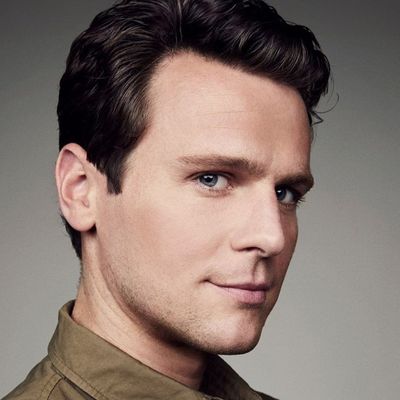
[0:20] Gordon Cox: On this episode of Stagecraft, I'm talking to Jonathan Groff. Theater fans and Hamilton heads will know him from his Tony nominated Broadway work in Spring Awakening as Melchior, and in Hamilton as the scene-stealing King George. On screen, he's appeared in shows like Glee and Looking. And in movies, he's probably best known for playing Kristoff in Disney's animated smash, Frozen. He's back as Kristoff in the highly anticipated Frozen 2 in cinemas November 22nd, not too long after his small screen return in the second season of Mindhunter, the Netflix series in which he stars. On top of all that, he's back on stage too, starring as Seymour in the new intimate off-Broadway revival of Little Shop of Horrors. Roth's here in the studio with me to tell us about all of that and more.
[1:05] Gordon Cox: Alright, this is the interview portion of Stagecraft with Jonathan Groff.
[1:09] Gordon Cox: Hello.
[1:09] Jonathan Groff: Hi, Jonathan.
[1:10] Jonathan Groff: Hi, how are you?
[1:11] Jonathan Groff: Thanks for being here for the second time. You were one of my first guests a couple years ago.
[1:16] Jonathan Groff: Thanks for having me back.
[1:17] Gordon Cox: And you were we are delighted to have you back. And you were also, to this day, it is one of the most popular episodes we have ever released. So yeah, so welcome back.
[1:25] Jonathan Groff: Score.
[1:25] Jonathan Groff: Yeah.
[1:26] Jonathan Groff: That's amazing.
[1:26] Jonathan Groff: I'm happy to be back.
[1:27] Gordon Cox: Um and so you we were just talking about how the fact that a couple weeks ago you opened Little Shop of Horrors, and you've sort of settled into the run. And how's it going? Are you having a good time?
[1:36] Jonathan Groff: It might be the most fun I've ever had. It's kind of a perfect show, perfectly written.
[1:45] Jonathan Groff: Right. And it's like a joy ride every night. I get so excited to do the show. This sounds kind of cheesy. Excuse me, but even like on Sunday afternoons when we do our final show of the week, right? I get to I feel a little depressed as I'm leaving the dressing room.
[2:01] Jonathan Groff: I know, I don't know. Has that ever happened before? I feel like Mary Ancel does or something. Because she's got the famous story of like we get to do it twice today. And everyone's like, oh God. But really, and it's not just me. I don't know if everyone else feels depressed when the week is over, but I do feel like okay, I just have to wait until Tuesday before I get to do it again.
[2:19] Gordon Cox: And what particularly do you feel like you respond to in Seymour and in the part that you're playing?
[2:26] Jonathan Groff: It's just you get to do everything. It's like it's a show where you get to be dramatic and funny, and you get to sing great songs, and everybody in the show gets a standout moment. So the entire cast gets featured in really exciting and surprising and fun ways. And so I think everyone feels like we all have something to offer, and it creates this kind of team mentality when you arrive.
[2:53] Jonathan Groff: And then the audience, because the theater is so small, it's only teeny tiny. Like we should for people who haven't seen a show there or haven't seen this show yet. Like it's what is it, 250 people?
[3:03] Gordon Cox: 270.
[3:04] Jonathan Groff: 270, and the stage is so small that when the plant grows, you're like tripping over. Yeah, like exactly. Like Yeah, it feels like the audience is inside the shop with us.
[3:14] Gordon Cox: Right.
[3:14] Jonathan Groff: It's so small. And so because like we're having so much fun doing it, the audience, a lot of people know the show or know some of the songs, or it's sort of like the audience and the cast are there to both celebrate the show at the same time. And so it's a very unique joyful energy.
[3:33] Jonathan Groff: And I was talking to Michael Mayer, our director.
[3:36] Gordon Cox: The director, who you worked with on Spring Awakening.
[3:38] Jonathan Groff: Yes, yes, and who is so incredible. And we just have had such a good time doing the show with him. And he's just a phenomenal director. And we were saying during I was saying to him during previews, I feel like it's been a very this also sounds very cheesy, but a very kind of healing experience for everyone in the cast and for Michael. And when Michael pitched us all the show originally, he said, I want to do Little Shop off Broadway. It's never moving to Broadway. We're doing it in a small theater. We're not doing this for the money. We're not doing this to make our careers. He said I want to do this show for the reason that we all used to do shows which was just to have a good time. I want it to feel like summer stock.
And I think that that has happened from day one for the cast and I think for the audience the response that we're getting is I couldn't stop smiling. I can't remember the last time I had so much fun. You know it's a very I think healing joyful experience for the audience as well.
[4:34] Gordon Cox: Right right you mentioned right before we turned on the mics that there's an ongoing saliva effort. Tell us what that is what does that mean?
[4:40] Jonathan Groff: Well I have the natural this is also a problem question mark with this size of the house is that I spit a lot on stage I've always been a spitter. I get wet when I act it's just what happens I get I start sweating. I get Tammy when we were in it's first started she's Tammy Blanchard your co-star yes who I'm deeply obsessed with sure she uh she said I are you taking saliva pills because I guess Bernadette Peters she said during Gypsy would take saliva pills to keep her throat lubricated. I did not know that.
[5:16] Jonathan Groff: Yeah. And I was like, no, I'm not taking saliva pills I just get wet when I perform on stage. It is just what happens. And so I break out into a sweat, and then I get I just I spit a lot. And so about three weeks I got over it. But for the first couple weeks of the run, I felt bad. Because I walked down to the end of the stage and in the opening number, the second song of the show, Skid Row. And I can't help it, I'm just like spitting on everyone, and they're either like enjoying it or they're laughing or they're holding up their programs to block their face.
[5:55] Jonathan Groff: Oh uh and you can really see on from stage, it's as close as I mean, we're about two feet away.
[6:01] Gordon Cox: Yeah, no, you're that close.
[6:02] Jonathan Groff: And that's how close we are. Yeah. So it's uh it felt like a problem at first, and now I don't care anymore. I'm just like that's the way to do it.
[6:09] Gordon Cox: How can you yeah?
[6:10] Jonathan Groff: Yeah. I felt it made me feel self-conscious at first. I was like, oh god. I'd never I'd never been so close to the audience where I was actually seeing the reaction on people's face while I spat on them, and now this time I am.
[6:23] Gordon Cox: Right.
[6:25] Jonathan Groff: And so it had been a few years since you'd uh you'd been on stage. Were you hoping to get back? Uh like was that was this a thing on your radar, like, oh, I want to get back on stage sometime soon?
[6:34] Jonathan Groff: I mean, I just sort of like always want to be on stage. When I moved to New York when I was 19, it was just to do theater and nothing else. It's my it's my That was for Spring Awakening, yeah.
[6:44] Jonathan Groff: For well, I yeah, I did Spring Awakening when I was 20, I think I got cast. Yeah. And then but when I moved to New York when I was 19, I I just like was a dream to have a career in the theater.
[6:56] Gordon Cox: Right.
[6:56] Jonathan Groff: But didn't anticipate something as amazing as Spring Awakening. I just wanted to be a theater actor.
[7:01] Gordon Cox: Right.
[7:02] Jonathan Groff: So yeah, I love I love being on stage. I I never not want to be on stage. It just feels like a part of who I am.
[7:10] Gordon Cox: And are you enjoying acting with a puppet? Because sometimes you are also you were also playing a puppet.
[7:16] Jonathan Groff: Yeah, right.
[7:17] Jonathan Groff: Right. I would say the the puppet that I operate used to be my least favorite part of the show because it's like it's like tapping your head and rubbing your belly at the same time. You know, it's just like one of those technical things that it was the it was the most challenging part of the rehearsal process. Uh was learning how to act and dance and sing and operate the puppet at the same time.
[7:40] Gordon Cox: Sure.
[7:40] Jonathan Groff: Uh now it's one of my favorite parts of the show because I've kind of gotten a handle on it and I've learned that I can scare the audience in the front row by snapping at them. And so that's been really fun.
[7:50] Jonathan Groff: That's entertaining. So that's that's been really fun. And then and then one of my favorite parts of the show has always been and continues to be acting with either it's like and Eric and or Teddy are puppeteers in the show that operate Audrey 2.
[8:05] Gordon Cox: Right.
[8:06] Jonathan Groff: And Kingsley, who is the voice of Audrey 2.
[8:09] Gordon Cox: Right, yeah.
[8:09] Jonathan Groff: Where is he in when he's is he like off stage with a mic?
[8:13] Jonathan Groff: He's all the way in the back behind in a in his own little booth behind where the stage manager is, up house right.
[8:19] Gordon Cox: Okay.
[8:19] Jonathan Groff: And is he oh, so he's watching. So he has like, yeah, he's got like a monitor of the stage. He can sort of see the stage out of a window, and he's got a monitor with the music director conducting. And it's it's so unique, the experience because the puppeteers really have to be listening to Kingsley in order to match his vocal, which he changes a little bit night to night.
[8:43] Gordon Cox: Yeah.
[8:43] Jonathan Groff: And so they're in a hyper listening mode. I'm in a hyper listening, watching mode, watching them listen to him to react to him in the booth. It's like I'm reacting to the plant reacting to Kingsley, and it's like this three-way experience that I've never had before on stage.
[9:01] Jonathan Groff: That's it's it's just it it's you're hyper-aware. You have to have your senses really open more than usual because you're trying to there's so many people at play trying to match each other.
[9:11] Gordon Cox: You talked about the challenges with the puppet initially. Is there anything else that has been unusually challenging about this show and this part for you?
[9:21] Jonathan Groff: I think you know, when I did the last time I did a big musical where I was on stage as much as this was maybe Spring Awakening, and I was in my early 20s. So now I'm learning like the power of the foam roller and the massage. Being 34, it's just a diff, and and I'm not saying that it or 34 is particularly old, but it is, you know, over a decade older than when I did a musical before. And so I'm having to prepare to sustain the shows a week in a way that I didn't have to when I was in my early 20s. And it's and that has been an it's been it's it's almost like I'm in better health doing because you have to take such good care of yourself. So I'm in better health now than I ever have been because I'm stretching, I'm doing the foam roller because I want when I get on stage to do the show to just fly.
[10:11] Jonathan Groff: You're taking halls all the time, apparently you're popping halls.
[10:14] Jonathan Groff: Yes, Tammy Blanchard got us all addicted to halls.
[10:17] Gordon Cox: And do you have a flavor of choice or I really I sort of changes all the time. Uh right now I'm kind of into the sugar-free cherry flavor.
[10:25] Gordon Cox: Right.
[10:25] Jonathan Groff: Um and this is during the show that you're during the show, I have although not in your mouth when performing.
[10:30] Gordon Cox: Not in my mouth.
[10:31] Jonathan Groff: You learned the hard way.
[10:32] Jonathan Groff: Yes. Last night on stage. I was like, you know what? Maybe I'll just keep the halls in my mouth during the opening number, and it produced too much saliva, and then I was I was spitting all over myself in the it was like not only spit going out, but then like drool going down.
[10:50] Jonathan Groff: It was too much.
[10:51] Gordon Cox: It was too much.
[10:52] Jonathan Groff: I can have the halls off stage.
[10:53] Gordon Cox: That would happen again.
[10:54] Jonathan Groff: No, no, no.
[10:54] Gordon Cox: No, no, no, no.
[10:57] Gordon Cox: The last time you were on the podcast, the first season of Mindhunter had just come out. And um, we were we talked a lot at the time about how it was how hard it was for you to like not smile as much as your natural tendency.
[11:10] Jonathan Groff: Yeah.
[11:13] Gordon Cox: Did that get easier for season two?
[11:16] Jonathan Groff: It did. Yeah, it did get easier. The not smiling aspect definitely was easier for season two than it was in season one. I think because in season one, you're really everyone is trying to find the tone and the characters and everything on the show.
[11:31] Jonathan Groff: Right. And season two, it felt like I think for the writers and the directors and the actors and the crew for all of us, we knew what the world of the show was.
[11:49] Jonathan Groff: So no one was allowed in any way, shape, or form to be in cruise control. But the specific thing of not smiling became more second nature to me. And the character of Holden, what I loved in the second season was sort of his in the first season, he's so fascinated and obsessed with any sort of serial killer he can interview or whatever. And then right at the beginning of the second season, he goes to Atlanta and he's like, these guys are such a waste of my time. I'm so much smarter than these serial killers that I'm interviewing. And he comes into the room with this like sass and this like attitude that was so different than the first season. Uh, still not smiling, but just in a different way that it was fun to sort of like build on those sort of initial things from the character in season one.
[12:35] Gordon Cox: Do you find that working with David and working the way you do with David and on that character has that filtered back into the way you think about other characters and approaching other characters?
[12:45] Jonathan Groff: How so far? David Fincher is always on my brain. You know, having worked with him for two years in Pittsburgh, it's like his voice is always in my head. I often think like even when I'm doing Little Shop, his voice is in my head.
[13:00] Gordon Cox: And what is he saying to you?
[13:02] Jonathan Groff: Don't go up at the end. Uh, do as stop acting, do less. Like there's um don't musicalize things, think about the intention of what you're saying. I mean, it's all very basic, like acting stuff. Yeah. Uh, but it's like it's like the it's such good reminders to especially with theater because you do things over and over again. And so I'm you're always you're always thinking about how to make it better every night. And so oftentimes I'll think of David. David came to see Little Shop of Horrors. Oh and was in was in the front row of our first Saturday matinee with his wife Sion, who's our executive producer on Mindhunter. Uh, and so I really thought about him then because he was in the front.
[13:42] Gordon Cox: And what did he have to say about it when it was all over?
[13:45] Jonathan Groff: He was so sweet and so supportive and amazing, both he and Sion. They I couldn't believe that they were there, and not only that they were there, but they were in the front row was hilarious. So I did end up spitting on him a little bit more. No, sure. It was the scene where I'm like, possibly not for the first time. I mean, you've been acting around him for a long time. But on but on but on camera, you're like, I'm talking as quiet as a couple of things. Oh, that's possible. Yeah, yeah. Yeah, I'm doing like your like TV voice or whatever. And so you're not articulating as much as you do, right? And so I don't think he had been aware. He had seen Hamilton, so he probably knew that I had a memory of Spitflying.
But uh he was in the front row, and it was a scene where I'm holding the contracts, and I and I was right in front of him for that scene, him in front of him and Sion. And I was like, maybe I should hold these up so I don't well just spit all over David and Sion, they won't care. Yeah, yeah.
[14:33] Gordon Cox: And since we've talked about sort of what was hard for you about getting Holden your character on that show, what is it? So you're pressing that natural repressing that natural tendency of yours to sort of smile and be ingratiating and stuff like that. But what what is it that actually chimes with you in Holden in terms of what uh who he is and who you are?
[14:52] Jonathan Groff: I think like well, it's particularly in the second season. The thing that I resonates with me kind of, but that also was m in in some ways the most challenging thing for me in the second season was the procedural aspect of the Atlanta child murders and the kind of like police work thing. And as an actor, I'm more naturally drawn to sort of the psychological interviews, like the that sort of cerebral work and the cerebral scenes that when it became about the policing and the the case in Atlanta and like the city names and the children's names and the kind of like getting into the nitty gritty of that aspect of it. I find that those just like technically hard to memorize, like yeah, I bet the case stuff.
I find that really difficult. And to sort of deliver like you're not delivering exposition, right? Yeah, exactly, exactly. Trying to like stay emotionally uh like connected to what's going on, but you are you're delivering like these this historic case, um, and trying to be like respectful of all the people, the real life people that were involved in that. But but on the flip side, that's also kind of the aspect that I relate to most in Holden is the ability to just lose yourself in your work. I can just like go and hours go by, and I'd you know, when we were doing tech for Little Shop Before's, I'd love the 12 hour days. I'm weird like that, where I get really nerdy and obsessed and super into my work in the same way that Holden does.
[16:25] Gordon Cox: Right. Was the tech process different in this teeny tiny theater than it was or more it was more the challenge of this one was there's no backstage really. It's like you sneeze or take one step and you're on stage from off stage. And so the challenge of the tech was sort of negotiating the teensy weency backstage area.
[16:48] Jonathan Groff: Is that downstairs? Like, where do you go for like where's your dressing room?
[16:51] Gordon Cox: Downstairs.
[16:51] Jonathan Groff: Yeah, so it's like a spiral staircase down the stairs, and then it's boys' dressing room, girls' dressing room. Sure, yeah. Uh, and it's basically like a hallway. Yeah, and we're all it's it's like super janky back there. Yeah, it's part of the charm of the experience. Right. Yeah. There's like what there was like this like stone, this like stone wall where when it rains, like the water kind of drips in. There's this in the in the boys' dressing room, the air conditioner is like held together, like the air conditioner vent is held together with like tape. Um it's that kind of moment.
[17:24] Gordon Cox: Who is the who is the easiest and hardest person to share a dressing room with in Europe?
[17:33] Jonathan Groff: Did you used to share with Lynn in during Hamilton?
[17:36] Yeah, you're not making that up. We shared, we shared a dressing room space, so we each had our own. Adina Menzel was in this area when she was doing the show If Then at the Richard Rogers. And so we shared what was the Adina Menzel suite. Yeah, the memorial suite. Yeah. Yes. So Lynn was in the was in what was Adina's dressing room, and I was in what was Adina's waiting room. Right. And then we shared the bathroom. Right. Oh, okay. So that was, it was sort of like our own little like communal shared space. Right. Um, but when we were off Broadway with Hamilton, all the guys, well, Lynn and Leslie had a dressing room that they shared, and then and then the ensemble guys shared a dressing room, and then it was like Oak, David, Anthony, me and Chris Jackson in a dressing room.
[18:23] Gordon Cox: Right, right. All right. So this is, you know what this is.
[18:25] Jonathan Groff: Oh, yeah. Oh, totally. Oh my god, at Spring Awakening, we had we all shared the same dressing room with a curtain that divided the boys and girls. Yeah. And I remember like the girls. At the Atlantic? This is the Atlantic? Yeah, yeah. And it was so hot. I remember the girls naked in front of the fan, like cooling themselves off. Right. Right. Right. Lauren Pritchard just like with her tits out in front of that fan. I just have a very deep memory of all of that.
[18:51] Gordon Cox: I mean, you guys got to know each other pretty well.
[18:52] Jonathan Groff: We did in that. Oh yeah. Oh yeah. Very well.
[18:55] Gordon Cox: Back to Mindhunter. Will there be a third season? Do you know yet?
[19:00] Jonathan Groff: I hope so. Yeah. We don't know yet. When David's shooting a movie, so it would have to be after that is over.
[19:07] Gordon Cox: How do you contrive to get Holden to sing onto that? Could there be a karaoke episode?
[19:15] Jonathan Groff: Could there be a part of what I love about Mindhunter is that it's so opposite from the musical stuff. So personally, I I don't have a desire. It's like, and I went there right after Hamilton. It was like I also find like theater is so communal. Like, you know, I I think I've had a guest at every show so far, and you know, of the whatever 40 performances that we've done of Little Shop. I've had a a friend or a friend of a friend or somebody at every performance, and it's a very, you know, you show up, everybody signs in, we're all in the same dressing room, we're chatting, we do the show together with the communing with the audience, it's over, you go for a drink. It's a very for me a social experience.
And Mindhunter is the total opposite. It's like it's kind of solitary, it's Pittsburgh, it's quiet, it's I never see my friends. It's it's more of a it's just the complete opposite experience, and I kind of love that aspect of it. They could it's like nice to have both.
[20:14] Gordon Cox: Yeah, it seems like in terms of the community of the doing show versus doing a TV show. I feel like doing speaking of Frozen 2, which is coming up momentarily. Um do you guys how do you guys get to know each other as a cast? Because like do you work together? Do you record together? Do you it must be an entirely different kind of it is it is Frozen 2 coming back to it? I felt a community and a family with Jennifer Lee and Chris Buck and Bobby and Kristen Lopez and all the whole like sort of production team.
[20:46] Jonathan Groff: Yeah, because you spend many hours with them recording, and and with Kristen and Adina and Josh, we've we got to hang out on the press tour for the first movie, and we know each other from just sort of being actors around. Right. And so I didn't spend I didn't spend any time with any of the actors ever recording anything, but it did for Frozen 2 still feel like kind of familial because it's the same, it's the same team that was making it. So that that did feel very like connected and community in a way.
[21:20] Gordon Cox: Do you that must be hard to sort of act into the void like that uh in terms of line delivery? Do you find there's something also beneficial or useful or interesting about that way of working?
[21:30] Jonathan Groff: Yeah, I I sort of love it. I I it reminds me of playing Disney movies as a kid when I would be alone in my room, you know, pretending you it that there was a fight or pretending I was in the elements, or even like and it's I'm reminded like my four-year-old niece when it was snowing last year, she went out into the yard and she was like Papa just by herself, and she was pretending to be in Beauty and the Beast and Belle when she's like in the I don't know, she I forget that part of the movie, but yeah, she was like screaming Papa in a code and like with bare feet and snow, and we were like, Alright, girl, like we just do you. And that's kind of what recording a Disney movie is like. I'm like, ah no in the middle of a pretend blizzard.
It's the same, it's the same kind of thing. And I I also don't mind getting line readings. I'm not an act, like if you give me a line reading, I'm like, just tell me how to say it. You don't need to like trick me into how to say it correctly. So I don't have a weird thing about you should say it with that inflection, you know. I don't, so I kind of and you just say it a bunch of different ways. And then they pick one, yeah, and then they pick one, yeah.
[22:37] Gordon Cox: Right, yeah, yeah. Um have you seen the stage musical Frozen?
[22:41] Jonathan Groff: I did. I was there. I not only did I see the stage musical, I was at the out of town tryout in Denver, and then I went to the opening night on Broadway.
[22:51] Gordon Cox: Right. What do you think?
[22:52] Jonathan Groff: Yeah. Oh my god, when Casey Levy tossed her fucking hairpin out of her hair and and I was like, I can't when her dress flew off her body, yeah. I like levitated. Yeah, it was amazing.
[23:10] Gordon Cox: Would you ever want to be in would you ever want to play Christoph in the stage music?
[23:15] Jonathan Groff: I don't think so. I it would be too like it's so weird because they kept like people kept asking me at the opening night in the interviews and stuff like is it weird that you and I I feel connected to Christoph, but because I'm not because it's like the voice of like Christoph is blonde and very like burly and so I it and to me a lot of ways I mean I'm I'm not trying to downgrade the the voice actors it contribution to animated film, but the animators are so amazing, and they really in my mind are the characters because of how they just their brilliant artistry of what they do, and and in this second movie, I sing this song called Lost in the Woods, and when I saw it, I hit the floor because I could not believe what the I had recorded the song, and then they took the song to the like to a 10.
[24:12] Jonathan Groff: It was like crazy what they did with it. So I don't really feel an ownership of the character in the way like I do feel a sense of ownership of Holden because it's me on the screen, so I can give credit to the directors and the writers and all the people that had all the ideas that I didn't have to help make Holden who he is, but it is my face on the screen. With Christoph, it's different. It's my voice, but I can really see so much work that all the animators did. So in doing the show, I would be like, well no, that's Jelani's part.
[24:50] Gordon Cox: Do you ever miss being in Hamilton and have you thought about popping in and doing, you know, what's your stage time in that role?
[25:01] Jonathan Groff: What is it, 15 minutes? I mean it's nine minutes.
[25:03] Gordon Cox: Is it really?
[25:04] Jonathan Groff: That's it. It's a cute nine. It's a cute, clean nine minutes. And it was like the most incredible nine minutes to have on stage because that role is so amazing.
[25:18] Jonathan Groff: Excuse me. I don't think about going back because to me that experience was about that company because I spent so much time off stage that even more than playing the king for me personally, I mean playing the king was incredible, but the experience of the show was actually the communal experience with that group of people because I spent most of the time hanging out with Lynn in the Idina Menzel suite. And then people coming in at Oak would come into my dressing room, Pippa, Jasmine, they would all come into my dressing room at certain times and sit on my small tiny little couch. And that to me is just as much what I remember about performing Hamilton than actually performing Hamilton. So it wouldn't be the same if I went back.
[26:10] Gordon Cox: Are you someone who listens to cast recordings, Broadway cast recordings?
[26:14] Jonathan Groff: Uh yeah.
[26:14] Gordon Cox: And what are your what's sort of the most frequent kind of return to news for you?
[26:21] Jonathan Groff: Good question. I would say my cast recording, my heavy cast recording listening phase was like between the ages of twelve and twenty-three. That's when I was like really going through cast recording moments. Right. Um I would say recently I haven't listened to a lot of cast recordings recently. Although what is the I'm trying to think, what is the most recent one that I've listened to? I've been listening to a lot of Barbara. Um I guess the most yeah, I guess the most recent cast recording that I listened to is the original cast recording of Funny Girl.
[27:00] Gordon Cox: Oh, alright.
[27:01] Jonathan Groff: Yeah, that's it's sort of a random throwback, but yeah. And do you are there any of those that you're listening to and thinking, oh, there's a part I want to play?
[27:11] Jonathan Groff: Yeah, well, Fanny Brice, obviously. That's the no, I it's funny. I'm not I don't do well, really the sort of weird thing about it all is that I always want to play girl parts, so I always want to be like Maria in The Sound of Music or Eliza Doolittle in My Fair Lady. I was just oh Audrey in Little Shop. Audrey in Little Shop is one where like I would want to play Seymour, and thankfully I am. But I was listening to the My Fair Lady recording a lot when that revival happened two years ago. So that was one that I was listening to a lot. And I just like listening to her, I'm just drawn to her songs more than I'm drawn to Henry Higgins.
[27:50] Gordon Cox: Alright. Well, how can we make My Fair Lady starring Jonathan Groff happen?
[27:54] Jonathan Groff: Like, nobody wants to see that.
[27:55] Gordon Cox: No, it sounds like a funny idea.
[27:58] Jonathan Groff: It's sort of like yeah, it's like oh that would be funny. Maybe one night only to hear a guy sing girl songs, but then like the actual reality of it is makes you want to kill yourself.
[28:07] Gordon Cox: Yeah, you could do it for that um what is it MCC that does the like miscast or something?
[28:11] Jonathan Groff: Oh, I've done those. Yes, yes. I've already used up that opportunity. I've already scratched that itch.
[28:15] Gordon Cox: Yeah.
[28:18] Jonathan Groff: I can't go back again and keep doing it. You know, yeah. But that's just the innate trouble with being gay. You just want to play all the girl parts.
[28:26] Gordon Cox: I guess so.
[28:27] Jonathan Groff: Yeah, that's a really you were talking about this with the difference between Mindhunter and all the stage work. Like there's a lot of variety in the kind of stuff you do. Is there anything you haven't been able to do yet that you feel like you're really sort of desperate to?
[28:49] Jonathan Groff: Oh gosh. This is like I there's a million people that I want to work with that I haven't worked with yet. Phoebe Waller-Bridge is the first one that comes to mind. Oh god, Alexander Payne, I'd love to work with him. There's just a million uh Soderbergh, I'd love to work with him. Wes Anderson, I'd love to work with. There's just like a million directors that I'm dying to work with. A bunch of actors that I love too. It's more about that to me than I'm not a dream role person, I never have been. And I'm really bad at inventing ideas of like, and now I want to do this. I have more of an instinctual immediate feeling about reading something and going, I want to do that or I don't want to do that.
[29:37] Gordon Cox: And how much is that based on the team involved and how much of it is based on your sort of response to the project?
[29:45] Jonathan Groff: I'll take advice with a grain of salt always from anyone. Yeah, but ultimately I make my own decisions.
[29:52] Gordon Cox: Well, sorry, I guess I mean creative team involved. Like how much is like as you're looking ahead of the way.
[29:55] Jonathan Groff: I thought you meant like my agents.
[29:56] Gordon Cox: Oh, you're used to the team.
[29:58] Jonathan Groff: Yeah, yeah, yeah. I'll take their advice with a grain of salt.
[30:01] Gordon Cox: Yeah.
[30:03] Jonathan Groff: Like how much are your choices guided by the people as much as the okay.
[30:07] Jonathan Groff: All the people.
[30:07] Gordon Cox: Yeah, always the people.
[30:09] Jonathan Groff: Yeah, it's it doesn't have to be like I'm only one who work with seasoned, you know. But yeah, it's about the what is the collaboration gonna be like? What is the writing feel like to me? What is my instinct about it when I read it? Do I feel like I can bring something to it? Is it something that feels new and exciting to do? All of those stuff, all of that stuff feels like the it's hard to even really articulate because that to me part of the fun of it is that it is a mystery. Like you can't anything that I've predicted or said that I wanted, if I can think of what it is, then I kind of don't really want to do it. That just sounds kind of boring.
[30:49] Gordon Cox: Right.
[30:50] Jonathan Groff: If I can anticipate what it would be like, then it's already boring to do and boring to watch.
[30:57] Gordon Cox: Is there a job or a gig or a project that you have always considered sort of the one that got away for you or the thing that you wish you did?
[31:06] Jonathan Groff: Or is it better?
[31:10] Jonathan Groff: This star um that's the man that got away. Uh um. No. Is that weird to say?
[31:19] Jonathan Groff: No, I know that's great. I don't have the one that got away. Do I uh I don't know. Nothing that's coming to my mind. Um, I don't maybe I'm too like that's good. That sounds very healthy.
[31:31] Gordon Cox: Glass half full.
[31:32] Jonathan Groff: But no, I don't have. I feel there's so many. No, this is gonna sound really cheesy, but I have so many, there's so many talented people working. I honestly just feel so lucky for the opportunities that I've gotten. And that's for real. Like even like when we were doing Mindhunter, and we'd have all these incredible guest stars come in and just fucking kill it. And like prepared and can do anything and able to take direction. And many of them who I'd never seen their work before or met before, and I just it was incredibly humbling because you're like, wow, I get to be here every day and have this great job, and I just yeah, I'm just like knocking on wood that I get to continue to keep doing what I'm doing.
[32:23] Gordon Cox: And how long are you in Little Shop for?
[32:26] Jonathan Groff: Till January 19th, 2020.
[32:28] Gordon Cox: Is there any possibility of that of the show extended of either you extending or the show extending?
[32:32] Jonathan Groff: I mean, I think the producer's dream is to keep the show going as long as possible.
[32:37] Gordon Cox: Right.
[32:37] Jonathan Groff: I don't know that to be true, but I think that would be their dream. And I think Little Shop should run in New York at the West Side Theater forever because it's the perfect location for the show, and it's such a beautifully crafted production. Michael did such a good job.
[32:54] Gordon Cox: And so if you're out January, sorry, 20th, is that what you said?
[32:59] Jonathan Groff: January 19th, 19th, 2020.
[33:02] Gordon Cox: Um what's next for you?
[33:04] Jonathan Groff: I don't know.
[33:05] Gordon Cox: Okay.
[33:06] Jonathan Groff: I have no idea.
[33:07] Gordon Cox: Um when you are not acting, what are you most likely to be doing?
[33:14] Jonathan Groff: Um, these days, foam rolling. Foam rolling in order to be able to act and sing the next day. Going to spin class.
[33:27] Gordon Cox: Okay.
[33:27] Jonathan Groff: Yeah. Yep. I try to do spin class before the matinees to wake up my body.
[33:31] Gordon Cox: Wow.
[33:31] Jonathan Groff: I get really sweaty at the matinees because once I start sweating, I can't.
[33:36] Gordon Cox: That's a long day.
[33:37] Jonathan Groff: You've got some spin class, you've got a little acting. You would see me on my bike. I bike everywhere in New York, so if I'm not at the theater, I'm definitely on my bike.
[33:46] Jonathan Groff: Um I might be at the theater.
[33:50] Gordon Cox: Sure.
[33:50] Jonathan Groff: I love to see plays. Um, what uh where else would you find me?
[33:55] Jonathan Groff: Um sleeping.
[33:57] Gordon Cox: If you had to like, I'm a cook or I'm uh so the opposite of a cook.
[34:02] Jonathan Groff: Yeah.
[34:04] Gordon Cox: Whatever the opposite of a cook is, that's what I uh I don't know, an eater, I guess.
[34:07] Jonathan Groff: That's totally, yeah.
[34:10] Gordon Cox: Right.
[34:11] Jonathan Groff: Um I think those are all my questions for you. So that's fun and easy. You're a pleasure to talk to you.
[34:16] Gordon Cox: Well, as are you always.
[34:19] Jonathan Groff: So when you're on again for the third time, okay with whatever it is.
[34:23] Gordon Cox: Well, in My Fair Groff, I think is what you're gonna be in.
[34:27] Jonathan Groff: Oh my god, no, I will I won't let it happen.
[34:29] Gordon Cox: Alright.
[34:29] Jonathan Groff: Well, so not that, but whatever the next time is.
[34:31] Gordon Cox: We'll see that.
[34:32] Jonathan Groff: Okay, great. I look forward to it.
[34:33] Gordon Cox: Thanks, Jonathan.
[34:34] Jonathan Groff: Thank you.
[34:42] Gordon Cox: That was Jonathan Groff, now starring on stage in Little Shop of Horrors and on screen in Frozen 2. If you like what you're hearing on this and other episodes of Stagecraft, please take a moment to review us on Apple Podcasts or whatever is your podcatcher of choice. Or tell a fellow theater fan about us. Next week, I'm talking to Claire Warton, the Broadway intimacy director, who's leading the push to revolutionize the way we talk about, rehearse, and enact sensitive content on stage. Until then, see you at the theater.
© Broadway Podcast Network, All Rights Reserved