

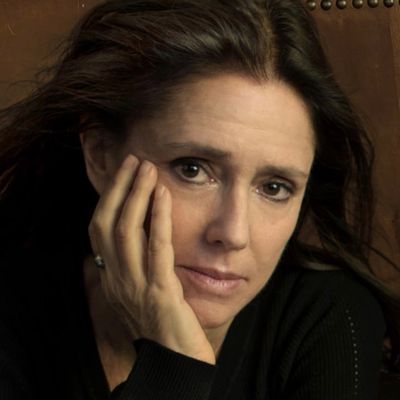
Director Julie Taymor celebrates the Disney musical’s Broadway birthday, revealing how she did it, what she learned and what’s next... Read More
From the show: Stagecraft with Gordon Cox
Guests
Featured Shows
About
Director Julie Taymor celebrates the Disney musical’s Broadway birthday, revealing how she did it, what she learned and what’s next.
Transcript
This transcript was automatically generated and might contain errors.
[0:06] Gordon Cox: Welcome to Stagecraft, Variety's Theater Podcast, bringing you backstage and behind the scenes with stars, creators, and industry leaders on Broadway and beyond.
[0:16] Gordon Cox: I'm Gordon Cox.
[0:18] Gordon Cox: On November 13th, 1997, The Lion King opened on Broadway. It broke box office records, won six Tony Awards, and has expanded around the world to a total of 28 productions over the life of the show, with nine now running across three different continents.
[0:34] Gordon Cox: On this episode of Stagecraft, I'm talking to the director of The Lion King, Julie Taymor, on the occasion of the show's 25th Broadway birthday. After The Lion King won her Tony, Taymor went on to direct films including Frida, Across the Universe, and The Glorias, as well as the Broadway musical Spider-Man Turn Off the Dark. Now she's in the virtual studio with me to look back at the show that became an international phenomenon. How she did it, what she learned along the way, and what's next.
[1:01] Gordon Cox: Hi Julie, thanks for joining me.
[1:03] Julie Taymor: Ah, nice to be here.
[1:06] Gordon Cox: So The Lion King has been running on Broadway for 25 years now, but it's not like you got the show up and you walked away, right? And you never had anything to do with it again. There's a lot of work that goes into maintaining an ongoing Broadway production and then staging and maintaining productions as they proliferate around the world. Can you tell me a little bit about how The Lion King figures into your work life now?
[1:32] Julie Taymor: Well, you know, there's, I don't know how many productions are out now. You probably have all of those.
[1:38] Gordon Cox: It's nine around the world, right?
[1:40] Julie Taymor: Nine. Well, the day after our 25th anniversary, I am going to Abu Dhabi to see The Lion King company that has been touring Asia for the last three years. I cast that company in South Africa, in Johannesburg and Cape Town, but now there's 24 nationalities in that company. And they are ending their tour in Abu Dhabi. So this is odd. I'm going at the end, not the beginning. I don't have to give notes. I'm not directing. I'm celebrating. So this time it's with great thanks and excitement because I think it's definitely the first Lion King, but it may be the first Disney show in the Middle East where they're performing it there. So that is a kind of extra thing for me to do.
[2:24] Julie Taymor: But often if there's going to be a new company like there was in China or Brazil or Spain, Mexico, wherever we've done Johannesburg, I often cast it and do the very last part of the rehearsal where I can really make a difference. I can change, I can tweak things, I can speak because I'm the original director. I can look at an actor's performance and try and get something out of them because I'm not beholden to another director. You know, it's tricky when you have associates and they're amazing, the associate directors, but they also have to do what they think that I might want. And we want flexibility. We want each performer to bring their own personality. So yes, the blocking may be similar. And they're very, they're excited, they're attentive, they're hungry. So I enjoy very much going off and doing that last week.
[3:23] Gordon Cox: Yeah. Can you give me an example of maybe someone who you directed in a way that you think sort of changed their performance in a way? There's something, an example of what you just said, like you saw something in someone that—
[3:32] Julie Taymor: Oh, I don't know if I can give a specific example. I can't, you know, it's, everyone, I mean, if you're rehearsing that whole week, that last week, then it gets better and better and better. So I can't think of a person. I mean, well, I'll tell you what was very fun when we did Paris last year, right at the end of COVID. We had an actor who had done Scar 13 years before. And he was magnificent this time. He was good then, he was better now, and he loved it. So what was great about that was he didn't, he had already gotten over the freak-out scare and the difficulty of dealing with the Scar mask and all of that. So he had a, and he was also a very well-respected actor in Paris and in Europe. And so there was just another level of his performance that was magnificent.
[4:30] Gordon Cox: Yeah. And how often do you feel the need to check in on, for instance, the Broadway production as it is ongoing?
[4:40] Julie Taymor: You know what? I don't feel the need unless I am told there is a need. And what that means is that they need inspiration. Because as you can imagine, doing eight shows a week, it's difficult. And I think there are one or two performers who've been there for 25 years.
[4:57] Julie Taymor: Yeah. 27 if you go back to the rehearsing. So I go back and I talk about, well, I mean, if you want to know, I talk about many things about why you perform and what the origins of theater are and what inspired me and where the origins of these ideas come from. And are you forgetting to tell the story? What is the story, and how do you link to the audience? And why is this meaningful, and how people have been moved, and how you should be moved, and why would you go and do yoga if you don't do it wholeheartedly? And why would you go into a gym and try and work out if you're not there 110%? Well, when you come into the theater to put your makeup on and your costume and do your warm-ups and go on that stage, it has to be, it's a, when y'all use the word religion, what I mean by that is a sacred experience.
It's an experience that brings you to a higher plane of being. Now I don't want to sound pompous, but theater began as a shamanistic ritualistic performance to take care of the community. That's its origins. Its origins were not to make money and be a commercial Broadway show. So we have to remember that The Lion King is very entertaining and it's pretty and it's beautiful, and there's great talent, great music, dance, all of that. But it is a healing production. It is a production that at its heart talks about what is the circle of life, about the experience of death. It's a child that has to experience the loss of a father and the responsibility of coming home to take the mantle of kingship and all the dark and joyous things that he goes through.
And yes, it is for all ages, not just for children, but you know, originally the Punch and Judy show was a very violent puppet. I mean, you watch these hand puppets in the Punch and Judy beating each other to death. Bang, bang, bang, Judy, and throw them the, you know, it's just torturously violent before there were violent cartoons, right? Before you had all the violent cartoons, which are incredibly violent. And they are used as an exorcism because sometimes kids in their family, they see the father beating the mother, or they see these incredible fights. And when they know that they are not the only ones, this is a place for them to expiate their fears, to get let them scream and yell and have fun.
Well, also theater, the shaman was the first actor psychiatrist, you know, for a community. They blended the roles of spiritual and physical caring. Being the doctor, we called it witch doctor, a terrible, it's a terrible word, but the shaman in every culture, and it's a living art form. They're the ones who, when a village is sick, there's a drought, when someone has to go through a tooth filing in some cultures, they put on a play and the shaman goes on this spirit journey. Well, I think that The Lion King, I know that right after COVID last year, when we did that first reading and people got to see some of it online, when the company stood up and sang with and without masks the songs, you know, they live in you, they live in me, they're watching over everything we see, those beautiful songs that were created, people broke into tears.
You know, they knew that this is about what humans have been going through this year, and not just natural death, you know, not natural death. Children lost their fathers, parents lost their children, you know. So I've had the incredible fortune of seeing The Lion King and other art that I've done, other movies like Frida, which is about pain, you know, the Frida Kahlo story that we did. And I showed up in Australia to do The Lion King, and I met a woman who was dying of cancer, who told me that just seeing the movie Frida, and how Frida was full of color and would wear these ribbons, and you know how she approached the dark, horrible parts of her life, both emotionally with her husband, who was not faithful, but also to the pain from the accidents.
How when she saw that in this movie and reappreciated her paintings, it gave her a new way to look at her own suffering and illness. And there are many examples of The Lion King where people have been able to go to, it is almost a ritual to deal with the darkness. And there's tremendous joy. I know I'm dwelling on that, but I think people naturally think, oh, it's a Disney Lion King, isn't that cute? Let's bring our kids. Where if you've seen it, you know that it's not, it's great for kids, but it's equal for every level. And you plug in wherever you can.
[9:52] Gordon Cox: Yeah. Do you find that the show resonates differently or lands a little differently based on the context of where it is in the world? Are you finding that certain things kind of rise to the fore depending on, you know, where it is or who's doing it?
[10:09] Julie Taymor: Yes. I mean, in general, the musical works everywhere that I've seen. Because the story is a coming-of-age story that every family, every culture goes through. So there is, like Shakespeare, you know, and of course Hamlet inspired it, but other legends did as well. You can do Shakespeare, Kurosawa can do Shakespeare, you can have Russian Shakespeare, you can have Shakespeare everywhere. Those stories go back to the Greeks, you know, to the myths. So the well, the spring, the well where all of this comes from, we all share. What it does not cross is humor. So the Borscht Belt humor, Nathan Lane and all the how we cast it in New York and in other cultures, you have to find local humor. So when we were in Shanghai in doing it in Mandarin, the hyenas and Timon and Pumba, we had to find, okay, where are they from?
What is their accent? You know, in Japan, I remember the comedian parts or the kind of rough-and-tumble hyenas were from Osaka when we did it in Japan, in Tokyo. So there was a lot of humor. Now you could say it's nasty humor or it's, you know, it's prejudice from one city to another or whatever, but that's where humor comes from. You know, we can't shy away from the fact that that is the history of humor. So a lot of jokes, a lot of that changes. But as far as what you were saying, one of the most significant changes was in South Africa when we did the company in Johannesburg, and we had South African actors coming from everywhere. And we cast a Timon who was black South African from a township in Cape Town, and that's like Favela Township, you know, from that background.
[12:03] Julie Taymor: And the actor playing Pumba was a white Afrikaner's. Now, if you know the history of apartheid and South Africa, the fact that, okay, yeah, the actor who played Timon was all in green makeup, and the other one was in white and purple, and you know that they were a Wart Hog and a Meerkat, but you also knew what race and where these two actors, you knew who they were, and the fact is that became part of the story because they were best friends, and they were outcasts, which means they lived in the jungle and had missed apartheid. There was a sub-sociological bent in that production. Also, I remember the Nala who moved me to just absolute tears. She was one of the greatest Nalas we had. She kept talking when she would say to Simba, the hyenas have taken over, Scar's taken over, everything's destroyed, there's no food, there's no water.
I can't believe I still remember these lines after 25 years, you know, it's in my head. When you go back to all the productions, I can believe it. So she's saying that, and she was speaking about South Africa. She was speaking about the politics at the time. And she was also, there's a moment in the play where Scar takes advantage of Nala. You know, it's very subtle. I mean, it's not overt, but she knows what's been going on in her neighborhood or her whatever or in her world, and she would talk to me and say, these words are about where we are now. And I think everybody can do that. You know, they can find how it means something as actors to them. My God, in Germany, there were just so many I can remember all kinds of extraordinary experiences casting and rehearsing this musical.
[14:09] Gordon Cox: And now here's more with the director, Julie Taymor. Let's go back to the very first days of the project. When did you first get approached by Disney?
[14:20] Julie Taymor: I had just the most recent productions I had directed were, well, of course I had done Juan Darién, which I did three times in New York. Yeah. And that is a big animal, you know, it's a human who becomes animal. It's an Uruguayan tale. So I had done a lot of visuals that would lend themselves. But the main thing that I had done was Oedipus Rex in Japan with Seiji Ozawa conducting, Jessye Norman, Bryn Terfel, major, this was my first opera production. And it was Peter Gelb, who's the director of the Met, that runs the Met. He invited me with Seiji Ozawa to direct Oedipus Rex in a new theater, opera theater in Matsumoto, Japan. And I had done that understanding that Stravinsky and Cocteau, the creators of that opera, wanted it to be masked.
They wanted, they didn't want the individuality of humans. They wanted it to be more archetypal. The Greek story. It was done in ancient Latin that no one understands, you know. They wanted the sound, just like we have all those languages in The Lion King, you listen to the music of the Xhosa and Sesotho and Swahili, or you listen to the music. You don't have to hang on every word. It's exciting, it's beautiful. So I had just done this big opera which won the classical music award internationally for best opera production. We did a film, it was on Great Performances. And I was at, I think I was here in LA, which is where I am right now, doing The Flying Dutchman at the LA Opera. So I was in this other world, you know, where you do a huge international show at 120 men in the chorus and 20 dancers in Oedipus Rex and all these major opera singers.
So it wasn't like I came from little off-Broadway experimental theater, which I think people thought, ooh, she came from. Yeah, I had done that too. I like all of it. I like all levels. I like the low little theater pieces that don't cost much, and then I'm fine with the big ones, you know, the larger ones. I had never done anything on the scale of The Lion King, though. And Tom called me up, Tom Schumacher. He had been aware of a large show that I had done called Liberty's Taken, which Norman Lear actually put the money behind, and it was done in Castle Hill outdoors. Elliot Goldenthal did the score, David Seesdorff wrote it, and this was 15 actors playing 500 roles with all kinds of masks and puppets.
And Tom was running the LA Olympic Arts Festival, and we wanted the show to be brought from Massachusetts to LA, and they couldn't get it together, but he remembered that I had was able to do this incredible epic with talking ships, figureheads and armies and revolution, and it was the underbelly of the American Revolution with giant, giant brothels and puppets. So he called me out of the blue, and that's what I was doing at the time. And I hadn't even seen the movie yet, which surprised him.
[17:29] Gordon Cox: And do you have a memory of what you responded to in the story? First of all, and what the first kind of image that came to you was? Like what was the thing that unlocked it for you?
[17:41] Julie Taymor: Well, I thought it was a beautiful animated film, and I hadn't seen it. And I think the music, just the way it begins now, with the South African gorgeous chant and Lebo M's extraordinary chorals mixed with Elton John, Tim Rice's lyrics mixed with South African lyrics, and that music throughout the film and Hans Zimmer's score, you know, and basically that coupled with fabulous characters and a story that I knew needed development, and they knew it. You know, it was a 70-minute animated film, and it wasn't complete for a Broadway show. And Michael Eisner wanted a Broadway show. Tom wasn't sure, he'll tell you, he wasn't sure. Tom and Peter Schneider, Tom Schumacher. We talked about a planetarium.
I said, no, no, let me work on this. So the first thing I did was work on the story. But as far as what your question is, when I saw the movie, the film, I have to admit the stampede was the thing when, oh, how great, how much fun, how what a challenge. How do I do that? Hundreds of wildebeests, and the forced perspective that you see with Richard Hudson's beautiful sets that move back all of those walls of the canyon, and then the idea of using 18th-century theatrical techniques. It's almost like a piano roll is in the back where the wildebeests are painted on a piano roll, and then as they come towards the audience, you see this big wheelie barrel, which is what they used to have in 18th-century theater with the waves that would go like this.
So we're not, it's not totally original. And it's very, it is like totally inspired by techniques from around the world. And then you have the dancers, the women coming up where they have a mask on their head of a wildebeest and two others, so that you could get 10 women being 30. And then you have these giant masks of wildebeests that the men use like they're right downstage, and they're like shields. So instead of having to do literally make a whole wildebeest or a whole lion with the tail and the body, I knew that I could be suggestive. It's live theater, after all. The audience is not stupid, you know, you don't need to have it be literal. So this allowed me to really play with scale and the idea of having almost like taiko drumming and let that drumming, you know, the sound of the stampede also, it's a very immersive piece of theater. Audiences surrounded. So that was maybe the first scene that I went, wow, I'd love to try that. That would be great.
[20:46] Gordon Cox: Do you have a memory of what in particular felt really hard to get right as the show was developing?
[20:55] Julie Taymor: Um let me think about that. Well, there was a little bit of not much pushback ever, to be honest. It was a really, as much as people can't believe it, it was a truly fabulous experience with quote Disney, because Disney is Tom Schumacher, Peter Schneider, Michael Eisner, you know. End of story. Individuals, and especially Tom. So he was always encouraging me to go as far as I want, and then if it didn't seem right, we pull back. He called it Taymor Vision or something. He wanted my because he knew I could do shadow puppets. Like you have this huge opening, right? This giant opening. Where do you go from there? It's not that this was hard, but it had to be real, it was a real thing to think about.
First of all, how do you get those animals off the stage? Yeah to go on to the first dialogue scene. So you bring that in one we call it, you know, where the shadow, the wall of Scar's Cave comes down, and you have to tell them to be quiet upstage. And you see Scar, the mask revealing the human. So we give the device early. You're going to see the human face and the mask simultaneously, and he's standing upright. And then you see him manipulate it. So I'm giving you the technique early so that you get over that. Get over it. We're not putting people inside, we're not hiding them. You even see that in the beginning, though. You see the Nefasa with the mask on the head. And then right away you go to a teeny shadow puppet that could cost 20 cents, literally.
It's on a stick, it's a cutout, it's a silhouette with a flashlight. I don't think we use a flashlight, but it's the same thing. It's a little circle of light. So the idea of the circle of life goes from the circling up of Pride Rock as it circles up, and then the circle again, all throughout the circle of Mufasa's mask. The major ideograph, which is if you could reduce the entire Lion King down to one image, it would be the circle. That's how the beginning of Act Two starts with the circle of silk, which represents water, and it gets pulled into a hole. That was an interesting thing. I'm going, okay, how do I do drought? How do I do drought? Because I'm taking the main storylines and then trying to abstract them into simple theater language.
Because the simpler it is, even though it looks like The Lion King is incredibly complex, it is, but it's also basic theater techniques, and it's about dancers and actors and lighting. Don Holder made this kind of lantern, magic lantern, it all lit up. There's a lot of empty stage that's there to house the performers in their costumes. And like I can't say any of these things were hard, but they all took time to figure out like can you feel the love tonight? Everybody's been animals, animals, animals. Now they're plants. So I created costumes.
[23:45] Julie Taymor: I mean, the thing is that I am the designer, so the storytelling is in that design. They're not really clothing, they're full creatures.
[23:57] Gordon Cox: What do you consider the biggest lessons that you learned from working on The Lion King that you have carried forward?
[24:04] Julie Taymor: Well, I think I felt this before, but it was validated by the success, which is don't underestimate your audience. You know, don't think because you're doing something that's gonna have a four-year-old that you need to dumb it down. And don't think that you have to make it, you know, clean it up or make it pretty or whatever, that you can be raw and the audiences—I have these extraordinary animators that I love, the Brothers Quay. I don't know if you're familiar with them, but they did a scene in Frida, a skeleton scene. Oh, yes, yeah. And I don't want to steal this beautiful saying that one of them told me, so I'm giving credit to him. They say that when they create work, and I feel the same, that it's like an elevator going up to the 15th floor, and the audience can get off on any floor.
You know, it's like Shakespeare. The groundlings always appreciated the clowns and the grotesque humor and the sex and the violence. But then there are another level of sophistication, philosophy, history that you can follow, but other people will—that will be the thing that they will love. That will be the thing that moves them. So I really love that form of theater, and I think that I had done that in my work, but seeing that you can do that, you know, people think that if you're doing artistic work, it's not commercial. No. Quite the opposite. Originality is what the audiences are hungry for. And because I make movies, I am a little disappointed in the fact that all the big movies are regurgitating the same old IP, intellectual property that has existed.
How many—and I'm not gonna name names—but how many of these same things with the same story in the same way can you watch? So let's say The Lion King is a familiar story and that it's a prodigal son coming-of-age story. How we tell the story, the method, the dance, the music, the puppetry, the masks, that is as important to the story itself, and that's what makes it commercially successful. Other people could have done this and it wouldn't be there for 25 years. It's what—and when I say we, I mean me and my collaborators—it's because the storytelling, the art of the telling, being aware of the strings and the rods, knowing there's a human in the leg of Bertha, the giant elephant walking by you down the aisle, seeing the artistry of the actor playing Timon manipulate this three or four-foot tall puppet and have you have him have the incredible—I will never forget Max Casella putting that puppet on.
I made the puppet with Michael Curry, but I didn't—I hadn't moved it. Then this actor who had never done puppetry puts this thing on and makes it come alive, animates it, and all kinds of other things happened, and we would improvise. And you know, that's what I think is so critical here is that you have to—you asked me, what did I learn and take? Stick with new ideas. Sometimes I do things that haven't been done before and people aren't ready, you know. I mean, it's—and then I see them like having Helen Mirren play Prospera in The Tempest, the movie. I've got so much flack about that.
[27:31] Gordon Cox: Oh, is it due to the father-daughter relation?
[27:35] Julie Taymor: It makes it a mother-daughter relationship, that's what it does. And I'll tell you, mother-daughters is pretty tough, you know, the tiger mom and the whole thing. And now, how many—how many plays of Shakespeare do we see the women playing the male parts, just like the men played the women parts when it was in its original form?
[27:56] Gordon Cox: You've mentioned some of your film work. What are you working on now in terms of films coming up for you?
[28:01] Julie Taymor: Well, you know, the one that's on right now, I don't know if you've seen it, but The Glorias—I really push people to Amazon Prime because we came out right at the beginning of COVID. Yeah. And this is the story of the second wave of feminism. But it is not broccoli. It's a lot of fun, and men like it as much as women. And it's the Gloria Steinem road movie with Julianne Moore, Bette Midler. She's playing—That's a great cast. Oh no, she's amazing. And Alicia Vikander and Janelle Monáe, and it's just filled with extraordinary performers. So I'm very proud, and it's still happening, so people have to go and watch that. Um, and it's very—I wish it was coming out now because it's on Amazon Prime, you said.
[28:42] Julie Taymor: Yeah, it's on Amazon Prime, but it really speaks to where we are right now and how we're losing our rights. Because these women, they really did it. All of the Native American, black, Hispanic, white—all these women in this film are astounding. It celebrates those women who really changed the laws who are out there on the forefront. So right now I have—I'm in LA because I'm meetings, I have meetings, not just Zooms, and I have a huge project that I started five years, six years ago. I was invited to Korea to create a whole new form of theater. And it was very exciting in a kind of stage that surrounds the audience. Um, and they—and I said, "Well, what's the topic?" And they said, "Up to you."
And I said, "Well, look, I—you know, I've lived a long—I’ve traveled a lot in Asia. So I spent many four years in Indonesia, a lot of time in Japan. I'd never been to Korea till five years ago. And I said, "Why don't you tell me your stories? Let me see what speaks to me." And there was a beautiful, beautiful tale, oral tale of the origin—you’re gonna laugh at this—but of the female shaman. The tale of the abandoned princess Paradeggi. And what I did was I took an ancient myth, very loosely, because there are many versions of this myth. It could be found in other cultures as well of the abandoned girl child. Well, too many girls. The king was cursed with seven. He was cursed with seven. And by this—by the eighth—well, by the seventh, he was cursed with six.
By the seventh, he had her tossed into the ocean. And then she's saved by the blue dragon and the golden turtle. Then I jumped to the future because I really was interested in doing something that would relate to the abandonment, not just of that princess in the ancient tale, but of the abandonment of nature. And so I have a future story of the abandonment of this child who's born imperfect and is brought up in an underground garden. And it's at once an interspecies love story. It's about CRISPR. Um, it's a metaverse before the metaverse because I started it years ago. I didn't know the name, never heard of CRISPR, but it's about reverse evolution, and it's kind of for me. If there were a Marvel Disney big movie, this is the one that I would make.
It's original, but so that I'm really excited about. And I want to do it on multiple platforms. I want it to be a film. Um, we're talking—I have someone working on it as a graphic novel. I'm calling it a graphic drama because people do read dramas. I don't really want to novelize it. I—I—people enjoy reading the screenplay. So, and I have a theater bird started out as theater, then Trump got elected. Uh, the tourist industry fell out of soul for a moment. It was going to be in a new K Culture theme park. They were going to build this theater for it. And then the president of Korea was ousted, and her theme park got—and so it went kaput. I went back to New York and did M. Butterfly with Clive Owen and Jin Ha.
And then I went off to do The Glorias. And now during COVID, I transformed it into a film script. So that is my big project. And the other small one is a beautiful, beautiful screenplay based on a book called Gun Love, written in 2015 or 16 by a fabulous novelist, Jennifer Clement. She was the head of Penn International, and she lives in Mexico her whole life. And it takes place in a Florida trailer park. It's the opposite of White Tiger. White Tiger is the name of my other one because this one is—we have two names right now: a working title called Mercury, or the original title, Gun Love. Yeah, and it's an incredible tale about the passion for guns and gun running and crossing the border, but it really is this mother-daughter stunning, stunning tale of a little girl brought up in this trailer park and what the culture is.
So we're—that's a much, much lower budget, like a super lower budget. And so I'm meeting about that now. I have things I want to do in theater. I haven't found always the right person—not the right person, the funding. I'm telling you, they're very out of the box. I don't do normal. I mean, I can do Shakespeare and I'd love to. I love working at Theater for a New Audience with Jeffrey Horowitz. I adore that. That's where I did the—that's where I saw the Titus and Dronicus. I did The Tempest there, I did A Midsummer Night's Dream, um, did The Green Bird, which I enjoyed, the Commedia dell'Arte. Um, so I am open to doing theater that's offered to me, but the theater that I want to do, the one I really want to do is a musical.
And I want to do it on the stage and as a film. It's called The Grand Delusion. And I did it in a very—it was totally not this version many, many years ago. It's a Thomas Mann novella based on an Indian legend, but we've now set it in contemporary New York, contemporary India, and then a kind of insane, surrealistic mythological world. Um, I have some astoundingly great performers for it. So we're going out looking for that support, you know, of how to do it. It's—I think it's Broadway simply because I think everything can be Broadway. Nobody knows what's going to work. You know, if it's good, then you feel like it's for a wide audience, it can go anywhere. And we have interest in Europe. But I would love to find a place and the backers for it to be done in the United States.
[34:20] Gordon Cox: Yeah, yeah. Well, we look forward to seeing that when it materializes, and also are looking forward to seeing The Lion King again as the run continues. You'll be celebrating its 25th anniversary on the 13th, it seems like. So have a great performance that day.
[34:36] Julie Taymor: Thank you so much.
[34:38] Gordon Cox: Thanks, Julie.
[34:43] Gordon Cox: That was Julie Taymor, the director of The Lion King, now celebrating its 25th year on Broadway and also currently running in eight other productions all over the world. If you like what you're hearing on this and other episodes of Stagecraft, I'd really appreciate it if you took the time to rate and review us wherever you listen to podcasts. It really helps us grow our audience of folks who love theater as much as you and I do. Or tell a friend about Stagecraft, or give us a shout-out on social media. Find past episodes and subscribe at all the pod purveyors, including Spotify, Apple Podcasts, and on the Broadway Podcast Network, which is a great place to find more theater for your ears. Until next episode, find me on Twitter at GCoxVariety. Thanks for listening, and see you at the theater.
© Broadway Podcast Network, All Rights Reserved