

Episode 155 of Survival Jobs, hosted by J hosted by Jason A. Coombs and Samantha Tuozzolo, , takes listeners inside the April 10th press day for Thornton Wilder’s The Emporium, currently in previews at Classic Stage Company ahead of its opening night on Monday, May 18th... Read More
From the show: Survival Jobs: A Podcast
Guests
About
Episode 155 of Survival Jobs, hosted by J hosted by Jason A. Coombs and Samantha Tuozzolo, , takes listeners inside the April 10th press day for Thornton Wilder’s The Emporium, currently in previews at Classic Stage Company ahead of its opening night on Monday, May 18th.
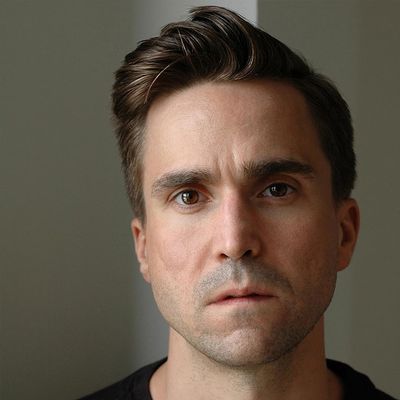
The episode features conversations with Joe Tapper, Candy Buckley, Patrick Kerr, Mahira Kakkar, Derek Smith, and Kirk Lynn, the production’s adapter and co-writer, about bringing this unreleased and unfinished Thornton Wilder play to life for the first time.
Co-host Jason explores the creative process behind completing and staging Wilder’s final work, the collaboration between the cast and creative team, and the timely questions the play raises about power, commerce, identity, and the human cost of ambition.
Thornton Wilder’s The Emporium is now playing through June 7th at Classic Stage Company.
Get tickets here: https://www.classicstage.org
Photo Credit: Marc J. Franklin
Lastly, the audio-only version of the episode is available on Broadway Podcast Network as well as popular platforms such as Apple Podcasts, Spotify, Audible etc. Tune in now for insights, inspiration, and entertainment!
Important Links:
- Support the People of Minnesota Facing ICE Raids
- Help FEED the people of Gaza! PLEASE!
- Know Your Rights: If You Encounter ICE
- Supporting Transgender People in Your Life...
- Support the citizens of Gaza
- Native Land Map
- Abortion Funds Website
- Plan C Pills Website
- National Write Your Congressman Link
- Where to Donate to Support Access to Abortions Right Now
Opening and Closing Theme Music: "One Love" by Beats by Danny | Game Music: "Wake Up" by MBB.
Transcript
This transcript was automatically generated and might contain errors.
[0:03] Jason A. Coombs: Hello, survivors. This is Jason A. Coombs here with Survival Jobs, a podcast in collaboration with Broadway World and the Broadway Podcast Network. Today's episode is a very special one because we are highlighting the new production of Thornton Wilder's The Emporium, which we had the chance to learn more about during the press day back on April 10th at Classic Stage Company here in New York City.
[0:31] Jason A. Coombs: Before we jump in, just a little bit of housekeeping and transparency on our end. Unfortunately, during the press day, our main microphones were not functioning correctly, which meant we weren't able to capture strong clear audio from every single interview the way we originally intended. So, today's episode is slightly abridged with the conversations we had with the casting creative team. But even with those technical issues aside, there was still so much passion, excitement, and curiosity surrounding this production that we really wanted to share at least part of the experience with you all.
[1:12] Jason A. Coombs: And honestly, after spending time with the artists involved in this project, hearing them talk about the play and Thornton Wilder's legacy and what this story means to them, it really does feel like a special once-in-a-lifetime kind of theatrical event, right? Thornton Wilder's's The Emporium officially opens on Monday, May 18th for a limited engagement through June 7th at Classic Stage Company. The production has been adapted and completed by Kirk Lynn and is directed by Rob Melrose.
[1:46] Jason A. Coombs: What makes this project especially fascinating is that this is connected to unfinished work from Thornton Wilder himself. For anyone out there who may not immediately recognize the name, Thornton Wilder is, of course, one of the most celebrated and I don't use this word lightly, but literally iconic in American theater history. The legendary writer behind classics such as Our Town and The Skin of Our Teeth. And there's something incredibly exciting about the idea of audiences in 2026 getting the opportunity to experience what essentially feels like a newly uncovered piece connected to such an iconic, literally iconic voice in theater.
[2:32] Jason A. Coombs: One of the things that really stood out to me from the conversation around this production is how much the team spoke about discovery and connection, right? Discovery of connection, discovery of humanity, and how theater can continue to evolve even decades later. Classic Stage Company's producing artistic director Joe Raphson described the play as whimsical and profound, imaginative and deeply compassionate, while also exploring ideas surrounding commerce and connection again and what it truly means to see one another.
[3:13] Jason A. Coombs: And honestly, that feels so timely right now because are we really seeing each other, y'all? There's also something really beautiful about the fact that this production closes out CSC's season with a work that feels both historic and completely new at the same time. We don't often get the opportunity to walk into a theater and feel like we are witnessing the next chapter of an iconic artist's voice being brought to life for modern audiences. And after talking with the cast and the director and the writer during the press day, you could genuinely feel how meaningful this project is to everybody involved.
[3:55] Jason A. Coombs: There's this real sense of care, right? And responsibility surrounding this material and the curiosity about the play's themes and the excitement about bringing an audience into this world for the very first time. So whether you're a longtime theater lover, a Thornton Wilder fan, or someone who just loves American playwrights, right? Or just, you know, someone looking to experience something unique and thought-provoking this spring theater season, definitely, definitely check out Thornton Wilder's The Emporium at Classic Stage Company. Again, the show is currently in previews when this episode drops, but officially opens on Monday, May 18th and runs through June 7th.
[4:45] Jason A. Coombs: And now, let's get into today's special episode featuring conversations from Press Day for Thornton Wilder's The Emporium. Thank you, y'all.
[4:59] Candy Buckley: I'm Candy Buckley, and I play Bernice and five other characters.
[5:05] Derek Smith: So Derek, we're just gonna meet and I do multi-tracks. It's kind of a trick.
[5:12] Derek Smith: Hi, my name's Derek, and I also play multiple characters. Candy and I sort of play a group of characters that sort of propel the everyman character forward in the play. So we play anything from his parents to his boss to you name it.
[5:32] Derek Smith: Well, the first thing that drew me is that Candy was cast, and I've worked with Candy several times, and I thought, oh, I'd love to be a part of that. And I read the script and I found it completely mysterious and about so many different things I could barely pick a theme to cling on to, but I think that's true with a lot of Thornton Wilder. So it's even if it's unfinished, it's Wilder's.
[6:06] Candy Buckley: Yeah, and I mean I love Derek. Oh my god, we've known each other and worked with each other for decades. He can do anything. And then I played Sabina in Thornton Wilder decades ago, and there is something about Thornton Wilder, you think it's going along, and okay, okay, and then you are hooked, you are hooked. It is crazy. So, of course, to have a chance to do Thornton Wilder. And I just finished working with Rob Melrose, our director at the theater he runs in Houston, and he's a wonderful spirit. So great opportunity. My first time meeting him and working with him, and he runs a wonderful room, you know. I mean it's a great cast, but there's a lot to be said for the temperature of the room, and Rob is wonderful, so supportive.
[6:55] Derek Smith: Next up, I asked Candy and Derek about the rehearsal process because as an actor and a director myself, sometimes I really love being in the room getting into play, right? When you're like off book almost or completely off book and you're just there connecting with your actors and you're trying new things. That's the exciting part for me. So I always like to ask actors about that. So that's my next question.
[7:37] Candy Buckley: I yeah, well I mean I don't think we're ready yet. But yeah, it's you know, we talk about it a lot. I think this play is talked about among the cast on every break so much because there must be a hundred themes going on in this play. And what's wonderful is you sort of can pick the one that resonates with you. It'll be interesting to see what an audience, I bet ten different people will have ten different opinions.
[8:17] Derek Smith: Yeah, I grabbed him during lunch yesterday. I said, what about that foster scene? And because we have lots of options of choices to make. I mean, it's not definitive who those people are. So we could have gone a lot of different directions and still are. I still feel like the choices are in transition a little bit. We're only just kind of on our feet. Yeah, you know, we're at that stage of like where do I go, you know, what are my limits and yeah it is fun to make choices in a play that does not have a history to it for sure.
[8:43] Candy Buckley: And for Derek Smith not to get me tickled, that's the main thing. Oh my god, danger danger. We've done, I think this is the sixth or seventh. We were Romeo and Juliet summer before last, yeah, a version where it's just the two of us. Now I'm his daughter, I'm his wife, it's so crazy.
[9:23] Derek Smith: Yeah, oh my god, it's such a shorthand with you because I really really work hard. Derek Smith works harder than I do. I'm like what you do, you do.
[9:23] Candy Buckley: Yes, it's certainly a level of trust and ease, you know, and daring. You know, I could feel like I can be a fool in front of her and make bad choices and he feels, yeah, we've known each other since our kids were babies. And since our podcast is called Survival Jobs, I had to bring it back to the theme and ask Derek and Candy what were their survival jobs on the Up and Up before they became working professional awesome ass actors, and here was their response.
[9:23] Derek Smith: No, none that were memorable. I did, you know what my favorite thing to do was because I waited tables years at the door right, right sort of right out of school and everything, but my favorite job was like to paint apartments and to clean apartments because I was myself and could just focus, you know, I didn't feel like I was working for someone and had a better opinion about things than them, you know.
[10:40] Joe Tapper: I was so I love those jobs. But he's a Juilliard kid, so he was pretty he was working. I fresh out of undergrad, I was a high school drama teacher. Yeah, for five years. And when I did just finish doing Importance of Being Earnest at the Alley in Houston for the same director, three of my students came who I hadn't seen in whoa. Oh my god. Oh yeah, yeah, yeah. So I mean, yeah, another lifetime ago. Yeah, another lifetime. And then my final question for them was in one word or one sentence. Why should people come out and get their tickets to see this play? And their response was Thornton. Oh, that's good. Yes, Thornton. Um one word of one sentence. You will find something that resonates with you in this play. And it will be different than the person next to you. That's a long sentence.
[11:50] Joe Tapper: Yes, hey, my name is Joe Tapper. I am gratefully playing the character of John. So, you know, anyways, whenever you see like a new Thornton Wilder play, like, my God, how did that come about? Like we get one more. We get one more Thornton Wilder play. And uh it is every bit of the magic of like Skin of Our Teeth and uh Our Town kind of uh together in a way. Um and why I knew I wanted to be in it because what's so wonderful is this character I'm playing is trying throughout the play to gain um uh admission into this kind of elusive department store where you know he's told his whole life like everything that you could ever want is in this department store and you know as audience members as readers we can you know digest that however we you know uh however we choose however that hits us and um no I think it's uh a teaching uh or uh what affects what what interests me is like this idea that um it's the journey that can offer fulfillment more than the destination so I'm always curious where people were introduced to these iconic playwrights and I have to ask Joe that himself what was his introduction to Thornton Wilder.
[13:17] Joe Tapper: Uh Our Town. Our Town yeah yeah I never I never have gotten to do a Wilder's before I mean I've read it you know I was yeah yeah and in drama school when I was in drama school there was a production of Our Town uh that I got to see that was so amazing I still remember it to this day it was so incredible yeah so I'm uh just have unending gratitude to kind of get to be here with all these incredible artists.
[13:45] Jason A. Coombs: Next up I had to hit him with the rehearsal process question what is the rehearsal process like for Joe.
[13:52] Joe Tapper: Fantastic. Yeah I truly a blessing to be in a room with these amazing uh heavyweight artists, yeah, really. Like just uh just uh I pinch myself. Okay, Joe, let us know in one word or one sentence why should people buy their tickets today to see The Emporium?
[14:15] Joe Tapper: And he said one word. Uh um if Our Town taught us that we have everything we need with our everyday lives. This play uh wonders that if we do have everything we need, why does it feel like it's not enough? Wow. Talk about timely and relevant to the world we're living in right now.
[14:47] Jason A. Coombs: Next up, I had to ask Joe if he had a memorable survival job on the Up and Up. And did he?
[14:53] Joe Tapper: I've had so many survival jobs. Um I've been a busboy, uh uh line uh sous chef, uh oh a server, a bartender, uh a monologue coach. Um I've I've gotten to spend a lot of time um taking orders from other people. And it was it is great, and my children, I hope they look forward to it because they will too.
[15:26] Jason A. Coombs: Yeah, yeah, I agree. It gives you uh, you know, it gives you uh a perspective uh on how to how to how to uh conduct yourself.
[15:36] Mahira Kakkar: Yes, yes, yes, yeah. I uh my name is Mahira Kakkar, and I play Mrs. Frisbee in The Emporium.
[15:48] Patrick Kerr: And I'm uh Patrick Kerr, and I play Mr. Benjamin in The Emporium. It felt like a little bit of a miracle, actually. It felt like this playwright is reaching across the years and say, hi. Remember, like when we all believed in our essential goodness and generosity and neighborliness. Hi, I'm here to remind you of that. And it felt like that. And it felt like there was this real like vein of thick, deep sweetness in the play that I really find myself craving more and more, especially right now. This feeling of grace and second chances. And I read it and I thought I don't fully understand it, and I want to understand it, and I want to be in this world for a few months.
[17:07] Mahira Kakkar: And I don't in my life. And so I love the opportunity to present someone who's kind of simple, straightforward, and has an answer, you know, because I don't. I wish I was not, you know, this urban sort of tortured sort of sometimes whatever. Well, you know, so it's a it's some time off from myself. Yeah. It's very different.
[17:39] Jason A. Coombs: That's delightful. So for Mahira and Patrick, I had to bring it to the rehearsal process. So what has the rehearsal process been like for them? And they responded.
[17:49] Mahira Kakkar: Well first of all to be in their room with these particular actors, it feels very special. I mean to be in the room with Derek and Candy. I've known Eva and Patrick for a while. I've worked with Cassia before on a very different play where she and I were both warriors. So to be in this play, it really it's a it's a really good room. It's got good people in it. The process so far has been easy. The director and the playwright are very much about like buoying the actors and going with their impulses. So yeah it feels really it feels really good. And I'm excited to share this spirit with the audience.
[18:33] Patrick Kerr: Um yeah I you know I know Mahira we go back we've never worked together we know each other socially so it's like that and uh and Eva uh Kaminsky lives across the hall from me and we're good friends and uh I know Derek from a hundred years ago and Joe Tapper and I did uh You Can't Take It With You on Broadway with James Earl Jones together. So we're friends and uh so it's very comfortable to come in and I'm a huge fan of Candy's and uh and Cassia is doing incredible work. So it's it's uh you know it's really fun. Rehearsals are uh uh tricky. It's it's we're trying to figure this out, and there's a meta quality to it, as well as being these practical kind of things. So we're in we're in the thick of it right now.
[19:35] Jason A. Coombs: Next, I had to know what was their introduction to Thornton Wilder and his work. For me, it was Our Town reading that in high school. So what was theirs?
[19:45] Patrick Kerr: I you know, I never uh I think I I've seen Our Town and I've seen uh uh what's the other one? His big one, uh Skin of Our Teeth. I've seen them both and uh never uh been in them or didn't do them in high school, and uh so uh uh you know to that thing earlier.
[20:09] Mahira Kakkar: I've like always thought like, oh, can I fit in that world, you know? And uh I'm happy to be a part of it. Because it is there you'll recognize it immediately as Thornton Wilder. The the the way people talk, the the phrasing, yeah. So I grew up in Calcutta, and I went to college in Calcutta, and we did a production of Our Town there. Yes, at the USIS, which is the United States Information Service, and was also like the cultural hub of the United States in India. They had different branches in different cities. So we performed Our Town there. I played Emily Webb. I you know, I don't know, I don't know if I knew what I was doing, but that was my first introduction to Our Town, and I remember thinking this is not like any other play that I have read. But it is also so like it appealed to everyone, you know.
[21:12] Jason A. Coombs: Next up, you know I had to hit him with the what was your most memorable survival job on the up and up, and they had some pretty good answers.
[21:21] Mahira Kakkar: Oh, you had a great survival job. I want I want you to tell that story again.
[21:26] Joe Tapper: Oh, oh yeah. I uh had so many. Um I was saying earlier I worked in uh when I was uh worked in a sporting goods department at a Woolco department store. This takes place in an apartment store, and I sold guns. I was like 16 and sold guns. It's crazy. And then uh in New York, I've had you know the classics. I've been uh oh I was a waiter and uh uh bad waiter. I was mostly a bus boy. Uh uh they didn't want me talking to the customers so much, and uh I uh cleaned apartments, I did a lot of that, and I love that that was my favorite because I was really good at it. I'm um I'm fast, thorough. Uh I was in demand, unlike unlike as an actor, I was not in demand at the time, and I could do it quick and make a and be my own boss, and it was also a bit of a workout, and uh, you know, yeah, yeah, it was uh that was a great survival job.
[22:28] Jason A. Coombs: Yeah, did you have any survival jobs?
[22:31] Patrick Kerr: Patrick, you have been acting forever, um, and we all we all still have survival jobs, yes, yes. I was I was on Broadway, and my my room my dressing roommate had a survival job while working on Broadway. So I have no survival jobs anymore because I have Social Security, yeah, and I took my pension, so I'm like, no more.
[23:00] Mahira Kakkar: No, clean your own apartment.
[23:02] Jason A. Coombs: Yeah. So the final question for these two was bringing it back to the play. In one word or one sentence, why should people pause this interview right now, get their tickets to The Emporium, and then come back and finish listening. And they said.
[23:19] Joe Tapper: Um because it's history. It's a historical thing. Uh, you know, this is a uh well, it's not a is it a word, it's a new the New York premiere of this of uh found Thornton Wilder play. So it's uh historical.
[23:37] Mahira Kakkar: Yeah. Yeah, you'll get to see a new Thornton Wilder play, which we never thought we would in 2026, and we have so many different kinds of performances. We have ASL performances, we have uh performances with free childcare. So we have performances for folks on the spectrum. So we really what we are really like trying to be embracing of our audiences.
[24:06] Kirk Lynn: Howdy, Jason. Uh my name's Kirk, and I'm the one of the playwrights and the adapter, the other playwright Thornton Wilder.
[24:14] Jason A. Coombs: Yeah, yeah, some guy, yeah, yeah. So since Kirk is one of the adapters and of course the co-playwright, I had to ask him, how did this happen? How did this get created? What's the story?
[24:29] Kirk Lynn: I saw in New York, I saw a production of Our Town at the Barrow Street Theater, I think 2008, and I love it so much. I was like, oh, I I need to know Thornton Wilder better. I'm gonna read all of his plays, all of his novels, uh biographies, uh, and the last book of his I read was his journals, and there's two scenes of this play, and but he also there's journal entries where he talks about reading it with friends, and I was like, oh, this play exists somewhere. And so I went to the Beinecke library, I asked for some boxes, and they gave me 360 handwritten pages that have uh um nine discrete scenes. It doesn't quite all go together, but you're like, oh, there's a play here. And it was announced for Broadway twice.
Like they were really close to like putting it together and making it go. Yeah, there was a lot of like, what did he intend and how does it how does it all fit together? It was a partly a puzzle and partly just like trying to do honor to a writer that I really admire.
[25:19] Jason A. Coombs: Next, I had to ask Kirk, what does he hope audiences take away after seeing this play?
[25:26] Kirk Lynn: Of the many things that are rich in the play, I think there's a real question of like how do we make our way in the world? Most of us at different times feel lost. Uh you know, yeah, exactly. Me too, yeah. I mean it's something that I think at all ages you can resonate with. As we talk to the cast, like I'm 54, there are some cast members that are older. We still are like, oh yeah, how do you make your way? Like there's no path. Um, and so the play really asks this question of like there's a boy who's an orphan who wants to make it to the big city and work in a great department store. That's his life's dream. But he finds out there's no way to interview, there's no way to apply for a job. You're like, oh, that sounds familiar.
Um, and so I think audiences can feel this sense that um, you know, the one the the play is asking questions that we're all asking, but two, there's a real uh honoring of like if you're trying, I think it counts. Like, as long as you're trying, you're on your path.
[26:19] Jason A. Coombs: Next up is the question: what was his introduction to Thornton Wilder?
[26:26] Kirk Lynn: I I definitely read Our Town in high school. It was like, oh, that's great. One of the things that happened at the Barrow Street production was I was like, wait, I thought this was like this really nostalgic, old-timey play, which it has some elements of nostalgia in it, but it's also still experimental and playful. And I was like, Oh, we haven't even caught up to Wilder's yet. Like he's doing things uh, and I think it admirably he's doing it on multiple levels where you can uh meet Our Town as like, oh, it's a wonderful story, but you can also see all these like playful, wonderful experiments that he's doing. And so that's why I really wanted to study like how can I learn to work on those multiple levels all at once? Yeah.
[27:02] Kirk Lynn: Next, Kirk closes us out with what was his most memorable survival job.
[27:07] Kirk Lynn: Sure, I have so much to say. One, I think I'm still in a survival job. I'm a professor, which I love teaching, I love being a professor. Um, but it's still a survival job. It's a great way to get a university. Yeah, it's a great way to get by in the world. Um, and universities are these remarkable places where uh they give time and attention to people who just want to learn and create new knowledge, which is remarkable. But when I moved, I grew up in San Antonio, Texas, and I moved to New York City. And the first job I had, I worked at the Strand bookstore. It was very much like working in a Kafka novel. It was so there were all these little clicks, and it was fascinating. And Ben McFall took me under his wing and helped me learn New York City, how to get by.
Uh yeah, it was really great. It was a wonderful job. It was great. Although the pay was like the worst you can imagine. It was like oh at the time, every Strand employee you would when on Friday when you got your paycheck, you would go to your little cubby and take out the books you wanted to buy, and you could they limit it to 10 books, or else we'd blow a whole paycheck for books. Um, and you'd sort through your books and be like, these are the 10 for this week. It was so much fun. It was a really great, fantastic first job.
[28:11] Jason A. Coombs: Finally, as a playwright, I wanted to know how active is he in the rehearsal room.
[28:17] Kirk Lynn: Yeah, the rehearsal room is super fun. Uh, I keep marveling at the actors having this ability to both be super playful. Wilder's always funny, he always has a unique take on the world, and he's never afraid to like address the sadness or the difficulty of life. And the actors are great at like moving between those levels. And even in rehearsal, you know, moving me to tears. Just like, oh, this is gorgeous. And really feeling the struggle of when we feel lost, a feeling that we all sometimes feel, to take it seriously and to like the lostness we feel is anxiety-inducing and makes you question your values, and the actors are great at doing that. And then I mostly stay there to, you know, we we're definitely still making some line adjustments and trying to adjust the script, but also talking about the multiple drafts that Wilder's has and notes from his journals or from his life that why this might be this way. Because I do think it's a very personal story to Thornton Wilder that he uh, even after he'd won three Pulitzer Prizes, still had this sense of like, how did I luck into my life? How did I get here?
[29:30] Jason A. Coombs: Alright, survivors, I hope you enjoyed that conversation with the cast and crew of Thornton Wilder's The Emporium. Once again, tickets are now available. The show is currently in previews and will open officially on Monday, May 18th, and runs through June 7th. You do not want to miss this piece of theater. Thank you. See y'all soon.
© Broadway Podcast Network, All Rights Reserved