

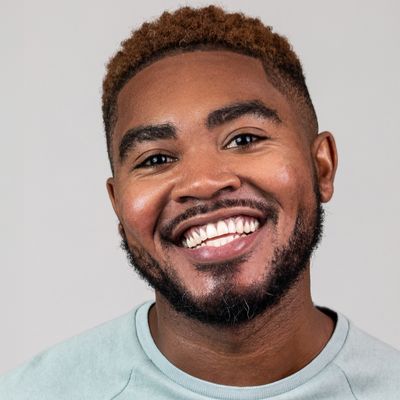
Cody Renard Richard, one of the top stage managers in the industry, takes a bow while reflecting on his accomplishments in episode 38. After stage managing for shows like the Lion King, Hamilton, Dear Evan Hansen, Freestyle Love Supreme, Kinky Boots, and more he is eager to give back to the youth of the industry by launching his brand new scholarship program... Read More
From the show: Take A Bow
Guests
Featured Shows




About
Cody Renard Richard, one of the top stage managers in the industry, takes a bow while reflecting on his accomplishments in episode 38. After stage managing for shows like the Lion King, Hamilton, Dear Evan Hansen, Freestyle Love Supreme, Kinky Boots, and more he is eager to give back to the youth of the industry by launching his brand new scholarship program. Learn all about Cody, what it's like to be a stage manager, what a stage manager is, how your favorite shows work, and about his scholarship program. For more info, visit: https://www.codyrenard.com/
@codyrenard, @tokash_eli, @takeabowpodcast
Transcript
This transcript was automatically generated and might contain errors.
[0:00] Eli Tokash: What is up everyone? Welcome to episode 38 of Take A Bow Podcast. It's your host, Eli Tokash. I'm so thrilled to be here today and introduce a new field of the entertainment industry, especially in the Broadway community. We have our first ever stage manager on the podcast. And so, uh, it was really cool to hear from him and get his perspective on what it's like to be a stage manager but also many other things in the industry, and he's doing a lot of amazing things for young people who have aspirations of getting into the industry. Uh, and so you'll hear all about that today. And so I'm very excited to introduce that to all of you. Before we turn it over to the interview, let's look at what we can look forward to in the Broadway community this week, shall we?
[0:50] Eli Tokash: So I don't know if any of you saw it, but a new trailer for Genius Aretha, uh, starring Cynthia Erivo, who's playing Aretha Franklin, was released, and her singing "Chain of Fools" is just absolutely breathtaking. Like, you see it and you have chills and you're like, how? And like, it's just like, I wanna be her and like, I want to be friends with her, and it's just like, it's so good. I mean, I feel like she's definitely in the argument of being like one of Broadway's best belters on Broadway. If you ask me, I feel like I could definitely make an argument to include her in the conversation, but she is just incredible, and I'm very much looking forward to that new limited series, which comes out March 21st. Uh, so that's very exciting.
So that's something that we can look forward to next month, but some recent things that are going on this week, and actually, if you're listening today, this episode is released. It's Thursday, February 11th, not January. And something very exciting is happening today, February 11th at 8 p.m. Eastern Standard Time.
[2:04] Eli Tokash: Uh, "Reasons to Be Pretty." So there's a few productions that I'm going to list off here that we can all look forward to and possibly tune in or read up about. So "Reasons to Be Pretty," starring Jessica Vosk, will be streaming tonight, February 11th at 8 p.m. Eastern Standard Time for free on YouTube. So literally, if you go to YouTube and you just like search up "Reasons to Be Pretty," Jessica Vosk, or just like look up that on the internet, you don't even have to go to YouTube. Save yourself. They'll encourage you to donate to the Actors Fund, uh, and do whatever you can, but it's free. So, like, if we're all just chilling and we want to hear some goddess vocals from Jessica Vosk, like, let's tune in on YouTube. I'll probably be there and, uh, maybe I'll see you there in like the chat section or whatever on like the live stream. Um, but I'm very much looking forward to that.
[3:01] Eli Tokash: February 12th, which is tomorrow, if you're listening on Thursday once again, when this episode releases, "Rogers and Hammerstein's Cinderella" premieres on Disney Plus. I mean, come on. Are you not excited for that? I have Disney Plus. I mean, at first, like, it was definitely like, oh my god, I wasn't gonna get another streaming platform, but like I got it when "Soul" came out, and I've like been obsessed since. And now I'm so happy that I have it because Cinderella's coming out on Disney Plus, and we can all watch that. And I just can't wait to watch some of my favorites, like Brandy, Whitney Houston, Bernadette Peters, Whoopi Goldberg, Jason Alexander, and Victor Garber. Like, so many, so many people are in this production, and it's like Rogers and Hammerstein's Cinderella.
So, like, why not? It's amazing. And, uh, just to like have another musical like come out on TV is just, I can't wait. And I'll definitely be tuning into that. It comes out February 12th, so you can watch it anytime. Literally, it's like "Hamilton," it's just gonna be on Disney Plus. So check it out if you can.
[4:07] Eli Tokash: Something very cool and interesting also happening February 12th. There's a, uh, special event going on, and it's a five by fifteen, is what they're calling it. And what it is is that they're going to be premiering five 15-minute musicals. Isn't that wild? Five 15-minute brand new musicals that no one's seen before. It's gonna be 15 minutes long, and they're gonna make their premiere, and it's gonna be virtual, and it's gonna be incredible. But the reason that I'm mentioning this, not only is it a cool event, but actually one of the musicals being premiered is being directed by previous Take A Bow guest, Sierra Renee. So this is not a free event. This is something that you do have to get tickets for.
So just look it up if you're interested. I think it's really cool. You're gonna see five brand new musicals, just like in their beginning stages, they're gonna be premiering, and they'll probably be getting feedback and everything like that. So it's just a cool thing to like watch a show grow if you can see it from like a young stage in their developmental process. I it's definitely very interesting. And shout out to Sierra Renee, who's I'm sure like just busting her butt. It's her directorial debut, so I'm so excited for her, and I can't wait to check it out.
[5:27] Eli Tokash: So, I mean, obviously, there's like a ton of other things happening, but my last thing that I'm gonna mention is that good friend of the podcast, Carly Hughes, and Michael Urie join "Chicken and Biscuits" on February 27th. And there's someone really special who's also going to be in it, and that's Janet Hubert from "Fresh Prince of Bel-Air." And they have a bunch of other people in it as well, but those are just people that stood out to me. I love my friend Carly Hughes. Obviously, Michael Urie is amazing, Janet Hubert, all of these great people. But the reason that I'm mentioning it is that today's guest, Cody Renard Richard, is going to be stage managing this special event. So it's another thing that's gonna be like virtual, and he's gonna have to stage manage it virtually. And we talk a little bit about what that's like in the interview. Um, so I thought that was a perfect segue. So without further ado, Cody Renard Richard, curtain up.
[7:00] Eli Tokash: I can guarantee you, he's worked on at least one of your favorite Broadway shows. And you'll be able to hear all about it and what kind of work goes into all the behind the scenes. And he continues to actually give back to the arts as he created the CRR scholarship program for BIPOC students going to college for stage managing. So Cody Renard Richard, welcome to Take A Bow.
[7:25] Cody Renard Richard: Hi, thank you. Thanks for having me. I'm so excited. So it's actually the first time I've interviewed a stage manager on the podcast. So I'm very excited to hear a new aspect and give listeners all of that great insight. How cool.
[7:43] Cody Renard Richard: Yeah, right. You're pretty cool, right? You've accomplished a lot. And so I would like to, you know, rewind a little bit. And I want to ask, what inspired you to like become a stage manager?
[7:57] Cody Renard Richard: Yeah, I actually started stage managing in high school. My high school theater director basically told me I should do it. So I was like, okay, you know, when you're in high school, it's very, you're very impressionable. And she told me, she actually said to me, she said that I had a way of making people listen without yelling, and she thought that that would be useful in a stage manager. Of course, at the time, when I was 14, 15, I heard that I get to be in charge, and I liked that. So I was like, sign me up. But you know, I loved it. I loved the responsibility of it then, and I love it even more now. But at the time it was something that allowed me to feel like I had like a sense of being needed and seen and whatnot, just because everybody came to me to like get a prop, or came to me to ask me a question, and I was like her assistant director, and I loved being that person that everyone came to. So that's kind of what got me interested in it. I had no idea what it really meant, but I was, you know, a huge part of the team at the time, so I kinda learned from there.
[9:03] Eli Tokash: Yeah, so you kinda like started out doing like school shows, or like was it, uh, in high school, or was it like more like regional theater and stuff like that?
[9:12] Cody Renard Richard: No, it was in school. Um, I yeah, I went to Waller High School, uh, in Waller, Texas, and we did shows like "Groovy the Musical" and "Waggons Wheels West" and "Kill War Was Here." Shows you've never heard of. We didn't get to do "Grease" or "Fiddler on the Roof" or any of that.
[9:32] Eli Tokash: Right, right. Of course, I love that. So like you said, I mean, a stage manager literally like runs the show. Like there really is no show without the stage manager. I mean, like you said, you have tons of responsibilities. Do you have a favorite?
[9:47] Cody Renard Richard: Do I have a favorite? I guess I love getting to know people. I love collaborating and communicating with them. So that's my favorite part, I think, of stage managing, is getting to work with everyone on the production and kind of figuring out the way they communicate and what they need from me. That's always a fun game. So I love getting to figure out people and making sure that they are equipped with whatever they need to do their job to the best of their ability.
[10:16] Eli Tokash: Absolutely. Obviously, when you start like a new show, a stage manager's role is to really build their track. So, like as an actor, like I've always been like told what to do and where to go and all of that, but like you have to like literally just figure out the places to be and formulate your own tracks. Do you like all the challenges that are like faced and always staying on your feet? Is that like a cool thing that you enjoy?
[10:41] Cody Renard Richard: Yeah, I love that. It's, I mean, you're right, it's so cool. I love that. I love getting to figure it out. I love like it kind of starting as this big blank canvas, and then, you know, as the director starts to paint, we're able to like pull a certain puzzle piece and like to put it together. Um, that's one another favorite part of mine is getting to see all like the, you know, when you dump a toy chest out or like a big Lego set and then start putting it together. I used to play Legos a lot when I was a kid. Um, but I love, I love like putting all the pieces together and seeing where things fit backstage and making sure that, you know, people are in a certain spot and I love that.
[11:19] Eli Tokash: I mean, do you have like any tricks that you've kind of like adapted as you've grown and like become the stage manager that you are today on like keeping track of all those responsibilities and like really like writing down your track or like how do you like manage to keep track of all your responsibilities, I guess?
[11:38] Cody Renard Richard: Yeah, well, I mean, first of all, you know, I make a lot of lists, I make a lot of notes because I can't always remember things. And I find that when I write things down, it's kind of like that muscle memory. So when someone talks about it, it like it triggers whatever I wrote down, I guess. So yeah, I mean I write a lot of lists. I also rely on the team. You know, I remember that I'm not the only person who's having to figure this out, so I like collaborating with them and, you know, asking them like, what do you think about this? Or, you know, so that's kind of, you know, making sure that everyone is putting some type of effort into it. But yeah, making a lot of lists and as you make the list and try to figure things out, it's also about, you know, forward thinking, you know, wondering like what if this decision is gonna affect, you know, when we get into tech or when we add on X, Y, and Z, or when, you know, the ensemble shows up if you're just working with a certain group of people. So trying to be proactive in certain decisions, but also like checking, you know, where you are in the moment.
[12:38] Eli Tokash: For sure. I think that was a roundabout answer, but like a lot of cross-referencing, I guess.
[12:43] Cody Renard Richard: It totally makes sense. Yeah, I mean, you tied it together perfectly. And so clearly you have this incredible love for stage management, and you're giving back. So I can't wait to hear about this CRR scholarship that you've created for BIPOC community who are going into stage management in college. So what inspired you to collaborate and create this outlet for other artists who want to go into stage management?
[13:10] Cody Renard Richard: I mean, one of the biggest things for me, especially within the last couple of years, is paying it forward. I recognize and I realize that I've been very fortunate in my career to just because I've been able to work and I've been able to sometimes choose the work that I get. You know, I don't have to say yes to everything, which is a blessing. And I know there's a lot of people who aren't that fortunate. I know, you know, so I've always, whenever I had the chance, I will, you know, go speak at a school or like, you know, speak on a panel or like answer a question or show somebody around backstage. This is, I feel like it's important to give people access to a world that they don't necessarily have access to.
So that's always been like a big passion of mine is paying it forward in some regard. A couple of years ago, I got an email from my university saying, you know, donate to the alumni foundation. And I was like, I'm not donating to this. But that email, uh, sparked, I was like, maybe, you know, instead of donating to this foundation, I could like set up a scholarship fund. And at that point, all I wanted to do was sponsor one student, like give them a thousand dollars each semester of my own money just so I can like, you know, help them out. Because I could, I would not have been able to go to college without a scholarship. Right. Because I come from a family that would not have been able to afford that.
I'm sure we would have figured it out, but that type of money was not something that we had at all. So I knew the power of a scholarship. I knew like five hundred dollars could change someone's life. As small as it sounds, but it can. A thousand dollars, you know. So my goal was to do that, you know, and then twenty twenty happened and, you know, the world went on pause or the world got activated.
[14:46] Cody Renard Richard: Either way, who depending on who you are, either you are paused or you got activated. And I had time to think about a lot of things and this scholarship came back to my mind and I was in talks with my university to do it, and then I was talking to my friend and she just told me she was like, "Why don't you dream bigger? You always dream big. Like, why are you just stopping there?" And then that pushed me to do more, you know. And then I just started thinking about my journey as a black stage manager, specifically on Broadway, and how I've never had a mentor that looks like me. You know, coming up, I didn't work with that many other black stage managers or directors or producers even. I understand that it's a lack of resources and availability and all of these things, and I know the power of being seen and I know the power of feeling seen, and I wanted to provide that for other people, you know, regardless if they want to be on Broadway or work regionally or work wherever.
I want to give them access to the people who are working so they know that they can do it and can get this knowledge that is not really taught in schools. So that's essentially, like in a nutshell, I can go on and on, but that's really what pushed me to do it. And then I reached out to Broadway Advocacy Coalition, who is doing amazing work, and I've done things with them and I've known them for years, and it just felt like the right partnership. They really pushed me to come up with the other part of the program, which is the mentorship capacity and all the work sessions that we're gonna do. The program is for BIPOC students who are studying non-performance related degrees, so not just stage managers actually first, so anyone.
[15:57] Eli Tokash: Oh, okay.
[16:33] Cody Renard Richard: Yeah, so for designers, directors, general managers. We have a student who is a puppet maker coming in, you know. So I know that's, it's so cool. Yeah, yeah. I don't know anything about making puppets, but I can learn from her, you know, or learn from them, you know. So I'm really excited. So yeah, so that's what it is, essentially trying to honor and uplift the next generation of leaders of color, you know, people who—I mean, it's important to acknowledge the actors as well, but I feel like we do that a lot. And I do think there are a lot of initiatives that support that, and that's what we visibly see, and I think that's what people normally talk about. So I'm excited that so many people have embraced my program and have embraced this conversation, and I'm excited to see where it goes.
[17:16] Eli Tokash: Absolutely. That's wild that it started kind of this year and you already—and it was a thought of sponsoring one person and now—exactly how many sponsors do you have?
[17:27] Cody Renard Richard: Yeah, so it's really wild. I'm not gonna lie. Yeah, it moves fast, right? And I think about it and I'm like, "Wow, this started as an idea of mine, and it has manifested and transformed really into what it is," you know. So we just announced 15 scholars.
[17:48] Eli Tokash: Wow, there's 15 people in the program, which is really cool.
[17:51] Cody Renard Richard: After, you know, saying I want to do one, I was like, "Okay, if I can just raise 20 grand, you know, I can give X amount of money to people." We were able to give out sixty thousand dollars to fifteen students. And I'm still blown away by that because I, you know, dream big, yeah, but I was like 20 grand, maybe fifty, that'd be cool. But we were able to give each student a four thousand dollar grant, which was not what I had anticipated. And if we can do that in a short amount of time, from September to what, January, then I can only imagine how it's gonna grow, and I hope that people continue to support as the years come.
[18:27] Eli Tokash: So for anyone who's listening that has the resources to be able to help and contribute to the scholarship program, where can they possibly donate and help out?
[18:38] Cody Renard Richard: Oh, thank you. Yeah, absolutely. We take donations year-round, but you can either go to BAC, Broadway Advocacy Coalition's website, there's a drop-down menu for the scholarship, or you can go to my personal website, codyrenard.com/scholarship, and there are ways to donate and engage and learn more about the students there too.
[18:57] Eli Tokash: I love that. It's incredible what you're doing because on top of giving scholarships and everything, you're really taking the time to learn about each individual and really mentor each individual. So like on top of just helping them financially, you're doing so much for so many people.
[19:14] Cody Renard Richard: Yeah, I mean, the money is a huge factor in anyone's education. But you know, what's been really awesome is that most of the responses that I've gotten back from these 15 students that they're like, "Oh, thanks for this opportunity. I'm really looking forward to connect with you. I'm really looking forward to the people you're gonna bring in." That makes it that much more special because it's—it's the money's great. Obviously, no one wants to turn down any type of money these days, but I think it's more about the further advancement of themselves and, you know, meeting new people and also building a community within because everybody's from a different school, so they don't know these other students, so they'll be able to build a community within themselves. I think it's really cool.
[19:56] Eli Tokash: That's awesome. So, like when a student applies, they don't have to go to a certain school, right? They—it could be any school.
[20:02] Cody Renard Richard: Any school, any school that offers a program where they can either major in the technical aspect or creative aspect of theater or have a concentration in it. So BA programs, BFA programs, we just opened it up to community colleges.
[20:16] Eli Tokash: Wow.
[20:16] Cody Renard Richard: Because actually, this was a learning moment for me. I modeled the program off of a different program that I saw, and you know, they excluded trade schools and community colleges and online schools, and I got this really, really lovely message from a student at community college just saying that, you know, she felt like this was, for lack of a better word, she says she felt like this was a product of systemic racism and that, you know, some people don't have the resources to go to a full school, but she is just as dedicated in where she is. And I read that and I was like, and I thanked her because that was a moment of me, you know, not thinking that the types of people go to different schools, and the whole point of this program is to open it up for anyone who is serious about being a theater maker and giving them access to things that they wouldn't. So I was very grateful that she wrote that and I, you know, we had a good conversation and so we opened it up to not just accredited universities but also to community colleges as well.
[21:17] Eli Tokash: That's incredible. I mean, it's incredible what you're doing really. It's so fascinating and it's just—it's so true that it's—I mean, I have like a mentor you could say, and like literally you—I don't think people really understand what one person can do for you and just having that connection and resource that you can like reach out to that person when you're in a pinch and learn from them and someone who's had experience like you, like it just goes so far and could literally like change a life. So like kudos to you, it's awesome what you're doing. And speaking of schools and, you know, college and everything, you actually teach at three universities, right?
[22:00] Cody Renard Richard: Kinda.
[22:01] Eli Tokash: Kind of, okay. Yeah, so how does that work? Because like, you know, I was a child actor on Broadway and like the adults said, "Oh, you guys, like it's cool because kids have so much energy and everything like that," but like they were always like, "I could never do it because I'm an adult." But now, like you're an adult who's like going to school, waking up at 7 a.m., like doing all the whole thing that people do. And so like, I mean, how do you do all of this? How do you run a scholarship program? How do you go to school and teach?
[22:31] Cody Renard Richard: Yeah, I mean, you know, it's passion really, you know what I mean? It's like, you know, there's a quote—I don't know who first said this, but I'm sure you've heard it—is like people make time for the things that they want to make time for. And I think that is true in any—in a relationship, in your life, in your work, you will make time for the things that you care about, the things that you want to make time for. There are so many things that I should be doing that I don't want to do because that's not what I care about right now, you know what I mean? So like I make time for the things I care about. And a lot of these things are even if they're not passion projects, there are things that I really enjoy doing or really feel like I need to be doing, so I make time for it.
And that's really it. You know, there are times when I'm exhausted, but also like I know that there are people who have worked way harder than me. So like I also feel like it's my duty to continue to give all that I can while I can, you know what I mean? So I enjoy being able to teach a little bit. I enjoy working as a stage manager. I enjoy getting to mentor students, you know. These are all things that bring me joy and happiness. I love that. So that's—I make time for it, you know. Even when I feel like there isn't time.
[23:45] Eli Tokash: Right.
[23:45] Cody Renard Richard: I find the time because there is, you know. It's all about the mindset, right?
[23:49] Eli Tokash: Totally, absolutely. So in your words, we'll transition a little bit into like your experience and your background and everything like that. In your words, what exactly is a stage manager?
[24:03] Cody Renard Richard: Yeah, I would say a stage manager is the person who makes sure that everyone has what they need, you know. We are the main facilitator of any production. You know, we talk to every department, we communicate with every department, we make sure that everything happens as it should. Yeah, we're that go-to person that you can always come to for information, and if we don't have it, we'll find it. You know, and there's a bunch of like technical things, obviously, that come along with the job, but for me, I think the biggest thing is making sure that the vision and everything that is said at day one of rehearsal is carried out through the process. Whether that is just a theme, whether that is technical stuff, whether that is whatever, we facilitate and we assist and we make sure that all of that stuff happens on time as much as we can and that it happens, you know, in a manner that people want it to happen.
[25:05] Eli Tokash: Right. I mean, you guys literally—you running around constantly. So like it's usually like a team of three or four, right? And you— but you gotta take care of 40 people. Like you can only do—like you guys are constantly running around and making sure everyone has what they need and ever—always taking care of—I don't know, stage managers like they blow my mind. I mean, because as a kid, you know, I wasn't on every show because of like the child labor laws and everything. So like my favorite thing to do was to like trail the stage managers. So there was like one time, especially like one of my favorite things that I always thought was so fascinating was how you all like called the show. Just like everything moved and everything happened and every light was switched on, all because like you guys—and I was like, "This is insane."
[25:56] Cody Renard Richard: I don't know. You guys just blow me away. It's kind of like—I know I keep saying that certain things are my favorite part, but also I love calling a show. I love the thrill of saying "go" and then watching something happen. You know what I mean? I get so excited. I love calling shows. There was one time I was leaving the theater, I forget what show I was doing, but I was leaving and there's too many. I was leaving the stage door and this parent and their child stopped me to sign their playbill. And I was like, "You don't want my stage, I'm the stage manager." And then she stopped saying, "We do." And I was like, "Okay." And I was like, "Do you even know what a stage manager does?" And the little boy looked up at me and said, "Yeah, you helped make the magic happen."
And I melted. It made my night. And I was like, I don't know what—I don't know where they're from or like what the parent has taught them or whatever, but just like hearing this little kid say that was such a special and beautiful moment. And like, as a stage, I was like, "Oh wow, this kid knows what I do. That's really cool."
[26:57] Eli Tokash: Yeah. I mean, who knows? Maybe like he's gonna be a stage manager one day.
[27:02] Cody Renard Richard: Maybe.
[27:02] Eli Tokash: So, okay, you've stage managed twelve different shows, and like all of them are vastly different. So stage managing a show like The Lion King with all of these meticulous set pieces and these props and the costumes and everything like that. Like, what is so like different for like a stage manager to run a show like that?
[27:25] Cody Renard Richard: Yeah, so for The Lion King, I'm a substitute stage manager, and I started that in 2015, I think, and I go in and out of the show when someone is either, you know, has a personal day or sick or on vacation. So I'm like on call whenever I'm available. And that show technically is massive, but also the show was created in the 90s, so it's interesting how like technology has changed on other shows that I've worked on, but this show is still one of the biggest shows on Broadway, you know. But for that show, especially for me coming in and learning this new show and these new people is really just being—what am I trying to say? Just being focused. Thank you. Jesus, why was that so hard? But you know, like it's just making sure that you remain focused because I'm not there all the time.
So sometimes it's, you know, you forget things, so you have to always, you know, either resort to your notes or just make sure that you are paying attention. And because you're not there all the time, like you might not remember the contingencies in case something goes wrong, or like the cast may change, or like you're not as familiar with everything as you would if you're doing the show eight times a week. So with that show, and especially with it being so big, you really have to just stay focused and stay like on top of, you know, after you do one cue, think about what's happening next and then walk, look around and make sure everything is where it's supposed to be.
[28:50] Cody Renard Richard: That type of thing is like with a show like that, you have to constantly just be checking in with yourself and making sure that you're like going in the right place, doing the right thing and all of that.
[29:00] Eli Tokash: Right.
[29:00] Eli Tokash: Right. And I'm sure like too with The Lion King, like the set piece, like everything really is just so big. Whatever, like do you ever like need help? Like sometimes you can like set pieces by yourself, but like sometimes in a show like The Lion King, they're so big, like do you—is it like a whole team effort that you really have to collaborate?
[29:24] Cody Renard Richard: Yeah, I mean that show all the pieces are huge. And um th the crew on that show is is is pretty big. Also the theaters it's a big theater, so there's room for a lot of people. Um I don't know how many people are on the crew, but I know that you know, with the carpentry uh department and the props department, there's a lot of people who move a lot of things around and set things and you know, once something comes off stage it o it automatically flies up into the air 'cause there's no room to keep it on the floor. Wow. Um there's a lot of movement backstage. So it's a lot of it's us making sure that people are out of the way. But also the Lion King has been around for over twenty years now, so it's kind of a machine. A lot of people have been there. Some people have been there from the beginning which is really crazy.
[30:01] Eli Tokash: Wow.
[30:05] Cody Renard Richard: So that's like twenty plus years, right?
[30:08] Eli Tokash: Yeah totally there's an actress who who opened the show and is still there.
[30:12] Cody Renard Richard: It's cool.
[30:13] Eli Tokash: Oh my god that's incredible.
[30:14] Cody Renard Richard: Linda Way is her name.
[30:15] Eli Tokash: Yeah she's still there.
[30:16] Cody Renard Richard: So you are still um you still like sub there? Like you're still like on I guess I don't know call for them?
[30:23] Eli Tokash: Yeah.
[30:24] Cody Renard Richard: That's awesome. Yeah I was there I was there in February before it's weird there's about to be February now. But I was there in February before the the shutdown in March. So like I was in and out whenever luckily the good thing about that show because it's running for so long whenever you know I'm not working on a full time show and if they need support I'm able to go back and and work which is nice.
[30:45] Eli Tokash: That was my next question. So like how does that work when you like are in a show do you just like you just can't sub there for that time.
[30:52] Cody Renard Richard: Yeah okay so I started in 2015 and I and I had and I didn't go back for like three years.
[30:59] Eli Tokash: Oh wow.
[31:00] Cody Renard Richard: And and they didn't think it was that long 'cause I guess when you're on a long running show like what is time at all is all relative.
[31:06] Eli Tokash: Yeah.
[31:06] Cody Renard Richard: And they called me one day I was like oh you know my show just closed I have like a couple months off let me know if you need anybody I'm around. They're like great can you come in tomorrow and I was like I don't remember this show. I was like can I get a training date they're like oh you remember it it was just a couple months. I'm like no it's been two and a half three years babe like I need not I need a remote that's crazy.
[31:29] Eli Tokash: Yeah.
[31:29] Cody Renard Richard: Do you kind of like have like a file, I guess, for each show with your notes and everything? Like how do you stay up on that?
[31:35] Eli Tokash: Yeah, at one point I was subbing um I was a substitute stage manager for Lion King, Hamilton, and Dervin Hansen at the same time.
[31:44] Cody Renard Richard: So I had like different files so I can remember. Hamilton, it was easy because I was there for a long period of time. So that show is kind of like ingrained in me.
[31:52] Eli Tokash: Sure.
[31:53] Cody Renard Richard: But with uh Lion King and Dervin Hansen, I only go in when they need me, which sometimes could be once a week, sometimes it could be once every couple months, you know.
[32:02] Eli Tokash: So it was harder for me to like get back into the groove of figuring out, you know, what each show was.
[32:09] Cody Renard Richard: But yeah, I definitely have I have a have my little note cards. I have like the the the run sheets that they print out on on in like a folder that I take, especially with Dervin Hanson. I never run that show without my without my cheat sheet, because I'm I'm not there enough to remember it.
[32:24] Eli Tokash: Uh-huh.
[32:24] Cody Renard Richard: And it's uh yeah, it's a show I know the least, but I mean I know it, but I have to always have my notes just in case.
[32:30] Eli Tokash: Right.
[32:31] Cody Renard Richard: So uh that's actually interesting. So you were talking about like the Lion King being 20 years and whatever, but like now you have like uh you're doing a show like Deervin Hansen as well, who it just recently opened and kind of like changed, like had a whole new thing about the show in their digital, like how they had the projectors and everything like that.
[32:52] Eli Tokash: Yeah, so like does that affect like I guess anything like for the stage managers, like with with it being so like digitally reliant?
[33:02] Cody Renard Richard: More so for the stage managers who are calling the show.
[33:05] Eli Tokash: Okay.
[33:05] Cody Renard Richard: For me, I just I run the deck. I'm on deck with the cast. I I haven't learned to call Dervin Hansen. So for my responsibilities, the the projection and the video screens don't really come into play other than when they fly in into the to the stage, making sure that people are out of the way of them and making sure that they're moving at the right time. But other than that, I don't I don't have much of a um responsibility with them.
[33:29] Eli Tokash: Gotcha.
[33:29] Cody Renard Richard: Um as an assistant as a sub. But yeah, they really did, you know, they ushered in this whole new like video thing that a lot of shows are doing now.
[33:37] Eli Tokash: Yeah, right.
[33:38] Cody Renard Richard: It's cool to see like you know, you go to see Lion King 'cause it's still on Broadway and then like you go see Javen Hansen and just like how much the Broadway culture kind of has changed in the past twenty years or whatever it is.
[33:52] Eli Tokash: It's pretty cool.
[33:53] Cody Renard Richard: So you also, like you mentioned, you worked on Hamilton and you also were the PSM at Freestyle of Supreme. So like obviously those are uh a lot of the same people kind of that aren't there every day.
[34:09] Eli Tokash: So like I don't know, kind of. But like do you notice like a lot of similarities between like how it's ran like backstage because it's kind of the same people.
[34:19] Cody Renard Richard: And and freestyle?
[34:20] Eli Tokash: Yeah.
[34:21] Cody Renard Richard: Not at all.
[34:22] Eli Tokash: Really?
[34:20] Cody Renard Richard: Yeah, not at all. Only because you know the structure of Freestyle is so different than any Broadway show that I have ever seen or been a part of. It is its own thing.
[34:34] Eli Tokash: Right.
[34:37] Cody Renard Richard: Which is really amazing. But yeah it's it's so different. I mean other than the fact that like you know it's the same key players and they and they they interact the same.
[34:46] Eli Tokash: Right.
[34:47] Cody Renard Richard: But the atmosphere at Freestyle was very different than the atmosphere at Hamilton.
[34:51] Eli Tokash: Now was that your first PSM?
[34:53] Cody Renard Richard: Yeah it was my first PSM on Broadway. I've done it um off Broadway I've done it regionally it was my first time getting to do it on Broadway.
[35:00] Eli Tokash: So like d were you just like going in super excited? Like how is that for you?
[35:05] Cody Renard Richard: I mean, yeah, so that was amazing. It was a dream come true. I you I've known I wanted to PSM on Broadway for a very long time.
[35:12] Eli Tokash: Uh-huh.
[35:13] Cody Renard Richard: And I also knew that most PSMs on Broadway are much older than I am.
[35:18] Eli Tokash: Right.
[35:19] Cody Renard Richard: Or there are some who are in their thirties, a lot of them are not. So I just knew that it would be harder for me to get that position and get that job. And Freestyle came along. I did the show off Broadway and announced it was moving to Broadway and it all just felt right. You know what I mean? Like me getting that show, me doing that show, me knowing these people. I was like, this is the opportunity that just feels right.
[35:43] Eli Tokash: And then I got the call to PSM, the show on Broadway on my birthday.
[35:48] Cody Renard Richard: No way.
[35:49] Eli Tokash: Yeah.
[35:50] Cody Renard Richard: So I was like, this is this is completely meant to be. Like more so than anything I could think of, you know.
[35:56] Eli Tokash: So it just all really just fell into place.
[35:58] Cody Renard Richard: And it was hard. I mean, it was hard and I learned a lot and it was rewarding. And like I said, I learned a lot, but um I loved it. It was yeah, I was excited every every single day I went to that theater. It was it was it was a dream come true.
[36:11] Eli Tokash: I know that's so cliche.
[36:12] Cody Renard Richard: No, yeah, it's but it really was.
[36:14] Eli Tokash: It really was.
[36:15] Cody Renard Richard: That's awesome.
[36:16] Eli Tokash: So talk about so the difference between a PSM and an SM.
[36:20] Cody Renard Richard: So like the production stage manager and the stage manager.
[36:23] Eli Tokash: Yeah, so the production stage manager is more so the the face of the team slash production. They are the person who kinda corrals everything, you know. The PSM will start the rehearsal, the PSM uh sometimes set the tone for the day, they make sure that that that that the director stays on schedule, sure and that the cast is where they need to be and they're getting all the right information.
[36:49] Cody Renard Richard: So yeah, the PSM is the main communicator of the show. And then you know, there's a lot of administrative stuff that goes along with it. A lot of emails, you know, there's constantly, you know, because that's how we communicate the most is email. So there's a lot of people asking questions and just so we really make sure that everybody stays on top of what they need to do while we're kind of staying on top of the rehearsal room and then tech and then moving forward.
[37:14] Eli Tokash: Right.
[37:15] Cody Renard Richard: Yeah the PSM really kind of takes the reins and and make and guides everyone and make sure that we're all working towards the same goal. And while the assistant stage managers and the stage managers supports all of that. You know, they do a lot of the the the technical prop tracking and and the cast tracking and and supporting um you know small not small but supporting paperwork so so the PSM can can guide the room and be that person that is like pushing everything along.
[37:46] Eli Tokash: Right.
[37:46] Cody Renard Richard: So it's really a team effort without the assistance the PSM some PSMs won't be this strong you know so you have to really have people that compliment each other.
[37:55] Eli Tokash: And a PSM they also do a lot of scheduling is that like something that you is that like another like added layer for you or that is like fun or like is that something you you know you're not really interested in
[37:55] Cody Renard Richard: oh it's it's great. I love it. It's like it depends on the show. Like some shows scheduling is easy and some shows it is there are some directors I've worked with like um Sammy Cannold who's a younger director but she's incredible she maps out everything. We get a Vita together at City Center.
[38:27] Eli Tokash: Oh my god so scheduling with her was a piece of cake.
[38:30] Cody Renard Richard: She would say we're gonna do this, this, this, and this. So I would just have to reformat, double check, make sure that the fittings didn't, you know, conflict, and then we'll send it off. Um, but s other directors, you know, go with the flow and do it step by step. So it's a lot of like seeing what we got done and then creating the schedule for the next day.
[38:47] Eli Tokash: So it's a less a puzzle piece, really.
[38:49] Cody Renard Richard: Um, but I enjoy it. I love like it's all about problem solving. I love figuring things out and making sure that everyone gets a little bit of what they need.
[38:56] Eli Tokash: Um freestyle scheduling was crazy.
[38:59] Cody Renard Richard: Yeah, I bet. Only because we had no one was in the show. All I mean, there were we had a core group of people who did the show all the time, and then we had surprise.
[39:02] Eli Tokash: All the time.
[39:11] Cody Renard Richard: I mean, they were surprised to the audience.
[39:13] Eli Tokash: Right.
[39:13] Cody Renard Richard: Most of the time they were not a surprise to me. There was a couple of times that, you know, I get an email. Oh, not an email, I get a text or a call from Chris Jackson or Lynn Manwell being like, Hey, I want to do the show tonight, or can I go tomorrow? I'm in town. Lack, Alex Lackamore too. Is like, I'm in town, can I play? You know, so like figuring out, you know, what the show looks like in order to get them on, or sometimes telling them, sorry, we're full, you can't, you know.
[39:40] Eli Tokash: And they got it, like they told, and that's what I loved about it.
[39:43] Cody Renard Richard: They all like offered me that respect to say, Listen, I would love to put you on, but I can't, or you can do this one game or come out, whatever, you know.
[39:51] Eli Tokash: Wow.
[39:52] Cody Renard Richard: Um, but I'm such a yes person. I try to make it all work for everybody, you know, everybody has a little a little, and you know, and Tommy Kale, our director, really empowered that he wanted everyone to get a chance to eat, is what he would say. We all need to eat, right?
[40:05] Eli Tokash: Um really tried to make it work for everybody.
[40:07] Cody Renard Richard: Y'all also had like a really different schedule, like compared to like the regular Broadway uh schedule, I guess, like the normal like eight o'clock, seven o'clock, whatever. You guys had some like nine thirty shows, right?
[40:21] Eli Tokash: We sure did.
[40:22] Cody Renard Richard: We had um, I think off Broadway, we had nine thirties and like six. On Broadway. I think we had seven o'clock and ten o'clocks.
[40:30] Eli Tokash: Yeah.
[40:30] Cody Renard Richard: Which was, you know, in theory, we were like, Great, we get two days off, we can do that. But by the time you get to that third, we did seven and ten Saturday, Sunday, and Monday. So by the time you get to that ten o'clock show on Monday, you're like, who am I? You know, your eyes are across, and you know, but then you get two days off and the show's only 90 minutes, so it's nice, but it's weird walking out of a theater at 11 30 midnight by just finishing your show and not you know, sometimes you finish the show and you like you socialize and you you know wrap up.
[41:03] Eli Tokash: Right.
[41:03] Cody Renard Richard: But with this show, we will be walking out at midnight because we had just finished the show and did the report. So that was weird.
[41:10] Eli Tokash: Yeah.
[41:11] Cody Renard Richard: Yeah, that's but that's so fun.
[41:13] Eli Tokash: It just keeps you all on your toe, you know.
[41:15] Cody Renard Richard: Yeah.
[41:16] Eli Tokash: So you mentioned like, you know, you worked obviously on a bunch of Broadway shows and all of these different theaters, but you've also worked at like City Center, The Met, Carnegie Hall, like all of these fabulous theaters in famous theaters. Uh do you have like a favorite theater or like the one that like really helps being a stage manager, like can really work well in, like, do you have anything like that? Does it affect anything?
[41:40] Cody Renard Richard: You know what's funny? So you started listing those, and I know you didn't ask something. I'm just gonna say it because I think it's interesting.
[41:47] Eli Tokash: Okay.
[41:47] Cody Renard Richard: Um I have like a little goal that I want to work in, you know, all of what I deem to be like the famous institutions, you know.
[42:00] Eli Tokash: Wow.
[42:00] Cody Renard Richard: And and I and I and I wrote that down a long time ago, but I forgot about it. And then when I got to when I did the Tony Awards at Radio City, I was like, oh, let me go back to my list. And I was like, wow, I've been I've been able to, you know, Carnegie Hall, uh, Radio City, City Center, um, the Mets, Kennedy Center, um, all of these amazing places, you know, and I'm I'm still waiting on the beacon, I'm still waiting in Lincoln Center and Park Clay Center.
[42:24] Eli Tokash: Oh, because also did a show at Madison Square Garden.
[42:26] Cody Renard Richard: Oh my god.
[42:27] Eli Tokash: So it's like, yeah, it's it's been really cool to s to like be able to walk into these spaces and and and have work there. So anyway, that's like a little goal of mine, like a side.
[42:35] Cody Renard Richard: I love that one.
[42:36] Eli Tokash: It's always good to set goals.
[42:37] Cody Renard Richard: Yeah, it's so fun, and it's just interesting to say, like, yeah, I I did something there.
[42:41] Eli Tokash: Yeah, I know those.
[42:43] Cody Renard Richard: So anyone who's listening who can get get him in at the Lincoln Center, the beacon, all of these shows.
[42:48] Eli Tokash: Come on.
[42:49] Cody Renard Richard: Right, exactly. But my favorite theater in all of New York City that I've done shows at is City Center.
[42:56] Eli Tokash: I love New York City Center.
[42:57] Cody Renard Richard: It is Wow. I love it.
[42:58] Eli Tokash: It's just uh it and also now I've done I think five or six shows there now.
[43:03] Cody Renard Richard: Oh wow. It just feels like home, and I know the people, and I just love like the location. It's a beautiful theater.
[43:11] Eli Tokash: It's really, you know, I mean, the backstage is is is not that big, stage left, but stage right, there's so much room, and like we have our own office and there's so many dressing rooms.
[43:21] Cody Renard Richard: It's just like and you know, the rehearsal spaces are in the theater. There's just so many pluses to working there, and they really give you um the resources and things for you to do your job.
[43:34] Eli Tokash: And so I love that.
[43:35] Cody Renard Richard: I love working there.
[43:36] Eli Tokash: That's awesome.
[43:37] Cody Renard Richard: You actually talked about uh the Tony Awards in Radio City Music Hall. What is that? Like how how do you stage manage the Tony Awards? Because there's little to no rehearsal time for that.
[43:47] Eli Tokash: So, like, what what goes into that? Like, what is a day of the Tony Awards?
[43:51] Cody Renard Richard: It's wild, it's wild. There are a lot of stage managers on the Tony's, I think upwards to like 15 or 20.
[43:58] Eli Tokash: No way.
[43:59] Cody Renard Richard: Yeah. And everyone has um a different responsibility. There's one person who oversees the entire show, um, which was not me.
[44:07] Cody Renard Richard: His name was Gary Hood for the year I did it. And he's done it a lot. He's amazing at what he does. And then he hires, you know, he brings on his team and everyone has a very specific job.
[44:19] Right.
[44:20] Cody Renard Richard: Like with a show like that, you have to have people in the right place. You can't really have people running around because it moves so quickly, you know, whereas with theater we rehearse, we know what's happening with that we do rehearse a little bit, but you need people stationed in order to push people in order to make sure the awards are right, make sure that the scenery's moving, you know. So there's eyes on like every part of the stage and like there are some people who only do the pre-telecast, which is all the awards that happen before the show, and then they kind of just assist with other things.
[44:51] Yeah, it's exactly that everyone has a very specific job, which is very important because there's so many moving pieces.
[44:59] Twenty nineteen was my first year doing the Tony so I learned a lot. Um but it was you know it was amazing. It was a dream come true. It was really cool to get to work on the Tony's and be around all of my friends and some people you know that I knew who were nominated and seeing them and watching them perform and come off stage like it was such a special moment. I'll never forget it. It was really cool.
[45:22] Yeah that's awesome.
[45:25] Cody Renard Richard: So like the interesting thing too is like the Tony's are live and like I mean like obviously like theater is too, but like there's a lot more than like five thousand people. First of all, that's like the biggest stage that you could possibly like perform live at, and then there's a whole audience at home and everything. Did your history and working in live shows like Jesus Christ Superstar, Hairspray Live and The Whiz? Did that kind of like help in like because you know you already had like the whole live and filming aspect of it?
[45:57] Yeah, I mean, that's how I got the job.
[45:59] Oh.
[45:59] Cody Renard Richard: Yeah, because you know, television and theater are they're so separate, and the job itself is different in the way people approach it, but that's how you know a spot opened up and I got the call. Like, no one leaves the Tony Awards. These people have been doing it for years and years and years. It's a great gig. A lot of them started in the theater and transitioned into TV, so they love being around it. You know what I mean? So, like everyone does the Tony's every year, and that's the one award show that always happens in New York. You know, like the Grammys comes in and out, and the VMAs come in and out, so they get to do that, and the Oscars are always in LA. So with um with the Tony's, it's always in New York City.
[46:42] So they always do this show, but a position opened up, and I had just done this was 29. Yeah, I had just done Jesus Christ Superstar, and they called me to do the Tony's as well.
[46:54] So, yeah, so it's very similar in the way that it works with you know, there's a commercial break, so you have time to reset, and like the terminology of figuring out how the rundown, which is basically like a run sheet or like a run of show, like figuring out how that works and the scheduling and all that stuff, and you know, working with the cameras and yeah, so it's interesting live TV musicals is really what got me um in the door with the Tonys.
[47:19] That's awesome.
[47:19] Cody Renard Richard: These live musicals, right? How is that different to doing a show on a stage? But like now you're on like a film set and you know you have to like angle things in a way that's like good enough for the camera and all of that. Like how did how do things shift?
[47:36] Well with the live musicals, it's kind of broken out into a couple of sections. Like the first section is the easiest part for me because we rehearse the show for two to five weeks. Normally like five weeks for a TV musical is what it's called. Two other but we rehearse you know so we get to we get in the studio and we get to rehearse just like a Broadway show, you know, the director and the choreographer will will start to lay the groundwork and we support them in that.
[48:06] And that's very much how we do it on Broadway and how we do it you know regionally. So that part is is like is like home and I love that I love that it's able to start that way so then I really feel comfortable with the people and I get to know the show and then we add on the next layer which we bring on more stage managers to move into the sound stage, you know and that is when we essentially reblock not reblock the show but put everybody into place. You know dry block the show with the camera director.
[48:35] So there's two directors there's the overall director who directs the show and blocks the show and gives the actors their intentions and make sure that the theme and the and everything and the creative vision is there and then the camera director who works with the director before to like talk through all that stuff comes in and then tells him all right this angle is what we really need to get this moment that you were talking about and this angle is what we should do here and like what do you think about this and they really start to like fold in their vision of what they see through the lens of a camera.
[49:06] So that's really cool getting to see both sides.
[49:09] Cody Renard Richard: And what's also interesting is that me being a Broadway theater stage manager, I'm used to helping a director in the creative way in the rehearsal room, not necessarily helping a director in a creative way to see through a camera lens. You know. But a lot of the TV stage managers, that's what they do.
[49:27] Uh yeah.
[49:28] Cody Renard Richard: So you know, it's a very different skill. And it was and I loved watching Gary, who's done a lot of the TV musicals, work with our director and see how he helps him figure things out and how he moves things around, you know. So that's really it. So we move in, we t we block all the casts and we tell them there's gonna be a camera here, you need to make hit your marks here.
[49:49] And it's really important that they hit their marks because if they don't, you know, the camera's off or like whatever, you know what I mean?
[49:55] Right.
[49:56] Cody Renard Richard: We spend a couple of weeks, maybe two or maybe a week, depends on the show, depending on how big the show is, just re-blocking and and get everybody used to the set. And then we bring on the cameras and we do camera blocking, and the cameras start to like, you know, sometimes they interweave through the cast while they're dancing, and sometimes they're self-run, and that's a whole another huge element. But we spent the time doing all the other steps, you know, and then we do that, and then and then it's really it. Then we do a run-through, a dress rehearsal, and then that's the show.
[50:24] Unreal.
[50:25] Cody Renard Richard: So it's similar to theater if you think of it like rehearsal tech previews opening, but it's so different, you know, there's so much more elements that are added. But yeah. So you were talking about the whole like you you know, you go into a rehearsal room and you're figuring it out, and then you add more stage managers.
[50:43] So in that rehearsal room, you're are you like not only creating a track for yourself, but also a couple other people?
[50:49] Essentially, yeah. So there's usually two to three stage managers during the rehearsal process, which is normal for a Broadway show too.
[50:59] Right.
[50:59] Cody Renard Richard: But so we're in the rehearsal room just like looking at things and we're writing things down to like things that are like someone we need to look for look out for, you know. And then once we add on more, you know, one person will either take on like the people who are looking after the cast and like tell them like you're gonna be on this person, make sure that they need to do this, this, and this, and there'd be another person who's added on who takes care of like the technical stuff, and they divide people up to like you're in charge of stage right, and they you know check all the props and make sure that they have the right people and all of that type of thing.
[51:31] There's some people who just look at the flying stuff. So there's more people to go around in TV, so everyone's job is very specific once we start running the show, which is really great.
[51:42] Yeah, that's awesome.
[51:43] Cody Renard Richard: You know, something also like really cool and different that you've done is Cirque du Soleil. Like, you know, you like what? Like, so I mean, although like that was on Broadway, you know, like it's a very different Broadway show than like your typical Broadway show. Like, what is that? Like
[52:01] Yeah, Cirque is intense. I mean, you know, these people who who, you know, circus artists, we call them artists, but we never call circ um acrobats actors or singers or they're they're artists, you know. What they do is very their artistry is insane. Right what they do with their bodies is something I couldn't even dream of doing.
[52:22] But yeah, like it's everything that they do is high impact and the margin for error and injury is massive. So the amount of when I was talking about focus earlier, just as a sub, the amount of focus and trust you need on a Cirque du Soleil show is times a thousand. Because if the people on stage can't trust you as a stage manager calling these moving pieces while they're riding a unicycle, you know, with a girl on their shoulders, then you know, then they're not gonna be able to do their job.
[52:56] Or like when they're juggling whatever, standing on top of a bar while things are moving around them, you know, if you call a light cue and they're looking up in the air when it's not supposed to move, that's gonna throw them off. So it's very it's really important to to build that trust because what they're doing on stage um is very different from what we're used to in theater. You know, yes, you know, we there's acrobatics and a lot of musicals, but there's rarely people hanging upside down from a trapeze unless you're doing Pippin with Diane Paulus, you know.
[53:26] I was in that production.
[53:27] Oh, you are?
[53:27] Cody Renard Richard: Yeah, so I know exactly what you mean.
[53:32] Yeah.
[53:32] Cody Renard Richard: I mean, but the thing is too, like with Pippin, our artists, they really changed to us and like they really took the Broadway part of it and like the whole like, oh, this is a production and blah blah blah, like we're telling a story and this is like a kind of like typical Broadway show, but like y'all are doing your own thing still.
[53:57] So they so they kinda adjusted to us, but like you had to like adjust to them.
[54:01] So like
[54:01] Cody Renard Richard: Yeah, that's that's a perfect way of saying it. It's like, you know, Diane took Pippin and infused the circus into Pippin.
[54:09] Right.
[54:10] Cody Renard Richard: You know, Paramour took Broadway and was like, No, no, no, no, no. Y'all gotta figure out how to fit within what we do.
[54:17] Interesting and what's hard about Cirque du Soleil is that there are a lot of things. But like what I would say is that, you know, it takes a lot of time for these artists to train and they need to train on their equipment. And there's a lot of union rules that prohibit, you know, us being there for a certain amount of hours, but they really need to be training sometimes at 10 a.m. and they need to be doing it multiple days a week, not every day, but you know, so they need you know, they breathe, they eat, breathe, and sleep this big in order to condition their bodies to do it all the time.
[54:48] So it was a lot of trying to figure out that schedule and making sure that we fit within the union rules and also fit within, you know, the rules of making sure that everyone had enough time away from the theater too, but also give enough time to train and also train new people because there are injuries, and we have to train backups and and replacements and all of that type of thing.
[55:08] So yeah, that was a lot too, just making sure that everyone had enough time to just perfect what they were doing around the show itself, you know.
[55:19] Absolutely.
[55:20] Eli Tokash: So it's interesting. Uh this is the last question. Just to recap, I mean, you've literally worked on like some of the coolest shows on Broadway, and we didn't even get to like Motown and If Then and all of these incredible shows, they're all extremely, extremely different. However, all of them have just an incredible like message that they portray, and when people come to the show, they are just leaving the show just feeling reborn in like a way. And so is that really something that you consider when you're kinda applying or whatever, like when you're accepting a job?
[55:59] Cody Renard Richard: Yeah, I I'm not gonna lie, there have been times where I've been offered a job and I'm like, Well, I just need to work right now, so I'm gonna say yes.
[56:06] Right.
[56:07] Cody Renard Richard: There have been other times when I've been offered a job and I'm like, this does not feel right. I don't wanna be, you know, I don't want to be sad eight times a week, you know. I don't want to, you know, go down this rabbit hole of what the subject matter of this certain show is.
[56:23] Right.
[56:24] Cody Renard Richard: Because, you know, sometimes I mean I can detach every once in a while, but sometimes you really get into a groove and you get invested in these things. So yeah, I do try to be conscientious of the shows that I work on. And I also it's also about the people who are doing them. You know, I seek out certain shows. If there's a director that I really want to work with or an actor in the show that I really admire, I will, you know, seek it out and see if I can be involved.
[56:52] You know, sometimes it works out and sometimes it doesn't. But I do try to be intentional about it. Sometimes it's really just like, I'm available, that show's happening, let's do it.
[57:02] Right.
[57:02] Cody Renard Richard: But a lot of times, you know, I really try to be intentional. And sometimes it's like even without being intentional, just worked out, you know. Some shows just fell into my lap and I was like, wow, I really needed this at this time.
[57:14] Right.
[57:14] Eli Tokash: Like Kinky Boots are not a show that I sought out really. And it was a time in my life I was going through a breakup. You know, I just closed this this show that I didn't necessarily love, and I was just in this weird place, and the opportunity came and I was like, without even thinking about it, I said yes. And then I joined the show, and this that show, I don't know if you got to see this show, but it's such a message of inclusivity and hope and like friendship and lifting people up, literally raise you up.
[57:46] Right.
[57:47] Cody Renard Richard: I needed I needed that message as Cody, and it was such a it was so interesting that that show came at that time. So yeah, I mean, a lot of times I'm trying to be intentional, but sometimes I think it happens for me.
[58:00] Yeah.
[58:01] Eli Tokash: Yeah, totally. And you gotta take care of yourself, you know. So like yeah, I totally get that. That's awesome. Well, thank you so much for doing this. This was a blast talking to you and kinda hearing your story and your journey through all of this craziness that we've gotten ourselves into.
[58:16] Um I've always I've always actually felt like stage managers, you know, should like be able to join the cast and the curtain calls and everything like that, because really like they run the show. Like there's we're just the ones like on the stage, but like there's a whole nother show that happens, you know.
[58:35] So like I always felt like they should be able to join the curtain call and take a bow. So I'm excited that you know, to have you on today and have you take a bow.
[58:44] Cody Renard Richard: Yeah, I appreciate that.
[58:46] Cody Renard Richard: But also I'll say, you know, watching the cast bow, especially on a show like Hamilton, because there it's like one one it's one company bow really. That me is is a bow for the show. Right. You know, so like every time they take their big bow and you feel the audience like erupt into applause. Like I always feel that I'm like, oh yeah, I had a part in this. You know what I mean? So like we we do get our you know, if if it's it's uh it's different, but okay. So thank you. Well, I'm glad you you guys you like feel that, you know, you feed off that. But it's so true, like just what Hamilton has done in that curtain call, like I know like we're we're getting a little off topic, but like it's just it's so true that it's it's perfect because every show is such a team effort and it's not an individual effort.
And it's like when shows have those individual bows, it kind of like takes away from that. But like what Hamilton does at the end of the show is so beautiful, so it totally makes sense that like you feel that way. And and I would just remember this. Sometimes like I was there for women's I don't know if it's women's history month March. Yeah. But there was uh a woman's day on Broadway and they invited all the women in the show, the stage managers, dressers, crew, everybody on stage town to take a big collective vow. All the men's step took a step back and all the women joined in front if they were on, you know, swings and they did a big collective vow. So there are also moments that happen like that too that I think are just so special.
[1:00:16] Eli Tokash: Yeah, that's what it's all about. I mean you know, we gotta lift each other up and like continue to be there for each other no matter what.
[1:00:24] Cody Renard Richard: So totally.
[1:00:25] Eli Tokash: Yeah, well thank you again. I could talk to you forever. But y thank you. This was a blast. It was a pleasure meeting you.
[1:00:31] Cody Renard Richard: Of course, thank you.
[1:00:32] Eli Tokash: Take about Cody Renard Richard. I don't know about you, but that was like a whole book of knowledge in listening forms. I've been wanting to interview a stage manager for the longest time and I'm so glad that Cody was one of our first ones. Not only because of like how amazing he is as a human being and what he's doing for the youth and everything for the entertainment industry going to college and all of that those who have aspiring dreams. But also like his resume is just incredible. I mean like he's worked on quite literally almost every like major show on Broadway and so he definitely has big, big, big responsibilities when he's at the theater and it's it it's incredible. And just to pick it at his mind for a little bit, uh for an hour out of his day was just was just awesome for me, and I hope it was incredible for you, and I hope it was helpful for those who are interested in stage managing and who want to go into that field either in college or professionally, whatever it may be.
But I definitely think having him on and having some questions was definitely definitely helpful, and I hope to have more stage managers on in the future. Um so when that is when that does happen, if there were any questions that weren't asked today or weren't answered, shoot me a message and I will totally, totally, totally try to get those answers for you. Uh this is something that is supposed to be educational and something that we can all learn from and hopefully help ourselves in the future. So I I'm happy to I'm happy to do that for you.
[1:02:11] Eli Tokash: And can we just take a second to acknowledge what he's doing as far as his scholarship program? I mean, that's just absolutely incredible. It's the Cody Renard Richard scholarship program, and it helps all BIPOC students who are going to college, uh, any college, including big universities or even community college, and it's d not just for stage managing, but it's also uh uh for which I didn't realize. I thought it was just for stage managing, but it's actually for anyone who's doing the technical side of the industry, so even like directing and props and all of that stuff. Like he explained it in the in in the interview, but like I just thought that was like the coolest thing ever. And uh kudos to him.
I mean, like he literally put it all together this year, and it's super impressive and super inspiring that he's doing this. So if you are listening and you are interested in learning more, go over to his website and learn more about it. And if you want, you can donate. There's uh options there. And yeah, I mean, just what he's doing is incredible. And by donating and helping out, you would be changing a lot of lives as well. So thanks, Cody. Definitely worth taking a bow. And I was so excited to have you on. So keeping the theme of the whole stage management, our drama dictionary word of the day is going to be calling.
[1:03:45] Eli Tokash: So calling the show is so interesting because it's gonna sound really weird, but I promise it's gonna make sense. Um the stage managers are literally like sitting at what looks like a Pac-Man, like old Pac-Man arcade style machine. Kind of like that, but like not that at all. But like the whole like structure and everything is just with like thousands hundreds more of a lot a lot more buttons. So it's really cool. What they do, they have their headsets on and they have like a little mic, and basically like they say like a little code, like a oh, blue ninety-four, or track nine seven, or track twenty-three, or lighting thirty-two, all of these crazy things. They have like code words and like names in it for everything.
And they say that word and it automatically goes to like everyone who's a stage hand and like everyone who's gonna be in the crew. So that includes like wardrobe and all of them. Like they all hear it because they all have their own certain cues. But the certain words that they say will tell each member of the crew whose responsibility it is. So the stage manager will say track 97, and then that'll alert the automation guy and the crew members who are getting the track ready and everything. It'll alert them and be like, okay, we gotta get into place for this set and this set piece and this track, whatever it may be. And then the stage manager a couple seconds later will then say go. And then that's the cue for the automation guy to hit the button of oh, the track needs to start moving now.
And then that's literally how everything works. So literally, light 29, go. That is the cue for the lighting of whatever it may be. It may be a spotlight, it may be like the whole stage, it may be uh whatever it is. Calling the show is literally how the show works. And like Cody said in the interview, uh well, maybe not Cody, but a fan of his, the little boy that he talked to after the show one day, calling is what makes the magic happen. So uh calling's a pivotal pivotal pivotal part of the any show, and it's done by the stage managers, and it's a headset, and they have a binder, and all of these things, and they're just sitting there with the script and all of their cues and everything like that, and they the they have some monitors that they can watch the show and watch the automators and all of the lighting and everyone, and just be like, Hey, it's your turn, you're up. And yeah, that that's what calling the show is. It's quite fascinating. I love watching stage managers call the show.
[1:06:45] Eli Tokash: Cause it's super quick because you're literally alerting like 90 people that like to go at this time, and this is how oh, this needs to start moving and this needs to start working, and this needs to go on stage and this needs to get ready and like all of these incredible things. So definitely like calling the show is super important. Stage managers definitely deserve more recognition for everything that they do because literally without them there would be no show. So this week I'm actually gonna introduce a new little segment as well, and that's gonna be the triple E. And that's Eli's Entertainment Experiences. So shout out to all the patrons who showed up on Friday when we had our first ever event for the patrons, and seven of you all showed up and it was awesome, and we all talked and we all had ideas, and I was able to make a few announcements like just for them, and that was really cool.
And just to get to know you guys and meet you all, we all learned some fun facts and all of that great stuff about each other, and it was just a lot of fun. So I look forward to doing that again. And if you're interested in participating in that, check out patreon.com slash T A B. And if you're interested in participating in something like that, check out our Patreon at patreon.com slash T A B. But they inspired me to create a new segment as they wanted to hear more from me and my experience. So I created the triple E segment. So that's Eli's entertainment experience, and that's a little bit uh of history of how that started. Um, but the first question that I'm going to answer is how did you keep your stamina during Trevor?
A Christmas Story, Finding Neverland, Pippin, and those shows uh where you aren't really off stage. And then it says, Do you try to maintain a sleep schedule even on off days? This is a great question, and it's actually something that's very interesting and something that I always wonder because obviously every person's different, so like it's actually a question that I've wanted to ask a few other people, especially like who play roles like Dear Evan Hansen and a mean girls type role, Regina George, and all of that. I don't know, that just like came to my head. So my answer to this question would be, you know, you definitely try to maintain a sleep schedule, and honestly, like I haven't even been able to break it ever since like not doing a show.
Like, it's just literally ingrained in your body that you go to bed super late and you wake up later, but like not too late, and you kind of just get used to like a seven hour, eight hours sleep schedule uh each night, and your body like totally adjusts to it, and it's crazy. As far as like the stamina and everything goes, it's interesting because everyone obviously has their own experiences, so this is mine. But I I I think in general, I think it's very interesting how in the rehearsal process you slowly build your track, but you're also like slowly building your m your stamina. So, like throughout the rehearsal process, you're totally learning how to not only like do your role and everything like that, but like where to breathe, when you can have water, when you could like take a second and like have a little bit of extra time here and whatever it may be, and just getting your body more into shape, but then the whole aspect of like, oh, I should go on a run every morning.
Or I should go to the gym and just like do a couple things. Or I should do something in my home gym, even if it's like a couple push-ups. Just something that gets your heart going. And while you do that, you may want to sing, you may want to do your some of your lines. All of that is extremely helpful. I remember in Trevor, I I definitely had a lot of stamina already just because I had just done Pippin and Finding Neverland at right after each other. And then right after Neverland I was asked to go on the Neverland tour and then do Trevor. So like it was it was a lot. So like I was I my stamina was already up it never like went down or anything like that. So I didn't really have to retrain anything but I always like made sure that you know I was staying active walking doing pushups, doing whatever like just something that like gets my heart rate going, taking a jog, my I love to ice skate to like just anything really that like gets your heart going and then while you doing it just make sure that you're singing, make sure that you're talking, make sure you're doing whatever you may be doing on stage to kind of slowly build it up but that rehearsal process is really the main thing that's gonna help you build your stamina because as you go day by day your stamina is gonna grow stronger and as you learn your track your stamina's gonna learn how to adjust based off of that certain scene and then you incorporate it into all of them. And so like it's just it's a lot of nonstop and always trying to keep moving.
[1:11:48] Eli Tokash: So that about wraps it up for this week's episode. Uh thank you, Cody, for coming on. Thank you for sharing your experiences in the stage managing industry and answering all my fun questions. And hopefully, this was a huge learning experience for all of you. I know it definitely was for me. So I look forward to to next week's episode and hopefully getting some new stage managers on in the future. Well, thanks for everyone for listening to episode 38 of Take A Bow. And if you made it this far, thank you especially, and I think you deserve to take a bow. But seriously, thank you again for listening. Thank you for your support. I look forward to next week's episode, and I hope to see you there. So have a great week. Bye everyone.
[1:12:32] Eli Tokash: For this episode's current call, I would like to recognize a few people who also deserve to take a bow. This podcast would not be possible without the help from Jory Berenstein, Brittany Bigelow, Katie Rosen, Alan Seales, and the team at the Broadway Podcast Network. Next in line to Take the Bow is Tessie Tokash, who edits the audio and all the visuals for this podcast. A special thanks to patrons Brian Thompson, Pat McNamara, the listeners at PCC, as well as all the other patrons for their continued support. If you're interested in becoming a patron, go to Patreon.com slash T A B. And if you enjoyed this week's episode, don't forget to subscribe on the platform that you're currently listening to this on. Also, feel free to give us a follow on Instagram at Takeabow Podcast. Take a bow's logo is designed by Giselle Bustos, and the music is by Nikki Torsha and Cormac Collinon. Bye everyone. Hope to see you next week.
© Broadway Podcast Network, All Rights Reserved