

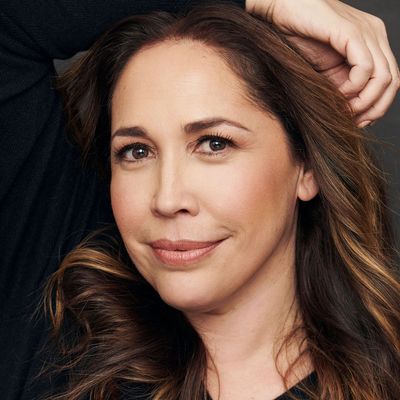
Currently starring in West Side Story, one of Broadway's biggest name's, Andréa Burns joins this week's episode of Take A Bow. This shorter episode is the perfect 30 minute masterclass from Andréa. After taking over Broadway she now is taking over the big screen and has her own album... Read More
From the show: Take A Bow
Guests
Featured Shows
About
Currently starring in West Side Story, one of Broadway's biggest name's, Andréa Burns joins this week's episode of Take A Bow. This shorter episode is the perfect 30 minute masterclass from Andréa. After taking over Broadway she now is taking over the big screen and has her own album. Her experience is unlike any other and one you'll want to listen to.
Andréa Burns, Curtain Up!
Andréa and Eli talk about:
- West Side Story
- Stephen Sondheim
- Creation of Fausta
- Future of Fausta
- In The Heights
- On Your Feet
- Inclusion of Latinx artists
- Filming/rehearsal process
- Movie vs Musical
- + a ton more
Connect with Andréa Burns on Instagram: @theandreaburns
Connect with Take A Bow on Instagram: @takeabowpodcast
Connect with host, Eli Tokash on Instagram: @tokash_eli
Produced by the Broadway Podcast Network
Edited by Tessie Tokash (@tessietokash)
Transcript
This transcript was automatically generated and might contain errors.
[0:00] Eli Tokash: Hello everyone and welcome to episode 82 of Take A Bow. I'm your host, Eli Tokash, and we have a very exciting episode coming at you all today, right now. I am so excited for this week's episode. We have a very special guest. The one and only Andréa Burns is here to speak to us all about West Side Story, a little bit about In The Heights, a little bit about On Your Feet, and all the other things that we were able to talk about. I'm really excited. You know, this month has been really exciting for me. I think it's great to bring fans, artists who are currently involved in the performing arts, and they are currently like artists that you can go see, whether it's in a movie theater or on a Broadway stage, especially during this holiday season.
So I think it's been really cool to have like Matt Megs on, who you can currently see in Wicked, or Andréa Burns, who you can currently see in West Side Story, which is available everywhere right now in theaters. I'm just very excited, and I think this episode is a fairly quick one, but I think it is one of the most valuable episodes and interviews that we've had here on Take A Bow. So I'm very excited to have you guys listen to it. So before we get into that, as always, let's talk about some news, okay?
[1:26] Eli Tokash: Um, I have some good and bad news. I don't know what I'm gonna do first. I've may I'm thinking about doing the bad news first. Should I do the bad news first? You know what? I'll do the like equal news. So it's neither good nor bad news, or it's like good news. I don't know. It depends on your like okay. So Diana the Musical announced its closing. Um, and that's gonna be this Sunday. That is a fairly short closing notice. I just want to say congratulations to everyone who was involved. The artists, the performers, the creatives, the casting, everyone, everyone. Just a very exciting thing. It's a huge accomplishment to get to Broadway in general. I know that it did not have the success that they wanted, but you know, not every show can be a Dear Evan Hansen and Hamilton.
Um, but with that being said, I don't know if Diana's marketing tactics were always beneficial. Obviously, the opening night reviews were not good, so that didn't help their ticket sales. Neither did the Netflix kind of staged movie version. That didn't help, I think, the way that they wanted to. Um, I don't know. It'll be interesting to see what happens if they decide to go on tour, if they decide to do something else with it, if they decide to find some sort of audience elsewhere. Um, but nonetheless, Diana's closing, and that's this Sunday. So literally very, very soon. And I just wanted to say congratulations to all involved. Huge congrats to Jenna DeWall, who was literally, you know, the workhorse of that show.
I think we can all agree. Um, eight shows a week and doing it for as long as she's been doing it. Huge props to her and everyone who's been just going out there night after night and giving it their all eight times a week. So congrats, and happy trails, and I'm sorry that it wasn't a longer run.
[3:29] Eli Tokash: So some other like moderate kind of news that is I think a little bad, but it could be seen as a good thing. Um, so obviously, we have a new variant here of COVID in New York especially. Um, it's very prevalent. And there has been it's this Omicron, Omicron, however you want to pronounce it, and the cases have been rising. Uh so there has been an outbreak in several shows this week, all canceling multiple performances due to COVID. Uh Freestyle Love Supreme, Mrs. Doubtfire, Hamilton, Harry Potter and the Cursed Child, Ain't Too Proud, and a few others are included in that list. So um they've all been forced to cancel shows and due to the outbreaks and or out of precautionary purposes, um, whether it's close contact or whatever it may be.
Um, but I just want to say it's a bad look, sure, but at the end of the day, like there is a virus out there, so it's gonna happen. And uh, like, you know, Matt Megs kind of talked about it last week with Wicked. Uh, they've dealt with COVID outbreaks and the swings keep it going. I think the moral of the story here is that if you're hesitant to go to a Broadway show, you know, don't be, because they're doing everything that they can to ensure that you're going and you're going to be safe and you're gonna be provided a safe space that is clean from virus and obviously safe from all other things that you may be dealing with. Um so that being said, if you are hesitant, you know, they're not gonna let you go see the show if it's unsafe.
And I think it's really a testament to last night's performance, I guess now, um, of Hamilton, where they literally audience members were lined outside the theater and were notified that the show has been canceled just 30 minutes before curtain. So um, you know, they're looking out for us and so if anyone is curious or worried about going to see a show, don't be because I promise it's just as safe as any other activity that you may be doing.
[6:05] Eli Tokash: Um so with that being said, let's turn it over to some good news um or wait let's actually stick with the moderate view uh news because who knows how this could be taken. So Lady Gaga I read somewhere that Lady Gaga is expressing interest in writing a musical and interestingly enough if she writes a musical that happens to make it to Broadway she wants to star in it. So she wants to write and star in a Broadway show. I personally would be pretty interested in that. Um I think what she's done with A Star is Born and all these new movies that she's come out with has just been really amazing and I think it'd be cool to see her live and here on Broadway. Um and I think it's like a good thing to have like a name like Lady Gaga on Broadway and kind of have more attention on theater and that kind of like art, um theater arts in general so I don't know it'll be interesting.
I know that, you know, for a show to make it to Broadway it takes at least seven to ten years, so don't be surprised if we don't see that in the near future, but it's definitely something to look out for and something to track the journey of and I think it'll be interesting.
[7:04] Eli Tokash: So yeah now we'll get to some good news. Flying Over Sunset officially opened on Broadway and to be honest I really didn't know much about this musical this new musical until like just this week and I've read a little bit more about it and I'm thrilled to see one of my old friends Tony Yazbeck opening and reopening and coming back to Broadway. Um I think it's really exciting. I think he would be a great episode of Take A Bow for sure. He was one of my jam berries in Finding Neverland, so I'm very excited to see him back on stage. Flying Over Sunset seems fascinating. I've read all the reviews and or most of the reviews and like have read the description and like the summary and a little bit about the show and everything.
I'm like kind of interested in going to see it now. So um if you don't know anything about it kind of like I did before this week, I definitely recommend you checking it out because it's something that's definitely not getting as much buzz as a show like, you know, Hamilton or, you know, these famous shows or like Mrs. Doubtfire even. Um so just another show, another option to go see that I don't think has gotten enough recognition. So I'm interested in seeing it and seeing how much I enjoy it and going to support some friends along the way. So Flying Over Sunset, congratulations to everyone involved. Happy opening. Very exciting stuff. I look forward to seeing it when I can. So check it out.
[9:01] Eli Tokash: Alright, that's all we have for the news this week. We're gonna turn it over to the drama dictionary, and then I promise you, I'm gonna let you all listen to Andréa Burns. But before we get to that, let's talk about what a pit is. So everybody knows what a pit is. Everybody has seen a pit. Especially if you listen to this, you've definitely gone to a Broadway show. Um so a pit is where the conductor kind of stands, and as he, you know, conducts and does his little thing, he is not only conducting the singers and the performers on the stage, he is also conducting all of the musicians, and all of the musicians sit in that pit with him. That it's usually like a black kind of curtain that is hidden underneath the stage that kind of preludes out so that the conductor can be seen by both the musicians and the performers on the stage.
Um that is what a pit is. It's basically where all the musicians sit. It's usually under a stage when you go on tour and stuff like that. Sometimes it's not, um it sometimes it's not like under the stage, and it's actually more out of the stage. Um, so yeah, that's what a pit is. And if you didn't know, now you know. With all of that taken care of, let's turn it over to the moment that we've all been waiting for, uh, myself included. Um, let's turn it over to the one and only Andréa Burns.
[10:34] Eli Tokash: Andréa Burns, curtain up. Joining this week's episode is an award-winning actress who has appeared in seven Broadway shows. She is one of the most beloved leading ladies on Broadway and is now taking over the entire industry with her many TV appearances, her very own album, and can currently be seen in as is a brand new role, Fausta in West Side Story, which is now playing in theaters. So welcome to Take A Bow, Andréa Burns.
[11:25] andréa burns: Thank you, Eli. It's a pleasure to be here. I'm excited.
[11:28] Eli Tokash: Oh my goodness. I'm so excited. Was that correct? I just want to make sure that that was cool.
[11:32] andréa burns: Sounds good to me.
[11:33] Eli Tokash: Thank you. Yes.
[11:34] andréa burns: Oh my God, of course. So I'm so excited to be talking to you today. Obviously, um, in doing some research for this little interview here, I can see that West Side Story is a very big part of your life. Um, do you kind of want to touch upon what West Side Story as a whole means to you?
[11:53] andréa burns: Yes, of course. Um, I actually uh my very first professional job was um Maria in the European Tour of West Side Story. I actually um I left college to go do that. It was directed by Alan Johnson, who was Jerome Robbins' uh era parent of the show. And uh so he was setting companies for he was the only person that Jerome Robbins had really trusted with the original um piece, and I got to do that. And uh yeah, and what ended up happening over the years is that um I did the show for a very long time and it subsequently introduced me to my husband who ended up playing Tony, and now we have a son who's half Jet, half Shark.
[12:36] Eli Tokash: Oh my gosh, amazing.
[12:39] andréa burns: Yeah, I'm obsessed with that. That is fascinating. And then what kind of like I don't know, like you got into call like did you go to college for musical theater? Like how did you get into like this whole like entertainment storytelling world?
[12:51] andréa burns: Um, I fell in love at a very early age with musical theater.
[12:55] andréa burns: I was um my dad loved movie musicals, so he would um show those to me. I think I saw West Side Story when I was six, and I remember thinking this is the first movie I've cried at. You know, you're like, oh my god, I'm crying at a movie, you know, it was so little, but I remember that. And um, so he introduced me to musicals. I loved them, and I ended up going to a camp in the Catskills of New York called French Woods Festival Performing Arts. Uh, that was um really devoted to uh theater and dance and music among all other kinds of uh camp activities. But I went when I was 11 and found my people and kind of never looked back. We did shows all the time, and I was able to meet some kids who were even like professional in the city and or acting teachers in the city, and I just fell in love and just wanted to soak up every little bit of it that I could.
So started at an early age. That's awesome. Child performer, we loved it. Um not professional till I was 18, but hey, yeah, yeah, you know, it's still a part of the community and everything like that. I love that though. Um, so I mean, obviously, you mentioned um that you you had done the European tour of West Side Story where you played Maria. Um, I want to ask you what it was like to revisit this story um so many years later in a brand new role.
[14:24] andréa burns: It was uh an unbelievable experience, I must say, to walk into uh a rehearsal room because we did have rehearsal for this, which is unusual in movies, but we did rehearse it in um choreography and numbers like you would in a show ahead of time for weeks ahead of time. And um the core Jets and Sharks had been uh there longer than I had, you know, working on other numbers. Um, but the my first day I walked in, and it was so wild to walk into a rehearsal room full of uh young people playing these roles that I recognize, right? That's like territory that I know, but um I was deeply moved when I walked into the room and like all these kids kind of burst into applause. And I was so my breath was taken away because while I'm like simultaneously 18 and in a West Side Story rehearsal room in my memory, I also remember that I have like 30 years on it and a career that I've built, and specifically for uh the Latinx performers, you know, I have been able to be part of something that that have that has encouraged them and inspired them to do what they do now.
So it was profound, it was deep. Um the other thing that was uh unbelievable was we did a table read of the movie and uh sitting at that table with Rita Moreno, who Oh my god. Okay, so who I was lucky enough to have met uh before. But I was sitting there, we're reading, I'm like, wait, this is West Side Story, and Rita is in West Side Story, but Rita was in West Side Story, and I'm in West Side Story. There was this time space continuum of what is happening. Um it was just incredible, incredible. And uh one more fun fact is that when they did dance at the gym, because I did uh meet my husband, he's Tony and Maria, you know, back in the day, for it was our wedding anniversary when they were filming dance at the gym. And so I asked permission to come visit the set and surprise him so we could go watch the filming of that. And that is also a memory that we will cherish forever, forever.
[16:35] Eli Tokash: Oh my God. I love that. I'm so glad that they that was able to work out and they were able to let you do that. That's so cool. There's nothing better than like being able to like watch like your coworkers and like watching them do do what they love and just play along and tell the story that is so important, especially like a story like West Side Story. Um, I want to ask you, um what was okay. So you have this relationship with West Side Story. So do you have like any like memories of Steven Sondheim that you would be able to share with us?
[17:11] andréa burns: Um, yes, of course. And I worked with Steve before I did an off Broadway musical called Saturday Night with him. That was an amazing experience because he was uh 70 years old and at the time it was for his 70th birthday, and they were mounting this show that he'd written when he was like 25 and was supposed to get on Broadway. But as it turns out, he was he was the newbie, and this one producer who believed in him said, Let's do it. I’m gonna get the guys who wrote the movie, Casablanca, the Epstein Brothers, to write the book, imagine. And we're gonna produce it on Broadway. And as they were anticipating rehearsals, that producer um died of a heart attack, unfortunately. And that show just died on the vine because nobody had ever heard of somebody called Steven Sondheim.
So it wasn't until years later uh that we mounted it and mounted it. And um, I got to originate one of the roles and and he was so funny in that because he would say things in a way like he was a kid, he'd say, Oh, I'm gonna get you a better lyric for that. I never liked that lyric. I'm gonna fix it, I'm gonna fix it. And I would think, Oh my god, this is a fantastic lyric. What are you talking about? Right? Right. I feel like a little 25-year-old kid was coming out. So that was an incredible experience to have with him. And um, I've known him through the years, but on this particular uh experience, just to see him working until the very end. I mean, America is a classic, it is an absolute, you know, standard musical theater classic.
And we were in the room together, uh, you know, he was retooling lyrics for that. And uh yeah, and I had the privilege of being in there and just he'd be like, try this lyric, sing this one, sing that one, see what it, you know, what's better. Um, he was always working to make things better till the very end. So that was a you know, a true he was a true genius, and also I know everyone throws that around, but he really is the reason so many of us are here. So to have been able to share space with him, um, and especially here full stuff in this full circle moment for me was profound. It was great.
[19:19] Eli Tokash: Wow, that's that's incredible. Especially like knowing if someone is like to his caliber, like he always just wanted to figure out a way to be better. I feel like really inspiring for like young kind of theater makers that wanna that want to write or want to create and do whatever. Um that's that's incredible. Thank you for sharing that. Um so your big your big feature in the movie takes place during the song I feel pretty.
[19:46] andréa burns: Yes. Um I wanna ask you, you kind of like alluded to it that there was like a rehearsal process and everything, but I wanna take me through like the whole like shooting of that like how does that work? That's a pretty big number and to be able to like film a musical number on film is like I'm sure tricky. Like how long did it take? What was it like?
[20:05] andréa burns: Um well it we rehearsed uh you know for about a week in the studio and then when we got to set, I mean what's so incredible about Steven Spielberg is he can have this whole fantastic thing set and then he has a brilliant idea in the moment and says wait a minute let's do this instead. So we had a big pivot actually with some of the staging in it right then and there that um ended up being very special and quite beautiful. Uh but yeah I I think it's just like um whatever you know at at this particular thing you really do um you're at the feet of the master man. Like you know you just do whatever he's like we're like oh okay we'll do this now. Um but it was um it was great. I mean Justin Pack is such an extraordinary choreographer.
He's done like the impossible you know which is to take this and somehow pay homage to not only Jerome Robbins, but Valentine and the people that Jerome Robbins, the shoulders he stood on, and and yet also be making his own mark. And and uh, and I think with I Feel Pretty it was really important to find the humor in all of it, because uh obviously it's at the end of act, it sort of kicks off act two as we know it in the stage production, where some heavy things have happened at the end of act one for those of you who have never seen West Side Story, I won't spoil. But um, but uh it's really um so that was a a real focus for everybody was bringing a lot of humor to that number, and that's where I got to come in, and uh it was really fun.
And and the best part of it was that I would have I think if I had been in a regular movie working with Steven Spielberg, I would have frozen on the spot and not been able to even open my mouth. But because it was familiar, it was like hometown turf for me, yeah. Um, he was so collaborative, and we were able to like talk and say, Well, what about this? Would this be funny? How about this? Um, and that was tremendous. He was just so open and warm, and uh, I mean, I'll remember it forever.
[22:07] Eli Tokash: Yeah, that's so cool. Like, especially because like, you know, it's a brand new role, too. Like you're you're kind of like creating this uh a new role again, like so. When you were like approached to create a Fausta in the movie, what was kind of your reaction? Like just to be asked to be in the movie, and then like there is no I know West Side Story In and Out. I was like, what do you mean it's a role? What is that? There's not even any. Um so that was just I was shocked first and foremost. I was like, what could I possibly? I did this show, it was my bread and butter for so long. Um, because for so many uh Latinx actors, you know, this was the one I would say it was like, you know, Anita Maria, Aldanza Avita.
Those were the four roles, really. Uh Aurora, Spider Woman. Okay, five. Uh right, all ending in an A that were, you know, around. And so I was like, I I I had done West Side Story for so long, I knew it inside out. I was like, I can't imagine what this is. And so um, what's so beautiful is what Tony Kushner has done to sort of um fill in the spaces, the things that have kind of been left to the imagination in the old version, um, or maybe not addressed at all, where he's just kind of filled in um the the environment of that particular area uh in New York City, San Juan Hill, that was destroyed to create Lincoln Center uh performing arts, of course.
[23:40] Eli Tokash: Sure.
[23:41] andréa burns: Um, and uh and the the characters that live there and what they're going through and what they're facing. So um that was a really you know, so that's I'm I'm part of that community. And um again, in very few ways, like very brilliant small ways, he's done all these things that have filled these gaps and also given you a better picture, particularly of the Latin people in the mus in the movie, in the story, you know, you just get a little bit more dimension, a lot more backstory, which of course um evokes a lot more compassion and empathy, and that uh I just will forever be grateful to him for.
[24:20] Eli Tokash: I agree, and I think I was able to see the movie it amazing, by the way. I I don't know if I said that um yes, oh my god, but I feel like in on top of everything that Tony Kushner and Steven did to kind of fill in those holes. I think that having the representation of like actual Latinx performers up there telling this story elevated everything uh everything that transpired throughout the entire entire movie. So, like kind of what was it like how cool was that for you to to collaborate with all of the other artists and to be able to to tell a authentic story and not a well how was how would this work and how would this work and it's it's just it's true to them.
[25:10] andréa burns: Well, I've been very grateful in my career to be part of like two of the first Broadway musicals that are about Latin people written by Latin people with In The Heights and On Your Feet. And so having come from that experience of kind of no stories about us without us, uh it was truly amazing to be on a set now where there is an understanding among everyone, um, among the non-Latinx community of how important it is to tell these stories truthfully and authentically and and with empathy and love. And that was um, you know, that was there was every day, you know, I felt that.
[25:51] andréa burns: And um and now, yeah, the conversation has changed and it's opened up and it's not new, it's not, you know, it's just now it's open for the world to take in and discuss and and now West Side Story will, you know, will include it's just so much more inclusive.
[26:12] andréa burns: And the young people who will see it now will be will know it to be that.
[26:17] andréa burns: And I think when they go back to the original movie, we'll love it too. But they'll have it's interesting, right? They might see this first and then see the older one later in life, but they'll have the basis of this and that that voice, that authentic Latinx voice, which I also want to mention, Julio Monhe, the extraordinary uh translator of Tony Kushner's book who made this the Spanish so witty, authentic, joyful, fantastic. Um that that's that's gonna be in everyone's bones. So that's forever, which is amazing.
[26:51] andréa burns: Absolutely. Um, you kind of so you mentioned all of the the original movie. You you've been a part of uh productions of it on on the stage, and there's been so many versions of it done uh throughout the world and throughout the over the course of the years. Um what kind of differentiates this brand new movie that that is currently playing in theaters and what makes you so excited for for audiences to see this version.
[27:19] andréa burns: I think it's a fuller story. It is there are many layers um in it. I think the theme is sometimes it's very easy to say, oh well, the the sharks versus the Jets, and who's the good guy and who's the bad guy? And you really, I think in this movie you you realize that the the bad, the only bad entity is fear and hate. That's the only that's the villain. And I feel that this particular story, telling of the story really underlines that.
[27:55] andréa burns: Yeah, absolutely. It it's so relevant, and I'm glad that I know this m film has been kind of on the shelf for two years because of the pandemic. Um, but I think it it there's something even more beautiful about it that it it did wait for the timing and and for allowing people, I was able to see it in theaters, and I think it just I think it's a movie right now that should be seen in theaters, you know.
[28:20] andréa burns: It must be, and Steven Spielberg insisted on it. And when you see, as you you've uh seen, of course, but when everyone who watches this sees frame by frame the love that was put into the visuals of this, you just can't miss it. You can't see it on a on a smaller TV. You need to be enveloped in the whole whole world. So it's a gift also, like it's a reason to go back to the movie theater, it's a reason to go back and have that experience.
[28:47] andréa burns: It's worth yeah, absolutely. And especially like, I don't know, there was like an added kind of thing because it felt like I was at like a Broadway show because like in my like the screening that I went to, like after every musical number, everyone was clapping, everyone like when Rita Morano showed up on the screen, everyone was like, Yes! Like they were all fun. It was amazing. And it like you, you just felt that sense of community again. And I think that that's so important in seeing a movie like this with the message that it has.
[29:21] andréa burns: Um I it just like made the overall experience so much more enjoyable. Um I don't know. That that's good, I'm thrilled to hear that. I mean, that was my experience at the premiere too. I mean, it's just oh, I'm sure. Yeah, of course. But entrance applause for every single person. But um, but I think it's also a treat for I think anyone who is uh who doesn't know anything about Broadway will love it. And I think everyone who is a Broadway fan will really appreciate the cameos and you know, some Broadway favorites who show up in there.
[29:52] andréa burns: And um, and just the and of course knowing that some of our Broadway Titans have worked on it, um, Janine Jasorian, Tony Kushner. What an incredible um marriage of Broadway and Hollywood, and it truly was a partnership. I think it's so cool because you weren't the only one who they who had kind of been associated with West Side Story before. There were a lot of people who they brought in from the this recent the most recent pro revival of West Side Story, and then uh the original production, like there was just like everyone had some sort of connection to the show.
[30:28] andréa burns: Yes. Um, and I thought that that was something even even more special because you could really tell that each of them had a special connection and like a deep, deep, deep connection with their character. And uh I think that that was really special to see because it definitely translated on the screen. Um, I think that really goes to our our producers. Um obviously Steven Spielberg and Christy McCasco Krieger and and uh and Kevin McCollum. I mean, they they have such reverence.
[30:57] andréa burns: That's what the beauty is too for for the history of this. And so while making something new, they paid such love and respect to the old and and I think it's appreciated by everyone.
[31:07] andréa burns: Yes, absolutely. And you mentioned I I just want to talk about on your feet in the heights really quickly, because you mentioned kind of what it meant to you for to you to be a part of those shows. Um, you were you you were nominated and you won awards for being in those shows and kind of telling those stories, but like in a way, like take those away and just like tell me what it means to be a part of the show to tell those stories in a real true fashion.
[31:37] andréa burns: It means going to rehearsal and playing Latin people and recognizing your family members being represented. It means looking around and watching all of your Latinx performer friends be able to be their authentic selves and celebrate the gifts that their culture has given them because they actually have a uh a venue of and uh a platform, and by platform I mean a dance step, uh a way of a a riff, a rhythm of a joke. These are all things that are very particular to a culture that may not have been understood by uh writers or directors outside of the culture, um, but were celebrated in these these instances.
[32:26] andréa burns: So that was the joy of it for me was it, and by the way, you know, obviously the Latinx uh spectrum goes, you know, it's many different countries, many different dialects, right? Many different um uh customs, but for the most part, we were so united in seeing again um something that we just know to be our heritage represented truthfully, and um it was an incredible bonding time and an incredible gift to be able to show some of the best parts of ourselves to the world that were not necessarily asked for before.
[33:03] andréa burns: Right, absolutely. And I I just have one more question for you before you go because I know you have to go. Um, but is there a um kind of even more it does it make things even more special when you're able to originate a role over than like being able to take it over?
[33:21] andréa burns: Um, yeah, it does, yes. Yes, you're shaking your hands. I'm I'm nodding because there's nothing like it. I mean, I've I have uh replaced before or I've done a role that is pre-existing, and there's magic in finding new things in that as well. But yeah, um, it's it it's harder to create a role in the sense because you don't know if it works, right? So, and I think that's why it's so satisfying uh when and if it does, because you're just throwing choices out there, you're building things, you're trying things.
[33:52] andréa burns: Um, there's a lot of love that goes into it, and also the possibilities. There's so many possibilities in the line in the words of time. Um, in the beginning, right? I mean, sometimes I get sad when a show is frozen because I think, oh, okay, so Daniela's never gonna have the possibility of doing anything else. Like this is this now is done, you know, until the next iteration or you know, the next adaptation or something. But um that's that's the beauty of it is breathing breathing life, breathing blood and guts into something on the page. There's nothing like it.
[34:27] andréa burns: So, would you like to see Fausta in in the future productions of West Side Story?
[34:32] andréa burns: I don't know about that. I don't know about I think she's you know, I have great respect for the original production of West Side Story. I don't think that the musical has to change. I think this is this is an adaptation and it's a glorious one. And uh, yeah, yeah. And everything can exist at once, you know. That's the beauty of it.
[34:52] Eli Tokash: Absolutely. Well, Andrea, thank you so much for this. Thank you for giving me your time. I really appreciate it. It was such a great time, and thank you for sharing all of these wonderful stories. I know a lot of people are going to enjoy them.
[35:04] andréa burns: You're very welcome, Mila. It's so nice to meet you.
[35:06] Eli Tokash: That's right. It's so great to meet you too. Thank you. Take a bow, andréa burns.
[35:12] Eli Tokash: I am so thrilled that she was willing to come on this podcast, especially with all of the things going on with West Side Story. I just want to shout out Reagan, uh, who's one of the I I I'm sorry, I would say the last name. I don't know how to pronounce it, and I don't want to mispronounce it. Um she's one of the publicists at Disney who helped me get her on.
[35:31] Eli Tokash: Um I just want to thank both of them so much for coordinating this and her their willingness to to pay attention to a podcast such as mine. I think it's great to have both someone who was in the West Side Story movie, but someone who's obviously a a big Broadway name.
[35:50] Eli Tokash: And um I was just really excited to have her on and talk to her about all the things and be able to be a part of her little ch press junket that she did that day. Um I I felt very official.
[36:02] Eli Tokash: Uh anyways, Andrea, thank you for sharing all of those wonderful stories. One of my favorite stories about that was just Steven Sondheim. Um, I I it was definitely a question that I was most hesitant, but it was also like to ask, but it was also one that I was like, I just need to know, and I really want to ask, and I was really excited about asking.
[36:22] Eli Tokash: Um so what she had to say about literally him being the greatest of all time, but still always finding new ways to be better and wanted to be better. Um, I think it just like it really resonated with me because you know, you could be at the top of the top and you could still improve and you can still uh it's what makes you the best, you know, having that kind of mindset and having that attitude.
[36:47] Eli Tokash: So I don't know. It's just something that really resonated with me, and I thought was really cool.
[36:51] Eli Tokash: So I appreciate her for telling us that. Um, and of course, just her entire experience with West Side Story and what it was like to to create a new character for the film and how uh that kind of character would um get I guess be involved in the future, if at all.
[37:07] Eli Tokash: Um, which she did not believe it would at all. Um, but nonetheless, I thought it was all fascinating, and I thought it was all uh great things to talk about and discuss.
[37:18] Eli Tokash: And I'm sure uh if I was wondering all those things, I'm sure I wasn't the only one. So hopefully they answered a lot of your questions, and uh yeah, I was just really excited. So I appreciate you all for listening.
[37:29] Eli Tokash: And that's all I have for you all this week. So, everyone have a great week. Enjoy this short little episode, because it's not gonna happen often. And I hope to see you next week.
[37:40] Eli Tokash: So, thanks again for listening, and stay kind, stay safe, and I'll see you next week.
[37:48] Eli Tokash: Bye everyone.
[37:50] Eli Tokash: For this episode's curtain call, I would like to recognize a few people who also deserve to take a bow. This podcast would not be possible without the help from Dory Berenstein, Brittany Bigelow, Katie Rosen, Alan Seals, and the team at the Broadway Podcast Network.
[38:03] Eli Tokash: Next in line to take the bow is Tessie Tokash, who edits the audio and all the visuals for this podcast. A special thanks to patrons Brian Thompson, Pat McNamara, the listeners at PCC, as well as all the other patrons for their continued support.
[38:17] Eli Tokash: If you're interested in becoming a patron, go to patreon.com/slash T A B. And if you enjoyed this week's episode, don't forget to subscribe on the platform that you're currently listening to this on.
[38:29] Eli Tokash: Also, feel free to give us a follow on Instagram at take a bow podcast. Take a bow's logo is designed by Giselle Bustos, and the music is by Nikki Torsha and Cormac Collinon.
[38:40] Eli Tokash: Bye everyone. Hope to see you next week.
© Broadway Podcast Network, All Rights Reserved