

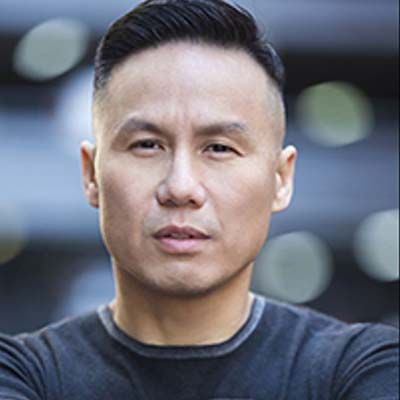
To end Asian American Pacific Islander heritage month, Grace talks to BD Wong (Law & Order, Jurassic Park, Mulan) about childhood... theatre... and being a ham... Read More
From the show: Tell Me On A Sunday
Guests
About
Transcript
This transcript was automatically generated and might contain errors.
[0:40] Grace Aki: Welcome back, everybody, to Tell Me On A Sunday. I hope you had a great week. Uh, I mean, I had a week. You know, uh, it's not important to say what happened. I just, I've made a lot of cookies in the last 48 hours. I've also not eaten a lot of cookies. I just like cooking them and then, you know, taking them out and looking at them for a while.
[1:05] Anyways, hi. Um, today's special guest is truly, truly, truly special. Uh, as he says in this interview, he didn't have to do this. He says it with love though, don't worry. Um, but this particular guest is an icon, a gay icon, an Asian icon, an Asian gay icon. I can't believe, uh, you're about to hear him tell some stories. It's BD Wong, folks. And if you thought for a second we weren't gonna talk about Mulan, you're not wrong. It's just that we, you know, we talk about more things. You know him, you love him from Jurassic Park to Mr. Robot to M Butterfly. Like, he has done everything, and honestly, like, it is a blessing, uh, that we got to share some time together because he was literally filming two things at once.
[2:00] Uh, but we've, well, the way we recorded this, just as a heads up, was, um, at a very nice studio. However, the quality is different than some of our other interviews. So my apologies if you feel as though it's a little harder to hear. Uh, I was just honestly really excited and did not totally check everything, uh, before we did it. So that's my B. But I hope that you're having a good week, and I love that you're back to hear some more stories because we freaking need it. We freaking need it right now. I love him. Here he is, Mr. BD Wong.
[2:37] BD Wong: I used to think I was just, I don't know, like surviving or going, you know, doing what I could to make it in the business or whatever. But now I'm like, no, you really like this. You really like you'll find something to do to do it sometimes. There are many, many times when I feel like I have to just like chill and I have to do nothing and veg out and stuff like that. That happens, and that usually happens after really intense, um, series of events. But, um, yeah, I squeezed you in. Squeezed you in.
[3:09] Yeah. I wanted to do that. I think you're great, and I wanted to, um, I like to. This is actually what I mean. This is actually what I mean. I could have said no to this and I wanted to do it, and I didn't want to not, I'd rather do it and squeeze it in and feel, um, a little bit kind of like it's squeezed in, than not do it, and then, oh, what would that experience have been like if I hadn't done it? That's how I feel about it.
[3:37] Grace Aki: That's so kind. I feel like if you're just like, and or if you're just, you're that way about everything in life, yeah, things are lovely.
[3:44] BD Wong: I think that, and I think that's true. And I really believe that. I thought I like, I mean, I really believe that about living. Like do you, you have opportunities. I think I grew up or I started out in this business really worrying about what the opportunities would be. I'll give you that an opportunity comes and you have to take it, and opportunity chumps, you have to take it. And I was, I married myself to that, and I maybe helped me get where, you know, to a certain level of success. And now I feel like it's a life thing that enhances your life to make sure that you don't just, I don't, I don't prefer people who kind of go, um, whatever, I'm busy or I don't feel like it, or whatever. I rather like, I'm always attracted to people who jump into things.
[4:32] Those kinds of people. So I like being that kind of person. There's always a huge difference that I've like seen in this particular business where it's like people that are burdened by things and then people that are excited by them. And so it's like, oh, I gravitate more to like, oh my gosh, what a wonderful opportunity. This is so much fun, rather than like, I have to go to this audition. I have to go to this open call. It's like, ugh. I mean, because we always, people either said to us or we say to younger people now, you know, be don't do it unless you're really into it, because it's a lot of work and it's a lot of energy that you have to put into it. And so for a person to be in the business and be kind of whiny like that is, it's a little strange to me.
[5:11] Grace Aki: Yeah, so you, I feel like you've been performing for such a long time, but you've stayed so ageless.
[5:18] BD Wong: Like we, we're so lucky. These Asian genes keep us young as fuck. I don't know. Um, I don't know, you know, I think about this a lot because people say it a lot. And I, I don't feel old. That's the one thing. I mean, I don't have any advice. I'm not that you're asking me for advice, but I don't, I don't have advice for people when they ask about how to be the way that I am. But I never think about it at all. And I think that's got something to do with it. I never think about, I, I'm only, I only think about it when I'm made to think about it. When someone forces me to, like when someone says, well, you know, you're old, so therefore, and I, and then I have to go, oh, I guess I'm supposed to be processing this moment through the lens of my age, which I didn't realize I would need to do.
[6:09] Right. But I think that not doing that generally creates a sense of freedom in you, and I'm also perfectly capable of going playing the age card or going to the age place. Not that I'm saying I'm not saying I don't ever do that. I do do that. But in general terms, I kind of see things in what might be perceived as an ageless way. I don't think of, I'm not burdened by it at all. I'm not yet physically burdened by it. I'm not like feeling aches and pains and stuff like that. So that helps, I think. But also the perspective you have as you get older is a nice thing. And I didn't embrace that before or didn't understand it in some of my older friends when I was younger. And I like it now.
I like being able to say, ah, I have, I can make this decision based upon a greater list of experiences than before. It's just a natural, there's nothing to brag about. It just is a thing that happens to you. You can do with it what you want to do with it. And, uh, and I like that. And I try to do that. I try to just, I just try to be open and not think about it.
[7:19] Grace Aki: Nice. So can you tell me a story that reminds you of like early performing days for you, whether that's like stage or screen or just like in your living room?
[7:30] BD Wong: Yeah, and you know, as you're saying this, I'm gonna try really hard to think of something that isn't that something that I, because what I usually would say...
[7:41] I usually talk about how I was the, um, um, the most adorable member of my elementary school chorus.
[7:50] Grace Aki: Of course.
[7:51] BD Wong: And I had these big black government issue glasses and just straight bang bowl cut. And I looked just like a character from a television show that was on at the time called My Three Sons, and his name is Ernie. And I have side-by-side pictures I'll show you that look exactly like Ernie. And I usually tell, and I'm gonna tell it now, but I'm I'll tell you something else to go with it if you want. Um, that my teacher, Miss Clazy, was really into me and really saw in me that I had this kind of, uh, energy, and I was kind of fearless or kind of, I was enthusiastic, that's what I was.
[8:26] And so she, I got little solos in the school chorus, and it was a very basic, kind of very basic harmony kind of easy chorus to be in. Like, you hear choruses now these days, and kids when I grew up did not sing the way that kids sing now. But anyway, we were in the chorus, and I would get little solos, and then she would also give me little assignments in the winter concert or whatever to introduce the songs. And I think she did so because I had a way about me that was kind of outgoing and, and I guess it was cute. And so I was kind of, kind of precocious and bespectacled and people liked me. And so I, and I was the tiniest person in the whole choir. And so I was in the middle of the first row, and the tallest people were on the outside, um, outside of the same line of students that I was in.
[9:21] So the whole choir went like this to, and I remember my dad bringing a little cassette recorder and recording the concerts, and he had all these tapes that I still have, and very nice warm feelings about performing. But that's what I always say. That's like, that's my go-to. I remember that it was the genesis of me being kind of finding something that really worked for me. Like I liked that. I liked the attention I got from the people off stage and on, and from the teacher that, and I liked being doing something that other people didn't want to do. Like they were kind of just, they weren't performers, the other kids. They, you know, she might have given other kids assignments like mine to share the hosting of the MC, um, tasks, but they weren't as into it as I was.
[10:15] And I was, I turned it on in this big way. So I remember that that was a seed that got something happened when I was doing that. And then I eventually went on to play in the school orchestra, and I played it, I was a musician for a long time. And then it wasn't until high school that I've got to do...
[10:33] Grace Aki: What instrument did you play exactly?
[10:35] BD Wong: Uh oh, oh fancy. You had strings at your school.
[10:39] Grace Aki: We had strings at my school.
[10:40] BD Wong: Wow. Yes, see, where did you grow up?
[10:42] Grace Aki: See, I grew up in Georgia.
[10:44] BD Wong: Okay. Well, you know, I've been doing a lot of work, um, with school student musicians in North Carolina.
[10:53] Grace Aki: South.
[10:54] BD Wong: Yeah. Not Georgia, but it's the South.
[10:56] Grace Aki: It is.
[10:56] BD Wong: And it's like real marching band mentality and band mentality. But they also do have string programs and strings that work alongside these other groups. And I'm, I'm interested in the one or the other kind of feel of it. But when I grew up in my public school in San Francisco, there was not a lot of funding, and it was very, very basic. I did have, she did, she I think it's because this particular teacher could teach me strings. She could teach all the instruments, so she taught us, she taught me the violin.
[11:29] BD Wong: And she taught me, and I'm gonna think I didn't, I'm not realizing I didn't realize this. She taught us all the instruments. She didn't have somebody coming in and teaching.
[11:38] Grace Aki: Well, that's what band teachers and orchestra teachers do.
[11:40] BD Wong: But still, like that is such a skill.
[11:43] Grace Aki: It was, yeah.
[11:44] BD Wong: And so that's partly why there were strings at my school, maybe. Maybe other band teachers or orchestra teachers in your school or whatever didn't or wouldn't or couldn't teach the strings.
[11:55] Grace Aki: A thousand percent.
[12:06] BD Wong: You could be a great string player and not even know that you would have been. And there's nothing wrong, there's nothing to regret about that because life is full of infinite experiences, hopefully, and hopefully you are overlapping, and your talent and your sensibility or whatever are overlapping with whatever exposure you're, you know, getting to something. And when those things connect, you're great. Like I, I met in high school a drama teacher, and I was a drama kid, and things happened because of it.
[12:37] Grace Aki: Yeah.
[12:37] BD Wong: But anyway, I was, uh, I was a musician and then I became an actor in high school when I met this teacher, and then everything changed at that point for me because it went from a whole, it went from that MCing the elementary school concert to a whole other level of playing characters and being a storyteller and because you start off as a ham.
[12:57] Grace Aki: Like you start off being like what I call it.
[13:02] BD Wong: That's exactly what I called it.
[13:03] Grace Aki: That's exactly right on.
[13:03] BD Wong: I was a total ham and I was a hammy kid and I would do things to get attention. I noticed my son when he was little doing this too at dinner parties and stuff like that, putting on records and dancing, or my son in my son's case, doing little plays that he made up and commandeering the whole dinner party. And I let him do it. I let him just like, I've burned the dinner a few times doing it because, you know, why did he just let him go? And my friends? Oh my gosh, was so incredible just watching him for half an hour performing and putting on wigs and dancing around and playing different characters and stuff. And I think that, you know, that freedom and that openness is really good for kids, and I think it's really nice.
[13:48] BD Wong: Bless you for letting your child do that because I feel like so many parents would just be like, "Okay, stop."
[13:53] Grace Aki: There's people we have guests.
[13:54] BD Wong: Yes, like I have no, yeah.
[13:56] Grace Aki: Yeah, he wouldn't, you know, he got really fancy.
[13:59] BD Wong: Yeah, he started making programs, he printed them out, he designed them on the computer, uh, the family computer, and then he printed them out, three little folds, and like there would be an ad for the, um, Ford Escort on the back that he would make drive the Ford Escort, buy the Ford, you know, and then he would have this is today's program, and this is what the show is, and this is the name of today's shows.
[14:21] BD Wong: And he had two, um, he had two companies, he was the only person in them, but he had two companies. The first one was called Fourth Street Com, um, um, the first one was called Zig Grand Show.
[14:35] BD Wong: G-R-A-N-D-E show, S-H-O-W-E, Z Grand Show. That was him performing. And then he changed it for whatever reason to, uh, Fourth Street Comedy Trio.
[14:47] BD Wong: We lived on Fourth Street at the time. And the Fourth Street Comedy Trio was designed for that real reason that you were talking, because he was aware that shows couldn't be too long.
[14:59] BD Wong: And so he said, "Well, they're all gonna be three minutes, the Voice Creek Comedy Trio." That's the trio part.
[15:05] Grace Aki: It's a tight three.
[15:06] BD Wong: Yeah. And of course they never were anywhere close to three minutes. But his idea of three minutes was very fascinating.
[15:13] BD Wong: Um, anyway, it is interesting to, uh, uh, let a kid do their thing.
[15:18] Grace Aki: Yeah.
[15:19] BD Wong: And as a result, he has confidence and, um, you know, to a fault, really. He's of a generation of kids that does their thing and knows what it wants in a much better way and is better at expressing it than I sure was.
[15:34] BD Wong: Um, but he also has with that what comes with that, hopefully good manners, and, um, and so that he can get what he wants through the usage of good manners as opposed to just demanding it.
[15:46] Grace Aki: Right.
[15:46] BD Wong: And then also he has a sense of knowing what he likes, what makes him tick, and kind of always looking for that, saying, you know, "I know that this will make this will work for me, so let I want to try to go for that."
[16:01] BD Wong: And that has informed his college choice and his, you know, all of his life choices. And I've struggled with those life choices, those same ones.
[16:11] BD Wong: I mean, I knew I wanted to be an actor, but how I would go about that was much less clear to me than it than his path is for him.
[16:20] BD Wong: And I think it's probably because he has a clearer channel to knowing what it is that he actually wants.
[16:29] Grace Aki: Yeah.
[16:30] BD Wong: That's, it's, it is really hard, especially now. I, I don't know the difference, obviously, because I'm in this world now.
[16:38] Grace Aki: But can you tell me, I guess, like a story of like you getting into that besides like, well, and then I did this and well, a story of getting into what specifically telling me like theater.
[16:49] BD Wong: Oh. Well, I, you know, I mean, the story is that I was in my, um, math class or something, and I was, uh, sitting next to a good friend of mine, um, Sherry Samuel, whose parents had a little, um, community theater company, and then she was sometimes played the big, the, the child's part in a show or whatever, and she knew what it was like to be in the theater.
[17:16] BD Wong: And a teacher came into the class, interrupted the class and said, "We're recruiting musicians for the school musical, and, and you know, I want to sign people up," and I said, "Well, she, I played the violin, you know, and I really think the school musical, that sounds kind of cool. There's an orchestra and there's actors on stage, and you know, I've seen musicals, I love them, and okay, so I'll do that."
[17:38] BD Wong: And she just adamantly said, "No, you don't want to do that." She said, "You, the action is not in the orchestra pit, the action is on the stage."
[17:48] BD Wong: And I did secretly want it, you know, because I was hammy, like we have established, I wanted to do it, and I wanted to, um, have somebody make me do it.
[17:57] BD Wong: And so I just went with it. "Oh, well, you know, if she, if you want to do that, I'll go and do that with you," you know, it's kind of the way it was.
[18:02] BD Wong: And that's when I met this teacher who gave, um, all the leading parts of this show, which was Guys and Dolls, to the upper class people and upper class persons, and said, you know, "I can't give you a part, but, um, if you hang out, I will give you a little part. If I need somebody to do this or a little that, if you hang out, I'll do that."
[18:23] BD Wong: And I hung out every day. I sat next to her or near her, and when she needed a policeman, I was a policeman. When she needed a guy to break a bottle over somebody's head in a brawl, I did it.
[18:33] BD Wong: And when I, she needed a voice on the telephone, I did, I played a string of parts, and I had all these costume changes, and I ended up having like a big part, not really a big part, but I had lines and I had, you had things to do.
[18:44] BD Wong: I had things to do throughout the whole show. And then from that, that began this kind of relationship with her, where she gave me a lot of opportunities that other teachers would not have given me, and I was grateful for, including letting me direct and choreograph and design the sets and the posters and, and all of this stuff.
[19:04] BD Wong: She just fully accessed me and said, "You, you can't, um, you mustn't squander this potential that you have. You don't know what it will bring you, but you have to explore all these different things that you know how to do or that you can do that you have an affinity for, and then they'll, it'll, you'll discover things."
[19:22] BD Wong: So even today now, now and at the age that I'm at, I'm still reacquainting myself with being a writer and a director and, and, and recreating things from a non-performance perspective, and that's all stems back, it all goes back to Mrs. Chainus and her faith in me, but it wasn't just faith in me.
[19:42] BD Wong: It was like her doing what a teacher can really do, which is like, "Oh, I see this person, and this person has all this stuff going on, and they, they don't know how to focus it."
[19:53] BD Wong: I, you know, I'm sure that I was like this completely unfocused. Um, I'm absolutely sure. And that she was able to say, "Well, right now, here, look, here's a job for you. I need a poster for this year's show. So design a poster," and then I would spend 48 hours concentrating on that one task.
[20:09] BD Wong: The font type, and then, and, and then she taught, brought me, took me from that stage to the print shop teacher at school to teach him how to print these posters and what, how them, how that works without taking print shop.
[20:24] BD Wong: How, you know, show him that process. So I learned all these random things throughout my whole high school career.
[20:31] BD Wong: I was a terrible student, probably because I was so enlivened by all these really, well, that didn't matter.
[20:36] Grace Aki: Yeah, like it didn't really, that didn't matter because you had all this other stuff going on.
[20:40] BD Wong: At the time it didn't, and, and even now it all worked out for the way that I needed it to work out.
[20:46] BD Wong: I don't recommend people, um, not being good students, but for me, my energy just went to a whole other place.
[20:55] BD Wong: But I'm not so sure if I really answered your question, but that is kind of me talking for a little bit on the subject of how I got into it.
[21:02] BD Wong: I absolutely freak out when it comes to singing harmonies. I hear someone sing a different note than me, and I assume I'm wrong.
[21:08] BD Wong: I've always looked for a better way to train my ear and give myself more confidence in my harmony singing ability.
[21:13] BD Wong: Now I get to tell you about my new go-to app, Harmony Helper.
[21:17] BD Wong: Playbill features writer Ruthie Fireberg calls Harmony Helper a lifesaver for auditioning actors. Broadway con star and Harmony Helper artistic advisor Rob McClure has called the app a game changer for the musical theater industry.
[21:29] BD Wong: Harmony Helper will help you develop the skills to harmonize using the newest tech available.
[21:33] BD Wong: With Harmony Helper, I can literally scan a sheet of music with the camera on my phone, and the app does some kind of witchcraft and maps out the harmony parts.
[21:40] BD Wong: It converts each line of music to audio, allows you to control the playback volume for custom control over your learning process.
[21:46] BD Wong: And then this, this is the crazy part.
[21:48] BD Wong: It provides real-time feedback to let you know if you're singing your part correctly.
[21:52] BD Wong: Take the rehearsal room into your own hands with Harmony Helper.
[21:56] BD Wong: Download it in the Apple App Store or Google Play Store.
[21:59] Grace Aki: You could literally, I, that's the thing I try to tell people is that like I could make a suggestion, and if you never talk about that thing, I don't care.
[22:05] BD Wong: Well, yeah, people are interesting.
[22:07] Grace Aki: That is the general, or hopefully they are.
[22:10] BD Wong: And so when someone's talking about what's something that means something to them, there's nothing wrong with that.
[22:16] Grace Aki: Yeah.
[22:17] BD Wong: Yeah.
[22:18] Grace Aki: So you, okay, so I guess like to give you some backstory.
[22:22] Grace Aki: I remember being in like middle school theater, and funny enough, actually, we were doing You're a Good Man, Charlie Brown.
[22:28] BD Wong: Oh wow.
[22:29] Grace Aki: And at the time I was telling, uh, my drama teacher, um, I was like, "Well, I mean, like, because I was of course I was a Lucy, like hardcore. I'm a loop, like head to tell, whatever."
[22:40] Grace Aki: And I was like, "I can't wait to do this. Like, I will be because I thought what I was doing was momentous. I will be the first Asian person in the show."
[22:47] BD Wong: And he was like, "You are not at all the first Asian person in the show. Also, it's like middle school theater. I'm acting like if it's like my off-Broadway debut."
[22:56] Grace Aki: Because it is.
[23:02] BD Wong: Yes.
[23:02] Grace Aki: But he, but he shows me clips of you doing like Madam Butterfly.
[23:06] Grace Aki: And he shows me clips of you like doing Charlie Brown.
[23:09] BD Wong: And I was like, "Oh," like I didn't, like it didn't compute for me that people existed in this realm.
[23:15] BD Wong: Because I had not seen them.
[23:17] Grace Aki: I had not seen them. Especially like growing up in Georgia.
[23:20] Grace Aki: I never, like there are no Asians.
[23:23] BD Wong: I don't know if you know.
[23:24] Grace Aki: Like they, there are some in Atlanta.
[23:27] BD Wong: I just did not see them at all.
[23:29] Grace Aki: Like my community was actually 80% Hispanic.
[23:32] Grace Aki: So I grew up being like bilingual.
[23:34] BD Wong: And so that was my understanding of everything.
[23:37] Grace Aki: Was I don't, was your community like, uh, very Asian? Were you like, I was stand out? Like what's going on?
[23:44] BD Wong: No, I mean it was, it, I have a lot of different, um, uh, overlapping environments.
[23:51] BD Wong: I grew up in San Francisco, so tons of Asian people, tons of Chinese American people.
[23:56] BD Wong: My great grandparents came to, um, San Francisco was an ideal place for people to come from Hong Kong.
[24:02] BD Wong: And so tons of Cantonese speak Chinatown there is like super intense and like a little is like going to a foreign country.
[24:10] BD Wong: It's like you can not hear English at all.
[24:14] BD Wong: Even today still, Chinatown is a very intense Chinese centric community.
[24:18] Grace Aki: Mm-hmm.
[24:20] BD Wong: And I grew up moving away from the Chinatown area when I was born because I have an older brother and then I and my younger brother were born and then we moved out of that area into a more, um, a development that was near the beach that was way away from Chinatown.
[24:36] BD Wong: And you had to drive into China, you had to go downtown to go to Chinatown, um, for my mom to go shopping or whatever.
[24:43] BD Wong: And, and so I had a much more, um, in a public school upbringing, a much more less Chinese centric kind of upbringing.
[24:53] BD Wong: Um, and yet there were a lot of Asian kids in my, um, community, and particularly in high school, there was a high school that all the Asian kids got into and went to, and most of my friends, I didn't get into it, but my both of my friends went, went to that high school, which is called Lowell, which is also where my older brother went, kind of an academic, um, emphasized, um, uh, high school in, in San Francisco.
[25:22] BD Wong: So I had this kind of backdrop of Asian identity.
[25:27] BD Wong: Um, my parents drove me to a youth group in San Francisco, in San Francisco, Chinatown every week and during middle school and elementary school, and, um, probably ended when in high school when I started doing plays.
[25:40] BD Wong: But that was a way for them to kind of have us touch base with our Chinese-ness, which we kind of didn't know what to do with, we weren't sure at the time because you're just in it, you don't really know.
[25:52] Grace Aki: Yeah.
[25:52] BD Wong: But now I look back on it and I go, "Oh, I see that was very valuable and very gave me a lot of context and gave me a lot of an identity."
[25:58] BD Wong: And I, I just directed a play, uh, that took place in, in Chinatown with a teenage boy in San Francisco, Chinatown, and I understood that boy a lot better than I would have if I hadn't had that experience.
[26:10] Grace Aki: So that's, that's great.
[26:12] BD Wong: And there were also lots of gay people, and it was the 70s, and there were, um, there was a lot of, um, growing understanding about the gay community, uh, and tension about it.
[26:26] BD Wong: And tension for young kids like me who were, uh, you know, realizing or understanding more and more what their relationship to that community might be.
[26:37] Grace Aki: Well, but, but the point is that, um, around me were these different communities of people, and in some ways I went in and out of feeling like I belonged in them.
[26:49] BD Wong: Oh yeah, you know, like you don't really know if you belong in the gay community when you're a young gay kid that's discovering that part of you.
[26:57] BD Wong: You actually kind of push it away at the beginning, if in fact you get the signals from the outside world that it's not cool to be that.
[27:07] BD Wong: And so I, I felt like, "Oh well, I know I have these feelings, but maybe they're just feelings and maybe they go away or whatever," and then kind of try to ignore that.
[27:16] BD Wong: And then the Asian American thing was of great conflict to me.
[27:20] BD Wong: I wanted to be an actor, and I didn't know why or how I would be equal looking at what was on television at the time.
[27:28] BD Wong: So I have real conflicted feelings of, I had very conflicted feelings about these overlapping communities and what my role in them might or might not be.
[27:40] BD Wong: And I have a I find similarities in my feelings for each of these communities. Like they're minority communities, there's a stigma about them when it comes to being an actor in some ways. There are individual things that at this point in time I would say are the most identifying things about me, the things that I like about me, but at the time there were things I wanted to push away, both of them. And so coming around was a big journey for me, and it took certain jobs that I had, and certain experiences that I had in those jobs and a certain amount of success to feel all embracing about both of these communities and it's a parenthood. Parenthood was a part of it when I became a parent I felt that coming out was absolutely essential and that being out as a gay parent at the time was really it was there was no other way around it actually and it was also important and so I really got into it at that point and I was really super happy to be gay because of the situation I was in and that was very positive.
[28:58] BD Wong: And that was just what like you'd say like 20 years ago yeah my son was born through surrogacy and he was conceived during Charlie Brown. Wow it was like during Charlie Brown that my partner then and I, my son's other dad said let's have a baby and it was actually when we were on tour with Charlie Brown because we went on this big tour before we came to New York we were in Illinois we were in Detroit St. Louis and Wilmington Delaware and on one of those five stops it was when we were in Chicago that I went to the sperm bank in Oak Park, Illinois. I drove, it was hilarious because I had a certain day that I could do this because we were in tech and we were rehearsing all day. We were changing the show constantly. We were in Skokie, Illinois. And I had to go to Oak Park, and there was a window of time that I could get away and do because maybe it was the day off or something like that.
[29:58] BD Wong: And I had to go to the car rental place to rent a car. And all they had was a giant red pickup truck. So I drove this big redneck pickup truck to Oak Park, did my thing, and came back. And when I came back to the hotel in this big red pickup truck, Ilan, Olivine, Lucy, and Kristen Jenna were in front of the hotel. But what are you doing? And I just said you have no idea. You're like, I'm getting a baby. I mean, it was very funny and very um. I remember thinking, oh, I'm gonna remember this because it's just so interesting and strange. And I was having such an intense experience doing that show because they really put us to work on the road refining the show, you know, rehearsing the show all day and then doing a different version of the show at night and having to put up on the call board. This is tonight's show, by the way. We're not doing that one anymore. Now we're doing this one. This version of it. Don't forget.
[31:09] BD Wong: And people don't realize, like you're being handed a new script. You're being like you're getting new pages. Oh, we're cutting this part. It's such a crazy. And even like, you know, I got I don't know, I don't have a specific remembrance of this, but for example, if you're an usher in that theater and you see the show one night, and then the next night and say, Wait, how did that happen exactly? Because the show would be rather different and fun in that way, and it was a great experience to do that. It was a really positive learning experience for me.
[31:40] BD Wong: It looked like a fun group of people. It was a very fun group of people. A lot of um there was a lot of, you know, when you work with funny people and when you work with talented people, there's a lot of really great brain action that can happen. And also funny people can sometimes be really crazy. And myself included, I'm not like I I'm not saying oh, I was they were all crazy and I wasn't. We all fed off each other in this kind of cool way. And we were all like and it was such a small group, six of us, that we were all kind of intensely in it together. You couldn't escape each other, you couldn't separate yourself from that.
[32:30] BD Wong: And so you know, uh well, well, I guess you could on your day off or whatever, but when you're all in that beer and you're on the stage, it was a real ensemble effort, and that was really nice to be in a tight-knit group like.
[32:44] BD Wong: I gotta take a second and tell y'all about my personal training coaches, Steve and Rachel Payne at House of Pain. I've been doing their workout programs, let's say three years, and they shape bodies, and yes, they prepare people to compete in bodybuilding shows, which some of it's your jam, it's not my jam. What I love about them is that they understand the look that I want, tone, fit, something that's sustainable for my lifestyle. They create a custom individual plan that includes my workouts, my cardio, and my nutrition. I do their online program, but when I'm in Atlanta, I do one-on-one training with them at their facility, and it kicks my ass. They FaceTime me whenever I have questions, alter my plan when needed, and no matter what stage you want to step on, competition, career, lifestyle, a red carpet, wedding, whatever it is, House of Pain personal training is the most personal training you can get. Visit their website, train with pain, T-R-A-I-N with P A Y-N E dot com for more details.
[33:42] Grace Aki: Well, it's like when you were I feel like people um kind of associate a lot of your work with very serious things.
[33:49] BD Wong: Yeah.
[33:50] Grace Aki: But then I'm like, honey, have you seen Father of the Bride? Like do you are you aware?
[33:54] BD Wong: Yeah, I mean I'm I'm always in conflict about that, like on Twitter and things like that. Because it it is true. And I think it's become I'm sensitive about it because the business relegates you, right? The business wants to the the the business of show business, uh the entertainment industry, they're comfortable most in most cases, taking a person and trying to say this is who they are or just a little box for you.
[34:20] Grace Aki: Yeah, yeah, uh an identity for event.
[34:22] BD Wong: Mm-hmm. And and I always found that um I never even paid attention to that. I was always trying to kind of do my thing and I don't like to repeat things, and so I always try to and so sometimes if not repeating something meant being funny when I wasn't funny before, and that's what uh that's what that's a choice that I would make that I've enjoyed for many years now, trying to bounce around in that way.
[34:48] BD Wong: And so at this late stage, for people to say, Oh, you know, you should try comedy. It's odd to me because but and yet it's it's indicative of the way that people are exposed to actors and um performers and in their unlimited way.
[35:07] Grace Aki: Yeah.
[35:07] BD Wong: And then and people, some people are going to delve into what a person's into and who they are and what their sensibility is or what their artistic energy is all about. And some people are perfectly happy, you just doing that one thing. Like, oh, you're such a good villain. And and and maybe I am a good villain. I I'm not saying I'm not a good villain, but it's a very reductive thing to kind of say.
[35:31] Grace Aki: Yeah.
[35:31] BD Wong: And I and I'm fascinated by the mechanism that creates that that people have where they assume in their limited thinking that that that would be all there was to a person.
[35:45] Grace Aki: Yeah, it's like I don't know if you're aware, but actors have range.
[35:48] BD Wong: Yeah, well, people have range.
[35:49] Grace Aki: Yeah, people.
[35:50] BD Wong: You know, even our all even your friends and your your co-workers and stuff, we're all different people in different it's like that thing where you when you're a kid and you see your teacher at this grocery store and you freak out because it's like, oh, that's weird. I don't know. You're out of place that person in a jogging suit, like with this holding, you know, a package of meat. I don't I'm not comfortable with that. That's not part of my view of who they are.
[36:15] BD Wong: And and and what I love is the is the is leaning into that.
[36:21] BD Wong: I love going, well, who else are you? And who else are you, and who else can you be, and when will I get to see that person when I meet people? I'm more much more interested in the other sides of them that are not exposed than the obvious one that's being presented.
[36:40] Grace Aki: Well, yeah, you're able to like use I'm empathetic to their differentness, and also curious about what their differentness might be.
[36:48] BD Wong: Well, you know, I mean, not to be super crass, but I'm gonna be really super crass.
[36:54] Grace Aki: I love it.
[36:54] BD Wong: Why not? Because this is the kind of conversation I think where you can be super crass. But but there's a mystery that we all have about a person's sexual personality. And I don't mean sexuality. What I mean is, to be quite honest, what they're like in bed.
[37:09] Grace Aki: Okay.
[37:10] BD Wong: Because in many cases, we're exactly who we think people think we are, and in many places we turn into a whole other different person. It's just a fact of life. We can all get over it. It's true, and it's cool.
[37:21] BD Wong: And so I'm not saying that I'm spending all of my time meeting new people, guessing or wondering what they're like, but the knowledge that there is all I do. The knowledge that there's a character, and it isn't all I do, but I do do it. But but the knowledge that there's a character that we are that is not a parent one, not a parent, and also not for everyone to partake in.
[37:47] Grace Aki: Um and but also is for certain people to partake in, or is for everyone to partake in if that person so chooses, right?
[37:56] BD Wong: Like porn stars or whatever.
[37:57] Grace Aki: Yeah.
[37:58] BD Wong: It's up to you how you expose that character or that side of you. But I'm using that as an example because it's the most polar kind of way to describe that there is a thing. There we have different sides to ourselves, and we need to, I like knowing that we are different sides, and and in the world that we're living in today, where we embrace trans people more, not enough, but more, and um where liberal minded people are at least liberal minded people are more open and understanding of what what the trans experience really is, in a way that before they even liberal people were like, ah, I can't, I don't know what that is, and you know, help me, and and but now there's definitely more like, okay, everyone, let's get on board with the pronouns and the this.
[38:45] Grace Aki: There's more uh education.
[38:46] BD Wong: Yeah.
[38:47] BD Wong: So in this world where we are living in a way, there's an openness that's potential. It's really great when we can kind of open ourselves up to the idea that people are all not just one thing. And I I know and I don't mean that trans people are not are that I'm not comparing trans people. No, no. I'm just saying that sensibility allows us to sit to see, hey, you know, there are everything's not so obvious and binary. It's just not.
[39:20] Grace Aki: Yeah.
[39:20] BD Wong: And and and I think we lived in a world, even during Obama, we lived in a world where we thought, okay, good people, bad people, and and you know, there was this there was no in between, and and the good people were always going to win, and the bad people were always going to just kind of have to deal with it.
[39:37] Grace Aki: Yeah.
[39:38] BD Wong: And I don't think we think that way anymore. I think we are more open and forced to be more open, whether we like it or not.
[39:45] Grace Aki: Yeah.
[39:46] BD Wong: We're forced to be able to be able to go, oh wow, the world is very complicated, and the world is full of lots of different kinds of people, and they have different facets, and they have different motivations, and I cannot change them if I want to.
[39:59] Grace Aki: Yeah, I can't just say, here's my great beautiful, um, groundbreaking president, and that we're therefore the world has changed.
[40:09] BD Wong: The world did change, but it didn't change the nature of humans.
[40:13] Grace Aki: Yeah, I can't, yeah.
[40:14] BD Wong: You can't really do that. And I think we were in some ways kind of naive to thinking that believing in our everyday world, going out into the world, wow, the world was unfolding in a way that felt very progressive and was moving in the right direction, whatever that is.
[40:31] Grace Aki: And and here we are today thinking, this is 2019 when this was recorded.
[40:38] BD Wong: Um that wow, it's not really quite like that. It's it's very complicated. People are very complicated. And so that's what I like about meeting new people or or assessing people is understanding the different facets of that. And that's why I'm interested in acting, because um being interested in the different sides of people that sometimes are unexpected, and I think you're almost always giving a better performance as an actor when you kind of find that thing that feels real but is unexpected. When you choose the things on the list that are the obvious things to play any character based upon, to base your character upon, you're you're not doing yourself a service.
[41:19] BD Wong: You're you're you're not deep going deep enough because people are way too complex for um, you know, um evil people cry, and you know, all of these kind of dichotomy, you know, these things that people think are are are are exclusive of one another are really not the human experience is too complicated.
[41:39] BD Wong: I think like literally an example of that is you just this year doing Mr. Robot and Nora from Queens in the same time. Do you know what I mean? Like I think that that is such an example of like you as an actor being like, I can do both. Yeah, I but and and that is what I mean. Yeah, that is exactly what I mean. I mean, I did them within I'm doing them at the same time. Jesus. I was doing them at the same time. There's one, there's a video of me that hasn't come out yet that I will put on Instagram soon where I fast forward I did a time-lapse of me in the makeup chair at one show and then went to the same day to the other show and in a completely different mindset because it had to happen that one particular day.
And yeah, that's it's it's I'm so happy to be able to do that. I'm just so I feel like I'm really myself when I'm doing that. And um I feel like it was a long time coming for me to be able to do that kind of work or have that kind of day because I well I feel like you love it, like I do love it. This is at least how we started this conversation, right? Yeah, it's exactly the way this conversation began, which is me going, yeah, I'm gonna squeeze a lot of stuff in and do it all in this end. And I remember my agents or my manager calling and saying, Okay, this is gonna be very hard and weird, but you're gonna have to do it because there's no other way around it. You have to go to Mr. Robot in the morning, and then when you're done with Mr. Robot, you have to get in a band and go to Nora.
And I said, Okay, that's I mean, it's one day, right? It's not every day. And then she's yeah, so um, and and then and I think everybody should have an experience like that and in their lives at one time or another, because it's really interesting. I think it's a well, it's a good challenge to you as like a as a performer and an artist, just as an artist in general, like being like, okay, I have to do that, and then how can I make that work and make sure that I'm very present in both tenses?
[43:39] BD Wong: That's right, which is so beautiful. Yeah, but I think theater prepares you for that. You know, that is absolutely right. I would have I was just gonna say that it has something to do with it's a very theatrical kind of enterprise because the the day to day and the kind of discipline is kind of I don't mean to say that people that work in television and movies aren't disciplined, but there's a training that comes with being in the theater. There's no question about that. And if you're really an actor in the theater, you've probably experienced some version of this training just by nature of the fact that if you've done enough shows, that's a training. So even those who have not had formal training or class training or or conservatory training have had a training in the theater by doing enough shows.
And it it is training to be in a bunch of television shows too, but somehow there's a physical experience that you're having when you're in a play or in a musical. That's different. That's more demanding, possibly. I'm not exactly. It just feels like the stakes are high. Always it feels like okay. You're using your voice, you're using uh uh you you're you're also in a um in a rehearsal process that lasts lasts for four weeks. You're in an intellectual process that you uh you it's very hard to learn in a television context. If you're a young actor only doing television, you're not gonna learn this kind of sensibility of tablework and talking about character and going talking about backstory and talking about what each line means and why you're saying it the way you're saying, you know, why a portion of a scene means in context to the whole scene and all of that.
You're going to rush that process in the television, and you can become very good at rushing it, and you can be still good and be a good actor, but you're not gonna have this um foundation of discussing character that is so valuable to have that you get in the theater. And so that did prepare me to kind of flip back and forth on that day to be able to do it and not implode or to to be able to focus even. Um so that's nice. That's a that was a good thing.
[46:01] Grace Aki: Well, we're we're reaching the end of this whole thing, which makes me sad. But we're gonna do this part of the podcast that I did not prepare you for.
[46:09] BD Wong: Oh boy.
[46:10] Grace Aki: Um, which is more improvised, where it's called uh short story. And I'm just gonna yell out a word, or I get you can go first if you want, if you're like so bold. Uh, but you or I will do a word suggestion, and then the other person will have two minutes to tell a story that may or may not be about that word.
[46:26] BD Wong: Oh my goodness. I know. Um, no, I can't go first.
[46:32] Grace Aki: Okay, okay. I'll I'll go first. You think of a word, and then I'll start my time.
[46:36] BD Wong: Okay.
[46:36] Grace Aki: You ready?
[46:37] BD Wong: Oh, wait, no, and after the two minutes, I have to say my word, and then you do yours, or we both oh we'll have a break.
[46:41] Grace Aki: No, but I'm not gonna say my word until I'm done with my story.
[46:45] BD Wong: But you're gonna give me a word first.
[46:47] Grace Aki: Yes, I'm gonna give you a word, and then you can sorry to be so fick about this.
[46:51] BD Wong: No, no, I love it. You're like, I really say you're a prepared person.
[46:57] Grace Aki: Okay.
[46:58] BD Wong: Okay, so getting ready to come concoct a story or recall a story that comes from a word that you're about to give me.
[47:05] Grace Aki: Yes.
[47:06] BD Wong: Okay. Yes, yes, yes.
[47:06] Grace Aki: Okay, and your word is violin.
[47:11] BD Wong: Violin?
[47:12] Grace Aki: Violin.
[47:13] BD Wong: Violin.
[47:15] Grace Aki: Oh shoot, I thought that was violence.
[47:18] BD Wong: Um when I was um a very little kid, I uh had a private um violin teacher and was going to the San Francisco Conservatory of Music. My Parents were allowing me to be a uh a violinist, and that was creative and kind of performance related, and so I was really excited about the I was really happy to be able to do it, like to have permission to do it. Because I think my parents were always kind of in the background of an issue for me, like will they let me do this creative thing? Will they let me do this performance-related thing? And it was actually a long journey kind of discussing with them to be whether I could be an actor when the time came. But I I had a traumatic experience because everyone was really invested in me playing the violin, and there were two things that I are related to this.
One is that I realized after um when I was late in middle school that I did not like playing the violin, that I was really kind of just doing it because they let me do it, and it was performance related, but it sure wasn't storytelling, and I sure wasn't like enjoying, you know, wasn't it wasn't funny or anything like that. So it was like kind of odd thing to realize slowly as I started to become an actor, and I go, oh, this is what I wanted to do. The other thing that I that I have never told anybody, and this is what the the this is my opportunity to say, is that I accidentally stepped on my and broke it and was so m traumatized by this that I had to pretend that it was an accident because I just didn't think my parents would ever forgive me.
I I I accidentally stepped on it, and then I I don't remember they were all kind of fine with it because I was like, I don't know how this happened, because I opened the case one day and it was like completely shattered and um didn't tell anybody ever that I had stepped on it. Even though I'm kind of like nervous. Should I sing it? Although too much my two minutes are up, but um that's what happened in when it comes to the violin.
[49:14] Grace Aki: Oh my gosh. I'm so glad that the short story moment just gave you some catharsis on the violence story.
[49:21] BD Wong: I'm so sorry.
[49:23] Grace Aki: Uh okay, so okay, you're gonna give me a word.
[49:27] BD Wong: Uh-huh.
[49:27] Grace Aki: And then I'll start my time.
[49:30] BD Wong: A mixed.
[49:32] Grace Aki: Mixed?
[49:33] BD Wong: Okay, um, okay, so I'm gonna start my time.
[49:35] Grace Aki: Okay.
[49:35] BD Wong: Okay, so when I when I met Damon, um, because I'll just say this, uh, there was one time when I went, I was I was talking to him, and then I was like, you know, I never thought about like I've never been attracted to, or not that I'm unattracted to, but I've just never been attracted to a uh black man, let alone like um a mixed black man, and he goes, Oh no, no, no, honey, I am not a dog. I am not mixed. And and I was like, oh my god, like he's so right. Um, so that's how I learned the term like biracial is totally correct. And um whenever I uh this is such a weird thing. Um when I've been like working in you know in New York for like a little bit, I had a friend who is no longer my friend. Rest in peace.
Uh she sucked. But anyways, she uh said to me one time, you know, you're not uh you're just mixed. You're not Asian enough to like understand because she was like a hundred percent Korean. And I thought about that for a long time and I was like, how dare you for saying that to me? Um I can have experiences as like an Asian American person, and I have dealt with them because my grandmother would like tell me all these stories, and then she, you know, would uh make me kimchi all the time, da-da-da-da. So I like thought of this understanding of like that I was a hundred percent Asian, even though like I technically am not. So it was just so funny to me. So when she was like, uh, you're just mixed, I'm like, ew, f first of all, it's biracial. Second of all, how dare you jerk? Um, but yeah, that's what that word makes me think of. I think of Damon correcting me as he totally should.
[51:05] BD Wong: Yeah.
[51:05] Grace Aki: And um also this like weird experience with my friend. So there you go.
[51:09] BD Wong: I love it. I mean, you know, I'm this is a real issue, not an issue, but a really fascinating, not fascinating. This is a very rich topic for me. My at my son's bar, Midzpa. I mean, we all got to make a little speech. And and and the only thing I could think of to say is, you know, the after all this talk of who you are and what you are. I I think I would love you to go through life thinking of yourself as all of both and not half of one.
[51:36] Grace Aki: That's beautiful.
[51:37] BD Wong: And it's true though, you know, the identity is not chemic, it's not a chemical, it's not kind of like portions. It doesn't really work that way.
[51:45] Grace Aki: Yeah.
[51:45] BD Wong: Actually, when you think about it, your identity is informed by it doesn't matter, it doesn't have anything to do with how you physically appear. It has nothing to do with that. It is more, well, it can to casting directors or whatever to be friend. That's that's it's really dumb. But but really what more is it's it's who are you? That's a that's not that's not a chemical equation. That's not, you know, like when I say critical, I'm like mixing one or the other and and and making this, you know, uh an end product or whatever. It's not that. So anyway.
[52:18] Grace Aki: Yeah, no, it it's all those things.
[52:20] BD Wong: Well, thank you so much for squeezing me in yet again. And um I yeah, I'm still gonna pimp all of your stuff coming out, but is there any other project that we uh may kind of know about that you wanna talk about for a second?
[52:32] BD Wong: I mean, I have been working more as a writer and director now. I just directed a play called The Great Leap, um, at the Pasadena Playhouse, which is um running now, um, depending upon when this comes out. It was a great experience, and I have r very s kind of great success, luckily enough, and ha and and that that that makes me feel good and it's that that was a really, really great experience. And then I'm continuing to develop with my writing partner, uh, Wayne Barker, the composer, our adaptation of Mr. Holland's opus, which we are in deep end development with a group uh uh theater called the Wilson Center for Port Performing Arts in Wilmington, North Carolina, and doing this really fun um community interaction where we're developing the show with um young actors and young musicians and actors from the community, um, who are really high school students and and they're high school students characters in the sh in the show.
So it's been very valuable and heartwarming experience, um, not just as as as people, you know, heartwarming as people, but as writers, it's been really valuable to see what real high school students are playing these roles. And we have several development readings coming up in the spring. And we're in the talks for a actual production, which will be in the summer that will I'll let you know when that's really final. And that project has been taken up a lot of um bandwidth for me, and I I and happily so because I'm really, really love writing. I really love writing lyrics, I really like directing musicals, and so um I'm following that. Nora from Queens is gonna air in January and Mr. Robot is is it's is ending its um is airing its last episodes by Christmas. Wow.
[54:25] Grace Aki: So that's all new stuff.
[54:27] BD Wong: And then there's a Jurassic World 3 which will be made in June. I it will be made next year and I think I'm working on it in June.
[54:35] Grace Aki: Wow. Okay, so you're pretty free time-wise, and um yeah, retirement's fun, right?
[54:43] BD Wong: Thank you so much.
[54:45] Grace Aki: This is amazing.
© Broadway Podcast Network, All Rights Reserved