

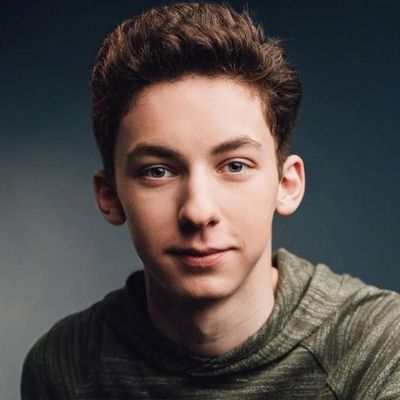
Our guest today made his Broadway debut at the age of 16 in the title role in Dear Evan Hansen. He was the winner of the Best Actor Award at the 2018 National High School Musical Theatre Awards (known more commonly as the Jimmy Awards)... Read More
From the show: The 54 Below Podcast
Guests
Featured Shows
About
Our guest today made his Broadway debut at the age of 16 in the title role in Dear Evan Hansen. He was the winner of the Best Actor Award at the 2018 National High School Musical Theatre Awards (known more commonly as the Jimmy Awards).
Andrew joined our Director of Marketing, Nella Vera, to discuss how he related to the role of Evan, his theatre company Zneefrock Productions, and heading off to Harvard this Fall.
For tickets and information visit:
https://54below.com/events/a-newsical-hope/
See Andrew sing “Only Us:”
https://www.youtube.com/watch?v=8l97Nza8mtc
See Andrew’s Jimmy Awards performance of “I Love Betsy:”
https://www.youtube.com/watch?v=E4HGSE2dd9Y
Watch the original (8th grade) cast of Star Wars: A New(sical) Hope:
https://www.youtube.com/watch?v=7ySOIYKMyXc
Credits
This podcast is hosted by Nella Vera and Adrian Karnani and produced by Grace Benigni, with support from the Feinstein’s/54 Below marketing staff.
Artwork by Philip Romano.
Follow Nella on Twitter at @spinstripes and Adrian on Instagram at @adriankarnani.
Transcript
This transcript was automatically generated and might contain errors.
[0:00] Nella Vera: Good evening, ladies and gentlemen. Welcome to the fabulous 54 Below. Before we get started this evening, just a polite reminder. Please take this moment to silence your cell phones. Also, there is no flash photography, please. Thank you. Enjoy the show. Ladies and gentlemen, Andrew Barth Feldman.
[0:30] Nella Vera: Thank you all for joining us for another episode of the 54 Below Podcast, where we bring you behind the scenes at Broadway Supper Club. I'm Nella Vera, Director of Marketing. Our guest today made his Broadway debut at the age of 16 in the title role in Dear Evan Hansen. He was the winner of the Best Actor Award at the 2018 National High School Musical Theatre Awards, known more commonly as the Jimmy Awards. I'm Andrew Barth Feldman, and you're listening to the 54 Below Podcast.
[1:00] Nella Vera: Andrew Barth Feldman, welcome to the 54 Below Podcast.
[1:03] Andrew Barth Feldman: Thank you so much for having me. This is so exciting.
[1:06] Nella Vera: So you're one of a long line of Jimmy Award winners to head directly to Broadway, including Eva Noblizada, who's in Hadestown, Ryan McCartin, who's about to take over Hans in Frozen, and Renee Rapp, who won alongside with you last year. Is that correct?
[1:22] Andrew Barth Feldman: Yes, she did, yeah. And she's currently in Mean Girls.
[1:26] Nella Vera: What did winning the Jimmy Award mean to you both personally and professionally?
[1:31] Andrew Barth Feldman: It's still insane to me because I mean just never in my wildest dreams was that going to happen. I remember that the night before I called my mom and she was like, I'm so happy you're there, I'm so proud of you. Know that nothing's probably gonna happen. Like you're probably not gonna win. And that was the kind of thing she'd often say to me, just to like make sure I didn't get my hopes up. But in that moment I was like, no, I have a good feeling that maybe I could be a finalist, maybe. And so it was all very, very insane. And I was just there to learn and grow. Whereas Renee, who I love so much, was there. She was like, I think I can win this, and I'm gonna do it. All the more power to her because she did it, and that kind of confidence is something I can't even fathom.
But oh my god, she is one of the best people I know. And I'm so proud of her that she's doing this Mean Girls thing. And yeah, so it's still insane, and people talk about that like it's like where I came from, like it's my roots, but it's still crazy to me to fathom the whole Jimmy's thing.
[2:37] Andrew Barth Feldman: I mean, we've all heard that story, right? And it's a little Hollywood story almost. Like a star is born, you know, you go to this competition, and then the producer of Dear Evan Hansen sees you and your career is launched. Was being an actor on your radar before the Jimmy Awards?
[2:54] Andrew Barth Feldman: Oh, yeah, it was all I ever wanted to do. My parents took me to my first Broadway show. I saw Beauty and the Beast when I was three years old because we knew the person who was playing Chip, and so we did like a backstage tour before, and I was terrified because the house is so scary, and so I was three, so I was like very, very frightened. But then I saw it and I was like, oh, I get it. Because I'd been to Disney World a couple times before then, so I'd had the experience of escapism, and I was like, okay, this is another way to get there. This is a more accessible way to get there. It was all very subconscious. I was not having these explicit thoughts at three years old. But when I was eight, somebody said there's this theater company doing a production of Annie, you should go be a part of it.
And I was like, this is a thing we can just do? Like we can just go to a place and do the thing that these people are doing? It was insane. But so then I was Mr. Bundles in a terrible, truly awful production of Annie, and then that was it. I caught the bug. I would do five shows at a time in different theater companies, and I started my own theater company, and so yes, absolutely. This was theater storytelling is everything I've ever wanted to do.
[4:05] Nella Vera: Tell us about your theater company.
[4:07] Andrew Barth Feldman: Yeah, so Zneefrock Productions is my theater company. I started it when I was 12 years old as a bar mitzvah project, actually. We raise money almost exclusively, now a little less exclusively, but for Next for Autism, which is what we raised money for when we did Star Wars last night. They help the lives of people living with autism so much, be it vocationally or educationally. They do everything just to make life better, not to, you know, cure autism, which is what a lot of these foundations say, but saying we're gonna make lives better for people with autism and families with autism. I have a brother, he's really my cousin, but we were essentially raised together. I have a brother on the spectrum, and so it just was the obvious choice. So we've been doing shows for six years, and we're doing three shows this year, including Star Wars, so it's crazy, and I'm so it's my passion project.
[4:56] Nella Vera: You performed and wrote the show called Star Wars: A New Musical Hope. That's right. When you were in eighth grade, is that correct?
[5:04] Andrew Barth Feldman: Yeah.
[5:05] Nella Vera: Okay. And so you've done it, and now you're bringing it to 54 Below, and we're recording this the night after the first show. That's why you can hear my voice is a little more raspy. And you're coming back to do it on March 1st. How did this project come about? Are you a big Star Wars fan?
[5:19] Andrew Barth Feldman: Yes. I discovered Star Wars in middle school, which is later than a lot of kids my age, but I watched A New Hope in an English class because we were learning about archetypes, and so we watched A New Hope. And I fell in love with the camp and the universe. I had a lot of friends in my school who were also really into it, including Adrian Dixon, who I wrote this crazy show with. We just had such a love for it. There is no good Star Wars musical out there. They're all like weird jukebox parody musicals or like takes on it. Nothing that's a straight parody, and I love things like Team Starkid, which if you don't know what that is, they're this theater company out of Michigan that does all these parody shows.
So it was definitely very heavily inspired by them. We just kind of wrote this and we put it together, and it was bad. It wasn't good. And I remember Adrian, who wasn't really able to be super involved with the rehearsal process because he was at camp, came to see the dress rehearsal, and I turned to him after and I said, so what did you think? He said, well, it's what we wrote. It's what we wrote down. So it was definitely a bit of a mess, which is why this was so hilarious to do it with all these incredible people was the funniest idea to us to like let's just hand them this material that we did in eighth grade pretty much untouched and see what they do and just give it to them, and they knocked it out of the frickin' park.
[6:48] Andrew Barth Feldman: It's kinda it's not bad. Like you're saying it's bad. It's actually really clever and fun.
[6:55] Nella Vera: Thank you.
[6:55] Andrew Barth Feldman: And ridiculous, but it's supposed to be.
[6:58] Nella Vera: Yes, which is you know, we had to cut some stuff for time when doing it at 54 Below, and it was so much better when we just cut this long stretch of time in the show where there was no song, and I think that's sort of what was the kicker originally of like, okay, we're really sitting through this now.
[7:15] Andrew Barth Feldman: Yeah, it was fun. Like it's just fun and silly and ridiculous and not trying to be anything serious. What we can do now is lean into the things that we know are not good and wink at the audience and groan, and so it was really fun. And I am proud of some of the music that Adrian and I wrote. Looking back on it now, I barely remember writing it, but I'm like, this is pretty good. For eighth graders, absolutely.
[7:37] Nella Vera: I'm so fascinated by young people who love Star Wars because I saw it when I was a little girl, and at the time it was groundbreaking. Like there had never been anything like this. So to me, that young people your age and even younger, like my nephews love Star Wars is so shocking to me in the world of Marvel and crazy special effects.
[8:01] Andrew Barth Feldman: And for me it was the story, the good and evil, the father-son story. You had never seen even those very rudimentary special effects were a humongous deal when I was twelve years old. But now I feel like I would think that it wouldn't have the impact that it had, but for some reason it's still very popular.
[8:20] Andrew Barth Feldman: No, I think it has the impact that it has because it's so a product of its time and with these new Star Wars movies, which I love in a different way, because the originals four, five, and six, I mean, they're so bare bones the story. The effects are there, and they're just to fathom that this is the first time anything like this has happened is crazy to think about. It's so campy. Whereas now with one, two, three, seven, eight, nine, we really get into the rules of the universe, and that's okay. But I think with four, five, and six, there were no rules. It was a completely lawless universe. We can just make these things up, you know, and there's something so charming about that, I think.
[9:03] Nella Vera: Yeah, and I don't think when I was a little girl, I thought it was campy. I just loved Luke Skywalker, but now when I see Luke, he's so campy and just adorable, and that's why you love him. But I think I really thought it was very serious when I was a little girl.
[9:18] Andrew Barth Feldman: Yeah, it's not campy in a funny way. It's campy in a let's just make a thing way. And like let's tell this great, very, very basic but touching story. I don't know. I think just the universe and there's something so limitless about saying we can just make these things up. It's not in this galaxy, it's a different galaxy, it's a different time period. There's no, we're making this all up from scratch.
[9:44] Nella Vera: It's funny, I just re-watched all of them because we were gonna go see the new one, and we said, let's just rewatch all of them, and they re-released them, but George Lucas, I guess, has added in the things that he didn't exist because the technology didn't live in. So we spent the whole movie going, that's not supposed to be there. There's too many stormtroopers running down that hallway because they couldn't afford them any stormtroopers, so there were only a few, and now there's like tons of stormtroopers chasing them as they go back into the Falcon. So it was interesting, but we were like, no. We feel so protective over that original.
[10:23] Andrew Barth Feldman: I know. Yeah, you have those versions that are on Disney Plus now, and those are the remastered versions, but we actually happen to have the original VHSs in my house. So we have like one VHS player in our house, and that's become like the Star Wars room that we watch Star Wars in. But yeah, we make a joke about that, all the added stuff in the show where when they go into the cantina and there's all those like weird creatures and stuff, C3PO says, look at all these horribly animated creatures. Bravo, George Lucas. And it got applause last night, so it definitely resonates.
[10:51] Nella Vera: That's so amazing. You just departed from Dear Evan Hansen, passing the polo onto Jordan Fisher. Tell us about being in the show, especially at 16 years old.
[11:04] Andrew Barth Feldman: It was so perfect. Every second of it.
[11:07] Nella Vera: Had you seen the show prior?
[11:08] Andrew Barth Feldman: Yeah, it was and is my favorite show. I think it's a perfect, airtight, beautiful book. The music is so catchy is a word for it, but that's an understatement for what it is. But it was also the hardest thing I've ever had to do. And it was just a hard year in like my life, and so matched with doing that role every night was the biggest challenge. And I don't think I realized how difficult it was until I wasn't doing it anymore. It's very nice now to have done it and wake up every day and know that I did it and that I don't have to do it anymore because I loved it so much every second of it. But a year is enough. A year is the maximum amount of time that a person should do that role.
[11:57] Nella Vera: What was the most rewarding part of being in the show?
[12:01] Andrew Barth Feldman: The catharsis that it provided. My mom passed away in August.
[12:06] Nella Vera: I'm so sorry.
[12:07] Andrew Barth Feldman: Thank you. And we're actually doing another show, a tribute to her in May, which I'm really excited about. I just all I wanted was to get back to the theater and do that show with Lisa Brescia, who is now family to me, and doing so big so small every night, doing the orchard scene, saying that everything's okay, I'm enough. I had to start listening to the words that were being said, and they provided so much healing. And it gave me a place to cry every night, which I really needed to do, and the people that I got to know are my family now, and I hear all these stories about people who do a show and grow a family and then never see those people again, and I've seen these people almost every other day in the last two weeks since I've finished the show.
[13:01] Andrew Barth Feldman: So they are my family and they will be for life. I really believe that. And even if you don't see them for a while, you can always come back to that family.
[13:10] Nella Vera: Yeah, yeah. And they were I mean, they were all in the Star Wars show, so I brought them all along for the color.
[13:15] Andrew Barth Feldman: Oh wonderful. What was your biggest challenge during the show?
[13:20] Andrew Barth Feldman: Uh everything else, I think. The diet was hard, different from everything else, but I kept a very strict diet.
[13:27] Nella Vera: What was the thing about the diet?
[13:29] Andrew Barth Feldman: It was more of a vocal thing. Ben Platt sort of set this precedent of like no dairy and no, you know, not too much like serious red meat, nothing that's difficult to digest. So it's a precedent that I followed because I did not want to take any risks. And so I essentially toward the end of my run ate the same thing every day. It was sushi for lunch and a roast beef and avocado sandwich for dinner. Lots of avocado-based things because avocado's really a good protein and really not acidic. And that was also guided by Liz Kaplan, the legendary vocal consultant on the show. But I mean, I couldn't cry at the beginning. I still can't cry on command, and so it really had to become getting in touch with what was happening every night. And that was really hard. But once I got it, I did cry every night. And that I'm never thought I'd be able to do, because I never could. So I, you know, it's nice to know that I can.
[14:26] Andrew Barth Feldman: Uh, but all of it. It was all really, really difficult just to find my Evan. But once I did, it was second nature. Dear Evan Hansen is a story that touches so many people, particularly young people on a very personal emotional level. Did you feel that response from the fans and the audiences?
[14:45] Andrew Barth Feldman: Absolutely. I mean, the greatest gift was when people at the stage door saying, "You saved my life, you changed my life," or when parents would come and say, "You nailed my son." That's what theater can be. And so to be a part of telling that story was such an extraordinary gift. And I know I knew what it does because that's what it did to me. That opened up my own conversation about my mental health and my anxiety, and sort of began my own personal journey with that. And Evan was my guide to that. So I know what it can do to people and for people. And so I knew that I had that responsibility from the beginning. So to know that I did the job that I had is really I can be really at peace with everything, which is really nice.
[15:45] Nella Vera: Did you feel that being close to the age of the character was helpful to doing the role?
[15:52] Andrew Barth Feldman: Yeah. Yeah. A thousand percent. I think it resonated with parents in a different way to see a kid, a real kid go through it, because I think on a very base level, you're rooting for him a bit more, even if I don't do anything like taking all the, you know, acting quality, whatever out of it. Seeing a kid, a teenager, a real teenager playing this poor teenager changes the story dramatically, and I didn't realize how much it would until we were actually doing it. So, yes, absolutely. And then just for me to not have to dig back in my brain and say, "Oh, how did this feel when I was a teenager?" I know how it feels when I was a teenager, and I'm a teenager in the era that Evan is a teenager, which is a different era than a lot of the other guys, because I was born with a phone in my hand.
And I know what it's like being a teenager in the social media era of that being just a blinking light in our brain of whose life is better than mine today? And that's what the show, that's the back literally the backdrop of the show. So absolutely, it changed so many things for me as a performer to get to play a teenager, and so many things I like to think for the audience.
[17:09] Nella Vera: And did they when they cast the other actors, were they close to your age, the other kids?
[17:17] Andrew Barth Feldman: So Mallory was there before I was, and Mallory was eighteen when she started. So that was really, really nice. And when the Times came back and reviewed it, they took special notice of our scenes together because we're both teenagers, and there's something very light about watching that on stage and a lot less, you know, it's a lot more, "Oh, we really like this," and "We wish it wasn't based on a lie," as opposed to, "Ooh, this is hard to watch because it's based on a lie." So it was just a bit of a lighter thing, which is really cool. Gabby, who came in and replaced her, is in her twenties but is one of my best friends, and our chemistry is something they saw in rehearsal was really special because we have such an incredible relationship. So she was farther away from the age than Mallory was, but you wouldn't be able to know, you wouldn't tell. So yes and no is really the answer.
[18:13] Nella Vera: That makes sense.
[18:14] Andrew Barth Feldman: Yeah, I love the show, and what's extraordinary about it, I think that as adults, sometimes you tend to dismiss stories about teenagers. My whole generation, we see the grown-up plays like Oslo and things like that. And you know, the stakes being so high for young people, we forget that these are real feelings that what they're going through is every bit as valid as what somebody in their forties is experiencing. And I love the show because it wasn't, you know, it wasn't your typical high school musical like Grease or, you know, something kind of fun and light. It actually said, "No, this is real life, and these are real people and they're young, but they experience emotion and love and betrayal, and all of these are very real things." And I find that sometimes as adults we forget that.
[19:11] Andrew Barth Feldman: Yeah. And we tend to dismiss young people, which is I think why there's a mental health epidemic in a way, you know, "Oh, well, they're just teenagers, they'll get over it," and I think shows like this show very much, you know, that real world, and that it's valid what you are experiencing at 16.
[19:31] Andrew Barth Feldman: Yeah, because I think with a lot of teenage shows, you as an adult know that they're going to be okay. Which is harder to see with adult shows because you don't know that they're going to be okay because you don't know if you're going to be okay, etc., etc., etc. That's why it really resonates with teenagers because they really don't know if they're going to be okay. But with this show, with Dear Evan Hansen, nobody knows that he's going to be okay. The stakes are really there of is this kid okay? Is he going to be okay? Are any of these people going to be okay? You know, Connor taking his own life at the beginning of the show sets the tone for the stakes are life and death here.
[20:07] Nella Vera: Yeah.
[20:08] Andrew Barth Feldman: And that's not something that we often see in stories about teenagers, and that's what makes the stakes so high, I think.
[20:15] Nella Vera: Yeah, I agree. And it's funny because I've heard adults say this, and I think I might have felt this a little bit when I saw it. Oh, well, this show, oh, he never suffers the consequences of his actions, and that drives me bananas because A, he does suffer the consequences. They're internal, and he's living with this for the rest of his life and has to, even though it seems like he forgives himself, he's probably not really there and will have to repeat that forever. But also how many adults get away with so many things? I mean, look at Wall Street, you know, it's like adults get away with so much bad behavior. So then to focus in on this one teenager who did not like go to juvenile detention because of something that he did, yeah, it seems so silly.
[21:08] Andrew Barth Feldman: It's silly because I think right now America specifically has a distaste for liars. With Trump in office, we don't like liars. We really hate liars right now. And Evan Hansen is a liar. But as far as I'm concerned, almost every step of the way his intentions are good. And it's hard to see because the things he's doing are not good. But what more do you want? You know, that what you're seeing and words fail. And in the orchard, that's genuine remorse for his actions. That's the goal of something like juvenile detention or him being canceled on the internet. You know, that's the goal is to make this person feel remorse and repair themselves, and that's what he does. So to say that he doesn't face the consequences of his actions is, you know, I understand it, but he does. And ultimately, the goal of all of punishment, supposedly in our society, is redemption.
[22:11] Nella Vera: Yeah, and he does redeem.
[22:12] Andrew Barth Feldman: You know, we want people to go through their punishment but to come back as productive members of society. You know, I hear sometimes I hear adults, especially friends who live in red states, say, "Oh, well, why should we pay for prisoners to go to college?" It's like because we want them to become productive humans. And yeah, and even if you're locked up in prison for life, you might actually not become the person that kills a guard if you're enlightened. So there's always a benefit to redemption, even if the person isn't entering society again. There's always a benefit. So yeah, I think the end of the show is great and perfect.
[22:55] Nella Vera: In addition to rehearsing and being in the show at night, a working actor also has other responsibilities, such as you have to do press, you go to photo shoots. How did you manage school while you were in the show?
[23:07] Andrew Barth Feldman: Uh so I was tutored. They provide a tutor for me 15 hours a week. It was real school, you know, it was just me and a tutor, but I took all AP classes. I was real for real school. But we were all sort of of the impression that I wouldn't do homework outside of the tutoring room because I didn't have the time, and honestly, 15 hours one-on-one is enough time for me to do all the work that I need to do in the class in the room. So it worked out very well, and by the end of it, everyone was really on the same page. Junior year was harder than senior year, but senior year we had a lot of the same tutors, so everyone kind of knew how to handle it, how to manage it. When I started Dear Evan Hansen, I was doing five shows a week as opposed to the traditional six for an Evan because I was in school.
And then over the summer, I moved to six, and they wanted me to go back to five when I was starting my senior year, and I said, "I think I want to do six. I think I should do six," and they said, "Okay." They gave me the shot to do it, and it worked out. I think it worked out for the better that I had fewer days off from Evan's brain, and so it all really worked out very well. But it wasn't easy. It was another part-time job, as Stacy put it, our producer. But we all made it work. It was a team effort, all of it.
[24:36] Nella Vera: And were other people in the production getting tutored also?
[24:39] Andrew Barth Feldman: No, I was the only one still in school. So I think we had Dan, one of our understudies who just finished his run as Connor. He did a two-week run as Connor. He was finishing up college at the beginning of my run, I think, online, like online. But no, I was the only one getting tutored because I was the only one young enough to be in school.
[25:01] Nella Vera: And yet you finished, are you so you finished high school early?
[25:05] Andrew Barth Feldman: Yes. I had enough credits to graduate when I was done with the show so that I didn't have to go back to like actual high school. My school's very small, so I love all those people, but it would have been weird to be gone for a year and then come back for a couple months for the end of senior year where you're really not doing much anyway, felt strange.
[25:24] Andrew Barth Feldman: Don't say that uh in front of the teachers.
[25:28] Nella Vera: Then never mind.
[25:29] Andrew Barth Feldman: Um, you're kind of wrapping up.
[25:31] Nella Vera: That's true, you get senior it is, and there's a lot of uh, yeah, so now I it's sort of like I'm taking a little gap year, which is nice because I can just create, you know.
[25:40] Nella Vera: When you took over the role that had only been three Evans before you, did you feel a lot of pressure having to take the lead role in this not just a musical, but an enormous hit musical?
[25:53] Andrew Barth Feldman: Every single day, every day till the very last day. I felt the weight of Ben and Taylor and Noah and Michael and Ben Ross and every Evan before me on my shoulders. Because people like to compare. And people, if they really loved Ben or they really love Taylor, they're not gonna be so open to someone who's very different. And we all are so different from one another. But people tend to stick with the first one they saw, which just seems to be the fact of it. I was very not good for most of it at not looking at comments and stuff. I was really wanted to know what people were saying about me.
[26:34] Andrew Barth Feldman: I know, and that's like the number one thing you shouldn't do. I know, so I, you know, amidst all the nice things, I'd see one, I miss Ben, and it's like, oh, just come just see it, open your mind. And I found, and this is where I started to become against the whole bootleg thing. I found that the people that were judging my performance the most were the people that hadn't seen it, were the people that had only watched a clip from a bootlegger or some video of me performing online. Those were the people that had the harshest judgments about my performance.
[27:08] Andrew Barth Feldman: So here's my thing about bootlegs. If you watch bootlegs, that's fine. If you take bootlegs, that's not cool. That's illegal and distracting. If you judge a performance based on a bootleg, you're denying yourself that performance in reality and the judgment of that performance in reality. So if you really can't afford Broadway and you watch bootlegs, okay, they're accessible, they're online, I get it. But you can't judge a performance from that out-of-context video. You just can't.
[27:40] Nella Vera: Yeah, don't get me started on bootlegs, obviously.
[27:43] Andrew Barth Feldman: I know. Listen, I'm a theater kid, so I get the like watching of bootlegs. I understand, especially with shows that are closed or people that have left shows. I get it. I don't condone it, I get it. Taking them as bad, judging them from bootlegs is really bad. They're both really bad. It's not the way it should be experienced.
[28:02] Nella Vera: And you know, I hear a lot and I see a lot of comments. People saying, well, how are we supposed to see?
[28:06] Andrew Barth Feldman: You're not. You can go to your local community theater and see shows. It just doesn't work. Things don't work. I would like to drive a Lamborghini, but I can't.
[28:18] Nella Vera: Yeah.
[28:18] Andrew Barth Feldman: Like, there's a lot of things I would like to do, but I'm not gonna do illegal things to do. And honestly, there are so many cheap ways of getting tickets to shows now with rush tickets and lotteries and you know, but also in your local communities, there's so much theater.
[28:32] Nella Vera: I yes, and it's just like when you can't afford something, you don't steal it. You know, it's the same thing.
[28:36] Andrew Barth Feldman: It's yes, that's absolutely right. It's a weird, weird, weird thing.
[28:44] Nella Vera: And I get both sides of it, but you just shouldn't take them because we see you.
[28:50] Andrew Barth Feldman: I know I'm a fan too, so you know, every now and then I get tempted. I'm like, nope, can't do that because I'm in the business and I know how harmful it is to the creators, to the actors, um, and I don't want to support that even with, you know, a sneak peek at a performance.
[29:08] Andrew Barth Feldman: I'm sort of proud that there are no full bootlegs of me on like YouTube or anything. There are some for like trade. Um, but no full bootlegs of me on the internet, which is how I like it.
[29:20] Nella Vera: Yeah.
[29:21] Andrew Barth Feldman: How are you feeling about not performing for a bit and returning to more of a normal lifestyle?
[29:28] Andrew Barth Feldman: You know, I was really planning on not performing for a bit, and then I had to be on solo last night, so that was, but uh, yeah, it's nice. I really love directing and writing, and so that's what I'm completely pouring myself into over these next couple months and what I will be pouring myself into at school and in the fall, so I'm really excited and excited to perform again because there are a couple things up in the pipeline, but um just excited to, it feels very nice to be a person again and know that I have both of these worlds and that I can bring them together as much as I can because last night at the 930 of Star Wars, we brought in for the finale the original 2016 cast, all my friends from community theater and all these people my age to come in and be in this room with frickin' Gaten Matarazzo and Drew Gelling and Will Rowland and all these incredible people.
[30:24] Andrew Barth Feldman: I wanna merge these two worlds as much as I can because all of these people, the people that I've the friends that I made over the last year and the friends that I've had for so long have been on this ride with me the whole time. And so as much as I can, I try to bring them together. But even when I can't, it feels so natural to be able to have both of those worlds, and I feel like I belong in both of them, so that's really nice.
[30:48] Nella Vera: You do.
[30:49] Nella Vera: Absolutely.
[30:50] Nella Vera: You don't have to choose.
[30:51] Andrew Barth Feldman: That's what's worried.
[30:52] Andrew Barth Feldman: Which is nice. I w I guess I was sort of worried about that. I never thought about it, but I guess in my head I was a little worried that it wouldn't feel right to have both of them, but it does, and it's wonderful.
[31:05] Nella Vera: It's interesting, yes, but young people today are just able to do so many things. Whereas we were trained to do one thing and follow one career.
[31:16] Andrew Barth Feldman: Yeah, and that's no longer true. Like I we I interviewed for my other podcast, uh, the cast from uh the play that goes wrong. And one of the actors is a scientist, and so he works at Columbia from nine to six, and then he comes to the theater for his F hour and does the show at night at Prattfold.
[31:36] Andrew Barth Feldman: And he's literally like a bio physicist or something insane. They did a whole thing in the New York Times about him. I just thought, okay, you know, sounds good. He also wanted to be an actor, so he's doing both.
[31:49] Nella Vera: That's awesome.
[31:50] Andrew Barth Feldman: Yeah. It's really something about that.
[31:52] Andrew Barth Feldman: That's really, really funny. But I just love that idea. And most of the young people or younger performers who come to find Sun 54 Below are actors, they're producers, they're writers, and you know, they got everything going on, sort of a finger in every pie almost.
[32:08] Nella Vera: Um, which is great because you don't have to choose.
[32:10] Andrew Barth Feldman: Yeah, yeah. I don't I never want to, and you don't have to anymore.
[32:14] Andrew Barth Feldman: There's no really role. I mean, there never really have been, especially, like you can be an actor, you can't be a director, you can be an actor, you can't be a writer. So I've always wanted to do all those things because I never knew which one I'd be good at, really.
[32:29] Andrew Barth Feldman: So now to be working on all of them again is wonderful. Um, and I want to do all those things. I really I think I've identified my passion as storytelling, and any way I get to do that, that's fulfilling for me.
[32:45] Nella Vera: You're going to Harvard.
[32:48] Andrew Barth Feldman: Um, yeah.
[32:49] Nella Vera: Are you what are you most looking forward to?
[32:52] Andrew Barth Feldman: Trying new things, being a normal college person. Having the college experience, being in or adjacent to Boston where my mom went to school, she went to Brandeis.
[33:05] Andrew Barth Feldman: That's wonderful, and I love the city. Meeting new people, trying all these ideas that I have in my head. I'm planning on concentrating in TDM, which is theater dance and media, but focusing in directing and writing and dramaturgy, but also some acting because I have like no experience with Shakespeare and there's improv and like puppeteering and all everything I want to do, and that's what really sold me on Harvard as being the right place for me because it has everything that I want to be doing.
[33:34] Nella Vera: Yeah.
[33:34] Nella Vera: So is there also a core program that you have to do?
[33:37] Andrew Barth Feldman: Yes.
[33:37] Andrew Barth Feldman: Like all the other liberal art schools.
[33:39] Andrew Barth Feldman: Yeah, but it's a bit looser than like say like Columbia because there it's more you have to fulfill a class in this category and this category and this category and this category, as opposed to like you have to read the Odyssey and you have to read, which is nice because that wasn't really for me.
[33:56] Andrew Barth Feldman: And the class there's actually like a Star Wars class.
[33:59] Nella Vera: Oh.
[33:59] Andrew Barth Feldman: So I was like, okay, this is, it's called um The Empire Strikes Back Science Fiction and Religion or something weird like that, which I'm like, yes, I'm in, absolutely.
[34:10] Andrew Barth Feldman: Um, so yeah, it's just the right place for me. I'm really excited.
[34:16] Nella Vera: I'm really excited.
[34:17] Nella Vera: I loved college and I'm always excited when somebody's going to college.
[34:22] Nella Vera: You know, and I think being in a larger university where you might try a class that maybe isn't theater centric is also great, you know, for your experience.
[34:32] Andrew Barth Feldman: Sometimes when young people ask me, you know, about going to a liberal arts school versus a conservatory, and you know, part of it is I think all of the I I went to liberal arts schools and all of the working actors who came out of our program did not were not theater majors because we didn't have a theater major at the time, they do now.
[34:52] Andrew Barth Feldman: But it's you know, Steven DeRosa and uh even people like Mark mm Mike Birbiglia and R uh Bradley Cooper, you know, all of those people were from my school, but we all majored in whatever philosophy, English, and uh what I found was that actors, you know, you need to know languages and history, and all of that that comes with that well-rounded education that you get at these great liberal arts schools where you know directors need perspective.
[35:22] Andrew Barth Feldman: You need history and psychology. And you know, how are you gonna direct a play about the Vietnam War if you have no clue?
[35:29] Nella Vera: Yeah, and so I think it's really great when a school has both things to offer you because you know you can be in that program and then you might say, oh, there's that history class, I might want to take that as an elective.
[35:44] Andrew Barth Feldman: Um, so it's such a great environment.
[35:46] Andrew Barth Feldman: Yeah, I really wanted to do the conservatory thing, but my mom was a college admissions counselor, so she really had some ideas about what needed to happen, and she was absolutely right.
[35:55] Andrew Barth Feldman: And once the Dear Evan Hansen thing happened, I was like, I feel like I've been in a conservatory for this last year, and I learned from I've been to the Michael Gray School of Acting.
[36:05] Andrew Barth Feldman: So like not that I know everything that I need to know about acting because who does, but yeah, I want to know other things, and I don't want to pigeonhole.
[36:16] Nella Vera: And it'll just make you a better actor, writer, yeah, absolutely director to have that broader knowledge.
[36:22] Nella Vera: Yeah.
[36:22] Andrew Barth Feldman: So you'll come back to performing after college, you think?
[36:25] Andrew Barth Feldman: Or yeah, we're sort of, you know, we sort of agreed that I'm gonna do college and I'm gonna finish it, I'm gonna graduate, but it might not happen in the four years because if some incredible job comes along.
[36:25] Andrew Barth Feldman: Yeah, like if George Lucas says, hey, don't even start me in my next Star Wars. I don't think George Lucas, after what I did last night, I don't think I'm ever gonna hear from George Lucas.
[36:45] Andrew Barth Feldman: Um, but if something comes along, then I'll take a semester off or a year or whatever. I'd prefer if it doesn't take like 30 years, but I will finish college and graduate. I'm committed to doing that, which is more than a lot of people my age in this business can say, but it was really a precedent that my mom said of like you can take time off, you can.
[37:06] Andrew Barth Feldman: Which was great permission to have, but you have to finish college, and now I know that I have to.
[37:12] Nella Vera: And you'll know when if you get an opportunity, you'll know if it's the right one to take a little break for not.
[37:19] Nella Vera: Andrew, thanks so much for joining us today.
[37:21] Andrew Barth Feldman: Thank you so much for the week.
[37:22] Nella Vera: I can't wait to see the show.
[37:24] Nella Vera: Uh, and best of luck with the school.
[37:26] Andrew Barth Feldman: Thank you.
[37:27] Andrew Barth Feldman: Thank you so very much for having me.
[37:29] Nella Vera: Andrew Barth Feldman and Adrian Dixon's Star Wars parody musical returns for one more night on March first with performances at seven and nine thirty p.m.
[37:40] Nella Vera: Tickets at fifty-fourbelow.com.
© Broadway Podcast Network, All Rights Reserved