

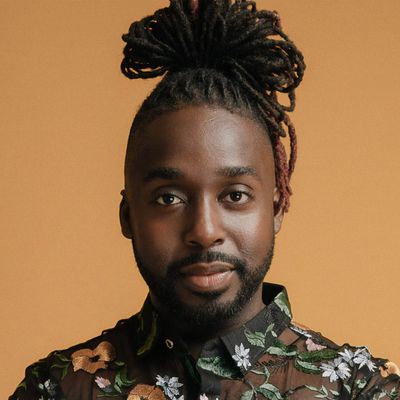
Grammy Award nominee Mykal Kilgore chats with Assistant Director of Programming Kevin Ferguson about Billy Porter's mentorship, his performance at the Met Gala, and using his platform to serve as a change agent for civil rights and LGBTQ+ issues... Read More
From the show: The 54 Below Podcast
Guests
Featured Shows

About
Grammy Award nominee Mykal Kilgore chats with Assistant Director of Programming Kevin Ferguson about Billy Porter's mentorship, his performance at the Met Gala, and using his platform to serve as a change agent for civil rights and LGBTQ+ issues.
For more information about Mykal's upcoming show, visit 54below.com
Watch Mykal's music video for his new single "The Man in the Barbershop" out now in streaming platforms: https://youtu.be/wK0uEzKK4OI
The Feinstein’s/54 Below podcast is hosted by Nella Vera and Kevin Ferguson, and produced by Bailey Everett and Michael Allan Galvez, with support from the Feinstein’s/54 Below marketing staff.
Original artwork design by Philip Romano.
Follow Kevin Ferguson on Instagram at @K.Ferg_
Transcript
This transcript was automatically generated and might contain errors.
[0:00] Kevin Ferguson: Good evening, everyone. Welcome to the fabulous Feinstein's 54 Below. Before we get started this evening, just a polite reminder, please take this moment to silence your cell phones and also there's no flash photography, please. Please welcome Mykal Kilgore.
[0:19] Mykal Kilgore: Hello, everybody, and welcome to the Feinstein's 54 Below podcast, where we take you behind the scenes at Broadway Supper Club. I'm Kevin Ferguson. I'm an assistant programming director at the club, and our guest today is the Grammy-nominated, NAACP-nominated R&B soul singer-songwriter who is getting back on stage and ready to give the world what he's got. Mykal Kilgore was born in Orlando, Florida, before moving to Nashville as a singer-songwriter after attending Florida State University. This led to his growth in theater, and he started on Broadway, where he was mentored by the one and only Billy Porter's, and he grew as a performing artist. His credits include Motown the Musical, Book of Mormon, Hair, The Wiz Live, Jesus Christ Superstar Live, Jason Robert Brown's Songs of a New World, Sondheim's Into the Woods, Smokey Joe's Cafe at the Muni.
The list goes on and on. For his Feinstein's 54 Below show, Kilgore pulls off his bubbly persona with the joy of a holiday season with familiar holiday nostalgia, together with his creative twist and his multi-octave range, his powerful elegance. It stretches across music genres while his lyrics color the outlines of each of our personal experiences. Everybody, please help me welcome the one and only Mykal Kilgore.
[1:49] Kevin Ferguson: Michael, welcome to the podcast.
[1:51] Mykal Kilgore: I'm so happy to be here, Kev. Listen, I am excited for you to be here all week. I have been telling everyone, like, yep, I get to interview Mykal Kilgore.
[2:01] Kevin Ferguson: You don't, hey.
[2:04] Mykal Kilgore: Oh my gosh. Not that. I'm so excited. I really, really am. This concert is gonna be great. I'm so excited to get back onto the 54 Below stage. It's been years since I did a show there.
[2:16] Kevin Ferguson: Yeah, it's been a minute. But we got a lot to talk about before we get to the 54 Below show. Let's just talk about how you, as Mykal Kilgore, are feeling after this pandemic world we're living in. Is this the first time you're getting back on stage since everything went crazy, or have you been able to do some shows since the world reopened?
[2:35] Mykal Kilgore: Actually, I've been on tour right now promoting my new single, "The Man in the Barbershop." So I've been doing a lot of performing on stage. My first big show, honestly, was I headlined Bryant Park. And there was a huge outdoor concert this summer, and that was really my first chance to try out my post-COVID legs on stage. And I knew that I missed it, but I didn't know I missed it that much. It was like healing to be on stage. I feel like whoever you ask will probably say the same thing in terms of like this time that we spent away. It was really good time away.
[3:08] Kevin Ferguson: It was good to be away because it put things into perspective.
[3:15] Mykal Kilgore: So I have that love that I had at the beginning again because I just know what it does for me as well as being able to enjoy what it does for the people who are enjoying it. You know?
[3:26] Kevin Ferguson: Yeah, yes.
[3:27] Mykal Kilgore: Oh no, we are definitely enjoying it. But I wanted to talk about during the quarantine. Were there any random new hobbies that you took up? I mean, it was a break from the performing. I learned how to cook a lot better during the quarantine. Anything you took up as a hobby outside of performing?
[3:44] Mykal Kilgore: I started writing scripts. Yes. Something I never thought I could do. But I started writing scripts and TV pilots and little 10-minute plays and that sort of thing.
[3:56] Kevin Ferguson: Oh yeah, baby.
[3:57] Mykal Kilgore: Oh, I am doing things that I didn't think I could do. So when I say it was good time, like in that time it really forced me to go, what else is in there? What else do you got?
[4:07] Kevin Ferguson: Yeah. Would you consider the writing like a comedy or like a drama?
[4:08] Mykal Kilgore: I was giving myself homework, so I was like try to write a comedy, try to write one hour, try to write a drama, try to write something science fiction. So I'm not sure if it all was good, but now I know that I can actually sit down and do it. So that's it.
[4:28] Kevin Ferguson: Yeah, that is so dope. Well, hopefully we can see. I mean, you're a songwriter, singer, you can add scriptwriter to that, playwright to that. Come on, Mykal, the sky's the limit.
[4:39] Mykal Kilgore: The goal, literally the sky is the limit. Well, actually, the sky feels like the floor now. It's just all of us who are still here post-pandemic, we're survivors, we're superheroes. I mean, this pandemic was meant to wipe out people.
[4:54] Kevin Ferguson: Yeah.
[4:55] Mykal Kilgore: It was so sad that that's what these things do. And for those of us who remain, like I think we have to really respect the fact that our life gets another opportunity to go on. So if we're gonna be alive, we might as well do some living in this life.
[5:12] Kevin Ferguson: Yes.
[5:13] Mykal Kilgore: And that's been a huge priority for me coming out of because we're not quite out of it, but coming out of this pandemic is I want to make it count. And not just for somebody else, but for myself.
[5:23] Kevin Ferguson: Yeah, definitely. Wow, that is so true. The idea of just like remembering you're a survivor and taking it day by day and just being appreciative of being here and seizing the opportunity. I love that. That is definitely something a lot of people need to be hearing right now. Now, going back to inspiring people, who was one of your earliest inspirations? Like, how did this journey of becoming the star you even started? You were born and raised in Orlando, Florida. Is that where it started?
[5:50] Mykal Kilgore: It started in childhood. I'm a pastor's kid. So I was always singing in church. That was the big thing for me. But I would say one of my earliest influences is probably a singer named Daryl Coley. And I don't think a lot of your listeners will know who that is, but he's worth Googling.
[6:10] Kevin Ferguson: Okay.
[6:11] Mykal Kilgore: He is best described as a Stradivarius of singers. He is truly one of the best technicians I've ever listened to. He has a style that no one else could even try to replicate. And I have definitely tried, and it is not the same. He is one of the kings of ad libs. Like he can just stretch and stretch and stretch a story. His presentation's flawless. And he was a gospel singer that I just was like, oh, I want to do that. And he's one of my earliest musical influences. And then as you grow up, like my list becomes crazier and crazier as I grew up, because it was like Daryl Coley, and then I was like, Fiona Apple. And then it was Brandy. And then of course, Whitney and Renée Fleming, Leontyne Price, Jussi Björling, and of course my mentor.
[7:06] Kevin Ferguson: Yes.
[7:06] Mykal Kilgore: Billy Porter's. The one and only.
[7:08] Kevin Ferguson: The one, the only William Porter.
[7:11] Mykal Kilgore: So yeah, I feel like I have a nice big grab bag of influences to pull from. And it's the thing that I'm very thankful to have had teachers and artists around me that kept introducing me to things that didn't seem from surface like it would be anything about me.
[7:34] Kevin Ferguson: Right.
[7:34] Mykal Kilgore: And then when you got into it, you were like, oh, this is completely about me. I'm completely invested in it and included in it. That was kind of what steered my first album. Was I was like, I'm a part of this story, and I need people to understand that you can't have the art without me. Like my blackness, my queerness, all that stuff goes into it. And it's been a real blessing that people have received the work so well because in a way it's as if they said, you can tell us the truth and we'll accept it. We'll receive it.
[8:10] Kevin Ferguson: Yes.
[8:11] Mykal Kilgore: And that's a beautiful place to be in as an artist where it's like, oh, I don't have to pretend I can tell the truth.
[8:16] Kevin Ferguson: Yeah, no.
[8:17] Mykal Kilgore: No, I would say as a storyteller, you are so captivating and definitely you tell the story and do the work. Like it's so awesome what you do. And then the idea that all of those influences are what are in the back of your mind while you're singing, like it shows. I can see and hear all of those different references and influences, like that's so dope.
[8:38] Mykal Kilgore: I always feel like that's the highest compliment when people are like, oh, you're such a great storyteller. Because growing into a musical theater performer, I was always like, I just want to be the male Bernadette Peters. I just want to be able to tell a story as well as she can. I want to be the Bernadette to someone else's Stephen Sondheim something.
[8:57] Kevin Ferguson: Like I just feel like there's—
[8:57] Mykal Kilgore: Don't even try. There's only one Bernadette Peters.
[9:03] Kevin Ferguson: And she's such a great translator of his work. That was always my joke. I would joke with Jason Robert Brown about that. I'm like, I'm your Bernadette. Okay.
[9:11] Mykal Kilgore: And he has to agree. I mean, who else would it be?
[9:15] Kevin Ferguson: Well, I mean, he's got a lot. He's got a lot of people who are exceptional at his work. So I'm always looking, I'm like, who's gonna be my Steve? Who's my Steve out there? And maybe I'm my own Steve.
[9:26] Mykal Kilgore: Maybe.
[9:27] Kevin Ferguson: Maybe that's okay.
[9:28] Mykal Kilgore: I mean, maybe that's—maybe you already have such great achievements with your nominations and the NAACP and the Grammys. Do you feel this is the beginning, or you've been in it for a while and this is time, or how do you feel about those nominations?
[9:48] Mykal Kilgore: It definitely feels like the beginning. I was having a conversation with Seikan Sangblow, who was incredible in all her ways. And we were talking about this was years ago. We were talking about the different phases of a career, and she's like, Michael, I want you to always enjoy being the new guy in the room. You're gonna keep being the new guy. You're gonna keep going in there because there's something about your newness that means that no one is polluted to you. You get a chance to present the way you want yourself presented. And when I was brand new to the Broadway community, it was lovely to get an opportunity to—I don't even want to say prove, but share who I was and allow people to decide what side of the fence they wanted to be on when it came to me and my talent and my energy and all that.
And now that I'm in this recording world, it's really nice to get that opportunity too. And I'm sure like as I'm writing, as I'm creating, producing all that sort of stuff, I'll be brand spanking new. So I definitely don't feel like I've arrived. I feel like I'm coming in and I'm going, all right, well, okay, since the light is on me, let me shine.
[11:01] Kevin Ferguson: Definitely. I feel anybody who's not on the side of the fence of being a fan of yours after hearing you perform, they just must be crazy or something because it's just so awesome what your voice can do. How would you even describe your sound? Your music like what genre? I don't even want to put in a box, but what would you say?
[11:19] Mykal Kilgore: I would like to call myself the compendium of the black musical—get that tattooed, Michael.
[11:30] Kevin Ferguson: That is a long tattoo.
[11:32] Mykal Kilgore: But I say it that way because I have this t-shirt I love to wear that says black music is American music. We have colored every genre in the American music mix, and it wouldn't have happened without maybe one of the most gruesome things in history ever happening—the enslavement of black bodies brought to America. There's so much from Africa that we have taken with us in our souls and our bones that have influenced what American music is. And that's what I wanted to do. That's what I continue to want to do is to reclaim the stuff that's ours. You can play with my toys. I'm not selfish, but the toys are mine.
[12:35] Kevin Ferguson: Yes.
[12:36] Mykal Kilgore: And I really want to make it very clear that when these musical moments happen when people are trying to decide what's pop music and what's soul music and what's rock music and all that sort of stuff, the roots are clear, and I think that black Americans are owed a huge debt of gratitude for creating musical culture in America. So it's my goal to make sure that nobody forgets it.
[13:05] Kevin Ferguson: Listen, 'cause you know I feel like that is so true, and we do forget it sometimes, and I don't think there's enough reminders, so I'm here for it.
[13:15] Mykal Kilgore: There aren't enough reminders, and it's because we see who writes the checks and who produces the shows and who—I ask this question to people all the time. What's your favorite musical written by black people? And it's almost like the lights go out.
[13:29] Kevin Ferguson: The lights go out.
[13:34] Mykal Kilgore: And a lot of times people be like, oh, well, you know, Dreamgirls. And I'm like, it wasn't written by black people. I'm like, you better say The Wiz because at least The Wiz is written by black folks. That's why I have such a love and respect for Michael Jackson because he's doing something that's so audaciously black, audaciously queer. It's difficult for people, you know, it's art. So I don't know that I am allowed to put myself in the same level as him with the work that he's done, but that is what I'm trying to do. I'm trying to do something that feels like I went to the couturier and it was made to my specifications.
[14:10] Kevin Ferguson: Yeah, it's gotta feel that way.
[14:12] Mykal Kilgore: Definitely.
[14:13] Kevin Ferguson: No, we love Michael R. Jackson. We just had him at 54 with his show. It was just so dope.
[14:18] Mykal Kilgore: He is visionary, and I love the way he tells us.
[14:22] Kevin Ferguson: I find it so hard to call him Michael R. Jackson because I'm so used to calling him Michael Living Jackson because of his Facebook page.
[14:32] Mykal Kilgore: So I'm like, I'm like, is it Michael L? No, no, no, no. His real name is not actually living.
[14:37] Kevin Ferguson: Right, no. Sometimes we get caught up in people's social media handles, and mine is just Kevin Ferguson.
[14:42] Mykal Kilgore: Well, the social media.
[14:44] Kevin Ferguson: Yes.
[14:45] Mykal Kilgore: Yes, my last name is just Ferd.
[14:47] Kevin Ferguson: Absolutely.
[14:48] Mykal Kilgore: Like ASAP.
[14:50] Kevin Ferguson: Like ASAP.
[14:52] Mykal Kilgore: I'm this. I'm cool. I'm a cool mom. I'm a hip mom.
[14:54] Kevin Ferguson: Yes, it's just like that.
[14:57] Mykal Kilgore: No, I think that's so true what you were saying, though, about appreciating black work that's from black minds, you know what I mean? And which one of those stories really stick out?
[15:09] Kevin Ferguson: And I really could only think of The Wiz.
[15:09] Mykal Kilgore: But I'm also have The Wiz in the front of my mind because I remember one of the first times I saw you on the screen was in The Wiz Live. And it was a quick moment, but I remember that moment because you were just so fierce, and I was an instant fan. I was like, what is going on? Who is this? That experience was man, it was so excellent. It was so so excellent. And through the years, people's opinions of it have come out, and that people have had lots to say about it. But what I will say is I was so blessed to be in the company of such incredible black artists. And as years have gone by to watch everyone bloom, and you're looking at Beyoncé at Coachella, and it's like, oh, that was some of my classmates.
And you're looking at Megan Thee Stallion or Rihanna on tour or your favorite TV shows or Hamilton or all sorts of musicals that you love and plays you love, and to see those people just popping up. I really feel like that's gonna be a musical that in ten years' time, well actually you can do it now, but in ten years to look back at that cast, it'll go, and this all came from that one little television moment. It's incredible.
[16:25] Kevin Ferguson: But I will say that that has been one of the blessings of my career is that I've been able to be in a lot of rooms where I didn't feel like a token. I was in the rooms where I was surrounded by incredible black artists, black talent, black queer artists, black queer talent. And to be able to feel less like I had to show up for all of us, and I got to feel like a human being. And we each got to have our own experience, and we each got to show our own beauty in the prism that is blackness.
[16:57] Mykal Kilgore: This is gonna be a really black pop.
[16:59] Kevin Ferguson: Yes, it is.
[17:01] Mykal Kilgore: This one, this one's a really black one, guys. So in case you were wondering, this is that one. Come on, get into it. Very black, very queer, 54 Below. That's the new motto.
[17:07] Kevin Ferguson: Yay!
[17:07] Mykal Kilgore: Very black, very queer. Boom. That's it. I'm calling the owners right now. I gotta tell them I got a new campaign.
[17:22] Kevin Ferguson: No, totally.
[17:23] Mykal Kilgore: No, I think because it's musical theater, you can tell when you're not being tokenized because there are so many rooms where you are. Have you found in the past feeling tokenized, and that's why these moments where you're around other black creatives stick out so strong?
[17:41] Kevin Ferguson: Well, I think whenever you put a black body on the stage, it becomes political. And I hate it because the first thought doesn't tend to be, oh, they were the most talented. They go, oh, what are we trying to say? Hmm. Like, oh, what's the meaning behind this black person getting the roles? Like, well, they are fierce. That's the meaning. We wanted the fiercest and they were the fiercest. So there have been times where I felt tokenized. There have been times where I felt like I was being seen only through the lens of the white imagination.
[18:16] Mykal Kilgore: Wow.
[18:17] Kevin Ferguson: And that is Billy Porter's said it in an interview. He was like, they really tried to see me. They really tried their best. And in saying that, it does acknowledge, but you didn't. It acknowledges that you tried. You tried so hard, but there is something to be said about being in rooms with black people, and I'll be clear, black people who like people. Come on.
[18:44] Mykal Kilgore: That's another topic.
[18:45] Kevin Ferguson: That's a whole other topic.
[18:48] Mykal Kilgore: But it's something special about being in those rooms because what they're trying to do is they're trying to make sure that humanity's first and that color, if I'm on stage, it's a black person. So it's a black experience because I'm black. But we're not playing at being black. I am existing as a human who is a black person. So I don't have to put on blackness because it's already on.
[19:16] Kevin Ferguson: I might as well go ahead and tell this one.
[19:17] Mykal Kilgore: Well, I was in a show where they were like, you know, just can you put a little bit more? You know, you know. It was basically like put some more stink on it, like blacken it up. I said, I just don't want to, and not that I don't want to, I just will not be doing that. And the word I used, every black person knows what word I use. I said, I will not be blanking for you.
[19:38] Kevin Ferguson: Yeah.
[19:39] Mykal Kilgore: Oh yeah. Yes, let me use my good TikTok verbiage, you know what I mean? I just I won't say it because I don't want to get blocked. You know what I mean? But we know we I wanna Yeah, I won't we know I was like, I wish I could see him because we both did the like fingers with the eyes like I see you, I see you.
[19:54] Kevin Ferguson: Yeah, well we won't be blanking today.
[19:57] Mykal Kilgore: And that's something that I hope this pandemic, and I'm like doing a fast little sharp turn to the left. I hope this pandemic has taught a lot of artists, black, brown, queer, white, straight, sis, all of us to like really advocate for yourself in these rooms. As much as the director's vision is at the forefront of what they're doing, you're brought in and the weight is on you. You're gonna be the one on that stage. Your body's on that stage. And if it's something that you cannot stand beside, if it's something that you cannot rationalize or make okay, then you need to really advocate for yourself. You definitely need to do that.
[20:35] Kevin Ferguson: And for me, I don't wanna be in a show that makes it safe to be everything but me. A lot of us have been in rooms and I can speak from my experience, and so I won't speak for women or for Asian folks or for native people, but like as a black person, as a queer person, I've been on stage where it was safe to be white, but it wasn't safe to be black. Where it was safe to be straight and not safe to be gay. Because it was like, oh, we're gonna tear down all the barriers that make it uncomfortable to be white. Oh, there's no racism in this play. Black people and white people intermingle and we don't even see it. But as for a white person, but as for a black person's like, but you know, let's deal with the alcoholism and your father being gone on stage.
It's like, no, no. Then if we're gonna do that, then they're gonna have to deal with the white privilege. If they're not gonna have to deal with that, then I'm not gonna deal with this. Or I was like, we're gonna do a play where black people and white people get along all the time, but we're gonna make the axis of the play your misery as a queer person and how difficult it is to be gay and how horrible it was to be out and or how in the closet you are. And I was like, no, if we can imagine a world without racism, let's imagine a world without homophobia. Or let's do the world as it is, where they both exist. Let's just show it what the true T is, okay? Let's just show what the true T is. So yes, I that was the long answer to what could have been an easy yes.
Yes, I have felt like a token. But it isn't like a don't it isn't a oh cry for me situation for me. I think a lot of us are coming back to theater right now, having spent 2020 reconciling within ourselves what is and is not acceptable for how we wanna continue to do our career.
[22:24] Kevin Ferguson: Yes.
[22:25] Mykal Kilgore: I don't feel special or unique in that. I think a lot of us are having these thoughts and these conversations with ourselves, with our friends' group, and now that theater is opening with the teams and with our castmates and making it clear that you know, I don't want to present a perfect world on stage that's boring and I think it doesn't do anything to help the audience. But I do want to feel like if I'm portraying anything, the nuance needs to be there. And thicken it up so that I'm more than two dimensions. I want you to be able to see me from all sides if I'm up on that stage. And if that's too much to ask, then this isn't the right piece for me.
[23:08] Kevin Ferguson: Yes.
[23:08] Mykal Kilgore: And I think that's okay too just recognize that. To recognize that you don't have to say yes to everything, that you don't have to be a part of every moment. I think that's one of the hardest things for us because we're so itinerant. The work comes and you just want to like hop at the work. What's next? But I would much rather be trying to figure it out on my own in my apartment than being in a process where I'm miserable every day because I am being forced to blank.
[23:37] Kevin Ferguson: Yeah.
[23:39] Mykal Kilgore: We don't want no blanking.
[23:40] Kevin Ferguson: Or to shrink.
[23:42] Mykal Kilgore: No blanking, no shrinking. That's on my mind. It's on my mind quite a lot. And I was like, I'm not gonna I was so vocal last year that it's like you're not gonna embarrass yourself. But as soon as the theater doors open, hey guys, I'm not back. Whatever you want to do, whatever you want to say to me, however, you want to treat me, I'm fine. I'm like, no, no, baby. That's not going down brand new day, okay.
[24:05] Kevin Ferguson: Yes.
[24:09] Mykal Kilgore: Everybody get up.
[24:10] Kevin Ferguson: Yes.
[24:12] Mykal Kilgore: It feels like for sure, especially with a lot of the new plays on Broadway and new productions on Broadway having a lot more diversity in the teams and everything. Are there any shows or shows that are reopening that you're excited to run back to the Broadway theaters and see? You want to be an audience member for any show that you're excited about?
[24:29] Mykal Kilgore: I mean, here's something that's just big to me. I did the first national tour of Book of Mormon, and one day a friend of mine was like, oh, come to my room and sing a song for me. I like wrote a song, I just wanted to hear what it sounds like. So I sang the song, I thought the song was great, and he and his writing partner, you know, start writing stuff. They write a show or they write another show, another show. He starts writing scripts and plays and all this sort of stuff, and now it's Douglas Lyons, Broadway playwright. The level of pride is like I got to watch the process and it was not easy and it took a lot of time. So I'm really proud of Chicken and Biscuits, and so I can't wait to get back to seeing it. Chicken and Biscuits. Literally, we love the play, and we actually love it. No, I literally saw it twice. I just I thought it's just such a feel-good experience, and yeah, I just yeah, the team's fun, real cool people.
[25:21] Kevin Ferguson: Right.
[25:21] Mykal Kilgore: And then Thoughts of a Colored Man, which is like permeated with blackness. That's something I'm excited for, and like my brother Brian Terrell Clark is in it. So it's like I gotta like that is one of my hearts. So I'm so proud of him. And that piece, plus Candy Burris is on the producing team and a fan of Real Housewives. I had you know, let's just call the thing a thing.
[25:44] Kevin Ferguson: Yes, this makes sense.
[25:46] Mykal Kilgore: Yes. Yes. Yes. I really love Killing a Change. Yeah, I'm waiting. And I actually got a chance to see that. That's when I actually got a chance to see. So I'm excited to go back and see that again because I went on a night where I was like, this was incredible, and they were like, oh, we had so many issues, and I was like, right, where's hilarious? So if I loved it on like a night where they felt like they were having, you know, it's previews. I can't wait to go back to see it again. But I think that I have conflicting views about the state of theater right now because I'm so excited to see so many black-centric things on the Railway stage. I'm so excited to see something that feels like diversity, but I keep thinking about war and the idea of like, oh, you send all these black troops out first.
So like if they get mowed down, then you can like bring out your white troops. I was like, I really hope that the support will be there for all these shows that are reopening Broadway because I don't want them to go away and people go, well I mean we tried that there just wasn't an audience. It was like it was a pandemic. They were the first shows out the gate. Do not do that because we are not dumb. There we'll be back in the street dumb we'll be right back in the streets. Like people don't understand. We'll be right back in the streets. Okay.
[27:11] Kevin Ferguson: Right back out there.
[27:13] Mykal Kilgore: So I want to see the system change. You know what I mean? And to be brutally honest, I would love a world where theater is not focused on Broadway.
[27:25] Kevin Ferguson: Yes.
[27:26] Mykal Kilgore: We're too focused on Broadway being the place where theater happens. And theater is happening all over the nation, all over the world. And good theater with incredible artists happening and it's not just in sh I mean even though these places are incredible, it's not just Chicago. It's not just DC. It's not just Dallas. It's in all these little cities people are putting on shows. And writing checks and I think that it's important that we support these artists, especially the ones making art in the most difficult places to make it where you know it's I did Book of Mormon first national tour and it was fun to do in New York. It was fun to do in LA. It was fun to do in San Francisco. It was less fun to do in Des Moines.
It wasn't miserable, but there's certain things you can say on the coast that when you get in the middle of the country people are going, I don't know if I want to hear. Or they're laughing at different parts of the joke and you're like that's or they're laughing at parts of the joke that you're like supposed to laugh at.
[28:32] Kevin Ferguson: Yeah.
[28:33] Mykal Kilgore: Wow. Yeah. So I mean it's like we have to show love to these people and do our best as theater lovers. I was saying this to someone recently it was so awesome to see a Tony Awards like the one we had this year that felt like it was really about the theater community. The host is Audra McDonald, you know what I mean? It just took me back to the olden days when like Angela Lansbury used to host, you know but then I thought to myself how cool would it be to see Audra McDonald at the Munich.
[29:00] Kevin Ferguson: Yeah.
[29:00] Mykal Kilgore: Like the Audra McDonald going, oh yeah I could I just love doing theater and I will say Audra McDonald don't need to be doing theater anywhere where she's not getting paid like she's Audra McDonald. So I'm gonna say that. But I know but still it's like it would be so awesome to see people like her.
[29:21] Mykal Kilgore: Mind you, there's like nobody like her, but I mean like doing Beyoncé doing work.
[29:28] Kevin Ferguson: The Beyoncé of Broadway.
[29:30] Mykal Kilgore: Jeez Louise, there literally is nobody like her, but just to see that sort of thing because I wanna give gravity to people who are making theater outside of that little collection of blocks, and definitely it is such an important place.
[29:46] Kevin Ferguson: Yes, it is, but it's not the only place.
[29:49] Mykal Kilgore: And honestly, I think it's getting harder and harder to tell stories that are really challenging there.
[29:56] Kevin Ferguson: It's hard to challenge the people when it's like it's gotta be liked by everybody, and it's gotta like be unoffensive and it's gotta be easy to take, and it's nobody's fault, but like the price.
[30:08] Mykal Kilgore: It costs a lot to put it up, so you gotta get a lot of money to offset the cost.
[30:12] Kevin Ferguson: So I get it, but I still hate it.
[30:15] Mykal Kilgore: Very commercial, very a lot of capitalism within it.
[30:19] Kevin Ferguson: Just like how big Broadway is.
[30:23] Mykal Kilgore: It is what it is, but it's like I can hope and dream, and that's really what this is.
[30:27] Kevin Ferguson: It's like it's a hope and it's a dream that I believe can come true.
[30:31] Mykal Kilgore: I just don't know how.
[30:31] Kevin Ferguson: But I do want to be able to do that.
[30:32] Mykal Kilgore: Yeah, these could be the beginning days.
[30:34] Kevin Ferguson: It me like this is a shift.
[30:35] Mykal Kilgore: If this shift stays, it will definitely shift the stories on stage and everything.
[30:41] Kevin Ferguson: So hopefully we just like you said, this isn't just like a little moment or phase, yeah, flip.
[30:46] Mykal Kilgore: Yeah.
[30:47] Kevin Ferguson: Fingers crossed.
[30:48] Mykal Kilgore: This is not a phase, it's quite a bit.
[30:50] Kevin Ferguson: Totally.
[30:51] Mykal Kilgore: Listen, so on that, let's talk about how you are this like black, queer, like trailblazer.
[30:57] Kevin Ferguson: Would you consider yourself an activist, or do you feel that weight?
[31:02] Mykal Kilgore: I just feel like a lot of people are looking up to you these days.
[31:05] Oh my goodness.
[31:07] Mykal Kilgore: I think that activist, I can say to a degree, yes.
[31:12] Mykal Kilgore: And I have to say it that way because I have so many friends who are literally throwing themselves on the front front front lines, they're the ones getting thrown in jail.
[31:22] Mykal Kilgore: I have a really high respect for what they do, and I just, and I don't take it lightly, so I try to respect it even in speaking about the little bit of activism that I do.
[31:30] Mykal Kilgore: But my responsibility right now is to be honest, and I think that there's something like activism in just telling the truth and saying, you know, this is the world as I see it, this is what matters to me, and I will do what it takes to make sure that what matters to me is on the docket to discuss.
[31:51] Mykal Kilgore: So I feel like activism is like key in making art that matters.
[31:57] Mykal Kilgore: There's gotta be some bit of activism in it.
[32:00] Mykal Kilgore: And I got my first email from someone who went to go see my show who didn't like it recently.
[32:07] Mykal Kilgore: And he was like, you came and I paid good money to see you, and you talked about how you felt about the Obamas, and you didn't have enough respect to call 45 by his name, and you mentioned that you were gay, and you know, it was clear quick into your show that you were gay, but you we didn't have to discuss that you were gay.
[32:07] Mykal Kilgore: And I thought to myself, I'm famous.
[32:31] Mykal Kilgore: I immediately was like, I made it.
[32:32] Mykal Kilgore: I got a hater.
[32:34] Mykal Kilgore: It made me feel so good.
[32:34] Mykal Kilgore: And it's, and it wasn't even a hater, it was like you were listening.
[32:38] Mykal Kilgore: It wasn't nobody else listening, you were, and that thing permeated your spirit so good that you went home and had to write a whole email about it because it's in there.
[32:48] Mykal Kilgore: He's still chewing on that bone.
[32:50] Mykal Kilgore: I'm almost positive he is, and that's the point.
[32:53] Mykal Kilgore: That is the point.
[32:54] Mykal Kilgore: First of all, if you could tell I was gay, then why does it bother you that I said it?
[32:58] Mykal Kilgore: Since you know everything.
[33:00] Mykal Kilgore: Like it shouldn't bother you.
[33:02] Mykal Kilgore: And also, yeah, yeah, I have a love for the Obamas.
[33:06] Mykal Kilgore: I absolutely do.
[33:08] Mykal Kilgore: And I wrote a song based off of something Michelle Obama said.
[33:12] Mykal Kilgore: So yeah, I'm gonna tell that story because I'm theatrical, and sometimes my concerts turn into cabaret, and sometimes I start talking, and that's a part of the Mykal Kilgore experience, and now you know that's what it is, and you can choose to come back or not.
[33:29] Mykal Kilgore: But what you can't do is tell me how to do my art.
[33:31] Kevin Ferguson: Yeah.
[33:32] Mykal Kilgore: That's up to me.
[33:33] Mykal Kilgore: So I stand by that.
[33:35] Mykal Kilgore: There is, oh my god, Jamie Saparo is a friend of mine.
[33:38] Mykal Kilgore: And he and I did a live together a while back, and he said something that I thought was really important.
[33:45] Mykal Kilgore: He has strong opinions.
[33:47] Mykal Kilgore: There are people he agrees with, there are people he disagrees with.
[33:50] Mykal Kilgore: He is vocal about both.
[33:52] Mykal Kilgore: And he was like, even the people I disagree with, I am here for the upliftment and advancement of all people of color, even the ones I don't like.
[34:01] Mykal Kilgore: I want all of us to advance.
[34:02] Mykal Kilgore: I want all of us to do well, and I'm gonna fight for all of us, even the ones I don't like.
[34:08] Mykal Kilgore: And I was like, that's the end of the conversation.
[34:10] Mykal Kilgore: For me, it's clear that that's what it's about.
[34:13] Mykal Kilgore: It's sort of like, even if you don't like me, even if I don't like you, that's what it's about.
[34:19] Mykal Kilgore: And for me, it's not just based in color, it's not just based in gender expression, it's not just based in sexuality, it's not based in any of that.
[34:28] Mykal Kilgore: I want all of us to find a space of freedom where we're free enough to hear and see each other so that we can truly support one another.
[34:41] Mykal Kilgore: Truly do that, and even the mask mandates and stuff like that has really highlighted for me how selfish and how bad neighbors we are.
[34:50] Mykal Kilgore: We're really bad neighbors with each other, and I just want to like make it a priority for me to be a better neighbor, and to really, you know, support somebody else.
[34:59] Mykal Kilgore: And it's like you see that one crazy person chasing after the napkin blown in the wind because we just don't want to litter.
[35:04] Mykal Kilgore: Be that good a neighbor, you know what I mean?
[35:07] Mykal Kilgore: Be that good a neighbor that you're like, oh god, oh god, litter.
[35:10] Mykal Kilgore: I don't want that napkin to be out there.
[35:11] Mykal Kilgore: And it's like if we can do that, then we can also speak up when we're saying like police violence against black and brown bodies, when we're seeing violence within the black community against trans folks, when we're seeing racism coming from a white establishment against black folks, but coming from white people against their black citizens.
[35:29] Mykal Kilgore: We have got to do that.
[35:31] Mykal Kilgore: And I will say that my focus as of late has been squarely on black people.
[35:36] Mykal Kilgore: If I'm gonna have the conversations about what we can do and how we can do and all this sort of stuff, I'm having them at home first.
[35:42] Mykal Kilgore: And I'm having a level of trust that white people are doing that within their homes.
[35:47] Mykal Kilgore: And straight people are doing it within their homes.
[35:50] Mykal Kilgore: You know what I mean?
[35:51] Mykal Kilgore: It's 'cause it's like it's not some of the stuff y'all need to just Google and figure out.
[35:56] Mykal Kilgore: It's not our responsibility, baby.
[35:58] Mykal Kilgore: Go ask Google.
[35:58] Mykal Kilgore: I do not need to give you the spark notes on my queer experience.
[36:02] Mykal Kilgore: Sorry.
[36:02] Mykal Kilgore: Sorry.
[36:03] Mykal Kilgore: And if you do want a little bit of insight on my queer experience, go listen to my art.
[36:07] Mykal Kilgore: You know what I mean?
[36:08] Mykal Kilgore: I put it, go listen to my art.
[36:10] Mykal Kilgore: It's in the art.
[36:11] Kevin Ferguson: Yeah.
[36:11] Mykal Kilgore: That is in the art.
[36:12] Kevin Ferguson: Now speaking of your art, my newest obsession, "The Man in the Barbershop," that is some black, queer, that is like so specific for us, by us.
[36:23] Mykal Kilgore: It is very specific.
[36:26] Kevin Ferguson: And how do you feel like it's being received?
[36:28] Mykal Kilgore: I see it being received very well, but how does that feel to see everyone like loving it?
[36:32] Mykal Kilgore: It's been really overwhelming.
[36:33] Mykal Kilgore: It's been overwhelming and lovely and incredible.
[36:36] Mykal Kilgore: And honestly, what I love about it is I was watching an interview that Toni Morrison did, and she was speaking about as she was starting writing, there were all these African writers that she was really drawn to as mentors in her mind because they were writing with a kind of shorthand that made it clear that they were writing for black people.
[36:55] Kevin Ferguson: Yes.
[36:56] Mykal Kilgore: Because there are certain things that you and I, we've done this even on this podcast today.
[37:01] Mykal Kilgore: You don't even have to say it.
[37:03] Mykal Kilgore: 'Cause we have a shorthand where it's like you know.
[37:07] Mykal Kilgore: So I don't have to explain things to you.
[37:09] Mykal Kilgore: And "The Man in the Barbershop," I felt like I was able to use my shorthand.
[37:14] Mykal Kilgore: And the people who got it, got it.
[37:17] Mykal Kilgore: But also within that shorthand, it allowed me to tell the story so clearly for myself that I think there are a lot of people who like don't know the exact experience of being a black man sitting in a black barbershop under that kind of weight, and they get it.
[37:33] Mykal Kilgore: They get what it is to like see somebody that may be unattainable and to feel that feeling and to dream.
[37:40] Mykal Kilgore: I just love the idea that like I wrote this song about how beautiful black men are, first of all.
[37:45] Mykal Kilgore: And then about the desire.
[37:48] Mykal Kilgore: And no, there's no villain.
[37:49] Mykal Kilgore: No one's wrong for how they feel.
[37:52] Mykal Kilgore: No one's wrong for who they love, and there's a level of respect at the end of the song.
[37:57] Mykal Kilgore: I'm really proud of that.
[37:58] Mykal Kilgore: I'm really, really proud of being able to do that because it was the kind of song that I didn't know I could write.
[38:04] Mykal Kilgore: It was a kind of song that I knew I needed though when I was young.
[38:04] Mykal Kilgore: I used to want a song like that, and I remember the Drew Hill, "Somebody Sleeping in My Bed," and the video came out.
[38:15] Kevin Ferguson: Yes.
[38:15] Mykal Kilgore: Yeah, that was my jam.
[38:17] Mykal Kilgore: So then the video came out, and it was like the woman being a lesbian was like the gotcha.
[38:23] Mykal Kilgore: It was a joke, and it was like an, oh, it was oh, the audacity.
[38:26] Mykal Kilgore: And I'm like, well, I don't want being gay to be the joke.
[38:30] Mykal Kilgore: No.
[38:31] Mykal Kilgore: I don't want that to be the gotcha.
[38:32] Mykal Kilgore: I want it to feel lovely and okay.
[38:35] Mykal Kilgore: I will say that's something I think I learned in theater.
[38:39] Mykal Kilgore: That like as a black person, I didn't want to seem like the surprise.
[38:44] Mykal Kilgore: I wanted it to be like, oh, that's just another human having a human experience.
[38:48] Kevin Ferguson: Yes, I feel the same way.
[38:49] Mykal Kilgore: And because of that, like as a queer person, I want to feel like just another human having a human experience.
[38:54] Mykal Kilgore: And I'm gonna sit here and remind you that I'm gay a million times, and you're just gonna be okay with it.
[38:57] Mykal Kilgore: Like, well, honestly, I can't wait for being gay to be alright.
[39:00] Mykal Kilgore: Like I can't wait for it to be boring.
[39:02] Mykal Kilgore: Like for people to be like, who cares?
[39:05] Mykal Kilgore: Because it's like, who cares?
[39:07] Mykal Kilgore: It is so boring.
[39:08] Mykal Kilgore: It's in fact so boring that gay people are getting divorced now.
[39:12] Kevin Ferguson: You know what I mean?
[39:24] Mykal Kilgore: You know what I mean?
[39:24] Mykal Kilgore: We just got division.
[39:24] Mykal Kilgore: And we already get divorces.
[39:24] Mykal Kilgore: And we're already getting divorces.
[39:24] Mykal Kilgore: Yeah.
[39:24] Mykal Kilgore: That's how boring I want it to be.
[39:24] Mykal Kilgore: But it's just sort of like they get married, they divorced, hmm.
[39:27] Mykal Kilgore: They have kids, the kids are bad, like, you know what I mean?
[39:28] Kevin Ferguson: I know I love "The Man in the Barbershop."
[39:30] Mykal Kilgore: I feel it is a story about wanting someone you can't have, but the idea of putting it specifically in a black barbershop, that story, it, yeah.
[39:42] Mykal Kilgore: I don't even know.
[39:43] Mykal Kilgore: I don't even have words because I'm just so appreciative that someone did it.
[39:46] Mykal Kilgore: Because we've all been there.
[39:47] Mykal Kilgore: We've all been, we have all been sitting and been like, all of a sudden you hear the sound effect of "Waiting to Exhale," just playing.
[39:47] Mykal Kilgore: Listen, I got my little shortcut.
[39:59] Mykal Kilgore: Um, Loretta Devine.
[40:02] Mykal Kilgore: Look at the food in the, just I gotta keep size of him, you know.
[40:10] Kevin Ferguson: Listen, let's stay on this podcast.
[40:12] Mykal Kilgore: Like, what is going on?
[40:13] Mykal Kilgore: Listen, Michael Kilgore, I am so excited for you to come back to 54 Below.
[40:17] Kevin Ferguson: We gotta talk about the show at 54 Below.
[40:20] Mykal Kilgore: Is there any surprises that you can like give us little hints on?
[40:23] Mykal Kilgore: Any guest appearances?
[40:24] Mykal Kilgore: What's the set list gonna be like?
[40:27] Mykal Kilgore: I actually do wanna keep things really on the hush, but I will tell you that it's a little early because we will not quite have made it to Thanksgiving.
[40:36] Mykal Kilgore: But I wanted to give you my head start on the holiday season.
[40:40] Mykal Kilgore: So this show is gonna be a "Born Black Christmas."
[40:43] Mykal Kilgore: I'm gonna do my version of what I wish like the Mykal Kilgore Christmas special on would be.
[40:51] Mykal Kilgore: So it's gonna be a good time.
[40:52] Mykal Kilgore: There's gonna be a lot of original music, but I'm also going to have a few surprises.
[40:58] Mykal Kilgore: Some singers coming to like sing some songs with me.
[41:01] Mykal Kilgore: And I'm definitely going to be singing some stuff from my album "A Man Born Black."
[41:07] Mykal Kilgore: And I just feel like it wouldn't be right if I didn't sing "The Man in the Barbershop."
[41:10] Mykal Kilgore: So I'm gonna cry.
[41:12] Mykal Kilgore: I'm gonna cry.
[41:13] Mykal Kilgore: I'm gonna cry.
[41:14] Mykal Kilgore: So I'm gonna do that.
[41:15] Mykal Kilgore: But I really wanted to imagine the soulful holiday moment for people.
[41:21] Mykal Kilgore: Because I grew up with Boyz II Men Christmas and Mariah Carey's Christmas album and Stevie Wonder's Christmas.
[41:29] Mykal Kilgore: So it's like that was always my dream to do something that felt, and then of course Donny Hathaway's "This Christmas," you know.
[41:35] Mykal Kilgore: So I always wanted to be like, how do we create that feeling for now?
[41:39] Mykal Kilgore: So I'm gonna put on a little show for y'all.
[41:42] Mykal Kilgore: It will definitely be seasons greetings.
[41:45] Mykal Kilgore: Or how welcoming the holiday time.
[41:47] Kevin Ferguson: Well, welcoming the holiday time.
[41:49] Mykal Kilgore: Plus, it's like we didn't really get to do Christmas like we wanted to last year.
[41:54] Mykal Kilgore: So let's just stretch the season out.
[41:57] Mykal Kilgore: Let's go crazy.
[41:58] Kevin Ferguson: Have you seen the meme of like Mariah Carey like hydrating, getting prepared for the season?
[42:03] Mykal Kilgore: But it's a cartoon of just like, it's really silly.
[42:06] Mykal Kilgore: I gotta send it to you.
[42:07] Mykal Kilgore: But it's just like, yeah, please.
[42:10] Kevin Ferguson: Interview.
[42:11] Mykal Kilgore: So true that the holidays are coming.
[42:11] Kevin Ferguson: Everyone's feeling it already, but people are ready for the holidays.
[42:16] Mykal Kilgore: And apparently, we better be very ready because it's taking 30 years for packages to get to you.
[42:22] Kevin Ferguson: So if you have not bought your Christmas presents by now, they're gonna be some 2023.
[42:28] Kevin Ferguson: Yes.
[42:27] Mykal Kilgore: You're gonna get it for Valentine's Day.
[42:30] Mykal Kilgore: Literally Valentine's.
[42:33] Kevin Ferguson: Listen, Michael, this has been so fun chit-chatting with you.
[42:38] Mykal Kilgore: I feel like I could talk to you all day, but we will be going on tangents about Real Housewives and not Broadway.
[42:43] Kevin Ferguson: So yes, absolutely.
[42:46] Mykal Kilgore: And movie quotes and 90s black movie quotes.
[42:48] Kevin Ferguson: You know what I mean?
[42:49] Mykal Kilgore: So let's save that for part two.
[42:51] Kevin Ferguson: But today was amazing.
[42:54] Mykal Kilgore: Y'all have to catch Michael's show.
[42:56] Kevin Ferguson: You can catch Michael Kilgore at Feinstein’s/54 Below on November 18th through the 20th at 7 o'clock.
[43:03] Kevin Ferguson: Don't miss it.
[43:04] Kevin Ferguson: The box office is open right now, ready to get those tickets sold for you.
[43:08] Mykal Kilgore: Michael, do you have anything else you want to tell the folks?
[43:10] Mykal Kilgore: A nice little word, a mantra you live by?
[43:13] Mykal Kilgore: What do you want to say?
[43:14] Mykal Kilgore: I think the only thing I want to say is I really want to see you.
[43:17] Mykal Kilgore: I sincerely want to see you in the audience.
[43:20] Mykal Kilgore: I'm crafting this, and this is a special moment that nobody else will get.
[43:24] Mykal Kilgore: Just the people in the audience at 54 Below.
[43:28] Mykal Kilgore: So I'm really, really, really looking forward to doing something special with and for all of you.
[43:34] Mykal Kilgore: I'll see you in November.
[43:36] Kevin Ferguson: All right, everybody.
[43:37] Kevin Ferguson: Thank you again for listening.
[43:39] Kevin Ferguson: Once again, I am your host, Kevin Ferguson at @K.Ferg on Instagram.
[43:43] Kevin Ferguson: Follow me.
[43:47] Kevin Ferguson: You've been listening to the Feinstein’s/54 Below podcast, part of the Broadway Podcast Network.
[43:53] Kevin Ferguson: Subscribe and rate us on Apple Podcasts or your favorite podcast app.
© Broadway Podcast Network, All Rights Reserved