

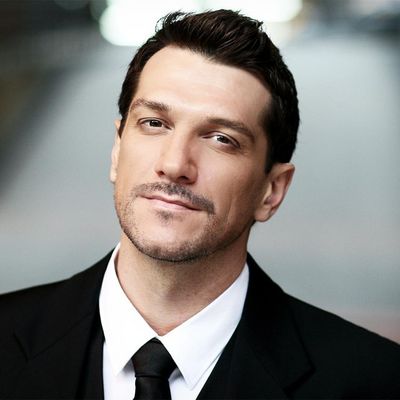
Tony Award® winner Paulo Szot joins Director of Marketing Nella Vera in conversation about returning as Billy Flynn in Chicago, his award-winning run in South Pacific with Kelli O'Hara, his home country of Brazil, and his career in opera... Read More
From the show: The 54 Below Podcast
Guests
Featured Shows
About
Tony Award® winner Paulo Szot joins Director of Marketing Nella Vera in conversation about returning as Billy Flynn in Chicago, his award-winning run in South Pacific with Kelli O'Hara, his home country of Brazil, and his career in opera.
For information about Paulo's upcoming show, visit 54Below.com
Watch Paulo Szot sing “This Nearly Was Mine” from South Pacific at https://youtu.be/XGtuMJkcUTw
The Feinstein’s/54 Below podcast is hosted by Nella Vera and Kevin Ferguson, and produced by Bailey Everett and Michael Allan Galvez, with support from the Feinstein’s/54 Below marketing staff.
Original artwork design by Philip Romano.
Follow Nella on Twitter and Instagram at @spinstripes.
Transcript
This transcript was automatically generated and might contain errors.
[0:00] Nella Vera: Good evening, everyone. Welcome to the fabulous Feinstein's 54 Below. Before we get started this evening, just a polite reminder, please take this moment to silence your cell phones and also there's no flash photography, please. Please welcome Paulo Szot.
[0:18] Nella Vera: Welcome to the Feinstein's 54 Below podcast, where we take you behind the scenes at Broadway's Supper Club. I'm Nella Vera, the club's director of marketing, and today our guest is one of the most acclaimed and versatile baritones in the world, having won international acclaim as an opera singer, an award-winning musical theater leading man, a concert performer, and as an actor. Paulo Szot won the Tony Award, the Drama Desk, the Outer Critics Circle, and the Theatre World Award for his unforgettable and stunning performance as Emile DeBec in South Pacific opposite Kelli O'Hara. He has more than 70 opera productions in his resume since 1997, including his Metropolitan Opera debut in 2010, where he returned for the following six seasons.
He has appeared with most major opera companies throughout the world in Europe, the United States, Australia, and Brazil. He is currently starring on Broadway in Chicago as Billy Flynn and will be performing Thanksgiving week at Feinstein's 54 Below. Paulo, welcome to the podcast.
[1:26] Paulo Szot: Hi, Nella. Thank you so much. It's great to be here talking to you, and thank you for your beautiful introduction. You know more about me than I do.
[1:35] Nella Vera: Well, I'll confess I've been a super fan of yours since I saw you in South Pacific. So thank you very much.
[1:42] Paulo Szot: Thank you. It's great to be here talking to you.
[1:44] Nella Vera: So you're returning for your 10th engagement. We're always excited to have you back at Broadway's Living Room. What keeps you coming back?
[1:53] Paulo Szot: Since my first engagement at 54 Below, many, many years ago, I remember I had a feeling that this would be a great place for artists from the Broadway stage, but not only a space that people would be able to come and present themselves. Until that time, it was really hard to find a place like 54 Below in New York for all kinds of artists. You know, if you look at the calendars, 54 really presents opportunities for everyone and for every taste. So I think that sense of being an eclectic house makes me always want to come back, you know, to be part of that wonderful family that is 54 Below. Now my shows, as you mentioned, this one is going to be my 10th, and I can't believe it. It all passes so fast. But I'm glad that I'm returning, especially this time, this year, where everything started to come back for the second time to 54 Below. So I'm very excited.
[2:57] Paulo Szot: As you mentioned before, I am doing Chicago right now. I have my performances there until the 21st of November, and then I have one day of rehearsals with the whole band to put the show back together. So I'm very excited.
[3:12] Nella Vera: Well, it's very exciting for us to have you. You're coming to us straight from your return engagement in Chicago.
[3:18] Paulo Szot: Right.
[3:19] Nella Vera: How did it feel to be back on a Broadway stage, especially after what we all have suffered for the past almost two years, a year and a half?
[3:27] Paulo Szot: It was a very special moment. I felt thrilled and grateful for that opportunity to be able to return, you know. When I first started performing with Chicago, it was January of 2020. And then I had a few more weeks to go with that company from March to May, but the pandemic hit and everything was postponed. So I was very glad that they called me to get together. And it was a very special moment for all of us, as I said before. People were struggling a lot in many senses during the pandemic. Artists, we all lost our temples, our houses, and it was a tough time. But coming back, it felt in the first two days very strange because all of a sudden we had to perform again for the director in the room during the rehearsals.
And we not only I of course I questioned myself, can I still do this? Because you know, one becomes very sensitive after so long away from the stages. But of course, after the second day, we all knew what we had to do, and it was like riding a bike, really. And the day of the opening, September 14th, Chicago was one of the first shows to open on Broadway this summer. I think we are all trying to prepare ourselves for that moment, the moment of the opening with the real audience and they are watching us. And we were absolutely surprised to see the reaction of the audience when the show just started. They started to scream, they started to express themselves in a wild way, like telling us we are happy to be here as an audience too.
So it was this magical exchange of energy that we're still experiencing during the performances, because for people that are coming for the performances, for instance, this last week, for many of them, it's their first experience again after so long. And it reassures us as artists that the arts are necessary for so many people. And there's something that we heard all over these months that we only care about the essential things. And the arts, I have to say, were put a little aside because for us artists, the arts are essential, just like anything else. And it was good after so long to hear that there are people out there that need live shows and need live performances for their good of their souls, of their spirits. So it was, as I said, very emotional. We are very grateful. We are working hard, and we just hope, you know, this is going to be the end of this not good surprises that we all experienced.
[6:16] Nella Vera: Yeah, yeah, I can imagine. I also wondering how you fared for all that time. I know for a performer not to perform is hard, but I also wonder for an opera singer, what did you have to do during your downtime?
[6:30] Paulo Szot: Well, I think the most difficult thing was to keep in shape, which means for a singer, for an opera singer, is to sing and to sing without the perspective when you're going to sing again. That was the hardest thing. But it was an exercise that I had to do. I will not say to you that I sang every single day, but I tried to sing every second day, or sometimes there are weeks that I felt like it. And so I sang every day because it's a live instrument, the voice, it's the same thing when you have to go to the gym and then you don't go to the gym, and then you try to go again, and you are sore the next day, it's the same with the voice. If you stop singing for one or two or three days, the fourth day, it's gonna be harder.
So I think that exercise of keeping in vocal shape was the hardest thing, as I said, knowing that the perspectives were so far away, and we didn't know when we are going to be able to return. But for having that in mind, for having that thought that when it comes back, we'll need to be in shape. So I forced myself many times to sing. Of course, it's something that I really love doing, but we all experienced the difficult time during this pandemic, and we all had sad moments and depressed moments, and with everything around us going on, and so many friends and so many people suffering and dying, it was really hard to keep the spirits up. And it's for a singer, it's really hard to sing when you're sad. It's just something that comes from your soul, and really when your soul is not happy, it's really hard to sing. And so for me, that was the hardest part to keep singing during the whole time.
[8:17] Nella Vera: Yeah, I thought about singers and also dancers because it's one thing to sing or dance for 20-30 minutes, but to force yourself to do more than that, to do what you might have to do in a real show for longer than that. I thought, wow, that takes discipline.
[8:34] Paulo Szot: Yeah, you're absolutely right. A way to explain to many people is that imagine a sportsman, he needs to keep practicing. It's the same thing for dancers and singers.
[8:45] Nella Vera: Yeah, yeah. So, in addition to being part of Broadway's reopening, you're also rejoining the second longest running show in Broadway history after Phantom of the Opera. Chicago's been running for 25 years. What's it like to be part of this cultural phenomenon?
[9:03] Paulo Szot: It's a big responsibility. You know, so many great actors came before me. It's playing Billy Flynn and to be part of a company that has experienced so much success. It's a big responsibility to step in and to take a role like Billy Flynn. I work hard. English is not my first language or my second language. And Billy speaks a lot. So Billy, the whole power of Billy is the speech. He produces the trials, he talks to everyone, and everything is through his words. So I think I have to work really hard to get all the words correctly and all the intentions well. Study it in my mind. I realize that it's a double duty for me to not as an actor, but as an actor acting in another language. But I love challenges and I love doing difficult things for me.
And a very interesting thing since you mentioned this show that is celebrated the 25th anniversary this year. I am doing right after I finish Chicago on Broadway. I'm going to do the Chicago production in Brazil, in Portuguese, in my native language. It's going to be something really interesting for me to do the same role. And it's actually the same production. It's the international production of Chicago on Broadway that travels around the world.
[10:26] Paulo Szot: And this time they are going to Brazil, and they invited me to do Billy in Portuguese.
[10:31] Nella Vera: Amazing.
[10:32] Paulo Szot: Yeah, so it's going to be an interesting thing to relearn the role in another language.
[10:39] Nella Vera: That's so incredible.
[10:41] Paulo Szot: The chance to revisit this iconic role in your home country.
[10:44] Nella Vera: Absolutely.
[10:45] Paulo Szot: I'm very happy for that opportunity too.
[10:47] Nella Vera: How often do you get back to Brazil?
[10:50] Paulo Szot: Not very much. Most of my work was based in the US and in Europe, but I do go sometimes back to Brazil.
[10:58] Paulo Szot: Actually my last musical there was My Fair Lady in 2016 when again whenever a musical goes to another country that it doesn't speak English or the English is not their first language, there's a version of that musical.
[11:15] Paulo Szot: So I did my Portuguese version of My Fair Lady Professor Higgins in Portuguese. So I don't imagine I doing the same role in the original in English teaching people how to speak English. That would not work for me. But being transposed into my native language into Portuguese, I felt comfortable enough to present that role in Brazil.
[11:39] Nella Vera: How fantastic this weekend I was in Madrid and I saw a chorus line in Spanish.
[11:45] Paulo Szot: Wow.
[11:45] Nella Vera: And it was amazing I'm from Peru so we're neighbors almost followed we are South American friends of course yeah we are but it was incredible.
[11:55] Nella Vera: It was a the production directed by Antonio Banderas.
[11:58] Paulo Szot: Right.
[11:58] Nella Vera: And it was a beautiful beautiful show and it translated even the New York references in the audiences were so warm there were seven ovations. It was just it was incredible. But I wonder because I saw that it I was surprised at the response because I know Broadway's big in London and in New York, but I was surprised about that incredible response. And I'm wondering about the Brazilian people who are so warm and engaging. And when they come to New York, they're so embracing of Broadway. I think they're the second largest demographic that visits Broadway. And I wonder, is there a traditional musical theater in Brazil or yes, there is.
[12:35] Paulo Szot: Actually, Brazilian musicals date from a very long time. But in the format of Broadway musicals, they started to be popular not very long time ago. But it's already, I'm saying about two decades ago, they started to import productions from Broadway, from London, from other parts of the world. And people just love, and there's an audience for that. Sometimes there are three or four musicals running at the same time in a city like Sao Paulo, which is a big city. But there is a tradition that was built throughout the years, and right now it's a very strong market for artists to work, for producers to produce, and of course, for the audience to enjoy. So I believe right now that everything is reopening, we have already three or four productions of other musicals going on in Brazil.
But Chicago, I know it's going to be the production that everybody's waiting for because it's such a great play, a great show, and people love the music, people know the movie. We are all looking forward to that too.
[13:42] Nella Vera: It starts in January of 2022.
[13:45] Nella Vera: Oh, wonderful. Let's talk about your Tony Award, which you won for Best Actor in a Musical for your Broadway debut in South Pacific, alongside the amazing Kelly O'Hara. And she was just with us recently for our Diamond Series shows at 54 Below. Was that your first big theater show?
[14:04] Paulo Szot: Absolutely, yes. It was, you know, my career was more directed to the opera world. When I started to study singing, my teachers emphasized that I should direct my the quality of my voice to opera. And I followed their advice, and I was singing all over the world, Europe, in the States. And one day my agent called me and he said they just asked me if he would audition for the role of this musical called South Pacific, because the leading role was written for an opera singer at that time, Jupinsa, which was one of the biggest basses in the world history. And I said, of course. At that time I remembered because I was so focused on my career, operating careers, but I remember that time. Wow, that would be great because I always loved musicals.
And as you mentioned, covers lines before. I actually learned to speak English with course line, with the course line tape. I watched that movie so many times. I knew all the lines, I knew all the steps. It was a big influence in my life. But I didn't have the chance to be in a musical before that. And I wasn't focusing really on that goal up to that time. So I was in Boston doing an opera marriage of figure there, and I came to New York to audition for the role of Emil De Back in South Pacific in, I want to say 2007.
[15:31] Nella Vera: Yeah, that's about right.
[15:33] Paulo Szot: And I auditioned for the role with other more 200 opera singers in the room.
[15:38] Nella Vera: Oh my gosh.
[15:38] Paulo Szot: Yes, and then yeah, everybody wanted to do it. Everybody wanted because it was the first revival since the original on Broadway. And it went well. So they asked me to come back again and again, and then they decided that they would give me the role. So that was my first experience. It was there that I met Kelly O'Hara, the fantastic Kelly O'Hara and the whole cast like Danny Bursting, like Loretta, Abel Sayers, and the really did the whole company. It was one of those productions where everything was aligned, everything worked well. We were supported by a great team of directors from the Lincoln Center Theater, Andre Bishop, and of course Bartlett Sher directing the show, Ted Sperling on the musical department.
So I was a little scared because it was going to be my first musical and it was going to be the first time that I was going to speak in a show because opera we sing all the time and the music leads us everywhere. But here when the song stops and then you had to start speaking and Bartlett Sher and Kelly O'Hara of course helped me a lot in that department and they gave me all the support that I needed at that time. So I'm very grateful for that first experience of South Pacific which ran on Broadway for two and a half years and then some of us we went to London for at the Barbican so I had my West End debut also with South Pacific.
[17:06] Nella Vera: Ah incredible that was such a beautiful show as an audience member I can tell you that you just when you left like your soul was lifted at witnessing such beauty.
[17:17] Paulo Szot: It was incredible. And it's one of those musicals that all the songs are great. And one song starts and the people go oh I know this one and then the next one goes and oh I know this one too. Yeah it's just one of those incredible scores that made the golden age so fantastic. And also with regards to the part that you played, it requires serious acting jobs. He doesn't just appear and sing, and he really has to carry the emotion.
[17:46] Nella Vera: It was such a revelation to have somebody who could sing like you, but also handle incredibly difficult acting as well. So it was such a beautiful production and a beautiful performance by you and by Kelly, of course. And it was a true revelation, I think, for those of us who became your fans after seeing it.
[18:05] Paulo Szot: I think you can see you can act.
[18:07] Nella Vera: Oh my god.
[18:08] Paulo Szot: Thank you. You know, Kelly made my job so much easier because she was just incredible and so beautiful and so talented. So I just had to be with her, yeah, really, and to go into the same symphony that she created. So she definitely made my job easier.
[18:26] Nella Vera: When you started the production, did you get a sense that it would be so special and acclaimed?
[18:32] Paulo Szot: Not at all. No, I had no idea what was going uh it was going to happen. I only started to think, oh my god, this is really important, and it's so unique at that point of my life because I have never even dreamed of being nominated for these awards that you just mentioned, and to be part of that list in any way, that wasn't my goal at all. I just wanted to do a good job. I wanted to enjoy the opportunity. And then these awards started to happen, the ones that precede the Tony, the drama, that's the autocritics. And I remember asking one person from the creatives, and I said, Why is this so important? Because in the opera award, we don't have that. There are no awards, you just go there for it.
Yes, you no, no, not not maybe in some countries they are, but usually no. So you are hired for a show, you do eight, ten shows, and then the next show. And then they started to explain to me: listen, this defines if the show is going to run for a longer time or not. Because first of all, it's the reviews, and second of all, it's the amount of the Tony Awards or the awards in general that will define if people are going to see or not. And I said, Oh, okay. So this is really important for me to really be serious about this, to really be professional about it, because a lot was on stake for the whole show to continue.
[20:05] Nella Vera: Yeah, I know it's really grueling on actors in April to have to go out and do all those cocktail parties and all of that while performing.
[20:14] Paulo Szot: Yeah, well, we have eight shows a week.
[20:17] Nella Vera: Yeah.
[20:18] Paulo Szot: And then you have to find time to go to do interviews, to go to TV shows at seven in the morning, or even at the night, even the preparation for the Tony's, you rehearse between shows, and then you have to go in the morning of that. Usually it's a Sunday, of that Sunday morning to rehearse at the space and then go back to your show and do the red carpet and do the perform on stage. And so it's a lot of things. I didn't realize what happened to me, not after a few weeks, you know, after the whole ceremony has gone, and because the next day I had to go back on stage.
[20:54] Paulo Szot: And I think it was a shock, really, because I saw for the first time Liza Minnelli, and she was calling my name on that stage, so I didn't know what to be more thrilled for, if it was Liza or the Tony Awards itself. So I was absolutely dreaming at that time.
[21:12] Nella Vera: So we talked about South Pacific requiring different things than opera, your work in opera. What do you have to do differently to prepare for opera versus musical theater?
[21:23] Paulo Szot: I think it was the first time that I really took the music away in the parts that I needed to act. And um, lyrics were always very important to me. And I think that helped me. I never was kind of singer that only cared for the musical line. Of course, I cared for the musical line to a beautiful singing and sound, but the lyrics and the meaning of the words always had the same value to me, and sometimes more value to me. And I think that helped me a lot when the music stopped and I had to say those lines. So I could find the truth on them and could find a way of saying that in a human way. I think the most difficult thing was to find a humanity, and that's for every role that I do. I always try to find the humanity of the character, even with Billy Flynn, which is a man that is absolutely different, has nothing to do with me.
But I think the key to find a good path on investing in a role is to find the humanity, which motivates that person, that role to go on, what is important. And in case of Billy Flynn, his passion for the trials, and I think he's very passionate about it, as I am passionate for what I do for singing and for acting.
[22:38] Nella Vera: And you've performed at so many incredible stages, including the Metropolitan Opera, the Scala, the Paris Opera, Carnegie Hall, The Barbican. Is there one that holds a special memory for you?
[22:52] Paulo Szot: Yes, I think it was my, I cannot deny it. I think it was my Metropolitan Opera debut, because, as I mentioned, I was studying to be an opera singer and then I became an opera singer, and it is a dream for every opera singer too when they have that opportunity to be at the Metropolitan Opera stage. And I was lucky after South Pacific, Peter Gelb, the director of the Metropolitan Opera, came to see the show, and he invited me to this amazing production of Shostakovich, which is The Nose, which was one of the most difficult roles that I have ever learned in my life. And during South Pacific, during all the weeks, I had to learn this role. But the opening night at the Met, I think was something that I will, of course, never forget again.
[23:39] Nella Vera: And is there a venue that's still on your bucket list that you'd love to play at that you haven't played?
[23:44] Paulo Szot: As you mentioned, I was so lucky to be able to perform in so many stages, great stages of the world. But you know, really at the end of the day, every stage is special. Every performance, no matter where it is, is special for me. And it doesn't really matter at this point because all the icons that were there, Carnegie Hall and New York Philharmonic and all that, I was very lucky to be able to perform on those halls, and they are all very special and magnificent. But for me, every performance, and no matter what theater I am performing, is very special.
[24:17] Nella Vera: As an opera singer, you've traveled all over the world. Do you like to travel? And do you have a favorite country that you like to visit?
[24:26] Paulo Szot: I love to travel. I think I left my house in Brazil when I was 17 and I haven't completed yet the 17 to go to my parents' country, which is Poland. They were taken to a labor camp during the Second World War to Germany, and then they immigrated to Brazil. And I grew up hearing them talking about their country, Poland, and I had such a great interest to one day to go to that country. And that happened. I got a scholarship to study in Krakow, and I left my home at the age of 17. So, and I enjoyed it so much. It meant a lot to me to be able to go out into the world and to get to know different cultures, different languages. I love languages.
[25:12] Nella Vera: How many do you speak?
[25:14] Paulo Szot: Well, a few because of the opera world. We have to speak at least French and Italian, probably. Italian for sure, one of the first ones, yes. So there are a few languages that you have to at least know how to communicate. I don't, I never really studied French or really studied Italian, but I understand everything that I say when I do an opera, and I can communicate. One of the things that I always do when I go to a foreign country is to try to talk in their native language because I love to learn. And I was never afraid of speaking wrongly, and I think the best way to learn a language is when you are there. And in the opera business, sometimes you stay in a country for or in a city for two or three months.
It's a lot of time to be in one place. And for a person that likes languages, it's a blessing. But yeah, a few languages, you have to speak a little bit. I have a difficulty with German, I confess. German is not my best language, but of course, when I get to sing a German opera, I have to learn all the words, of course.
[26:18] Nella Vera: Yeah, do you speak Polish too?
[26:20] Paulo Szot: I do, yeah. I went to the university there. Polish is actually my second language. Yes, it's a very difficult language, I remember, but somehow I had that in my years, maybe from listening to my parents speaking among themselves, maybe from them singing Polish songs.
[26:39] Nella Vera: That's so fun. Are there still any roles that you hope to play?
[26:43] Paulo Szot: Yeah, I'm having so much fun doing musical theater right now. That's one of the biggest differences between opera and musical theater. In opera, you have to concentrate a lot on the sonority, on the voice, so much that sometimes you feel that you just need to follow what is written without having any chance of being who you are. You just need to sing what is written. As, I suppose in the musical theater, you can explore. You can, you have that freedom to do a Billy Flynn that is different from anything else that people did before. That freedom, it's really I am 52 years old, and at that time in my life, I really want to do things that make me happy and please me, you know, especially in my career. I love doing opera, of course, but I am enjoying very much exploring that side of performance that can really feel that freedom of exploring and creating your own melody instead of just singing what is in the paper.
[27:48] Nella Vera: Yeah, it's incredible with musical theater, how different sometimes, depending on who the actor is. Like I've seen so many different Billy Flynn's, and they're all different, and they all are great, and they're all very loyal to what the character is in their own way.
[28:04] Paulo Szot: Right. This is one of the incredible elements that especially this play gives you that kind of opportunity to explore. It's really rewarding.
[28:13] Nella Vera: So I have a last question, which is about your show coming up at 54 Below, which I of course have already seen because this is an encore, the last rhyme that you had sold out completely. Can you tell us a little bit about what people can expect to see?
[28:30] Paulo Szot: Yes, of course. I am so glad, as you mentioned, to return to that show because it was something that we created during the pandemic, having had the opportunity to perform very early on. This show was created for July, and we are already in November. So it was created together with Master Luke Frazier from the American Pops Orchestra. We thought that, well, actually, this concert previewed in Puerto Rico. We went to Puerto Rico, we had a concert there, and we thought that when 54 Below came along, we thought it would try to bring, because we did a concert over there with the whole orchestra. We tried to bring as much as we could from the orchestra. So right now we have a full stage at 54 Below with five strings, first violin, second violin, viola, cello, and a bass, plus drums and plus piano and a voice.
So it's a lot of people on that stage. It's a lot of emotions because all these strings they bring with them all these colors and all these feelings that absolutely add to the melodies. It's a show that was conceived to celebrate music all around the world where I got to perform during the last year. So we have songs from Broadway, songs from the Latin America repertoire from Europe, of course, and Broadway again, concentrating in many songs in both in English and in Spanish. Not so much in Portuguese this time, because they already had a Brazilian program that we did two years ago. But this time I wanted to sing in English and in Spanish to celebrate the music of all those cultures.
[30:11] Nella Vera: Fantastic. Paulo, thank you so much for taking the time to chat with us today. I know it's your day off, so really appreciated. We are so excited to have you perform again at Broadway's Living Room. You can catch Paulo Szot at Feinstein's/54 Below, November 24 to 27 at 7 p.m. with a special Thanksgiving Day performance on November 25th at 8 p.m. Celebrate Thanksgiving with Paulo as he performs an encore of his sold-out show, An Enchanted Evening or Una Noche Encantada, and expect maybe a holiday song or two to kick off the season as well.
[30:52] Paulo Szot: Oh, my pleasure, and thank you for having me. And I invite you all.
[30:58] Nella Vera: You've been listening to the Feinstein's/54 Below podcast, part of the Broadway Podcast Network. Subscribe and rate us on Apple Podcasts or your favorite podcast app.
© Broadway Podcast Network, All Rights Reserved