

Charles Busch, the legendary actor, playwright, cabaret entertainer, and screenwriter, joins our Director of Marketing, Nella Vera, for a lively chat ahead of his New Year Eve’s concert... Read More
From the show: The 54 Below Podcast
Guests
About
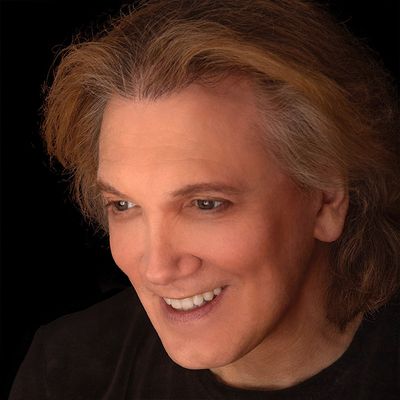
Charles Busch, the legendary actor, playwright, cabaret entertainer, and screenwriter, joins our Director of Marketing, Nella Vera, for a lively chat ahead of his New Year Eve’s concert.
Charles Busch is the author and star of such plays as The Confession of Lily Dare, The Divine Sister, Vampire Lesbians of Sodom, The Tribute Artist, and The Tale of the Allergist’s Wife, which ran for nearly two years on Broadway and received a Tony Award® nomination for Best Play. He wrote and starred in the film versions of his plays, Psycho Beach Party and Die Mommie Die, the latter of which won him the Best Performance Award at the Sundance Film Festival. Mr. Busch is the recipient of a special Drama Desk Award for career achievement as both performer and playwright. He is a two-time Manhattan Cabaret Award winner, a Bistro Award honoree and has performed his cabaret act in many cities including San Francisco, Los Angeles, Chicago, New Orleans, Atlanta, Philadelphia, London, Paris, and New York’s Jazz at Lincoln Center’s American Songbook series.
Keep up with Charles at charlesbusch.com.
For information about Charles' New Year's Eve show at Feinstein's/54 Below, visit: https://54below.com/events/new-years-eve-with-charles-busch-friends-2/,
The Feinstein’s/54 Below podcast is hosted by Nella Vera and Kevin Ferguson, and produced by Michael Allan Galvez and Grace Flavien, with support from the Feinstein’s/54 Below marketing staff.
Original artwork design by Philip Romano.
Transcript
This transcript was automatically generated and might contain errors.
[0:00] Nella Vera: Good evening, ladies and gentlemen. Welcome to the fabulous Feinstein's/54 Below. Before we get started this evening, just a polite reminder please take this moment to silence your cell phones. Also, there is no flash photography, please. Welcome to the Feinstein's/54 Below podcast, where we take you behind the scenes at Broadway's Supper Club. I'm Nella Vera, the club's director of marketing, and today's guest is the legendary CHARLES BUSCH, who is continuing his tradition of celebrating New Year's Eve at Feinstein's/54 Below in a free-spirited evening of song and stories. His longtime musical director Tom Judson will join CHARLES, as well as the delightful comedian Ashley Austin Morris. CHARLES BUSCH is the author and star of such plays as The Confession of Lily Dare, The Divine Sister, Vampire Lesbians of Sodom, The Tribute Artist, and of course The Tale of the Allergist's Wife, which ran for nearly two years on Broadway and received a Tony Award nomination for Best Play.
He wrote and starred in film versions of his plays, Psycho Beach Party and Die Mommie Die, the latter of which won him the Best Performance Award at the Sundance Film Festival. Mr. Busch is the recipient of a special Drama Desk Award for career achievement as both performer and playwright. He is a two-time Manhattan Cabaret Award winner, a Bistro Award honoree, and has performed his cabaret act in many cities, including San Francisco, Los Angeles, Chicago, London, Paris, and New York's Jazz at Lincoln Center American Songbook series. Charles, welcome to the podcast.
[1:38] CHARLES BUSCH: Well, hey there, Nella. It's so funny when you hear your credits read. Wow, that sounds really cool. It's incredibly impressive. And I'm a huge fan of yours from way back when, because I'm old enough to have seen so many of your shows. We're so excited to have you perform back at Feinstein's/54 Below on New Year's Eve. How does it feel to be back on stage in front of a live audience?
[2:02] CHARLES BUSCH: Well, it's going to be really my first cabaret appearance doing my whole show for I guess in over two years.
[2:09] Nella Vera: Oh, really?
[2:10] CHARLES BUSCH: Yeah, I sang one song a week ago at a Broadway Cares fundraising event. So I thought it was important to do that for numerous reasons, but one self-serving one was just to get over a little bit of stage fright from just not being active and stuff for so long. So yeah, so it felt good. I'm really looking forward to it. And it's just going to be a very sweet evening being back with Tom Judson. And then I just adore Ashley Morris. She's the funniest comedian and a wonderful actress. I call her my daughter. And we just clicked. And she's been such a part of my life. And for this my return to the stage, I thought I can't do it without her. And so it's gonna be a really fun night. I'm so looking forward to it.
[3:06] Nella Vera: Fantastic. What can audiences expect from the show?
[3:10] CHARLES BUSCH: It's gonna be a bit of a schmorgasbord of old material and new material. Tom and I had actually put together a whole new show of music from the movies, and we had a whole string of tour dates, and they were all canceled, you know, to COVID a year ago spring. So we're finally going to be able to do some of that material. It's a potpourri of different things and stories. My shows have a lot of talk, and I'm as much a raconteur as I am a singer, maybe more so in a way. So a lot of things have been going on in my life, even though I may not have been on the cabaret bandstand. I've been busy and had some pretty wild adventures.
[3:53] Nella Vera: Were you doing online performing during COVID, or were you just taking up other hobbies, or how were you keeping busy?
[4:00] CHARLES BUSCH: Well, actually, I mean it's kind of wild. My longtime theater collaborator Carl Andrus, who's directed just about almost all my plays for the past 25 years, during COVID, we skyped a screenplay together, and then we produced and directed it.
[4:19] Nella Vera: Oh my goodness.
[4:20] CHARLES BUSCH: Yeah, we made this whole feature film and we shot it largely on sound stages up near Newburgh, New York, but they were also on the streets of the West Village where I live a year ago, October, before there was a vaccine. It was nuts. And I think we really were among the very first union-approved TV or film projects to be done. And so well, we had just so many wacky, strict COVID protocols, but they worked. And I have to say, although our brother Elf and COVID policeman on the set, we basically wanted a slug about twice a day. He did his job, and there were about 80 of us involved on this movie, and no one got sick.
[5:05] Nella Vera: Amazing.
[5:06] CHARLES BUSCH: He was really diligent and did his job. So anyway, so it was thrilling. So the movie has been on the film festival circuit, but I have wonderful news that just this week we actually signed the contract with the distributor. And so it'll be out and however they put out movies nowadays.
[5:25] Nella Vera: Fantastic.
[5:26] CHARLES BUSCH: Yeah. Much exciting. Thrilling. It was so much fun. And yeah, I haven't made that many movies. And it'd been a long time since I'd made one. I was feeling very Gloria Swanson in Sunset Boulevard, but I'd never make another picture. And then I guess that's the thing about life, darling. It's just you never know, do you? What's it going to be in the corner? Disaster or good fortune?
[5:51] Nella Vera: So you both took something that was a terrible thing and actually turned it into a positive and created something wonderful.
[5:59] CHARLES BUSCH: Yeah, yeah. And in a way, you know, writing with Carl via Skype, because he lives in Connecticut and I'm here in town. I think we probably got more done because if we were in the same room, we'd be doing more yakking and gossiping and fishing and eating. And somehow when you're stuck there on the Skype, it doesn't know when we were work for two hours stretch, we're working.
[6:21] Nella Vera: Yeah.
[6:22] CHARLES BUSCH: And it was sweet too. It was very sweet just that for the actors involved. And we wrote so many of the parts for specific people, you know, friends and performers that we just really admired and just were offering these parts. And I think they were so thrilled to get out of the house and just be offered a job in a movie. And a number of these people happened to be in Broadway shows, which they wouldn't have been available. So we just exploited the pandemic for our benefit.
[6:52] Nella Vera: Yeah, no, it's great. And I'm sure people were thrilled to have something to do other than sit at home.
[6:58] CHARLES BUSCH: Yeah, it was kind of funny when we were shooting. My friend Julie Halston is my stage buddy. She co-stars in the movie with me. And it's kind of a bit of a buddy film in a way. It's called The Sixth Real. And anyway, we were shooting right outside my building, in fact, and we were right in the middle of acting the scene, and some old village curmudgeon, old man walks right between us and sticks his finger in my face, goes, "Mask." I said, "Can't you see? I'm performing, I'm acting."
[7:35] Nella Vera: Oh, it was crazy.
[7:37] CHARLES BUSCH: Crazy. And I would expect no less of a village curmudgeon. No, we are so many village curmudgeons that oh, we, I'm gonna say it was kind of a, I think it's funny, but it wasn't funny to them. I play a kind of a person who's a bit down at his heels, and so we found a really kind of crummy building in my neighborhood that 10 miles uses the exterior of my movie apartment, and it's in the plot, it's condemned.
[8:06] Nella Vera: Oh no.
[8:07] CHARLES BUSCH: We had permission from their building management of this apartment house, so we distressed the outside of the building even worse. We had a sign on the front door saying "condemned, all tenants must be out by Monday." Orange mesh around.
[8:22] Nella Vera: I love it.
[8:23] CHARLES BUSCH: But the silly building management of their building never notified the tenants, so it was like the War of the Worlds in a radio show. I think these people, all these old people thought they had to be out by Monday. Another old village curmudgeon, this is a female kind, comes over while we're acting and says, "I write for the Huffington Post. I write for the Huffington Post, and you know, I'm gonna expose what you've been doing." Oh, I try to explain it. You're in the scene right now where this m is Mrs. Halston and I were, you know, Katie Huffman is about to make her entrance. Oh, it was nuts. It was crazy, but that's my love part of the things I love about the village, living here for 40 years.
[9:04] Nella Vera: That is hilarious. Well, I can't wait to see it. I'm a huge, in addition to being a fan of yours, Julie Halston fan. So many wonderful people in this movie. Patrick Page, Tim Hutton, Margaret Cho, who I'd never worked with before, and I've Market's in it. And she lives in LA, and so she, you know, she had a quarantine stuck in a room with her little dog for two weeks before she could walk out the door. Yeah, who else? Oh gosh, just D.T. Hody, Katie Huffman, Heather McRae, it's wonderful Broadway people.
[9:38] CHARLES BUSCH: Wow, amazing.
[9:39] Nella Vera: I love it. Yeah, can't wait to see it. So yeah, streaming soon to all of our homes, maybe in a theater at some point.
[9:47] CHARLES BUSCH: Yes, that's the promise. It's a strange thing to know that movies are being released simultaneously. And I want to go to the theater to support it, but it's so convenient to watch it at home, especially now with big televisions. Everybody has a big TV, so it's like—
[10:02] Nella Vera: Yeah.
[10:05] CHARLES BUSCH: And the screens in the movie theaters have gotten smaller, so they're almost about the size—
[10:10] Nella Vera: Yeah.
[10:11] CHARLES BUSCH: As I said before, I'm a huge fan of your work. I also love drag. And I have a two-part question. Most drag that people know is cabaret. What inspired you first to start performing in drag? And second, what inspired you to write full-length plays about these larger-than-life, glamorous women?
[10:32] CHARLES BUSCH: Oh my. Well, first I should say though, everything I do is always the opposite. And of course, now drag with through RuPaul's Drag Race is so big, and I actually chose about five years ago to de-drag my cabaret act.
[10:46] Nella Vera: Yes.
[10:46] CHARLES BUSCH: Yeah, I read about people so you take the great bravery that it took for them to decide to do drag. And for me, it was the opposite. It took a lot of courage for me to just dispense with the wigs and costume and makeup for my act. Although actually what I call out of drag, some people would say was drag because I don't know, I got somebody that wears so much jewelry and I make up on stage. I felt with cabaret for myself, I never completely understood why I was in drag when I was performing my shows at 54 Below or these other clubs, because I was introduced as myself as CHARLES BUSCH, and then proceeded to tell true stories about my life and then sing Sondheim or Joni Mitchell. I didn't really understand intellectually why I was doing that, except for the fact that I'd had this long career playing female characters in plays and movies.
So my audience, I thought it expected. In fact, I have a friend who when I asked him, I said, "Do I dare? Do I dare get out of drag?" And he said, "I don't know, because if I went to see you and you weren't in drag, it would be like going to Disneyland and finding out the Space Mountain was closed." So thank you very much for the encouragement. But I decided to just try it and I really liked it because I find for cabaret, I think it's important to be your most authentic self and have a few veils in place. I like that. And so I felt that for a while there, even though I was so comfortable in drag and just being so comfortable with my own androgyny, it was okay, but I still thought there was just a little bit of a mask between me and the audience.
I wanted to be just as honest as possible. So I thought it was a good thing. But it didn't mean that I was not ever gonna do drag, because I think since then I've done like probably three more plays playing female characters. And in The Sixth Real, I play a male character, but it's a wacky caper comedy. And so several times Julie and I get into disguises and so I didn't, I'm always in disguise as a lady anyway. I didn't answer any of your questions. How did I do it? It's so ingrained in my personality and who I am.
[13:04] CHARLES BUSCH: I just was always very in touch with just this rather androgynous aspect of myself. Before I actually did drag, in my first eight years of my performing career was as a solo performer, doing solo theater pieces where I would play there'd be a very complicated narrative and I'd play all the characters, male and female, and I didn't change costume at all. The magic of what I was trying to achieve was that without having any props or costumes, I would just go back and forth between all these characters and that the audience would hopefully feel that they'd come away seeing a whole cast of characters when it was just little old me. So I was so used to playing female characters without any drag. And then when I started doing shows down on the Lower East Side at this place called the Limbo Lounge in the mid-eighties, I just thought it'd be fun to—I wrote this piece where I was gonna play an ageless vampire actress and I thought, well, I'd like to look like the character I'm playing, and so I thought it'd be kind of fun to do drag for one weekend.
Didn't know that that would be my career for the next 40 years. Yeah, it just was so comfortable for me. And during the pandemic, Carl and I did about seven different Zoom play readings. Some of them, and I think almost all of them I played female characters. Sometimes I was in drag, sometimes not; it's just it's not about physical transformation for me. It's so deep within me. I don't even really completely understand it. But there's a mystery in all of us and part of my mystery is that somehow I'm just so comfortable for me to go from male to female is just like walking into another door. It's not a big transformation. So if I decide to wear a wig and a 1940s costume to look exactly like the character, that's nice, but it's not necessary for me.
[15:01] Nella Vera: Yeah, I'm getting terrible answers here like—no, those—it's amazing. I love what you said. And you did mention like RuPaul's Drag Race and I find now it's so commercial and I wonder what you think about that.
[15:16] CHARLES BUSCH: I mean I guess in a sense it's just an evolution of the form, but I remember going when I was younger to places like Universal Bar and seeing those more old-timey, that I felt very gritty, authentic drag queens doing their show and then you'd have dinner or drinks and they just pop out a show in the middle of it. And it seems now it's much more polished, much more commercial. I mean I think that something like RuPaul, he's given the possibility to submit to a generation of drag performers that there is a commercial possibility for them that maybe there's not. I guess that's really in a way one of the great gifts that he's provided is that if a young person wants to express themselves through a drag persona, their dreams don't have to end with just performing in a bar somewhere; that they could be Bianca Del Rio and sell out a stadium or different people like that. I mean a whole lot of them are very successful.
[16:18] CHARLES BUSCH: Yeah, very intimate. I don't know, I—yeah, honestly, I'm this old person who just doesn't leave their apartment that much even pre-pandemic. So I suspect though that there still are bars in every city where there are rough-edged drag queens flying their trade and being very edgy and outrageous and transgressive. So I think it's all there. But what is marvelous is that they can have a realistic dream of commercial success.
[16:43] Nella Vera: Yeah, that's a great point. That's a great point. And yeah, all of the performers that have been on his show do have followings and they're able to have bookings.
[16:53] CHARLES BUSCH: Yeah, I like to think in my way, certainly in the theater, and then maybe because you know I've made a couple of movies too. I'd like to think that I've given hope to younger people to think, well, oh, so he has made a career writing female characters for himself and has been in the—I guess you call it mainstream. I don't know what that really means, but so why not me? I mean, I rode on this, I stood on the shoulders of other people before me, CHARLES Ludlam and CHARLES Pierce. And I'm sure they would have told me, I did this, you know, get—if I open the door, I'd be careful, I'll slam it on your fingers. But you know, but that's all I sometimes feel too if people say you opened the door for me. But it's all a continuum.
[17:36] CHARLES BUSCH: Yeah, of course. I benefited from their work, and then there are people who benefit from the doors that I opened.
[17:44] Nella Vera: Yeah, I think you're so right. And it is, like I said, it is a continuum. And I love thinking of it that way. An evolution, and then we have the legends in the field, which are you and your generation, and then this newer, younger performers that are kind of doing different things and exploiting new media in a different way as well. My other question was about when you started writing plays, did you start with the female character, create her and then write a plot for her? Or were you thinking, I'm gonna write this madcap kind of story about these vampires and then find your characters in the plot?
[18:24] CHARLES BUSCH: My dream from early childhood was to be on stage. That was the goal. And even though I was writing full-length plays by the age of eleven, I still didn't really think that I was going to be a writer. I wanted to be on stage. And then when I rather realistically saw, particularly when I went to Northwestern University as a theater major, and you know, I just could see that I was never gonna be able to have a commercial career as an actor. I was just too—particularly in the mid-70s before there were roles written for androgynous young men. I just knew it wasn't gonna happen. And when I started being exposed to more downtown theater and writer-performers like CHARLES Ludlam, and saw the possibilities that I should just write a role for myself that is unique to my talents, rather than try to fit myself into something that I'll never win at.
What is it about me that I think is special? And what is it that I have to offer? It's these female characters that in a certain sense I've been improvising to my friends for all these years, and by the time I was seventeen I could do the seven ages of Betty Davis. But I thought, well, maybe that's what I should be doing on stage instead of trying for something else. But yeah, it's always just writing the—ultimately I think when I write a play that I'm going to be in, because sometimes I've written things that I'm not in, it usually starts off with the kind of character I'd like to play. What sort of woman do I want to play? And is it inspired by a movie genre? Oh, wouldn't it be fun to be Norma Shearer in an anti-Nazi war melodrama? Oh, wouldn't it be interesting for me to play a 1950s movie actress who's dealing with the Red Scare in Hollywood? Who would I like to play? But when that in itself suggests the plot.
[19:47] CHARLES BUSCH: Because it's not just like, oh, I want to play a movie actress. Wouldn't it be interesting to be a movie actress who's involved in a Red Scare melodrama? So it's that kind of thing. Or like the last play I did before the pandemic was called The Confession of Lily Dare. And that was very much that I loved. I'm a sucker for old movies where the actress ages and goes from a tour de force where they go from girlhood to maturity to old age. I always wanted to do that. And I also have a great fondness for old movies that are about mother love and mothers who've sacrificed for their children and movies like Madame X and stuff like that. So yeah, I wanted to do that kind of role. And then what it actually is kind of interesting, I guess, is that at this point, really for the past—well, I guess always, but I know what the movie genre is or the theatrical genre that I'm paying homage to and who I want to play. And then I usually write a list of actors who are friends of mine who I just want to hang out with.
[21:26] CHARLES BUSCH: Well, how would Jennifer see—how does she fit into this plot? If I'm doing Cleopatra, if I'm gonna play Cleopatra, now Jennifer, she has to have a really good part, Jeffre van Dyck. And I think, well, gee, except for Cleopatra, there aren't too many female characters. It's really a male-dominated story except for her. So how do I give a great part to Jennifer? Well, she has a certain kind of Catherine Hepburn kind of androgyny to her, so I'll have her play the Octavian. Oh, and she could also play his sister in a dual role. That's how my mind works. And I find women more interesting than men generally. So I'm kind of a female-centric writer, and again, so with like Cleopatra, this I guess we did that about six years ago.
So okay, well, she's got those two handmaidens that in that Shakespeare didn't do very much with. Can I do better? And I'd like to write those parts for Ashley Morris and Jen Cody. How do I make them better? So that, oh well, what if they really had their own subplot, the two handmaidens are in a lesbian romance and all sorts of beef and seeing that—that's how I operate.
[22:33] Nella Vera: Amazing, amazing. A thought popped into my head before, and I don't think that because drag is so mainstream now, part of our culture, young people don't understand that what you were doing at the time was indeed so groundbreaking and subversive in a way. I know your work isn't political, but just the act of you being on stage being who you were expressing yourself was a huge game changer and at the time inspiration for so many other performers and not even performers, just people who wanted to express themselves. In a good way, I think young people that I talked to don't understand as much how important that was because they've grown up in a culture where they are freer to express themselves and AC Drag on Stream.
[23:20] CHARLES BUSCH: So yeah, it's interesting. When we did Lily Dare two years ago, it was through primary stages theater nonprofit, and they insisted it's part of their charter that we had to do three student matinees for high school kids. And I was kind of, oh God, really, is this play really appropriate for them? I mean, must we? But they turned out to be really—out of the three, one group was like so bored. I think they felt like they were watching TCM at their grandmother's house. But the other two were quite lively. But what was interesting about all three in the talkback that we had to do afterwards, not one person raised their hand and asked me why I was in drag or why I was playing the female character. Not that—that was interesting, that wow, this is a generation that's just so particularly, I guess, in urban New York, just didn't occur to them that it was anything odd that the lead was played by a fellow.
[24:15] Nella Vera: Yeah, they're comfortable with fluidity.
[24:17] CHARLES BUSCH: Yeah, I think they are, which is interesting. But when I was starting out, it's so funny, you know. I just honestly did not have any concern or even for the most fleeting second think that, oh, oh gosh, this is kind of edgy for me to do, or should I do this? And I think for one thing, I lacked the fear in my head of the thought of what will people think. I've just never really had that. I don't know whether it's the way I was brought up or genetic or something. I'm very grateful for that because you know that's certainly put the brakes on so many people's creativity. What will people think? And that never occurred to me. I think for one thing, because I saw the reality. I'm a very pragmatic person.
I'm not a fantasy queen. And so I saw that, oh, in 1973, 74, 75, or when I got out of college in 76, and I thought I'm just not gonna have a career. There were no—there wasn't Torch Song Trilogy or The Inheritance or Buyer and Seller or Love, Valor, Compassion, or any of these Angels in America, any of these plays, nothing, no—nobody had written these plays yet. There was no role models. No, oh, someday I could play that part. I'm right for that. There was no part I could put wanted to play, or knew I would play. So I never thought about, oh, if I do drag, will that hurt my commercial cur possibilities? Which is, I think that would be the fear that a lot of young actors would have. Yeah, oh I better not do that because I knew I would have no career anyway. So the only chance I had was to be a downtown actor, playwright, performance artist.
[25:57] Nella Vera: So I want to ask you about The Tale of the Allergist's Wife. I was working at Manhattan Theater Club when you did that.
[26:03] CHARLES BUSCH: Yeah, I was a baby theater admin person working in fundraising actually at the time.
[26:08] Nella Vera: With Deborah Waxman?
[26:10] CHARLES BUSCH: Yeah.
[26:10] Nella Vera: Yeah, she was in marketing.
[26:12] CHARLES BUSCH: So I was in development with Andy Hemingson. He was my boss. But I'd love to hear about how that came about. You were not in it, and we all fully, when it was announced, we all assumed that you would be in it. And of course, we had the amazing, wonderful Linda Lavin. But also, how did that come about? Was that did MTC approach you? Did you come up with the play and approach them? And I'm so curious about the evolution because, like I said, we all expected you to write it for yourself, and then it turned out to be a huge, enormous hit. You could have been in it, but generously gave that part to somebody else. And it was a fantastic performance as well. So I'd love to hear a little bit about that.
[26:52] CHARLES BUSCH: Well, you know, I think this is it just does show that luck or opportunity sometimes is part of a it's a step-by-step thing. I was perfectly happy with my career as a downtown playwright. Each show that we did, we would start it at a non-profit. I worked a lot through the WPA Theater, which was what was a wonderful nonprofit theater, and then we transferred them all commercially. So I was perfect. I never really thought I didn't have a big dream. Someday I've got to get on Broadway, and I never thought that way. But anyway, I had the opportunity to write the book to a musical called The Green Heart. And my friend Alison Fraser had she had optioned this short story, and she kind of put together this project with her husband, the late Rusty McGee writing the score, and then Ken Elliott, who produced and directed all of my early plays.
The idea would that he would be the director and I would write the book to this musical, and she really did her job, Allison, and she got us over to Manhattan Theater Club where I had no relationship at all. And they ended up producing this musical, and it didn't, it just somehow was rather disappointing, you know. You know, it didn't quite work out. The critics were sort of mad for it, and it had problems, but I really hit it off with Lynn Meadow, the artistic director of Manhattan Theater Club. The opening night, she said to me, I would love to direct your next play here at Manhattan Theater Club. And I thought, whoa, whoa, oh my God. And they're rather conservative theater. And I thought, well, I don't think they're gonna go for Vampire Lesbians Part Two.
Or me in a drag role. I had actually developed this character of a woman named Miriam Passman that I'd developed as a 10-minute solo piece as part of a longer solo show I did called Flipping My Wig at the WPA. And this character, Miriam Passman, was this raging New York frustrated housewife. And it was such an interesting character and very detailed of the sort of upper west side milieu. I had for a long time thought that I'd like to write a play around that lady. And when Lynn Meadow reached out to me, I thought, oh, this is a perfect opportunity because actually this character is basically a MTC subscriber. It was probably greater part of a year I wrote the play, and then and I had seen while I was writing it, I went to see an evening of one acts called Death Defying Acts, Linda Lavin was appearing in off Broadway, and I thought, oh well, she is the perfect actress to play Marjorie.
And I didn't I never thought of it as a part I would play because I really was writing it for Manhattan Theater Club. But and I really wanted to see, I'd written so many big roles for myself. I really wanted to write a big, big role for an older actress. I didn't think that actresses over 50 were really being given the opportunity beyond being the mother or the real estate agent. I wanted to just write a huge comic part that just was so demanding. And in fact, it was so demanding that when we asked Linda Lavin to do it, she said, I don't think I want to work that hard. But then she changed her mind. And I gave it to Lynn, this play as soon as I finished it. And she said, Let's do a reading right away.
And she said, Who would you like to play Marjorie? And I said, Linda Lavin. And so they sent it to her and she agreed to do the do this reading. And oh, she was just I've never seen had an experience like this where an actress at a cold reading just everything was there. It was yeah, it was the most perfect meeting of actress and role. So then she agreed to do it and they put it on their second stage. And we got this perfect cast, Michelle Lee and Anthony Roberts and Anil Kumar and a wonderful old lady, Sha Bernheim, to play the mother. Yeah. People just loved it. And immediately there were plans to move it to Broadway.
[30:53] Nella Vera: Yeah, I think you're right about I think the MTC subscribers saw themselves because I remember seeing the invited dress in the little space. And it was good and it was funny, and we all went away delighted. But then I came back and watched the first actual performance with subscribers in it, and it was like an entirely different show. We had thought, oh, this is really great. We loved it, it was fun to work on, but it was nothing like when that MTC audience, yeah, meaning audience sat and watched it. They were seeing themselves because it was in some ways not satire, but part of the source of comedy was these women who don't really, I don't think really exist anymore. But these women who didn't pursue careers but are losing themselves in their cultural interests and see everything that are so culturally striving.
[31:51] CHARLES BUSCH: Yeah. And then of course now, you know, with Mr. Sondheim dying this week, you know, he came to see it at Manhattan Theater Club and just loved it. And while we were in previews for the Broadway run, it coincided with Frank Rich doing a big interview with Sondheim in the Times magazine section. I think it was Sondheim at 70. And in the story, he was quoted as saying Frank Rich asked him, did he still go to the theater a lot? And Sondheim said something like, Well, the tale of the elders' wife was the funniest evening I've ever had in theater. And so that came out in the article, and that certainly it was helpful. We started selling out in previews at the Barrymore Theater. I was so moved that on opening night, I was sitting in the afternoon in my apartment and a telegram arrived. I thought, telegram? Who the hell says this held sends me a telegram and I opened it up and it said, Welcome to the big time, Steve Sondheim.
[32:50] Nella Vera: How delightful and amazing.
[32:52] CHARLES BUSCH: And also he who also wrote parts for women in the same way. Yeah, but he had been so it's come out so much, you know, over the last few days, just that almost as equal to this extraordinary achievements as a composer lyricist, it's his mentoring and enthusiasm for several generations of young theater people is almost as noteworthy as achievements. His generosity. I was saying to my boyfriend earlier today that everybody I know on social media, everybody has a note from Sondheim. If you wrote him, I'm thinking, why didn't I write him?
[33:33] Nella Vera: You should have got 11 of them.
[33:35] CHARLES BUSCH: I know, but you know, everybody's posting their notes, and he would just take a moment and write, thank you for your note, best Steve. But even just that acknowledging that somebody wrote a note to him is extraordinary. Because he must have had an enormous amount of correspondence every day to get through before he could actually sit down at the piano.
[33:56] Nella Vera: Exactly.
[33:59] CHARLES BUSCH: I know everybody, it's it's been fascinating. Just all this, all the stories. My whole Facebook feed is just people sharing these stories. And I was kind of I don't know. I thought, oh, I I don't think I need to add my two sets to it, but I guess it's part narcissism.
[34:16] Nella Vera: Part narcissism, part of gratitude.
[34:19] CHARLES BUSCH: Yeah. You know, just to say, oh, me too. I had 11 notes. But it also makes those of us who work in the theater rethink our interactions. Like even today, I had two young people write me about can they talk to me about a career in the theater? And of course, I always do those informational interviews, but this particular week is very stressful. And I think when I got the first one, I thought, oh no. But you know, when you think about Stephen Sondheim could take a moment and type a letter to a fan, theater marketers should go ahead and do what you can to encourage young people. It makes you feel it does make you feel sort of guilty that when I hear read about all just I mean, all the teaching he did.
I mean, he really gave back constantly and oh god, I've lead such a total selfish life. I I I have my doing master classes, right? At colleges. Occasionally, occasionally. Not not that often, but I don't know. I've had a number of proteges who's Carl Andris, I met him at when he was 24 and encouraged him to be a director. And I go one by one, but um nowhere near the incredible generosity of spirit that this man had.
[35:34] Nella Vera: I have one more question before we wrap up because I want to be respectful of your time. And my staff wrote my staff wrote this one, so because they're very fascinated by your love of movies, especially the classic. So are there any classic movies that you would want to adapt or that you think would work well on a stage that haven't yet been adapted?
[35:55] CHARLES BUSCH: Oh gosh, I have all sorts of notes for plays I never actually wrote, just ideas of sometimes when I'm just in the dressing room with other actors doing a show, I just go off with flights of fantasy. Oh, we should do maybe like sort of how the West Was Won, a Western thing of I could play a young Irish servant girl who gets you know goes west and is in a covered wagon.
[36:20] Nella Vera: Yes, I would make so much money for that point.
[36:23] CHARLES BUSCH: Oh, and Julie, Julie Paws, and you could be and I start going around the room. Oh, you could be a beaver trapper from the Adirondacks. Oh, and you could play this, and I enjoy it. And I guess I do love writing roles for people that I adore and thinking of fantasy roles that would make them feel good about themselves, or that would like for instance, when we were just starting out at the Limbo Lounge, I hadn't known Julie that long, but one of the things that bonded us when we were both adolescents, we were just obsessed with anything to do with Maud London and the Beatles and Julie Christie and anything to do with London in the 60s. So as a gift for Julie, I wrote a play for us to do that was set that was a spoof of Maud London 60s movies, and she got to be kind of a Julie Christie type girl. That was my gift for her.
[37:25] Nella Vera: Amazing.
[37:26] CHARLES BUSCH: And of course, all your friends happen to be supremely talented.
[37:30] Nella Vera: That's important.
[37:31] CHARLES BUSCH: That's really important. I you know, I I remember one time going to see a young person's show, and it was very b it wasn't good, but I think I gave an he really wanted a suggestion. And I said, I think you need to hang out with more talented people who you need to cultivate because sometimes I think when you're young and just starting out in show business, a lot of times people think, oh, it's who you know, and it's important to have contacts through your family or something of famous people. But and I I'm sure that that does help you get in the door. It doesn't get you the job, but it gets you in. However, I I think it's also important to surround yourself with talented peers and create together because often they'll bring you with them.
Sometimes they won't, sometimes they've I've heard those bad stories. But sometimes they do, and you continue to work with them and good things happen when you share a dream. It's not just personal all by yourself in your room wishing and hoping.
[38:32] Nella Vera: Well, it has been such a dream to talk to you, CHARLES. Thank you so much for taking the time to chat with us today. And we're super, super excited to have you back in what we call Broadway's living room. You can catch CHARLES BUSCH at Feinstein's/54 Below with a special New Year's Eve performance on December 31st at 7 p.m. Charles, it's been so great. Thank you.
[38:54] CHARLES BUSCH: It's been wonderful, Nella.
[39:00] Nella Vera: You've been listening to the Feinstein’s/54 Below podcast, part of the Broadway Podcast Network. Subscribe and rate us on Apple Podcasts or your favorite podcast app.
© Broadway Podcast Network, All Rights Reserved