

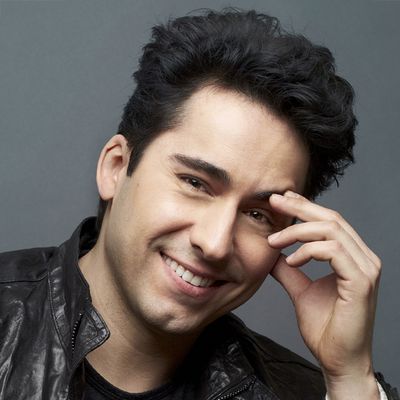
John Lloyd Young, Broadway's Jersey Boy and concert artist, joins our Director of Marketing, Nella Vera, for a heartfelt conversation on the future of streaming and theatre, stereotypes, and his part in the Presidential Committees on the Arts and Humanities... Read More
From the show: The 54 Below Podcast
Guests
Featured Shows
About
John Lloyd Young, Broadway's Jersey Boy and concert artist, joins our Director of Marketing, Nella Vera, for a heartfelt conversation on the future of streaming and theatre, stereotypes, and his part in the Presidential Committees on the Arts and Humanities.
Film, stage and concert artist, John Lloyd Young, is a Tony® and Grammy winner, multi-Platinum recording artist and Presidential Appointee. As the original “Frankie Valli” in Broadway’s Tony Award®-winning Best Musical, Jersey Boys, Young garnered unprecedented accolades from the New York and national media, going on to become the only American actor to date to win all four major Broadway Leading Actor in a Musical honors for a Broadway debut: the Tony, Drama Desk, Outer Critics Circle and Theatre World Award. Young starred in Jersey Boys on London’s West End and was hand-picked by director Clint Eastwood to reprise his role in the Warner Bros. film adaptation, becoming one of only a select-few actors in entertainment history to take his Tony®-winning role to the big screen. He has performed at venues like The White House, Carnegie Hall, Lincoln Center, and Radio City Music Hall.
Keep up with John at johnlloydyoung.com.
For information about John's upcoming show at Feinstein's/54 Below, visit: https://54below.com/events/john-lloyd-young-broadways-jersey-boy/
The Feinstein’s/54 Below podcast is hosted by Nella Vera and Kevin Ferguson, and produced by Michael Allan Galvez and Grace Flavien, with support from the Feinstein’s/54 Below marketing staff.
Original artwork design by Philip Romano.
Transcript
This transcript was automatically generated and might contain errors.
[0:00] Nella Vera: Good evening, everyone. Welcome to the fabulous Feinstein's 54 Below. Before we get started this evening, just a polite reminder: please take this moment to silence your cell phones, and also there's no flash photography, please. Our guest today is a Tony and Grammy winning actor as well as a multi-platinum recording artist. A film, stage, and concert performer. He starred as the original Frankie Valli in Broadway's Tony Award-winning Best Musical, Jersey Boys, a role for which he garnered unprecedented raves from the New York and national press. He went on to become the only American actor to win all four major Broadway leading actor in a musical honors for a Broadway debut, winning the Tony, Drama Desk, Outer Critics Circle, and Theatre World Awards.
He starred in Jersey Boys on London's West End and reprised his role in the Warner Brothers film adaptation directed by Clint Eastwood, becoming only a handful of actors in entertainment history to take his Tony winning role to the big screen. As a concert artist, he continues to play sold-out venues across the country. He has performed at the White House, Carnegie Hall, Lincoln Center, the Hollywood Bowl, the Kennedy Center, Radio City Music Hall, and so many others. John Lloyd Young, welcome to the podcast.
[1:19] John Lloyd Young: Hey, it's good to be here. I love that Feinstein's 54 Below has its own podcast.
[1:25] Nella Vera: Yeah, you know, we started it a couple of years ago, and we love introducing people to our artists, and the fans just love content, so it's great.
[1:34] John Lloyd Young: I know that a lot of artists stopped working during the pandemic, but you kept very busy. Tell us about what you've been doing.
[1:42] John Lloyd Young: Well, I was lucky enough to have a friend in Vegas. His name is Mark Chinook, and he has his own space there, which is called The Space. It used to be the recording studio for 50 Cent. And Mark acquired it and began actually doing charity events there for Broadway type performers who were in shows in Vegas. So doing things like the Cirque shows or whatever shows were there at the time that he started it, We Will Rock You or Magic Mike Live, that kind of stuff. And he opened his own performance space to do charity events on Mondays. They called it Mondays Dark. And then he started to invite people from outside of Vegas, Broadway type people, to do concerts there. I think he opened it in 2016 or very early 2017.
And I was one of the first artists who ever came from out of town. I live in Los Angeles, so it wasn't far from me to go and play there in live performances. And what happened was when all of the shutdowns started, or when the first stay home orders happened and everybody was quaking in their boots, not sure what was going on. He came up with the idea very early on of doing live stream performances from the space with a very skeletal camera crew and making them available to people who were at home. So we kicked that off as soon as we could when the dictates from his governor allowed us to because no one could even go in there. I mean, for a little while we had to forestall our idea to do it.
And then we started doing it about every six weeks. And then Feinstein's at Vitellos, the LA Feinstein's, came online and started doing live streams. And so I found myself working about once a month, presenting a different program about once a month to people who were at home in quarantine, which is everyone across the world.
[3:37] John Lloyd Young: Yeah. And would go just me and my pianist and music director, Tommy Farragher. So we worked up new set lists, new ideas, and it really kept us vital in terms of the at least on the concert side of my career. And that's how we made it through. And what's really fantastic about having done that is that on the other end, I have at least 10 viable brand new set lists slash programs to offer wherever I play that I worked up during that time period. So it was a productive period for me while at the same time being stressful, like it was for all of us.
[4:16] Nella Vera: Oh, amazing. Amazing. And I assume that the space was decked out with all the equipment needed for streaming and all of that as well.
[4:25] John Lloyd Young: Even more than you would think, because something that's kind of unique about the West Coast, I would stating the obvious is it's not a theater coast, it's a film and TV coast. So getting cameras and jibs and cranes and like all that stuff into a room is normal out here. The space actually doesn't have fixed seating. So you could move all of the tables, chairs, whatever, out of the room and turn it into what is essentially a sound stage, or what for us in New York theater we think of as a black box theater space, you know, which a black box theater space is a perfect small sound stage. So it's you bring the cameras in and you turned into that for that live stream, and that's what we did. And so it was actually kind of an easy pivot for people who are used to having cameras around, a tough pivot for a live performer who is now playing to a camera and not an audience.
[5:24] Nella Vera: So yeah, tell us about that. That was gonna be my next question. What was it like to perform for a streaming audience?
[5:30] John Lloyd Young: I mean, they're there and they're live, but you don't see them. Well, so we're about to talk about it, but you know, I'll be at 54 Below next week. One of the benefits of having had so much experience in small rooms like 54 Below or the Cafe Carlyle or any of the Michael Feinstein clubs, they're all small, separate clubs, about 900 seats. The benefit of playing rooms like that is that you start to get used to certain faces who follow you around. You know, have fans who follow me to the places I play. You know what it's like to play to someone who's sitting five feet away from you. Yeah. And a camera is five feet away from you. So I just placed those faces that I was used to seeing. I imagined them on the camera.
And what's interesting about that, it turned out to be when you're playing the camera and you have no other choice but to play the camera. When there isn't an audience in the room, you have to play to the camera because you're communicating to the camera. You're talking to the audience in the room, and there's a camera in the room. Sometimes it can become very frustrating if you're watching the stream or you're watching a television or whatever. You watch the artist playing people in your people who are there with the artist, they don't ever address you. So the good thing about that is that when you watch the live stream, if you'd only ever seen one of my shows from one of the tables in the back of the room, you had a front row seat to the live streams because I was always talking to the camera, always addressing the camera, often singing right into the camera. So it actually made it more personal for a lot of the audience members who don't get front row seats when they come to see me at 54 Below or some of the other Feinstein's clubs.
[7:16] Nella Vera: Yeah, yeah. I noticed that. I mean, first of all, the quality of your streams was great, but I did notice how natural you were talking right to the camera, which I had assumed maybe came from your film experience or something. But that's the first time I've heard an artist describe that they pictured their fans, those faces in the cameras. I love that. That's so great. Do you think that you're gonna continue streaming once the pandemic's over?
[7:42] John Lloyd Young: I think that now we have this dynamic where there's a certain amount of people who are going to still want and expect live streams, who, for whatever reasons, whether financial or otherwise, can't travel at a certain time that a show is happening. Many of the people who tuned into my live streams were on other continents. Let's say Australia, you know, you gotta get on a plane and travel for 24 hours to get to New York. But if you can watch the live stream like we're gonna do one on January 29th, if you can watch it from Australia, which is basically a matinee by the time when you've taken the time change, they'll be having their Sunday coffee brunch while they watch us live from New York at 7 p.m. It makes it easier in some ways to tune in.
And then here's what I think about when I think about streaming and what I was thinking about when we were forced to do the streaming. I was remembering when I was a kid, and my dad was Air Force, so there were times in my childhood where I was very far away from New York City. I always had a magnetic draw to New York City. My great grandparents were immigrants to New York City, literally with their hands, helped build the bridges and tunnels that we New Yorkers use every day. So New York is a huge part of my own personal legacy. So when I was forced to be away from my New York family because of my father's military career, I always felt this tug. Well, there were certain shows on TV when I was a kid.
There was Live from The Apollo. There was Caroline's Comedy Hour from Caroline's Comedy Club, which is almost right across the street from where 54 Below is. I would watch those as a kid growing up, and they would put me in these New York spaces that I longed to be in. And so then when I was in New York, happened to be in New York, I would want to go to the Apollo, or I would want to go to Caroline's Comedy Club and sit in that actual audience.
[9:48] John Lloyd Young: So I was thinking a lot, reflecting a lot on that when I was doing these live streams from Vegas, or then later from Feinstein's in Los Angeles, and remembering that even though the pandemic is preventing us from getting together in these small rooms, or was that down the line, it plants a seed in somebody, if watching from Sydney or Melbourne or London or wherever, Singapore, Japan, that when they come to Los Angeles, they're gonna seek out Feinstein's at Vitellos and go see a live show there, even if it's not mine.
[10:22] Nella Vera: Yeah, they're gonna seek out Feinstein's 54 Below to go experience that thing in person.
[10:30] John Lloyd Young: Just like when I was a kid, I wanted to go and see Rosie O'Donnell. Remember, she was the host. Rosie O'Donnell introduced these comedians in Caroline's Comedy Club. I went to Caroline's Comedy Club as a patron because I had first seen it on television, and it was in the heart of New York City, and I wanted to be a part of it. So that's exactly that's how I've been thinking about these live streams.
[10:54] Nella Vera: Yeah, I think that's exactly right. And I think for many years, people in the performing arts, particularly in theater, were afraid that if you put your show out in a streaming capacity or show too much of it on video that people won't want to see it. And I think the opposite is true. I remember while watching Sunday in the Park or Into the Woods on PBS and thinking, God, I just want to get to New York and see that. And I think that's true of fans everywhere. You know, the ones that can never make it here at least have a way of seeing it. But the ones that have the ability to eventually travel are just getting more excited and you're building a connection with them and introducing them to your work and to your venue if you're a venue.
That's part of the reason why we launched a streaming program, which you mentioned before, we are streaming your show on the 29th, but we're doing a fair amount of streaming of other shows on a weekly basis. And at first we thought, oh, this is gonna cannibalize all our ticket sales, and it really hasn't. And it's just added excitement for the artists, and it's helping them build their fan bases, and it's just getting people more excited to come to the club in person. So I think you're exactly right about that.
[12:04] John Lloyd Young: There's two things I think happening with those dynamically. One is the fly on the wall phenomenon, almost like you get to eavesdrop on an interesting conversation. That's an interesting part of it, is that you're not there for whatever reason live in the room. Most people who love live performance and love theater want to be in the room. But when you can't be, it's kind of interesting to be a fly on the wall. You're spying on them, you know. It's kind of that's interesting. But also, if the artist tries or understands to talk to the camera to include that audience at home, acknowledge that audience at home, knowing that there is an audience at home, that also makes it a little more engaging. And I was like you, I used to watch those, and I remember watching the video performance of Sweeney Todd with Angela Lansbury, which I would never see live.
[12:53] John Lloyd Young: Yeah, I mean, I would never see that live because it was before my time. Now, one of the problems is that, and I believe this even with the pro shoots of certain Broadway shows and everything that are happening now. I don't think you might agree with me. You don't have to say whether you do or not. But as a kid, Masterpiece Theatre, I was always disappointed because there's something about putting a camera in front of a theatrical production that renders it flat, yeah, flatter than it ever would be if you're sitting in the room. And if you love theater, you know that it's always better to be in the room. Of course. And no one has ever figured out how to make a theatrical production pop on screen the same way as television or film, which are by design supposed to pop on screen, right?
Yeah, it just doesn't work the same. But if you're a theater lover, seeing something like that that you just don't want to miss creates a fire in your belly to want to get back into that live space as soon as possible. Yeah, and so that's why I think that these live streams are good because if you are also selling tickets in the hybrid sense now, right? Because I could looks like I'm gonna have a full room on the 29th of January. This is Saturday. Looks like I'm gonna have a full room of live people, but I'm also gonna have people live streaming. And if for whatever reason those people might not be coming because of Omicron, whatever, they're also part of the audience. And what I hope happens for them is that they feel somewhat of the excitement of what we're of the party that they're not actually physically at, and that then they'll have the impetus to then come and join us as soon as they can in that kind of experience.
And I think that that's what's good for the live artists who are streaming down the line. They're also helping to engender that feeling of I gotta go and see this John Lloyd Young show live as soon as I can. Maybe not today, but at least I can be the fly on the wall today. And I know there's those flies on the wall. So I'm always gonna find the camera and I'm always gonna talk to them too. I want everyone to understand that I know that they're there.
[15:06] John Lloyd Young: Yeah. So that's part of my technique with the making the live stream seem more salient than it ever can. You put a camera in front of a live performance, you're just not gonna get the same thing, but you can get close if the artist is acknowledging the camera. Yeah. And we're also making advances and learning how to capture these performances in different ways. And it's not, you're right, it's not about just sticking a camera in front of the stage. You might need to adjust, you might need to do different angles to sort of maybe not mimic the live experience, but give it a more interesting, less flat experience for the audience at home. I want to ask you, because I'm always super interested in origin stories. How did you start performing? When did you know that this is what you were gonna do? And how did that pique your interest?
[15:54] John Lloyd Young: I was a very natural singer from when I was a really little kid. Think about how little kids learn language. They sing the ABCs, they sing songs, right? When you're in the cradle, you learn to sing sometimes before you learn to speak, or at the same time. So as a very young child, I could sing on key and I had good tonality and like all of a sudden as just a little kid. So it was something naturally in me. But I also grew up with New York City grandparents or New York City raised grandparents who had seen so many of these classic Broadway shows that now it seems implausible to people of our generation that someone actually saw Robert Preston on stage. Yeah. What? Or like someone actually saw Barbara Cook before she stopped performing on the stage.
They saw her on stage before she stopped because there was a long period there where she had a vibrant singing career, but never appeared as an actress on stage ever again. I knew those people who had seen those seminal performances, and they were part of the storytelling around the dinner table. It was part of our lives. So I listened to those cast albums and things that were ahead of my time before my time, like those videos of Angela Lansbury and Sweeney Todd, something I knew I would never see because that was behind us. Yul Brynner and the movie The King and I, that kind of stuff. So I grew up like a lot of little kids now who grew up singing Bobby Lopez songs from Frozen. You know, I grew up singing the Rogers and Hammerstein songs from The Sound of Music and certain musical Mary Poppins, certain musical movies, and it became very clear very early that I had a capacity for this.
And so first they propped me up on the kitchen chair and I would sing songs at the table. And then as soon as there was some productions for little kids to be in, I was auditioning and performing in them locally wherever we were. My grandfather, my Italian grandfather from Queens was an amateur singer. He had one of the first ever karaoke machines. It played eight tracks. And of course, it was his music. So it was Engelbert Humperdinck and Rogers and Hammerstein and lots of Sinatra. And so I would sing those part of my bonding with my grandfather as a young child was singing songs with him in his refinished basement in Queens on his karaoke machine. So that's how I got started. And of course, Broadway musicals were really exciting for me because I came from New York people.
But my dad's Air Force career had me away from New York a lot of the time. And so I always had this urge to be in New York. And Broadway was a musical environment. There was Broadway musicals, if that's the music that I liked, because it to me it was New York City. And it made me feel that I was connected to New York City, even if I was in Omaha, Nebraska. You know, at that time, you wanted a connection to New York or New York theater. You had two ways to do it. You could listen to cast albums, usually on LP or cassette, or you'd waited once a year to watch the Tony Awards.
[19:10] John Lloyd Young: Yeah. Um now you can get your fix from anywhere in the world because there's so much of what we do on the internet. But at that point, it was like being separated from a parent or a relative that you really loved and you really wanted to see, but you could only see them once a year. So that's kind of how I felt. That's the draw I felt to New York City. And that's why when I was able to make my own decision about where I lived and what I was pursuing, it's the first place I went. It ended up working out.
[19:37] Nella Vera: It did. Obviously, you're best known for playing Frankie Valli in this stage adaptation of Jersey Boys. How was it to perform a part that is based on a living person? What was that process like for you? Had you known a lot about him first before you took on the role?
[19:55] John Lloyd Young: I mean, the songs were just part of the tapestry of an American life at that point. When I first got the script and read through the script, I was realizing, oh wow, that's a Four Seasons song. Oh, that's a Four Seasons song. So I knew all the songs, even if I didn't necessarily remember that they were Frankie Valli songs. And I knew Frankie Valli. What I mean when I say that is I knew his type. My grandfather was an Italian guy born to immigrants from Italy from Sicily. So was Frankie Valli. Same generation. I knew Frankie. Even though I'd never met him. You know what's really interesting that I've realized now? I'm not angry about this, but I realize now with how things have changed. It's your life, and you think 15 years ago or whatever.
It's like it's hard to realize that that was a different time in history. Things have changed bigly. Can you imagine a show now that centers so much on a certain American ethnicity where almost everyone playing that ethnicity is not that ethnicity? So certain Italians could be offended to have a bunch of people who are not Italian doing the D's, Doz, and Dem stereotype stuff, right? When I think back to the original cast of Jersey Boys, of the people playing Italians, only me and Mark Latito and Jennifer Namo were real Italians. Yeah. Everyone else was like doing these does and them. Nowadays, don't even get me started. Like, yeah, you know, I don't even have to tell you. Nowadays, it is very sensitive that someone that would even presume to take on an ethnicity that isn't theirs on stage.
[21:42] John Lloyd Young: Oh yeah. It's becoming completely different. So there's a thing that a book, and I forget the author that wrote a book on acting, and I read everything voraciously when I was first starting out. And he mentioned this idea of blood memory, that there are certain things that you can easily play because they're in your sort of DNA. And so the idea of playing Frankie Valli in Jersey Boys was very exciting for me because I didn't have to do some stereotype or pretend something. I didn't need to know Frankie Valli personally very much in order to authentically portray him. And that was the privilege of a lifetime because I had the blood memory.
[22:38] John Lloyd Young: Yeah. It's dicey nowadays because we're looking for cultural authenticity more than we used to. At the same time, there's this idea that actors should be able to play, they act. But there is a richness to there was a richness to your performance that I think you were great in it, and you're a fantastic actor, but also your history brought so much to that part. And that can't be denied. So today I think, yeah, you're right about casting now. I don't envy people who have to cast shows now because they're doing their best as we navigate through, you know, this cultural change that the country and theater is going through. But I love that. Was your family super psyched when you got this part just because of the history?
[23:26] John Lloyd Young: The proud Italian family. Yeah. Well, I mean, I'm not to put a pall over the conversation, but by the time I did Jersey Boys, that family was not around anymore. Oh. So yeah. So but I did know that they would have been. And I also knew that I was able to draw from something real, not just again, like I said, just do a these dozen dem kind of pastiche kind of representation of an Italian American. But that the colorful side of Italian Americans, because it is still Jersey Boys is still an entertainment. That the colorful side that's makes that ethnicity interesting, I was able to also do in a completely authentic way and bring out the most interesting parts of some of these characters that real life characters that I've seen growing up as an Italian American having that legacy of New York Italians.
[24:20] John Lloyd Young: Absolutely. It was just it was thoroughly enjoyable to be able to share that energy with an audience in an authentic way. Have you been to Sicily?
[24:31] Nella Vera: Yeah.
[24:32] John Lloyd Young: That's beautiful.
[24:33] Nella Vera: Yeah.
[24:33] John Lloyd Young: It's like a whole other land.
[24:35] Nella Vera: It's not at all like...
[24:35] John Lloyd Young: It's true. And they well, and they also were they had Moorish occupation, but so they're part of the Ottoman Empire. And so there's a lot of influences there that are kind of unexpected. There's Muslim influences. In fact, the little town that my great grandparents emigrated from is an Arabic name.
[24:57] Nella Vera: Oh wow.
[24:58] John Lloyd Young: I don't know. So I love the food is so spicy and has that Tunisian Moorish influence. It's so different than the rest of the world. There's a lot of that influence there, and even in the dialects, the spoken dialects. And those people on that island grew up under the dangerous volcano Etna. Then think about environment and how that might have an impact on a culture, that fiery Italian temper, or that idea that you only live once and live your life while you have it, because you could be blown to smithereens like that in the blink of an eye, you've got a volcano next door.
[25:35] John Lloyd Young: I climbed that volcano and terrifying.
[25:40] John Lloyd Young: But also the Italian people are just—they live. That's what I love about it. It's like they absolutely embrace life. And what you said about your grandfather, it's funny to think of a grandfather being so musical because most people's grandfathers are not. But Italians just love music and have a lot of people. Well, I'll tell you, you know, I'll tell you something that I think is really a wonderful accident is that Sicilian on my mother's side, Welsh on my father's side. You think some of the greatest singers, the most soulful singers, there's Welsh singers, Tom Jones, Shirley Bassey, and then of course Italians. I've got a lot of passion, and I think I have a good sort of DNA mix for a singer.
So that's luck. That's luck, and I definitely feel fortunate. I know that you've said that you feel like you were sometimes born in the wrong decade because of your musical taste. So, what draws you to the music of the 50s and 60s, particularly? Melody. What's been lost? I used to break dance with my little friends when I was seven, eight years old, Run DMC and Herbie Hancock and all that stuff. You know, hip hop started—that's 40 years ago already. And it has not receded from being the number one musical genre. Well, I have again with that ethnic background and those sounds and everything. I am a melodist. I love melody and I love big singing. And hip hop is more rhythm-based and lyric-based.
And so for me, in order to be fully engaged with what is my nature, I have to be making melody. And so that's why the songs of that period before rhythm became more salient. That period of songs and that period of music still allows for its soaring melody. So that's where it really even Steven Sondheim, who I adore, and I put a Stephen Sondheim song to honor him into the set that I'm doing on the 29th.
[27:49] Nella Vera: Oh, fantastic.
[27:50] John Lloyd Young: It's gonna be an all-Broadway set, the 29th. Because this is my first time back in the Broadway neighborhood since quarantines started. Amazing. But it's melody and big singing, beautiful big singing. You can't do that as easily with some contemporary stuff.
[28:07] Nella Vera: Yeah.
[28:07] John Lloyd Young: And so I'm always gonna be a classic, both in my style and in my tastes. I like classics. And that's not to say that contemporary is not good. It just doesn't fit my skill set.
[28:20] Nella Vera: Yeah. Are there other genres that you would love to explore?
[28:24] John Lloyd Young: I already have explored, well, I've explored a lot, and I'll probably do it at 54 Below someday. I have a whole international set where I sing in Hebrew, Italian, Spanish, Mandarin. I'm working on a French Canadian song. Weirdly, I don't know where it comes from, but maybe it's because I'm so cute into sounds, right? As a melodist, I hear things well. I have a really good ear, not just for music, but also for language. So singing in other languages is a big interest of mine.
[28:59] Nella Vera: Yeah, I think you had some songs in a few shows that I've seen you, you know, just a couple here or there, which were quite beautiful.
[29:06] John Lloyd Young: Maybe some opera, you know, that could be something that I haven't uncovered, but I think that that's something that I could. I definitely have the technique and range to if I worked it up to do something in that genre, I bet.
[29:20] Nella Vera: That's so exciting. Do you speak other languages? I think I read somewhere that you spent a year in Spain or a semester in Spain.
[29:28] John Lloyd Young: I spent a couple years abroad. That was part of my education, was I wanted immersion, so I spent a year in Venezuela. I spent a year in Spain. I live in Southern California. I speak Spanish every day here. Can't avoid it. This used to be Mexico, you know.
[29:43] Nella Vera: Yeah.
[29:44] John Lloyd Young: So Spanish, I do pretty well. If I'm traveling with other romance languages, I can definitely read them. But people who speak any one romance language will tell you that you can usually read the other ones. I speak, write, and sing Mandarin, not as well as Spanish. It's harder. It's taking longer to learn. But I would say that's pretty good. I mean, if you've got English, Spanish, and Mandarin under your belt, those are the three most spoken languages in the world. So that's a lot of friends you could potentially make.
[30:15] Nella Vera: Yeah.
[30:16] John Lloyd Young: More than a—it's two billion, that's two billion friends that you could potentially have. My college roommate was a Chinese major, and I still regret that I didn't pay more attention. I used to have to help her with her phonetics. And I'm like, oh, why didn't I learn something harder than French when I was in college? Because that would have been the time when you're getting really good instruction from a school that has a linguistics college, but just, you know, fell into the English.
[30:45] Nella Vera: Did you notice I didn't mention Italian? And that's actually my true ethnicity as Italian, but my grandfather was the youngest of five, and he was the American-born youngest of five, and he could understand his parents when they—they only spoke Sicilian dialect. He could understand them, but he answered them in English, which is the story of a lot of, oh yeah, first-generation immigrants. So I never learned Italian because it wasn't relevant to my life in America. I wanted to learn Spanish. I felt like that's the language to know.
[31:19] Nella Vera: Yeah.
[31:20] John Lloyd Young: If you want to be a good American, learn Spanish. I came over from Peru when I was eight, and my parents were just like, don't speak Spanish, learn English. And you know, you kind of—so my Spanish is at an eight-year-old level. So, you know, I do okay, I can translate things, I speak, I write, but it's not at all very sophisticated because it was ingrained. You know, when you're an immigrant, you're trying to assimilate and be an American.
[31:45] Nella Vera: And so that's—
[31:46] John Lloyd Young: Well, now that you're all grown up, I learned Spanish when I was a teenager and a young adult. So now that you're all grown up, if you want me to teach the eight-year-old you all of the bad words, I'll be happy to.
[31:56] Nella Vera: I could use that. It's funny. I took a Cervantes class in college, and I was like, this is so hard, but it was great because Cervantes is a genius, but it was still, I thought I had it because I thought I was fluent until I had to write it.
[32:11] John Lloyd Young: Well, and then there's also Peru, like there's all these different Spanishes, too. That's the other thing is that if people who don't speak Spanish or don't have a lot of skin in the game don't understand that—what do they call it? There's a whole diaspora of Spanish speakers and Spanish ethnicities in America, and it's not a monolithic group.
[32:30] Nella Vera: No, I live in Southern California, Mexico, Mexico, Mexico, Mexico. It's all about Mexico here. You go from like here to then New York City, and New York City is Dominican and Puerto Rican.
[32:43] John Lloyd Young: Like, yeah, so it's not—it's—and they don't have anything in common with each other. Like this is something that Americans like that aren't in that world don't often understand. So it's interesting.
[32:56] Nella Vera: Speaking of Spanish, you took a trip to Cuba once. Tell us about that.
[33:01] John Lloyd Young: Yeah. Well, Barack Obama famously opened Cuba, right, during his administration. And at the time, I was one of the members of his committee on the arts and humanities. And what many people don't know is that that famous delegation where Barack Obama went to Havana, there were four separate delegations. That was just the first when he went. The second delegation was artists, and there's a cultural exchange. So I went with Usher, Dave Matthews, Smokey Robinson, violinist Joshua Bell, Margot Lyon, the late Margot Lyon, producer of Hairspray, who was the co-chair of our committee, actually. Some Congress people, the head of the NEA, whatever. And we did a four-day delegation with the most famous artists of Cuba, symposiums, and I was just a Spanish-speaking member of Obama's committee.
And I remember, well, my favorite memory is I went to a little school. There were seven and eight-year-old kids in the classroom. And I went in and I wrote on the blackboard, "Big girls don't cry," and I taught them what that meant. And I sang a little bit of—I knew with seven or eight-year-olds, because I had worked with kids for Obama, you know, here in the States. I knew seven or eight-year-olds would go crazy over the part where, you know, it goes, "cry." You know, like the little kids, these seven, eight-year-old kids. I taught them what it meant, and I said, "Chicas grandes no lloran." But then I said, I made sure to say to them, "It's okay, though. You could cry. If you feel like crying, it's okay.
But this song is 'Big Girls Don't Cry.'" And then I had them sing that little phrase with me, and they went nuts when they sang the "cry." They thought that was so funny. But yeah, we did it. And that's the less serious side of things that we did. At the same time, of course, the communist Congress was meeting and calling us capitalist devils for like while we were there, you know. So there was some tension well at that time, but yeah, you know, that Congress meets every seven years. So it was just a coincidence that they were all meeting while we were there trying to spread love.
[35:13] Nella Vera: Yeah.
[35:14] John Lloyd Young: And also I got to sing "Ooh Baby Baby" to Smokey Robinson at the final dinner, which was nerve-wracking, and I did okay because he bumped his assistant out of first class and gave me the seat back to LA. So I think I did well by him.
[35:34] Nella Vera: I love that story. How amazing your career has just given you so many different experiences that what an incredible career you've had and continue to have.
[35:44] John Lloyd Young: And just to wrap up and talk about your show at Feinstein's/54 Below, you're back.
[35:49] Nella Vera: Is Tommy back with you?
[35:51] John Lloyd Young: Yep. It's gonna be me and Tommy. Now at the beginning of our conversation, I told you how we were in Las Vegas doing live streams and that we came out of that year with like maybe 10 different sets, right? So this week at 54 Below, I think we go Tuesday through Sunday. Our theme is it's gonna be like, you know, the stuff that I love to do from a certain era. So Little Anthony, the Righteous Brothers, Smokey Robinson, the Platters, Roy Orbison, and of course a good dose of Jersey Boys every show because how could I not? The fans would riot.
[36:26] Nella Vera: Yeah, that's right.
[36:26] John Lloyd Young: But what we're gonna—and then like I said, all Broadway, but mostly from that same era. So things that were happening around the Platters, Smokey Robinson, so The Wiz, The Music Man, Rogers and Hammerstein, like I said, I added some Sondheim, some Les Mis. It'll be all Broadway for the one that we stream because Broadway's back and this is my first time back. So I felt that would be right. But what we're doing night to night this coming week, which I think is fun, is what I'm calling sort of like a set list roulette. Each night, I'm gonna ask an audience member in the front row to choose from a hat what set we're gonna do the next night.
[37:03] Nella Vera: Oh my gosh.
[37:04] John Lloyd Young: So we're going through some—and like I said, the basis of all these sets are those fantastic songs that I love from that period. But we'll have a different theme each night. Well, one night will be my debut album, another night will be mostly soul songs or whatever. It depends. There'll be a certain list, and we won't know until the night before what's going on.
[37:23] Nella Vera: Oh my gosh, that's so exciting.
[37:25] John Lloyd Young: And now I want to come every night.
[37:26] Nella Vera: I know I was already coming on the first night and on Saturday. But now—
[37:29] John Lloyd Young: That was the idea. When you're booked the last week of January, that was the idea to get people to want to make a week of it. But now the secret's out.
[37:37] Nella Vera: That's so fun.
[37:39] John Lloyd Young: Well, great. John, you're such a man of many incredible talents. So we're gonna leave it here. Thank you so much for joining us today.
[37:49] John Lloyd Young: It's great to be here. I love 54 Below. It's my—the home away from my former home. And I never have a bad time out there, so I'm so happy to be back.
[38:00] Nella Vera: Fantastic. We look forward to seeing you at the end of the month. John Lloyd Young will play Feinstein's/54 Below January 25 to 30. His show on January 29th will be streamed live. For tickets and information, visit 54below.com.
[38:18] Nella Vera: You've been listening to the Feinstein's/54 Below podcast, part of the Broadway Podcast Network. Subscribe and rate us on Apple Podcast or your favorite podcast app.
© Broadway Podcast Network, All Rights Reserved