

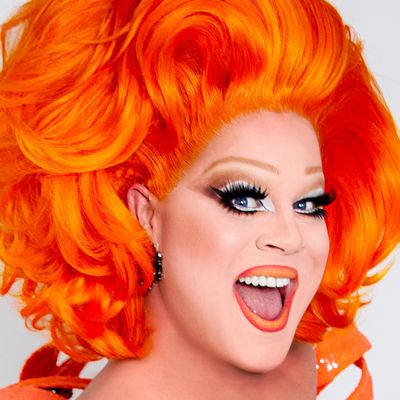
RuPaul's Drag Race star Nina West talks to us about her life in drag, growing up in Ohio, and all things Drag Race! Assistant Director of Programming Macon Prickett hosts. For more info about Nina's upcoming show, visit 54Below.org/NinaWest... Read More
From the show: The 54 Below Podcast
Guests
About
RuPaul's Drag Race star Nina West talks to us about her life in drag, growing up in Ohio, and all things Drag Race! Assistant Director of Programming Macon Prickett hosts.
For more info about Nina's upcoming show, visit 54Below.org/NinaWest
The 54 Below Podcast is hosted by Nella Vera and Macon Prickett, and produced by Michael Allan Galvez with support from the 54 Below marketing staff.
Original artwork design by Philip Romano.
Follow Macon Pricket on Instagram at @mrmaconprickett
Transcript
This transcript was automatically generated and might contain errors.
[0:00] Macon Prickett: Good evening, everyone. Welcome to the fabulous 54 Below. Before we get started this evening, just a polite reminder, please take this moment to silence your cell phones and also there is no flash photography, please. Welcome to the 54 Below Podcast. I'm Macon Prickett, the assistant programming director. Our guest today is the Very Queen herself, Nina West. Veritable Every Queen, Nina West was recently seen competing on RuPaul's Drag Race All-Stars season nine after her star turn on the 11th season of RuPaul's Drag Race, where she won the beloved title of Miss Congeniality. Yes, she does. She has since released three EPs, made history as the first person to walk the Emmy Awards red carpet in full drag, and released a handful of acclaimed singles along the way. On September 19th and 20th, Nina will show us all why she is the very queen in her 54 Below solo debut. Welcome to the podcast.
[0:59] Nina West: Hi Macon, I can't believe this is happening.
[1:09] Macon Prickett: Well, I have to ask you, just to start off, I mean, how does it feel to make your 54 Below solo debut?
[1:16] Nina West: Um, you know, it's really surreal because, you know, 54 Below is this iconic legendary space, right? It's the living room of Broadway. It's where people go to play and to try out new stuff and to showcase, you know, their talents and also, you know, be witness to some of the greatest people who've ever done it. And um, I just can't believe you offered me a spot.
[1:43] Nina West: I mean, how could we not? You are the very queen. I mean, it just kind of I'm like, I saw I'm just I'm really excited. It's uh, it's very surreal for me because, you know, as a kid who grew up in Ohio and who still lives in Ohio, who um deeply loves the theater and loves Broadway, and you know, it's just it's a very big pinch-me moment in my career, and I'm really just very excited and uh super thrilled to bring what we've been working on to New York audiences at 54 Below.
[2:12] Macon Prickett: Oh well, we are thrilled as well. And we're gonna get into all of the details, well, not all of the details of the show. We've got to save some things for the stage. But um, I have to ask, have you uh been to 54 Below before?
[2:24] Nina West: Oh yes, I've been to 54 Below before. Come on.
[2:27] Macon Prickett: I've seen it. Who have you seen? What have you seen? Tell let's talk about it.
[2:31] Nina West: Oh my gosh. Okay, so uh I came to John Tartaglia's show a couple years ago, and I was so in love with I'm a big fan of John Tartaglia. Um, you know, star of Avenue Q, Johnny and the Sprites, uh now Fraggle Rock. I mean, he's uh, he's a puppeteer, an amazing, amazing, awesome person, an artist, and I just love him. Um I have I mean, I've seen a bunch of shows there. My first show that I did there, my only show that I've done there is was last Christmas season. I did the Christmas Carols, which uh was such an exciting uh event, and um Carmen Kusak was in it, and I like lost my mind like the cast was so good. You know, and I met Ladonna that day and just a lot of friends, and um, you know, um it's so there's there's something so special about the space.
Um you know, and I think there's just a magic that kind of exists in there. And so like to have to have had the privilege to watch people through the space and work the space and do their shows in the room, and then to you know, do a show in the room, it's like it just I was so nervous that night. My hands were sweating. I was just like I was just like oh my gosh I can't believe I'm at 54 Below. So you know I mean it's um I love the space and I love what it represents and I love what it does for artists and theater kids and theater professionals and theater legends and I mean like it kind of connects us all in really fabulous and unique ways and that's pretty fantastic.
[4:04] Macon Prickett: I that's that's incredible. I I have to agree with you. I think something that's so special about cabaret just as an art form in general is that it is kind of the crossroads of so many different um branches of the entertainment industry. I mean so many we've had every, you know, Isaac Mizrahi from the fashion world has performed on the stage and you know um Broadway's greatest but also many television actors who have been able to make their cabaret debut so it is really it's really special. What excites you about um doing a cabaret show in such an intimate space?
[4:35] Nina West: Oh my gosh well we have been I have yeah I've taken the assignment very seriously of course I would expect nothing less. I mean so I have been we're we've been writing and working on this show for quite some time. We went to Provincetown this summer and tried it out for a few nights to get uh some writing down and to figure out the pacing of the show and to then decide like what direction we were gonna go we've made a lot of changes and a lot of shifts. I brought on um a director for the show Matt Lenz who's you know the directing of the direction of the show. Matt's you know was the associate on the original Broadway of Hairspray uh on Beauty and the Beast on Sound of Music I mean he's just incredible and he directed me on the National Tour of Hairspray.
And then I brought on Lon Hoyt, who will be my my accompanist and who's the musical director, who is, you know, been the musical director for many Broadway shows, including Hairspray, the original Broadway company of Hairspray. And I'm working with some great writers, you know. I'm working with one of Bette Midler's writers, Eric Kornfeld, and we're working on um, you know, collaborating with my best friend Patricia, who's been my writing partner for 25 years.
[5:42] Nina West: Oh wow. And to tell these stories and to bring it to life um, you know, drag cabaret is so awesome authentically specific also. It is in such a you know a unique space within the arts and the art form of cabaret. So um, so I'm really trying to celebrate drag cabaret and um and marry it really obviously with this world of cabaret. And it's you know, it's exciting. I've got some great stories to tell. I got some wonderful song selections and some medleys and some fun, ridiculous ideas. And I'm excited, like in a lot of it's gonna be like half of the show is new. So that's what we're gonna be pre- what we're gonna be doing on September 19th and 20th is gonna be, you know, some of it's gonna be very, very new to me.
And it's gonna be living and breathing in the space and trying to make sure I'm as connected to it as the audience is, you know, and like you know, I'm but I'm really excited because these are I'm really I'm really excited to share these stories and again kind of you know, like a lot of my career has been talking about uh LGBTQIA plus voices specifically, and and uh how that story is so vital and important for people to see themselves and recognize themselves and you know, kind of the bigger picture and have their own like agency and self-worth. And what I wanted to do with this cabaret was in a really fun way, just kind of remind people of those messages and remind people of um what you know, what is the very queen and and who is the very queen and and it's just it's a really fun little turn of phrase that was the song title on an EP of mine that just came out but it became when we were writing the show it became a lot more and it was like literally making it was like therapy writing this show was like I love that well I love it I hated it like it was peers of course kind of it was like it was painful at times I mean there was like there I would sit here and we're recording this podcast and I'm in my kitchen I would sit here at this table that we were wrote the show at with my best friend and we'd be talking about these memories of kind of Nina West along the way and this career and it was like some of it was so painful I was like oh god but then we like found all the joy that we wanted to you know but we wanted to bring to light and celebrate but it yeah it was a process and um I think in this specific show for me that we've written I've written a lot of shows over the years and I've done a lot of varieties of a variety of performance types of but I haven't really focused so in like specifically on cabaret right and um this specific show is so uniquely personal in such a way that I wasn't expecting it to be um but at in that in all of that truth it's so much fun and um, you know, for people who maybe have never experienced drag or don't know what drag is or have only seen me on a show like RuPaul's Drag Race and maybe not know much more else about me um I think this is a great show that's gonna be like oh okay I get I think I understand it a little bit more and and trying to you know remind people that the art form itself of drag is an art form of joy and celebration and yeah yeah yeah tell them our listeners if you weren't excited for the as you know if you weren't thrilled for the show now you are I mean that sold it that's you know that's a perfect five minute commercial I can't I can't imagine anything better.
[7:02] Nina West: I'm so so excited um I do want to go back you know talking about um how drag is its own very specific art form but how in the last you know few decades we've seen it really branch out to all of these other different aspects of show business and you know cabaret really kind of is the same you know people don't always think about cabaret as a as a true art form so marrying the two together how when you started writing the show and thinking about the show how did you um approach it differently as a cabaret space cabaret show knowing that it's in such an intimate venue knowing that um you know you're not playing one of these huge theaters you know this is such a small intimate venue and you know you were saying it writing it was almost like a therapy session so how did you approach you know the material and the writing of the show in a different way than your larger shows?
[7:02] Nina West: I think you know that's a great question because I think that what I was you know being tasked with was to be really honest right and understand that because it's such an intimate room there's nowhere for the artist the cabaret artist to hide there's no say yeah there's no like it's out there it is you are literally right in front of these people and and I will tell you I mean I'm I've been I am I've been performing for a long time a long time. A many a couple decades, I've been doing this uh the art of drag. And I thrive in this environment. I've I am excellent most of the time at reading the room. I can feel and the energy shift and turn. I know when I have the audience and I know when I've lost them. And that's a skill that you develop over, you know, a lot of a lot of years of working and trying to understand the relationship between an artist and an audience. And that is as any theater professional tell you, the always the missing component is the audience.
[11:05] Nina West: You don't really know what you've got until you've got the audience. And then every night, why it's so exciting when people are like, how can you do a show? Like, right, when someone's in a contract for a year and they're on a tour or they're on Broadway and they're doing these shows for a year, like, how can you do that? It's because the audience makes it different every single night. So in the art of cabaret in these small rooms, I have an opportunity to be vulnerable and be silly and be unguarded, you know, and let my walls down a little bit more and share more about myself. And also, you know, find out where this audience is at that's coming to me. A New York audience is also the best audience in the world, right?
These are people who see everything. So by best audience, I mean they're very important. They're probably the hardest audiences, and they're hypercritical. They're a sophisticated crowd. Yeah, and they know when they see something that's shit, you know. So my intention is to, you know, and there's a lot of pressure there. I'm not gonna sugarcoat that, you know, like I don't want people to go, oh, this drag race queen thinks that she's just gonna come in here and, you know, do a cabaret. Oh, you know, like I mean, I'm a student of the art of theater. I, you know, I have my degrees in theater. My love, my first love is the stage, and that's where my character has rested all these years, even if it wasn't on a Broadway stage or a stage around this country in a big theater house, but on stages in these small bars and nightclubs, which is where, you know, the art and craft of cabaret really has thrived. Absolutely, got its roots in. And it's so I think, yeah, I'm excited to flex this muscle that maybe oftentimes hasn't been seen since I was on Drag Race, you know.
[12:57] Nina West: So it'll be I think it's gonna be a great opportunity for me to show people that there's more to me than just a really poor reveal on a reality show.
[13:08] Macon Prickett: I was certain you were gonna say just a pretty face.
[13:16] Nina West: You contain multitudes, multitudes and me.
[13:21] Macon Prickett: Oh my gosh.
[13:22] Nina West: Okay, so going back to Columbus, um, going back to young Andrew. Um when did this sort of showbiz theater bug bite? What was your gateway drug? I'm fascinated.
[13:34] Nina West: Oh my god. Oh well, it might have been, hmm. I think like I thought of three things immediately. I went and saw Cats in Cleveland, Ohio, and I was doing I mean, I was like four years old, and it was at Playhouse Square, which is like one of the finest touring houses, like the touring facilities anywhere in the world. Okay in Cleveland, Ohio. And um, I saw Cats in Playhouse Square, and I was like mesmerized, and I couldn't, I couldn't, my four-year-old brain couldn't quite separate the fact that those were actors and not real cats.
[14:05] Macon Prickett: I was about to ask if you were terrified or if you were thrilled.
[14:09] Nina West: Yeah, I was like, are you kidding? Um and that so that was a moment. And then I was also the kid who at a very young age, because my mom loved the pomp and circumstance of old Hollywood and you kind of the, you know, that kind of that regleness that came with what was Hollywood. Um, you know, we would sit and watch the award shows. And I remember watching the Academy Awards when I was very young, uh, and the Tony Awards when I was very young, and thought, oh my gosh, these people get to do this. This is their life. How does this, how does that work? And I think I felt like it was a calling almost rather than like, oh, I it I just felt like that's what I'm supposed to be. You know, and that's I feel like that's what I'm supposed to be.
And then I would say the other like primary example of that would be like Mary Poppins. Uh I saw that movie, which is my very favorite film of all time. And um, I saw that movie and I was like the dream became so much bigger than what I ever thought it could be, in the sense that here, you know, a nanny could open a purse and she could pull anything out and she could fly, and she could, you know, there was there was this like so much possibility. And I somehow saw myself in that and inspired me to like just have a lifetime of dreaming. I mean, those are like three things that I really would say, okay, maybe that's what it was, which then led me down to the path of drag.
[15:37] Nina West: Yeah. You know what I mean? Like, you know, when you just don't know when you're in Ohio how to get to New York or Los Angeles. And so it when you when you're growing up and when you're, you know, first sort of learning what show business is, you know, New York and Hollywood are so far away. You know, you can't so far away. And my parents didn't want me to be, you know, some chasing after that dream. I mean, like they were so but I couldn't not like I just couldn't. I couldn't everything in me was telling me like this is what I'm supposed to be doing.
[16:08] Macon Prickett: It chose you, like you said.
[16:10] Nina West: Yeah, like it's exactly if you don't have these, yeah. You hear it and you have to listen. It's like there's the you have to answer the call. That's hello. Um so did that lead to uh did Mary Poppins and Cats and you know, the award shows, did that all lead to doing the community theater sort of circuit? Did you have theatrical opportunities growing up?
[16:32] Nina West: Yeah, so it was all it was all kind of like these small gateway links. You know, I did uh like um like a lot of people. I did the like the religious, like the nativity story a couple of years, you know, when I was very small. So like I was like, oh right, okay. So like and I was like, oh, I was a wise man, or oh, I was like a shepherd, whatever it was for a couple years in a row. That's how you cut your teeth.
[16:55] Nina West: You really cut your teeth on those words. Me, Lapone, move out of the way. Okay. It was nativity. Actually, I read her book and I don't believe that's really true. But also fuss like side plug. It's like one of the best memoirs I've ever read as a table. Thousand percent. We are obviously huge fans of the Oh my gosh, I love it. Anyway, um, so like I did that, and then I went to um I just kept wanting to be a performer. And so I went to middle school and it felt like the only opportunity was like a choir, a school choir. So I did that. Then I got to high school and I was like, I can do a show, I can do a play in high school. And I think I like my first show is I think you can't take it with you in music band to like kind of like classics, right?
And I was just an ensemble in the music man. I was like, just in very, very much uh background. Um the bug was thoroughly biting. And when I got my driver's license, I went and I auditioned for a community theater production of A Christmas Carol. And I got cast uh as the uh the ghost of Christmas Yet to Come, which mind you has no lines. Mind you, has to stand the silent ghost. Like metal frame. This is what I think before then really the creation of PVC. This giant metal frame body that was sitting on my like 16-year-old shoulders. I'm just like and there was this lift in the theater, and this giant structure would come up, and it'd be me, and I'd wait for my cue, and I'd raise the arm with like a pole and I'd point to the headstone.
Oh my gosh. And I was like, you couldn't have told me like that was I was giving like you know, my Tony Award-winning turn as the guy with no lines in the giant contraption on his shoulders. I mean, like I was I was it was like this is a dream. This is I'm living this dream, and it just everything just kind of kept building on itself.
[18:45] Nina West: And I had, I will say, I think a lot of people who are in the entertainment industry can also say this. I had somebody who saw me in my own desire to be an actor, desire to be a performer, and also saw my queerness and wanted to, I think, protect me. And that was my choir director, Kathy Ringley, uh, who is no longer with us, but who took such care and protecting me and wanting to make sure that I had, you know, kind of this opportunity to express myself in those ways. And really, she protected and preserved this dream for me when I was in high school and nurtured it to get me to college auditions and you know, and getting my college applications filled out and you know, scholarships and awards, you know, merits to be able to afford to go to college. And so it took a mentor and it took somebody to see all of that for me to I think really also believe it and believe that I could that I not only could do it, but that I deserved it.
[19:46] Macon Prickett: Right.
[19:47] Nina West: And I deserved to chase that dream. And so like um major shout out to you know, specifically arts educators who are looking at looking at these kids and saying, You got this, you can do this, don't give up on this. Um, because I wouldn't be here, I'd probably be a lawyer and or some who knows what the hell I'd be doing at T. I don't know what I did. But um thank God Kathy was that positive support that I needed to chase this dream.
[20:13] Macon Prickett: Yeah, I mean, and those those people, you know, even thinking of the ones in my life, they're so so important. And even at the time, if you don't quite realize what they're doing, you can look back and think, oh, like they were the game changer. That changed everything.
[20:28] Nina West: Yeah, and I think that's a really good point. And at the time, I mean, like, you don't know what's happening, you don't know. I mean, like, I had no idea that Kathy was protecting me or trying to get me, you know. She was the one who took me to my very first audition, you know, and then she was the the musical director on some of the shows at the players' guild in Canton, Ohio. And she was the one who, you know, she took me to my first trip to New York City. You know, I mean, there it was just and my first Broadway show, which was Rent. I was like, and I saw, I mean, like she just I saw Titanic, you know, when I these are and they saw this of this dates when I was in high school friends. Um but uh these are all shows that I saw because of Kathy, and I saw Chicago with Bibi Newworth and uh Anne Ranking. I saw, you know, like it's like what's happened, like what is this like? That's an education right there.
[21:17] Macon Prickett: Yeah, and she made sure that I had it.
[21:19] Nina West: She was also cool because this is a I I share this story a lot. I shared it with Seth Rudetsky because Seth was a part of, you know, a part of this specific chapter of my life. But Kathy and I, we would um I would run to choir, the choir room after school when we'd have choir rehearsal, and we would talk about what was coming up on the Rosie O'Donnell show, who was gonna be on the Rosie O'Donnell show, what Broadway musicals we'd see, whether it was Scarlet Pimpernel or whether it was um Leah Salonga and the Saigon, whatever it was, right? And I and Seth was a writer on that show, and so it's a it's a kind of crazy, weird like kismet to be able to have this ability to talk to somebody that I really love and respect Seth, and I really loved what Rosie O'Donnell and the Rosie O'Donnell show kind of inspired in me as like as a young kid.
And you know, like so that was just this other component, and it gave me and Kathy this bonding moment, right? The the this theater, this musical theater piece of my life has always been present. You know, it's always been there from the first cast recording that my grandmother bought me, which was Phantom of the Opera, like a double cassette thingy.
[22:28] Macon Prickett: Absolutely.
[22:29] Nina West: Yeah, but do you know what I mean? Like, but it's always been there, and I don't know. Yeah, it's all very special.
[22:34] Macon Prickett: Wow.
[22:35] Nina West: And I I think that's very evident in your drag as a fan of your drag. You know, I think that theatrical personality, you know, brings such life to what you do as a drag performer as well, which I think is thrilling, obviously.
[22:52] Macon Prickett: Um I want to go. Um, actually, we're we're still here. Uh Columbus.
[22:57] Nina West: Let's talk about it.
[22:58] Macon Prickett: Um, so you're living in Columbus.
[22:59] Nina West: Yeah I'm currently living in Columbus I'd probably I predict a move within the next year probably yeah so um I was reading just lightly about um the Nina West Foundation um and I would love to uh chat a little bit about that because I've also read you know that you know your philanthropic work also includes you know working with the Create Columbus Commission Visionary Award from the City Council and everything that your foundation does I would love to know a little bit more about that as well speaking about mentors and how important they are especially for LGBT youth.
[23:35] Nina West: Yeah you know um uh and we've started so when I was doing these drag shows and I was I was doing these big drag shows in Columbus and we would at the end of every show from like 2004 until 2019 um we would do these big charity like kind of an encore of the final number uh to and I you know I get on the magnet would say okay this last number we're gonna do it one more time and tonight we're gonna do it for this organization this charity oftentimes a local organization um oftentimes a local LGBTQIA plus organization so that'd be like Kaleidoscope youth center which in Columbus is this um queer youth drop-in center for um for for your young people um or um at the time the Columbus AIDS task force which is now called Equitas Health or right we would we we'd we would do these big giant fundraisers and we would get all this cash and people would write checks as when people carried around checkbooks.
[24:34] Nina West: And they would just, we'd just gather it all up and we'd put it in a trash bag, and we'd have a representative from the organization there that night and we'd just hand them a trash bag and watch them walk out the door. Well, that was like super problematic, as I learned. And because just I wasn't safe, right? So uh I had a friend, Matt Goldstein, who runs an organization uh uh here called Besa, which is uh a community service organization that unite that connects people to service projects and service within their own communities. And it's a brilliant organization. And um, he's like, Andrew, you've gotta create your uh you've got to make your giving, you know, uh legitimate. You know, you've got you need to be able to tell people what you do because you're making a huge impact.
And I was like, oh, I don't I don't think, you know, it's like, no, but like even for just the simple fact that you don't need people walking out of a bar with bags of thousands of dollars, you know, he's like, so we started the Nina West Foundation, and the Nina West Foundation has given a lot of money thanks to the community sport of support of Columbus Ohio. And now the fans of Drag Race and the fans of like Hairspray have given to this foundation to make charitable donations to organizations around the country.
[25:42] Nina West: Um, most recently the Trevor Project to support my time on um All Stars Nine, which is the charity I played for on the season. Um so like there's always been a connection of charity to my life and to like the work that I do. And so it drag is also this wonderful, powerful art form that exists in a in multitudes, like you said earlier, you know, like right like drag queens in subculture and queer culture are like they're the life of the party. They're also the people who are oftentimes on the microphone reminding you to, you know, register to vote or get tested or remind you about um, you know, access to specific services and needs, right? And this is specifically really true in the early 2000s when I started doing drag.
I mean, it was just you couldn't we would have condom rates, we'd have HIV testing at the bar because we this is pre-social media, pre-prep, pre, there's just right, there's a lot a lot of history here in a very short period of time. And so all of that influenced how I was giving and why we were giving, losing friends to AIDS, um, my young friends of mine um um being diagnosed with different kinds of cancer, uh uh trans friends not having access to affirming healthcare needs. Um, and this is all again prior to um you know, the advent of serious social media, you know, maybe in the time of MySpace. Um and then as we've grown and as you know, this global connectivity has grown, those conversations have evolved and you know, changed over time.
And this the focus has been to try to get, you know, as many LGBTQIA plus people access to the needs that they can possibly have. And so um Columbus has been, I should just really talk about the city as the reason why I still live here is that this is a supremely supportive community that's allowed me to grow and find my art and my voice and allow myself the opportunity to figure out how I how I work and the way I work, and it's a really it's uh for as wonderful as the city is, it's also very young. Yeah, you know, I have state universities here, and it that keeps the city's pulse just constantly evolving um and growing. And, and you know, it's also a center of industry, you know, from nationwide insurance to a lot of like uh, you know, fashion brands, you know, like um Victoria's Secret or Abercrombie and Fitch or Bath and Body Works, which is not a fashion brand I know.
But like they're all based here, right? And so like commas is like this people can like people like, oh whatever, Midwest Ohio, whatever, but it's actually quite fabulous. And it's this wonderful, fabulous, progressive blue dot, and then otherwise sea of red, and we get we have this very progressive, engaged community that is really pushing for, you know, equity across the board, and all of that's informed me. Um I feel like that's also like I carry that banner with me because it's I've learned that here. Yeah, you know, I I I that's something that I that was is so deeply weaved into the fabric of who I am as a person and as a performer. And I just try sometimes maybe a little a little earnestly, and hopefully sometimes more so it comes off, you know, very like organically.
But like I'm really just trying to share this message that you know, like specifically my queer brothers and sisters matter. Yeah, my queer family matters and that you matter, and that the agency that this art form can provide to other people also feeds that back to myself. Like it's a reminder, I matter. When I hear all of this crazy rhetoric in the world that tells me that I'm no good, that I am dirty or I am I have no value. When I see this work and action of other people doing it, it also affects me. And it's like, wait, I I matter. It's like this cycle that we have that I just don't want to break. Because it we're it's very fragile. And it's specific, I think, that to the power of what drag can do for uh its community. And so yeah, I think all of those things, it's really dense and vast, but I feel like they all kind of go hand in hand.
[30:10] Macon Prickett: Absolutely. You have like the the queen being the party and the queen being the activist and the queen being the center of a conversation, which is kind of like all these things. It's interesting how you like she's the very queen.
[30:18] Nina West: She's the very queen. These are all things I'm touching on in the show in very light ways. But this is like, yeah, it's kind of crazy that you've grabbed onto this.
[30:32] Macon Prickett: Well, I uh thank you for sharing that. I mean, I think that's very beautiful. I think as a you know, small town southern boy myself, I think it's so important to also like give in give back to our communities to feed our communities where we came from is so important to so many of us, and you know, thank you for the work that you're doing with the Nina Fest Nina West Foundation, and um I just really wanted to touch on that. Um so let's take a quick break, and we will be back with Nina West in just a bit.
[31:01] Nina West: And I'm gonna pause for like two seconds.
[31:04] Macon Prickett: Yes, come on, pause.
[31:06] Macon Prickett: And we are back with Nina West. Nina West is the very queen, making her 54 Below solo debut, September 19th and 20th. Get your tickets if you haven't already, but I know you have, but get your friends to get their tickets and get their friends to get their tickets. Um, so we're back. Um, drag race season 11. Can we talk about it for a sec?
[31:25] Nina West: Yeah, okay. I think I read you auditioned nine times.
[31:31] Macon Prickett: Oh, honey. She auditioned nine times, and it was the ninth time that was the charm.
[31:36] Nina West: Absolutely. Um yeah, you know, drag race was this was like my was my Moby Dick, right? So like I was just I was chasing after it, and it was almost a decade of my life to get there. And now it's we're six years from when we filmed my first season six years ago, and it aired five years ago, and now All Stars Nine just aired, you know, like man, what a journey. I wasn't like I it's it's so interesting because I'm pre-pandemic drag race, right? So like even now this the franchise is vastly changed from even the time when I was on and um of the first time, and um I'm so grateful for it. But I've learned a lot in that in that experience of doing drag race that like taught me so many different things about myself and about the industry and about the business.
And there's no I mean, like Rue was I mean, she's like she's so incredible to share this platform with 210 queens who've gone into the workroom so far. Um, and tell us, you know, give us these pointers and be a mentor and kind of advise us on how this industry really works and kind of sharing that with us. Um but I would didn't know what I was signing up for. I won't lie. I will not lie. It's it is something completely different than what I thought it was.
[32:56] Macon Prickett: Yeah, yeah. Well, I mean, you know, audition, you know, you grew up doing theater, you grew up, you know, it sounds like very, you know, very involved in showbiz and kind of starting to learn how that all worked, but then nothing will humble you that quicker than you know, auditioning nine years in a row, you know, like that. I mean, like I mean, you I mean, anybody who auditions, a no, yeah, and a no is a no is a no is a no, and it doesn't make it any easier. Sometimes you're like, okay, you know, especially when you'll take if it's a role you really want, which in this case you'll still, you know, if it's a being a part of a company on a show, a reality show that you really want, you know, it's it's doesn't make it any easier to hear no, but it's also, I think for many people in this industry, it's a great influencer.
And like I think you have to learn how to not be just you know be deterred by a no. A no is an opportunity to find another yes, right? And so I took every no and was like, wait, what am I not doing? Like, and I kept thinking, I'll tell you like what the really the big secret was was I was trying to like really just give them what I thought they wanted, which was I mean, let me acquiesce to what I think they're they're casting, which is I would always base it on the the winner of the previous season. So Bob won. So I'll be I'll try to be a little bit more stand-up y and a little bit more, you know, com more comedy front for facing, or Violet one, okay. Violet and I are nothing alike, but I let me try to see if I can bring more fat, I'll be fashion-y, or jinx or Bianca, or like I was just trying to compare myself when I was auditioning, and then I auditioned the ninth time with I texted Michelle Vassage and I was like, what do I need to do to get on this show?
And she said, I need you to submit a tape where you're being yourself. And I was like, Oh, that's it was kind of I was kind of I was so frustrated because I didn't know what that meant. I was like, it, but it also after like I had taken a couple days, it all sunk in. And I was like, right, this is the drag that I do. This is a drag that I've done for years. This is the drag that's made me historically really successful in this community. Let me just put that on tape in whatever kind of form they're asking me to do for this audition. And that was it, and that's what got me on. And even I the um someone had shared with me that when I was when I was eliminated on season 11, they came into the workroom and they said, you know, we were they said a lot of nice things, and they said, you know, this was the last time they were gonna watch your tapes.
Rue had said, if we don't put her on now, we're not gonna put her on. And so I so I and Rue watches Rue is involved in casting very, very closely. And I believe that, yeah. And like that whole to hear that and to say, you know, like this is it, we're gonna put her on, or we're not gonna put her on. Wow. But I want to put her on. And to have that happen, it's really, you know, is very, very it was a really beautiful, especially in that moment of being eliminated and standing in that workroom 10 minutes prior to just being eliminated on the runway. Having someone offer that to me as kind of this, we really are so thrilled you were here. We really wanted you here. Was like, it was a very bittersweet and kind of perfect ending to that chapter of my life.
You know, I was like, ah, I did it. And then you go away, right? Because you're you're done filming, and then nine months goes by, and then you get to relive it all again. No idea, and so anxiety begins to build. And it's like, oh my god, how am I gonna look? Like, what am I gonna look like? And then the season airs, and people get to see who I am authentically, you know, and there's no edit, there's no like, I mean, there's an edit, do you want I mean there's an edit, they're editing it together, but I don't feel like I was edited to look any other way than what I had given them. And I felt like people got to see who I was and see who I am still, you know, and I think that provided the success for the rest of my career post-drag race.
Is that you know, like there's a you know, that's authentically me and that's who I am, and uh connected with a lot of people on a lot of different levels because of my vulnerability and the stories that I was sharing that opened people's eyes up to seeing themselves again, which I talked about at the beginning of the interview. I think it's really important that people see themselves, absolutely and also you know, be be you is something we've all heard since the day we were born. If we're if we're lucky, be you, just be yourself, okay. But when you when you really think about it and you start thinking about that deeper meaning and unpacking what that how valuable that piece of advice could be, especially in all industries, but especially in show business where we see everything. It's it's so interesting and fascinating to me how how that really can be such a game changer.
[37:48] Nina West: Well, and I'll say this, Megan, you know, like it's really interesting to me because with in an industry where the the young, the shiny, and the new are really valued. Yeah, um, it's refreshing and that's true in every aspect of the industry. Yeah, from television to film to theater to reality TV, it's just it's youth is very is kind of it's like the most powerful thing, it seems by entertainment standards. Um it's been reassuring on my journey as a person who did drag race the first time on the brink of my 40th birthday, and now I'm 46 to have a career that is actually like I was on drag race, I'm not like this I auditioned nine times.
[38:31] Nina West: I got on Drag Race when I was supposed to be on Drag Race. Like when the conversation was shifting to things about drag queens and story hours and family entertainment where those were strong interests of mine. So it was like I was able to have lead those conversations. I was able to write a children's book. I was able, you know what I mean? Like all happened, which it wouldn't have happened if I was on season four or for season five. But season eleven was the time when these conversations were happening in a pre-presidential election of 2020. And you know, like all of the work that's finding its way to me and I'm finding on this journey are all things that are perfect for me that wouldn't have been right for me 10 years ago.
You know, like so I just have to like there is a process of just taking a step back and looking at what the universe is doing and looking at the energy that it is coming towards me and that I'm giving out and like how does like it all it all is reflective upon the work previous and what's happening, like everything's happening when it should be happening. And I just I have to it oftentimes it's easy to get wrapped up into the nonsense and the noise of it all. But I would say that as a 46 year old man, sure, I'm not gonna be up for these parts that are you know, like the young whatever, you know, but I might be up for that ridiculous comic relief featured role that's right. It could be, you know, it's like it's just everything happens for a reason.
Everything is in all of its due time. And like as much as I sometimes want to rush it, or as much as anyone else in this industry wants to run, I want, I I I I want, I want, I need, I need, I gotta do, I gotta do. It's it really is finding your the way to make sure that you are just continuing to like work towards a goal. Um, so yet the everything with the Drag Race has changed my life. I wouldn't be sitting here talking to you. I mean, this is like I say this all the time. I wouldn't be in front of this audience if I wasn't on, you know, I wouldn't be talking talking to you. I wouldn't be doing a show at 54 Below. I would never have done Hairspray. I would never have written a kid's book. I would never have sung with Kermit the Frog if it wasn't for RuPaul's Drag Race.
There's if it wasn't for RuPaul Charles and it wasn't for the producers on that show, my life would be very different. And I always want to show gratitude towards that. And I always want to make sure that I uplift what that has been in my life because I recognize it. Um you'll be hard pressed to have to see I'm not gonna be one of those queens who's gonna sit here and you know and critique the show or the queens on the show in ways that are um harmful to I mean I think if you I mean the show deserves it's up for criticism, but you know, like in an X, Y, or Z and what they may or may not be doing, but you know, like I'm not gonna be the one who's gonna go, oh well, I was edited to look a certain way, or like I I gave them all the material or what you know what I mean? Like I'm just I feel really passionately to recognize the fact that I would not be here without my friends at World of Wonder. So I'm very grateful.
[41:31] Macon Prickett: That's our Miss Congeniality speaking right there.
[41:33] Nina West: Yeah, no.
[41:35] Macon Prickett: Not all of them.
[41:37] Nina West: I mean I hope I hope everyone guessed. Speaking of this timing though, um, how did that prepare you for Hairspray and the role of Edna in this massive tour of that beautiful show that we all love so much?
[41:53] Nina West: I don't think it did, because I'll be honest with you, what happened was we were one of the very first shows back out kind of during post pandemic. Like so it was like us, who else was out? Uh Waitress was out. Um, I think maybe Wicked might have been out or Frozen. I forget who went out early. There were about four shows out. And it was challenging. And so and I had never done an I'd never done a tour. I'd never done a long-term contract like that. Um, and this like a Broadway theatrical tour. I've never done. I've done drag tours, right? That have been three months long. Those are like one night stops, you know, and eight shows but doing eight shows a week and traveling on a you know, a bus or a plane to get to your next stop.
That is that's a different beast. And doing it during a pan a global pandemic, I mean, where we couldn't, I mean, it was just challenging, you know, like uh I remember like our out of town, our tech in Yakima, Washington, where people were getting COVID before we hadn't even opened. And the cat, I mean, no one really knew the effects of what COVID was. This was uh August or September of 2021, and we're just you know, we're just gonna be able to do that.
[43:11] Macon Prickett: Yeah, that's right when we reopened, yeah.
[43:13] Nina West: Yeah, it's just trying to get by on the seat of our pants and trying to figure it out. It's like and it was challenging to be on the road during that period of time. And I don't know if I mean I think it's a story that's unique to the people who were doing it, you know, like uh COVID tests every other day, um, masks when you're not on stage, and when you're on when you are on deck, masks around locals, you know, crew members until you actually had absolutely had to take them off or face shields. It was just, it was it was it was just a different time. And so I wasn't prepared for it. I wasn't prepared for the, I think, the mental gymnastics of what came with that, you know, of just going, okay.
Because it's I I you might be on the road with 32 other cast members and so many crew members and all these people, right? 50 people on the road together, however many, but it was so isolating because you couldn't do anything. It was like go do the show that have this interaction of these characters on stage, go back to the hotel and be, you know, we were not encouraged, you know, as no one was like to hang out.
[44:21] Macon Prickett: Right.
[44:21] Nina West: It was challenging. Um, you know, you didn't have a social life outside of the show. Um, so like going out was not a thing, or like meeting friends for dinner and markets was not a thing. Um, so like if you're going you're in Boston, you're doing the show, you're you're having a very low profile because you don't want to get sick because you'll be out of the show. Um, and it was just a very heightened, different experience. And so I've got that one under my belt. And I I learned a lot. And I learned a lot about being a leader in a in a company that size and like how to keep hopefully, you know, impart the wisdom of how do we keep morale up, how do we stay focused, how do we operate being there for one another while also having this massive task to do of entertaining an audience of people who are wearing masks and you can't hear them react.
I mean, like it was just yeah, and then you know that by doing you know, 54 Below during that time period. It was just it's just a it was just a different dynamic, and you learn different skills and you learn different ways to maneuver. Um and I I it trained, it taught me. I mean, it taught me a lot of things that it was like on you know, like on the job experience that I'm grateful for because like I learned I learned a lot about myself and I learned a lot about the industry and what I and what it took to pull off telling the story without sacrificing.
[45:40] Macon Prickett: Wow.
[45:41] Nina West: Wow. And just in that time bringing that joy to so many people who were, I'm sure, just like hungry for that sort of entertainment is for so many people. We were the first we were their first experience back in a room full of people. And so I mean, there are many accounts of just people like this is my first time that I'm back in a room with not just two other people, but with two thousand people.
[46:07] Macon Prickett: Wow.
[46:08] Nina West: And I'm nervous that I'm here.
[46:10] Macon Prickett: Yeah.
[46:10] Nina West: You know what I mean? Like, and or you know, or you know, and it depends on where you did the show, right? If you did the show in different states where they just everything was every city and every jurisdiction and everything was different. And ever it just was it was again, it was mental gymnastics to just consider, okay. So you just had to think about it. And there were union rules and then there were I mean, it's just so much there was a lot. And you want to respect it all just as like a company member. You're like, how do I it's it was a lot of negotiating and navigating an experience that no one had a there was no roadmap for it. There was no and it c and you know, as you know, guidelines changed every week. Um so it's like, okay, so we it was just a lot to tell the story.
[46:54] Macon Prickett: Yeah.
[46:55] Nina West: But it was a vital learning experience, I think, for me to say, I really love doing this.
[47:02] Macon Prickett: Yeah.
[47:02] Nina West: And I really love being a part of this company. And especially like you said, at a time when people were not having the opportunity to share communal experience, right? There's something so magical about the theater. You know, where we all get to sit in a room and the lights go down and everyone's heart starts, you know, like everyone's just excited for that curtain to go up and for those f that the first trill of, you know, that orchestra to begin our story. And Hairspray is that energy, right?
[47:26] Macon Prickett: Chills.
[47:32] Nina West: I mean, yeah, yeah. You just and it's so for a lot of to hear that and to say good morning, Baltimore to an audience full of people like we're coming out of this, you know, like there's this there is this optimistic musical theater lead, Tracy Turnblad, who probably, you know, her story is a lot like other a lot of people in the room. The unconventional hero. And we're at that point in time in our history, we're all these unconventional heroes. We gotta get through this, we gotta make it through. And you know, get it was an uplifting experience to get to you can't stop the beat and have everybody cheering and dancing and having this communal celebration, which is what the show does for the audience. And so that was that was the best part of it.
[48:10] Macon Prickett: Wow. Showbiz.
[48:12] Nina West: Ah.
[48:13] Macon Prickett: Showbiz.
[48:13] Nina West: We love speaking of showbiz. Let's talk very briefly about your show. Cause we don't want to give too much away. We don't want to spoil anything, but Nina West is the very queen at 54 Below. Can we maybe expect an original or two?
[48:30] Nina West: Yes, you can. You can. You can. I don't uh there will be the show is the show is actually uh yes, you can. Okay. Um yes, there are yes, there are quite a few originals in the show. Some originals, maybe some show tunes, maybe some some jazz, maybe some Disney, who knows?
[48:49] Macon Prickett: Okay, so there's definitely some show tunes.
[48:51] Nina West: Okay. There's definitely there's a a a like a little bit of Disney, like a smidgen of Disney, but it like it is all predominantly rooted, I'd say, in my love for musical theater. So you're gonna hear a lot of Broadway standards.
[49:09] Nina West: You're gonna hear some originals, some Nina West originals. Um, you're gonna hear uh yeah, you're gonna hear a song that has become very important to me. Um, that I've done pretty much at every cabaret that I've done in the last six years. Wow. Um, both, you know, virtually uh during the pandemic and you know, post-pandemic. Um yeah, and it's gonna be, yeah, you're gonna be surprised. I've got two special surprise guests coming to do the show. Um, surprise guests. And we're not gonna tell you who they are, but say more, say less gonna be more early.
[49:48] Macon Prickett: Well, I could talk to you all day.
[49:50] Nina West: I could talk to you forever.
[49:53] Macon Prickett: We are so excited to have you. Um, September 19th and 20th. Everyone get your tickets if you don't already. Um, seven o'clock both evenings. Um, you can get your tickets at 54below.org. Thank you, Nina West. This has been a joy, a treasure. I feel like I just kind of had a therapy session. I this has been so like insightful. I have loved every second of this.
[50:14] Nina West: Thank you so much. I gotta tell you, thank you for asking me to be part of this. I know that you're really instrumental in having me at 54 Below personally. And so it means a lot to me that um that you have a lot of like what you're doing, like I mean, that you're what you're doing for me and for a lot of people is like it's a it's a saying people's names in rooms is a really big part of I think the movement specifically for queer people and queer artists to be able to have things happen. And I really appreciate you saying my name in a room and getting me the opportunity to be at 54 Below.
[50:46] Macon Prickett: Anything for you.
[50:47] Nina West: I really appreciate it. I know that you're had a big hand in that. So I want to say thank you.
[50:51] Macon Prickett: Well, the pleasure is all mine. We cannot wait to have you. Thrilled to see your show and thrilled to welcome you to Broadway's Living Room.
[51:04] Macon Prickett: You've been listening to the 54 Below Podcast, part of the Broadway Podcast Network. To find out more about our upcoming shows, visit us at 54below.org.
© Broadway Podcast Network, All Rights Reserved