

Cody Renard Richard and Nzinga Williams are young backstage Broadway professionals who are shaking up the theatre world, both within and beyond their career paths... Read More
From the show: The Black Business of Broadway
Guests
Featured Shows
About
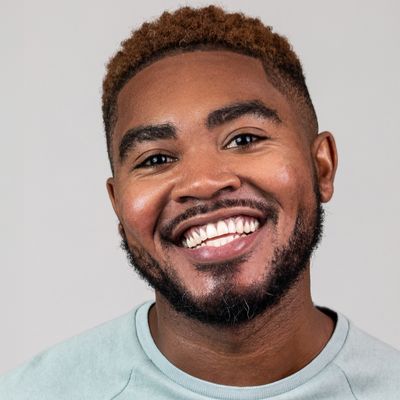
Cody Renard Richard and Nzinga Williams are young backstage Broadway professionals who are shaking up the theatre world, both within and beyond their career paths.
Broadway stage manager, producer and educator Cody Renard Richard is the founder of a scholarship program honoring, uplifting and supporting the next generation of BIPOC theatrical leadership. Nzinga Williams is the Assistant General Manager at Moulin Rouge! and the founder of NEW Black Mutual Aid Fund.
Transcript
This transcript was automatically generated and might contain errors.
[0:00] Cody Renard Richard: So when I came to New York, I was just enamored with the lights and everything. My first Broadway show that I saw was Avenue Q. I was looking through the playbill and I saw that there were stage managers listed. And of course, there are stage managers for a Broadway show, but I just never thought about that's a job that you can have. And from that moment, I was like, I'm gonna work on Broadway. I'm gonna be a stage manager. And when you're younger, at least for me, you know, I think the beauty of youth is that nothing is impossible. So I was like, yeah, that's gonna happen. Like I never second guessed it.
[0:33] Gennean Scott: Welcome to the Black Business of Broadway, a podcast brought to you by the Broadway League and Black to Broadway. Here we highlight the stories, how-tos, and successes of the Black professionals and legends of Broadway. I am your host, Gennean Scott. Today, my guests are advocate, educator, producer, and professional stage manager, Cody Renard Richard, and fellow advocate, general company, and stage manager, as well as producer, Nzinga Williams. Thank you both for joining me today.
[1:06] Cody Renard Richard: Thanks for having us.
[1:07] Nzinga Williams: I'm so excited to be here.
[1:11] Gennean Scott: No problem, no problem. Let's go ahead and jump right in. Nzinga, you have been both a theatrical company and general manager. Since this podcast is about the Black business of Broadway or the business of Broadway, can you help to educate our listeners about what each of those roles entail?
[1:34] Nzinga Williams: I like to think of it as a relay race. Um, that's how I explain it to people. So, um, you know, you have the idea of a show. We have a show, right? We're gonna put it on up. Um, and first things first, we have to figure out a budget. So general management does budgets, it does, uh, they deal with, um, hiring, they deal with, uh, rights, getting rights, they deal with, um, I mean, I'm trying to so many things, um, uh, negotiations and, um, uh, union things, uh, so bonding shows, um, all different kinds of things, uh, really just putting together the skeleton of what that show will look like. Um, and then they, uh, once that has happened and general management has facilitated things like, um, uh, making sure that you know we have a room for casting and things like that, um, depending again, depending on if we're if it's a commercial show or if it's off Broadway, these things, uh, change and they some of these things fall under different people's purview.
But, uh, once that is all set and we've got a cast, uh, then the baton kind of gets passed to company management. Um, I like to say that company management is where the people in the paper meet. Um, and the easiest way to kind of like break that down is that company management is the, um, you have all this paperwork and it, it company managers make sure that everybody's kind of upholding their end of the deal, right? And that everybody is taking care of what they need to do, what they need to do. Um, company managers take care of everything from, um, weekly payroll to, um, uh, housing travel to per diems to, uh, injury, uh, injuries reports, well, uh, workers' comp reports, um, you name it, they do it.
Um, and I think usually in terms of management relay race the next baton goes to stage management. Um, and so we'll all of us kind of work as a team so and that's a great segue because Cody for most of your Broadway career you've been a stage manager and you, like Nzinga, are seen as a change agent. Uh, so how have you worked to create change both within and outside of your job as a stage manager?
[3:40] Cody Renard Richard: Yeah, I mean first and foremost I will say showing up authentically, um, goes a long way. So in terms of just, uh, creating change and shifting the culture within stage management, it's important that I exist, that I'm there, that I'm seen, that I'm affirmed, that I'm able to thrive and live and do everything from an authentic point of view. Um, so that's really been my goal throughout the years even when I didn't know it was my goal that was my goal. Um, and I think that that's really been, uh, what has helped me I guess change the narrative of the type of managers that you see or, uh, change the conversation around, um, what we call EDIA now within the theater, you know. Um, I guess those are that's where I'll start.
Um, outside of the work I think is just building community, you know, making sure that people know that they are not alone, making sure that people know that there's someone that they can talk to, even if it's not me, just making sure that there's some sort of community.
[5:37] Nzinga Williams: Exactly. So we know that, um, for many Black folks that the arts aren't seen as viable or as a stable career. Uh, so can you talk to me about your journey to Broadway? How'd you get there? Who, if anyone, mentored you along the way? Because I mean, let's be real, you all are creating a standard and people look up to you, look up to you both.
[6:08] Cody Renard Richard: Yeah, I'll do the short version of this because I have a problem with the way. But, um, but I'll answer the last question first and say, yes, people mentored me throughout. However, most of my mentors were white people. Um, I still to this day struggle to find a Black mentor or a mentor who looks like me doing what I do.
[6:35] Nzinga Williams: Can I just jump in really quickly with that? Is that so that's something Cody and I speak about a lot, is that we, we, it was so hard to find, uh, a mentor that looks like us, and that, um, there's a lot of now it's, it is a lot of, um, there's a lot of solace in peer relationships. Um, I so I just wanted to yes, yes, and that's just interesting though.
[7:04] Cody Renard Richard: Like, like you know, it especially for me, and I guess I'm gonna a little bit of a tangent before I answer the first part. It's okay. Okay, it's just interesting that, you know, um, when for me when I was younger, I didn't necessarily seek out what I'm seeking out now or what I'm trying to provide now because I didn't think that it existed and I didn't know that it was possible. So I was just trying to work and build a career and just do the thing. And at one point I looked around and I was like, wait, why am I the only one on this team? Wait, why, why didn't, why was I the only one who was whatever? Like, why did that, you know what I mean? And then I started asking all these questions that didn't ask before because it was never presented to me.
You know, the school that I went to, I didn't have any teachers, Black teachers. I have any teachers of color. I was the only Black stage manager. I was all, you know what I mean? So I was always cultivated in that. That's what I learned. So until I was able to challenge it, or until I was able to take a step back, I didn't know it was possible.
[8:01] Nzinga Williams: And right.
[8:04] Cody Renard Richard: Okay. You, you and Nzinga both. You, you and Nzinga both are here now to go ahead.
[8:10] Nzinga Williams: I'm sorry, go ahead.
[8:11] Cody Renard Richard: Yeah, no, but it's true. And I, and I'm glad and it's important to talk about this too, because I think that people need to know that we're here and that we are, you know, that people went through similar things that they're not, again, that they're not alone. I think we're both so passionate about mentorship. Um, and the generations coming up under us because of that. Because we're like, it's important that people who look like us, that people of color and Black folks know that there are people here who have been through this that can connect you to, to, to people who can, um, mentor you as well, even if it's not us. Uh, I think we're both really passionate about that because of I think how much of the, you know, one foot in front of the other head down we had to do and then all of a sudden we looked up and we're like, hey, what's going on here so yeah I mean you know and a mentor is a mentor uh and that's why I purposely left off the word Black mentor yes because it it it it doesn't matter anyone who decides to take you under their wing and to show you the ropes uh that you know it it doesn't that color the color doesn't doesn't matter on that end but it is amazing and awesome to have someone who looks like you and in that position because then you you see it and then you're like I can do that too.
[9:41] Nzinga Williams: And so that's why I'm so grateful to have the both of you here today but to have the both of you in this industry with such a giving spirit right and such a willingness.
[9:41] Cody Renard Richard: Thank you. I agree. I think that, you know, if someone's gonna pour into you and someone's gonna affirm you and help you reach your goals, great, you know what I mean? Um, so the people who have poured into me and pointed me in the, the only reason why I'm a stage manager is because my high school theater director told me I should be a stage manager. She pulled me aside my sophomore year of high school and she told me that I had a way of making people listen to them without yelling and she said you should be our stage manager. And I was like, oh I get to be in charge sure. And that's how it started. Me and that woman Carrie Wood, we are still friends to this day and she is the reason why I went to college, and then Peter Sargent, who is my dean at Webster Conservatory, is the reason why I moved to New York.
So, like these people that poured into me. So, yes, I've had amazing mentors, but I do think it's important to say that like along the lines, there were very few, if none of color that was doing what I wanted to do.
[10:47] Nzinga Williams: I took a trip to, uh, to New York, my sophomore year of college, and I fell in love with New York City. I'm originally from Texas, I grew up on a farm. Uh, so like I was in the country. So when I came to New York, I was just enamored with the lights and everything. My first Broadway show that I saw was Avenue Q. And I was looking through the playbill, and I saw that there were stage managers listed. And of course, there are stage managers for a Broadway show, but I just never thought about that's a job that you can have. And from that moment, I was like, I'm gonna work on Broadway, I'm gonna be a stage manager. And when you're younger, at least for me, you know, I think the beauty of youth is that nothing is impossible.
So I was like, yeah, that's gonna happen. Like I never second guessed it. So everything from that moment on was pretty much intentional. Like I came to New York every break, uh, spring break, fall break. When I finally moved here, I didn't know how to get a job. So I got on Playbill and I just started writing people. And then finally, this guy, uh, Jack Cummings, who works at Transport Group, hired me for an off-Broadway show. He paid me $50 in a Metro card. I said yes. I did two shows there. The second show was Lisa Strata Jones, which moved to Broadway, and I was like, I made it, we're going to Broadway. They replaced the entire stage management team with people who were qualified, people who were Broadway stage managers, and that happens quite frequently.
At the time, I did not understand. Now I have a little bit more understanding of why people do that. Um, so but what was interesting, and this was the turning point is that, uh, the PSM at the time of the off-Broadway show came to me and she was like, Yeah, we've been replaced. It's so unfortunate. None of us are going to Broadway. And I remember thinking, I was like, Well, this is very unfortunate for you because I'm gonna figure out a way to continue with this show.
[12:26] Nzinga Williams: No, that's right.
[12:28] Cody Renard Richard: And I did, and I did. So I wrote the director, I wrote the associate choreographer, and a Facebook message the lead actress. And I was just like, listen, y'all, I just need an interview with the general manager with the new PSM. I just really want to continue. These are the reasons why I feel like I'm the one that you should bring, blah, blah, blah, blah. And they all responded enthusiastically. They sent my information over to the PSM and the GM. I had an interview two weeks later, I was hired for this Broadway show as the PA. And I say all that to say, and I say this all the time is that you always ask for what you want because you just may get it. And in that instance, I did, and that's how I got to Broadway, and the rest was history.
[13:06] Nzinga Williams: Hey man, Cody. I love listening to that story because our stories are so similar and yet different.
[13:14] Nzinga Williams: Um, I grew up between Trinidad and the US, uh, dual citizen. And um I similarly, but in but when I was very younger, um, I must have just been, you know, being bossy or something. Somebody pulled me aside and was like, I think you'd be a really great stage manager. I was I think I was maybe in sixth grade, so fifth grade. Um, so I stage managed, you know, our our uh play. Um and I that's something I always did. So uh I, you know, and true to my heart and my immigrant roots, I was pre-med because I was like, I'm gonna be a doctor, right? Um, and uh, but I oh I was always doing theater all through high school. Um, and uh the first thing I did actually in college was work on a show. Um, and uh my sophomore year, a friend of mine said, Hey, you work through every single break.
Why don't you just um come to New York? We'll we'll take a few days and see a show. You've never seen a Broadway show before. We love theater. And I said, okay, sure. So we went and um I I was grappling at the time so many different things, and I saw next to normal and I saw hair, and I had just like this epiphany during next to normal, and I this very specific moment um where I was like, it's amazing that this show can make me feel these things, um, and that theater can be so transformative, and I want to be a part of that. And uh I went back to college and at the end of my sophomore year, I declared my major as because I was pre-med the whole time. At the end of my sophomore year, I was like, actually, it's theater.
I I sat in my dean's office and cried, and he said, You wrote your whole essay on to get into college on uh the intersection of medicine and theater for you. So it wouldn't make sense. Um so uh from that moment on, it was the same thing. I spent every break working in New York City as a stage manager. Um I worked every summer uh the first the second summer or the first summer I can't remember, um, I actually somebody took a chance on me and had me as a I was a PA to one of the producers for hair on Broadway. So it was like the second show I'd ever seen. And it was, and then I became a PA and I did everything. I've got people coffee and water and uh, you know, helped marketing and did did a little bit of everything, and that was kind of like my first toe um in into everything.
Um as soon as I graduated from college, I got a U-Haul truck and a burrito and I moved to New York City. I drove from Boston to New York City, and um I was working in theater uh ever since I was I stage managed sleep no more and I did a few other things. Um I worked on ships for a little bit. I came back and I started uh company managing uh for Atlantic Theater Company, which uh was great. And uh then um actually that's where we went. Literally, I mean uh 2018 was a great year for me. Um uh I I literally stepped off off of off of ships and um everything just kind of fell into place for me, which was really it was very very much a blessing. Um and uh actually Cody put me in touch with uh a this AGM at um Foresight and they'd been like, hey, do you want to come work for us?
And I kept saying no. It's not the right time. I'm not sure. I'm not well it just didn't feel like the right time. I I felt like oh, you know, I wanted this, and I, oh, and the season's supposed to be great, so I want to do this and I want to do that. And when I finally said yes, it was the pandemic. Um so I waited. Um, but I I really do believe in um in trusting yourself and trusting your gut that things will happen how they're supposed to happen if you're living intentionally and moving out of intention. And so um as scary and stressful as everything had been, um, I was like, I know what's for me is going to be for me, and it won't pass me up. So um here I am.
[17:45] Gennean Scott: Living with intention.
[17:47] Nzinga Williams: Exactly. So, Cody, you generated a lot of attention in June, 2020. We're talking about the pandemic globally, and we're talking about the racial pandemic. Um, and you use social media to speak out about racism uh in the Broadway community. Can you talk to can you talk to us about the reactions your posts received both both positively and negatively during that period of time? And and it had not much has changed as far as the civil unrest. But um can you talk to us a little bit about that?
[18:30] Cody Renard Richard: Yeah, it's so interesting. Um, looking back at June 2020, um, it feels both feels like yesterday and also an eternity because so much has happened since then. Um, but you know, you know, one of the biggest responses that I got that was shocking to me was so many people who were surprised that I had, you know, quote, gone through that, unquote, you know. And and I'm and for me, I shared it at a time in my life to where none of the I wasn't carrying any of those things. So I it wasn't something that I was resenting or still hurting from. They were just um experiences and accounts that I'm like, we go through this every day, you know, and there are so many people clearly, who don't understand that some of these small microaggressions lead to to hugely problematic situations.
Um, so a lot of the responses I initially got were from some of my peers being like, Oh, I can't believe that happened to you. I can't believe that happened to you on the show that I was working on. And then I got the other things too. It's like, oh, I remember someone saying that, and I just stood there and listened, or like I laughed it off because I thought it was, you know. So I got a lot of um interesting responses, which led to a lot of interesting conversations. Cause at this point, I was like, if you're gonna call me and tell me that you're shocked, then we're gonna talk about it. And then sometimes, you know, sometimes I I didn't have the bandwidth. So I was just like, okay, well, that's cool. You know what I mean? Because you only can take on what you can take on.
[20:00] Gennean Scott: Exactly.
[20:01] Cody Renard Richard: Yeah, but on the flip side of that, there was a lot of um positive response and a lot of support and a lot of people who also felt empowered um to share their truth and to um I don't I don't want to say speak out because I don't think a lot of people were speaking out. I think people were just sharing their experiences. So I think that was one of the beauty, the beauties of me saying what I did at the time. You know, at that time, I feel like, you know, there were like two of us that said something oddly at like the same time, and then people were like, oh yeah, let's let's do this, you know. So I think that that was one of the positive, more positive things. Um and also had some conversations with people who I felt really did go on um uh a journey within themselves, who is really trying to figure out ways, better ways for them to move forward.
And it was honest conversations, and that was positive for me. You know, some of the phone calls of like, I'm so sorry, like I can't believe this. I didn't need any of those, unfortunately. You know, like listen, like I don't need those. That like you can keep that to yourself. But when people were calling me about like, I know I messed up, and I've been thinking about this, I've been replaying this, and then the next time this happens, this is what I want to do. And like I need to, you know what I mean? Like those conversations was positive for me. I was like, okay, people are actually understanding the role that they play in this day, you know.
[21:32] Gennean Scott: Right, right. And Zynga, as a as a black woman that has not traditionally, you know, in an area or in a field that has not offered many opportunities for women in general. How have how have you navigated during this period of time? The tendency of Broadway theater and and the community, and what are you doing to help ensure that we don't fall back on to traditions and business as usual?
[22:06] Nzinga Williams: I think Cody and I are so aligned in so many things. Um of the things that I value most is showing up every day authentically as who I am. Um it took a long time for me to get there, right? Uh I think we we are taught. We are we learn how to how to code switch, how to move, how to how to get from point A to point B in this world. And um sometimes it's hard, you lose yourself in that moment. And um, in the past few years, pandemic aside, um, I have grown as a human and as a person, and that groundedness has helped me to uh be able to show up authentically wherever I go, specifically in the workplace. Um and always keep in my mind what my own personal um mission statement is, where I'm moving out of.
Again, the word intention comes up, right? Um, because when I do that, I think people see how I'm moving. They they they see who I am, um, and hopefully they have no other choice than to respect it and to respect me. Um, so it but it is difficult, it is incredibly hard. Um, there's a lot of moments where I I just want to scream. And usually I call my friends and I'm like, can you believe? Um, so having community is important. I've been in a lot of conversations about hiring recently, and I'm in processes of hiring. I've been in negotiations recently and doing all of this sort of stuff, um, it's really important in those moments to have those hard conversations. I am constantly thinking about the fact that there are things that I do that can set precedence for myself and for the people who who come after me either in this role again or in this role after I leave or in just in general in the industry.
And so I I'm always trying again to be intentional when I have these interactions and to be as um straightforward and honest in those moments, and I think that's really all we can do is to be honest, um, straightforward, intentional, and um and really look out for look out for folks.
[24:41] Gennean Scott: Right. And I think you know, when we talk about the business of Broadway being able to show up authentically and be who we really are really allows us to be our best selves because we're not we're not hiding anything we're not we're not holding anything back and I think it it um it behooves us to let to let everyone know that it is it is important for people to feel comfortable being their true and authentic self absolutely no matter who that person is exactly and so you know there are people who who feel like they're gonna get canceled and and so they're reluctant to speak out of fear of being labeled difficult or uppity um what do you say what do you say to those individuals?
[24:42] Cody Renard Richard: I mean I I'll also say that like even beyond that like sometimes the the the um the journey to becoming authentic and to showing up your full self is not always welcomed so and and I'm looking at my journey like I always showed up with what I felt like Cody need to be but I assimilated it in almost every room that I was in because I was like oh that's what you need for me to do this. Yes. You know what I mean? So I think it's important for people to understand that yes we're we are asking individuals to show up authentically but we're also asking people to embrace the individuals when they show up authentically because if if they don't embrace them, then they're not gonna want to do it.
[26:34] Nzinga Williams: We have not been encouraged to be transparent, we have not been encouraged to um to have conversations that that may go against what someone else wants. So what I say is now because I'm at a place in my life to where like if I say something and you don't agree with it, that's not on me, that's on you because this is a conversation. This is a you know, this is a partnership, we're we're a team. So I say to anyone, I I to any student that I work with, any any person that I'm around, I'm like, if you have a voice, use it. If something don't feel right, talk about it. If you you know what I mean, if you can't do it on your own, find somebody. There's safety in numbers. Like, we have to move past the the mindset of being afraid to speak up because of what will happen on the other side of things.
Yeah, I think it's incredibly important to create these these workspaces that are full that are full of grace, right? Um, I think that that that what Cody's talking about is a is grace that um people we need to create like we need to have spaces that that allow us to have the journey because those journeys that journey into self into figuring that out, sometimes it's scary, sometimes it's messy. Um, and there needs to be grace there, and there and there needs to be um allowance. Um, absolutely, and it's it, you know.
[27:58] Nzinga Williams: I think it's important for me to also say that me at my big age, I still have these moments where I am stunned into silence. I really am. I I had a I had a situation happen and I was stunned into silence. And I had to take a day and then go, you know what? I wasn't the only person of color in that room. And what happened there was not okay. And I've got to say something. And this, it was probably one of the scariest things I've ever done. And then that happened in September. You know what I mean? And it was met with such grace. And that's how things like that should be. But it's not, it's often more often than not with hostility because changes, I understand that people sometimes can be averse to change.
But it I think we are in a point in our in our industry. I think we're in point in the world and um in our country in general, like we need to be open to that change. We need to um there the these spaces that we're we are creating, and I think I think as leaders, as managers, that's something that I I personally am very um passionate about creating is these spaces where people can speak out, where they can use their voice, where they can say this, where listen, I may not like it, but that's okay. It doesn't matter. What matters that you're saying that you're that you are using your voice and you're able to to to be show up authentically. So yeah.
[29:38] Cody Renard Richard: Well, using both both of you, both uh both of you have been intentional and authentic about using your voices, and you have um turned it into action. And so Cody, I know you you created a scholarship program. Can you talk to us a little bit about that? Because you are helping to to make the future of Broadway more colorful as well.
[30:01] Cody Renard Richard: Yeah, thank you. You know what's interesting? One of the things that people say to me all the time, and I don't take it in enough, is that until literally yesterday, I was talking to someone about this initiative that I'm a part of. And she was like, you know, I'm impressed by you because you had an idea and you did it. So many people have ideas and are well intentioned, but don't follow through. And I had to let that sit with me because that's the I I've always lived my life like I want to do that, I'm gonna figure out how to do it. I don't, you know what I mean? So to hear someone say that from an outside perspective, I think it's really interesting. So I really want to empower people because everyone has an idea to do this thing or to like, you know, launch whatever.
I'm like, just do it. You know, when we started the scholarship, I had no idea what the response was going to be. I had no idea how it was going to turn out. Um, and my goal was like, if I just can bring these students together, I will it will have been a success, you know. Um so a little bit about the program. Um we I partnered with Broadway Advocacy Coalition um to launch uh a program for uh students of color who are studying non-performance related degrees, um, especially since I've spent most of my career working as a stage manager. Um, I think it's very important that we uplift students of color who want to design, who want to direct, who want to stage manage, who want to um write plays, choreograph, whatever.
So we open it up to um all of those avenues. So anyone who's not a performer, um and uh the program gives each student a financial grant, and then it also goes through a series of seminars where we focus on mentorship and we focus on social and racial justice initiatives, such as, you know, just helping them show up as themselves, helping equip them with the tools to exist in white spaces, equipping them with the tools to, you know, use their voices, you know. And then so that was the first year of the program. And now this next year, we just selected our scholars and we're announcing them hopefully next week. And we're expanding a little bit. You know, we gave $4,000 last year, and by the grace of God, we're giving them $8,000 this year.
All right. Yeah, come on. Yeah, come on, money. Yeah, five sessions instead of three to give them a little bit more time to connect with each other. And then we're also flying them all out to New York City to do like a weekend summit so they can meet each other in person, they can meet people who are working, they can shadow on shows. So we're really hoping this is a lasting impact, that this is like uh, you know, the jump start for them to own their power and to, you know, find out, uh recognize that they that they belong in this field. Um and like, and just on a personal note, you know, I this the scholarship is one of my wildest dreams. You know what I mean? I was just like, I want to do this thing, not thinking it would turn into what it is, and just getting the response from the students every year reminds me of how needed and how important it is.
You know, even when I'm second guessing it and like I'm not doing enough, or maybe this is not right, there's always a student who says something that affirms why this program is important. So it's been really it's been really special getting to work with all these students. Awesome.
[33:25] Nzinga Williams: And in Zynga, you and the Black Mutual Aid Fund, the new Black Mutual Aid Fund. Can you talk to us a little bit about that?
[33:38] Nzinga Williams: Um yeah, uh, it was born out of I, you know, in a time like a pandemic, um, you feel hopeless and you just want to do what you can. Um, and in uh summer of 2020, uh that's where I was. So uh I created this uh mutual aid fund that was simply about distributing money. That was it, distributing wealth um for black uh artists on and off the stage. Um for at first it was to cover if they needed a cab to and from protests or uh you know food, anything that was needed for care during that time. And then as the pandemic went on, uh rent relief or uh you know food relief. Um some people needed money for books and things like that um because they were taking on new careers or were in school, and so um it really it really was just crowdfund, like literally fund crowdsource funding and and then just um distributing it.
It was really a practice for me in um how to care for community, how to care for the people that I love, people I know, people I don't know, um, all over this country, really, because we had people from California who were artists who are out of work, and um, and when I say artists, I I say I mean on and off the stage because I do believe that what we do is an art, whether you're creating a budget or um calling a show, or if you're five, six, seven, eight, um, or lighting a show, or any or anything. Um, I think it's all an art. So uh it was really it's something that um I was so passionate about and I'm hoping um can continue to live on. I think there is a big life um from new black mutual aid in the future. I've got a lot of ideas and and I'm hoping to enact them. So yeah.
[35:48] Gennean Scott: That's awesome. Thank you. Thank you both for sharing that. So as we're wrapping and nearing the end of this podcast, uh something that we do is we ask our guests just we ask our guests the same final question. And so what is one piece of advice you'd like to share with the black future leaders of Broadway?
[36:15] Cody Renard Richard: Yeah, um, you know, I I hadn't really thought about this, but uh right now what's coming to my mind is to say that you belong here, that we are ready for you, we are opening doors for you so you can run through and give us what you got. Like you are what we've been waiting for. That's what I think I want people to know is that you are what we've been waiting for. And um, and not to judge your journey based on what other people have done or what or on what other people are doing because your journey is special and your journey is unique to you and your journey will lead you to wherever you want to go if you really want it. So set your intentions believe manifest don't give up ask for what you want and show up because we're gonna be here. We're ready for you so come on that's what I'll say awesome in Zynga.
[37:31] Nzinga Williams: Um I would say yes show up continue to work on your journey to be authentically you um there is space for people who want to be here and we are in the process of making it um I think it is so many people lose themselves on the journey and it is always important to create to always um check in with self uh create those boundaries uh be solid in who you are because who you are is amazing and what you are offering if you are doing the work and you are putting one foot in front of an an another um it is priceless um I think we have a I think there is a thing in theater where it's like oh don't worry there'll always be another person but there will never be another you. There will never be another Cody. There will never be another in Zenga. There will never be another you, whoever that is out there coming up. So be you, be authentic, understand your boundaries, understand yourself, and show up as fully as you possibly can.
[38:46] Gennean Scott: Thank you. Thank you both. I think the two words today were authenticity and intention. And I want to thank both Cody and Nzinga for giving your time, sharing your story and your talent with the world. You could have been doing anything else, but you chose to spend your time with me, and I am grateful. Be sure to subscribe at bpn.fm slash bbb so you'll never miss an episode. While you're at it, tell a friend. I'm your host, Gennean Scott, and we at the Broadway League hope you enjoyed this episode of the Black Business of Broadway.
© Broadway Podcast Network, All Rights Reserved