

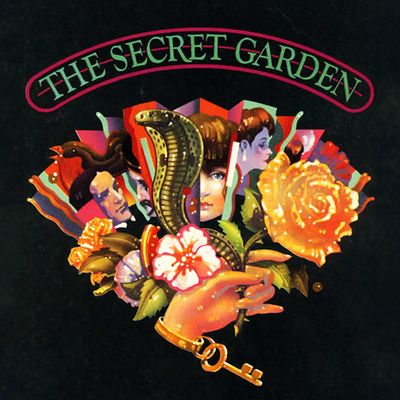
This has been long requested from us, and this week we're joined by the true EXPERT on this show -- Emily Clark -- to talk about The Secret Garden. This is a wholly underrated but well loved musical that we cannot wait to talk about! Let's look at Lily's hazel eyes... Read More
From the show: Musicals with Cheese
Guests

Featured Shows
About
This has been long requested from us, and this week we're joined by the true EXPERT on this show -- Emily Clark -- to talk about The Secret Garden. This is a wholly underrated but well loved musical that we cannot wait to talk about! Let's look at Lily's hazel eyes.
Credits:
Hosts: Jesse McAnally & Andrew DeWolf
Podcast Edited By: Jesse McAnally
Keeper of the Cheese: Juliet Antonio
This show is a part of the Broadway Podcast Network
Social Media:
Musicals with Cheese on Twitter
Musicals W/ Cheese on Instagram
Email us at musicaltheatrelives@gmail.com
Jess Socials
Jesse McAnally on Twitter
Jess McAnally on Instagram
Andrew Socials
Andrew DeWolf on Instagram
Transcript
This transcript was automatically generated and might contain errors.
[0:00] Jesse McAnally: Hello, I'm Jesse McAnally. And I'm Andrew DeWolf. And welcome to Musicals with Cheese, a podcast where I try to get Andrew to like musical theater. And this week we have an extra special guest long, long in the making. This has been like something we knew we were going to do for over a year now, and I'm so glad to have her here. She's your favorite, dear friend. She is a theater scholar from Stealing Focus and many other things, an actress, a vocalist, and truly a great person. It's Emily Clark.
[0:40] Emily Clark: Hello. Oh my gosh. Hi, guys. It's so great to be back. I'm so glad this show is back again, too.
[0:48] Andrew DeWolf: Are you really?
[0:49] Emily Clark: We're back on the air.
[0:50] Jesse McAnally: Back on the air.
[0:52] Andrew DeWolf: Everyone else says we're Doug Walkering.
[0:55] Jesse McAnally: Oh, I mean, you know, hey, is that so wrong?
[1:00] Andrew DeWolf: Hey, he made a lot more money.
[1:02] Emily Clark: Doug Walker is still relevant because of this.
[1:03] Jesse McAnally: Yeah, exactly. Exactly. I mean, I'm so glad you're here, Emily, because I don't know if you know this, but Andrew's entire family was wiped out by cholera. And he's had to move.
[1:16] Andrew DeWolf: In India. In India.
[1:18] Jesse McAnally: Yeah, yeah. He was in India with his whole family and they got the cholera.
[1:23] Andrew DeWolf: They got, yeah.
[1:24] Jesse McAnally: Now now he's he's stuck.
[1:26] Andrew DeWolf: I'm stuck with this guy.
[1:28] Jesse McAnally: Yeah, I know.
[1:28] Emily Clark: He doesn't want to talk to me.
[1:29] Jesse McAnally: You're the hunchback uncle who just needs to learn how to love again.
[1:34] Andrew DeWolf: Yeah, but sadly, he's got my dead wife's eyes because his mom is her sister.
[1:42] Jesse McAnally: Yeah, she's just there's a lot of ghosts. There's a lot of ghosts.
[1:45] Andrew DeWolf: We were dealing with a lot of stuff going on, but like I found Evan Hansen and he's got an accent.
[1:51] Jesse McAnally: And that note, in case you haven't picked up what we're throwing down, we brought the foremost scholar on The Secret Garden to talk about the musical The Secret Garden.
[2:02] Emily Clark: The Secret Garden is a musical written by Marsha Norman and Lucy Simon, based on the 1911 novel of the same name by Frances Hodgson Burnett. It premiered at the Wells Theatre in Norfolk, Virginia on November 28th of 1989. It premiered on Broadway in previews April 25th, 1991 at the St. James Theatre and would close after 709 performances on January 3rd, 1993. A heavily revised Royal Shakespeare Company production ran at Stratford-upon-Avon from November 2000 to January 2001, transferring to London's West End at the Aldwych Theatre from February to June 2001.
[3:56] Jesse McAnally: I don't know anything about that revised version. I'd love to hear more about that.
[3:59] Emily Clark: There was also a 25th anniversary concert that was held at Lincoln Center on February 21st to 22nd, 2016 with Sydney Lucas and Ben Platt and Ramin Karimloo, and that's the version Andrew watched. The show was nominated for seven Tonys, won three, best book of a musical, and best featured actress for the youngest Tony Award winner, Daisy Egan. I don't think that's been topped yet.
[4:25] Jesse McAnally: It's a really, it's a really wild acceptance speech. She's talked about it repeatedly. There used to be a really good show run by a really weird man, Broadway Backstory, and he did this beautiful documentary about the creation of The Secret Garden, especially with like hearing from Daisy Egan's point of view of like being in that position and working with these greats like Mandy Patinkin and Philip Quast. Wish it existed, it is now nuked from the internet.
[4:51] Emily Clark: But The Secret Garden centers on Mary Lennox, a spoiled 10-year-old English girl orphaned by a cholera outbreak in the British Raj. She is sent to live with her reclusive, grieving uncle, Archibald Craven on the Yorkshire Moors. There she discovers a hidden, neglected garden, and with the help of a local boy named Dickon and her invalid cousin Colin, brings it back to life, finding healing and renewal for herself and her fractured family along the way.
[5:17] Jesse McAnally: So, Emily, I know you have a long history with this. Andrew, just so that we have the clarification, never heard of this, didn't read it, just watched this musical, and that's all the context you have.
[5:27] Andrew DeWolf: I feel like I've seen an adaptation of The Secret Garden before.
[5:30] Emily Clark: It's been adapted quite a bit. There's been a bunch of movie versions, TV movie versions. There was a 90s movie version that came out when I was young that I remember watching quite a bit.
[5:42] Andrew DeWolf: I mean, it's very possible you've seen some iteration.
[5:45] Emily Clark: I cannot put my finger on where I've seen it, but I'm like, this story, I have seen this story before, and I couldn't figure it out. But, yeah.
[5:55] Jesse McAnally: But, Emily, what is your history with The Secret Garden? And you have this passion for this, and I love it, and I want to hear all about it.
[6:03] Emily Clark: Well, The Secret Garden is a novel that is widely beloved amongst little girls. Little white girls, especially. But I think a lot of young women have read it at some point in their lives. It was, you know, kind of on the cusp of what we would think of as young adult, you know, reading or novels for kids. But the book itself, it is an interesting read when you read it as an adult, because it does fall to that kind of, it was released in chunks, so it has a bit of an episodic nature to it. But one of the weirdest things about that novel is that it basically loses interest in its protagonist about halfway through. It kind of shifts. As soon as Colin shows up in the bed, it kind of becomes Colin's story more than Mary's story, which is interesting.
But I read it as a young girl. Most little girls I knew read it. I was a bookish kid. It wasn't assigned to me. I just read it. And I'd seen movie versions and whatnot. And then when I was in high school, I remember I went to the L.A. County High School for the Arts in the late 90s. And every dude I know was singing Lily's Eyes as a duet. And I remember thinking, what is this show? And picking up the original cast recording and it kind of I fell in love with it. And I thought one of the things that was so striking about it is that it had two women's names on the very front of it, Lucy Simon and Marsha Norman. And that's just extremely uncommon. You often see if they let a lady do some of the musical theater writing, she is usually the lyricist.
And there's a long history leading up to that. Composition is seen as a lofty art that geniuses need to do. Lyricism is often seen as, you know, anyone can write the words. And so that was kind of a way that women in musical theater were able to get in because, you know, we can't all be Richard Rogers, you know. So I thought it was really fascinating. The pool of women composers in the pantheon of Broadway history is very small. And I remember being drawn to the fact that, you know, Lucy Simon, Marsha Norman, these names are on the cover. And I just thought the score was amazing. I thought it was lush and gorgeous. I loved the main character. I think that Mary Lennox is the anti-Annie in a lot of ways, or she's a good foil to Annie.
You know, I think Annie is what we wish all kids could be. I think Mary Lennox is more what an actual child dealing with trauma is. Bratty and sullen and going through shit when everyone around her dies, I think. And again, the fact that the show is written by women and the fact that Marsha Norman and Lucy Simon had a history of working with kids and writing towards kids and writing for kids, I think it shows. So like most people, I never saw a Broadway production. I saw the Tony Awards performance. I was a big Mandy Patinkin junkie, loved him. So I loved listening to him on the score. But most productions I saw were either in community theater or children's theater. And I think it's a really perfect community theater show in a lot of ways because there's a part for everyone.
There's a couple little kids. There's an old man. There's a soprano. There's a baritone. There's just a part for everyone in your community theater, and I love that. And so I always just love that show. And then I went to grad school in 2020, well into my 30s and 40s. And when it came time to write my thesis, I decided to write about The Secret Garden. My focus is on musical theater history. And I was surprised that I couldn't find one big comprehensive resource online about The Secret Garden. There was no big book. There's so many musicals that have a book about its history. Cabaret has one. Fiddler has one. There's so many. Rent has one. And I just thought it was surprising that Secret Garden didn't have one because it's a seminal piece of female representation on Broadway when it comes to the creative team.
It's not an all-lady creative team. It's nearly all-lady creative team. That didn't happen to Waitress in 2015. So it's this nearly all-lady creative team. So not just the writers, but the director, Susan Schulman, is a woman. And then you have women on the roles that are usually given to women in creative roles on Broadway. Costume design by Theoni Aldridge. Lighting design, which is a field that women really crafted for themselves on Broadway because everyone was just like, it's the lights, whatever. Theron Musser and then Heidi Ettinger. And Heidi Ettinger was the producer and she did the scenic design. She won the Tony for her scenic design. And she was the real reason the show happened.
She was the real driving force. She was married to Rocco Lansman at the time. She was going by Heidi Lansman and he's the head of Jude Jamson. And so she had done Big River before that and had been involved in Into the Woods. And then she got this idea. She found a copy of someone sent her a British musical version of The Secret Garden and she heard it and she was like, well, this is terrible. This is a terrible version. I bet I could get a good one. And then very Andrew Lloyd Webber of her. Yeah, she literally was like, this is crap. I think I can find someone to do better. And she called up Marcia Norman, who is fresh off a Pulitzer for Nightmother. And Heidi did the set design for that. And so Marcia had been kind of champing at the bit to write a musical.
She had never written one before. And so Heidi got in touch with her. And Marcia had no sentimentality, no attachment to the childhood novel. And so she was like, yes, I want to do it. And then they found Lucy Simon by doing what they call like composer bake offs. They were like trying out different composers like to see who they would get. I think like a baby Adam Gettle threw his hat into the ring. Yeah. But Lucy Simon.
[12:32] Emily Clark: Got it. And Lucy, you know, she's Carly's sister. And she already had a Grammy Award for writing some children's album that had done very well. I think it was tied with Sesame Street or something. And then she also had had some work off-Broadway. But this was like her biggest thing. So the three of those women, Heidi, Marsha, and Lucy, kind of were the first to find each other and get work on it and adapting the piece. And yeah, you mentioned the Virginia production. That was their first big tryout. And they had a different director for that named RJ Cutler, and he just was not cutting it. So after that, they found Susan Schulman, who was fresh off of directing the first Broadway revival of Sweeney Todd, which I saw at the Lincoln Center Public Library.
I watched that. And I watched The Secret Garden a few years ago. And her production... What was the biggest changes of that production? Because I know John Doyle did something really wacky. But what was hers? She put the focus on the women a lot more. She made Mrs. Lovett and The Beggar Woman a lot more than caricatures. I mean, the dialogue is all the same. It's the same show. And I think it started off-Broadway. So I think the cast is pared down a little bit. And it's a little bit more intimate of a production. But it caught Stephen Sondheim's eye. And she was kind of getting some buzz around town, too. So then they grabbed her. And then so then you have these four really important, strong women on the creative team, kind of bringing the show to life and adapting it. Yeah. So I mean, I could just keep going on. But I don't know.
[14:11] Jesse McAnally: We can. That's why you're here.
[14:13] Emily Clark: Yeah. Yeah. So they had... So one of the cool things... Okay, so I wrote my thesis on this. And one of the coolest things about it is that I was able to get oral history interviews with a lot of people who were involved. So I have these interviews that are in my thesis that have never been out there before. And it's so interesting talking to all of them because... Well, who I talked to. I didn't talk to everyone. I talked to...
[14:42] Jesse McAnally: Did you talk to Daisy?
[14:43] Emily Clark: I sure did. So I talked to... My original connection was Jack Viertel, who... We were just like mutuals on Twitter, I think. And he... But he used to be... Oh, I don't know offhand. It's somewhere written in my stuff. Some directorial managing position with Ju Jamson. So he got me in touch with both Heidi Ettinger, who was elusive as hell. She was living in Italy at the time. I don't know how I got her. So I got Heidi Ettinger and Susan Schulman. And then I talked to... I talked to Jack, and I talked to Daisy Egan. And I also talked to Alison Fraser, who was also in the original cast. And then everything... Lucy Simon, unfortunately, passed away a few years ago. Marsha is still out there, but maybe I'll get her someday.
But there's a lot written. There's a lot of... This is a historical thesis. So I'm a historian. This isn't a theatre degree. So I did have to go looking in all kinds of places to find different interviews. But Marsha Norman actually has a lot written about her. She has a few books that you can get written about her. So they got together and they sought to adapt the show into a musical. And Heidi Ettinger famously said that watching a garden grow is as interesting as watching paint dry. So they had to make a lot of adaptive changes. The novel has these wonderful chapters where you're reading about the plants growing and Mary and Dickon putting things into the earth. And it's so beautiful to read.
But yeah, it would be pretty boring to see on stage. You need some action. And so they had to make some adaptive changes. Some for the better, some are debatable, whether they're better or worse. The first is that, which is the best, is that they kept the same damn protagonist throughout the whole novel. Mary is the lead. Mary is who the story focuses on. At the end of the musical, she gets the garden. There's this beautiful moment where Archibald is like, we're your family, this is your home, and this is your garden. And the music swells. In the book, Archibald picks up Colin and they walk away without a second glance. They're like, bye. I mean, yeah, yeah. And the last line of the novel is like, Master Colin, he's better.
And so it's like, where the fuck is Mary? So I remember having people like people. Well, I'll get into this. Some of the critics did not appreciate the adaptive changes from the show. But Susan Schulman was very quick to point out they never mentioned that we kept the same protagonist the whole time. And they didn't seem to care about that. But they get mad about other things. It's only when women adapt books that they get mad. They get mad at Wicked. Wicked gets lukewarm reviews. They get mad at The Secret Garden. But Les Mis and Phantom, they can do whatever they want. They can do whatever they want with their novel adaptations. No one cares. Fun Home adapted in... Fun Home is lucky because it has it all laid out in pictures.
You can just follow that shit. But the other... So then there's other practical changes, like the fact that child actors, you just cannot have them on stage the whole time. You just can't do it. It's just not practical. It doesn't make any sense. So the adult character... Well, yeah, we're getting to that. So the adult characters are beefed up, like Archibald, and they make the whole like Neville and Archibald, like butting heads thing a little bit bigger. There's a whole character. They age up Dickon to like a 17-year-old. He's more like married, like maybe an 11 or 12-year-old in the book. And he and Martha have a mom in the book, and she's kind of folded into Martha in the show. And in most adaptations I've found.
[18:37] Jesse McAnally: Yeah, yeah. She doesn't really need to be there.
[18:39] Emily Clark: And then there is the ghosts, or as the libretto calls them, the dreamers. They're the dreamers. And they're an incredibly divisive choice. I tend to be on the pro-dreamer side, but not even everyone on the creative team is on the side of the dreamers. Like Daisy Egan is kind of like, I don't know if they work. I think they're kind of necessary with the tone the show is going for. In lieu of gardens, we have ghosts. And I get that the novel does have like a haunting, gothic, Victorian vibe. But it can be, I don't know. And it's good to have the India stuff represented. And Mary can flashback to that. And we can kind of keep reliving her trauma a little bit. It has something for her to like get over. But sometimes you're kind of like, I don't know. I don't know what is what is.
[19:37] Jesse McAnally: See, I'm really, I was like all in on them because I've listened to the album. I watched the Really Bad 2020 film just so I'm like, all right, just want to kind of latch onto this before the structure. And I was like, oh, if this is what the musical is, I'm going to struggle. Then I watched it. I'm like, oh, fuck, there's ghosts.
[19:57] Emily Clark: So did they have ghosts? Okay, so did they didn't they did not have ghosts in the 2020 version, right?
[20:03] Jesse McAnally: Um, absolutely not. They like reference ghosts, but you never see them.
[20:06] Emily Clark: Yeah, that's what most adaptations do. This is kind of a wild swing. And I think it's a cool one. I think it's theatrical. I think it works. And I think you need that ensemble there somehow because otherwise it's just isolated people on the moors, you know, like you don't have any more voices coming in, which maybe in a Broadway musical now, you would do that. But in 1991, coming off mega musicals and whatnot, I don't think you would see that unless it was off Broadway. Also, you mentioned the much rewritten versions. They have been trying to fix this show since the original production, like every even the tour right afterwards, they made some cuts. I have the libretto here, and I don't even know if this has to be the latest version that you can just get to license. But, you know, I saw that version they did in L.A. a few years ago. Yeah, it was awful.
[21:01] Jesse McAnally: What makes it awful about like, what are they changing?
[21:04] Emily Clark: Yeah, well, first of all, the set design was garbage, garbage, nothing looked lusher. It was like, let's it's that whole thing now, like, let's do everything minimalist. And I'm like, this is not the show to do that with.
[21:16] Jesse McAnally: She's just talking about this.
[21:18] Emily Clark: Yeah. Archibald didn't have a hunch. He was just he was just a brooding, handsome man. They referenced the hunch and then they got rid of some of like they got rid of the quartet and they got rid of some other songs and rearranged them and really almost like cut the dreamers down. The only good thing they did is that they fixed the Hindi so that it wasn't gibberish. They actually the old Miss Saigon thing. Got it. That was probably definitely the only good thing to come out of it. Like they I mean, the cast was good, like the cast was talented. But the only time I felt anything the whole night was when the gal playing Martha saying, hold on. And you could tell the whole crowd got really into it.
And then everyone went back to like sitting like this. And that was the first time like my husband had seen it on stage and my other friend. And I was like, I swear, you guys, usually the show is really good. I don't know what to tell you. We need to see a community theater production. We'll feel way more.
[22:15] Jesse McAnally: The worst production, my mammal brain would react to Lily's eyes.
[22:19] Emily Clark: Oh, me too. I was so ready and I felt like nothing. I mean, I mean, I don't know. It just was not a super good production. And they wasted their Sierra Boggess. She wasn't even Lily, Colin's mother, the main ghost lady character. She's an interesting character because she can't really interact with anyone. She has to just be looking from afar. And the only time she gets to interact or like in flashbacks or when she sings to Colin that one time and when like Archie like maybe gets to touch her like once or twice. And so they cut down on all that stuff. You get rid of the quartet, which is a flashback. You get rid of a huge chunk of her character development. So it was stuff like that where they it was also directed by Warren Carlyle.
And this is just some bitchy local stuff. But they went on this big search to find this local girl out here to play Mary, and he didn't like her. And so he flew in the girl who was playing Amaryllis in The Music Man in New York to play the lead. And then he bumped that girl down to understudy. And I just thought that was kind of shitty. It was kind of shitty. And I mentioned this when I was talking to Daisy Egan in our interview, and she said completely separate. She just said, I don't think men should direct this show. She's like, I don't think they get it. I just don't think if there's a male director of The Secret Garden, I don't think he should be doing it. And I don't know if she's right, but there is a tendency to and this is very true in the critics reviews at the time, because a lot of them was cruel.
Some of them were unnecessarily cruel. The only woman, the only person who really got it was the woman from The New Yorker who wrote a great review, she just got it. And then the other thing is so interesting is none of these critics can decide like what the problem is. They all have a problem with something different. Like they, none of them can hone in on it. And Susan Schulman like put her finger on it and said, I think they didn't like that these girls came in and were kind of just doing what we wanted to do. They had extremely fast turnover. If you saw the dates, like from that 89 Virginia one to a 91 opening, that is huge. Unheard of. And it's because all these women in their own right had their own clout.
You know, Heidi Ettinger had Jew Jamson. She had what she calls the Yale Mafia. So she had a lot of connections and she had her own bona fides, as did all the women. And so when they came, and none of them came together with the intention of writing a feminist piece. And this is one of the interesting things as a historian, because you do oral history interviews with people.
[25:04] Emily Clark: We're doing stuff at the time. And Heidi Ettinger is like, No, it's not feminist. Daisy Egan's like, of course, it's feminist. Susan Shulman is kind of on the Of course, it's feminist side. Alison Frazier was a little more woo woo. She was like, I don't know, like, I don't know. It's more about like Mother Earth. And to me, Alison Frazier seems woo woo just in everything I've ever seen. She was great. She was great. I love her. She was like 32 playing 19-year-old Martha. Unbelievable. But my point is that the very fact that these women were writing a story with a young female, an unlikable female protagonist telling a story about the earth and mother and life, and not asking for permission, just the fact that they were doing that is inherently a feminist act, I would argue.
And it's telling a feminine story unabashedly. And that stuff, stuff for girls, stuff for young girls is always written off always. And there have been way lesser shows, way shittier shows that have gotten Broadway revivals. And The Secret Garden has never had one. And a part of me is like, can they just not make it work? Can they just get a lady creative team together, maybe to figure it out? But I do think there is something special about its life in community and regional and smaller theater, which I think is very, very important. When I take my research, I was in my research, I was only able to go to kind of Garden, kind of like the Tony Awards for Garden. And then maybe a bit about like a brief chapter about what came after.
But in my later research, I'm going to do a lot more looking into the post-Broadway history and try to get some stats from like Concord Theatricals or something. But yeah, it was able to really spread because of that original cast album. I just everyone I knew had that CD in their big musical theater like envelope sleeve. Yeah, all the theater kids had it. It had so many different songs, you know, Hold On was just like, right in that sweet spark, caps out at like a B flat or a B at the belt. Can you imagine these days? Like not an F, like it's like in such a comfy belter place. But then you have your lyrical soprano stuff. Like there's just something for every voice type and kids, which is so great.
And there's only two kids in the show, which is amazing. You only have to deal with two of them. Well, Dickens, you basically cast a twink, an adult twink as Dick and that's just what you do. Yeah, ask me more questions. I don't know.
[27:47] Emily Clark: Um, I want to ask you more questions. But sadly, the structure of this fucking podcast dictates that I have to go into a mid-show right now. Let's do it. I'll make it quick because I want to hear more. This is my grandpa Giovanni. Nobody tells stories like he does. Give him good food and good people. He'll charm you all night. That's how it was last night at the Olive Garden. Everything feels more like family and more Italian. Just like the chicken vino Bianca. It was perfect. Chicken sautéed with mushrooms, tomatoes and garlic and white wine sauce. Plus all the salad and breadsticks you want for eight ninety-five. What a night it was for all of us. Grandpa, you're beautiful. Olive Garden. When you're here, you're family.
[29:11] Emily Clark: Chia Herb Garden comes with everything you need to grow six different herbs indoors. Seeds, pots and saucers, plant food, instruction booklet, even chia growing mix. A great gift for anyone. Just plant your herb seeds, water, add plant food, then put them in a sunny spot and to make cooking fun and tasty chia herb garden. The chia herb garden is available in Canada at Zeller's, Kmart and Eaton's makes a great gift.
[29:24] Jesse McAnally: Hey, guys. Sorry to interrupt you in the middle of the show, but we've got a show to you. Today's show is brought to you by the extremely kind donations by our donors over at Patreon. And at Patreon, you get tons of perks, such as watching these episodes as they're shot. You get to see Emily Clark's gorgeous face. You get to see her The Hours poster behind her. Um, and you know what? She's doing jumping jacks. She's doing a backflip. She's doing all the things and you're not seeing it unless you're on Patreon. Yeah, it's not real. Andrew, why don't you tell us who's supporting us on Patreon?
[29:48] Andrew DeWolf: Sure. Our current patrons are. Oh, he's he's running the battle. He's going to book it. Our current patrons are Leighton A, Ewan Caskey, Monica Theroux, Brent Black, Jon Van Alls, Russ Walker, Musical Hell, Janae C, Nothing is Certain Except Beth in Texas, Thespian, Roof Geese, E.G. Francis, Chris Marcotte, Keisha Marie Anastasio, RJ Noriega, Joe, Toriana Frazier, Sammy the Adequate of Mt. Jacobson, Villainous Miss, The Omega Geek, Maddie Wargill, Eliza Erdman, Rora Marasso, Mara, Puffyboy, Anna B, Goldplated Kikimora, Ari Ardy, Carl Baldasso, JRL Studios, Fiberty, Jigot, Caleb Bailey, Davin Willis, Sofita Hurtado, Jessica, Pants Pants, Casey Denning, and Liz Montemurro. And now we wait for him to return.
[30:41] Jesse McAnally: Woo, Jess!
[30:45] Andrew DeWolf: Look at that! You just made it!
[30:47] Jesse McAnally: He was close, he was close.
[30:48] Andrew DeWolf: These folks help us keep the lights on here at Musicals with Cheese. And if you'd like to join them in supporting us to get tons of fun perks, come join us over at Patreon. All right, let's get back to whatever the fuck I was talking about before.
[31:00] Andrew DeWolf: Did you get it all out, Jess, or did you have to book it back over here?
[31:04] Jesse McAnally: I got it all out, I got it all out.
[31:05] Andrew DeWolf: Oh my god.
[31:06] Jesse McAnally: You've seen the distance.
[31:07] Andrew DeWolf: You left the trail.
[31:08] Jesse McAnally: You've been into my house.
[31:10] Andrew DeWolf: You left the trail, no!
[31:12] Jesse McAnally: I'm like a literal snail dragging it across.
[31:16] Andrew DeWolf: Well, sadly, it drags on the floor, so if you don't wrap it up right, you gotta...
[31:20] Jesse McAnally: Oh, good lord.
[31:23] Andrew DeWolf: And sadly, I don't think we have the OnlyFans ready for that. The audience is not prepared.
[31:28] Jesse McAnally: Any day now, any day now.
[31:30] Andrew DeWolf: The JessDong.
[31:31] Jesse McAnally: I don't know if anyone wants to see that, Jess.
[31:33] Andrew DeWolf: Absolutely no one. In fact, I think negative people want to see that.
[31:50] Emily Clark: The world is full of places just waiting to be discovered. Come, uncover the explorer inside you and discover a world more wonderful.
[32:19] Emily Clark: She was alone and lost in the world. Your parents are dead. She's a difficult child, Mrs. Medley. But he had the magic to touch her heart. Sometimes wishing makes things happen. And together, they brought a young boy the gift of love and the will to live. Hallmark Hall of Fame presents a Christmas gift for the whole family. The Secret Garden, Monday.
[32:43] Emily Clark: Hi. I'm Teen Angel. You probably heard about what happened to me and my short back in 57. Well, ever since then, I've been haunting this here mall shop, because it's where I used to hang out, you know? That used to be my booth right there, where I'd sit all day drinking colas with Betty Lou. Most of the kids now, though, drink this Un-Cola 7-Up. Of course, we could have drunk 7-Up, too. But in them days, we figured having 7-Up with your hamburger was like wearing a bicycle clip on your chinos. We thought nothing could beat out a cola. Well, we was wrong. 7-Up, the Un-Cola, is really with it. It's Nowsville, man.
[33:46] Jesse McAnally: All right. All right, Emily, we've gone into a little bit of the production and development of this. I was really interested in hearing how you feel like this has affected community theaters. And specifically, we're talking at a broad level. I'm really curious, what do you feel people are missing about this? My interpretation is that female directors and female creative teams really focus on the detail work. And I feel like this musical is something that will only work if you focus on the details of it, as opposed to like the broad, big picture, kind of razzle-dazzle that I find a lot of male theater directors have. You're Michael Greif's Of The World.
[34:27] Emily Clark: Totally. It's an intimate story. It's a story about this little traumatized girl. And she goes to live with her big traumatized uncle. And they're both dealing with death and trauma. Death and trauma from people they love. And they don't know how to deal with it. And then in the mix, there's this other little kid who's also dealing with trauma and being no adult figures in his life. Like Colin's a brat. And he needs to overcome being a brat. Mary is a big part of that. He's also sickly and ill. And this also ties into a very Victorian idea that outside air, good humors, there's the whole idea of going out in the fresh air. And the fresh air is what will revitalize you if you're sick. That was a big thing at the time.
So that's a big thing in the story is Mary opening those curtains and getting Colin in the light and getting him outside into the garden. And then it's this huge kind of moment where he is able to walk again. One of the things I really want to explore when I do some more research on this is the couple ways that disability is represented in the show. Because you have Archibald, who's got a hunch. And he's still handsome, Mandy Patinkin. But for all Mandy-isms, he doesn't shy away from that. I've seen productions where a guy just goes like that and he's got it. Like Mandy is full on lurching around and doing all this stuff to make his character seem as unappealing as possible while still sounding like an angel.
And then there's Colin, who is... It seems to be like all in his head because he's able to walk eventually. So I'm interested to kind of explore what that says and what that means when it comes to disability representation. But I, alas, do not have the answer yet. But...
[36:30] Emily Clark: Oh, I don't know. What else were you asking me?
[36:32] Jesse McAnally: Oh, community theorists... Give me more questions. I totally lost my train of thought.
[36:38] Andrew DeWolf: No worries. I think that's kind of leading into it. First and foremost, I want to add on to it. Andrew, do you have any thoughts that you want to bring up? Because this is The Authority. If you had any questions about the actual plot or narrative, which I'm sure you do.
[36:52] Andrew DeWolf: Actually, the one just came up because you were talking about how he gets better, Colin.
[36:58] Emily Clark: Yeah.
[36:58] Andrew DeWolf: I guess this might be because I saw the concert version, which doesn't have the staging and whatever. So I guess I was under the interpretation that the other guy and I want to say Neville.
[37:11] Emily Clark: Oh, yeah, his uncle.
[37:12] Andrew DeWolf: Yeah, Neville.
[37:13] Emily Clark: Yes.
[37:13] Andrew DeWolf: His uncle was kind of like putting that and like telling him that he's sick. And it was his little joy when he gets sicker. It's not so much like he's like, Ha ha, I want to keep the child ill. I think part of him wants the house. He does want the house. It is. He is just kind of like, No, no, no, we can't do anything that might upset him. And he can't go outside.
[37:37] Emily Clark: Because he's going to get too sick. And I think they sedate him at points. And Mary, all she wants to do is just get him in a chair and take him outside. And in the book, he's there, but it's more like all the adults are kind of like, No, no, no, no, no, no, we have to make sure that he's safe. Because he has a bunch of babies. Is he not the brother? Or do I have that wrong? I think he doesn't exist. I think he... No, no, no. There is a doctor. I can't remember if he's the brother or not. He might be, but there's certainly no secret love that he has for Lily or anything like that. Archie, you barely see in the book. His character is super interesting. And I think that's a good addition. I think it's what makes drama in this story.
[38:22] Jesse McAnally: Exactly. Exactly.
[38:25] Emily Clark: Yeah, I don't really know his motivations. Like, is he trying to hurt them? Or is he misguided? Or what's going on?
[38:32] Jesse McAnally: I think there is an ambiguity there. Because I think that he is kind of stern. And he is, I think he is to an extent trying to keep Colin inside. But I know in the last scene, he is kind of like, Oh, okay, it all works out. And then Archie just goes, I don't need you anymore. You could go. And so it's not like, get out, you kept my son sick, you know? Because there is the fact that it's really because Archibald is not paying attention to his kid. That's the big thing. The dad needs to be a dad. And he's dealing with his own stuff. And he's been dealing with his own stuff for a decade because Colin is like 10 years old. And there is that mystery during the show of how did Lily die? And that doesn't really come out until I think the second act, where she died from falling off a swing in the garden while she was pregnant.
And so he needs to get his shit together. And it is cool how they use Lily. You know, it's like Mary kind of like, I don't know, connects with her in some way, just like her emotionally. And then she like through Mary, like she becomes this, I don't know, she's able to like reach Colin finally. They do the lift me up, come to my garden little beautiful thing. But then that last scene that how could I know? How could I ever know? Oh, where she's singing with Archie. It's just like, oh, it's the best. And it's that final kick in the butt he needs to like, come home and make sure his kid is okay. And in the book, it's just like he has a nightmare or a dream about her. And it's very quick. It's like in a paragraph. He's like, oh, and he had a dream while he was in Paris or something. And now he's coming home. And so to flesh that out, I think is really, yeah, it's drama. It's amazing.
[40:18] Emily Clark: And I think it was either Marcia Norman or Lucy Simon, one of them was talking about how the idea for that came when they were like driving one night and they were going home and it was rainy out. And you know, there was an accident on the side of the road. And she was like, God, what if I died? Like, you never know what's going to happen. And so I think there's the fact that these are women writing it, mothers writing it. Marcia Norman had a history working with troubled children. Lucy Simon had a history of writing music for children, where they just understand little girls, they understand what a little girl is like, especially a little girl going through trauma. Like she's like, I love Annie and Oliver, but like, you know, Oliver is a conduit for the plot.
He doesn't really have a personality. Annie is, you know, depression, nostalgia, she's important. I love Annie, but like, she's all optimism all the time when she need. And sometimes you just need, sometimes you just want to be a pissed off kid. And Mary's big, like, I want song is just that top of act two where she's singing the girl I mean to be, where it's just I want a room. I want my own little space. And it's like, God, that's real. God, that's real. Like, that's of course, I just wanted a little like hole I could go into and I could just be me. And I think that's really relatable. There's no grand themes about optimism. It's just, I think Susan Shulman said this, it's Virginia Woolf, it's a room of one's own.
It's just you want that little space. And I think that's something that women can relate to. And especially, you know, most women were little girls at some point, and they can remember what it's like to be a little girl. And, you know, this is 1991. We're coming off of mega musical boom, like maybe one of the most masculine eras of musical theater, where Stacy Wolf is one of my favorite musical theater historians, and she has that great book changed for good, which goes into feminist Broadway history, the women characters you see on stage, and like the 80s, they just they were there was nothing there was nothing there. Every woman in Les Mis sings their solo in a spotlight by themselves, they don't get to have they don't get to relate to other characters or other women, they just sing a song that can be plucked out of God bless her dream role.
But, you know, in Phantom, Christine's I want song is a is a song from a show she's doing. It's not even what she wants. And then those few chances where women get to do that in Broadway musicals in the 80s, the show flops, or it's off Broadway, or it's somewhere like weird. It's just painfully common. And I'm not saying those shows are bad or anything like that. But you just can see the times in the show that you're seeing. There's another really important book, it's a tome called backlash by Susan Faludi. And she wrote it in the early 90s. And it's all about how you know, the 70s was second wave feminism. And the 80s, there was this huge backlash to feminism. And it was this backlash that permeated every element of pop culture.
You see it in the movies, you see it in books, you see it in TV shows. Her great example is fatal attraction, you know, you're cheering when that bitch dies, you know, you have, you're either a working woman or a mom, but you have a biological clock, which isn't a real thing, you know, shit like that. You see that across all elements of pop culture, and Broadway is not exempt. Like the 80s was a particularly harsh time for female characters in Broadway musicals. I mean, you could maybe say Sondheim got us two really good musicals in, but hey, they both had pregnant ladies in them. You know, they're both like, they're, it's still always there. And then you get the secret garden season, the secret garden season was pretty stacked, you had garden, you had once on this island, which, which was done even dirtier than garden.
Miss Saigon, which has a lot of problems, but we have another female protagonist of color. And then the Will Rogers follies. Is that what swept swept? Are you fucking kidding me one? And it's because but it's interesting, because one of the people on the creative team is one of the most important women to ever write for the American musical Betty Comden is Comden and greens, one of their last big hurrahs. So part of that was, hey, we're watching a good old musical about a good old boy where there's nostalgia and the women are just cardboard cutout characters doesn't matter. It's about this cool guy. But also we got to give Comden and green some laurels because they're gonna well, who knew that how they were only around another I think 20 years, 15 years, you know, you had to get them their stuff while they were around.
So the Will Rogers follies does gangbusters at the Tony Awards that year wins best musical up against I mean, I don't love Miss Saigon, but like, at least there was cultural. No one does the Will Rogers follies. No one cares about the Will Rogers follies. No one cares about that show. But the other three shows people care about, and two of those shows have gotten Broadway revivals. One of them has not actually I don't even think Will Rogers follies ever got one because it's barely barely relevant. So Broadway was also on stage that year.
[45:41] Jesse McAnally: Well, yeah, besides that, but once on this island, I think got like eight Tony noms, and it didn't win anything, which is why best performance to Jonathan Pryce in yellow face.
[45:53] Emily Clark: Well, he wasn't in yellow face on Broadway. He was in yellow face in London. And then when they were going to bring it to New York, there was a huge protest, and David Henry Huang helped lead it. And so they basically said, Okay, he goes, he's gonna play the role, but no yellow face. So he wasn't technically in yellow face. He was just looking like himself playing the same character. I don't know it, whatever.
[46:15] Jesse McAnally: Yeah, he won, they've swept a lot of the acting awards, because he won, Lea Salonga won, and Hinton Battle won. And then Daisy Egan won for best supporting actress, which was strategic as hell, because she was not the supporting actor. She was the lead. Yeah. And she was up against Alison Fraser, who I feel really bad for, I really feel for because, to me, like Martha is a perfect supporting actor performance. Like, she could have won, but the Dodgers were the big producers, they're a producing dude team. And they produced it, they put her in the supporting category, because they thought she'd have a better shot. And she clearly did. They were like, she's not going to win against Lea Salonga, because she's sweeping. But also like Mandy Patinkin didn't even get nominated. I mean, he's not on stage a super duper amount.
[47:05] Emily Clark: No, but like, it's Mandy Patinkin in 1991. Like, it's kind of like, I don't even know think Rebecca Luker got nominated. Susan Schulman didn't get nominated, which is some bullshit, in my opinion. But yeah, Heidi Ettinger won for her sets, which is another anomaly. By the way, there are never women scenic designers because again, it's a masculinized role, carpentry building. So to have a woman win that was a big deal. Marcia Norman won for best book, which I think is apt. However, when they I watched the Tony Awards for this, they, when they read her name off, they accidentally cut to Mercedes rule. I don't know why. I don't know why. I was like, that's not Marcia Norman. And then Daisy Egan won.
[47:55] Emily Clark: Adorable. Perfect.
[47:58] Jesse McAnally: Oh, yeah, she, her and she told me her parents fully prepared her they were like, little girls do not win this award. You need to just know that. And but she had stuff written out just in case. Yeah, and she won. Audrey Hepburn handed her her Tony Award. It's wild. But it's funny when I talked to Alison Frazier, she was kind of she was like, I think she could have won if they put her in the best leading category. I really do. And I was like, no, okay. I was like, okay, girl. The 11 year old in 1991 was gonna be Leah Salonga. I don't think so. So it was it was a smart No. Yeah, yeah. It was a smart choice. And it really helped propel the show because they the creative team was extremely surprised at the critical response. They saw audiences coming in and like weeping. But Jack Fertell made a joke like, you know, the husbands would fall asleep and then the women would be crying, you know, so it's like, okay, whatever.
[48:51] Emily Clark: That's also used for Daughters of the Domino.
[48:53] Jesse McAnally: Oh, if it's if it's not for boys, why? Why? Why even do it? So they were really surprised that the reviews were so mixed. And there were good reviews. But like the bad reviews were just so bitchy, just so unnecessarily bitchy that you kind of felt it. You're like, Jesus, why is it this bad? But that those Tony Awards wins really helped keep the show running for like another what like 700 something performances, I believe. And they did some book tweaks. The whole Heidi, it's really interesting talking to them at this point, because they're kind of at that I don't give a shit. I'll just talk point. So Heidi Ettinger was very blunt. And she was kind of saying like, I wish there was almost more more discord. Like it was a little too kumbaya behind the scenes. Like I almost wish that there was more headbutting just so that we could get it kind of where we wanted it to be.
[50:01] Emily Clark: Yeah, yeah. But she like print, I don't know if you've seen the sets. It's that kind of old timey Victorian collage setting. That looks like kind of the stuff you cut out for like a scrapbook. Those she printed large scale printed. And it's the first
[50:09] Emily Clark: It's a good show. I like it. I also think it's just such a lush score. It sounds like a growing garden to me. It just feels like nature, those harmonies, just very rich. And you get to luxuriate in it a lot, which I think is really nice. There's the Yorkshire of it all, the moors, the eeriness. I think that's where the dreamers come into, the idea of Wutherin, the moors, making that kind of sound, I think is really needed. And that ties in with the creepy ghost feeling of it all. I just think it's a really, really beautiful show. And then the fact that Rebecca Luker is gone now, too. And you watch these clips of her and it's like, oh my god, this is what she's doing now. She has to be walking the earth, sending her good vibes everywhere with her soprano. She has to be, right? Anyway, what else you want to talk about?
[51:19] Jesse McAnally: Honestly, I think it's time to wrap up. We're at the hour mark.
[51:24] Emily Clark: I could go on and on, you guys. What's your favorite songs? What's our favorite songs? We haven't even talked about them.
[51:32] Jesse McAnally: That was literally going to be the last thing I was going to ask before we wrapped up. I'm going to start with Andrew. Andrew, what is your favorite song in this entire cast album?
[51:42] Andrew DeWolf: I mean, I feel like the obvious choice is Lily's Eyes. I really like that one.
[51:46] Emily Clark: Such a good song.
[51:47] Andrew DeWolf: I like A Girl in the Valley as well. I feel like that one was pretty good.
[51:51] Emily Clark: That's really pretty. That's a nice little waltz.
[51:54] Andrew DeWolf: Yeah. I guess I'll go with that one just because I feel like it's a little different.
[51:58] Jesse McAnally: Right. Yeah. What about you, Jess?
[52:00] Jesse McAnally: I mean, mine is obviously Lily's Eyes. I've listened to that song a thousand times. I've listened to the Mandy Patinkin one so often, I can hear when he comes in early.
[52:10] Andrew DeWolf: Yeah, me too!
[52:11] Jesse McAnally: Shame! Shame!
[52:17] Andrew DeWolf: I know. I still haven't talked to him. I feel like that could be in the future.
[52:23] Jesse McAnally: And when I do, I'm going to cry and show him my Sunday in the Park with George tattoo, but then I'm going to ask him exactly about that. So what's up with you coming in early in Lily's Eyes?
[52:31] Andrew DeWolf: Oh, I don't know. They just did it. I don't know. I made one mistake and they left it in.
[52:39] Jesse McAnally: I also love Quartet. I am heartened to hear that it gets cut in production because I was like, I was so locked in during that scene. Emily, what about you? I got a feeling it's going to be Martha's song, but...
[52:52] Emily Clark: Well, I love Hold On. I mean, that's me as a singer, as someone in that range. I love that. I really love Wick. Man, it's like the thesis statement of the show. I love the little harmony that Dickin and Mary do on, give a little thing a little chance to grow. I think that's such a pretty... I'm even just singing it right now. I just got a little goosebumps. I love the same thing with Lily and Colin, where he's singing, lift me up and take me to the garden. And they do that beautiful counterpoint harmony going on. It's so beautiful.
[53:29] Emily Clark: Another thing I like about just the way this is, there's not a love triangle between them.
[53:35] Andrew DeWolf: Between the two boys.
[53:36] Emily Clark: Between the kids. Yeah, that's one of the things with aging Dickin up. It is funny when you read the novel. When you read the novel, Dickin is like an 11-year-old girl's dream. He's got foxes and squirrels around him all the time. He's just like this magic little pixie boy and you're like, oh, he's so cool. Yeah, I'm sorry. I'm just looking at the song list. I just love so many songs in this show. I think I heard someone crying is amazing. Especially like the...
[54:03] Andrew DeWolf: So spooky, too.
[54:05] Emily Clark: It's so spooky. And then you hear Colin crying in the distance. It's just such a great score. It's such a great integrated score. Just so many themes and motifs reoccur and are attached to certain characters. I even just like when Ben is like, this is the step, hit the wall. I love that guy. I just love all the characters in this show. I don't know. They feel like real people as opposed to characters in a musical.
[54:38] Jesse McAnally: The detail work. This is the stuff men don't care about. Character is not something men tend to care about when making art.
[54:44] Emily Clark: Or just the money note. Just belt a big money note. There's reasons for the money notes that happen in this show, I feel.
[54:50] Jesse McAnally: I agree. And it's not just like on my own. I feel sad because I...
[54:56] Emily Clark: Yeah, or Mary belting out an optimistic cheer up song. It's more nuanced what's going on with her. And I don't know. I just feel like maybe men would see that and be like, I don't like that little brat. And most women or young girls see that and go, I remember being that girl.
[55:15] Andrew DeWolf: I loved Mary and how bratty she was. That was an attribute because you hear the best Tony winner, you're like, oh, what precocious kid am I going to see? And she's not like that. And her parents made her like that, too. Her parents are shitty. That was the thing. They were there and neglectful. She was raised by her Aya. So she had bad role models. And then a horrible thing happened to her. And she had to learn how to like have a family for the first time. It's like, how do you make that just like, anyway, sunshine, lollipops, blah, blah, blah. I guess I'm with a millionaire now.
[56:01] Emily Clark: Like the realities of going to live with like a weird, rich relative.
[56:01] Emily Clark: It's not Annie and Warbucks. It's Archibald Craven. It's this weirdo like sullen guy in the basement. I do like when Mandy sings A Bit of Earth, though, too. That is so Mandy. Oh, I love it. And also, I just think it's really cool that John Cameron Mitchell is in this original production. I just think that's really cool. He was doing like even like weird stuff before. Like The Secret Garden is not his usual usual like oeuvre at all. But like I just put him in like that good fortune demo of fucking into the woods.
[56:06] Andrew DeWolf: Yeah, yeah. It's not Annie.
[56:36] Jesse McAnally: Yeah, that's just me as like young John Cameron Mitchell. But we do have to wrap up. I'm so sorry, Emily. What is our overall thoughts and our cheese ratings? Emily, I'll let you start because it's a number or a type of cheese. It's a type of cheese. And you can get any justification you want. What's a good British cheese?
[56:58] Emily Clark: Wensleydale. Let's do a nice Wensleydale. A nice Wensleydale for it. I think this is a great show. If you can see a local production of it, I really do recommend it. But that original Broadway cast recording is phenomenal. I really do recommend it. And I think this show needs to finally get its proper due.
[57:21] Jesse McAnally: I agree. I would love to see a revival. But I would I would hate to see a bad revival.
[57:26] Emily Clark: Well, here's the thing. I don't want a bunch of people who are all like, like, I don't want a bunch of voices that sound the same. I want like that original Broadway cast where every single voice sounds distinct. So just just saying just saying no pingy BFA belt in The Secret Garden.
[57:43] Andrew DeWolf: I don't want Martha, maybe Martha, maybe but that's like that ragtime revival really bummed me the fuck out. I mean, other than Josh Henry, it's like what? Yeah, I don't know. vibrato. Have we heard of it? Anyway, Andrew, you're up next.
[58:00] Andrew DeWolf: I thought it was really good. I actually listened to this one twice because I liked the music a lot. Honestly, I mean, I guess if I had to critique it, like there's just not a lot that happens like plot wise, but I feel like the songs like carry hard and it makes it all worth it. So yeah, you don't go to it for action. You go for like a character study.
[58:23] Jesse McAnally: Yeah. I saw on the Wikipedia for this that the original stage reading was at Skidmore College in Saratoga Springs, New York.
[58:30] Andrew DeWolf: Yep. Sure was biking distance from me. So they did it. So Rocco Lansman could go to the racetrack.
[58:36] Jesse McAnally: That's true. I've never been to the racetrack, but I'm sure that that makes sense. But in any case, I'm going to give it Adirondack because that's a local cheese for me. So I love that. I like this musical a lot. I think it's a vibes musical in the same way that like soft feels like a vibes musical to me, where it's like, I love watching this and just being in this world. But like, you know, sometimes I'm not as engrossed as I feel like I should be.
[59:10] Emily Clark: But it's the detail work that really makes us feel like a rich tapestry as opposed to like, you know, another mega musical six again.
[59:23] Jesse McAnally: Emily's favorite musical is six. I think you can't wait for seven, frankly.
[59:31] Andrew DeWolf: I hate that. I hate it.
[59:35] Jesse McAnally: And I am giving this blue cheese crumbles on a garden salad.
[59:35] Emily Clark: Oh, that sounds divine, doesn't it? Just speaking of divine. Emily Clark, you are divine. Please promote your content and what you got going on so the world can find you.
[59:52] Emily Clark: We interrupt this program to bring you a special report. Greetings, cheese heads. This is Emily from the future. Right after we finished recording this podcast, like a day later, I heard from Bloomsbury Publishing and it's official. The contract is signed. My thesis on The Secret Garden is going to be adapted into a cultural history text that is going to be published by Methuen Drama via Bloomsbury Publishing. So I guess keep an eye out for it in 2027.
[1:00:33] Emily Clark: Yes, the Divine Miss M is not Bette Midler. It's me. So yeah, I used to be a YouTuber. Maybe I'll do it again. I don't know. But I have a YouTube channel.
[1:00:43] Jesse McAnally: Are you working on something big with one of our collaborators?
[1:00:46] Emily Clark: Oh, maybe. I don't know. Possibly. We'll see. I haven't gotten an update in a while. But yeah, I have a YouTube channel called Stealing Focus. You can find me on TikTok and Instagram at Emily A.B. Clark. And I guess I've kind of hinted at it, but there is talk of the thesis being expanded into something bookish. No, no promises. No promises. But we'll keep you posted. But my thesis is available to read. Anyone can read it. So I guess if you want the link, just let me know. Yeah, it's very academic, though. So just be ready for that.
[1:01:28] Jesse McAnally: It might be in the description of this episode.
[1:01:31] Emily Clark: Check the description.
[1:01:33] Jesse McAnally: Emily, you are so fucking talented. Knowing you makes me smarter. Being around you makes me burn brighter. I am so grateful for your friendship and even more grateful for your knowledge and the fact that you're willing to slack off with us goofballs.
[1:01:45] Emily Clark: Oh, I'm so happy, too. I love talking musicals with you guys. And you guys need to come on out to California. Need to do this in person in my living room or something.
[1:01:56] Jesse McAnally: I would love to.
[1:01:57] Emily Clark: Just saying.
[1:01:59] Andrew DeWolf: I live in the far west.
[1:02:01] Jesse McAnally: Find me a film festival that'll take my movie. And I'll be there tomorrow.
[1:02:04] Emily Clark: You know, I don't know if you know there's a lot of film festivals out here.
[1:02:08] Andrew DeWolf: Is there movie stuff in California?
[1:02:11] Emily Clark: But there's a lot of competition for those as well.
[1:02:13] Andrew DeWolf: There sure is. There sure is.
[1:02:15] Emily Clark: We'll do a screening in my backyard or something.
[1:02:18] Andrew DeWolf: If you do that, I will be there tomorrow.
[1:02:22] Emily Clark: Okay, good. I just don't have a venue.
[1:02:26] Jesse McAnally: You are wonderful, Emily. And until next time.
[1:02:29] Emily Clark: Thank you.
[1:02:29] Jesse McAnally: This has been Musicals with Cheese.
© Broadway Podcast Network, All Rights Reserved