

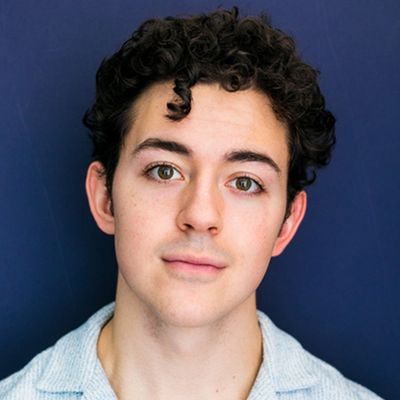
Matt sits down with actor, musician, and his ex-show-husband (from the national tour of COMPANY) Ali Louis Bourzgui. Known for his standout performance in the Broadway revival of The Who's Tommy, Ali shares how transitioning from the intense demands of Tommy to the camaraderie of COMPANY transformed his approach to both his work and personal life... Read More
From the show: The Come Up
Guests
Featured Shows


About
Matt sits down with actor, musician, and his ex-show-husband (from the national tour of COMPANY) Ali Louis Bourzgui. Known for his standout performance in the Broadway revival of The Who's Tommy, Ali shares how transitioning from the intense demands of Tommy to the camaraderie of COMPANY transformed his approach to both his work and personal life.
They delve into the challenges of leading a high-octane show, the isolation that can come with it, and how embracing lightheartedness and community opened new doors for Ali. He discusses his current role in the brand new musical WE LIVE IN CAIRO at New York Theatre Workshop that explores the Egyptian revolution of 2011.
Ali opens up about overcoming imposter syndrome, the pressures of awards season, and finding fulfillment beyond external accolades. Music is a central theme, as he talks about his personal journey with guitar and songwriting, and how music serves as a tool for expression and healing.
This candid conversation offers deep insights into the artist's journey, the power of openness and community, and the role of art in fostering empathy and social change.
Tune in to hear:
- Ali's experiences leading demanding productions like The Who's Tommy and how he navigated the emotional and vocal challenges.
- How his time with the COMPANY cast helped him embrace openness, joy, and a renewed sense of self.
- His reflections on awards season, dealing with expectations, and redefining success beyond external accolades.
- Thoughts on how art can serve as a catalyst for empathy, understanding, and social change.
The Come Up pulls back the curtain on the perpetual journey of “making it.”
Artists and creatives share insights, stories, and truths about the reality of being a human being in show business, with actor and generalist Matt Rodin.
Matt believes that love is who we are. He taps into people’s light so that we can form deeper connections with ourselves and one another. He’s a queer maker of music, media, characters, and campfires. Matt most recently played Jamie on the first national tour of the Tony Award-winning revival of Stephen Sondheim's COMPANY. Matt also recently starred in Hedwig and the Angry Inch at Milwaukee Rep, RENT at Paper Mill Playhouse, and the upcoming musical film BEAU. In 2020, he released his first live solo album, Matt Rodin: Live at Home. Matt has also worked as a content producer and consultant for The Tony Awards, Kamala Harris, The Smithsonian Institute, SoulCycle, Hamilton, Cynthia Erivo, Ingrid Michaelson, Playbill, Broadway.com, Dear Evan Hansen, Write Out Loud, and more.
The Come Up is presented by Broadway Podcast Network
Transcript
This transcript was automatically generated and might contain errors.
[0:00] Matt Rodin: This episode of The Come Up is brought to you by Audible. I feel like so many of us say, like, in the arts, we're like, we're storytellers. And you know what? If you love a good story, Audible is the place to dive in wherever, whenever. Right now, you can grab a 30-day free trial and a free audiobook on me. Sign up at thecomeuppod.com/friends and unlock thousands of audiobooks, podcasts, and more. Seriously, there is something for everybody. Have you been dying to revisit The Outsiders? It's there. You want to soak in a little self-care wisdom, which I love, they've got that too. Head to thecomeuppod.com/friends, start your free trial, grab your free audiobook, and thank me later.
[0:45] Matt Rodin: This episode of The Come Up is brought to you by Descript, the program that we use to edit this very podcast. Whether you have your own podcast or you're just editing TikToks or any kind of social video, Descript makes it so simple, it's kind of ridiculous. You can edit audio and video like a document. Highlight, delete, move things around. It's so easy. Do you need to cut ums and awkward pauses? Done. If you want captions or video tweaks, it's just so simple. And they have a brand new set of AI tools that you would not believe. So if you're ready to save time and stress while leveling up your editing game, head to thecomeuppod.com/friends and try Descript today.
[1:51] Matt Rodin: Welcome to The Come Up. My name is Matt, and on this episode, a conversation with my ex-show husband, Ali Louis Bourzgui. Ali and I got to play opposite one another for four months on the National Tour of Company before he left to go play the titular role in the Broadway revival of The Who's Tommy. When we had this conversation, he was in a brand new musical called We Live in Cairo about the 2011 Egyptian Revolution down at New York Theatre Workshop, the same place where Rent had its New York debut. And I thought this would be the perfect opportunity for us to go deep and reflect on his experience on tour, what it was like to make his Broadway debut in a leading role of that size, and now what it means for him to be a part of a new musical that humanizes Arab people and Arab culture at this particular moment in time.
You know, one of the things that I love about doing this podcast is that I get to meet people that I otherwise wouldn't have. But it is so special when I get to talk to people that I know and love. And Ali is definitely in that category. He is smart and kind and warm and goofy and insanely talented and generous. And if you don't love him already, I know you will after this. So without further ado, here is my conversation with my sweet, sweet friend, Ali Louis Bourzgui.
[3:23] Ali Louis Bourzgui: We're actually getting divorced. That's what this podcast is gonna be. This is the divorce podcast. You're gonna listen to couples counseling.
[3:28] Matt Rodin: That's right. Exactly. We're gonna parse through all of our couples' problems, all of our marriage issues from our four months or however long we were not getting married. You left the tour in January.
[3:40] Ali Louis Bourzgui: Since you left, obviously, so much has happened. I'm curious in reflecting on all that, what that experience of those four or five months doing that show meant to you, and also like how that affected how you ended up showing up for Tommy and Cairo, like how you walked in the room if that experience had an impact on that.
[4:01] Ali Louis Bourzgui: I feel like it was a totally unexpected thing, and it was such a blessing of a little moment just because Tommy was just such an intense process, both in Chicago and in New York. And it again it brought me so many amazing things, and I also had a great time, but it's just you know, leading a show, but then also leading a show that's that like emotionally intense, um, and that vocally demanding is just it's kind of isolating in a weird way. Like it just you have to reserve so much energy in order to do it at your full capacity and to give it the amount of respect it deserves. Um and also the fact that like when you are a singular character like that, and then the rest of the show is mostly like an ensemble.
Um, there kind of ends up being this sort of separation. Um that's just naturally created, and you have to kind of work in order to sort of fight against that. Um, you know, that's not not the actual people. I mean, like the ensemble was wonderful, and they were constantly coming in my dressing room and checking in on me. And it was just like I went from doing that and being so in that, and then when I got back to New York, I mean I immediately started rehearsing for for for Company, and um, I mean, I was tired and also like, you know, again, jumping a whole a whole new process with a whole bunch of new people. Like, I was so um, I remember specifically thinking it was like so many new beginnings of like having to restart the cycle of completely reintroducing myself to a whole new group of people, and then that again and again and again.
And it was like the fourth time in a row where I'd joined a new cast and like I didn't know anyone, and suddenly I had to like and I'm such a you know, we've talked about this. I'm like such a shy person in the first few weeks. So it takes a lot for me to sort of open up and like really trust a group. So um I remember thinking like, oh my god, a whole a whole other group of people where they don't know me, and I have to completely start from scratch and like try to open myself up slowly. Um, but I remember that once we really like got into it and we we I think it was connected y, like I I started to realize like how much that specific group of people and and you guys were like such a blessing in my life at that time.
Um and it was just such a light hearted group and also I mean this show is the show was a blessing too, just to be able to play a character that suddenly was just like very caring and open hearted and smiley and goofy and um it was helpful for me after playing such a sort of dark, uh intense character. And it was also just helpful for me just going through that time. We kind of started the show in October of last year, and um just like everything that was happening uh in the world was just so heavy on all of our hearts. Um and be able to kind of play a character that listened and that was open hearted and um and to uh have a scene partner that also, you know, was the same. And and we just kind of shared this like moment of of what it truly means to meet someone where they're at in terms of um their emotional state and just kind of letting them be there and then listening to them.
I just I see I see those like four months as a as a little mini blessing because it just it brought me so much so much joy uh and kind of recentered me, recentered my heart. I felt like we just laughed so much. We laughed so much in this in this month. It was great, like that whole group, and we were just goofing off the whole time in the best way, but um Yeah, it was chaos.
[7:36] Ali Louis Bourzgui: Yeah, it was chaos. Um I also this is just a technical goofy thing, but I I remember thinking I was like, Oh, I'm gonna get my little like baritone break, I'm gonna be able to be Paul, and this part is like such a you know, like it's gonna be just nice, velvety, like smooth, it's gonna be easy on the voice. And then we were in the we were in the uh rehearsal room, and all of a sudden, like I was getting put on all these like alto parts pretty much. Suddenly, Paul, like when he's not singing his normal stuff, is singing like the highest parts in the show. But in an odd way, it like because it it's Sondheim and because it's sort of more of a classical sound, singing like that in sort of like a mixed register, um, it got my voice in this like really strong place, so that when I went back to Tommy, I actually felt so much more vocally strong um from singing in that style, but not like you know, in in that in the rock style, it doesn't necessarily feel like stamina training as much as it is just like sprinting.
Like every time you do it, it's just like it's kind of intense, and then you have to do maintenance afterwards and like fix it. But with doing with Sondheim and then like a classic Broadway sound in that same range, uh it's kind of you're safe and you're kind of doing it in a in a in a again, like a stamina way that almost felt like uh weightlifting, so that when I got to Tommy, I had those notes then with uh with a muscle to them, with a strength to them, which was really helpful.
[8:57] Matt Rodin: I agree with all that. It's very emotional for me to hear you talk about it. Um, it was just the wildest time and so much humor and so much goofiness, and as a sort of curtailing to my next question, like, you know, that last like month that you were there, when we came back in January, there was a sense, obviously, we we knew that you were leaving, and you knew you were leaving, but there was a sense from other people in the company too, that it was like you had you opened up in a different way. I had seen it the whole time. I cracked you in the first week because you had no choice to be with me.
[9:36] Ali Louis Bourzgui: Exactly. But with the rest of the group, it was like people were so surprised.
[9:40] Matt Rodin: Yeah, you know, I remember like Judy being like, 'Oh my god, I had no idea like how goofy he was.' And I was like, 'No, you really have no idea.'
[9:47] Ali Louis Bourzgui: Yeah.
[9:48] Matt Rodin: And what's interesting is when you went to Tommy, I had heard from people in that cast that you walked in that room with more openness. And obviously you had been with them in Chicago, right? You had had this prior bond and this prior experience. But there was a feeling from people in that room that you came in with more goofiness than you had maybe in the last process of doing Tommy.
[10:14] Ali Louis Bourzgui: I don't know if that was because of being around the Company people for four months and the insanity that was going on there.
[10:20] Matt Rodin: Yeah.
[10:21] Ali Louis Bourzgui: But you talked a little bit about it, but I'm curious, like, after having been with this group of people in Chicago and having this prior bond and built that foundation, when you came in, when you guys started rehearsing in New York, and then really through the whole run. Like, I'm wondering about what the experience was like with that being with that group of people again and going having to go through the experience of Tommy as a whole and having that group there.
[10:49] Ali Louis Bourzgui: Well, I think I think I learned something during during the four months of Company. Well, there's a couple things. I actually I learned how to stop. I'm still I'm still working on this very actively, but I I took my first steps in learning how to stop taking myself so seriously. Um like I think I I feel like there was just a lot of years and then coming into this too, like um I really wanted to be seen like seriously. Like I've always been a very goofy, just like kind of, you know, ridiculous person at heart, but I I've always kind of been taken a little, like I've always I've I've always felt a little underestimated in many spaces, um, at least just growing up. And so I think then when I actually entered the like professional adult world, I was like really craving a uh being seen as like an adult or being seen as like a really um serious, like hardworking person that was like a an image that I wanted to create. Um and uh and that's important a little bit, but then it it kind of gets in your way at a certain point.
[12:01] Ali Louis Bourzgui: Um and I I also think that I started to get this um feeling in the first couple shows I did where I was like, whoa, okay, now I'm really seeing how this whole career is like bonding with this group of people, becoming like super intimate and close to them, and then immediately saying goodbye and then getting like your heart broken by like this entire group being gone. And then you move to the next one, and then that happens again, and then it happens again. And I'd happen I that had happened to me like three times. So then I kind of got this mentality of being like, you know what, I'm gonna close off my heart and not open it completely because I I it just hurts too much to like keep doing this over and over again.
Um but I think what I learned in those four months of company than going back into Tommy was it's actually worth it to just keep doing that and not to like try to block anything off because it's gonna happen and it's an it's inevitable, it's gonna happen anyway, and it's so much better to experience that. It's so worth it's so worth the heartbreak for those for the time of of how great it is when it's actually happening. And then no one ever you know goes away. I mean, like, you know, I just saw you this weekend, and and you know, it it lives on outside of that like context, but um, but I think I just got I think I got a little jaded and and and and and closed off because of that feeling, and then and then realized that that's not um helpful at all, actually.
[13:17] Ali Louis Bourzgui: Um and uh and then just the seriousness thing, like I remember specifically too even more so in Tommy than company in the Chicago version. I really entered that space being like I I remember the first day we all were like sitting for music rehearsal, and people started to file in, and everyone was like mingling and hugging and talking, and and I was just sitting in my chair, just like waiting for the music rehearsal to start, and I didn't mingle with and one person came over to me and and tried to talk and I and I you know I was polite and said hi and everything, but I didn't. I was like, nope, nope, we're here to work, we're here to work, and and um, and then yeah, when I did company and then went back, I felt so like renewed in terms of um taking the parts seriously that need to be taken seriously, but but being a lot more open to the fact that like shyness and and and being um closed off in any sort of way is just all it does is just hinder me.
[14:25] Ali Louis Bourzgui: And it's not helpful for anyone. So um yeah, I don't know. I felt I felt like I felt like I got cracked open a bit.
[14:30] Matt Rodin: I can certainly say that I saw that progression happen in you, that I watched the sort of coming into the room being like, I am here for a job, and this is a very serious job, and we're doing a sun high, and then in the course of those four months, watch that. I don't want to use the word unravel, but it it that's like a that's a fun word for it, but it just more is like it is an embracing of like a lightheartedness and the balance, like a finding of the balance of like this is serious, and I need to warm up every day and make sure that I'm like in good enough shape to get the job done and like be there and show up on stage because that is what I'm here to do is to work, but also enjoy myself while I'm here and like be able to have that sort of social aspect or bonding with the people around you because ultimately when you go through something like a show that's a tour or a new show, any experience, a regional show, the people are the thing at the core of it that I think maybe make or break it.
[15:35] Matt Rodin: Like ultimately the experience is the experience, but when but when you walk away, I found the first thing that people asked me was like when I when people are like, How was the tour? I'm like, oh my god, I I walked away with some incredible relationships. Because that's what I spent the majority of my time doing. It wasn't doing the show, it was the days and the time I was spending with more. I we spend more time in the rehearsal room together than we do actually doing the show.
[15:58] Ali Louis Bourzgui: Yeah, and I'm curious, like in this sort of headspace of like bringing lightheartedness and t what to take seriously, there obviously was an expectation from some people that you would be nominated for a Tony for the performance in Tommy. There was an expectation that the choreography would have been nominated and that the show itself would have gotten more award uh recognition. And I think when we spoke, you had told me you were in the park with your friends that day.
[16:31] Ali Louis Bourzgui: That was like what your Tony nominations day was. You were like hanging out in the park with your friends. And I'm curious, because we haven't really talked about it since then, if that was an indication of that entire sort of award season and what it ended up being for you, and if it changed your perspective on awards and accolades just in general and as a whole.
[16:54] Ali Louis Bourzgui: Yeah, I mean I learned so much about like why I'm doing this during the award season. Um I think I think the awards are so important for keeping our business going and for getting eyes on shows that really need it. And um I think it's a really lovely thing to to celebrate people's work. Um, and you know, I've always watched the Tonies and I I root for it and I I I pick my choices. And I think it's a great thing to get like excitement and buzz around the business.
[17:27] Ali Louis Bourzgui: And um, it's wonderful. But I I when I was going through the awards season process, I felt so the most like unlike myself I've ever felt. Um I did it and I went again. I I learned how to like give enough of myself that was um you know at a respectful level, and I again I respect the whole um the whole process of it. Um but I just kind of realized like oh this is not what I pictured the like a Broadway thing to be.
[18:03] Ali Louis Bourzgui: Um and uh I just I noticed that in many ways it took me away from the actual uh process of the show. Um and I like I felt like because I was putting so much energy into uh the awards season, I I I didn't have as much energy as I'd like to have actually be putting into the focus of the show.
[18:25] Ali Louis Bourzgui: And the minute it's sort of fizzled out and and ended, I was like, oh now I can like actually put all this energy into the show, and and then I I felt so much more in the show once once that kind of had um fizzled away, but also then we closed. So I only had like a a week uh sort of catharsis, but um I I um yeah, well that day I you know I I we I looked at the nominations, didn't get it, and got a bunch of calls being like, you know, I'm so sorry, I'm so sorry.
[18:57] Ali Louis Bourzgui: And I was like right now, I am at the park with a bunch of my friends that I haven't seen in like two months because this has been such a an intense schedule, and we're all just hanging out outside, and I'm like hanging out with my friends and having like a a life outside of my job, and um uh in another universe where a different outcome would happen. Right now, I'm in a I'm in a uh giant convention center with 400 interviewers talking from nine to five.
[19:27] Ali Louis Bourzgui: So as much as as much as uh as an award would be wonderful um I also kind of at this point in my life like just now like like I had this headspace where it's like this is my Broadway debut or it was my Broadway debut and also my debut of playing a a leading character in a show this big that's enough for right now like I'm 25 I was 24 during that show and like I'm I'm a person that likes to set goals and slowly work towards them.
[19:59] Ali Louis Bourzgui: It's kind of like how how I really thrive and how I've like discovered like if I have a deadline and a goal at a certain point and I can slowly work towards that in a patient like slow manner that's very healthy for me. Getting a lot of things all at once is very confusing for me because then I'm like oh wait what do I what do I do now? Um so I think it was a a blessing in many ways to just at this point for this show just have the checklist of of Broadway debut like leading part that's so enough for me and what's so enough for me was getting to do a show with with um 15 other Broadway debuts and like really great friends and all of us like performing this high octane show that brought so many dads joy.
[20:53] Ali Louis Bourzgui: Including yours which is a good which is an important point. It brought so many people joy and we had such like a one of those like lovely well what you want like you know the sort of like little cult followings like we had a a group of like Tommy fans and um I I I wouldn't change anything really that happened it was perfect. Um and and and more so than the award like I this the process taught me so much again about like what I what I want like it's not awards are great but I I realize it's it's all about the collaboration for me and and all of the best parts of the show for me were were the m times in the room where we were like coming up with things together and there were like two moments in the show where it was a full ensemble moments where all of us were all on stage and and and um it was in act two where we just there was kind of a nonstop moment where we were all going going going and we all just got to this intense part where we were all breathing heavy and we hadn't been off stage in like 10 minutes and um that sort of ensemble moment is just a a magical thing.
[21:56] Ali Louis Bourzgui: Um those are just the times when I feel like oh yeah this is this is like why I'm here. That all tracks um the best thing was that process was it just taught me how to say no sometimes and also when to protect my peace and again how much of myself to give to people because no matter how many interviews you do and how many people like how many people's eyes are on you at all times and every second of the day you're being perceived in some format um whether it be in an interview in the morning and then you're doing the show in front of hundreds of people and then you're doing like a uh a uh outside performance like promoting the show and then you're doing like this thing you know it's like everything every day and you're being perceived in some way at a certain point you have to just kind of figure out how to save part of yourself for for for yourself.
[22:49] Ali Louis Bourzgui: Um and uh yeah, and and just how to look out for how to look out for other people too. And um Broadway's great, but but it's also a business, so sometimes um, you know, people are gonna just try to take advantage of like how much they can use you for certain things, and at a certain point, sometimes you just have to say, like, you know what, actually, I I can't.
[23:11] Matt Rodin: Yeah, I'm so proud of you and so happy to hear all that, and I just I I personally selfishly, Ali, like your experience through that whole process was super informative for me. It was so it was so eye-opening in that sense that it was a refocus of like what's important, like why am I actually here? Like, what am I what am I actually doing this for? Um, I don't know if you've had this experience, but it was very cathartic watching you and Tommy for me.
[23:47] Matt Rodin: Um, and I'm finding more and more now that I'm back from tour and going to see shows and I know people and pretty much everything I'm seeing.
[23:55] Ali Louis Bourzgui: There is this joy thing. I don't know what it is, but there's this little light that I haven't experienced before in this particular way that when I go see someone I know, or I go see a show, and someone I know is in that particular show and they're working really hard, and if they're doing good work, that's even on top of it. But for me, it's more about like if they're if I could see them like they're working, like they're I can see the work that they put into that thing. It is so joyful and so fulfilling as a friend and an audience member, but especially I guess as a friend. Have you had that experience with going to see people and stuff that you've just been like, oh my god, this is this is so amazing. This is so cool.
[24:37] Matt Rodin: Yeah, this is so fun.
[24:39] Ali Louis Bourzgui: Yeah, it's it's it that there's such a lovely lovely moment when you it's exactly that what you're talking about. It's the it's seeing someone's like hard work and seeing somebody entirely pour themselves into something is is just a beautiful thing. And same with um uh I I one I always love going to see all of David Crummer's plays, and though he's not in them to see someone's like direction too is such a cool thing, like to know how someone's brain works, and then see like how they create this story on stage, and you can still you can again you're they're not there, but you can like feel all of their hard work in like the the whole piece is is such a that's such a cool thing. I felt that way about Cairo too, honestly.
You know, this is a character that is similar to you, it's closer to Paul than it is to Tommy, obviously. There's like this goofiness and this optimism and this open-heartedness and this like soft boy thing that shines in this show that is you, plus you're playing guitar and you are an Arab person in the show.
[25:44] Matt Rodin: Yeah.
[25:44] Ali Louis Bourzgui: Um I'm wondering how being in this character, and you guys are still well, you're in the process of it now, but I'm wondering like the day to day of being in this character, how it's feeling different from Tommy or Paul.
[25:59] Matt Rodin: Yeah.
[25:59] Ali Louis Bourzgui: Uh this character is like one of the youngest characters I've ever played, uh, recently, or I guess professionally. Like, I feel like every play show I've ever done I've played a character that might either be like older than me or like exactly my age, and and this this character is such a youthful soul, um, which I'm not used to, but which has been wonderful to kind of exist in. And he's the central optimist of the of the show. Everyone around him is very um, you know, we're living in such harsh circumstances being in in Egypt under this regime. And he I was saying to you, like, I I sometimes I struggle with how optimistic he is, and um I consider myself to be a very optimistic person, um, but he is so optimistic that it almost enters into a naivety sometimes where like he doesn't he can't even see the world around him logically.
Um and so that that has been a fun experience to like play around with because I I reach a point where suddenly logic enters the the space and then I then I you're a very logical person too. You are like you you are like you're optimistic, but you're very logical. So then the optimism drops once the logic comes in, but that doesn't happen for him, so I have it's it's been interesting to play with that.
[27:23] Um but uh this show is is been has been another just like big learning moment for me in terms of um so many things. Um guitar playing guitar on stage, it was a great challenge because I've played for so long, but I I've always had this thing where whenever I play in front of people, um, I freeze up and then all of a sudden I lose all my technique because I get so nervous about it. Um, but I just had to do that every single day for the past two months, so now all of that has gone away, and now I can just play guitar like it's singing in front of people, and I've lost the um that sort of tension that that comes. So that that's been a gift. Um, and and just proving to myself, and uh again, like I I I really we all deal with imposter syndrome.
I I definitely do, and I I often tell myself that I can't do certain things and then so I've been trying to like take jobs where I have to force myself to like rise up to the occasion of what the show asks of me. Tommy I I didn't think I could sing that high um I almost declined the audition because I was like this is this is way too high for me. I can't sing this um but then you know I I did it and still kind of couldn't sing that high in Chicago and then just had to work at it every day and uh bring myself to that and then it the show gave me this new range because I I did that and this show is now um making me a better guitarist which is great.
[28:55] But it's also at the same time showing me how art can be activism as well and um how you can take how art doesn't have to be separate from that uh how it can actually I've always seen it as a way to start conversations which is great. But this also in many ways I feel like this show speaks to like the simplicity of where activism activism can start in the idea that like this sort of core theme is I was one person who made it words or who had an idea who made it words and someone heard um that you know that general sort of revolutionary idea that it always starts from one person and it and it feels so often to us that we feel helpless in bigger issues, but it it's always you know it's always one person that then starts a whole movement. So that that that's been inspiring to me.
[29:57] And also um I think I think so many of the root issues are dehumanization and also starting to like not remember that mass groups of people are are individuals. Um, and so it's so great that this show is six people and you get to see each of their lives and the nuance of each of their lives, and um the humanity and again it's it's it's the nuance. It's like the show shows the beauty of Arab culture, and then also shows that there are really difficult things and difficult ideologies and uh fights between our ideologies and um moments of intense violence, but then moments of intense love and beauty and language and food and community, and it's all of these things, and to ever look at the culture as just one of those things is such a disrespectful thing, and so this kind of celebrates the 360 um full humanity of Arab people, which I think is often left out of the narrative, um, or it's not even just left out of the narrative, but just like outside of like stories and theater people only if you don't think you do if you if you kind of like process how you've seen Arab people in Western media, it's always this this very stereotypical one sided way.
[31:27] And there's not a lot of for American people, there's not a lot of ins in terms of seeing anything but that because there's not a lot of yeah, movies or theater um that you might see from for other cultures, um, unless you like actively seek it out, and it exists in other countries, but not really so much in the US. Not really here. So it's just it feels like a very historical moment for us to have a musical that's all Arab, like it's crazy.
[31:52] Matt Rodin: I I want to go deeper on this.
[31:54] Ali Louis Bourzgui: Um, and I I'm gonna take a sidestep and then I promise it'll loop back around.
[31:59] Matt Rodin: But being in that space as an audience member, it was fun and cool to feel the presence of New York Theater workshop in that room and rent specifically.
[32:14] Ali Louis Bourzgui: Um especially, I just think for theater people, it's so significant for me, for me at least, it's so significant that it's hard for me to be in that room and not think about rent, at least a little bit.
[32:27] Matt Rodin: And one of the lines in Rent that was really present for me, especially in reflection, was something that Mark says towards the end of Lobby Bohem, he says, the opposite of war isn't peace, it's creation, and it feels like this piece is not only in its content, because that certainly is true, but in and in its existence in and of itself, it is a counter to war and hate and dehumanization and tribalism.
[33:05] Ali Louis Bourzgui: And I'm curious what doing this piece with this group of people at this moment in time, right now, what that means to you.
[33:16] At the beginning of the process, like this was a group where you know, again, it was like six of us, and uh we all just immediately like loved on each other and just held each other because we even though we didn't know each other, we just like know what we've been feeling for so long and beyond beyond a year, be our entire lives.
[33:34] Um and there's a there's kind of an uh an unspoken understanding that we all share.
[33:41] Ali Louis Bourzgui: Um and we immediately brought that into the room with each other and we didn't even have to talk about it, which is one of the beautiful things of culture.
[33:47] Matt Rodin: Um and one of the beautiful things that comes out of experiencing like microaggressions your entire life, as negative as of a thing as that is, like, it then creates a space that we all understand and we've all worked and and and cre it's made us empathetic and made us open hearted to other people and other minorities and um one it's one of the reasons I've always wanted to tell stories is to kind of um open up the human heart and and uh soul to like underrepresented groups um or people who don't have a voice.
[34:27] Ali Louis Bourzgui: Um and so in many ways this show has felt like giving a voice to people who haven't had a voice.
[34:33] Um I mean I don't I also like if we're talking if we're just talking about Egypt specifically, which the show is about, like I even I didn't really know anything about the um Egyptian revolutions or anything that happened in 2011.
[34:46] Like I remember again, I remember seeing it on like CNN at that time, and it just was videos of like Arab guys with like flags, like and doing this and like throwing like Molotov cocktails and you know, it was just like they just showed the violence to the protest, and I remember being like that looks bad.
[35:02] Matt Rodin: Yeah.
[35:03] Ali Louis Bourzgui: Um, when meanwhile, this show is showing like how beautiful it was, and what actually happened was that it created this utopia in the center of the city, and um, it was a secular thing, you know, Muslims and Christians, and um everyone was just like coming together and existing for one cause, of course.
[35:23] Then it after after they got their one goal, then all the opinions came in and it fell apart like things usually do, but at least at least there was this moment of unity, and there's beauty in that.
[35:51] Ali Louis Bourzgui: It's so much about an election, and it's so much about the power of the people, and it's just so much about how oppression everywhere is the same thing, and like you're watching this and you're like, this isn't Egypt, blah blah blah, but like I know this. I've seen this, I've seen this in Palestine, I've seen this here in the US for all kinds of different groups that are being oppressed, and it's just it's always the same thing, and so it's these kind of stories are important because it shows you that oppression just exists through all these different storylines, but in the same form, and the fact that all of our freedom is interconnected, like no one is free until we are all free. It's that basic message, but that somehow always needs to be repeated to people.
And the fact that no one group of people should have to audition for your empathy every day. But this is another kind of foray into that of to be honest, us auditioning for empathy of being like, see these people, these are real people based off of real people, who deserve a life from all sides, a life that has violence in it, that has beauty in it, that has love in it, that has you know everything. I don't know, I think it just reminds people. I wrote in my bio that no one should be seen as collateral damage.
[37:27] Ali Louis Bourzgui: Yeah, and we also had to talk as a group, like it kind of felt like I mean it felt it feels like such a large undertaking and such a huge responsibility, because again, we're telling a real story, but also like right now being one of the only representations of the Arab people in terms of Western media. It's such a we have two hours to tell the story, but then we also feel like this responsibility to get everyone's narrative in there and to get all these missions done and these stories that we want to tell and in so we had to like be like what so that's why we included this little pamphlet in the bio, kind of just like being like, I hope you guys the audience can see us for our humanity and bring that out into the world as well.
[38:12] Ali Louis Bourzgui: And there's also something beautiful I think we discussed and are doing, which is and this isn't also like a just a decision that we made just for the show. The kafia is being worn by me and Rutana in the show. And it's a recontextualization. Just in the fact that you know, I think people are seeing that as such a sign of hate or like this like symbol of hatred. And it maybe I mean you know I some people might wear it for that, and that's deplorable and I would hate for anyone to ever wear the kafia as a hate symbol, but it's not at its core. And we wanted to take this moment in this show to show that it's always been a part of just the Arab culture. People were wearing it in Egypt, because it's again everyone's freedom is intertwined there.
And it's this symbol of beauty of being proud of your culture of being where you're from. It's just like you know, farmers used to wear it for to get the sun out of their eyes while like tending to olive trees and to like make sure that they could like wrap around their face if you know there was like anything blowing. It's just like it's a garment that exists in the culture of that's for hundreds of years, of just being like, you know, this is us.
[39:44] Ali Louis Bourzgui: So yeah, it's lovely to be able to wear that too, and that's been sort of a very big political thing recently where people are being like hate crimes just for wearing them, or being called like all kinds of names for wearing them. One of the other threads I want to pull on in the show is music. Um and obviously your character has a very specific relationship with music. Um and he talks about I mean everything from how he listens to music, right? Like that for him melody is first and tone and that comes before lyric, but also what music is capable of and what it means and we talked a little bit about this but I'm curious right now where what role music is playing in your life as a whole um and also because I know you I would love to hear more about what role music has played in your sort of origin story um and how that's led to where it is right now in your life.
[40:16] Ali Louis Bourzgui: I mean music is like everything to me it's it's I got into music before I got into theater I started with singing and I've just always had music in my life since I was a kid. But yeah for Amir yeah it's it's in the show my character Amir he sees the world through music everything is music to him. The revolution is music that's how he is politically active is writing songs that inspire people to rise up and to believe in themselves and to listen to each other and to love each other. I mean he says he does everything for love and I do I do believe that music has that power to help people learn how to love and to soften I think music softens and it softens everybody it's very important in that way I mean I think music in history has always been such a powerful tool to make people stop and listen and to bridge a lot of gaps.
[42:08] Ali Louis Bourzgui: And you know, it's no different from Amir and the entire show, he's just trying to write songs that he thinks can fix the world, and that's imperfect, unfortunately. It can, but unfortunately not always. So but he will the best thing about him is that he will try until the very end to write this song that is gonna fix everything. And I love that about him, you know. But yeah, for me, I mean I have been playing guitar now for four years, and that opened a new door for me. Like on the side, I've been writing music for like four years, and it's the way that I sort of help myself slow down and see the world. I don't I've tried journaling for so long and it just doesn't work for me, but I sit down and I'm actually the opposite.
I write well I no, I write music first, but then I oh I guess I'm not the opposite. No, I write music first and then lyrics come second. But if I'm feeling a certain kind of way, I just sit down on my guitar and I just sort of play the way I feel, and then sometimes words come to that and I add that to it, or it's kind of the way that I sit down and open my brain up and see how I'm feeling and see how I'm seeing things.
[43:31] Ali Louis Bourzgui: And oftentimes my songs are a bit storybookish, where like it starts like, oh, I'm in this bad place, I'm in this bad place. But what if I reframed it to this way of thinking and then in the end I've reframed it and put myself on an optimistic path. And so a lot of my songs kind of follow that form, and for the longest time I was like, if I ever want to release these, these are all gonna be too like I think sometimes there's something to be said about a song that doesn't try to fix itself throughout it. Which I have written as well, but I think people need that kind of music sometimes, and I need it, obviously, or else I wouldn't have written it like that, so it's honest. And you know, one of my favorite artists that we've talked about a lot is Jacob Collier, and he says a couple things, which is write music that you wish existed in the world.
[44:20] Ali Louis Bourzgui: And so that's what I do all the time. I'm like, I write songs that I need that help me with my current mental state, and I listen to them a lot because I'm like this is I need this. It's so specific because I wrote it for me, I wrote it to get through something. So why should I change it when that was like the most honest form of what I could write? And he also says you know, there's no rules, there's no rules in music, and it's oftentimes like when I think about my favorite artists, their songs don't follow a form or like follow any kind of rule, they just do it the way they wanted to do it, and that's always the best kind of music. So but my roommate plays guitar, and we've been working on an album for like two years.
[45:06] Ali Louis Bourzgui: And next month, December, we're gonna start the process of recording it. And hopefully bring that out in the spring. So that's very exciting. Another little I don't know, be my first thing like outside of like theater jobs where it's like it'll kind of something something else that I've been slowly putting time into, but I'm gonna take all of December to really just focus on that, which is great. Yeah, such a gift to be able to do that, you know.
[45:34] Ali Louis Bourzgui: Okay, so we'll end here. What are three favorite theater pieces? Can be musical or plays. Illinois has been on my mind since I saw it. I loved it. Loved it. Wow. Are you a Sufjan Stevens fan? Like in general, were you already okay? Okay.
[45:52] Ali Louis Bourzgui: Yeah. But I didn't know what to expect from the show and I was crying the entire time. Just because this has also been on my mind for like a year now, it's one of the only shows I saw three times. But Kimberly Akimbo is still like one of my favorite things I've ever seen. I think that is I know. I think that is like it touched me so deeply. Like I th it's like the perfect example of a show that is so in its own lane. Like it was so like this is the tone of our show, but also we're gonna be so honest. Like it was just it was just like another one of those like human condition shows where it just was so lovely, and I could tell that all the people on stage loved each other and really believed in the story, and it was I had I went back literally I saw it three times.
[46:41] Ali Louis Bourzgui: And then I'm a big pig pen fan. I love those pink p pig pen guys. So I love they have this show called The Old Man and the Old Moon that I always think about. Like it comes into my mind like once a week, and it's inspired like most things that I've written and created. I don't know if like anyone can find it, but I don't think there's like a video of everything. But there's there's some music online and it's just you know, it's all all of them, and they were all like on stage and they wrote this show together and they all played instruments on stage and it's like a folk tale where they like travel around the world to find love. Like it's beautiful.
[47:17] Ali Louis Bourzgui: Wow, I am so I love you. I love you. I love you so much. I just feel so lucky to be your friend and to get to love on you because yeah, I just I adore you. Thank you for this.
[47:30] Matt Rodin: Thank you.
© Broadway Podcast Network, All Rights Reserved