

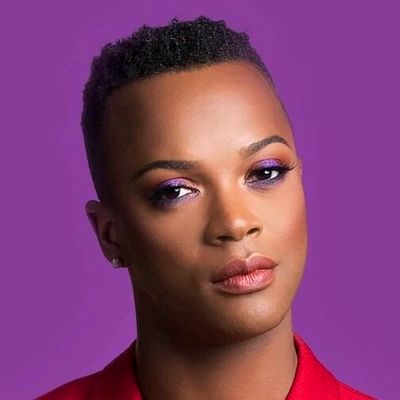
J. Harrison Ghee, minister of love and transcendent triple thread, sits down for an inspiring conversation about intention, purpose, love, and how each of us can free ourselves so that we can truly see ourselves. When this was recorded and released, J... Read More
From the show: The Come Up
Guests
Featured Shows



About
J. Harrison Ghee, minister of love and transcendent triple thread, sits down for an inspiring conversation about intention, purpose, love, and how each of us can free ourselves so that we can truly see ourselves.
When this was recorded and released, J. was starring as Jerry/Daphne in SOME LIKE IT HOT on Broadway.
J. Harrison Ghee is a North Carolina native and has been based in New York City for 13 years. J. has performed all over the world from Tokyo Disney Sea Resort to Norwegian Cruise Line as a lead vocalist. In 2017, he made his Broadway debut as "Lola" in KINKY BOOTS the musical, after having traveled the world on the international tour in the role. Most recently he appeared as Andre Mayem in MRS. DOUBTFIRE. You can also see J. on an HBO episode of High Maintenance and recurring on the Netflix series Raising Dion.
On The Come Up, host Matt Rodin sits with creative people to find out where they’re at, today, in the journey of becoming who they are. What unfolds are often inspiring, transcendental, and candid conversations about the reality of being a growing artist.
Matt believes that love is who we are. He taps into people’s light so that we can form deeper connections with ourselves and one another. He’s a queer maker of music, media, characters, and campfires. As an actor, Matt recently starred in Hedwig and the Angry Inch at Milwaukee Rep, and the upcoming musical film BEAU. In 2020, he released his first live solo album, Matt Rodin: Live at Home. Matt has also worked as a content producer and consultant for The Tony Awards, The Smithsonian Institute, SoulCycle, Hamilton, Cynthia Erivo, Ingrid Michaelson, Playbill, Broadway.com, Dear Evan Hansen, Write Out Loud, and more.
The Come Up is presented by Broadway Podcast Network
Transcript
This transcript was automatically generated and might contain errors.
[0:00] Matt Rodin: Hey, thanks for hitting play. Welcome to The Come Up. My name is Matt, and on this episode, a conversation with J. Harrison Ghee. It's so fitting that we're releasing this on Valentine's Day because this whole episode really is about love. When we recorded this, and currently at the time we're releasing this, J. is starring in the new musical Some Like It Hot at the Schubert Theater on Broadway. And of course, we talk about the show, but more than that, I feel like this conversation is a demonstration of what it means to rise above self-imposed limitations and societal binaries and live and embody what J. calls intention, purpose, and love. I feel so grateful and humbled that we got to share a small moment in time together and that it will now live in the endless abyss that is the world wide web forever.
So if you're in New York, do yourself a favor and go see Some Like It Hot. It is Broadway with a capital B, and it has a heart of gold that I might argue is J. Harrison Ghee. One other quick thing. About halfway through the episode, J. notices my dog Penny getting a little restless behind me, so that's what that is. Thanks again for choosing to put this in your ear holes today. I can see on my end that you're out there, and it just makes my heart so, so happy. And I hope this episode does the same for you. So without further ado, please enjoy the ministry of J. Harrison Ghee.
[1:35] J. Harrison Ghee: How are you feeling? How has it been?
[1:38] Matt Rodin: It's great. It's good. I'm so full in every way. Like the show is incredible. Like I get to work with incredible humans every day. And we have fun at work, not just because of the show, but because everyone is just like fun people. We cut up at work. Outside of that, I just feel like oh, it's just like so much happening, and it's exact it is it's an exciting time.
[2:12] Matt Rodin: That's good to hear. And that's one of the questions I always ask is like, how is this filling you up? You know, like are you feeling filled up by what's going on? Because it's not that's not always the case. It can it can be a grind, you know, because it is your job. I mean, it is work, but to know that it's like it is filling you up, and like filling your heart up and your soul up, and you're feeling like fulfilled by what you're doing, that's like a huge gift. I imagine you haven't that it hasn't always been that.
[2:45] J. Harrison Ghee: No, not always, but one of the things I live by, one of my mantras I live by is intention, purpose, and love. Those are the things I operate in. And so I try to do everything with intention, knowing what my purpose is and do it all under the umbrella of love. And so even from joining Some Like It Hot back in 2019, doing the first reading for me, everything has been very intentional. And even how the process has grown and how evolved it's been very intentional and purposeful, and it's wonderful to receive the love from audiences from the house and at the stage door, and those moments of people being seen and represented. And even stories of like our security guy, Leon at the stage door, got to see the show opening night.
He was very intentional about not watching or hearing anything, sitting at the stage door. He would be there with full headphones, watching things, reading things. Like, nope, I don't want to see it. I don't want to hear it. I want to like see the thing in its entirety from the front. And so he saw it opening night, and he was sitting next to like a cisgender white man and whoever that guy was with. And I have my big number in act two, and the guy applauded, and then just turned to the lady he was with and goes, I need to treat my son better. And that again, that with the intention, knowing what my purpose is, that's what I live for. Is that moment? Things like that of like people feeling and shifting and growing and evolving through the work.
[4:27] Matt Rodin: Yeah, is that that I was gonna say, what is your intention in doing this piece and becoming a part of this piece? What was your intention initially when you first were like, okay, I'm gonna go in. This seems like something I want to be a part of. How can I contribute? What was your intention?
[4:39] J. Harrison Ghee: What drew me to it was the journey I get to have as Jerry, as Daphne, and not only do I resonate personally with me, but it was something I hope to be a mirror and just show audiences of there's a little Daphne in everybody, and that doesn't mean you have to put a dress on, it doesn't mean you have to, you know, go run off and find the cutest lipstick or anything like that. But it's just giving yourself that permission to be free and allowing life and circumstances to break you of what you conditioned yourself or have been conditioned to live by. You have to like see your I another thing I live by, you have to free yourself to see yourself. It is amazing to watch people process me in my everyday life.
They're like, oh, this 6'4 black human is giving what today, what is happening. And for a longest time it used to frustrate me of like people double taking or looking, even if I wasn't wearing anything necessarily outlandish. And now I have a better understanding of just being like, oh yeah, I'm doing something that they probably are like, and people do admit they're like, oh, I could never. And I'm like, no, you just haven't freed yourself to see yourself. You haven't given yourself that space to expand.
[6:02] J. Harrison Ghee: And it feels like timely in the sense that this is something that I feel like it feels like so much of the polarization that's happening and the frustration and the sort of anger that's bubbling up every day, sort of angst that's happening, is a direct result of people not being willing or not having the space to free themselves, not allowing themselves to, you know, it's really hard. And something I've learned like in the last few years, like it's very hard when you think something is true and you believe something to be truth. It is very vulnerable to admit that you're wrong. And whether that be about a fact or about something that you believe about yourself, the process of admitting that, oh, wait, I was wrong about this, and this and what I thought and what I believed is actually not true, that's a very vulnerable process to have to go through to admit that you're wrong.
[7:09] Matt Rodin: And so I feel like I really am I'm resonating with all the things you're saying, and I feel like I said, I just feel like it's this is it's timely in the sense that I feel like there's this urge, I feel it in myself and the people around me. There's this urge to break free of every all the sort of constraints and the constructions that have been put up around us for years and years and years and years, hundreds of years, you know.
[7:43] J. Harrison Ghee: Yeah.
[7:43] Matt Rodin: And we're kind of saying, no, no, not that. That why why why do you think that? That's not even we we made that up. It's not real.
[7:52] J. Harrison Ghee: Yeah. I for the first time had the conversation recently with my mother about identifying as non-binary and what that means to me and my journey and exploration of that. And it thankfully, my mother and I have always had a great relationship in communication. We've always just whether it's made sense to her or not, we've always been able to have conversation, which I cherish and I relish, and I'm grateful to her for that. And so we were talking about family dynamics and things, and then we got into, I was like, hey, you know, it came up in a FaceTime and I was at work, you know, that I said non-binary, and she's like, Well, when did you start using that word? I mean, I've seen it in interviews, but we haven't talked about it. So we made the time in the space, and I was just like, I've always felt other. Since I was a little kid. I've always felt different. I've always felt like I don't I'm not fitting into things that people are telling me should be so.
[8:52] J. Harrison Ghee: Yeah. And that didn't make me feel bad, but I was just identifying it from a young age, but I didn't have the language for it, or I didn't have the freedom and the space to explore that because growing up in a Christian home, my father's a minister, like I was told I had to be certain things. And I've always been since a kid the inquisitive one over there, like, well, that doesn't make sense to me. Explain it to me. And then being like, stay in a child's place because I said so. Do the thing because this is what and you're like, yeah, but y'all see this isn't working, right? The truth of the matter is that's not true. That's okay, but we're gonna great, we have to pretend. Got it, and so it's like, oh, I've been in acting class since I was a kid because I watched people play these games and play these parts for so long.
And I'm like, great, taking notes, got it, got it, got it. That's what makes you feel that way. You are responding to that because of what you don't want to identify the thing. Great, okay, uh-huh. And so now in my exploration as an adult, I always say that I'm fighting to get back to the innocence and purity of who I was as a child, right? Before society, before family, before the world got in the way of who I was created to be. And so anytime I want to get to the purest version of myself, I check in with little me. Of like, oh, who does that resonate with little me? No. Where did I pick that up? Who added that to my narrative and I took it on as my own, but it wasn't. Yeah, whose voice is that?
Because so many times I hear something in my head, I'm like, that's I didn't come up with that. That's not my voice. That's not really where did I pick that up? Right. Like that, where did that come from?
[10:41] Matt Rodin: So, how has this show, and I guess really all the things that you've done, how has that impacted or what has that process been in sort of discovering who you are? How has the show been helpful in discovering who you are?
[10:59] J. Harrison Ghee: Oh, it frees me every day. It in large ways and small ways. It reminds me to just check in with me, and again, identify those other voices, you know, with the show. Even last night, there were moments of being like just seeing more clearly the relationship I have with Christian with his character with Joe, and how yes, I just follow along to begin with, but then it's like, oh no, Daphne helps me break free and find my own voice and be like, oh, I've followed this human for so long because this was the brotherhood we created, and this is the relationship and the bond that got us by, but I can also exist on my own. I can also speak up for myself. I have an opinion, I have a point of view. Use it. Even in those moments where it feels uncomfortable, that's how growth happens.
[11:55] J. Harrison Ghee: And that's the thing I think people forget. They it's like we go through things in life and we're expected to remain the same. But evolution, there has to be a change, there has to be a shift. There has to be some kind of progressive movement. And that's uncomfortable. And even in talking about the theater and entertainment industry as a whole, yes, everybody's like, okay, you know, we're back to Broadway. How does this feel? You know, what is it like? It's great. And we have to make the change bit by bit. We have to be prepared to be uncomfortable. This is going to be a transition time getting back into how we operated before, but how we are moving forward. Cause it's not the same. It's just not the same.
And you will see who is taking that time away from Broadway to do the work for themselves and who has come back to it with fresh eyes, and who's come back to it with the same eyes. And then you make your choice accordingly of yeah, am I a part of this? Are we moving for how do you then you do that for yourself? And that's why I'm grateful for the journey of again this process and this show and how we've grown together as a company, as creatives, as artists.
[13:15] J. Harrison Ghee: Yeah.
[13:17] Matt Rodin: Was it collaborative?
[13:18] J. Harrison Ghee: Like was what was there a lot of conversation going on in the room?
[13:22] J. Harrison Ghee: Um about always the the the progressing and the sort of like, okay, no, no, how are we doing this differently? You know, what can we what can we bring to this that's different? Oh, yeah, the consciousness of uh of of everything, you know, it it definitely was a thing pre-pandemic, and it was in a good place then, and I was excited to do the work then. Um, it didn't turn into something completely different, but everybody just kind of expanded our eyes and honed in on what we were doing.
[13:53] J. Harrison Ghee: And then there was the space made available to continue to to have conversation, and then the things that excited me were coming into the the room, and there were things implemented into the script that I say in my everyday life that I'm not intentionally like, hey, let's put this in the show. I feel like this needs to be something we get across. It was like, oh, you all were just actually listening to how I communicate.
[14:22] J. Harrison Ghee: Things of, you know, in this new world, we always in introductions and meet and greets, it's you know, how I say your name, your pronouns are and I genuinely say all the time, all things with respect. That's where I identify, that's where I live. Call me whatever, as long as it's with love and respect.
[14:45] J. Harrison Ghee: And finding those moments to teach people how to expand the way they see. Because there were definitely moments where Casey Nicola would say, okay, Jay and the girls, Jay and the syncopators, Jay and the so-and-so, or you know, and I'd be like, you could also just say the girls in this moment, if I'm not being daff, if I am being Daphne or if I'm with the girls, I'm one of the girls. And I said all things with respect. That is inclusive of this moment.
[15:12] J. Harrison Ghee: So finding fun and respectful ways to just be like, hey, hey, hey, I gave you permission, I gave you consent. But the understanding how people are conditioned, you see a thing, so you're like, oh, I it's that thing. And people are and people are delicate, you know. People are are there, there are people are afraid of saying the wrong thing or doing the wrong thing.
[15:31] J. Harrison Ghee: And I think that's because um, like you were saying, like, not all things have been treated with respect. And that has to go in both directions.
[15:39] Matt Rodin: Yeah.
[15:40] J. Harrison Ghee: So, like, when if there is a correction being made or a suggestion or an ask, that is made with respect too. And that way people are not feeling necessarily called out because I think then that friction makes the transition even harder.
[15:56] J. Harrison Ghee: It makes the the that change, that shift, that mindset shift, the opening of the mind, it makes it even more challenging. Um and there's people are I I find people are like more resistant to opening their mind if they're met with resistance. You know what I mean?
[16:13] J. Harrison Ghee: Um it's it's and and I and I'll say like, you know, I I'm I'm sure you've had countless conversations with countless outlets about you know how wonderful the show is and and how much fun the show is. I mean, that's the other piece of this, is that like the show is really fun, and uh it's just a good time.
[16:35] J. Harrison Ghee: And you sort of like I we I was talking to my fiance about it, and it's like we're recommending the show to people because we're like we want them to be like, oh, it's a big fun Broadway musical. And then you leave having this perspective shift, like you having your mind open in a way that's non-aggressive, in a way that's it's it's easy to understand that that there is, you know, and I I really identify with the idea that like I it's beyond what what what the label is.
[17:04] J. Harrison Ghee: It's the the label is it's it's kind of arbitrary, it doesn't really matter. It's about the human being and respecting the human being wherever they are in that moment in that day. Um it's it's something I had I had a conversation with um Kevin McCullum, our producer at Doubtfire during the pandemic.
[17:23] J. Harrison Ghee: Um we were talking about uh he got together with all of the black cast members and on it to like have a moment with us to see how we felt in the industry. And this is like top of pandemic, June of 2020. Like, like and it was a fresh moment of like, hey, I want uh tal speak to me. Let me see your perspective, let me understand your experience in this world and the things.
[17:47] J. Harrison Ghee: And in that moment, it came to me, and I've operated from this way since of we have to operate with conscious sensitivity. The awareness that every human being brings their own experience to every given moment. I could say any number of things in our conversation, and based on your experience, you could respond a specific way.
[18:11] J. Harrison Ghee: And I may take it personally and think it has something to do with me. When actuality, it has nothing at all, but I have to be conscious and sensitive to your existence and your being. And it's just a matter of taking that that second to think outside of yourself.
[18:28] J. Harrison Ghee: To be like, oh yes, this is my perspective, but let me be also aware that that human is bringing their own however many years and experiences to this given moment. And it doesn't have to do all with me. We have to remove a bit of our ego from how we operate.
[18:48] Matt Rodin: Oh my God.
[18:49] J. Harrison Ghee: I think that's like the most important thing.
[18:51] Matt Rodin: And I think it goes both ways.
[18:53] J. Harrison Ghee: Like oh, for sure. When like the example that I that I feel like I've been coming up with, or that I feel like I've been hearing a lot, is like in the context of I mean, certainly in the context of uh a deeply personal conversation, right?
[19:07] J. Harrison Ghee: And something, you know, you address something, and then someone has a reaction, and then we it starts to become a personal thing when really it's it has nothing to do with either person. It's about each person's personal experience.
[19:22] J. Harrison Ghee: But the context that I find helpful to like illustrate this is like let's say someone comes and sees your show. Whether they feel positive or negative, whatever it is they feel, it really has nothing to do with you. Your skills and abilities and talents are kind of secondary to their own personal experience because their reaction is based on who they are and where they're at in that particular moment on that day.
[19:57] J. Harrison Ghee: And whether they resonate with you or not, or they resonate with the show or not, it really has nothing to do with you. But that's hard. I think as artists, that's very hard to remove ourselves.
[20:11] J. Harrison Ghee: We are we have a tendency to wrap our ego in the work that we do. And I don't know if that's conditioning or if that's just like the industry as a whole, but it's hard to like take a set take that second and be like, wait, this isn't about me.
[20:25] J. Harrison Ghee: I didn't get that job, not because I'm not talented, but because they didn't resonate with what I was bringing in that moment because of who they are. That's why I'm so grateful to my mother again for how she's raised me in so many ways.
[20:40] J. Harrison Ghee: From a very young age, I've always been musical and artistic in the things, and my brother as well. And she raised us to understand that our gifts were not about us. We were given these things to be of service, to do things with them, to use these gifts and give it out.
[21:01] J. Harrison Ghee: It is something that I have to do. I cannot hold on to this thing and be precious about it and be like, oh, I it is mine. I've been given this thing, and I have been able to like, no, I have the things and I have the tools, but I have to do this in order to serve something else.
[21:18] J. Harrison Ghee: It's bigger and greater than me. And in those moments of like reading reviews, I I have the the res the perspective to be able to be like, well, this is how you're choosing to do your job today. This is how you're responding based on your experience.
[21:38] Matt Rodin: Right.
[21:39] J. Harrison Ghee: And how that is clouded by possibly others' perspectives and what you need to get across. Great, great, great. Got it. I'm glad that's how you're doing your job today.
[21:50] J. Harrison Ghee: I can groundedly read the things and be like, great, all right, wonderful. Whether it's good, bad, or indifferent. It doesn't, it doesn't have an effect because ultimately you're uh you're the vessel.
[22:05] J. Harrison Ghee: You're like, okay, well, you're receiving that in the way that you're receiving that. And that is You receive that, and then I I also get I need to treat my son better. That I'll take that review.
[22:17] Matt Rodin: Right.
[22:18] J. Harrison Ghee: And both and both of those things are again have nothing to do with you. Like it's those are your own experiences.
[22:24] J. Harrison Ghee: Right. You're channeling something greater. And it was things I was grateful to have the conversations as we were building the show of, of course, the consciousness and always having the conversations about how it will be received and perceived from the public and all the things and them trying to think of head of review, whatever.
[22:43] J. Harrison Ghee: And there were moments where I had to say, or can we also just create art that causes conversation? Is that not what artists do? Can we? Yes, we have to be responsible. Yes, we have to be conscious and do the work, but at some point, we're not going to reach everyone in the way that we it's not going to be a universal reception.
[23:06] J. Harrison Ghee: So we have to stand firm in whatever our vision is, be honest and truthful, do the thing, and then let it lie.
[23:17] Matt Rodin: Hmm.
[23:21] J. Harrison Ghee: Yeah, which is uh it's like it's like trusting the process in a way, but and and I and I want to articulate that in a more clearly in the sense that like it's about let's focus on our process, let's f let's focus on what we're doing, and how this and how this is impacting and changing us, and and what it looks like to do the show eight times a week, and how we operate in that space and how we treat one another, and let the rest of it fall.
[23:53] J. Harrison Ghee: Let let it be what it will be. But what we can control is what we can control, and that's like who we are, how we show up for one another, how we treat one another, how we treat this process, yeah, and the rest of it is out of our hands.
[24:07] J. Harrison Ghee: And that was again the beauty of doing that with these people of building that trust of coming into the room with truth and authenticity being our foundation as human beings, as artists, and how we were approaching the work.
[24:26] J. Harrison Ghee: It brought me such joy, even the evolution of pre pandemic. We had done a reading and we were doing a presentation, and I showed up one day in like a black romper, some sparkly shoes, and Casey Nidal.
[24:40] J. Harrison Ghee: I was like, I love this, you look great today. This is beautiful. But for the presentation, can you get some pants just for the sake of producers so they get like a clean, like so they're not like skewed by what these and of course, understanding pre-pandemic thought of being like, uh, okay, I see, okay, yeah, yeah, yeah.
[24:57] J. Harrison Ghee: I I get that. I'll go, you know, find some pants at TJ Maxx. And I was like, no, I'm not gonna buy pants for this moment. I'll try to go home. Looked up, traffic was too heavy, and I was like, no, this is just what they're getting today.
[25:09] J. Harrison Ghee: If my clothes get in the way of the work you need, then this is not the work for me. And I had settled in my spirit if this is what if I don't move forward with the project, then great. Because of my pants, because that that would get in the way of you seeing the work you needed.
[25:25] J. Harrison Ghee: And again, that would have shown me then I'm not the human for you to do this thing. But luckily, moving forward, I remained the human they needed, and I got to come back into the room and remain authentic to who I am.
[25:40] J. Harrison Ghee: The way I came into rehearsal and maxi dresses and jumpsuits and all the things, and it never got in the way of the work. And that was respected, and it was like, oh, okay, great, yeah.
[25:54] J. Harrison Ghee: Because this is how I feel today. If this gets in the way, trust, I will be the first to say, let me take this off. This is not a good idea.
[26:02] J. Harrison Ghee: Right, yeah. I'm not doing this for the sake of like trying to be in no, I I'm just being me. And creating that safe space to encourage it in others.
[26:19] J. Harrison Ghee: For people making the little choice of being like, Oh, I'm gonna wear a dangly earring today because this is just what brings me joy. Or Casey would come in during rehearsal and be like, Oh, you look so comfortable. And I'm like, Yes, that was the point of me putting this maxi dress on. You too can put on fabric that looks like this. I'm like, yeah, it's like, yeah, it's fun and fallacy, but it's also like practical. I love you can be comfortable and comfortable. Comfortable. That's a real thing. Yes. And I listen, I think that's really um, I think that's powerful medicine in the sense that, like, you know, in the context of like auditioning, it's to go in a room and say, This is where I'm at, this is who I am, and if this is gonna get in the way of the work for you, then I'm not the person for you.
And if what I'm bringing isn't what you're seeking, then all good. No hard feelings. But anytime I wear those sparkly shoes now, like, and I wore those actually, they're like little uh sparkly happy face, like they look like happy face emojis. Um, and I wore them to my audition, and I've seen interviews where Casey is mentioned, and he has said to me, He was like, I walked in the room and he saw those shoes and was like, This person. It's like I like them. Like the shoe choice alone. It was like, right. It makes a difference, yeah. It's those little things, encouraging and again, giving that space to be like, hey, you know, we all can just do whatever we want to. We can make ourselves happy, right? We don't have to live based on someone else's label or limit or compartmentalization.
[28:11] Matt Rodin: Yeah, what has that been like for you in like be in in this industry? Like have you felt the pressure of like square peg round hole at all, especially in the beginning?
[28:23] J. Harrison Ghee: Oh, I like it's it's amazing that the bigger, longer journey of that of having gotten into musical theater. And I was looking yesterday of like I took my first headshots like 14 years ago, and being like, oh, that human and what they thought they were gonna be auditioning for and being and like okay, great, I've got to be the leading man, and I've gotta be okay. If I want a successful career, these are the parts that I have to look at and be fit into that thing. And I was preparing myself, and even at the time, like starting to explore drag and having to be like, nope, let me keep that hidden because I don't want to be pigeonholed as that one thing, and that's gonna keep me. And little did I know that drag would lead me to my Broadway debut.
That thing that I was like trying to hide and suppress and be like, oh no, no, no, keep that over there was that thing that like made me special and and really brought me to to a place of elevation and being like, ah no, that's a good thing to have.
[29:30] And so uh I it is fun for me to have these opportunities. I I have fun in my fluidity and and the ability to be like, yes, you may think I'm limited to that thing, but I also am capable of if I am an artist, if I am a creative, give me the room and the space, and I'll show you what's possible. Doing things like Vel McKelly at the Muni. Oh having that opportunity that of course me again check back in with Little Me, who was obsessed with the movie when it came out, and like watched it incessantly, never imagining, but like watching I Can't Do It Alone, like work, uh-huh. Yes. And then getting the opportunity to do it and be like, oh no, yeah, I'm a capable human of doing this. I can, yep, nope, I can relate, I can tap into this is yeah, let me tell this story. And given that space and that opportunity freed me.
[30:42] Matt Rodin: Yeah, when did that happen? Like what when did that like when did that switch start to happen?
[30:50] J. Harrison Ghee: Oh god. I mean, kinky boots played a large part in that. Of course, but like what led to kinky boots? I guess is the is the better question. Uh it it all just kind of like unfold one these stepping stones of I guess I have to it has to go back to given the opportunity, my drama showcase at AMD. Um we were auditioning scenes, and our director handed us a scene, and it was like me and six women, and I thought I was supposed to play the there was like one male role in the scene. He was like, No, I wanted you to play Angelessa, who was like a female wrestler in this scene from Cementville. He's like, Oh, you were a big dude, I just want to see how you play it. And we did the scene, he was like, Great, you're doing it in the showcase.
And I was like, wait, what? You want me to do what? And I was also doing a scene from Take Me Out. So I literally did a scene from Take Me Out, Blackout Transition, do a quick change into female wrestler in this scene for my drama showcase. And that started the spark of like, okay, I'm all right. Y'all are getting to see this side of me. And then I went to Tokyo Disney and was doing jazz show during the day and would go back to my apartment at night and play in makeup and be on photo booth, lip syncing the songs and like playing around and finding it. And my friends are like, you have to do this when you get back to New York. You have to like do drag. And I'm like, oh god, no, I could never. This is old. And that just snowballed.
[32:25] Matt Rodin: Yeah.
[32:26] J. Harrison Ghee: And I did do drag in in the city in competitions and had my own shows and hosted and did the. I was in nightlife. What was your drag name, girl?
[32:35] J. Harrison Ghee: Oh, Crystal Demure. Crystal Demure, honey. Oh, I like I I had shows at industry. I was doing shows with Shakita and hard all over the place. Like Bartini on 10 that like we I was in nightlife.
[32:51] Matt Rodin: Yeah, you were doing that.
[32:53] J. Harrison Ghee: So all of those things, it just snowballed, and I was picking up these tools along the way unknowingly, that just kind of put that in the arsenal, put that over. Uh huh. Yep, yep, yep. Take that off. And now it just all worked in my favor.
[33:10] Matt Rodin: Look at that cutie.
[33:11] J. Harrison Ghee: I know. I must. She's like, what are you doing? I know. Hi, I see you. You can just take a rest. You can just lay down.
[33:33] J. Harrison Ghee: Okay. And sometimes we have to tell ourselves that. Just rest. Just rest. Just rest. Because talk about like all the things happening. I I have to. This is the only being I can control. And so with all of the things and the being pulled in every direction, I have to tell myself to rest.
[33:56] Matt Rodin: Yeah.
[33:57] J. Harrison Ghee: Those moments where my friends are like, hey, can we hang out this week? Can we do the thing? I love you, friend. No. I will see you when I see you. I'll see you when right now you're in it. Right now you got right now. Like or you know, being like, hey, are you gonna be here with these other people? Let's kill all the birds with one stall. And knowing when to say when.
[34:22] Matt Rodin: Yeah.
[34:23] J. Harrison Ghee: But that's hard too. Like, that's hard to setting those setting those boundaries. You know? But we have to, and we have to normalize that for ourselves.
[34:31] Matt Rodin: Yeah.
[34:32] J. Harrison Ghee: The ability to say no and that be a complete sentence. Even though my urge to want to explain things sometimes, but like, no, I can't because the people who know you and love you, they get it.
[34:52] Matt Rodin: Yeah, of course.
[34:53] J. Harrison Ghee: They and and I I'm so appreciative of the love that I have and the support. That's one of the things I pray and I meditate about every morning is the support that I have that I'm grateful to have had. Because again, little me. I've always been a people person, but to really have the friendships and the the community that I have, I'm so grateful to be supported in a way that I know where I can get my strength. My friendships fuel my ministry. It is my friends and those moments of like being able to just sit and be and like let your hair down and have those people love on you that fuels me to do what I have to do.
[35:40] J. Harrison Ghee: And in that in that same respect, it's like I love you enough to also be like, I need my space, I need my solitude. Christmas and New Year's Eve, people were like, you can come here, you're welcome here. Like, come over here. I sat in this apartment by myself both of those holidays and was in peace, in gratitude, and in solitude. Like I brought in the new year in my shower. Oh I was fully like, I'm coming into the new year doing self-care. Yes. Cleanse. Literally just like put on a hue light, put on some jazz music and watch the old and step into the new. Like I put on a face mask and was like, happy new year to me. I'm blessed. Surely.
[36:25] Matt Rodin: Yeah.
[36:27] J. Harrison Ghee: Community is huge. I really, I mean, this is I I something I talk about with everybody, I feel like on this podcast is like community, community, community. Like it is so vital to your spirit. Like to be able to move throughout the world in a way that I I don't know. I I just am not able to be my full self without my community around me. Um, you know, it enables me to feel like I'm free to express myself in the way that I want to express myself. It enables me to um feel through the things I need to feel through. Whatever that whatever that thing is that's coming up, I'm able to have the space to process that in a way that's productive and helpful and caring.
[37:14] J. Harrison Ghee: Um especially being in a partnership, there are things that my community gives me that my partnership does not.
[37:23] Matt Rodin: Yeah, and that was another hump I had to get over to be like, oh, wait a second.
[37:31] J. Harrison Ghee: My partnership isn't supposed to give me all the things and more. That's not that's not the point. My community soulmates and different beings exactly different ways, and they don't all have to be exclusive to being a like limited way of seeing the thing. But again, it's breaking that, it's breaking these these norms and these binaries and these sort of you know societal constructions, yes, the limitations that have been put upon us, but for no other reason than it helps other people move throughout the world, right?
[38:08] Matt Rodin: It's like much easier to process.
[38:12] J. Harrison Ghee: You can give me this label and put this thing on me so that it makes sense to use you when in actuality you're not even giving me the space to be all that I am. Because that's your limited perception of what you think that thing is. But having you taken the time to ask me specifically what that means to me. My queerness is not the same as your queerness or somebody else's queer. It is a different thing. There are different layers and colors and strokes to that thing. Talk about community app. One of my favorite, my one of my cherished memories from opening night was my brother got to come be with me for opening night. Uh, and we had done the show, done our little cast after party, and then we did the after after party at industry.
And my brother's like, I'm down, like I'm, you know, I'm going with you. This is your night. Like, give me your bag. Let's go. And we're in industry, and again, I used to do drag shows there. These are my people. I know these bartenders, I know the manager, like, and we're like letting our hair down. This is the end of the night. And I'm turning up with my cast mates, and my brother is like watching me be in my community.
[39:22] J. Harrison Ghee: And he just took a moment and was like, Well, this is big for us. He's like, Thank you. Because I had stood there and told him, I was like, Yeah, oh, I used to do drag shows here. Kija Carr was there, and she had just finished her show. So I'm like talking to her, and I'm like, Oh, yeah, that's you know, we used to do shows and this and blah, blah, blah. And he's like, let me take a picture with her, let me do the things. And he sees how I am supported in this city and in this place. He's like, Oh, this is your commute, these are your people. And you're good. You're like set, like, oh, you got it clicked for him in that moment. Of like, yeah, when you find your people, that community, that space where you can fully just be you.
It makes all the difference for you. And then that also can permeate your life and affect those around you. That freedom can expand. It took me a long time to be able to show up as my full self in every realm of my life. Because I felt that in my community for a long time. But I remember someone asking me the question are you the same person when you're with your family, when you're with your friends, when you're with your partner, when you're at work. And for a long time the answer was no. Now I'm proud to say that now I'm at a point, I don't know if it's just age or it's just comfort or whatever it is, to just be like, no, I'm me across the board. It's definitely gotten to that place. If just the little thing of again, choosing what I wear.
Right. I'm like, how do I feel today? What does the day call for? And what is gonna get me through that thing? And how as Patty Labelle would say, let me get up and check my drag. What is the drag for the day? Reasons, changing. Because it's all drag. We're all born naked. The rest this is the drag I'm choosing today. Right. And so I'm like, great. What is the drag that's gonna get me through the day? And doing whatever resonates to me. There was a time where I would let those other voices get in the way and be like, nope, that's too much. That's too extra. Oh, don't be that loud. Don't no, I feel like being this loud today. No, I feel like putting on a sparkly thing because it's Thursday. Like people, right? And then like, where are you going? I left the house. This is how I felt. You too have the permission in the space to do whatever you feel like doing.
[42:09] Matt Rodin: Yeah, I was gonna say, like, my what came up initially was I was like, that's radical. That's radical to be able to say that the perspective of it's all drag. Like you're everything that we're doing is a performance. You understand? Everything that we're wearing, the way that we show up in the world, the way that we talk, it's all performative. And to have the consciousness to say, wait a minute, I can choose. And that's why I keep I'm so moved every time you go, you too. And that's what's that's what's being communicated. I think, and I think that's what's so radical is that it's like it's actually not radical. It's like it's actually not that crazy. It's just that it's so simple. Right. It's so simple, but it's so against what we've been programmed with, yeah, that it feels like this radical act when it really is simple.
[43:10] J. Harrison Ghee: Yeah, I for the longest time, pre-pandemic, I always was very adamant about remaining non-political. I didn't vote, I stayed out of so much for a lot of reasons. Like, as a teenager, I did youth legislative assembly in North Carolina where we were the youth senate. And we wrote bills, we were like, and some of our bills went to the actual Senate in North Carolina, like it was a whole thing. And to watch at that age, the priming and priming to become these people and do these things, I was like, ew, ew, ew. Yo. And so it took me out of it for a long time, and then in our pandemic life and uh taking time to assess, I had this realization for myself of again, for years, people would double take long before I made bold fashion choices and things of just looking at me.
And then someone sent me a uh an interview that Tony Morrison was doing, and she said, as artists, our existence is innately political. That's what artists do. We comment on the times, we our voices are political without trying. That's what uh an effective artist. And then I had the realization for myself, as a black queer human in this world, if I leave my home, I'm making a political statement. So I might as well make a statement. I might as well actually give you something to look at. And again, to encourage in people when they look at me. And I I just tuned in to again, so many times people would look at me and be like, Oh, I could never do that. I love the shoes you have on, I could never, or oh, I love this thing.
You look so comfortable or confident. I could never. I'm like, no, you two can do it. It's just fabric. Somebody just told you it had to be male or female. It's just fabric. It doesn't have to be so convoluted. And why can't you? Like where, like, where is like what like what you know what I mean? Like why your voice told you you couldn't. You right. Like, who says? Who said? Who said that? Somebody told me I couldn't, and yet here I am. And here I am. And that someone was also my mother. In the sense of she was the first one in my family who knew I did drag. And she went through her own process of how she processed that. Like she took it and then called me a prostitute at one point because she was like, What are you doing for this money?
Like, what are you what are you out here? And fully said to me, This is not God's plan for your life. This is not how He raised you. What are you doing? What are you trying to get at? What do you become? What's happening? But I had to be able to detach my attachment to my mother, that woman who I love, who I adore, who has taught me so many wonderful things. And I had to get her voice out of my head for a while, and still working on that in a lot of ways, of being like, Yeah, but that's your limited perception of the being I was created to be. It doesn't have to make sense to anybody else. This is not your experience or journey to have. Yes, as a mother, you have a connection and a tie to me. But I'm letting you into the being that I am.
[46:52] J. Harrison Ghee: I had a conversation with her last year when I was in Doubtfire. I kept my show face on one day and I caught a glimpse of myself in the train doors. And then my next thought was, oh, how does that make my mother feel? Because the perception of she had this little boy and what she thought that was going to be. And here's the being you got. And I objectively asked her, I was like, How does that make you feel? Your perspective, not from your your child's point of view. I'm not asking for permission. I'm not asking for acceptance. How do you feel? And luckily, she said, you know, she didn't feel the need to like defend me or anything. She's like, You're being you. I see it. You're being true to who you are. I get it. Beyond my understanding. And she had to get that early on of like, yes, you're my mother, but you're also just here to like lead and guide. But let me be the individual God put me on this earth to be.
[48:06] Matt Rodin: Well, and in a in a kind of crazy way, like by you holding space for how she's feeling, you're demonstrating the ability to say, hey, I'll hold space for whatever you're feeling and wherever you're at. Can you hold space for who I am and my whole being? And that's it's a challenge. Like, that's it is a it is, you know, again, breaking her perceptions. Be like, wait a second, what? Because I'm like, I'm trying to be this, this, this love of God that you all taught me that is so unconditional. I'm I'm trying to be that. Yes. You all have taught me what that is supposed to look like, but a lot of y'all, again, have not been actually living that thing. Because if it's unconditional, there are no there's no addendum to be like, I've had, and I've met my even my father in those moments of like we were having breakfast, just the two of us at Cracker Barrel of all places.
And he was just like rambling and and talking, and I I am kind of the human that creates space for him in that way. He doesn't normally do that. And he said to me, he was like, I you know, I'm I'm so proud of all the work you're doing and where you are in your life, and you know, I'm just really proud of you. I mean, I don't like your lifestyle, but you know, I'm proud of and old me had the prior to doing the work for myself, would have taken that and it would have weighed me down and like kept me in this place of like, oh, you know, I I'm doing something wrong, or I'm like, no, I'm being effective in this earth, I'm ministering to people in a way that is beyond anybody else's understanding. There is a ministry I have that is true to me.
[49:58] J. Harrison Ghee: Yeah. Because since I was a kid, they always called me like little reverend, little my, you know, and I thought that was gonna look a certain way, but now I'm like, oh no, I have the ministry is still there. And so it's it's funny, and it probably will happen one day, and I just speaking it into existence. But that rude challenge where she makes the girl like write a book and like what is your book and sell your book. I was like, oh, if I was if that was my challenge, my book would be called Put Pumps in the Pulpit. Wow. And that is definitely a journey that I'm like, ah, there's a lot of layers there, but uh a lot. There's a story to be told with these pumps in the pulpit. And it's it's that, and that's why I continue to use that language for myself of being like, no, I I still remain such a spiritual being. I am still connected in that way.
[50:56] Matt Rodin: Yeah, I want to talk about this. Like, what is your relationship with spirituality and God and ministry? Like, talk just talk to me about that.
[51:06] J. Harrison Ghee: It's evolving every day. It is one of the things that I've been again talking about the intention, the purpose, and the love. During the pandemic, I started a habit for myself of I wanted a better prayer life. I wanted to just reconnect. That's something I've always loved. My grandmother, my mom's mom. Um, every night was always by her bed praying, saying everyone's name out loud, doing just that fervent seeking in prayer. And when she died, I wanted to pick that up in a way, and that was years ago, and I kind of lost touch with it. And so during the pandemic, I very intentionally created an altar. And I was like, I have to create a space that I go to every day and meet myself, meet spirit, meet God, meet the divine, whatever, and also allow that to expand from what I've been taught.
So there are crystals on that. I like Pala Santo. I do say there are things all and I and I meet myself there every morning. That is the first place I go out of my bed. I have my routine of say the Lord's prayer, do my own personal prayer, do a chant of some lyrics of a song that my friends wrote that like resonates beautifully with me. Um, that I, you know, I love it's a lullaby that they sing, but it says, I am what God made, beautiful and brave.
[52:32] J. Harrison Ghee: Every fiber of me is perfectly lovely. I will be myself today. And then from there, I allow my prayer and meditation to go wherever I am in that day and in that moment. I may sit there for two minutes, I may sit there for 10, I may sit whatever it is. Then I read this pocketful of miracles book I have, and I let that thing, but I have to go there first to set my intentions to like take a moment to breathe, to ground myself, and to just have a moment greater than me.
[53:09] J. Harrison Ghee: And that's exactly what I was gonna say. Is like it sounds like which I really resonate with this innate desire to be a part of something larger than yourself. Yeah, and it's again that just starting my day with intention. I don't care if I'm hungover, I don't like, and again, it's like I will come to that thing, do the set there, but as long as that is the first thing I do every day, I can take on whatever the day has to come.
[53:44] J. Harrison Ghee: Fill of miracles book when I meet myself there every day, and to find little jewels and gems to be able to take throughout the day, throughout my life, that like just our tools and arsa to be like great, uh tap into that thing, and to see how the universe works seasonally, how to see you know the solstices and all the things and the times of year, and to click into those things and be like, oh, this time of year usually is this kind of time where I am in this place. Oh, this now makes sense to me better because this is where stars are of the things or that we ignore signs that exist in our lives every day, we ignore our own bodies. Our bodies give us signs, and we're like, oh yeah, yeah, that's fine, whatever.
[54:33] J. Harrison Ghee: Yeah, yeah, yeah. Yeah. You're like, but also if you address that thing, it will probably make other things in your life a lot easier. Or like. But we're so busy worried about others' perception and others' experiences that we're not in tune with ourselves. And again, mother says it. If you can't love yourself, how in the hell are you gonna love somebody else? And loving yourself is a hard thing. Love in general is a hard thing. People sell it as this like Valentine's Day cutesy boxes, roses, candies, all the things. And you're like, no, are you willing to put in the work? Are you willing to show up to look in the mirror and tell yourself the truth? The naked truth of like, okay, this is what it is. Now, how do I address this? How do I focus on this? How do I? There's so much work that goes into love.
[55:33] J. Harrison Ghee: And it's simple, right? Like it's hard work. Oh, yeah. Yet, and yet love is, you know, I think love is who we are. Like, that is what you talk about. You can talk about God, people call it sunlight and spirit. You can call it I was about to say, yeah. If God is love and we are made in the image of, then we are then we are love. I'm just out here. I'm trying to just be the personification of that thing. Of love. Right. That's what I aimed. Intention, purpose, love. Love.
[56:06] Matt Rodin: So where are those sitting for you right now? What where where where are you at in intention purpose love today?
[56:13] J. Harrison Ghee: Oh, I'm intentionally meeting the moment with the purpose that I am here to be effective in this earth and and make a change and that I'm capable of that. And again, just being love, walking in love and and sharing that daily bit by bit, and also knowing how to protect my love.
[56:38] J. Harrison Ghee: Hmm. I don't have to give it to everyone in the way of like serving them and like exerting myself. I also have to be like, I love you, and I can love you from a distance. Right. And that is loving. That is loving. Because the depths, the widths, and the heights of my love are complex, and you don't get every corner of that. Everybody doesn't get every part of that love. Again, love is it's complex in the way of again, it's so conditionalized that it is seen as like hard to say love. You're like, oh, I can't say I love you until I'm ready. No, I love everyone. Right. And I'm trying to normalize that with friends, with people, like ending conversations. You're like, I love you. Make it casual. There are shades of love. There are levels of love.
[57:46] J. Harrison Ghee: And it's so funny to watch people struggle with love. It's it's a lot. You know, people, it it it can be overwhelming, you know, because because listen, if love is everything, and all everything is love, then I get it that that can feel like a lot for people. You know, but I am I'm so on the same page in in the sense of I love everybody in different ways, shapes, and forms, but like I I feel I have love, and if I can show up to a moment with intention, and be honestly in that moment with that person and meet them where they are, then that is love right there.
[58:40] J. Harrison Ghee: Yeah. It doesn't have to be more complicated than that.
[58:44] Matt Rodin: Well, I have love this.
[58:51] J. Harrison Ghee: A lot of love, a lot of love, and and and I'm not surprised at all. Um, but I'm I'm really I'm I'm really I feel a lot of joy and a lot of love, you know, around the fact that like of course this is what you're doing right now. Of course this is the role that you're in. Of course this is the show that you're in. Of course, this is the moment that you're in right now. Of course. Like it it feels so aligned. It just feels so so so aligned.
[59:32] J. Harrison Ghee: And again, like this conversation to me, it was just it was like, oh yeah. Of course. Of course, this this is what this is where you're at right now. Um I'm just so excited for you. The show is so great. It really is, and I know you know, but it really is it as a piece, it's a really, really good piece. The piece is really, really strong. And the way that it's been developed, and really every single part of the production, from my perspective and what my experience is, yeah.
[1:00:11] J. Harrison Ghee: I there wasn't anything that I sat there going, nah, uh lighting, sound, orchestrations, vocal arrangements, across the board, costumes, dialogue, performances. I I really was, and that doesn't happen all the time. That rarely happens that I leave a show going check, check, check, check, check. We we are we have definitely been blessed, and we look around every day and and take the time to appreciate the beauty that that exists at the Super Theater. We it in each of us as human beings, the love that we pour into each other as a company is it is so special, and we are it is not beyond us, it is not lost on us, and it is something we truly cherish.
[1:01:02] J. Harrison Ghee: Um every perspective. We I mean, like, people will probably get sick of the amount of love that we pour onto each other of like enough already. You're like, okay, we get it. You love each other. You like like we really do pour into each other because there's so much brewing on on every level. There's so much potential, there's so much life, there's so much to hold on to and to take in. It's like people, I I love that people have already come back to see the show many times.
[1:01:40] J. Harrison Ghee: Oh, yeah. I love that because I'm like, yeah, you could get you could watch a different human every time and get like something special or something different. And there are choices being made everywhere. There are choices being made. People are people are giving. And I gotta tell you, like, as a theater person, that is the most entertaining part is like to be like, she is serving right now. Like, you better get lag. Everywhere, every moment. I'm not sure.
[1:02:15] J. Harrison Ghee: Yeah, it is like truly one of the hardest working ensembles I have ever seen and experienced. Like it everyone is giving all cylinders ablaze, and it's like we circle up every day before the show and just pour into each other. We're like, all right, let's get on this journey together and go. And and I think we feel it. I think I think, you know, I mean, not everybody, but but I you know, I I felt that when I saw the show, and one of the things um I I don't remember where I heard this from. I it's probably like an Instagram post or a podcast or something, but like the Dalai Lama said something about what makes art beautiful is witnessing the artist go through a transformation.
[1:03:02] J. Harrison Ghee: The art itself is simply it's there, it's just it's it's existing. But what makes something beautiful, at least to him, was witnessing the journey of the artist in the piece and watching how it is changing that human being in that moment. And I all everything we talked about was a confirmation of that happening and what I witnessed in seeing the show, and that like it is changing you guys in a way. And again, in maybe the most simplest terms, it is simply like you guys returning to love every night and every day. Like that, that is what it feels like is that like you guys are just tapping into this greater thing that is love and allowing it to exist in that in that theater eight times a week.
[1:03:58] Matt Rodin: Yeah. So I'm psyched for you. I'm thrilled. I'm thrilled. And it's and it's gonna be and it's gonna be a fun year, and and yeah, I'm just I'm just so excited, and I'm grateful that we got to do this too, because this this is always um you never know what you're gonna get. Um you know, but to show up with in intention, purpose, and love. Um I'm gonna carry that with me. I'm gonna that that's something I'm gonna, I'm I'm taking. I'm I'm not gonna let I'm not letting you not letting you keep that.
[1:04:30] J. Harrison Ghee: I literally again have having to get my mother out of my brain. I I don't have any tattoos and I want to get one. And I had to tell my mother, just so you know, I'm getting my first tattoo. This is what it is, and it is I want the words intention, purpose, and love, because again, those are the things I live by, and it's finally at this point where it's like, oh no, I want to put that on my body because I want that constant reminder that this is what I this is my foundation. I want it near my heart, I want it in this place, this is the thing, and this feels like the time for me to do it. Um, and I had to get her out of my head because she was like, Oh, you're don't don't defile your body, don't do the thing, and all my baby, you know. I'm like, Yeah, yeah, yeah. Love you, sweet. But I'm still gonna do it. And it's gonna be beautiful, and it's gonna be beautiful.
[1:05:17] Matt Rodin: Yeah. Well, thank you so much for this, Jay. Truly, truly, truly.
[1:05:22] J. Harrison Ghee: I love you.
[1:05:24] Matt Rodin: I love you, too. Thanks for listening. See you next time.
© Broadway Podcast Network, All Rights Reserved