

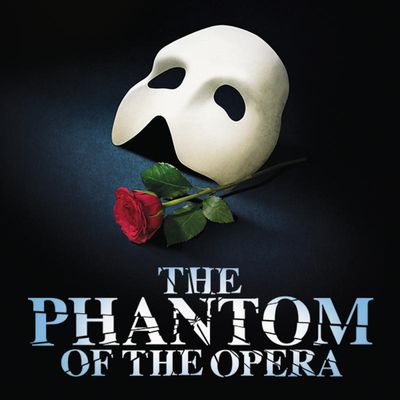
The Phantom of the Opera returns to Detroit, and this is the version you want to see. A tour based on Hal Prince's original direction with expanded beautiful sets and an all time cast. Check out Miranda and Jess's in depth thoughts here... Read More
From the show: The Dear Friends Podcast
Guests
Featured Shows
About
The Phantom of the Opera returns to Detroit, and this is the version you want to see. A tour based on Hal Prince's original direction with expanded beautiful sets and an all time cast. Check out Miranda and Jess's in depth thoughts here.
Transcript
This transcript was automatically generated and might contain errors.
[0:00] ♪ Musical number: "The Phantom of the Opera" — performed by The Phantom of the Opera Cast ♪
[0:24] Jesse McAnally: Hello, and welcome to another extra special episode of Theater in the D. I am joined by my wonderful, lovely fiancée, Miranda Moffat.
[0:30] Miranda Moffat: Hi, everyone.
[0:34] Jesse McAnally: And today we are talking about ATG in Detroit's newest piece of theater, Andrew Lloyd Webber's The Phantom of the Opera. So The Phantom of the Opera, for those that don't know, is a musical with music by Andrew Lloyd Webber and lyrics by Charles Hart and additional lyrics by Richard Stilgoe. And this production is based on the original Hal Prince-directed production in London and Broadway. They made minor changes, but the heart of that is still there, unlike the last tour, which was directed by another guy and seemed to like to have that phantom beating women. We did see that production, and I was not in love with it, unlike tonight, where I had a lovely time. Miranda, what is your history with The Phantom of the Opera?
[1:23] Miranda Moffat: Well, first off, I want to say it's very rare to hear Jesse say something complimentary about The Phantom of the Opera, generally. So, you know, take this where you can get it. For me personally, I have always been a Phantom fan. I had the Phantom movie poster on my birthday cake when I was nine years old. That's how much I loved it. Actually, I saw the theater production first before I ever saw the movie and thought that I hated it and thought that musical theater just was not for me. And it turns out, I just couldn't see a damn thing. I'm blind as a bat and I didn't have glasses yet. So, of course, I couldn't see anything that was going on. And those blobs are not making any sense. I was like, why would anybody subject themselves to this?
I'm just watching colors dance before my eyes. Anyway, I got glasses, long story short, and I love The Phantom of the Opera and I regularly listen to the original London cast of Phantom of the Opera still to this day. It's one of my very favorite things. I will say, since I have had a much more thorough education in musical theater since knowing you, Jesse, over the last 12 years, I can confidently say, thinking about The Phantom of the Opera on an intellectual level, it's probably not the most deep, complex thing you're ever going to see. But there is nothing like listening to that score by a live orchestra and the flash and the pizzazz and the style and the vibes and the aura of that show are completely unmatched.
It's not necessarily the same as a Sondheim musical where you're really going to leave feeling like your world is shaking a little bit in terms of something that you're thinking really deeply about that's going to affect the way that you live your life. But you will walk away absolutely mesmerized. And that's what I love about it. The 80s mega musical was popular for a reason and it was kind of what rose to the top in that time, sadly, because of the AIDS crisis. A lot of the best musical theater composers in America lost their lives and there was not much being made. That was why the European invasion came in and you had the Les Misérables, you had the Saigons, and you had The Phantom of the Opera.
Now, as far as Andrew Lloyd Webber's work in this, compared to his other 80s outputs, you have Starlight Express, you have Cats. I think that this is easily my favorite. And I think I had a bit of a chip on my shoulder about this musical for a good long while. And I think it's probably because I've not seen it done well very often and it's very easy to do poorly. Here, they got the spectacle right, they got the performances right, and they did some new things with these performances that I really enjoyed.
[4:32] Jesse McAnally: I agree. I think like Phantom as a whole, and that's kind of what I mean when I say Phantom is really about the spectacle. Because when I say if you really think about it a little bit too much, there are definitely some things about Phantom that obviously don't sit right. Disability representation is not particularly well done. It's hard to hold something made in the 80s up to the standards of 2026, 40 years later.
[5:01] Miranda Moffat: I agree. I agree. That's why I'm saying if you're really thinking too deep about it, there are definitely some things that aren't particularly, I guess we would say PC in this day and age. The kind of like lack of agency is another piece, although it is specifically supposed to be kind of a period piece. So there are some things that like if you really want to think about it too much, don't really sit well, but you're not really supposed to think too much about it is my thing. You're supposed to enjoy the score, sit back, feel the big feels, get the chills, then go out with a smile on your face. It is a damn good time. And you're just supposed to enjoy the spectacle. That is what it's all about.
The musical theater equivalent of a Marvel movie. It is popcorn entertainment, really. Not to say that it does not have some deep emotion, obviously it does. But I think for me personally, it has a solid place in my heart, just because of my history with it. My mom also loved Phantom of the Opera, and I grew up listening to her records of it. So every time, every single time, and this time was no exception, when that score hits right off the bat, tears. I had chills. I had tears in my eyes. It happens every time, and that's just what Phantom is to me. It is that feeling.
[6:28] Jesse McAnally: Yeah, but then I'm like, why is this prologue here? That prologue bothers me every time I watch it. I'm like, why are we here? We never pay it off. Honestly, they pay it off better in the movie.
[6:38] Miranda Moffat: Significantly better in the movie than the show. And I hate it in the movie. Literally, it's only there for the chandelier moment, and that chandelier moment is epic. It really is. And it's really just setting you up for that moment. That's the payoff, Jesse.
[6:52] Jesse McAnally: That being said, this production with these actors, I know Isaiah Bailey is our Phantom, but I want to give my credit to the other two. See, I'm flipping through the playbill this time. To our other two leads, we have Jordan Lee Gilbert, who is Christine Daaé, and Daniel Lopez, who was our Raul. And what a trio! It's rare that I see a Phantom-Christine-Raul trio where I'm like, oh, everyone has a take on this role? And I wrote down my takes on them, and I don't know if you'll agree with me. I think it's fuckboy Raul. He is playing this like Elon Musk. He is living up that billionaire, kind of toxic personality. Like, the first moment he has with Christine, he's like, a little too close, a little too quickly, make sure to shut the door behind him. It was given, like, creep vibes that I think were intentional choices for the character. And if he was the, you know, fuckboy equivalent, then I think that this Phantom was.
[8:05] Miranda Moffat: What did you say in the theater?
[8:10] Jesse McAnally: So, I also compared Raul to Elon Musk. That's the energy he was bringing, and it felt like a choice, where I think Isaiah Bailey was bringing, hello, princess, version of Phantom. Which, yeah, that to some extent, where he's sort of more of, like, emotionally stunted a bit, I think, which all Phantoms kind of are, but really playing into that. Well, I kind of appreciated that he wasn't trying to play the epic, sexy, cool Phantom. I think Ramin Karimloo has done horrible damage to the Phantom role, where everyone kind of wants him to be ripped edgy boy, and that's not really what the character is. If we go back to the Michael Crawford kind of, oh, damn it, woman, you don't, you won't sing my music, and it'll be really good.
And Isaiah Bailey, who is incredible, goes back to that form of Phantom, which the text supports, and it is very much like, I am prissy, and I like things the way I like things, and you will be my bride, and it's just going to be the way it's going to be.
[9:07] Miranda Moffat: I agree. All right, what was your take on Christine?
[9:12] Jesse McAnally: My Christine take is, she, I don't think she really loves either of these men, and that was a deep performance choice that I really enjoyed, where she is, like, kind of using them to each moment, almost as protection from the other man, weirdly. Like, she is using these men to protect herself and her safety, and it seemed more strategic than it seemed, like, I am deeply in love with these men. I don't know, it felt so different as a love triangle to me, and I got engaged in a way that was beyond just the romance. I also want to give my flowers to the woman who played Carlotta, who, let me see what her name is, Midori, I think, M-I-D-O-R-E-O-R-I, Midori Marsh, hopefully I'm saying that right. Miss Marsh, if you want to hit me up, that would be great.
[10:04] Miranda Moffat: Yeah, yeah, she was amazing, and very beautiful. She was definitely a standout for me, and I typically, obviously, you're not meant to really like Carlotta, but I really, every time that she was on stage, I was probably supposed to be watching Christine, I was watching her. Her costumes, absolutely eight, I mean, amazing. The costuming as a whole in the show was absolutely spectacular, but her performance in particular was just amazing to me. And really, if you think about it, like, Carlotta and the way that she sings, I know that she's meant to be, like, not untalented, but, like, almost annoying. She's like Miss Piggy, like, we gotta put up with her. It's supposed to be, like, you know, she can obviously sing, but she's, it's just, like, there's something ugly about it.
Like, if you really think about it, the way that Carlotta, like, that is what opera is supposed to sound like, the way Carlotta, like, if you really, really think about the premise of it, it's like, no, Carlotta probably is superior for the roles, like Hannibal. So, that's good. This is the first time I really was like, you know what? Give Carlotta her due. And also, like, I really appreciated that the actress did not play it overblown, or, like, she's not an angry, evil woman. She's like, I'm sick of these sets falling on me. No one's doing anything about it. This feels like a rational reaction to a really dangerous work environment. Like, somebody call OSHA, please. And I saw her do something that I've never seen a Carlotta do in any production. I don't know if you caught this, but after the second note song in Act Two,
[11:47] Miranda Moffat: And Christine kind of has her, you know, twisted every way moment and runs off. Her a lot of goes to try to comfort Christine briefly. And Christine, like, kind of ignores her.
[11:58] Jesse McAnally: I did not see that.
[11:59] Miranda Moffat: I saw that. I was like, oh, that is a choice. I did see, and this is another thing I wanted to remark on, Pionji as well. You see like when Christine almost gets like faint, like he also goes to help her catch. They're not evil people in this production. I liked it.
[12:14] Jesse McAnally: They're not. Yeah, they're not intended to be, and I really appreciated that. But that's something I did want to bring up, too, is just like in most productions that you see, to some degree, are going to have the same thing where like if you're looking at background actors, they're all doing something. You know, there's nobody just like staring off into space when they're not being used. And I really was looking at the background actors this time. And every single person had something to be doing the whole time in a way that like made sense and felt natural to the scene. That's what I mean. Like I was just watching Carlotta when she wasn't the center of attention, and she's just supposed to be a part of the ensemble. And they still like, you know, they're like talking amongst each other or chatting or doing something that adds like richness to the scene, even though they are not the center of attention.
[12:58] Miranda Moffat: I hate to be on my high horse, but this all goes back to that original Hal Prince directed production and all the elements there. And 95% of those elements are still present here to this day. And as Lin-Manuel Miranda said, the only reason why Phantom of the Opera has the longevity it has is because of Hal Prince's work on it. And watching this is like, oh, yeah, it is the staging and all those that make this show what it is.
[13:28] Jesse McAnally: I did want to highlight some interesting things like there's so many background histories and things about Phantom of the Opera. I know what lines are dubbed. Famously, I want to say 50% of the Phantom's sung lines are prerecorded just because of the physicality of that role requires. So it was fun to pick up on it. I want to say most of Phantom of the Opera, the title song, is dubbed until they are on the boat.
[13:59] Miranda Moffat: I mean, because it goes back to the show is about the spectacle, right? And it is about the singing, but it is also about essentially the magic trick that they are pulling off with the sets and the lighting and the props and all of that. And that's something that you've really been focused on lately is productions having real sets. And when I tell you this thing has real sets, that set piece that they had for Raul and Christine's number, why am I?
[14:27] Jesse McAnally: All I Ask of You?
[14:28] Miranda Moffat: Yes, All I Ask of You. For that was like blowing my mind. Also for like the Phantom stuff, there were several times where he would just pop out of things, and I'm like, were you there the whole time? Have you been hiding here the whole time? Just like waiting to pop out to do these things? I mean, really, the sets were like just the magic trick.
[14:50] Jesse McAnally: The only thing that I miss from the original production that was missing is I know the opera house doesn't have the infrastructure to make this work. But man, I miss the trapdoors.
[14:59] Miranda Moffat: Yeah, yeah, there were those things. And there were also a couple things I always love when I can see like, yeah, this is live theatre, shit can go wrong. There was one moment where Christine was coming over to the Phantom, and she tripped on her gown. During Music of the Night, she trips over her gown. She like fumbled over her gown. And at first, I thought she was meant to like trip and fall into his arms. And then when she like tripped and then ran to him, I was like, oh, no, she just actually tripped. It was cute. And then when the Phantom is coming down the stairs during Masquerade in the Red Death costume, which is again, like amazing, amazing design, I don't know if that's actually like the actor in the costume, but you could see that he was like, it's very hard to see in that thing.
And he's walking down a set of stairs. And you could see that he was like feeling with his foot to try to make sure that he like had the next step confidently underfoot. And I was like, holding my chest like, please don't fall, please don't fall, please don't fall.
[16:00] Jesse McAnally: Do we want to talk about some of the changed lyrics? Because this is one of those shows that you and I kind of know back and forth.
[16:06] Miranda Moffat: Well, for me, I listened to the original London cast all the time. So there were things that were different for me, like think of me, a lot of that is different from what I'm used to hearing. But according to you, it's been that way for a while.
[16:13] Jesse McAnally: It's been that way for a little bit.
[16:15] Miranda Moffat: I was not aware. Nobody sent me the memo. I was not, I was not on that email chain.
[16:21] Jesse McAnally: Then, oh, wait, I just, I'll bring that up later. Then in Final Lair, there are some pretty, pretty substantial changes that instead of like, I had rather hope that you would come for the Phantom, he's like, I had rather hope that we'd be blessed. It doesn't like it's not to fix a rhyme. I'm not sure why that is. And the one that I found interesting, and I think this was an actor choice, I am going to reckon, because one of the most big reactions the Phantom got gave on stage is when Raul sings, Christine, forgive me, please forgive me. The Phantom is shocked that like, there was a reaction like, you're asking forgiveness for this, like he's processing. And the first words where it's like, instead of forget me, he says, forgive me, the Phantom.
[17:09] Miranda Moffat: Did he?
[17:09] Jesse McAnally: Yes. And I was like, oh, that's a change. And he also said, don't let them find me, when in the original cast, it's don't let them find you.
[17:18] Miranda Moffat: I thought, I thought he did say, don't let them find you.
[17:20] Jesse McAnally: No, he said, don't let them find me.
[17:22] Miranda Moffat: Oh, I didn't hear that. There were some, there was just like, every once in a while, a word or two somewhere that, like, I think one was what Carlotta said during Prima Donna, there was like a line or two where there's just a different word in some place, which I don't know if it's just the production, if it's just, yeah, like you said, maybe actor choices, but every once in a while, there's just like, oh, that's not exactly the same thing that I've been hearing for the last couple decades of my life.
[17:48] Jesse McAnally: Yeah, like another, and sometimes it just feels meaningless. Like instead of, Christine, your face is white, it's, Christine, are you all right?
[17:56] Miranda Moffat: Yeah, that one was weird.
[17:58] Jesse McAnally: It's a fine change, but I don't see what it's doing. You know, whose lyrics that didn't change a word of though? Richard Stilgoe's. I will stand on this. The most impressive work, I know that Charles Hart's romantic lyrics and like, poetry is so good, and everyone loves it. This show would fall apart without all those note scenes, which are the baby of Richard Stilgoe. Those are funny and work and clever and Sondheimian and have internal rhymes and all the rest of the show doesn't really play in that world.
[18:30] Miranda Moffat: No, the notes, really, the notes section, you're right, are more similar to a Sondheim show than a Lloyd Webber show in that they are multi-layered. And again, as a part of the magic trick, them being able to pull off those two songs with five or six different people all singing different things together at the same time is always impressive. Always impressive to me that they end up being able to pull it off. But yes, I agree.
[18:57] Jesse McAnally: Do you want to talk about accents?
[18:59] Miranda Moffat: I do. That was something I noted, which again, this is being like, really, really picky. But yeah, I'm sure for London productions, it's a different story. But a lot of the times, it's like, these are obviously American actors. Some are just straight up like, okay, I'm just doing an American accent. This is just my accent. And that was Madame Giry. Christine felt like almost like that broad Atlantic accent, the transatlantic accent where it's like, mostly American, but it's got a little bit of a twang to it. And then Meg was just like, fully British, fully British.
[19:31] Jesse McAnally: Cockney British. And she was also like a strawberry blonde instead of like that, like neon blonde that she usually is, which threw me off.
[19:39] Miranda Moffat: I liked it. I liked it fine. I like a strawberry blonde look. Like she kind of blended it with Christine at times for me because you know, I get face blind.
[19:47] Jesse McAnally: What?
[19:47] Miranda Moffat: I get face blind sometimes.
[19:48] Jesse McAnally: Red hair versus dark brown hair. That's your own fault.
[19:53] Miranda Moffat: I'm just telling you my fact, my truth.
[19:55] Jesse McAnally: Get your eyes checked is what we're finding out here.
[19:59] Miranda Moffat: Oh, I like that Isaiah Bailey did an impression of Pionji when he had the Point of No Return play costume on. I get why Christine would believe that that is Pionji for a little bit.
[20:12] Jesse McAnally: I agree. I think him in general, absolutely spectacular. You sent me I think a TikTok that Isaiah had made, where he said that he debuted in The Lion King at the Detroit Opera House, actually, and he's now back as the Phantom, which is absolutely amazing. And thank you for coming back. We love you. His voice was incredible. And there were several times that I could like, it's the same thing, like physically feel his voice in my body, like when he sang, like Deep as Hell in the final lair scene, like I felt that note. That was, I felt like sometimes when people sing, you just feel like you're flying. And this is one of those times.
[20:52] Jesse McAnally: I love that we have a tenor Phantom. I'm sick of these very tenor Phantom, like the Phantom should be a tenor. That is what that voice is written for. It sings better when it's a tenor. And I like that Raul is a proper baritone. These roles are suited to these voices finally. And it's been a minute since I've seen it. I really did appreciate that. The movie does it wrong. If you like the movie, the voices are all wrong. Everyone is casting correctly in that movie.
[21:21] Miranda Moffat: I mean, put some respect on that movie's name. When we're talking about the fact that I had Phantom on my ninth birthday cake, it was of the movie because the movie is where I first fell in love with it. And then I went to actually like see the show and be able to, you know, see it physically and enjoy it. And that's what I'm like, oh, that's what that's supposed to sound like. But you know what is for like baby's first Phantom. I think the movie is a fine place to start. And I put some respect on Gerard Butler's name. He is...
[21:50] Jesse McAnally: I don't think we're going to have that conversation tonight.
[21:53] Miranda Moffat: He's really hot as the Phantom.
[21:54] Jesse McAnally: He's not supposed to be. He's supposed to look like Skeletor.
[21:57] Miranda Moffat: This is what I want. Leave me alone.
[22:00] Jesse McAnally: Speaking of that, the sound design for when the Phantom is speaking and it goes around the room the entire time he's speaking and it's really unsettling. This feels like a production that knows, like we've done this a thousand times, we know what we're doing. Like the lighting choices, the way it follows everybody, the special effects.
[22:29] Miranda Moffat: Yeah, the way that the pre-recording is like making him seem like he's everywhere in the theater. Like all of that was 10 out of 10.
[22:32] Jesse McAnally: With respect to a lot of other shows that we see, I think this is the first show we've seen in a long time without a single audio glitch.
[22:37] Miranda Moffat: I agree. And I don't know if this is their first night in Detroit, but yeah, see sometimes we're usually we're seeing them on the first night and there's some technical things to work out because you're in a new theater figuring out the lights and sound and everything. But yeah, it definitely feels like they have had an opportunity to get a lay of the land and they know exactly where everything needs to be. Yeah, perfect.
[22:58] Jesse McAnally: As far as any more thoughts on this, I love the sets. I feel like I didn't highlight this enough in my analysis. Fucking love sets. I love that they have these giant sets. I don't know how they travel them city to city. But my God, I'm so happy to have practical, physical things. And yeah, it's a little downsized from what they were on Broadway and in London.
[23:22] Miranda Moffat: I had the same exact thought. I'm like, this must be an absolute nightmare to tear down and put away and transport and put it back up. Even less than that, just to transform between scenes.
[24:35] Jesse McAnally: Welcome back to The Dear Friends Podcast! Today, we’re diving into the world of The Phantom of the Opera National Tour, which is making its way to Detroit.
[25:05] Miranda Moffat: Yes! I’m so excited to talk about this. The production is based on Hal Prince's original direction, and it features some absolutely stunning sets.
[25:35] Jesse McAnally: Absolutely! The visuals are just breathtaking. I think this version really captures the essence of the original while adding some new elements that make it fresh.
[26:05] Miranda Moffat: Right! And the cast is phenomenal. I mean, the talent they’ve assembled for this tour is top-notch.
[26:35] Jesse McAnally: It’s going to be a treat for audiences. I can’t wait to see how they bring the story to life on stage.
[27:05] Miranda Moffat: And let’s not forget about the music! The score is iconic, and I think the orchestra is going to sound incredible in the Detroit Opera House.
[27:35] Jesse McAnally: For sure! The acoustics in that venue are perfect for a show like this. It’s going to be an unforgettable experience.
[28:05] Miranda Moffat: Plus, the Phantom’s character is so complex. I love how the show explores his motivations and emotions throughout the story.
[28:35] Jesse McAnally: Yes! It’s such a rich narrative, and I think audiences will really connect with the characters.
[29:05] Miranda Moffat: And the themes of love and obsession are so relevant. It’s a timeless story that resonates with so many people.
[29:35] Jesse McAnally: Exactly! I think that’s part of what makes it such a beloved musical.
[30:05] Miranda Moffat: I’m really looking forward to seeing how the director interprets those themes in this production.
[30:35] Jesse McAnally: Me too! It’s always interesting to see different takes on classic material.
[31:05] Miranda Moffat: And I think the expanded sets will really enhance the storytelling.
[31:35] Jesse McAnally: Definitely! The visual elements can add so much depth to the narrative.
[32:05] Miranda Moffat: I can already picture the chandelier and how it will play into the overall atmosphere of the show.
[32:35] Jesse McAnally: Yes! That moment is always a crowd favorite.
[33:05] Miranda Moffat: I can’t wait to see the audience’s reaction to it live!
[33:36] Jesse McAnally: It’s going to be electric!
[33:45] Miranda Moffat: So, for anyone listening, make sure to get your tickets for The Phantom of the Opera at the Detroit Opera House from February 4 to February 15, 2026!
[33:55] Jesse McAnally: You won’t want to miss this production.
[34:05] Miranda Moffat: Absolutely! It’s going to be a highlight of the theater season.
[34:15] Jesse McAnally: And we’ll be back next week to discuss more theater topics, so stay tuned!
[34:25] Miranda Moffat: Thanks for joining us today!
[34:35] Jesse McAnally: Bye everyone!
[34:45] Miranda Moffat: Bye!
[34:55] Jesse McAnally: See you next time!
[35:05] Miranda Moffat: Bye!
© Broadway Podcast Network, All Rights Reserved