

In this special Pride episode, Mark-Eugene and Dylan team up with DPS/Broadway Licensing for an author roundtable celebrating queer voices in the theatre. Moderated by Emmy-winning journalist Patrick Pacheco, the conversation features an all-star panel: Charles Busch (The Tale of the Allergist’s Wife, Vampire Lesbians of Sodom), C.A... Read More
From the show: The Drama Book Show!
Guests

Featured Shows

About
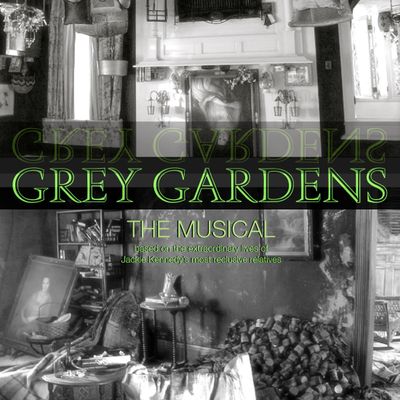
In this special Pride episode, Mark-Eugene and Dylan team up with DPS/Broadway Licensing for an author roundtable celebrating queer voices in the theatre. Moderated by Emmy-winning journalist Patrick Pacheco, the conversation features an all-star panel: Charles Busch (The Tale of the Allergist’s Wife, Vampire Lesbians of Sodom), C.A. Johnson (All the Natalie Portmans), Michael Korie (Grey Gardens, Flying Over Sunset), and Lisa Kron (Fun Home, 2.5 Minute Ride). Together, they reflect on the power of queer storytelling, the evolution of representation onstage, and what it means to write with pride. It's a dynamic, heartfelt discussion with some of the most influential and exciting voices in American theatre today.
Transcript
This transcript was automatically generated and might contain errors.
[0:24] Mark-Eugene Garcia: Hello and welcome to The Drama Book Show.
[0:26] Dylan Glick: My name is Mark-Eugene Garcia.
[0:28] Dylan Glick: And my name is Dylan Glick.
[0:29] Mark-Eugene Garcia: Oh, you guys are still Dylan Glick.
[0:30] Dylan Glick: That's so right.
[0:31] Mark-Eugene Garcia: It is Pride.
[0:32] Dylan Glick: We are still celebrating Pride.
[0:34] Mark-Eugene Garcia: We had a wonderful panel of authors who came to celebrate Pride with us.
[0:38] Dylan Glick: And they were brought to us by Broadway Licensing, a Concord Theatricals company.
[0:42] Mark-Eugene Garcia: Slay.
[0:42] Dylan Glick: That was a big change that happened recently.
[0:44] Mark-Eugene Garcia: It was, it was.
[0:45] Dylan Glick: We love to see it.
[0:46] Mark-Eugene Garcia: Yes.
[0:47] Dylan Glick: And we're happy to have them here.
[0:48] Mark-Eugene Garcia: We had this amazing panel.
[0:49] Dylan Glick: We had CHARLES BUSCH.
[0:50] Mark-Eugene Garcia: Ah, love.
[0:52] Dylan Glick: C.A. Johnson.
[0:53] Mark-Eugene Garcia: Yes.
[0:53] Dylan Glick: Lisa Kron, I think.
[0:55] Mark-Eugene Garcia: Uh-huh.
[0:55] Dylan Glick: And Michael Korie.
[0:56] Mark-Eugene Garcia: Slay.
[0:58] Dylan Glick: And it was moderated by Patrick Pacheco.
[1:00] Mark-Eugene Garcia: We love.
[1:01] Dylan Glick: I absolutely love because before I moved to New York, back in California, I would watch like CUNY TV on cable and watch all of these shows of like behind the scenes theater.
[1:12] Mark-Eugene Garcia: Patrick Pacheco was one of the faces of that.
[1:14] Dylan Glick: Yeah.
[1:15] Mark-Eugene Garcia: And so he was one of my faces of New York before I ever moved to New York.
[1:20] Dylan Glick: And so to see him in real life, I was just like, oh my God, this is the person that has represented New York theater to me for so long from so far away.
[1:28] Mark-Eugene Garcia: Oh man, it was and we met him before he moderated Chita Rivera's event.
[1:33] Dylan Glick: Oh fierce.
[1:33] Mark-Eugene Garcia: Yeah.
[1:34] Dylan Glick: Yeah.
[1:34] Mark-Eugene Garcia: Great.
[1:34] Dylan Glick: And I just remember that's when I first went all fanboy over him.
[1:39] Mark-Eugene Garcia: But just oh, and then all of these authors, Lisa Kron, you have fun.
[1:43] Dylan Glick: Come on.
[1:43] Mark-Eugene Garcia: Yeah.
[1:44] Dylan Glick: I completely just balled the entire time I listened to it the first time.
[1:48] Mark-Eugene Garcia: That's even before I saw it, which I cried through the whole time too.
[1:51] Dylan Glick: Of course.
[1:52] Mark-Eugene Garcia: Yeah, of course.
[1:53] Dylan Glick: I remember listening to it, and I don't think I was supposed to.
[1:55] Mark-Eugene Garcia: I think Rodrigo, my husband, wanted me to wait until we could see it together, but I got impatient and listened to it.
[2:02] Dylan Glick: And I sent him a picture of me crying at one of the songs.
[2:05] Mark-Eugene Garcia: And he's like, I told you not to listen to it.
[2:08] Dylan Glick: Because he already had but he was like no like I knew that he would do this to you.
[2:13] Mark-Eugene Garcia: Damn oh man it's got very I'm sure worth it.
[2:15] Dylan Glick: And then you could notice all the details when you want to go see it.
[2:17] Mark-Eugene Garcia: And then you have Michael Korie from Grey Gardens.
[2:20] Dylan Glick: Oh my God.
[2:21] Mark-Eugene Garcia: And that was uh it all comes back to my husband because that was the first show he worked on for merch.
[2:27] Dylan Glick: And it was one of the first Broadway shows I saw and it definitely was the first one that I got to go to a Tony party for so I went to the Tony party for Grey Gardens.
[2:35] Mark-Eugene Garcia: Oh my God it was so cool.
[2:37] Dylan Glick: Um to see the people and then they leave and go perform and then they come back.
[2:41] Mark-Eugene Garcia: It was wild.
[2:42] Dylan Glick: Amazing and it's just such a wonderful show.
[2:45] Mark-Eugene Garcia: Have you seen it?
[2:46] Dylan Glick: No I haven't I actually do live famously under a rock and so I it's one of those shows where it's I know that the documentary is like essential queer viewing.
[2:55] Mark-Eugene Garcia: And I'm like one of these days I will sit down and watch it.
[2:57] Dylan Glick: I started watching it before and it made me sad so I had to turn it off but I would like to I want to watch that and then I want to watch the musical.
[3:03] Mark-Eugene Garcia: See I went in blind like I knew of the documentary and I hadn't seen it.
[3:08] Dylan Glick: And so I went in just one day after work I was like you know what I'm gonna go see the show.
[3:12] Mark-Eugene Garcia: Yeah.
[3:13] Dylan Glick: And so I went it was one of the first shows I saw by myself.
[3:15] Mark-Eugene Garcia: Yeah didn't tell Rodrigo I was going to be there and just surprised him and I was like hey I'm here I'm gonna go see the show and it was just uh it was very cool.
[3:23] Mark-Eugene Garcia: It's such a well-written show.
[3:24] Dylan Glick: I love the timelines of act one and act two are just so cool and the casting of playing young versus old later it's I think that's really smart.
[3:33] Mark-Eugene Garcia: I was gonna say that's like the one thing I know about the musical is that Big Edie in Act One plays Little Edie in Act Two, which I'm like, love that a lot.
[3:40] Dylan Glick: It's so cool.
[3:41] Mark-Eugene Garcia: I'm it in going back to Living Under a rock, my introduction to Grey Gardens was in fact Jinkx Monsoon as Little Edie on Snatch Game.
[3:49] Dylan Glick: That was amazing for me because I had known the performance.
[3:52] Mark-Eugene Garcia: And so I was like, ah, this is it was so cool.
[3:55] Dylan Glick: I love yes.
[3:56] Mark-Eugene Garcia: Our authors are going to talk about all things queer, what it means to be a queer writer, and what I really loved is how to amplify that voice and how to stand up for ourselves.
[4:06] Dylan Glick: And so it's a very important episode, and I'm excited to dive in.
[4:06] Mark-Eugene Garcia: I'm excited to dive in with you.
[4:12] Dylan Glick: Let's do this.
[4:14] Patrick Pacheco: Good evening. It is a privilege to be here with this August panel of writers in June, and to facilitate a conversation among them.
[4:24] Patrick Pacheco: CHARLES BUSCH described them as a rogues gallery, which in my book is a huge compliment, and I'm sure it is a huge compliment in your book.
[4:33] Patrick Pacheco: We'll discuss their work and the impact it has had on the LGBTQ community and the world at large.
[4:41] Patrick Pacheco: But it also goes without saying that hearing queer artists' voices and stories is even more important under the dire threat of fascism under which we are now living.
[4:53] Patrick Pacheco: Every time I look at the New York Times headlines, Dorothy Parker's saying comes to mind, what fresh hell is this.
[5:02] Patrick Pacheco: So I'd like to start our conversation by asking each of you what inspired you to be a writer and whether the lack of voices for the queer artist community was a factor in that decision.
[5:15] Patrick Pacheco: Let's start with you, please.
[5:20] C.A. Johnson: Sure.
[5:22] C.A. Johnson: Oh man, what led me to being a writer? My mother, I had uh I feel like every writer has the thing that kicked them off. I had a very overworked single mom who I watched very closely as a child and I thought was very interesting and very infuriating.
[5:38] C.A. Johnson: And I didn't know how to make sense of a lot of that, and so I started writing these little essays to myself to try to make sense of it.
[5:43] C.A. Johnson: And one day she discovered them and she said, these are pretty good.
[5:47] C.A. Johnson: And she didn't know what to do about that, but she started making me read them in front of church.
[5:51] C.A. Johnson: Um which naturally changed the content.
[5:54] C.A. Johnson: But it also it got me invested in people hearing my words and getting something out of it and feeling like the things I had to say mattered.
[6:02] C.A. Johnson: I think the longer I wrote I think it's different for every writer, but so much of those early years I was always writing so far away from myself, and the longer I've done it, the closer and closer the work has gotten in so many ways, but I do feel like the one thread that was maybe always there was queerness in some form or fashion, just because it's the thing that's most interesting to me, and it was the thing that I saw the least and as a kid devouring plays and getting degrees in theater.
[6:35] C.A. Johnson: I did feel an impulse to write the plays that I wanted to see.
[6:39] Patrick Pacheco: Yeah.
[6:40] CHARLES BUSCH: I guess we're all very different.
[6:44] CHARLES BUSCH: I uh just always wanted to be on the stage.
[6:47] CHARLES BUSCH: I wanted to perform.
[6:49] CHARLES BUSCH: And I grew up in New York City, and so I was taken to theater since I was a very young kid.
[6:56] CHARLES BUSCH: And then but it always seemed a little odd like how I was going to accomplish this since there were no roles ever written that I could play.
[7:06] CHARLES BUSCH: And particularly when I went to I was accepted to Northwestern University and their theater department.
[7:13] CHARLES BUSCH: And I was never cast in a play ever.
[7:16] CHARLES BUSCH: And I did begin to think that it's co college theater department is a bit like a microcosm of showbiz.
[7:23] CHARLES BUSCH: And if I'm not getting cast here, I may have a hard time of it in the professional theater.
[7:28] CHARLES BUSCH: I was an androgynous youth.
[7:30] CHARLES BUSCH: And but fortunately I coming from New York I started seeing more experimental theater and particularly CHARLES Ludlam and the Ridiculous Theatrical Company and I saw that you could you could write your own roles basically.
[7:44] CHARLES BUSCH: And I always I was writing it's funny I never really thought of myself as a writer and yet when I was very young but I was writing full length plays at the age of 11.
[7:52] CHARLES BUSCH: So I and yet I was such a failure in school but somehow I was doing this on the sly.
[7:58] CHARLES BUSCH: But starting in I think it was senior year at college I decided just to write a play and write a marvelous role for myself and since I as I said I was I don't know gender neutral or something or androgy whatever you want to call it I it only I assumed I would just write the female role for me.
[8:17] CHARLES BUSCH: And I and it's it and that from that very first performance you know it was all there basically I've refined my certainly hope I've refined my performance style since I was uh 19 years old but essentially who I am as a performer was there from the beginning and I that's and for me for so long performing and writing were one thing.
[8:44] CHARLES BUSCH: And then later I branched out a bit.
[8:50] Michael Korie: I grew up in Lansing, Michigan and m we I never saw a play until I was, I think the first play I saw was my cousin was in a high school production of Bye Bye Birdie.
[9:01] Michael Korie: And I was probably like 12 years old already.
[9:04] Michael Korie: It just wasn't a thing that we did.
[9:07] Michael Korie: I think that theater is a vocation and it comes and gets you.
[9:10] Michael Korie: I was a ham.
[9:12] Michael Korie: And so I made up plays in my synagogue.
[9:16] Michael Korie: I was the ringleader of Purim plays with titles such as Broadway Melodies of 400 BCE and A Gunfight at the OK Kibbutz.
[9:25] Michael Korie: I was just always and really just telling me you do this.
[9:29] Michael Korie: Here's a we were still so close to vaudeville in a way.
[9:32] Michael Korie: So there were so many vaudeville references that, and so there were a lot of those kind of jokes and tropes, whatever.
[9:39] Michael Korie: We just absorbed them.
[9:41] Michael Korie: Anyway, um when I went to college, Kalamazoo College, small college, I uh stumbled into the theater department, and really long story short realized that this thing made the world be in color.
[9:58] Michael Korie: It did not feel the same way about me, similar to what you were saying.
[10:03] Michael Korie: And I was told I like to say I was cast in a variety of bit parts as neighbor ladies, old men in the occasional animal.
[10:12] Michael Korie: And I was told you would not get cast.
[10:15] Michael Korie: I don't know if this was true for you, CHARLES, you would not get cast, and you'd go into the director's office and ask him why you weren't cast for some reason.
[10:21] Michael Korie: And this director said to me, and this was for a neighbor lady part, he was like, he said, this is if this is obvious, you don't convey any sexuality.
[10:28] Michael Korie: He said to me.
[10:30] Michael Korie: And I was like, okay, he knows, obviously, he knows.
[10:33] Michael Korie: And in my senior spring, the show was William Inge's Picnic.
[10:39] Michael Korie: Which if you picnic, this is going to be a role for a lesbian, right?
[10:43] Michael Korie: Spinster.
[10:44] Michael Korie: The old spinster.
[10:45] Michael Korie: And I didn't get cast as that part.
[10:47] Michael Korie: I was cast as Mrs. Potts, the neighbor lady.
[10:49] Michael Korie: I made diagonal crosses saying things like, I've baked a lady Baltimore cake.
[10:58] Michael Korie: And then the climactic speech in Picnic is the story of Picnic is there are these three generations of women, they're leading their sad lives.
[11:06] Michael Korie: A young shirtless man comes in and they're like, I'm alive again.
[11:11] Michael Korie: And that was basically like what my speech.
[11:14] Michael Korie: I had a little speech in the end, which was like, I thought that I was my life was over.
[11:19] Michael Korie: And then I realized that there was a man in the room, essentially.
[11:27] Michael Korie: And I had, I like sat, I had this like moment of sitting, it's an indelible moment of sitting on this little single bed in my dorm room in a moment of pure crisis.
[11:38] Michael Korie: Like this form, I can feel the power of it.
[11:45] Michael Korie: I can feel that there is something here that is the animating principle of my life.
[11:54] Michael Korie: And there is no place for me.
[11:57] Michael Korie: There is a certain kind of person who is reified in this world, and everyone else.
[12:03] Michael Korie: We have no volition, we have no agency, we will we have no relationships, we have we are only here to serve that main character.
[12:11] Michael Korie: Otherwise, it's obliterating.
[12:12] Michael Korie: And just thinking, what will I do?
[12:15] Michael Korie: Cut to, I come to New York and I find it stumble into this show by the Split Bridges Company, maybe somebody Peggy Shaloo's Weaver and Deb Margolin.
[12:26] Michael Korie: If you don't know them, that is a because it's just like a crazy that they're not better known because they were absolute geniuses.
[12:33] Michael Korie: And Paula Vogel talks about the God play, the play that lights up a playwright's imagination.
[12:39] Michael Korie: And it was just a whole different paradigm.
[12:41] Michael Korie: That work is still, you can see it on the what's it called?
[12:44] Michael Korie: NYU has a, I can never remember it, a channel where they have a lot of archival stuff, and you can see Split Bridges stuff on there.
[12:50] Michael Korie: And also Peggy Shaloo and Lois Weaver, Deb Margolin, and they're all still making work also.
[12:54] Michael Korie: Visit it, it will be worth your while.
[12:57] Michael Korie: Anyway, uh, there was a lesbian theater collective, and I just started showing up there.
[13:02] CHARLES BUSCH: And much like the work that you world that you came from, CHARLES, and what you describe in your what is the name of the novel that you wrote about Horrors of Lost Atlantis. I really recommend it. It really captures what that world was like at that time where we were just all working temp jobs and making plays with trash we found off the streets, and it was glorious. And in some ways it was infuriating that certainly even when people started to pay attention to downtown work, they started to pay attention to Ludlum a little bit, which was long overdue, we were not just figuratively invisible, sometimes I felt like we were literally invisible. Nobody saw the lesbians, and in some ways that was infuriating.
But I will say that the thing I got out of it was there was no reason to be there, except for the absolute joy of delighting ourselves and delighting our audiences. And at its core, the thing that matters about theater is that which is non-commodifiable. And there was nothing but that there. And so I think it has really served me in terms of knowing that no matter what happens, I'm the boss of that. An artist confers their own authority upon themselves. And that's something if you come up through grad school, if you come up, you can sometimes think that somebody has to give that to you, but nobody has to give it to you. And that's what I that's the short version of my origins for create.
[14:25] Michael Korie: Hey, Michael here. Great to be here with these artists who I admire so much. Let's see. I grew up loving golden age musicals and journalism and theater, but I do go back a ways, and there wasn't a lot of gayness in any of it. I remember the first gay play I saw was actually the gay movie version of Boys in the Band. I saw it at the Lowe's Tower East, where my parents knew the projectionists, so we went to see anything that was there, and I think they were sorry they brought me. Because it opened up my eyes. I'd never seen anything like it before. And I know the Boys in the Band fell into disrepute for a while because it didn't present good role models. On the other hand, there was a power in their irreverence.
I remember that line, you have just eaten Sebastian Venable, which was a reference to Tennessee Williams' gayish character in Suddenly Last Summer, Saint Sebastian. And I loved playing the piano for the school shows, and I had no inclination at all to be an actor. And I never thought I would be writing theater. But suddenly I found myself working at the Village Voice at the age of 19, not finishing college, and this was five years after Stonewall. And it's hard for all you youngsters on this listening on this podcast to know this, but there was no gay movement, a national gay movement before that. And within five years of Stonewall, it just mushroomed across the country. Every single group, every single town would start a chapter of Pride.
And theater started emerging. And I wrote about it. I started opening the mail and they let me write something and then let me write another thing. And a couple years later, I was editing my own newspapers in Manhattan and covering a lot of gay stuff. And I never thought I would go back to theater or music, but opera came along. And I've had a weird career where I go back and forth from opera to musical theater. When I hate one, I go back to the other. And opera's wonderful, you get to play with the big toys, but you get no previews. Theater can drive you crazy, but you get to work out the mistakes. Anyway, the first big piece I wrote was Harvey Milk. And I really brought all my Village Voice journalism into that.
I wrote it, I knew about Harvey Milk because he was doing what we were doing in the Pride Movement in New York and San Francisco. I knew a lot of the same people, and I had covered them. And I wrote that like a journalistic opera. And I think that it's always been important for me to have gay in everything I do. Even if it's a minor character. And I do find that I write a lot of pieces set in periods. It's because I feel music works better in periods. I don't, I would the one show that I wrote that was supposed to take place today. I don't think any musicals on Broadway sound like today because they're theater and you have to have lyrics and they just don't sound like today. So for some people they do, for me they don't. I like to work in periods.
And that means I'm usually dealing with people who are facing some manifestation of the closet and trying to emerge from that. And I find that a constant inspiration. And basically I think I keep writing the same piece over. And it's inherently dramatic as well, that kind of subject matter.
[18:04] Patrick Pacheco: Michael, obviously you mentioned Harvey Milk, he's very much in the news. I want to get to that later. But Lisa, you mentioned the God play. What was the term that you mentioned?
[18:10] Lisa Kron: That's Paul Vogel's term for the play that every playwright has, a god play, which is the play that ignited their theatrical imagination. What I want to do is just go down the line. I assume it might be Boys in the Band for you, Michael, but was it another play, the god play in terms of the way that Paula Vogel mentioned means it? And then just go down the line mentioning the god plays that inspired each of you.
[18:36] C.A. Johnson: There was Fortune in Men's Eyes, and then there was the horrible John Recci, and that was it. And so was Boys in the Band.
[18:42] Lisa Kron: And for you, Lisa?
[18:44] Lisa Kron: For me, it was definitely Split Bridges, eponymous play, Split Bridges.
[18:53] CHARLES BUSCH: C.A.
[18:54] C.A. Johnson: That's really hard. Open me up.
[18:59] CHARLES BUSCH: You're sitting right here, C.A.
[19:06] C.A. Johnson: Open me up. Is it okay if it's in a way where I thought I yes and no?
[19:11] CHARLES BUSCH: Yes.
[19:12] C.A. Johnson: It was Fences.
[19:13] CHARLES BUSCH: Oh, okay. Just say the yes and say the no, if you will, please.
[19:16] C.A. Johnson: I thought I want to do that, and I thought, are those women?
[19:20] CHARLES BUSCH: Uh-huh.
[19:20] C.A. Johnson: And that made me go, I want to do this, and I want to make the play where she's the lead. You brought up a good point, which is putting on what is missing. And so my next question is how isolated did you feel when you started writing? And did you feel any kinship, association that you were joining a community of queer artists?
[19:42] C.A. Johnson: Am I starting?
[19:43] Patrick Pacheco: Yes, please.
[19:43] C.A. Johnson: No, not in the beginning. Not at all, actually. And when it's so funny because I didn't know that, but I was still doing it. I won a competition in high school, where it was I went to performing arts high school in Washington, DC, and they had a school-wide playwriting competition that I entered my junior year, and I wrote this play about a girl who invites her ex-girlfriend to dinner, and her mom is who's like a lush, is like, why are you writing that girl in here? And it's so funny that plays in all of my plays. It was not good. But I didn't even I don't think I really knew it was a queer play. I didn't think I thought it belonged to a canon. I just wrote what I thought I wanted to see, and it wasn't until college my advisor, I got to college and I knew I liked everything, and my school didn't have majors, so I was like, I want to study everything, but I should probably read plays and figure out how productions are done.
And so I did a lot of design and stuff like that, but there's a professor named Andrea Hairston, playwright. I mean, Andrea one day said she was reading my work and she was like, You're writing these plays that are these grounded black worlds. She was like, I can feel your love of a lot of great playwrights. And she was like, But you're also doing a thing that they're not doing. And I was like, What thing? Because I was 19 and a jerk. And she was like, That girl is not in those plays. And I was like, What girl? And I started to realize that in every play there was this woman who, you know, whether she was naming the thing or not, and knowing me now, she's never actually naming the thing, she's just wearing it and staring people to name it because she's I don't have time for language.
And I've I learned that was the thing I was trying to offer a canon. And then I started to read voraciously. I was like, I'm not the only one. And so then I started to just ask people like, are there lesbians who write plays? And I was just handed so many writers. And then I tried to figure out how I was like them, how I was not like them, and then I realized that didn't really matter. I just needed to know they were out there because it gave me license to try to write the thing that I knew, which is I'm yes, I'm a queer woman, I'm also a black woman, I'm also a southern woman. I'm so many things, and I feel like I try to write plays that sort of say, Yeah, I'm here, and I'm all these things, and please God, don't make me talk about it.
But also, even if I don't want to talk about it, I'm here. And I feel like I realized that was a thing I had that I knew how to write that I thought was interesting, and then the longer I've written the more I'm like, I should probably just say it. But it is I feel like I had to be told in a weird way that I was actually talking to a group of elders and shown them, and then it gave me a lot more license. I remember when I first read Stop Kiss, I think, I was like, Oh yeah, about Diana Sun. I was like, Yes, this is my version of the thing. And I think there's I think that there are people who your eyes are open because you go, Ah, there's representation. And I don't think I saw it. I think I just wanted to make it because I was exhausted. But it became a lot easier to imagine a career and to imagine that this pursuit was worth my time when I knew that other people had also taken that leap.
[22:45] CHARLES BUSCH: Taking that leap, did you feel isolated? Did you feel that you were alone out there? And how trepidatious was it for you to go out there when you started your career? Were you scared?
[22:55] CHARLES BUSCH: No, I never felt alone. I was very lucky. It was from New York City. And the 70s was fabulous. 70s post Stonewall. I consider myself first generation post-Stonewall. And oh it's fantastic. And at that moment. Incredible. And the sex was it was the best sex in the world. And oh, it was just fabulous. And I just was always sought out, like-minded people. And my first sort of decade of my career was as a solo performer because I didn't know how do you start just being a playwright. How do you get a play done? But I thought if I was just by myself, I could actually perform in a cabaret, even though my solo pieces were really were theater, it didn't fit in a cabaret, but I played in cabaret. And but then I just went wherever I went, I found a community of artists. I booked myself I never had any kind of management at all. And I booked myself in San Francisco at a fascinating place called the Valencia Rose Cabaret. Did you play the Valencia Rose?
[23:56] Michael Korie: I think it was. Are you a little young for that probably?
[24:01] CHARLES BUSCH: I yeah. I think it I started going to San Francisco and just the tail end of that. It was a former Spanish mortuary that had only slightly been renovated. The embalming room was intact. And anyways, but it was this incredible group of people. And Leah Delaria started out there, she was playing there when I was there, and Marga Gomez, who I just oh I just adored, and then this young woman who was calling herself Whoopi Goldberg. And after, no, in fact, so she was at Valencia Rose, and it was impossible to see her and not think, Oh, this is this person's special.
[24:37] Patrick Pacheco: Yes.
[24:38] CHARLES BUSCH: Was Vampire Lesbians of Sodom like the first play? Because I remember when that happened, everyone would say, You have got to see Vampire Lesbians and everyone went.
[24:50] CHARLES BUSCH: That came a bit later. I was solo performer from seventy-eight to eighty-four. And then I just I went I gonna try to really compress this 'cause I written books about it. I just happened to go see a friend of mine perform at this art gallery performance space bar on Avenue A down in Alphabet City. And it was just such an outrageous place. It was called the Limbo Lounge. It was just such an outrageous place. It was part Weimar Republic Cabaret, the Moulin Rouge. It just it was everything. And I thought I just have to do a show here and I didn't want to do my act, which was severely garbed and black and I thought I wanna be in drag and do something to say that fits this setting. And so I was working as a temp receptionist and it took me about an hour and a half.
I wrote this little sketch and I thought I'll be the glamorous vampire lesbian actress. And so I needed a title and I asked a friend who was good at titles, he said, I wanted to call it Vampire Lesbians of Sodom. That'll do. And I just cast I just went around it it was a strange thing to ask people, would you perform with me in this bar for no money and there's like really no bathroom and anyway, and so I just asked people for my life I'd known including my my friend Kathy Carr here, who who was our my friend was the stage manager as such and did our wigs and a great rev company that you then but I it was just picked as just people who would do it.
[26:27] CHARLES BUSCH: And Julie, she wasn't an actress at the time, she was a corporate librarian at an investment firm. And when I asked her on the phone, because even my own sister turned me down to play the succubus, and the last person on the list was that blonde girl that I met there one time who was so terrible. And I asked her, I said, would you do this? And rather too quickly she said yes. And I said, Have you ever been in a play? I said, Darling, I played Nina in The Seagull at Hofstra. And thus a star was born. But yeah, so we just sort of did it and just came and really in a way when I get asked, I'm going on too long, I think, but when young people ask me, oh, to start a career, is it all about who you know?
And I said, Not necessarily. I think it's who you know now. And just my word of advice is surround yourself with fun, talented people who are special and unique. And together, if you have a common dream, things might happen to you. Great advice. And that's what happened to us. And we really consider it just a miracle that this little piece that was in this bar that we had to produce it ourselves because nobody would move it. And we raised the money and opened it off-Broadway and it became a big hit, ran five years and established our careers.
[27:44] Lisa Kron: I want to get back to the fantastic sex of the 70s and exactly how when you're a queer writer, you put sex on stage. And one of the great moments in Fun Home was I'm changing my major to Joan. Correct me if I'm wrong. Is that the name of the song?
[28:02] Michael Korie: I'm changing my major to Joan.
[28:04] Lisa Kron: So when you were devising that moment with your talented ensemble of artists, how did that come about in terms of putting that on stage?
[28:16] Lisa Kron: I think for me, one of the greatest things about coming up in the WoW Cafe in that community was that I think there were playwrights, women playwrights, lesbian playwrights who were trying to get some purchase. And it was very, very difficult. And a lot of those plays had a kind of a voice of I'm here, which keeps you in an other position. And it was the assumption that it was a lesbian world. And so we didn't, nothing was explained, no excuses were made, no justifications. We could see each other. And I think a thing that did was when I always say that my career was this incredible luck of timing, which was exactly when my craft, my accomplishment got a little bigger, the doors of theaters that had not been opened to work by open lesbian people, it opened.
And I was able to, at the exact right moment, step through these doors that had not been opened previously. And so then I was in front of these straight audiences doing something that, doing these solo performances where it was just I just appeared and it was a given that I was a lesbian, and that was my relationship to them. So when I would say a line like in 2.5 Minute Ride when I was talking about camping, going camping with my ex-girlfriend, and talking about how I kept saying the line that I was concerned this is probably too not gonna be a good setup, but anyway, I repeated a thing that I had said all the time, which was when we were camping, those two girls were kissing, so I had to kill them.
But so there were a lot of things like that, which were from a queer perspective, you know what I mean? And to watch this thing happen, especially when I do my show 1001 Humiliating Stories in these regional theaters, sing what happened, which was in the beginning. The first time I said the word lesbian, there was a thing in the audience which was like, Oh what? You see, particularly these husbands who were like, for God, you gotta be fucking kidding me. Like, how do I get out? And absolute assumption of I'm gonna be harangued, I'm gonna be whatever. And then it wasn't that, and then this is a time, as you were saying, where there was nothing out there. These people then got to sit in the dark for an hour and 15 minutes in a world where this kind of person existed in an absolutely normalized way, and I could feel the change come over people.
[31:09] Lisa Kron: So skipping ahead to Fun Home. The thing about Fun Home is that it's such a sad story, and the graphic novel is just drenched in sadness, because her father, Allison's father, is about her father's suicide. But the thing about a theatrical character as opposed to a novel or a graphic memoir is that your characters don't know what's going to happen. And so, in dramatizing it, I was looking for that perspective. And the thing about that story, which I won't go into it, read the graphic novel if you haven't. It's unbelievable if you don't know it. But Alison comes out in college, she finds out her father was a closeted gay man, and then he kills himself four months later. But at the moment where she comes out, she doesn't know what's going to happen.
The story, his death becomes the story of her coming out. But before that, she doesn't know that. And so what she feels, and I also think that when stories of queer people sometimes are told or have been told from the outside, it's the shame that's the story that's told. Not the story that we know, which is joy, which is the joy of coming out. It's not what you lost, it's what you gained. And so in writing that song, and I was also really interested that it not be a love song, that it be a song about sex. And so those were the things we were thinking about.
[32:35] Michael Korie: Gorgeous. Michael, in writing Harvey Milk, and you were dealing with his sexuality and his expressions of physical love for men. How did you approach it? And what were some of the questions in your mind as you went about to write the libretto?
[32:56] Michael Korie: That Harvey Milk really was an integral part of the coming out movement. And if you didn't understand the coming out movement, it wasn't just about feeling good and feeling right about yourself. It was about the more people came out, everyone has realized they have someone gay in their family. And it was a similar thing that happened during gay marriage. I think I didn't want to marry my spouse here, who I've known since 1976. I said, what for? But he wanted to. They actually married us in Harvey Milk's chamber of supervisors.
[33:33] CHARLES BUSCH: Oh wow.
[33:34] Michael Korie: But that was a similar thing where heterosexual people say, What they're flattering us. We're getting divorced at an incredible rate, but they think marriage is good. We must like them. And they were both political movements. But sex was very tied up into that too. I went because I'm a journalist, I researched, and this was before there was a Harvey Milk Library or anything. I had to go down to the Mission District and find this funny little walk-up library where all of Harvey Milk's old columns were. And he wrote a column about how sex was better in the closet. But I put it in the opera, of course, but with visibility comes responsibility. And so I'll always remember that era, but I embraced this era of openness that I'm in.
There was also a line in that opera where it was the first really major big out opera ever. And I wrote it like a musical. And there's a love duet. I wanted love duets for men. And they say, You must remember to keep fighting for the one I love and the one I love and the ones you will love after me. That was the feeling of those times. And then of course, that whole generation got afflicted by AIDS.
[34:58] Michael Korie: Anyway. And that love resonated beyond more so in a different expression of it during the entire AIDS epidemic, and then regained currency as it became a chronic disease. I want to stay on Harvey Milk for a while because we're living in horrible times. I don't think we can all agree on that. And Harvey Milk's been in the news, obviously. Peter Hegeth has washed his name off of the battleship named for him, which is horrendous. What did you think about that? The opera has just come back in San Francisco this past week in a new version for a new generation, which we rewrote and it was going very well. We landed in San Francisco. We landed at the Harvey Milk Airport. And I said, Oh my God. Has Harvey Milk become an airport?
Pulaski became a skyway, like all those rest stops along the New Jersey Turnpike named for famous people. Does anybody remember what he was really like? But Harvey Milk always got in the headlines. And he got in the headlines again this week, with his name being taken off a battleship.
[36:08] Michael Korie: And I believe you wrote a letter too. And while Harvey Milk was fighting in Korea, Donald Trump was five years old, sitting at home growing bone spurs that would later get him out of the army in 1968. It continues to inspire me, and I think this is where we're going. I think we have to return to what we were hearing about putting it together yourself and activism, and not depending on other people. We're in such a cognitive dissonance. I was watching John Proctor at a time that hailed the gains of women or liberation played by Best Wool, both sort of celebrating the gains that women's consciousness had been raised, and we're doing so in a time in which the pre-sexual predators are in charge. It is such cognitive dissonance.
[37:09] Patrick Pacheco: So C.A., how do you feel about that when you are determining what you want to write? And I suppose the thing not to do is become polemical and guard yourself against that and yet make the points strongly that you feel need to be made now.
[37:30] C.A. Johnson: Yes. It's one of I have a lot of very specific responses to this moment. I'm a millennial. And I do think that we've lived in a time where there were things happening when we were young that we didn't quite understand. And then I guess there was Wall Street. But I do think there's a lot of real deep difference and change and violence that we did not witness that we read about in books. And I do think that right now we besides I want to say what, 9-11, like I do think we're witnessing for the first time something very real and having to make some decisions about what it means to activate, what it means to care, what it means to both to do that in your own life and also in your work. And I think that there's a test that's been leveled, and I'm interested to see how this goes for all my ilk, but I also was raised as a very small child by a woman who was a former Black Panther and who my whole life always said one thing.
She was like, as long as people think that they don't have to go stand in the street, they will lose. And I think she was always right. I think she died right. And I always say I have to figure out what to do with this body that's mine. What can I do with the things that I know, the things that I've learned, and the things that I believed, and how can I make those things active in the world? I think they have to be active in the world. And so I'm always trying to find a balance between what do I do with me, and then also how do I remain me on the page?
[39:04] Lisa Kron: I've never felt like I was necessarily the kind of playwright. I used to, when I was 21, I would be like, I don't write political plays. And I don't think that's true. I also I what was I talking about? I think I very much write plays that are about when the political becomes very personal. I write plays about people who are buckling under systems. You know what I mean? I maybe I'm not saying, hey, look at this system, but I am saying look at what happened to the people who were affected by it. And I think that's the thing I can keep alive in my work. And when I feel like people aren't getting it, maybe I put a little dot on the eye and I go, Do you get it now? You know what I mean? But I am always trying to find that balance between how do I continue to love this thing that I do, to think that it matters, and to try to make it matter in this version of the world, and also how do I become a politicized human being, and they can be connected, but I do think they are separate sometimes, they need to be necessarily sometimes.
[40:16] Patrick Pacheco: Very well said.
[40:18] Lisa Kron: I don't know. I think the work that we make and the theater that we make does one thing. Activism does another thing. I think both are really important. I think that in a certain way, I don't even I what we write about, like the content of what we write is politically almost less important than the these qualities of theater. That it is in real life, that it is made in collaboration, and that people make it together. I think I read somewhere someone said, right now, everyone should join something. It doesn't matter what you join, everyone should join something. And we certainly, and I think to a certain dis uh degree, all of us have been talking about, like our origin story, which is about just doing it, just making the thing.
That power and what what you were talking about about the early years of the movement, I what's happening with our data is terrifying. What's happening with surveillance, what's happening with our phones. It will be a radical move, but I think we have to remember that. And theater is a place where we don't need anything but each other. And the other thing that happens in theater that I think is so important and what's what makes theater so dangerous is that there's a way that when people in the tenures or something, when people would talk about diversity, the thing they would say is that women need to hear women's perspective. Black people need to hear black people's perspective. Gay people need to hear gay people's perspective.
But I what I feel like what happens when a variety of people make theater is not that you talk about your own world, is that you say the world looks like this from where I stand. This is that we teach each other what is all around us. We're teaching each other. When Fun Home, sometimes people would say to me, particularly in the beginning, they would say, they would mean to give me a compliment, and they say, This is so much bigger than a story about a lesbian. And I would think this is exactly the size of a story about a lesbian. What has just changed is that your idea of who is fully human enough to stand in the prismatic role of protagonist just changed. Your sense, when you walk out into the world, your sense of who is there just got bigger, and you feel so excited about it.
I feel like that is a thing that more than anything, that it's not, if you're not represented, of course, seeing yourself makes a difference. But it's becoming aware of everybody else who's around you that really rocks your world. That is the thing that going forward that I'm interested in participating in, seeing, supporting, is that multiplicity of subjectivity. Who is a subject? Who is who gets to stand in that role of protagonist and show us all what the world is? That is deeply humanizing. It's the humanizing aspect of theater in the face of the grinding, obliterating dehumanization that is the absolute point of this administration. And that's the power of the artist to do what you just described.
It can be. It's the part of it's the power of theater and it's the power of community, and it's the power of us not feeling like we need a bunch of other stuff. The IRL piece, I can't say enough about. I think we're gonna, we have to remember it. We have to remember that we can that there's so much we can do. We're gonna need we're going to need to communicate to each other with each other en masse, not through devices. We are going to need to do it. And we did it. We did it, right? We used to know how to do it.
[44:01] Michael Korie: We used to know how to do it, yeah. Sarah Schulman, who's a great activist and was part of the Act Up movement founder, told me, Michael, why aren't you coming to more act up meetings? And I did go, but she said you should be at more. And I said, I'm writing this big gay opera, and that's gonna be my statement. She said, Michael, never confuse your work with being on the streets and getting out there. And it's true. We must do that again. That's how that's the era that I grew up in. We saw it begin sporadically again during the first Arab ban that Trump instituted. Everyone was out. I knew everybody I saw. It happened again during George Floyd. And what happens in between? Where are we? It's different than it was, but read Rebecca Solnet on this.
There's activism happening all over. The 14th, No King's Day, here in New York, two o'clock in Bryant Park. The write to everybody across the country, tell them to go on the indivisible website, look for it, or no, I'm sure there's a No Kings site. Find out where the goal is to get that's the day of Trump's birthday, and he's gonna do that military parade. The goal is to get so many people in the street across the country that nobody can report on that parade without talking about how many people were in the street.
[46:00] CHARLES BUSCH: Great. One of the cognitive dissonances of the time is that one of the big stories of the entire theater season was O'Merry, Cola Scola's subversive play about Lincoln. Uh, after and I saw Tony Krishner, and we discussed the fact that when he wrote Lincoln, the film, he kept getting all these emails about are you gonna make Lincoln gay? Are you gonna make Lincoln gay? He's gay. He was so on. Larry Kramer was just a very good thing. Larry Kramer determined was determined. But the thing about it is that you've always used humor in a very subversive way to, I think, advance your cause. If you can even it's funny. And the idea it took place during the McCarthy era, and I was showing that the uh most ri rabid uh right wing and the most rabid left wing in that period both uh had no use for homosexuality.
And so that's the there was a political tone to it. But then I think actually just the fact of my being just playing female characters was making a statement about gender and was uh shook up some people. And boy, I tell you, some of the reviews that I got to and particularly when I was a solo performer when I was just uh playing men, male and female characters, but with not in drag, but just but just slipping effortlessly between male and female. And some of the reviews and you they could say anything about you back then. It's like the unapologetically swish young Mr. Busch and uh his crypto faggotry, weird strange phrases of the what is that is that good or bad?
[47:55] Lisa Kron: He didn't like it, did he?
[47:56] CHARLES BUSCH: Yeah, no, it's just uh I think we just I want to just reiterate what Gerald's saying is but essentially theater has to be storytelling and it's just a live thing of just us just talking directly to people and there's no uh AI and there's no complicated uh stuff going on. It's just pure communication. And that has to live and will live. It's it's always been there. But I think we just have to we do have to join in and go do more than that.
[48:25] Patrick Pacheco: We have to wrap up, but I wanted to end our conversation by asking each of you this question, just creating a scenario of an individual living in a small town in a religious family, perhaps, in a conservative family, and he, she or they hear, read, see a God play, whether it's Harvey Milk, read about it, or Fun Home or Your Plays, CHARLES, or all the Natalie Portmans. Thank you very much. All the I was gonna say all the Natalie Woods, all the Natalie Portmans. I like that. Sorry, sorry about that. So they see this God play and they and the light goes on, and they want to write about it, they want to write about their lives, they want to join the community of queer artists. They're frightened, they're a little scared about it all. What advice would you give them? Let's start with you, Michael.
[49:25] Michael Korie: That young person has been probably weird without a history or a sense of this. But if they have access to the internet and they're the least bit curious, they can find out there is more once that God play wakes them up. And if they are want to follow that, then they should go where the theater is. And I think that all of us in this era are going to face challenges. We got comfortable. We had the National Endowment of the Arts. We had acceptance. We lost the gay audience, but we gained it. There's no gay audience anymore. It's now assimilated. But we but they're not staying away in the straight audience, is not staying away in droves. They're interested in a good play. Anyway, that young person should meet other young persons and create an event.
And the NEA these days is worthless. For the past 30 years, basically, it's been safe and worthless. We and we mustn't get wrapped up in the problems that we hear in the theater in general. For example, the Kennedy Center. Oh, King Trump took over the Kennedy Center. Oh, isn't that terrible? And he's going to eliminate all the woke and DEI programming. Okay, what woke and DEI program at the Kennedy Center? I looked it up. Their big show this year was Sound of Music. And they've been doing crap theater for 30 years. Don't count on them. Don't count on the NEA. Count on yourself, count on your peers, count on your friends, and write to reach other people who may not be like you.
[51:10] Patrick Pacheco: Is there any advice you can give uh give them about how to handle their families and friends?
[51:17] Michael Korie: Visit at Christmas and pay us over.
[51:19] Patrick Pacheco: Yeah, okay. Lisa.
[51:23] Lisa Kron: That was a good answer. I don't really have much more to say.
[51:33] Patrick Pacheco: Did you have a problem with your family at all in terms of when when you started writing these?
[51:37] Lisa Kron: Me?
[51:37] Patrick Pacheco: Yeah.
[51:38] Lisa Kron: No.
[51:39] Patrick Pacheco: No problem.
[51:42] Lisa Kron: No.
[51:42] Patrick Pacheco: I know that CHARLES, um, your aunt Will never as as much as much as supportive as she was, never uh came to see your plays. Is that right?
[51:51] CHARLES BUSCH: Yeah, no, it's she's a complex woman of her generation. She was born in 1909 and loved me and was so devoted to me, she she raised me. And but I think I I and I was just a couple times she failed the test, and surprising because she was very liberal Democrat.
[52:14] CHARLES BUSCH: But when I when she confronted me when I was in college about being gay, and surprised me just how uninformed she was. But then and got hysterical about it. And I had to think about just the times she the in 1972, when I when it was clear that I was gay to her, the representation of gay people in the media was just hideous. These horrible documentaries about the dark nether world of the homosexual that you know, I think basically all she knew was Midnight Cowboy. So she was terrified. And then a bit later, I was just I don't know. I was it was curious that as supportive as she was when I started and she put everybody in my family put invested in Vampire Lesbians of Sodom, so it wasn't like she wasn't supportive, but when it became clear after several years that she was never seeing me perform in drag, and we finally talked about it, and I thought she was very wise.
She said, But I I'm not gonna really get it. And she says, I'm you and I are so tied to so entwined that I couldn't just sit back and just watch. I'd be so nervous as the audience do they are they accepting him? Are they she says, isn't it better that I love you and support you and just don't go instead of having some sort of pretense and tight lip to oh that was very interesting. Which I'd seen other people's parents do. So I thought it was I thought it was fine. And I realized one time I thought she was in the audience, and I was got I was so distracted that I gave the most awful performance. The whole time I was thinking, uh she gonna like that, does she hate that? That's pretty dirty. And then I realized that sh uh it would be impossible. I couldn't have it if she was there.
[53:56] Lisa Kron: I want to go back to you only because I'd love to talk to you about Ann Cron and your play. Well, obviously Tony nominated, wonderful play. Oh, I don't know what the year was, but 2015. Wait, no, 2005. 2015 was given yeah, yeah. They go by fast, don't they? I wanted to just get from you what she thought of the play, Ann Cron's, and she was smack dab in it, and so were you, and you acted in it as well.
[54:26] CHARLES BUSCH: Yes. Yeah, I yeah, I had written 2.5 Minute Ride, which was about my father, that he saw many times. The first time he saw it, he said, nice eulogy, but I'm not dead yet. He really loved it. When I was working on it, I knew that my mother was gonna be freaked out about it, and she was, because her biggest sort of horror was that she would be described as a hypochondriac. And but I knew that ultimately was not what I was gonna do. I knew that ultimately what the play was going to be about was something that she would care about. But the process of it was very difficult. And she the sort of deal I made with myself, because I had having been telling stories and talking about my family for a long time.
At some point I thought, it is a mercenary thing to do to write about your family. And I thought, or people that, and I thought, all right, if I'm gonna do this, then I cannot gaslight her. Whatever feelings she has about it, I have to accept them. I can't tell her why they're not valid. So it took a while, but eventually I sent her a draft of the play, and then I would start to send her drafts, and they really flipped her out. She couldn't tell that the character of her was actually the beloved character, and that my character, the character of me, was quite suspect. She just couldn't understand that. And then I'd send her a draft, I'd talk to her about it, and she's calmed down. I'd send her a draft and she'd say something to me, and I would I said, Did you read the whole play, or did you just read your lines and my lines?
And she was like, Oh, and I was like, You have to read the whole play. Anyway, finally she came to see it, and there's lots of things to say about the moment she met Jane Howdy Shell and what their relationship turned out to be, which was extraordinary. But she came to see it many times. And she would basically hold court. And people inevitably would say to me, I thought you were exaggerating. She just would gather people up. She would just, she would, yeah, she would just totally hold court. And she really loved it. And we had a run in San Francisco, and she started after a while sitting in the box seat so she could face the audience. She was like, I know what happens in the play. I need to watch people's reactions.
[56:44] C.A. Johnson: CA. How does it strike you in terms of family? In terms of what you want to write about, as you said, the personal is political. And so much of it, it seems to me, having seen All the Natalie Portmans, Kiana was at least partly based on you to some extent. How do you approach your work when you know your family's gonna see it?
[57:06] C.A. Johnson: Yeah. I have uh my family's tricky. My dad's family, they're a pack of artists, mini musicians. And if I have a play go up, they hop on a flight and they're excited and they're game and they've seen theater. And my mom's family is they're a little more very rooted in New Orleans in the Delta. When my mom came to my wedding in 2023, I think it was the farthest north she'd ever been, and she spent the whole time going, This is nice. This is crazy. I think she thought she was in a fairy tale land. I think she also just couldn't believe that I had a life, couldn't believe that I had community and was in love with it. I think it made her breathe easier. I think she thought I was all alone up here.
And so it's really opened up a lot of things for us, but I will say I write about my family sideways. You know what I mean? I'm always willing to write about myself. I don't know when I'm gonna write about my mother actually. I write versions of her and people go, and usually the humor is her, but like the things that are wrong with the mothers in my play, they go, Wow, your mom. I'm like, that's not my mother. You are not prepared for my mother. I haven't really done that. I write my brothers often, but they're simpler and they would be game. They'd be like, they've always been my biggest of three brothers, and they've always been like the easiest cheerleaders. When I came out to my brothers, they were bored.
You know what I mean? They said, Yeah, we've been playing basketball together since you were five. What's the story here? What they just weren't even my sister was whatever. Does this mean you'll be nicer to me? Like they we were such a pack of kids, and we're just in it together even when we're mad. You know what I mean? We're an army, and I think that even when they don't see my work, I weirdly know that they get it. With my mother, I don't know. I feel like I once sent her a short play, and all she said was, Wow, they really got into it, huh? And then she stared at me like she wanted me to tell her who they were. And I was like, I don't know who they are. I it's made up, it's made up, it's all made up.
And then I never did that again. But I do think, you know, I got time, I'll get there. I have to I need more distance and I need a little more trust maybe in myself and my ability to do it right. But I do think going back to your question about what you say to that kid, it's like there are things only and I think the minute I realized that I could write, I'd be like, the thing I can do is tell the world what I know, and then it's up to them if they decide if they want to hear it, if they understand it, if they care. But I can do this one thing. You know what I mean? And that's the sort of gift you've been given by that crazy play. And I feel like I've spent in my career thus far trying to trust that and both dreading and like really looking forward to the day that I do that. And my mother goes, okay. And then we have it out. But like, it's coming.
[59:52] C.A. Johnson: Thank you very much. I think the word of the Loth Star was community collaboration. And I think these wonderful artists brought us all together for this evening. And I can't thank them enough, and I can't thank you enough for joining us this evening. Thank you.
[1:00:04] Audience: Thank you.
[1:00:14] Mark-Eugene Garcia: I loved it.
[1:00:15] Dylan Glick: Me too.
[1:00:16] Mark-Eugene Garcia: What was one of your favorite parts?
[1:00:18] Dylan Glick: I really loved, I loved how they were talking about just getting up and making theater with your friends. Yeah. I feel like that is very helpful advice. And also it feels very empowering because I feel like, I don't know, like I'm a writer in my 20s, and I feel like I'm just like shouting into the void, hey, please produce my work. And so it's like the thought of actually being proactive and doing something with your friends to bring you joy, etc. Share it with other people, just I love.
[1:00:41] Mark-Eugene Garcia: Absolutely.
[1:00:41] Dylan Glick: I am also a writer in my 20s.
[1:00:43] Mark-Eugene Garcia: And he is famously.
[1:00:45] Dylan Glick: Tomorrow's his 21st birthday.
[1:00:47] Mark-Eugene Garcia: Truly.
[1:00:47] Dylan Glick: Yeah. No, but sometimes that's where the story starts. And when you write a show, sharing it with your friends sometimes is the very first step before you even bring in other actors or bring in anything like that. You have that trusted group of people that that you trust, that you believe they believe in you, and sometimes you want them to see it first, and you can create with them.
[1:01:08] Mark-Eugene Garcia: I have two things to say about that. Number one, I it's gonna be about a play that I wrote, and one thing is about Mark, and the other thing is about some of our mutual friends who work here at the store. Number one, as soon as I wrote this play, that's a riff on the legend of Sleepy Hollow, and as soon as it was like done and polished, the first person that I sent it to was Mark. Because I was like, I we're good friends, and I care about your opinion, and I just was so excited to share my work with you because it was the first thing that I what ever shared with you in terms of something that I wrote.
[1:01:35] Mark-Eugene Garcia: So it's love to have supportive, lovely to have supportive, lovely friends around us to share your stuff with and to help make it better.
[1:01:42] Dylan Glick: Yeah.
[1:01:43] Mark-Eugene Garcia: Same here. You were one of the one of the first people I sent Goat Blood to.
[1:01:46] Dylan Glick: Yeah.
[1:01:46] Mark-Eugene Garcia: And it was great because then you came back with some feedback, like, oh, I can't believe this happened. And I was like, oh, that's not what I had the feeling I wanted him to have. So I'm gonna go back and make that change. And that's what it's for. Is to have those moments of having someone's honest opinion. And even if it was a matter of like you I think you had a question about a character, oh I can't believe this. And I was like, Oh, he did do that, but I don't know that's not what I'm saying. And so it just opens those doors.
[1:02:11] Dylan Glick: Yeah. And absolutely, absolutely love it. I feel like it's I don't know, I'm very vulnerability is very scary for me, especially like when it comes to sharing my writing. I'm such a perfectionist, I will write a draft, and then I want to throw it out and write something the same thing over again from scratch, but better. And so it's like I being able to have peers that you trust to be able to share stuff with is so necessary, and then helps you get it up on stage, which is great.
[1:02:34] Mark-Eugene Garcia: A friend of mine wrote a movie that a lot of the title she said came from a conversation we had because someone once told me, I want to write with you. And that's like saying I love you. Yeah, that's the most intimate thing because when you share your writing, you're sharing how your brain works, you're sharing how you think of the world, and so to have someone say that it's like having a baby in terms of and so my friend wrote this movie called Write With Me, and it was about two artists who ended up writing together and how they found each other through a song. But it really is, it's intimate to share what you're writing.
[1:03:06] Dylan Glick: I had I there's I have friends that it took so long to give them my work because it's just it is a vulnerability, yeah. But it is a wonderful part of a friendship.
[1:03:15] Mark-Eugene Garcia: Agreed.
[1:03:16] Dylan Glick: I love it. And so next week I'm gonna be.
[1:03:23] Mark-Eugene Garcia: Oh, I can't wait.
[1:03:24] Dylan Glick: That's gonna be so exciting. So the next episode to come out is going to be about my own writing. I I have hosted Mark-Eugene Garcia. I know, right? I have hosted and put together these events, like a hundred of them at this point for so many wonderful writers. And Friday the 13th is my birthday, my 45th birthday. And I decided to do it for myself. I was born on Friday the 13th.
[1:03:49] Mark-Eugene Garcia: And so is I.
[1:03:50] Dylan Glick: Oh, really? Yes, I forgot about that. And every time it lands on Friday the 13th, I like to do something special. And I thought, what could be more special than doing a talk back live podcast recording about my work. And so I'm gonna do that for my birthday. And that'll be the next episode we do. And I'm excited and scared, but I know it's gonna be a lot of fun.
[1:04:12] Mark-Eugene Garcia: I'm sure you will be met with the amount of like love and care that you give to all of your friends and loved ones.
[1:04:18] Dylan Glick: Oh sadly hope so.
[1:04:20] Mark-Eugene Garcia: Yeah.
[1:04:21] Dylan Glick: It's also really great stuff.
[1:04:22] Mark-Eugene Garcia: Yeah.
[1:04:23] Dylan Glick: And yeah, I'm excited for people to hear. So please join us on Friday the 13th here at the bookshop. And follow us on Instagram at Drama Book Show Podcast. Follow our Eventbrite at Drama Book Shop. Remember that all the books we talk about can be found here at the Drama Bookshop, and so can we, and we will see you at the bookshop.
© Broadway Podcast Network, All Rights Reserved