

Pulitzer Prize-winning playwright and Tony Award winner David Lindsay-Abaire, whose acclaimed works include Rabbit Hole, Kimberly Akimbo, Good People, and Shrek the Musical, joins us to discuss his latest play, The Balusters... Read More
From the show: The Drama Book Show!
Featured Shows
About
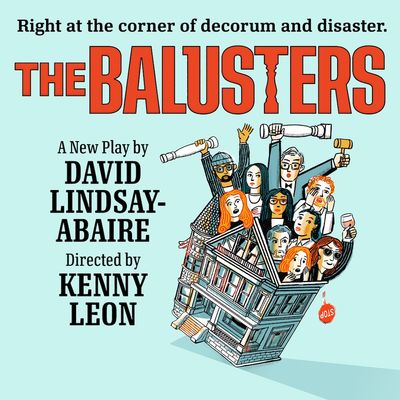
Pulitzer Prize-winning playwright and Tony Award winner David Lindsay-Abaire, whose acclaimed works include Rabbit Hole, Kimberly Akimbo, Good People, and Shrek the Musical, joins us to discuss his latest play, The Balusters.
Recently nominated for five 2026 Tony Awards, including Best Play, The Balusters is a sharp and hilarious satire set within a tightly knit neighborhood association where a seemingly simple proposal—a new stop sign—sparks an all-out community battle. Through wit and escalating conflict, the play explores change, belonging, and what happens when communities evolve faster than the people who live in them.
Transcript
This transcript was automatically generated and might contain errors.
[0:00] Mark-Eugene Garcia: Welcome to the Drama Book Show! My name is Mark-Eugene Garcia.
[0:21] David Rigano: My name is David Rigano. My name is Dylan Glick and I'm the son of the Holy Spirit.
[0:28] Dylan Glick: Yes, I don't want to know who I am in that lineup. I'm Mary Magdalene.
[0:40] Mark-Eugene Garcia: Someone's got a new drag name.
[0:41] David Rigano: Someone's got a- oh, there it is! Mary Magdalene Glick.
[0:45] Dylan Glick: Currently it is Celine Dijon.
[0:47] Mark-Eugene Garcia: I like that.
[0:49] David Rigano: That's good.
[0:50] Mark-Eugene Garcia: Wow.
[0:51] David Rigano: Anyways.
[0:51] Mark-Eugene Garcia: That took a turn. We all are here and we're continuing our countdown to the Tonys with an event that we had with David Lindsay-Abaire for The Balusters.
[1:01] David Rigano: The second event that we've had with David Lindsay-Abaire, but the first one on the podcast.
[1:06] Dylan Glick: I was going to say, you wouldn't know if you listen to the podcast, but we have had two events with him. The last was for Kimberly Akimbo.
[1:13] Mark-Eugene Garcia: Yeah. He came here with Janine Tesori when the libretto for Kimberly Akimbo was first published. And that was one of the events that really spurred us getting into action.
[1:25] David Rigano: We were talking about wanting to do something and then the two of them came here and it was like, we just had some real Broadway heavy hitters.
[1:35] Dylan Glick: Yeah. And we had a series of them.
[1:37] Mark-Eugene Garcia: No, Sutton Foster was shortly after them.
[1:40] David Rigano: Yeah. That was close to around when we had Cheetah.
[1:42] Dylan Glick: Yes.
[1:43] Mark-Eugene Garcia: Patrick Pacheco was here today. I was talking to him.
[1:47] David Rigano: So yeah. So there was a series of real heavy hitters and we were like, that now exists only in the memories of people who were there that night.
[1:55] Dylan Glick: Only that and the pictures on our Instagram.
[1:59] Mark-Eugene Garcia: We really have to get this going. So I was thrilled to have him back.
[2:03] David Rigano: Yeah.
[2:03] Mark-Eugene Garcia: And be able to interview him again.
[2:05] Dylan Glick: I got to tell him that night, previously, my other joke.
[2:09] Mark-Eugene Garcia: Because you told him the one about the Besswill one.
[2:12] Dylan Glick: But I told him that I call it when someone buys the Kimberly Akimbo play script as well as the libretto, it's the Kimberly Akombo.
[2:20] Mark-Eugene Garcia: Nice.
[2:21] David Rigano: It's so lame.
[2:23] Dylan Glick: What did he say?
[2:24] Mark-Eugene Garcia: He laughed.
[2:25] David Rigano: Good. And again, when we were talking about puns on playwrights' names, I reminded him that, and I wasn't going to use it again, that the last time he was here, we finished up the interview. And then when I was leading him over to the signing table, I told the audience that I was going to exit.
[2:41] Dylan Glick: Pursued by a bear.
[2:43] Mark-Eugene Garcia: Yes.
[2:44] David Rigano: I was talking to another co-worker earlier today about how he signed all of his plays.
[2:48] Mark-Eugene Garcia: Currently, if you're listening to this, all of his plays are signed here at the bookshop. Every single copy of all of his plays that we have in stock.
[2:56] Dylan Glick: I was going to say that are published, but just in case.
[2:59] David Rigano: Every single one of his plays that we have in stock, he signed every copy.
[3:03] Mark-Eugene Garcia: Including all of the Ballisters.
[3:05] Dylan Glick: It's in a bear wall.
[3:06] David Rigano: Yes, which is something you would think you would find at the Eagle, but it's something that we also have here.
[3:12] Mark-Eugene Garcia: We had David Lindsay-Abaire talk about The Ballisters, which you recently read.
[3:16] Dylan Glick: Yes, I have not seen it yet.
[3:18] Mark-Eugene Garcia: I cannot wait to.
[3:18] Dylan Glick: My parents are probably leaving the theater shortly.
[3:22] Mark-Eugene Garcia: They are there tonight.
[3:24] David Rigano: But I read the play and I loved it so much. I will talk about this in the interview a little bit, but I was upstairs in our shared break room offices area, and I was scaring some of our managers who were up there, because I was gasping and laughing out loud.
[3:46] Dylan Glick: Oh, you were gasping.
[3:47] David Rigano: As opposed to hitting me in the arm and saying, read this.
[3:51] Mark-Eugene Garcia: When I first started, I was like, and I was just like early pages where I was really seeing what he was setting up. Especially with...
[4:00] David Rigano: So the play, he'll talk about it much more eloquently, but the play is about a neighborhood preservation society and the people who try to hold onto the past, even while they are, shall I use the term, allowing people into the neighborhood who maybe would not have been welcome in the time that they're trying to preserve.
[4:24] Dylan Glick: So when I realized what he was doing with some of that and some of the kind of like neoliberal stuff that he was playing with, and some of the like conservative Latina stuff that he was playing with, there were a couple of times when I was like, Mark, you have to see what he's doing here.
[4:40] Mark-Eugene Garcia: So good. And that's Ricardo playing that part too. So I'm super excited for that.
[4:43] Dylan Glick: It's funny because you guys went on a tangent trying not to talk about a certain spoiler and a certain bet that was taken. But I was so happy because the bet is part of the trailer that's like out all over social media.
[4:56] Mark-Eugene Garcia: It is one of my favorite moments about White Girl Tears.
[4:59] Dylan Glick: It's pretty funny.
[5:01] Mark-Eugene Garcia: It is really hilarious.
[5:03] Dylan Glick: But let's...
[5:04] Mark-Eugene Garcia: But yeah, it is a very spoiler-ridden play. And we had quite a time trying to talk about his writing and how he crafted it without giving away spoilers.
[5:16] David Rigano: Oh yeah, you guys did the dance.
[5:18] Mark-Eugene Garcia: So you're gonna want to, if you're in New York, see the play.
[5:24] Dylan Glick: And if you're not in New York, read the play.
[5:27] Mark-Eugene Garcia: Which you have to get in New York because it's only here at the Drama Bookshop.
[5:30] David Rigano: Or whenever it's widely available.
[5:33] Mark-Eugene Garcia: But you're gonna want to read this play to fully understand what he's talking about.
[5:37] Dylan Glick: But yeah, let's hear him.
[5:38] Mark-Eugene Garcia: I'm excited to see you two do your dance.
[5:42] Mark-Eugene Garcia: Hi, David. Thanks for coming back.
[5:43] David Lindsay-Abaire: Thanks for having me.
[5:44] Mark-Eugene Garcia: I'm very excited for this one because the last time you were here, we were not yet doing the podcast.
[5:49] David Lindsay-Abaire: That's correct.
[5:49] Mark-Eugene Garcia: So I'm very glad that we get to share this one. And I like to call an evening like this just to playwrights named David.
[5:56] David Lindsay-Abaire: That's right.
[5:57] Mark-Eugene Garcia: Congratulations on The Ballisters, taken Broadway by storm right now.
[6:00] David Lindsay-Abaire: Thank you.
[6:02] Mark-Eugene Garcia: So to start, is there anyone here who has not yet seen or read the play?
[6:09] David Lindsay-Abaire: Okay, a handful.
[6:11] Mark-Eugene Garcia: A handful.
[6:11] David Lindsay-Abaire: We won't spoil anything.
[6:13] Mark-Eugene Garcia: I won't.
[6:15] David Lindsay-Abaire: And I will do my best.
[6:16] Mark-Eugene Garcia: All right. So just to start off, the play is a fantastic takedown of privilege using the lens of a neighborhood association to look at it. So I just want to start with what gave you the idea to tackle this topic?
[6:31] David Lindsay-Abaire: Okay. A couple things. The neighborhood that is portrayed in the play is very similar to the neighborhood I happen to live in. It's not about that neighborhood or my neighbors, but it was a great inspiration. I live in Prospect Park South, which is part of Brooklyn. It is landmarked. And they have a neighborhood association board that my wife sat on for many years.
[6:54] David Lindsay-Abaire: And she would come home with amazing stories about really small things that people had very big opinions about. But even more than her stories about the board, we had a very active Google group in the neighborhood where people would argue about the most random, tiny, unimportant things. The one that really inspired the play was about rainwater and drainage ditches and how to deal with runoff rainwater and arguing over which drainage ditch was historically accurate and which were not.
[7:23] David Lindsay-Abaire: And very few of them were. And it was operatic. People were so furious on this Google group about this thing that bored me to tears. I thought, this isn't really about a drainage ditch, is it? Underneath that are people really struggling with wanting control and status in the neighborhood and legacy being taken away and, in a weird way, mortality for a couple of the folks that were arguing about it. And I thought, oh, I think there might be a play in that.
[7:49] Mark-Eugene Garcia: How long was the gestation of collecting stories and going, oh, I think there might be a play here before you sat down to write?
[7:57] David Lindsay-Abaire: It was a long time, actually.
[7:59] Mark-Eugene Garcia: Oh, I like your Kimberly Akimbo shirt. Well represented.
[8:02] David Lindsay-Abaire: For a few years, I probably started the play, I want to say, nine years ago. It might even have been. I wasn't writing it the entire time. But I started writing it. And then I got a little afraid of it, actually, for a few reasons, not just my neighbors. But I knew that I wanted to write about a community. And so I wanted to make sure that a community was on stage.
[8:24] David Lindsay-Abaire: And so it's the biggest play that I've written in terms of characters. Ten is a lot for me, a lot of characters to put into a play. Most of my plays have maybe half that amount. But because it's community, I want to make sure that it was about community. And that included a very diverse community. And as a straight white guy, I got a little scared of it because I represented a lot of people who had life experiences that were not my own.
[8:50] David Lindsay-Abaire: And so I put it aside because I was frightened of it. And then COVID happened. And then Kimberly Akimbo happened. That took up three years of my life. And so it was easy to not go back to it. And then I had friends that I had mentioned the play to said, how's that play coming? Why didn't you finish it? And I would say, oh, I'm a little afraid of it for all of these reasons. And they said, would you just finish it, please?
[9:11] David Lindsay-Abaire: And so I put it in front of really close friends who happened to be writers of color saying, look, if I overstep, just let me know where you go. OK, white guy. And I have really generous friends who said, you're good here. You're good here. Honestly, David, your biggest problem is you're really mean to the white people. And you're pulling your punches with the characters of color. They should be as problematic as the white folks, because that's what the play is about.
[9:39] David Lindsay-Abaire: And so they gave me permission to muscle on through. And that's what the play is now because of my very generous friends.
[9:46] Mark-Eugene Garcia: Nice.
[9:47] David Lindsay-Abaire: Yeah, I know what it's like to be afraid of that kind of.
[9:53] Mark-Eugene Garcia: You spoke before about the minutiae. And often when I'm writing, titles can scare me. At what point did you, was it always the balusters? Or at what point did you know what the word was or phrase that was going to represent this?
[10:03] David Lindsay-Abaire: No, it took a while, actually. I had a really boring title, which just was Neighborhood Association. I knew it wasn't going to be there, but that was the title for a while. And then the plot point came up in the play where there's a, you learn this fairly early in the play, that one of the neighbors is renovating their porch and using historically inaccurate balusters.
[10:32] David Lindsay-Abaire: And balusters are the posts that hold up a railing on a porch. And I thought, oh God, that's such a perfect metaphor for who these characters think they are. They are the support system that is holding up this neighborhood and its values and its history while it crumbles around them. So when I stumbled on it, it just had to become the title of the play.
[10:53] David Lindsay-Abaire: What I didn't know was how few people knew what the word balusters meant. So many people have said, so it's about a family called the balusters. A lot, a lot of people, a lot of people think-
[11:03] Dylan Glick: I'd watch that sitcom.
[11:04] David Lindsay-Abaire: A lot of people misread the title as ball busters, which that would also be appropriate for this play.
[11:12] Mark-Eugene Garcia: No one who works at this store has ever said that.
[11:16] David Lindsay-Abaire: Okay. Anyway, I was happy when I got it. I also have a history of having titles that people don't quite understand. Fuddy mirrors is a gibberish word that makes sense once you see it.
[11:26] Mark-Eugene Garcia: Yes.
[11:26] David Lindsay-Abaire: Even Kimberly Akimbo, so many people thought Akimbo was her last name.
[11:31] Dylan Glick: Yeah.
[11:32] David Lindsay-Abaire: No, I've heard them. They've told me.
[11:33] Mark-Eugene Garcia: So I have weird titles, but so be it.
[11:36] David Lindsay-Abaire: I do love explaining to, especially if someone hasn't read or seen Fuddy Mirrors, I go, let me tell you what the title really is.
[11:45] Mark-Eugene Garcia: Yeah.
[11:45] David Lindsay-Abaire: Let me, I think it's a great, I think it is a great way to let them into what the play is about.
[11:51] Mark-Eugene Garcia: For sure. For those who don't know, Fuddy Mirrors is about a woman with amnesia. She wakes up every day and doesn't know who she is. Eventually in the play, we meet her mother who has had a stroke and has aphasia.
[12:01] David Lindsay-Abaire: And so speaks this sort of gibberish language played by Mary Louise Burke in the original New York production. And eventually we find out that Fuddy Mirrors means fun house mirrors, funny mirrors, which the entire play is strange and warped in that way.
[12:16] Mark-Eugene Garcia: And you have multiple characters with speech impediments who are difficult to.
[12:21] David Lindsay-Abaire: Yes.
[12:23] Mark-Eugene Garcia: Yeah.
[12:23] David Lindsay-Abaire: Communication is a difficult thing in the play.
[12:25] Mark-Eugene Garcia: It's very much about the difficulty of communicating.
[12:28] David Lindsay-Abaire: So I actually, I use that title as a great way to get people excited to read the play, because I go, when you understand that it's someone who has had a stroke trying to say funny mirrors, and that's such a great representation of all of the communication that's going on in the play.
[12:44] Mark-Eugene Garcia: So I, but yes, I understand where you're coming from with the, like, you do have to see the play to get.
[12:53] David Lindsay-Abaire: That's right. I like titles that are a little, that there's a mystery in it that needs to be solved. And I explain it by the end.
[12:58] Mark-Eugene Garcia: So you were talking about wanting to create this community. When you were creating the community, what was the thought process in terms of who you wanted to represent and then how they would function, not just within the community, but within the story that you were telling?
[13:15] David Lindsay-Abaire: Yeah, I think that was a series of discoveries. I knew that I wanted to be diverse, as I mentioned, but how diverse and in what way came as I was writing the scenes. I knew that I was going to have a few older white people that were holding on to the past and not wanting to change.
[13:31] David Lindsay-Abaire: That was another thing that I liked about the idea of the play. I live in a landmarked neighborhood, as I mentioned, whose mission is in fact to preserve the past. And I thought, oh, wow, that's interesting. A past that doesn't include everyone. If you're hearkening back to 1905, 1910, which is when these neighborhoods were founded, my neighborhood at least, the houses were filled with white people.
[13:53] David Lindsay-Abaire: And so that's not the case now. The neighborhood that I live in is incredibly diverse, and yet the old-timers are still holding on to these things from the contrary.
[14:01] David Lindsay-Abaire: Thank you for having me. I'm excited to be here and talk about The Balusters.
[14:31] David Lindsay-Abaire: The play really dives into the dynamics of a neighborhood association and how something as simple as a stop sign can ignite a firestorm of conflict and comedy.
[15:01] David Lindsay-Abaire: It’s fascinating to explore how people react to change, especially when it feels like their community is evolving without them.
[15:31] David Lindsay-Abaire: The characters are all very distinct, and I think they represent different perspectives on community and belonging.
[16:01] David Lindsay-Abaire: I wanted to create a space where audiences could see themselves in these characters, whether they identify with the traditionalists or the progressives.
[16:31] David Lindsay-Abaire: Humor is a big part of the play; it’s a satire, after all. But at its core, it’s about real emotions and the struggles we face when things change.
[17:01] David Lindsay-Abaire: I think the audience will find themselves laughing, but also reflecting on their own experiences in their communities.
[17:31] David Lindsay-Abaire: The Balusters has been nominated for five Tony Awards, which is incredibly exciting and validating for the entire team.
[17:43] David Lindsay-Abaire: It’s a testament to the hard work and dedication of everyone involved in bringing this story to life.
[17:53] David Lindsay-Abaire: I’m particularly proud of how we’ve managed to balance the humor with the more serious themes of the play.
[18:05] David Lindsay-Abaire: Each character has their own journey, and I think that resonates with audiences on multiple levels.
[18:15] David Lindsay-Abaire: The feedback we’ve received has been overwhelmingly positive, and it’s been wonderful to see how people connect with the material.
[18:27] David Lindsay-Abaire: I hope that audiences leave the theater not only entertained but also with a sense of connection to their own communities.
[18:37] David Lindsay-Abaire: The process of writing this play was both challenging and rewarding, and I’m grateful for the opportunity to share it.
[18:47] David Lindsay-Abaire: I think it’s important to have conversations about these topics, and theater is a great medium for that.
[18:59] David Lindsay-Abaire: I’m looking forward to hearing what the audience thinks and how they interpret the various themes we’ve explored.
[19:09] David Lindsay-Abaire: It’s always interesting to see how different people take away different messages from the same piece of art.
[19:21] David Lindsay-Abaire: I believe that’s the beauty of theater; it can spark dialogue and reflection in ways that other forms of storytelling might not.
[19:31] David Lindsay-Abaire: I’m excited for the future of The Balusters and to see where it goes from here.
[19:43] David Lindsay-Abaire: Thank you again for having me, and I can’t wait for everyone to experience the play.
[19:53] David Lindsay-Abaire: I hope it encourages people to think about their own neighborhoods and the changes happening around them.
[20:05] David Lindsay-Abaire: It’s a conversation starter, and I think that’s what makes it special.
[20:15] David Lindsay-Abaire: I’m thrilled to be part of this project and to share it with such a passionate audience.
[20:27] David Lindsay-Abaire: The journey of bringing The Balusters to life has been incredible, and I’m grateful for the support we’ve received.
[20:37] David Lindsay-Abaire: I look forward to seeing how it evolves as it continues to be performed.
[20:49] David Lindsay-Abaire: Thank you for your interest in the play, and I hope you enjoy it as much as we enjoyed creating it.
[20:59] David Lindsay-Abaire: It’s been a pleasure discussing The Balusters with you all today.
[21:11] David Lindsay-Abaire: I appreciate the opportunity to share my thoughts and insights on the work.
[21:21] David Lindsay-Abaire: I’m excited for what’s next and how audiences will engage with the story.
[21:35] David Lindsay-Abaire: Thank you for being here and for your support of theater.
[21:45] David Lindsay-Abaire: I hope to see you all at the show!
[21:59] David Lindsay-Abaire: Let’s keep the conversation going about community and change.
[22:09] David Lindsay-Abaire: It’s a vital topic, and I’m glad we can explore it through this play.
[22:23] David Lindsay-Abaire: Thank you once again for having me, and I hope you enjoy The Balusters.
[22:33] David Lindsay-Abaire: It’s been a joy to share this experience with you all.
[22:45] David Lindsay-Abaire: I look forward to hearing your thoughts after you see the play.
[22:55] David Lindsay-Abaire: Let’s continue to celebrate the power of theater together.
[23:09] David Lindsay-Abaire: Thank you for your time and interest in The Balusters.
[23:25] David Lindsay-Abaire: I’m excited to see how the story resonates with each of you.
[23:39] David Lindsay-Abaire: It’s a journey worth taking, and I’m glad to have you along for the ride.
[23:55] David Lindsay-Abaire: Thank you, everyone, for being such a wonderful audience.
[24:09] David Lindsay-Abaire: I hope you enjoy the play and the conversations it sparks.
[24:19] David Lindsay-Abaire: It’s been a pleasure to be here today.
[24:33] David Lindsay-Abaire: I can’t wait for you all to experience The Balusters.
[24:49] David Lindsay-Abaire: Thank you for your support of theater and the arts.
[25:05] David Lindsay-Abaire: Let’s keep the dialogue going about community and change.
[25:19] David Lindsay-Abaire: I appreciate your engagement and interest in the play.
[25:29] David Lindsay-Abaire: Thank you for being here and for your enthusiasm.
[25:43] David Lindsay-Abaire: I look forward to seeing you at the show!
[25:53] David Lindsay-Abaire: Thank you once again for your support.
[26:07] David Lindsay-Abaire: It’s been a joy to share this experience with you all.
[26:23] David Lindsay-Abaire: I hope you enjoy The Balusters and the conversations it inspires.
[26:37] David Lindsay-Abaire: Thank you for your time and interest in the play.
[26:53] David Lindsay-Abaire: I’m excited to see how the story resonates with each of you.
[27:07] David Lindsay-Abaire: It’s a journey worth taking, and I’m glad to have you along for the ride.
[27:23] David Lindsay-Abaire: Thank you, everyone, for being such a wonderful audience.
[27:33] David Lindsay-Abaire: I hope you enjoy the play and the conversations it sparks.
[27:47] David Lindsay-Abaire: It’s been a pleasure to be here today.
[29:03] David Lindsay-Abaire: Lots of neighbors keep coming, by the way. Lots of people...
[29:06] Audience Member: If I may ask you a question, how much do you see members of your HOA...
[29:15] David Lindsay-Abaire: You have seen the play?
[29:17] Audience Member: Okay, so...
[29:23] David Lindsay-Abaire: Yeah.
[29:24] Audience Member: This will either be triggering or cathartic, and I don't know...
[29:27] David Lindsay-Abaire: I've heard both.
[29:28] Audience Member: Which, yeah.
[29:32] David Lindsay-Abaire: ...and in humanity, the best and the worst, you live in an HOA.
[30:03] David Lindsay-Abaire: inspired by its existence, if not by all of the details, and therefore looked for themselves in it. But I'm willing to bet that other HOA members who you've never met could come see this play and go, Oh, that's Larry. That's Susan.
[30:22] Audience Member: Yeah, no question.
[30:23] David Lindsay-Abaire: My guess is that is probably more what happened. This is what's happening, yes. We've been chuckling along with a lot of these stories. So you have plays like Fuddy Mears that are so off-the-wall and wildly funny, and you have plays like Rabbit Hole, which are so devastating, and this one straddles the worlds a little bit. You use a lot of comedy to draw us in, but you are making some really serious points, and you bring us to some really serious places. When you got started, did you have any inkling of whether the comedy or the drama was going to win out in the end?
[30:58] David Lindsay-Abaire: It wasn't something that I thought about, actually. You say Rabbit Hole is very tragic. So many people left Rabbit Hole saying, I can't believe how funny that play was. Honestly, it has a lot of laughs. Not as much as Fuddy Mears, which is an out-and-out comedy, but even Fuddy Mears, an out-and-out comedy, turns out to be about spousal abuse, and so it's really grounded in pain and darkness, and that's most of my plays straddle, as you say. It's just by how many degrees. Three notches of comedy and five notches of drama, or two notches of drama and eight of comedy. What's interesting is I really thought this was half-and-half. I really thought it was half-and-half. And then we put it in front of an audience, and I was wrong.
It's a comedy. You haven't seen it. I'm surprised how much people are laughing. And I don't say that to brag. It's a genuine surprise. I did not know how much people wanted to laugh. And a lot of that is, I hope the play is funny, but also the actors are doing so much and finding things that I did not even know were in the play. And so it really feels, for the lack of a better phrase, a boulevard comedy. It feels, well, this is a drawing-room comedy, which I thought it was a drawing-room comedy, but I was also trying to ground it in stuff that I thought was important and interesting and prickly. And that's all there. It just happens to get a lot of laughs. And so I miscalculated. I'm happy that people are laughing. I'm glad they're having a good time. But if you had asked me a year ago what the play was, I would have been like, oh, it's good people, like half and half. And that's not the case.
[32:27] David Lindsay-Abaire: I am very interested now, when I get to see it, to watch how it plays out. Because reading it, I was audibly gasping at parts and kind of white-knuckling the book at parts and feeling the drama of it. And then, of course, getting the releases that are in there, again, like those breaking-the-tension comedy moments. I think what I underestimated, actually, is how well the audience is listening. And so often I'll know the characters entirely, and I will put lines in that I know are just throwaway lines, but are important. This character has a relationship with that character, and this character is their ally, and they've known this person for 40 years. And there are lines that I just think, those are for me.
Those are for the actors. But it's just too much coming at an audience for them to hear it all. And that's fine. They're hearing it all. And so even though there are 10 people up on that stage, the actors are all doing all the work, and they're acting in between the lines and defining their relationship to each of the other characters. And the audience are just, even the tiniest little throwaway that I didn't even think was a laugh line, they remember, oh, two scenes ago, she was trying to get that chair, and now the other woman has the chair, and all that stuff that I think, no one's going to follow this. There's too much to look at on the stage. And they're really following it. Every time the chair came back.
In the stage directions, that was one of the things that I was laughing. And I think you do have, again, you were talking about where you drew the inspiration in the first place, the real people who make these characters real people, and then the wonderful actors who bring life to them. I think that you have very well-drawn characters, that it is easy to follow. I mentioned to you upstairs, the same play that I said everyone in here is toxic, I have a play with seven characters who are on stage the entire time. No one gets to leave. One person does. When it gets published, I'll tell you about it. And I am trying so hard to make sure that, I told you, I've dreamcast, whether these people who I've dreamcast ever play these parts, who knows, but I'm trying to get those voices in my head to make sure that the characters are really specific from each other. And I think that is something that you really have in this, and it makes it something that we can remember, because if getting the right chair is your thing, we are going to follow that.
[34:53] Audience Member: Given that it's a world premiere, which is on Broadway, I guess, or whatever, is there a moment going in, first of all, were you nervous going into the first preview, and then is there a moment during the first preview where you kind of let your hair down, like, okay, this is a play?
[35:10] David Lindsay-Abaire: So the question is, this is a world premiere on Broadway, which is a bit of a rarity, and was there a point when you were heading into first preview, and literally the first audiences were going to see it, were you nervous at all, and was there a point where you were able to let your hair down, and say, okay, this is a play that people can see? The answer is, nervous is an understatement, and it wasn't even the entire time I was terrified, because we had one reading with 20 people in the room, and that was it, and then it was going to be on Broadway. I had no idea what the play was. I thought I knew what it might be. I just confess to you, I thought it was half comedy, half drama, and I was told otherwise.
So it was unproven, it was untested. I was scared of the play for so many different reasons. I knew I had an amazing director, and I knew I had amazing actors, so if it sucked, it would be entirely my fault. I didn't know how people would respond to it. And yes, before the first preview was the open dress, and the audience was filled with friends and family, and it was explosive, but I thought, this isn't a real audience, David. You're going to have the first preview tomorrow, and they paid to get in here, and it's going to be crickets. So don't get used to this. And then the first preview, it was not crickets. It was just as funny. And people were breathing and gasping where they were supposed to.
They were very reactive and responsive in a way that was unnerving, isn't the right word. It was really nice. It was a great surprise, and that's when I breathed a little bit more easily. But even then, I thought, it's the first preview, maybe it's a fluke, but then it was like a week of performances, and the laughs were all in the same places, and the actors knew what they were doing, and I started to relax a little bit. It took a little while, though. I'm never relaxed.
[36:59] David Lindsay-Abaire: As a writer, when you're sitting in the rehearsal room, what is your process like critiquing your own work, finding places, acknowledging where maybe something isn't working if the laugh that you thought was going to be there isn't, and how much rewriting generally do you usually do from rehearsals through previews to opening night, and how did this production compare?
[37:23] David Lindsay-Abaire: I don't usually do a lot. It's really fine-tuning in the rehearsal process. Laughs you don't really know until you're in front of an audience, and I don't really worry about the laughs, honestly. It's more about plot and character, and in the rehearsal I could tell where we were ahead of something, where something was going too long, where I needed to prune. If an actor was having trouble saying a line, it was almost always my fault. And so these are really brilliant actors. If they're having trouble stumbling on that, it's not being said in the right way. And actors ask really smart questions, but even then it was just trimming and tweaking and sharpening, and then once it's in front of an audience, you can really hear where something goes long or where they're ahead of something.
And so even in previews, it was just little trims and tweaks. It wasn't a lot. And that's almost always the case, that with every other one of my plays, I've had workshops or out-of-town productions to iron all that out. The fact that it was the same process here is astounding, and I don't know why that was. Because we didn't have all those test runs.
[38:29] Audience Member: From, and this is just pure curiosity, from workshop to this production, how many of the actors were the same?
[38:38] David Lindsay-Abaire: Like I said, we only did one reading. So it was Mary Louise Burke was in the first reading, and Margaret Colan and Richard Thomas, and that's it. Yeah, I think that's it. The rest joined us.
[38:49] Audience Member: When you've heard it with certain actors and now there are new voices, does that affect how you look at the tweaks that you're making?
[39:02] David Lindsay-Abaire: Yes. Yeah. What's funny is we try to, and we do, we cast actors that they just hear the language of it and they understand it. They don't have to do as much work as you would think because we cast people who just know how to do it. Because it is actually, it's a peculiar tone, my stuff. Because it's funny but also serious, you'd be surprised how many people only want to do serious or only want to do funny. And if they only want to do funny, it gets really broad and sticky. And you could do it that way. I've seen those productions and they're terrible. And then I've seen the productions where people want to play it so seriously that the humor is gone and it's just insufferable. You want to go home. You don't want to see a full sticky rabbit hole? No, that's usually not the problem with rabbit holes. It's usually the reverse, people wallowing.
[39:49] Audience Member: Yeah.
[39:50] Audience Member: Anybody else?
[39:51] Audience Member: Yeah. My favorite character was Luz. I think she was the only character that wasn't problematic. She also had the audience perspective of watching all the chaos that was unfolding but she had a little bit more context. Can you share a little bit of your insight about crafting Luz as a character?
[40:08] David Lindsay-Abaire: So the question for the podcast audience is that our audience member's favorite character was Luz and she felt like the only one who was not problematic and she also felt a little bit like the audience perspective watching all this chaos unfold. And what was your process in creating that character? Thanks.
[40:29] David Lindsay-Abaire: Yeah, I love Luz. I try not to say I love my characters but from the very beginning, Luz is the housekeeper and she has worked in this neighborhood for decades. When the play starts, she's working for Kira who's the new arrival to the neighborhood but she used to work for Elliot for many years and there's a mystery as to why she left Elliot's home and why she's working here and that eventually comes out in the course of the play. I guess I felt really connected to her because I grew up working class and Isaac is a working class character as well but Luz is still a working class character. She doesn't live in one of these houses. And so I just felt like that perspective was incredibly important.
She's an immigrant so I felt like that perspective was important in the play. She sees and hears everything and always has and knows how to maneuver these spaces but has no power in these spaces until she does, by the way. And so I was most fascinated by her. She is based on a couple people that I know very... who I know and love dearly. So I feel very close to her. But it was one of the characters I was really afraid of because, again, I wasn't writing from my own experience. She happens to be Filipino. My best friend is Filipino. I feel close to that experience but I would never claim it myself. But I can tell you I kept sending pages to my friend's mom saying, is this okay? What word would I use here? So she was a tremendous resource for me and was at opening night. She's my second mom. I don't know if I answered your question. I just said how much I love the character. Did I answer your question?
[42:04] David Lindsay-Abaire: You mentioned the sort of diversity in technology, specifically with regards to age. I was wondering if when you were writing it, thinking about what age groups might connect with it, versus like, I'm 22, I'm a person from HOA or part of the Behavioral Association, whereas other people obviously have. And so when you're thinking about sort of the masses of age, I'm expecting so many people to look at that. Not in terms of, oh, what will young people make of HOAs? More, what will young people make about the politics in the play and some of the things in the play that made me itchy while I was writing it? Honestly, there were several moments in the play that I thought, oh, God, David, you cannot do that.
Don't write that because people are going to think that's what you think, or people are going to think that you think that's funny. And it took me a while, but then I was like, but that's what that character would say. So I was more concerned about, I don't know if getting dragged is the right phrase, but I was concerned about the audience turning on the play. And the most fascinating thing for me as a writer now to watch is what's happening in the audience. I've seen the play enough, but it is fascinating to watch some groups of the audience laugh at certain things, and other groups turn to them and scowl for laughing. And then the other folks who didn't laugh at other things, and then the older people scowling at them. What's happening on stage is happening in the audience in a way that I feel like, okay, that feels okay. No one's blaming me, or everyone's blaming me.
© Broadway Podcast Network, All Rights Reserved